10 Apr 2015

Czech Ministry of Education Scholarships for Developing Countries 2015/2016

Brief description: The Faculty of Social Sciences at Charles University through the support of Czech Ministry of Education, Youth and Sport offers five partial scholarships for developing countries. Applications for these scholarships are open to all students from developing countries and/or countries going through a process of political and economic transition.
Eligible Field of Study
Students who are applying for study in one of Bachelor’s studies or Master’s studies programmes at Faculty of Social Sciences, Charles University from academic year 2015/16 can apply
About Scholarship
Thanks to a generous contribution from the Czech Ministry of Education, Youth and Sport, the Faculty of Social Sciences is able to offer a limited number of partial scholarships for students of all fee based programs in academic year 2015/16. A total of five scholarships are available, ear-marked for students from developing countries and/or countries going through a process of political and economic transition.
Scholarship Offered Since: Not specified
Scholarship Type: undergraduate and Masters Scholarship
Selection Criteria and Eligibility
Applications for these scholarships are open to all students from developing countries and/or countries going through a process of political and economic transition, who are applying for study in one of our Bachelor’s studies or Master’s studies programmes at Charles University Faculty of Social Sciences from academic year 2015/16.
In addition to the documents submitted by scholarship applicants, the Scholarship Review Board will take into consideration applicants’ results from their earlier studies. Priority will be given to students who have not previously had the opportunity to study abroad.
Number of Scholarships: A total of five scholarships are available.
Value of Scholarship:
  • -Under the terms of this scholarship, students will receive a waiver of school fees for their first semester of study, plus a one-off payment of Kc 50,000 (about 2,050 Euro) as a contribution towards living costs.
  • -School fees for the second semester of study will Not be waived.
  • -Although we would like to continue the scholarship scheme in school year 2015/16, this is subject to our receiving further funding for future years. At present, therefore, we cannot guarantee that similar scholarships will be available for students’ second year of study.

Eligible Countries:
The students from the following developing countries are eligible: Afghanistan, Gambia, Mozambique, Bangladesh, The Guinea, Myanmar, Benin, Guinea-Bisau, Nepal, Burkina Faso, Haiti, Niger, Burundi, Kenya, Rwanda, Cambodia, Korea, Dem Rep., Sierra Leone, Central African Republic, Kyrgyz Republic, Somalia, Liberia, Tajikistan, Comoros, Madagascar, Tanzania, Malawi, Togo, Congo, Dem. Rep, Eritrea, Mali, Uganda, Ethiopia, Mauritania, Zimbabwe, Albania, Indonesia, Samoa, Armenia, India, São Tomé and Principe, Belize, Iraq, Senegal, Bhutan, Kiribati, Solomon Islands, Bolivia, Kosovo, South Sudan, Cameroon, Lao PDR, Sri Lanka, Cape Verde, Lesotho, Sudan, Congo, Rep., Marshall Islands, Swaziland, Côte d’Ivoire, Micronesia, Fed. Sts., Syrian Arab Republic, Djibouti, Moldova, Timor-Leste, Egypt, Arab Rep., Mongolia, Tonga, El Salvador, Morocco, Ukraine, Fiji, Nicaragua, Uzbekistan, Georgia, Nigeria, Vanuatu, Ghana, Pakistan, Vietnam, Guatemala, Papua New Guinea, West Bank and Gaza, Guyana, Paraguay, Yemen, Rep., Honduras, Philippines, Zambia, Angola, Ecuador, Palau, Algeria, Gabon, Panama, American Samoa, Grenada, Peru, Antigua and Barbuda, Iran, Islamic Rep., Romania, Argentina, Jamaica, Russian Federation, Azerbaijan, Jordan, Serbia, Belarus, Kazakhstan, Seychelles, Bosnia and Herzegovina, Latvia, South Africa, Botswana, Lebanon, St. Lucia, Brazil, Libya, St. Vincent and the Grenadines, Bulgaria, Lithuania, Suriname, Chile, Macedonia, FYR, Thailand, China, Malaysia, Tunisia, Colombia, Maldives, Turkey, Costa Rica, Mauritius, Turkmenistan, Cuba, Mexico, Tuvalu, Dominica, Montenegro and Uruguay
To be taken at (country): Charles University, Czech Republic
Application Deadline: 30th April 2015
Offered annually? Not specified
How to Apply
  • The mode of applying is by post. Applications must be made on the form that accompanies this announcement, and must include the following documents:
    -completed application form;
  • -motivation essay of no more than 1000 words, explaining why they need a scholarship, and what they hope to gain from their studies at Charles University;
  • -two letters of recommendation from teachers, who know the student from their previous studies, including confirmation of the student’s financial need.
Visit scholarship webpage for details
Sponsors: Czech Ministry of Education, Youth and Sport, the Faculty of Social Sciences

Indonesian Government Scholarships for Students from Developing Countries 2015

Scholarship Name: Developing Countries Partnership Program on Scholarship
Brief descriptionThe Indonesian Government is offering scholarships for international students from developing countries to study for Masters in various courses at Indonesia Universities in 2015
Accepted Subject Areas?
Agricultural Sciences, Education, Engineering, Humanities, Multi-Disciplinary Studies, Social Sciences and Sciences
About Scholarship
The Developing Countries Partnership Program on Scholarship or Beasiswa KNB (Kemitraan Negara Berkembang) is offered for the Master Degree Program at one of 12 prominent Universities in Indonesia for 3 years period. The program has been offered, since 2002, to the Master Degree candidates from the developing countries all around the world. By 2009, there would be 476 students from 42 countries who had been awarded the scholarship. The programme aim to Promote a deeper cultural understanding among developing countries; Strengthen the relationship and to initiate the mutual cooperation among developing countries; and Actively contribute to the development of human resource quality
Scholarship Offered Since2002
Scholarship Type: Full sponsored scholarship
Eligibility and Selection Criteria
  • Maximum of age is 35 years old;
  • Posses a bachelor degree or equivalent;
  • Have a TOEFL score of 450 or equivalent;
  • Submit completed application form; and
  • Must be nominated by the Indonesian Embassy;
Number of ScholarshipsSeveral
Scholarship Benefits
  • Living Allowance
  • Research and book allowances (will be given during the Master Program)
  • Health insurance
  • Round trip international ticket
Duration of sponsorship
  • 8 months of Indonesian Language Program
  • 4 months of Preparatory Program
  • 24 months (4 semesters) of Master Programs

Eligible CountriesDeveloping Countries
To be taken at (country): Scholarships will be taken at the following universities in Indonesia;
  • Institut Pertanian Bogor – www.ipb.ac.id
  • Institut Teknologi Bandung – www.itb.ac.id
  • Institut Teknologi Sepuluh November – www.its.ac.id
  • Universitas Airlangga – www.unair.ac.id
  • Universitas Atma Jaya Yogyakarta – www.uajy.ac.id
  • Universitas Gadjah Mada – www.ugm.ac.id
  • Universitas Negeri Malang – www.um.ac.id
  • Universitas Negeri Yogyakarta – www.uny.ac.id
  • Universitas Padjadjaran – www.unpad.ac.id
  • Universitas Parahyangan – www.unpar.ac.id
  • Universitas Pendidikan Indonesia – www.upi.edu
  • Universitas Sebelas Maret – www.uns.ac.id
Application DeadlinesThe application process will be commenced February to April 15th
Offered annually? Yes
How to Apply
If you meet the requirement for this scholarship, Visit the Indonesian embassy in your country for enquiries on how to apply for nomination letter. Also contact the university of your choice in Indonesia for further guidance.
Required Documents
  • A nomination Letter from the Indonesian Embassy;
  • A nomination letter from the respective government official;
  • 2 (two) Academic Recommendation Letters;
  • A scanned passport or birth certificate;
  • A scanned bachelor certificate and academic transcript (in English) ;
  • A scanned TOEFL score certificate obtained within the last 2 Years;
  • A scanned Medical Statement;
  • Photograph.
Requirements
  1. Maximum age is 35 years old
  2. Possess a bachelor degree
  3. Not a Master Degree Holder
  4. Have a TOEFL score of 500 or equivalent
  5. Complete the on-line application form
  6. He/she must be recommended by the Indonesian embassy in the respective country
  7. He/she must be in a good health proved by an official medical statement from authorized medical practitioner
Sponsors: Indonesian Government

Why Boycotts Rock

ANDREW LEVINE

Boycotts can accomplish wonders — without violence and with as much or as little organization as situations require.
In just the past few weeks, mere threats of boycotts forced the Republican governor and the Republican dominated legislature in Indiana to scale back a “religious freedom” bill that they had just enacted. The Republican governor of Arkansas then withheld his signature from similar legislation.
What looked like a rising tide, about to spill across America’s benighted regions, seems, for now, to have been turned back; a remarkable, and very welcome, development.
If the government of Israel and the broader Israeli Right — along with their agents, the Israel lobby in the United States and other Western countries — are not fretting over the implications for them of this recent turn of events, they ought to be.
They are certainly worried about the general problem. Indeed, their desperation is palpable.
This is why Israel’s increasingly risible Prime Minister, Benjamin Netanyahu, is currently acting out – giving orders to Congress, scolding the White House and State Department, and generally being a jerk.
It could be worse, of course; he could be flaunting his nukes.
But even he knows enough not to call attention to Israel’s nuclear arsenal when he has the rest of the world bamboozled into thinking that the mere possibility that Iran might someday be able to make a bomb – not forty to four hundred like Israel, but even just one – portends disasters ahead the likes of which our planet has not known since an asteroid crashed into the earth, causing the dinosaurs to go extinct.
But even as Israel’s bombs go unmentioned, the Israeli government’s antics give cause for alarm. There is no telling what the Netanyahu government will do, the more unhinged mad King Bibi becomes.
Nevertheless, the reality he and his co-thinkers are responding to gives hope to everyone seeking justice for Palestinians and Israelis.
It especially gives the worldwide Boycott, Divestment Sanctions (BDS) movement reason to take heart, and press on.
The lesson is plain: not only can boycotts accomplish wonders; sometimes they work their magic more quickly than anyone, worn down by oppressive and seemingly immutable circumstances, could realistically expect.
* * *
Indiana’s hapless Governor, Mike Pence, learned this lesson the hard way.
Religious freedom, the freedom to believe whatever one wants about “divine” things, has always been securely protected in the United States.
It was different in colonial times, and there is always a gap between theory and practice, but the freedom to believe anything, no matter how ridiculous, is as secure as can be.
The freedom to do whatever religions require has also always been secure, though problems sometimes arise when there are conflicts with civil law or when “compelling state interests” are adversely affected.
There is therefore about as much need now for states to pass laws protecting religious freedom as there is for states to enact laws that require voters to show state-issued identification documents at polling stations.
The official rationale for voter-ID laws is to protect against voter fraud, a crime that is rare to the point of insignificance.
These are remedies for problems that don’t exist. Nevertheless, in recent years, Republicans have turned them into a cause.
It is not clear to what extent the Republican establishment is pandering to its base, or to what extent the base is calling the shots. It is both at the same time.
What is clear is that in the Republican netherworld, remedies for problems that don’t exist have a certain appeal.
There are no reasons that can withstand critical scrutiny that would account for this bizarre state of affairs.
Feasible explanations must appeal instead to underlying social and psychological causes, and to the demographics of the American electorate; above all, to the fact that today’s Republican base is comprised mainly of people – mostly older, mostly white — who feel socially and economically threatened by changing times.
Their view of the world is born of a sense of dislocation and despair that their policy preferences reflect.
Republican operatives figured this out a long time ago. They also discovered how to make the most of the situation. One thing they are very good at is gaming the system.
Requiring state-issued identification helps suppress the votes of constituencies likely to vote Democratic – the young, the very old, and, above all, the black and the brown. This is why Republican governors and legislators love the idea.
These are the people who also want to “restore” religious freedom.
In their world, “religious freedom” is a code word. It stands for the freedom of Protestant fundamentalists and socially conservative Catholics to impose their “moral” views on everyone else.
This is mainly, but not exclusively, a Christian phenomenon. When Governor Pence signed that notorious religious freedom bill into law last month, his minions made sure that there were a few hyper-orthodox rabbis, sporting the latest seventeenth century shtetl garb, in attendance. And notwithstanding the Islamophobia currently rampant in “Judeo-Christian” circles, they rustled up a few imams as well.
Homophobia is what seems mainly to have brought them together, and to have gotten them riled up. Within the Abrahamic (Jewish, Christian, Muslim) fold, theology divides; social conservatism, born of patriarchal attitudes and repressed sexuality, unites.
Republican politicians deny it, but, just as surely as the intent behind voter-ID laws is voter suppression, the aim of religious freedom laws is to legalize discrimination against LGBT persons.
The only reason they don’t come right out and say it, besides their inherent dishonesty, is that overt discrimination has a bad press these days, in much the way that overt expressions of racial animosity do. Nobody wants to be a bigot.
Or rather: nobody wants to be called out for being a bigot, or to be tagged with the label. For hard-core Republican voters, bigotry itself is fine, provided only that it is not so blatant that its reality is undeniable even to themselves.
Some Republican voter suppression efforts have encountered legal setbacks; some have succeeded. On this, the GOP is neither riding with nor against the tide. It is only taking advantage whenever it can.
On the other hand, for a while, it looked as if the GOP was on a roll with religious freedom.   They got what they were after in Indiana and (almost) in Arkansas; and efforts, likely to succeed, were underway in other states, including Georgia, North Carolina, and Texas.
Then, so to speak, all hell broke loose; and, before long, religious freedom advocates reversed course. They had run into a solid wall of popular opposition.
* * *
In part, this shows that the Christian Right is losing its clout. It is about time. So far from putting religious freedom in jeopardy, Americans have been cutting the godly slack since even before the United States had a Constitution or a First Amendment.
But the days when even the tamest criticisms of religious beliefs and practices could only be proffered, expressly or not, “with all due respect” are coming to an end.
Religious inspired homophobia is especially on the wane.
Indeed, the main thing the sudden turnarounds in Indiana and Arkansas show is that attitudes towards the LGBT community have undergone a veritable sea change in just the past few years.
This “fact on the ground,” as the Israelis might say, was already clear by the spring of 2012 when Barack Obama came out in favor of gay marriage.
As leader of the Party of Pusillanimity, he would not have moved had he not realized that public opinion was already far ahead of him. There were polls indicating something like 70% support for same-sex marriages. Also, the courts, many of them anyway, were on board, and momentum was building.
Had an election not been looming, he might have waited longer still – but the money gay donors were dangling in front of him got him past his tipping point.
Obama knew as well as anybody that even if there are no red states or blue states, but only the United States, there are not many people in Indiana and Arkansas who care what he thinks about anything – much less gay marriage.
But within what is sometimes euphemistically called “the business communities” of both states, and in those of the other forty-eight, the realization has dawned that inasmuch as bottom lines depend on good consumer relations, the time has come, thanks to changing views of homosexuality, to ditch concerted opposition to “the homosexual agenda.”
Who knows how much, if at all, the attitudes of businessmen and women have changed? The important thing is only that business is business; and that haunted by the specter of boycotts, they told their factotums in the Governor’s Mansions and State Houses to back off.
And so, back off they did. The cable news channels hardly had time to adjust.
Something like this had happened before in 2009 – after voters in Arizona passed a constitutional amendment banning gay marriage. Ultimately, the Forces of Darkness lost there too. This time, with public opinion more evolved, business opposition was swifter and more intense.
And so it was that when the Arkansas-based, low wage and anti-union schlock emporium Wal-Mart told the Arkansas state government to cool it, they did – faster than a speeding bullet. How could they not?
Wal-Mart is the world’s largest company. It pulls in more than $416 billion in sales annually; this makes its economy bigger by far than Arkansas’s. Indeed, there are only twenty-four national economies in the world with a gross domestic product larger than Wal-Mart’s gross revenues.
But it was not only gargantuan capitalist enterprises pressing the case; small and medium size businesses did too. It was in their rational self-interest.
They feared boycotts, and they understood that the world had changed enough that the prospects were very real.
* * *
For proponents of justice in Israel and Palestine, this is inspiring news.
And it is or ought to be correspondingly unnerving news for Benjamin Netanyahu and his ambassador to the United States, Ron Dermer.
Netanyahu was the shame of Cheltenham High (in suburban Philadelphia) and then of Harvard and MIT. Dermer, who only renounced his American citizenship because he was required by law to do so to become an Israeli ambassador, was American born and bred, and Wharton School trained. His father was a Mayor of Miami.
Therefore they both have American accents, and some acquaintance with American politics. The two of them are especially tight with Israel-friendly plutocrats, and with the pillars of the American Zionist community.
But does any of this give them a handle on how, in the present circumstances, to keep American public opinion on their side? If the recent past is any guide, don’t count on it.
What their upbringings do, at most, is give them insight into how to keep Congress doing Israel’s bidding. But this won’t be the case indefinitely; before long, public opinion will make the present level of servility unsustainable.
Now that “the arc of the moral universe” that Martin Luther King Jr. spoke of is finally and rapidly bending away from injustice, their accents and educations aren’t worth a whole lot.
And yet, they seem not to have a clue. How could they and still “demand” that Iran recognize Israel before the United States reaches agreements with Iran on sanctions and uranium enrichment?
And yet, instead of scaling back, they escalate their demands – now Netanyahu wants an agreement on Iranian missiles too!
How could he and his advisors think that Americans who are not part of the House and Senate Republican caucuses, or who don’t take their lead from Democrats like Chuck Schumer, would tolerate the leader of a foreign state making demands like that on the American government – especially after delivering a preposterous lecture to a joint session of Congress?
Could too much time spent talking with Republicans and watching Fox News be making them dumber?
Or maybe the problem is just that Sheldon Adelson, the Commander-in-Chief of the Las Vegas-Macau-Tel Aviv axis, along with like-minded moneybag “philanthropists” of the Paul Singer, Seth Klarman and Irving Moskowitz variety are calling the shots?
No doubt, these factors contribute. But the leaders of the self-declared “nation state of the Jewish people” wouldn’t be quite so ready to take their cues from such sources if they weren’t already in a frenzy over the way the winds of change are blowing.
Twenty or thirty years ago, or even only ten, anyone who claimed that public opinion on LGBT issues would change as rapidly as it has would have been considered daft.
Until Israel’s assault on Gaza last summer, the same would have been said of anyone claiming a rapid erosion of the American public’s support for Israel.
In retrospect, the signs were there; evidence has been accumulating for years. But Zionist predilections seemed hardwired into the American psyche – even more than homophobia is.
Promoters of religious freedom bills found, to their dismay, that public – and business – support for the religious Right is no longer what it used to be.   Netanyahu and Dermer, and their American friends and advisors, may soon find themselves coming to a similar conclusion about public support in the United States and other Western countries for the Israeli Right.
A March 2015 survey of Americans’ attitudes released by the Pew Research Center, shows that roughly 65% of Americans still either sympathize with Israel “a lot” or “some”, while only 29% answered that they don’t sympathize “much at all.” The figures for Palestinians are 46% and 47%, respectively.
But a large part of the pro-Israel findings reflect the opinions of Americans over fifty years old, and of those who self-identify as “white evangelical Christians” or “conservative Republicans.” The figures for those who call themselves “moderate or liberal Republicans” lean less in Israel’s favor.
Hispanics are still in the pro-Israel camp, but not nearly to the extent that “whites” are; and respondents who say they are “black” are only slightly more favorably disposed to Israel than to the Palestinians.
Respondents who say they are Democrats sympathize with Israel over the Palestinians by only 3 percentage points (57% to 54%), but self-identified “liberal Democrats” sympathize with Palestinians over Israel by 8 points (68% to 60%)!  This is a truly astonishing result.
It indicates a sea change underway that is bound to register in one way or another as soon as the coming electoral season – for instance, in the primary contest in Maryland for the Senate seat being vacated by Barbara Mikulski.
Whoever gets the Democratic nomination will almost certainly become the next Senator. The leading contenders for now are Chris Van Hollen, a down-the-line Pelosiite, AIPAC approved “liberal” in the Mikulski mold, and Donna Edwards, a genuine progressive who has already taken stands that are likely to bring down upon her the full wrath of the increasingly impotent Israel lobby.
The mere fact that Edwards has a chance shows that attitudes are changing fast.
For obvious reasons, the Jewish Right and the Christian Right are not quite on the same page on “religious freedom.” The difference is not just that retrograde American Jews are less homophobic than Protestant evangelicals and retrograde Catholics. It is also that, despite their pre-Enlightened ways, even the hyper-orthodox understand that they are better off living in a liberal-secular nation than in a Christian theocracy run by anti-Semites.
But on whether America should give Israel carte blanche to do as it pleases to Palestinians, the retrogrades all agree that the answer is “by all means.”   Needless to say, they arrive at this conclusion in different ways.
For the Jews, it is because of a promise a “jealous” tribal god made to an imaginary patriarch at nearly the dawn of time.  It is not only true believers who think this; within the Zionist camp, even atheists somehow do.
For the Christians, it is because there can be no Second Coming until the Jews of the world are gathered back into the Land of Israel – where some will acknowledge Christ’s divinity while those who refuse, the vast majority, will be condemned to an eternity of torment.
That this view is transparently anti-Semitic doesn’t bother those Zionists who, in defiance of reason, identify anti-Semitism with anti-Zionism. They are too grateful for the help Christian Zionists provide for their cause.
With rationales like these undergirding Zionist claims, the question is not why slavish support for anything the Israeli government does is losing its appeal, so much as how the prevailing level of servility became so deeply entrenched in the first place.
The nature and limits of the cultural and psychological forces that sustain homophobia are not well understood either, despite having been much investigated over the years.
But because they involve psychological factors of considerable depth, one would expect that their hold over the American psyche would be greater than anything Zionist ideologues and Israeli propagandists can muster in their efforts to sustain the extra-special relationship Israel has long enjoyed with the United States.
It is therefore puzzling that, when the idea was floated, boycotts directed at Indiana and Arkansas were so uncontroversial that they succeeded even without happening, while the very idea of directing boycotts and sanctions against Israel still generates hostility in elite circles and in mainstream media, notwithstanding the extraordinary growth of the BDS movement.
To be sure, there are no billionaire hedge fund managers or casino magnates viscerally homophobic enough to throw big bucks to the wrong side – not these days. On this score, Netanyahu et. al. are fortunate indeed.
And, on issues pertaining to equality for LGBT persons, major media —The New York Times, especially — have been on board for some time. There are exceptions, of course, and the farther right one looks, the more frequent the lapses and the greater the equivocations; but, on the whole, in corporate media circles, equality is the consensus view.
On Israel and Palestine, however, The New York Times is only now beginning to bend – timidly acknowledging, on its back pages, what all informed observers know: that the Israel lobby runs Congress like a puppeteer runs a puppet; and that, unlike Iran, Israel is a full-fledged nuclear state.
For extensive documentation of The New York Times’ bias, readers should check out the indispensable analyses offered by Barbara Erickson at TimesWarp.org.
With plutocrats willing to spend generously, and powerful media institutions on board, the Israeli Right can still put up a fight.   But time is not on its side. It is rapidly losing the battle for public opinion.
The Christian Right is still around too; politicians, like Ted Cruz, still pander to it. But it cannot turn back rising public support for homosexual equality. Who would have thought, even ten years ago, that it could become so marginalized so quickly, especially with so much else turning hard right.
Before long, expect American friends of the Israeli Right to find themselves in similar straits. Netanyahu accelerated the process, but it has been clear for some time that the days when Israel and the United States are joined at the hip would eventually come to an end.
This has already happened to an extent that would have seemed impossible not long ago.   The old order is broken, and there is not enough bankster-gambler money in the world to put it back the way it was.

The Black Struggle Against Slavery

Louis Proyect

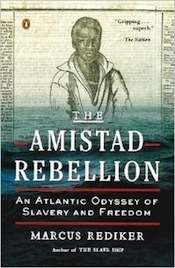
Greg Grandin’s “The Empire of Necessity: Slavery, Freedom and Deception in the New World” and Marcus Rediker’s “The Amistad Rebellion: An Atlantic Odyssey of Slavery and Freedom” share both subject matter—slave rebellions on the open seas—and an unabashed commitment to the Black freedom struggle. Beyond the fortuitous combination of topic and political passion, however, the greatest reward for any reader is how both authors make history come alive. Despite their remoteness in time and place, the stories they tell have an obvious affinity for the Black struggle today as a new civil rights struggle takes shape to secure the final victory sought by ancestors Babo and Cinque.
“The Empire of Necessity: Slavery, Freedom and Deception in the New World” is an exploration of the events that inspired Herman Melville’s “Benito Cereno”, an 1855 novella about the ruse orchestrated by slaves fifty years earlier to convince Captain Amasa Delano, a distant relative of FDR, that their vessel remained under their ex-master’s sway. This excerpt from Melville should give you a flavor of this droll and macabre tale:
Three black boys, with two Spanish boys, were sitting together on the hatches, scraping a rude wooden platter, in which some scanty mess had recently been cooked. Suddenly, one of the black boys, enraged at a word dropped by one of his white companions, seized a knife, and though called to forbear by one of the oakum-pickers, struck the lad over the head, inflicting a gash from which blood flowed.
In amazement, Captain Delano inquired what this meant. To which the pale Benito dully muttered, that it was merely the sport of the lad.
“Pretty serious sport, truly,” rejoined Captain Delano. “Had such a thing happened on board the Bachelor’s Delight, instant punishment would have followed.”
At these words the Spaniard turned upon the American one of his sudden, staring, half-lunatic looks; then, relapsing into his torpor, answered, “Doubtless, doubtless, Senor.”
If Grandin’s history is a fitting counterpart to Melville’s fiction, a work of high culture for the ages, we can see “The Amistad Rebellion: An Atlantic Odyssey of Slavery and Freedom” as a necessary corrective to Stephen Spielberg’s pop culture film that like his “Lincoln” told a tale of paternalistic white intervention when the real history would have revealed something much more like self-emancipation.
There’s another important dimension to the history that will help scholars, both inside and outside the academy, understand the “peculiar institution”. Since both rebellions were carried out against Spanish masters, we are reminded of the global character of the slave trade—one that connected many different links in a great chain of commodity production. Whether a particular link was based on ostensibly capitalist property relations such as the Birmingham textile mills or “non-capitalist” relations such as those that obtained on sugar or cotton plantations, they were all necessary for the functioning of an emerging global economic system.
The slaves who rose up against Benito Cereno died an unceremonious death, largely as a result of the absence of an abolitionist movement to take up their cause in a geographically remote and politically inhospitable South America. Since the Amistad had the relatively good fortune to come under American naval control in the waters off New England, the basis for a broad-based solidarity campaign rooted in
empirenecessitythe abolitionist movement existed. Rediker amasses a wealth of detail to demonstrate its power, even if at times it manifested the same sort of paternalism that can be found in Spielberg’s movie. It was not as if Spielberg was making things up, it was more that he decided to leave key details out.
Amasa Delano was a Captain Ahab writ small. Although he had ambitions to strike it rich on the open seas, he never could raise the capital to finance whaling expeditions. Setting his sights a bit lower but about the same level ethically, he decided to hunt seals that were valued for their skins, the perfect material for the lady’s mittens and the gentleman’s wallets.
Aboard his ship, the Perseverance, Delano set sail for the west coast of Chile in 1800, an area dotted with islands overflowing with immense seal populations. In his account of his various sea voyages, a source of Melville’s novella, he shows not the slightest remorse for the bloody labor that sometimes involved a military-like assault on as many as 20,000 seals at a time.
As fate would have it, Delano encountered Benito Cerreño’s (the actual spelling) Tryal in the waters near Santa Maria Island off the coast of Chile in 1805. Like the Amistad rebels, their brethren lacked the navigational skills to return to Africa on their own and thus ordered Cerreño to sail them home. In the same deceptive manner as the Amistad’s Captain Ramón Ferrer, Cerreño stalled for time, hoping to encounter another ship that could intercede on his behalf.
The slaves who had taken over the Tryal had been through a prolonged ordeal, including a forced march through the freezing Andes toward a seaport where they would put on board a ship destined for Lima and sold to the highest bidder. They seized their opportunity on December 22nd 1804 after the ship had set sail. Led by Babo and Mori, they overpowered their guards, seized weapons and executed 18 sailors, stabbing and hacking some to death, throwing others overboard.
In a stunning command of his material, Grandin makes a strong case that there was every possibility that the rebels were committed Muslims. As such, they were forerunners of many of the fighters in the news today, even if they saw their struggle more in terms of simply returning home rather than global jihad. For the Tryal rebels, their religion was simply a way for them to stay united and to sustain morale in the face of insurmountable odds in the same way that Christianity served Blacks in the American south.
Grandin surmises that Babo and Mori were lettered men, possibly educated in madrassas. When they forced Cerreño to sign a contract granting them their freedom, they were following Islamic customs. Finally, the respect that the enslaved men and women had for Babo suggests that he might have been a marabout (cleric) or faqih (scholar) in his native country.
Grandin refers his readers to another slave revolt that took place just four years earlier on the San Juan as it was rounding the Cape Horn. This time they succeeded in forcing the captain to sail them back to Senegal and to freedom. When the Viceroy of Peru learned of this outrage, he urged the Crown to ban the importation of Muslim slaves into South America, writing that the teaching of Mohammad led slaves to “spread very perverse ideas among their own kind”, adding “And there are so many of them.”
Like many children of the Enlightenment, the two men most responsible for suppressing the rebellious slaves were all for the democratic republic but only if it was on the basis of white supremacy.
Hailing from Duxbury, Massachusetts, Captain Amasa Delano joined a rebel militia to fight the British. While traditional liberal and much Marxist historiography viewed 1776 as a noble revolutionary movement against British colonial tyranny, recent research questions this interpretation. In the provocatively titled “The Counter-Revolution of 1776”, Gerald Horne demonstrates that slaves were drawn to the British side for no other reason than the Crown’s opposition to slavery. Such a paradox illustrates the principle that history does not move in a straight line.
When Delano took control of the Tryal, his main goal was to be compensated for the value of the returned property—including the slaves. The judge who presided over the litigation between Delano and the Spanish owners was one Juan Martinez de Rozas, an admirer of Napoleon who met secretly with freethinkers influenced by Voltaire and Rousseau. Rozas’s opposition to the monarchy, like Delano’s, was qualified by a belief that only white men had the right to be free. The captured slaves were represented in court by the 19th century’s version of a public defender who argued that they had the right to rise up against their captors in the same way that Spanish prisoners of war had the right to murder British jailors. His reasoning was virtually identical to that of John Quincy Adams, the attorney for the Amistad rebels. Despite, or perhaps because of, his republicanism, Rozas found the slaves guilty of murder and had them executed.
If the stance of Delano and Rozas challenges conventional thinking about the clash between bourgeois democracy and slavery, there is even more to puzzle over in “The Empire of Necessity” when it comes to the social and economic role of slavery in South America. Over the past few years, a number of books have appeared that challenge orthodox Marxist thinking on the supposed incompatibility between capitalism and slavery. Perhaps it should be described instead as a new orthodoxy since in years past Eric Williams’s “Capitalism and Slavery” probably spoke for most Marxists in making the case for their organic ties, especially in the supply of cotton to British textile mills.
In helping to reestablish Eric Williams to his rightful place in Marxist theory, Grandin describes a world that combined contradictory elements of free and unfree labor unlike anything found in the slave states. Grandin writes:
Slaves literally made money: working in Lima’s mint, they trampled quicksilver into ore with their bare feet, pressing toxic mercury into their bloodstream in order to amalgamate the silver used for coins. And they were money, at least in a way. It wasn’t so much that the value of individual slaves was standardized in relation to currency. Slaves were the standard: when appraisers calculated the value of any given hacienda, slaves usually accounted for over half its worth, much more valuable than inanimate capital goods like tools and millworks.
The world was changing fast, old lines of rank and status were blurring, and slaves, along with livestock and land, often appeared to be the last substantial things. Slaves didn’t just create wealth: as items of conspicuous consumption for a rising merchant class, they displayed wealth. And since some slaves in Spanish America, especially those in cities like Montevideo and Buenos Aires, were paid wages, they were also consumers, spending their money on items that arrived in ships with other slaves or maybe even, in a few instances, with themselves.
Turning now to Rediker’s “The Amistad Rebellion: An Atlantic Odyssey of Slavery and Freedom”, we encounter the same understanding of the links between “the peculiar institution” and global capitalism through his fascinating exegesis of an anonymous abolitionist pamphlet that circulated in England in 1792. Titled “Cushoo: a dialogue between a Negro and English Gentleman on the Horrors of Slavery and the Slave Trade”, it allows Cushoo, an African slave, to explain why slavery is not only evil but in terms that anticipated Eric Williams’s “Capitalism and Slavery”:
In 1792, at the peak of a broad popular agitation against the slave trade in Great Britain, an abolitionist published an anonymous pamphlet, in which Cushoo, an African who had been enslaved in Jamaica, engaged an English gentleman, aptly named Mr. English, in conversation. Cushoo had been owned by a friend of Mr. English. He begins by saying, “Ah! Massa Buckra, pity poor Negroman.” Mr. English responds, “Why, Cushoo, what’s the matter?” The matter, in short, was capitalism and slavery—more specifically, how a violent, exploitative global system hid its true nature in the benign form of commodities, especially slave labor-produced sugar and rum, the likes of which Mr. English and others around the world consumed, without understanding how they were produced and at what human cost.
For perhaps the first time in history a member of a mass movement for fundamental social change had made a simultaneous popular critique of the exploitation of labor, the commodity form, and the capitalist world market. In this scenario, consumers were unconscious vampires.
Nobody could have accused the Spanish owners of the Amistad as unconscious but vampires they surely were.
In chilling detail, Rediker describes a systematic brutality that characterized the slave trade, particularly the shipment to the Americas in the infamous Middle Passage.
The lower decks of a typical slave ship would be no taller than 48 inches, forcing the slaves to maintain a crouching position for weeks at a time. In Freetown, Liberia where a number of liberated slaves lived, it was not uncommon to see young men and women walking stooped over as if they had osteoporosis.
The men, women and children who would eventually board the Amistad came to Havana in 1839 after surviving the Middle Passage on the Teçora, a Brazilian vessel. From there, they were soon put on the Amistad, a smaller coastal trader that would transport them to their next destination, another part of Cuba where they might be put to work on a sugar plantation. The duress of the trans-Atlantic trip on the armistadTeçora and uncertainty about their fate made them feel desperate and willing to chance everything in an onboard insurrection.
Chapter two, titled “Rebellion”, details the bold takeover of the Amistad, an event that Spielberg’s film portrays more as an atavistic massacre than an act of liberation akin to the Warsaw Ghetto uprising. Rediker describes the deep oppression that the slaves had to deal with, from being restrained by neck-rings that an African named Kinna described as how “dey chain ox” to being terrorized by whips, clubs, and fists. None of this is depicted in Spielberg’s film, which begins with the assault on the ship’s crew amidst yells of terror.
When the ship’s cook, a slave himself but one much more like a “house slave”, maliciously teases the captives that they will all be killed—gesturing with a kitchen knife drawn across his neck—they decide that they must rebel or die.
Despite coming from different tribes and speaking as much as fifteen different languages, the slaves united into a fighting force under the leadership of Cinque who was likely an experienced warrior. Since two of the 49 slaves were blacksmiths, it was easy for them to pick their locks and free the remainder of the men who formed a brigade armed with clubs, machetes and other weapons gathered on deck. After a pitched and bloody battle, the Africans gained control of the ship and ordered Captain Ramón Ferrer to take them back to Africa.
Another major failing of Spielberg’s Hollywood version of the trial of the Amistad rebels was the virtual disappearance of the mass movement that made court victories possible. As was the case with “Lincoln”, it was intervention by enlightened whites that made the day—particularly the case made on their behalf by John Quincy Adams before the Supreme Court. While Adams surely was a hero, it was up to Marcus Rediker to pay homage to some dedicated but obscure abolitionist activists.
For Spielberg it is notables like abolitionist attorney Roger S. Baldwin (played by Matthew McConaughey of all people) who have major roles while a much more interesting grass roots activist like Dwight Janes gets ignored. Janes was a grocer by trade who made the initial contact with Cinque and his comrades. After meeting with them, he wrote letters to prominent individuals to stress the need for rallying around their cause. Janes invested so much time and energy into their defense that a reporter for the pro-slavery New York Morning Herald could barely contain his admiration when he referred to
“the Abolitionists are moving heaven and earth to effect their release; several members of the society have left town for Connecticut to see them, to employ the most able counsel in their behalf, and to contest every point inch by inch; and, judging from appearances, we should say that there are general preparations making in all quarters for a grand explosion in this matter of slavery and the slave trade.”
It was people like Dwight Janes who upheld the republican ideals of 1776 but understood that they were meaningless unless they applied to all human beings. Twenty-two years after the Amistad rebellion and the vindication of its fighters, the United States would be tested by a civil war that would finally put an end to slavery. Now, 150 years after that monumental struggle, we are facing a new challenge to racism led by young people who would be inspired by the example of the Tryal and Amistad rebellions. For them and for all Americans committed to the struggle for racial equality, Greg Grandin and Marcus Rediker’s books could not have come at a better time.

War is Peace in Yemen

Michael Horton

In his essay entitled, “Politics and the English Language,” George Orwell says, “political language…is designed to make lies sound truthful and murder respectable, and to give an appearance of solidity to pure wind.” Orwell, whose writings are more prescient with each passing year, would wince at the words of Saudi Arabia’s Brigadier General Asiri, who, in a recent press conference, defended Saudi Arabia’s unprovoked war in Yemen by saying, “all we are trying to do is to make sure that there is security in Yemen.” Bombing an already desperately poor country’s infrastructure, destroying its armed forces (the same armed forces that were equipped and trained to fight al-Qaeda by the US), air dropping weapons (now being sold in Yemen’s arms markets), blockading Yemen’s ports (Yemen imports 90% of its food), and hobbling an already struggling economy are hardly ways of ensuring security.
Saudi Arabia’s ambassador to the United States, Adel A. al-Jubeir, has sought to justify the Kingdom’s war in Yemen by arguing that Saudi Arabia—a country that is ruled by an autocratic king and a collection of princes—is fighting to protect the “elected and legitimate government of Yemen,” the government of Abd Rabbuh Mansur al-Hadi.
Hadi, who fled Yemen for Saudi Arabia on 25 March, was “elected” in an election in February 2012 in which his name was the only one on the ballot. There is also the fact that Hadi’s term as president expired in February 2014. According to the Gulf Cooperation Council (GCC) brokered initiative, national elections, including the election of a new president, were to be held in 2014.
To sum it up: an autocracy with a deplorable human rights record (Saudi Arabia’s Sharia courts routinely behead criminals and flog victims of gang rape as well as recalcitrant bloggers) and its partners—which includes the US—are endeavoring to reinstall an ineffectual exiled government of questionable legitimacy and ensure security in Yemen by bombing and starving it into submission.
Hadi and his exiled government are supporting the bombardment of their own country and calling on the Saudis and their allies to intensify air strikes and launch what will likely be a disastrous ground invasion. Of course, these calls for more bombs, more weapons, and more war are being made by men who fled Yemen aboard private jets and are comfortably ensconced in villas in Riyadh. They do not have to worry about being incinerated in their homes, finding food or water, or burying their dead. It is worth citing another quote from Orwell who wrote inHomage to Catalonia, ““all the war-propaganda, all the screaming and lies and hatred, comes invariably from people who are not fighting.”
So what fruits is the Saudi led and US supported “Operation Decisive Storm” bearing? Security is not among them. An estimated 600 people, including at least 80 children, have been killed. According to UNICEF, a hundred thousand additional Yemenis have been displaced since the beginning of “Operation Decisive Storm.” Food, medical supplies, and petrol are in short supply across the country and as yet, flights and convoys bringing aid are being blocked. Conditions in parts of southern Yemen are so bad that some Yemenis are fleeing by boat to relatively secure and stable Somaliland and Puntland.
Across southern Yemen, al-Qaeda in the Arabian Peninsula (AQAP) is on the offensive. AQAP has freed its members from various jails and has raised its flag over Mukalla, a city of nearly four hundred thousand and a major port with critical oil and gas handling facilities. However AQAP and other militant Islamist groups whose ideology differs little from the state sanctioned Wahhabism of Saudi Arabia, are seemingly not targets for those directing “Operation Decisive Storm.” The primary targets of the aerial campaign, beyond critical infrastructure, food factories, and refugee camps, are the Houthis, a Zaidi Shi’a group that has had more success at fighting AQAP in the last six months than the US and its drones have had in the last decade.
AQAP was and, in some military circles, still is considered to be the most virulent of the al-Qaeda franchises. Mainstream US media has long trumpeted the idea that AQAP poses a clear and present danger to the US. Hundreds of millions of dollars of US tax payer money has been spent on the “war on terror” in Yemen. Yet rather than calling for a ceasefire and dialogue as the governments of China, Russia, and Iran have done, the US is supporting a war that will, beyond anything else, make sure that Yemen remains a failed state and fertile ground for AQAP and potentially the Islamic State.
It all makes sense in an Orwellian way.

The Indelible Traces of War

Luciana Bohne

September 1965
I see Peter Watkins’ BBC-banned documentary, The War Game, at the New York Film Festival. It’s a “what if” documentary—what if an atomic bomb, the size of the one dropped on Hiroshima, exploded over Kent in Southern England? Watkins takes us through the event, before, during, and after. As a US-USSR crisis is mounting over Berlin, Watkins interviews Londoners in the street, checking how good a job the relevant defense committees have done in educating the public to the dangers of nuclear war. “What is strontium-90?” he asks. “I dunno. A kind of hairspray?” is the answer from a giggling young woman with a beehive hairdo. As tensions mount, a soldier is shot in Berlin. He is “the first victim of WW III,” Watkins’ voice tells us–a nuclear war. Pathetic preparations ensue, amounting to door-to-door delivery of pamphlets about what to do in case of a nuclear attack—pamphlets that were real, had involved expense, and had never been delivered to the public to prevent alarmism. When the bomb detonates—the “sound of a door closing on Hell’– a blinding light, a fireball, and hurricane winds fanning the flames to a cosmic frenzy. Using footage from the bombing of Hiroshima, we see the effects: a shadow on the steps of what had been a person, vanished while waiting for the bank to open shortly after 8 am on 6 August, 1945. Naked bodies with evaporated clothes tattooed on their charred skins. A river clogged with bodies, seeking relief from the torture of burning flesh. The aftermath comes as the time when “the living envies the dead.” Radiation sickness sets in. The body is drained of fluids. Three months after the bomb, it is a dark, smoky Christmas. Fires in the streets protect from looters. The chaplain asks three vacant-eyed children what they want to be when they grow up, “Nuthin’. I don’t want to be nuthin’,” they murmur almost inaudibly. The film gets an Oscar for best documentary, but it remains banned in Britain for decades.
I leave Lincoln Center badly shaken.
January 1968
I’ve been happily pregnant for seven months. I am in the tiny shelter of the kitchen of our 18th-floor apartment overlooking midtown Manhattan from Union Square. As the water flows rinsing the dinner dishes, I think I hear the faint rumble of bomber planes. I know I am imagining, but my hands begin to shake. I walk out to the living room and look up to my husband, “There’s going to be a war.” “I thought we were happy,” he says. He doesn’t take me in his arms. We step apart. I have frightened him. He is not afraid of war; he’s afraid for us. It’s the American versus the European encounter. I must keep this fear to myself.
That night, the nightmare returns: I am in a solidly built stone house. Men with rifles, advancing, surround it. They are German soldiers. The walls of the house vanish, and I stand alone, exposed.
In the morning, I hear on the radio that 80,000 North Vietnamese and Viet Cong troops have struck one hundred cities in South Vietnam. It is the beginning of the Tet Offensive on Tet Nguyen Dan, the lunar New Year. The Pentagon is considering using tactical nuclear weapons in response. My husband shuts off the radio. We eat breakfast in silence.
February 1968
I am in a drugstore on University Place, off Washington Square. I am looking for a birthday card for my sister-in-law. On a bookrack, I see the paperback edition of Peter Watkins’ screenplay of The War Game. I open at random: the grainy photograph of a soldier lifeless on the ground. The caption reads, “First victim of WW III.” I snap the book shut.
Now I can no longer eat. A knot of fear constricts my throat. The doctor reassures my husband, “She is a sensitive girl. It will pass after the birth. Make sure she takes vitamins.” They talk as if I weren’t there.
My husband suspends the subscription to the New York Times. So that I may not listen to the radio, he takes me listless to the office where we both used to work as advisors to undergraduates at New York University—and now only he does. On the way back from work one evening, I rest my arm on my husband’s arm, heavily pregnant in my little black raincoat. We pass the Grand Union supermarket just as a man exits with a broom in his hand. A few steps further, my husband turns around to look at the man with the broom. He says, “That was Edward Albee. He’s looking back at us.” Politely, I look back. Indeed he is. My husband says, “He probably thinks that he invented this couple, and now here we are.” The reference to Albee’s play A Delicate Balance, about the Bomb, is not a fortunate one. I force a wan smile.
24 March 1968
On a Sunday at 8:06 pm, our Catherine is born. She has lovely feet. From my bed, in my single room in Doctors’ Hospital uptown, I stare out on Riverside Drive. The stream of traffic flows uninterrupted in the black night—a red artery for north; white lymph for south.
After five days, on a spring-clear and lucid-cold Friday morning, we are all back home. On 4 April, Martin Luther King is killed. From our windows, we watch the red glow north of Harlem burning. At night I nurse her. Down below in the street, I see the air shelter sign. I think, how will I protect her from the war, how can I make her safe.
It is, of course, myself I’m thinking of—myself, born into a war. I hear my father’s voice, “You were not born in a war. You were born in a cataclysm.”
Epilogue: 1974 and 2015
Peter Watkins is staying at out house in Pennsylvania. He’s on a speaking tour through universities showing his latest film, Edvard Munch. Away from the monster city for five years, I feel safe among cows and fields. I can even refer to my breakdown of 1968—though not often and not when Catherine is present. I try it now, “You know, Peter,” I say, at breakfast, “I saw your War Game at Lincoln Center. It was powerful.” And I told him about the drugstore, the book, and the fear. He seems to freeze. Years later, I read that one of the reasons for banning the showing of The War Game in England was precisely that reason—that it would unhinge pregnant women.
Our Catherine has left America for good. Ironically, she chose the Balkans, where I began—a remote hamlet in the mountains where it is still possible to imagine a hard working, tightly knit humanity at peace with the chores of daily life and the bonds that sustain it.
This is an excerpt from autobiography in process.