16 Apr 2015

Cops, Cameras and Justice

John Grant


This is “deeply troubling on many fronts.”
- South Carolina Senator Lindsey Graham
I’m a photographer, and the police shooting of Walter Scott in North Charleston, South Carolina, feels like a major watershed in the on-going struggle between cops and cameras. Like no other story, this one starkly shows the power of a camera in the hands of a courageous citizen at the right place and the right time. And the technology is getting more sophisticated, cheaper and smaller by the day.
Due to an official prejudice for police narratives, the case was headed to become another murky police shooting of a black man masticated in the media and criminal justice system into a free pass for police violence. A brave citizen with a cell phone camera changed that instantly. At that point the local police chief and the mayor of North Charleston agonized in public, as South Carolina politicians rushed to the cameras to show their disgust. A video image of the shamed officer wearing striped prison garb and handcuffs was publicly released to exhibit his fate.
Walter Scott was shot to death over a broken taillight on his neighbor’s used Mercedes he was reportedly about to purchase. We’re learning from places like Ferguson, Missouri, and a report from Los Angeles, California, how minor traffic stops for African Americans too often lead to further, deepening arrest and jailing complications. It’s the application of Rudy Giuliani’s beloved “broken windows” policy to minor vehicular infractions. It’s also called police harassment.
In such a petty, oppressive climate, Scott’s ultimately fatal decision to flee a white officer who had stopped him for a busted taillight was understandable. As the procedure is constructed to play out, Officer Slager had likely stopped Scott for the taillight as a pretext to go through his computer to look for more serious and outstanding infractions. It’s a “gotcha” moment. In the dash-cam video, as Officer Slager walks to the driver’s side window of the Mercedes, he gives the taillight a gentle, loving tap. Whether Scott owed child support or whatever, it seems he felt further complications like jail were a likelihood. Like anyone, Scott had a life that meant other commitments that day. As you watch the dash-cam video of Scott waiting in his car, you can imagine a host of things going through his mind. He apparently called his mother during those seconds before he decided to bolt from the car, leaving his driver’s license in the hands of Officer Slager.
Feidin Santana first showed his now famous video to Scott’s family. Fearful of police retaliation, he waited to see if the police would come up with the truth. Once he realized the System was sticking with Officer Slager’s bogus story, he released his video to the Scott family. He said Officer Slager had been in control of Scott the whole time, until Scott finally broke free and ran. The video so unambiguously destroyed the claim that Officer Slager was in fear for his life, the North Charleston Police Department and its Criminal Justice System immediately shifted into reverse. You could almost hear the gears grinding. A secret grand jury wasn’t an option in this instance. Recognizing that Slager was now toast, he was immediately thrown to the dogs, fired and charged with murder.
There is a stark lesson embedded in this amazing turn of events. First off, it shows there’s good cause to be skeptical of accounts of a shooting officer’s fear-for-his-life and claims of self-defense. Santana’s videotaping has tarnished that narrative significantly. South Carolina Senator Lindsey Graham is right when he says the incident is “deeply troubling on many fronts.” As Scott is bleeding out, Slager is shown on the video going to retrieve his Taser and dropping it by Scott’s body as a black officer walks up, a man Reverend Al Sharpton wants charged for something, since he did nothing and apparently went along with the bogus story.
Before the Fox News crowd goes ballistic and I get accused of hating cops and calling for them to be shot in their patrol cars, it needs to be said, police officers are a necessary part of society and civilization in general. This is not an anti-cop rant. Most cops are hard-working, good men and women. The issue is how to ferret out the rotten apples and establish in our police departments a sense of community policing where citizens are not seen as the enemy — especially citizens in poor and minority communities. The problem is exacerbated by a psychology of militarization rooted in things like the failed Drug War, the post-9/11 War On Terror and the linkages between these militaristic institutions and local police forces. This insidious mix contributes to an elitist, even narcissistic, esprit-de-corps in which cops see themselves as a beleaguered and unappreciated thin blue line and citizens as the enemy. A vast wasteland of hack TV imagery emphasizing guns and vengeance doesn’t help. Why, for example, in the Cleveland community where an African American child was shot dead for playing with a toy gun is the police headquarters on the fringes of that community called an FOB, a Forward Operations Base, derivative of the wars in Iraq and Afghanistan?
Combine this psychology with police unions, which are a real anomaly of our times, and you have a tough nut to crack. Unions are everywhere being dis-empowered and destroyed. Why, then, is the FOP (Fraternal Order of Police) one of the strongest blue collar unions in America? Does it have something to do with the fact most unions are seen as anathema to an individualistic society swearing allegiance to profits and a free market? So why does the FOP get a pass? Not only are cops given the benefit of the doubt in the criminal justice system in which they operate as front line troops, in the individualistic, capitalist free-market system in which growing economic inequality has become a national disgrace, their unions are allowed to thrive as labor collectives.
Citizens and Surveillance
A recent New York Times story listed a series of apps coming on line to bolster the use of citizen cell phone cameras. These apps consider the stress and fear an individual is under when witnessing something like a police shooting unfold before his or her eyes. They make the operation easy: You hit an icon button that turns the camera on, and you hit the same button to turn it off; then the app does what’s necessary to send the video to You Tube. So when the huge, adrenaline-juiced cop sees you, physically threatens you and illegally snatches your cell phone, the confiscation is moot.
Philadelphia Police Commissioner Charles Ramsey is a national leader in police and camera issues. He has said many times, as he said responding to this case, “people have the right to videotape cops as long as they don’t interfere with arrests.” This latter, of course, provides huge wiggle room. The Philadelphia police exploit this wiggle room all the time. They’ve threatened me with arrest for shooting civil disobedience arrests from a location where there was no question of my interfering with anything. Just being there and pointing a camera was deemed interference. In one case, a colleague of mine refused to budge and was arrested; afterwards, she was quickly released and, later, got a healthy financial settlement. Preventing her from shooting was illegal; everybody knew that. But arresting her got her out of the way and prevented possibly embarrassing or incriminating photos from being taken. The Philadelphia Police Department simply has a budget line for what amounts to civil fines for openly breaking the law.
A public civil disobedience action is one thing; shooting an illegal police action in an out-of-the-way location with no witnesses is another. In the case of Officer Slager shooting a fleeing Walter Scott in the back, the distance between the camera person and the officer, the fact there was a fence and trees separating them and Slager’s intense focus on Scott all work to the cameraperson’s advantage and safety. Slager does glance in the direction of Santana’s lens for an instant after he has fired eight times and Scott falls. Had he seen Santana with his cell phone camera before he opened fire, would he have opened fire on Santana? Likely not, since seeing a camera operator would have seriously complicated the scene for him. Maybe the sudden realization of an objective eye on him would have influenced him to check his lethal, adrenaline-driven impulse vis-à-vis Scott and he’d still be cruising his beat today and be able to see the birth of his child.
This case makes a powerful argument for increased citizen use of cell phone cameras and quick video-to-You-Tube apps. According to press reports, police departments are now putting body cameras on their officers and dash-cams in squad cars in response to all the civilian cell phone cameras out there. Police are beginning to see cameras as a means of covering themselves legally. While a camera buttoned to Officer Slager’s chest would have been just as damning about the shooting, it would have captured some of the struggle not seen in Santana’s video — something a good prosecutor might make something of.
In the opening of his 1998 book, The Transparent Society, David Brin posits two very distinct cities 20 years hence, which would be right about now. Both cities are saturated with surveillance cameras. In City #1, all the cameras feed into a police headquarters where the results remain secret from the city’s citizens. In City #2, the same cameras are everywhere; the difference is, every citizen has the capacity with some gadget (like the currently omnipresent i-phone) to receive image data from all the cameras, including cameras inside the police department. Police can spy on citizens, but citizens can equally spy on police. Brin asked, which city do you want to live in? In City #1, a perception of privacy exists, but it’s a delusion. In City #2, that delusion is gone; there’s not even a perception of privacy. But citizens have more power.
In the realm of the National Security State officially established in 1947 and now working with capacities beyond the grasp of most citizens, the worst elements of City #1 are becoming institutionalized to a frightening degree. Think the ever-more-powerful tools of the NSA able to monitor all our email and phone conversations. The way it works, intelligence entities have the power to secretly obtain whatever information they want concerning the citizenry, while an incredible regime of secrecy keeps any and all surveillance of the National Security State out of legal reach. Citizens are now at the point we have to rely on “criminals” like Edward Snowden to give us even a glimpse into what’s going on. It’s noteworthy that Republican presidential candidate Rand Paul has said, if elected, the first thing he’ll do is shut down this NSA surveillance program. It may be a good sound bite, but part of the fear Paul is exploiting is that runaway militarism has become more powerful than even a president who lives and dies at the mercy of fickle, money-driven electoral politics.
In these cynical times, one can foresee this kind of one-way power dynamic in the world of surveillance haunting the future of citizen cell phone camera use. We all know cell phone use can be obnoxious. I have faith that at some point some right-wing police apologist is going to suggest we need to legally control the use of the ever-present cell phone camera. The argument will center on privacy — or more accurately, the perception of privacy. This political battle may be coming sooner than we think thanks to effective incidents like the one in North Charleston. Plus, the technology empowering bottom-up, citizen surveillance is only going to grow.
Can the System Be Reformed?
I’ve been reading a lot lately about Forgiveness, a movement of revolutionary thinking the roots of which I’d place in the mind of Jesus Christ, who you may recall George W. Bush claimed as his favorite philosopher. For me, the only way to solve the national problem raised by the highly publicized cases of Trayvon Martin and Michael Brown and too many other cases of black men shot down by police without any accountability, is to give greater credence to Forgiveness in the criminal justice system.
Officer Slager would have benefited greatly from an understanding of the tenets of Forgiveness. He might have realized that police officers are susceptible to internally generating fear of an otherwise non-threatening citizen due to a self-perception of elite power that must be defended to the death. Slager might have better understood what it’s like being an African American male burdened by the many mundane, bureaucratic and economic hurdles and prejudices of modern life circa 2015. If he had been more humble and more forgiving of someone like Walter Scott, he might have been able to look upon the man’s bolting as something to empathize with and deal with on another day, rather than as a personal affront requiring him to kill the man. That’s what a community-oriented police officer would have done. North Charleston should not be mistaken for Falluja, and community policemen like Officer Slager should not aspire to be SEAL team killers.
NBC’s Lester Holt asked Feidin Santana was he glad to see Officer Slager charged with murder and jailed. No, the 23-year-old emigrant Dominican barber said, he was saddened to see anyone put into jail. This is the sort of humble, courageous dignity we want people like Officer Slager to carry themselves with.
Officer Slager will pay for the decision he made. Exactly what that payment should be is always an open question. White cops get breaks all the time, while poor, black citizens historically have gotten the book thrown at them for even minor infractions. That’s tragically how our flawed criminal justice system works.
Putting Officer Slager in prison for a long time thanks to Santana’s video may be the just thing to do. But that alone doesn’t get us very far as a society with a growing police problem. Throwing one cop to the dogs doesn’t solve the larger justice issue. To get someplace, we need constructive social change, which means relentlessly ferreting out the rotten apples from our police departments, establishing more citizen review boards with teeth, instituting better training and supervision of our police, ratcheting down the failed Drug War, commuting non-violent drug sentences, devising more socially creative sentencing so we send fewer people to prison, subsidizing educational opportunities for the economically distressed, creating jobs and investing in a commitment to rebuild a faltering middle class to counter the growth of economic inequality.
There’s more to society than worshiping a free market and profits. Finally, our politicians need to do more than express disgust when an unlucky cop is caught flagrantly in an unprofessional violent act. Our leaders need to demand our police treat all citizens with dignity and support legislation that enforces this state of mind in our police departments.
In the meantime, we need more cameras and more brave citizens like Feidin Santana who step up, do the right thing and make a difference.

Deindustrialization, NATO-Style

Gregory Elich

One of the main features of NATO’s bombing campaign against Yugoslavia in 1999 was the deliberate targeting of factories and manufacturing plants. As a member of a delegation travelling throughout Yugoslavia shortly after the end of the war, I could readily see that such targeting had been methodical and thorough. Wherever we went, there was no military value in the facilities that NATO chose to destroy. Indeed, the common criterion was that state-owned and worker cooperative factories and plants that supported many people were singled out. The apparent intent was to drive much of the population into destitution and make people more amenable to demands to install government eager to do the West’s bidding.
The largest and most significant factory complex in the Balkans was Zastava, producing over 95 percent of the automobiles operating in Yugoslavia. Centrally located in the city of Kragujevac, this diverse factory complex also manufactured tools and machinery.
Workers at Zastava recognized that it was far too tempting a target for NATO planners to ignore. Determined to save their factory, they decided to form a human shield by occupying the factory complex around the clock. Three days after NATO began its war, workers and management issued an open letter which was sent to trade unions abroad and U.S. President Clinton, British Prime Minister Tony Blair, U.S. Secretary of State Madeleine Albright, and other Western leaders. “We, the employees of Zastava and freedom-loving Kragujevac, made a live shield,” the statement proclaimed. “Even at the shift end, even at the alarm sound, the Zastava workers did not leave their workshops, but remained to protect with their bodies what provides for their families’ living, that in which they have built in years-long honest work in order to provide for their better future.” The letter warned NATO leaders, “We want you to know that the attack on our factory shall mean a direct death to thousands of men and women and an enormous spiritual and material loss to their families.”
Letters of support poured in from trade unions in Third World countries, while those in the West remained silent. As the days passed, it became increasingly evident that NATO was systematically destroying factories and work sites. NATO had also wasted little time in demonstrating its contempt for human life. Wisely, the workers at Zastava chose to modify their human shield by moving outdoors and forming a ring around the factory plants, rather than occupying them. Work inside the plants, however, continued.
Shortly after 1:00 AM on April 9, NATO responded to the workers’ letter by sending a volley of cruise missile flying into Kragujevac. Dragan Stankovich, export director for Zastava, was in his apartment when he felt the first detonations, which he likened to a strong earthquake. The sky turned red, and his first thought was to hope that the factory had not been hit. His apartment was close to Zastava, so he walked hurriedly over there. Ten minutes after the first attack, the next wave of missiles struck. “I was very close,” Stankovich told us, “but I couldn’t see the bombs. Only a series of mushroom clouds. You could see the explosion and big fires only. You couldn’t hear anything. Strong light and fire. Like an atomic bomb. Like mushrooms.” The power, assembly, and paint and forging plants were all demolished in the assault. In all, 124 workers were wounded, but miraculously, no one was killed. Ambulances and fire trucks arrived quickly at the scene and retrieved the injured. At the local hospital, a woman, her head bandaged, defiantly told a reporter, “I can only tell Clinton – we will build a new factory. He cannot destroy everything.”
Three nights later, another wave of missiles struck Zastava at 2:45 AM and then yet again ten minutes later. The factories were lightly staffed by this time, and only 16 workers were wounded. As a result of the two attacks, the six largest plants at Zastava lay in ruins. Interestingly, the one plant that manufactured assault rifles was untouched, underlining the fact that NATO’s motivation was the deindustrialization of Yugoslavia. One woman was quoted as saying: “When we saw it burning, we all wept. It was the same feeling as if someone had burned down your home.”
Stankovich told us that the factory complex in Kragujevac employed 28,000 workers, and another 8,000 in associated Zastava factories throughout Yugoslavia, most of which were also bombed. “Of all the catastrophes that befell us,” he said, “we consider the humanitarian catastrophe to be the biggest.” One of the salient aspects of the disaster, he felt, was that workers in many other factories depended on Zastava. There were many plants throughout the nation that supplied components to Zastava. With Zastava in ruins, workers and at these plants and their families, some 200,000 people in all, were left without a means of livelihood.
Zastava’s director, Milosav Djordjevich, ruefully observed, “For the workers, the factory is life. On the nights of the 9th and 12th of April, all our dreams were destroyed in a mere fifteen minutes of bombing.” He told us that he found it difficult to believe that there were people who could inflict death and destruction on others. After months of listening to the gloating of Western leaders over the slaughter they were carrying out, I had no such difficulty.
The power plant supplied electricity, compressed air, hot water and steam for production at Zastava. But its destruction had a wider impact as well, for the plant also provided heat and energy to a large sector of the city. “About 15,000 flats, schools, hospitals, and other institutions depended on the Zastava power plant for their heat,” Stankovich explained. One of the missiles exploded about 20 to 30 meters above the plant, ripping the roof from the building and destroying transformers, turbo-compressors, and the control room. “Smashed,” a worker told us. “Everything was smashed. We have removed everything to be repaired.” Resumption of production at the power plant was an urgent task. Workers had already removed the rubble in this plant by the time of our visit, and two of the eight turbo-compressors had already been repaired. But the destruction of the plant’s transformers sent two tons of highly toxic PCB pyralene pouring onto the ground and into a nearby river.
zasforge
Offices at Zastava forging plant.    Photo: Gregory Elich.
The forging plant was a ruin after being hit four times. When the plant was in operation, components were formed for automobiles, agricultural machinery, and railways. The roof was gone. Mounds of rubble, damaged machinery, and twisted girders confronted us. Scraps of metal debris hung in clumps from isolated and deformed steel bars. The three-story office section of the forging plant had taken a direct hit, and a large section of its façade was blown away. What remained of the upper floors sagged alarmingly. Adjacent to it, the older forging plant presented a stark appearance. The plant’s heavy concrete walls bore the scars from explosions, and its roof was mostly missing. When a missile exploded on the building, concrete columns fell on the heat treatment area, and large chunks of concrete were hurled about, injuring several workers. NATO “had drawings, coordinates, everything,” Djordjevich remarked, “as if they played us with joysticks.”
Djordjevich regarded the paint plant as the pride of Zastava, housing as it did modern robotic production lines. Here, the devastation was even more terrible than in the other plants. It was shocking. Four missiles had left the plant roofless and buried in a carpet of debris. Mountains of twisted and jumbled wreckage rose above the rubble, resembling in some sections abstract sculptures. Djordjevich lovingly described the advanced technology utilized by the plant. “They hit this directly, as you would hit a man in the heart.”
Damage to the automobile assembly line plant was also severe. Merely to clear away the rubble would be a daunting task. Fifty-four workers in this plant were injured when a blast caused the roof to collapse on them. The plant “was very beautiful to see when it was functioning,” Djordjevich told us. “Now look at it. It’s a sorrow to see.”
Zastavaauto
Zastava automotive paint plant.  Photo: Gregory Elich.
It was nearing 9:00 PM, and it had become too dark to view the truck plant and tools factory, both of which had been completely demolished. We were instead taken to the computer center, where the headlights of our vehicles were projected onto the building. It was a ruin. The explosive force of two missiles was so strong that the building was lifted from its foundation before collapsing. Two IBM computers, costing a total of $10 million, were lost. Because the computer center was not operating on the night of the attack, only two people were inside, both hiding in the shelter after the air raid siren had sounded.
In all, destruction at Zastava was estimated to amount to $1 billion, straining the Yugoslav government’s ability to finance its reconstruction. But that did not deter efforts. By January 2000, eighty percent of the rubble had been cleared at Zastava, a monumental endeavor in itself. Before long, small-scale production resumed, which could only have been accomplished through efforts on a heroic scale.
Reconstruction continued, but after CIA-backed regime change in October 2000, the direction of Zastava’s future followed a different path. Hell-bent on privatizing the entire economy, the new government issued an ultimatum to workers at Zastava plants: accept a plan in which two-thirds of the workforce would be laid off, or Zastava would be closed down altogether. “We tried to sharpen our teeth on this one,” privatization minister Aleksandar Vlahovich explained.
zavplant
Zastava paint plant.   Photo: Gregory Elich.
In a society where the loss of economic facilities, sanctions, and a privatization program had rendered much of the working population redundant, employees at Zastava worried about the prospects of ever finding employment again. Serbian finance minister Pavle Petrovich contemptuously dismissed their concerns: “It is high time that people learn there won’t be any life support systems anymore.” Workers were left with little choice and acceded to the government’s demands, and those who lost their jobs received a pittance for sustenance.
Zastava was privatized in 2008, and soon after became a subsidiary of Fiat. It eventually was fully owned by Fiat-Chrysler Automobiles. Once ownership passed to Fiat, the Italian firm ignored its pledge not to dismiss workers, and immediately cut the remaining workforce in half. Protesting workers occupied City Hall, to no avail. They were quickly defeated.
With workers mocked as lazy parasites, neoliberal propaganda was in full swing. The government, which had long derided state-owned Zastava for relying on state subsidies, saw no contradiction in offering Fiat monopoly status, subsidies of ten thousand Euros per worker, and subsidies to support sales over for the first year. Fiat was also granted an exemption from paying any taxes whatsoever for a period of ten years, and land was given gratis to Fiat’s foreign component partners. A duty-free industrial zone was created for Fiat, with the government providing cost-free infrastructure. In all, these gifts to Fiat dwarfed any subsidies that state-owned Zastava ever received.
Back in 2001, privatization minister Vlahovich observed, “Zastava became an example, I hope, of tomorrow’s successful restructuring of the whole country.” And so it did, as foreign corporations now dominate the economy, the nation’s workforce subsists on abysmally low wages, and unemployment is at depression levels. For those who once proudly worked at Zastava, their economic rape is complete.

The Kremlin and the Neocons

Ray McGovern

Former Washington insider and four-star General Wesley Clark spilled the beans several years ago on how Paul Wolfowitz and his neoconservative co-conspirators implemented their sweeping plan to destabilize key Middle Eastern countries once it became clear that post-Soviet Russia “won’t stop us.”
As I recently reviewed a YouTube eight-minute clip of General Clark’s October 2007 speech, what leaped out at me was that the neocons had been enabled by their assessment that – after the collapse of the Soviet Union – Russia had become neutralized and posed no deterrent to U.S. military action in the Middle East.
While Clark’s public exposé largely escaped attention in the neocon-friendly “mainstream media” (surprise, surprise!), he recounted being told by a senior general at the Pentagon shortly after the 9/11 attacks in 2001 about the Donald Rumsfeld/Paul Wolfowitz-led plan for “regime change” in Iraq, Syria, Lebanon, Libya, Somalia, Sudan and Iran.
This was startling enough, I grant you, since officially the United States presents itself as a nation that respects international law, frowns upon other powerful nations overthrowing the governments of weaker states, and – in the aftermath of World War II – condemned past aggressions by Nazi Germany and decried Soviet “subversion” of pro-U.S. nations.
But what caught my eye this time was the significance of Clark’s depiction of Wolfowitz in 1992 gloating over what he judged to be a major lesson learned from the Desert Storm attack on Iraq in 1991; namely, “the Soviets won’t stop us.”
That remark directly addresses a question that has troubled me since March 2003 when George W. Bush attacked Iraq. Would the neocons – widely known as “the crazies” at least among the remaining sane people of Washington – have been crazy enough to opt for war to re-arrange the Middle East if the Soviet Union had not fallen apart in 1991?
The question is not an idle one. Despite the debacle in Iraq and elsewhere, the neocon “crazies” still exercise huge influence in Establishment Washington. Thus, the question now becomes whether, with Russia far more stable and much stronger, the “crazies” are prepared to risk military escalation with Russia over Ukraine, what retired U.S. diplomat William R. Polk deemed a potentially dangerous nuclear confrontation, a “Cuban Missile Crisis in reverse.”
Putin’s Comment
The geopolitical vacuum that enabled the neocons to try out their “regime change” scheme in the Middle East may have been what Russian President Vladimir Putin was referring to in his state-of-the-nation address on April 25, 2005, when he called the collapse of the Soviet Union “the greatest geopolitical catastrophe of the [past] century.” Putin’s comment has been a favorite meme of those who seek to demonize Putin by portraying him as lusting to re-establish a powerful USSR through aggression in Europe.
But, commenting two years after the Iraq invasion, Putin seemed correct at least in how the neocons exploited the absence of the Russian counterweight to over-extend American power in ways that were harmful to the world, devastating to the people at the receiving end of the neocon interventions, and even detrimental to the United States.
If one takes a step back and attempts an unbiased look at the spread of violence in the Middle East over the past quarter-century, it is difficult to avoid the conclusion that Putin’s comment was on the mark. With Russia a much-weakened military power in the 1990s and early 2000s, there was nothing to deter U.S. policymakers from the kind of adventurism at Russia’s soft underbelly that, in earlier years, would have carried considerable risk of armed U.S.-USSR confrontation.
I lived in the USSR during the 1970s and would not wish that kind of restrictive regime on anyone. Until it fell apart, though, it was militarily strong enough to deter Wolfowitz-style adventurism. And I will say that – for the millions of people now dead, injured or displaced by U.S. military action in the Middle East over the past dozen years – the collapse of the Soviet Union as a deterrent to U.S. war-making was not only a “geopolitical catastrophe” but an unmitigated disaster.
Visiting Wolfowitz
In his 2007 speech, General Clark related how in early 1991 he dropped in on Paul Wolfowitz, then Under Secretary of Defense for Policy (and later, from 2001 to 2005, Deputy Secretary of Defense). It was just after a major Shia uprising in Iraq in March 1991. President George H.W. Bush’s administration had provoked it, but then did nothing to rescue the Shia from brutal retaliation by Saddam Hussein, who had just survived his Persian Gulf defeat.
According to Clark, Wolfowitz said: “We should have gotten rid of Saddam Hussein. The truth is, one thing we did learn is that we can use our military in the Middle East and the Soviets won’t stop us. We’ve got about five or 10 years to clean up those old Soviet client regimes – Syria, Iran (sic), Iraq – before the next great superpower comes on to challenge us.”
It’s now been more than 10 years, of course. But do not be deceived into thinking Wolfowitz and his neocon colleagues believe they have failed in any major way. The unrest they initiated keeps mounting – in Iraq, Syria, Libya, Somalia, Lebanon – not to mention fresh violence now in full swing in Yemen and the crisis in Ukraine. Yet, the Teflon coating painted on the neocons continues to cover and protect them in the “mainstream media.”
True, one neocon disappointment is Iran. It is more stable and less isolated than before; it is playing a sophisticated role in Iraq; and it is on the verge of concluding a major nuclear agreement with the West – barring the throwing of a neocon/Israeli monkey wrench into the works to thwart it, as has been done in the past.
An earlier setback for the neocons came at the end of August 2013 when President Barack Obama decided not to let himself be mouse-trapped by the neocons into ordering U.S. forces to attack Syria. Wolfowitz et al. were on the threshold of having the U.S. formally join the war against Bashar al-Assad’s government of Syria when there was the proverbial slip between cup and lip. With the aid of the neocons’ new devil-incarnate Vladimir Putin, Obama faced them down and avoided war.
A week after it became clear that the neocons were not going to get their war in Syria, I found myself at the main CNN studio in Washington together with Paul Wolfowitz and former Sen. Joe Lieberman, another important neocon. As I reported in “How War on Syria Lost Its Way,” the scene was surreal – funereal, even, with both Wolfowitz and Lieberman very much down-in-the-mouth, behaving as though they had just watched their favorite team lose the Super Bowl.
Israeli/Neocon Preferences
But the neocons are nothing if not resilient. Despite their grotesque disasters, like the Iraq War, and their disappointments, like not getting their war on Syria, they neither learn lessons nor change goals. They just readjust their aim, shooting now at Putin over Ukraine as a way to clear the path again for “regime change” in Syria and Iran. [See Consortiumnews.com’s “Why Neocons Seek to Destabilize Russia.”]
The neocons also can take some solace from their “success” at enflaming the Middle East with Shia and Sunni now at each other’s throats — a bad thing for many people of the world and certainly for the many innocent victims in the region, but not so bad for the neocons. After all, it is the view of Israeli leaders and their neocon bedfellows (and women) that the internecine wars among Muslims provide at least some short-term advantages for Israel as it consolidates control over the Palestinian West Bank.
In a Veteran Intelligence Professionals for Sanity memorandum for President Obama on Sept. 6, 2013, we called attention to an uncommonly candid report about Israeli/neocon motivation, written by none other than the Israel-friendly New York Times Bureau Chief in Jerusalem Jodi Rudoren on Sept. 2, 2013, just two days after Obama took advantage of Putin’s success in persuading the Syrians to allow their chemical weapons to be destroyed and called off the planned attack on Syria, causing consternation among neocons in Washington.
Rudoren can perhaps be excused for her naïve lack of “political correctness.” She had been barely a year on the job, had very little prior experience with reporting on the Middle East, and – in the excitement about the almost-attack on Syria – she apparently forgot the strictures normally imposed on the Times’ reporting from Jerusalem. In any case, Israel’s priorities became crystal clear in what Rudoren wrote.
In her article, entitled “Israel Backs Limited Strike Against Syria,” Rudoren noted that the Israelis were arguing, quietly, that the best outcome for Syria’s (then) 2 ½-year-old civil war, at least for the moment, was no outcome:
“For Jerusalem, the status quo, horrific as it may be from a humanitarian perspective, seems preferable to either a victory by Mr. Assad’s government and his Iranian backers or a strengthening of rebel groups, increasingly dominated by Sunni jihadis.
“‘This is a playoff situation in which you need both teams to lose, but at least you don’t want one to win — we’ll settle for a tie,’ said Alon Pinkas, a former Israeli consul general in New York. ‘Let them both bleed, hemorrhage to death: that’s the strategic thinking here. As long as this lingers, there’s no real threat from Syria.’”
Clear enough? If this is the way Israel’s leaders continue to regard the situation in Syria, then they look on deeper U.S. involvement – overt or covert – as likely to ensure that there is no early resolution of the conflict there. The longer Sunni and Shia are killing each other, not only in Syria but also across the region as a whole, the safer Tel Aviv’s leaders calculate Israel is.
Favoring Jihadis
But Israeli leaders have also made clear that if one side must win, they would prefer the Sunni side, despite its bloody extremists from Al-Qaeda and the Islamic State. In September 2013, shortly after Rudoren’s article, Israeli Ambassador to the United States Michael Oren, then a close adviser to Israeli Prime Minister Benjamin Netanyahu, told the Jerusalem Post that Israel favored the Sunni extremists over Assad.
“The greatest danger to Israel is by the strategic arc that extends from Tehran, to Damascus to Beirut. And we saw the Assad regime as the keystone in that arc,” Oren said in an interview. “We always wanted Bashar Assad to go, we always preferred the bad guys who weren’t backed by Iran to the bad guys who were backed by Iran.” He said this was the case even if the “bad guys” were affiliated with Al-Qaeda.
In June 2014, Oren – then speaking as a former ambassador – said Israel would even prefer a victory by the Islamic State, which was massacring captured Iraqi soldiers and beheading Westerners, than the continuation of the Iranian-backed Assad in Syria. “From Israel’s perspective, if there’s got to be an evil that’s got to prevail, let the Sunni evil prevail,” Oren said.
Netanyahu sounded a similar theme in his March 3, 2015 speech to the U.S. Congress in which he trivialized the threat from the Islamic State with its “butcher knives, captured weapons and YouTube” when compared to Iran, which he accused of “gobbling up the nations” of the Middle East.
That Syria’s main ally is Iran with which it has a mutual defense treaty plays a role in Israeli calculations. Accordingly, while some Western leaders would like to achieve a realistic if imperfect settlement of the Syrian civil war, others who enjoy considerable influence in Washington would just as soon see the Assad government and the entire region bleed out.
As cynical and cruel as this strategy is, it isn’t all that hard to understand. Yet, it seems to be one of those complicated, politically charged situations well above the pay-grade of the sophomores advising President Obama – who, sad to say, are no match for the neocons in the Washington Establishment. Not to mention the Netanyahu-mesmerized Congress.
Corker Uncorked
Speaking of Congress, a year after Rudoren’s report, Sen. Bob Corker, R-Tennessee, who now chairs the Senate Foreign Relations Committee,divulged some details about the military attack that had been planned against Syria, while lamenting that it was canceled.
In doing so, Corker called Obama’s abrupt change on Aug. 31, 2013, in opting for negotiations over open war on Syria, “the worst moment in U.S. foreign policy since I’ve been here.” Following the neocon script, Corker blasted the deal (since fully implemented) with Putin and the Syrians to rid Syria of its chemical weapons.
Corker complained, “In essence – I’m sorry to be slightly rhetorical – we jumped into Putin’s lap.” A big No-No, of course – especially in Congress – to “jump into Putin’s lap” even though Obama was able to achieve the destruction of Syria’s chemical weapons without the United States jumping into another Middle East war.
It would have been nice, of course, if General Clark had thought to share his inside-Pentagon information earlier with the rest of us. In no way should he be seen as a whistleblower.
At the time of his September 2007 speech, he was deep into his quixotic attempt to win the Democratic nomination for president in 2008. In other words, Clark broke the omerta code of silence observed by virtually all U.S. generals, even post-retirement, merely to put some distance between himself and the debacle in Iraq – and win some favor among anti-war Democrats. It didn’t work, so he endorsed Hillary Clinton; that didn’t work, so he endorsed Barack Obama.
Wolfowitz, typically, has landed on his feet. He is now presidential hopeful Jeb Bush’s foreign policy/defense adviser, no doubt outlining his preferred approach to the Middle East chessboard to his new boss. Does anyone know the plural of “bedlam?”

Prison Economics

Kathy Kelly

Lightning flashed across Kentucky skies a few nights ago. “I love storms,” said my roommate, Gypsi, her eyes bright with excitement. Thunder boomed over the Kentucky hills and Atwood Hall, here in Lexington, KY’s federal prison. I fell asleep thinking of the gentle, haunting song our gospel choir sings: “It’s over now, It’s over now. I think that I can make it. The storm is over now.”
I awoke the next morning feeling confused and bewildered. Why had the guards counted us so many times? “That was lightning,” Gypsi said, giggling. The guards shine flashlight in our rooms three times a night, to count us, and I generally wake up each time; that night the storm was also a culprit.
As the day continued we saw large pools of water had collected at each entrance to Atwood Hall. Prisoners from drought-ridden areas wish they could collect the rainwater and send it home. Fanciful notions, but of the kind, at least, that can help us remember priorities. I suppose it’s wise, though, to focus on what can be fixed. The elevator here, for instance.
The Department of Justice Budget for Fiscal Year 2015 provides 27.4 billion in discretionary funding. In state prisons alone, it’s estimated that taxpayers spend an average of $31,286.00 per inmate per year. (The Price of Prisons: What Incarceration Costs Taxpayers, p. 9). But, for most of the 2.5 months that I’ve lived here in Atwood Hall, the elevator from the basement to the 3rd floor, which should serve close to 300 women, has been out of order. According to “inmate dot com,” our in-house rumor mill, a decision was made, last month, not to fix it. In the past several weeks, two women arrived in wheelchairs and another new prisoner is blind.
I like moving from the basement to the third floor on the staircase. It’s easy exercise. But traveling up and down the stairs can be life-threatening for many prisoners here.
Ms. P. seems to be in her seventies. Wiry white hair, fixed in a braid that reaches down her neck, surrounds her golden brown face. I like to imagine a framed oil painting of her gracing the first floor entrance.
A few nights ago, I watched her toil to haul herself, hanging on to the handrail, from the basement to the first floor. She needed to rest on the landing, winded, her heart pounding, barely able to speak. But Ms. P. made the best of it. “Ms. P.,” said another prisoner comfortingly, “maybe they’ll get this elevator fixed this week.” “I’d contribute my entire month’s salary if it would help repair the elevator!” Ms. P. said with a chuckle. She very likely earns $6.72 cents per month, at 12 cents an hour. Three of us readily agreed to match her donation, which would amount to about $28.00.
We need Ms. P.’s lightheartedness. But I’ve seen flashes of fury, followed by sad resignation, like lightning giving way to rain, in the faces of guards and prison administrators witnessing these scenes occurring on their watch, but as powerless to stop them as to call off those storms the other night.
Photog_Charles_O-Rear_for_the_EPA_1973_-_SUN_RAYS_THROUGH_STORM_CLOUDS_OVER_GRAFTON,_IN_THE_FARMLANDS_WEST_OF_LINCOLN_-_NARA_-_547356
Photo: Charles O’Rear, EPA.
A ray of brilliant sun fell for me last weekend with a visit from an old friend, parent to a lovely child I was especially delighted to see. Once again, I am luckier than so many whose loved ones lack the means for regular and intensive travel. Through our conversation in the prison visiting room, I learned the story of Thompson FCI, a freshly-constructed but never-occupied federal prison near Clinton, Iowa. My friend’s folks, who live near the town, have speculated for years, as have all the town’s residents, about when or whether the empty prison would ever open. Right now, my friend said, there’s only one full time employee in the prison, the warden, and his job is to mow the lawn.
Apparently, local people have been pining for the Bureau of Prisons to act. “The BOP’s positive impact on rural communities is significant,” says a 2015 paper issued by the Department of Justice. “By bringing in new federal jobs, stimulation of local businesses and housing, contracting with hospitals and other local vendors, and coordinating with local law enforcement, the BOP improves the economy of the town and the entire region where these rural facilities are located.”
Yet government’s promises to aid small towns with “prison money” often ring false. In an article entitled “The American Prison, Open for Business?” (Peace Review, vol. 20, issue 3), Stephen Gallagher notes that although prisons may bring with them high-paying jobs, “most employees of the prison industry do not live in the host communities.” “In a joint WSU/MSU study, it was found that 68 percent of the corrective jobs were held by people who did not even live in the county that housed the prison where they worked. In another study in California, it was found that less than 20 percent of the jobs went to residents of the host community.” And most people living in poor rural communities aren’t eligible for the better-paying jobs in the prison system.
Communities desperate to host a new prison should also consider the wages that will be paid to the prisoners. What company would choose to hire local non-inmate workers when the BOP can forcibly hire inmates to work for 12 cents an hour, right in their homes, with no need to consider employee benefits, pay raises, vacation pay or insurance. Prison labor creates a labor pool that is always available and can be maintained in a manner similar to the cost of maintaining slaves. If neighboring people lose their jobs, if they have to steal to try to get by, they can always wind up living in the prison.
I’m hard-pressed to see how this can possibly benefit an area’s economy, that is if its “economy” is understood to include all the area’s people, and not just the wealthiest who can influence prison placement.
When prisons are constructed in rural, southern areas, the political elites can count the entire prison population as part of their census, bringing federal funds into their jurisdictions, but without much pressure to share funds with their new ‘constituents,’ since the prisoners by and large can’t vote. Blighted urban areas lose funds desperately needed for education, housing, health care and infrastructure, while rural people compete to be hired as jailers.
One morning last week, a neighbor across the hall told us she feared she would choke on her own sobs as she cried herself to sleep. I wondered how many times the flashlights would re-awaken her during the night. She had been counting on a sentence reduction and her lawyer had told her, just the previous day, that her case is complicated and she most likely wouldn’t qualify. “I can’t do 3 1/2 more years here,” she said, completely distraught. “I just can’t!” “Yes, you can,” insisted one of the friends gathering to console her. I watched appreciatively, two people caught in the storm and guiding each other through it.
We hear about the droughts, and the temperature records, and we recognize that more storms are coming. The recent, and for many never-ended, financial crisis was a storm, and I notice that politicians and pundits are in full swing demanding a new regional war overseas with the arguments we’d hoped the nation had learned to reject twelve years ago. We can expect these threats, with ecological scarcity underlying them all, to build into each other: the perfect storm. We remember that storms can build quickly. “I can’t do 3 more years” might well be a statement truer, and truer for many, many more people, than my suffering fellow inmate ever imagined. We could be working together preparing shelter.
Many people of Clinton, Iowa will clamor for the prison to open, but not for more direct government help, communal help to foster employment and development in the the area. For many, a “free market” will mean the choice to lose our homes or find a home behind bars, or else to make a living keeping other people there; but without the choice, in an increasingly undemocratic nation, to pool our resources as a community and help each other to stay free; compassionately, or even sanely, to shelter each other from this storm. The jobs will come when strangers file in, in chains – that’s freedom. I look around me at “freedom,” and at how Ms. P. is getting a step up in the world.
We could awake into the world, build affinities between the suffering people locked in Atwood Hall and its managers, between the struggling rural community of Clinton and the urban desperate they wait to see bused in. Just about everyone longs to raise their children in a world where drought, storms, and brutal want won’t loom as insoluble, inevitable catastrophes. Working together we could reclaim misspent resources and correct misguided policies. Our fear and isolation from each other, aiming to get a step up above our neighbors, our reluctance to live in a shared world, may be worse than the other storms we face.
The other storms will come, and we will have to see how we weather them, but what if our terrible fear of each other could pass us by? What if, for those of us doing the easiest time, “I can’t do 3 more years” became “I won’t make you do 3 more years” – became our part in a chorused “we won’t do 3 more years!” ringing through our society. How miraculous it would be to hold our children and grand-children and sing, “I think that we can make it. The storm is over now.”

Cuba’s Removal From Terrorism List

Code Pink

We applaud President Obama for the announcement today that Cuba will be taken off the list of state sponsors of terrorism. In addition to the economic embargo imposed in 1962, Cuba has unjustly languished on the U.S. State Department’s state-sponsored terror list since 1982—despite posing no threat to the United States’ national security. Today, we are happy to note that this has finally changed.
It was President Ronald Reagan who put Cuba on the terrorism list. He sought to blacklist Cuba’s support for leftist movements in Central and South America, movements that challenged US hegemony in the region. And after denouncing Cuba as a sponsor of terrorism, Reagan pursued his own campaign in Central and South America—funding the extreme right, conducting covert military actions, brokering illegal arms deals, and attempting coup d’etats.
The infamous US terror list includes only three other nations: Iran, Sudan, and Syria and curiously omits North Korea. Many people around the world found it hypocritical for the United States to single out Cuba while ignoring support for terrorism by U.S. allies such as Saudi Arabia, Pakistan, Egypt and Israel, especially since Cuba is known for exporting doctors, musicians, teachers, artists, and dancers — not terrorists. They could also argue that US actions–such as invading Iraq on the basis of lies or killing people by drones with no due process–would merit labeling the US itself as a state sponsor of terror.
President Obama’s announcement that Cuba will be taken off the terror list follows the historic announcement on December 17, 2014 that the U.S. and Cuba would seek to normalize relations. Why the drastic change after decades of bitterness? As Obama said during his State of the Union speech, “When what you’re doing doesn’t work for 50 years, it’s time to try something new.”
Cuba’s removal from the list will hopefully warm efforts to normalize relations between the two nations. The terrorism designation was Cuba’s primary demand in reestablishing diplomatic ties. Serving as a point of contention during diplomatic talks, the dispute has even snarled progress towards opening embassies.
So now that Cuba is off the terror list, what happens next? Hopefully, the “Interest Sections” in both countries will be turned into embassies. It will be easier for international banks to do business with Cuba and the staff of the soon-to-be re-minted Cuban Embassy will finally be allowed to bank in the United States instead of having to conduct all their transactions in cash. But sadly, not much will change until the economic embargo is lifted. The president himself can make further changes by executive authority, but ultimately the lifting of the embargo must be done by Congress.
President Obama’s announcement to remove Cuba from the State Department’s state-sponsored terror list is a step in the right direction, but we still have a long road ahead. As Cuba’s removal from the list opens the pathway to opening embassies, we must now turn to Congress and demand that they further the president’s actions by ending the American travel ban to Cuba and the entire economic embargo.

15 Apr 2015

The Gunman, Sean Penn’s attack on WikiLeaks and related matters

David Walsh

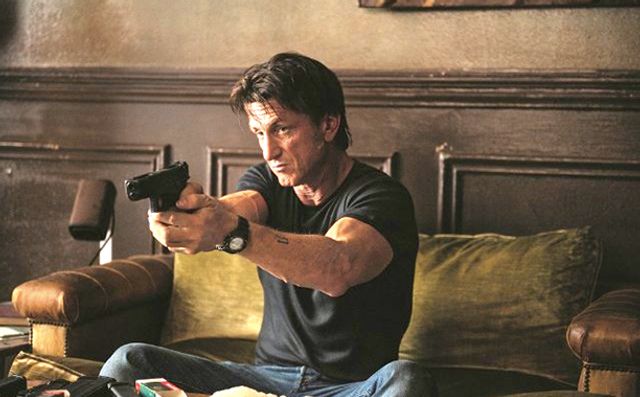
Directed by Pierre Morel, the French-born filmmaker responsible for Taken(2008), The Gunman is another action film, this time featuring Sean Penn. Penn plays Jim Terrier, whom we first see in the Democratic Republic of the Congo in 2006 working as a mercenary. One of a team of four, Terrier draws the “short straw” and is assigned by the team’s liaison, Felix (Javier Bardem), the task of assassinating the country’s minister in charge of mining, whose policies threaten the multinational firm that hired the mercenaries.
The Gunman
The deed done, Terrier hurriedly leaves the country, at the same time abandoning his lover, Annie (Jasmine Trinca), a medical aid worker at a local clinic. The assassination ignites a wave of political violence and chaos in the DRC.
Eight years later, having given up the sort of dirty work he formerly did, Terrier is back in the Congo as an aid worker himself. When several men attempt to kill him, Terrier is convinced it has something to do with the 2006 operation and goes in search of his former team members, in London, Barcelona and elsewhere. En route, he comes across Annie and Felix, now her husband, whose ferocious jealousy caused him to assign the assassination job to Terrier eight years previously.
Mayhem ensues along Terrier’s route, as various attempts are made to do away with him. The Gunman is peppered at intervals with shoot-outs, explosions and hand-to-hand combat. Terrier, “former Special Forces,” performs nearly superhuman feats, even though he is increasingly afflicted by post-concussion brain damage and wounded more than once.
This is not a good film. It is largely a clichéd scaffolding for certain violent set pieces, which are interesting as formal exercises of a kind, but have no long-lasting emotional or any other kind of impact, except to further inure audiences to killing and brutality. Like the lead figures in other ultraviolent American films at present, as long as Penn looks troubled by the corpses for which he is responsible, anything goes.
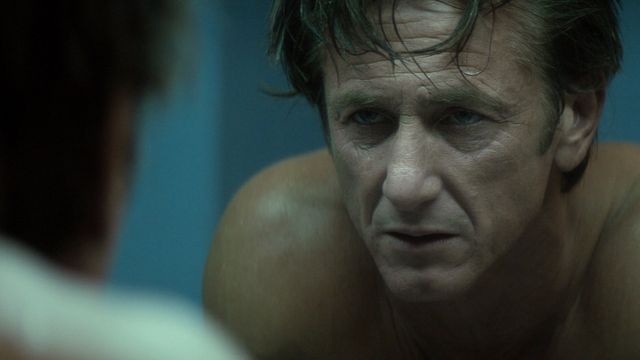
His performance lacks spontaneity and any genuine sense of inner turmoil, although Penn winces and moans through much of The Gunman, possibly to encourage the viewer to forget that his character’s history is a filthy one, as are his associates. One such, for example, Terrier’s English friend Stan (Ray Winstone), is enlisted to help obtain an apartment and other necessities for the American mercenary in Barcelona without the latter’s presence coming to the attention of the authorities. Stan does so, as he explains, through old pals from the Spanish Legion, i.e., the elite military unit that fought to bring Franco’s fascism to power in the Civil War and has participated in every bloody colonial operation of Spanish imperialism.
The circumstances of Terrier’s relationship with Annie make no real sense, nor is there any particular chemistry between Penn and Trinca. (One feelsThe Gunman’s writers, among them, Penn, have so little regard for the audience they hardly bother to provide plausible explanations for their characters’ behavior.) Although Terrier fled the Congo because he committed a serious crime, there is no reason why he could not have contacted Annie in the intervening years, unless we are to conclude he was racked with guilt. But then, as soon as he meets her again in Spain, they take up where they left off.
The Gunman
The dramatic turning point of the film ought to occur when Terrier has to tell Annie why he left her behind in desperate straits—that he murdered the government minister for money. Since her work is dedicated to preserving life and she seems in general opposed to political violence, this should, at the very least, provoke a crisis in their relations.
Instead, after looking appalled for a few seconds, she carries on with Penn’s character and no more is said about it. In other words, the demands of the action formula take precedence over any shred of psychological realism. At that point, if not before, one washes one’s hands of the work.
A number of talented performers are largely wasted here, including Penn, Winstone, Bardem, Mark Rylance and Idris Elba.
Morel’s The Gunman, in passing, raises the issue of “humanitarian intervention” in crisis-ridden regions such as Central Africa. The film includes news coverage of the unspeakable situation in the DRC, where civil wars have led to the deaths of several million civilians since 1998.
Aside from a few perfunctory references to the operations of ruthless transnational corporations, necessary for the plot to unfold, the conditions are treated by the filmmakers as though they were entirely the product of internal conflicts. Virtually no mention is made of the role of imperialism, although the Congo was subjected to horrific colonial rule at the hands of Belgium from the 1870s to 1960 and is currently the scene of struggles among the various imperialist powers over the country’s vast natural resources, worth an estimated $24 trillion.
Taken at face value, the film represents a further argument for great power intervention in “failed states” such as the Congo. Penn, who has been heavily involved in Haitian disaster relief, according to the Associated Press, not only jumped “at the chance to bring on some of his friends as consultants, he also took some time to focus and refine the bones of the script, taking what he knows about NGOs and military tactics and applying it to the story.”
Penn’s views and activities are worth considering, especially in the light of his recent disgraceful comments about Julian Assange of WikiLeaks and NSA whistleblower Edward Snowden. In the course of doing publicity for The Gunman, according to the Sydney Morning Herald, Penn suggested that Assange, in particular, should be “brought to account.”
After describing Daniel Ellsberg, who released the Pentagon Papers on the Vietnam War, as “a responsible curator,” Penn went on, “Then you have Edward Snowden by his own words saying, ‘Gee I don’t really know what should go out, what shouldn’t go out. I’ll let these journalists have it and let them decide our national security interests…’ If we’re not going to protect national security then we’re not going to get anywhere by protecting whistleblowers. We’ve got to find a way to do both.”
The Gunman
Penn denounced Assange in even stronger terms, suggesting that he should be prosecuted for the security information he has helped release, “with the damage to diplomacy and the likelihood that there was life loss as a result of some of those things… A lot of very important relationships are going to take a long time to retrieve. The people lose in a situation like that.” He added, “You can’t have these wholesale exposures going on.”
What is Penn talking about? When he did appoint himself guardian of American capitalism’s “national security” and its secret diplomatic “relationships,” and why? This is the language of the ultra-right, or perhaps of top Obama administration officials, which largely amounts to the same thing except for tactical nuances. Assange and Snowden have lifted the lid off some of the crimes of the American ruling elite and its advanced preparations for a police state, for which they have been abused and persecuted. Now Penn, Hollywood’s “bad boy,” joins in the assault.
There is a certain irony in his comments in view of the fact that the actor’s father, Leo Penn, was blacklisted in the 1950s for publicly coming to the defense of the Hollywood Ten—left-wing writers and directors witch-hunted by the House Un-American Activities Committee, although Leo Penn was apparently never a Communist Party member himself.
The irony, however, may not go that deep. Whether Leo Penn’s views ever extended beyond social reformism, which included support for Franklin D. Roosevelt, is not clear. In any event, Sean Penn has made a name for himself in the past as something of a maverick in Hollywood, issuing open letters to oppose the Bush administration’s drive to war against Iraq, traveling to Iran, meeting with Raul Castro and declaring his friendship and support for Venezuela’s Hugo Chavez.
Given the current state of almost universal conformism and quiescence in the entertainment industry, Penn’s willingness to stick his neck out on several occasions has made him unusual and given him a certain credibility. But his political commentary, even the most radical, has always been characterized by confusion as much as anything else.
In May 2003, Penn published a full-page statement in the New York Times in which he denounced George W. Bush, Dick Cheney, Donald Rumsfeld and the rest of the war criminals. He also, however, launched into appeals to patriotism that smacked of considerable disorientation. For example, he wrote, “I am an American and I fear that I and our people are on the verge of losing our flag.”
At the time, we commented in the WSWS: “The question of patriotism is a complex one, which only underlines an essential fact: there is no way to approach seriously the critical political issues raised in Penn’s Timesstatement without a thoroughgoing study of history. No artist or politician can survive without intuition, but intuition alone is an unreliable guide in art or politics…
“The danger exists that in citing his ‘patriotism,’ Penn is accommodating himself, perhaps unwittingly, to the contemporary media-political atmosphere in the US, dominated by right-wing and neo-fascist elements. There is no appeasing such people, nor any need to. The critical question is the clarification of the working population on basic historical and political issues.”
But the question of the working class and the fight for socialism is precisely what never enters into any of Penn’s comments or, one assumes, thinking. He makes off the cuff remarks, some of them quite trenchant, but they are not guided by any coherent understanding of history and social life. He has his political “likes” and “dislikes,” as it were, and seems satisfied with that.
And, inevitably, in the US, such confusion renders him vulnerable to the siren song of the Democratic Party. For all his “extremism,” Penn has made clear his strong backing for Barack Obama, even in the face of critical comments over drone strikes from fellow performers such as Matt Damon.
In 2012, in an interview with CNN’s Piers Morgan, Penn asserted that “we have an incumbent president who can be extremely positive for this country, and that as long as the people get involved, and support, and push the agenda of the president, as well as criticize it where necessary…I support the president…” Penn went on to discuss how Obama could become “an even greater president.”
The actor’s involvement in operations like Haitian relief, which will have no impact on the mass poverty and misery in that country, has no doubt brought him into closer contact with governmental or quasi-governmental circles in Washington and elsewhere.
At the same time, his comments have taken on a more pronounced and unpleasant nationalist coloring. When the North Korean regime was accused (falsely) of hacking into Sony’s emails in response to The Interview late last year, and the studio briefly canceled showings of the film, Penn emailed a journalist: “It’s not the first time culture has been threatened by foreign interests and corporate caution… This week, the distributors who wouldn’t show The Interview and Sony have sent ISIS a commanding invitation. I believe ISIS will accept the invitation. Pandora’s box is officially open.”
This overall evolution helps account for his haughty, semi-official tone in regard to Snowden and Assange. It also helps account, at least in part, for his unconvincing reinvention of himself as an action hero in The Gunman on behalf of imperialist “humanitarian intervention.”

Political turmoil continues in Bangladesh

Sarath Kumara

Despite domestic media claims that political tensions in Bangladesh have eased in recent weeks, nothing has been resolved in the protracted confrontation between the ruling Awami League and opposition Bangladesh National Party (BNP).
In early January, the BNP initiated an indefinite campaign of strikes, protests and transport blockades, marking one year since the 2014 election, which it boycotted. It has repeatedly called for the dissolution of parliament and fresh elections under a caretaker government—demands that the Awami League has repeatedly rejected.
The government has responded with a heavy-handed crackdown by police and the notorious Rapid Action Battalion (RAB). Dozens of opposition leaders and thousands of opposition activists have been arrested, forced into hiding and in some cases “disappeared.” The media has been targeted also, with arrests of journalists, closures of television stations and disruption of social media messaging.
BNP leader Khalida Zia was confined to her party headquarters from early January, before surrendering to the courts on April 5. Police padlocked the compound and prevented her from leaving. A special judge issued an arrest warrant in late February after Zia repeatedly failed to appear on charges of corruption.
Zia was bailed after last week’s court appearance but has been summoned to reappear in early May. Accused of embezzling $US650,000 during her most recent term as prime minister from 2001 to 2006, she has denied the charges, declaring them to be politically motivated.
Speaking to district administration officials last weekend, Prime Minister Sheikh Hasina indicated that there would be no let up in the police repression of opposition “arsonists,” saying: “They must face trial … this is urgently needed for ensuring the security of public life and property.”
Hasina and Zia represent rival factions of the Bangladesh ruling class whose bitter antagonism is being deepened by a slowing economy and growing geo-political tensions throughout Asia. Both parties are deeply hostile to the working class and rural masses and have used police-state measures to suppress opposition and resistance to their anti-working class policies.
The Awami League, which was installed in power in newly independent Bangladesh in 1972 as a result of India’s military intervention, accuses the BNP and other opposition parties of being backed by Pakistan. The BNP alleges that the Awami League is doing India’s bidding.
As opposition protests have appeared to wane, Prime Minister Hasina has exploited the political turmoil to try to consolidate her grip on power. She has targeted the Jamaat-e-Islami (JeI), a right-wing Islamist ally of the BNP, for carrying out war crimes when it sided with the Pakistani military during the 1971 secessionist struggles.
The government has set up a so-called International War Crime Tribunal (IWCT) to try a number of top JeI officials, as a means of diverting anti-government discontent. Last Saturday, JeI assistant secretary Muhammad Kamaruzzaman was executed after the Supreme Court turned down his appeal against the death sentence. Another JeI leader was previously hanged and five others are on death row awaiting the outcome of their appeals.
Growing concerns have been expressed in business circles in Bangladesh and internationally over the impact of the country’s continuing political crisis. Diplomats from more than a dozen countries, including the US, Japan, Germany and France, as well as the European Union, met opposition leader Zia last month to call for political reconciliation. On February 29, they met with and made a similar appeal to Foreign Minister Abul Hassan Mahmood Ali.
Last Sunday both the British-based Financial Times and the New York Timesdevoted lengthy articles to detailing the political fallout out from what the FT termed “a dangerous rivalry,” focusing in particular on the economic impact. A World Bank report released last weekend estimated that Bangladesh’s economy had lost $2.2 billion, or about 1 percent of gross domestic product, as a result of this year’s political unrest.
The New York Times declared that the turmoil “has hurt the entire country: students whose schools shut down before examinations; farmers who watched their crops rot; tourist resorts reporting near-total vacancy.” But the newspaper’s chief concern was the fate of the garment industry, which accounts for 80 percent of Bangladesh’s exports. Big corporate retailers in the US and Europe, such as Walmart, Marks & Spencer and the Gap, make huge profits by manufacturing their popular brands in Bangladesh’s cheap labour sweatshops.
The Times article highlighted the circumstances of garment manufacturer Shabbir Mahmood, who lost orders as a result of the unrest and incurred extra transport costs due to opposition blockades. He laid off workers in February and March after orders fell to half the capacity of his two plants and delayed opening a third factory. “Who will care?” he complained. “The government will not care.”
The Bangladesh Garment Manufacturers and Exporters Association has warned that exports could fall by 25 to 30 percent in May if the political turmoil continues. The worst affected will be garment workers, many of whom have already lost overtime, on which they rely to supplement their poverty-level wages of 6,000 taka, or about $US77, a month. The situation is even bleaker if they lose their jobs. Many would be compelled to return to their villages, where the only work available is day labour at just 50 taka, or less than $1, a day.
The potential for social unrest in the working class and rural masses is what is sparking concern among corporate retailers and international investors. It is also why Hasina’s government is beefing up its police apparatus in preparation for struggles by workers, who have repeatedly demonstrated their determination to defend jobs and living standards.

Thai junta replaces martial law with absolute powers

Tom Peters

Last month Thailand’s dictator, former general Prayuth Chan-ocha, announced the lifting of martial law, which was imposed in May 2014 shortly before the army seized power in a coup. Far from restoring democratic rights, however, the US-backed junta has activated article 44 of its interim constitution, which gives unlimited powers to Prayuth.
Conditions of martial law remain in place. The military regime can detain anyone without charge, political gatherings are banned, and Prayuth has the power to “suspend or suppress any actions that will destroy the peace and order, the national security and monarchy, the country’s economy or the country’s governance.”
Veteran journalist Richard S. Ehrlich noted the Thai media have compared the powers with those wielded by Field Marshal Sarit Thanarat, another US-backed dictator who ruled from 1957 to 1963 and carried out a reign of terror against the Communist Party of Thailand.
The New York Times reported on April 10 that since seizing power the National Council for Peace and Order (NCPO) has imprisoned or detained more than 1,000 political opponents, mostly members and supporters of the ousted Pheu Thai Party, as well as academics, journalists and protesters. On March 25 Prayuth told the media he would “probably just execute” any journalist who did not “report the truth” about his regime.
Eleven months after the coup, the NCPO has no intention of loosening its grip on power. Last year Prayuth stated that elections could be held in October 2015, but the junta now says they will not be held until 2016 or even later. Prayuth told reporters last month: “If the situation remains like this, I can tell you that I will hold onto power for a long time ... Why is there all this fuss about elections?”
The junta seized power after months of right-wing protests linked to the opposition Democrat Party, which disrupted elections and destabilized the Pheu Thai government, led by Prime Minister Yingluck Shinawatra. Thailand’s traditional ruling elites—the military, the monarchy and the state bureaucracy—are deeply hostile to Yingluck and her brother, former prime minister and billionaire businessman Thaksin Shinawatra. Thaksin was ousted in a military putsch in 2006 and now lives in exile.
Parties linked to the Shinawatras have won every election in the last 15 years, having gained widespread support among the rural and urban poor due to their limited populist measures. These included government subsidies for rice farmers, cheap loans and a higher minimum wage, along with Thaksin’s efforts to open the country to increased foreign investment, were seen as a threat by the traditional elites to their privileged position.
The NCPO has abolished the Yingluck government’s rice subsidies, ended a subsidy for liquefied petroleum gas (LPG), and frozen the minimum wage. It is rewriting the constitution in order to ban Pheu Thai’s “populist” policies and ensure that the party and its allies do not return to power.
Yingluck has been impeached and banned from politics for five years. She will stand trial in May on trumped up charges of “negligence” over the rice subsidy scheme, which the regime claims led to $16 billion in losses.
The junta is determined to impose the burden of the country’s economic crisis on the working class and rural poor. The economy expanded by just 0.7 percent last year due to a collapse in global prices for rubber and rice, Thailand’s main exports, combined with the country’s political turmoil.
Leaders of Pheu Thai and its protest wing, the United Front for Democracy Against Dictatorship (UDD, also known as the Red Shirts), have accepted the dictatorship and ended their political activity. UDD leader Jatuporn Prompan, whose talk show at Peace TV was recently shut down by the NCPO, told theWashington Post on April 13: “I’ve been trying to tell people to be patient ... We should give Prayuth time until his road map has been carried out.”
The UDD and Pheu Thai represent factions of the ruling elite and, like their rivals, are deeply hostile to any mass movement by the working class and rural poor. In 2013 and 2014 the UDD paved the way for the army to seize power by refusing to hold mass demonstrations in Bangkok and downplaying the risk of a coup.
While making occasional criticisms of the NCPO, the Obama administration maintains close ties with the Thai military.
On March 29, Prayuth told the media that he had met former US president Bill Clinton, along with the leaders of “Japan, South Korea, everyone,” during the funeral for Singapore’s founding leader Lee Kuan Yew. Prayuth boasted that they “expressed congratulations that Thailand is peaceful. None of them criticised me.”
On April 11 the US military publication Stars and Stripes noted that some strategic analysts were concerned that “America’s alliance with Thailand—its oldest treaty partner in Asia—is splintering as a result of blinkered diplomacy... [and] China is quickly filling the void.”
Kerry Gershaneck from the East-West Centre declared that US criticisms of the NCPO’s crackdown on free speech risked alienating the regime. He pointed to the recent visit by Thailand’s defence minister to Beijing, where he agreed to increased military training from China. Gershaneck said ties between Bangkok and Beijing could jeopardise the US “rebalance” to Asia—Washington’s strategy to militarily encircle and prepare for war against China.
However, Joshua Kurlantzik from the US Council on Foreign Relations, said “in reality most of [the Thai military’s] equipment is provided by Sweden and the US, and their training programs with China are really not on par with the training programs they’ve had with us in the past.” He saw the junta’s strengthening of relations with China as “a tool of leverage for them to sort of prod the US to come around.”
Similarly, Thitinan Pongsudhirak, from the Bangkok-based Institute for Security and International Studies, told the Bangkok Post that the junta’s “recent embrace of China and warm welcome of [Russian Prime Minister Dmitry Medvedev, who visited Bangkok this month] are likely to be short-term, expedient moves” to gain “leverage” against “Western posturing.” In other words the junta is seeking more open recognition from the US.
For its part, Washington is committed to supporting the NCPO. Last month the US Air Force trained with Thai and Singaporean troops in Thailand. This followed the annual Thai-based Cobra Gold joint training exercises in February, which are the largest US-led war games in Asia.