30 Apr 2015

Is the Stock Market Another Bubble?

Dean Baker 

The stock market has recovered sharply from the lows hit in the financial crisis. All the major indices are at or near record highs. This has led many analysts to worry about a new bubble in the stock market. These concerns are misplaced.
Before going through the data, I should point out that I am not afraid to warn of bubbles. In the late 1990s, I clearly and repeatedly warned of the stock bubble. I argued that its collapse was likely to lead to a recession, the end of the Clinton-era budget surpluses, and pose serious problems for pensions. In the last decade I was yelling about the dangers from the housing bubble as early as 2002.
I recognize the dangers of bubbles and have been at the forefront of those calling attention to them. However, it is necessary to view the picture with clear eyes, and not scream “fire” every time someone lights a cigarette.
First, we should not be concerned about stock indices hitting record highs; that is what we should expect. Unless we’re in a recession we expect the economy to grow. If profits grow roughly in step with the economy, then we should expect the stock market to grow roughly in step with the economy, otherwise we would be seeing a declining price to earnings ratio for the market. While that may happen in any given year, few would predict a continually declining price to earnings ratio.
This means that we should expect the stock market indices to regularly be reaching new highs. We need only get concerned if the stock market outpaces the growth of the economy. Outwardly, there is some basis for concern in this area. The ratio of the value of the stock market to GDP was 1.75 at the end of 2014. This is well above the long-term average, which is close to 1.0, and only slightly below the 1.8 ratio at the end of 1999 when the market was approaching its bubble peaks.
It is worth noting that this run-up is primarily in the stock of newer companies. The S&P 500 is only about 40 percent above its 2000 peak, while the economy has grown by roughly 80 percent. This doesn’t mean that the newer companies are necessarily over-valued. It could prove to be the case that the older companies will rapidly lose market share and profits to the upstarts in the next decade.
If we look beyond GDP to corporate profits, the case for a bubble looks much weaker. In 1999, after-tax profits were 4.7 percent of GDP. By comparison, they were 6.3 percent of GDP in 2014, and over 7.0 percent in 2012 and 2013. Just taking the single year number, this gives a price to earnings ratio of 27.7 at the end of 2014 compared to 38.7 in 1999. This is still high by historical standards, but far below the bubble peaks.
Whether this figure proves to be excessive will depend in large part on whether the extraordinarily high profit share is anomaly or whether it is the new normal. My guess (and hope) is that it is largely anomalous, and if the labor market is allowed to tighten further, then we will see a further shift back toward wages. But if the profit share stays near its current level; there seems little basis for concerns about a bubble in the market.
There is another important factor that we have to consider in assessing stock prices. The interest rate on 10-year government bonds has been hovering just under 2.0 percent. By comparison, it was over 6.0 percent at the end of 1999. This matters hugely in assessing whether the market is in a bubble, since it is necessary to know what the alternative is. In 1999, with an inflation rate just over 2.0 percent, the real interest rate on long-term bonds was close to 4.0 percent. By comparison, with a current inflation at just 2.0 percent, the real interest rate is close to zero.
Here also there is there is an important question about future trends. If interest rates rise, then that increase should have some negative impact on the stock market. But those who have been predicting a huge jump in interest rates have been wrong for the last five years and they are likely to continue to be wrong long into the future. It is certainly is plausible there will be some upward trend (that’s my bet), but given the weakness of the economy, it is likely to be many years before we see anything like a 6.0 percent long bond rate.
In short, there doesn’t seem much basis for concern about a market crash. However, with price to earnings ratios well above normal levels even assuming no further fall in profit shares, there is no way investors will see anything resembling the 7.0 percent real return on stock, which has been the historic average. But given the low returns available elsewhere, stockholders may be quite satisfied a real return in the 4.0-5.0 percent range.
There is one final point worth emphasizing about the current market. In the 1990s, the stock bubble was driving the economy with the wealth effect propelling consumption, and the saving rate hitting a then record low. The bubble also drove a tech investment boom. In the last decade bubble generated housing wealth led to an even larger consumption boom and a surge in residential construction.
It is hard to make the case that current market valuations are driving the economy. Consumption is somewhat high relative to disposable income, but not hugely out of line with past experience. And, there is no investment boom in aggregate, even if some social media spending might be misguided.
This means that if the market were to suddenly plunge by 20 to 30 percent, we will see some unhappy shareholders, but it is unlikely to sink the economy. This is not Round III of the bubble economy.


29 Apr 2015

Woman in Gold: The battle to recover art stolen by the Nazis

David Walsh

Directed by Simon Curtis; written by Alexi Kaye Campbell
By the time of its downfall in 1945, the Hitler Nazi regime, its armed forces and police had looted hundreds of thousands of cultural objects from museums and individuals (it also destroyed thousands) in the territories, including Germany, under its control.
Woman in Gold
Simon Curtis’s Woman in Gold is a fictional rendering of the legal efforts, beginning in 1998, undertaken by Maria Altmann, an Austrian Jew forced to flee the Nazis in 1938, to regain possession of several Gustav Klimt paintings stolen or coerced from her family. The remarkable story has been told in at least three documentaries, The Rape of Europa (2006), Stealing Klimt (2007) and Adele’s Wish (2008).
Living in modest circumstances in Los Angeles, Altmann (Helen Mirren) asks the son of a family friend, Randol Schoenberg (the grandson of composer Arnold Schoenberg, played by Ryan Reynolds), a lawyer who has had difficulties launching his legal career, to look into the case of the Klimt paintings. Her sister has just died and some letters from the late 1940s turn up, referring to an attempt to recover artwork once owned by the family.
Woman in Gold
At the center of the dispute is one painting in particular, a portrait of Maria’s aunt, Adele Bloch-Bauer, done by Klimt (1862-1918), the famed symbolist and member of the Vienna Secession movement, in 1907. The picture hung at the time the film opens in the Belvedere gallery, an Austrian public museum, and the country’s establishment considers it an irreplaceable national treasure.
After hesitations on both their parts, Altmann and Schoenberg travel to Vienna to put their case before the committee charged with restitution of Nazi art. They encounter an ally there, Austrian journalist Hubertus Czernin (Daniel Brühl), whose research has uncovered important facts about the provenance of the Klimt paintings.
The Austrian government supports its claim to ownership of the paintings on the grounds that Adele Bloch-Bauer’s 1923 will (she died of meningitis in 1925 at the age of 34) expressed the wish that the works should go to the Austrian state museum. However, Schoenberg and Czernin learn that the paintings never actually belonged to Adele, and that her husband, Ferdinand, left them to his nieces (including Maria) and nephew when he died in 1945.
Nonetheless, the Austrian commission rejects Altmann’s claim. The cost of filing a lawsuit in Austria, calculated as a percentage of the worth of the pictures, would be prohibitive, more than $1 million. Defeated, Altmann and Schoenberg return to the US.
Interspersed with these scenes are flashbacks representing Maria’s memories of growing up in the 1920s and 1930s. Her affluent and sophisticated family inhabits the legendary world of early twentieth century Viennese culture and thought. Sigmund Freud and Arnold Schoenberg are family friends. As a child, Maria is entranced by her elegant aunt Adele (Antje Traue), painted twice by Klimt.
Woman in Gold
In March 1938, only months after Maria (played as a young woman by Tatiana Maslany) has married Fritz (Max Irons), German troops mass on the Austrian border. Maria’s uncle Ferdinand (Henry Goodman), Adele’s widowed husband, prepares to leave for Zurich. Maria’s father (Allan Corduner) and mother (Nina Kunzendorf) are not so pessimistic. They remain, only to see Nazi officials strip them of their valuable belongings, including the Klimt paintings. Ultimately, Maria and her husband flee Vienna, leaving behind her parents, who both die at the hands of the Nazis.
Back in the present, Schoenberg convinces Maria they can take Austria to court in the US under provisions of a statute that sets out the ground rules for lawsuits against foreign governments. The case makes its way to the Supreme Court, where Schoenberg and Altmann prevail, encountering bitter opposition from the Austrian authorities at every point. Finally, the two parties agree to arbitration by a panel of three Austrians. Since the outcome is part of the historical record, we can report that Altmann wins back the paintings in 2006, some five years before her death in February 2011.
Curtis’s Woman in Gold treats a fascinating and complicated series of events, including some of the legal issues. Unhappily, the events and the personalities associated with them are considerably more fascinating than the work itself.
The strongest sequences are those set in the 1920s and 1930s in Vienna. The vignettes of family life are sensitively and thoughtfully done. One remembers the image of Maria’s father furiously playing his cello in a vain effort to drown out the growing roar of the fascist threat. The final scene between daughter and parents, whose tragic parting words are, “Remember us,” is extremely moving. Maslany, Corduner, Kunzendorf and Goodman are all effective and believable.
On the other hand, the contemporary scenes, which take up most of the film, are far less satisfactory. They seem duller and less substantive, organized and performed according to an unimaginative formula. One can almost set one’s watch by the predictable stages in the legal-political fight and the inevitable (and rapidly resolved) disputes between Altmann and Schoenberg, as well the tensions created at home, with wife Pam (Katie Holmes), by Schoenberg’s obsession with the case. Nor should Pam’s final “this is no time to quit, we’ve come so far” speech come as a surprise to anyone.
Mirren is enjoyable as the witty and irrepressible Maria, who remained lively and cogent until her death a few weeks before her 95th birthday. Reynolds, a talented performer, does not seem to know what to do with the rather colorless and quiet role he has been handed in Schoenberg. He flounders and never truly finds his way.
The American scenes are also rather conformist. There is no good reason why the filmmaker has to go out of his way to paint modern conditions in the US in such glowing and uncritical colors, including a warm and friendly tribute to that aging reactionary, Chief Justice William Rehnquist (Jonathan Pryce).
And one must say that even the Vienna sequences, thoughtful as they are, skim over the thorniest and most critical questions. One of those, incidentally, is the matter of Klimt’s art itself. While his portrait of Bloch-Bauer is extraordinarily striking, even mesmerizing, there are certainly issues bound up with the Secession movement, including its social indifference and Klimt’s allegiance to Nietzsche’s irrationalism, that deserve our attention today.
Moreover, there are the political and historical questions. Woman in Goldpresents the Austrian population, every man, woman and child in view, as wildly supportive of Hitler and fascism. But the political conditions existing in Austria in 1938 were largely shaped by the betrayals of the working class in the post-World War I era by the Social Democrats, who possessed a mass following. The Austrian workers showed their willingness to fight the class enemy throughout this period, especially in the general strike of 1927 and the quasi-civil war in 1934.
As Leon Trotsky noted in 1930, “Austrian Social Democracy helped the Entente to deal with the Hungarian revolution, helped its own bourgeoisie emerge from the post-war crisis, and created a democratic asylum for private property when it was staggering and close to collapse. Thus, through the entire post-war period, it has been the chief instrument for the domination of the bourgeoisie over the working class.”
That sections of the Austrian population welcomed the German troops and even tolerated the horrific crimes carried out against the Jews were signs of terrible political demoralization. As Trotsky noted, “In Austria, as everywhere else, fascism appears as the necessary supplement to Social Democracy, is nourished by it, and comes to power through its aid.”
In any event, the Austrian population in March 1938 was hardly universally behind Hitler. Mass opposition existed, forcing the Nazis to arrest some 70,000 Socialists and Communists and other opponents within days, and imprison or send them to concentration camps.
The absence in Curtis’s film of any consideration of the political and social contradictions extends, for that matter, to the treatment of Adele Bloch-Bauer herself. She may have been the somewhat ethereal, heavy-lidded creature Klimt painted in 1907, and whom Traue in Woman in Gold attempts to capture, but by the time she wrote her will in 1923, Bloch-Bauer was a changed woman, with definite social views, of a left-wing character.
Anne-Marie O’Connor, in The Lady in Gold: The Extraordinary Tale of Gustav Klimt’s Masterpiece, Portrait of Adele Bloch-Bauer, notes that in her will Bloch-Bauer left money to the Vienna Workers’ Association Friends of the Children, while her “immense library of books would go to the Peoples’ and Workers’ Library of Vienna.”
O’Connor writes, “Adele was immersed in the ideals of this ‘Red Vienna,’ and the battle for social justice.… The architects of this movement gathered at Adele’s house every week for a salon her family called her Red Saturday.” The author later adds, “At her Saturday salon, she spoke excitedly…about the creation of a new society in the Soviet Union.… She spoke of traveling…to witness the Soviet experiment.”
The history touched upon in Woman in Gold is laden with such rich and fraught complexities. It is a pity the film does as little as it does to present or convey them.

Mexico farm workers’ struggle winds down as negotiations begin

Clodomiro Puentes

Over the past week, there has been a general winding down of the strike by farm workers of the San Quintin Valley in Baja California, Mexico. The strike began on March 17, led by the Alliance of National, State and Municipal Organizations for Social Justice (AONEMJUS). Negotiations have been ongoing as the AONEMJUS leadership continues to reach out to the federal government to mediate the bargaining process.
Official government statistics account for 33,000 farm workers in the San Quintin Valley, while generally accepted figures range from 70,000 to 90,000. Estimates vary widely, but it is generally understood that thousands of farm workers, represented by the PRI-aligned CTM, CROC and CROM unions, have accepted terms for a contract and returned to work. It was the Agricultural Council of Baja California, an association of the largest growers that dominate agriculture in the region, which proposed a pitiful 15 percent raise. AONEMJUS rejected this proposal, claiming it was negotiated behind the backs of workers by the corporatist unions.
However, by isolating the strike to the confines of the San Quintin region, the union leaderships, whether corporatist or “militant”, have allowed the growers to take advantage of the precarious social position of the farm workers in what is essentially a war of attrition. In the absence of the expansion of the farm workers’ struggle, the large agribusiness concerns can afford to wait out the workers and force piecemeal negotiations in combination with threats of layoffs and blacklisting.
The harsh conditions facing workers are by no means particular to San Quintin or even Baja California. As the WSWS has reported, these circumstances are endemic across the republic. At present, farm workers in Mexico generally earn somewhere between 65 and 110 pesos a day (roughly US$4.25 to $7.15). A 15 percent increase of such poverty wages does not begin to alter the living conditions of the farm workers, let alone the harsh exploitation of their labor.
Indeed, practices amounting to debt peonage, forced labor and corralling of workers into squalid barracks with limited or no access to basic services such as running water persist in many of these vast agricultural complexes across the country. According to La Jornada, the overwhelming majority of farm workers are without a formal labor contract and are forced to work exceedingly long hours under grueling conditions: on average, men work 57 hours a week, and women 65.
The principal demands enumerated by the AONEMJUS include: a wage increase to 200 pesos per day; the annulment of the aforementioned contract that the CTM, CROM and CROC had negotiated; access to the services and programs provided by the Mexican Institute of Social Security (IMSS); access to basic labor rights and benefits, including vacations, voluntary overtime, and no less than one day of rest per week; the extension of these to working mothers, and an immediate stop to the widespread sexual abuse endured by working women in the fields at the hands of overseers and management. The character of the demands speak, on the one hand, to the intolerable circumstances with which workers are faced, and on the other, to the modest, even timid, scope of the aims of the farm workers’ leadership.
The Secretariat of Labor and Social Welfare (STPS) has been obliged by growing awareness over the unremitting exploitation in the fields to pretend to be taking the initiative in redressing some of these abuses. This includes the imposition of paltry fines totaling about 140 million pesos (just over $9 million) on various growers. To refer to such a measure as even a slap on the wrist would be an exaggeration.
The PRD in particular has opportunistically sought to affect a concern for the plight of the San Quintin farm workers. In the Chamber of Deputies, the PRD had decried the fact that the vast majority of farm workers work without any kind of formal contract, and that 55 percent of them are exposed to harmful agrochemicals. The PRD mayor of Mexico City, Miguel Ángel Mancera, has offered to intercede on behalf of the AONEMJUS, to provide an avenue towards reaching an agreement with the Secretary of the Interior.
For its part, the approach of the AONEMJUS has been that of pressuring a section of the Mexican state. Already, the round of negotiations in late March that the AONEMJUS was excluded from was a signal to limit its demands for increased wages. Fidel Sánchez Gabriel, a leading spokesperson for the AONEMJUS, explained that the initial proposal was for a 300 peso wage for an eight hour day, plus the piecework rates given per basket, but this was lowered to 200 pesos, plus social security benefits. The obdurate and unsparing tight-fistedness of the growers and the abject character of the corporatist PRI-backed unions is only one facet in this struggle. The other is the conciliatory conduct of the AONEMJUS leadership.
In the weeks since the strike caught the public’s attention, Fidel Sánchez Gabriel has become prominent as a spokesman of the union.
Himself the son of indigenous farm workers, Sánchez’s concern over the misery endured by the Alliance’s rank-and-file and hope for a betterment of its basic living and working conditions may well be genuine. The question, however, is ultimately not one of personal motivations, but of political program and the social forces which that program represents.
Sánchez came up in the 1980s as a farm laborer and was swept into struggle by conditions not dissimilar to those that now impel farm workers to strike. But in the absence of a principled leadership in Mexico’s political environment, he found himself in the orbit of ex-Stalinist forces. He became affiliated with the Unified Socialist Party of Mexico (PSUM), an ex-Stalinist multi-tendency organization, and followed it through its series of fusions into the “center-left” PRD for a time. As of late, he has gravitated towards the avowedly Stalinist Revolutionary Popular Front (FPR).
The basic approach of all these political forces—which unites them with elements ranging from the PRD to groups posing as the continuators of the guerrilla movements of the 1960s and 1970s—is one of making direct appeals to the state for “better governance.”
The “success” of such appeals can be measured by the prevailing social conditions in Mexico: according to a recent report by the Inter-American Development Bank, 37.5 percent of the population lives below the poverty line, while an additional 37.8 percent of the population lives at the risk of falling into poverty. The country continues to rank as the most socially polarized within the OECD.
Parties such as the PRD and Workers Party (PT) share complicity with the administration of President Enrique Peña Nieto in ramming through the Pact for Mexico “reforms” that constitute a massive attack on the working class, including the privatization of PEMEX, the state-owned petroleum concern, as well as an attack on public education and teachers. Especially in light of the revelations surrounding the Iguala massacre, this complicity extends to state repression, organized crime and US imperialism, further underscoring their utter bankruptcy.
There is also a resonance between the strike led by AONEMJUS and the recent struggles of teachers against the reactionary education “reforms” under the leadership of the CNTE. In both cases, these leaderships are able to adopt a militant posture to the extent that they can point to the CROM and CTM, and SNTE as convenient political foils while pursuing a strategic and tactical course not significantly different from their openly corporatist counterparts.
All workers must begin to draw conclusions: the defense of their living conditions calls for a different approach that is not based on making modest (and it must be said, insufficient) economic demands enlivened by a dose of radical pantomime, but on an understanding of the character of the present historical juncture, which means that a fight for a living wage is bound up with broader political struggles.
The past decades of class struggle in Mexico point to the insufficiency of a purely economic struggle. This is compounded by the qualitative shift in the global economy in recent decades, which has altered the social character of unions from defensive instruments of working class struggle within the confines of capitalism to instruments of management that move to curtail the aspirations and militancy of their rank-and-file at every turn, and imposing concessions, or at best, meager and transitory gains. Contrary to the apologetics of opportunists, such hollow “victories” do not embolden, but rather frustrate, demoralize and politically confuse the working class.
A fight to defend the living conditions of any section of the working class must first and foremost be taken out of the hands of a leadership that deliberately limits the scope of the struggle to effectively just one city and one section of the working class. Just as the CNTE made no serious efforts to appeal to other sections of the working class, the AONEMJUS has likewise made no effort to mobilize the over three million farm workers across the country.
Deep fault lines lay under the increasingly strained surface of Mexican society, and social explosions are inevitable, but in the absence of an internationalist socialist perspective, rather than radical Mexican nationalism, the danger remains of these explosions being contained and repressed.

US Supreme Court hears oral arguments on same-sex marriage cases

Evan Blake

On Tuesday, the US Supreme Court heard oral arguments in a multi-state challenge to the constitutionality of state bans on same-sex marriage.
The case, Obergefell v. Hodges, includes lawsuits challenging restrictive bans on same-sex marriage in Kentucky, Michigan, Ohio and Tennessee—four of the only 13 states remaining that prohibit gay marriage.
The first element of the case focuses on whether the states have the right to circumvent the Fourteenth Amendment’s guarantees of due process and equal protection with respect to the right to marriage. If the court rules in favor of same-sex marriage on the first element, it is possible that the Court may make a decision that effectively legalizes same-sex marriage nationwide.
During the course of the oral arguments, the expected split between justices emerged, with Justices Ruth Bader Ginsberg, Stephen Breyer, Sonia Sotomayor and Elena Kagan indicating their opposition to the marriage bans; and arch-reactionaries Justices Samuel Alito, Antonin Scalia and Clarence Thomas indicating their support for the bans.
While Justice Anthony Kennedy is expected to be the “swing” vote that determines the final outcome of the trial, questions remain as to whether Chief Justice John Roberts—a George W. Bush appointee—will back same-sex marriage. Because either of the two conservative votes of Kennedy and Roberts would swing the vote in favor of same-sex marriage, it is generally expected that the Court will strike down the marriage bans as unconstitutional.
The fact that an issue as elementary as the democratic right to marriage remains a confrontational legal question speaks volumes to the right-wing, religious character of the American political system. The reactionary character of the debate was framed by the pseudo-legal rationale put forward by Justice Antonin Scalia.
Scalia was the most open in sharing his contempt for the First Amendment’s Establishment Clause, which prohibits the government from passing laws that sanction a particular religious belief. “I'm concerned about the wisdom of this Court imposing through the Constitution a requirement of action which is unpalatable to many of our citizens for religious reasons,” he said.
Scalia's remarks underscore the unavoidable legal contradiction bound-up with any defense of same-sex marriage bans. Though the courts have long recognized marriage as a “fundamental right” under the Fourteenth Amendment’s Due Process Clause, opponents of same-sex marriage make the baseless legal argument that their religious beliefs are upset by the civil rights of millions of homosexual people.
The degree to which a section of the Court is swayed by such legal hogwash was highlighted by Justice Scalia’s response to a delusional right-wing religious protester who interrupted yesterday’s arguments to shout that the justices would “burn in hell” if they voted in favor of gay marriage. Scalia declared that the outburst “was rather refreshing, actually.”
Justice Kennedy, who has cast votes in favor of same-sex couples on prior occasions, seemed to share the antiquated and reactionary views of Scalia, declaring, “This definition [of marriage being between a man and a woman] has been with us for millennia. And it’s very difficult for the Court to say, oh, well, we know better.”
The same spurious standard of the inertia of tradition was used to justify slavery prior to the Civil War, as well as anti-miscegenation laws throughout the era of Jim Crow, which were finally abolished in the landmark 1967 Supreme Court case Loving v. Virginia. Brought to the Court during the stormy years of the Civil Rights Movement, the final ruling came a mere ten months before the assassination of Dr. Martin Luther King, Jr.
In that case, a unanimous Supreme Court backed Chief Justice Earl Warren’s declaration that “there is patently no legitimate overriding purpose independent of invidious racial discrimination which justifies this classification. .. There can be no doubt that restricting the freedom to marry solely because of racial classifications violates the central meaning of the Equal Protection Clause.”
Attempts by the religious right to draw a distinction between same-sex marriage and interracial marriage are completely without legal merit. The distinction made is not a legal one, and it relies upon a religious definition of “marriage” that does not stand up to constitutional analysis.
Equally erroneous is the assertion that same-sex marriage bans are supported by wide swaths of the population.
In fact, the past decade has seen a major shift in public opinion on the question of same-sex marriage. A February CNN poll shows that 63 percent of Americans believe same-sex marriage is a constitutional right, with just 35 percent in opposition. This figure represents a major shift in opinion from as recently as 2009, when a CBS poll showed only 33 percent in favor of same-sex marriage rights.
Such a shift in public opinion is evidence not only of growing support for same-sex marriage; it also refutes claims that the American population is beholden to bigoted religious backwardness. To the contrary, the shift on same-sex marriage is proof of the essentially open and democratic outlook of the broad majority of the population.
Though by no means a certainty, it is increasingly possible that the US Supreme Court will finally strike down state bans on same-sex marriage. Such a move is not proof of the progressive capacities of the American ruling class. Rather, it is an expression of the severe limitations of the whole political set-up, where those democratic rights not bound up with identity politics—a principal component of bourgeois politics in general and the politics of the Democratic Party in particular—are ignored outright.
Whatever the Court’s decision on same-sex marriage, this term will be defined not by the decisions that are reached, but by those cases that are not heard at all. During its 2015 term, the Court will not hear any cases on: the constitutionality of the Obama administration’s state assassination of US citizens without trial or warrant, the impunity granted to police officers to shoot and kill people in the streets on a daily basis, the massive spying operations carried out against the population, the cruel and unusual use of poison cocktails against death penalty victims, the re-imposition of the firing squad or the Obama administration’s cover-up for CIA torture. In its present term, the Supreme Court’s silence is louder than its actions.

Governing parties suffer defeat in Finnish elections

Roger Jordan

Finland’s general election held on April 19 saw the defeat of the two main government parties, the conservative National Coalition Party (NCP) and Social Democrats (SDP).
Talks on forming a new government will be led by the Centre Party, which made gains at the governing parties’ expense.
Centre Party leader Juha Sipilä is a multimillionaire former businessman, who only entered politics at the last election in 2011, taking over as party leader in 2012. He has committed his administration to pursuing labour reforms and other moves to deregulate the economy, together with spending cuts in public services.
Finland has suffered badly since the onset of the economic crisis in 2008, with GDP still 5 percent below the level prior to the downturn. Unemployment is running at 9 percent, and last year the state lost its AAA credit rating.
The Centre Party obtained 49 seats in the 200-seat legislature, followed closely by the right-wing populist Finns Party, formerly the True Finns, led by Timo Soini with 38 seats. The NCP came in third place on 37 seats, down 7, and the SDP on 34, down 8. The vote marked the eighth election in a row that the SDP had suffered defeat, including parliamentary, presidential and local elections stretching back over a decade.
Other parties securing parliamentary representation included the Green League (15 seats), Left Alliance (12), Swedish People’s Party (9), and Christian Democrats (5).
The outgoing government, led until last June by NCP prime minister Jyrki Katainen, implemented austerity measures domestically, while backing Finland’s closer integration with NATO through its Programme for Peace.
Katainen’s successor and outgoing prime minister, Alexander Stubb, is firmly in favour of full NATO membership, and could take a leading position in Sipilä’s cabinet.
The aggressive US-led drive to encircle Russia in eastern Europe and the Baltic will be one of the main issues confronting the incoming administration. Finland has stepped up its joint activities with NATO over recent years, while avoiding joining the alliance outright. This reflects conflicting interests within the ruling class linked to Finland’s substantial trade with Russia and the 1,300-kilometre border the two countries share.
Although Sipilä is not as overtly pro-NATO as his predecessor, he is in favour of continuing to expand Helsinki’s cooperation with the US-led alliance. In comments to YLE prior to the election, Sipilä stated, “I do not support applying for NATO membership, but Finland should develop its Partnership for Peace programme with NATO and maintain the possibility of applying for NATO membership. What is most important is that Finland takes care of its own defence capability.”
Partnership for Peace has seen the militaries of non-NATO members, including Sweden and Ukraine, participate in virtually all of the alliance’s major exercises directed at stoking conflict with Russia.
Sipilä’s position is entirely in keeping with the Nordic defence agreement signed by the outgoing government earlier this month. The agreement, struck with the full backing of US imperialism, will see the Nordic area become a region of increased military activity, aimed above all at intimidating Russia. It explicitly identifies Russia as the greatest security threat in Europe at present.
The four main party leaders have all expressed their readiness to hold a national debate on NATO membership, regardless of the final composition of the government.
Giving an insight into the thinking in ruling circles, Charly Silonius-Pasternak of the Finnish Institute for International Affairs told the Financial Times, “It may have been possible in the Cold War to stay out of a conflict between the US and the Soviet Union, but we won’t be able to stay out of it now if there’s a dogfight in the Baltics.”
As well as deepening cooperation with NATO, the previous government backed the European Union (EU)-led bailouts for Greece and Portugal, which provided billions to the big banks and investors in exchange for devastating attacks on the working class.
But sections of the ruling elite have been questioning the wisdom of continued Finnish backing for any further bailouts for investors in Greece for some time. In 2012, Helsinki caused friction in Europe when a government plan was revealed that considered the possibility of a Greek euro exit. Finland also pushed Greece to put up collateral to receive funds from the Finnish state in its previous bailouts. Helsinki’s own worsening economic position is contributing to the view that no further money should be made available.
Soini’s party was previously excluded from government because of its strident opposition to backing EU bailouts, but now it is seen as entirely possible that the second-placed Finns could find themselves in government. Although Soini has toned down his attacks on the EU somewhat, this nonetheless reflects the growing support within Finnish ruling circles for a change in relations with Brussels.
EU officials have sought to downplay the impact that Finland could have on preventing future aid packages to Greece, given that under the terms of the European Stability Mechanism (ESM), the EU’s permanent bailout fund, the declaration of an emergency situation enables decisions to be taken with only 85 percent of votes in favour. Finland’s vote equates to 1.8 percent of the total.
The disputes over whether or not to continue support for EU-led bailouts are over how best to uphold the interests of the Finnish ruling elite. It therefore comes as no surprise that all of the parties have committed themselves to major labour market reforms to slash wage costs, and spending cuts in the public sector.
The Financial Times complained that Finland faced “a deteriorating competitive position undone by wage rises that have outstripped production.” It went on to cite a study claiming that the average Finn works only 50,000 hours in his or her working life, while in Germany the figure is 70,000.
Indicating that what was necessary was an assault on workers’ wages and conditions comparable with the austerity policies adopted in EU bailout countries, the Research Institute of the Finnish Economy (ETLA) said in 2013 that Finland was “at least half a decade behind Spain and Portugal in matching pay with productivity.”
Sipilä has promised a government programme within a month. It remains unclear which parties will be involved. While the second-largest party usually fills the post of finance minister, this tradition may be broken since the Finns took second place in the vote. Soini is seen as a more likely candidate for foreign affairs, having led the parliamentary foreign affairs committee for the past four years.
A possible candidate for finance minister is Olli Rehn, a Centre Party member and former EU finance and monetary affairs commissioner who became the spokesman for austerity throughout Europe.
Under the previous government, workers confronted a steady stream of austerity measures that saw billions slashed from public spending to satisfy the demands of the banks and international financial institutions. A critical role in selling this agenda to voters following the last election in 2011 was played by the pseudo-left group Left Alliance, which joined the conservative-led government and gave the government’s programme fulsome praise.
Left Alliance is made up of ex-Stalinist elements from the Communist Party, along with other radical groups. It belatedly took the decision early in 2014 to leave the government, ostensibly over its opposition to welfare cuts but in reality driven much more by electoral considerations. Voters punished the Left Alliance at the polls, with the party losing two seats in parliament. According to YLE, it faces losing more than €300,000 of state funding due to its reduced representation and may have to lay off some full-time staff.

US-Al Qaeda offensive against Syrian regime

Patrick Martin

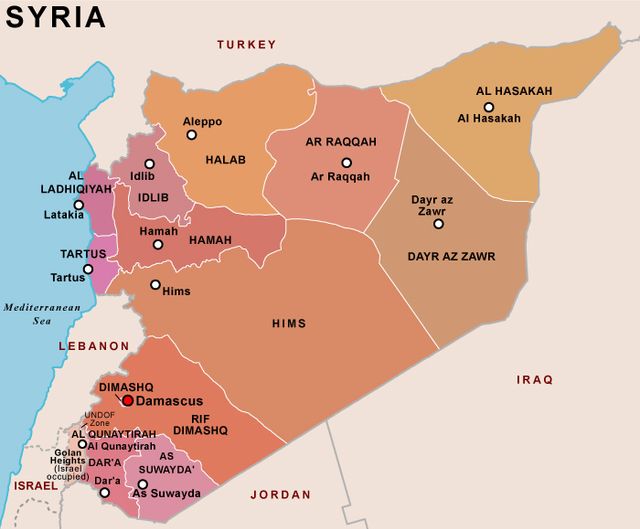
In a series of battles in which a group linked to Al Qaeda has fought alongside a group armed and backed by the United States, rebel forces have made significant gains against Syrian Army troops loyal to President Bashar al-Assad, taking control of most of the critical northwestern province of Idlib.
With the fall of city of Jisr al-Shughur Saturday, the remaining government forces in the province are cut off and surrounded, and can only be resupplied by air. Rebel forces captured the provincial capital, the city of Idlib, on March 28, the second of Syria’s 14 provincial capitals to be lost to the Assad regime.
Idlib province occupies a critical strategic position, separating the coastal provinces of Latakia and Tartus, where Assad has a strong political base among the predominately Alawite population (a branch of Shiite Islam), from Aleppo, the country’s largest city and one of the bloodiest battlegrounds of the four-year civil war. According to press reports, rebel forces were only five miles east of the nearest Alawite villages in Latakia province.
Syrian government media reported the fall of Jisr al-Shughur Saturday, and a nearby military base at Qarmeed the following day. The government blamed outside powers, including Turkey, Qatar, Saudi Arabia and the United States, with the state news agency SANA saying that its forces were “facing the terrorist groups flowing in huge numbers through the Turkish border.”
That this claim is not mere propaganda was confirmed by numerous reports in the American and European press, generally hostile to Assad, describing the alliance of Islamists and US-backed “rebels” in the struggle in Idlib province.
The headline of the McClatchy News Service report on the fall of Jisr al-Shughur left nothing to the imagination: “U.S.-backed rebels team with Islamists to capture strategic Syrian city.”
“The latest rebel victory came surprisingly quickly, apparently aided by US-supplied TOW anti-tank missiles,” McClatchy reported, adding, “accounts of the fighting made clear that US-supplied rebel groups had coordinated to some degree with Nusra, which US officials declared a terrorist organization more than two years ago.”
This article cited conflicting claims by “moderate” and Islamist groups about which had played a greater role in the capture of the city. McClatchy noted, “The battle itself was announced by the Fateh Army, an umbrella group that Ahrar al Sham [another Islamist group] and other groups established on March 24, just four days before they and the Nusra Front seized the city of Idlib.”
The rebel-linked television station Orient News reportedly showed video of rebel fighters in the central square of Jisr al-Shughur, raising the black flag that has long been the symbol of Al Qaeda and its affiliated groups. Photographs also appeared of “rebel” trucks bearing poster-sized photos of Osama bin Laden.
The New York Times and Washington Post reported many of the same facts—the fall of Jisr al-Shughur and nearby bases to the offensive of a rebel alliance—but sought to downplay the link between US-backed and Al Qaeda forces, with the Times publishing its article under the headline, “Islamists Seize Control of Syrian City in Northwest.”
McClatchy, citing many local eyewitnesses, described an active fighting alliance between Free Syrian Army forces armed with TOW missiles, destroying nearly a dozen Syrian Army tanks, and Al-Nusra suicide bombers who attacked concentrations of soldiers.
The Times sought to conceal these connections, suggesting that the TOW missiles had fallen into the wrong hands. By its account, “Last year, the United States provided a small number of TOW antitank missiles to some rebel groups. But those groups were largely routed or co-opted by the Nusra Front, further complicating what was already a murky battlefield that has left American officials wary of providing more robust aid to insurgents.”
The Post concentrated on the political benefits of the offensive from the standpoint of the US State Department, suggesting that the military setbacks had dealt a severe blow to the morale of Assad supporters in both Aleppo and the capital city, Damascus. Its account carried the headline, “Assad’s hold on power looks shakier than ever as rebels advance in Syria.”
The Post also glossed over the ties between the US-backed groups and Al Qaeda, writing, “The result has been an unexpectedly cohesive rebel coalition called the Army of Conquest that is made up of al-Qaeda affiliate Jabhat al-Nusra, an assortment of mostly Islamist brigades and a small number of more moderate battalions.”
The Idlib offensive demonstrates that the claims of successive US governments to be waging a “war on terror” are propaganda lies. Al Qaeda has its origins in the CIA-organized guerrilla warfare in Afghanistan against the Soviet Army and the Soviet-backed regime in Kabul. Osama bin Laden was one of the reactionary anticommunist mujaheddin mobilized for the Afghan struggle along with thousands of other Islamists from throughout the Middle East and North Africa.
Bin Laden broke with his US allies over the influx of American troops into Saudi Arabia during the 1990-91 Gulf War, targeting US embassies in Kenya and Tanzania and a US Navy warship near Yemen, and, of course, staging the terrorist attacks of September 11, 2001.
But Al Qaeda forces were later mobilized by the CIA in support of the 2011 US-NATO war against Libya, with many of these fighters then transported to Syria for the fight against Assad. Similarly, Al Qaeda of the Arabian Peninsula, supposedly the most dangerous branch of Al Qaeda in terms of mounting attacks on the United States itself, has become a de facto ally in the US-backed Saudi war against the Houthi rebels in Yemen.
In the Syrian civil war, the relationship between Al Qaeda and US imperialism has been even more complicated. The Al-Nusra Front was formed as the Syrian affiliate of Al Qaeda, as part of the mobilization of Islamists who comprise the main fighting force against the Assad regime. Islamic State in Iraq and Syria (ISIS) emerged in competition with Al-Nusra and publicly broke with Al Qaeda, in pursuit of territorial objectives in both countries.
Obama launched airstrikes last summer against ISIS in both Iraq and Syria, after the group seized control of Iraq’s second-largest city, Mosul, and staggered the US puppet regime in Baghdad. Since Al-Nusra and ISIS were engaged in bitter conflicts within Syria, the US became the de facto ally of Al-Nusra, despite protestations to the contrary.

US-Iran tensions over seizure of cargo vessel

Thomas Gaist

The US Navy deployed the guided-missile destroyer USS Farragut and several warplanes to the Strait of Hormuz in response to the seizure of a cargo vessel by Iranian ships, according to a Pentagon statement Tuesday.
A squadron of warships from Iran’s Revolutionary Guards (IRG) seized the Marshall Islands-based cargo ship Maersk Tigris while it was traveling through the Strait of Hormuz Tuesday, from Saudi Arabia en route to the United Arab Emirates (UAE). The Iranian ships fired warning shots across the ship’s bow, before forcing the vessel to dock at the Iranian port of Bandar Abbas north of the Strait, where Iranian marines boarded and detained more than 30 crew members.
The incident represents a “provocative” move by Iran, a Pentagon spokesman said.
The US State Department said the seized ship was sailing along an “internationally recognized maritime route” and was protected by “innocent passage” maritime laws, which authorize commercial vessels to pass through nationally controlled waters.
At this time, it remains “unlikely” that US forces will move into Iranian waters or airspace, a Pentagon spokesman reassured reporters. Nonetheless, the US Navy is rushing forces to the area in preparation to “respond promptly to incidents in which US and other partner nation commercial vessels are harassed or threatened,” an unnamed Defense Department source told USA Today .
Initial reports from leading Iranian and Saudi news outlets described the cargo ship as a “US vessel.” Iran’s state-linked Fars media agency reported that the IRG forces seized a “US cargo ship” for “trespassing” in Iranian territorial waters.
US government statements immediately denied that the vessel was American, and US media have emphasized that the Maersk Tigris flies the flag of the Republic of the Marshall Islands, which was governed by the US-controlled Trust Territory of the Pacific Islands until receiving formal sovereignty from Washington in 1986.
The captured cargo vessel is owned by a Danish shipping conglomerate that organizes some 10 percent of world sea freight. The company operating the vessel claims that the cargo ship was taken without apparent reason, and that the crew members have been held without communications thus far.
“We don’t have any indication why we were halted. It’s exceptional and we look at it with great concern,” the shipping company said in an official statement.
Tuesday evening, major US media revealed that the seizure of the ship was preceded by an April 24 incident in which Iranian patrol boats allegedly surrounded and menaced a “US-flagged cargo vessel,” the Maersk Kensington, off the coast of Oman.
The seizure comes in the context of a marked intensification of the Saudi-led Arab coalition’s punishing air campaign against Yemen, and the deployment of US warships off the coast of Yemen to block alleged Iranian efforts to resupply Houthi rebels who are in control of most of the western half of the country.
Saudi warplanes bombed an airport in Yemen’s capital at Sanaa Tuesday, reportedly in an effort to block an Iranian supply plane from landing. The raid rendered the Sanaa airstrip unusable, forcing the alleged Iranian plane to divert at the last minute.
Saudi bombs landed on the airstrip just after planes from Doctors Without Borders and the International Migration Organization had landed laden with humanitarian packages.
Beginning Sunday, the Saudi-led coalition has launched what observers say has been the most ferocious barrage of air attacks since the bombing campaign began on March 26. The escalation comes despite promises last week that the bombardment was winding down.

Australian government hypocrisy over Indonesia’s executions

Peter Symonds

Indonesian authorities last night carried out the execution by firing squad of eight people convicted of drug offences, including Australian citizens Andrew Chan and Myuran Sukumaran, as well as four Nigerians, a Brazilian and an Indonesian. This barbaric act has provoked widespread opposition in Australia.
Indonesian President Joko Widodo ignored appeals for clemency from relatives, questions about Indonesian legal processes as well as on-going court cases, and representations by the Australian, Brazilian and Nigerian governments for the death sentences to be commuted. Just seven months in office and already mired in political crisis, Widodo’s “law and order” campaign is directed at cultivating a base of support among a right-wing nationalist and Islamist constituency.
Just as cynical, however, is the way in which the Australian government, along with the entire media and political establishment, has latched onto the plight of Chan and Sukumaran, the grieving of their relatives and the public revulsion over the executions in order to posture as opponents of the death penalty.
Within hours of the executions, Australian Prime Minister Tony Abbott held a press conference to announce that Canberra was recalling its ambassador to Indonesia and had suspended high-level ministerial contact. Abbott condemned the executions as “cruel and unnecessary,” adding: “We respect Indonesia’s sovereignty but we do deplore what’s been done and this cannot be simply business as usual.”
Even before Abbott’s media conference, Labor opposition leader Bill Shorten and his deputy Tanya Plibersek issued a joint statement that condemned the executions “in the strongest possible terms” and declared that Australia was “deeply hurt” that its pleas for mercy were ignored. Other politicians followed suit. Greens leader Christine Milne proclaimed that Australia must “advocate for an end to capital punishment.”
The hypocrisy is truly breath-taking. In the first instance, the Australian Federal Police (AFP), in line with the policies of the Howard Liberal government, in which Abbott was a senior minister, was directly responsible for ensuring that Chan and Sukumaran faced the firing squad. The two men, along with seven “drug mules”—the so-called Bali Nine, were arrested in Indonesia in 2005 as a result of information provided by the AFP to Indonesian authorities. The AFP could have waited for the nine to leave Indonesia and made the arrests when they arrived in Australia, where the death penalty does not apply, but chose not to do so, in order to strengthen police and military ties with the Indonesian authorities.
None of the politicians condemning the Indonesian executions has criticised the AFP’s role, nor called for a ban on its collaboration with police forces in Indonesia and other countries that impose the death penalty. In fact, the protocols that allowed the AFP to tip off its Indonesian counterparts, despite the likelihood that some or all of the Bali Nine would face the firing squad, have been kept in force over the past decade by Liberal and Labor governments alike.
While condemning the Indonesian government over last night’s executions, the Australian government and media routinely ignore the state killings carried out with frightful regularity in the United States, Australia’s main ally.
Among the most incendiary coverage in the Australian media is a special edition of Murdoch’s Brisbane Courier Mail today with a doctored front-page photo of Widodo under the headline “Bloody Hands.” Yet the Abbott government, like its Liberal and Labor predecessors, has its hands covered in blood.
The Australian military has been part of the criminal US-led wars in Afghanistan and Iraq that have left hundreds of thousands dead, and millions of parents and relatives grieving over their losses. So closely integrated is the Australian security apparatus into American operations that the US drone assassinations in the Middle East and Asia, carried out in flagrant disregard for American and international law, rely on data provided by the joint Pine Gap spy base in Central Australia.
Last month, the Australian revealed that an Australian citizen—Mostafa Farag—was placed on US President Obama’s “kill list” for summary execution with no objection raised by previous Greens-backed Labor government or the present Abbott government.
Just as Indonesian President Widodo is exploiting the executions for his own political ends, Abbott and his ministers have posed as defenders of Chan and Sukumaran out of their own political crisis.
The Abbott government, along with the rest of the political establishment, is widely reviled for its commitment to the US war in the Middle East, its attacks on democratic rights under the bogus “war on terror” and its austerity measures, which have made deep inroads into the social position of the working class. With more cutbacks to essential services due in the annual federal budget on May 12, it is desperate for public credibility on the Indonesian execution issue.
At the same time, Abbott’s government is attempting to ensure that relations with Indonesia are not seriously or permanently damaged. While Foreign Minister Julie Bishop has hinted at a possible cut in aid to Indonesia in the budget, the government has ruled out any change in police and military ties and is under pressure from the corporate elite not to compromise trade and investment. In his statement this morning, Abbott appealed for public restraint. “I would say to people yes, you are absolutely entitled to be angry but we’ve got to be very careful to ensure that we do not allow our anger to make a bad situation worse.”
Neither the Abbott government nor its Indonesian counterpart can necessarily control the sentiments to which they are appealing. Significantly, the American media is paying quite close attention to the Indonesian executions, and particularly to the reaction in Australia. From its standpoint, Washington cannot afford a rift between Australia—one of the strategic cornerstones of its aggressive “pivot” to Asia—and Indonesia, with which it is seeking closer military ties. The US will undoubtedly be working behind the scenes to prevent a major diplomatic row.

US and Japan tighten military ties in stepped up war drive against China

Nick Beams

US preparations for war against China have been considerably increased with the signing of a military agreement with Japan in Washington on Monday.
The agreement was formalised ahead of tomorrow’s address by Japanese Prime Minister Shinzo Abe to a joint session of the US Congress—the first ever such address by the head of a Japanese government. The significance of the visit and the agreement for US objectives was highlighted by the fact that Obama spent most of Tuesday closeted in talks with Abe ahead of the congressional address.
The agreement allows for greater co-operation between US and Japanese armed forces and increases the likelihood of direct American military intervention should Japan and China come into armed conflict over disputed territory in the East China Sea.
It is in line with last year’s “reinterpretation” of the Japanese constitution by the Abe government which extends the conception of “self-defence” to include joint military action with its allies, particularly the US, should it come under attack.
The “reinterpretation” was the outcome of a concerted push by the United States for Japan to scrap any constitutional restrictions on its military activity. Washington is accelerating its drive to integrate its allies in the Asia-Pacific region into its operations directed against China as part of the “pivot to Asia” of which Japan and Australia form two key foundations.
It also dovetailed with the aims of the right-wing nationalist Abe government to remove the shackles on Japanese military action under the so-called “pacifist clause” of the post-war constitution. Immediately following last year’s “reinterpretation,” Abe delivered an address to the Australian parliament in which he laid out the perspective an increased global role for Japan.
No direct mention of China was made in the statements accompanying the signing of the Washington agreement but there is no doubt it was the target.
A senior US defence official was reported as saying it was a “big deal” and a “very important” moment in the US-Japan alliance before going on to cite an “increasing” threat from China’s ally North Korea. For the US, the North Korean “threat” is a convenient cover for its military measures directed against China.
Establishing a potential trigger for war, the agreement specifically confirmed an earlier US commitment to side with Japan, if necessary by military means, in its conflict with China over the Senkaku (Diaoyu) islets in the East China Sea. The dispute over the uninhabited rocky outcrops, which has been on-going for several decades, escalated in 2012 when the Japanese government nationalised them in a clear provocation against China.
Secretary of State John Kerry made clear the US regards them as under Japanese control. Calling the new defence ties an “historic transition,” Kerry said: “Washington’s commitment to Japan’s security remains ironclad and covers all territories under Japan’s administration, including the Senkaku Islands.”
In line with the rising drum beat denouncing its increased “assertiveness” in the region, Kerry issued a threat directed against Chinese activities throughout the region.
“We reject any suggestion that freedom of navigation, overflight and other unlawful uses of the sea and airspace are privileges granted by big states to small ones, subject at the whim and fancy of the big state,” he said.
Echoing his remarks, Japanese Foreign Minister Fumio Kishida emphasised what he called the “rule of law” adding that “we cannot let unilateral action to change the status quo be condoned.” In the US interpretation, the “rule of law” means the assertion of its unfettered right to engage in military activity in any part of the world.
China has not imposed any restrictions on the freedom of navigation in the region, nor has it any need to do so given that it contains the sea lanes vital for its economy.
But it is seeking to push back against US military pressure and the continuing daily naval and air operations that underpin the Pentagon’s so-called Air/Sea Battle Plan for all-out war, potentially involving the use of nuclear weapons, directed against the Chinese mainland. One can only imagine the outcry from Washington and the threats of military retaliation, which would accompany any equivalent Chinese military action off the coast of San Diego.
In another thinly-veiled reference to China and its growing economic power, the Japanese defence minister, Gen Nakatani, said since 1997, when defence arrangements were last revised, “the security environment in the United States and Japan has changed dramatically.”
Speaking to the New York Times, Michael J. Green, a senior member of the Center for Strategic and International Studies, a think tank with close ties to the US military, made clear the far-reaching implications of the agreement.
“With China’s growing assertiveness and North Korea’s nuclear and ballistic missile programs, Japan, like a lot of allies, wants to be there for us so we’ll be there for them. It allows the US military to plan Japan in, so that when we turn to them and say, ‘Can you deal with our left flank?’ the Japanese, in principle, now can do that.”
The tighter US-Japanese military arrangements directed again China under the Obama administration’s “pivot” are being accompanied by economic measures, at the forefront of which is the Trans Pacific Partnership (TPP). Obama is seeking to secure Congressional fast-track authority for the signing of the agreement with Japan and 10 other countries in the region.
The TPP, which will cover countries producing around 40 percent of the world’s economic output, is an integral component of the US drive to re-establish its global economic dominance which has been undermined over the past three decades.
In an interview with the Wall Street Journal on Monday, Obama set out its strategic significance.
“If we don’t write the rules, China will write the rules in that region. We will be shut out—American businesses and American agriculture,” he said.
The TPP is being promoted as a free trade agreement. It is nothing of the sort. Together with a similar agreement under negotiation with Europe, it is aimed at asserting US global economic primacy.
This was made clear by Obama’s trade representative Michael Froman in an article published in the leading American journal Foreign Affairs last November, the very title of which, “The Strategic Logic of Trade,” made clear that for the US its economic and military policies are two sides of the same coin.
The aim of Obama’s trade policy, he wrote, was to position the US at “the centre of a web of agreements that will provide unfettered access to two-thirds of the global economy.”
US economic policy has always been directed to expanding its position in global markets and securing access to profitable sources of raw materials and investment outlets. But it was one thing when these objectives were pursued under conditions of economic expansion. Under worsening global economic stagnation since the eruption of the financial crisis in 2008, this struggle now takes place in transformed conditions.
This means that the global battle for markets, profits and resources will increasingly assume military forms, just as it did in the decade of the 1930s, leading to World War II. Now the drive towards a new world war is well underway, with the US-Japan military agreement another major step in that direction.

Rise Above Sectarianism And Serve Humanity

Kashoo Tawseef

In the words of Nelson Mandela, to deny people their human rights is to challenge their very humanity. In contemporary world, its is high time to raise the voice of voiceless innocent people being mercilessly kidnapped and killed around the world in the name of Islam and particularly in South Asian and Middle Eastern region. As someone has very well said, if you see oppression and you remain silent and didn’t raise your voice; you are no different than oppressor. The barbaric killings and kidnappings in recent years, in cold blood and on camera, by the self-styled Islamic people have provoked widespread outrage and condemnation as this has no relation to Islam. Holy Quran in chapter-5; sūrat l-māidah says, if you kill one person you killed the whole humanity; and if you save one person you saved the whole humanity.
How can you kill someone just because he doesn’t agree with you or he/she doesn’t practices same faith as your- that’s just insane. Let us remind ourselves that Islam is humanity and humanity is Islam. Aljazera Journalist, Mehdi Hassan, in his recent article mentions that whether Sunni or Shia, Salafi or Sufi, conservative or liberal, Muslims – and Muslim leaders – have almost unanimously condemned and denounced killing not merely as un-Islamic but actively anti-Islamic. In the context of humanity, Mahatma Gandhi once said: you must not lose faith in humanity. Humanity is an ocean; if a few drops of the ocean are dirty, the ocean does not become dirty.
We should rise above the sectarianism and work for the cause of humanity and that way we are helping in spreading the true message of Islam. What is meant by working for humanity can be understood from the letter that Hazrat Ali (peace be upon him) sends to Maliki al-Ashtar, after appointing as a governor of Egypt: know people are of two types: he advised him that the people are either brothers in faith or equals in humanity. Letter mentions: be it known to you, O, Malik, that I am sending you as Governor to a country which in the past has experienced both just and unjust rule. Men will scrutinise your actions with a searching eye, even as you used to scrutinise the actions of those before you, and speak of you even as you did speak of them. Let your mind respect through your actions the rights of God and the rights of man, and likewise, persuade your companions and relations to do likewise. Which Kofi Anan, former secretary general of UN declared greatest letter of the government ever written by human being.
No matter what are the differences and how much are the differences; hate and killing is not a solution or answer to solve those trivial differences. Islam teaches us tolerance: why that tolerance evaporates in air when it comes to listening to other point of view. If you look at the history be that Kuwait war or Iran-Iraq war in 90’s and now Yemen war; more Muslims are being killed by fellow Muslims, just because of some of difference of opinions. Islam is a binding force for unity and humanity and whatever is happening in the Muslim world has no relation with Islam whatsoever. Islam is a religion where non-Muslims should feel protected but unfortunately when you look at the current state of affairs of Muslims, it bleeds our heart.
Islam is being misrepresented, misinterpreted and misquoted. As one of the leading Islamic scholar recently in his letter to the youth highlighted that people should go to the actual source of Islam and consult learned scholars to have a proper understanding of Islam rather than superficial fanatic interpretation. Whatever is happening now in the world in the name of Islam and particularly in Muslim world has nothing to do with Islam, he added.
The current killings and wars are purely serving political and power games played by some vested interested to malign the image of Islam. Question arises: if it was for Islam then why a Muslim would kill Muslim? Why? We need to act sensible and cool headed and understand these games and most importantly the challenges that Islam is facing and various ill efforts that are being used to malign the image of Islam. We need to be careful and not to fall trap into their hands for their nefarious designs.
Let us reiterate that Islam talks about equality, justice and freedom, when you snatch these fundamental and basic rights from a nation, you are not following Islam and as a result opposing voices will be raised; and if some tries to crush such voices; he is not helping Islam but hurting. We need to understand this especially when it comes to countries like Iraq and Yemen. The so called leaders deny such basic rights to the people and then give it Islamic and sectarian colour to secure their power. We need to think out of box and stand for right voices and for voiceless people; say wrong is wrong and not bring Islam in it, which actually gives emphasis on equality, justice and freedom. Poet of East, Allama Iqbal, says in context of equality in Islam:
Ek hi saf mein khadai ho ga yai mehmood-o-ayaz
na koyee banda raha aur na koyee banda nawaz
“Mahmood the king and slave Ayaz, in line, as equals, stood arrayed,
The lord was no more lord to slave: while both to the One Master prayed.”