14 May 2015

Humanitarian Double Standards in Israel

Jonathan Cook

Nazareth.
Israel’s prime minister, Benjamin Netanyahu, was quick to congratulate Israeli soldiers on their relief efforts in Nepal, where an earthquake late last month claimed many thousands of lives.
“These are the true faces of Israel,” he said of a 260-strong team that arrived to pull survivors from the rubble, treat the injured, help deliver babies, and entertain traumatised children. Israel’s field hospital in Kathmandu was the biggest and best-equipped after India’s, Nepal’s large neighbour.
Similar relief operations by Israel were prominent in Haiti after its 2010 earthquake, in Japan a year later after a quake there, and in 2013 when a typhoon wrecked the Philippines.
Israel’s humanitarian concern for the victims of disasters, however, looks more cynical when set alongside its record once the TV cameras depart. Israel’s international aid budget is paltry compared to that of other developed nations.
There has to be at least a suspicion that Israel is exploiting natural catastrophes to win itself new international friends and try to refute global opinion surveys that regularly identify Israel as a major threat to world peace.
The message is aimed at a domestic audience too. As commentator Gideon Levy observed, Israelis are being reassured that, despite the evidence, they really do have the “most moral army in the world”.
The criticism that Israel is demonstrating selective compassion –bringing salvation to far-off Nepal while smashing homes and cutting down lives close by in Gaza – is blithely dismissed by most Israelis. “Nepal is not firing rockets on our cities; it has not elected terrorists to run its government,” so the narrative goes. But the hollowness of these self-serving arguments has been illustrated by events of the past few days.
Netanyahu’s new rightwing government – characterised by the Haaretz daily as Israel’s most “dangerous” yet – is the first since the Oslo accords were signed more than 20 years ago that has dropped the pretence of wanting to resolve Israel’s conflict with the Palestinians. During the election campaign, Netanyahu vowed there would be no Palestinian state on his watch.
That is the main context for assessing the entirely manmade disaster Israel created in Gaza last summer, when it killed more than 2,100 Palestinians, including some 500 children, and wrecked vast swaths of the built-up landscape.
If Israel claims it is distinguishing between the suffering of innocent Nepalese and armed Palestinians, it has to explain the testimonies of serving soldiers published last week. They say their orders in Gaza were to shoot indiscriminately on any Palestinian they met, whether armed or not.
A recent report by the Association of International Development Agencies found eight months after the Gaza operation that 12,000 homes still had to be rebuilt and 100,000 Palestinians – one in 18 – were homeless.
The chief reason ordinary Palestinians, unlike the Nepalese, cannot begin to rebuild their lives after their own catastrophe is because Israel maintains a savage siege – a form of collective punishment – on the coastal enclave.
While Nepal embraces anyone offering help, for nearly a decade Israel has threatened and attacked any humanitarian group trying to reach Gaza. In 2010 Israel killed nine activists on the high seas as they tried to bring medicine and food to the sick and destitute there.
The UN, meanwhile, is considering listing the Israeli army alongside Islamic State (ISIL) and Boko Haram as a serious violator of children’s rights for the attack on Gaza.
But Israel’s humanitarian double standards do not apply only to the tiny enclave.
In recent days, Israeli courts have approved the uprooting of whole Palestinian communities – from Sussiya in the West Bank to Umm al-Hiran in Israel – so that Jews can live in their place. It has also backed government plans to confiscate arbitrarily Palestinian properties in East Jerusalem.
Where is the humanitarian concern for these Palestinians, including those who have Israeli citizenship, as they are left displaced and homeless? They have never fired a rocket and most have never voted for Hamas.
The answer is provided by members of the new government. Rabbi Eli Ben-Dahan, the minister overseeing the occupation bureaucracy, has called Palestinians “beasts, they are not human”. The new justice minister, Ayelet Shaked, urged a genocide last year, demanding the slaughter of Palestinian “snakes”.
Another large group of non-Jews in Israel is faring barely better. In violation of international law, Israel is jailing and deporting African asylum seekers, often returning them to regions they fled in fear of their lives – over the protestations of UN officials.
Reuven Rivlin, Israel’s president, described the soldiers in Nepal as “ministering angels” representing “the universal values of our people and our country”.
Nothing could be further from the truth. Israel’s government and its army represent not universal values but a tribal allegiance to a state that always asks first: “What is good for a Jewish Israel?”
When most Israelis sanctify a Jewish fortress-state, the decision to send soldiers half way around the world to offer help in front of the TV cameras is an easy generosity. It is far harder to recognise the humanity of fellow human beings who share the same small patch of land Israel claims as its exclusive home.
The efforts of Israeli soldiers to save children in Nepal should be commended – but not if it gives them and their compatriots an excuse to turn a blind eye to Palestinian children suffering amid the rubble of Gaza.

The Milgram Experiment, the APA and Accommodating Empire

Dean Taylor


“Well, this was—this is chilling to listen to the description of a psychologist [James Mitchell] dedicated to the public good and individual well-being talking about destroying a prisoner’s mind and body. And it was chilling to the medical professionals in the CIA, who were pushing back. It was chilling to the inspector general, who was pushing back. The program was shut down. And just at that moment when the program was shut down, the Office of Legal Counsel, the White House, some members of the CIA and the American Psychological Association appear to have all worked together to revive that program and to find the rationale for psychologists to be able to help that program continue”
Dr. Steven Reisner, Coalition for an Ethical Psychology.
This appears to be a variation on the Milgram Experiment outcome, whereby someone is ‘invited’ to participate in a torture scenario, and the prospect of empowerment by ‘authority’ to torture—now, sanctioned torture—drives that participant to the moral and legal edge, and then over…
The irony here is this: the Milgram Experiment was overseen by a psychologist—Stanley Milgram, of Yale U.—whose academic and clinical focus was the volunteer/participant in the study. That is, although SM oversaw the ‘experiment’ with the volunteer, the outcome of the study saw the volunteer/participant propose to the psychologist (i.e., ‘authority figure’) the level of torture to be inflicted.
And now, in an inversion of power roles, we have the ‘volunteer/participant’ in the Bush torture programme—psychologist James Mitchell of the APA—proposing to his authority figure (ultimately, the Bush/Cheney regime) the level of torture to be inflicted…it is the Milgram Experiment outcome for a new era.
From Wikipedia:
“The experiments began in July 1961, in the basement of Linsly-Chittenden Hall at Yale University, three months after the start of the trial of German Nazi war criminal Adolf Eichmann in Jerusalem. Milgram devised his psychological study to answer the popular question at that particular time: ‘Could it be that Eichmann and his million accomplices in the Holocaust were just following orders? Could we call them all accomplices?’ The experiments have been repeated many times in the following years with consistent results within differing societies, although not with the same percentages around the globe.”
Milgram, it is to be noted, designed his ‘experiment’ with the compelling events of the Eichmann trial in mind—i.e., that of the mindset of a war criminal (Eichmann). Here, in this recent unfolding, we have APA members not only involved in the torture, but aiding and abetting them as well. The chronicle of US torture has come full circle with the Mitchell/Jessen/Brandon, et al., zeal to sadism as war crime.
That is, we studied a war criminal, and, subsequently, we became the war criminal. Robert Jackson of the Nuremburg tribunal cautioned, and we chose not to heed that warning: the return of the repressed.
The key point with correlating the Milgram Experiment to the Jessen/Mitchell ‘dalliance’ with the Bush/Cheney torture regime is this: in the Milgram Experiment, what Stanley Milgram (and his colleagues) came away with was the utter zeal demonstrated by those finding an ‘option’ to torture another human being—this repellent, obsequious zeal to…’please,’ to ‘satisfy’ (‘satiate’?) the ‘authority figure’ is present in the current APA torture event.
The APA was the willing liaison between Bush/Cheney and the somewhat reluctant CIA (there may yet be a link to Obama’s regime as well…). They (Mitchell, Jessen, Brandon et al.) offered the Bush/Cheney regime the cachet of APA endorsement to coax along this torture programme so eagerly sought by the White House…
And, the motive? For the Milgram Experiment volunteer/participant, the impetus of his ‘obedience’ was—what?—an idée fixe, with the authority figure displacing any moral conscience—an identification with power.
With the APA members, the ‘reward’ had yet another dimension, befitting our obsession with career/financial gain: a lucrative contract with the CIA? a career-move pathway inside the Beltway? Or, both…
In each instance, however, the outcome is the same: blinded by the opportunity to accommodate Power, we disavow the moral, in the first instance in a momentary lapse, in the second, the idée fixe abides. Empire persists, and the American psyche replicates its morally bankrupt, destructive contours…

13 May 2015

Berlin police powers strengthened

Bernd Reinhardt

The changes agreed in late March to Berlin’s “General Security and Public Order Act” (ASOG), strengthen the powers of the police and undermine fundamental civil liberties. They are another step on the government’s road to a police state.
The first change concerns the automatic mass scanning of vehicle license plates, which is now permitted in Berlin. The plate number recognition cameras, which can be used both in mobile and stationary applications, read the license plates of all passing cars and compare them automatically with the databases of the police and the EU’s Schengen Information System II. In this way, the identities of countless innocent people can be profiled utilizing almost no personnel.
The use of license plate recognition cameras, which are already used in various federal states, means the monitoring of the general population has taken on new dimensions. Since 2006, the cameras have been used on Bavarian motorways, where they collect eight million vehicle license plates monthly and forward these to a computer that compares them with the “INPOL” database.
The trigger for the rush in ruling circles for more and more comprehensive monitoring of the civilian population was the September 11, 2001 attacks. The dragnet introduced in Germany for so-called “sleepers” caught up many foreign students as so-called “terrorist suspects”. Following an appeal made in 2006, the Supreme Court ruled that such measures were unconstitutional because no “concrete threat situation” existed.
The use of number plate cameras has also led to constitutional challenges, initially against the states of Hesse and Schleswig Holstein. In 2008, the Supreme Court also ruled in these cases that the “groundless” recording of plate numbers was unconstitutional. In Berlin, therefore, the cameras should only be used when “grounds” exist. But the police have been given broad discretion in defining such grounds.
The Supreme Court ruling has also been further softened.
In 2012, the Bavarian Administrative Court rejected an action brought by a motorist against the violation of his “fundamental right of informational self-determination”. As a result of the error rate of the devices, the court viewed the mass collection of data of innocent people as a trivial matter without any fundamental relevance to democratic rights. The deterrent effect of mass plate number recording, however, was welcomed as a desirable outcome, e.g., “before participating in a demonstration”.
In 2014, the Federal Administrative Court also rejected the same case. This higher court took the view that the constitution was not affected, because the captured data would be immediately deleted after adjusting for mismatches. Data acquisition through technical errors was also irrelevant here, the court ruled.
The Federation of German Detectives (BDK) is now demanding access to the motorway tolls database. In future, private companies might present another potential data source. License plates are automatically recorded in many German parking garages, camping site access roads and car washes, and on company parking lots. The cameras used to control modern traffic lights are technically able to capture license plate details and pass them on to a central monitoring station.
The second amendment in the Berlin legislation relates to preventive detention. So-called “preventive detention” authorizes the police to hold people on mere suspicion without a trial, and without an offence even being committed. The official claim is that the measure is used for the “prevention of crime”. In Berlin, the possibility of using preventive detention was extended from two to four days. In other federal states it is usually higher, sometimes up to 14 days.
The European Court of Human Rights (ECHR) has always rejected this current German practice. Preventive custody without prosecution, or rather, imprisonment without trial are inadmissible, the ECHR says. However, in 2013 the court defended the detention for several hours of a German hooligan leader during a football match on the grounds that the measure served to enforce the norm of behaving peacefully.
The third important change concerns foreign missions by the Berlin police and missions by foreign police officers in Berlin. Using foreign police to provide support for the local police is standard practice. For example, this is the case for international football matches, official visits and other international events.
To date, foreign police officers were considered to be “observers”, and could not make arrests or carry weapons. The use of French elite police officers during protests in 2010 against the transport of nuclear waste met with outrage. At least one police officer had raised his baton against demonstrators. Under the amended Act, this is no longer illegal in Berlin. This also applies to the use of arms by Berlin police abroad.
The changes to Berlin’s police powers reveal a mentality that places so-called security needs above the protection of civil liberties. Even now, the government is authorized under the claim of “preventing hazards” to severely restrict the civil liberties of persons deemed to be “dangerous individuals”, or to override them completely. This abrogates any presumption of innocence.
The mass “preventive verification” of car license plates, preventive detention or the exercise of police special powers in certain “risk areas” defined by the police themselves are also included. The federal government’s new anti-terror law permits the withdrawal of passports on suspicion and prohibits travel to certain countries.
Attorney Udo Kauss, who led the constitutional challenges against the states of Hesse, Schleswig Holstein and Bavaria, and has again been involved since January in the mass plate number recording case at the Supreme Court, warns of a “one-sided fixation on the state interest in intervention”. Fundamental democratic rights were thus being placed under “state reserved powers”. No longer does the state have a duty towards its citizen, but, conversely, citizens have to undergo a permanent “security assessment”.
The denial that the error-prone mass plate number scanning process represents any encroachment on fundamental rights, according to the lawyer, means, “with consistent implementation, that the state can, without legal basis and without any limitation, record and analyse information about human behaviour”. That means the end of any privacy.

German SPD achieves worst result in Bremen state elections since World War II

Dietmar Henning

In the election in the north German city-state of Bremen, the Social Democratic Party (SPD) achieved its worst result since the Second World War. According to projections, the party obtained just 32.9 percent of the vote, down 5.9 percent from 2011.
The SPD’s losses are even larger if the historically low voter participation is taken into account. Only half of those registered to vote went to the polls, which is not only the lowest figure for Bremen, but for all of the western German states since 1945. Voter participation in the city of Bremerhaven was just 40 percent on Sunday, down eight percentage points from 2011.
The Greens, which have governed the city in coalition with the SPD for eight years, recorded even greater losses. They lost 7.3 percentage points, polling 15.3 percent support.
The beneficiaries of these losses were the other major parties. Seven parties will now be represented in the Bremen senate. The Christian Democratic Union (CDU) increased its share of the vote by over two percentage points to 22.6 percent, even though the party lost votes as a result of low voter participation. The Left Party obtained over nine percent of the vote, an increase of 3.6 percentage points. The Free Democrats (FDP) will be represented again in the senate and the Alternative for Germany (AfD) will be represented for the first time. The right-wing “Angry Citizens” party received over five percent of the vote in Bremerhaven and will thus hold one seat in the senate.
The result of the Bremen election is not merely a blow for the governing SPD and Greens. It is a rejection of the entire political establishment. A majority of the population literally voted with their feet, staying away from the polls. The poorer districts and residents, as a rule, had lower turnout.
The SPD lost the most votes to non-voters. According to polls from Infratest Dimap, 46 percent of non-voters acknowledged that “I consciously did not vote in order to show my dissatisfaction with politics,” 58 percent stated “currently, no party represents my interests,” and more than two thirds said they had stayed away from the polls because “politicians just pursue their own interests.”
In Bremen, where the SPD has headed the government without interruption since 1946, the ever expanding gulf between rich and poor across Germany is clear for all to see.
In the rich suburbs, the number of millionaires is increasing. In spite of the decline in shipbuilding, Bremen continues to be one of Germany’s industrial centres. Along with the second largest port in the country, concerns like Daimler, Airbus and ArcelorMittal have factories in Bremen or Bremerhaven.
At the same time, the rate of poverty is higher in Bremen than in any other state. One in four of the 650,000 residents of the city-state live in poverty. Children are affected above all, with one in three being poor. In Bremerhaven, 38 percent of children live in families fully dependent on Hartz IV social welfare. Entire areas of the city are in a state of disrepair.
In this context, the state of emergency in Bremen, organised by SPD interior senator Ulrich Neurer two months ago due to an alleged terrorist scare, must be viewed as a trial run for civil war. It was directed against the potential for the explosion of social opposition in the impoverished districts.
The decline of the SPD, however, is not limited to Bremen, but is a nationwide phenomenon. Having adopted the Hartz welfare reforms and an increase in the pension age to 67 under Chancellor Gerhard Schröder a decade ago, the SPD is working to continue these policies in the current grand coalition, such as in the attack on the right to strike through the collective bargaining law.
Cosmetic changes, such as the establishment of a minimum wage, do not alter the fact that the SPD stands for the interests of the banks and major concerns. In addition, with foreign minister Frank-Walter Steinmeier, they are pursuing an aggressive and militarist foreign policy. The coup they supported in Ukraine has set developments in motion which have brought NATO to the brink of war with Russia, a nuclear power.
The same applies to the Greens. In government with the SPD at the federal level until 2005, the Greens have since outdone the SPD from the right on social questions and militarist rhetoric against Russia. It is no accident that the lead candidate for the Greens in Bremen, Karoline Linnert, held the post of finance senator during the previous legislative period.
Although the Left Party was able to profit slightly from the poor results of the SPD and Greens, the party has demonstrated, over the years, that it sees its role as assisting to secure a majority for an SPD-Green government. The Left Party’s fraction in the state legislature already voted in favour of the SPD-Green budget in 2009. In this election campaign, it was also their declared goal to serve as a means for the SPD and Greens to secure a majority. Their most substantial demand was the hiring of 240 additional teachers.
Just a day after the state elections, SPD mayor Jens Böhrnsen surprisingly announced that he would no longer stand for the position of head of government.
In the wake of Böhrnsen’s resignation, it remains unclear which coalition will govern Bremen. Böhrnsen had stated on election day that he intended to continue the coalition with the Greens, which after their poor result would only have a slim majority of one. He announced his decision to step down after SPD state party chairman Dieter Reinken suggested a possible grand coalition with the CDU. CDU lead candidate Elisabeth Motschmann, born baroness Düsterlohe, immediately offered the SPD support in government.
However, the revived FDP (Free Democratic Party) could also play a role, and not simply because it will be led in the Bremen state parliament by a young businesswoman from a rich family, Lencke Steiner. Rather, the suggestion of a coalition between the SPD, Greens and FDP has much more to do with political considerations at the federal level. This coalition would “probably [be] the preferred plaything of SPD leader Sigmar Gabriel,” wrote the Süddeutsche Zeitung .
Regardless of the coalition which eventually governs the city-state, nothing will fundamentally change. All parties in the political establishment are interchangeable and are prepared to work together. As a result, an ever larger gulf is opening up between the political parties and the broad mass of the population, whose opposition to social attacks, the destruction of democratic rights and war found no expression in the election.
This opposition will seek other channels. The building of the Partei für Soziale Gleichheit, which can provide the coming struggles with a progressive, internationalist socialist leadership, is more urgent than ever.

Sinn Fein loses ground in UK elections in Northern Ireland

Jordan Shilton

The main development in the May 7 UK general election results in Northern Ireland was a drop in support for Sinn Fein. A pact concluded by the two major unionist parties saw them gain ground.
Of Northern Ireland’s 18 parliamentary seats, Sinn Fein secured four, down from five in the 2010 vote. The Democratic Unionist Party (DUP) maintained its eight seats, while the Ulster Unionist Party (UUP) re-entered parliament with two. The UUP ran in alliance with the Conservatives in the rest of the UK in 2010 and secured no representation. The other nationalist party, the Social Democratic and Labour Party (SDLP), maintained its three seats. An independent unionist won the one remaining seat.
Sinn Fein’s poor performance was in part due to the electoral pact struck between the DUP and UUP, a move marking an intensification of sectarian divisions. The agreement meant that in four constituencies the two unionist parties agreed to run joint candidates, and in three of these the unionist candidate achieved victory.
Both parties hailed the agreement, and analysts suggested that it could serve as a model for future elections.
DUP leader and first minister in the regional administration at Stormont, Peter Robinson, made an explicit appeal to hard-line elements by encouraging sectarian tensions. He said that the “most comprehensive electoral agreement between our two parties in the last 29 years” would help reduce the number of non-unionist MPs returned to Westminster.
Sinn Fein has been no less willing to exploit sectarian divisions. Its integration into the structures of capitalist rule in Northern Ireland on the basis of the 1998 Good Friday agreement was based explicitly on the partition of parties, political institutions and voters along religious and sectarian lines.
Sinn Fein reacted to the DUP and UUP move by appealing to the SDLP for an equivalent pact between nationalist parties. Seeking to dress up this divisive proposal with left-wing rhetoric, Sinn Fein MLA (member of the Northern Irish assembly) Gerry Kelly suggested in March that such an alliance would be based on “progressive politics.” The SDLP responded by rejecting the proposal.
Sinn Fein’s own attempt to stoke sectarian tensions in its campaign was above all aimed at concealing its role in supporting the budget cutting policies it claims to oppose. This was ultimately the key factor accounting for its poor electoral result. Its posture as a left alternative to the austerity measures that have been implemented throughout Britain since 2008, including in Northern Ireland, is increasingly being discredited.
Since the reestablishment of power sharing at Stormont, Sinn Fein has governed in a coalition with the DUP. As part of the regional administration, it imposed many of the spending cuts demanded by the Conservative-Liberal Democrat coalition in London. Over the course of the last parliament, this amounted to a decline in the Northern Ireland budget of around £1.5 billion.
On December 23, 2014, Sinn Fein signed up to the Stormont House agreement along with the other four major parties, which committed the administration to launch an assault on public services and public sector jobs in exchange for the extension of loans by Westminster and the prospect of corporation tax varying powers being handed to Northern Ireland in 2017.
When the deal was signed, Deputy First Minister Martin McGuinness of Sinn Fein boasted, “We’re proud of our achievement, I think it is remarkable that we managed against all odds, when people told us it couldn’t be done to achieve this in the interests of those [vulnerable] people. I think that is something to be proud of.”
However, prior to the election, aware that a continuation of the assault on the public sector would meet with widespread opposition, particularly in a part of the UK where over a quarter of workers are employed in public institutions, Sinn Fein made a tactical decision to distance itself from the deal. Asserting that it failed to provide protection to welfare claimants, party spokesmen called for a revised agreement and brought Stormont to a halt.
In February, leading Sinn Fein representatives asserted that the deal they had reached in December had somehow turned out to be a lot worse than they had realised at the time, and did not provide enough financing to offset some of the most controversial welfare benefit cuts. Significantly, they raised no concerns about the overarching goal of slashing government spending by a further seven percent over the coming years, on top of the nine percent spending cuts imposed since 2010.
During the election campaign, Sinn Fein employed anti-austerity rhetoric in a bid to appeal to popular dissatisfaction with the attacks on public services and job cuts. At an election event in Belfast, McGuinness claimed, “Following this election Sinn Fein will be seeking an immediate negotiation with the incoming British government to secure a viable budget and to deliver public services, return economic powers to promote growth jobs and prosperity and to protect those most in need.
“We will be calling on all of the other political parties [in Northern Ireland], and civic society to stand up against austerity and for growth and equality. Any incoming British government must get the message—we will resist austerity on our public services, our economy and our citizens.”
Elsewhere, McGuinness has sought to seize on the growing regional divisions across the UK to press for more powers for Northern Ireland. In the wake of last Thursday’s vote, the Belfast Telegraph reported that he spoke favourably of the achievements of the Scottish National Party and urged that parties in Northern Ireland follow this example to secure Northern Irish interests.
The key goal shared by Sinn Fein in Northern Ireland and the SNP in Scotland is their desire to obtain more regional powers so as to encourage foreign investment into a cheap labour economy. Behind all the verbal posturing about resisting austerity, the reality as experienced by workers who have seen these parties in power is that they loyally implement the demands of the ruling class to undermine working conditions and open up their own regions to global investors.
Sinn Fein’s call for cooperation between all of the Northern Irish parties to pressure the new government in Westminster is revealing. Sinn Fein is in full agreement with the other parties, including the DUP, that the aim of any such talks will be to create the conditions for investors and big business to make increased profits at the expense of the working class.
Sinn Fein reached a deal with the DUP at the end of February, stipulating that corporation tax would be slashed to 12.5 percent when the powers are extended to Stormont from London. This figure is designed to compete with the Republic of Ireland, which operates with the same rate of business tax. Workers south of the border have endured years of vicious austerity dictated by the European Union and International Monetary Fund, resulting in an average decline in earnings of 14 percent. Similar attacks and worse on the social position of the working class will be required in Northern Ireland if it is to compete with Dublin to attract inward investment.
Symbolising the unanimity between Sinn Fein and the DUP on this issue, First Minister Robinson announced the proposed corporate tax rate at a business breakfast in west Belfast, a traditional Sinn Fein stronghold. The event was chaired by Sinn Fein MLA Paul Maskey.
Neither Sinn Fein nor the DUP has sought to conceal their motives in proposing the tax cut. As a DUP source commented on February’s deal, “We need to have the dates and the rates to show the Americans, that is the most important thing.”

Australia unemployment levels continue to rise

Terry Cook

Presenting his 2015–16 federal budget last night, Australian Treasurer Joe Hockey claimed that the federal Liberal-National coalition government’s economic policies would encourage higher growth. The budget papers indicate, however, that official unemployment will climb to 6.5 percent by June next year.
The latest Australian Bureau of Statistics (ABS) figures confirm that unemployment has remained above 6 percent since the last federal budget and in the last month rose to 6.2 percent with the total number of people in work falling by 2,900 to 11,724,600. While part-time employment increased by 19,000, those in full-time jobs decreased by 21,900, continuing the long-term trend towards the creation of a highly-casualised workforce.
Young people are the hardest hit. According to the ABS, 14.2 percent of 15–24 year-olds are unemployed nationally, almost double the 8 percent figure prior to the global financial crisis in 2007–08, with figures approaching 20 percent in some working class and regional areas.
The Coalition government’s claims that its budget will provide jobs for young people are just as fraudulent as its promise to reduce unemployment overall. Its so-called “work experience” and “intensive support” schemes seek to further mobilise young people as a cheap labour force to undermine existing jobs and conditions.
Official unemployment levels increased significantly in most Australian states, driven by the deepening economic downturn, collapsing mining export prices and ongoing cost-cutting measures by major employers.
In South Australia, the unemployment rate leapt from 6.4 percent to 7.1 percent, in a month, resulting largely from cuts in the manufacturing and mining sectors. Last month, car manufacturer GM Holden announced that it would axe 270 jobs by May 25 in another step towards the total closure of its Adelaide car plant by 2017. The closure will produce thousands of job losses in car component manufacturing and related suppliers.
In the island state of Tasmania, where mining equipment manufacturer Caterpillar slashed 270 jobs at its plant in Burnie last month, the rate shot up from 6.6 percent to 7.3 percent. In Queensland and Western Australia, states hardest hit by the downturn in the mining sector, unemployment increased from 6.6 percent to 6.7 percent and from 5.5 percent to 5.7 percent respectively.
In New South Wales (NSW), Australia’s most populous state, unemployment increased by 0.1 percent to 6 percent and while there was no increase in Victoria, a major manufacturing centre, the rate remains at 6.2 percent.
ABS jobs data, however, excludes anyone who has worked one hour or more per week and those who are not actively seeking work on a daily basis. A more accurate picture is provided by the Roy Morgan jobs survey which estimates that 1.3 million people or 10.4 percent of the workforce are unemployed. Another 1.1 million or 9.0 percent are underemployed and looking for more work. Roy Morgan surveys also calculate that the national unemployment figure for 18- to 24-year-olds is almost 30 percent.
Falling iron ore prices, driven by contracting global demand, particularly in China and other parts of Asia, is fuelling extensive job destruction across that sector.
By early April, iron ore prices had plummeted 65.2 percent from their 2014 high of $US135 a tonne to a low of $47, before recovering to around $61 this month. Financial services provider UBS analysts have dismissed the possibility of any long-term improvement and forecast $45 a tonne in the second half of 2015. Citi group commentators are predicting the price will average of $37 a tonne for the rest of 2015.
Giant mining corporations such as BHP-Billiton and Rio Tinto are currently slashing jobs and pushing up production to further lower prices and drive their competitors in Australia and internationally out of business. Rio and BHP Billiton have demanded that all contractors operating at their mine sites slash costs by up to 25 percent. Any reductions will be offset by cuts to jobs and working conditions.
Last month the Western Australian-based Atlas Iron threatened to suspend operations and axe 600 jobs at its three iron ore mines in the north-west Pilbara region unless key contractors lowered costs. While new agreements were made with contracting companies at the Abydos and Wodgina mines, the Mount Webber mine remains closed leaving hundreds of workers without a job.
Rio Tinto has announced that is preparing to slash 800 jobs in the coming months from its iron ore division in Western Australia, adding to the 100 jobs already cut from its operations in Tom Price and Paraburdoo.
In April, Fortescue Metals Group, which continues to teeter on the brink of collapse, cut 200 jobs at the Cloudbreak and Christmas Creek mines in the Pilbara. Fortescue is demanding that its 4,000-strong Pilbara workforce accept major changes to rosters, which, according to industry analysts, could result in the destruction of another 700 jobs.
Depressed coal prices, currently at six-year lows of around $US63 a tonne and far below the $US150 in 2011, continue to drive layoffs across the sector. In the two years to May 2014, more 10,000 coal mining jobs have been eliminated. In Newcastle-Hunter region—a major coal producing area in New South Wales (NSW)—official unemployment now stands at 12.2 percent.
In April, giant mining company Glencore announced that was axing 70 jobs from its 400-strong workforce at its Mount Owen Coal Mine near Singleton in the Hunter Valley on top of the 36 it axed last year. The company will also slash 75 jobs at its Ulan coal mine in western NSW.
Wollongong Coal has also announced that it will axe an undisclosed number of jobs at its Russell Vale coal mine on the NSW South Coast. The company sacked 152 workers from its Russell Vale and Wongawilli mines last year.
Jobs cuts have been recently announced in the manufacturing, retail and food processing industries. BP has announced it will close its oil refinery in Brisbane, Queensland by mid-2015 at the cost of more than 350 jobs. Western Australia's Water Corporation will slash 300 full-time jobs or 10 percent of its total workforce during the next eight months. Munitions manufacturer Thales Australia will also cut 40 jobs across two plants north-east Victoria and in southern NSW.
Supermarket giant Woolworths revealed it will axe 400 full-time jobs across its stores under its so-called “Lean Retail” plan aimed at slashing $500 million from operating costs during the 2015–16 financial year. The company has already cut 400 full-time positions in its back-office operations this year.
This month JBS Australia, Australia’s largest meat processor, axed 130 jobs at its Brooklyn plant in Melbourne’s western suburbs and stood down another 60 at its recently upgraded meatworks in Bordertown, South Australia. Eighty clothing workers were laid off at the Workwear Group, an Australian Defence Force supplier, in Melbourne’s west while GrainCorp announced last month that it plans to cut 40 jobs across its operations nationally.

Australian budget: A fraudulent bid for political survival

Mike Head

The Abbott government’s second annual budget, handed down last night, is a desperate attempt to rescue the government from a deep political crisis, while continuing its overall offensive on welfare and working-class living conditions.
“Get out and have a go!” exhorted Treasurer Joe Hockey at the end of his half-hour speech—contemptuously implying that ordinary working people are responsible for the deepening unemployment, intensifying cuts to health, education and social services, and worsening poverty and inequality confronting them.
Having suffered a “near death” experience in February, when Tony Abbott was almost dumped as prime minister by his own Liberal Party, largely due to widespread hostility towards last year’s austerity budget, the government is making a cynical shift in tone, marketing this budget as “fair.”
Last year’s budget nakedly sought to impose the demands of the corporate elite for a wholesale assault on social spending. It marked “the end of the age of entitlement,” Hockey proclaimed. Such was the popular outrage that Labor and the Greens, while passing the budget’s main cuts to health and education, blocked key measures in the Senate, fearing for their own political survival.
The fraud of the “fairness” gloss thrown over this year’s budget is exposed by a specially-published budget booklet, Fairness In Tax and Benefits. The second-biggest cut in the budget, worth $1.7 billion over four years, is labelled “Strengthening The Integrity of Welfare Payments.” It will involve ramped-up investigations against “welfare fraud,” meaning intensified harassment of the unemployed, sole parents, the disabled and pensioners, who invariably live in poverty, to detect any who may have been overpaid.
By contrast, the government has not included a cent in increased revenue from its supposed “fairness” crackdown on multinationals that evade taxes by shifting their reported profits to overseas tax havens. For political effect, Hockey waved a copy of a new piece of legislation, “the Multinational Anti-Avoidance Law,” telling parliament: “When we catch companies cheating, they will have to pay back double what they owe, plus interest.” This is a sham. The budget papers themselves forecast nothing except “an unquantifiable gain to revenue.”
Such fraudulent claims run through the entire budget. Much-vaunted increases in child-care rebates for working parents, promised for 2017, will give the greatest benefits to higher-income earners, but strip unemployed parents of subsidies, making it even more difficult for them to find jobs. Moreover, the higher rebates will be paid for by abolishing family tax benefits for low-income families, as proposed in last year’s budget, and eliminating the government’s parental leave allowances where employers provide paid leave. In the budget’s “fairness” doublespeak, this measure, designed to save $968 million over four years, is listed as: “Removing Double Dipping From Parental Leave Pay.”
On aged pensions, the government dropped last year’s plan to cut indexation rates, but replaced it with a scheme to impose assets tests to deny pensions to ever-broader layers of working people. Initially, this will raise $2.4 billion over four years, but inflation will increasingly work to eliminate pensions for anyone with superannuation or other savings set aside for their retirement. Hockey labelled the pension a “safety net,” echoing calls by business to end the long-standing conception that workers are entitled to a pension when they retire.
Even a spending cut to children’s dental benefits ($125.6 million over four years) is dressed up as a step toward fairness by “broadly aligning indexation arrangements.” That is just part of $2 billion worth of “rationalising and streamlining” throughout the public-health system over the next five years, on top of the $80 billion over 10 years stripped in last year’s budget from funding to the states and territories for health and education.
Young jobless workers, aged under 25, remain a particular target. Instead of waiting six months for unemployment benefits, as proposed in one of last year’s blocked measures, they will have to wait four weeks. This is despite the budget papers forecasting that the official unemployment rate will keep climbing, from 6.2 percent to 6.5 percent by next June. Among young workers, the vastly under-stated official jobless rate is twice as high, yet they will be punished for being unable to find work.
While social spending is being slashed, the budget lifts funding for both war and surveillance. Defence spending will rise by $2.5 billion to $31.8 billion next year—up 8.5 percent—with most of the extra funds paying for new military hardware and Australia’s frontline involvement in the criminal US-led wars in the Middle East.
Overseas operations will cost an extra $750 million next year, taking the total figure on foreign incursions since the 1999 East Timor intervention to more than $16.6 billion.
The intelligence agencies will receive another $450 million increase, on top of $630 million announced last year, supposedly to combat terrorism, but mostly for electronic surveillance, directed against the entire population.
The increased surveillance is aimed at preparing for rising social unrest, under conditions of deteriorating social and economic conditions, and Australia’s growing involvement in the aggressive US “pivot” to Asia and its military encirclement of China.
The government will axe some federal public sector jobs, on top of the 17,000 already destroyed by the Abbott government and the more than 10,000 cut under the previous Labor government. This is decimating social services, in addition to the devastating cuts made to the funding of community services, which will see thousands of organisations throughout the country due to be totally cut off by July 1.
The budget displays similar callousness toward the world’s poor, with foreign aid cut by another $3.7 billion over three years, after $1 billion was slashed last year. Aid to Africa has been reduced by 70 percent and nearly halved to Indonesia.
In a bid to build a social constituency for the government’s brutal social agenda, Treasurer Hockey unveiled $5 billion worth of tax concessions for contractors and small businesses with turnovers of less than $2 million a year. For these businesses, the corporate tax rate will be reduced from 30 percent to 28.5 percent, and they will receive tax write-offs for equipment purchases totaling up to $20,000 over the next two years. Hockey claimed that these measures would boost investment and the economy, but as financial commentator Alan Kohler pointed out, this is not credible. Any lift in output will soon take most small operators above the $2 million a year threshold.
At the same time, workers on wages face tax hikes. Those forced to work on onerous “fly-in, fly-out” conditions in mining areas will lose remote zone allowances; other work-related concessions will be scrapped; and young backpackers from overseas will pay much higher taxes. Altogether, these measures will cost workers $1.5 billion over four years.
Workers will also suffer “bracket creep” as inflation pushes them into higher income tax brackets. As a result, the average income tax rate will rise from 21.7 percent to 27.4 percent over the next decade. This will contribute 80 percent of the increased revenue that the government claims will eliminate the $35 billion budget deficit by 2020—a year later than promised in last year’s budget.
Even more fraudulent are the budget’s supposed economic assumptions. These are based on growth suddenly jumping from 2.5 percent to 3.5 percent within two years, and then remaining at that level, despite falling business investment, slowing growth in China, and stagnation in Europe, Japan and the US—the main export markets of Australian capitalism. Treasury’s Budget Statement admitted: “The pace and timing of the pick-up in economic growth is subject to some uncertainty.”
Conscious of the government’s dire political predicament, and the possibility of a further impasse in the Senate, tabloid newspapers proclaimed the budget a bonanza for workers, clearly seeking to bolster the government’s electoral stocks. But the financial press was scathing, denouncing the government for backing away from its frontal austerity assault in last year’s budget.
Today’s Australian Financial Review editorial accused the government of offering “$10 billion of generous giveaways, dressed up as productivity boosters, targeted at two politically-sensitive voting groups, tradesmen and working mothers… This political preference makes it more likely that Australia will face a downgrade to our AAA sovereign credit rating over the next few years, especially if something goes wrong in China, that would threaten the AA rating of our big banks, which in turn are highly leveraged to Australia’s debt-inflated and expensive housing stock.”
The Labor opposition echoed this response, reprising its pitch to big business as a more reliable instrument for imposing its austerity agenda. Shadow Treasurer Chris Bowen welcomed the small business tax concessions, but denounced the government for increasing the deficit, debt and spending.

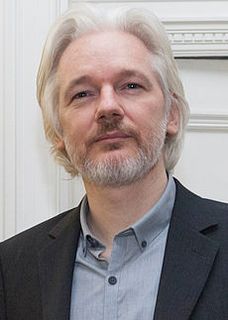
Swedish Supreme Court rejects Julian’s Assange’s appeal of arrest warrant

Robert Stevens

On Monday, Sweden’s Supreme Court rejected an appeal by WikiLeaks founder Julian Assange against his arrest warrant by a 4-1 majority.
Assange was arrested in London in December 2012 following the issuing of a highly dubious European Arrest Warrant by the Swedish authorities. He is wanted in Sweden for questioning regarding bogus allegations of sexual assault.
Julian Assange at the Ecuadorian Embassy, London in August 2014
Assange, who has not been charged with a single crime relating to his time in Sweden during 2010, denies the claims of assault.
Denied his basic democratic rights by the British courts, in June 2012 he was forced to take up asylum in the Ecuadorean embassy in London. For almost three years, he has been effectively under house arrest, as he is not able to take up the full-intended benefit of the grant of asylum offered to him, under international law, by Ecuador’s government in August 2012. London Metropolitan police officers surround the embassy around the clock, in an operation that has already cost more than £10 million. Assange is faced with immediate arrest if he steps outside.
His legal team argued before the Swedish courts that his confinement in Ecuador’s embassy is enforced, places severe restrictions on his freedoms and is disproportionate to the scale of the allegations of which he is accused. The case came to the Supreme Court after the lower courts in Sweden objected and ruled that Assange’s confinement was self-imposed.
Four of the five justices, Ann-Christine Lindeblad, Gudmund Toijer, Ingemar Persson and Lars Edlund, ruled in favour of rejecting Assange’s appeal.
The ruling was yet another blatant example of Assange’s democratic rights being trampled upon. It stated, “The public interest in the investigation continues to weigh heavily. In view hereof, and the risk that Julian Assange may evade prosecution if the arrest warrant is lifted, continued detention is currently regarded as compatible with the principle of proportionality.”
The Supreme Court said it saw “no reason to lift the arrest warrant,” since moves to question Assange in London were already in place.
Only Justice Svante Johansson dissented and in an addendum to the ruling stated that the arrest warrant was “in violation of the principle of proportionality” and the reasons for continued detention did not “outweigh the intrusion and inconvenience” it caused Assange.
Democratic norms have been overridden at every stage, in Britain and Sweden—such has been the fervour in ruling circles to “Get Assange” and silence WikiLeaks. The Supreme Court made its ruling before Assange’s legal team had even made its final submission. Assange’s lawyer, Per Samuelson, said, “We are of course disappointed and critical of the Supreme Court’s way of handling the case. This decision has been taken without letting us close our argument.”
Consistent with the tearing up of the rulebook that has characterised the nefarious efforts to frame Assange, the Supreme Court did not include a legal explanation for this conclusion.
The ruling follows the moves made by the Swedish prosecutors in March, when, after years of refusal, they formally offered to travel to London to question Assange regarding the allegations.
This came after Sweden’s Court of Appeal rebuked prosecutor Marianne Ny in November 2014 for breaching her duty to progress the preliminary investigation. The prosecution’s decision was also prompted by the fact that some of the allegations against Assange, which date back nearly five years to August 2010, will expire under the statute of limitation in August—although the alleged rape offence runs until 2020. At the time, Ny said that “time is of the essence.”
Assange’s legal team welcomed the move at the time, but the fact that the prosecuting authorities stated their willingness to question Assange in London is now being used in the Supreme Court ruling as a reason why the arrest warrant must be upheld! The ruling states, “The supreme court notes that investigators have begun efforts to question Julian Assange in London. The supreme court finds no reason to lift the arrest warrant.”
Julian Assange is in grave danger of being railroaded to Sweden, where he would not only be facing allegations of sexual assault. Due to WikiLeaks exposing the crimes of US imperialism and other major powers, the US authorities have made clear that Assange remains a target.
In April 2010, WikiLeaks made public the “Collateral Murder” videotape, documenting a 2007 massacre in Baghdad carried out by an attack helicopter in which 15 Iraqis, including two Reuters journalists, were killed. This was followed in July the same year by the release of 391,000 Afghanistan battlefield reports, documenting killings of civilians that had been covered up by the Pentagon, including the mowing down of unarmed demonstrators and assassinations by Special Forces death squads. In October, WikiLeaks made available 400,000 battlefield reports from Iraq, documenting more carnage against civilians and the complicity of the US military in horrific forms of torture against Iraqi detainees.
This exposed to the international public evidence of war crimes carried out by both the Bush and Obama administrations.
WikiLeaks was in the process of releasing thousands of secret diplomatic cables exposing crimes and conspiracies carried out by US officials around the world when Assange was arrested.
The importance of WikiLeaks making the cables public can be seen by the fact that some of the revealed NATO plans for a US-led war see the immediate deployment of nine divisions of US, British, German and Polish troops in the event of any Russian incursion into the former Soviet Baltic republics.
On March 4 of this year, US District Court judge Barbara Rothstein rejected an application by the Electronic Privacy Information Centre for the release of documents under Freedom of Information laws. Such disclosure would prejudice a “multi-subject investigation” into WikiLeaks that is “still active and ongoing,” she ruled. It could also “expose the scope and methods of the investigation, and tip off subjects and other persons of investigative interest.”
Assange’s lawyers are deciding on their next step and may take their case to the European Court of Human Rights. Assange’s case is currently being considered by the United Nations Working Group on Arbitrary Detention, where a decision is expected soon.
In their 42-page submission to the body, Assange’s legal team notes, “For nearly four years, Mr. Assange has been deprived of a number of his fundamental liberties. For the last 816 days, he has been confined to the Embassy of Ecuador in London, in an area of 30m2, he has no access to fresh air or sunlight, his communications are restricted and often interfered with, he does not have access to adequate medical facilities, he is subjected to a continuous and pervasive form of round the clock surveillance, and he resides in a constant state of legal and procedural insecurity. Mr. Assange has not been charged.”
The document also notes, “The failure to acknowledge in Mr. Assange’s case, that UK law and procedure has now been altered so that he would no longer, if facing arrest today, be liable to extradition under the European Arrest Warrant (and yet no benefit from that change in the law has been facilitated to him).”

White House authorizes Shell to resume drilling in the Arctic

Thomas Gaist

The Obama White House and the U.S. Bureau of Ocean Energy Management (BOEM) announced Monday that Royal Dutch Shell has received US government authorization to resume its drilling operations in the Arctic waters of the Chukchi Sea, near Alaska.
Drilling in the area was halted three years ago, after Shell’s activities produced near-disasters, including the running aground of a drilling rig and malfunctions of important safety-related machinery.
Renewed drilling could begin as early as June. The oil transnational is planning to drill half a dozen new “exploratory” sites while spending more than $1 billion on its Arctic venture this year.
Shell has already dispatched a vessel, the “Polar Pioneer,” to begin initial preparations. Reports Tuesday indicated that environmentalist groups planned to confront the vessel as it entered port in Seattle, Washington.
Environmental activist groups are being presented in the corporate media as the main voices of opposition to the latest move to open the Arctic to unrestrained economic and military development.
Shell’s proposals themselves are “risky and ill-conceived,” an executive at environmental group Oceana told the Wall Street Journal. US government approval for resumed drilling was “based on a rushed and incomplete environmental and safety review,” according to research conducted by Earthjustice.
As was made painfully clear during the 2010 Deepwater Horizon disaster in the Gulf of Mexico, the entire corporate and political establishment is prepared to tolerate the destruction of vast ecosystems in pursuit of profits. In 2010, as British Petroleum’s damaged Deepwater Horizon rig spewed crude oil into the Gulf for months on end, the Obama administration and its corporate-financial backers did everything in their power to protect BP’s leadership from any form of accountability.
A repeat of 2010 in the Arctic could continue to flood huge volumes of ocean water with toxic chemicals for an even longer period of time.
According to environmental experts, the extreme conditions of Arctic drilling sites and their distance from North America’s main concentrations of civilization and infrastructure mean that a spill in the Chukchi Sea along the lines of the 2010 catastrophe could not be “directly” cleaned up, due to the impracticality of large-scale cleanup in Arctic conditions. Such a spill would be dispersed throughout the Pacific and beyond, riding the massive swirling currents that connect the waters of the Arctic to the broader global water conveyor belt, experts warn.
An official statement from the Bureau of Ocean Management, which formally approved the new drilling, acknowledged that some type of disaster is likely, stating that resumption of drilling operations implies a “75 percent chance of one or more large spills happening” in the coming decades.
The efforts to reopen the Chukchi Sea for corporate exploitation are bound up with sweeping measures to militarize and economically plunder the entire Arctic.
Over the past decade, the Arctic has emerged as a major arena of global geopolitical antagonisms. The Obama administration’s 2013 “National Strategy for the Arctic Region” calls for the U.S. to “seize the greater part of the economic opportunities in the region.” The U.S. Defense Department must deploy forces “under, on and throughout the airspace and waters of the Arctic,” the strategy document stated.
Resource deposits beneath the Arctic ice are estimated to contain at least 90 billion barrels of oil (estimates from as recently as 2005 predicted only 40 billion barrels), for a total of some 20 percent of the world’s total supply, as well as some 90 trillion cubic feet of natural gas reserves. Significant deposits of gold, copper, lead, diamonds and zinc are also believed to be present inside the Arctic Circle.
The disintegration of the northern ice shelf is transforming the northernmost reaches of Earth into “a maelstrom of competing commercial, national security and environmental concerns, with profound implications for the international legal and political system,” a 2009 Brookings Institution study noted.
In the coming struggle for the Arctic, Washington must play the “leading role in creating an effective regime for the region,” the elite think tank argued,” and it cited the need for “ice-capable military training” and the creation of a “sizable ice-capable naval fleet.”
Geopolitical tensions in the north are heightened by the fact that the region lacks clearly defined boundaries demarcating national ownership. As recently as 2013, the Canadian government commissioned a report aimed at clarifying Canada’s territorial claims in the Arctic, many of which conflict with those of the U.S. and European powers.
Conflicts over crucial Arctic territories have already been brewing between Russia and U.S.-aligned Norway for at least a decade. Even as Russia has sought to develop new infrastructure for the transportation and export of oil resources based out of its port of Murmansk and centered on the Barents Sea, Norway’s ruling elite, including the royal family, have demanded support from Washington on behalf of their own claims to this area.
The struggle for the Arctic is simultaneously amplifying tensions between the Western imperialist powers themselves. Canadian and Danish establishments exchanged heated rhetoric earlier this year over Copenhagen’s assertion of sovereignty over large sections of the Arctic. The U.S. also maintains standing territorial disputes with Canada, refusing to recognize Ottawa’s claim to the Northwest Passage, contesting Canada’s claim to the resource-rich Beaufort Sea, and maintaining a joint US-Danish military base at Thule, Greenland.
As one of the largest official landowners in the Arctic, Ottawa is not likely to passively accept US intervention in wealthy territories long recognized as Canada’s by “historical right.” Signaling the determination of the Canadian bourgeoisie to resist US and European moves in Ottawa’s historical sphere of influence, Canadian Prime Minister Stephen Harper has used recent annual tours of the Far North to promote Ottawa’s plans for the militarization of the Arctic.
Harper has openly demanded that Ottawa must prepare to impose its sovereignty in the Arctic through comprehensive militarization of its northern territories, a perspective that enjoys broad support within Canada’s elite. Responding to Canada’s formal assertion of ownership over large areas of the north, the Ottawa Citizen proclaimed, “Persuasion is good, but military hardware— battleships, icebreakers, aerial patrols by fighter jets, and satellite surveillance—will garner more respect.”

China’s central bank cuts rate amid further signs of slowdown

Nick Beams

China’s central bank has cut interest rates for the third time in six months in a bid to counter an economic slowdown and ease debt pressures on local government authorities and corporations.
The move, which was made on Sunday night, gave an immediate boost to share markets, with stocks in China rising by 3 percent on Monday, ending their worst week in five years. Other Asian markets also rose after suffering losses the previous week as a result of the bond sell-off in Europe.
However, while the financial markets welcomed the news, the decision expressed mounting concerns over the slowing Chinese economy and growing debt problems arising from lower inflation.
In its official statement, the People’s Bank of China (PBOC) said the country’s economy was “still facing relatively big downward pressure.”
“At the same time, the overall level of domestic prices remains low, and real interest rates are still higher than the historical average.”
In one of its starkest warnings about the pile up of debt resulting from measures to counter the effects of the 2008–2009 financial crisis, the PBOC said “rising debt size is forcing China to use a lot of resources in repaying and rolling over debt.”
In the five years following the global financial crisis, Chinese credit expanded by an amount equal to the size of the entire American financial system. But now the need to reduce this debt mountain is restricting the capacity of the central government to use fiscal measures to boost the economy.
At the same time, the Chinese economy is being hit by the general slowdown in the major capitalist countries.
Chinese economic data for April showed a marked decline in trade as well as a lower than expected inflation rate. Exports dropped 6.4 percent for the month, following a 15 percent fall in March. Predictions had been for a rebound in April, so the continued fall has raised concerns over whether the predicted growth rate of 7 percent—the lowest in more than two decades—is going to be met.
Imports, a large component of which comprise semi-finished goods entering their final stage of manufacture in China, plummeted by 16.2 percent for the month, pointing to a slowdown in factory output.
The interest rate cuts and the easing of the reserve requirement ration (RRR) five times in the past six months have prompted concerns among some financial analysts that the slowdown in the Chinese economy is proceeding faster than government and financial authorities have anticipated.
Nizam Idris, an analyst with the Macquarie financial group expressed this view in comments to the American CNBC business channel.
“The cut announced over the weekend justifies my view that China falls behind the curve in terms of controlling the slowdown,” he said. “Everyone calls it an engineered slowdown, but when you see how the duration of the interest rate has been compressed and how the RRR rate has been made at a more aggressive pace, it seems to me that China is catching up with the curve rather than being in full control.”
Further cuts are expected in the not-too-distant future, with predictions that the bank rate could drop from its present level of 5.1 percent to 4.6 percent.
According to Barclays, “the persistent deflation risk and the still-elevated lending rates point to the need for further monetary easing. As such we look for further benchmark rate cuts of at least 50bp [50 basis points or 0.5 percent] and two more reserve ratio requirement cuts by the third quarter.”
In another sign of growing financial problems, the central bank is reportedly considering measures that would allow local governments to restructure their debts. Local government authorities have been at the centre of the land and property bubble which has formed a significant component of Chinese economic growth over the past five years.
The real estate market, together with construction and related industries, accounts for a quarter of China’s gross domestic product and is described as “sluggish.” Bad debts are also on the rise. Non-performing loans rose from 140 billion yuan at the beginning of the year to almost 983 billion yuan ($200 billion) at the end of March. It was the biggest quarterly rise in more than a decade.
As has taken place everywhere else in the world, the rate cuts by the central banks have failed to provide any impetus for investment in the real economy. Rather, the central bank’s actions in providing cheaper money have helped fuel a rapid rise in Chinese stock markets over recent months.
In a statement last week, the Chinese Communist Party Politburo, the country’s top decision-making body, emphasised the need to “more efficiently channel monetary policy to support the real economy.”
But the government is discovering the capital and the flow of money is not determined by “Chinese characteristics,” but operates according to its own laws.
According to estimates by the Royal Bank of Scotland, more than $300 billion has left China in the last six months, attracted by the rise of the US dollar and repelled by fears of mounting financial problems within China. These outflows could well increase in coming months, leading to a drying up of funds available for lending within China, and exacerbating its growing economic and financial difficulties.