14 May 2015

Former Sri Lankan president warns of government financial bankruptcy

K. Ratnayake

Former President Chandrika Kumaratunga last week warned that the Sri Lankan government was financially bankrupt to the point of being unable to afford public servants’ salaries.
Speaking at a meeting organised by the Sri Lanka Development Officers union, Kumaratunga declared: “[T]he government is not able to pay state sector salaries to everyone. It is hard to expand the [state] sector, and some of the employees have no work.”
Kumaratunga did not elaborate further. However, she blamed the financial crisis on the “lack of transparency,” or corruption, in projects carried out by the previous government of President Mahinda Rajapakse.
Finance Minister Ravi Karunanayake dismissed Kumaratunga’s remarks as “baseless,” declaring that the government had “enough money.” At the same time, he admitted the government’s debt service expenditure was “extremely high” at 1,290 billion rupees ($US9.7 billion), compared to revenues of 1,352 billion rupees. In other words, debt servicing consumes 95.4 percent of the government’s revenue.
Kumaratunga played a leading role in engineering Maithripala Sirisena’s insertion as the new president in this January’s election. She and Prime Minister Ranil Wickremesinghe (then opposition leader) acted in concert with Washington to oust Rajapakse and install a pro-US and pro-Indian regime in Colombo.
Kumaratunga now collaborates directly with Sirisena and Wickremesinghe in what is known as the “troika.” It takes all the government’s major political decisions. Her comments were clearly aimed at pinning the blame for the government’s financial problems, and the austerity measures that will follow, on Rajapakse in the lead up to the imminent announcement of a parliamentary general election. She was seeking to dampen the public campaign by Rajapakse’s allies for him to make a comeback as a prime ministerial candidate.
Kumaratunga’s statement underscores the nervousness in ruling circles about the depth of the country’s economic crisis. It is also a warning to the working class and poor of the further brutal attacks that will be conducted against their living conditions and social rights after the election, whoever forms the next government.
Highlighting the government’s financial strains, over a month ago Finance Minister Karunanayake sought parliamentary approval to issue treasury bills worth 400 billion rupees. However, the opposition, which commands a parliamentary majority, blocked the bill, claiming that it would permit the government to print money, worsening inflation.
In March, during Indian Prime Minister Narendra Modi’s visit to Colombo, the government signed a currency swap agreement with the Federal Reserve Bank of India for $US1.5 billion. Two weeks ago, the Colombo government drew $400 million under this agreement, in effect to cover debt repayments and other financial commitments.
The previous Rajapakse government, which developed close ties with Beijing, obtained massive Chinese loans for investment projects. Washington’s backing for Rajapakse’s removal was aimed at undermining Beijing’s influence in Colombo. Since Sirisena has taken office, relations with China have soured.
The Sirisena government put China’s investments under review, including the huge $1.4 billion Colombo Port City (CPC) project. While other investments have been cleared, the CPC has not yet been approved. As a result, the cash-strapped Sri Lankan government is unlikely to have the same level of access to Chinese loans and finance as it did under Rajapakse.
The government is also under pressure from the International Monetary Fund (IMF), which dealt a blow in March by turning down a request for a $US4 billion loan to restructure Sri Lanka’s debt repayments.
After reviewing the country’s economic performance late last month, the IMF Executive Board issued a press release on May 5 which declared the “economic outlook of the country is broadly stable but set against heightened downside risks.” After noting economic growth last year of 7.4 percent—the highest since 2012—it forecast a sharp drop to 6.5 percent this year.
The IMF pointed to “lower public and private sector investments due to budget cuts and uncertainty of policy environment” and the impact of “slower economic recovery in Europe.” The EU is one of Sri Lanka’s two largest export markets, the other being the US.
The IMF admitted that its demands for budget cuts were a major factor in forecasting lower growth this year. However, this did not deter the IMF from insisting that Sri Lanka adhere to budgetary targets, just like Greece and other countries where austerity measures have had devastating social consequences for the working class.
The IMF’s budget deficit target for Sri Lanka last year was 5.2 percent of gross domestic product (GDP). However, for the first time since 2009, the government breached that target. The deficit rose to 6 percent of GDP. The IMF warned that without a huge effort to increase tax revenue, this year’s 4.4 percent budget deficit target will not be achieved.
Last year’s economic growth rate of 7.4 percent was mainly due to infrastructure projects. A comment in the Colombo-based Sunday Times noted that “although such investment generates GDP growth,” long-term benefits “are too little compared with their costs.” Pointing to the high foreign debt, it warned that “such growth creates serious fundamental weaknesses in the economy.”
As a result of increased borrowing, the foreign debt increased from $39.9 billion to $43 billion last year. Debt servicing will be equivalent to 20.2 percent of export income in 2015. Underscoring the balance of payments problems, the Sri Lankan trade deficit rose to $8.3 billion in 2014 from $7.6 billion in 2013.
The Central Bank of Sri Lanka 2014 annual report, issued this month, noted that the worsening international economic crisis would affect export markets. Pointing to tea exports in particular, it stated: “If the Russian ruble continues to depreciate further in 2015, it will have a negative impact on Sri Lanka’s tea exports since Russia is the main single buyer of Sri Lankan tea while demand for tea in the Middle East market could also decrease due to the continued decline in the oil income of these economies.”
Regardless of the promises that will be made in the upcoming parliamentary election campaign, the next government will seek to impose the burden of the country’s worsening economic crisis onto working people.
Speaking at a Colombo business forum on Monday, Eran Wickramaratna, deputy minister of investment promotion, spelled out the two-faced character of any election pledges. He told his business audience that under a new government, “the public service needs a sea change in terms of efficiency to support the progression of the private sector”—a signal for deep cutbacks and further pro-business measures.
Wickramaratna said pro-market reforms must be implemented in rural areas as well. “These reforms have still not happened as the farmer community is a large voter base, but such measures will be quite necessary in the future,” he said.
While Wickramaratna speaks for the government, the entire political establishment, including all the opposition parties, is committed to the same austerity agenda.

At least 45 workers die in Manila factory fire

Joseph Santolan

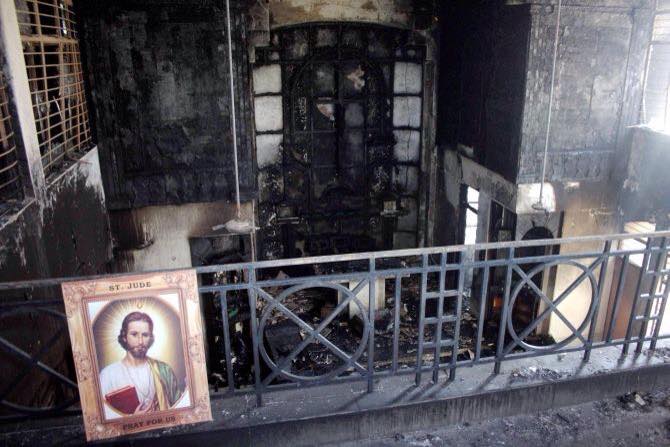
At least 45 workers are confirmed dead and another 25 or more remain missing after a fire broke out at noon on Wednesday inside the Kentex factory on the northern outskirts of Metro Manila in the Philippines.
Kentex manufactures rubber slippers at the plant in the city of Valenzuela. According to an interview with its owner, Veato Ang, it employed 200 to 300 workers.
The two-storey factory occupied 3,000 square meters but had only two working exits. The building had no alarms, no sprinkler system, and, it seems, no fire extinguishers. It was a mass of unpainted concrete, and poorly ventilated despite the chemicals being used throughout the building.
The fire department managed to have the fire under control by 5 p.m., and announced that the fire was out at 7 p.m. The blaze burned for seven hours.
The building’s windows were barred and no workers could escape through them. Bystanders reported to the media that they saw the arms of workers waving frantically through the window bars on the second floor.
The fire was reportedly started by welding work on the front entrance, near open containers of chemical solvent used in the processing of rubber and plastic. The canisters exploded and the building caught fire.
Some workers who were on lunch break were able to run to the street. All the workers on the second floor were trapped. The building rapidly filled with a toxic, black smoke as the rubber and various chemicals ignited.
There were apparently no viable exits on the second floor. Family members reported that their loved ones sent them text messages on their phones from the second floor during the fire, unable to escape the smoke and flames.
The footage that news crews broadcast from the inside the factory revealed the bodies of several workers, charred beyond any recognition. One body was shown sprawled, head first, on the stairs.
The fire crew could not determine how many workers were dead as the remains of the corpses were fragmentary and it was hard to tell how many pieces belonged to each person. They resorted to counting skulls, announcing at one point that they had counted 28. The death toll will likely rise to nearly 70 victims.
Kennedy Tan, a local government council member, told the press that he recalled that the factory had “suffered a smaller fire last year but he could not remember if there had been any casualties.”
The company’s management could not account for how many employees were at work, claiming that all the time cards and company records were burned in the fire.
Workers’ family members gathered in the street outside. The city set up a tent where they came to seek news of their loved ones. Lacking any information about who was inside, or even a list of those employed in the firm, the city and the factory owners compiled a list of workers from relatives.
Some people on the street informed the press that they had as many as five family members in the factory. A woman was looking for her husband, two sisters and two nephews.
Valenzuela city mayor Rexlon Gatchalian promised unspecified compensation for the families of the victims and a speedy investigation. The owner promised he would pay for counseling services.
Valenzuela was once in Bulacan province, and part of the vast plains of rice farming on the southern edge of the Central Luzon valley. Over the past several decades, the dirty urban sprawl of greater Manila has engulfed Valenzuela and a good deal of Bulacan.
Valenzuela, a densely-crowded city, combines much of the worst of urban and rural life. Squat concrete factories and tracts of cheap hollow-block housing are occasionally interspersed with fallow fields where only talahib grass will grow.
Kentex manufactured tsinelas, the rubber flip-flop footwear routinely worn by most people in the Philippines. In particular, Kentex manufactured tsinelas branded Havanas, a cheap local imitation of Havaianas, which are at the upper end of the market.
Havaianas, manufactured in Brazil, sell 150 million pairs worldwide a year. Dedicated boutique shops in Philippine malls, sell them from 650 to 1,000 pesos ($US14–20). A minimum wage worker in Valenzuela would be paid just 466 pesos a day for non-agricultural labor. It is very likely that the Kentex workers were paid less than the minimum wage.
In countries of belated capitalist development like the Philippines, workers routinely cannot afford the everyday consumer goods that they themselves produce. Global capitalism has created vast industries dedicated to the manufacturing of cheap alternative items, two-bit plastic knock-offs, and pirated brand names and logos. These are then sold to the factory workers who have labored making the originals. In the Philippines, Kentex tsinelas could be purchased for 40 or 50 pesos.
Responsibility for the death of each Kentex worker extends far beyond Kentex’s owners and the city and national governments. It is a crime of global capitalism. The events in Valenzuela are repeated, on a greater or lesser scale, every year in the Philippines and around the world.
Capitalism has made this crime—masses of workers, trapped in their workplaces, burned to death—ubiquitous, from the 1911 Triangle Shirtwaist factory fire in New York to the Thai Kader toy manufacturing fire in 1993. Nearly 300 workers died in a single factory fire in Pakistan, and 112 in single incident in Bangladesh, both in 2012 alone.
Global retail manufacturers aggressively push cost-cutting measures in order to scrape out every last cent of profit, without any regard for workers’ safety. In order to produce the cheap alternatives to these branded retail giants, companies like Kentex strive to be even more brutal.

US threatens military confrontation with China in South China Sea

Joseph Santolan

The US military is considering deploying military aircraft and warships within 12 nautical miles of territory claimed by China in the disputed Spratly Islands, according to a report published late Tuesday afternoon in the Wall Street Journal.
Washington is specifically targeting islands where China has engaged in reclamation work, dredging sand from the sea-bottom to expand the land mass of the rocks and shoals it occupies in the South China Sea.
The move is a calculated provocation to shore up US hegemony in the region and ratchet up pressure on China.
Vietnam, Taiwan and the Philippines also have military and civilian forces stationed on disputed islands in the South China Sea. Vietnam and Taiwan, like Beijing, are actively engaged in reclamation activity. China is the exclusive target of Washington’s ire, however.
The total land mass reclaimed by China amounts to two square kilometers, according to the most recent information from the Asia Maritime Transparency Initiative run by the US think tank, the Center for Strategic and International Studies (CSIS). This is the equivalent of approximately two golf courses.
The US move would be an act of military brinkmanship calculated to force China to back down on its territorial claims. The Wall Street Journal quoted the anonymous defense department official as stating: “Ultimately no matter how much sand China piles on top of a submerged reef or shoal ... it is not enhancing its territorial claim. You can’t build sovereignty.”
Over the past year, the rhetoric with which Washington previously prefaced statements on the South China Sea, that it took no sides in the disputes, has largely been dropped. Washington has pushed forward the case filed by the Philippines before the International Tribunal on the Law of the Sea contesting China’s territorial claims. In December, the US State Department published issue number 143 in its “Limits in the Sea” series dedicated to examining the validity of China’s maritime claims in the South China Sea. The document rejected China’s nine-dash line historical claim to the South China Sea. China’s claim, it explicitly stated, “does not accord with the international law of the sea.”
Washington’s hypocrisy is stunning. The 26-page document based its entire denunciation of China’s territorial claims upon the United Nations Convention on the Law of the Sea (UNCLOS), a treaty that the US has refused to sign for over 32 years.
On March 31, Admiral Harry Harris, commander of the US Pacific Fleet, denounced China’s reclamation activity in the South China Sea as the construction of “a great wall of sand.” On April 22 the CSIS published an article calling on Washington have a US Navy ship “transit within 12 nautical miles of one of these reclaimed features.”
Looking to stem the military escalation being prepared by Washington, China offered the United States and other countries joint use of its facilities in the South China Sea for humanitarian rescue and disaster. On April 30, Chinese Naval Admiral Wu Shengli extended this offer to his American counterpart, Admiral Jonathan Greenert. Wu added that Chinese activities “will not threaten freedom of navigation and overflight.” US State Department acting deputy spokesperson Jeff Rathke said the US was “not interested” and then called on China to reduce tensions in the region.
The move proposed by Washington is a dangerous escalation of an already perilous situation. The Wall Street Journal published an editorial entitled “US Gambit Risks Conflict With China” which stated that “the US is contemplating an option fraught with danger: limited, but direct, military action.”
Washington has already established a precedent for a direct military challenge of Chinese claims. In November 2013, the US flew two B-52 bombers over a portion of the East China Sea where Beijing had just declared an Air Defense Identification Zone (ADIZ).
Should Washington go through with its proposal to transit China’s claimed territories in the South China Sea, it would be markedly more reckless than its action over the ADIZ in 2013. It would be flying or sailing into territory that is claimed and currently occupied by Chinese gunboats and military forces. These forces will be compelled to either ignore the US incursion, or follow established protocol and interdict the US forces.
Such a confrontation has already nearly occurred in the waters immediately outside the 12-nautical mile radius of the reclaimed land. On May 11, the USS Fort Worth, a Freedom-class littoral combat ship on a “freedom of navigation” patrol, was closely followed by the Yancheng, a Chinese navy Type 054A guided-missile frigate. The USS Fort Worth radioed the Yancheng to claim that it was in international waters.
If a confrontation had occurred within the territorial waters of the islands claimed by China and the Chinese forces had not backed down, there would have been military showdown between two heavily armed gunboats. Such a clash could all too easily spark a far wider war between two nuclear-armed powers, with terrible global consequences. This is what Washington is playing with as it continues to deliberately provoke and antagonize Beijing.
Hua Chunying, the Chinese Ministry of Foreign Affairs spokesman, responded to Washington’s intended deployment. She stated: “The Chinese side advocates the freedom of navigation in the South China Sea, yet the freedom definitely does not mean that foreign military vessels and aircrafts can enter one country’s territorial waters and airspace at will. China will stay firm in safeguarding territorial sovereignty. We urge parties concerned to be discreet in words and actions, avoid taking any risky and provocative actions and safeguard regional peace and stability.”
Washington continues to make preparations for war with China. In the last two weeks of April, the US and the Philippines staged their largest joint military exercises in 15 years. The Balikatan exercises involved 11,600 troops who staged live fire drills and trained for amphibious assaults on South China Sea islands.
For the first time, the drills included the defense of the Philippines’ main island of Luzon from foreign invasion. The scenario was officially described by the US military as: “On March 22, the Mutual Defense Treaty was invoked and a US Joint Task Force was formed to restore the territorial integrity of the Philippines. The US Joint Task Force aggregated forces in Palawan, conducted Maritime Pre-positioned Force operations, and embarked a combined landing force.”
Washington is looking to base—using the euphemism “pre-position”—US forces throughout the Philippines under the Enhanced Defense Cooperation Agreement (EDCA), a deal signed a year ago. The Philippine Supreme Court is still holding hearings on the deal. The White House is leaning heavily on Manila to get the EDCA past the court. The Balikatan exercises were a means of ratcheting up political pressure, making the claim that the US will “rescue” the Philippines from a supposed Chinese invasion, provided it is allowed to “pre-position” its forces.
In the past, the Balikatan exercises have been launched with disclaimers that they are not targeting any particular country. While official press releases still included this disclaimer, the 2015 exercises opened with a talk by General Pio Catapang, chair of the Armed Forces of the Philippines, who presented evidence of Chinese reclamation activity in the South China Sea and the military threat that he claimed this constituted to the Philippines.
This week, the Philippines is staging its first-ever joint military exercises with Japan. Two Japanese destroyers and a Philippine battleship will conduct war games in the South China Sea. These exercises build upon the recently signed military deal between Washington and Tokyo, which more closely integrates Japan into Washington’s war drive against China. Japan has stated that in order to re-supply US ships engaged in combat in the South China Sea, it would need to station and refuel its jets on Philippine military bases.

The worldwide persecution of refugees

Bill Van Auken

From Europe, to Asia, to the Americas, the world is witnessing growing numbers of refugees and a corresponding wave of state repression and violence directed at denying them their fundamental democratic rights.
The European Union this week has moved on two tracks to confront the flow of refugees from northern Africa, which has led to the drowning deaths just this year of nearly 2,000 of those seeking to make the dangerous crossing of the Mediterranean.
The first is a scheme unveiled Wednesday to parcel out between the EU member states a combined quota of 20,000 refugees over the course of two years. The number is pathetic in relation to the estimated half a million refugees believed to be gathered in North Africa in their flight to Europe, not to mention the 170,000 refugees who made the crossing last year alone.
Nonetheless, the proposal has triggered a sharp crisis within the EU, with the United Kingdom, Ireland and Denmark opting out of the refugee quotas. The very proposal provoked denunciations from Britain’s Tory government. The quota system acts, in the words of Home Secretary Theresa May, as a “pull factor,” encouraging people to attempt the Mediterranean crossing. Instead, she indicated, the migrants must be forcibly pushed back to Africa.
The quota scheme notwithstanding, the EU as a whole is concentrating on strengthening Fortress Europe and even preparing to carry out military action to halt the flow of refugees.
As the British daily Guardian revealed Wednesday, the EU has drawn up a 19-page strategy paper that calls for the use of naval, air and even ground forces to stop refugees from leaving Libya. Envisioned are not only a naval blockade, but air strikes against boats and boatyards involved in smuggling migrants across the Mediterranean, along with the potential deployment of special operations troops on Libyan soil.
The document acknowledges that such operations pose “a high risk of collateral damage, including the loss of life.”
It should be lost on no one that the imperialist powers of Europe are threatening to use military force in response to a crisis that they and their American ally created, aided and abetted by the “left” champions of “human rights imperialism.”
The flow of refugees is driven by the decimation of entire societies at the hands of the US and its allies, first in Iraq and Afghanistan through direct invasion and occupation, then in Libya through the US-NATO bombing campaign and support for an Islamist-led proxy ground force in the war to overthrow and murder Libya’s Muammar Gaddafi. Simultaneously with the Libyan intervention, the US and its Western European allies backed a proxy Islamist-led war for regime change in Syria, seeking the overthrow of the Assad government, an ally of Russia and Iran. These wars have produced millions of refugees, including large numbers of African migrant workers trying to flee the bloody chaos created by imperialism in Libya.
Amnesty International issued a report this week documenting that refugees trapped in Libya are confronting “widespread abuses by armed groups, smugglers, traffickers and organized criminal groups in Libya as well as systematic exploitation, lawlessness and armed conflicts.” The country’s social infrastructure has collapsed and it is being fought over by rival militias and two competing governments. Migrants in detention centers face torture, sexual assault, beatings, slave labor and summary killings. These are the conditions to which the European powers want to drive the refugees back.
Unfolding simultaneously with the tragic fate of the refugees in the Mediterranean, is a similar crisis in Asia, with an estimated 8,000 refugees stranded aboard small boats in the Andaman Sea and Malacca Straits. Most of them are members of the Muslim Rohingya minority fleeing persecution in Burma (Myanmar) and Bangladeshis escaping the impoverished conditions in their country.
The governments of Malaysia and Indonesia have been forcing these boats back to sea—a policy pioneered in the region by Australia. Many of the refugees have been on the water since March and face the threat of death by hunger and disease.
Finally, in the United States, whose government routinely postures as the champion of “human rights” to justify its endless military interventions abroad, the Obama administration has put forward a new immigration policy that is worthy of a dictatorship.
Faced with a court order to shut down massive new detention camps that it created to imprison child and family refugees fleeing north from the rampant violence in Central America, the administration has declared that its response will be to separate the mothers from their children. The mothers would remain imprisoned under this policy, while their children would be handed over to foster homes.
As in the flow of refugees from North Africa, Central Americans have been forced to flee their home countries by the murderous conditions created by decades of US imperialist interventions, from the “dirty wars” of the 1970s and 1980s through to the “drug war” violence that followed. The end result is that these countries now have the highest homicide rates in the world, and those turning up on the US border are literally fleeing for their lives.
As elsewhere, the response of the US authorities to this crisis of their own making is one of inhuman and illegal repression. In setting up its massive new detention centers—run for profit by private prison corporations—the Obama administration violated a previous court settlement that mandated standards of care and treatment of child migrants, barring their confinement to such centers.
The issue has come to the courts once again because of the protests, including hunger strikes, by mothers imprisoned with their children in these illegal and abusive camps. Treating refugees seeking asylum like criminals and locking up traumatized children is Obama’s method for dissuading other Central Americans from attempting to reach the US. Also crafted as a deterrent is the militarization of much of the US border, forcing migrants into ever more hostile territory, where many die. These deaths, like those in the Mediterranean, are meant to “send a message.”
The roots of both the surge of refugees and the repressive policies being unleashed against them lies in the global crisis of capitalism and the increasing turn by the major imperialist powers to militarism. At the same time, the assault on refugees is inseparable from the attack that is unfolding in every country against the democratic rights and social conditions of the working class as a whole.
A fight against the ruling class and its policies of war and counterrevolution is not possible without a defense of immigrants and refugees. This entails a relentless fight against the attempts of the ruling establishment in every country to scapegoat these most oppressed layers of the working class for the destruction of jobs and wages, and to pursue a policy of divide and conquer by whipping up anti-immigrant chauvinism.
The Socialist Equality Party and the International Committee of the Fourth International unconditionally defend the right of workers from every part of the world to live and work in whatever country they choose, with full democratic rights and without fear of police repression and deportation.
The defense of the rights of refugees and of the working class as a whole means a struggle to unite workers of every country in a common struggle to overturn the capitalist system, abolish the nation-state system and establish the foundations of a socialist world economy, rationally organized on the basis of social need, not private profit.

Sri Lanka: Undoing Corruption – The Colossal, The Trivial, And The Real

Basil Fernando

Gabriel Garcia Marquez once spoke of Fidel Castro as a person “incapable of conceiving any idea that is not colossal”. During the last few months in Sri Lanka too there has been an interest in colossal ideas. One such colossal ambition is the idea of eliminating corruption.
It even became a major theme in an electoral campaign and the majority of the people even voted for it. Within a cultural milieu that often takes a pessimistic view of anything noble and great as being beyond achievable, this new situation was quite extraordinary. The newly elected President and his government went on to even promise that significant steps towards this colossal ambition would be made within the first hundred days of the new government.
True to their words, there were indeed a few bold and courageous steps taken in that direction. Getting advise from foreign experts on proper conduct of investigations into financial and other complicated transactions with the view to bring alleged perpetrators of offences relating to corruption to justice was indeed a serious as well as an intelligent first step. Furthermore, persons thought of as capable of handling this task were appointed to positions of responsibility and several important investigations were undertaken. As of this moment, there are several cases before the courts and several high profile officials of the last government have been produced before the courts. And a few more, it is said, will be brought to courts in not so distant future.
This approach to corruption is in complete contrast to how things have been during the past 35 years, i.e. since the 1978 Constitution was launched. It was a constitution designed to guarantee impunity. The first President under this Constitution, J.R. Jayawardene had a habit of turning a blind eye to corruption among his close cabinet and parliamentary associates. Political observers saw in this a subtle strategy of preventing challenges to his power from within his close circles.
Subsequent governments benefited a great deal from the societal consequences that resulted from this strategy. The society began to treat ever-increasing corruption as an inevitable part of the new political culture.
The period under President Mahinda Rajapaksa witnessed the growth of corruption to unprecedented levels, and there was no direct resistance to the most blatant forms of abuse of national resources. The very strategy of keeping the government alive through the buying of members of the opposition was also popularly perceived as being achieved through corrupt deals.
Though there were no overt expressions of resistance, the peoples’ frustration grew and it was the distancing of the people from any loyalty to the Rajapaksa regime that got expressed within a short time of the announcement of an election. The election period saw splits within the inner circle and those who broke away began to reveal the depths of corruption that had become so widespread. On January 8, 2015, people expressed their condemnation of this political ethos by voting for those who promised to bring this prevailing political culture of corruption to an end.
In the days that followed the election victory of the new government, people have eagerly awaited news about the inquiries into the conduct of those who were powerful during the last regime. Like the way they eagerly follow a cricket match, Sri Lankans have also followed the revelations about corruption and the news about inquires taking place. The same mood continued to be expressed by various forms of protests relating to the slowness of inquiries and the delay in arrests and legal actions. After a few months, a few cases have proceeded to courtrooms and Sri Lankans are keenly watching the outcome.
When the threat of inquiries was proving not to be bluff, leaders of the former regime began to show their agitation and this is what is going on at the moment. Former President Mahinda Rajapaksa has himself begun to visit prisons and make loud claims about being persecuted. For a leader of a political regime that created a nationwide culture of fear to claim that he is himself now being persecuted is indeed an indication that something of real significance is happening in the country.
The latest in the saga is that the strongman of the last regime, former Defence Secretary Gotabhaya Rajapaksa, is going to the courts claiming that his fundamental rights have been violated through inquiries, which he claims are politically masterminded and directed. What a change for a man who created a government within government and virtually terrorised the country with threats of abductions, arrest and detention, and even disappearances.
However, his resort to a court should be celebrated as it indicates that the courts are once again being seen as playing their role as protectors of people against abuse of power. Ultimate outcome of such cases will be in the hands of the judges who are expected to decide these matters on the basis of legal principles and not by way of political directives.
If the Rajapaksas, who denied everyone the right to the recourse of courts and made all attempts to manipulate the very system, are themselves now being able to recourse to law and the courts, it is indeed an achievement for Sri Lankan democracy.
Besides recourse to court, the leaders of the former regime are also engaged in attacking the journalists and media establishments that have played a significant role in exposing corruption. All kinds of campaigns are being carried out with the idea of destroying the messenger. Repression of media was the central aspect of political life under the last regime. It is therefore no surprise that it will be repeated in the process of trying to vilify legitimate actions of legal authorities as political vendetta.
In the midst of all this, it is legitimate to ask whether any real progress has been made in dealing with the issue of corruption and thus fulfilling the peoples’ colossal ambitions relating to this. It is in no way possible to claim that real progress is being made or even attempted. This is not to deny the importance of the few cases in which actions have been taken. But, as against the expectations, the actions so far, while laudable, do not appear to be adequate at all.
While the government would want to claim that this is due to the time factor, meaning that they have had only a short time in power, it would appear that the defects lie more in the overall strategies that have been adopted or, in fact, not adopted by the government. Anti corruption drive cannot be confined to some limited action that will only bring about short-term propaganda advantage. Given enormous contradictions within the legal system itself, there is no likelihood of seeing a successful prosecution in the near future in even the limited number of cases that have been undertaken. The claim by the government – that they have brought the people to court but as the legal process in the country is beset with delays the decision in these cases will also come only at some distant dates – has the possibility of undermining even the limited attempts that have been made in recent months to deal with offences relating to corruption. The government cannot claim that it is a victim of delays in courts. The government has within its power the capacity to deal with the problems of the legal systems that are the real cause of impunity.
And, this brings up the subject of the strategy of the government in dealing effectively against corruption. This strategy cannot be separated from a strategy to address problems that have made the legal system fail to grant effective relief to the people who come to seek such relief. If the relief that the legal system provides is only for alleged criminals who wish to take advantage of delays then no critically minded citizen would see that a serious attempt is being made by the government to honour the promises made.
Colossal ideas are an inspiration to humanity. However, the realisation of such ideas is possible only when political imagination is capable of understanding the practical steps that need to be undertaken in order to achieve these great goals. When big ideas are not accompanied with practical strategies and programmes for realisation the only result is disillusionment and frustration
Even in such limited actions as the appointment of committees and commissions, people have a right to expect that the government will be accountable and transparent and that such committees and commissions will act within a framework of law. All expenditures into such activities should be made available to the people through lawful channels. It is the right of the citizens as well as the media to expect such transparency. Dealing with corruption in the Sri Lankan context is a colossal task. Such task also requires to be carried out with absolute transparency.

USCIRF Report On Religious Freedom In India: A Wakeup Call For The Diaspora!

George Abraham


Pavan K. Varma, a Rajya Sabha member recently noted in a column that “the image of the country is not only about the size of its economy, or its future potential for economic growth. If India’s liberal and secular image is tarnished, there will be a global spillover. The world is watching India, and India must, therefore, watch itself’. It is a grain of wisdom from a veteran diplomat and author.
The question of India’s image is rightfully discussed in a context of the recently released 2015 annual report from the United States Commission on International Religious Freedom (USCIRF). According to the report, India is listed along with 30 other countries as having “a systematic, ongoing and egregious” standard for failing to protect religious freedoms.
The five page report on India talked about a climate of impunity that perpetuates crimes against minorities and noted in particular the divisive campaign waged by the BJP (Bharatiya Janata Party) leading to the 2014 general election. The report went on to say that ‘Since the election, religious minority communities have been subject to derogatory comments by politicians linked to the ruling BJP and numerous violent attacks and forced conversions by Hindu Nationalist groups, such as Rashtriya Sevak Sangh (RSS) and Vishva Hindu Parishad (VHP)’.
The USCIRF reports cites that Muslim, Christian and Sikh communities across India are experiencing increased harassment and violence from the extremists and hate mongers who are associated with RSS and VHP. The perpetrators often engage in physical violence, arson, desecration of religious places and disruption of religious services. ‘Local police seldom provide protection, refuse to accept complaints, rarely investigate, and in a few cases encouraged Christians to move or hide their religion’, the report added.
The report also talked about the so called “Ghar Wapsi’ program by Hindu Nationalist groups: a plan to forcibly “reconvert” at least 4000 Christian families and 1000 Muslim families to Hinduism in Uttar Pradesh on Christmas Day. It includes an appeal issued by the groups to raise money (US$ 3,200 per Christian and US $8000 per Muslim) to accomplish the deed.
The report not only indicts Modi Government for not reining in the Hindu Nationalist groups that are carrying out the attacks on the minorities but also recommends that issues of religious freedom must become a part of the US-India dialogue. It even went on further to urge: ‘increase the U.S. embassy’s attention to issues of religious freedom and related human rights, including through visits by the Ambassador and other officials to areas where communal and religiously-motivated violence has occurred or is likely to occur and meetings with religious communities, local government leaders, and police’.
On a recent visit to Germany, Mr. Narendra Modi told the audience that ‘India is a changed country now’. Obviously, he was not alluding to the ‘change’ that is currently underway in the secular and democratic space that has been quite unsettling to the minorities and creating the kind of reaction in the UNCIRF report. In Germany, of course, he was talking about the regulatory regime to reassure foreign investors who might have been looking for economic opportunities. According to press reports, however, some potential investors expressed concerns including those relating to the changing environment that could threaten political stability.
However, ever since Modi has assumed office, there appears to be a dual track in policy as well as governance. The Prime Minister excels in conveying India’s pride and its great traditions to his overseas audience. His recent address at the UNESCO headquarters in Paris, stated the following: “we will defend and protect the rights and liberty of every citizen. We will ensure that every citizen, of every faith, culture and creed has an equal place in our society; belief in our future; and the confidence to pursue it.” In a TIME magazine cover story Mr. Modi is quoted as saying “so far as the government is concerned, there is only one holy book, which is the constitution of India.” He went on to say that “my government will not tolerate or accept any discrimination based on caste, creed and religion.”
Often, it feels like, he is talking to the wrong audience. Once back home, he goes into a silent mode in the face of a spate of divisive and communal pronouncements by some of his colleagues that include few from his own cabinet. Inflammatory outbursts from the likes of Sakshi Maharaj and Giri Raj Singh have muddled decency in public discourse while Sadhvi Niranjan Jyoti and Sadhvi Prachi gained notoriety for bashing basic civility. Some of the vitriolic comments coming from the top are not only deeply embarrassing to India but even questioning the character, caliber and quality of the people who are representing an emerging India on the world stage. Not only has the Prime Minister failed to rebuke his cohorts, he even went ahead and formalized the institutionalization of RSS with its Hindutva philosophy right on the state-run media platform, Dooradarshan when he tweeted his endorsement of Mohan Bhagwat’s speech.
The Prime Minister having won a remarkable mandate from the people shouldn’t allow himself to look backwards and be drowned out in a regressive past; but rather he must be forward looking, with a consistent message at home and abroad. In short, the time has come for him to preach to his own ilk about inclusiveness and tolerance facing the entire world.
The Diaspora in the U.S. has a huge responsibility in conveying the message to the new BJP Government that it is seriously concerned about the USCIRF report. The NRIs and PIOs who live peacefully in this country should be just as enraged with the gross estrangement of the minority communities in India as they were with the wanton mistreatment of a visiting Indian grand father in Alabama by a law enforcement official!

The American Military Uncontained

William J. Astore


It's 1990. I'm a young captain in the U.S. Air Force.  I've just witnessed the fall of the Berlin Wall, something I never thought I'd see, short of a third world war.  Right now I'm witnessing the slow death of the Soviet Union, without the accompanying nuclear Armageddon so many feared.  Still, I'm slightly nervous as my military gears up for an unexpected new campaign, Operation Desert Shield/Storm, to expel Iraqi autocrat Saddam Hussein's military from Kuwait.  It's a confusing moment.  After all, the Soviet Union was forever (until it wasn't) and Saddam had been a stalwart U.S. friend, his country a bulwark against the Iran of the Ayatollahs.  (For anyone who doubts that history, just check out the now-infamous 1983 photo of Donald Rumsfeld, then special envoy for President Reagan, all smiles and shaking hands with Saddam in Baghdad.)  Still, whatever my anxieties, the Soviet Union collapsed without a whimper and the campaign against Saddam's battle-tested forces proved to be a “cakewalk,” with ground combat over in a mere 100 hours.
Think of it as the trifecta moment: Vietnam syndrome vanquished forever, Saddam's army destroyed, and the U.S. left standing as the planet's “sole superpower.”
Post-Desert Storm, the military of which I was a part stood triumphant on a planet that was visibly ours and ours alone.  Washington had won the Cold War.  It had won everything, in fact.  End of story.  Saddam admittedly was still in power in Baghdad, but he had been soundly spanked.  Not a single peer enemy loomed on the horizon.  It seemed as if, in the words of former U.N. ambassador and uber-conservative Jeane Kirkpatrick, the U.S. could return to being a normal country in normal times.
What Kirkpatrick meant was that, with the triumph of freedom movements in Central and Eastern Europe and the rollback of communism, the U.S. military could return to its historical roots, demobilizing after its victory in the Cold War even as a “new world order” was emerging.  But it didn't happen.  Not by a long shot.  Despite all the happy talk back then about a “new world order,” the U.S. military never gave a serious thought to becoming a “normal” military for normal times.  Instead, for our leaders, both military and civilian, the thought process took quite a different turn.  You might sum up their thinking this way, retrospectively: Why should we demobilize or even downsize significantly or rein in our global ambitions at a moment when we can finally give them full expression?  Why would we want a “peace dividend” when we could leverage our military assets and become a global power the likes of which the world has never seen, one that would put the Romans and the British in the historical shade?  Conservative columnist Charles Krauthammer caught the spirit of the moment in February 2001 when he wrote, "America is no mere international citizen. It is the dominant power in the world, more dominant than any since Rome. Accordingly, America is in a position to reshape norms, alter expectations, and create new realities. How? By unapologetic and implacable demonstrations of will."
What I didn't realize back then was: America's famed “containment policy” vis-à-vis the Soviet Union didn't just contain that superpower -- it contained us, too.  With the Soviet Union gone, the U.S. military was freed from containment.  There was nowhere it couldn't go and nothing it couldn't do -- or so the top officials of the Bush administration came into power thinking, even before 9/11.  Consider our legacy military bases from the Cold War era that already spanned the globe in an historically unprecedented way.  Built largely to contain the Soviets, they could be repurposed as launching pads for interventions of every sort.  Consider all those weapon systems meant to deter Soviet aggression.  They could be used to project power on a planet seemingly without rivals. 
Now was the time to go for broke.  Now was the time to go “all in,” to borrow the title of Paula Broadwell's fawning biography of her mentor and lover, General David Petraeus.  Under the circumstances, peace dividends were for wimps.  In 1993, Madeleine Albright, secretary of state under Bill Clinton, caught the coming post-Cold War mood of twenty-first-century America perfectly when she challenged Joint Chiefs Chairman Colin Powell angrily over what she considered a too-cautious U.S. approach to the former Yugoslavia. "What's the point of having this superb military that you're always talking about,” she asked, “if we can't use it?"   
Yet even as civilian leaders hankered to flex America's military muscle in unpromising places like Bosnia and Somalia in the 1990s, and Afghanistan, Iraq, Libya, Pakistan, and Yemen in this century, the military itself has remained remarkably mired in Cold War thinking.  If I could transport the 1990 version of me to 2015, here's one thing that would stun him a quarter-century after the collapse of the Soviet Union: the force structure of the U.S. military has changed remarkably little.  Its nuclear triad of land-based ICBMs, submarine-launched SLBMs, and nuclear-capable bombers remains thoroughly intact.  Indeed, it's being updated and enhanced at mind-boggling expense (perhaps as high as a trillion dollars over the next three decades).  The U.S. Navy?  Still built around large, super-expensive, and vulnerable aircraft carrier task forces.  The U.S. Air Force?  Still pursuing new, ultra-high-tech strategic bombers and new, wildly expensive fighters and attack aircraft -- first the F-22, now the F-35, both supremely disappointing.  The U.S. Army?  Still configured to fight large-scale, conventional battles, a surplus of M-1 Abrams tanks sitting in mothballs just in case they're needed to plug the Fulda Gap in Germany against a raging Red Army.  Except it's 2015, not 1990, and no mass of Soviet T-72 tanks remains poised to surge through that gap.
Much of our military today remains structured to meet and defeat a Soviet threat that long ago ceased to exist.  (Occasional sparring matches with Vladimir Putin's Russia in and around Ukraine do not add up to the heated “rumbles in the jungle” we fought with the Soviet leaders of yesteryear.)  And it's not just a matter of weaponry.  Our military hierarchy remains wildly and unsustainably top-heavy, with a Cold War-style cupboard of generals and admirals, as if we were still stockpiling brass in case of another world war and a further expansion of what is already uncontestably the largest military on the planet.  If you had asked me in 1990 what the U.S. military would look like in 2015, the one thing I wouldn't have guessed was that, in its force structure, it would look basically the same. 
This persistence of such Cold War structures and the thinking that goes with them is a vivid illustration of military inertia, the plodding last-war conservatism that is a common enough phenomenon in military history.  It's also a reminder that the military-industrial-congressional-complex that President Dwight Eisenhower first warned us about in 1961 remains in expansion mode more than half a century later, with its taste for business as usual (meaning, among other things, wildly expensive weapons systems).  Above all, though, it's an illustration of something far more disturbing: the failure of democratic America to seize the possibility of a less militarized world.
Today, it's hard to recapture the heady optimism of 1990, the idea that this country, as after any war, might at least begin to take steps to demobilize, however modestly, to become a more peaceable land.  That's why 1990 should be considered the high-water mark of the U.S. military.  At that moment, we were poised on the brink of a new normalcy -- and then it all began to go wrong.  To understand how, it's important to see not just what remained the same, but also what began to change and just how we ended up with today's mutant military. 
Paramilitaries Without, Militaries Within, Civilian Torturers, and Assassins Withal
Put me back again in my slimmer, uniformed 1990 body and catapult me for a second time to 2015.  What do I see in this military moment that surprises me?  Unmanned aerial vehicles, or drones, for sure.  Networked computers everywhere and the reality of a military preparing for “cyberwar.”  Incessant talk of terrorism as America's chief threat.  A revival, however haltingly, of counterinsurgency operations, or COIN, a phenomenon abandoned in Vietnam with a stake through its heart (or so I thought then).  Uncontrolled and largely unaccountable mass surveillance of civilian society that in the Cold War era would have been a hallmark of the “Evil Empire.” 
More than anything, however, what would truly have shocked the 1990 version of me is the almost unimaginable way the military has “privatized” in the twenty-first century.  The presence of paramilitary forces (mercenary companies like DynCorp, the former Blackwater, and Triple Canopy) and private corporations like KBR doing typical military tasks like cooking and cleaning (what happened to privates doing KP?), delivering the mail, and mounting guard duty on military bases abroad; an American intelligence system that's filled to the brim with tens of thousands of private contractors; a new Department of Defense called the Department of Homeland Security (“homeland” being a word I would once have associated, to be blunt, with Nazi Germany) that has also embraced paramilitaries and privatizers of every sort; the rapid rise of a special operations community, by the tens of thousands, that has come to constitute a vast, privileged, highly secretive military caste within the larger armed forces; and, most shocking of all, the public embrace of torture and assassination by America's civilian leaders -- the very kinds of tactics and techniques I associated in 1990 with the evils of communism. 
Walking about in such a world in 2015, the 1990-me would truly find himself a stranger in a strange land.  This time-traveling Bill Astore's befuddlement could, I suspect, be summed up in an impolite sentiment expressed in three letters: WTF?   
Think about it.  In 2015, so many of America's "trigger-pullers" overseas are no longer, strictly speaking, professional military.  They're mercenaries, guns for hire, or CIA drone pilots (some on loan from the Air Force), or warrior corporations and intelligence contractors looking to get in on a piece of the action in a war on terror where progress is defined -- official denials to the contrary -- by body count, by the number of "enemy combatants" killed in drone or other strikes. 
Indeed, the very persistence of traditional Cold War structures and postures within the “big” military has helped hide the full-scale emergence of a new and dangerous mutant version of our armed forces.  A bewildering mish-mash of special ops, civilian contractors (both armed and unarmed), and CIA and other intelligence operatives, all plunged into a penumbra of secrecy, all largely hidden from view (even as they're openly celebrated in various Hollywood action movies), this mutant military is forever clamoring for a greater piece of the action.
While the old-fashioned, uniformed military guards its Cold War turf, preserved like some set of monstrous museum exhibits, the mutant military strives with great success to expand its power across the globe.  Since 9/11, it's the mutant military that has gotten the lion's share of the action and much of the adulation -- here's looking at you, SEAL Team 6 -- along with its ultimate enabler, the civilian commander-in-chief, now acting in essence as America's assassin-in-chief.
Think of it this way: a quarter-century after the end of the Cold War, the U.S. military is completely uncontained.  Washington's foreign policies are strikingly military-first ones, and nothing seems to be out of bounds.  Its two major parts, the Cold War-era “big” military, still very much alive and kicking, and the new-era military of special ops, contractors, and paramilitaries seek to dominate everything.   Nuclear, conventional, unconventional, land, sea, air, space, cyber, you name it: all realms must be mastered. 
Except it can't master the one realm that matters most: itself.  And it can't find the one thing that such an uncontained military was supposed to guarantee: victory (not in a single place anywhere on Earth).
Loaded with loot and praised to the rafters, America's uncontained military has no discipline and no direction.  It never has to make truly tough choices, like getting rid of ICBMs or shedding its obscenely bloated top ranks of officers or cancelling redundant weapon systems like the F-35.  It just aims to do it all, just about everywhere.  As Nick Turse reported recently, U.S. special ops touched down in 150 countries between 2011 and 2014.  And the results of all this activity have been remarkably repetitive and should by now be tragically predictable: lots of chaos spread, lots of casualties inflicted, and in every case, mission unaccomplished.
The Future Isn't What It Used to Be
Say what you will of the Cold War, at least it had an end.  The overriding danger of the current American military moment is that it may lack one.
Once upon a time, the U.S. military was more or less tied to continental defense and limited by strong rivals in its hegemonic designs.  No longer.  Today, it has uncontained ambitions across the globe and even as it continually stumbles in achieving them, whether in IraqAfghanistan,Yemen, or elsewhere, its growth is assured, as our leaders trip over one another in continuing to shower it with staggering sums of money and unconditional love.
No military should ever be trusted and no military should ever be left uncontained.  Our nation's founders knew this lesson.  Five-star general Dwight D. Eisenhower took pains in his farewell address in 1961 to remind us of it again.  How did we as a people come to forget it?  WTF, America?
What I do know is this: Take an uncontained, mutating military, sprinkle it with unconditional love and plenty of dough, and you have a recipe for disaster.  So excuse me for being more than a little nervous about what we'll all find when America flips the calendar by another quarter-century to the year 2040.

Middle Class? What Middle Class?

Jack A. Smith

complex class system exists in the United States, but the mass media and political rhetoric generally reduces it to three components — one middle class, and two economic generalizations —rich and the poor. Indeed the term "class" itself, as a means of defining the economic and social status of the population, has been fading away. There are, of course, a number of other classes, particularly the all-important capitalist class.
Virtually the only class ever mentioned these days is the middle class, and now that seems on the way out, at least until the next election if not longer.The New York Times reported May 12 that political candidates for election in 2016 are no longer mentioning the middle class because it may remind people that this once sacrosanct vehicle for attaining the "American Dream" seems to be falling apart and taking the dream down with it. This is indeed news, and we will get back to it.
Whatever happened to the term upper class? It's hardly used at all these days. Gone as well is general usage of lower class, lower middle class, and upper middle class — all popular designations in the past but rare now. They may not have been scientific, but peopleknew what they meant.

Remember when there was a "working class" in our country? The frequent reference to this class a few decades ago has nearly vanished today, except in some academic and economic circles, a few militant unions and in the political left. The working class was split up. Its members became sold on the idea that benefits and security awaited their families in the middle class. The poor and very low-wage workers were pushed into their own weaker category, belonging neither to the working class nor middle class. One reason for this entire transformation was to suppress the memory and continuing existence of a more militant era in U.S. history when the working class and the union movement was strong and tough.
Nearly all unions now avoid mention of the working class, substituting "working families" or"employees," but mostly the unions now identify their members as part of that all-embracing and utterly misleading ticket to paradise known as membership in the middle class. The U.S. government and the corporate elite worked together to transform a bothersome working class into a relatively placid middle class desiring to retain its new status.
It was a cunning way to disarm the working class and the union movement as well.In the U.S. today, over 60% of the work force holds the same working class jobs but in the more exalted middle class and have little say production or anything else. The wages and benefits of virtually all working class jobs have been stagnant for many years, layoffs are frequent, joblessness is higher and the unions much weaker.

Virtually obliterated is the term "ruling class" to describe that relatively small group of billionaire and upper millionaire capitalist plutocrats, corporate leaders, bank presidents, financiers and their highly paid henchmen who possess the power to decisively influence if not totally control the political system (including elections to high office and legislation), the financial system (they largely were responsible for the Great Recession) and the functioning of Big Business of our society.
This boss of bosses in the U.S.is hiding in plain sight but its existence dare not be acknowledged because it emphatically contradicts the very essence of the democratic ideal that Washington pretends to embody. All told, according to economics professor Michael Zweig in the July-Aug. 2006 issue of Monthly Review: "The entire U.S. ruling class could fit into the seats at Yankee Stadium (capacity: 54,000).

Many of the missing class categories were subsumed into the middle class, supposedly consisting of individuals or families earning between $35,000 and $100,000 a year. In reality, government and business propaganda long suggested that the middle class is one big happy family earning between $20,000 and $200,000 annually. After that the sky was the limit for anyone who was willing to work hard. We were all in the same boat together, except those who refused to row and, of course, those who owned the boat.

This all seemed like a good deal for those who hadn't already been tossed overboard until it was finally perceived by millions of working people during the bitter experience of the Great Recession beginning in September, 2008, that the middle class seemed to be in the process of decomposition. Government safety nets primarily served the rich, big banks and Wall Street. Six million families,often with children, were forced from their homes by foreclosures during and after the latest recession, but aside from occasional rhetoric and skimpy deeds, the Obama Administration didn't actually give a damn. The logic of neoliberal economics dictates that such suffering by the working class leads to economic recovery in a recession.

Suddenly things got clearer for many workers: Washington's capitalist economics and trade deals were leading to off-shoring jobs to lower wage countries, to weak unions, wage stagnation, increasing economic inequality and expanding hard times for multitudes of people.

Finally, many Americans found the target when they ingested the fact that the top 1% of the population owned 42.7% of the nation's wealth; the next highest 19% owned 50.3%; and the bottom 80% of the entire population managed to hold on to 7% of U.S. wealth. This and other realities have aroused the consciousness of millions of people to the extent that they have come to doubt or simply disbelieve certain of the revered myths about America they were taught throughout their lives. Perhaps the most important in this regard is that membership in the middle class is a one-way ticket to economic security for themselves and their families.

Now, for the first time since the end of World War II in 1945, the corporate class has decided to downplay the importance of the middle class in the next elections, according to a New York Times article headlined, "Middle Class Is Disappearing, at Least From Vocabulary of Possible 2016 Contenders." It reads in part:

"Hillary Rodham Clinton calls them 'everyday Americans.' Scott Walker prefers 'hard-working taxpayers.' Rand Paul says he speaks for 'people who work for the people who own businesses.' Bernie Sanders talks about 'ordinary Americans.'

"The once ubiquitous term 'middle class' has gone conspicuously missing from the 2016 campaign trail, as candidates and their strategists grasp for new terms for an unsettled economic era. The phrase, long synonymous with the American Dream, now evokes anxiety, an uncertain future and a lifestyle that is increasingly out of reach....

"The move away from 'middle class' is the rhetorical result of a critical shift: After three decades of income gains favoring the highest earners and job growth being concentrated at the bottom of the pay scale, the middle has for millions of families become a precarious place to be.

"A social stratum that once signified a secure, aspirational lifestyle, with a house in the suburbs, children set to attend college, retirement savings in the bank and, maybe, an occasional trip to Disneyland now connotes fears about falling behind, sociologists, economists and political scientists say...."

This is exceptionally important. True, as the middle class and its promise of milk and honey is faltering, the politicians and those who control them will pursue other ways to manipulate and deceive the American people, but there are limitations. Great lessons have been and are continuing to be learned by the people. It's going to take a remarkable and above all inclusive economic recovery to return to the status quo ante — and it is improbable that this will happen. The Democrats will adopt a populist pose during the 2016 elections but if they win no serious changes will transpire, based on the performance of the last three Democratic presidents.

The popularization of the idea that "We are the 99%" (in opposition to the 1% who rule America) was the best thing Occupy Wall Street did in its relatively brief existence. It was an eye-opener for so many people. It gave a concrete form to an abstract idea. So that's who's doing this to us!

It would be shortsighted in the extreme for the progressive and left movements not to follow up in a big way on the deepened consciousness of the American people about unequal distribution of wealth, Washington's failure to protect democracy, the degeneration of the electoral process, the increasing exploitation of workers, the decline of the vaunted middle class and the extraordinary power of the 1% ruling class that controls the U.S. on behalf of a neoliberal form of warrior capitalism.

The Dropouts With The $3 Trillion ROI

Gabriel Heilig

Events in Baltimore remind us: our dropout-to-prison pipeline costs us all. Yet most of us don’t realize just how much it costs. It’s costing us Trillions. In uncollected taxes. In unearned wages that never enter our economy. In the cost of incarcerating these dropouts—20% of whom soon wind up in prison. A 2010 study by Northeastern University estimates the loss in unpaid taxes over a single dropout’s lifetime at $250,000.
Right now America loses 1.3 million dropouts a year. That’s a $325 Billion lifetime cost for just one year of dropouts. A decade of dropouts quickly adds up to $3.25 Trillion, in taxes America never receives.
That’s a lot of revenue—lost. And a lot of Americans—also, lost.
Yet we don’t notice this, because these dark-skinned adolescents are largely invisible to us. We see their hoodies. We don’t see them. So we wind up stereotyping them, our police chasing them down city streets—shooting to kill, not halt, them. Dropouts who survive the streets often wind up in prison. Nearly 80% of our prison inmates are dropouts. It’s a monstrous waste of human capital.
Since 1964, Job Corps has trained young people aged 16-24 who are poor, have done poorly in school, but are not yet in trouble with the legal system. Job Corps gives them the tools, the mentoring—and the time—to transform their lives. Trainees spend 10-12 months living in Job Corps centers, long enough to build a self-expectation of success and a work ethic to get themselves there. Job Corps has graduated over 2 million Americans—almost 1% of the US population. After 51 years, Job Corps has proven its effectiveness. It works.
Let’s expand Job Corps, significantly. If we expand Job Corps by a factor of 20x, we could reach nearly all the dropouts from our school. We would offer a road to adulthood for kids who now don’t see any road to a future that isn’t about drugs, prison, or dying in the street. Job Corps has an 80-90% success rate: graduates who immediately get a job, go to college, or join the US Military. Not many colleges boast an 80-90% graduation rate.
Job Corps alone can’t solve urban poverty, but it can open part of a solution path for millions of dropouts; and their number easily can rise, given a wobbly economy and under-resourced schools. One reason Job Corps succeeds is that it uses embodied learning. Trainees use their hands and their minds, instead of memorizing facts about history and geometry. They build things, and they build skills. And as they do, they can feel themselves improving.
If instead of 60,000 a year, if Job Corps reached 1.2 million trainees, it could reach nearly all dropouts nationwide. Many of the facilities needed to grow Job Corps already exist. The old Walter Reed Army Medical Center could become a National Service Academy. Other Job Corps Centers can be constructed, creating both adult jobs and trainee apprenticeships.
It costs about $2 Billion a year to run Job Corps. Expanded by 20x, it would cost $40 Billion a year. Over 10 years its cost would be $400 Billion. That’s a lot of investment. Yet its ROI would be far larger. Almost $3 Trillion larger.
There’s more. The cost of keeping one inmate in prison for a year is roughly $40,000. Multiply that by the 20% of dropouts who wind up in prison—2.6 million over a decade—and we’re approaching $104 Billion in cost for jailing our dropouts. In 2009, the average prison stay was 2.9 years. Over a decade of dropouts spending 2.9 years in prison, we will save $300 Billion of the $400 Billion cost of growing Job Corps over a 10-year period.
Seen this way, its cost drops to $100 Billion to grow and run it for 10 years, all while putting a $2.85 Trillion profit into our treasury of taxes paid and money spent in our economy. All in all, not a bad return for helping Americans at risk to become contributing citizens.
Across America, adolescents are waiting. America’s adults need to step up. Because there’s this thing about ROI. To get a return, we’ve got to make an investment.