15 May 2015

David Oyedepo Foundation Scholarships in Nigeria – For Undergraduate African Students 2015

David Oyedepo Foundation is offering full tuition scholarship for African students to study at the Covenant University and Landmark University.
Eligible Field of Study:
Programs covered by the DOF Scholars Program at:
Covenant University are Accounting, Banking and Finance, Mass Communication, Economics, International Relations, Chemical Engineering, Civil Engineering, Computer Engineering, Electrical and Electronics Engineering, Information & Comm. Tech, Mechanical Engineering, Petroleum Engineering, Architecture, Applied Biology and Biotechnology, Microbiology, Computer Science, Industrial Physics-Renewable Energy
Landmark University are Animal Science, Soil Science, Crop Science, Agricultural and Biosystem Engineering, Chemical Engineering, Civil Engineering, Electrical And Information Engineering, Mechanical Engineering, Biochemistry, Microbiology, Computer Science, Accounting/Banking & Finance, Economics and International Relations.
Candidates can apply to their choice course of study. However, special consideration would be given to candidates whose courses fall under the following categories:
  • Agriculture and allied courses
  • Medicine
  • Para Medical science
  • Political science
  • Education and allied courses
About Scholarship
david-oyedepo-scholarshipThe David Oyedepo Foundation aims to provide opportunities for gifted and talented African students with proven superior academic abilities to pursue undergraduate programs in two of the best schools in Nigeria. It grants individuals the opportunity to build up the leadership potentials that are so evidently lacking in the leaders of our today’s society, through the yearly programs and community development initiatives. Upon completion of the DOF scholars program, scholars are expected to be fully equipped to contribute to social, and economic development in their home countries.


Scholarship Offered Since: 2015
Scholarship Type: Scholarship is available for pursuing undergraduate program at the Covenant University and Landmark University.
Selection Criteria
  • Superior Scholastic Ability
  • Outstanding Character
  • Evidence of Leadership & Involvement
  • Service to Community and School
Eligibility
  • A national and resident of an African nation.
  • Not more than 23years old at time of application
  • Secured admission to an approved Undergraduate course at Landmark or Covenant University
  • Possess an internationally recognized high school diploma or its equivalent with superior academic record.
  • Proficiency in oral and written English.
  • In good health.
  • Not already enrolled in undergraduate degree programs.
Number of Scholarships: Not specified
Value of Scholarship: Full tuition fee
Duration of Scholarship: The scholarship is for 4 or 5 years, this is subject to university stipulated time for course completion. The maximum duration of scholarship award is 5 years for undergraduate programs.
Eligible Countries: Open to citizens and residents of African Countries.
To be taken at (country): Covenant University and Landmark University, Nigeria
Application Deadline: The application deadline is 31 May, 2015.
Offered annually? Yes
How to Apply
Applicants should visit the foundation’s website, read the application instructions and complete the online applications. Applicants must submit the application form and all required documents stated on the webpage.
Visit scholarship webpage for details
Sponsors: The David Oyedepo Foundation
Notes: Proof of Admission to Landmark and Covenant University is required only at the point of award. Hence applicants can apply for scholarships before admission letters have been received.

Fertility Of World's Soil Reaching Peak That Will Threaten Food Supplies

Steve Connor


The fertility of the world’s soil is reaching a peak that will threaten global food supplies this century unless more is done to preserve the long-term viability of existing farmland, according to a group of leading scientists.
Soil erosion and degradation, combined with the loss of agricultural land to urban sprawl and a booming global population, is one of the most pressing issues facing human security in the 21st century, they said.
The “green revolution” of the past half century, where intensive farming based on agro-chemicals managed to boost food production significantly, will not be able to sustain the growing population this century without greater emphasis on soil preservation and fertility, they said.
Much of the most productive cropland today is due to the “domestication” of wild soils brought about by modern farming practices. But these domesticated soils are seldom able to maintain the quality of their wild ancestral stock, the scientists write in a review of global soil fertility in the journal Science.


“The efforts to improve the management and conservation of domesticated soils, and the preservation of portions of their remaining wild ancestral stock, will be among the most important challenges this century,” said Ronald Amundson, professor of environmental science at the University of California, Berkeley.
Between 1970 and 2000, an area of agricultural land the size of Denmark became urbanised and in the next 20 years an area the size of Mongolia – some 1.5m sq km – will be swallowed up by city development, the scientists said.
“Our most productive soils have already been exploited and that demand for food production will continue to increase,” they said.
Dr Amundson said farming practices through the ages have caused the accelerated loss of soil through erosion and nutrient removal and this is one of the primary game-changers for the long-term, sustainable production of the soil – the “living epidermis” of the planet.
“Ever since humans developed agriculture, we’ve been transforming the planet and throwing the soil’s nutrient cycle out of balance. Because the changes happen slowly, often taking two to three generations, people are not [aware] of the transformation,” Dr Amundson said.
One of the key threats to future food security is the supply of artificial soil fertilisers, specifically phosphorus and potassium, which have to be mined from reserves held in rocks and minerals. The US reserve of phosphorus, for example, accounts for only 1 or 2 per cent of the world’s reserves, and it is due to be depleted within the next 20 or 30 years, he said.
“This could create political challenges and uncertainties. Morocco will soon be the largest source of phosphorus in the world, followed by China,” Dr Amundson said.
“These two countries will have a great deal of say in the distribution of those resources. Some people suggest we will see the emergence of a phosphorus cartel,” he said.
Many of the artificial nutrients added to soil, including nitrogen, become pollutants when washed away. They should be recycled in the same way that paper, glass, tin cans and plastics are recycled from domestic waste, Dr Amundson said.
“We should be able to do this with soil. The nutrients lost can be captured, recycled and put back into the ground. We have the skill set to recycle a lot of nutrients, but the ultimate deciders are the people who create policy,” he said.
“It’s not a scientific problem. It’s a societal problem.”

Scientists reveal the history and analysis of Kennewick Man

Matthew MacEgan

Last fall, the Smithsonian Institution published Kennewick Man: The Scientific Investigation of an Ancient American Skeleton, the first comprehensive study of the most important human skeleton ever found in North America. This milestone is particularly significant due to tremendous political controversy and tribulations that scientists have faced in trying to study the remains and publish their findings since the skeleton was first unearthed in 1996.
The book contains 33 essays written by 52 authors on a plethora of subjects including the historical movement of humans into the Americas, curation of the skeleton, skeletal morphology and pathology, orthodontics, biomechanical analysis, injury patterns, burial context, 3D modeling, molding and casting methods, Early Holocene humans, identity through art, and human coastal migration from Southeast Alaska.
Kennewick Man [ ©Smithsonian Institution]
The journey that led to the publishing of this volume began nearly twenty years ago, when two college students in Kennewick, Washington, discovered a skull while walking along a shore of the Columbia River. The police were contacted followed by the county coroner, Floyd Johnson, and a local archaeologist, James Chatters, who returned to the site and uncovered a nearly entire skeleton from the mud and sand on the banks.
Chatters laid the set of more than 300 bones and fragments of skeleton out in his lab and began examining the extraordinary find. He initially thought that the skeleton might belong to an early European pioneer or trapper in the area, due to the fact that the skeleton did not look Native American. However, two factors confounded this hypothesis.
First, the skeleton’s teeth were cavity free and worn down to the roots, two characteristics of prehistoric teeth and indicators of a diet low in sugar and starch. Second and perhaps more dramatically, a stone point, perhaps belonging to a prehistoric spear or dart, appeared embedded in the hipbone. When Chatters received a carbon date for a metacarpal he sent to University of California, Riverside for analysis, he found that the skeleton was at least 9,000 years old.
The scientists whose essays appear in the new volume were able to reconstruct the individual’s height, weight, body build, and even his facial appearance. They were also able to state with confidence what his preferred foods were, what his main occupation was, and who his ancestors probably were. This information is invaluable because discoveries of skeletal evidence in North America that are more than 8,000 radiocarbon years old are not only rare but usually incomplete.
However, the full significance of the present volume cannot be comprehended without an understanding of the legal and political hurdles that its researchers were required to surmount along the way. The essay that lays out these events begins by stating that Chatters and Douglas Owsley, two of this volume’s more prominent authors, “had no inkling of what they were getting into when they made plans in August 1996 to investigate [the] skeleton.”
The riverbank where the skeleton had been found was actually federal land managed by the US Army Corps of Engineers, which had its own plans for the skeleton that did not include study by scientists. On August 30, 1996, the Corps took the skeleton from Chatters, had it placed in an evidence locker at a local sheriff’s office and ordered Chatters to cease further testing of the metacarpal bone.
In the meantime, local American Indian tribes, upon learning of the radiocarbon date, demanded that the skeleton be given to them for burial. In 1990, the federal government had enacted the Native American Graves Protection and Repatriation Act (NAGPRA), which requires that federal agencies and institutions return Native American cultural items to lineal descendants who are members of federally-recognized tribes.
Without making any effort to investigate the facts or the tribes’ claims, the Corps therefore agreed to prevent further scientific study of the remains and announced that the skeleton would be handed over to a coalition of four tribes on October 24, 1996. Many in the scientific community protested, yet the Corps refused even to allow Owsley to examine the skeleton before it was given to the tribal claimants for reburial. On October 23, 1996, eight scientists were able to obtain a hearing in a federal court of law, where the Corps was forced to postpone the transfer indefinitely.
Thus started a lawsuit that dragged on for more than eight years, placed the safety of the skeleton in jeopardy, and saw the discovery site subsequently ruined, costing millions of dollars before the federal government was forced to give scientists access to the skeleton. The case set new limitations on what federal agencies must do, or not do, when dealing with archaeological materials and sites. These have had a strong impact on how cultural resource laws are and will be interpreted in years to come.
A major issue during the trial was whether skeletal remains can still be considered “Native American” when they are so many thousands of years old. Prior to this case, the federal government applied this classification to any item that predated European colonization, even if it lacked any verifiable relationship to present-day American Indians.
The defendants, who included the United States, the Department of Defense, the Corps, and later the Department of the Interior and the National Park Service, were unable to provide the court with adequate evidence connecting Kennewick Man to modern American Indians. There was an attempt to use the oral traditions of the tribal claimants, which were said to show that the tribes and their ancestors have always lived in the area, but the court found this to be problematic since no one knows when the tribes first arose or if they are as old as they claim to be.
This is significant because, since 1990, NAGPRA has been used to dispose of some of the oldest human remains ever discovered in North America, based on the assumption that there is a descendant-ancestor relationship between any modern tribe and every prehistoric skeleton found in any area that they once occupied. This has hindered scientific investigation of human ancestry in most cases without any serious review of whether the cultural items in question are even affiliated with American Indian groups.
The questions now become: what have we been able to learn by obtaining the ability to study the Kennewick Man skeleton and was all of the legal wrangling worth the effort? Here is a selected list of conclusions that come out of the present volume:
  • Kennewick Man stood 5 feet 7 inches tall and is considered tall for his time.
  • He was wide-bodied and massive, weighing about 160 pounds
  • He favored his right arm and hand in most activities; he habitually used his fingers and thumb in a “pinch” grip that suggests he participated in flint knapping.
  • Muscle attachment sites in his right shoulder, combined with his strong right arm, suggest that Kennewick Man often held an object in front of him vertically while forcibly raising and lowering it, a motion that has been related to poling a boat or dipping a fishing net.
  • He routinely raised his arm with his elbow bent to hold something above his head—probably an atlatl for propelling projectiles.
  • He sustained a glenoid rim fracture that was probably painful and inhibited his throwing ability.
  • Years before his death, he broke six ribs; these healed improperly and remained disconnected, suggesting that his vigorous lifestyle did not allow enough time for recuperation.
  • The stone point found in his pelvis was so deeply embedded that it was probably launched at him using an atlatl; it did not cut major blood vessels or enter his abdomen but probably limited his mobility and caused him to limp for a short period of time.
  • An unusually rounded first molar suggests that he habitually held cordage between his teeth on the right side.
  • Kennewick Man was approximately 40 years old when he died, but he was not frail; his bones were strong and robust.
  • The completeness of the skeleton and lack of animal scavenging indicate that he was buried in an intentional, primary interment; he was buried on his back with his hands palm down at his sides with his face up and his chin tucked to his neck; his legs were straight and parallel; taphonomy and sediment analysis suggest that he was buried between 70 and 90 centimeters below the contemporary ground level.
  • Carbon, nitrogen, and oxygen isotope levels show that Kennewick Man probably subsisted on a diet based heavily on marine mammals, which were not available in abundance in the Columbia River Basin; this suggests he was a migrant from the Pacific coast.
  • His skull shows metric similarity with partially mummified remains in Nevada as well as historic Ainu in East Asia; this implies a greater range of genetic diversity among the initial immigrants into the New World.
While we do not have an adequate sample from which to draw reliable generalizations and conclusions, we can still speculate that humans living in the Pacific Northwest 9,000 years ago were able to reach well beyond 40 years of age, practiced ceremonial burial practices, were capable of migrating throughout the course of their lifetimes among different groups of people, utilized advanced marine animal hunting techniques, used projectile weapons, and consumed plenty of food to support strong bones and muscles. All of this is based on the study of the skeleton alone; no associated artifacts were found.
Owsley writes in the concluding chapter of the volume that this work is not complete. The researchers have plans to obtain a more precise age of death for Kennewick Man, use ancient DNA to track migrations and infer lineages, discover childhood dietary and geographic information through dental analysis, and utilize more types of analyses that have yet to be developed or implemented in archaeological analysis. All of this will help inform future research and analyses, both on Kennewick Man and new skeletons that may be discovered in the future.
These facts and indications serve as an example of just how much we can learn from the human skeleton and how important it is to have the ability to study such remains when they are unearthed. While it is understandable that American Indian groups wish to protect the remains of their ancestors, remains as old as Kennewick Man’s are invaluable to the entire human population, not just those living in the Pacific Northwest. These remains are part of general human history. Deciding whether to respect the wishes of possible descendants who do not want remains studied or to fill in a tremendous gap in our knowledge of human history is not an easy determination to make.
The controversy over the treatment of Native American human remains expresses a more fundamental problem of the fate of indigenous peoples under capitalism, not only in the United States, but around the world. It cannot be successfully addressed outside of the struggle to overthrow that system.

India’s BJP government presses forward with big business “reforms”

Deepal Jayasekera

India’s Bharatiya Janata Party (BJP) government used the just-concluded budget (or spring) session of parliament to press forward with a raft of neo-liberal “reforms,” which will further enrich local and global investors at the expense of the working class and rural toilers.
On May 6, the government secured passage of the Goods and Services Tax (GST) bill by the Lok Sabha, the lower house of parliament. A measure long demanded by big business, the International Monetary Fund and global credit-rating agencies, the GST bill would replace various national and state government levies with a single national sales tax on virtually all good and services starting in April 2016.
Finance minister Arun Jaitley has called the GST, which the previous Congress Party-led government also advocated, “the biggest reform” in India since independence. He claims it will push up India’s growth rate by as much as two percentage points.
Big business sees two huge benefits to the GST. First, it will reduce business costs and facilitate the “seamless” movements of goods and services across India’s 29 states, by eliminating local charges, including octroi (a tax levied on goods entering a state). Second, it will enable the Indian state to intensify its drive to reduce taxation rates on big business and the well-to-do and shift an ever greater share of taxation onto ordinary Indians via regressive consumption taxes.
A government think-tank has recommended the GST rate be set at a staggering 27 percent. Jaitley, however, has termed that “too high,” insisting this week that the rate will be “much more diluted.”
Earlier in the budget session, the BJP government succeeded in getting parliament to adopt a series of pro-investor measures it had enacted on a temporary basis via ordinances, i.e., through executive decree.
These included laws sanctioning foreign and domestic and investment in India’s coal industry, the world’s largest, and the auctioning off of iron ore, bauxite, zinc, and lead mines to private investors. A third law increases the limit on Foreign Direct Investment (FDI) in the insurance sector to 49 percent from 26 percent.
The BJP has a majority in the Lok Sabha. But it needs the support of a section of the opposition in the upper house of India’s parliament, the Rajya Sabha, to pass most bills (“money bills” are exempt.)
All of the opposition parties, including the Stalinist Communist Party of India (Marxist) and its Left Front, support the bourgeoisie’s drive to make India a cheap-labour production hub for global capital and when in government have implemented pro-investor “reforms.”
Thus it was entirely predictable that after posturing as opponents of several key BJP initiatives, such as the bills throwing open India’s mining sector to big business, various opposition parties, like the Trinamul Congress, the AIADMK, and the BJD, ultimately voted for them in the Rajya Sabha.
Big business is angered, however, over the delays in securing passage of pro-market legislation.
Rattled by the steep drop in India’s growth rate after 2011, big business rallied round the self-styled Hindu strongman Narendra Modi and his BJP in last year’s election with the expectation they would dramatically accelerate the pace of neo-liberal “reform.”
In the case of the GST, the BJP government has the added difficulty that its implementation requires a constitutional amendment. In addition to getting the approval of the Rajya Sabha, the measure needs to be approved by the legislatures of a majority of the 29 states.
Some of the opposition-led state governments are opposing the GST bill. They resent the limits it will impose on their taxation powers (fearing it will make them more dependent on central government handouts) and at the very least hope to win financial concessions from New Delhi by withholding their support.
In a bid to secure Congress Party support, the BJP this week dropped its opposition to having the GST bill studied by a parliamentary committee. It has also announced concessions to the states so as to mollify various regional-based bourgeois factions. These include setting up a GST Council on which state-government representatives will comprise the majority and allowing the state governments to continue to impose higher taxes on alcohol (currently an important source of their revenue).
Even more contentious is the BJP government’s push to gut the 2013 Land Acquisition Act (“The Right to Fair Compensation and Transparency in Land Acquisition, Rehabilitation and Resettlement Act”).
Under conditions where government land seizures for big business development projects had triggered massive social struggles, including in West Bengal, Orissa and Maharashtra, the Congress-led government sought to fashion a mechanism whereby land expropriations could be said to have greater popular legitimacy. Initially big business favoured the Congress plan, but subsequently it denounced its provisions as too time-consuming and costly and it is now insisting that the 2013 law constitutes a huge barrier to investment.
Aware of how explosive the land expropriation issue is, the BJP itself voted for the 2013 law. But with big business insistent that it must have the means to rapidly secure large tracts of land, the BJP has brought forward legislation—temporarily enacted via ordinance—that would drastically lower the percentage of landowners who would have to agree to sell their land before the Act’s expropriation powers could be invoked. The BJP is also determined to eliminate any provision for a “social impact assessment” of the expropriation’s impact on all those who rely on the land for their livelihood, including landless labourers and their families.
The Congress Party, which was shattered in the May 2014 national election, is desperately seeking to use its association with the 2013 law to regain support. The other opposition parties are also making a show of defending the 2013 law, at least until the BJP offers them something substantial in return.
The Indian Stalinists are playing a key role in containing and politically derailing the popular opposition to the BJP government.
Leaders of the Communist Party of India (Marxist) or CPM and the other main Stalinist parliamentary party, the Communist Party of India (CPI), shared the platform with representatives of several right-wing regional parties, including the Trinamool Congress, at a May 5 rally in New Delhi against the Land Acquisition Bill. Addressing the gathering, newly-elected CPM General Secretary Sitaram Yechury said that the bill “will be stalled in the Rajya Sabha” and defeated “through struggles inside as well as outside parliament.”
For all their “opposition” to the BJP on this issue, it should be remembered that the CPM-led Left Front government in West Bengal brutally suppressed peasant opposition in Nandigram to its plans to expropriate land for a Special Economic Zone to be given over to an Indonesian-based transnational.
As the Modi government approaches the first anniversary of its coming to power, Indian and global big business are expressing frustration over the pace of pro-investor restructuring.
According to an article in the Financial Times, “Muttering noises are greeting Narendra Modi as he approaches his first anniversary as India’s leader later this month—and it is the sound of brewing corporate discontent.”
Banker Deepak Parekh recently pointed to growing “impatience” in business circles, while former BJP minister Arun Shourie called the government’s economic policy “directionless.”
These comments are also indicative of mounting concern over the state of the Indian economy. While there was an initial surge of investment following Modi’s election, it has since slowed and despite a dramatic fall in oil prices—India is heavily dependent on oil imports—important sectors of the economy continue to grow at rates far below the norm of the previous decade. An IMF report earlier this month expressed alarm over the balance sheets of India’s banks, warning that they were at risk due to the large number of non-performing and restructured corporate loans.

Russian finance minister proposes raising retirement age: “The faster, the better”

David Levine

Last month, Russian Finance Minister Anton Siluanov declared an urgent need to resolve the issue of raising the pension age, citing the recommendations of “international experts.” Siluanov has suggested various versions of the reform, including a “radical” version that would raise the retirement age for both sexes to 65 on January 1, 2016. The current pension age in Russia is 55 for women and 60 for men.
Siluanov also proposed the elimination of “early pensions”—i.e., pensions provided at younger ages than the usual threshold—for workers in industries with hazardous and/or physically intensive working conditions. This includes those employed in mining, mineral exploration and processing, metal production, chemical production, nuclear energy, and elsewhere.
“The faster we resolve this issue, the better it will be for the economy and the budget,” stated Siluanov.
This is not the first time the Russian Ministry of Finance has floated such a proposal. Siluanov’s predecessor, Aleksey Kudrin, had advocated raising the retirement age since as early as 2008. However, it is the first time that the proposal is for the change to take place within a year.
The Pension Fund of Russia will have a deficit of 623 billion rubles (US$12.5 billion) in 2015. According to Vnesheconombank vice-chair and former Deputy Minister of Economic Development Andrey Klepach, that deficit will double by 2017. The deficit is a result of declining income for the state budget, which itself is a product of falling oil prices and an economic downturn exacerbated by international sanctions against Russia.
Yevsey Gurvich, head of the Economic Expert Group, explained to the newspaper Kommersant the limits facing the Russian government when it comes to financial stores set aside in the country’s so-called Reserve Fund: “The size of the Reserve Fund that can be used to compensate the Pension Fund’s deficit is limited, and if income continues to fall while expenses continue to rise, then the Reserve Fund will be enough for two or three years at best. That’s why the most obvious sources for the reduction of expenses are the pension system in general and an increase in the pension age in particular.
“Throughout the world, governments in a similar situation conduct these measures,” Gurvich argued to justify his proposals. “Of course, they’re unpopular. But they are necessary all the same. If there is resistance, then a budget crisis occurs, like in Greece, and then the same measures have to be carried through, but in a hurry, and that makes them even more painful.”
Deputy Prime Minister Olga Golodets opposed Siluanov’s proposal to raise the pension age. Labor Minister Maksim Topilin also criticized the proposal, noting that in western Europe people retire at ages 63-65 and live to be over 80 on average. In contrast, Russians retire at ages 55-60, but live to be only 71 on average.
President Vladimir Putin has similarly attempted to posture as an opponent of the finance ministry’s proposal. Just two days following Siluanov’s announcement, Putin, speaking at the annual Direct Line call-in show, echoed Topilin’s comments and suggested that, if any changes are to made, they should be gradual and not affect those who already receive pensions or will begin receiving them soon.
Putin’s efforts to portray himself as an opponent of policies that have been consistently advanced by his own government appointees is absurd. According to Kudrin, who has retained close ties to the Kremlin since leading office, it was Putin who in February this year proposed looking into raising the retirement age in the near term. The question is not whether to raise the retirement age, but when the retirement age can be raised without provoking a major confrontation with the working class.
According to polling agency Levada Center, 79 percent of Russian residents oppose raising the pension age for men, and 81 percent oppose raising it for women. The ostensible conflict within the Russian government between the so-called “economic bloc,” those who openly advocate raising the pension age, and the “social bloc,” their opponents, is a show aimed at preparing public opinion for a very unpopular policy.
In addition to raising the pension age, Siluanov proposed decreasing government expenses, reducing the proportion of social spending within government expenses, laying off government employees, reducing defense spending, and decreasing subsidies for business, as well as cutting back on previously announced “anti-crisis” measures, namely government-sponsored efforts intended to boost employment.
Pension reforms previously adopted in Russian in 2013 went into effect at the beginning of this year. As the WSWS noted at the time, the reforms include making pensions more dependent on individuals’ salary history and length of service; increasing the number of years a person must have worked to receive a pension from 5 to 15 years; increasing the percentage of a person’s pension to be financed by his or her own contribution; and providing financial incentives for those who choose to work beyond the official retirement age. These measures both cut the number of people eligible for a pension in Russia and destabilize the pension fund by making it more dependent on individuals’ choice to contribute a portion of their salary.
Since the beginning of 2014, funds that would be used to finance the pension system in future years have been diverted to the current pension disbursement system. In other words, future deficits are being prepared as pension funds are deliberately underfunded for the ostensible purpose of keeping up with current benefit payments. This is laying the groundwork for the cuts that the Kremlin wants to impose.
In late April, a group of World Bank experts visited Russia to conduct an analysis of the Russian pension system and, according to a representative from the Russian Central Bank, reform the pension system “in light of best international practices.”
Anonymous sources close to the World Bank told the newspaper Vesti that the World Bank analysis may enhance “the authority of the Russian government’s position on raising the retirement age in Russia.” In short, under the cover of recommendations from the international financial agency, the Russian government will insist that it must hike the retirement age and axe pensions.
The Kremlin is systematically working to make the working class bear the burden of the ongoing crisis of Russian capitalism. In this respect, Russia’s leaders are no different from their counterparts elsewhere in Europe and across the globe.
The capitalist parties of every country are united in the ruling elites’ drive for social austerity. This fact has been most starkly illustrated recently in Greece, where the so-called Coalition of the Radical Left, Syriza, won the January 2015 national election on the basis of anti-austerity appeals. It blatantly repudiated those promises, including on the question of pensions, immediately upon entering office.

Attempted military coup in Burundi

Niles Williamson

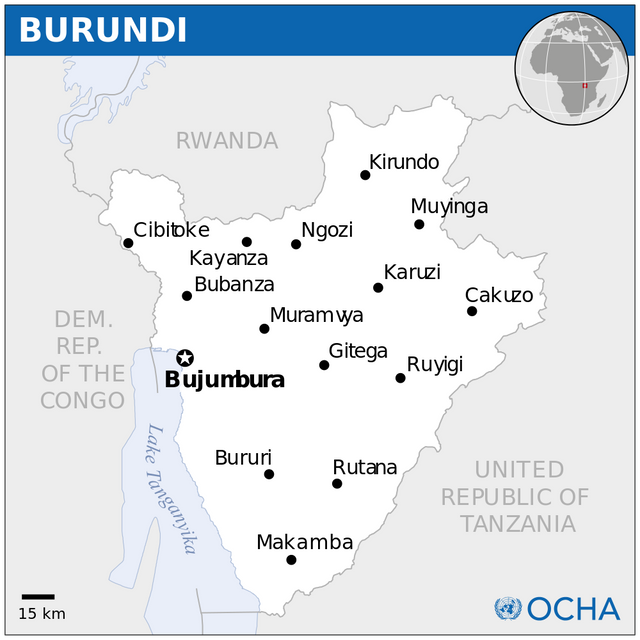
Clashes were reported Thursday in Bujumbura, capital of Burundi, between rival factions of the military, a day after Major General Godefroid Niyombare, the former intelligence chief, announced the ouster of President Pierre Nkurunziza. In a broadcast on two local radio stations Wednesday Niyombare declared the coup d’état, stating, “The activists of Burundi have decided to take charge of the nation.”
The head of the Burundian army, Major General Prime Niyongabo, announced on state radio that the coup had failed and called on the rebel forces to surrender. Niyongabo claimed that pro-Nkurunziza forces remained in control of the presidential palace and government offices.
Burundi’s police commissioner Venon Ndabaneze, a spokesman for the anti-Nkurunziza forces, denied the claims that the coup had failed and said that forces loyal to Niyombare remained in control of Bujumbura International Airport.
Burundi
The attempt to oust Nkurunziza came in the wake of more than two weeks of large protests in the capital after the ruling National Council for the Defense of Democracy-Forces for the Defense of Democracy (CNDD-FDD) party announced that the president would seek a third term.
Since the end of March more than two dozen people have been killed in the government’s crackdown on protests, while at least 600 protesters have been arrested. The UN reports that as a result of the violence more than 70,000 people have already fled to the neighboring countries of Rwanda, Tanzania and the Democratic Republic of Congo.
While he was visiting Somalia last week, US Secretary of State John Kerry denounced Nkurunziza’s efforts to seek a third term as a move that “flies directly in the face” of the country’s constitution. On Thursday the State Department released a statement saying that it still recognized Nkurunziza as the legitimate leader of the country. The United States is currently providing $80 million a year in weapons, training and support to the Burundi military.
While the constitution adopted in 2005 limits the president to two five-year terms, Nkurunziza’s supporters argue that he should be allowed to stand for a third term since he was elected by the parliament in 2005 rather by than a popular vote.
The coup attempt was launched while Nkurunziza was in neighboring Tanzania at a meeting of the East African Community to discuss the political situation in his country. Niyombare was dismissed by Nkurunziza as head of the Burundi Intelligence Service (SNR) in February after a report he authored opposing the president’s bid for a third term was leaked to the press.
A minority of the Burundi constitutional court handed down a decision in favor of Nkurunziza on May 5, one day after the court’s top judge, Sylvere Nimpagaritse, fled the country after reportedly receiving death threats. Three other judges had also left the country, so the decision was handed down by only three of the seven judges on the court. Nimpagaritse told reporters that the court had been under “enormous pressure” from leading government officials to approve the president’s bid for a third term.
Nkurunziza has ruled the deeply impoverished east African country since the end of a more than decade-long civil war in 2005, and there are concerns that the conflict over his third term could open up a renewed conflict between the country’s two main ethnic groups, the Hutus and the Tutsi.
The civil war began in 1993 after the country’s first democratically elected Hutu president, Melchior Ndayade, was assassinated by Tutsi elements within the military. Members of Ndayade’s Burundi Democratic Front (FRODEBU) party responded by massacring as many as 25,000 Tutsi. Over the course of the 13-year civil war it is estimated that more than 300,000 people were killed.
Both the incumbent president, Nkurunziza, and the leader of the military coup, Niyombare, are Hutus, but the mounting clashes have sparked fears that extremist Hutu elements aligned with the president could take revenge through ethnic massacres. Most of those fleeing the country are Tutsis.
The ongoing ethnic conflicts between the majority Hutus and minority Tutsis in Burundi, like those that produced a genocidal slaughter in neighboring Rwanda, are rooted not in ancient tribal conflicts but rather in the imposition of the colonial system on the African continent by the European imperialists at the end of the 19th century.
Despite decolonization throughout the continent in the 1960s, the national borders and divisions established by the imperialist powers more than a century ago, to assist their efforts at cheaply extracting raw materials, remain a dominant factor in political life.
The area which is known as Burundi today first came under colonial rule with the establishment of German East Africa in 1885. The German Empire dispatched several hundred troops to suppress opposition but mainly exploited tribal differences to assert their control over an area of the continent that included present day Rwanda, Burundi, and Tanganyika (mainland Tanzania).
With the defeat of Germany in World War I, its colonial possessions were carved up amongst the victorious imperialist powers via the Treaty of Versailles signed in 1919. Belgium officially gained possession over the newly formed territory of Ruanda-Urundi, while Portugal gained control of the Kionga Triangle and the remaining territory became the British colony of Tanganyika.
Belgium, which controlled Ruanda-Urundi from 1916 until 1962, favored the Tutsi minority over the majority Hutus in education and positions in the colonial government, exploiting the traditional authority of the king, chiefs and sub-chiefs as means of imposing its control.
Two years after Belgium gave up direct colonial control over neighboring Belgian Congo, it granted independence to the territory of Ruanda-Urundi in 1962, which became the two separate countries of Rwanda and Burundi.
The more than 50 years of official independence for Burundi have brought nothing but continuous conflict and poverty for the mass of the population. The small land-locked nation ranks among the poorest in the world, with a per capita gross domestic product of just $911 in 2014 as estimated by the IMF. According to the World Bank, 67 percent of the country’s population lived in poverty in 2006.
While the majority of the population continues to rely on subsistence farming, and coffee accounted for more than 90 percent of the country’s exports, Burundi’s importance as a source of raw materials is growing, especially in the extraction of rare earth metals used in smartphones, wind turbines and solar panels. Rainbow Rare Earth Limited, in partnership with the German steel corporation ThyssenKrupp won a contract from the Burundian government in March to begin the extraction of bastnaesite and monazite among other minerals from an area in the country’s Gakara region.

Five major banks to plead guilty to rigging currency markets

Andre Damon

Five major international banks are expected to plead guilty as soon as next week to criminal charges in the US related to their deliberate manipulation of global foreign exchange markets, which allowed them to rake in billions of dollars at the expense of retirees, university endowments and municipalities.
Citigroup, JPMorgan Chase, Royal Bank of Scotland Group, Barclays and UBS are expected to plead guilty to felony fraud and antitrust charges. They will pay fines totaling several billions of dollars, according to bank and regulatory officials who spoke anonymously with the New York Times, Bloomberg and Reuters.
The effect of the guilty pleas will be essentially zero, beyond the immediate costs of the fines levied on the institutions. As the Times put it, “life will go on, probably without much of a hiccup.”
In the years since the financial crisis, federal regulators avoided bringing criminal charges against banks and their executives, opting instead for either cash settlements and so-called deferred-prosecution agreements, in which charges are delayed on the basis of the banks’ compliance with certain conditions.
In 2012, it became clear that major global banks, including UBS and Barclays, were systematically engaged in manipulating LIBOR (London Interbank Offered Rate), the benchmark global interest rate on the basis of which hundreds of trillions of dollars of financial contracts are valued.
In June of that year, Barclays was fined $200 million by the Commodity Futures Trading Commission and $160 million by the United States Department of Justice. This was followed by UBS’s agreement in December 2012 to pay regulators $1.5 billion in connection with the scandal and an agreement by Deutsche Bank in 2015 to pay $2.5 billion to regulators. Numerous other banks, including Citigroup and JPMorgan, were fined by European authorities.
UBS was offered a deferred-prosecution agreement in connection with the LIBOR scandal, but broke the terms of the agreement by manipulating the $5.3 trillion-a-day foreign exchange markets in the subsequent periods.
In late 2014, six banks—JPMorgan Chase, Citigroup, Bank of America, UBS, Royal Bank of Scotland and HSBC—agreed to pay $4.3 billion to federal regulators to settle civil charges.
The investigation charges also had a criminal component, which the Justice Department is now seeking to settle with guilty pleas from the banks. Unlike some previous cases, however, these guilty pleas are expected to come not merely from the subsidiaries of the banks, but from bank holding companies themselves.
Financial regulators have released voluminous records in connection with the foreign exchange scandal, showing how brazenly and openly bank traders discussed rigging currency rates, even as they knew their employers were being investigated for similar activities with regard to LIBOR.
Despite the unprecedented character of the pleas, the actual impact of the admissions of criminal wrongdoing by the banks is expected to be next to nothing.
As the Times reports, “Behind the scenes in Washington, the banks’ lawyers are also seeking assurances from federal regulators—including the Securities and Exchange Commission and the Labor Department—that the banks will not be barred from certain business practices after the guilty pleas.”
In particular the banks are seeking waivers to retain their status as “well-known seasoned issuers,” allowing them to raise credit more easily, as well as the ability to operate mutual funds. The Times reports that “a majority of commissioners” of the SEC are in favor of granting such such waivers.
In fact, for the biggest corporations, being convicted of a felony is increasingly becoming legally irrelevant, and just one element of their normal operations. As the Times points out, the guilty pleas are merely “an exercise in stagecraft.”
One former Justice Department official told the Times that an “underlying assumption” of the Justice Department is that “the bank is not a criminal operation.” But the emergence of scandal after scandal, including the selling of toxic mortgage-backed securities that caused the financial crisis, the forging of foreclosure documents, widespread complicity in Bernard L. Madoff’s Ponzi scheme, money laundering, and tax evasion by Wall Street testifies to the fact that the banks are, in fact, criminal outfits.
Since taking office shortly after the onset of the financial crisis, the Obama administration has sought not to hold the banks to account and prevent criminal wrongdoing, but rather to conceal their crimes and, when this becomes impossible, to issue wrist-slap punishments that allow the banks to go on largely as before.
In these cases, the fines levied by financial regulators remain a cost of doing business, and pale in comparison with the billions of dollars made by the major banks every year through criminal activities.
The guiding principle of the Obama administration, in the words of former Attorney General Eric Holder, is that the giant banks are “too big to jail.” As the Times article explained, prosecutors are “mindful that too harsh a penalty could imperil banks that are at the heart of the global economy.”
In exchange for their services, top financial regulators are almost universally provided with high-paying positions in Wall Street after their stints with the government.
Most notably, Ben Bernanke, the former Federal Reserve chairman who funneled trillions of dollars in government funds to Wall Street, announced last month that he has been hired by Chicago-based hedge fund Citadel LLC. This followed the announcement in November 2013 that former Treasury Secretary Timothy Geithner joined the hedge fund Warburg Pincus.
To this day, not a single executive at any major bank has been criminally prosecuted for helping to cause the financial crisis, or any of the crimes that followed.

The growing danger of a US war against China

James Cogan

The Obama administration has placed the United States on a path for a military confrontation with China in the South China Sea. Washington’s reckless and provocative brinkmanship underscores that the danger of war—which would engulf the region and threaten the lives of millions—is far more advanced than the international working class is aware.
The Obama administration leaked on Tuesday that Secretary of Defense Ashton Carter has called for plans for the deployment of US naval and/or air assets to assert “freedom of navigation” within the 12-nautical mile exclusion zone surrounding Chinese-occupied territory. The sole aim of such a deployment would be to force Beijing to repudiate its claims to sovereignty over islands and reefs where it is constructing docks and airstrips.
The Chinese foreign ministry responded Wednesday by warning that China would uphold its “national sovereignty and security,” and warned “relevant countries to refrain from taking risky and provocative action.” The English-language state-controlled Global Times editorialised on Wednesday: “…although war is the last thing they want to see, both nations are actually considering the possibility.”
A second Global Times editorial, headlined “A firm response to meet US sea provocation,” declared: “It [Washington] should keep in mind that China is a major power with nuclear weapons, and there is no way that US forces can take reckless actions in the South China Sea.”
Assistant Secretary of Defense David Shear retaliated, telling a Senate hearing that the US was “committed to taking effective and appropriate action.” He announced that surveillance aircraft and B-1 bombers—the longest-range US bomber capable of carrying nuclear or conventional payloads—would be deployed to northern Australia as part of the preparations for a challenge to China’s claims in the South China Sea.
US Secretary of State John Kerry is due to arrive in Beijing on Saturday, ostensibly to discuss the planned visit to Washington by Chinese President Xi Jingping in September. Kerry’s agenda, however, will be dominated by fraught discussions over the possibility of open conflict.
Some form of diplomatic words may be found by Kerry and Chinese officials that enables Washington to back off, for now, from sending ships or aircraft into the disputed areas. US imperialism, however, is not engaged in empty posturing. It is preparing for war.
For over two decades, since the collapse of the Soviet Union, the United States has sought to utilise its overwhelming military superiority to stem the long-term decline of its global economic hegemony. It has engaged in endless violence and intrigue in the Middle East, Africa and Central Asia to assert its domination over key markets and resources.
China, which has emerged as the centre of global manufacturing, is now the prime target of Washington’s militarist agenda. As was spelt out in a recent report to the US Council for Foreign Relations, its growing economic weight and influence is viewed as an unacceptable threat to American imperialist interests, regardless of whether China seeks to challenge the US or not. The military pressure applied to Russia over Ukraine during the past year has been squarely aimed at weakening a potential ally of Beijing and preparing the conditions for a confrontation and China’s reduction to semi-colonial status.
The humiliation suffered by the Obama administration in March, when the major European powers defied Washington and sided with Beijing to establish the new Asia Infrastructure Investment Bank (AIIB), was interpreted in Washington as confirmation that China must be curbed, sooner rather than later.
Every country in the region, to one degree of or another, is embroiled in these rising tensions and preparations for war. The Australian political establishment is so thoroughly integrated with US imperialism, through a military alliance and basing agreements, that US official Shear appears to have announced the B-1 bomber deployments without even consulting the Australian government. Barely two weeks ago, Japanese Prime Minister Shinzo Abe addressed the US Congress and hailed his “collective self-defense” pact with Washington, which will oblige Japanese military forces to fight alongside the US.
Throughout the Indo-Pacific region, the US has been systematically strengthening alliances and strategic partnerships, forging new basing arrangements and boosting its own military deployments. All governments and military commands in Asia, as well as in Western Europe, will have experts bunkering down to consider the implications of a US-Chinese clash in the South China Sea. Increasingly the question on the diplomatic table is: where will the ruling classes of every state align in the event of open conflict?
The response of the Chinese Communist Party (CCP) regime to the threats by Washington is utterly reactionary. Its nationalist hubris about Chinese “strength,” and counter-threats that it is prepared to fight a nuclear war and slaughter millions of Americans, are only aimed at trying to extract concessions from Washington. The sole concern of the CCP is protecting the corrupt capitalist oligarchy it represents, whose profits and privileges depend on the ruthless suppression and exploitation of the Chinese working class. Its policies will lead to a catastrophe.
The only social force that can prevent the drive to war is the international working class, unified on the revolutionary perspective of ending the source of the war danger, the capitalist profit system. The actions of US imperialism are only the most explosive expression of the breakdown of world capitalism as a result of the inherent contradictions between a globally-interconnected economy and its division into rival nation-states, in which the private ownership of production is rooted.
The international online May Day rally held by the International Committee of the Fourth International (ICFI) powerfully outlined the historically-derived socialist and internationalist program that provides the basis for the unification of the working class and the development of a mass international anti-war movement.
The strategic task of the day is to build the ICFI, through the development of its existing sections and the establishment of new sections in China, Japan and countries throughout the region and around the world.

14 May 2015

Nationwide strike by child care workers in Germany

Marianne Arens

Since Friday, around 40,000 workers in social and childcare services have been participating in an unlimited strike called by the trade unions ver.di, GEW and DBB (Professionals’ Association). Prior to this, five rounds of negotiations with municipal employers' groups had failed, and an initial vote at the beginning of May in favour of strike action secured over 90 percent support (93.4 percent from ver.di and 96 percent from the DBB).
As well as childcare workers, social workers in schools for disabled children and work programmes for the disabled and social pedagogues in schools, youth centres and children’s homes are involved in the strike. Their demands equate to a wage increase of 10 percent. According to trade union leaders, this is to be achieved by categorising the professionals at a higher level on the pay scale within the child and social care sector.
The employers have rejected the demand outright, because it would supposedly mean increased costs of €1.2 billion. “Unaffordable,” was how Thomas Böhle of the Association of Municipal Employers (VKA) described the demand, while the VKA’s lead business manager Manfred Hoffmann told the Rheinische Post online, “Childcare workers are in a good financial position.”
The reality is that in many cases, the wage for childcare workers is insufficient to sustain a decent standard of living, especially in large cities like Frankfurt, Cologne and Hamburg. According to the Hans-Böckler Foundation, average wages are at €2,540 gross per month in western Germany, and €2,340 in eastern Germany.
Childcare workers are suffering under increased stress and duties at work even more so than from their low wages. The care teams are chronically understaffed and the groups of children too large, while the demand for education is increasing. Their militancy is therefore considerable, as the WSWS found in Frankfurt during discussions with childcare workers on the first day of the strike.
“Our institution has been overbooked for two years,” said Ann-Katrin Widkowski, who works in the childcare facility run by a workers’ welfare organisation (AWO) in Frankfurt. The institution, which is included in the municipal collective pay agreement, has 16 kindergartens and nurseries. Ann-Katrin thought that the failure to make an offer to the workers in five rounds of talks showed a lack of respect by the employers.
“The importance of education is being pointed out everywhere, but we don’t get anything. My training took five years. Now, I earn so little that I have to work a second job at a petrol station to make ends meet. Yet our work as childcare providers is extremely demanding.”
A ratio of children to care providers of 7.5-1 should apply, according to Ann-Katrin, but this is not the case. Currently in an AWO kindergarten, a professional childcare worker cares for a group of 20 children together with a trainee.
“The numbers in the groups have been increased for us,” reported another care provider who works in an after school centre. “Three childcare providers look after between 45 and 50 children, and sometimes there are only two of us and we have to prepare food at the same time.” Frequently only two care providers are in the building if someone is ill or absent for other reasons. When children are involved, it is very hard to refuse overtime, she continued. “The recognition of preparation time away from the workplace was also cut.”
The burden is particularly great in the inclusive institutions, as the childcare worker Ursula explained. She works with 15 children, five of whom have additional special needs.
“This includes epileptic children. In total there are four of us: three trained childcare providers and a trainee. We really have to do everything, for example changing the tube for children who have to be fed through a tube. Although we don’t have any specialist training, we carry huge responsibilities.”
These children are not allowed to drink anything, she said. “So no other child can give them a cup of water. We constantly have to keep a check on that.”
10 percent more pay, at minimum, is something which is urgently necessary, Ursula continued, if only to interest more people in the profession. “We work on a high level, offer a qualitatively high-value education programme. For example, we use the music teaching programme Primacanta, and a special type of observation learning known as Mattemeo.”
Requirements have increased as a whole and pressure is building on the workers. “The government set the requirement for education high, but our wages make it difficult for us to cover basic living costs in Frankfurt,” Ursula concluded.
The striking childcare workers and social pedagogues are extremely motivated. But they confront a major problem: if their struggle remains under the control of the trade unions, its failure is guaranteed.
The trade unions have collaborated for years in implementing the poor conditions under which childcare workers currently suffer. All of the contracts detailing job cuts and conditions of work at the state and municipal levels were signed off by ver.di and the GEW.
Many of the trade union leaders are members of the Social Democrats (SPD), Greens and Left Party, and through these parties they have close ties to the municipal employers’ organisations. For example, ver.di negotiator Achim Meerkamp, like the Federal Minister for Labour and Social Issues Andrea Nahles and Families Minister Manuela Schwesig, is an SPD member. Ver.di leader Frank Bsirske is a member of the Greens. From 1997 to 2000 he was responsible for the elimination of one in six jobs in the city of Hannover, before subsequently switching to lead the trade union.
The current childcare strike is not the first. In early summer 2009, over 200,000 workers in childcare and social services struck nationwide for several weeks. They demanded a reversal of the setbacks imposed by the move to new contracts. The dissolution of the collective agreement for federal employees (BAD) and its replacement by the public service agreement (TVÖ) and the collective agreement for states (TVL) resulted in drastic wage cuts in 2005.
The trade unions deliberately sold out that strike, as lead negotiator Meerkamp admitted in Frankfurt on Monday. “We know that in 2009, we had to agree a compromise. The compromise was necessary, because at the time we were hit by a financial crisis.”
Meerkamp has been a leading trade union official since his early 20s, and a member of ver.di’s national executive for eight years. He occupies many well-paid posts on supervisory boards, including at energy firm RheinEnergie AG.
There is no reason to expect ver.di and GEW to act any differently this time around. At that time, the agreement allowed the cities and municipalities to offload their budget crises onto the workers. This time, the public sector employers are providing hosts of reasons for savings in the area of social services. They include the debt break; supported by the SPD, Greens and in all essentials, the Left Party; the long-term impact of the economic crisis and the current military build-up which is costing billions.
The current childcare strike makes clear that the role of ver.di, GEW and the DBB is to maintain control of the workers. Of a total of over a quarter of a million professionals, only 40,000 in municipal social services and childcare were called out on strike. Private and church institutions, and those under the TVL agreement, were excluded from the strike from the outset, for example affecting kindergartens in Berlin.
In the midst of the current struggles by train drivers, postal, telecommunication and Postbank workers, airport staff, teachers, nurses and care providers, Karstadt retail workers, Amazon staff, midwives, psychotherapists and many other professional groups, an extremely well-refined plan has been put in place to prevent a joint strike.
GEW, ver.di and the entire German trade union confederation (DGB) are not aiming for a victory because they are props of the bourgeois order. This is made explicitly clear by the support of DGB and ver.di for the German army and militarism. As ver.di leader and Green Party member Bsirske declared with regard to the army’s massive recruiting campaign, “For ver.di it is also understandable that joining the army be promoted.”
It is thus not particularly surprising that already on the second day of the strike, Bsirske’s office released a statement declaring, “If the VKA makes a genuine offer, the unlimited strikes could be called off with a day’s notice.”