20 May 2015

Rwanda: The Advantage of Being Small

HE Paul Kagame


It has never occurred to me to be either proud or embarrassed of hailing from a small place. Nor do I believe that small entities are inherently better or worse than larger ones.  All groups, after all, are made of up of individuals, one after another. This is the deeper meaning behind abstract concepts like “inclusiveness.” Every person counts. What they think matters.
But there is no doubt that physical size is a factor in how a country or a business responds to threats and opportunities.There are small countries, but there are no small peoples. It follows that thinking big, and acting big, are choices available to all of us. Size is not destiny. But I can think of two ways in which Rwanda’s relative smallness works to our advantage.
First, it makes it easier for us to innovate. There are no off-the-shelf remedies for our predicament. We have no choice but to experiment with new ideas and bring the ones that work to scale as quickly as possible.
It is no accident that many of the biggest and most innovative companies in the world today began as small start-ups in someone’s garage. Without the constraints of bureaucracy and precedent, original thinking can flourish.
In a way, Rwanda is like a collection of start-up governance institutions whose mission is to solve problems and create new opportunities. If we were bigger, our approach maybe would have been more conventional and less effective.
Second, when you are small, it is a lot easier to get everyone involved. In our culture, as in most others, there is no substitute for talking face-to-face. Personal interactions remain an essential method for rebuilding trust in society, and changing mindsets, such that ambitious visions actually get translated into the billions of choices that citizens collectively make, each and every day, about their health, finances, and security.
So yes, there are benefits to being small. But there is a big catch too: It means you are also small enough to fail.  A mistake that a larger entity could absorb can completely wipe out your company or erase all your country’s development gains, or even plunge you into war. Small places have much less room for error. No one will rush to bail you out. In the grand scheme, the fate of a small place only really matters to the people who live in it. We have to be responsible for ourselves.
No amount of success will ever fully dilute this risk. Iceland, for example, if I may dare to give one, is as advanced a country as any, but its prosperity was nearly destroyed during the financial crisis. These are the realities I have in mind whenever I remind Rwandans that “nobody owes us anything” and that we can never afford to take our progress for granted. We must always strive to become better and better versions of ourselves.
Greatness is a choice available to any person, organisation, or nation. Big countries are capable of thinking small and acting small. Small countries can think big and act big, which is to say: With dignity and respect for others.
In Rwanda, we found answers appropriate to our context, but the principles we used to arrive at them apply more generally: Include everyone, build consensus, take responsibility, and be accountable for results. If Rwanda can transcend its tragic history, then anyone can. No matter how intractable today’s global challenges may seem, we should meet them with confidence and optimism.
More than ever, we are all in the fight together. Globalisation means that opportunities spread faster and farther. But threats move just as aggressively, whether we are talking of pandemics, terrorist ideologies, transnational crime, or stock market panics.  Big or small, we inhabit the same small world, and so we have to make the right choices, for the right reasons, for ourselves and for each other.

Bringing Out The Real You

Michelle Obama


I didn’t start out as the fully-formed First Lady. No, no, I had my share of bumps along the way. Back when my husband first started campaigning for President, folks had all sorts of questions of me:  What kind of First Lady would I be?  What kinds of issues would I take on?  Would I be more like Laura Bush, or Hillary Clinton, or Nancy Reagan?  And the truth is, those same questions would have been posed to any candidate’s spouse.  That’s just the way the process works.  But, as potentially the first African American First Lady, I was also the focus of another set of questions and speculations; conversations sometimes rooted in the fears and misperceptions of others.  Was I too loud, or too angry, or too emasculating?  Or was I too soft, too much of a mom, not enough of a career woman?
Then there was the first time I was on a magazine cover -- it was a cartoon drawing of me with a huge afro and machine gun. Now, yeah, it was satire, but if I’m really being honest, it knocked me back a bit.  It made me wonder, just how are people seeing me.
Or you might remember the on-stage celebratory fist bump between me and my husband after a primary win that was referred to as a “terrorist fist jab.”  And over the years, folks have used plenty of interesting words to describe me.  One said I exhibited “a little bit of uppity-ism.“  Another noted that I was one of my husband’s “cronies of color.”  Cable news once charmingly referred to me as “Obama’s Baby Mama.”
And of course, Barack has endured his fair share of insults and slights.  Even today, there are still folks questioning his citizenship. All of this used to really get to me.  Back in those days, I had a lot of sleepless nights, worrying about what people thought of me, wondering if I might be hurting my husband’s chances of winning his election, fearing how my girls would feel if they found out what some people were saying about their mom.
But eventually, I realized that if I wanted to keep my sanity and not let others define me, there was only one thing I could do, and that was to have faith in God’s plan for me.   I had to ignore all of the noise and be true to myself -- and the rest would work itself out.  
So throughout this journey, I have learned to block everything out and focus on my truth.  I had to answer some basic questions for myself:  Who am I?  No, really, who am I?  What do I care about? And the answers to those questions have resulted in the woman who stands before you today.  A woman who is, first and foremost, a mom.  Look, I love our daughters more than anything in the world, more than life itself. And while that may not be the first thing that some folks want to hear from an Ivy-league educated lawyer, it is truly who I am.  So for me, being Mom-in-Chief is, and always will be, job number one.
Next, I’ve always felt a deep sense of obligation to make the biggest impact possible with this incredible platform.  So I took on issues that were personal to me -- issues like helping families raise healthier kids, honoring the incredible military families I’d met on the campaign trail, inspiring our young people to value their education and finish college. 
Now, some folks criticized my choices for not being bold enough.  But these were my choices, my issues.  And I decided to tackle them in the way that felt most authentic to me -- in a way that was both substantive and strategic, but also fun and, hopefully, inspiring.
So I immersed myself in the policy details.  I worked with Congress on legislation, gave speeches to CEOs, military generals and Hollywood executives.  But I also worked to ensure that my efforts would resonate with kids and families -- and that meant doing things in a creative and unconventional way.  So, yeah, I planted a garden, and hula-hooped on the White House Lawn with kids.  I did some Mom Dancing on TV.  I celebrated military kids with Kermit the Frog.  I asked folks across the country to wear their alma mater’s T-shirts for College Signing Day.
And at the end of the day, by staying true to the me I’ve always known, I found that this journey has been incredibly freeing.  Because no matter what happened, I had the peace of mind of knowing that all of the chatter, the name calling, the doubting -- all of it was just noise.   It did not define me.  It didn’t change who I was.  And most importantly, it couldn’t hold me back.  I have learned that as long as I hold fast to my beliefs and values -- and follow my own moral compass -- then the only expectations I need to live up to are my own.
I want you all to stay true to the most real, most sincere, most authentic parts of yourselves.  I want you to ask those basic questions:  Who do you want to be?  What inspires you?  How do you want to give back?  And then I want you to take a deep breath and trust yourselves to chart your own course and make your mark on the world.
The world won’t know how hard you worked and how much you sacrificed to make it. Instead they will make assumptions about who they think you are based on their limited notion of the world.  And my husband and I know how frustrating that experience can be.  We’ve both felt the sting of those daily slights throughout our entire lives -- the folks who crossed the street in fear of their safety; the clerks who kept a close eye on us in all those department stores; the people at formal events who assumed we were the “help” -- and those who have questioned our intelligence, our honesty, even our love of this country.
And I know that these little indignities are obviously nothing compared to what folks across the country are dealing with every single day -- those nagging worries that you’re going to get stopped or pulled over for absolutely no reason; the fear that your job application will be overlooked because of the way your name sounds; the agony of sending your kids to schools that may no longer be separate, but are far from equal; the realization that no matter how far you rise in life, how hard you work to be a good person, a good parent, a good citizen -- for some folks, it will never be enough. 
And all of that is going to be a heavy burden to carry.  It can feel isolating.  It can make you feel like your life somehow doesn’t matter -- that you’re like the invisible man that Tuskegee grad Ralph Ellison wrote about all those years ago.  And as we’ve seen over the past few years, those feelings are real.  They’re rooted in decades of structural challenges that have made too many folks feel frustrated and invisible.  And those feelings are playing out in communities like Baltimore and Ferguson and so many others across this country. 
But I want to be very clear that those feelings are not an excuse to just throw up our hands and give up.  Not an excuse.  They are not an excuse to lose hope.  To succumb to feelings of despair and anger only means that in the end, we lose.
But here’s the thing -- our history provides us with a better story, a better blueprint for how we can win.  It teaches us that when we pull ourselves out of those lowest emotional depths, and we channel our frustrations into studying and organizing and banding together -- then we can build ourselves and our communities up.  We can take on those deep-rooted problems, and together -- together -- we can overcome anything that stands in our way.

Nollywood Or Cinenaija?: Rebranding The Nigerian Film Industry

Bubacarr Aminata Sankanu


In 2008, the Germany-based Gambian film scholar, Prince Bubacarr Aminata Sankanu, came up with the idea of changing the name of the Nigerian film industry as he considered “Nollywood” to be neo-colonialist and self-defeating to the creative energy and dynamics of Africa‘s largest economy. Seven years into his silent 10-year "Nollywood re-branding project 2008-2018”, Prince Sankanu explains in this extensive interview why he is floating “CINENAIJA” as an alternative to “Nollywood“ which he says ends in 2015 with the opening of the main competitions of the Pan African Film and Television of Ouagadougou (FESPACO) in Burkina Faso to digital films. Sankanu argues that the name Nollywood can be used to define a wave or phenomenon in the annals of African cinema history that started either in 1984 with Alade Arorime's "Ekun" or in 1992 with Kenneth Nnebue's "Living in Bondage" and ends with Desmond Ovbiagele's "Render to Caesar" film in 2014/2015. He explains how Nollywood signifies the film industry segment or genre within the creativity mix of Nigeria. The “CINENAIJA” Sankanu coins out of “CINE” from Cinema and “NAIJA” from the local parlance of Nigeria should be, according to his concept, the generic nationalist film industry brand in the Nigerian creative economy for infinity.
There is no intentional law or convention that makes it compulsory for every film industry in the world to copy the “wood” suffix. The idea of a serious name has been with me since 2004 when I first discovered the Nigerian home video film industry. I subsequently visited Nigeria on several occasions between 2004 and 2008 to personally study the strengths, weaknesses, opportunities and threats of the Nigerian video phenomenon. During the visits, I posed as an innocent research student in order to get unbiased first-hand information on the happenings in Idumota, Alaba International Market, Ibadan, Enugu, Kano, Jos, Abuja, Aba and other melting pots. As I am preparing to set up new operations in Nigeria by the end of this project, I decided to float this re-branding concept for the Nigerian motion pictures sector to, among others, officially introduce myself as the new kid (Johny just come) in town, though I have been in the shadows since 2004.
The Nigerian home movie industry is the product of indigenous Nigerians I hold in the highest esteem known to mankind. I am preserving their legacy by building a global branding and distribution system that will feature Nigerian videos prominently. The Nigerian home video art is an African Living Heritage that deserves to be promoted and developed in our African terms. This naming exercise is about finding a solid common denominator with the passionate stakeholders.
This “Nollywood” tag is just a transitional term in the constant evolutionary process of the Nigerian/African film history system from the arrival of the magic lanterns during the colonial era, the postcolonial productions of the first indigenous “back to the source” African films, the digital film era to future innovations. So without wasting time, I would like the stakeholders, policy-makers, researchers, fans, critics, consumers and other lovers of Nigerian/African films to always remember four (4) premises whenever they hear “Nollywood” or any digital film from other African countries with the “wood” copycats:
1.Just like the French Nouvelle Vague (New Wave), the British Free Cinema, the American “New Hollywood,” Nollywood is a term to define a short evolutionary phase in the development of cinema within the geopolitical and cultural scopes of Nigeria and by extension, Africa.
2.The home video phenomenon started in 1984 or 1992. For those consider with the VHS era, they can count from ALADE AROMIRE’s indigenous film “EKUN.” Others might be interested in KENNETH NNEBUE’s “LIVING IN BONDAGE” released in 1992 when mass consumption of DVDs/VCDs was gradually replacing VHS and cinema hall patronage. Regardless of the starting point taken, this wave or phenomenon ends with the 2015 edition of the Pan African Film and Festival of Ouagadougou (FESPACO), Burkina Faso when the main prize and competition categories were finally opened to digital films. The theme for this 24th edition of FESPACO, “African Cinema: Production and Distribution in the Digital Era” reflects the contemporary dynamics of film-making across our African continent. For years, some Nigerian home video practitioners have been complaining about their supposed marginalization by FESPACO but in year 2015 the organizers of embraced their format. I was expecting the Nigerian home video pundits to win with the entry of Desmond Ovbiagele's “Render to Caesar” but they faltered. This for me marks the symbolic, actual, historic, theoretical and political end of the “Nollywood” phenomenon and hype. It is time for serious change or re-branding. In summary, I mean “Nollywood” as a phenomenon started with either Alade Aromire's “Ekun” (1984) or Kenneth Nnebue's “Living in Bondage” (1992) and ends with Desmond Ovbiagele's “Render to Caesar” (2014/2015).
3.The name “Nollywood” can be used for kind of genre just like the American Western, Indian melodrama, Italian Spaghetti Western sub-genre, Chinese Kung Fu, Japanese monster, Thai “bomb-the-mountains, burn-the-huts” styles and the like to describe the types of quickie video films that use the Lagos-imitated segments with the stereotypical narratives that are not limited to the ridiculing of Indigenous Africa as evil and inferior to the religions of the Western colonial masters and Eastern slave traders, excessive materialism, obsession with the American way of life and so on.
4.There is nothing like “New Nollywood” as an essentialist way of keeping the dead “Nollywood” zombie alive within the academic and popular discourse on contemporary African digital cinema beyond 2015. The all-encompassing and timeless name of the Nigerian national film industry with various segments, genres, dynamics and confrontations should be CINENAIJA. CINE is from CINEMA and NAIJA is from the authentic name Nigerians use to describe their great nation. CINENAIJA is timeless while Nollywood covers a given period in Nigerian/African film history as explained above: from 1984 to 2015 starting with “Ekun” or 1992 to 2015 with “Living in Bondage” and ending with “Render to Caesar” in 2014/2015.
By and large, I am not a fan of copycats and bandwagons. If we look at the African audiovisual media, we will just see exaggerated “copycatism” in the forms of the reality TV, telenovelas, the modelling jobs, the industrial beauty ideals and so on. People seem to have more respect for the imported foreign content/formats than their own creative wealth. The Nigerian home video industry has however proven to the whole world that Africans are capable of telling their own stories successfully in their own vocabulary and styles. Why do we then have to call the Nigerian home video industry “nothingwood” because of Hollywood and Bollywood?
The Nigerians video films are largely accepted across Africa and in the Diaspora because they transport the African messages that are missing from the global mainstream media. It should therefore be natural for us to have globally recognisable serious names and logos for the Nigerian creative wonder without jumping into the Hollywood/Bollywood bandwagon. It is about the celebration of African creative excellence from Nigeria and not from America or India! My proposed “CINENAIJA” aims to be the generic nationalist film brand in the Nigerian creative economy for infinity. In effect Nollywood is under the “CINENAIJA” brand.
One cannot talk of a single homogeneous film industry in Nigeria, India or America. If we look deeper beyond the senseless “wood” titles, we will discover heterogeneous and diversified filming activities. I am therefore promoting unity in diversity by following the natural heritage of Nigeria. I am trying to help the world understand Nigeria as a united federation of vibrant Africa civilizations celebrated through the rich Yoruba, Hausa/Fulani, Igbo and other nations.
We should not fall into the traps of the Afro-pessimists who see any advancement of the indigenous languages and native cultures as divisive, backward or ethnocentric. Nigeria has over 200 ethnic groups and I understand the concerns of some people. But the reality on the ground between Katsina and Calabar is that we have very lively Yoruba, Igbo, Hausa, Fulani, Ijaw, Efik lifestyles, to name a few, that are positively interacting and shaping Nigeria. This contemporary reality should be shown on all arts products coming out of Nigeria, be they through film, radio, TV, literature, music, dance, fashion, romance, photography or painting. In this age of globalization, only the most vibrant cultures will survive and if we are to heal the psychological wounds of colonial African inferiority complex, we need to rediscover and modernise our Yoruba, Hausa, Fulani, Igbo and other indigenous ancestral archives first before talking about other related issues.

Is it a dangerous precedent?: Detroit Institute of Arts tests out art market with van Gogh

David Walsh

The revelation that the Detroit Institute of Arts (DIA) was considering earlier this year selling an 1886 still life by Vincent van Gogh produced headlines and generated concern last week. Although retiring DIA director Graham Beal insisted that the painting “is not for sale and has never been offered for sale,” the reaction to the news is indicative of both popular sensitivity about the preservation of the DIA’s collection and ongoing nervousness about the museum’s unresolved financial state.

Vase with Carnations, Vincent van Gogh Painting, Oil on Canvas Paris: Summer, 1886 The Detroit Institute of Arts
The story about van Gogh’s “Still Life with Carnations” being up for sale originally appeared in the Art Newspaper, the London-based publication, in March. The article in question asserted that the DIA was “about to reboot its deaccessioning programme [the sale of art by museums for the purposes of purchasing other art] after placing it on hold for two years during the city’s bankruptcy proceedings.” Beal was quoted as saying that “Deaccessioning is not controversial—US museums do it all the time—unless the intention is to use the funds for anything other than buying art.”
The Detroit News carried a story May 15, “Van Gogh for sale? DIA tiptoes into art auction market,” which suggested that the DIA was thinking about “a prospective, voluntary sale of some Detroit Institute of Arts works,” including the van Gogh work. Beal told the News he had decided not to sell the van Gogh, and to leave the matter of resuming art sales to his successor, who takes over July 1. He suggested that the story had emerged because “I had been talking to Sotheby’s and I think word leaked out.” He did not deny that the picture might be for sale, at the right price.
The Detroit Free Press then followed up with an article containing Beal’s denial that the painting had ever been for sale. That could be formally true, as the discussions with Sotheby’s may have been of a preliminary and general character.
In any case, the murky business was further muddied by the demagogic intervention of various pundits noting that during the bankruptcy process and the consequent threat to sell all or part of the DIA collection, Beal had insisted that not a single piece of the collection could be sold without doing it irreparable harm.
Of course, art museums do regularly and ethically sell works, but only for the purpose of upgrading their collections. The American Alliance of Museums’ “Code of Ethics for Museums” insists that “disposal of collections through sale, trade or research activities is solely for the advancement of the museum’s mission. Proceeds from the sale of nonliving collections are to be used consistent with the established standards of the museum’s discipline, but in no event shall they be used for anything other than acquisition or direct care of collections.”
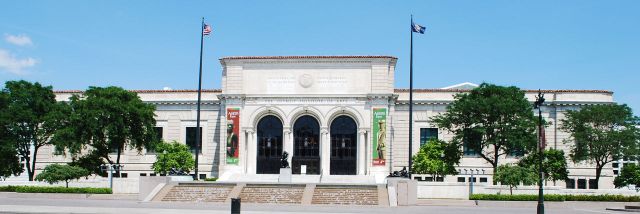
The Detroit Institute of Arts
More and more, in fact, art and historical museums are selling precious works simply to stay afloat. The current economic conditions have created impossible circumstances for cultural institutions of every kind. Vast wealth is flowing almost exclusively into private and corporate hands, helping to ensure that “there is no money” for government funding of art and culture available to the general public.
Increasingly, the continued functioning of museums, orchestras and arts programs at every level is contingent on the whims of billionaires and their foundations. Their gift-giving can come to an end at any moment, depending on their immediate financial position. Moreover, the dominance of these corporate interests is a guarantee that nothing oppositional or truly original will emerge.
This is the case with the DIA. It may well be that there was nothing untoward in Beal’s testing out the art market waters. The van Gogh is not considered one of the artist’s major works, and was even considered a fake at one point (and the work’s donator gave it to the museum with the proviso that it should be sold to improve the collection). Nonetheless, the possible sale of such a work takes on a far larger significance in the present context.
The Detroit restructuring plan approved November 7, 2014, by Judge Steven Rhodes slashed pensions and health benefits for current and retired city workers, and at the same time handed over hundreds of millions of dollars to Wall Street banks, hedge funds and bond insurers. The approval concluded a lengthy process that included “the state government’s use of an antidemocratic law to install an unelected emergency manager, essentially a financial dictator, to throw the city into bankruptcy and slash pensions in violation of state constitutional protections.” (WSWS, November 8, 2014)
As part of the so-called “Grand Bargain,” the ownership of the DIA collection and building was handed over to a private non-profit, the Detroit Institute of Arts, Inc., which had already been operating the museum on a day-to-day basis. The change of ownership took place on December 10, 2014. The museum then reverted to its condition prior to 1919, at which time the city took it over.
With the entire political establishment and its accomplices in the unions fearful of popular reaction to pension cuts and the other attacks on workers, the “Grand Bargain” provided for $816 million over 20 years to somewhat lessen the blow. The DIA itself was called on to raise $100 million (which its officials say has been done), corporate foundations kicked in $366 million and the state of Michigan contributed $195 million up front, the equivalent of $350 million over two decades.
The approval of the restructuring plan last November was the occasion for much noisy commentary to the effect that the “DIA has been saved!” In fact, nothing about the museum’s future or financial situation has been resolved. True, the DIA’s fate has been taken out of the hands of the small-time crooks in Detroit’s local political apparatus…and placed more fully in the hands of far more dangerous criminals, the representatives of the auto makers, banks, utility companies and other major corporations.
The DIA owes its continued existence entirely to the corporate elite. A partial list of who or what are in effect the new owners of the museums includes the Ford Foundation, Kresge Foundation, W.K. Kellogg Foundation, John S. and James L. Knight Foundation, William Davidson Foundation, Charles Stewart Mott Foundation, Hudson-Webber Foundation, McGregor Fund, Ford Motor Co., General Motors Co./General Motors Foundation and the Chrysler Group.
Contributing to the DIA’s $100 million portion of the “Grand Bargain” settlement were the Penske Corp., DTE Energy, Dan Gilbert’s Quicken Loans and Rock Ventures, Blue Cross Blue Shield of Michigan, Meijer, Toyota, Comerica Bank, JPMorgan Chase Foundation, J. Paul Getty Trust and Andrew W. Mellon Foundation.
All in all, a who’s who of the corporate interests responsible for the social misery that blights the Detroit metropolitan area and makes life impossible for wide layers of the population.
Do these people give away anything for free, even taking into account that political considerations—i.e., fear of popular unrest—encouraged them to be “openhanded”?
The DIA board of directors elected seven new members in January 2015, including Stephen Biegun, a corporate officer and vice president of international governmental affairs for Ford Motor Company and a trustee of the Ford Motor Company Fund; Robert Jacobs, president and owner of Buddy’s Pizza; Victoria McInnis, chief tax officer for General Motors; Dennis Scholl, former vice president of arts for the John S. and James L. Knight Foundation (specifically nominated by the various foundations to be their observer on the DIA board); and Mark Zeffiro, chief financial officer and executive vice president of TriMas Corporation.
Detroit’s art museum will still need to raise hundreds of millions of dollars to keep its doors open. The Free Press comments, “With its grand bargain funding obligation met, the DIA can now turn its full attention to raising roughly $275 million in new endowment funds over the next eight years. Those dollars are critical to ensuring the museum’s long-term financial stability after the tri-county tax support for the DIA expires in 2022.”
Phillips Oppenheim, which specializes in finding executives for non-profit organizations, asserts in a statement, “The challenge facing the DIA today is to establish an unrestricted operating endowment of approximately $400 million by 2023 that will provide adequate annual operating funds and obviate the need to return to the voters for a renewal of the millage.”
At the next crisis—and there will be a next crisis as surely as the sun rises and sets each day—who is to say that the museum board members, exempt from any public control or oversight, will not begin to sell the DIA’s masterpieces? What would hold them back? Perhaps the devastation of the museum would not take place all at one go, but Detroit residents run the risk of waking up one day and discovering a different institution on Woodward Avenue. Without the emergence of a socialist-minded working class movement, the future of the DIA is entirely at the mercy of the corporate-financial aristocracy.

Australian government undermines arts funding body

Richard Phillips

In its 2015 budget, the Liberal-National coalition government stepped up the assault on arts spending with a series of cutbacks to arts and cultural institutions.
This included a $3 million reduction in Screen Australia’s budget, on top of a $38 million cut last year, and $4 million slashed from the budgets of various national galleries and museums. The so-called Administered Program Indexation Pause on community radio stations will be extended by two years—in effect a $3 million funding reduction.
The main shift in the arts measures, however, is the undermining of the Australia Council for the Arts, the country’s peak cultural funding body.
Over the next four years, $104.8 million, or approximately 16 percent of total funding, will be cut from the council’s annual budget. The money will be diverted into a new National Program for Excellence in the Arts, under the control of the federal arts ministry.
There was no prior consultation with Australia Council officials or other arts administrators and no precise details have been issued on how the “excellence” program will operate. Grants from the new agency, however, will be at the discretion of the arts ministry.
The Australia Council’s influence will be further diminished by its loss of responsibility for Visions of Australia, Festivals Australia and the Major Festivals Initiative—all to be taken over by the arts ministry.
The funding body will lose a further $1.8 million a year via the imposition of cost-cutting “efficiency dividends” that will directly impact on its ArtStart, Capacity Building and Artists in Residence programs. This follows last year’s $6.3 million government grant to Creative Partnerships Australia, a private agency whose purpose is to boost corporate arts sponsorship and establish the basis for further funding cuts.
Arts Minister George Brandis issued a statement claiming that arts funding had been “limited almost exclusively to projects favoured by the Australia Council.” The new agency, he said, would provide funds to “a wider range of arts companies and practitioners, while at the same time respecting the preferences and tastes of Australia’s audiences.”
Brandis’s statement is a clear attack on the council for simply carrying out its remit, that is, to award arts grants independently of the federal government.
Established in the early 1970s, the council was meant to prevent political interference in the distribution of government grants. Its grants are awarded on the basis of independent peer group reviews.
The National Program for Excellence in the Arts is aimed at sidelining the Australia Council and opening the way for greater government control over the funding of cultural institutions and artists. As a result, the new funding mechanism could be used to politically silence or discipline artists.
Brandis has form on the political censorship of artists. Last year, 40 artists staged a political boycott of the Sydney Biennale to protest its sponsorship by Transfield Holding. The corporation had just been awarded a $1.22 billion contract to provide “garrison and welfare” services to the Australian refugee detention camps on Nauru and Papua New Guinea’s Manus Island.
Brandis furiously denounced the protest. When the Sydney Biennale management refused to condemn the artists’ boycott, he ordered the Australia Council to develop new protocols to punish any organisation that rejected corporate sponsorship on political grounds.
Last week Brandis referred to “respecting the preferences and tastes of Australia’s audiences.” These are code words for dispensing with the Australia Council’s peer-group reviews and rewarding favoured artists and institutions deemed to be popular.
In 2014, Brandis told the media he was “more interested in funding arts companies that cater to the great audiences that want to see quality drama, or music or dance, than I am in subsidising individual artists responsible only to themselves.”
More than 3,600 writers, visual artists, filmmakers, publishers and other cultural sector workers issued an open letter declaring that the government’s “massively defunding” of the Australia Council was “deeply disturbing” and demanding that it “reverse all proposed cuts to the arts sector.” Several academics have written op-ed comments attacking the move as the most serious assault on independent arts funding in the past four decades.
Rodney Hall, former chair of the Australia Council, opposed Brandis’s “excellence” program. “From the artist’s point of view, and the public point of view, it’s a disaster,” he told the Australian Broadcasting Corporation. “The Australia Council existed to give the public creative resources they would not otherwise have and allow artists to make a living in Australia… This is all at risk.”
Hall pointed out that the undermining of the Australia Council began under the previous Labor government. “Simon Crean as arts minister repealed the Australia Council Act and replaced it with a much inferior piece of work… dismantled the board structure, dismantled the very structure by which every level of the Australia Council had kept in touch with arts practice.”
Brandis claimed that the Australia Council cuts would end the peak funding body’s “monopoly” and declared that there had been “extremely enthusiastic” reaction to the measures.
One commentator hailing the new funding model was right-wing Daily Telegraph columnist Tim Blair. He described the Australia Council “as a multi-million tax playpen” that created “a spineless movement of grant-dependent tax sucklings.”
Blair concluded that the Australia Council “should be shut down, along with just about all arts funding. This would save close to $700 million per year and—absolutely guaranteed—would result in better art.”
While overall arts funding has been slashed under Coalition and Labor governments, money is being lavished on projects associated with the official “celebration” of Australian involvement in the slaughter of World War I. Over the past two years there has been a barrage of war-themed works and events. This includes music, dance, drama, visual arts, travelling military displays, seminars and books, as well as films and numerous television programs.
The millions of dollars spent on militarist propaganda, in order to condition the public for further wars, is the clearest indication that culture and the arts are being marshalled to serve the interests of Australian capitalism.

Ontario Liberals move to criminalize teachers’ strikes

Dylan Lubao & Carl Bronski

Ontario’s trade union-backed Liberal government has moved to outlaw secondary school teachers’ strikes that have affected three of the province’s largest local school boards—Durham and Peel, in the Greater Toronto area, and Rainbow, which covers the Sudbury region.
Last Friday, Education Minister Liz Sandals approached the little-known Education Relations Commission for a declaration that the strikes are putting the school year of 70,000 high school students in jeopardy.
The government plans to use a finding by the Education Relations Commission against the strikes as the pretext for introducing legislation outlawing teacher job action just as they did in 2013.
A ruling against the strikes is all but a foregone conclusion. The Commission’s members were all hand picked by the government.
Sandal’s appeal to the Commission was enough to convince leaders of the Ontario Secondary School Teachers’ Federation (OSTF) to return to the bargaining table starting tomorrow.
Additionally, the three secondary school boards affected by the strike have filed suit with the provincial Labour Relations Board for an order declaring the strikes illegal. They argue that the strikes are in breach of the two-tier contract bargaining system the Liberals established last year under legislation that was passed with the support of the union-allied New Democratic Party (NDP).
The Boards have said they will provide video and other evidence to show that strikes are not chiefly about local issues. “It’s quite clear from the rhetoric,” charges Durham District School Board Chair Michael Barrett, the strike is “primarily to force negotiation at the provincial table and that’s quite illegal.”
The province’s public school teachers have been without a contract since August of last year. They are confronting a government that in the name of balancing the budget is mounting a frontal assault on public education, including forcing school closures, demanding increased class sizes and imposing cuts in teachers’ real wages.
Yet, as they did in 2012-2013 when the government demanded a two-year wage freeze and the slashing of sick benefits, the various teacher unions are limiting teacher job action and dividing teachers by district, level, and language stream.
The Durham secondary school teachers have been on strike since April 20, and those in the Sudbury region and in Peel (Mississauga-Brampton) since April 27 and May 4 respectively.
Two other OSSTF regions are to begin “work-to-rule” campaigns today.
In addition, 76,000 elementary school teachers represented by the Elementary Teachers Federation of Ontario (ETFO) began what the union calls a “work-to-rule” campaign last week. The union has instructed teachers to perform all necessary teaching duties and oversee extracurricular activities, but to refrain from administering provincially-regulated standardized tests and providing parents with detailed comments on student report cards.
Bill 122, or the School Boards Collective Bargaining Act, is a flagrant attack on teachers’ right to strike. It forces the teachers’ unions to bargain on two levels, with big-ticket concerns such as salary and classroom sizes negotiated at the provincial level and less significant and costly issues relating to working conditions negotiated with individual school boards.
The current negotiations are taking place under the government’s “net zero” framework whereby any increase to salaries or benefits must be offset by savings in other areas of the contract.
Central to the teachers’ grievances are plans by the Liberals to slash the quality of public education, primarily by increasing class sizes and teachers’ workloads. Teachers have been asked to take on additional supervisory duties during their regular out-of-classroom time such as lunch and recess, which would likely double their daily work hours. The province is also pushing to diminish teachers’ autonomy in running their own classrooms, proposing that principals and school administration play a larger role, especially with regards to student testing.
The attacks on public education in Ontario mirror those being mounted by governments across North America, and are a continuation of the austerity campaign being waged by the Liberals and the entire political establishment to make the working class shoulder the cost of the protracted global economic crisis.
Just three years ago, the Liberals, under the leadership of the so-called “Education Premier” Dalton McGuinty, launched a ferocious assault on public school teachers and tens of thousands of other public sector workers. With the full support of the opposition Conservatives, the Liberals imposed a two-year public sector wage freeze and criminalized teacher job action using the notorious Bill 115, the so-called “Putting Students First Act.”
The NDP claimed to oppose Bill 115. But this was a sham. It supported the budget in which the Liberals announced their wage freeze and continued to prop up the then minority Liberal government in the legislature for close to two years after Bill 115’s adoption.
Under the concessionary contracts imposed by government fiat under Bill 115, the Liberals also slashed teachers’ annual sick leave from 20 to 10 days, abolished the right to bank sick-days and receive a payout upon retirement, and delayed the application of seniority-grid pay increases for new teachers. Two-and-a-half-years on, a majority Liberal government under the leadership of Premier Kathleen Wynne is deepening the attack on teachers and public education.
The response of the ETFO and OSSTF union officialdom has been, as ever, to adopt a posture of opposition, the better to conceal their support and that of the union bureaucracy as a whole for the Wynne Liberal government.
The unions have refused to mobilize their memberships in a province-wide challenge to the “net zero” strictures of the government, preferring instead to confine the dispute within the narrow confines of collective bargaining by authorizing what amounts to little more than face-saving work-to-rule actions and a few selective local strikes. Their conduct stands in stark contrast to the militancy of rank-and-file teachers who fought bitterly against the last Liberal assault, even striking in defiance of Bill 115.
Tellingly, Canadian Labour Congress President Hassan Yussuff met with Wynne last week in “back channel discussions” to convince her that the teachers’ unions were prepared to make a deal that would satisfy the government. Yussuff’s assumption of a role normally undertaken by the leadership of the Ontario Federation of Labour is bound up with the union leadership’s fears that a working-class challenge to the Wynne Liberal government and its austerity agenda would disrupt their plans to promote the federal Liberals as a “progressive” alternative to Harper and work for the coming to power of a Liberal-NDP coalition government in next fall’s election.
The move by Yussuff follows on a similar intervention he made in last year’s British Columbia teachers’ dispute. Just as that strike was beginning to provoke a broader working class movement against the government of Liberal BC Premier Christy Clark, Yussuff intervened to bring it to a quick end. He flew to BC to meet with Clark and assure her that the unions had no intention of challenging the Liberals’ right to govern. Soon after, that strike was wound up and a contract signed that provided the government with virtually every demand it had made at the bargaining table.

UK rail workers vote for national strike

Michael Barnes

Workers at Network Rail (NR), the UK state-owned track operator, have voted overwhelmingly to strike against a derisory four-year pay deal and the threat of further job losses.
Over 16,000 signallers, maintenance and station staff represented by the Rail, Maritime and Transport union (RMT) voted by 80 percent for strike action and 92 percent for action short of a strike in a ballot turnout of over 60 percent. The smaller Transport Salaried Staff Association (TSSA) covering clerical, supervisory and technical staff also voted 53 percent and 79 percent respectively for industrial action on a 52 percent turnout.
Network Rail put forward a four-year offer that included a £500 non-consolidated payment (not added to hourly rate) for 2015 and an increase pegged to the Retail Price Index measure of the cost of living for the following three years. It withdrew any formal commitment to no compulsory redundancies over the last two years of the deal.
The comparatively high turnout and vote in favour of the first national rail strike since 1994 indicates the pent-up anger and a determination to wage a struggle against the erosion of living standards, job cuts and speedups.
Network Rail carried out a reduction of its maintenance staff by 12 percent between 2009/10 and 2013/14, down by 2,169 to 15,813. It has been set a target by 2019 of further cost cutting of 20 percent.
The RMT announced a date for a national strike on the May 25 Bank Holiday, with an overtime ban to run on May 25 and 26. TSSA will participate in the same action.
The one-day stoppage has the potential to provide a focal point for opposition to austerity within the working class, which has seen pay decline year on year since the world financial collapse in 2008. Income inequality for wage earners is at levels last experienced during the Great Depression of the 1930s.
The RMT and TSSA will seek to prevent this. Both unions have responded to the mandate they have been delivered by redoubling their efforts to prevent a showdown.
The RMT provided 10 days notification of the planned strike action, rather than the legally required seven days, and began further talks with the government conciliation service ACAS for May 18. RMT General Secretary Mick Cash said of the vote that it was “now down to NR to start taking this issue seriously, to understand the deep-seated grievance felt by their staff and to come forward with a renewed offer which protects pay and jobs.”
The TSSA has stated its desire to avert the strike.
Network Rail is committed to pressing ahead with its attacks, backed up with the full force of the government and mass media. The RMT’s claim that the company can be pressured into a deal protecting pay and jobs is aimed at disarming workers and preparing a sell-out in advance. The RMT and TSSA would settle for any meagre concessions as a pretext to call off the dispute.
The very fact that a rail strike on May 25 would be the first national stoppage in 21 years is an indictment of the RMT and demonstrates their role, along with the other unions, in policing opposition. While the RMT is touted in the media and by pseudo-left groups, including the Socialist Workers Party and Socialist Party, as a militant union, it has shown repeatedly that it will demobilise opposition.
In 2001, under the leadership of Bob Crow, the RMT called off strike action against the partial privatisation of London Underground and allowed the Blair Labour government to impose its pro-market policy. More recently, the RMT dismantled one of the few strike movements the unions could not prevent emerging against the coalition government, over the closure of ticket offices on London Underground. The powerful strikes were called off and the closure programme is now underway while a strike vote remains “live”.
The RMT has ingratiated itself with successive governments and the Rail Delivery Group (RDG). The RDG is a control and command centre of corporate CEOs from all the giant transport companies that control Britain’s rail franchises. The RDG is tasked with implementing Lord McNulty’s 2010 recommendations of 20,000 job cuts, ending automatic pay rises, and eliminating working conditions obstructing increased exploitation.
The new Conservative government responded to the prospect of a national rail strike by announcing plans to further tighten Britain’s already draconian anti-strike legislation. The details, due to be unveiled in the government’s first Queen’s Speech, will require strike ballots to have a 50 percent turnout and a majority of 40 percent of those eligible to vote in favour for strike action, for them to remain within the law.
According to the Conservatives, the introduction of these draconian measures would have led to the banning of two thirds of all strikes over the past five years.
The strike vote by NR workers exceeds the requirements planned in the new legislation.
The Cameron government’s drive to effectively outlaw strikes is a measure of how fragile social relations are behind all the triumphalism of the Tories’ re-election. Their claims to have seen off the so-called “grievance politics” of the 1970s would be punctured by any decisive struggle waged by any key section of the working class.
The government intends to pass such laws, despite the fact that its majority rests on a smaller percentage of the electorate—24 percent—than the criteria it now demands for future strike action to be free from legal sanction. Even the record low level of strike action during their last period in office, due to the suppression of all struggles by the trade unions, is deemed impermissible.
According to data released from the Office for National Statistics, the number of strikes in 2013 was less than in any year in the preceding two decades. Five years into the global recession and the biggest assault on the working class since the “hungry ’30s”, there were 114 strikes compared with an average of 144 a year in the 2000s and 266 a year in the 1990s. Of those, 63 percent of all strikes lasted just one day while 87 percent of all strikes lasted just two to three days.
Network Rail Chief Executive Mark Carne denounced the strike vote, stating, “It cannot be right that the unions can hold the country to ransom in this way.”
Those really holding society hostage are the financial and corporate elite who exercise a stranglehold over every aspect of economic, social and political life.
To end this situation, workers must break free of the stranglehold of the trade unions—forming independent rank-and-file committees as new organisations of class struggle. It means building the Socialist Equality Party to wage a political offensive against the twin defenders of big business, the Tory government and its de facto allies in the Labour Party.

US House of Representatives passes anti-abortion bill

Evan Blake

The US House of Representatives voted largely along party lines last Wednesday to pass the anti-abortion Pain-Capable Unborn Child Protection Act, by a wide margin of 242-148. The bill bans abortions after 20 weeks of pregnancy, in direct and unconstitutional defiance of the Supreme Court’s Roe v. Wade decision.
The bill is unlikely to pass the Senate, where it will face a filibuster, and even if did, would be vetoed by President Obama, whose press secretary Josh Earnest called the legislation “disgraceful.” The bill is a political state of the ultra-right majority in the new Republican-led Congress, and was originally set to pass symbolically on the anniversary of the 1973 Roe v. Wade decision in January.
Female Republican representatives delayed passage, however, objecting to a provision that denied abortions to pregnant victims of rape unless they had immediately reported the attack to police.
The bill now contains modified language that requires rape victims seeking exception to the ban to receive counseling or medical care in the 48 hours prior to their abortion, and which makes no exceptions for fetal abnormalities often detected in the later stages of pregnancy that can threaten women’s lives.
Having missed the 42nd anniversary of Roe v. Wade, House Republican leaders provocatively decided to pass the bill during National Women’s Health Week.
The ban on abortions at 20 weeks after fertilization—well before viability—is a clear violation of the precedent set in Roe v. Wade, which affirmed the right to have an abortion before viability, when the fetus is “potentially able to live outside the mother’s womb, albeit with artificial aid,” which the Court has since set to 24 weeks.
The proponents of the bill, which is based on equally unconstitutional bills already passed by at least 10 state legislatures, make the scientifically dubious claim that the nervous system of the fetus has developed sufficiently by 20 weeks to experience pain during an abortion.
Women who have abortions this late in the pregnancy in most cases wanted to carry the fetus to term, but change their minds because of the discovery of rare and severe fetal abnormalities which threaten their lives or make long-term survival of the baby after birth unlikely.
According to Planned Parenthood, “Nearly 80 percent of the American public wants to ensure that abortion remains safe and legal; and three in 10 women have had an abortion at some point in their lifetimes,” while “60 percent of voters oppose 20-week bans when they understand the real-world impact these laws would have.”
Ever since the Roe v. Wade decision, the Republican Party has cultivated and exploited religious backwardness among a minority of the US population as a base of support for its right-wing agenda, as part of a broader effort to eviscerate democratic rights as a whole. The First Amendment’s primary clause mandating the separation of church and state has been substantively dismantled over the course of this decades-long campaign.
The first attack came with the passage of the Hyde Amendment in 1976, which barred federal funding for abortions through Medicaid, specifically targeting the program’s low-income recipients. Thus, the cost of abortion has always been highly burdensome to working class women, with the present estimated charge averaging $470.
While the Roe v. Wade decision legalized abortion, the federal government continued to deny funding for abortion clinics nationwide. According to the Guttmacher Institute, roughly 60 percent of abortions are paid for out of pocket, 12 percent by private insurance, and 20 percent by Medicaid in the few states that provide state funds to cover medically necessary abortions.
The 1992 Supreme Court ruling in Planned Parenthood v. Casey permitted some state regulation of abortion, such as requiring waiting periods and imposing arbitrary licensing rules on abortion clinics, whose cumulative impact has been devastating. The Guttmacher Institute notes that “As of January 1, 2014, at least half of the states have imposed excessive and unnecessary regulations on abortion clinics, mandated counseling designed to dissuade a woman from obtaining an abortion, required a waiting period before an abortion, required parental involvement before a minor obtains an abortion, or prohibited the use of state Medicaid funds to pay for medically necessary abortions.”
Since January this year, Republicans in the House of Representatives have already introduced 29 separate measures attempting to limit women’s access to safe and legal abortion, tacking on abortion restrictions to legislation ranging in scope from aid to education to prohibition of human trafficking.
The Democratic Party shares responsibility for these attacks, despite its nominal defense of abortion rights, one of the few issues on which the two corporate-controlled parties actually disagree.
The right-wing Supreme Court justices who have spearheaded the campaign against abortion rights owe their seats to the Democrats, most notably Antonin Scalia, the leader of the ultra-right bloc on the court, confirmed by the US Senate 98-0.
The Hyde Amendment was enacted by a Democratic-controlled Congress, and the Democrats have never attempted to repeal it during the years they have controlled Congress since (1976-1994, 2006-2010). Democratic health care reform plans—the failed Clinton plan of 1993-94 and the Obamacare plan enacted in 2010—have extensive exemptions from payment for abortion and even contraception by employers who object on religious grounds.
Democrats at both the federal and state level have stood by haplessly as the right to abortion has become all but impossible to obtain in the rural areas of many states, and altogether in some states, due to a combination of state legislative sanctions and fascistic violence, including the assassination of abortion doctors.
More fundamentally, under conditions where the US ruling elite is engaged in a frontal assault on democratic rights, in the guise of waging the “war on terror,” there is no constituency in either party for the defense of the democratic right to abortion, despite the election-year posturing of Democratic Party candidates.
As always, class considerations prevail. The politicians of both big business parties represent the multimillionaires whose access to abortion is in no way threatened by the reactionary proposals of the Republican Party. As before Roe v. Wade, women of the upper classes have the resources to travel anywhere in the world to receive the highest quality medical care, while working class women face immense hurdles and even incrimination when exercising their right to an abortion.

Nine killed, 170 arrested in Texas biker gang shootout

Tom Carter

The bloody shootout between rival biker gangs and police in Waco, Texas on May 17 is a symptom of an unhealthy society.
The shootout took place at a Twin Peaks sports bar and restaurant, and involved nearly 200 members of five different biker gangs. Biker gangs in attendance included the “Bandidos,” as well as a rival gang calling itself the “Cossacks.” A third “Scimitars” gang, affiliated with the Cossacks, was also present.
According to the latest reports, the gangs had chosen the restaurant as the site to mediate a dispute. A melee broke out in the restaurant and then spilled out into the parking lot, with bikers fighting with brass knuckles, chains, clubs, knives and firearms.
Heavily armed SWAT teams had been standing by in case a fight broke out, and one suspects that the police arrived with guns blazing. The result was a bloody free-for-all that left nine dead and at least 18 hospitalized. At one point, at least 30 armed bikers were shooting.
At least four of the dead have been confirmed to have been killed by police bullets. Meanwhile, no injuries have been reported among the police.
Nearly 100 weapons were recovered from the scene, and at least 170 bikers were arrested. Bail has been set at $1 million each.
The crudely named Twin Peaks restaurant, like the rival Hooters franchise, employs only female waitresses and requires them to dress in revealing outfits. The police had apparently warned the Waco franchise not to host the bikers, but the revenue from so many customers apparently weighed more heavily in the eyes of management. To save face, the Twin Peaks parent company subsequently revoked the franchise’s license.
Biker gangs have flourished in the general atmosphere of social decay and hopelessness mixed with endless war and brutality. Many gangs are heavily involved in methamphetamine, cocaine and marijuana production and distribution; as well as theft, extortion and other forms of gangsterism.
In addition to their criminal operations, biker gangs in the US are notorious hotbeds of white supremacism, xenophobia, misogyny, gun culture and other forms of backwardness. Many biker gangs conspicuously display Nazi symbols, such as the swastika or the SS death's head, as well as the Confederate flag.
As they did in the period of the Vietnam War, biker gangs continue to recruit heavily from among military veterans recently returned from combat.
The Bandidos gang, formed in 1966 in Texas by a former US Marine and Vietnam veteran, encourages its members to wear patches that read, “Accept No Mercy.” The gang, which has an estimated 2,400 members, wears the same colors as the US Marine Corps: gold and red.
The name of the rival Cossacks gang is exactly what it sounds like—with motorcycles instead of horses—although it is doubtful that many bikers can actually claim Cossack descent. Both the Bandidos and Cossacks claim the state of Texas as their turf.
The city of Waco was made infamous by the military assault on the Branch Davidian cult complex in 1993. The assault left 86 people dead, including 25 children.

Conditions worsen for refugees trapped on boats in South East Asia

John Roberts & Peter Symonds

The plight of refugees on overcrowded and unsafe fishing boats in South East Asia deteriorated over the weekend as authorities in Thailand, Malaysia and Indonesia continued to block entrance into their countries.
Around 1,300 Bangladeshi and Rohingya asylum seekers have been rescued by Indonesian fishermen and are being housed in makeshift camps in the Indonesian province of Aceh. However, an estimated 6,000 to 8,000 people are still trapped at sea with few supplies and nowhere to land.
The Muslim Rohingya, members of an ethnic minority from western Burma (Myanmar), have been subjected to communal attacks and persecution encouraged by the military-backed regime as a means of diverting mounting social tensions. In 2012, an estimated 120,000 people were driven from their homes. Many fled across the border into Bangladesh, where they have been accommodated in squalid camps.
Refugees in Aceh told horrific stories of the situation on the refugee boats after they were abandoned at sea by the crew. The lack of food, water and medical supplies, as well as unsanitary conditions, fuelled desperation and violence among those on board, leading to a number of deaths.
One survivor, Saidful Islam, said dozens died on board from starvation and fighting, with the bodies dumped overboard. Mohammad Rafique told the Guardian that he was aboard a boat that drifted into Indonesian waters last week. After providing the passengers with some food and water, the Indonesian navy sent them on their way to Malaysia.
Conditions for the survivors in Indonesia are precarious. Local authorities and non-government organisations are pleading for assistance. Nasruddin, the humanitarian coordinator of the Geutanyoe Foundation, said his organisation was providing refugees three meals a day. “We have enough food, drinks, medicine, etc., for a month. After then, we don’t know,” he said.
The Indonesian navy has doubled the number of warships patrolling its maritime borders and instructed local fishermen to stop bringing refugees ashore. Armed forces spokesman Euad Basya said that on Sunday the navy spotted a vessel filled with migrants crossing the Malacca Strait. “It was heading to Indonesian waters from Malaysia and was denied entry. It was intercepted, and we stopped it from passing,” he said.
The Malaysian and Thai militaries are doing likewise. “What do you expect us to do?” Malaysian Deputy Home Minister Wan Junaidi Jafaar told theGuardian. “We have been very nice to the people who broke our border. We have treated them humanely, but they cannot be flooding our shores like this.”
The escalating humanitarian crisis is provoking bitter recriminations between regional governments. Malaysian Foreign Minister Anifah Aman on Sunday demanded that Burma join talks over the refugees and threatened to use his country’s presidency of the Association of South East Asian Nations (ASEAN) to call an emergency meeting. He called for talks with his Thai and Indonesian counterparts tomorrow.
The Thai military junta has proposed a meeting with Malaysia, Indonesia and Burma on May 29. Thai Prime Minister Prayuth Chan-ocha, however, has already rejected assisting the refugees. “If they break the law and land in Thailand, how can we take care of them?” he asked. “Where will the budget come from?”
For years, Thailand, like Malaysia, tacitly allowed the influx of Burmese refugees, in order to acquire a super-exploited cheap labour force. The stranding of thousands of refugees at sea is a product of a crackdown by Thai security forces on trafficking routes from southern Thailand into Malaysia, supposedly in response to the exposure of the shocking conditions facing asylum seekers, including mass graves.
The Burmese regime signalled that it might not attend the May 29 meeting. Spokesman Major Zaw Htay said Burma would stay away if the word “Rohingya” were used. Burmese authorities justify the persecution of the ethnic minority by insisting that they are illegal Bengali immigrants, even though many have lived in the country for generations. Most Rohingya have no citizenship rights.
While Burma, Malaysia, Indonesia and Thailand are immediately responsible for the humanitarian crisis, no other country in the region or internationally has come to the aid of the asylum seekers.
Indeed, successive Australian governments have paved the way for the inhumane treatment of refugees by South East Asian governments through the use of the navy to prevent refugee boats from reaching Australian shores. Deliberate inaction by Australian authorities has also led to the drowning of hundreds of asylum seekers as means of warning others not to attempt the journey.
The Obama administration has made gestures of concern, but has no intention of allowing the plight of refugees to cut across its broader strategic interests in the Indo-Pacific region. As part of its “pivot to Asia,” the US is strengthening its military ties throughout South East Asia.
US State Department spokesman Jeff Rathke declared last week: “This is a regional issue. It needs a regional solution in short order.” However, when pressed, he made crystal clear that Washington was not about to place any pressure on Burma. “Will we decide to disengage with Burma because we have a disagreement over the approach to the Rohingya?” he stated. “No, we will remain engaged with Burma.”
Since late 2011, Washington has developed close relations with the military-backed government in Burma, not because of any improvement in the regime’s atrocious record on democratic rights, but because it demonstrated its willingness to move out of China’s orbit. The US was all but silent during the communal violence against Rohingya that erupted in 2012. It has continued to back opposition leader Aung San Suu Kyi, even though she and her National League for Democracy support the regime’s discriminatory measures against the Rohingya.
Equally, Washington is not about to disrupt relations with other governments in the region. Over the weekend, Secretary of State John Kerry appealed to his Thai counterpart to provide aid and shelter for the Rohingya, but was immediately rebuffed by Thai leaders. The US has no intention of pressing the issue, let alone offering to open its own borders to the desperate refugees.