20 Feb 2016

White House steps up drive to outlaw encryption

Andre Damon

The court order to force technology company Apple Inc. to create a “backdoor” to its iOS mobile operating system is a substantial new offensive in the US government’s drive to spy on the data and communications of everyone in the world.
The ruling comes as the Senate Intelligence Committee is preparing to introduce a bill that would create criminal penalties for companies that do not comply with court orders to decipher encrypted communications, the Wall Street Journal reported Thursday.
On Tuesday, Magistrate Judge Sheri Pym of the US District Court for the District of Central California ordered Apple to create a fraudulent software update that intelligence agencies could use to access encrypted data on the company’s mobile telephones and tablets.
Formally, the order stipulates that Apple must provide “technical assistance” to the Federal Bureau of Investigation in hacking an Apple iPhone seized while executing a search warrant into the car owned by Tafsheen Malik, one of the shooters in the December 2, 2015 mass killing in San Bernardino, California.
But as Apple chief executive Timothy D. Cook made clear in an open letter published Wednesday, the ruling would create a technical and legal precedent for the government to hack into phones on demand.
The ruling is another step toward the US intelligence agencies’ goals of being able to intercept and monitor all data stored or transmitted anywhere in the world, or to, “sniff it all, collect it all, know it all, process it all and exploit it all,” as one internal document leaked by Edward Snowden put it.
Pym’s order is a pseudo-legal travesty. It is based on a false reading of the All Writs Act of 1789, which states that the courts may issue orders “agreeable to the usages and principles of law.” Pym’s ruling simply ignores this latter clause and interprets the act to mean that the courts are given effective plenipotentiary powers to do whatever they declare “necessary or appropriate.” This is simply a prostitution of the judiciary to grant the executive branch effectively unlimited spying powers.
As Cook notes, “The implications of the government’s demands are chilling. If the government can use the All Writs Act to make it easier to unlock your iPhone, it would have the power to reach into anyone’s device to capture their data. The government could extend this breach of privacy and demand that Apple build surveillance software to intercept your messages, access your health records or financial data, track your location, or even access your phone’s microphone or camera without your knowledge.”
In this case, the ruling would require the world’s largest technology company to “hack our own users and undermine decades of security advancements that protect...tens of millions of American citizens.”
The ruling mandates Apple to create a version of the iOS operating system with key security features disabled, and then create a false digital signature certifying the operating system as genuine in order to install it onto the phone in question. This would then allow the Federal Bureau of Investigation to carry out a “brute force” hack of the phone’s password in order to gain access to the phone’s data.
Once such software is created, there is no way to prevent it from being used at will by intelligence agencies.
The ruling is the latest stage in the Obama administration’s drive to expand government spying in the wake of Edward Snowden’s 2013 revelations of mass illegal government surveillance. In May 2015, Congress passed the USA Freedom Act, which was designed to give the veneer of ending illegal government surveillance while in reality allowing it to continue in slightly modified form.
In the wake of the November 2015 terror attacks in Paris and the December mass shooting in San Bernardino, the White House shifted to the offensive, demanding that electronics and computer manufactures create backdoors to encryption.
This is entirely in keeping with the Obama administration’s record on democratic rights. The Obama White House has carried out twice as many prosecutions of reporters and whistleblowers for leaking classified information than all previous administrations combined, including the jailing of Chelsea Manning and the witch hunts of Edward Snowden and WikiLeaks founder Julian Assange.
The Obama White House has refused to prosecute those within the Bush administration responsible for torture, and instead conspired with CIA Director John Brennan, whom Obama appointed, to suppress the Senate Intelligence Committee torture report. The administration then defended Brennan when his hacking into Senate Intelligence Committee staffers’ computers was exposed.
This is in addition to having been the first president to claim the right to kill American citizens, including inside the borders of the United States, without a trial. To date, the White House’s drone murder program has led to the deaths of thousands of people in Pakistan, Yemen and other countries, including at least four American citizens.
Now, amid an intensification of its wars in the Middle East and on the threshold of a potential conflict with Russia and China, the White House is seeking to clamp down on encrypted communications in order to threaten and intimidate popular opposition to war, attacks on democratic rights and social inequality.
No one should be under any illusion that corporations such as Apple, who have collaborated with illegal spying in the past and whose qualms now are based on financial considerations, will be either willing or able to mount a successful effort to restrain the drive to criminalize encryption.
The defense of democratic rights requires the building of a mass movement of the working class in opposition to war and social inequality, armed with the socialist program of reorganizing society to meet social need, not private profit.

Turkey escalates war threats after terror attacks

Johannes Stern

The Justice and Development Party (AKP) government in Turkey has seized upon a terrorist attack carried out in the capital of Ankara as a pretext for escalating its military campaign against Kurdish-dominated regions in eastern Turkey, northern Syria and Iraq.
At the same time, Ankara is pushing ahead with plans for a ground invasion into Syria. In so doing, NATO member Turkey is deliberately stoking a conflagration in the entire region and risking a military confrontation with Russia, which could rapidly develop into all-out war between the great powers.
On Thursday, the Turkish military command announced that its warplanes had bombed PKK (Kurdistan Workers Party) positions in northern Iraq the previous night. Targets were attacked in the Haftanin border region—an area considered to be a stronghold of the PKK militia.
On Friday, Turkish Prime Minister Ahmet Davutoğlu boasted in a televised speech: “Our armed forces conducted a large-scale operation against the Haftanin camp. … Around 70 members of the separatist terrorist organization ... were neutralized.”
In an attack on a military convoy in the Turkish capital of Ankara on Wednesday night, at least 28 people were killed and another 60 injured. All of the dead except one were members of the Turkish military. The attack took place just a few hundred metres from the parliament and Turkish army headquarters. At least six people were killed in another attack on Thursday on a military convoy in the predominantly Kurdish province of Diyarbakir in southeastern Turkey.
Davutoğlu and Turkish President Recep Tayyip Erdoğan promptly assigned responsibility for the attack to the PKK along with the Syrian Kurdish organizations, the Democratic Union Party (PYD) and the People’s Protection Units (YPG), and vowed retaliation.
Erdoğan announced that Turkey would “use its legitimate right to defend itself at all times and everywhere. … These actions only serve to increase our determination to retaliate in Turkey and abroad to such attacks on our unity and our future.” The terror tested the patience of Turkey, Erdogan declared, adding menacingly: “If someone fires on Turkey, he will receive a clear answer.”
Davutoğlu threatened: “Yesterday’s attack was directly targeting Turkey and the perpetrator is the YPG and the divisive terrorist organization PKK. All necessary measures will be taken against them.” Davutoğlu vowed that Turkey would continue to shell YPG positions in northern Syria and equated the YPG with the terrorist organizations Al Qaeda and Islamic State of Iraq and Syria (ISIS), insisting that they could not be a party to Syrian peace talks.
The Turkish prime minister asserted: “This attack has been carried out by the members of the terrorist organization inside Turkey together with an individual YPG member who had crossed from Syria.” Davutoglu then identified the suicide bomber as Salih Neccar, born in 1992 in the Kurdish town of Amudah in northern Syria.
Representatives of the PKK, the YPG and the PYD categorically rejected the allegations launched by Ankara. The PKK commander Cemil Bayik told the PKK-affiliated agency Firat on Thursday: “We do not know who did it. It might, however, have been in retaliation for the massacres in Kurdistan.”
A member of the YPG told reporters, “We have no connection to the man who is named as the assassin.”
The PYD denies any connection to the attacks and has no record of carrying out any actions in Turkey. Its leader, Saleh Muslim, accused the Turkish government of exploiting the attacks to escalate the fighting in northern Syria. “We vehemently deny responsibility,” Muslim said in a telephone interview with Reuters. “Davutoğlu is preparing something else. They have bombarded us for a week, as you know. I can assure you that not a single YPG bullet was fired in the direction of Turkey. They don’t consider Turkey an enemy.”
Whoever has followed events in Syria and the fiercely aggressive response of the Turkish government in recent days can only conclude that the latest terror attacks play into the hands of Davutoğlu and the Turkish government.
For the past week, the Turkish Air Force has bombarded YPG positions in northern Syria and the Turkish army has shelled them with artillery on the Turkish-Syrian border. On Tuesday, the US, which works closely with the YPG in the latter’s offensive against ISIS in Syria, called upon Turkey and the Kurdish militia to end their conflict. Erdoğan replied angrily that such a proposal was “not up for debate” and that Turkish security forces would carry out their fight against the “Kurdish terrorists in Syria” to the bitter end.
He accused the UN and the West of being passive for too long with regard to the fighting in Syria. “Right now I have difficulties understanding the United States. Why do they not call the PYD and YPG terrorists? Why do they say they support the YPG?” On Thursday, Turkey summoned the ambassadors of the five permanent members of the UN Security Council.
Turkey has intensified its rhetoric in the wake of the attacks. “Those who directly or indirectly support a group hostile to Turkey risk losing their status as a friend. … We cannot tolerate any NATO country, including first and foremost the US, having relations with a terrorist organization that attacks us in the heart of Turkey,” Davutoğlu declared. He said the Syrian regime was “directly responsible” for the attacks, calling the YPG “a pawn” of Damascus, and insisting that Turkey had the right to take all measures against the Assad regime.
Regarding Russia, which supports the Syrian army in its offensive in northern Syria, Davutoğlu stated that Moscow’s condemnation of the attacks was a “positive sign”, but was not enough. “I warn Russia again against using terrorist organizations against innocent people in Syria and Turkey,” he said.
How can one account for the thoroughly reckless and aggressive stance of the Turkish government?
Recent weeks have seen the collapse of the Western-backed Turkish strategy to forcibly topple the Assad regime through arming and financing so-called moderate Islamist “rebels” in Syria.
An article on the news website al-Monitor states: “On Feb. 3, the Syrian army and its allies dealt a strategic blow to Ankara when they cut the land route between Aleppo and the Bab al-Salameh border crossing with Turkey in the Turkish province of Kilis.”
The road link was important for Erdoğan and Davutoğlu for one reason in particular. Al-Monitor writes: “The fighters, weapons, munitions and various supplies that flowed via this route to Aleppo allowed the rebels to sustain their military presence in Syria’s most populous city and therefore preserve their political ambitions in the conflict. … Thus, with the fall of Aleppo, Ankara would find itself largely sidelined from the Syrian process.”
Since then, there are increasing indications that the Turkish regime is planning a ground offensive in Syria to rescue its dwindling influence and prevent the emergence of a Kurdish-occupied territory in the north of Syria. Just one day after the Syrian army occupied the Turkish-Syrian route to Aleppo, a spokesman for the Russian Defence Ministry stated that Turkey was “actively preparing for a military invasion in Syria. … We’re detecting more and more signs of Turkish armed forces being engaged in covert preparations for direct military actions in Syria.”
According to reports, the Turkish military has been reticent up until now about a military invasion in Syria. The Turkish newspaper Hurriyet reported recently that the Turkish army would not invade Syria without a resolution from the UN Security Council.
Erdoğan and Davutoğlu have been seeking for some time to change this attitude. An article on al-Monitor, significantly entitled, “Can Erdogan bully Turkey's armed forces into invading Syria?” reports the Turkish president pushing for an early intervention in Syria. Erdoğan has repeatedly spoken of an “mistake” in 2003 when Turkey refused to march alongside the US into Iraq. Now this “mistake” should not be repeated in Syria.
Already in 2014, Davutoğlu had sought, in his capacity at the time as Turkish defence minister, to provoke an invasion by the Turkish army. A leaked audio recording revealed that he had met with, among others, the head of the Turkish intelligence service MIT, Hakan Fidan, to discuss the possibility of an attack on Turkey from across the Syrian border, or at the grave of Suleiman Shah—a former Turkish enclave inside Syria—serving as a pretext for a full-scale Turkish intervention of Syria. At one point in the conversation, Davutoğlu declared that such an attack “in the current situation should be seen as an opportunity for us”.
Today, the Turkish government is less isolated than in 2014, and enjoys, in particular, greater support from the German government. Just two days ago, German Chancellor Angela Merkel confirmed in a government statement her support for a no-fly zone in Syria, a central demand of the Erdoğan government and an important prerequisite for a Turkish military invasion in Syria. After the latest terror attacks, she stated that the German government stood “alongside Turkey in the fight against those responsible for such inhuman acts”.
The threat of another major war is becoming more acute on a daily basis. Russian Prime Minister Dmitri Medvedev warned at the Munich Security Conference last weekend against the danger of a “new world war” should Western or Arab ground troops invade Syria, adding, “The Americans and our Arab partners must think it through: do they want permanent war?”

Canada’s Liberals debate aid for Bombardier as it slashes 7,000 jobs

Roger Jordan

Canada’s Liberal government is considering extending US$1 billion in financial support to the Montreal-based airplane and train manufacturer Bombardier. The urgency of the bailout talks has intensified following the company’s announcement this Wednesday that it will slash 7,000 jobs over the coming two years, close to 10 percent of its global workforce.
Almost half of the cuts, 3,200 jobs, will take place at Bombardier Transport, which manufactures trains and subway cars. Of the 3,800 other job cuts, 500 are coming from the manufacture of business aircraft, 800 from aerospace development, and, 2,500 from aerostructures and engineering services.
Overall, the company is eliminating 2,830 jobs in Canada, including 2,400 in Quebec. Company officials claim, however, that none of the company’s Canadian manufacturing facilities are threatened with closure.
At Bombardier’s plant in Belfast, Northern Ireland, 580 jobs are slated to be eliminated this year, with another 500 possibly to go in 2017. According to theBelfast Telegraph, Bombardier notified its Belfast workforce of the impending layoffs and job cuts by text message. Bombardier is also planning to cut 270 jobs at other UK facilities.
In Germany, where the firm employs around 9,000 workers, Bombardier is slashing 1,430 jobs, all in the train division.
News of the job cuts came as Bombardier released lower than expected earnings for the fourth quarter of 2015. The company said turnover fell by 16 percent in the last three months of last year and it is now projecting turnover of $16.5 to $17.5 billion in 2016, down from $18.2 billion in 2015.
Like its larger competitors Boeing and Airbus, Bombardier has been hit hard by the global economic crisis. Its attempt to develop its first ever medium-sized jet, the CSeries, has also been plagued with delays and cost overruns. So serious are the problems, Bombardier last year sought an investment from one of its leading competitors, Airbus, and there have been persistent rumours it is considering a fire sale of its train manufacturing division.
In justifying the job cuts, a Bombardier spokeswoman said it is “crucial” the company “right-size our business in line with market realities.”
Bombardier also announced Wednesday that it has struck an agreement with Air Canada to purchase 45 of its CSeries jets with an option for 30 more. Air Canada is the first major airline to sign a letter of intent to purchase the aircraft since 2011.
In November, the Quebec provincial government injected US$1 billion in emergency financial support into Bombardier, and at the government’s prodding the Caisse de dépôt, the Quebec pension fund, invested a further $1.5 billion in the company in exchange for a 30 percent stake in Bombardier’s train division. Media reports suggest that Bombardier’s aircraft sale to Air Canada also involved Quebec, with the provincial Liberal government of Philippe Couillard conveniently announcing the very same day that it is dropping a lawsuit against Air Canada in exchange for the airline agreeing to have its future CSeries aircraft maintained at facilities in Quebec.
The federal Liberal government has said it is studying options for investing in Bombardier. According to government records, the company has received over $1 billion in cheap loans and grants from Ottawa since the 1960s.
In late January, the Liberals announced the lifting of sanctions against Iran, in line with moves by the United States. Foreign minister Stephane Dion noted at the time that Bombardier would be one of the major beneficiaries of this move, telling reporters, “If Airbus is able to do it, why (will) Bombardier not be able to do it?” Dion added that the refusal of the previous Conservative government to lift sanctions had resulted in Airbus getting the jump on Bombardier and securing a contract to sell Tehran 160 planes.
The prospect of a federal bailout of Bombardier is provoking bitter dispute within Canada’s elite.
Much of the bourgeoisie argues that it is essential that the Trudeau government support Bombardier, as it is one of the country’s few “world-class” manufacturing companies and routinely accounts for 10 percent or more of private sector research and development spending in Canada. “There is no one (else) at the size of a truly global competitor with a global footprint,” McGill University management professor Karl Moore told the Canadian Press.
However, powerful sections of capital, predominantly based in the west and reliant on the oil and energy sectors, are opposed to Ottawa providing financial assistance to Bombardier, believing it will prove to be a case of throwing good money after bad. At the very least, they want to use the haggling over a bailout to advance their own interests.
Brad Wall, the conservative premier of Saskatchewan, gave voice to these sentiments Thursday, complaining in a Facebook posting that Ottawa should be doing more to support the energy sector. “If the federal government,” wrote Wall, “is considering a $1 billion bailout to address 2,830 job losses at Bombardier, what about the tens of thousands of job losses in Canada’s energy sector?”
Since the defeat of Stephen Harper’s Conservatives in last year’s federal election, Wall has emerged as a leading spokesman for Canada’s right. In recent months he has repeatedly questioned why tax monies from Saskatchewan and Alberta should be transferred to Quebec via federal transfer payments, when Quebec’s political elite isn’t championing the Energy East oil pipeline, which would bring western oil to eastern Canada and overseas markets.
Writing in the Globe and Mail, Jeffrey Simpson explicitly linked the two issues, suggesting that assistance for Bombardier could be used to bring the ruling elite in Quebec on side with the Energy East pipeline and further expansion of the Alberta/Saskatchewan oil tar-sands. “Ottawa should privately (and, if necessary, allude to this argument in public) that in exchange for the Quebec government and Montreal officials getting what they want–federal cash for Bombardier–they in turn should pipe down about the Energy East pipeline and stop making ex gratia attacks on a project that is in the national interest.”
This week Quebec Premier Philippe Couillard defended his government’s decision to invest US$1 billion in Bombardier, by once again claiming that his government is acting to preserve the 40,000 jobs in the province that are directly or indirectly reliant on Bombardier production.
Couillard’s alleged concern for workers’ jobs is a fraud. His government has carried out massive social spending cuts that have resulted in the elimination of thousands of public sector jobs. At the same time as his government provided a handout to Bombardier last November it was demanding cuts in pensions and real wages from a half million teachers, hospital workers and civil servants on the grounds that the province has no money.
Pierre Karl Peladeau, the media and telecommunications magnate who leads the pro-Quebec independence Parti Quebecois, criticized Couillard this week for failing to secure guarantees to retain jobs in Quebec. However, he was in full agreement with the Liberal premier that the federal Liberals should step in to help Bombardier. At a news conference Wednesday, he compared government support for Bombardier to the 2008-09 auto industry bailout in Ontario—which was used to impose massive wage and benefit cuts on autoworkers so as to boost corporate profits.
For their part, the trade unions affected a show of surprise at the thousands of job cuts, while promoting a nationalist response, which pits worker against worker, derails any challenge to big business, and has time and again served as the cover and pretext for the imposition of wage and benefit concessions.
David Chartrand, Quebec coordinator for the International Association of Machinists and Aerospace Workers (IAM), sought to incite the 4,500 workers his union represents against those in other countries by focusing on outsourcing as the main problem. Telling CTV that dozens of administrative jobs have been sent overseas to Brazil and India, Chartrand declared, “I just believe that when we do give subsidies and when the government gives subsidies and all that we have to maintain a certain level of employment. (Because) … at the end of the day … those people that you are outsourcing that don’t have jobs anymore, they’re the ones that are paying for those subsidies.”
The bankruptcy of the unions’ nationalist-corporatist policy, which is predicated on a slavish acceptance of the subordination of workers’ jobs and social rights to investor profit, has been starkly exposed by Bombardier’s latest job-cut announcement. Up to 350 jobs could go at its Thunder Bay, Ontario plant, a facility that saw a two-month-long strike in 2014.
Unifor, which represents the 1,100 workers at the plant, previously boasted that it had attracted business there as part of a Buy Ontario initiative it had negotiated with Ontario’s pro-austerity Liberal government, a close political ally.

Global volatility triggers concerns about Australian banks

Mike Head

The turmoil on global markets this year has underscored the heavy exposure of the Australian economy to the deepening world slump. While relatively sheltered from the impact of the 2008–09 global financial crisis by the mining boom, the economy is now being hit hard by the slowdown in China and falling commodity prices.
In a series of speeches over the past week, Australian bank chiefs, including the central bank governor, sought to reassure the markets of the banking system’s stability. But their assurances failed to halt the plunge of Australian shares into bear market territory—down more than 20 percent since last April.
The price drop has been led by the banks, as well as the mining companies. Share prices for the country’s big four banks have fallen by between 19 and 36 percent since April 2015. The mining giant BHP Billiton has dropped by around 45 percent. Together, Australia’s major banks and mining giants make up nearly half the value on the Sydney stock exchange.
Reserve Bank of Australia (RBA) governor Glenn Stevens gave rare public vent to the nervousness on financial markets last week. After delivering a prepared statement to a parliamentary committee, insisting there was no reason for concern, he lashed out in response to a question, declaring: “Markets are dropping their bundle.”
Stevens’s testimony was one of many attempts being made by the corporate, media and political establishment to paint the gyrations on world share markets this year as an over-reaction, fed by ill-informed fears rather than any problems in the “fundamentals” of the global economy.
In reality, the ongoing collapse of commodity prices has placed significant question marks over the exposure of the banks to the losses in the resources sector. As with other large banks around the world, such as Deutsche Bank, Bank of America and Citigroup, there are concerns Australian banks are not revealing the extent of the loans they have made to oil, gas and mining companies.
“The global sharemarket now has grave fears that the world is heading for a serious banking crisis,” Business Spectator columnist Robert Gottliebsen wrote on February 9. Australian banks were far from immune from these concerns, he explained. On top of their unknown mining loans, they were “overexposed” to signs of a contracting housing market and heavily dependent on overseas borrowing.
Gottliebsen wrote another column on February 18 after Arrium announced moves to shut down steelmaking operations at its Whyalla plant in South Australia, where 1,400 workers are employed. “[A] group of overseas and local banks (we do not know who they are yet) stumped up about $2.4 billion in unsecured loans—yes unsecured—to a former BHP offshoot called OneSteel, which later changed its name to the forgettable title of Arrium,” he noted.
Fellow Business Spectator columnist Stephen Bartholomeusz warned of a “ticking clock” because Arrium’s borrowings blew out from $1.43 billion a year ago. While no significant repayments of principal are due until 2018, more than $2.5 billion must be paid by 2020.
By one estimate, Australia’s four major banks are owed $31 billion by energy companies alone. Santos this week added to the doubts surrounding Australia’s oil and gas producers, reporting an annual $2.7 billion loss to follow Origin Energy’s $254 million loss and Woodside Petroleum’s meagre $US26 million profit, almost entirely due to lower prices.
On February 15, Australian Broadcasting Corporation business editor Ian Verrender discounted the myth that Australia’s banks were pillars of strength in 2008. “All of our banks would have collapsed in 2008 had the federal government not ridden to the rescue,” he wrote. “None were able to refinance their offshore loans because global credit markets had frozen. During the crisis, our banks borrowed more than $120 billion using the taxpayers’ AAA credit rating, the greatest bailout of any industry in our history.”
For a period, the Australian banks then sought to reduce their reliance on foreign debt. According to Verrender, however, “caution since has been thrown to the wind.” By one analysis, by Macrobusiness, offshore borrowings hit an unprecedented 53 percent of Australia’s gross domestic product (GDP) in the September quarter of 2015. That helped push up household mortgage debt and new lending to a record 210 percent of GDP by last September.
Together with cash flowing out of China, that lending fuelled a housing bubble with soaring prices and construction activity, particularly of apartments in Sydney, Melbourne and Brisbane. Until recently, this boom partly offset the mining crash, while placing homes increasingly out of reach of young people.
The bubble is showing signs of bursting, however, and this will increase the pressure on the banks. Between 2011 and 2015, housing investment more than doubled, but it began to fall last April, and has since dropped 15 percent, with the biggest fall-off in apartments.
In its February board meeting minutes, the RBA attempted to calm the markets, but made a brief reference to signs of housing reversal. “To date, there had not been any substantive signs of financial distress from developers, but there had been an increasing number of projects put on hold, particularly in areas where there were concerns about potential oversupply,” the minutes stated.
Buried in the minutes, the RBA also admitted that mining investment continued to fall sharply “and further large falls were anticipated.” In addition, “there was little prospect for a pick-up in non-mining business investment in the near term.” A virtual investment strike is taking place, despite the RBA keeping its interest rates at a record low of 2 percent since May 2015.
Workers are being made to pay for the crisis through lower wages, attacks on working conditions and thousands of new job losses in mines and resource projects, as well as in auto and other manufacturing and the retail industry. The official unemployment rate rose from 5.8 to 6 percent in January, taking to 761,000 the number of workers classified as actively seeking work and currently not employed more than an hour a week.
That jobless figure is artificially low. According to Roy Morgan survey figures for January, the unemployment rate jumped to 10.3 percent, from 9.7 percent in December, and 2.575 million workers were unemployed or under-employed.
Such is the perversity of the capitalist profit system, ever-more dominated by the insatiable appetites of the financial elite, that investors responded enthusiastically to the release of the official joblessness data. The S&P/ASX share index rose 2.3 percent that day, on expectations that the RBA would further cut interest rates, making more cheap credit available.

Wal-Mart reports currency losses and falling sales, profits

Patrick Martin

Wal-Mart Stores, the largest US retailer, reported that losses due to shifting currency values, particularly the rising US dollar, had wiped out its entire revenue growth in 2015 and contributed to a continued slowdown in profits.
CEO Doug McMillon, in a conference call with investors Thursday, announced that the currency shifts had a $17.2 billion impact on annual revenues, more than offsetting what would have been $13.7 billion in sales growth.
Most of the impact from the strengthening US dollar came on Wal-Mart’s Latin American operations, particularly in Brazil, where the company recently announced the closure of one-tenth of its retail outlets. The Brazilian economy is in a deep slump triggered by the collapse of the country’s exports of raw materials like iron ore to China.
Last month Wal-Mart announced the biggest program of store closings in its history, with 269 stores to be closed, including 154 in the United States, 58 in Brazil and 55 elsewhere in Latin America. The majority of the US closures came from the complete shutdown of Wal-Mart Express, which operated 102 smaller convenience stores.
McMillon said that sales for the three-month period ending January 31 rose by 0.6 percent, significantly below the 1.0 percent forecast by analysts. This quarter includes the entire Thanksgiving to Christmas shopping period, as well as post-Christmas sales.
The company said that sales for the current fiscal year would be “relatively flat,” a sharp downgrade from its October prediction of annual sales growth of between 3 percent and 4 percent. Wal-Mart said the downgrade was the result of currency fluctuations and the store shutdowns announced in January. Sales at existing stores were still expected to rise by 3 to 4 percent, the company said.
Total revenue in the quarter declined 1.4 percent to $129.7 billion while operating profit plunged 16.4 percent to $4.57 billion.
Since the company is both the biggest employer of low-wage labor and the biggest retailer of low-cost consumer goods, Wal-Mart’s finances provide a virtual x-ray into the crisis of working class family budgets.
Wal-Mart raised its minimum US hourly wage to $9 last year, and will raise it again to $10 an hour this weekend. In the investor call, CEO McMillon blamed the ongoing profit decline on $2.7 billion in increased costs for employee wages and benefits.
At the same time, analysts noted that the stagnation in Wal-Mart sales was itself a reflection of the lack of buying power for low-income consumers, afflicted by wage-cutting, cuts in federal and state social programs and continuing mass unemployment and underemployment.
The projection of flat sales in 2016 is the first ever in the history of the company, which has come to dominate grocery and general sales in much of the United States.
Wall Street analysts gave generally poor reviews to the company’s financial results, singling out two factors: the well-publicized wage increases, and Wal-Mart’s failing efforts in online selling, where it lags badly behind industry leader Amazon.com. For the 12 months ending December 31, Amazon.com saw a 25 percent increase in North American sales, to $63.7 billion, nearly five times the $13.7 billion Wal-Mart generated from e-commerce.
One of most scathing commentaries came from Jeff Reeves of MarketWatch, who dismissed the across-the-board raises for employees making just above the minimum wage as “wasting money on wages.” His comments dripped with the contempt for the working class that is typical in this privileged social layer:
“Higher wages haven’t paid off yet: Now let’s dig deeper, specifically into Wal-Mart’s 2015 wage increases that have dragged down profits significantly. The idea was that if Wal-Mart treated its employees better, it would see less turnover and better results. It was a bet worth taking, considering some rather shocking numbers—chief among them, a Bloomberg estimate in 2015 that pegged annual theft losses at $7 billion. And considering that the top cause of theft in the U.S. is actually from employees and not shoplifters, part of the thinking was that happier associates would be more likely to protect their employer. But a year in, it’s easy to see the costs and hard to see the benefits.”
So Wal-Mart workers are thieves and parasites—terms that would apply better to the grossly overpaid corporate executives, the Wall Street financiers who give them their marching orders, and the media apologists who glorify both.

17 Feb 2016

Misogyny In A Place Without Women

Mickey Z.

“Mass imprisonment generates profits as it devours social wealth, and thus it tends to reproduce the very conditions that lead people to prison.” -Angela Davis
I just finished reading Fish: A Memoir of a Boy in a Man's Prison, by T.J. Parsell -- beautifully written but yet another stark, bleak, ugly reminder of how male pattern violence, white supremacy, and capitalism laid a foundation for the heinous Prison-Industrial Complex.
It’s not difficult to understand how and why disproportionately incarcerated Black prisoners might sometimes seek a form of dysfunctional “revenge” within such a brutal scenario. But let’s be truly radical and take this issue all the way to its root, shall we?
There’s a more deeply embedded dynamic of oppression being played out in jails, detention centers, prisons, and penitentiaries across the Land of the Free™ -- a frightening illustration of just how relentlessly misogynist our dominant culture is.
The men and boys (of any ethnicity) who are deemed “punks” or “fish” within the prison hierarchy are accorded the most degrading punishment any man (of any ethnicity) can conjure up: being treated like a female. They are intimidated, harassed, threatened, and feminized (yes, the time-worn patriarchal ploy of portraying womanhood as nothing more than a costume and/or performance).
These feminized (sic) males, by design, wind up on the receiving end of misogyny. They are assaulted, battered, silenced, raped,prostituted, treated as property, and often -- in a twisted Prison-Industrial Complex version of femicide -- murdered without remorse or accountability.
Think about this: Prisons and jails are among the few places on earth where men can’t force their way into female spaces. So what do such men do? Yep, they create female “surrogates” upon which they can rain down all the pent-up hatred and violence they can’t impose on real women and girls while incarcerated. (And even so, these “surrogates” are less oppressed than the average woman in “free” society!)
However, please keep in mind that the events detailed in Fish took place around 1980. Can you -- dare you -- imagine how much worse it is now? Violent, rapey video games. Wars and military interventions packaged and sold with far more persuasive propaganda. Increasingly vicious and misogynist pop culture -- from aspects of hip hop to graphic CGI movie gore to MMA and beyond. A more pervasive, deeply embedded pedophile culture.
And, of course, the biggest change since 1980 is the new ground zero for patriarchal programming: internet porn. Every nightmare Parsell describes in Fish now has its own official porn category as pre-teens learn how abuse and torture can be rewarded with orgasm.
Only a culture that utterly and openly despises females and femaleness could create and enable and tolerate this reality. (Then again, only a sick and sadistic society would view prison rape as fertile ground for stand-up comedy punch lines.)
What are we doing about this?
For starters, we’re denying it. Pretending it’s not happening. Remaining willfully ignorant to our own complicity. Acting as if it’s “edgy” and “counterculture.” Commidifying it. We’re also allowing our meager time and energy to be diverted towards dead end distractions like presidential campaigns, single issue struggles, and fanciful conspiracies.
What can we do about this?
For starters, never forget: There can be no peace, no justice until we end the war on women… by any means necessary.
From there, ditch our denial and distractions and instead choose to collectively name the problem. And address the problem. And solve the problem.
That, my friends, is what a revolution might look like.

Puerto Ricans Suffer As Creditors Feast On Debt Colony

Matt Peppe


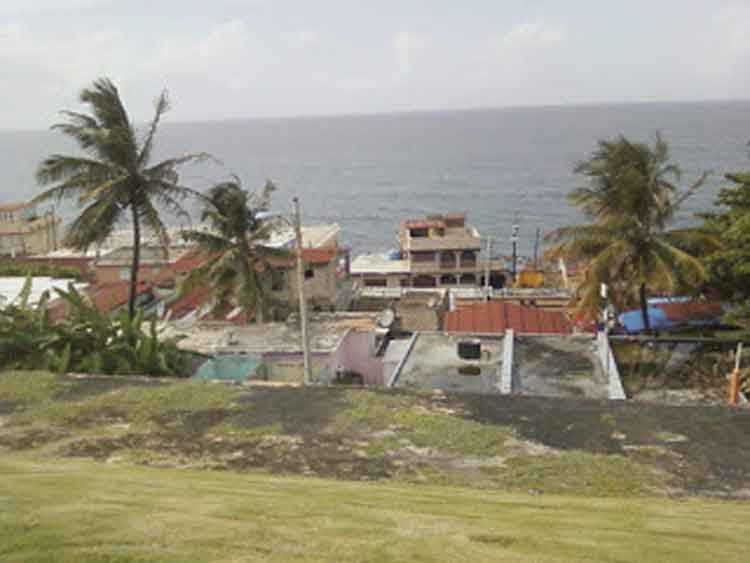
The La Perla neighborhood of Old San Juan, Puerto Rico
Just an hour before my wife an I landed in her native Puerto Rico last month, the island's government had defaulted on $1 billion in bond interest payments. It was the second default in five months for the cash-strapped government whose debt now totals $72 billion. None of this was evident as we waded through the crowds in Rafael Hernández airport in Aguadilla, which had been converted into a civilian airport after the closure of Ramey Air Force Base 40 years earlier. People hugged their relatives, welcoming them back home or bidding them farewell. It was a normal scene you'd see at any airport in the world. But the situation in Puerto Rico is not normal, and you don't have to spend long there to see how regular people are suffering more every day under the crushing burden of debt.
You notice every time you make a purchase at the store or get the check at a restaurant. The sales tax in Puerto Rico now stands at 11.5 percent, after being raised 64 percent in July from 7 percent. The measure was approved by the island's governor, Alejandro García Padilla, in conjunction with a package of austerity measures to raise money to pay the interest on the island's debt to creditors.
This might not sound like an astronomical amount, but the impact is felt more in Puerto Rico than it would be in any of the states. Sales taxes are regressive. People with lower incomes spend more of their earnings on things that are taxed than those who can afford to store their income as savings. This means the lower your income, the harder you will be hit by the sales tax.
Puerto Rico's median average income of less than $20,000 is 50 percent less than the poorest American state. For families already struggling to pay the bills on such meager earnings, the additional sales tax burden is eating away their little disposable income, or worse, forcing them to borrow to pay for their basic necessities.
Outside a beachfront restaurant in Aguada, I noticed an SUV with a bumper sticker that summed up the feelings of many Puerto Ricans. "The debt is not ours, it belongs to the Empire," it read. Many people may believe this represents Puerto Ricans failing to take responsibility for running up a tab they now can't pay. But this would falsely assume that Puerto Rico exercises independent control over the conditions that created the debt. In reality, Puerto Rico is a colony whose political and economic structures are determined by the dictates of the empire they belong to.
Constrained by the neoliberal capitalist system of the United States, Puerto Rico is unable to chart its own course for independent economic development. The Interstate Commerce Clause of the Constitution makes it impossible for Puerto Rico to protect its own industries. They must allow American businesses equal access to Puerto Rico's markets. The Cabotage Laws make shipping to and from Puerto Rico prohibitively expensive, impeding demand for exports and driving up prices on imports.
The detrimental effects of U.S.-imposed restrictions on Puerto Rico's economy have forced them to incur debt to pay for social spending. Unlike every other industrial country in the world, the United States does not provide universal health care to its citizens. The federal programs that are supposed to guarantee insurance for the poor and the elderly do not apply equally to Puerto Rico.
Puerto Rico only receives half the rate of federal healthcare funding as the 50 states, even though its residents pay the same rates in payroll taxes. This strain was further exacerbated last month when the U.S. government cut payments to Puerto Rico's Medicare Advantage program by 11 percent. My in-laws told us how their prescription deductibles and their co-pays under their Medicare Advantage plans had increased. The Puerto Rican Healthcare Crisis Coalition (PRHCC) called the decision by the Centers for Medicare and Medicaid Services a “blow to the health of the entire Puerto Rican community.”
The Affordable Care Act (Obamacare), which is supposed to guarantee health insurance to the rest of the population, does not apply equally to Puerto Rico either. While Puerto Rico passed its own laws requiring features of Obamacare - such as prohibiting denial of insurance based on pre-existing conditions and caps on coverage - there is no individual mandate. The result is a “death spiral" for private insurance plans. Elderly and sick people purchase coverage, while younger and healthier customers, who don't need the same level of costly care, opt not to participate. This drives up premiums drastically, making plans prohibitively expensive for those who need them most.
With federal government spending and local tax revenue insufficient to meet the population's health care needs, the Puerto Rican government must assume more debt to cover the difference.
Privatization of Public Assets
Like countries across the global South who have found themselves indebted to U.S.-run institutions such as the World Bank and International Monetary Fund, Puerto Rico has been encouraged to privatize its public assets and use the money to pay its creditors.
Under former Governor Luis Fortuño in 2009, Act 29 was passed to allow government to enter into public-private partnerships for infrastructure and other projects. It created the Public Private Partnership Authority (PPPA) to “identify, evaluate, and select the projects that shall be established as Public Private Partnerships.”
The first target for private takeover of Puerto Rico's public infrastructure was the island's most traveled highway, PR-22.Autopistas Metropolitanas de Puerto Rico, LLC (Metropistas), was awarded a 40-year lease for $1.49 billion to operate both the PR-22 and PR-5 highways. The company is a consortium of a Goldman Sachs infrastructure investment fund and a Spanish toll concession company.
PR-22 runs from San Juan west through 12 municipalities towards Aguadilla. Metropistas recently raised the toll prices after the expiration of an initial period where they were prohibited from doing so. But apparently tolls are not the only way they are generating revenue.
A friend explained how the electronic toll collection system, AutoExpreso, had been malfunctioning and issuing fines for not having enough money in your account to pay the toll, even when the account did actually have money. He said that he received four separate fines, none of which was valid. When he tried to contest the fines he was told that based on a technicality (not submitting an appeal in writing by an arbitrary deadline) the fines would stand, even though they should have never been issued in the first place. When he complained, he was told he had a choice to pay or to find another route. Of course, the only alternative for commuters in that heavily populated area of the island is to use inaccessible and inconvenient back roads.
Puerto Rico's main airport, Luis Muñoz Marin in San Juan, was also recently privatized. The Mexican company Grupo Aeroportuario del Sureste SAB de CV and private-equity firm Highstar Capital received a 40-year lease to operate the airport. The deal was negotiated under the previous administration, but did not take effect until García Padilla took office. Unsurprisingly, the first time I visited after the privatization I discovered the airport no longer offered free Wifi.
That Puerto Rico's public assets have been turned into investment opportunities for American and foreign creditors should come as no surprise. Since its inception as a Commonwealth (a euphemism for colony), the interests of capital have taken priority over the general population. Puerto Rico's Constitution grants creditors first priority for payment, ahead of even the population whose will the Constitution is supposed to represent.
Daliah Lugo explains this mystifying legal arrangement in her Opinion and Order blog: "That's right: the entity we know as 'Puerto Rico' was in fact set up by Congress and its allies as a corporation, its first duty always to its investors."
A political arrangement that does not prioritize the people who purportedly consent to it is farcical. Puerto Rico has never achieved self-determination, despite the fact the UN removed the island from its list of Non-Self-Governing territories in 1952. The UN's Special Committe on Decolonization has recognized this as recently as 2014 when they called on the United States to end their "subjugation" of Puerto Rico and allow its people to "fully exercise their inalienable right to self-determination."
But the United States does not want to acknowledge that, having failed to grant sovereignty to Puerto Rico, they legally hold "the obligation to promote to the utmost ... the well-being of the inhabitants of these territories," according to Article 73 of the UN Charter. Only the U.S. Congress - not Puerto Rico's legislature - has the ability to change Puerto Rico's political status. But they have never given any indication they intend to do so, despite a 2012 referendum in which Puerto Ricans decisively rejected the current colonial status.
Few Americans are aware of the social and economic crisis consuming Puerto Rico, which is rarely covered by mainstream news organizations (other than some notable exceptions). But as expenses rise - for housing, health care, groceries, utilities - and economic opportunities disappear, families find themselves in a more and more precarious situation. A change in political status that would finally grant the Puerto Rican people a right to govern themselves in their own interest is the only hope to reverse the devastation 117 years as a debt colony has wrought.

The Roots Of Religious Fundamentalism In Pakistan

Ali Mohsin

In an interview with Reuters last month, Maulana Muhammad Khan Sherani, head of the Council of Islamic Ideology (CII), offered to review Pakistan’s notorious “blasphemy” laws, saying that there are varying opinions on the issue within the clergy. Just days later, however, Sherani backtracked from his statement, declaring that the CII would not change or amend the laws in order to satisfy its many critics . Sherani’s about-face should have come as no surprise. After all, this is a man who supports child marriage, having vehemently opposed a recent bill that would have outlawed this retrograde social practice.
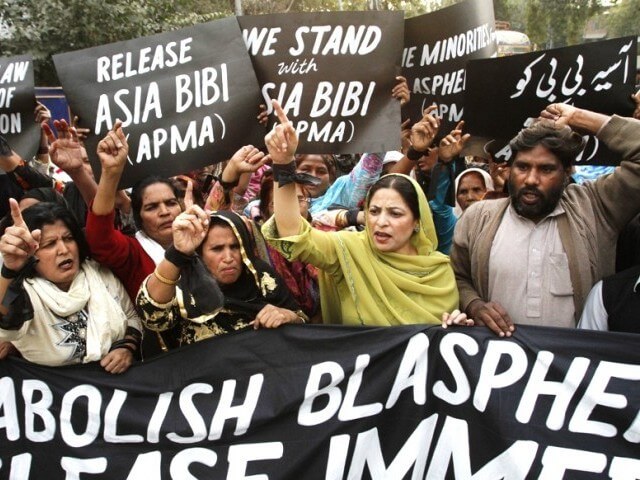
It is indeed shameful that, despite five years having passed since the assassinations of Punjab Governor Salman Taseer and Minorities Minister Shahbaz Bhatti, both of whom courageously spoke out in defense of Aasia Bibi, a Christian woman who was sentenced to death for blasphemy in 2010, little if any progress has been made towards repealing the draconian laws. Aasia Bibi still languishes in prison, anxiously awaiting her appeal hearing in the Supreme Court. Multiple death threats led to her being placed in isolation last October. Meanwhile, Taseer’s killer Mumtaz Qadri continues to enjoy his celebrity status among the more reactionary layers of the population.
The fact that not the slightest change has been made to the blasphemy laws serves as an indictment of the Pakistani ruling class and its political parties, none of which have taken a consistent, principled stand against the laws and religious discrimination.
The murder of Taseer in January of 2011 had led many to call for repealing or amending the blasphemy law. However, the Pakistan People’s Party (PPP) leadership quickly bowed to pressure from the religious right, prevailing on Sherry Rehman to withdraw a bill that would have scrapped the death penalty for blasphemy, while essentially keeping the laws in place. “We are all unanimous that nobody wants to change the (blasphemy) law,” former Prime Minister Yousaf Raza Gilani had said at the time.
Not surprisingly, the then PPP-led government’s capitulation emboldened the Islamists, resulting in Bhatti’s assassination two months after Taseer was killed. Years after this tragic episode, Pakistan’s mostly impoverished religious minorities continue to bear the brunt of the oppressive blasphemy laws.
Last August, Pastor Aftab Gill of the Biblical Church of God in Gujrat, Punjab, and three others were charged with blasphemy after they used the Urdu word "rasool", which means apostle, in advertisements for a Christian ceremony. According to Pastor Aftab’s younger brother Unitan Gill, the owner of a successful grocery store and one of those arrested, the advertisements were brought to the attention of the police by rival Muslim grocers for the purpose of eliminating him as a competitor.
In another incident that took place in the Kasur District of Punjab last September, Pervaiz Masih, a Christian youth, was accused of blasphemy by residents of his village. According to media reports at the time, Masih had been involved in a dispute with local Muslims over a contract for the provision of sand. Muhammad Khalid, an influential resident of the village, and several other Muslim villagers ended up hurling spurious accusations of blasphemy against Masih. When the police arrived at Masih’s house to arrest him, the latter was not at home. Spurred on by a mob of enraged fundamentalists, the police proceeded to harass and brutally assault Masih’s relatives, including the women. In typically cruel fashion, they seized members of his family and held them at a police station in Khadiyan, giving Masih no choice but to surrender himself into their custody.
The ongoing persecution of minorities is an issue that stirs up a lot of passion in the country’s urban milieu, particularly among the better educated and more affluent members of society. These often liberal, well-intentioned individuals dream of a secular Pakistan, or at the very least, a nation that upholds the basic human rights and fundamental freedoms of all its citizens, including the right to openly practice one’s religion without fear of persecution.
The good intentions and genuine concern of its adherents notwithstanding, Pakistani liberalism is, for all intents and purposes, politically bankrupt. Even the more thoughtful representatives of the liberal intelligentsia appear to be trapped in a state of paralysis and ideological confusion, with their pro-capitalist outlook making it practically impossible for them to lead the necessary and unavoidable struggle against militant Islamism, religious bigotry and every other form of backwardness. This apparent inability to grapple with complex political and social problems is the result of a failure to undertake a materialist analysis of objective reality. Such an analysis would take into account the class character of the Pakistani state, as well as the profoundly significant, and indeed for many, inconvenient, truths regarding the creation of Pakistan as a homeland for the Muslims of the Indian Subcontinent.
There is a tendency among historians and analysts to place most if not all of the blame for the current state of affairs on the shoulders of the US-sponsored dictator General Zia-ul-Haq. Zia, of course, promoted the clergy and Islamist political parties as a bulwark against the working class, having certainly feared the possibility that ordinary Pakistanis could grow tired of his rule and turn sharply to the left. Zia’s “Islamization” campaign also further communalized a country whose stability had been perpetually undermined by sectarian and ethnic conflict ever since its inception.
The devastating social impact of the Zia era is widely acknowledged. It is necessary to point out, however, that the masses had already been led down a dark path long before Zia arrived on the scene, in a process that began prior to the establishment of the Pakistani state.
In the late 1930s, elements within the Muslim elite, motivated by narrow and selfish interests, began to aggressively pursue an agenda involving the creation of a separate state for India’s Muslim population. The oft-repeated phrase “Jinnah’s Pakistan” should be familiar to even the most casual observers. Those who conjure up this tired slogan whenever minorities are targeted must come to terms with the fact that it was the “Quaid” himself who set the dangerous precedent of using communalist rhetoric for political ends. Jinnah, a westernized, non-practicing Muslim, cynically raised the cry of “Islam in Danger” as part of his campaign to drive a wedge between Muslims and Hindus and gain support for the partition of the Indian subcontinent among the sections of the Islamic clergy. Based on the bogus claim that Muslims and Hindus constituted two distinct nations, the partition that gave birth to the “Land of the Pure” was a tragedy of immense proportions, resulting in an orgy of violence and untold suffering for millions of people on both sides of the artificial border.
Studying the partition with an open mind is critical for anyone trying to make sense of the prevailing backwardness in the country. As one’s understanding of this issue deepens, it becomes more and more evident that the persecution of religious minorities is the inevitable result of an official policy, rooted in Pakistan’s creation through the partition, that encourages the identification of Islam with the state, consequently diminishing non-Muslims to second-class status while also fanning the flames of religious fundamentalism and strengthening the power of the clerics.
The blasphemy laws are just one example of how the Pakistani state discriminates against religious minorities and violates their democratic rights. Non-Muslims are officially barred from the highest offices in the government. Furthermore, minorities must vote separately from the general population in communal electorates, thus making clear that they are to be viewed as apart from and inferior to Muslims.
The vicious persecution of non-Muslims under the blasphemy laws, the numerous discriminatory practices of the state and the general climate of fear under which religious minorities go about their lives, all highlight the entrenched Muslim supremacism in Pakistan. This deeply ingrained social problem can neither be legislated away, nor can it be completely and permanently resolved through military or police crackdowns on extremists.
The Pakistani bourgeoisie, which in addition to its glaring failure over the decades to provide the working class with the most basic necessities of life, is entirely complicit in the oppression of minorities and the increased influence of religious extremists. The major political parties have all connived and colluded with Islamists at one point or another. To this day, Pakistan’s ethically challenged and morally repugnant politicians continue to exploit the sectarian and ethnic divisions within the country whenever it suits their interests. It is for this reason that not even the purportedly liberal section of the ruling elite can be pressured into acting on behalf of religious minorities.
The fate of the non-Muslim population is bound up with that of the entire working class, within which religious minorities constitute one of the most oppressed layers. Nearly 70 years since the establishment of Pakistan, ordinary workers, whatever their religion, must still contend with the unresolved issues of poverty, unemployment, economic inequality and the inaccessibility of quality healthcare and education. These shared conditions are the basis upon which workers and poor farmers can potentially unite against the bourgeoisie and the oppressive, capitalist state through which it rules over and exploits the working class. A revolutionary movement of the masses, consciously aimed at replacing the existing social order with a genuinely free and egalitarian society, would finally bring an end to religious discrimination and every other manifestation of oppression and exploitation.

Rising school costs deepen class divide in New Zealand education

John Braddock

As New Zealand students returned to school this month, they encountered a public education system riven by sharply escalating costs and deepening social inequality.
According to the Education Act, New Zealanders aged 5 to 19 are entitled to “free enrolment and free education at any state school.” The Herald on Sunday reported on January 20, however, that Ministry of Education figures show families are being pressured to give “more and more money” to schools every year.
Faced with funding shortfalls, most schools impose costs on parents, usually in the guise of recovering expenses for “extras” such as educational trips, sports uniforms and even computers. Some have resorted to using debt collectors to enforce payments.
Overall donations and fundraising went up $NZ1.2 million from 2013 to 2014, the last year for which figures are available, reaching $161.6 million—$8.4 million more than in 2010. Funding from these sources has totalled nearly $1 billion since the year 2000.
The wealthiest state schools took in the most money. The elite Epsom Girls Grammar and Auckland Grammar were the top two, banking $2.5 million and $2.2 million respectively in 2014. The “recommended” parental donation at Epsom Girls in 2014 was $765. The top public schools also attract large numbers of fee-paying international students, sometimes bringing in millions of dollars.
Lindisfarne College, a boarding school in Hawke’s Bay, took more than $4,000 per student in donations. By contrast, Porirua’s Mana College raised just $4,264 in total. Wainuiomata College, a working-class school near Wellington, raised about $18 per student.
An entrenched system of educational inequality exists, a product of, and further exacerbating, deepening economic inequality. Internationally, a stark reversal has taken place in public education over the past 30 years, a product of pro-market “reforms” and the rolling back of social gains won in struggle by working people during the twentieth century.
The Education Review noted last year that New Zealand spent $US8,170 per student in 2010, significantly less than Australia ($10,350), the United States ($12,464), Ireland ($11,380) and Britain ($10,452).
The Herald reported on November 4 that wealthier schools are more likely to have “quality buildings, a wide range of extra-curricular activities, a wealth of IT and experienced, stable, staffing.” Working-class schools are compelled to spend their limited funds on items such as breakfast programs, social workers, truancy officers and community liaison personnel.
This unequal situation has its roots in the “Tomorrow’s Schools” program introduced in 1989 by the Lange-Douglas Labour government, then enforced by successive governments. Labour devolved the public education system to individual schools, forcing them to compete with each other along business lines and making each elected board responsible for the school’s administration, financial operations, staffing and educational “outcomes.”
Over the next decade, according to the NZ Council of Educational Research, the longer schools were subject to “self-management,” the “more they found their government funding inadequate.” Most schools scraped to employ more staff than they were funded for. Larger and poorer schools had the least adequate staffing.
Poverty, which has almost doubled since the 1980s and now affects one in four children, is a major obstacle to educational achievement. Statistics from 2014 showed just 17 percent of students from working-class schools gained University Entrance, compared to 60 percent from the wealthiest schools.
A report published last week by the OECD, “Low-Performing Students—Why They Fall Behind and How to Help them Succeed,” concluded that socio-economic status was “probably the most important risk factor associated with low academic performance.” Based on tests of 15-year-olds conducted by the Program for International Student Assessment (PISA), the report found that the poorest 25 percent of students in New Zealand were over six times more likely to do badly in maths than the richest 25 percent. The only OECD nations with higher levels of disparity were Israel, Poland and Ireland.
A complex network of factors affects the educational outcomes of working-class students, many of whom have already fallen behind when they start school. These include a lack of early childhood education, parents working multiple low-paid jobs, limited access to books and computer equipment, a lack of parental expertise and assistance, frequent changes of school, inadequate space for home study, chronic ill health, poor food and clothing and high levels of stress and trauma within family life.
The conservative National Party government flatly denies that social inequality plays a significant role in educational outcomes. Last November, Education Minister Hekia Parata penned an op-ed article for the Herald, headed “Socio-economic factors are often overstated.” She falsely claimed that the “biggest difference” lies in “the quality of teaching in the classroom” and variables such as “quality of school leadership, parental engagement and community expectations.”
A wide-ranging review of the school funding system, currently underway, will lead to further attacks on public education. Students’ results, according to Parata, will be made central to determining each school’s funding. Schools and teachers can expect even more intrusive appraisal and compliance systems, with funding penalties for “non-performance.”
The government plans to open more charter schools, of which there are currently nine, mainly in working-class areas in Auckland and Northland. As in the US and Britain, these publicly-funded, privately-run schools are being used to undermine public education and establish a bridgehead for widespread privatisation. They can select which students they admit, are not required to use the national curriculum or have qualified and registered teachers.
Far from opposing the funding system review, the education unions are seeking their place at the “table” to collaborate with its implementation. Post Primary Teachers Association president Angela Roberts said her “biggest concern” was “how much the minister planned to consult the sector on the review.”
The unions have played a critical role in enforcing the agenda that began with “Tomorrow’s Schools.” Amid deepening attacks on public education, their role has been to suppress the opposition of teachers. There have been no major strikes since 2002, when wildcat action over a pay dispute with the Labour-Alliance government drew thousands of students onto the streets in support of striking high school teachers. The unions finally shut down the dispute with a $150 million settlement package, thereby rescuing the beleaguered Labour-led government weeks before a general election.
In February 2013, primary teachers reacted with outrage when the union covering them, the NZ Educational Institute, scuttled a strike against impending school closures in the earthquake-ravaged city of Christchurch. The closures have proceeded in “consultation” with the union.
The opposition parties seek to exploit the mounting concern and opposition among teachers, parents and students with band-aid proposals. These will do nothing to end the deepening educational divide, which is the product of a social order that subordinates every aspect of life including schooling to the profit requirements of big business.
The Labour Party, which agrees with the government’s austerity agenda and has been instrumental in the assault on public education, promises to give a paltry $100 per student per year to schools that choose not to run their own fundraising schemes. Labour’s allies—the Greens and the Mana Party—have called for similarly inadequate measures, such as free school meals, state sponsored homework centres and holiday programs.