6 Apr 2016

Global military spending increased in 2015

Thomas Gaist

Spending on weapons and other military costs grew by more than one percent in 2015, marking the first year of growth in total military purchasing by governments worldwide since 2011, the Stockholm International Peace Research Institute found in a report published Tuesday.
Total military purchases reached $1,676 billion in 2015, or nearly $1.7 trillion, consuming some 2.3 percent of global gross domestic product (GDP), SIPRI found.
The United States remained by far the leading financier of militarism worldwide, spending nearly $600 billion, according to SIPRI. The real figure rises as high as $1 trillion once the Pentagon’s “black budget,” “contingency” money for the wars in Iraq and Afghanistan, and other hidden expenses are taken into account, according to the Center for International Policy.
The Chinese government continued to fund the second largest war machine, spending $215 billion last year. Military spending by states in Asia and Oceania in general surged by 5.4 percent in 2015, an increase driven by the intensifying US war drive against China, which has militarized the entire East Asia and Pacific region, boosting weapons purchases by a coalition of US-aligned regional states, including the Philippines, Vietnam, Indonesia and Japan.
“Heightening tensions between China and various countries in the region contributed to substantial increases in expenditure,” the SIPRI report notes.
“China continues to expand its military capabilities with imported and domestically produced weapons,” said SIPRI senior researcher Siemon Wezeman. “Neighbouring states such as India, Viet Nam and Japan are also significantly strengthening their military forces.”
A vastly outsized share of the growth in spending also came from Eastern European and Baltic governments aligned with the US-NATO strategic drive against Russia, including Latvia, Estonia, Lithuania, Poland, Romania and Slovakia.
Overall spending by Middle Eastern governments rose by at least 4 percent in 2015, the report found. Saudi Arabia rose to become the third largest spender in 2015, $87.2 billion in total and $5.3 billion on its year-old Yemen war alone.
The report noted the staggering rise in Iraq’s military budget, which grew by 536 percent from 2006 to 2015. Among the Middle Eastern powers, however, none came close to the US-backed Saudi monarchy, whose war budget surpassed that of Russia by more than $20 billion.
Russia, whose military is endlessly demonized in US and European media as the primary threat to world peace, spent only $66.4 billion in 2015, lagging well behind Washington’s favored semi-feudal client regime.
Governments worldwide are scrambling to beef up their forces in response to ongoing war scares and feverish geopolitical tensions. According to SIPRI, a subset of governments have implemented especially sharp upticks in their military spending in response to active or imminent regional conflicts, including Algeria, Azerbaijan, Russia, Saudi Arabia, and Vietnam.
The overall growth of world war expediters came despite significant reductions by a handful of governments in response to plunging oil prices, including a 64 percent cut by Venezuela and a 42 percent cut by Angola.
In a supplementary report, “Military versus social expenditure: the opportunity cost of world military spending,” SIPRI examines the “military burden” imposed on economies and social infrastructure by the renewed arms bonanza.
The relentless siphoning of social resources into the global war industries is feeding conditions of mass deprivation in every region on the planet, and with special intensity in the ex-colonial and semi-colonial countries, where social spending is already minimal.
“In the past two to three years there have been particularly large increases in the military burden in Eastern Europe and the Middle East, as well as in the subregion of North Africa,” SIPRI notes.
According to a 2015 assessment by the UN Food and Agriculture Organization, the reallocation of a small fraction of yearly war spending towards socially valuable purposes would be sufficient to resolve a laundry list of problems plaguing world society.
The UN analysis found that only $265 billion annually would be required to end conditions of extreme poverty and hunger worldwide, a sum that amounts to less than 13 percent of annual worldwide war expenditures in 2015 prices.
An additional $240 billion, or 12 percent of annual military costs, would be sufficient to realize universal primary and early secondary education globally.
Four percent of annual military spending could guarantee universal agriculture and food security; three percent could insure universal water and sanitation; eleven percent for modern energy; and twelve percent could pay for universal telecommunications infrastructure, the UN found.
No governments or establishment political parties even pretend to pursue a program that would transfer arms funding to social spending along these lines.
Rational allocation of the immense wealth produced by the global economy is impossible within the historic framework of capitalism and imperialism, in which the various bourgeois governments are locked into a global struggle for markets, access to cheap labor and profits, in which the strength of their respective militaries plays a decisive role.
Far from slashing their expenditures in the name of social benefits and infrastructure, all states worldwide are striving to finance their militarist agendas through ever-greater levels of social cutbacks, exploitation and police repression against the working class.

Imperialism, political corruption and the real face of capitalism

Andre Damon

The “Panama Papers” claimed its first casualty Tuesday, when Icelandic Prime Minister Sigmundur David Gunnlaugsson was forced to resign following protests by thousands of people in the country’s capital.
The documents, released Sunday by the International Consortium of Investigative Journalists (ICIJ), revealed that Gunnlaugsson had failed to disclose his holdings in an offshore shell company that allowed his family to profit from the bailout of Iceland’s banks after the 2008 financial crisis.
The widening global scandal threatens to engulf UK Prime Minister David Cameron. He faces demands that he release his tax records following reports by leading newspapers, basing themselves on the “Panama Papers” documents, that his father, Ian Cameron, held shares in an offshore corporation.
Mossack Fonseca, the Panamanian legal firm at the heart of the scandal, made millions of dollars helping politicians and the super-rich stash their money and hide it to evade taxation. Its operations are a testament to the pervasive role of tax dodges, money laundering schemes, corporate slush funds and political kickbacks in the day-to-day economic and political life of the world’s leading “democracies.”
The ICIJ report has implicated 140 public officials around the world, including 12 current and former heads of government, as well as 29 billionaires listed in Forbes magazine’s ranking of the planet’s 500 richest people.
While relatively few Americans have been named in connection with the documents, experts have told media outlets that the services provided by Mossack Fonseca are readily available in domestic tax havens such as the state of Delaware. One small office building in that state is the nominal home of 285,000 separate businesses, including Fortune 500 companies Apple Computer, Coca-Cola and JPMorgan Chase, as well as an untold number of shell companies belonging to run-of-the-mill fraudsters, smugglers and financial criminals.
None of the ICIJ’s revelations will come as a surprise to financial regulators, who have ample documentation showing that major financial institutions have facilitated tax evasion and money laundering operations for decades.
In 2012, the British bank HSBC was fined $1.9 billion for having laundered money for Mexican drug cartels. However, a 2015 leak by the ICIJ documented the fact that the bank subsequently continued similar operations unhindered. It essentially ran its Swiss private banking arm as a back alley tax evasion service, handing its wealthy clients “bricks” of hundreds of thousands of dollars in foreign denominations to help them avoid taxes.
The ICIJ’s revelations come as politicians, including those like Cameron, who are implicated in the scandal, insist there is no money to pay for the most essential social services. The international financial elite and its bribed political stooges are allowed to dodge taxes by stashing their wealth in offshore havens right under the noses of financial regulators, while the working class is told it must accept worsening poverty and deprivation.
It is now a century since the Russian revolutionary Vladimir Lenin described the imperialist epoch as a stage of capitalism in which finance capital dominates, giving rise to a “new financial aristocracy” characterized by “corruption, bribery on a huge scale and all kinds of fraud.”
The processes Lenin was describing were at the time only in their infancy. They have vastly matured and expanded in the ensuing period. A criminal financial elite has bankrupted the world economy, stealing unimaginable sums by means of speculation and parasitism and operating outside of any legal restraint.
In contemporary capitalism, it has become a truism that political office is a path to great personal wealth and entry into the financial elite. One need only look at the 2016 US elections to see this principle in action.
Hillary Clinton, the Democratic frontrunner, has, together with her ex-president husband, made over $140 million in the eight years since the 2008 financial crash. She garnered a substantial portion of this wealth in speaking fees from major corporations and banks. In the first 15 months after she left her post as secretary of state in 2012, Clinton received $5 million in speaking fees, putting her squarely in the top 0.1 percent of income earners. Such payouts are, in the world of American politics, nothing more than a form of legalized bribery.
The $140 million pocketed by the Clinton household, and the millions more funneled into their foundation, are nothing less than payment for services rendered to the financial elite.
This is just the tip of the iceberg. In February 2015, the Guardian reported, based on the 2015 ICIJ report, that Hillary Clinton and her family had received “as much as $81 million from wealthy international donors who were clients of HSBC’s controversial Swiss bank.”
In an editorial posted Tuesday evening, the New York Times asks rhetorically, “How did all these politicians, dictators, criminals, billionaires and celebrities amass vast wealth and then benefit from elaborate webs of shell companies to disguise their identities and their assets?”
The newspaper bemoans the “dangerous… damage to democratic rule and regional stability when corrupt politicians have a place to stash stolen national assets out of public view.” It asks, “After these revelations, will anything change?”
The Times knows very well the answers to its rhetorical questions. The crimes documented in the “Panama Papers” have occurred because governments and financial regulators, entirely under the thumb of the financial elite, serve not as checks upon the criminal activities of the global financial oligarchy, but rather as co-conspirators. To the extent that these matters are left to capitalist governments, nothing will change. The latest ICIJ findings will be buried in exactly the same manner as its earlier reports.
The task of cleaning the Augean stables of capitalism’s billionaire oligarchs, corrupt politicians and criminal CEOs requires the building of a socialist movement of the working class in opposition to the present social order. The “Panama Papers” illuminate a basic reality: Parasitism, criminality and corruption are not warts on the face of capitalism, they are the face of capitalism.

5 Apr 2016

INSEAD-Syngenta MBA Scholarships for Developing Country Leaders

Syngenta/INSEADMasters (MS) Degree
Deadline: 19 Apr/6 Jun 2016
Study in: France/Singapore
Course starts January 2017


Brief description:
Syngenta is a world-leading agribusiness committed to sustainable agriculture through innovative research and technology. The company is a leader in crop protection, and ranks third in the high-value commercial seeds market.
Since Syngenta strongly believes that talented people are the key to successful businesses they embrace INSEAD’s mission to train the brightest and best from around the world for the challenge of tomorrow’s business world. Syngenta is particularly committed to the dynamic emerging market regions and has therefore chosen to offer this scholarship opportunity to future leaders from emerging countries.
Host Institution(s):
INSEAD
Field of study:
Masters in Business Administration (MBA)
Number of Awards:
Two scholarships will be awarded per class
Target group:
Students from developing/emerging countries.
Scholarship value/inclusions:
€22,500
Eligibility:
Candidates must be a national of an emerging economy and have spent a substantial part of their lives in the developing world, in education and/or professional experience. Experience in industry will be considered a plus. Preference will be given to candidates who require proven financial assistance.
Candidates for this scholarship will need to demonstrate: (a) outstanding academic achievement and promise (b) aptitude for business and financial management (c) leadership potential and (d) a commitment to contributing to their country or region at some point in the future.
Application instructions:
You must complete an online application and submit with required essay by the deadline. There are 2 application deadlines for September 2016 intake – 9 November and 30 November 2015. There are 2 application deadlines for January 2017 intake – 19 April and 6 June 2016.
It is important to visit the official website (link found below) for detailed information on how to apply for this scholarship.
Website:

Commonwealth Distance Learning Scholarships for Developing Commonwealth Countries

DFID/UK Universities
Online Masters Degree
Deadline: 3 May 2016 (annual)
Study in: any Country
Course starts September 2016


Brief description:
The Commonwealth Distance Learning Scholarships support candidates to study Master’s degree courses that are either offered in partnership with universities in developing countries, or delivered directly by UK institutions.
Host Institution(s) and Online Courses offered:
A list of eligible Master’s courses offered by participating UK institutions for 2016 Commonwealth Distance Learning Scholarships is available on the official website.
Number of Scholarships:
Not specified.
Target group:
Nationals of Commonwealth Developing Countries
Scholarship value/inclusions:
Please check with the University/Institution about the value of this scholarship.
Eligibility:
To apply for the scholarship, you must:
• Be a citizen of a developing Commonwealth country, refugee, or British protected person
• Be permanently resident in a developing Commonwealth country
• Hold a first degree of at least upper second class (2:1) standard. A lower qualification and sufficient relevant experience may be considered in certain cases
Note: You must also meet the specific eligibility requirements of the course you are interested in.
Application instructions:
To apply for a scholarship, you must complete your application for a Commonwealth Distance Learning Scholarship using the Electronic Application System (EAS). Before applying, you must check with your UK university for their specific advice and rules for applying. You will be required to complete a university application form in addition to your EAS application form.  All applications must be submitted by 23:59 (BST) on 3 May 2016.
It is important to read the Commonwealth Distance Learning Scholarships 2016 prospectus and visit the official website (link found below) for detailed information on how to apply for this scholarship. All enquiries about these scholarships should be directed to the university to which you wish to apply.
Website:

Australia International Postgraduate Research Scholarships (IPRS)

Australian Government
Masters/PhD Degree
Deadline: varies, April-Oct (annual)
Study in:  Australia
Course starts 2016/2017


Brief description:
The International Postgraduate Research Scholarships (IPRS) program enables international students to undertake a postgraduate research qualification in Australia and gain experience with leading Australian researchers.
Host Institution(s):
Participating Universities in Australia
Level/Field of study:
Masters by research degree or Doctorate Degree offered by participating Universities in Australia.
Number of Awards:
Around 330 are awarded annually.
Target group:
International students of all countries (except New Zealand).
Scholarship value/inclusions/duration:
The scholarship covers tuition fees and health cover costs for scholarship holders, and health cover costs for their dependents. The scholarships are available for a period of two years for a research masters degree or three years for a research doctorate degree. 
Eligibility:
To be eligible to apply for an IPRS, the applicant must be an international student (except New Zealand) and commencing full-time enrolment in a higher degree by research at an eligible university in Australia. The basic eligibility criteria for an IPRS are listed in section 3.10.1 of theCommonwealth Scholarships Guidelines (Research) 2012.
Application instructions:
Applications for a scholarship need to be made directly to participating Universities. Students need to approach the scholarship office at their chosen university for direction about the process to apply for an IPRS and key deadline dates.  The deadline varies per university but is around April-October each year.
It is important to read the Frequently Asked Questions and visit the website of the University where you intend to apply and the official website (link found below) for detailed information on how to apply for this scholarship.
Website:

Obama’s Fakery, ‘News’ Media’s Suckery

Eric Zuesse

How can it be that the same news-medium that reported, on 22 April 2015, that the Obama Administration allows countries it signs trade-pacts with to murder their trade-union organizers and insists upon continuing to permit those murders, has now also reported on 24 March 2016, "The Obama Administration Just Took A Huge Step On Worker Safety: It’s known as the silica rule, and it’s a big frigging deal”? This new Obama-Administration ‘rule’ won’t even be enforceable, but that ‘news’ medium failed to notice that this ‘big frigging deal’ is actually only a con by Obama — nothing more than empty words and promises, nothing at all that’s likely to be enforceable (because bigger actions by him, which they had reported earlier, are intended to make any such new rule virtually unenforceable).
On 22 April 2015, Michael McAuliff, Huffington Post’s Senior Congressional Reporter and one of the best journalists covering that beat, headlined, "AFL-CIO’s Trumka: USTR Told Us Murder Isn’t A Violation Under U.S. Trade Deals,” and reported that Obama’s U.S. Trade Representative, Obama’s own longtime friend Michael Froman, refused to treat the murder of trade-union organizers in foreign countries as being unfair to American workers who in America’s ‘trade’ pacts are wage-competing against third-world workers whose trade-union organizers are freely murdered — as hundreds of these labor-organizers have, in fact, been.
The AFL-CIO documented that, under CAFTA, the Central American Free Trade Agreement in 2005, there have been several murders of trade-union organizers in Guatemala during the Obama Administration, and Obama’s Trade Representative said that this isn’t relevant to compliance with any U.S. trade agreement with any country, not CAFTA, not NAFTA, and wouldn’t be under TPP, TTIP, TISA, or any other. He said it’s not relevant to any ‘Free Trade Agreement’. McAuliff reported, in his article: “Thea Lee, the AFL-CIO deputy chief of staff, told HuffPost that USTR officials said in at least two meetings where she was present that killing and brutalizing organizers would not be considered interfering with labor rights under the terms of the trade measures. One instance involved talks last year about killings in Guatemala, where the AFL-CIO has been seeking redress for labor violations for six years. Another came just a few months ago in talks about a three-year-old case involving Honduras, Lee said. ‘To substantiate our case we documented five or six murders of Guatemalan trade unionists that the government had failed to effectively investigate or prosecute,’ Lee said. ‘The USTR told us that the murders of trade unionists or violence against trade unionists was not a violation of the labor chapter because it was a rule of law problem.’”
Similarly, on 24 September 2013, HuffPo’s Kate Sheppard, a Senior Reporter on environmental matters, bannered, "Michael Froman, Top U.S. Trade Official, Sides With Tar Sands Advocates In EU Negotiations,” and she reported that, "Refiners in the U.S. have expressed concern that [the EU’s] assigning higher [CO2-processing] values to tar sands oil [than to regular oil] would limit their ability to export the product to the EU. While most tar sands oil comes from Canada, much of it is processed in U.S. refineries,” and Froman was pressing the EU to weaken their anti-global-warming rules so that in TTIP, the EU wouldn’t be permitted to ‘discriminate’ against higher-CO2-producing tar-sands-derived oil. Of course, under 2016-election-year pressure, Obama ultimately disallowed construction of the Keystone XL Pipeline for bringing tar-sands-oil from Canada to the Texas coast for shipment to Europe; but, actually, he really wanted to allow the XL to be built, and he was pressuring Europe to accept the oil into their market — the world’s largest energy-market. On that issue, too, he was working behind-the-scenes (via his Secretaries of State Hillary Clinton and John Kerry, and his Trade Representative Froman) to produce faked Environmental Impact Statements favoring XL, and also to force Europe to accept tar-sands oil which would be carried by that Pipeline, even while he was publicly mouthing anti-global-warming statements.
So: Huffington Post, which reported the truth that Obama wants American workers to be wage-competing against third-world labor where union organizers are routinely murdered in order to keep wages down, and which also reported the truth that Obama’s mouthings against global warming are purely pretense from him, nonetheless allows sucker-reporters on its staff to advertise for Obama such propaganda, as, from Dave Jamieson, their Labor Reporter: "The Obama Administration Just Took A Huge Step On Worker Safety: It’s known as the silica rule, and it’s a big frigging deal”.
Under TPP and TTIP — these two mega ‘trade’ deals that are intended by Obama to be his biggest legacy achievements if he can get them into law — a prosecution of any foreign corporation (that’s based in another of the signatory countries) for violating this ‘rule’, can spark from that corporation a lawsuit against the U.S. for ‘infringing on the corporation’s right to profit.’ A panel of three private ‘arbitrators’ will hear the case and issue a ruling, which won’t be able to be appealed in any nation’s courts — it will be final, and the laws of no nation can be appealed to to reverse it. U.S. taxpayers would then be forced to reimburse the corporation for any ‘losses’ that allegedly result from America’s having enforced this new rule. How likely is it that a rule which is stiffer than existed when the trade-agreement was written, will then be enforced?
Obama’s push to strengthen the grip of international corporations and to make supreme stockholders’ ‘rights,’ above and beyond the merely national rights of mere voters and citizens and taxpayers of any signatory country, is tragically real; his mere rhetoric and even ‘regulations’ against such things, is tragically fake.
Are American news-media suckers for allowing such deception to be reported without simultaneously reporting the ugly reality — without demanding every reporter always to make note of the fakery, and never merely to report the fake ’news’ without noting that it’s a fake — so that readers can get an understanding of the reality, not merely of the surface?
After all: a President who is so determined to give international corporations what they want as to treat the murder of union-organizers in a ‘free-trade-area’ country as being irrelevant to that country’s ‘free trade’ with the U.S., and to try to force Europe to lower its anti-global-warming standards so as to promote the sale of the world’s dirtiest oil — and at the same time to mouth his own opposition to those very same things — shouldn’t ever be allowed to present his mere lies and deceptions, without in the same report, indicating also the ugly reality that they’re contradicting. (Instead of reporting that ugly reality, this PR-piece simply ignores it and the contradiction — makes no mention of it.)
Honest news-reporting in the U.S. shouldn’t depend only upon the mere quirk that a few of a news-medium’s reporters (such as McAuliff and Sheppard) are competent; what’s required is management-level competence, which entails demanding of each and every news-report, and every news-reporter on their staff, to report reality, and never only to report the mere surface of what’s actually fakery.
The problems in American journalism are at the very top. And this is a major reason why so many American voters are so deceived, and so confused. They get too much mere propaganda, and thus they really have no reason to trust any ‘news’ report (except perhaps the few news-reports that — like the present one — provide links to the evidence behind all key allegations and so invite any skeptical reader to check out its sources, the deeper level of that report).
On 28 September 2015, Gallup headlined, “Americans' Trust in Media Remains at Historical Low,” and the problem there isn’t the distrust; it’s that the distrust is warranted.
And the real rot in America’s ‘news’media is at the top. That’s where this distrust has its source. It can’t reasonably be blamed on sloppy or gullible reporters. After all: they didn’t hire themselves. (And, sometimes, the best reporters get fired for being too good. To be a good journalist in America — as in most countries — requires courage: it’s dangerous to a reporter’s career.)
With such rot at the top, voters make their electoral decisions more on the basis of misinformation and outright propaganda, than on the basis of authentic and honestly reported news. Whether that type of press produces a democraciy is doubtful: the evidence says that it doesn’t.

The Globalisation Of Bad Food And Poor Health: Sustainable Development or Sustainable Profits?

Colin Todhunter

The proportion of deaths due to cancer around the world increased from 12 percent in 1990 to 15 percent in 2013. Globally, cancer is already the second-leading cause of death after cardiovascular diseases.
In India, government data indicates that cancer showed a 5 percent increase in prevalence between 2012 and 2014 with the number of new cases doubling between 1990 and 2013. The incidence of cancer for some major organs in India is the highest in the world. Reports have also drawn attention to rising rates of breast cancer in urban areas, and, in 2009, there was a reported increase in cancer rates in Tamil Nadu's textile belt, possibly due to chemically contaminated water.
The increase in prevalence of diabetes is also worrying. By 2030, the number of diabetes patients in India is likely to rise to 101 million (World Health Organisation estimate). The number doubled to 63 million in 2013 from 32 million in 2000. Almost 8.2 percent of the adult male population in India has diabetes. The figure is 6.8 percent for women.
In India, almost 76,000 men and 52,000 women in the 30-69 age group died due to diabetes in 2015, according to the WHO. The organisation reports South-East Asia had a diabetic population of around 47 million, which is expected to reach 119 million by 2030.
new study in The Lancet has found that India and China continue to have the largest number of underweight people in the world; however, both countries have broken into the top five in terms of obesity.
India leads the world in terms of underweight people. Some 102 million men and 101 million women are underweight, which makes the country home to over 40 percent of the global underweight population.
Contrast this with India’s surge in obesity. In 1975, the country had 0.4 million obese men or 1.3 percent of the global obese men’s population. In 2014, it was in fifth position globally with 9.8 million obese men or 3.7 percent of the global obese men's population. Among women, India is globally ranked third, with 20 million obese women or 5.3 percent of global population.
Although almost half the nation’s under-5s are underweight, the prevalence of underweight children in India is among the highest in the world; at the same time, the country is fast becoming the diabetes and heart disease capital of the world.
Many social and economic factors, including environmental pollution, poor working and living conditions, tobacco smoking, lack of income and economic distress, lack of access to healthcare and poverty, contribute to ill health and disease. However, conditions like cardiovascular disease and obesity have among other things been linked to sedentary lifestyles and/or certain types of diet, not least modern Western-style convenience food (discussed later).
Western junk food aside, it will be shown that even when we have access to sufficient calorific intake or seemingly nutritious and wholesome traditional diets, there is little doubt that due to the processes involved in growing and processing the food we eat, diet can be a (major) contributory factor in causing certain conditions and illnesses.
The junk food revolution, ‘free’ trade and poor health
The impact of the North American Free Trade Agreement and the subsequent flood of cheap US processed food into the country has adversely affected the health of ordinary people. Western ‘convenience’ (junk) food has displaced more traditional-based diets and is now readily available in every neighbourhood. Increasing rates of diabetes, obesity and other health issues have followed. This report by GRAIN describes how US agribusiness and retailers have captured the market south of the border and outlines the subsequent impact on the health of Mexican people.
In Europe, due to the ‘harmonisation’ of food regulatory standards, the Transatlantic Trade and Investment Partnership (TTIP) could seriously impact the health of Europeans. Washington wants Europe to eliminate all restrictions on imports of food from the US and to adopt a US-style food supply regulatory regime, stripped of the precautionary principle. US corporations want to make it difficult for European consumers to identify whether what they're eating is food that was produced using health-damaging practices that EU consumers are against, like GMOs, chlorine-washed chicken and meat from animals treated with growth hormone.
These types of trade agreements represent little more than economic plunder by transnational corporations. They use their massive political clout to author the texts of these agreements with the aim of eradicating all restrictions and regulations that would impede greater profits.
Western agribusiness, food processing companies and retail concerns are gaining wider entry into India and through various strategic trade deals are looking to gain a more significant footprint within the country. The Knowledge Initiative on Agriculture and the ongoing India-EU free trade agreement (like TTIP, both are secretive and largely authored by powerful corporations above the heads of ordinary people) talks have raised serious concerns about the stranglehold that transnational corporations could have on the agriculture and food sectors, including the subsequent impact on the livelihoods of hundreds of millions and not least the health of the public.
Western style fast-food outlets have already been soaring in number throughout the country. Pizza Hut now operates in 46 Indian cities with 181 restaurants and 132 home delivery locations, a 67 percent increase in the last five years). KFC is now in 73 cities with 296 restaurants, a 770 percent increase. McDonalds is in 61 Indian cities with 242 restaurants as compared to 126 restaurants five years back, a 92 percent increase). According to a study published in the Indian Journal of Applied Research, the Indian fast food market is growing at the rate of 30-35 percent per annum (see this).
Heart disease, liver damage, stroke, obesity and diabetes are just some of the diseases linked to diets revolving around fast-food. Frequent consumption of fast food has been associated with increased body mass index as well as higher intakes of fat, sodium, added sugars and sugar-sweetened beverages and lower intakes of fruits, vegetables, fibre and milk in children, adolescents and adults. Fast food also tends to have higher energy densities and poorer nutritional quality than foods prepared at home and in comparison with dietary recommendations (see this).
To further appreciate just how unhealthy even seemingly healthy food can be in well-stocked supermarkets, this report in The Guardian reveals the cocktails of additives, colourants and preservatives that the modern food industry adds to our food.
Moreover, in many regions across the globe industrialised factory farming has replaced traditional livestock agriculture. Animals are thrown together in cramped conditions to scale up production and maximise output at minimum cost. For example, just 40 years ago the Philippines’ entire population was fed on native eggs and chickens produced by family farmers. Now, most of those farmers are out of business. And because world trade rules encourage nations from imposing tariffs on subsidised imported products, they are forced to allow cheap, factory-farmed US meat into the country. These products are then sold at lower prices than domestic meat. There is therefore pressure for local producers to scale up and industrialise to compete.
Factory farms increase the risk of pathogens like E coli and salmonella that cause food-borne illness in people. Overuse of antibiotics can fuel the growth of antibiotic-resistant bacteria, the use of arsenic and growth hormones can increase the risk of cancer in people and crowded conditions can be a breeding ground for disease. And genetically modified animal feed is also a serious issue, leading to concerns about the impact on both animal and human health.
The green revolution, micronutrient deficient soil and human health
We often hear unsubstantiated claims about the green revolution having saved hundreds of millions of lives, but any short-term gains have been offset. This high-input petro-chemical paradigm helped the drive towards greater monocropping and has resulted in less diverse diets and less nutritious foods. Its long-term impact has led to soil degradation and mineral imbalances, which in turn have adversely affected human health (see this report on India by botanist Stuart Newton - p 9 onward).
Adding weight to this argument, the authors of this paper from the International Journal of Environmental and Rural Development state:
“Cropping systems promoted by the green revolution have increased the food production but also resulted in reduced food-crop diversity and decreased availability of micronutrients (Welch, 2002; Stein et al., 2007). Micronutrient malnutrition is causing increased rates of chronic diseases (cancer, heart diseases, stroke, diabetes and osteoporosis) in many developing nations; more than 3 billion people are directly affected by the micronutrient deficiencies (Cakmak et al., 1999; Welch, 2002; WHO, 2002; Welch and Graham, 2004). Unbalanced use of mineral fertilizers and a decrease in the use of organic manure are the main causes of the nutrient deficiency in the regions where the cropping intensity is high (Prasad, 1984; Welch, 1993, 2005)."
The authors imply that the link between micronutrient deficiency in soil and human nutrition is increasingly regarded as important:
“Moreover, agricultural intensification requires an increased nutrient flow towards and greater uptake of nutrients by crops. Until now, micronutrient deficiency has mostly been addressed as a soil and, to a smaller extent, plant problem. Currently, it is being addressed as a human nutrition problem as well. Increasingly, soils and food systems are affected by micronutrients disorders, leading to reduced crop production and malnutrition and diseases in humans and plants (Welch et al., 1982; Welch and Graham, 2004). Conventionally, agriculture is taken as a food-production discipline and was considered a source of human nutrition; hence, in recent years many efforts (Rengel and Graham, 1995a, b; Cakmak et al., 1999; Frossard et al., 2000; Welch and Graham, 2005; Stein et al., 2007) have been made to improve the quality of food for the growing world population, particularly in the developing nations.”
Pesticides, the environment, food and health
Hand in hand with the practices outlined above has been the growth of the widespread intensive use of chemical pesticides. There are currently 34,000 pesticides registered for use in the US. Drinking water is often contaminated by pesticides and more babies are being born with preventable birth defects due to pesticide exposure. Illnesses are on the rise too, including asthma, autism and learning disabilities, birth defects and reproductive dysfunction, diabetes, Parkinson’s and Alzheimer’s diseases and several types of cancer. The association with pesticide exposure is becoming stronger with each new study.
In Punjab, pesticide run-offs into water sources have turned the state into a 'cancer epicentre', and Indian soils are being depleted as a result of the application of green revolution ideology and chemical inputs. India is losing 5,334 million tonnes of soil every year due to soil erosion because of the indiscreet and excessive use of fertilisers, insecticides and pesticides. The Indian Council of Agricultural Research reports that soil is become deficient in nutrients and fertility.
India is one of the world’s largest users of pesticides and a profitable market for the corporations that manufacture them. Ladyfinger, cabbage, tomato and cauliflower in particular may contain dangerously high levels because farmers tend to harvest them almost immediately after spraying. Fruit and vegetables are sprayed and tampered with to make them more colourful, and harmful fungicides are sprayed on fruit to ripen them in order to rush them off to market.
Consider that if you live in India, the next time you serve up a good old ‘wholesome’ meal of rice and various vegetables, you could take in half a milligram of pesticide also. That would be much more than what an average North American person would consume.
Research by the School of Natural Sciences and Engineering (SNSE) at the National Institute of Advanced Studies in Bangalore has indicated disturbing trends in the increased use of pesticide. In 2008, it reported that many crops for export had been rejected internationally due to high pesticide residues. Moreover, India is one of the largest users of World Health Organization (WHO) class 1A pesticides, including phorate, phosphorus, phosphamidon and fenthion that are extremely hazardous.
Kasargod in Kerala is notorious for the indiscriminate spraying of endosulfan. The government-owned Plantation Corporation of Kerala aerially sprayed the harmful pesticide on cashews for a period of over 20 years. Consequently, it got into rivers, streams and drinking water. Families and their children have been living with physical deformities, cancers and disorders of the central nervous system ever since.
Officials and the pesticide companies benefited from the spraying. At the time, cashew was grown without pesticides throughout Kerala, but the government-run plantation invested millions of rupees of public money in spraying the deadly pesticide. Endosulfen poisoning cases also emerged elsewhere, including Karnataka.
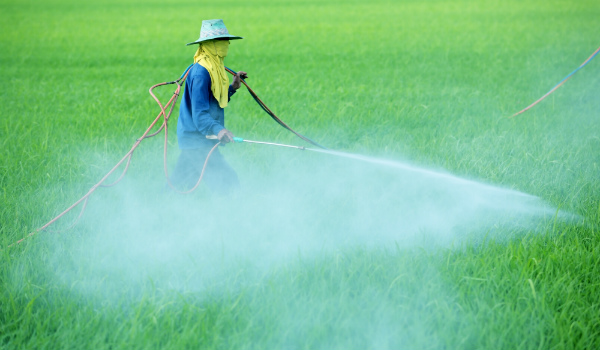
The SNSE notes that pesticide use across India has greatly increased over the years. This not only impacts the health of consumers but also the health of agricultural workers who are subject to pesticide drift and spaying, especially as they tend to wear little or no protection. Research by SNSE shows farmers use a cocktail of pesticides and often use three to four times the recommended amounts (see this).
Forced-fed development: who benefits?
If there are any beneficiaries in all of this, it is the pesticide manufacturers, the healthcare sector, especially private clinics and drug companies, and the transnational food and agribusiness companies, which now see their main growth markets in Asia, Africa and South America, where traditionally people have tended to eat food from their own farms or markets that sell locally-produced foods.
Of course, the commodification and privatisation of seeds by corporate entities, the manufacturing and selling of more and more chemicals to spray on them, the opening up fast food outlets and the selling of pharmaceuticals or the expansion of private hospitals to address the health impacts of the modern junk food system (in India, the healthcare sector is projected to grow by 16 percent a year) all amounts to the holy grail of neoliberal capitalism, GDP growth; which increasingly means a system defined by jobless growth, greater personal and public debt and massive profits for large corporations and banks.
While there are calls for taxes on unhealthy food and emphasis is placed on encouraging individual ‘lifestyle changes’ and ‘healthy eating’, it would be better to call to account the corporations that profit from the growing and production of health-damaging food in the first place and to get agriculture off the chemical treadmill.
Part of the solution entails restoring degraded soils. It also includes moving towards healthier and more nutritious organic agriculture, encouraging localised rural and urban food economies that are shielded from the effects of rigged trade and international markets and shying away from the need for unhealthy food-processing practices, unnatural preservatives and harmful additives.
In India, it also involves calling a halt to the programmed dismantling of local rural economies and indigenous agriculture under the guise of ‘globalisation’ for the benefit of transnational agribusiness and food retail corporations. And it entails placing less emphasis on a headlong rush towards urbanisation (and the subsequent distortion of agricultural production), while putting greater emphasis on localisation.

Financial Oversight And Colonialism In Puerto Rico

Matt Peppe


118 years after U.S. troops landed at Guánica, Puerto Rico, the liberal political site the New Republic asks, "Why Are We Colonizing Puerto Rico?" The occasion for this comically tardy acknowledgment of Puerto Rico's colonial status is a Republican proposal to deal with the island's $72 billion debt problem by allowing a cabal of unelected technocrats carry out austerity measures against the will of the Puerto Rican people. Or, as the bill puts it: "To establish an Oversight Board to assist the Government of Puerto Rico ... in managing its public finances."
The Republican plan most certainly would "spell disaster for vulnerable Puerto Rican citizens, and create a bonanza for private corporations looking to take over public functions," as David Dayen writes in the New Republic piece. But Dayen is shutting the stable door after the horse has bolted.
As I reported recently, vulnerable Puerto Ricans are already facing disaster in the form of cuts to social programs and oppressive increases in taxes. Private corporations have already taken over public functions, including the island's largest airport and its largest highway. Former Governor Luis Fortuño created the Public Private Partnership Authority to allow the firesale of public assets to corporate vultures nearly seven years ago.
Alternative plans have been advanced in the Senate and the Obama administration. Both of these would allow restructuring of Puerto Rico's debt, which the House Republican plan would not. While the Republican legislative proposal for Puerto Rico is vastly inferior to either of the other options, neither the Democratic Senate plan nor the White House plan would be fair to Puerto Rico's residents.
The Senate plan would grant priority for pensions over bondholders. This would directly challenge the outrageous clause in Puerto Rico's colonial Constitution which mandates that if revenues are ever insufficient to cover appropriations, the interest on public debt must be paid before anything else.
The plan introduced by New Jersey Senator Bob Menendez would also grant Puerto Rico tax credits and address lower distributions to Puerto Ricans of Medicare and Medicaid funds they contribute to through payroll taxes. The White House also submitted a proposal for restructuring all of Puerto Rico's debt that would grant similar protections as Chapter 9 without formal bankruptcy proceedings.
The catch is that both the Senate and White House plans, like the House Republican one, would include a financial board to oversee (read: dictate) economic policy. Despite proclamations that the board would function in merely an advisory role, there is no doubt that in practice they would serve the same purpose as all unaccountable technocrats: implementing structural adjustment and slashing social spending, policies that populations would never submit to willingly through their own freely elected representatives.
Dayen laments that an oversight board "effectively moves the capital of Puerto Rico from San Juan to Washington. The discussion draft proposes a war on self-government."
It's unclear whether Dayen is entirely ignorant of Puerto Rico's history, or whether he is cynically implying that U.S. control over Puerto Rico for more than a century has actually been based on a disinterested desire to help people while denying them the democratic rights it grants to citizens in the incorporated states.
Regardless of which U.S. government "solution" to Puerto Rico's financial crisis is carried out, Puerto Ricans will not be losing any sovereignty over affairs they previously controlled on their own. Since the invasion of 1898, the United States has claimed sovereignty over the island. The people of Puerto Rico are unable to make foreign policy, enter into trade agreements, control their borders, issue tariffs, or provide universal public health care.
Though Puerto Rico's political structure was modified in 1952 with the passage of a new Constitution which created a nominal Commonwealth, the island's political status remained equivalent to what it had been for the previous half century: a colony of the United States without self-determination.
Puerto Ricans cannot vote for President of the United States, nor elect their own representatives to Congress. (They do elect a Resident Commissioner, but the position is non-voting.) They are unable to change their political status. That right is reserved for the U.S. Congress. It is a political arrangement without even the pretension of consent of the governed.
The U.S. courts already play the same role that an oversight board would play in dictate political and economic policy. Their decisions for the island are based on a legal system developed and maintained without any input from the Puerto Rican people themselves or regard for their interests. Puerto Rico's political system and its laws must fit within the framework of the U.S. Constitution, which they have no ability to amend.
Recently the Puerto Rican government implemented a "Walmart tax" on big-box retailers. The special tax would apply to businesses with revenue of more than $2.75 billion. Hugely profitable foreign companies, who send most of their earnings to investors on the mainland, would thereby face a greater responsibility for contributing to the territory's coffers. This would in turn alleviate the financial burden on working people and local businesses in Puerto Rico.
But a judge in the United States District Court in Puerto Rico struck down the tax last week as a violation of the Equal Protection Clause of the U.S. Constitution. The clause prohibits states from giving advantages to their own businesses at the expense of those located in other states. Puerto Rico, which is not even a state, must give corporations like Walmart the same unfettered access to its domestic markets as companies owned and operated by locals.
As I have written before, this directly subverts Puerto Rico's self-sufficiency. Several years ago, a federal judge sided with milk processors and blocked Puerto Rico from enforcing regulations that allowed locally produced milk to be directed to a state-run company to produce dairy products like yogurt, cheese, and UHT milk, and determined how to divide up the proceeds of milk sales between producers and distributors. The decision struck a blow against the viability of Puerto Rico's dairy industry, one of the only successful industries producing foodstuffs locally for the population.
While restructuring Puerto Rico's debt is imperative and would help temporarily alleviate the humanitarian and economic crisis that has been well underway for a decade, it would be a band-aid that would not even address the fundamental issue at its root. Proposals to deal with Puerto Rico's debt problem without ending colonialism are distractions from the U.S. government's ongoing exploitation and subjugation of the Puerto Rican people.