16 May 2016

Zika virus threatens 2016 Olympics

David Brown & Julio Patron

As the Zika virus continues to spread throughout Latin America, leading health officials are calling for the 2016 Olympic Games in Rio de Janeiro to be moved, delayed, or both. The virus has affected over a million people in Brazil, and the number of babies born with microcephaly since the outbreak started is just under 5,000. The Olympics are scheduled to begin on August 5, and the massive influx of tourists could rapidly increase the global spread of the Zika virus.
Writing in the Harvard Public Health Review, Dr. Amir Attaran of the University of Ottawa has warned that holding the Olympics in the middle of an outbreak could ultimately result in a “full-blown global health disaster.” The nearly 500,000 expected tourists attending the event would be entering the very center of the outbreak in Brazil.
Since the Brazilian government began tracking cases of the Zika virus nationwide in January, Rio de Janeiro has emerged as the state with the most confirmed cases (26,000) and the fourth worst infection rate (157 per 100,000). The infection rate is expected to decline in the cooler August weather, as usually happens with similar diseases like Dengue fever. However, there are signs that it may still be spreading at elevated levels. For the first quarter of 2016, there has been a six-fold increase from a year ago in the number of Dengue cases within the city of Rio de Janeiro (8,133 cases compared to 1,285).
The Zika virus can also be sexually transmitted, allowing it to spread in far colder conditions than the 70°F winter lows of Rio de Janeiro.
Despite this, the International Olympic Committee (IOC) has decided to proceed with the games, claiming that there is “no justification for canceling, delaying, postponing or moving the Rio Games.’’ The World Health Organization (WHO) issued a set of recommendations for athletes and tourists but has taken no official position on delaying or moving the Olympics, with potentially far-reaching consequences.
An analysis published last March in Science shows that the entire Brazilian outbreak stemmed from just one infected traveler between May and December 2013. Globally, over 2 billion people live in regions where the weather and mosquito populations are conducive to the spread of Zika.
The long term impact of this strain of the Zika virus is still unknown. A new study by Brazilian researchers demonstrated that the strain in the current outbreak, independently of other factors like malnutrition, caused microcephaly in mice at a much higher rate than older strains. Aside from the sharp spike in congenital defects, Zika is also connected to an increase in rare neurological disorders like Guillain-Barré syndrome among adults infected.
Both microcephaly and the temporary paralysis associated with Guillain-Barré are immediately obvious conditions. Whether this strain of Zika can cause longer term complications for adults or children who do not develop microcephaly is simply not known. According to Dr. Muotri of UC San Diego, “Media covering the Zika story have focused upon affected babies with small heads because such images are profoundly dramatic, but the true health impact is likely to be more widespread and devastating.”
As of May 11, 58 countries have reported continuing mosquito-borne transmission, according to the WHO. Two cases of microcephaly have been reported in Slovenia and the United States, both due to a visit to Brazil.
The first Zika-related death in the United States was an elderly man in the territory of Puerto Rico. The man who died developed a low platelet count as a severe side-effect of infection with Zika, called immune thrombocytopenic purpura. Health officials in Puerto Rico said they tested over 6,000 people for Zika. Of those, 683 had the virus, 65 of them pregnant woman, 11 needed immediate hospitalization and five had Guillan-Barré, according to the CDC.
In Mexico, there have been 280 cases so far, most of them occurring in the southern states of Chiapas and Oaxaca, according to Mexico’s Health Secretary’s office.
There is a strong potential for transmission into the US, especially in the Southern states. Cities bordering Mexico are at higher risk due to crossings between the United States and Mexico. “It’s not a matter of if it’s going to happen, it’s a matter of when.” said Esmeralda Guajardo, Cameron County’s (Texas) health administrator. The Centers for Disease Control has reported 472 travel-associated cases of Zika since May 4.
There is a fundamental class basis for the outbreak of Zika, and the areas where it has spread rapidly have all been poverty stricken. Basic sanitation, window screens, mosquito nets, and running water would have been sufficient to prevent the outbreak of the virus. The epicenter of the outbreak was in Northeast Brazil, where 35 million people don’t have running water and over 100 million lack a sewage system. The poverty and overcrowding that allowed Zika to infect over a million Brazilians in just a few years exist in poverty stricken regions of the US as well.
In a statement released May 12, the WHO recommended that Olympic athletes and tourists “avoid visiting impoverished and over-crowded areas in cities and towns with no piped water and poor sanitation (ideal breeding grounds of mosquitoes) where the risk of being bitten is higher.”

Same Age, Different Behaviour: Nuclear India and Nuclear Pakistan

Manpreet Sethi


On 11 and 13 May, India completed 18 years as a nuclear-armed state. A couple of weeks from now Pakistan will do so too. And yet despite sharing the same age as overt nuclear weapons states, the two countries are far apart in their understanding of nuclear issues and behaviours. Both have chosen dissimilar objectives for their nuclear weapons, are pursuing diverse capability trajectories, and projecting deterrence in disparate ways. As China continues to block India's entry into the Nuclear Suppliers Group (NSG) and seeks the same treatment for its 'all weather friend' Pakistan, it would be a good idea to understand some of these stark differences that undercut the very demand for uniform treatment.
The first and most evident difference lies in the purpose of the nuclear weapon in the national security strategies of the two countries. For India, the nuclear weapon performs a narrow, limited role of nuclear deterrence - to deter only the nuclear weapons of the other side. It is for this reason that acceptance of universal nuclear disarmament also comes naturally to India since if there were no nuclear weapons with the adversary India would not need such weapons either. For Pakistan, on the other hand, nuclear weapons serve the purpose of deterring India's conventional superiority. The Indian conventional strength bothers Pakistan because it fears its coming into play in response to its continued support for terrorism on Indian territory. In one sense then, the objective of Pakistan's nuclear weapons is to provide it with the space and the immunity to continue its policy of bleeding India through a thousand cuts while shielding itself against a conventional Indian response.
With the purpose of nuclear weapons being what it is, the second difference shows up in the approach of the two to establish credible deterrence. Seeking to deter only the use of nuclear weapons, India has a strategy of deterrence by punishment whereby it eschews the first use of such weapons but promises punitive retaliation in case of their use by the adversary. No first use (NFU) supported by massive retaliation is, therefore, the bedrock of Indian nuclear strategy. In contrast, the Pakistani nuclear strategy is premised on brinksmanship. It projects first use of nuclear weapons including their battlefield use, thereby threatening to take a conventional conflict to the nuclear level. This brinksmanship is projected through build up of 'full spectrum' deterrence - weapons of all yields, spread across all platforms, and from the tactical to the strategic type.
Given that Pakistan's deterrence strategy is premised on uncertainty and projection of quick nuclear escalation to deter an Indian conventional response to an act of terrorism traced back to the Pakistan deep state, the country believes in keeping the adversary unsettled. In its thinking, arriving at a modus vivendi with strategic stability is not desirable because the more stable the relationship, the more constrained is its policy of support to acts of terrorism. Stability at the nuclear level will concede space to India to conduct conventional war without the risk of nuclear escalation. So, while India desires strategic stability in order to rule out the possibility of inadvertent or mistaken nuclear escalation in case of crisis, Pakistan would rather raise this risk to have India cowering.
While Pakistan considers such a nuclear strategy justified given its threat perception of India as its foremost enemy, the problem lies in the risks it thence creates for regional and international security. The requirements of full spectrum deterrence and credible first use with TNWs will lead to larger and larger requirements of fissile material and delegation of nuclear command and control. While there are currently no international treaties or regional/bilateral measures that hold Pakistan's hands on this, the fact of the matter is that a country as severely infested with terrorist networks as it is, the situation threatens to spill beyond the control of its own commanders, as much as beyond the region.
It would therefore behove China as also the rest of the supporters of granting equal treatment to Pakistan, to not encourage irresponsible nuclear behaviour and its attendant risks. India can manage without an NSG membership till such time as the members realise the futility of keeping a major nuclear player out of the arrangement, but do regional and international security have the luxury of repeatedly condoning dangerous behaviour and still expect consequences to turn out less dangerous?
18 is the age when youth become eligible to vote in both India and Pakistan. Will Pakistan now like to vote for a different future for itself? One in which it can shed its self-created paranoia against India, and one in which it has not handed over the reins of the future of the country to nuclear weapons? The potential of Pakistan as a middle level power is immense. If only it would allow its nuclear adolescence to transition into a mature and responsible adulthood.

14 May 2016

VR Sex: the Future of Porn?

David Rosen

Humans are sexual creatures and one way they enhance the quest for erotic pleasure is through technology.  Have you played with the latest innovation, Virtual Reality (VR) porn?  If not, Virtual Reality (VR) sex may be your next hot erotic experience.
“I think VR porn has the capacity to bring an entirely new side of porn to the masses,” proclaimed Ela Darling, the queen of VR sex.  She is the star, creative director and co-owner of VRtube.xxx, a fledging VR porn company.  “Porn is my livelihood, it’s my everything,” she blushes, “so when I come across emerging technologies I see it through the lens of porn.”  She’s developing what’s described as “holographic 3D porn” for Facebook’s Oculus Rift system.  Is she a 21stcentury Bettie Page?
VR has been around since the 1980s, but its current incarnation — with lighter and more powerful headsets, more sophisticated programming and real-time connectivity — might finally make it a popular sex-toy phenomenon.  While the ostensible target users of the new VR systems are those into videogames and education, everyone in the know knows that porn will be a big driver.
VR sex seeks to combine representation with immersion, merging the phantasy of imagination with the power of physical pleasure.  It seeks to fashion a historically unique experience, one all consuming and erotically fulfilling – yet private, without a live, real other.
The Consumer Electronics Show (CES) is the corporate high-tech gadget-fest held in Las Vegas each January and this year VR (along with driverless cars) was the hot product.  At CES more than 40 companies displayed their latest “immersive multimedia” systems of device and programming.  Among the big players showing off their latest stuff were Facebook’s Oculus
sinsexsubRift (for Microsoft’s Xbox); Sony’s Morpheus (for PlayStation 4); Samsung Gear VR (for its Galaxy smartphone); Microsoft’s HoloLens (half virtual and half augmented reality); and Google’s Cardboard VR headset (for only $29.95).  Indicating what’s at stake, Facebook acquired Oculus’ Rift for $2 billion even before the product was launched.
A host of other companies offered new headsets and other devices, including FOVE VR, Zeiss headset (the optics company), Avegant’s Glyph, Razer’s OSVR and Freefly’s VR headset.  In addition, an increasing number of software companies are entering the emerging VR porn business, some offering online VR programming.  Among them are: VRSexperience, MetaverseXXX, VRTube, VirtualRealPorn, Virtual Porn 360, VRGirlz, SexLikeReal, Czech VR, Vixen VR and AliceX.
Raymond Wong, writing in Mashable, described a program from the VR porn company, Naughty America, running on a Samsumg smartphone:
I found myself transported into a bedroom. Kneeling before me was a female porn star who was seductively talking dirty to me. I looked down and saw some guy’s muscular body. Well, that’s not mine, I thought to myself. I was confused. Whose body was this? Then I realized, I was now this guy.
The porn star brought in another female friend, and the next thing I knew, they were both naked and performing oral sex on this VR guy, err, me, turning the party into a raunchy threesome.
Some media historians date the origins of VR to the early-19th century “magic lantern“ shows and the phantasmagoria they presented.  The media historian Joseph Slade believes that the first pornographic photograph was introduced in 1846, “depicting a rather solemn man inserting his penis into the vagina of an equally solemn middle-aged woman.”  In the ‘80s, Jaron Lanier introduced the multisensory DataGlove and goggles, and since then next-wave developments dubbed “3D environment” systems.
VR is a very different media than conventional TV or movies.  Andrew Marantz, writing recently in the New Yorker, noted:
Cinematic grammar no longer applies. There is no frame in which to compose a shot. An actor who directly addresses the camera isn’t breaking the fourth wall, because the viewer is already in the middle of the action. The viewer can look anywhere, so the director often adds subtle visual or auditory cues to indicate where to look, or to signal that the viewer’s gaze can wander without missing anything important.
This new visual style might profoundly affect how viewers perceive porn.
The sociologist Kassia Wosick estimates the globally porn market at $97 billion, with the U.S. accounting for between $10 and $12 billion.  According to one estimate, there are nearly 25 million porn sites worldwide making up 12 percent of all websites and Xvideos, the biggest porn site on the web, receiving 4.4 billion page views (pvs) and 350 million unique visits per month.
Today, one estimate claims that two-thirds (68%) of young men and one-quarter (18%) of young women view porn at least once a week and those numbers are growing.  Some worry that easy access to online VR porn could lead to a new type of sexual addiction.  Timothy Lee, Clinical Director of New York Pathways, a treatment center for sex addiction, warns of a possible intimacy disorder. “With VR porn — the whole empathic, intimate experience — I could see that being more devastating than someone just dealing with pornography,” Lee says.
Others are less worried.  Ben Delaney, author of Sex, Drugs And Tessellation: The Truth About Virtual Reality, “I think that virtual reality will actually cause some people to enjoy the real world more. Post the potential climate-change Armageddon, it will allow the survivors to experience what their ancestors so thoroughly f*cked up.” Regarding possible VR porn addicts, he says, “There will be virtual-reality addicts, just as there are porn addicts. Who cares? Better to keep them off the street.”
Today, most VR porn development seems focused on male pleasure, so what about women?  Will it reduce — if not eliminates — the need, let alone desire, for physical sexual pleasure with an actual living other?  Will VR sex fashion a new erotic experience or change the nature of pleasure?  Stay tuned.

Despair and Unrest in Mexico

Vijay Prashad

On April 24, thousands of demonstrators marched to the Angel of Independence monument in Mexico City from the municipality of Ecatepec. People from all kinds of backgrounds marched with signs that had the requisite dose of humour and anger. “Revolucion en la Plaza, en la Casa y en la Cama” (Revolution in the streets, at home and in bed), announced one woman, while another wrote on her pregnant belly: “Quiero nacer sin violencia” (I want to be born without violence). A resonant chant went “Ni sumisa, ni obediente. Soy libre, loca y valiente” (Neither submissive nor compliant. I’m free, crazy and brave).
The statistics explain the anger. Seven women are killed every day in Mexico. Over the past three decades, over 45,000 women have been killed. The passive voice is appropriate here. Over 95 per cent of these cases have not been properly investigated by the police and judged by the courts. The impunity rate is stunning. Two-thirds of Mexican women above the age of 15 report in surveys that they have experienced some form of physical or emotional abuse or discrimination at work.
The slogans for the march—“Vivas nos queremos” (We want to stay alive) and “Ni una menos” (Not one female less)—echoed other familiar slogans from earlier marches. During the disappearance of dissidents in the dirty wars of the 1980s in South and Central America, their supporters would mutter, “Vivos los queremos” (We want them alive) and “Ni uno mas” (Not one man less). This slogan has returned to Mexico, says Aurelia Gomez Unamuno, whose forthcoming book, Memoria y violencia, studies the memories and testimonies of Mexican guerrillas of an earlier era. In the most recent instance, 43 students from the Ayotzinapa Rural Teachers’ College in the State of Guerrero vanished in September 2014. Their families and friends continue to fight to find out what happened to these young men who were training to be rural schoolteachers. “We want them alive” is the slogan for the “disappeared”. “We want to stay alive” is the slogan of the women.
Forty-three students’ disappearance
In 1968, as part of the Dirty War, the Mexican state massacred hundreds of students in Mexico City’s Tlatelolco section. Each year, there is a large demonstration at the Plaza de las Tres Culturas (the Plaza of Three Cultures), the site of the massacre. In 2014, the students at Ayotzinapa went off to commandeer buses so that they could go to that demonstration on October 2. These students were mainly indigenous Amerindians, one of the three cultures of Mexico (pre-Colombian, colonial Spanish and Mestizo). Masked men and the police ambushed the buses on their way back to the campus. Six students died at the scene. One bus, with 43 students, vanished. The government said that the local drug gang, Guerreros Unidos, had killed the students and incinerated their bodies. This, said Attorney General Jesus Murillo Karam, was the “historical truth”. They wanted the case, as with other cases, to vanish.
The families and friends of these missing students would not back down. Their perseverance caught the imagination of others in Mexico and across Latin America. Pressure on Mexico’s President Enrique Pena Nieto pushed him to allow the Inter-American Commission of Human Rights to send a team of five experts to investigate the disappearance. Mexico has been protective of its sovereignty. This was a historic capitulation to the demands of its people and recognition of the failure of its own investigative mechanisms.
Pena Nieto assumed that the panel’s work would be perfunctory, the writer Francisco Goldman told this writer. Goldman’s book The Interior Circuit: A Mexico City Chronicle (2014) eerily foretold the collapse of the golden story of Pena Nieto.
With his typically careful eye, Goldman has been following the investigation into the “43”. Goldman watched as the commission, known as GIEI, worked “seriously, with an obsession”. The Colombian prosecutor Angela Buitrago went over 185,000 pages of the old case file, while Guatemala’s former Attorney General Claudia Paz y Paz analysed the documentation with her well-known rigour. GIEI invalidated the government’s case. Attacks in the establishment media came alongside a cold shoulder from the government. “The conditions to conduct our work don’t exist,” said Claudia Paz.
What did the experts at GIEI find? That Guerreros Unidos had used buses to smuggle heroin and cocaine to the United States. It was likely, they suggested, that one of the buses commandeered by the students carried large amounts of drugs. Gunmen of the gang alongside soldiers and policemen blocked the highway most likely to recover that bus.
Complicity between the Mexican establishment and the world of drugs is well documented, most notably by the investigative journalist, Anabel Hernandez, in Narcoland.
Christy Thornton, a historian of Mexico, told this writer: “The federal government is seeking desperately to protect itself.” That its Attorney General would muddy the waters “is a sign of just how high up the corruption goes”. The drug trade has overwhelmed the Mexican economy. The journalist Carlos Loret de Mola says that the drug cartels are three times more profitable than the five hundred largest Mexican firms. It is little wonder then that drugs might have played a role in this tragedy, or that the Mexican establishment would go to such lengths to hide the story.
‘Of little value’
In his book The Femicide Machine, Sergio Gonzalez Rodriguez writes of the people “who are considered of little value”. These are the 43 students, surely, but also the tens of thousands of women whose murders have not been investigated.
Ten days before the April 24 protest, Luisa Carvalho, the regional director of the Americas and the Caribbean for U.N. Women, spoke in El Salvador at the release of a report on femicide. “Femicide and other forms of violence against women in the region continue to grow,” she said, “and the application of justice continues to be limited with a rate of 98 per cent impunity for the offenders.”
Governments seem uninterested in these crimes. A United Nations report from 2003 laments “the relative incapacity of the state to adequately solve these cases”. A fog grows over them. People begin to think of them as mysterious, when in fact there are very clear reasons why these women are being killed.
“The ongoing death toll is not mysterious,” said Rosa-Linda Fregoso, author of Feminicidio en America Latina. “It is a consequence of the historic structure of impunity in place in Mexico, the failure on the part of the Mexican state to adequately prevent and investigate violence against women at all levels.” Aurelia Gomez told this writer that the violence takes place out of a combination of “machista rage, drug cartels protected by authorities, and permissiveness from the authorities in general”. In 2007, Senator Marcela Lagarde Rios, who coined the term Feminicidio, pushed through the General Law to Provide Women with Access to a Life Free of Violence. Despite the presence of this important law, Fregoso said, “Mexico’s judiciary, legislative and criminal justice sectors are staunchly patriarchal.” The disregard for crimes against women is normal.
‘The state did it’
The Mexican state, says Aurelia Gomez, efficiently dismantles social movements—workers and peasant unions, teachers and students’ organisations. But the drug cartels remain intact. Plan Merida of 2008 links Mexico to the U.S.’ Global War on Terror, with the new term of art being “narco-terrorism”. Funds from the U.S. government flood Mexican law enforcement agencies, which use this new money and equipment to break one drug ring in order to profit another.
“Blood, death, threats, exploitation, weapons, unlimited profits; this is the big business created by the illegality of drugs,” writes Rodriguez in The Femicide Machine. There is little hope in the state’s institutions for the families and friends of the 43 and for those who marched on April 24. Drug cartels are in the blood stream of Mexican institutions. To expect the Mexican state to tackle this would be like presuming a heart surgeon could do an open-heart operation on herself. At protests for the 43, a common slogan is “Fue el estado” (the state did it).
At the last public meeting of GIEI, the families and friends of the 43 shouted: “No se abandona” (do not abandon us).
There was a feeling, says Francisco Goldman, that with the departure of the international commission, nothing will happen. It is a feeling shared by the families of those who have disappeared. Justice eludes them. They indict the state. Who will give them justice from the state? “These people live in an abyss,” Goldman told this writer. “They are forced by the state to live in the shadows, as a ghost with your ghosts.”

The Great Leap Backward: America’s Illegal Wars on the World

Luciana Bohne

Can we face it in this election season? America is a weapons factory, the White House a war room, and the president the manager of the neoliberal conspiracy to recolonize the planet. It exports war and mass poverty. On the economic front, usurious neoliberalism; on the military front, illegal wars. These are the trenches of America’s battle for world domination in the 21st century.
If not stopped, it will be a short century.
Since 1945, America’s Manifest Destiny, posing as the Free World’s Crusade against the Red Menace, has claimed 20 to 30 million lives worldwide and bombed one-third of the earth’s people. In the 19thcentury, America exterminated another kind of “red menace,” writing and shredding treaties, stealing lands, massacring, and herding Native populations into concentration camps (“Indian reservations”), in the name of civilizing the “savages.” By 1890, with the massacre of Lakota at Wounded Knee, the frontier land grab—internal imperialism– was over. There was a world to conquer, and America trained its exceptionally covetous eye on Cuba and the Philippines.
American external imperialism was born.
Then, something utterly dreadful happened in 1917—a successful social revolution in Russia, the second major after the French in 1789, to try to redistribute the wealth of the few to the advantage of the many. The rulers of the world—US, Britain, France and sundry acolytes—put aside their differences and united to stem the awful threat of popular democracy rising and spreading. They invaded Russia, fomented a civil war, funding and arming the counter-revolutionary forces, failed, and tried again in 1939. But Hitler’s war of extermination on the USSR ended in a spectacular victory for Moscow.
For a while, after 1945, the US had to behave as a civilized country, formally. It claimed that the USSR had a barbarian, all-conquering ideology, rooted in terror, disappearances, murder, and torture. By contrast, the US was the shining city on the hill, the beacon of hope for a “the free world.” Its shrine was the United Nations; its holy writ was international law; its first principle was the inviolability of the sovereignty of nations.
All this was rubbish, of course. It was an apartheid society. It nuked Japan not once but twice, deliberately selecting civilian targets. It shielded from justice top Nazi criminals to absorb them as partners in intelligence structures. It conducted virtual “show trials” against dissidents during the hysteria of the McCarthy congressional hearings, seeding the country with a harvest of fear. It waged a genocidal war on Vietnam to prevent independence and unification. It assassinated African independence leaders and bestowed fascist dictators on Latin America. It softly occupied Western Europe, tied it to itself through military “cooperation” in NATO, and it waged psy-op war on its opposition parties. Behind the civilized façade was a ruthless effort to take out the Soviet Union and crush self-determination in the colonial world.
By hook and by crook, the Soviet Union dissolved in 1991, and America went berserk with triumphalism. Now, at last, the conquest of the world, interrupted in 1917, could resume. The global frontier reopened and America’s identity would be regenerated through violence, which had delivered the American West to the European invaders in the 19th century. The benign mask dropped. Behind it came a rider on a pale horse. According to the ideologically exulted, history had ended, ideologies had died, and the messianic mission of the US to become the steward of God’s property on earth could be fulfilled.
The “civilizing mission” was afoot.
Screen Shot 2016-05-09 at 9.15.13 AM
A cabal of neo-conservative policy wonks first sketched what I call the Great Leap Backward into lawlessness as a revival of the myth of the frontier in the 1990s. “The Plan for a New American Century” (PNAC) envisaged the 21st century as a unilateralist drive to entrench American values globally—what the PNAC ideologues call “freedom and democracy”—through preemptive wars and regime change. This frenzied delirium of US military domination turned into official foreign policy with the Bush Doctrine after 9/11, but it was the Clinton administration’s Doctrine of Humanitarian Warfare before 9/11, that shut the door on the prohibition of aggressive wars by the UN Charter, remaking the map of the world into a borderless American hunting reserve by removing the principle of sovereignty and replacing it with “right to protect” (R2P)—or humanitarian pretext for use of force.
Clinton’s doctrine was an act of supreme, even witty, exploitation of liberal principles and commitment to policies of human rights. It was how the liberal left was induced to embrace war and imperialism as the means of defending human rights. The Carnegie Endowment cooked up the doctrine in 1992. Its report, “Changing Our Ways: America’s Role in the New World,” urged “a new principle of international relations: the destruction or displacement of groups of people within states can justify international intervention.” The report recommended that the US use NATO as the enforcer. It must be noted, too, that the principle of “humanitarian war” has no authority in international law. The Charter of the United Nations sought to outlaw war by making it impossible for unilateral interventions in the business of sovereign states by self-appointed guardians of human rights. The reason behind the proscription was not heartlessness but the consciousness that WW II had been the result of serial violations of sovereignty by Germany, Italy, and Japan—by militarist imperialism, in other words.
The bell tolled for the UN and the old order in the 1999 Kosovo War. The bi-partisan effort to dismantle the architecture of the post war’s legal order played out there. With the Kosovo War, the Clinton administration launched the first humanitarian war and set the precedent for waging war without Security Council clearance of many to follow by both Republican and Democrat administrations. The Clintonites who used NATO to bomb Serbia to protect ethnic Albanians in Kosovo from non-existing Serbian genocide may or may not have appreciated the fact that Hitler had used the pretext of R2P—humanitarian intervention—to launch WW II by claiming to protect German minorities in Poland, but they certainly knew that the monopoly on use of force rested with the UN’s Security Council. This monopoly was secured after WW II precisely to prevent unilateral attacks on sovereign states through bogus claims of altruistic interventions, such as Hitler had championed and pursued. Ironically for critics of the Soviet leader, it was Stalin who insisted at the Yalta Conference that if the USSR were to join the United Nations a veto in the Security Council was a must to insure that any war would be a multilateral consensus and a multilateral action.
As the Clintonites understood, the postwar legal authority for peacekeeping and the prevention of war entrusted to the UN Security Council posed a colossal obstacle to the pursuit of American world domination. For the vision of PNAC and the Carnegie Endowment to become reality, the United Nations, the guarantor of sovereignty, had to go. In the run-up to the Kosovo War, the Clintonites fatally and deliberately destabilized the United Nations, substituting the uncooperative UN Secretary General Boutros Boutros-Ghali with the subservient NATO shill, Kofi Annan. Annan obligingly opined that in the matter of war and peace, UN Security Council resolutions were not the only way to skin a country– especially one chosen by the US for remaking, partitioning, or regime changing, a cynic might add.
So now we live in a dangerous world. Once again, since the 1930s, the world is being stalked by an expansionist power answering to no law but its own unilateral, humanitarian vigilantism. The Kosovo precedent has spun out of control. Libya smolders in the ashes of NATO bombs, dropped to prevent “genocide”; Syria fights for survival under attack by genocidal terrorist groups, armed, trained and funded by genocide preventers grouped in the NATO alliance and the Gulf partners; Afghanistan languishes in a permanent state of war, present ten thousand American troops which bomb hospitals to promote human rights; in Iraq, the humanitarians are back, after twenty-five years of humanitarian failure. And in Ukraine, Nazi patriots are promoting American democratic and humanitarian values by shelling Donbass daily. I hesitate to mention Africa, where humanitarian Special Forces are watering the fields where terrorists sprout like mushrooms after rain—in Mali, Nigeria, Somalia, Kenya.
Then there is Yemen, perhaps the most callous, vicious, and careless humanitarian crime of a litany of crimes against humanity in the Middle East. The US government has recently admitted deploying troops to Yemen. The Pentagon claims that the deployment will assist Saudi Arabia (“the Arab coalition”) to fight al-Qaeda in Arabian Peninsula. Can a sentient being meet such a grotesque claim with anything but infernal laughter? Help Saudi Arabia to fight its own creature? Are we stupid yet?
$4 trillion dollars later, spent on the War-on-Terror/Humanitarian-R2P, the pattern of military destabilization of sovereign states proceeds apace, one recalcitrant, independent country at a time in the Middle East and North Africa. For the rest of the world, the surrender of sovereignty is sought by means of economic globalization through trade pacts—TTP, TTIP, etc.—that virtually abolish the constitution of states, including our own. Spearheading the economic effort to control the periphery and the entire world is the so-called “Washington Consensus.”
It hugs the market-fundamentalist idea that global neoliberalism and core finance capital’s economic control of the planet by means of the International Monetary Fund (IMF) and the World Trade Organization (WTO) is the option to poverty and social chaos.
Neither military nor economic war on the sovereignty of nations has yielded anything close to a stable, prosperous, and peaceful world. It had delivered death, destruction, debt, market crises, tidal waves of refugees and displaced persons, and concentrated masses of wealth in a few but powerful hands. What the poet W.H. Auden called “the international wrong,” which he named “imperialism” in his poem “September 1939,” is the crisis that stares out of the mirror of the past into our faces, and it bodes war, war, and more war, for that is where imperialism drives.
In this scenario, no potential presidential candidate—even establishment-party dissenter—who does not call for both the end of the bi-partisan “Washington Consensus” and the end of bipartisan militarist aggression can reverse the totality of the “international wrong” or stem the domestic descent into social brutalization. If none calls this foreign policy debacle “imperialism,” elections will be a sleepwalker’s exercise. Nothing will change. Except, almost certainly, for the worse.

Trade Deals and the Environmental Crisis

Rob Urie

With the release of leaked documents from the TTIP (Trans-Atlantic Trade and Investment Partnership) ‘trade’ deal Greenpeace framed its conclusions more diplomatically than I will: the actions of the U.S. political leadership undertaken at the behest of American corporate ‘leaders’ and their masters in the capitalist class make it among the most profoundly destructive forces in human history. At a time when environmental milestones pointing to irreversible global warming are being reached on a daily basis, the U.S. political leadership’s response is to pronounce publicly that it favors environmental resolution while using ‘trade’ negotiations to assure that effective resolution never takes place.
Those representing the U.S. in these negotiations are mainly business lobbyists who have been given the frame of state power to promote policies that benefit the businesses they represent. The thrust of the agreements is to enhance corporate power through legal mechanisms including patents, intellectual property rights and ISDS (Investor-State Dispute Settlement) provisions that create supranational judiciaries run by corporate lawyers for the benefit of corporations. Shifting the power to regulate greenhouse gas emissions to the corporations producing them precludes effective regulation in the public interest. The position that environmental harms must be proven before regulations are implemented leaves a dead planet as the admissible evidence.
U.S. President Barack Obama is both the most articulate American politician urging action on climate change and the central Liberal proponent of the trade agreements. The apparent paradox isn’t difficult to understand— the trade agreements will be legally binding on signatory states while Mr. Obama’s statement of the problem won’t be. As evidence of global warming mounts the Republican tactic of denial is looking more and more delusional. By articulating the problem Mr. Obama poses Democrats as the solution while handing the power to curtail greenhouse gas emissions to business lobbyists and corporate lawyers.
History is important here: the claim of ‘anthropogenic,’ or human caused, climate crisis universalizes the consequences of capitalist production when the carbon emissions that are causing it can be tied through both history and geography to the rise of capitalism. While the ‘industrial revolution’ began in England, it was the second industrial revolution and more
zen economicsparticularly, U.S. industrial production since the end of WWII, that is responsible for the exponential increase in carbon emissions behind global warming. At this stage the addition of China as major carbon emitter can be tied largely to its exports to the West.
The spread of capitalist production makes global warming very difficult to resolve. Were the U.S. and developed Europe the only material greenhouse gas emitters, capitalist logic would be inexorably linked to its product. However, the spread of this production has naturalized it by creating the illusion of the universality of both stuff lust (commodity fetish) and the social mechanisms for producing it. The environmental implausibility of seven billion people driving cars and living in McMansions has given way to the local logic of manufactured wants motivating an entrenched economic order.
The rise of neo-liberal ‘state capitalism’ infers a period that never existed when state and economic power were separate and distinct. It is hardly an accident then that ‘free-trade’ agreements codify the relations of state and corporate power. Following from Bill Clinton, Barack Obama’s sleight-of-hand is to pose the TPP (Trans-Pacific Partnership) and TTIP ‘agreements’ as economic policies when their intent is to cede political control to large corporations. Social understanding is gradually moving from corporations being political actors through campaign contributions to their being political entities that decide public policy through these ‘trade’ agreements.
The real paradox in play is between democracy and capitalism. ‘Trade’ deals are profoundly anti-democratic in that they cede civil control to ‘private’ corporations. Policies that maximize profits for corporations and their owners do so by reducing or eliminating democratic control over civic life. In civic logic ending human life on the planet is Dr. Strangelove-level insanity. In the realm of capitalist logic we all benefit from the stuff that capitalism produces, so what is the problem? The Liberal claim that ‘we’ can have both the stuff of capitalist production and environmental security through ‘smart’ capitalism ignores the ‘private’ control of the public realm inherent to capitalism.
What is made evident by the documents leaked by Greenpeace is that electoral politics are largely irrelevant to the business of ‘governing.’ The U.S. representatives negotiating ‘U.S.’ trade positions no more represent your and my interests than do the business executives selling us products. The public’s role in elections is as consumers of political rhetoric. Hillary Clinton’s willingness to say anything to win election reflects that her ‘product’ is political rhetoric and that it will bear no relation to her actual policies once the ‘sale’ is made. More profoundly, were Bernie Sanders to be elected his ability to govern in the public interest would be bounded by institutions dedicated to supporting ‘private’ interests.
In this sense Mr. Obama’s willingness to articulate positions on climate resolution, economic justice and concern for ‘human rights’ while doing the opposite is his skill as a political ‘leader.’ As long as this system is considered legitimate it will confer political legitimacy back on those elected. The oft heard complaint that elections don’t change anything depends on the ‘anything’ under consideration— the choice between Hillary Clinton and Donald Trump is ‘consumer choice’ politics. The choices not available through electoral politics are: ending the threats of climate crisis and nuclear weapons, placing economic justice as the central role of Western governments, ending wars of choice while de-militarizing the West and creating new forms of democratic participation.
The logic of ‘smart’ capitalism proceeds from the base conceit that people want the stuff of capitalism and that capitalist production is the way to get it. History locates this want as a consequence of capitalist propaganda undertaken in the U.S. in the early twentieth century— it is no more ‘natural’ than a toaster oven. The aggregating logic of capitalist ‘efficiency’ produced the environmental aggregates of global warming and climate crisis. The capitalist logic of more capitalism to resolve the consequences of already existing capitalism proceeds from the premise that manufactured wants need to be met rather than simply not manufactured. Current ‘trade’ deals rely of these manufactured wants as a form of political control by the corporate class. The choice is ours to reject manufactured wants in favor of self-determination. As the capitalist class understands, doing so would end capitalism and the economic order it represents.

“National Security, Holier Than ‘Human Security’ In India”

K.M Seethi

The leaders of the ‘holy’ land of India who make ‘poverty and starvation deaths’ as political ‘weapons’ against their respective opponents must relook the colossal amount being spent on weapons and their guards every year in the name of ‘national security.’ How much money the government can set apart for ‘food security’ and ‘health security’ of millions of such people whose status is now derogatorily compared with Somalia?
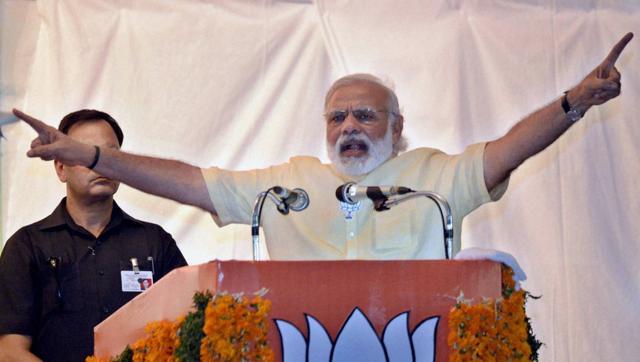
Obviously, Prime Minister Narendra Modi had least respect for ground realties, while addressing people in the election campaigns underway in different states, especially when he deploys statistics to denigrate a state like Kerala. Speaking on Kerala’s ‘development tragedy’ (not trajectory), he said that the child mortality rate among the /ST population in Kerala is much worse than the situation in Somalia! The methodology of comparison was fraught with dangerous consequences, besides his statistical skulduggery. The UNICEF says that the mortality rate in Somalia is amongst the highest in the world; one out of every seven Somali children dies before seeing their fifth birthday (137 deaths/1,000 live births) with a higher number in south and central Somalia. Is this the situation among the SCs and STs in Kerala? Obviously, he is choosy when he makes a comparison. He selects a particular section in Kerala and takes Somalia as a whole.
Modi ignores Kerala as a whole and forgets about India (all India average is well above 40/1000). Will he make a comparison between Kerala (the lowest in India, 12/1000) and Gujarat where the infant mortality rate is as high as 36/1000, nearer to all India figure? Never. More so, he will not say anything about STs and SCs in Gujarat. Modi as PM should be more informed, careful and mature in dealing with the politics and economics of states in India. He must stop playing to the gallery with a view to ‘opening an account’ with ‘zero balance’. The net result could be, the attempts to ‘liberate’ the masses from the politics of the ‘Left-Right’ he ridiculed will move in the direction of communal ‘Lift-Tilt’ with insidious social consequences. Rather he must congratulate himself on taking the ‘Right-Right’ politics in the centre to the ‘Extreme Right’ with very little possibility of liberating the poorest of the poor in this country.
All this said and done, will Modi relook the allocation for national security every year in this country ? Just see the Union budget allocation of this year (2016-17) for defence and national security. A colossal amount of Rs. 3, 40,921.98 crore (US$ 52.2 billion) for the Ministry of Defence (this also included, for the first time, the defence pensions amounting to Rs. 82332.66 crores).
But the total cost does not cover the amounts set apart under other ministries such as Rs. 3000 crores for nuclear sector (including nuclear weapons), Rs.7509 crores for space (including missiles and rockets) , and other allocations under the Ministry of Home - Rs 16,228.18 crore for CRPF, Rs 14,652.90 crore for BSF, Rs 16,228.18 crore, 4,231.04 crore for Indo-Tibetan Border Police, Rs.4,363.88 crore for Assam Rifles, Rs 3,854.67 crore for Sashastra Seema Bal, Rs 688.47 crore for National Security guards etc etc.....
The cumulative spending of all these ministries for ‘national security’ is so high that even one per cent of the total amount is enough to lift 8.6 per cent tribes of the Indian population from the deep morass of poverty and starvation, a real-time human security predicament of dears living in our midst - whether in Kerala, Gujarat or Jharkhand. Dwight D. Eisenhower once said: ”Every gun that is made, every warship launched, every rocket fired, signifies in the final sense a theft from those who hunger and are not fed, those who are cold and are not clothed.”
Eisenhower may be a former President of the United States whose history is intimately linked with the history of military-industrial complex. Yet, wisdom comes albeit belatedly, even from those who would harbour a notion of security bereft of any human essence. Rosa Luxemburg had predicted almost a century ago that militarism and high defence spending would be indispensible for the ruling classes in the capitalist countries. It had fulfilled “a quite definite function in the history of capital, accompanying as it does every historical phase of accumulation.” It had played “a decisive part in the first stages of European capitalism, in the period of the so-called ‘primitive accumulation’, as a means of conquering the New World and the spice-producing countries of India. “ Subsequently, “it is employed to subject the modern colonies, to destroy the social organisations of primitive societies so that their means of production may be appropriated, forcibly to introduce commodity trade in countries where the social structure had been unfavourable to it, and to turn the natives into a proletariat by compelling them to work for wages in the colonies.” This obviously applies to the ruling dispensations of the postcolonial countries like India. Luxemburg had stressed with enormous foresight that "political violence is also the instrument and vehicle of the economic process; the duality of the aspects of accumulation conceals the same organic phenomenon, originating in the conditions of capitalist reproduction."
No wonder, India placing itself as a junior partner of the US is more or less following the logic of this militaristic path of exchange relations, both within and across the region of South Asia. In this global social remapping, human security seldom matters, leave alone the fate of indigenous communities.

This Is Where The Jobs Are!

Vijaya Kumar marla

Diminshing Employment opportunities
There is a popular story about a journalist being taken around a modern process industry that is fully automated. The factory owner proudly announces that whole process is ‘untouched by human hands’. In the control center, the journalist finds an operator and a dog. The journo enquires, “I understand why the man is there? But what is the need for a dog?” The factory owner promptly replies, “the dog ensures that the man does not touch any button!”
In the early stages of India’s industrialization, in the 50-60 decades, the setting up of a heavy industry could transform a whole region into an industrial hub. Steel plants such as Bhilai and Bokaro employed 50-60 thousand workers each and also created income opportunities to lakhs of others through indirect sources of income. But today, a modern steel plant, set up in private sector, with more output capacity than Bhilai or Bokaro hardly employs 1000 people. As per the international norms, to produce 1 million tons of steel, only 300 skilled workers are sufficient in an automated plant. Similar is the case with Thermal Power Plants, whose employment potential for say, a 1000 MW capacity plant, had come down from 2000 workers to just 30 in the last 40 years. The situation is no different in modern process plants such as petrochemicals and fertilizers. In today’s auto manufacturing plants, where the whole manufacturing and assembly process is automated to a high degree with a scattering of a few humans. Reputed consulting firms such as Mc Kinsey and top research institutes such as MIT have announced that automation will take away 47% of all jobs in the coming 2 decades and the jobs will never comeback. It is predicted that even the software jobs which had placed India in the world league as a software superpower, has already seen its best days. Many of the routine software jobs such as code-writing and bug hunting are predicted to go the way of the dodo. With the increasing prospect of each softbot taking over the jobs of thousands of humans, our much hyped software industry has to search for innovative methods to stay in business. As it is, the employment in software sector is a mere 0.02% of the total workforce in the country. Outsourcing to third world countries (both manufacturing and services) are likely to taper off in the coming days. IT outsourcing will also meet a similar fate. KPMG, a global consulting firm, even announced “The Death of Outsourcing” in a research paper last year.
The use of computerized technology and networks brings about automatic systems that can replace not only physical labour, but even expert employees. Studies of contemporary office automation find a similar process of replacing middle level managers and professionals. Foxconn, the Taiwanese multinational that manufactures most of the mobile phones sold worldwide, has removed 10 lakh workers in China and replaced them with 5 lakh robots. Many American companies sourcing their components from China are now shifting manufacture back to US with completely automated plants.
The changing nature of work
As we know, high GDP growth has not been producing jobs. This is bound to happen under capitalist production in the long run since capitalists are motivated by profitability and are prepared to dispense with hiring labour completely if a machine can do the job and give them higher profits. The very fact of technological change and higher labour productivity means higher joblessness and this is compounded when the state misguidedly cuts back on development spending in the name of fiscal discipline. This swelling of the labour reserves manifests itself among other things as an increase in the informal sector employment.
Unfortunately there is not much capacity to absorb them. The already limited employment possibilities in the industrial sector have been further reduced by the neo-liberal regime. Many small and labour intensive manufacturing units have rapidly closed down and the traditional big industrial units have resorted to retrenchment and out-sourcing.
The modern units are capital and import intensive with space only for a few highly skilled workers. This leaves the service sector, which, like agriculture, has the sponge capacity to absorb excess labour at low-productivity low-income level. The corporate profitability in India hinges substantially on the lowering of a wide range of fixed costs through outsourcing. Those that manage to get contract jobs in the service sectors, have to work for more than 12 hours a day, often without paid leaves, medical benefits and no worker rights. The pay is marginal, often below Rs. 5,000 a month. For example, in the last 15 years, real wages paid to workers (in relation to their purchasing capacity) had halved, where as the profits to the employers have multiplied many fold. In our country, about 93% of the 47 crore work force is engaged in the informal sector, with demeaning working conditions and pathetically low and uncertain wages.
10 crore jobs – a pie in the sky?
Economic reforms have brought in foreign investment in capital intensive areas, but have not created jobs proportionally. And now the present BJP government at the center is talking about making India a manufacturing hub and creating 10 crore jobs through their proposed “Make-In-India” program, with a supposed FDI component running into crores of crores of rupees.
The present FDI inflow into our country does not exceed Rs. 2.0 lakh crores. To create one job in the hi-tech sector, not less than 15 crores of capital investment is required. And moreover, according to OECD report 2011, only 15% of FDI that enters a country goes in to job creating industrial investment. Even assuming that one manufacturing job can create another nine jobs in all other sectors (which is a highly optimistic), to create 10 crore jobs, as touted by the government in their “Make-In-India” project, Rs. 13 crore crores of FDI is required per year for the next seven years for the “Make-In-India” program, the common man has to shell out 2.5 times that amount as tax concessions and subsidies in various forms to be doled out by the government to the investors. No one knows, from where the government is going to bring in that kind of FDI money (which is more than 750 times our annual share of FDI inflows) and also pay the investors subsidies and tax concessions. The fact is that ultimately, the common man has to bear this burden. But why should we hanker after the actual annual inflow of Rs. 1.68 lakh crores of FDI, when the black money generation in our country itself is Rs. 35 lakh crores and the government showers about Rs. 6.2 lakh crores as tax concessions and subsidies in the annual budgets on the rich.
The type of industrialisation India is experiencing with its high growth rate has three characteristics that are unmistakably neo-liberal. First, it is led by private corporations. Second, the role that the government plays at the central and at the state level is that of a promoter, an agent of private corporations, not one of a regulator and protector of human rights. And ‘crony capitalism’, that is the collusion between the rich and those in power with the bureaucracy serving as their servants in the process of looting the people is the third defining feature.
Why ‘Make in India’ is kapüt
The world is just not ready for the major manufacturing boom that India needs to create enough jobs for its burgeoning population. There is already excess manufacturing capacity in the world and many industries worldwide are working below their capacity levels. Both manufacturing and services now span enormous global networks, with pockets of strong expertise (like India, in software services) supplying to the world. Tech manufacturing is no longer dependent on abundant cheap labour as much as other factors, especially capital.
Manufacturing (like services) is a globally-collaborative exercise today involving product design, software, hardware, and testing. The value lies in design, Intellectual Property (IP) and software, and not in manufacturing. Apple manufactures almost all of its products outside the US, mostly in China. But its Taiwanese contract manufacturer Foxconn makes a measly 3 percent margin while Apple, in California, makes 30 percent margin. Today, value is where IP, design and software are - not where manufacturing happens.
Moreover, we should not forget that a nation’s wealth is created by human labour in agriculture and in extracting and processing of raw materials into usable commodities in factories. Ultimately all wealth comes from mother earth only. It is a faulty conception to say that wealth is created in services. Hence there is logical limit to how much the service industry can expand and provide employment relative to industry and agriculture.
The challenging task of creating skilled manpower
The BJP government time and again advertise that their government is going to impart technical skills to 30 crores of young people in the coming 5 years. Will it go the same way as Modi’s overambitious ‘Make-in-India’ program, which is a non-starter? The Modi sarkar has a lot of expertise in floating political hot air balloons, that look attractive but pop out of existence soon enough.
According to the government, only 3% of the workforce in the country is skilled and that it recognizes the urgent need to improve the technical skills in the country. Which literally means that out of the 45 crores or thereabout working population, 97% have to be imparted technical skills. The minister and his government should do well to be reminded of the fact that over 70 per cent of the labour force in all sectors combined (organised and unorganised) is either illiterate or educated below the primary level. Making them technically skilled cannot happen overnight, or even in the time frame envisaged by the planners of ‘Make-In-India”, of which the first 2 years were totally uneventful. As Nobel Laureate Economist Amartya Sen said, “I know of no example of an undernourished and uneducated labour force producing memorable growth rates!” As the experience of China, South Korea and other countries had shown, an effort of such massive proportions has to start at the level of primary education and also accompanied simultaneously by adult literacy campaigns on a war footing, with commitment and necessary budgetary expenditure.
Moreover, the ongoing privatization of education at all levels has brought down educational standards and the quality of our graduates and more so professional graduates is pathetically low. Many HR and placement agencies complain that the lack of skills on the part of fresh job seekers is the main cause of unemployment. But the fact is that, with ever changing technologies, no amount of education is going to equip the job seekers with the rapidly changing skill requirements in a modern economy. It should be made mandatory for the employers to train fresh recruits and upgrade them on a continuous basis to make them fit to work in an ever changing environment. But sadly the government ignores this fact and employers escape their responsibility to increase profits. The victims are the workers.
Modern economies now produce a huge array of goods and services, involving such a wide range of different inputs in such complex configurations that for many tasks (though not all) simple muscle power is no longer enough. The evolution of an ever-more complex technical division of labor has created a constantly changing demand for an extremely diverse range of skills, many of which are specific to particular stages of industrial development.
To impart technical skills to 30 crore young people requires at least 1.5 crore trainers on a 1:20 basis, equipped with the necessary knowledge to impart the necessary technical skills in various area of modern technology. Even if we assume that the 30 crore young people are trained in 3 batches of 2 years each, we require at least 50 lakh highly skilled trainers and a huge infrastructure to impart the skills. Practical training on modern machines is another big problem. That in itself is a big question. First, we have to start training the trainers, if required, by bringing in experts from within and outside the country. Even if we succeed in creating 30 crores of skilled workers, where are the opportunities to employ them?
This is where the jobs are!
The fact is that the Indian labour force is more skilled in traditional occupations, such as handicrafts, textile and agro-based activities. During the formulation of the 12th Five Year Plan this issue came into focus and experts agreed that manufacturing as we understand in modern times would not fetch Indians jobs. Rather, refocusing on India’s traditional occupations could potentially create 10 million jobs a year.
The significance of the rise in rural unemployment and the lack of concern with it have to be understood in the context of the fallacious official view that it does not really matter if people are unable to find work within the primary sector (agriculture) because in any case they should be moving out into more productive occupations outside agriculture. The argument is logically unsound since countries with large labour reserves like India and China can never solve their unemployment problem without active measures to support peasant production and follow labour-intensive growth strategies, which are anathema to capitalists.
The Third Census had shown that the employment generated by the SSI sector per Rs. one lakh of investment was 1.62, as against only 0.20 in the manufacturing sector covered by the Annual survey of Industries. This means that a medium size enterprise in the organized sector requires an investment of Rs.5 lakhs to generate employment to one person whereas the SSI sector generates employment for 8 persons with the same investment. And heavy industry, which is heavily automated requires Rs. 15 crores and above to generate one job.
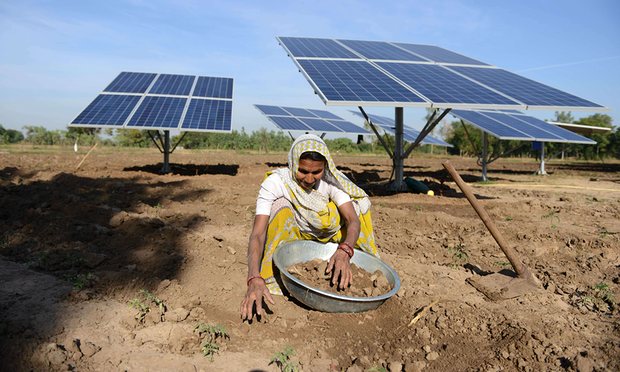
The only solution lies in creating jobs in the rural areas and increasing investments in agro-based industries and renewable energy applications. This only can ease the acute unemployment situation. To increase employment, the Planning Commission asserts that we must pay special attention to labour intensive manufacturing sectors such as food processing industry, textiles, small and medium enterprises, tourism and construction. Modern technological developments make it possible to create small scale manufacturing centers in rural areas, that will be capable of producing a wide range of hitech products, without necessitating large scale shift of population in search of livelihoods.
Development of rural areas will stop the migration of the rural people to the cities and this will not put more pressure on the urban jobs. If India as a nation has to progress, there is little doubt that India’s villages too have to progress. India needs creative solutions to start a revolution which can take its villages fast forward in time, such as the creation of a knowledge and information economy that can create opportunities and thereby prosperity to impoverished areas:
a) To create a self-reliant, self-sustainable village economy.
b) To provide resources for locally-made products to be value added to the highest possible degree within the village so that wealth generated stays with the villagers.
IT and modern technology can be used for improving agricultural productivity and this creates more opportunities for the educated jobless in rural areas. IT and modern technology should be used to make handicrafts sector more productive and thereby create better income opportunities for youth. Investments in dispersed utilization of renewable energy can generate crores of rural livelihoods. Thereby we can create Hi-Tech jobs in rural areas, which can in turn create a vibrant rural economy. But it requires a determined shift away from neo-liberal economics.