16 May 2016

Glyphosate in the EU

Colin Todhunter

On 13 April, the EU Parliament called on the European Commission to restrict certain permitted uses of the toxic herbicide glyphosate, best known in Monsanto’s ‘Roundup’ formulation. Glyphosate was last year determined to be “probably carcinogenic” by the WHO.
The parliament’s resolution called for no approval for many uses now considered acceptable, including use in or close to public parks, playgrounds and gardens and use where integrated pest management systems are sufficient for necessary weed control.
The resolution, however, fell short of calling for an outright ban. Due to the various political maneuverings, a disappointing compromise was reached that called for the renewal of the licence for glyphosate to be limited to just seven years instead of the 15 proposed by the Commission.
The resolution and the vote to re-approve glyphosate for seven years are non-binding, and, on Wednesday 18 May, the European Food Standard Authority Standing Committee on Plants, Animals, Food and Feed will meet to decide whether glyphosate is to be re-registered for use in the EU.
In addition to the World Health Organisation classifying glyphosate as being probably carcinogenic to humans, various peer-reviewed studies have indicated strong links between its use and a range of serious diseases and deleterious environmental impacts, as presented by Rosemary Mason in the documents that are attached to this article.
Rosemary Mason has been campaigning about the harmful effects of glyphosate for many of years. She has sent various open letters accompanied by in-depth, fully-referenced reports to key figures in both Britain and the EU who are responsible for regulating the use of glyphosate and for setting the official narrative about this substance. In the attached downloads provided at the end of this text, you can access some of the documents she has sent to the EFSA, European Commission and other key bodies/figures since November 2015. They provide detailed descriptions of the impacts of glyphosate along with the ongoing saga of deception and duplicity that result in an ultimate failure to regulate.
It would be an understatement to say that Mason smells a rat: the kind of rat recently discussed on the Corporate European Observatory website, which describes the strategic position the biotech lobby has gained within the heart of policy/decision-making processes in the EU. And the kind of rat that underlies the collusion between this lobby and regulatory/policy bodies in Europe, which has been described many times over the years: for example, see William Engdahl’s recent piece here on the “cesspool of corruption” that underpins relations  between the EU, EFSA and the major pesticide companies; read how scientific evidence was sidelined in the EU here to get the use of gylphosate sanctioned; and, just to highlight the type of companies public officials and bodies are all too willing to jump into bed with, read how Monsanto appears to have hidden evidence of the glyphosate-cancer link for decades.
With reports emerging that the EC plans to relicense glyphosate for nine years, should we be too surprised about this when glyphosate sales account for $5.1 billion of Monsanto’s revenue (2014 figure)? The level of collusion between the biotech lobby and public officials suggest that the line between product promoting and regulating was crossed long ago.
In response to the WHO reclassification of glyphosate as being probably carcinogenic to humans, the EFSA responded with its own review and concluded a cancer link was unlikely. The way the review was manipulated to reach that conclusion has been roundly condemned by dozens of scientists.
Mason notes that there is currently a legal case in process against EU regulators, and. if anyone were to be found to be colluding with the pesticides industry over the licensing of glyphosate, there are likely to be severe penalties. Environmentalists have launched the case against Monsanto and EU regulators over glyphosate assessment. Details about this action are provided on the GMWatch website, where it states:
“If there has been deliberate manipulation of the new licensing procedure for glyphosate with the intention of approving a carcinogenic substance, then this would be defrauding 508 million EU citizens,” states Viennese lawyer Dr Josef Unterweger. For this reason Dr Unterweger is pressing charges on behalf of Munich Environmental Institute and the six environmental organisations: Global 2000, Pesticide Action Network (PAN) Europe, PAN Germany, PAN UK, Générations Futures (France), WeMove Europe, and Nature & Progrès Belgique. A report will also be submitted to OLAF, the European anti-fraud office.
The ongoing scenario surrounding glyphosate begs the question whose interests are ultimately being served? Those of 500 million Europeans or those of Monsanto, a corporation that will be put ‘on trial’ as part of a civil society initiative for crimes against nature and humanity and ecocide in The Hague on World Food Day, October 16, 2016 (see Monsanto’s track record here).
The International Criminal Court in The Hague has determined that prosecuting ecocide as a criminal offence is the only way to guarantee the rights of humans to a healthy environment and the right of nature to be protected.
As for the symbolic trial, on the tribunal’s website, it states:
“According to its critics, Monsanto is able to ignore the human and environmental damage caused by its products and maintain its devastating activities through a strategy of systemic concealment: by lobbying regulatory agencies and governments, by resorting to lying and corruption, by financing fraudulent scientific studies, by pressuring independent scientists, by manipulating the press and media, etc. The history of Monsanto would thereby constitute a text-book case of impunity, benefiting transnational corporations and their executives, whose activities contribute to climate and biosphere crises and threaten the safety of the planet.”
How long do the EC and the EFSA think they can continue to play the European public for fools?
Rosemary Mason’s documents contain a great amount of detail on the glyphosate issue and can be consulted here:

Corrupt Elites and the Looting Machine

Patrick Cockburn

Can corruption be controlled by reform or is it so much the essential fuel sustaining political elites that it will only be ended – if it ends at all – by revolutionary change?
The answer varies according to which countries one is talking about, but in many – particularly those relying on the sale of natural resources like oil or minerals – it is surely too late to expect any incremental change for the better. Anti-corruption drives are a show to impress the outside world or to target political rivals.
The anti-corruption summit in London this week may improve transparency and disclosure, but it can scarcely be very effective against politically well-connected racketeers, busily transmuting political power into great personal wealth.
This is peculiarly easy to do in those countries in the Middle East and Africa which suffer from what economists call “the resource curse”, where states draw their revenues directly from foreign buyers of their natural resources. The process is described in compelling detail by Tom Burgis in his book, The Looting Machine: Warlords, Tycoons, Smugglers and the Systematic Theft of Africa’s Wealth. He quotes the World Bank as saying that 68 per cent of people in Nigeria and 43 per cent in Angola, respectively the first and second largest oil and gas producers in Africa, live in extreme poverty, or on less than $1.25 a day. The politically powerful live parasitically off the state’s revenues and are not accountable to anybody.
Burgis explains the devastating outcome of a government acquiring such great wealth without doing more than license foreign companies to pump oil or excavate minerals. This “creates a pot of money at the disposal of those who control the state. At extreme levels the contractlootingmachinebetween rulers and the ruled breaks down because the ruling class does not need to tax the people – so it has no need for their consent.”
He writes primarily about Africa south of the Sahara, but his remarks apply equally to the oil states of the Middle East. He rightly concludes that “the resource industry is hardwired for corruption. Kleptocracy, or government by theft, thrives. Once in power, there is little incentive to depart.” Autocracy flourishes, often same ruler staying for decades.
Most, but not all, of this is true of the Middle East oil producers. A difference is that most of these have patronage and client systems through which oil wealth funds millions of jobs. This goes a certain way in distributing oil revenues among the general population, though the benefits are unfairly skewed towards political parties or dominant sectarian and ethnic groups.
In Iraq there are seven million state employees and pensioners out of a population of 33 million who are paid $4bn a month or a big chunk of total oil income. Often these employees don’t do much or, on occasion, anything at all, but it is an exaggeration to imagine that Iraq’s oil money is all syphoned off by the ruling elite.
I remember in one poor Shia province in south Iraq talking to local officials who said that they had just persuaded the central government to pay for another 50,000 jobs, though they admitted that they had no idea what these new employees would be doing.
Reformers frequently demand that patronage be cut back in the interests of efficiency, but a more likely outcome of such a change is that a smaller proportion of the population would benefit from the state income.
This could be the result of Deputy Crown Prince Mohammed bin Salman’s radical plans to transform the way Saudi Arabia is run and end its reliance on oil by 2030. He may well find that the way Saudi society works has long gelled and face strong resistance to changing a system in which ordinary Saudis feel entitled to some sort of job and salary.
The “resource curse” is not readily reversible, because it eliminates other forms of economic activity. The price of everything produced in an oil state is too expensive to compete with the same goods made elsewhere so oil becomes the only export. Migrants pour in as local citizens avoid manual labour or employment with poor pay and conditions.
A further consequence of the curse is that the rulers of resource rich states – like many an individual living on an unearned income – get an excessive and unrealistic idea of their own abilities. Saddam Hussein was the worst example of such megalomania, starting two disastrous wars against Iran and Kuwait. But the Shah of Iran was not far behind the Iraqi leader in grandiose ideas, blithely ordering nuclear power stations and Concorde supersonic passenger aircraft.
Muammur Gaddafi insisted that Libyans study the puerile nostrums of the Green Book, and those failing that part of the public examinations about the book, were failed generally and had to re-take all their exams again.
Can “the looting machine” in the Middle East, Africa and beyond be dismantled or made less predatory?
Its gargantuan size and centrality to the interest of ruling classes probably makes its elimination impossible, though competition, transparency and more effective bureaucratic procedures in the award of contracts might have some effect. The biggest impulse to resistance locally to official corruption has come because the fall in the price of oil and other commodities since 2014 means that the revenue cake has become too small to satisfy all the previous beneficiaries.
The mechanics and dire consequences of this system are easily explained though often masked by neo-liberal rhetoric about free competition.
In authoritarian states without accountability or a fair legal system, this approach becomes a license to loot. Corruption cannot be tamed because it is at the very heart of the system.

Who’re Killing Freethinkers In Bangladesh? Some Unresolved Issues

Taj Hashmi

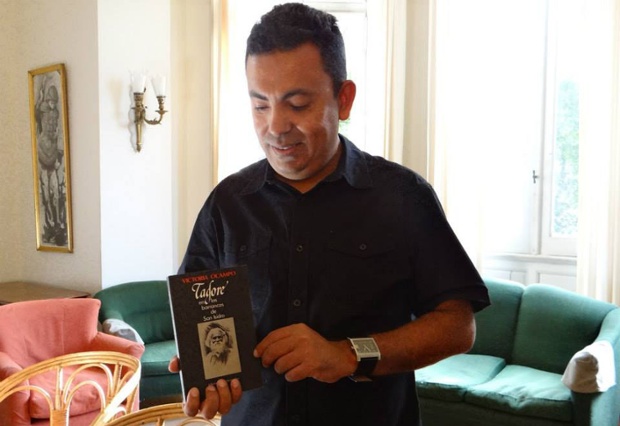
Avijit Roy
Of late, terrorists or unknown assailants have killed freethinking writers and bloggers, a couple of foreign nationals, and two LGBT activists in Bangladesh, around 36 people since February 2015. And almost ritualistically, killers have been bragging about their acts, and proclaiming to be al Qaeda, ISIS, Ansar al-Islam, or Ansarullah Bangla Team affiliates. Interestingly, some Bangladeshi politicians claim (a) various Islamist terrorists groups – including al Qaeda and ISIS – have infested the country; (b) they are linked with the two main opposition parties in the country, the BNP and Jamaat-e-Islami; and (c) they have resorted to terrorism only to overthrow the present government.
We know there’s nothing new about terrorism in Bangladesh. Non-state actors like Maoist Naxalites, JMB, and HUJI (B), and state-sponsored death-squads –the Rakkhi Bahini, police, and RAB – by now have killed thousands of people in the country. The JMB-HUJI (B) alone killed more than 150 people during 1999 and 2005, in movie theatres, political rallies, and elsewhere. Since early 2013, no place seems to be out of bounds for the killers, who purportedly belong to some Islamist terror outfits. But who actually have been killing so many innocent people here, we simply don’t know.
However, since law-enforcers so far have managed to arrest only a handful of suspects, including one Jamaat-e-Islami activist in connection with the killing of Professor Rezaul Karim Siddique of Rajshahi University last month, it seems either the “terrorists” have some sort of impunity, or even worse, they simply vanish in the air! The worst assumption could be some unknown killing squads doing the dirty job on behalf of the actual beneficiaries of these indiscriminate or selective killings. We know, the first three things the police and detectives do to resolve a murder mystery are: a) to find out the killer (s); b) the motive of the killing; and c) the actual beneficiary (ies) of the crime. And only a Sherlock Holmes could lead us to the killers, their motives, and the beneficiaries of the mindless killings.
It’s simply unbelievable that while al Qaeda, ISIS or their local affiliates have purportedly been killing people right and left – not with bombs or guns, mostly with machetes inside the victims’ residences, workplaces, or in public thoroughfares, often in broad daylight – the police and intelligence departments have suddenly become too “inefficient and clueless” to apprehend the killers. Strangely, the police even didn’t bother to interview the slain freethinking blogger/writer Avijit Roy’s wife – killers of her husband gravely injured her too – who’s an eyewitness to the killing. Interestingly, the same police and intelligence departments in the past tracked down and captured most masterminds of the JMB and HUJI (B) terror groups, including the Bangla Bhai, Shaykh Abdur Rahman, and Mufti Abdul Hannan in 2005-06, while the BNP-Jamaat Coalition was in power.
What Avijit’s father Professor Ajoy Roy said publicly last week is very revealing, and disturbing as well: “I have been silenced. The police initially told me the three killers of my son had been under their surveillance. On my asking why they were not arresting them instead, they had no answer. Now the police are telling the killers have already left the country”. My former Dhaka University colleague and friend Professor A.K. Fazlul Haque – who also recently lost his son to unknown assailants – believes the killers enjoy some sort of impunity. The experiences of the bereaved parents, and our own experiences, and common sense collectively demolish the hunch and conspiracy theories about al Qaeda, ISIS, or the ubiquitous BNP-Jamaat involvements in the ongoing killings of freethinkers, foreign nationals, LGBT activists, and others in Bangladesh.
Now, not only the ruling Coalition and its main Opposition (which’s outside the Parliament) contradict each other as to who have been killing writers, bloggers and freethinkers in the country, but some ministers of the Coalition Government also contradict each other in this regard. While the Home Minister Asaduzzaman Khan denies the existence of any ISIS in Bangladesh, Information Minister Hasanul Haq Inu insists there are 8,000 al Qaeda supporters in the country. And we know, ISIS is an offshoot of al Qaeda.
Politicians here – like elsewhere in the world – often delude people with cry wolves, blame games, and false flag operations. Raising the spectre of al Qaeda or the Islamist bogey is a favourite political game in Bangladesh since the 1990s. Interestingly, we all the time hear the BNP-Jamaat Alliance is in league with al Qaeda and its ilk. So much so that days after 9/11, coloured printed posters appeared on Dhaka city walls with pictures of Osama bin Laden and Khaleda Zia, portraying them as birds of the same feather, committed to terrorism in the name of Islam.
It’s sad but true, some Western governments, media, and think tanks since the late 1990s have been projecting Bangladesh as a safe haven for Islamist terrorism. As the New York Times reported on March 20, 2000, President Clinton cancelled his planned road trip to Joypura – a village 20 miles northwest of Dhaka – (while he was visiting Bangladesh) because of “concerns raised by the Secret Service”. Interestingly, the same report added: “Bangladesh does not have a recent history of violent incidents”.
Soon after 9/11 the Wall Street Journal, its Asian subsidiary, the Far Eastern Economic Review, and the Christian Science Monitor started publishing half-baked, sensational articles on Bangladesh by Eliza Griswold, Bertil Lintner, Selig Harrison and others, portraying the country as one on the verge of an Islamist takeover. Lintner portrayed the military in Bangladesh “with ties to the militants”, allegedly being churned out by local madrasas. We find the reflection of such sensationalism in some Bangladeshi politicians’ statements, newspaper reporting, and even some “academic research” , which portray “Middle East-sponsored” Islamic banking, insurance, madrasas, and the Jamaat-e-Islami as promoters of violent Islamism in Bangladesh.
The latest killings in Bangladesh have saddened and outraged the whole world. The UN Secretary General, Secretary John Kerry and Assistant Secretary Nisha Desai Biswal of the U.S. State Department, among others, recently asked the Bangladesh government to take immediate action against the killers. Thanks to the Government’s failure to produce credible proofs against BNP-Jamaat activists as killers of freethinkers in Bangladesh, most people at home and abroad want convincing answers about the killers’ identities, and the motives of the killings. Meanwhile, both Washington and Delhi want to work together with Dhaka to tackle the problem of Islamist extremism in Bangladesh.
While Washington and Delhi seem to have drawn the conclusion that Islamist terrorists have been doing these killings, Dhaka seems to be somewhat ambivalent in this regard. The Bangladesh Government on the one hand denies there is any al Qaeda or ISIS in the country, on the other it holds BNP-Jamaat supporters – the so-called anti-Liberation and pro-Islamist terrorists – responsible for the killings. Thus, it’s difficult to agree with Marcia Bernicat, the US Ambassador to Bangladesh, that Bangladesh, India and the United States – all fighting extremism – are all on the same page with regard to the killings in Bangladesh.
The way the U.S. and Indian governments, and some conservative think tanks in the U.S. are appraising the spate of killings in Bangladesh is very unfortunate. Recently (on May 3rd) the Heritage Foundation organized a workshop in Washington D.C. on the present situation in Bangladesh. The bias of the workshop is well reflected in its title, “How Can Bangladesh Stop the Escalating Extremist Violence?”, as if undoubtedly “extremists” (a byword for Islamist terrorists) are responsible for the killings!
It’s noteworthy; the Heritage Foundation is a leading ultra-right conservative think tank in the U.S., which favours hegemonic U.S. foreign policy in the Third World. It recently became controversial for publishing a report on the economic costs of illegal immigration to the U.S. Jason Richwine – a co-author of the report – believes Hispanics and Blacks are intellectually inferior to Whites, and have trouble assimilating because of a supposed genetic predisposition to lower IQ.
Three prominent South Asia experts presented papers at the workshop: Samina Ahmed, Ali Reaz, and Liza Curtis. The main objective of the workshop was to start off a joint US-Bangladesh counterterrorism (CT) operation to fight and defeat the elusive Islamist terrorists in Bangladesh. As if the U.S. has been successful in containing Islamist terrorism at home or elsewhere in the world!
Samina Ahmed is quite unambiguous in asserting that the terror attacks have been attempts to destabilize the present government. Although the present Government holds similar view, she incisively points out the following: Bangladesh needs the rule of law; the prevalent zero-sum game of politics is bad; the police are fully politicized; there’s no due process and freedom of the judiciary in the country; there prevails a climate of impunity; and the Bangladeshi people in general don’t favour either violent extremism, or the present regime under the Awami League.
Ali Reaz points out as to how the politics of expediency and the Awami League government’s ambivalence towards political violence are problematic. He points out, while Sheikh Hasina attended the funeral of Ahmed Rajib Haider – the first Islamophobic blogger to be killed – purportedly by Islamist militants in February 2013, and glorified him as a martyr, she now asks freethinkers not to hurt the religious sentiments of Muslims.
Reaz legitimately questions why only hurting the religious sentiments of Muslims, not followers of other religions, be declared a crime! He believes both the Government and terrorists are intolerant of any dissent or opposition. He raises the question (which I have raised as well) why CT was effective in 2005-2006, and is faltering today. He, however, favours a joint U.S.-Bangladesh CT operation to overpower the terrorists in Bangladesh.
Liza Curtis is disappointing. Instead of imputing the ongoing terror and political violence solely to bad governance, corruption, and the marginalization of people, she wants Bangladesh Government’s whole-hearted cooperation with its U.S. counterpart. She, however, blames the lack of democracy, extreme political polarizations, and the ideology of Islamism for the killings. She doesn’t question if the elusive Islamist terrorism or some thing else is responsible for the ongoing killings in Bangladesh.
If lack of democracy and terrorism has positive correlation, then one doesn’t know how to explain the terror attacks in Western democracies like America, Britain, France, and Belgium! She thinks by promoting Sufism or “liberal/tolerant Islam”, and regulating mosques and madrasas, Bangladesh would neutralize Islamist extremism. Adherents of Sufi Islam could be as violent as Mumtaz Qadri – the assassin of Punjab Governor Salman Taseer – who followed Sufism, not Islamist extremism. Millions of Qadri’s admirers in Pakistan also belong to certain Sufi schools.
While one appreciates the growing concern of the U.S. government, human rights organizations, and think tanks at the ongoing killings of innocent people (36 in the last 14 months) in Bangladesh – purportedly by Islamist extremists – one wonders as to how they had never been that vocal at the killings of hundreds of innocent Bangladeshis in the last ten years, by criminals, political rivals, and law-enforcers –especially the RAB. Various reports reveal the RAB and police killed more than 1,000 suspects and innocent people through extra-judicial killings between 2004 and 2010. Hundreds of civilians die in “poll-violence”. Since February 78 people got killed at the hands of political rivals during local council elections.
Politicians in power fail to explain extrajudicial killings by law enforcers; the killing of 57 army officers at the BDR headquarters; and the killing of pedestrians, bus and car drivers/passengers in 2013–2014. While Bangladesh is fast becoming a safe haven for killing squads and terrorists, rampant corruption, unaccountability of rulers, their cronies, bureaucrats, and law-enforcers have virtually turned Bangladesh into Satyajit Roy’s Hirak Rajar Desh. Nothing seems immoral, impossible, disorderly, or surprising at all! The “winners take all” is the rule of the game. The opposition – the real ones, not some pseudo-opposition parties – isn’t even entitled to crumbs from the high table.
While innocent people, intellectuals and dissidents get arrested, harassed by law-enforcers, disappear and die, politicians are in a state of denial, and even worse, busy vilifying each other as killers and anti-state elements. Bangladesh isn’t only fast turning into a killing field, but also into a safe haven for politically well-connected bank defaulters, money launderers, and share-market scammers, Money launderers have so far sent more than 30 thousand crore (thirty billion) taka out of Bangladesh; share-scammers defrauded millions to the tune of several billion takas; and “unknown” criminals robbed more than $100 million from the Bangladesh Bank. Interestingly, the Finance Minister often rubbishes all criticisms of financial scams, and considers these crimes as growing pains of growth and development.
It appears from the Information Minister’s recent statement that the Government is contemplating complete media control through a “Media Monitoring Centre” to keep an eye on print and electronic media, including the social media, who are allegedly “trying to create divisions in the society by writing against different religions and beliefs”. Human rights activist Sultana Kamal has aptly assessed the situation: “We can't deny that people are afraid to speak up”. When people are afraid to speak up, sections of them might resort to anarchy and terrorism.
One may cite the International Crisis Group’s latest Report on Bangladesh in this regard: “The Government’s heavy-handed measures are damaging its own legitimacy and benefitting extremists …. If mainstream dissent remains closed, more and more government opponents may come to view violence and violent groups as their only recourse.” Nothing could be more insensible than undermining the grassroots, the ordinary people’s understandings of what goes on at the top. At the opportune moment, they retaliate against bad governance and tyranny.
I think if Dhaka, Delhi, and Washington can agree to formulate a workable formula to tackle the problem of the ongoing killings in Bangladesh, they need to take the following steps: Firstly, it’s essential to know if the killers are ideology-driven terrorists, or local gangsters, or even members of politically motivated death-squads. Secondly, they must understand terrorism has never been a primeval cause or an “original sin”, it has always been preemptive, retaliatory, avenging, and a weapon of the weak or ideology-driven, marginalized people’s violence against the powerful. Finally, it’s time to find out the motives of the killings, and who could be the actual beneficiary (ies) of the crime.

How Obama Aims To Conquer Crimea

Eric Zuesse

When U.S. President Barack Obama perpetrated his coup d’etat in Ukraine in February 2014, and even had his agent Victoria Nuland select the person who was to rule Ukraine after the coup, it was with the expectation that the new government would renegotiate, and soon end, the Russian lease of the naval base at Sebastopol in Crimea, which wasn’t due to expire until 2042. (Up until 1954, that base had been in Russian territory because Crimea was part of Russia; but, after the Soviet dictator Khrushchev in 1954 arbitrarily transferred Crimea to Ukraine, and then the Soviet Union itself broke up in 1991, Russia was keeping its navy there by paying a lease on it from Ukraine.)
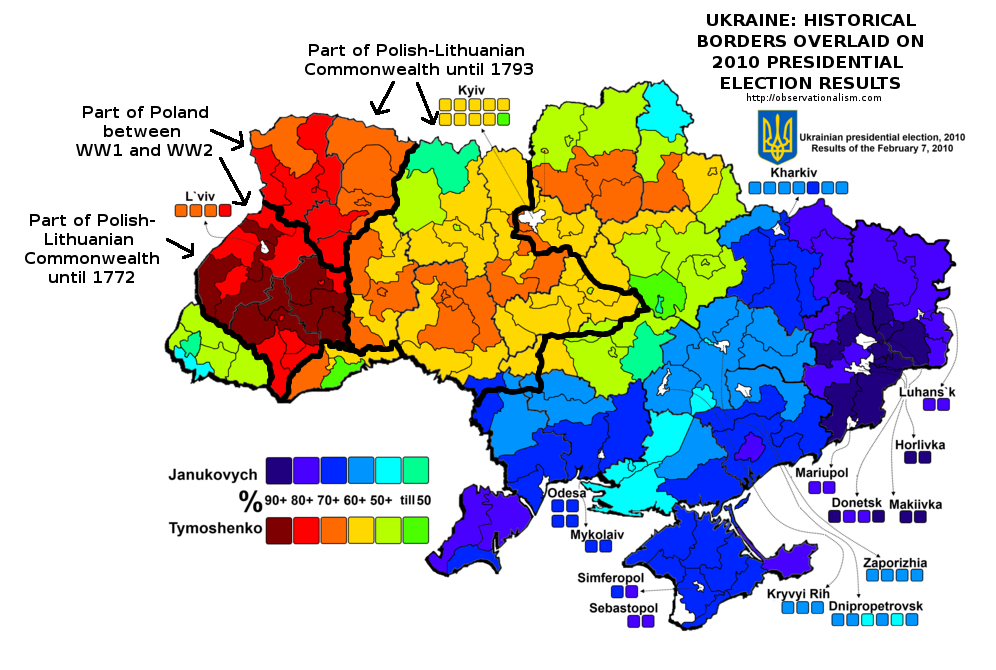
However, instead of the U.S. winning control of Crimea as had been planned, the racist-fascist anti-Russian “Right Sector” forces, which Obama’s people had hired to carry out the coup in Kiev under the cover of ‘democratic’ demonstrations in Kiev against the democratically elected President of Ukraine, Viktor Yanukovych (who had received over 75% of Crimeans' votes in the Presidential election, prior to his being overthrown), terrorized Crimeans during the coup, and this terrorizing of them, simply added insult to their injury. On February 20th, Right Sector forces massacred Crimeans who were escaping from Ukraine’s capital, fleeing the rabid sentiments in Kiev against supporters of Yanukovych, such as they, who populate Crimea and the many other parts of the former Ukraine that had elected Yanukovych (very unpopular in the Kiev region) into office. Right Sector caught up with them at the town of Korsun, burned some of their buses, and murdered some of the escaping Crimeans, though most survived — some of them severely injured.
Also, early in March of 2014, shortly prior to Crimea's referendum on whether to remain within Ukraine, a Crimean who had served in Kiev as a prosecutor in the democratically elected Ukrainian national government that had just been overthrown, and who had likewise escaped from Kiev, was now safely back home in Crimea, and did a Crimean TV interview. This former prosecutor, Natalya Poklonskaya, took questions from the live TV audience. The interview was posted to youtube on 12 April 2014, and, as I described it, linking to the youtube, she proceeded there to:
inform her fellow Crimeans what she had seen happen during the overthrow, and why she couldn’t, in good conscience, remain as a Ukrainian official in Kiev, and swear loyalty to the new Ukrainian Government. She had heard the chants of the Maidan protesters and smelled their piles of burning tires, and seen their marches in Kiev with nazi symbols and salutes, and she didn’t want to become any part of that. So, she quit and was now unemployed back home in Crimea at the time of this interview.
The Obama Administration, in planning for the coup, had had polling done prior to the coup, throughout Ukraine, and supplemented the sample in Crimea because, naturally, taking control of the Sebastopol naval base was of particular concern to Obama.
USAID and the International Republican Institute of the Republican Party (not the National Democratic Institute, because funding from them might have suggested the White House’s backing) polled 500 Crimeans, during 16-30 May 2013. As I have reported elsewhere, the first stage of preparation for the upcoming coup was already active inside the U.S. Embassy in Kiev on 1 March 2013; and so, this was a very coordinated Obama Administration operation. (Most Washington-based accounts of the overthrow allege that it was ‘democratic’ and started after Yanukovych rejected the EU’s offer on 21 November 2013.)On 27 December 2014, I compared the results of that Crimean poll versus the results of a poll covering all areas of the former Ukraine, which was taken, also, for the U.S. government, but, to Obama’s inevitable disappointment, neither poll found a U.S.-friendly, Ukraine-friendly, Russia-hostile, Crimea.
Gallup polled 500 Crimeans during May 16-30 in 2013, and found that only 15% considered themselves “Ukrainian.” 24% considered themselves “Crimean.” But 40% considered themselves “Russian.” Even before Obama’s February 2014 coup which overthrew the Ukrainian President whom [nearly] 80% of Crimeans had voted for, the Crimean people overwhelmingly wanted to secede from Ukraine — and, especially now they did, right after the President for whom they had overwhelmingly voted, Viktor Yanukovych, had been overthrown in this extremely bloody coup. Furthermore, in April 2014, Gallup again polled Crimea, and they found that 71.3% of Crimeans viewed as “Mostly positive” the role of Russia there, and 4.0% viewed it as “Mostly negative”; by contrast, only 2.8% viewed the role of the United States there as “Mostly positive,” and a whopping 76.2% viewed it as “Mostly negative.” During the intervening year, Crimeans’ favorability toward America had plunged down to 2.8%, from its year-earlier 6%. Clearly, what Obama had done in Ukraine (his violent coup in Kiev) had antagonized the Crimeans. And, as if that weren’t enough, the 2014 poll provided yet more evidence: “The 500 people that were sampled in Crimea were asked [and this is crucial] ‘Please tell me if you agree or disagree: The results of the referendum on Crimea’s status [whether to rejoin Russia] reflect the views of most people here.’ 82.8% said ‘Agree.’ 6.7% said ‘Disagree.’” In the hearts of the local residents, Crimea was still Russian territory, after an involuntary hiatus of 60 years; and so the Russian Government accepted them back again, into Russia — this was not as Corey Flintoff droned, “Russia’s seizure of Crimea.” It was Russia’s protection of them from the invasion of Ukraine by the United States in a bloody coup.
On 20 March 2015, even Kenneth Rapoza at the anti-Russian magazine Forbes, headlined, "One Year After Russia Annexed Crimea, Locals Prefer Moscow To Kiev”, and he concluded that, "Despite huge efforts on the part of Kiev, Brussels, Washington and the Organization for Security and Cooperation in Europe, the bulk of humanity living on the Black Sea peninsula believe the referendum to secede from Ukraine was legit. At some point, the West will have to recognize Crimea’s right to self rule.”
However, Barack Obama refuses to accept this. After all, if he were to accept it, then he would have to terminate the anti-Russia economic sanctions he initiated on the basis of Russia’s ‘seizure’ of Crimea, and he would have to acknowledge that the massive U.S.-led military buildup of NATO forces on Russia’s borders in order to protect against ‘Russia’s aggression’ needs to stop and, indeed, be withdrawn. But Obama doesn’t accept any of this; to do that would negate the whole purpose of his coup, and even his anti-Russian policy, including, perhaps, his refusal to cooperate with Russian forces that are trying to stamp out jihadist groups in Syria.
On 6 February 2016, I headlined “U.S. Now Overtly at War Against Russia” and reported that both U.S. ‘Defense’ Secretry Ashton Carter and NATO Secretary General Jens Stoltenberg had announced the U.S. was initiating a quadrupling of U.S. troops and weaponry on Russia’s northwestern borders.
On 4 May 2016, Dmitriy Sedov headlined at Strategic Culture, "NATO to Form Allied Fleet in the Black Sea: Plans Fraught with Great Risks” and he opened:
Finally, it has become clear what the world has been set to expect from the NATO summit to be held in Warsaw on July 8-9. Summing things up, it is clear that the Alliance is moving to the east. It plans to create a Black Sea «allied fleet». It should be done quickly – the standing force should be formed by July.
Sedov closed by saying that Ukraine’s President Petro Poroshenko "is impatiently waiting for the July NATO summit. The event can ultimately do away with whatever is left of ‘détente’, ‘reset’ etc. and bring the world back to the days of uncompromised mutual assured destruction.”
There is a backstory to that, and, naturally, it goes back to Barack Obama:
As I have previously explained, U.S. Secretary of State John Kerry had told Poroshenko, on 12 May 2015, to stop saying that Ukraine would restart its war against the separatist Donbass region and would invade Crimea and retake that too; but, Kerry’s subordinate, Hillary Clinton’s friend Victoria Nuland, told Poroshenko to ignore her boss on that, and then U.S. President Obama sided with Nuland and sidelined Kerry on Ukraine policy by making clear that he thought Poroshenko was right to insist upon retaking Crimea and re-invading Donbass.
In other words: the Minsk peace process for Ukraine, that had been initiated by Angela Merkel and Francois Hollande, was grudgingly accepted by Obama but he really had no intention of its being anything more than a pause in the war, after which NATO itself would become engaged in facing-down Russia over its ‘aggressive’ ‘invasion’ and ‘seizure’ of Crimea.
Game’s on for World War III, is Obama’s message to Russian President Vladimir Putin. At some point, either the American side or the Russian-NATO-EU side will have to back down on the Crimea matter, or else the bombs, on one or both sides, will be released against the other. Kerry has been trying negotiation, but his real enemy is his own boss.
There is every indication that, if Hillary Clinton, a super-hawk against Russia, becomes the next U.S. President, then the policies that Obama has been implementing will be carried out. 2016 could thus turn out to be a very fateful election in the U.S., and not only for the U.S. but for the entire world.

Young Australian girl forced to go to Supreme Court to seek abortion

Mary Beadnell

In a demonstration of the backwardness and reactionary character of Australian capitalist law, a 12-year-old child from the regional city of Rockhampton was forced to apply to Queensland’s state Supreme Court recently for the right to an abortion.
The girl, named by the Court as “Q,” was nine weeks pregnant to a 12-year-old boy, who was reported by the court to have no knowledge of the pregnancy. “Q” had a history of mental ill health and self-harm and was seen by her parents, social workers, doctors, obstetricians and psychiatrists as being at grave risk should the pregnancy proceed.
Despite that, the girl was forced to take her case to court, due to the continued presence of antiquated laws criminalising abortion. Ultimately, after an anguishing month-long delay, the court allowed the abortion to go ahead, agreeing the child was mature enough to grant consent to the termination.
Queensland public health officials took the matter to court after doctors, the girl and her parents all agreed that continuing the pregnancy could cause her physical and emotional harm.
In a judgment delivered on April 20, Justice Duncan McMeekin ordered that she be allowed to take the drugs Mifepristone and Misoprostol to terminate the pregnancy by April 23. If the drugs failed to cause the abortion, the court ordered that the pregnancy be terminated by surgery.
Earlier this year, according to an affidavit, “Q” had run away from home, attempted suicide and found pregnancy “very stressful emotionally.” Her mother told the court there was “a very real risk of self-harm and or suicidal behaviour, if the pregnancy was to continue.”
In the state of Queensland abortion remains a crime under the Criminal Code for both the woman having the procedure and doctors performing it. It can result in a sentence of up to seven years’ imprisonment for the woman and 14 years for the doctors involved. Abortion can only be considered lawful if a doctor believes the mother’s mental or physical health was in serious danger if she continued the pregnancy.
Justice McMeekin stated: “Q’s consent to the procedures does not of course make them lawful … [sections] 224 and 225 [of Queensland’s Criminal Code] still make those actions unlawful unless authorised or justified by law.” However, he said the risk of harm to the girl meant the court could legally order the abortion.
Yet, in effect, abortion is readily available to those who can afford it—in privately-run clinics. The cost of an abortion in Queensland is between $480 and $1,370. Even if the woman qualifies for a rebate under the Medicare health insurance scheme, the cost can be up to $800. That is nearly double the fortnightly income of someone on Newstart unemployment benefits.
This highlights the class nature of abortion law. Wealthy women have long been able to have abortions, but working-class women and girls can be denied the procedure in public hospitals, potentially leaving them in the hands of backyard operators.
Governments, both Labor and Liberal-National, pander to right-wing forces that denounce access to abortion, which is a basic democratic right. The Australian Christian Lobby spoke out publicly against granting the girl an abortion, saying she should give birth and put the baby up for adoption. It also raised the issue of informing the father of the pregnancy.
A similar case was heard in the Queensland Supreme Court in 2008 when a 12-year-old girl with a mental capacity of a six-year-old, sought to have a pregnancy terminated in a public hospital. In that case too, the court ordered that doctors be allowed to end the girl’s pregnancy, because it was in her best interests.
State government lawyers, representing the girl’s doctors, brought the matter before court. The court heard that because of the girl’s age and mental capacity, neither she nor her parents were legally able to give consent for a termination and a court order was required. The court ordered doctors to use the drug Misoprostol to induce labour, because there was a high risk that other methods could seriously harm the girl.
Abortion is still the subject of criminal law in all Australian states and territories, except the Australian Capital Territory, where it is legal, provided that it is performed in a medical facility, by a registered medical practitioner.
Victoria, South Australia, Western Australia, Tasmania and the Northern Territory have legislation defining when an abortion is lawful. In these states, common law interpretations of the Crimes Act or Criminal Code have had the effect of making lawful abortion generally available, but the time limits for seeking the procedure differ, ranging from 14 weeks gestation to 24 weeks.
In the Northern Territory, abortion is only legal up to 14 weeks, if two doctors agree a woman’s physical or mental health will be endangered by the pregnancy or the unborn child were to be born with a serious disability. There is further provision for an abortion to be performed up to 23 weeks gestation in an emergency to prevent grave injury to the woman.
In Queensland, due to a torturous history of prosecutions and the retention of ambiguous legislation by successive governments, many public health facilities are unwilling to carry out abortions, for fear of criminal sanctions.
In a historically significant case, Doctors Peter Bayliss and Dawn Cullen, a doctor and anesthetist from a clinic at Greenslopes in Brisbane, the Queensland state capital, were charged with providing unlawful abortions in 1985, following police raids on the clinic.
After months of public outcry, they were both acquitted when the case came to trial in early 1986. Due to the court’s verdict, an abortion is considered lawful in Queensland, if carried out to prevent “serious” danger to the woman’s physical and mental health from the continuance of the pregnancy. This ruling, however, did not specifically refer to “abortion,” only surgical procedures, leaving particularly unclear the issue of abortions procured by the prescription of medications that result in miscarriage.
Another significant case regarding Queensland’s abortion law involved a young couple in the northern city of Cairns, Tegan Leach and Sergie Brennan. They were tried for procuring an abortion in 2010, and only acquitted after months of protests. This prosecution, which occurred under Premier Anna Bligh’s state Labor government, involved the use of miscarriage-inducing medications to cause miscarriage.
In 2009, Bligh’s government enacted section 282 of the state’s Criminal Code to define a lawful medical procedure, but avoided specifically mentioning abortion. This led to the expansion of expensive private abortion clinics, but many public health facilities will not perform procedures without court orders, leaving access patchy for working-class women.
Hence, the shocking ordeal suffered by the 12-year-old girl from Rockhampton.

Wage deal in Germany: IG Metall agrees to end industry-wide contracts

Dietmar Henning

The IG Metall union agreed to a pilot contract for 3.8 million employees of the metal and electronics industry in Cologne on Friday night. This includes a meagre wage increase equivalent to 2.45 percent per year and the effective elimination of industry-level wage agreements.
The corporations are enthusiastic about the deal’s so-called “differentiating competition components” that allow individual corporations to be released from wage contracts when profits are lower than desired. Unlike previous “opening clauses,” the new contract allows IG Metall to bypass works councils in negotiating the release of the companies from wage contract obligations.
In this way, the union is developing itself ever more completely into a tool of the corporations. It divides the employees, plays them against one another, and reduces the wages of different sections of workers step by step. Federal Minister of Labour Andrea Nahles’ new Law Regulating Casual Labour and Work Contracts assigns a larger role to the unions in organizing low-pay work.
The wage contract, which came out of a 14-hour marathon meeting in the fifth round of negotiations, provides for a wage increase far below the original demand of 5 percent per year. It includes a one-time payment of €150 for the months extending April to June 2016, an increase of 2.8 percent starting in July, and an additional increase of 2 percent starting in April 2017. The contract will last 21 months and end on December 31, 2017.
As to be expected, IG Metall praised the agreement. Ignoring the laws of mathematics, the union estimated the wage increase at 4.8 percent. “The contract has the character of a pilot. The employees are getting a clear increase in real income and a fair share of economic success,” said IG Metall President Jörg Hofmann yesterday in Cologne.
As was also to be expected, the corporations, including the large auto manufacturers—with the exception of Volkswagen—complained about the agreement. The contract will burden them with additional expenses in the form billions of euros. At the end of the contract, wages, which currently cost the company €230 billion per year, will cost an additional €10 billion, said steel industry president Rainer Dulger. “Once again,” he said, “we were forced to go to the limit of the capacity of the corporation.”
These responses are all part of the routine of staged reactions to contract negotiations. Indeed, Arndt Kirschhoff, a representative of the auto industry who led negotiations on the side of the employers, admitted that, with regard to the length of the contract, the increase of 2.45 percent is much lower than previous increases. He said that the trend of past years, in which wage agreements had been too high, had come to an end.
Both sides want to extend the contract achieved in North Rhine-Westphalia to other areas of the country. “It is a good compromise and means a clear increase in real income for the employees,” said Regional Director Minhard Geiken. IG Metall Regional Director Hartmut Meine in Lower Saxony also called for the adoption of the contract for the 85,000 employees in that state.
While the unions praise their embellished wage increase, employers view the “differentiating competition components” as “pioneering.” Metal industry spokesperson Daniel Kölle announced that the contract will be adopted in all regions of Germany. The managing director of the employers’ associations in Lower Saxony Metal, Volker Schmidt, said the contract was “fair and highly innovative.”
Since 2010, the corporations and companies have been demanding differentiation clauses to produce even higher profits for corporations. Now they have succeeded. Companies will be able to delay or cancel one-time payments and postpone the second round of the wage increases (by 2 percent) for up to three months.
IG Metall chief negotiator Knut Giesler claims that the union was successful in fending off a permanent differentiation of payments in the factories because the deal is only valid for the duration of the contract and only corporations bound by the contract can make use of the opening clauses.
However, the negotiation partners in North Rhine-Westphalia agreed to negotiations over an additional carving up of the industry-wide contract in the coming round of bargaining. The planned contract is supposed to then make wages “automatically” dependent on the profit earnings of each individual corporation. In view of the tendency of the world economy to recession, this is a formula for lowering wages.
Second—and this is the central point—IG Metall has ensured that the elected representatives of the employees in the factories will not have any more influence on wages. According to previous opening clauses, which have existed since 2004, the works councils at each location can—with the agreement of IG Metall—adopt regulations that deviate from the contract.
The new regulations, on the other hand, allow the employers’ association to bypass the works councils and request differentiation negotiations with local IG Metall representatives. These have to be concluded swiftly, after one month at the most. If IG Metall and the employers’ association agree on a national level, the differentiation will proceed. The employees and their works councils are excluded from the process.
At the moment, this makes little difference. The great majority of the works councils are elected from lists of candidates from IG Metall and, like the union, see it as their task to defend the competitiveness of “their” corporations by lowering wages, worsening working conditions, and cutting social services and jobs.
However, resentment against IG Metall and the works councils is growing in the factories. Lists of candidates who are opposed to collaboration with the management have already won influence in most of the larger factories. The increasing rivalry and trade war that has begun, above all in the auto, steel and metal industries, will impart momentum to the coming conflicts.
According to the new regulations, the employees in a factory can elect whomever they want. On the other hand, they will be denied the right to have a say in wages and working conditions. Currently, this applies “only” to wages. However, anyone who is acquainted with IG Metall knows that this is only the beginning.

The queen’s China “gaffe”

Robert Stevens

The queen intervened into British politics last week by openly criticising China.
In a video clip released after a Buckingham Palace garden party, the queen is heard accusing members of a Chinese trade delegation of being “very rude” to the British ambassador. Her comments point to a rift in ruling circles over the closeness of economic relations being developed with China by the Conservative government and what is being done to ensure this development. This is especially so under conditions in which the United States, Britain’s main ally, is stepping up its encirclement of and war plans against China.
Last October, Chinese President Xi Jinping was feted by the British government on a five-day state visit. Trade and investment worth around £40 billion was agreed between the two countries.
China was offered unprecedented access to the UK’s economy, including strategically important sectors such as the nuclear power industry. Funding is being sought for nuclear reactors at Hinkley Point and Sizewell, to be followed by China building a Hualong One-type reactor at Bradwell on the Essex coast. These projects could be worth £100 billion over the next decade. The key announcement during Xi’s visit was the choice of London as the location of the first overseas sovereign debt market in Chinese renminbi. This followed Britain’s decision earlier in 2015, against the wishes of the US, to join the $50 billion China-backed Asian Infrastructure Investment Bank.
The queen’s comments were presented by the British media as an “unguarded” moment, but the reality is that the woman who has been on the throne for more than 60 years does not make such “gaffes.” On the rare occasion she makes a statement involving politics, it is to ensure that her view is known. Prior to the Scottish independence referendum vote—to the dismay of those advocating a leave vote—the queen very deliberately told a well-wisher who mentioned the referendum, “I hope people will think very carefully about the future.”
The queen’s comments on China were far less nuanced, highly choreographed and were meant as a public expression of her displeasure. They were made during an exchange between the queen, the Lord Chamberlain, William James Robert Peel, senior officer of the royal household, and Lucy d’Orsi, the Metropolitan Police’s Gold Commander during Xi’s state visit.
The entire episode was filmed by Peter Wilkinson, a lifelong media professional, and the British queen’s official cameraman for the last 16 years.
During the party, Peel took the queen over to d’Orsi and introduced the queen to her. Peel immediately made pointed criticisms of the Chinese delegation, with the queen responding in kind. Everyone clearly knew about the incident referred to, which has clearly been discussed within ruling circles though not to this point publicly.
The transcript is as follows:
Lord Chamberlain: Can I present Commander Lucy D’Orsi, who was gold commander during the Chinese state visit.
Queen: Oh, bad luck.
Lord Chamberlain: And who was seriously, seriously undermined by the Chinese, but she managed to hold her own and remain in command. And her mother, Judith, who’s involved in child protection and social work.
Judith Copson: Yes, I’m very proud of my daughter.
Lord Chamberlain: You must tell your story.
D’Orsi: Yes, I was the gold commander, so I’m not sure whether you knew, but it was quite a testing time for me.
Queen: Yes, I did.
D’Orsi: It was … I think at the point that they walked out of Lancaster House and told me that the trip was off, that I felt …
Queen: They were very rude to the ambassador.
D’Orsi: They were, well, yes she was, Barbara [Woodward, the ambassador] was with me and they walked out on both of us.
Queen: Extraordinary.
Copson: I know, it’s unbelievable.
D’Orsi: It was very rude and very undiplomatic, I thought.
The garden party was attended by 4,000 people, with a number of guests within earshot of the queen as she made her barbed criticisms. Wilkinson's clip was then handed over to the media pool.
Xi’s state visit proceeded despite trenchant complaints from sections of the military and intelligence apparatuses as to its implications for security and Britain’s relationships with the United States. Sections of the media voiced loud concerns and published US criticisms of Xi’s visit and Britain’s close ties with China.
In response to the queen’s garden party comments, the Financial Times, the mouthpiece of the City of London, ran several articles and was unequivocal in defending the monarch. A comment piece by Philip Stephens, “The Queen has expressed the uncomfortable truth about power,” stated that her views on China “should be applauded.”
Stephens commented, “Insiders responsible for such arrangements [state visits] … suggest that Chinese diplomats stepped over the line that separates robust demands that leaders be treated with due respect from downright rudeness and threats.”
Making a direct critique of government policy, Stephens continued, “Beijing might have been encouraged in such behaviour by the eagerness of the present government to do all it can to please China. British foreign policy towards China is run by the Treasury, and George Osborne, the chancellor, has decreed that nothing must be done to jeopardise the commercial relationship.”
While Britain “should seek to maintain excellent relations with Beijing,” Stephens warned, “there is … a balance to be struck between the commercial relationship and wider strategic concerns, and between polite accommodation and kow-towing. We should thank the Queen for, albeit inadvertently, pointing this out.”
The queen’s comments follow the state visit last month by US President Barack Obama and takes place as the US is ratcheting up its provocations against China. Last month the US sent six military aircraft near to the Scarborough Shoal. The reef, which is claimed by both China and the Philippines, has been effectively under Chinese control since a tense standoff between the two countries in 2012.
Last Tuesday, on the same day the Queen criticised China, the Obama administration authorised the US Navy to send a guided-missile destroyer into the 12-nautical-mile territorial zone surrounding Chinese-held Fiery Cross Reef, located in the Spratly Island chain in the South China Sea.
Sections of Britain’s ruling elite and opinion formers are in favour of confronting China militarily. Following Li’s trip to Britain, the Economist warned that the “new golden friendship with Beijing will endanger the old ‘special relationship’ with America.” It added, “If China clashes with America, still East Asia’s foremost power, Europe will not be spared the consequences.”
To avert this danger, the Economist advised that Cameron “should support America when it challenges China’s claims in the South China Sea. Even better, he could send along a ship.”
The former British colony of Hong Kong, which was returned to China in 1997, is central to US plans to destabilise China. Last week, the US State Department released a report criticising Chinese rule in Hong Kong, using the pretext of attacks on democratic rights. The report stated, “Events over the past year … raised concerns that greater central government influence and interference are eroding Hong Kong’s autonomy.” It noted that in February, the UK government “for the first time declared a breach of the [1997] Sino-British Joint Declaration.”
In response, Chinese Foreign Ministry spokesman Lu Kang said Hong Kong was part of China, and “certain people on the US side have always wanted to disturb Hong Kong, disturb its socio-economic development, disturb the normal order of its residents’ lives, and even use the Hong Kong issue to interfere in China’s internal affairs.”