5 Jun 2016

The Devil's Century

Vincent Di Stefano

Our present generation is living out of the spiritually vacuous philosophies of modernism and post-modernism, the cancerous ideologies of free-market economics and unrestrained economic growth, and the corporate and political tyrannies that have nurtured an energised ethos of transience. The triumphalism of modernity has effectively wiped from our collective memories a coherent view of just what has gone down in the flourish and flash of the late twentieth century. The immensity of human misery and the degree of cultural waste wrought over the past century have been largely forgotten.
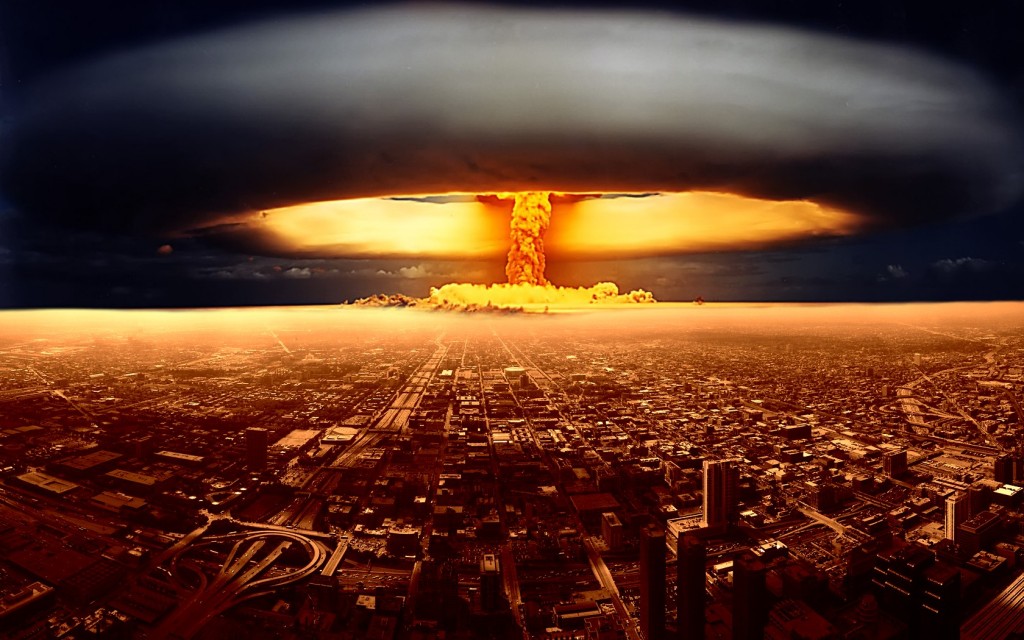
We have succeeded in erasing from our consciences the terrible crimes of Hiroshima and Nagasaki. We have similarly glossed over the outpouring of vast torrents of radioactive elements into the earth's atmosphere. Every living human being now carries radioactive elements in their bodies as a result of the 520 atmospheric nuclear tests - with an explosive power equivalent to 29,000 Hiroshima bombs - that were conducted between 1945 and 1980. We also choose to ignore the insidious infiltration of radioactive elements throughout the biosphere from every stage of the nuclear cycle, from the mining and processing of uranium to the routine ventings of nuclear power plants. And despite the global dispersal of a devil's brew of long-lived radionuclides from the catastrophic accidents at Chelyabinsk, Chernobyl and more recently Fukushima, our technocratic minders and their political puppets continue to steer public opinion towards the embrace of a salvific nuclear renaissance that will put to rest all nasty prospects of runaway climate change.
One does not need an overheated imagination to conclude that the past century has been in the thrall of demonic forces that have somehow subverted our capacity for thoughtful evaluation and corrective restraint. Having witnessed the holocaust of the so-called Great War, William Butler Yeats wrote in 1919:
Things fall apart; the centre cannot hold;
Mere anarchy is loosed upon the world.
The blood-dimmed tide is loosed, and everywhere
The ceremony of innocence is drowned;
The best lack all conviction, while the worst
Are full of passionate intensity.
A century later, some things seem not to have changed at all . . . .
Echoes from a Cathedral
There is a story told in certain circles that offers a most unusual view regarding the nature of the forces unleashed on the world during the twentieth century:
After celebrating a morning mass in 1884, Pope Leo XIII attended a mass of Thanksgiving, as was his practice. At a certain point, he lifted his head and began to look steadily towards the altar. He was staring motionlessly without batting an eye. His expression alternated between horror and awe and the appearance of his face was alternately flushed and pale. He seemed completely overtaken by what he was experiencing. As his facial colour returned and he became more settled, he rose from his seat and went straight to his office without speaking to anybody or giving any indication of what he had just experienced. When he emerged half an hour later, Pope Leo handed his secretary a newly composed prayer to Saint Michael with instructions that it was thenceforth to be read in Catholic churches after every mass. This practice commenced soon after and continued for many decades. It was only abandoned after the reforms of Vatican II during the 1960s.
Pope Leo later described how during the time of his entrancement, he had heard two voices emanating from the tabernacle. One was a deep guttural voice that boasted that he could destroy the Church if given enough time and power. A strong but gentle voice replied and asked how much time and how much power was needed. The other said that a century would be sufficient but that he needed greater power over those whose service he could avail himself of. Pope Leo then heard the reply: "You have the time. You will have the power. Do with them what you will."
The twentieth century has in fact seen not only the destruction of much within the Catholic Church that was held sacrosanct during the time of Pope Leo who held office from 1878 to 1903, but the unleashing of destructive forces on a scale never before witnessed on the earth.
Leviathan Awakens
The decades following Pope Leo's vision saw a consolidation and expansion of the new powers that the industrial revolution had spawned. But the high intelligence that brought forth the many innovations of the time carried its own dark shadow as an unshakeable companion. There were some with prescience who descried the oppression that lay hidden within emerging industrial developments. Among the first were the romantic poets who lamented the destruction of the natural world that invariably accompanied urban and industrial expansion. As early as the first decade of the nineteenth century, William Blake had envisioned the new forms of enslavement and the forfeitures of freedom that lay in wait in the nascent industrialism revealed by the dark satanic mills of Georgian England.
The development of new industrial methods of production enabled the exploitation of coal reserves, mineral deposits, and newly discovered petroleum fields on a hitherto unimagined scale. They gave rise to new dynasties of immense wealth and power. As factories began to proliferate, vast numbers of people found themselves subjected to lives of bondage in servitude to the Machine. In the United States, Andrew Carnegie's steelworks poured out thousands of kilometres of railway tracks that carried coal-fired locomotives and their heavy cargoes to all parts of a newly opened continent. Rockefeller's Standard Oil Company drew forth the energy-rich black blood stored in ancient forests that had been hidden in the earth. Crude oil was progressively fractionated and manipulated by a new class of chemists to produce fuels and lubricants for internal combustion engines, fertilisers for agriculture, explosives for military and industrial use, and the building blocks of powerful new drugs that would completely alter the way medicine was practised.
This creativity was, however, shadowed by a destructive aspect of equal magnitude. This was made manifest in its tragic fullness during World War I that raged from 1914 to 1918. During those four years, some 17 million people died violently and a further 20 million were wounded. Even greater numbers of those who were not killed by bullets, mortars, bombs or chemical weapons were later taken out by the influenza pandemic of 1918.
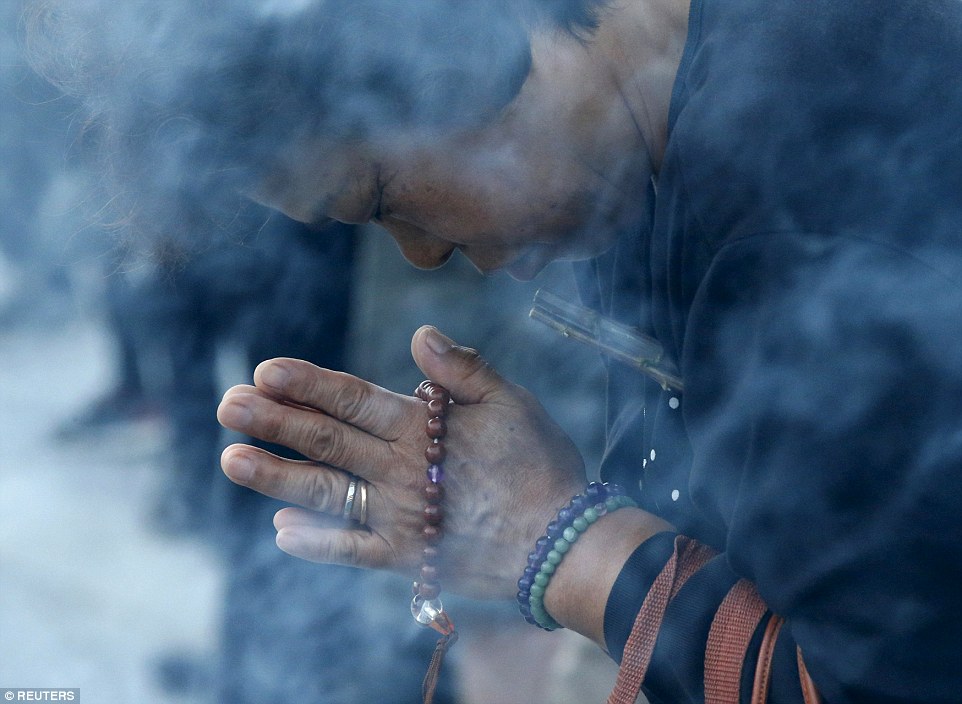
Woman in Prayer at Hiroshima Memorial Park
Never before in the history of humanity had so much metal been used to such destructive purpose. Never before had such explosive power been so catastrophically released. Never before had so many young and old men in uniform been mobilised over such vast distances. Never before had so many people been destroyed in such numbers by fellow human beings. Yet the experience of World War I proved to be but a prelude to the far greater devastation that erupted a short 21 years later culminating in the dropping of two atomic bombs over the Japanese cities of Hiroshima and Nagasaki in August 1945.
The dual nature of modernism had revealed its extremity.
Lengthening Shadows
The Great War was but a first manifestation of the unleashing of the prodigious powers and capabilities that would come to dominate the twentieth century landscape. These powers found expression in virtually all domains of human endeavour - economic management, political ideology and methods of social control, mineral extraction and utilisation, electricity generation and supply, and ways of land, air and maritime transport. The ingenuity and brilliance embodied in these developments were, however, accompanied step by step by forces that darkened all the visionary rhetoric promising the arrival of a new golden age, a tomorrowland of prosperity, freedom and happiness for all.
The opposing ideologies of capitalism and communism began to crystallise, the one marked by a philosophy and practice of unrestrained privately-owned production and a similarly unrestrained consumption, the other by a forfeiture of private property and the creation of state-owned enterprises built on totalitarian methods of social and political control. By the late 1920s, the seeds had been sown for a massive collapse in the economies of both the United States and Europe. By the early 1930s, millions of workers and tens of thousands of financial institutions in the so-called free world had been brought to ruin by the Great Depression.
The Soviet Union was declared by Vladimir Lenin in 1922. When he died two years later, Joseph Stalin consolidated his own power and outmanoeuvred his opponents to become supreme dictator by the late 1920s. Vast tracts of agricultural land were seized by the State and millions were imprisoned in an archipelago of labour camps. Stalin's suppression of all opposition in the Ukraine was merciless. Between 1929 and 1933, seven million Ukrainians - three million of whom were children - had been systematically starved to death.
Meanwhile, Adolph Hitler's rise to power had become irresistible, fuelled as it was by the growing resentment of a German people who had been subjected to regional dismemberment, economic degradation and deep humiliation by the Treaty of Versailles imposed in 1919.
Yet the party rolled on. America and Europe recovered, the Soviet Union continued to gain in power, and Germany became increasingly militarised. By the time World War II erupted in 1939, the machinery to both create and deploy technologies of destruction on an immense scale was fully in place. Under Hitler, entire populations were herded into mechanised death camps. Aerial warfare enabled a totally new level of devastation. In the latter stages of the war, it was directed to the complete destruction by fire of entire cities, as occurred in Hamburg in July 1943, Dresden in February 1945, and Tokyo in March 1945.
The deadliest fruit that ripened on the flaming tree of war was, however, that born of the Manhattan Project. In the final furious exhalation of hell's fire that drew the curtain down on World War II, 70,000 human lives were vaporised in just 4 seconds after Fat Man, a single bomb carrying four kilograms of plutonium, exploded above the city of Nagasaki on August 9th, 1945.
Opening the Portals

Uranium was discovered in the late 1700s. It took another century before the element had revealed its hidden fire to the French physicist Henri Becquerel in 1896. Becquerel discovered that salts of uranium not only glowed in the dark but darkened photographic plates when placed in contact with them. He concluded that the salts emitted some form of radiation. Ernest Rutherford also worked with uranium, and by 1911 had established the atomic structure of matter. He also discovered that certain elements were inherently unstable and underwent radioactive transformations into other elements. Within eight years, Rutherford succeeded in replicating these transformations by bombarding a range of elements with alpha particles, one of the three forms of radiation emitted by uranium. By the mid 1930s, particle accelerators had appeared on the scene and made easier the manipulation of atomic nuclei in the laboratory.
In 1934, it occurred to the Italian physicist Enrico Fermi that bombarding uranium with neutrons might create heavier atoms by the capture and transformation of the neutrons in the nucleus of uranium atoms. His hunch eventually proved to be correct. Others who were conducting similar experiments observed that neutron bombardment of uranium atoms could also produce highly radioactive smaller atoms that were approximately half the size of uranium atoms. It was soon understood that uranium was capable of undergoing fission, of breaking into smaller radioactive fragments, when its nuclei absorbed neutrons.
Building on these developments, Fermi constructed a nuclear pile at the University of Chicago in which such reactions, which were capable of generating enormous amounts of energy, could be produced. On the first day of December 1942, Fermi succeeded in igniting a controlled chain reaction. The mix of fast and slow neutrons that were produced not only tore atoms apart, but created the whole new litany of the man-made elements - which included plutonium - that Fermi had anticipated eight years earlier. Four weeks later, on the 28th December 1942, President Roosevelt authorised the Manhattan Project.
The portals of the nuclear abyss had been thrown open.
The Violent Century
One of the key signatures of industrial/technological civilisation has been its willingness to exercise an ever-increasing violence in the pursuit of its aims. That violence has been made shockingly manifest in the wars conducted over the past century. Seventeen million people died violently during World War I. By the time World War II was drawing to a close, sixty million people - some 3% of the world's population - had been killed. In the short period between the two wars, the instruments of death had changed from bullets and mortars to air-borne bombs and rockets. The final act of infamy was the killing of over 200,000 Japanese people by two nuclear explosions in 1945.
Within twenty years, the United States had constructed over 31,000 nuclear weapons. And by 1985, the Soviet Union possessed over 39,000 nuclear weapons. This feast of hubris and insane excess was made possible by the generation of enormous amounts of plutonium in nuclear reactors. That flush of militaristic madness began to subside once the situation came to be more widely known. The present time has seen some small retreat. Yet more than 15,000 nuclear weapons continue to grace the arsenals of nine nations.
Nuclear reactors themselves are another story. There are more than 440 operational nuclear power plants in 31 countries. Over 60 new reactors are under construction. And as I write, some 220,000 tons of highly radioactive spent fuel rods lie immersed in cooling ponds around the world. An additional 25,000 tons have cooled sufficiently to be stored in dry casks.
Thousands of tons of new high-level wastes continue to be produced by existing nuclear reactors each year. Meanwhile, the shadowy supporters of the nuclear project blithely champion an increasingly nuclearised future.

Olympic Dam Uranium Mine, South Australia
The shattering of atoms, whether cataclysmically in nuclear bombs or in controlled chain reactions within nuclear power plants is an inherently violent act. That violence is itself the end of a sequence of violence that begins with the extraction of uranium from the earth. Violence is inflicted on the many indigenous peoples whose ways of life and whose health and safety have been over-ridden by governments and mining companies determined to draw forth the power and wealth hidden within uranium ores. That violence is further contained in the slowly seething nuclear wastes that litter the hinterlands of Canada, the United States, Kazakhstan, Nigeria, Namibia, South Africa, Jharkhand, and Australia among other places. The same violence is silently experienced by millions of people throughout the world who contend with the debilitating and often lethal effects of the assimilation into their bodies of radioactive elements released by atmospheric tests, nuclear accidents, and the slow bleed of radionuclides into the lands, airs and waters of the earth through the mining of uranium and from the operation of nuclear reactors.
Successive posts on Satan's Cauldrons will progressively reveal the many faces of the nuclear project during this time when the forces of nature begin to return the violence that has been exercised so recklessly against the earth and her creatures for so long.

4 Jun 2016

Department of Veterinary Animal and Clinical Sciences Fellowship in Denmark-2016

Application Deadline: 15th August 2016 for the academic session commencing on 1st October 2016
Offered annually? Not known
Eligible Countries: Global
To be taken at (country): Denmark
Brief description: The Department of Veterinary Animal and Clinical Sciences, Faculty of Health and Medical Sciences at University of Copenhagen is offering two PhD Fellowships. The positions are limited to three years.
Eligible Field of Study: Basic Biology, Nutrition, Veterinary Medicine, Human Medicine
About the Award: The fellowship will include research activities focused on the interplay between diet, microbiota and gut, immunity and brain in early life. The projects include work in preterm pigs that show many clinical similarities to preterm human infants. The activities aim to improve early gut, immunity and brain functions with relevant milk and microbiota interventions in early life. Depending on the candidate´s educational and training background, the project will include work with pigs and/or human infants at associated hospitals. Laboratory analyses are a part of the PhD projects but will be supported by internal and external partners.
Type: PhD
Eligibility: 
  • The grade point average achieved in relevant University degrees
  • Professional qualifications relevant to the PhD programme
  • Previous publications (if any)
  • Relevant work experience
  • Other professional activities
  • Language skills, including English
The successful candidate is also required to be resourceful and to possess good interpersonal skills.
Selection Criteria: 

  • MD or DVM
  • Prior experience in clinical work and/or translational research with laboratory animals
  • Knowledge in neonatology, paediatrics
  • High motivation and basic scientific skills are essential
  • Good communication skills both oral and written, including English usage
  • Good collaborating skills are essential
Number of Awardees: Not specified
Value of Scholarship: Depending on seniority, the monthly salary begins around 25.579 DKK (equivalent to USD3,842.95) plus pension.
Duration of Fellowship: The fellowship is for a 3-year period for applicants holding a relevant master´s degree.
How to Apply: 
  • Cover letter detailing your motivation and background for applying for the specific PhD project
  • CV
  • Diploma and detailed transcripts of records
  • Other information for consideration, e.g. list of publications (if any), peer reviewed and other
  • Personal recommendations (if any)
  • A maximum of 3 relevant scientific works which the applicant wishes to be included in the assessment
Award Provider: Department of Veterinary Clinical and Animal Sciences, University of Copenhagen
Important Notes: The University of Copenhagen wishes to reflect the diversity of society and welcomes applications from all qualified candidates regardless of personal background. It is a prerequisite that the PhD candidate is enrolled as PhD student at the Faculty of Health and Medical Sciences, University of Copenhagen, according to the rules stipulated in “Bekendtgørelse nr. 18 af 14. januar 2008 om ph.d.-graden.“

2016 Research Training Fellowship for Developing Country Scientists (RTF-DCS)

Application Deadline: Friday, 17th June 2016
Offered annually? Yes
Eligible Countries: Any developing country
To be taken at (country): India
Brief description: The NAM S&T Centre invites applications from the scientists, technologists and engineers of the developing countries for the award of Fellowships under the ‘Research Training Fellowship for Developing Country Scientists (RTF-DCS)’ scheme for the years 2016-2017. The RTF-DCS Programme aims at capacity building of the developing countries in the fields of Science and Technology through the affiliation of their scientists with Indian scientific and academic Centres of Excellence.
Eligible Fields of Study: Agricultural Sciences; Biological and Medical Sciences; Chemical Sciences; Physical Sciences and Mathematics; Earth Sciences; Engineering Sciences; Materials, Minerals and Metallurgy; and Multi-disciplinary and other areas.
About the Award: The Centre for Science and Technology of the Non-Aligned and Other Developing Countries (NAM S&T Centre) is presently implementing a Fellowship programme titled ‘Research Training Fellowship for Developing Country Scientists (RTF-DCS)’ to provide opportunity to young researchers of the developing countries for their capacity building in science and technology through their affiliation with premier academic and research institutions in India to carry out short-term research work. Under the programme, full financial support is provided to the research fellows for their international travel, subsistence allowance, research contingency, domestic travel in India, etc. The RTF-DCS programme has been sponsored by the Government of India, Department of Science & Technology (DST), Ministry of Science & Technology.
Type: Postgraduate Science Research Fellowship
Eligibility: 
  • Candidate should be working in a national R&D or academic institution in his/her home country. The application should be endorsed by the Head of his/her institution confirming that if selected, he/she will be sanctioned leave for the Fellowship period and will join his/her duties back in the institution on completion of the Fellowship in India.
  • Scientists/researchers from any developing country below 40 years old (as on January  1, 2016) and possessing at least a Post Graduate Degree in any Natural Science subject or an equivalent degree in Technology/Engineering/Medicine/allied disciplines.
Selection Criteria: Selection will be made by a High-Level Selection Committee based on the quality of the research proposal submitted by the applicant and their academic merit.
Number of Awardees: 50
Value of Fellowship: Full financial assistance to the Fellows, including:
  • A round-trip international airfare by excursion/economy class,
  • A monthly Fellowship amount of Indian Rupees (INR) 35,000 [about US$525 at the current exchange rate] (non-taxable) to cover accommodation, meals  and  other miscellaneous expenses and
  • A one-time grant of INR 30,000 [about US$450] for research contingency and domestic travel, including airport transfers, visiting research institutions, attending scientific events and field trips within India, subject to the approval of the research supervisor. The Indian host institutions will also be suitably compensated for their services for implementation of the programme.

Duration of Fellowship: The Fellowship is for a period of six months. Therefore, the interested applicants must be absolutely certain about their availability for six months, if selected for this Fellowship.
How to Apply: Application for the award of the Fellowship should be submitted to the NAM S&T Centre in the enclosed format along with the following enclosures:
  • Curriculum Vitae (in MS Word format, not more than two Pages), including Professional and Research Experience and a list of latest publications (Not more than five)
  • Research Proposal with Objectives, Scope of Work, Plan of Action, Methodology and Deliverables (in MS Word format).
  • Recent Passport size Photograph.
  • Copy of Relevant Pages of Passport
  • Copy of an endorsement from present employer, duly filled in and signed, along with Signature of the applicant. Take a print out of the format of ‘Endorsement of Present Employer’ appended at the end of this Announcement and attach a scanned copy of the appropriately filled up document along with the application form).
  • A copy of the letter / email (if obtained) from any Indian scientist/institution with consent to accept you to work with them, if you get selected by the NAM S&T Centre.
  • The application form must be filled up only in typed script (NOT HAND WRITTEN). Incomplete and illegible applications will be rejected.
  • All the enclosures as above must be submitted along with the application. Applications without any of the enclosures as mentioned at i. to v. above will be rejected.
Applications should be submitted to the NAM S&T Centre in the prescribed format enclosed in the Brochure. Candidates should download the Application Form by CLICKING HERE.
Only electronic communication will be accepted. Candidates are advised not to send hard copies of the application or any other document. The completed application form and other enclosures as listed in Section-VIII, Paragraph 1 of the Brochure should be sent as attachments to rtfdcs15@gmail.com
Award Provider: The Centre for Science and Technology of the Non-Aligned and Other Developing Countries (NAM S&T Centre)
Important Notes: To prepare the proposal, the applicants should carefully study the material available in these guidelines. It is advisable for an applicant (though not mandatory, but may be useful for their final selection/placement)to make a prior contact with a concerned Indian scientist or an institution in India where work is in progress in the area of interest to the applicant, and obtain consent that they, if selected, will be accepted to work in the institution on the proposed research project. A copy of the consent letter, if available, should be enclosed with the application. A suggestive list of Indian academic and research institutions has been enclosed with the Announcement, but the applicant is free to contact any other institution in India about which information may be gathered through Internet search or other means.

The Global Study Awards £10000 Scholarship for International Students-2016

Application Deadline: 30th June 2016
Offered annually? Not known
Eligible Countries: Global
To be taken at (country): Any foreign country of individual’s choice
Brief description: The Global Study Awards together with the ISIC Association and British Council IELTS, is offering students the chance to receive up to £10,000 to expand their horizon and study abroad.
Eligible Field of Study: Candidate’s choice of study
About the Award: The Global Study Awards recognises studying abroad as a positively life changing experience for many students, opening their minds to alternative ways of personal life and professional career, as well as promoting intercultural understanding and tolerance. The Award prize will be applied toward the cost of tuition fees in the first instance, paid directly to the Higher Education Institution that the successful candidate will attend. If tuition fees are below the maximum individual award fund of £10,000, the remaining funds may be allocated per diem for living costs for a maximum of 52 weeks starting from when the student first registered at the higher education institution.
Type: Undergraduate and Postgraduate scholarships
Offered Since: 2007
Eligibility: To be eligible to apply for The Global Study Awards candidates need to:

  • be aged 18 or over on the day the course you are attending officially starts;
  • if you are under 18 when submitting an application for the award, please note that, should you be shortlisted for the award, you will need to submit a signed parental consent form before your application can be considered further;
  • have taken an IELTS test at a British Council centre and hold a valid official Test Report Form issued by the British Council;
  • be a valid ISIC cardholder at the time of application;
  • be planning to enrol on a full-time undergraduate or postgraduate programme abroad in the academic year between 1 August 2016 and 31 October 2016.;
  • have written a short review of your study experience at STeXX.eu
  • be able to provide a confirmation letter and/or official enrolment letter (if applicable) from the institution by the cut-off date.
Selection Criteria: The Global Study Awards are designed to support highly motivated, talented individuals who can demonstrate:
  • their potential to contribute to society through their studies;
  • a strong commitment to developing their career;
  • a sincere interest in increasing intercultural understanding and exchange
Number of Awardees: Five(5)
Value of Scholarship: Each award will have a value of £10,000
Duration of Scholarship: One time
How to Apply: Candidates should go to the Scholarship webpage to apply
Award Provider: 
Important Notes: Successful candidates will be willing to engage with the British Council IELTS, ISIC and StudyPortals communities, and publicly share their experiences with other students. The Global Study Awards will be available to prospective students in all countries worldwide. The Global Study Awards will enable the successful candidate(s) to study abroad, on any chosen undergraduate or postgraduate programme at a higher education institution. The Global Study Awards cannot be used by a successful candidate to study domestically.

A Very Brazilian Coup

Conn Hallinan

On one level, the impeachment of Brazilian President Dilma Rousseff seems like vintage commedia dell’arte.
For instance, the lower house speaker who brought the charges, Eduardo Cunha, had to step down because he has $16 million stashed in secret Swiss and U.S. bank accounts. The man who replaced Cunha, Waldir Maranhao, is implicated in the corruption scandal around the huge state-owned oil company, Petrobras.
The former vice-president and now interim president, Michel Temer, has been convicted of election fraud, and has also been caught up in the Petrobras investigation. So is Senate president Renan Calheiros, who’s also dodging tax evasion charges.
In fact, over half the legislature is currently under investigation for corruption of some kind.
But there’s nothing comedic about what the fall of Rousseff and her left-leaning Workers Party will mean for the 35 million Brazilians who’ve been lifted out of poverty over the past decade, or for the 40 million newly minted members of the middle class — that’s one-fifth of Brazil’s 200 million people.
While it was the current downturn in the world’s seventh largest economy that helped light the impeachment fuse, the crisis is rooted in the nature of Brazil’s elites, its deeply flawed political institutions, and the not-so-dead hand of its 1964-1985 military dictatorship.
A Lurch to the Right
Given that the charges against Rousseff don’t involve personal corruption, or even constitute a crime — if juggling books before an election were illegal, virtually every politician on the planet would end up in the docket — it’s hard to see the impeachment as anything other than a political coup. Even the center-right Economist, long a critic of Rousseff, writes that “in the absence of proof of criminality, impeachment is unwarranted” — and “looks like a pretext for ousting an unpopular president.”
That suspicion is reinforced by the actions of the new president.
Temer represents the center-right Brazilian Democratic Movement Party (PMDB), which until recently was in alliance with Rousseff’s Workers Party. As soon as Rousseff was impeached by the Senate and suspended from office for 180 days, Temer made a sharp turn to the right on the economy, appointing a cabinet of ministers straight out of Brazils’ dark years of dictatorship: all white, all male, and with the key portfolios in the hands of Brazil’s historic elites. This comes in a country where just short of 51 percent of Brazilians describe themselves as black or mixed.
 At least six of those ministers, moreover, have been implicated in the Petrobras scandal.
Temer announced a program to “reform” labor laws and pensions, using code words for anti-union legislation and pension cuts. His new finance minister, Henrique Meirelles, a former central bank head who once led BankBoston in the United States, announced that while programs for the poor “which don’t cost the budget that much” would be maintained — like the highly popular and successful Bolsa Familia, which raised tens of millions out of poverty through small cash grants — other Workers Party initiatives would go under the knife.
The new government is already pushing legislation that would roll back laws protecting the environment and indigenous people, and has appointed ministers with terrible track records in both areas.
For instance, one of the largest soybean farmers in Brazil, Blairo Maggi, was appointed agriculture minister. Maggi has overseen the destruction of vast areas of the Amazon to make way for soybean crops. Temer’s initial appointment for science minister was an evangelical Protestant minister who doesn’t believe in evolution. Temer also folded the culture ministry into the ministry of education, sparking sit-ins and demonstrations by artists, filmmakers, and musicians.
Corruption and Incoherence
Brazil has long been a country with sharp divisions between wealth and poverty, and its elites have a history of using violence and intimidation to get their way. Brazil’s northeast is dominated by oligarchs who backed the 1964 military coup and manipulated the post-dictatorship constitution.
Political power is heavily weighted toward rural areas dominated by powerful agricultural interests. The three poorest regions of the country where these interests dominate, accounting for only two-fifths of the population, control three-quarters of the seats in the Senate.
As historian Perry Anderson puts it, Brazil’s political system was designed “to neutralize the possibility that democracy might lead to the formation of any popular will that could threaten the enormities of Brazilian inequality.”
Brazil’s legislature is splintered into 35 different parties, many of them without any particular political philosophy. The legislature is elected on the basis of proportional representation, but with an added twist: There’s an “open list” system in which voters can choose any candidate, many of them standing on the same ticket.
The key to winning elections in Brazil, then, is name recognition, and the key to that is lots and lots of money. Most of that money comes from Brazil’s elites, like the oligarchs in the country’s northeast.
Because of the plethora of parties, forming a government is tricky. What normally happens is that one of the larger parties ropes in several smaller parties by giving them ministries. Not only does this encourage corruption — each party knows it needs to raise lots of money for elections — but also results in political incoherence.
When the Workers Party was elected in 2002, it was unwilling to dilute its programs by bringing ideological opponents into a cabinet — yet the party still needed partners. The solution was cash payouts to legislators, a scheme titled mensalao (“monthly payoffs”) that was uncovered in 2005. Once the payoffs were revealed, the party had little choice but to fall back on the old system of handing out ministries in exchange for votes. That’s how Temer and the PMBD entered the scene.
With the reputation of the popular former president Lula da Silva and his Workers Party dented by the payoff scheme, the right saw an opportunity to rid themselves of the left. But Silva’s resilient popularity and the success of his anti-poverty programs made the party pretty much unassailable at the ballot box. Silva won another landslide election in 2006, and his successor Rousseff was elected twice in 2010 and 2014.
A Very Brazilian Coup
In short, the elites could not win elections. But they could still pull off a very Brazilian coup.
First, they hammered at the fact that some Workers Party leaders had been involved in corruption and others implicated in the Petrobras bribery scheme. Rousseff herself headed up Petrobras before being elected president. While she’s never been personally linked to any of the corruption, it did happen on her watch.
Petrobras is the fourth largest company in the world. It’s building tankers, offshore platforms, and refineries. That expansion has opened huge opportunities for graft, and the level of bribery involved could exceed $3 billion. Nine construction companies are implicated in the scandal, as well as more than 50 politicians, legislators, and state governors, from the PMDB as well as the Workers Party.
Rousseff’s biggest mistake was to run on an anti-austerity platform in 2014 and then reverse course after she was elected, putting the brakes on spending. The economy was already troubled and austerity made it worse. The 2005 bribery scheme lost the Workers Party some of the middle class, and the 2014 austerity alienated some of the party’s working class supporters.
But it was most likely Rousseff’s decision to green light the Petrobras corruption investigation that spurred her enemies to strike before the probe could pull down scores of political leaders and wealthy construction owners. Temer’s own anti-corruption minister was recently caught on tape plotting to use the impeachment to derail the investigation, an event that led to his resignation.
Certainly the campaign aimed at Rousseff was well orchestrated. Brazil’s media — dominated by a few elite families — led the charge. According to Reporters Without Borders, the role of the media was “partisan,” its anti-Rousseff agenda “barely veiled.” Judge Sergio Moro, a key figure in the Petrobras investigation, illegally leaked wiretap intercepts that put Silva and Rousseff in a bad light.
Given the makeup of the Brazilian Senate, it’s likely that Rousseff will be convicted and removed as president. It also appears that Temer, who enjoys almost no popular support, will try to roll back many of the programs that successfully narrowed the gap between rich and poor.
On the Ropes
The stakes are high, and not just for democracy.
Brazil’s economy is in trouble, shrinking 3.7 percent last year. Commodity prices are down worldwide, in large part because of the downturn of China’s economy. Brazil’s debt is rising, though it’s still half that of Italy. And unemployment is low, at least compared to the indebted countries of Europe.
A return to the austerity policies that destroyed economies all across the southern cone during the 1980s and ‘90s — and which are decimating parts of Europe today — would be a disaster. The worst thing one can do in a recession is curb spending, which stalls out economies and puts countries into a debt spiral.
For now, the Workers Party is on the ropes, but hardly down and out. It has 500,000 members, and the new government will find it very difficult to take things away from people now that they’ve gotten used to having them. Some 35 million people are unlikely to return to their previous poverty without a fight.
One of Temer’s first acts was to put up 100,000 billboards all over the country with the slogan: “Don’t speak of crisis; work!” That sounds a lot like “shut up.” Yet Brazilians aren’t noted for being quiet, particularly if the government instituting painful cuts is unelected.
The pressure for new elections is sure to grow, although the current government will do anything it can to avoid them. Sooner or later there will be a reckoning.

Dismantling Civil Society in Bahrain

Rannie Amiri

Like a vise which first grips its object and then slowly, deliberately and inexorably crushes it, the al-Khalifa regime has done similarly to civil society in Bahrain. It did not stop when peaceful, pro-democracy, reform protests erupted in 2011 and were violently put down by government forces aided by an invasion of Saudi troops in March of that year. Indeed, the vise continues to close and relentlessly so.
Nationalities have been revoked, mosques razed, citizens deported, human rights activists imprisoned on flimsy charges of insulting the monarchy at the least or plotting its overthrow at worst, and the most perfunctory of dialogues with the opposition abandoned. By smothering the figures and institutions who dare challenge the authority of the ruling dynasty in the most benign of fashions – a tweet, waving the country’s flag, tearing up a photo or merely questioning the tenure of the world’s longest serving prime minister – the Bahraini regime and its Gulf allies would like to believe monarchal rule has been preserved. Such desperate measures however, only speak to its precarity.
The stalwart activist Zainab al-Khawaja was given a sentence of three years and one month in Dec. 2014 for (again) tearing up a picture of King Hamad. She refused to be separated from her infant son whom she took with her to prison. Al-Khawaja has just been released on “humanitarian” grounds after serving 15 months in jail.
Her father though, Abdulhadi al-Khawaja, remains imprisoned serving a life sentence on trumped-up charges of attempting to topple the government. While authorities may have set Zainab al-Khawaja free, they simultaneously doubled the sentence of Sheikh Ali Salman, head of al-Wefaq, an opposition political party. Initially given a term of four years incarceration for alleged incitement against the regime, it was increased to nine years on appeal. The unflinching President of the Bahrain Center for Human Rights (BCHR) and founding Director of the Gulf Centre for Human Rights Nabeel Rajab, remains banned from leaving the country despite the need to secure medical treatment for his wife.
Busy highlighting the nation’s cordial relations with the United Kingdom and United States, the latter of which headquarters its Navy’s Fifth Fleet in the capital Manama, the Western media has largely ignored the plight of Bahrain’s ordinary citizens. The arrest and torture of disabled youth has now been documented by the BCHR. Indeed, for more than a decade, the Center has meticulously chronicled the dismantling of Bahrain’s civil society in all its forms by the al-Khalifa regime.
Most recently, with the passage of a law preventing any religious figure from joining political societies or engaging in political activities, the BCHR issued a statement condemning, “… the Bahraini parliament and Shura Council’s passage of amendments to the Political Societies Law, which places a ban on participation in political decision-making based on discriminatory religious grounds. In defense of this draft amendment, lawmakers supporting this motion argued it would prevent religious acts from being politicized. This decision restricts people’s ability to freely engage in religious practices, as those members willing to join political activities pertinent to the legislative process in Bahrain would now need to refrain from any activities carrying religious connotations.”
In the face of widespread and open abuses in civil society, lack of proportional parliamentary representation, curfews, detentions, and imprisonment and torture of those who dissent, these practices have nonetheless failed to adversely impact the ties enjoyed between Bahrain and the United States. But when a regime becomes alienated from those whom it rules and for example, gives lengthy jail sentences for tweets it finds offensive, it speaks to a tenuous reign.
The pillars of civil advocacy in Bahrain – Nabeel Rajab, Abdulhadi al-Khawaja, Maryam and Zainab al-Khawaja, Abduljalil al-Singace (sentenced to life in prison for participating in pro-democracy protests), Naji Fateel, Hussain Jawad and countless others both named and unnamed – have consistently engaged in purely secular, non-sectarian activism. Unlike the practice of the regime, the designations Sunni and Shia need not be applied when discussing the ongoing struggle for legal, political and socioeconomic rights in Bahrain. The people have waited too long for the West to recognize their demands are not based on sect, but on equity.
Despite an oppressive regime and the long shadow cast by the U.S. Fifth Fleet, resilient Bahrainis remain unintimidated.

Sex Inequality and the £330,000 Lottery

Julian Vigo

Several weeks back a group of seventeen female French ministers banded together to fight sexual harassment they had experienced throughout their careers. Their joint statement published in Journal du Dimanche states: “It’s not for women to adapt to these environments. It’s the behaviour of certain men that needs to change.” Certainly, any woman reading their statement can relate to the sentiment—a mixture of anger and relief from years of having to remain silent for fear of losing one’s job and still that palpable fear that one can lose one’s job for merely speaking out. A 2013 study done in the UK shows that six in ten women have experienced sexual harassment in the workplace. Sexual harassment in the UK is part of a larger problem that speaks to sexual inequalities in public life, in both private and public sector employment, and in the media. And in the US some professions report far higher rates of sexual harassment for women with data from the Equal Employment Opportunity Commission (EEOC) showing 6,822 claims from 2015 and a poll demonstrating that only 30% of women come forward to complain about sexual harassment for fear of retaliation, economic instability should they fired, office gossip, and the difficulty of finding a new job.
As sexual harassment is being addressed in the public and private sectors, sexism is rife within other sectors to include the equal representation within most professions, recognition of merit, and equal pay. Most shocking are the statistics for the imbalance in media. In March 2016 The Guardian reported the incredibly skewed data on those in media stating: “The issue of equality and diversity in journalism came under the spotlight last month when 94 men and 20 women were shortlisted for this week’s British Press Awards.” And worse, on the matter of economic security—which is where equality is truly felt—“City’s [University of London] research indicates that women are paid significantly less than their male counterparts. Nearly 50% of female journalists earn £2,400 or less a month compared with just a third of men.” The study goes on to show the almost 50% of the women who have worked in journalism between six and ten years are not promoted whereas men with the exact same experience had been promoted into management positions. (And the statistics on race are even worse.) And just last month Stephen Follows published a study which shows the devastating sex inequality within the British film industry: over a ten-year period (2005-2014 inclusive) only 13.6% of active film directors were female. And this percentage has not vastly improved over the years, moving from 2005 at 11.3% to 2014 at 11.9%. Data on film crew was just as troubling: “Of the main key head of department roles, only two had greater than 50% female representation with the rest ranging between 6% and 31%. Similarly, only casting, make-up, and costume departments have a majority of female crew, meaning of the seventeen crew credits we studied, fourteen had fewer women than men.”
All this comes as no surprise to women who have been dealing with pay and promotion inequality for their entire lives with the added bonus of sexual harassment. But what are the costs of pay and promotion inequality in addition to sexual harassment? We already know that girls who routinely experience sexual harassment are significantly more likely to attempt suicide, but little is said about these repercussions on women who suffer “widespread and often serious health, emotional, and economic consequences.” And the economic impacts for discrimination and harassment are little explored in the media which are often the major factor playing into the future mental and physical health of women.
According to data published by the Equal Opportunities Commission (now part of the Commission for Equality and Human Rights), “the average woman working full-time could lose out on £330,000, in comparison with men’s earnings, over the course of her working life.” Similarly, they investigated similar inequalities within the financial sector specifically where the pay gap was explained in terms of: stereotyping in the recruitment processes, the sector’s extremely young age profile proves a challenge to those with children, the sector’s long hours’ culture also affects those with children, the intractability of senior leaders to take action on sex inequality and the lack of enforcement of good practices. Also according to the Equality and Human Rights Commission, female graduates earn up to £8,000 less than males who studied the same subject.
If the Fawcett Society’s 2008 report on women’s pay inequality wasn’t shocking enough then their 2013 study is enough to bring one to tears: “New figures from the Office of National Statistics published in December 2013  show the pay gap widening for the first time in five years.” And the reasons the Fawcett Society gives for this widening gap are the same reasons for sex-based oppression of women throughout recent history: women’s work is undervalued, more women work part-time, the “motherhood penalty,” and more generally that sex-based discrimination has not gone away. Because of their decreased earning power, women use their money quite differently: they invest in their children, the home, and they save over investing. RateSetter carried out research which showed that men are significantly more likely to own investment products (66% of men compared to 48% of women). Data suggests that women do not tend to move towards long or short-term investment products simply because, according to this report, they have 50% less of disposable income at the end of each month. And when one examines those countries with a closer economic parity between the sexes, one thing is painfully evident: that salary equality is maintained in countries where there is a balance of political representation of females and males.
Recently there was a petition, 50:50 Parliament, to request a 50% representation of women in Parliament because shockingly, in 2016 in the UK as well as other western countries, females are not fairly represented. With less than a 30% female presence in the House of Commons, one can only wonder if the more equitable presence of women in Parliament might not begin to effect real social change. And in the US, the representation of women in the 114th Congresses is lamentable with only 20 female senators out of a total of 100 (a 20% presence) and 84 female congress members in the House of Representatives out of 535 (a 19.4% presence).
I have recently written my MP, Mark Field, to request that he take action to ensure a 50% presence of women in Parliament. The larger question remains: how to effect this change?

Poverty, Militarism and the Public Schools

Robert Koehler

What’s the difference between education and obedience? If you see very little, you probably have no problem with the militarization of the American school system — or rather, the militarization of the impoverished schools . . . the ones that can’t afford new textbooks or functional plumbing, much less art supplies or band equipment. My town, Chicago, is a case study in this national trend.
The Pentagon has been eyeing these schools — broken and gang-ridden — for a decade now, and seeing its future there. It comes in like a cammy-clad Santa, bringing money and discipline. In return it gets young minds to shape, to (I fear) possess: to turn into the next generation of soldiers, available for the coming wars.
The United States no longer has a draft because the nation no longer believes in war, except abstractly, as background noise. But it has an economic draft: It claims recruits largely from the neighborhoods of hopelessness. Joining the U.S. military is the only opportunity available to millions of young Americans to escape poverty. We have no government programs to build the infrastructure of peace and environmental sustainability — we can’t afford that, so it has to happen on its own (or not at all) — but our military marches on, funded at more than half a trillion dollars a year, into ever more pointless wars of aggression.
Glory, glory hallelujah. I’d never been to a Memorial Day parade in my life, but I went to this year’s parade in downtown Chicago because members of the Chicago chapter of Veterans for Peace were going to be there, protesting the militarization of the city’s schools.
I arrived as the parade was still assembling itself along Wacker Drive. What I saw, along with the Humvees and the floats (Gold Star Families of the Fallen, Paralyzed Veterans of America: Making a difference for 70 years) were thousands of young people — mostly kids of color, of course — bedecked in various uniforms, standing in formation as martial music erupted sporadically, driven by the drumbeat of certainty. Some of the boys and girls seemed as young as 10 or 11. One boy walked past me twirling a rifle like it was a baton. Was it real? Was it loaded?
The concept of America is a totally military phenomenon, I thought as I walked along the parade route. This is what holds it together, not culturally, but as a legally organized entity. The flags, the rifles, the Humvees, the names of the dead . . . the uniformed children. For a moment I wondered if I could continue calling myself an American.
Then I met up with the Vets for Peace people at State and Lake — a small group of men and women handing out stickers that read: “No military in Chicago Public Schools. Education, not militarization.”
“The idea is, just by being here, we’re having people stop for a moment and think about the militarization of Chicago schools,” Kevin Merwin told me. “There’s opposition to the wholesale militarization of youth in Chicago. It’s the most militarized school system in the country, if not the world.”
Indeed, according to various sources, there are between 9,000 and 10,000 young people in the Pentagon’s JROTC program, with “military academies” — often in spite of furious community opposition — taking over portions of 45 of the city’s 104 high schools.
“Kids in seventh grade are being rolled up into this Memorial Day parade,” Merwin said. “We’re inculcating kids into the military system at a young age — the kind of thing we criticized the Soviet Union for back in the day. And it’s mostly kids of color.”
Ann Jones, addressing this hypocrisy, pointed out in an excellent essay that Congress actually passed an act in 2008 — the Child Soldiers Prevention Act — that was “designed to protect kids worldwide from being forced to fight the wars of Big Men. From then on, any country that coerced children into becoming soldiers was supposed to lose all U.S. military aid.”
However, not surprisingly, the economic interests of the military-industrial complex eventually gutted the intention of this rare bit of compassionate legislation. Five of the 10 countries on the child-solider list, Chad, South Sudan, Yemen, the Democratic Republic of the Congo and Somalia, have been granted “waivers” so they can continue to purchase American weapons.
“Too bad for the young — and the future — of those countries,” Jones wrote. “But look at it this way: Why should Washington help the children of Sudan or Yemen escape war when it spares no expense right here at home to press our own impressionable, idealistic, ambitious American kids into military ‘service’?
“It should be no secret that the United States has the biggest, most efficiently organized, most effective system for recruiting child soldiers in the world.”
Those who want to perpetuate the military mindset — that is to say, the servants of the most powerful economic interests in the country — have to grab the minds of the young, because only in one’s youth does militarism resonate with uncontaminated glory. This is why the Army maintains a gamer website. And it’s why every branch of military service sets up shop in our most desperate schools and parades the Junior ROTC boys and girls before the public on Memorial Day, our national holiday in celebration of arrested development.