Sandip Kumar Mishra
The discussions at the 15th Asian Security Summit (3-5 June 2016), popularly known as Shangri-La Dialogue in Singapore were indicative of the existing deadlock among the countries about Asia’s future security architecture. Overall, the discussions were quite pessimistic. The two most important players in the regional politics – the US and China – openly alleged each other on the issues of escalations in the South China Sea as well as the deployment of the Terminal High Altitude Air Defense (THAAD) system on the Korean peninsula.
US Secretary of Defense Ashton Carter warned China that it was at the risk of ‘erecting a Great Wall of self-isolation’ if it continues its current policies in the region. Carter criticised the Chinese military buildup in the region and said he hoped that “this development doesn’t occur because it will result in actions being taken both by the United States, and actions being taken by others in the region that will have the effect of not only increasing tensions but isolating China.” Japan too made stern statements about Chinese activities in the South China Sea.
In response to the China’s claim that the US and Japan are ‘outsiders’ in the region, Japanese Defense Minister Gen Nakatani said no country could be ‘outsider’ when it comes to regional stability. Responding to the US’ stern words, the Chinese representative at the Dialogue, Deputy Chief of General Staff, People’s Liberation Army, Admiral Sun Jianguo, claimed sovereignty in the region and said China “had no fear of trouble.” He claimed “we were not isolated in the past, we are not isolated now, and we will not be isolated in the future.” He suggested countries, indirectly indicating towards the US, to come out of the ‘Cold War mentality’.
Similarly, on the issue of THAAD, the US defense secretary claimed that the issue of THAAD deployment would be raised during his discussion with the South Korean Defense Minister Han Min-koo. Another defence official of the US even claimed that the US and South Korea would make a ‘public announcement’ about the deployment of a THAAD unit. However, in his bilateral talks with the South Korean defense minister, the Chinese representative Sun Jianguo warned South Korea that “it would destabilize the Asia Pacific region.” Sun said that it would “infringe China’s strategic interests.” Although, South Korea responded by stating that “China is overestimating THAAD” and that his country has “the will to allow THAAD deployment,” in another statement, he denied the US defence secretary’s claim that Seoul would discuss the issue during his meeting with Carter in Singapore.
Actually, it seems that the US and China are not ready to compromise and accommodate each other’s security concerns and a game of ‘staring at each other’ is going on. In the sidelines of the Summit, defence ministers of the US, Japan and South Korea held a trilateral dialogue and stressed their collective efforts to pressurise North Korea via UN resolution 2270 – passed in March 2016 after the fourth round of North Korean nuclear and missile tests. The leaders representing Washington, Seoul and Tokyo were in agreement that a diplomatic engagement with Pyongyang is fruitless, and demanded more cooperation with Beijing towards the implementation of UN Resolution 2270.
It is interesting to note that China appears to be moving in an entirely different direction. Just a few days before the Shangri-La Dialogue, Chinese President Xi Jinping met North Korean Foreign Minister Ri Su-yong in Beijing. This is an important departure from Xi’s approach towards North Korea after he assumed office in 2013. Previously, he had avoided any direct high level contacts with Pyongyang but now there are speculations that he may have a summit meet with North Korean leader Kim Jong-un in the coming months.
Thus, the intensity of the contest in the regional politics was demonstrated at the Shangri-La Dialogue. Although around 500 defence and diplomatic officials and experts from 52 countries, including defence ministers from 23 countries participated in the dialogue, the contest between the US and China was clearly the main theme of the conference.
Unfortunately, a ‘third opinion’ remains almost ineffective in the process.
Washington and Beijing are scheduled to hold their annual high-level Strategic and Economic Dialogue (6-8 June 2016) in Beijing. Hundreds of US and Chinese officials will conduct further discussion on regional issues. The US Secretary of State John Kerry, the US Treasury Secretary Jack Lew, China’s State Councilor Yang Jiechi, and China’s Vice Premier Wang Yang will to participate in the dialogue. However, it appears that both the parties are not ready to budge from their respective positions.
Thus, the 2016 Shangri-La Dialogue showed that great power contests are going to overwhelm peace and security concerns of other countries. It is high time to ask if the great powers of the region remain adamant on the stubborn positions, would not it be correct to articulate a ‘third opinion’? In the cacophony of contests that seems improbable; but if countries like India take the lead in articulating such an ‘opinion’, it would be a positive move for regional security and would also enhance India’s stature and position in regional politics.
6 Jun 2016

Australian economic growth data masks slump and inequality
Mike Head
Australia’s gross domestic product (GDP) grew by 1.1 percent in the first three months of this year, according to official figures released last week. But the result was highly contradictory, pointing to the widening divide between the wealthy corporate elite and the vast majority of working people.
Media headlines proclaimed the strongest result in three years and both the Liberal-National government and the Labor Party opposition sought to exploit the data to boost their pitches for votes in the campaign for the July 2 double dissolution election.
However, while output rose by 3.1 percent over the year to March, real net national disposable income per capita slid 2.6 percent. The income figure—regarded as a measure of living standards—has now fallen for eight consecutive quarters, indicating a protracted decline in the conditions of life for most people.
This “income recession” features falling real wages, reduced working hours and lower government tax revenues. Labour costs for employers dropped in the March quarter, for the second quarter in a row, indicating an accelerating push to lower workers’ incomes. This slump is producing deflation—average prices are declining, fuelling a tendency by companies and consumers to delay spending.
Almost the entire March quarter growth—all but 0.1 percent—was produced by greater export volumes, mostly from recently completed iron ore and liquefied natural gas (LNG) projects. Large mining and resource companies are currently ramping up their production, even as global prices continue to fall or stagnate because of the deepening world slump.
The proceeds are benefitting only the transnational corporations and finance houses that funded the projects, not the tens of thousands of workers retrenched from mines and mining construction sites over the past two years. Super-profits are being made by some of the largest companies in the mining industry, where nearly 15 percent of the workforce has been laid off since 2014.
Moreover, the surge in mining exports, which followed a fall in the previous three months, may prove to be temporary, due to sharp fluctuations in world demand. This further underscores the vulnerability of Australian capitalism to global shocks, especially the volatility and downturn in China, its largest export market.
By contrast to the export rush, consumer and business spending, measured by domestic final demand, grew a mere 0.1 percent in the March quarter, pointing to the recessionary conditions throughout many working class areas and mining towns.
A local breakdown of economic growth prepared for Fairfax Media by SGS Economics & Planning gave some picture of the stark contrast. It showed economic activity has been shrinking in 30 of Australia’s 150 parliamentary electorates since at least 2014-15.
Economic activity in 2014-15 grew at more than 5 percent per annum in the inner suburbs of Sydney and Melbourne. These are the hubs of finance capital, where a debt-laden property bubble is continuing. However, there was contraction in a fifth of all electorates, including in the working class areas of western and southwestern Sydney and outer Melbourne.
The biggest reversals—more than 1 percent annual falls in economic activity—were taking place in working class southern and western Brisbane, the devastated coal mining towns of central Queensland, mining-related areas of Perth and rural South Australia, where major mine closures have added to the impact of manufacturing plant shutdowns in Adelaide.
Prime Minister Malcolm Turnbull hailed the March quarter GDP data, saying it reinforced his election slogan of “jobs and growth.” Turnbull claimed that “we are seeing strong growth in jobs,” due to his Coalition’s “clear economic plan and strong economic leadership.”
At the same time, Treasurer Scott Morrison said while the headline GDP numbers were welcome, the economy was fragile. He insisted the government’s promised $50 billion cut to company taxes over the next decade was essential in order to boost earnings.
While purporting to oppose this tax handout to big business, Labor’s shadow treasurer Chris Bowen also spoke of the “fragile” state of the economy, in a bid to win backing from the corporate elite for Labor’s pledges to restore growth.
Both major parties are relying on the unreal forecasts in last month’s federal budget of a sudden return to high growth by next year. They are trying to scramble back into office by pledging not to slash healthcare, education, childcare and other essential social spending.
Statistics released last week, however, showed that business investment contracted sharply again in the March quarter. The Australian Bureau of Statistics said private sector capital expenditure on buildings, equipment, plant and machinery shrank 5.2 percent, seasonally adjusted, leaving it down 15.4 percent year-on-year.
Mining investment dropped 12 percent in the March quarter, and manufacturing fell more than 10 percent. Outside these areas, there was just a 1.8 percent pick-up in capital expenditure, exposing the official mantra about Australia making a “transition” from mining to an unspecified “new economy.”
Total business investment has been falling in real terms since mid-2012, and is now down more than 25 percent over that four-year period. This precipitous decline means that plant closures and losses of jobs and working hours inevitably lie ahead.
Ironically, the March GDP figure was also boosted by a resulting drop in capital equipment imports. This only highlights the disconnect between the official growth data and the reality of recessionary trends.
International financial institutions and finance houses are increasingly sounding warnings about the Australian economy’s heavy dependence on debt and the property bubble.
The Organisation for Economic Cooperation and Development (OECD) last week said the property boom could crash. “Domestically, the unwinding of housing-market tensions to date may presage dramatic and destabilising developments, rather than herald a soft landing,” its report stated. Australia’s exposure to Chinese markets also remained “an important source of uncertainty and risk.”
A rise in federal and state government debt, which has tripled to about 34 percent of GDP over the past 10 years, has been outstripped by the doubling of private debt, to about 160 percent of GDP over the past 20 years.
“Australia’s household debt ratio has grown above peaks established in countries where housing bubbles formed and burst, as in Ireland, Spain and the United States,” LF Economics reported. “So highly leveraged is the housing market that even small declines in residential land prices will have adverse consequences.”
US investment bank, Morgan Stanley warned that total household, corporate and government debt had reached a 243 percent of GDP, a level that heightened the nation’s vulnerability to a deep downturn or recession. At the same time, nominal GDP growth had collapsed to 2.4 percent a year from its post-1996 average of 6 percent.
Moody’s Investor Services has signalled it may put Australia’s AAA rating on downgrade watch after the election unless deep cuts are made in the $40 billion annual budget deficit. Whatever promises the establishment parties—Labor, Coalition or Greens—make, they will be repudiated rapidly once the July 2 poll is out of the way.
Investigation reveals signs of nationwide US water crisis
Genevieve Leigh
The results of an investigation by British newspaper the Guardian reveal that, in the last decade, 33 major US cities have employed water testing “cheats” deliberately aimed at hiding dangerous levels of lead in their water supply.
The investigation identified three test manipulation methods known to hide actual lead levels: “pre-flushing” water pipes before testing, removing aerators from spouts, and deliberately running water slowly prior to collecting samples in order to prevent more lead from being dislodged from pipes. Each of these methods is in violation of recent US Environmental Protection Agency (EPA) guidelines.
The documents examined by the newspaper also revealed further unethical practices carried out by many state governments, in addition to these three testing methods. In some states, like New Hampshire, water departments were reportedly instructed to perform tests in a manner that allowed enough time to retest, and remove the previous results, if lead levels in the initial samples were found to be too high.
Another example comes from Howell, Michigan, where an official from the department of environmental quality (MDEQ) is recorded in an email instructing a water department director to remove a sample with an unacceptable amount of lead in a deliberate attempt to conceal unsafe levels.
Of the 43 cities investigated, only four were found to be in compliance with EPA guidelines. Over the last 10 years, 33 cities have employed one or more of the above methods. Six were found to have used all three methods, including Springfield, Massachusetts; Lewiston, Maine; Philadelphia: Buffalo, New York; Sebring, Ohio; and Chicago.
This investigation, while substantial in its own right, is made even more damning considering that it was able to uncover so many violations with such a limited scope. The research method employed was simply to contact 81 of the most populous cities east of the Mississippi and request documentation on how they test drinking water for lead. Not surprisingly, only 43 cities responded. It is safe to assume that cities with the more incriminating documented behavior were less inclined to hand over such information.
This ongoing water crisis is, without question, a problem facing more than just the few cities named above. Many of the large cities cited in this investigation sell their water supply to as many as 400 neighboring cities and towns. Studies sparked by previous crimes involving state-sponsored lead poisoning, like that of Washington, DC, in 2001; Durham and Greenville, North Carolina, in 2006; Columbia, South Carolina, in 2005; and Sebring, Ohio, in 2015.
Most recently, studies in Flint, Michigan, have revealed that even incredibly low levels of lead, well under the EPA mandated limit, can be damaging to human development.
In fact, the lead level at which the EPA requires action is not based on any health standard whatsoever. Instead, it is merely the product of a calculation that suggests that water in a minimum of nine out of ten homes susceptible to lead contamination will fall below that standard. In other words, even lead contamination at EPA levels at which action is required could result in significant public health problems.
Despite a congressional ban on lead water pipes in 1986, it is estimated that anywhere between 3.3 million and 10 million old pipes remain in use nationwide. Moreover, most researchers agree that a proper evaluation of health risks involving water quality extend well beyond lead.
There are innumerable contaminants that have yet to be properly researched, or are not tested or regulated. Efforts to reform water quality control have systematically been met by the opposition of various political representatives of the ruling class concerned about high cost of repair or regulations that would hurt profits in industries such as agriculture.
Coming on the heels of the water crisis in Flint Michigan in which 100,000 residents, over 9,000 of them children, have been poisoned by lead contaminated water from the polluted Flint River, the Guardian investigation has exposed the national scope of the crisis, as well as the scope of illegal activities on the part of various municipal governments.
Many local officials in the guilty cities have rushed to assure their constituents that the results of the investigation do not suggest a similar problem to that of Flint. Water department official Debra McCarty of Philadelphia, one of the cities guilty of all three methods, quickly went on record to report the “good news,” saying, “There are clear differences between Flint and Philadelphia.” However, the Guardian investigation suggests just the opposite.
While the case of Flint is an extreme manifestation of this problem, there are undeniable similarities between the events in Flint and other cities throughout the nation. Not only is at least one of the methods cited in this study the exact same manipulation tactic used in Flint to hide the lead contamination, but the outright denial by city officials of scientific evidence is also a characteristic common to the Flint crisis and every other water quality crisis in this country’s recent history.
The blatant attempt to downplay and contain this nationwide crisis to Flint alone, seen most recently by President Obama, shows the growing fear within the ruling class of a potentially explosive situation.
As events in Flint highlighted so sharply in the overwhelmingly bipartisan responsibility, the burden for these large-scale crimes, in part both malice and neglect, cannot be written off as individual mistakes or party-affiliated policy, but rather as a sign of a system in deep crisis.
The failure of the richest nation on the planet to provide even the most basic human necessity to its citizens, clean water, is a clear indication of the abject failure of the capitalist system and increasingly urgent necessity for a reorganization of society along socialist lines.
German government tightens anti-terror laws
Johannes Stern
On Wednesday last week, the German cabinet approved a further tightening up of anti-terrorism laws. Throughout Europe, the terrorist attacks in Brussels and Paris are being used as a pretext for constructing a police state, as happened in the US following the 9/11 attacks in 2001.
In his official statement on the draft legislation, Interior Minister Thomas de Maizière boasted about building a veritable surveillance state: “We have introduced mass data retention, we have strengthened the federal police and Federal Criminal Bureau, we have agreed to new regulations in Europe for the exchange of passenger data and information between police authorities.”
This is “all good,” de Maizière continued. Nevertheless, “following the attacks in Brussels, Paris and Istanbul,” the German government has “asked where there are still security gaps and what needs to be done in order to safeguard our people even more.” He added threateningly, “Knowledge is power. And we want to powerfully oppose terrorist organisations and this includes sharing our knowledge with each other.”
The draft legislation, which the interior minister wants to quickly push through parliament, contains three core points: the intelligence service and Federal Police will be granted more powers; the exchange of data with foreign intelligence services will be expanded; and communication using prepaid mobile phones will be subject to increased control and monitoring. The summary of the draft legislation also states, “Gaps in penal law covering support for the continued operation of banned organisations” will be closed.
If one studies the details of the 39-page draft, it becomes clear how far the measures go. Among other things, the laws covering the operation of the domestic Secret Service, the Foreign Intelligence Service (BND), the Federal Police, state access to Internet data, the law covering voluntary associations, the Federal Criminal Bureau (BKA), telecommunications and the penal code are all to be amended.
In addition, “The basic right of telecommunications secrecy (Article 10 of the constitution), in accordance with Article 5, will be restricted.” This means that “In case of emergency, data collection may be started on the day the application is made before the control measure is agreed.” In other words, in the future, it will be “legal” to start listening in without any form of court order.
The powers of the Federal Police are also to be extended. The modified Article 3 of the Police Act states: “With the insertion of the number 4 in section 28 paragraph 2, the Federal Police, as almost all police forces of the country and the Federal Criminal Bureau, are empowered to operate undercover agents within their jurisdiction to protect public safety and not only for law enforcement purposes.”
Like the BKA, the Federal Police will, in certain cases, be able to secretly record audio and video in private dwellings “without the knowledge of those affected.”
The amended Telecommunications Act stipulates that buyers of prepaid mobile phone must present their identity card, passport or “other valid official document containing a photograph of the holder.”
At the same time, the telecommunications service provider will be obliged under Section 111 (requests for information by the security authorities), “to immediately store the phone number and other subscriber line ID, the name and address of the subscriber, their date of birth, the address of the connection, the device number and the date of service commencement.”
To facilitate the networking of the secret services, the draft states, “For the cooperation with foreign public authorities that are entrusted with intelligence tasks (foreign intelligence agencies), for researching attempts or activities that relate to specific events or groups of people, the Federal Office for the Protection of the Constitution [as the domestic Secret Service is called], can set up shared data files.” Likewise, it can “utilise joint data files that are created by foreign intelligence services.”
Whereas the close collaboration of the German Foreign Intelligence Agency (BND) with America’s National Security Agency (NSA) was regarded as a scandal, this is now to be officially allowed by the domestic secret service.
Given these plans to massively increase state powers, it is hard to avoid the impression that the “disruption of a suspected terrorist cell” in the German city of Düsseldorf announced the following day arrived just on cue for the government and media.
On broadcaster ARD, BND chief Gerhard Schindler pushed for measures to finally deal with “the problems.” These lay “not in the exchange of information, but in the acquisition of information. We need a stronger penetration of terrorist networks with human resources and we need better monitoring of terrorist communications.”
In fact, the circumstances surrounding the arrest of three Syrian citizens by German security authorities last Thursday remain unclear. According to the official statement by the Attorney General’s Office, the four accused “planned to carry out an attack in Germany on behalf of the foreign terrorist group ‘Islamic State of Iraq and Syria (ISIS).’” But the same statement also says, “There is no evidence that the accused had already initiated the concrete implementation of their attack plan.”
While politicians and the media are stirring up a permanent hysteria about terrorism, it has become clear that the state of emergency proclaimed in France and Belgium does not serve the struggle against Islamist terrorist networks. Rather, the extensive increase in state powers is directed against the growing resistance of workers and youth. The French government is using its emergency powers to disperse occupations, ban peaceful demonstrations and threaten long prison terms for protesters who are opposing the reactionary El Khomri labour reforms.
The increase in state powers in Germany has the same aim. The first anti-terrorism legislation in Germany was introduced by the then-Social Democratic Party-Green Party government parallel to the introduction of the Hartz welfare and labour reforms. The tightening up of terror laws heralds even harsher attacks on the working class.
In its edition last Wednesday, the conservative daily Die Welt warned that the German economy was losing “its competitiveness” and Germany its “attractiveness.” The main reason identified by the newspaper was the weak “economic performance in relation to capital—a trend which is mainly due to the higher cost of labour.”
Who will follow the example of Muhammad Ali’s principled stand in our day?
David Walsh
The death of former heavyweight boxing champion Muhammad Ali, who, in his day, was a symbol of protest and resistance, has prompted the inevitable and instinctive effort by the establishment to appropriate his legacy for their own cynical uses.
It is hard to believe that more than half a century has passed since the first bout between Cassius Clay (Ali’s birth name) and Sonny Liston in February 1964 and more than 40 years have come and gone since Ali’s astonishing comeback.
Ali was a great athlete, but one could reasonably argue that he made his chief mark on history and popular consciousness by his courageous opposition to the Vietnam War. A product of rebellious times, Ali earned the admiration and respect of tens of millions around the globe for his act of protest.
After upsetting reigning heavyweight champion Liston in February 1964 at the age of 22, the boxer aligned himself with the black nationalist Nation of Islam and changed his name to Muhammad Ali. He defended his title numerous times, before announcing in 1966 that he would not serve in the US military and then refusing induction into the armed forces a year later.
Ali explained at the time: “My conscience won’t let me go shoot my brother, or some darker people, or some poor hungry people in the mud for big powerful America. And shoot them for what? They never called me nigger, they never lynched me, they didn’t put no dogs on me, they didn’t rob me of my nationality, rape and kill my mother and father... Shoot them for what?... How can I shoot them poor people, Just take me to jail!”
Ali’s boxing license was immediately suspended and his title stripped from him by the cowardly, “patriotic” boxing authorities. He was widely vilified by sports writers, generally among the stupidest and most superficial members of the journalistic fraternity. The venerable Red Smith claimed that the fighter had made himself “as sorry a spectacle as those unwashed punks who picket and demonstrate against the war.” Another sports writer-sage, Jim Murray of the Los Angeles Times, termed Ali a “black Benedict Arnold.”
Ali was convicted at a trial in June 1967 and sentenced to five years in prison. For four years, when he was at the height of his physical powers and his case was winding its way through the courts, Ali was unable to fight. The US Supreme Court finally tossed out his conviction in 1971. During his suspension he toured the country, speaking at hundreds of colleges and universities in opposition to the war in Vietnam and on other social issues. Ali would regain his boxing license and go on to take back his heavyweight title, lose it in the ring, and then win it back a record third time.
By all accounts, his noisy, self-promoting and occasionally cruel outbursts aside, Ali was a kind and decent man. In an often barbaric sport, he exhibited great gifts, remarkable grace and elegance, and enormous physical courage. Moreover, Ali had a devilishly sharp wit. He was not only impressive in the ring but could hold his own in the company of experienced interviewers and antagonists, and even best them.
Ali’s decision to join the Nation of Islam does not speak to his perspicacity, but it has to be viewed in context: official American political life, only emerging from the depths of McCarthyite anticommunism, had nothing to offer. The most oppressed layers of the population were hunting around for some viable form of opposition.
There is no reason, of course, to idealize the boxer or make his ideas out to be more coherent or progressive than they were. Ali was all over the place ideologically, and by 2005 he was sufficiently domesticated or worn down by age and health issues to accept a Presidential Medal of Freedom from the arch-war criminal, George W. Bush.
Nonetheless, in early 1966, when opposition to the Vietnam war was not yet a mass phenomenon in the US, Ali’s stance was principled and inspiring. It certainly contributed to and encouraged public disaffection. By the time he refused induction on April 28, 1967, protest demonstrations of hundreds of thousands of people had taken place in New York City and elsewhere, including one on April 15 of the same year (addressed by Martin Luther King, Jr.).
To root for Ali at the time was to root for opposition. He emerged as a public figure in an era when hostility to the status quo was a mass popular reality. In the US, Newark, Detroit, Los Angeles and other major cities went up in flames in the mid-1960s. The latter part of the decade witnessed the anti-Vietnam War movement and expressions of protest on every college campus. Big national strikes and battles between American workers and police on picket lines were on the order of the day. Internationally, hated dictatorships fell in Greece, Spain and Portugal. The global crisis reached its potentially revolutionary peak in the great French general strike, in which ten million people participated, in May-June 1968.
The dead, of course, cannot defend themselves against the exploitation of their lives and activities for utterly rotten purposes. Inevitably, President Barack Obama took the occasion of Ali’s death to present an unsuspecting public with another example of his almost supernaturally sinister hypocrisy and cant.
In a statement, Obama asserted that Ali “stood up when it was hard; spoke out when others wouldn’t. His fight outside the ring would cost him his title and his public standing. It would earn him enemies on the left and the right, make him reviled, and nearly send him to jail. But Ali stood his ground. And his victory helped us get used to the America we recognize today.”
As though Obama, the ideal president for spies, policemen and investment bankers, would know anything about “standing up” and “speaking out” when there might be a price to pay. Has this individual ever taken a single step, twitched so much as a muscle, without ensuring himself well ahead of time that it would find approval with the powers that be?
It is a remarkable commentary on the putrid state of the media and public intellectual life in America that Obama can make such an astounding statement without anyone calling him to order. The US president praises Ali for being prepared to go to jail—this from the relentless, vindictive persecutor of Chelsea Manning, Julian Assange and Edward Snowden! Dead and buried opponents of imperialist war are so much less threatening!
“Muhammad Ali shook up the world. And the world is better for it,” asserted Obama, the dispatcher of drone strikes that terrorize entire populations, the presider over “kill lists” that spell incineration for men, women and children in various parts of the globe.
One element of Obama’s statement did ring true: his obvious astonishment at Ali’s willingness to sacrifice career and income for principles. This speaks to a wider and genuinely disturbing problem: how is it possible that we are forced to look back to the 1960s for examples of political courage of this kind?
The United States has been at war with the rest of the world for a quarter-century. During that time, innumerable athletes, actors, musicians, artists, scientists and others have received honors at the hands of Bill Clinton, Bush and Obama, each president guilty of policies leading to the death of hundreds of thousands of human beings or more. Not a soul, as far as the public is aware, has turned down an award, spoken out at the White House or the Kennedy Center or generally repudiated honors from one of these blood-soaked administrations.
That list of honorees—some of whom have histories of social protest or at least independent thought—includes such figures as Sidney Poitier, Meryl Streep, Bob Dylan, Aretha Franklin, B.B. King, Stevie Wonder, James Taylor, Jack Nicholson, Paul Simon, Warren Beatty, Ossie Davis and Ruby Dee, Robert De Niro, Bruce Springsteen, Mel Brooks, Dustin Hoffman and Lily Tomlin.
Stagnant, opportunist times have encouraged submission and quiescence. In such periods of social indifference, as the Russian Marxist Plekhanov once noted, many souls fall into “a cold slumber” and “their moral level sinks very low.” The sooner we fully emerge from such times the better!
5 Jun 2016
The Devil's Century
Vincent Di Stefano
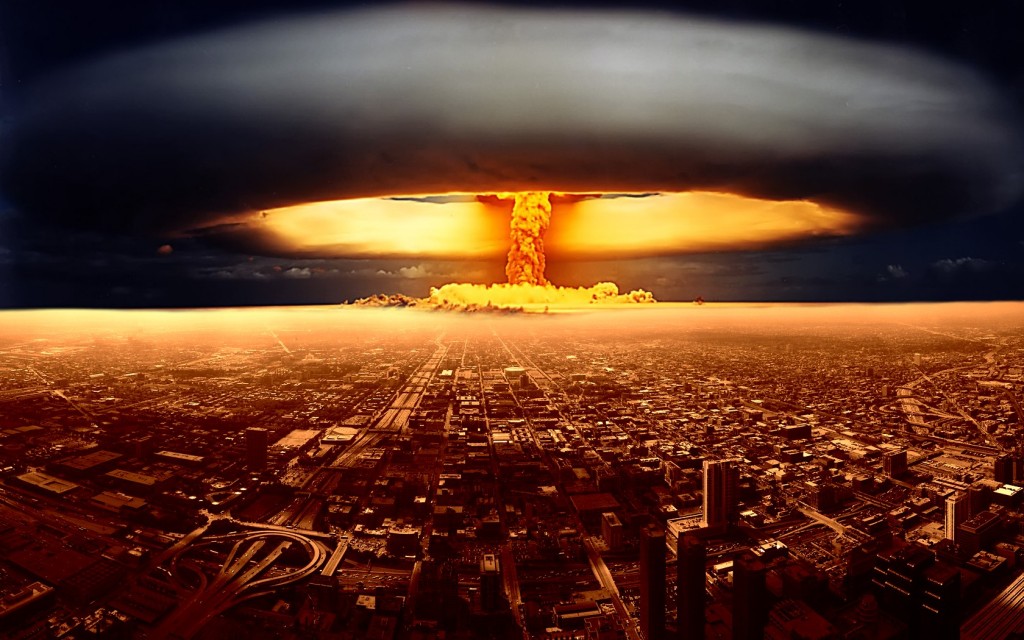
Our present generation is living out of the spiritually vacuous philosophies of modernism and post-modernism, the cancerous ideologies of free-market economics and unrestrained economic growth, and the corporate and political tyrannies that have nurtured an energised ethos of transience. The triumphalism of modernity has effectively wiped from our collective memories a coherent view of just what has gone down in the flourish and flash of the late twentieth century. The immensity of human misery and the degree of cultural waste wrought over the past century have been largely forgotten.
We have succeeded in erasing from our consciences the terrible crimes of Hiroshima and Nagasaki. We have similarly glossed over the outpouring of vast torrents of radioactive elements into the earth's atmosphere. Every living human being now carries radioactive elements in their bodies as a result of the 520 atmospheric nuclear tests - with an explosive power equivalent to 29,000 Hiroshima bombs - that were conducted between 1945 and 1980. We also choose to ignore the insidious infiltration of radioactive elements throughout the biosphere from every stage of the nuclear cycle, from the mining and processing of uranium to the routine ventings of nuclear power plants. And despite the global dispersal of a devil's brew of long-lived radionuclides from the catastrophic accidents at Chelyabinsk, Chernobyl and more recently Fukushima, our technocratic minders and their political puppets continue to steer public opinion towards the embrace of a salvific nuclear renaissance that will put to rest all nasty prospects of runaway climate change.
One does not need an overheated imagination to conclude that the past century has been in the thrall of demonic forces that have somehow subverted our capacity for thoughtful evaluation and corrective restraint. Having witnessed the holocaust of the so-called Great War, William Butler Yeats wrote in 1919:
Things fall apart; the centre cannot hold;
Mere anarchy is loosed upon the world.
The blood-dimmed tide is loosed, and everywhere
The ceremony of innocence is drowned;
The best lack all conviction, while the worst
Are full of passionate intensity.
A century later, some things seem not to have changed at all . . . .
Echoes from a Cathedral
There is a story told in certain circles that offers a most unusual view regarding the nature of the forces unleashed on the world during the twentieth century:
After celebrating a morning mass in 1884, Pope Leo XIII attended a mass of Thanksgiving, as was his practice. At a certain point, he lifted his head and began to look steadily towards the altar. He was staring motionlessly without batting an eye. His expression alternated between horror and awe and the appearance of his face was alternately flushed and pale. He seemed completely overtaken by what he was experiencing. As his facial colour returned and he became more settled, he rose from his seat and went straight to his office without speaking to anybody or giving any indication of what he had just experienced. When he emerged half an hour later, Pope Leo handed his secretary a newly composed prayer to Saint Michael with instructions that it was thenceforth to be read in Catholic churches after every mass. This practice commenced soon after and continued for many decades. It was only abandoned after the reforms of Vatican II during the 1960s.
Pope Leo later described how during the time of his entrancement, he had heard two voices emanating from the tabernacle. One was a deep guttural voice that boasted that he could destroy the Church if given enough time and power. A strong but gentle voice replied and asked how much time and how much power was needed. The other said that a century would be sufficient but that he needed greater power over those whose service he could avail himself of. Pope Leo then heard the reply: "You have the time. You will have the power. Do with them what you will."
The twentieth century has in fact seen not only the destruction of much within the Catholic Church that was held sacrosanct during the time of Pope Leo who held office from 1878 to 1903, but the unleashing of destructive forces on a scale never before witnessed on the earth.
Leviathan Awakens
The decades following Pope Leo's vision saw a consolidation and expansion of the new powers that the industrial revolution had spawned. But the high intelligence that brought forth the many innovations of the time carried its own dark shadow as an unshakeable companion. There were some with prescience who descried the oppression that lay hidden within emerging industrial developments. Among the first were the romantic poets who lamented the destruction of the natural world that invariably accompanied urban and industrial expansion. As early as the first decade of the nineteenth century, William Blake had envisioned the new forms of enslavement and the forfeitures of freedom that lay in wait in the nascent industrialism revealed by the dark satanic mills of Georgian England.
The development of new industrial methods of production enabled the exploitation of coal reserves, mineral deposits, and newly discovered petroleum fields on a hitherto unimagined scale. They gave rise to new dynasties of immense wealth and power. As factories began to proliferate, vast numbers of people found themselves subjected to lives of bondage in servitude to the Machine. In the United States, Andrew Carnegie's steelworks poured out thousands of kilometres of railway tracks that carried coal-fired locomotives and their heavy cargoes to all parts of a newly opened continent. Rockefeller's Standard Oil Company drew forth the energy-rich black blood stored in ancient forests that had been hidden in the earth. Crude oil was progressively fractionated and manipulated by a new class of chemists to produce fuels and lubricants for internal combustion engines, fertilisers for agriculture, explosives for military and industrial use, and the building blocks of powerful new drugs that would completely alter the way medicine was practised.
This creativity was, however, shadowed by a destructive aspect of equal magnitude. This was made manifest in its tragic fullness during World War I that raged from 1914 to 1918. During those four years, some 17 million people died violently and a further 20 million were wounded. Even greater numbers of those who were not killed by bullets, mortars, bombs or chemical weapons were later taken out by the influenza pandemic of 1918.
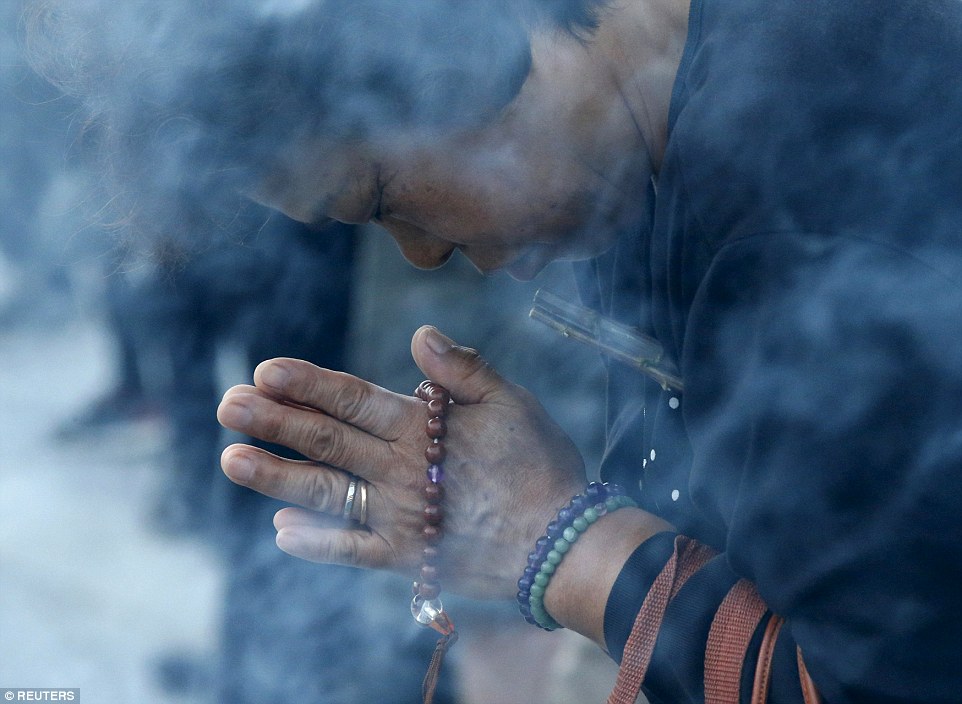
Woman in Prayer at Hiroshima Memorial Park
Never before in the history of humanity had so much metal been used to such destructive purpose. Never before had such explosive power been so catastrophically released. Never before had so many young and old men in uniform been mobilised over such vast distances. Never before had so many people been destroyed in such numbers by fellow human beings. Yet the experience of World War I proved to be but a prelude to the far greater devastation that erupted a short 21 years later culminating in the dropping of two atomic bombs over the Japanese cities of Hiroshima and Nagasaki in August 1945.
The dual nature of modernism had revealed its extremity.
Lengthening Shadows
The Great War was but a first manifestation of the unleashing of the prodigious powers and capabilities that would come to dominate the twentieth century landscape. These powers found expression in virtually all domains of human endeavour - economic management, political ideology and methods of social control, mineral extraction and utilisation, electricity generation and supply, and ways of land, air and maritime transport. The ingenuity and brilliance embodied in these developments were, however, accompanied step by step by forces that darkened all the visionary rhetoric promising the arrival of a new golden age, a tomorrowland of prosperity, freedom and happiness for all.
The opposing ideologies of capitalism and communism began to crystallise, the one marked by a philosophy and practice of unrestrained privately-owned production and a similarly unrestrained consumption, the other by a forfeiture of private property and the creation of state-owned enterprises built on totalitarian methods of social and political control. By the late 1920s, the seeds had been sown for a massive collapse in the economies of both the United States and Europe. By the early 1930s, millions of workers and tens of thousands of financial institutions in the so-called free world had been brought to ruin by the Great Depression.
The Soviet Union was declared by Vladimir Lenin in 1922. When he died two years later, Joseph Stalin consolidated his own power and outmanoeuvred his opponents to become supreme dictator by the late 1920s. Vast tracts of agricultural land were seized by the State and millions were imprisoned in an archipelago of labour camps. Stalin's suppression of all opposition in the Ukraine was merciless. Between 1929 and 1933, seven million Ukrainians - three million of whom were children - had been systematically starved to death.
Meanwhile, Adolph Hitler's rise to power had become irresistible, fuelled as it was by the growing resentment of a German people who had been subjected to regional dismemberment, economic degradation and deep humiliation by the Treaty of Versailles imposed in 1919.
Yet the party rolled on. America and Europe recovered, the Soviet Union continued to gain in power, and Germany became increasingly militarised. By the time World War II erupted in 1939, the machinery to both create and deploy technologies of destruction on an immense scale was fully in place. Under Hitler, entire populations were herded into mechanised death camps. Aerial warfare enabled a totally new level of devastation. In the latter stages of the war, it was directed to the complete destruction by fire of entire cities, as occurred in Hamburg in July 1943, Dresden in February 1945, and Tokyo in March 1945.
The deadliest fruit that ripened on the flaming tree of war was, however, that born of the Manhattan Project. In the final furious exhalation of hell's fire that drew the curtain down on World War II, 70,000 human lives were vaporised in just 4 seconds after Fat Man, a single bomb carrying four kilograms of plutonium, exploded above the city of Nagasaki on August 9th, 1945.
Opening the Portals
Uranium was discovered in the late 1700s. It took another century before the element had revealed its hidden fire to the French physicist Henri Becquerel in 1896. Becquerel discovered that salts of uranium not only glowed in the dark but darkened photographic plates when placed in contact with them. He concluded that the salts emitted some form of radiation. Ernest Rutherford also worked with uranium, and by 1911 had established the atomic structure of matter. He also discovered that certain elements were inherently unstable and underwent radioactive transformations into other elements. Within eight years, Rutherford succeeded in replicating these transformations by bombarding a range of elements with alpha particles, one of the three forms of radiation emitted by uranium. By the mid 1930s, particle accelerators had appeared on the scene and made easier the manipulation of atomic nuclei in the laboratory.
Uranium was discovered in the late 1700s. It took another century before the element had revealed its hidden fire to the French physicist Henri Becquerel in 1896. Becquerel discovered that salts of uranium not only glowed in the dark but darkened photographic plates when placed in contact with them. He concluded that the salts emitted some form of radiation. Ernest Rutherford also worked with uranium, and by 1911 had established the atomic structure of matter. He also discovered that certain elements were inherently unstable and underwent radioactive transformations into other elements. Within eight years, Rutherford succeeded in replicating these transformations by bombarding a range of elements with alpha particles, one of the three forms of radiation emitted by uranium. By the mid 1930s, particle accelerators had appeared on the scene and made easier the manipulation of atomic nuclei in the laboratory.
In 1934, it occurred to the Italian physicist Enrico Fermi that bombarding uranium with neutrons might create heavier atoms by the capture and transformation of the neutrons in the nucleus of uranium atoms. His hunch eventually proved to be correct. Others who were conducting similar experiments observed that neutron bombardment of uranium atoms could also produce highly radioactive smaller atoms that were approximately half the size of uranium atoms. It was soon understood that uranium was capable of undergoing fission, of breaking into smaller radioactive fragments, when its nuclei absorbed neutrons.
Building on these developments, Fermi constructed a nuclear pile at the University of Chicago in which such reactions, which were capable of generating enormous amounts of energy, could be produced. On the first day of December 1942, Fermi succeeded in igniting a controlled chain reaction. The mix of fast and slow neutrons that were produced not only tore atoms apart, but created the whole new litany of the man-made elements - which included plutonium - that Fermi had anticipated eight years earlier. Four weeks later, on the 28th December 1942, President Roosevelt authorised the Manhattan Project.
The portals of the nuclear abyss had been thrown open.
The Violent Century
One of the key signatures of industrial/technological civilisation has been its willingness to exercise an ever-increasing violence in the pursuit of its aims. That violence has been made shockingly manifest in the wars conducted over the past century. Seventeen million people died violently during World War I. By the time World War II was drawing to a close, sixty million people - some 3% of the world's population - had been killed. In the short period between the two wars, the instruments of death had changed from bullets and mortars to air-borne bombs and rockets. The final act of infamy was the killing of over 200,000 Japanese people by two nuclear explosions in 1945.
Within twenty years, the United States had constructed over 31,000 nuclear weapons. And by 1985, the Soviet Union possessed over 39,000 nuclear weapons. This feast of hubris and insane excess was made possible by the generation of enormous amounts of plutonium in nuclear reactors. That flush of militaristic madness began to subside once the situation came to be more widely known. The present time has seen some small retreat. Yet more than 15,000 nuclear weapons continue to grace the arsenals of nine nations.
Nuclear reactors themselves are another story. There are more than 440 operational nuclear power plants in 31 countries. Over 60 new reactors are under construction. And as I write, some 220,000 tons of highly radioactive spent fuel rods lie immersed in cooling ponds around the world. An additional 25,000 tons have cooled sufficiently to be stored in dry casks.
Thousands of tons of new high-level wastes continue to be produced by existing nuclear reactors each year. Meanwhile, the shadowy supporters of the nuclear project blithely champion an increasingly nuclearised future.
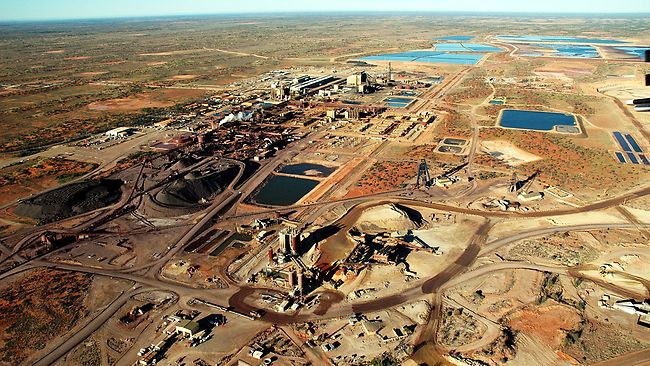
Olympic Dam Uranium Mine, South Australia
The shattering of atoms, whether cataclysmically in nuclear bombs or in controlled chain reactions within nuclear power plants is an inherently violent act. That violence is itself the end of a sequence of violence that begins with the extraction of uranium from the earth. Violence is inflicted on the many indigenous peoples whose ways of life and whose health and safety have been over-ridden by governments and mining companies determined to draw forth the power and wealth hidden within uranium ores. That violence is further contained in the slowly seething nuclear wastes that litter the hinterlands of Canada, the United States, Kazakhstan, Nigeria, Namibia, South Africa, Jharkhand, and Australia among other places. The same violence is silently experienced by millions of people throughout the world who contend with the debilitating and often lethal effects of the assimilation into their bodies of radioactive elements released by atmospheric tests, nuclear accidents, and the slow bleed of radionuclides into the lands, airs and waters of the earth through the mining of uranium and from the operation of nuclear reactors.
Successive posts on Satan's Cauldrons will progressively reveal the many faces of the nuclear project during this time when the forces of nature begin to return the violence that has been exercised so recklessly against the earth and her creatures for so long.
4 Jun 2016
Department of Veterinary Animal and Clinical Sciences Fellowship in Denmark-2016
Application Deadline: 15th August 2016 for the academic session commencing on 1st October 2016
Offered annually? Not known
Eligible Countries: Global
To be taken at (country): Denmark
Brief description: The Department of Veterinary Animal and Clinical Sciences, Faculty of Health and Medical Sciences at University of Copenhagen is offering two PhD Fellowships. The positions are limited to three years.
Eligible Field of Study: Basic Biology, Nutrition, Veterinary Medicine, Human Medicine
About the Award: The fellowship will include research activities focused on the interplay between diet, microbiota and gut, immunity and brain in early life. The projects include work in preterm pigs that show many clinical similarities to preterm human infants. The activities aim to improve early gut, immunity and brain functions with relevant milk and microbiota interventions in early life. Depending on the candidate´s educational and training background, the project will include work with pigs and/or human infants at associated hospitals. Laboratory analyses are a part of the PhD projects but will be supported by internal and external partners.
Type: PhD
Eligibility:
- The grade point average achieved in relevant University degrees
- Professional qualifications relevant to the PhD programme
- Previous publications (if any)
- Relevant work experience
- Other professional activities
- Language skills, including English
The successful candidate is also required to be resourceful and to possess good interpersonal skills.
Selection Criteria:
- MD or DVM
- Prior experience in clinical work and/or translational research with laboratory animals
- Knowledge in neonatology, paediatrics
- High motivation and basic scientific skills are essential
- Good communication skills both oral and written, including English usage
- Good collaborating skills are essential
Number of Awardees: Not specified
Value of Scholarship: Depending on seniority, the monthly salary begins around 25.579 DKK (equivalent to USD3,842.95) plus pension.
Duration of Fellowship: The fellowship is for a 3-year period for applicants holding a relevant master´s degree.
How to Apply:
- Cover letter detailing your motivation and background for applying for the specific PhD project
- CV
- Diploma and detailed transcripts of records
- Other information for consideration, e.g. list of publications (if any), peer reviewed and other
- Personal recommendations (if any)
- A maximum of 3 relevant scientific works which the applicant wishes to be included in the assessment
Award Provider: Department of Veterinary Clinical and Animal Sciences, University of Copenhagen
Important Notes: The University of Copenhagen wishes to reflect the diversity of society and welcomes applications from all qualified candidates regardless of personal background. It is a prerequisite that the PhD candidate is enrolled as PhD student at the Faculty of Health and Medical Sciences, University of Copenhagen, according to the rules stipulated in “Bekendtgørelse nr. 18 af 14. januar 2008 om ph.d.-graden.“
2016 Research Training Fellowship for Developing Country Scientists (RTF-DCS)
Application Deadline: Friday, 17th June 2016
Offered annually? Yes
Eligible Countries: Any developing country
To be taken at (country): India
Brief description: The NAM S&T Centre invites applications from the scientists, technologists and engineers of the developing countries for the award of Fellowships under the ‘Research Training Fellowship for Developing Country Scientists (RTF-DCS)’ scheme for the years 2016-2017. The RTF-DCS Programme aims at capacity building of the developing countries in the fields of Science and Technology through the affiliation of their scientists with Indian scientific and academic Centres of Excellence.
Eligible Fields of Study: Agricultural Sciences; Biological and Medical Sciences; Chemical Sciences; Physical Sciences and Mathematics; Earth Sciences; Engineering Sciences; Materials, Minerals and Metallurgy; and Multi-disciplinary and other areas.
About the Award: The Centre for Science and Technology of the Non-Aligned and Other Developing Countries (NAM S&T Centre) is presently implementing a Fellowship programme titled ‘Research Training Fellowship for Developing Country Scientists (RTF-DCS)’ to provide opportunity to young researchers of the developing countries for their capacity building in science and technology through their affiliation with premier academic and research institutions in India to carry out short-term research work. Under the programme, full financial support is provided to the research fellows for their international travel, subsistence allowance, research contingency, domestic travel in India, etc. The RTF-DCS programme has been sponsored by the Government of India, Department of Science & Technology (DST), Ministry of Science & Technology.
Type: Postgraduate Science Research Fellowship
Eligibility:
- Candidate should be working in a national R&D or academic institution in his/her home country. The application should be endorsed by the Head of his/her institution confirming that if selected, he/she will be sanctioned leave for the Fellowship period and will join his/her duties back in the institution on completion of the Fellowship in India.
- Scientists/researchers from any developing country below 40 years old (as on January 1, 2016) and possessing at least a Post Graduate Degree in any Natural Science subject or an equivalent degree in Technology/Engineering/Medicine/allied disciplines.
Selection Criteria: Selection will be made by a High-Level Selection Committee based on the quality of the research proposal submitted by the applicant and their academic merit.
Number of Awardees: 50
Value of Fellowship: Full financial assistance to the Fellows, including:
- A round-trip international airfare by excursion/economy class,
- A monthly Fellowship amount of Indian Rupees (INR) 35,000 [about US$525 at the current exchange rate] (non-taxable) to cover accommodation, meals and other miscellaneous expenses and
- A one-time grant of INR 30,000 [about US$450] for research contingency and domestic travel, including airport transfers, visiting research institutions, attending scientific events and field trips within India, subject to the approval of the research supervisor. The Indian host institutions will also be suitably compensated for their services for implementation of the programme.
Duration of Fellowship: The Fellowship is for a period of six months. Therefore, the interested applicants must be absolutely certain about their availability for six months, if selected for this Fellowship.
How to Apply: Application for the award of the Fellowship should be submitted to the NAM S&T Centre in the enclosed format along with the following enclosures:
- Curriculum Vitae (in MS Word format, not more than two Pages), including Professional and Research Experience and a list of latest publications (Not more than five)
- Research Proposal with Objectives, Scope of Work, Plan of Action, Methodology and Deliverables (in MS Word format).
- Recent Passport size Photograph.
- Copy of Relevant Pages of Passport
- Copy of an endorsement from present employer, duly filled in and signed, along with Signature of the applicant. Take a print out of the format of ‘Endorsement of Present Employer’ appended at the end of this Announcement and attach a scanned copy of the appropriately filled up document along with the application form).
- A copy of the letter / email (if obtained) from any Indian scientist/institution with consent to accept you to work with them, if you get selected by the NAM S&T Centre.
- The application form must be filled up only in typed script (NOT HAND WRITTEN). Incomplete and illegible applications will be rejected.
- All the enclosures as above must be submitted along with the application. Applications without any of the enclosures as mentioned at i. to v. above will be rejected.
Applications should be submitted to the NAM S&T Centre in the prescribed format enclosed in the Brochure. Candidates should download the Application Form by CLICKING HERE.
Only electronic communication will be accepted. Candidates are advised not to send hard copies of the application or any other document. The completed application form and other enclosures as listed in Section-VIII, Paragraph 1 of the Brochure should be sent as attachments to rtfdcs15@gmail.com
Award Provider: The Centre for Science and Technology of the Non-Aligned and Other Developing Countries (NAM S&T Centre)
Important Notes: To prepare the proposal, the applicants should carefully study the material available in these guidelines. It is advisable for an applicant (though not mandatory, but may be useful for their final selection/placement)to make a prior contact with a concerned Indian scientist or an institution in India where work is in progress in the area of interest to the applicant, and obtain consent that they, if selected, will be accepted to work in the institution on the proposed research project. A copy of the consent letter, if available, should be enclosed with the application. A suggestive list of Indian academic and research institutions has been enclosed with the Announcement, but the applicant is free to contact any other institution in India about which information may be gathered through Internet search or other means.
Subscribe to:
Comments (Atom)