17 Jun 2016

The Misplaced Fear Of Arabised Islam

Suraj Kumar Thube

As the holy month of fasting has returned , so have certain controversies regarding the same. To call it a controversy would itself be like legitimising the debate that has been going since quite a few years now. The idea that "RamaZan" has been taken over by a more puritanical sounding "RamaDan" is something that seems to be worrying some people of late.
The issue here is about a Persian word like Ramazan being on a decline in terms of daily usage and Ramadan, an Arabic word replacing it in the same. Similarly, the fear of a Wahabbist sounding phonology of "Allah" conveniently substituting the farsi "Khuda" is something that has exacerbated the larger political problems with this transformation. People seem increasingly wary about the takeover of a radicalised brand of Islam by capturing the gullible minds of South Asian Muslims. The question is that should we really be worried about this so called threatening change?
If one takes a cursory glance over the expansion of Islam in South Asia, most of it has come from Central Asia with a prominent Persian vocabulary. Barring the state of Kerala which has had historical trade relations with the Arab gulf, most of the other parts in India, especially north India has been under the influence of the Urdu\Farsi lexicon. That people are wanting to be more close to the Arab Islamic phonology is a development of the past couple of decades. One possible explanation can certainly be the effect of modernization on the Indian expatriates who are working in the Arab gulf. Working over there for years has brought them into some sort of attachment with the local cultures and a belief of becoming more direct and clear in their invocation of the God.
Asserting one's new found individual identity by shrugging away the enmeshed feudal shibboleths historically found in the Indian Subcontinent can be another reason for the change. However, this seems more complex as the change in language shows no uniformity over all the terms used in everyday parlance. Along with the usage of an Arabised "Ramadan" and "Allah", we still see on a large scale the use of distinctly Persian words like "Namaaz" instead of the Arabic "Salaah" and "Roza" instead of the Arabic "Sawm". Does this mean that the newfound admiration for Arabic is only concerned with God and Almighty and not for other words used in our daily discourse? If not, what can be the possible alternatives that can be thought about to discern the changing complex narrative.
The forces of globalization, modernization, cultural factors all need to be taken into account for understanding this prevalent dynamism. To see the issue in a hackneyed binary of the inclination toward Arabic as an austere, worrisome trend on one side and a more localised, peaceful rendering of Persian Islam on the other is something that should be jettisoned right at the outset. A more nuanced framing is required to navigate through the rigmarole of the changing Islamic cultural practises as a whole of which language is certainly a crucial component. Is the change an innocuous one or does it have a deeper cultural significance is something that needs to be worked upon. One thing seems clear though, the so called fear of the Arabised takeover of South Asian Islam needs more diverse perspectives on a range of social, political, economic and cultural issues. Otherwise, it wouldn't be wrong to term the transformation as a normal particular churning that any language goes through with the passage of time.

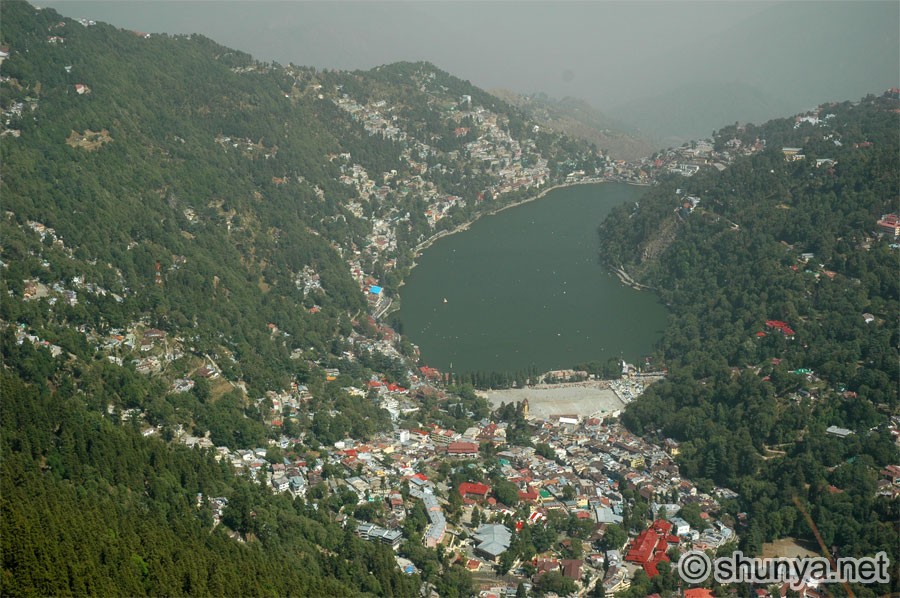
Nainital Lake Faces An Evironmental Calamity

Noman Siddiqui


“I’ll walk in the rain by your side; I'll cling to the warmth of your hand.
I'll do anything to keep you satisfied, I'll love you more than anybody can."
John Denver may have written this song for his baby, but for me my first love is my hometown, Nainital. I have grown up with the smell of the lake and the feeling of the woods. While my music teacher in school must not have thought of why he made us sing this song, I certainly love humming it, sitting on my terrace sipping my chai and do nothing but watch the dreamy lake. Nothing can beat the tranquillity of the lake view in the middle of a town which now is turning into a concrete jungle. But as they say, 'life is better at the lake', it certainly is.

The Nainital lake is said to have been formed by Goddess Sati’s eye, as it fell on the earth, after Lord Shiva carried her charred remains. All who live in Nainital can explain how important the lake is for them, with over a lakh people residing in the city, the natural freshwater lake is the major source of water for its residents and the lakhs of tourists who visit Nainital every year.

"Samay bahot kharab aane waala hain, baraf ab parhti nahi hain, aur jaado mein barish to hona band ho gai hain", says a prominent resident Dinesh Chandra Sah. Though recent rains have brought some sense of relief for the lake and the locals hope that normal monsoons will restore the water level, but these days, the first look at the lake in itself is an explanation of how bad the situation is.

Some say that the decrease in the water level is a first in 25 years, experts believe that the main reason behind this is lack of rain in winters. There is now a sense of helplessness amongst the locals, a local shopkeeper feels if the govt. doesn't take immediate steps to protect the lake, the day isn't far where Nainital will face severe water crisis which can discourage tourism and directly affect the economy of the town. The administration has started several campaigns, including cleaning of silt from the lake to help the lake rejuvenate.

Prominent environment activist and academician Prof Ajay S Rawat who first filed a PIL in 1993 for the protection of the lake and latest one demanding Nainital to be declared an eco-sensitive zone says, “Currently 16 million litres of water is being used from the lake every day and there is almost no recharge. This means almost 4 cm of the water level in the lake is going down every day. The standard formula is that in open surface area if 4 million litres water from any water body is being consumed every day and there is no recharge then the level of water will go down by 1 cm.”

Growing up on the banks of the Nainital Lake was like living in a fairy tale. My earliest memories hold a tender ambience, the serenity and the calmness of the lake and the mist covered mountains add to the mystic charm of the lake city. For the locals it still remains their paradise on earth, from Rajesh Khana riding on a yacht and singing “Jiss gali mein tera ghar na ho balma” for Asha Parikh to the song “taalo mein Nainital baaki sab tallaiya”, the lake has always serves as a symbol of love, divinity and as a nourisher for the locals.

"The lake is definitely under some threat due to a combination of climate change and poorly handled development. We need to recognise this and focus on efforts to sustainably manage Nainital and its surroundings," says Vishal Singh who is a researcher with CEDAR, Dehradun. He suggests that "the levels of lake recharge are not well understood. NIH data indicates that Sukhatal lake, perched a little above lake Nainital, is a critical source of recharge to the lake. As Sukhatal has been degraded – by dumping of construction debris and reducing its permeability and as water is hardly allowed to remain in Sukhatal due to the flooding of homes that have been constructed almost on the lake bed, it is likely that the contribution of Sukhatal has been decreasing."

The sea green lake, the gentle morning sunshine, chirping birds, Nainital still remains one of the most popular tourist destinations and it needs our prayers and also the locals should realise that today is the time to act, tomorrow maybe late.

Pathways Of Transition To Agroecological Food Systems


Adam Parsons

A new report by leading sustainability experts has reaffirmed the case for a paradigm shift from industrial agriculture to diversified agroecological systems – fundamental to which is a call for redistributing power back into the hands of those who feed the world.
An alternative vision of farming and food systems has long been upheld by civil society groups and small-scale producers around the world, based on the science of agroecology and the broader framework of food sovereignty. But while many reports and studies have shown how less intensive, diversified and sustainable farming methods can have far better outcomes than today’s corporate-dominated model of industrial agriculture, the question remains as to how we can make the shift towards agroecological systems on a global scale.
new report by The International Panel of Experts on Sustainable Food Systems (IPES-Food) has therefore attempted to fill a gap in these research findings, mapping out the common leverage points for unleashing such a radical transition. Led by the former UN Special Rapporteur on the right to food, Olivier De Schutter, a group of 20 leading agronomists and sustainability experts conclude that modern agriculture is failing to sustain the people and resources on which it relies, and has “come to represent an existential threat to itself”.
The first section of the report cites the overwhelming evidence in favour of a major transformation of our food systems, from the environmental and socio-economic issues to the question of global food supplies, which the authors crucially argue will not be greatly affected by moving away from industrial agriculture. The report strongly contends that what’s needed is not a “tweaking” of monocultural production systems or “incremental shifts” towards more sustainable farming practices, but a fundamental paradigm shift that addresses the underlying dynamics and power relations that are at the root of the agricultural crisis.
However, the scale of the challenge is clear in the report’s second section, which outlines the vicious circles and “lock-ins” that keep industrial agriculture in place, regardless of its negative outcomes. Some of these factors relate to the political structures governing food systems, such as the web of interlocking market and political incentives that are tailored to large-scale farming, and the increasing orientation of agriculture to international trade. The report also looks at other conceptual barriers and framing issues that serve to lock in the technology-oriented, highly specialised model of farming that is based on “compartmentalised” and short-term thinking within the political and business communities.
Feeding the world?
Of particular significance is what the authors term “feed the world” narratives that continue to inform public policy, based on a narrow vision of food security understood in terms of delivering sufficient net calories at the global level. These productivity-focused narratives tend to ignore the fact that hunger is fundamentally a distributional question tied to poverty, social exclusion and other factors that prevent sufficient access to food, as emphasised by statistics from the United Nations’ Food and Agricultural Organisation. Impressive productivity gains in industrial systems have clearly not translated into global food security by any measure, with 795 million estimated to be suffering from hunger in 2015, and 2 billion people afflicted by the “hidden hunger” of micronutrient deficiencies.
Furthermore, narratives about “feeding the world” through increased net production levels also serve to deflect attention away from the failings of industrial agriculture, thus reinforcing the dominant paradigm. In this light, the report cites the initiative called the “New Alliance for Food Security and Nutrition in Africa” (NAFSN) that was launched by G8 countries in 2012 with the noble aim of improving the lives of smallholder farmers and lifting 50 million out of poverty by 2050. By focusing on integrating smallholders into agribusiness-led global supply chains through outgrower schemes, the NAFSN initiative ignores the power imbalances and livelihood stresses that are often exacerbated in these types of arrangements. It also overlooks the severe environmental impacts of industrial agriculture, and the unrealised potential of diversified agroecological systems to deliver a sustainable pathway to global food security.
The underlying problem is the concentration of power in food systems, which the report describes as a “lock-in of a different nature” that reinforces all of the other lock-ins. A small number of dominant agribusiness firms control the majority of chemical fertilizer supplies, pesticides and input-responsive seeds, for example, while power is highly concentrated at every node of the commercial food chain – in commodity export circuits, the global trade in grain, and through supermarkets and other large-scale retailers. These dominant actors are able to use their power to reinforce the prevailing dynamics that favour food systems geared to uniform crop commodities and massive export-oriented trade. Through lobbying policymakers, influencing research and development focuses, and even by co-opting alternatives - such as organic agriculture - these vested interests are able to perpetuate the self-reinforcing power imbalances in industrial food systems.
Resistance to change
Herein lies the crux of the issue for putting agroecology at the forefront of the global political agenda: the mismatch between its potential to improve food system outcomes, and its potential to generate profits for agribusiness:
“A wholesale transition to diversified agroecological food and farming systems does not hold obvious economic interest for the actors to whom power and influence have previously accrued. The alternative model requires fewer external inputs, most of which are locally and/or self-produced. Furthermore, in order to deliver the resilience so central to diversified systems, a wide variety of highly locally-adapted seeds is needed, alongside the ability to reproduce, share and access that base of genetic resources over time. This suggests a much-reduced role for input-responsive varieties of major cereal crops, and therefore few incentives for commercial providers of seeds, fertilizers and pesticides. The global trade and processing industry is also a major potential source of resistance to change, given that alternative models tend to favour local production and short value chains that reduce the number of intermediaries.”
Questioning whether the balance can be shifted in favour of diversified agroecological systems, the report goes on to identify several opportunities for change that are emerging through the cracks of the existing models of industrial agriculture. This includes the policy incentives enacted by some governments to shift their food systems towards more ecologically sustainable means of farming, such as the oft-cited example of Cuba that has been compelled to shift away from chemical input-intensive commodity monocropping since the collapse of the Soviet Union.
Alongside the marked rise in public and academic awareness in favour of agroecology over recent years, as well as a surge in many grassroots schemes and initiatives that embody agroecological principles (i.e. farmers markets, community supported agriculture, direct sales shops and other new market relationships that bypass conventional retail circuits), also of note is the positive developments in the global governance agenda. There are now many examples of new intergovernmental processes and assessments that are responding to the case for a wholesale food systems transition. In particular, the first International Symposium on Agroecology for Food Security and Nutrition was held in 2014, with a further symposium to be held in China in August this year, followed by a regional meeting in Hungary towards the end of 2016. In 2009, the findings of the International Assessment of Agricultural Knowledge, Science and Technology for Development (IAASTD) also gave the strongest support to the development of agroecological science and practice, presenting policymakers with an effective blueprint to confront today’s global food crisis.
But as the IPES-Food report concludes, these new opportunities are not developing nearly fast enough. Farming systems now stand at a crossroads, and there is a great danger that the current reinvestment in agriculture in the global South will replicate the pathways of industrialisation followed in wealthy countries. However, the author’s recommended “pathways of transition” are not overly inspiring given the convincing case for change presented in the earlier evidence sections of the report. There may also be nothing new for progressive scholars or food justice campaigners in the outline of new political priorities that must be urgently established by governments, no matter how important these policy shifts remain – such as the promotion of shorter supply chains and alternatives to mass retail outlets, and the ultimate relinquishing of all public support from monocultural production systems.
Redistributing power downwards
More compelling is the report’s acknowledgement that the distribution of power is crucial to the transition towards diversified agricultural systems, and hence the key to change is the establishment of new political priorities that can, over time, redistribute power in the global food system away from the dominant actors. That is, of course, an immense challenge that cannot succeed without the strengthening of social movements, from the many indigenous and community-based organisations that advocate for agroecological practices, to the diverse coalitions and civil society groups from the global North and South that embrace the food sovereignty paradigm. The fact that the report acknowledges the importance of these grassroots, bottom-up, farmer- and consumer-led initiatives makes it a potential tool for activists to use in the ongoing struggle for a just and sustainable food system.
From STWR’s perspective, the call for sharing is central to this alternative vision of a new paradigm in global agriculture that is designed in the interests of people and the environment, rather than the profit-making imperatives of multinational corporations. For example, as the historic Nyéléni Declaration on Agroecology asserts in its statement of common principles from February last year, collective rights and the sharing of access to the commons is a fundamental pillar of agroecology, which is as much a political movement as a science of sustainable farming. It is fundamentally about challenging and transforming structures of power in society, and placing the control of the food supply – the seeds, biodiversity, land and territories, waters, knowledge, culture and the commons – back into the hands of the peoples who feed the world, the vast majority of whom are small-scale producers.
If governments are to finally accept their responsibility to guarantee access to safe, nutritious food for all the world’s people, there is now a clearly established roadmap of the policies needed to democratise and localise food economies in line with the principles of sharing and cooperation. The IPES-Food report has provided another valuable assessment and set of recommendations that strengthens the case for a global transition towards food systems that diversify production and nurture the environment in holistic ways, rebuilding biodiversity and rehabilitating degraded land. The core of the challenge is not a lack of evidence, as the report authors have again made clear; it is the ideological support for an outmoded model of agriculture that continues to generate huge profits for the few, at the expense of long-term healthy agro-ecosystems and secure livelihoods.

New Zealand Defence White Paper prepares for war

Tom Peters

The New Zealand government’s Defence White Paper, released on June 8, announced an extraordinary $20 billion over the next 15 years to replace and upgrade military hardware.
The new spending, supported by the entire political establishment, comes at a time of deepening social crisis caused by nearly a decade of austerity. Approximately 1 in 100 people are homeless due to a severe lack of affordable housing. Tens of thousands are being denied surgical procedures because of healthcare cuts. Now billions more will be taken from essential services to fund the military.
The White Paper marks a further step in the country’s integration into US war plans against China, which has proceeded behind the backs of the population and in defiance of widespread anti-war sentiment.
New Zealand’s ruling elite is responding to the global economic crisis by strengthening its alliance with Washington, on which it relies to support New Zealand’s own neo-colonial interests. Defence Minister Gerry Brownlee stated that planned upgrades to frigates, planes and land vehicles would make NZ forces “interoperable ... with our close partners,” particularly the US and Australia.
There is funding for new surveillance planes and drones to patrol well beyond NZ’s Exclusive Economic Zone, throughout the South Pacific, Asia and Antarctic waters. A navy vessel will be ice-strengthened to carry out patrols in a vast area of the Southern Ocean, which is rich in natural resources, where New Zealand asserts a “right of sovereignty.”
The Hercules and Boeing 757 planes will be replaced with new transportation aircraft for the rapid deployment of ground forces. The government is also promising an expansion of the armed forces’ capacity to carry out cyber warfare by employing more intelligence personnel.
The White Paper was prepared in close consultation with Australia, New Zealand’s closest military ally. Australia’s Defence White Paper, released in February, announced $194 billion worth of purchases over the next decade, the greatest expenditure since World War II.
The Australian document made clear that the massive expansion and upgrade of its forces is aimed at boosting “interoperability” with the US for war with China, which is identified as a threat to Australia’s national interests.
The New Zealand White Paper is more diplomatic in its language, reflecting the New Zealand’s relatively small size and its economy’s heavy reliance on agricultural exports to China, its second largest trading partner. The paper describes China as a “strategic partner” and refrains from criticising its land reclamation activities and territorial claims in the South China Sea. The Obama administration has seized on the long-standing disputes over islands as a pretext for a vast military build-up and repeated provocations against China.
Wellington is trying to maintain a fraught and ultimately unsustainable balancing act: strengthening military ties with Washington without offending Beijing. Brownlee told a press conference the government did not “take sides” in the South China Sea disputes. He demanded, however, that China “desist from further reclamations in future, and further exacerbation of the situation.”
The opposition Labour Party has taken a more openly anti-Chinese position. In addition to denouncing Chinese claims in the South China Sea, it has sought to whip up xenophobia by blaming Chinese people for New Zealand’s housing crisis and unemployment.
The White Paper endorses Washington’s strategic “rebalance” towards Asia, i.e. its military encirclement and threats against China, aimed at maintaining US hegemony in the region. This includes an “increase in the number and size of military exercises in the Pacific and more regular interaction between New Zealand’s armed forces and those of the United States.”
“Deepening geostrategic competition in Asia,” the White Paper states, “has heightened the risk of conflict in this critical region.” It adds that “the government would consider a defence contribution to a wider international response should a conflict occur.”
The White Paper notes that New Zealand already “makes an important contribution to international efforts towards freedom of navigation,” including “maritime surveillance activities in the South Pacific and South East Asia.” A planned upgrade of Orion surveillance aircraft, including new submarine detection technology, will “offer a highly valued capability to international coalition operations.”
Washington has used the demand for “freedom of navigation” to justify its military presence in the South China Sea, and to strengthen military ties with Japan, the Philippines, Australia and other countries against China. NZ’s surveillance upgrade will be welcomed as a contribution to the Pentagon’s AirSea Battle concept—its plan for a naval and air attack on the Chinese mainland, and the imposition of a naval blockade in the event of war.
Although not mentioned in the White Paper, the Government Communications Security Bureau, New Zealand’s intelligence agency, also contributes to US machinations by spying on Chinese officials on behalf of the National Security Agency.
Significantly, the White Paper endorses the right-wing Abe government’s revival of militarism and the “reinterpretation” of Japan’s post-World War II constitution to allow troops to deploy overseas, which has been encouraged by the US as part of its anti-China “pivot.”
The document lines up with US and European warmongering against Russia, declaring that Russia’s “intervention in Ukraine, including the annexation of Crimea,” challenges “the rules-based order which supports European peace and security.” Wellington supported the right-wing coup in Ukraine in 2014, which removed a pro-Russian government and sparked the country’s ongoing civil war.
The White Paper also notes that 100 NZ troops are currently assisting the US-led war in Iraq. The government and opposition Labour Party both support the deployment, under the fraudulent pretext of fighting Islamic State of Iraq and Syria (ISIS) terrorism.
The alliance with US imperialism is aimed at securing Washington’s ongoing support for New Zealand’s own predatory neo-colonial interests. Ominously, the White Paper declares “it is likely that the Defence Force will have to deploy to the [Pacific] region over the next ten years, for a response beyond humanitarian assistance and disaster relief.”
Referring to the immense social crisis in Pacific island nations, it states: “A lack of employment opportunity, compounded by demographic pressures such as surging working age populations in some countries, has the potential to generate social and political unrest.”
US-New Zealand military exercises have been held to prepare for an incursion into the Pacific, where Australia and New Zealand are seeking to counter Chinese and Russian influence. NZ forces are also preparing to suppress popular opposition to austerity and anti-democratic regimes.
The entire political establishment agrees with the increased military spending to prepare for war.
The Labour Party attacked the White Paper for not going far enough. Its defence spokesman Phil Goff stated: “With cuts in expenditure and capabilities in recent years, much of what the Government is intending to spend is simply catch up.” He criticised an 8 percent drop in military personnel numbers since 2009.
Labour and the right-wing nationalist NZ First Party have both called for a better-armed navy. NZ First also denounced the government’s moves to close army training camps, and has proposed a scheme for unemployed youth to train in the army.
Green Party co-leader James Shaw told the media “we recognise that defence spending is expensive and a lot of our equipment is outdated and we want to make sure our people have the best equipment they can and that they are as safe as possible.”
The 1999-2008 Labour government, supported by the Greens, strengthened military and intelligence ties with the US by sending troops to Iraq and Afghanistan. It also took part in the Australian-led interventions in the Solomon Islands and East Timor, and sent troops to Tonga following riots in 2006.
The Defence White Paper should be taken as a warning: workers in New Zealand and throughout the Pacific region confront the great danger of another world war involving nuclear-armed powers. This underscores the urgent need for the building of an anti-war movement based on the socialist perspective advanced by the International Committee of the Fourth International, of uniting the working class internationally to abolish the capitalist system, which is the source of war.

Clampdown worsens in Israel following Tel Aviv shooting

Jean Shaoul

Israeli Prime Minister Benyamin Netanyahu’s government and the racist Zionist parties grouped around him are seeking to exploit anger and anxiety of Israelis in the face of the Palestinian attack in downtown Tel Aviv last week. They demand ever more oppressive measures against the Palestinians, and intensified state repression within Israel.
The two attackers, 22-year-old Mohammad Makhamrah and his cousin, 21-year-old Mohammad Ahmad Makhamrah, ordered drinks in the café in the upscale Sarone Market and then shot and killed four Israelis and injured six others.
Among the victims was 58-year-old sociologist Michael Feige at Ben Gurion University who had written and lectured extensively about Israeli-Palestinian conflict and the effects of war and terrorism on the Israeli psyche. His book,Settling in the Hearts: Jewish Fundamentalism in the Occupied Territories,won the Shapiro Prize for Best Book from the Association of Israel Studies in 2010. In his recent study of Rabin assassin Yigal Amir, he noted that “a large percentage of political murderers in Israel have come from the ethnic margins of Gush Emunim and of the ideological settler community.”
The security forces shot the attackers, hospitalising one of them, before arresting them. The two men appeared to have been acting alone. No Palestinian group has claimed responsibility for the attack.
Far-right Defence Minister Avigdor Lieberman ordered a sweeping crackdown, sending military reinforcements to the West Bank, cancelling entry permits for more than 80,000 Palestinians planning to visit Israel or East Jerusalem, and ordering the suspension of the return of slain Palestinian bodies to their families. He is seeking to speed up the demolition of homes of alleged terrorists. He imposed a lockdown on Yatta, a town near Hebron where the assailants live, house-to-house searches and the demolition of their family homes. Security forces even detained around 100 Yatta school students as they tried to leave the town to take their final exams.
Parliament signed off new counterterrorism legislation giving security services greater powers to detain and prosecute people in Israel, not the West Bank, making it possible for “passive members” of groups classified as terrorist organisations to be indicted. It allows for the defence minister to confiscate property believed to belong to outlawed groups without seeking judicial approval.
The government’s fascistic supporters rejoiced that Tel Aviv, noted for its more secular and liberal attitude, had been the subject of an attack—the first lethal attack in Israel since March when an American citizen was killed in Jaffa. Since then the number and severity of attacks on Israelis has declined sharply. Nonetheless, the repression of the Palestinians by Israel’s security forces has continued unabated alongside almost daily incidents of settler violence against the Palestinians, their lives, homes, farms and vehicles that go unpunished.
The Israeli state is seeking to create the conditions for a full-scale conflict with the Palestinians that could go as far as another war on the West Bank and Gaza.
On Tuesday, Al Jazeera reported that Israel's national water company has cut crucial water supplies to large areas of the West Bank, leaving tens of thousands without access to safe drinking water during the Islamic holy month of Ramadan. Ayman Rabi, executive director of the Palestinian Hydrology Group, told the news service that “in some areas people had not received water for more than 40 days.”
Yesterday, the Israeli journal Yedioth Ahronoth revealed a plan to build a “concrete wall tens of meters deep underground and above ground to counter the threat of Hamas attack tunnels.” It will stretch along the 60 miles of the southern border around the Gaza Strip, the third defence system of its kind Israel has built along the border. It cited a senior defence official stating baldly that “a confrontation with Hamas is inevitable, it must be the last one.”
Pent-up frustration among Palestinians exploded last summer over attempts by religious and nationalist bigots to change the status of the al-Aqsa Mosque compound to allow Jews to pray there, leading to a number of lone attacks on Israelis, 32 of them fatal, to which the Israeli security forces responded with extreme brutality. They have killed at least 207 Palestinians, injured thousands more, arrested thousands of people, included children, imposed lockdowns, and demolished the family homes of the alleged assailants, particularly in the Hebron area.
Arab parties have warned against the impact of such escalating repression. The head of the Joint Arab list bloc Ayman Odeh said, “My heart goes out to the families. An attack against innocent people is always reprehensible, there can be no justification for shooting civilians in the street.” But, he added, the far-right coalition government had contributed to a “deepening of hatred and violence.”
Arab list legislators Ahmed Tibi and Osama Saadi said, “We reject attacks on civilians in every way. Such an act does not advance Palestinian rights.” But they added that the “collective punishment” of Palestinians for the Tel Aviv attackers would not solve the problem: “Only ending the occupation will bring peace.”
Political disquiet is echoed more broadly. Tel Aviv’s Labour Mayor Ron Huldai, whose track record of shutting down the 2011 social protests over housing and taking measures to prevent further protests shows he is no liberal, blamed the Tel Aviv attack on Israel’s occupation of the West Bank. He told Israeli army radio, “We might be the only country in the world where another nation is under occupation without civil rights. ... You can’t hold people in a situation of occupation and hope they’ll reach the conclusion everything is alright.”
He called for a resumption of peace talks and said, “There has been an occupation for 49 years, which I was part of and I know the reality, and I know leaders need courage to not just talk. We have to show our neighbours that we have true intentions to return to a reality of a smaller Jewish state with a clear Jewish majority.”
More telling than Huldai’s musings over how to defend Israel’s identity as a Jewish state, the father of Ido Ben Ari, one of the four victims, accused the government of exacerbating the situation. Speaking at his son’s funeral, he said, “Last night, after the attack, the prime minister and two of his ministers arrived and yet another security cabinet issued decrees—not to return corpses, to put up barriers, to destroy houses and to make lives harder.
“These solutions create suffering, hatred, despair and [lead] to more people joining the circle of terror,” he said. “What’s needed is a solution rather than saying all the time that there’s nobody to make peace with.”
While successive governments have fostered bigotry, anti-Palestinian sentiment, chauvinism and xenophobia, such attitudes are by no means universal in Israel, which is a deeply divided country in every way. In the 2015 general election, the Labour-dominated Zionist Unity coalition, Meretz and the Joint List—all of which seek some sort of accommodation with the Palestinians—gained more than 50 percent of Tel Aviv’s votes in contrast to Jerusalem, where they took just 15 percent of the vote.
It was noticeable that Tel Aviv’s police arrested the two assailants, rather than executing them on the spot as has happened in almost all the previous lone attacks on Israelis. On an earlier occasion, when a dozen plain-clothed police beat up a Palestinian Israeli near a Tel Aviv supermarket where he worked because he refused to show his identity card, his mainly Jewish co-workers defended their colleague against the police.
Even in the midst of the daily escalation of official reaction, the seeds of an opposed development are emerging—the forging of a unified struggle of Jewish and Arab workers on the basis of a socialist and internationalist programme.

NATO commits to Afghan war through 2020, prepares Eurasian-wide escalation

Thomas Gaist

The North Atlantic Treaty Organization (NATO) military intervention in Afghanistan, which officially began as the International Security Assistance Force (ISAF) in August 2003, and ended in December 2014, will continue at least through 2020, NATO officials confirmed Wednesday.
The continued NATO occupation of Afghanistan will be divided into three subsections, commanded by US-, German- and Italian-led contingents.
Together with the 10,000 American troops remaining in country, NATO will maintain six bases as part of a “hub and spoke” military network, centered on the militarized government compound in Kabul and the massive US base at Bagram airfield, which was established following the 2001 US-led invasion.
The NATO mission in Afghanistan is only part of a package of “enhancements” announced this week. In the lead-up to the July 8 Warsaw summit, NATO is preparing to ratify a laundry list of military preparations directed toward encircling Russia. On Wednesday, the US-European imperialist alliance announced new deployments and military aid to Romania, Ukraine, the Black Sea and the Aegean.
NATO will also intensify its involvement in the European Union’s militarized refugee-policing operations in the Mediterranean, “Operation Sophia,” including a “new platform for a NATO role in the central Mediterranean,” NATO General Secretary Jens Stoltenberg said Thursday.
In a sweeping commitment, NATO has agreed in general terms to “join the US war on ISIS,” Washington’s latest catchall neocolonial project, which, though originally centered on the Iraq-Syria war launched in 2014, has expanded to encompass growing areas of Africa and Central and South Asia.
NATO advisers are already preparing to join the American intervention in Iraq, and NATO intelligence cadres have been sent to the US Central Command and US Special Operations Command in Tampa, Florida.
In Eastern Europe, NATO is preparing openly for total war against Russia.
The Warsaw summit is expected to approve a permanent “rotational” presence of thousands of Western combat troops in Eastern Europe and the Baltic states, along with the progressive buildup of massive stores of warehoused military hardware, and the maintenance of a 40,000-strong rapid response spearhead force against Russia.
The NATO “enhancements” are being announced in an aggressively provocative fashion. Every day brings more heated war rhetoric against Moscow. NATO leaders speak of war with Russia as an imminent reality.
General Secretary Jens Stoltenberg warned Thursday that Russia is massing forces all along NATO’s lines.
“We are observing massive militarisation at NATO borders: in the Arctic, in the Baltic, from the Black Sea to the Mediterranean Sea,” Stoltenberg said in an interview with Germany’s Bild.
“Russia is trying to build up a zone of influence through military means,” he said. “We are registering aggressive, unannounced, large-scale maneuvers on the Russian side. Therefore we must act,” Stoltenberg added, calling for “a clear signal of strength.”
“NATO must be ready in the future to deploy forces in Libya, as it did in Afghanistan and the Balkans,” Stoltenberg said.
NATO’s commitment to five more years of war in Afghanistan is the latest in a flurry of signals that American imperialism is preparing a new outburst of militarist violence against Afghanistan, Pakistan, and throughout Central Asia.
Spurred on by pressure from the Pentagon and the worsening crisis of the US-backed puppet government in Kabul, President Barack Obama is preparing to cancel further reductions of the US troop level in Afghanistan and authorize various expansions of the war.
Last week, Obama green-lighted new offensive operations against the Taliban insurgency. The US Air Force announced Thursday that it is intensifying bombing raids over Afghanistan, acting under expanded rules of engagement aimed at “shaping the battlespace,” the US Air Force chief of staff told media Wednesday.
The new US Afghanistan Commander, General John Nicholson, is expected to receive still broader authority to launch preemptive strikes against the Islamist militias.
Decades of imperialist war, invasion and occupation by Washington and its European accomplices have already transformed Afghanistan into a killing field. From 1978 onward, US-backed militias and American and European troops have ravaged the strategic Central Asian nation, producing a body count that continues to grow by the year. The years 2014 and 2015 each set new records for civilian deaths in Afghanistan, with at least 3,500 civilians killed and 7,500 injured last year.
Bolstered by NATO, Washington will plow ahead all the more boldly, unleashing new waves of chaos and violence in a Central Asian political tinderbox already menaced by the close prospect of a regional war involving nuclear-armed states.
The American and European soldiers sent to Afghanistan are being deployed into a cauldron of national tensions. The political order of Asia is being violently restructured under the impact of the Obama administration’s anti-China “Pivot to Asia,” which has massed American forces along China’s coasts, and inflamed conflicts between Beijing and a handful of its neighbors, including Japan, India, Vietnam and the Philippines.
The longstanding and interlocking conflicts between the governments of Afghanistan and Pakistan, and Pakistan and India, have been thrown into overdrive by the US-India alliance, and were further damaged by the May 21 assassination of Pakistani-backed Taliban leader Mullah Akhtar Mansour.
Washington’s war drive against China, and the recruitment of India on its behalf, have trashed the US-Pakistani alliance, forcing Islamabad to align more closely with Beijing. On Thursday, Pakistan announced that it would join the Chinese-led Shanghai Cooperation Organization (SCO).
“A full SCO membership will help Pakistan strengthen its role in regional and global politics, economies and infrastructure by promoting regional connectivity through the One Belt One Road and Eurasian Economic Union projects,” Pakistan Foreign Office spokesman Nafees Zakaria said.
The souring of relations between Washington and Islamabad has encouraged Kabul’s ambitions to pursue historic conflicts with Pakistan. In an apparent effort to contest the imperialist-drawn 1893 Afghanistan-Pakistan border, known as the Durand line, Afghan troops opened fire on Pakistani forces and construction crews in the Torkham border area on Sunday.
After an attempted truce, Pakistani units began firing artillery over the crossing on Wednesday. The situation remains tense and both sides are reportedly massing forces in the area.
The upending of the regional order by the US pivot is setting the stage for ferocious struggles over control of Central Asia’s vast natural resources and key commercial throughways.
In “Eurasian Integration: Caught Between Russia and China,” the European Council on Foreign Affairs, a strategy network that includes a swathe of Europe’s political and business elite, outlines a plan to shape the Eurasian economy in the interests of sections of the European bourgeoisie, primarily through interventions targeted against Russia and China.
“Europe should carve out its own role in Central Asia, deepening its relationship with key nations such as Kazakhstan. These countries need the EU’s market, and look to Europe to protect them from Russian – and to a lesser extent Chinese – control. Europe should ensure that no single country controls all energy routes through Eurasia, and back China’s projects in order to reduce Russia’s control over the region,” the Council wrote.
“The EU should play the role of an external balancer to China and Russia’s competition for power in Kazakhstan and Central Asia,” they wrote. “This will require strengthening cooperation in the field of energy trade and energy security between Central Asia and Europe.”
The European Council emphasizes the centrality of the Caucasus for Eurasian strategy, highlighting the centrality of Azerbaijan.
“Azerbaijan is a crucial partner, since it provides the only means to bypass Iran and Russia, via the Caspian Sea,” the Council notes. “Azerbaijan is at the centre of three major integration initiatives – the European Union, the Eurasian Economic Union (EEU), and the recently established One Belt, One Road (OBOR) initiative championed by China.”
The Council’s analysis underscores the strategic significance of moves to integrate Azerbaijan’s neighbor, Georgia, into NATO, a major item on the agenda for Warsaw. NATO will “strengthen our package of support for Georgia” at the Warsaw conference, Stoltenberg said, building on the NATO-Georgia Joint Training and Evaluation Center and Noble Partner war exercises held in May, which included 650 American and 200 British soldiers. While Georgia is not formally a member of NATO, Tbilisi already maintains a full infantry company within NATO’s Response Force and has deployed nearly 900 Georgian troops in support of the NATO Afghan mission.
Pointing to the titanic contradictions brewing within the Eurasian mega-continent, the European Council notes that Eurasian integration is increasingly creating a pro-Chinese constituency with the less privileged sections of European capital in Central and Eastern Europe.
The Council warns: “China’s engagement in Central and Eastern Europe threatens to turn the region into a strong advocate for China within the EU.”
For the European elites, this can only offer another compelling reason for the maintenance of NATO military garrisons, on China’s doorstep, in Afghanistan.
For all its internal divisions, the imperialist bourgeoisie is united by its determination to prevent the formation of Chinese- and Russian-led economic blocs. This is necessary to insure that the vast resources and labor armies of the post-Stalinist countries, closed off from Western capital for the better part of the 20th century by the Russian and Chinese revolutions, are thrown open for exploitation by the ruling cliques in Washington, London, Paris and Berlin.

Fears of UK exit from the EU fuel global panic

Robert Stevens

With just six days to go before the British population votes in the June 23 referendum on the UK’s membership in the European Union (EU), the real possibility of an exit vote has triggered alarm in ruling circles internationally.
All polls over the last week have shown those favouring an EU exit are in the majority. One poll published a week ago had the Leave campaign ahead by 10 points. The two latest polls, published Thursday, showed Leave ahead by between three and six points.
The two pollsters, Ipsos MORI and Survation, used the same methodology that had previously put Remain in the lead, sometimes by substantial margins. Leave is ahead in the Ipsos Mori monthly poll for the first time since Conservative Prime Minister David Cameron committed to a referendum in January 2013.
The murder Thursday of Labour parliamentarian Jo Cox by a man who allegedly shouted “Britain first” has thrown further uncertainty over the referendum, with both camps having announced a temporary suspension of their campaigns.
The Bank of England (BoE), along with central banks internationally, are preparing for the global economic shocks arising from a Leave vote. In minutes published Thursday, the BoE’s Monetary Policy Committee, who previously warned that a vote to leave could trigger recession in the UK, said, “The outcome of the referendum continues to be the largest immediate risk facing UK financial markets, and possibly also global financial markets.”
There were “risks of adverse spill-overs to the global economy,” said the bank, and it was “increasingly likely” that sterling would fall further. It warned, “a vote to leave the EU could materially alter the outlook for [economic] output and inflation.”
On Wednesday, the share price of Britain’s biggest companies listed on the FTSE 100 suffered their steepest daily fall since mid-February. By Wednesday evening, £100 billion had been wiped off their value in four days due to fears of the repercussions of a Brexit (British exit from the EU). Frankfurt’s DAX and the CAC in Paris both fell 1.4 percent. The pound fell 1.8 percent Thursday and dropped further on the Bank of England’s statement.
The Swiss National Bank decided Thursday, “Significant risks remain for the global economy. Furthermore, the imminent UK referendum on whether to stay in the European Union may cause uncertainty and turbulence to increase.” The bank’s chair, Thomas Jordan, said it was prepared to take interest rates deeper into negative territory, or step up intervention in foreign exchange markets if Leave wins.
The European Central Bank is ready to pump additional liquidity into the banking system in the event of a Leave result.
Earlier this month, Lael Brainard, a member of the US Federal Reserve board of governors, pointed to the “fragility” of the global economy and warned, “Because international financial markets are tightly linked, an adverse reaction in European financial markets could affect US financial markets, and, through them, real activity in the United States.”
On Wednesday, Fed Chair Janet Yellen declared, “Clearly this is a very important decision for the United Kingdom and for Europe. It is a decision that could have consequences for economic and financial conditions in global financial markets.”
In an article published Wednesday and entitled “Is Brexit good for America? Nope,” the Brookings Institution, a Washington think tank with close ties to the ruling Democratic Party, warned in a dire assessment, “The UK leaving the European Union would mean substantial upheaval for global markets, financial firms, and businesses that would likely leave London… Already, markets are nervous, U.S. and global stocks are slumping, and money is pouring into safe haven sovereign debt: the yield on the 10-year U.S. Treasury note is approaching record lows, while Germany’s 10-year note broke a new record low—a negative yield!”
Beyond the economic turbulence that would accompany a vote by the population of Europe’s second largest economy to exit the EU, there are major geostrategic implications. The UK is a nuclear power and the closest ally of the United States in the US-led NATO military alliance.
The Brookings Institution noted, “The United Kingdom has traditionally been in between continental Europe and America, not only in geography but also in policy.”
It concluded, “America spent enormous resources during the 20th Century engaging when continental Europeans fought each other, always aligned with Great Britain, in support of our ‘special relationship.’ If Britain leaves, it raises the chances of another crisis in Europe which could spread to our shores. It is simply not in our interests to watch the UK walk away from the EU.”
A vote to leave will intensify centrifugal tendencies already threatening to tear the European Union apart. The ruling elite internationally fears a Leave vote could prompt a devastating economic chain reaction under conditions of massive and growing hostility to the European Union.
A recent poll by the US-based Pew Research Center found that only 38 percent of the population of France had a favourable view of the EU, down from 69 percent in 2004. This is even lower than the level of support in the UK. Just 44 per cent of Britons felt positively about the EU, down from 54 percent in 2004. Only 47 percent of the Spanish population holds a favourable view of the EU, down from 80 percent in 2007.
The political atmosphere in Britain is growing increasingly febrile, as the vote looms closer. Prime Minister David Cameron, who leads the Remain campaign and whose government is irrevocably split over Europe, was only re-elected with a small majority just over a year ago. Whatever the result, it is likely that Cameron would be forced to stand down after the referendum. Another party leader and prime minister could be chosen from among the right-wing Thatcherites who lead the Leave camp.
A Leave vote, or indeed a close result either way, also throws the opposition Labour Party into crisis. Its nominally “left” leader Jeremy Corbyn has now been tasked by the Conservative government with fronting the Remain campaign in the days leading up to the vote.
A Brexit vote also raises a potential break-up of the UK, with the possibility that it could prompt a second referendum on Scottish independence. The governing Scottish National Party is in favour of remaining in the EU, with around two-thirds of the Scottish electorate also in favour.
Leave represent the interests of a section of the ruling elite who view the EU as an impediment to the interests of British capital, not just in Europe but on the global arena.
It is dominated by forces of the Tory right and the xenophobic United Kingdom Independence Party (UKIP), with the support of a section of the Labour and trade union bureaucracy. It is backed by major newspapers including the Sun, owned by the billionaire oligarch Rupert Murdoch, and the immigrant-baiting hate sheet Daily Express.
Yesterday, UKIP leader Nigel Farage unveiled a poster showing a long queue of desperate Syrian refugees on a road near the Slovenian border, under the heading “BREAKING POINT: The EU has failed us all. We must break free of the EU and take control of our borders.” As many commentators pointed out, the poster mirrors the imagery of Nazi propaganda, which, against a picture of war refugees condemned the “parasites undermining their host country.”
But this anti-migrant rhetoric is mirrored by Remain, and especially the Labour Party. Leading party figures such as Alan Johnson and Tom Watson have made speeches insisting that the only way for the British population to stop immigration and take “control” of Britain’s borders is by voting to Remain. Yesterday, Labour’s shadow chancellor John McDonnell said that Labour would look again at its position on the free movement of labour in the EU. Asked his response to Labour’s adoption of UKIP rhetoric, Corbyn responded that he had challenged Cameron to “explain why he was not taking action to stop firms advertising jobs abroad but not in the UK.”
The central issue posed to the working class is to establish its political independence. The Socialist Equality Party, the British section of the International Committee of the Fourth International, is calling for workers and youth to actively boycott the referendum. The deepening crisis of European and global capitalism is engendering massive class tensions and provoking struggles throughout the continent. It is imperative that the working class in Britain reject all the factions of the bourgeoisie and ties its fate to that of workers in Europe and internationally.
The SEP and its German sister party, the Partei für Soziale Gleichheit (Socialist Equality Party—PSG), fights for the unification of workers in Britain with their class brothers and sisters throughout the world in struggle against the EU and its constituent governments, based on the struggle for the United Socialist States of Europe.

The return of “secular stagnation”

Nick Beams

Since the official end of the US recession in 2009, following the global financial crisis, the conventional wisdom from the Federal Reserve, the US central bank, has been that various “headwinds” are responsible for the failure of the American economy to return to anything resembling its previous growth path.
The underlying assumption has been that the financial crisis of 2008–2009 did not represent any kind of fundamental breakdown in the capitalist economy, but was merely a downturn in the business cycle, albeit a very severe one, from which there would be a return at some point to a “normal” pattern of economic expansion.
However, the press conference of Fed chairwoman Janet Yellen on Wednesday, following the decision by the Federal Open Market Committee not to lift interest rates, saw a marked shift. While her prepared remarks stuck by and large to the official script that the prevailing “headwinds” would ease over time, a rather different assessment emerged during Yellen’s question and answer session with reporters.
In view of the fact that the Fed’s outlook for interest rates had been revised sharply down, even though its projections for gross domestic product growth had not, Yellen was asked whether there had been “a dramatic change in the Committee’s view on the relationship of GDP to [interest] rates.”
Her answer indicated there had, or at least that behind the façade of official pronouncements the view is developing that a fundamental shift is underway.
She noted that the so-called “neutral rate”—that is, the interest rate needed to keep the economy growing at near full employment—was “quite depressed by historical standards” and that “many estimates would put it in real or inflation adjusted terms at near zero.”
Yellen referred, according to the usual script, to “headwinds” and what she called the “lingering effects of the financial crisis,” which were expected to “ease” over time. “But there are also more long lasting or persistent factors that may be at work that are holding down the longer run neutral rates,” she added.
Chief among those factors was “slow productivity growth, which is not just a US phenomenon, but a global phenomenon.” There was considerable uncertainty, but “productivity growth could stay low for a prolonged time” and we have “aging societies in many parts of the world that could depress this neutral rate. … The sense that maybe more of what’s causing this neutral rate to be so low are factors that are not going to be rapidly disappearing but will be part of the new normal.”
Yellen’s comments followed the warning by the Conference Board, a major US economic think tank, that productivity growth could go negative this year for the first time in more than three decades.
While she did not use the term herself, Yellen’s remarks point to the emergence of what former Treasury Secretary Lawrence Summers and others have referred to as “secular stagnation.” This term was first by coined by economist Alvin Hansen in 1938 to describe a structural condition in the capitalist economy where, no matter how low interest rates go, there is no growth because the level of demand, particularly investment, is not in a cyclical downturn but permanently insufficient to ensure economic expansion.
Yellen’s reference to “aging societies” as an explanation for what she clearly recognises as a shift in the global economy, recalls nothing so much as the explanation of the classical bourgeois economist of the early nineteenth century, David Ricardo, who, when confronted with the tendency of the rate of profit to fall, ascribed it to the declining fertility of land and the fall in productivity in agriculture. As Marx pithily remarked, horrified by this prospect which called into question the historical viability of the capitalist economy, Ricardo took flight to the sphere of organic chemistry. Likewise Yellen, when confronted with persistent economic trends, seeks refuge in demographics.
In opposition to Ricardo, Marx explained that the real barrier to expanded capitalist production was not a product of nature, but of capital itself—private ownership of the means of production and the profit system.
Economic trends and tendencies reaching back over the past quarter century underscore the point made by Marx. Following the end of the post-war boom and the downturn in profit rates at the end of the 1960s and early 1970s, global capitalism experienced a series of crises, exemplified above all by the persistence of what was known as “stagflation”—low growth and recession combined with high inflation rates.
This crisis was temporarily overcome through an onslaught against the social position of the working class—the mass sacking of air traffic controllers in the US by Reagan in 1981 and the forcible state-suppression of the 1984–85 miners’ strike by the Thatcher government in Britain were key turning points—and the exploitation of new areas of cheap labour through the globalisation of production.
But the limited upturn in the rate of profit this produced did not bring about a return to the conditions of relative economic stability which marked the post-war boom. On the contrary, from the time of the October 1987 US stock market crash, world capitalism has been marked by increasing financial turmoil.
It became increasingly dependent on the injections of cheap money from the Fed and other central banks to quell ever-more severe financial storms—from the Mexican financial crisis of the early 1990s, the Asian financial crisis of 1997–98 and the collapse of Long Term Capital Management, the collapse of the dot.com bubble in 2000–2001, leading to the financial crisis of 2008 set off by the bursting of the sub-prime mortgage bubble.
The Fed and other central banks responded to that crisis as they did in the past, with massive injections of cheap money. But despite the spending of trillions of dollars in the purchase of financial assets and the lowering of interest rates to zero and even below, there has been no revival in the real economy. The only effect of these measures has been to boost financial speculation to unprecedented heights, while producing ever-widening social inequality and worsening wages and social conditions for the world’s working class.
Economic history does not repeat itself. But the capitalist economy does have laws of motion, producing discernible trends and tendencies which find their expression not only in the economy but in politics.
The year 1914 is forever etched in history as the year of the outbreak of World War I. But it was economically significant as well. It marked a downturn in profit and growth rates that, despite all efforts to overcome it, continued through the 1920s and 1930s, resulting in the Great Depression.
These underlying processes produced a contraction in the world economy which led inexorably to the outbreak of World War II as the major capitalist powers engaged in an intensifying struggle for contracting markets and profits, first by use of economic nationalist methods—increased tariffs and the formation of currency blocs—and then by military means.
Today’s world is marked by the return of these conditions: the stagnation of the world economy, glutted markets in a series of commodities and industrial products, persistently low levels of investment, the driving force of economic growth, currency conflicts and intensifying financial crisis, to name but a few examples.
And they are inevitably leading in the same direction as in earlier decades: a world war for the division and re-division of the world economy, with potential nuclear consequences and the destruction of civilisation itself.
The fact that the objective contradictions of capitalism have now managed, at least partially, to have drummed their way into the heads of the overseers of global capitalism, such as Yellen, is an indication of the advanced state of the economic crisis.
It must be a signal to the international working class that the urgent issue before it is the struggle for an international socialist program for the overthrow of the reactionary and outmoded capitalist nation-state and profit system and the building of the world party of socialist revolution, the International Committee of the Fourth International, to lead it.

16 Jun 2016

World Bank’s Young Professionals Program for International Scholars 2016

Application Timeline:
  • Application opens: 15th June 2016
  • Application closes: 27th  July, 2016
Offered annually? No
Eligible Countries: Global
To be taken at (country): Candidate’s country
Brief description: The World Bank Group is offering a five-year contract to highly qualified and motivated individuals skilled in areas relevant to the WBG technical/operations
Eligible Field of Study: The Program is designed for  such as economics, finance, education, public health, social sciences, engineering, urban planning, agriculture, natural resources and others.
About the Award: For more than 50 years, the World Bank’s Young Professionals Program has been the preeminent program preparing global development leaders.
Placed directly with their respective hiring teams, Young Professionals are expected to make significant contributions towards the unit’s work program while they gain a broad overview of the WBG’s policies and work. As part of their two-year program and in line with their hiring units’ business needs and Young Professionals interests, they are expected to undertake a ‘stretch/exposure assignment’ where they will gain valuable on-the-job experience.
Offered Since: Not known
Type: Internship opportunity
Eligibility: The following are the minimum requirements to be eligible for the Young Professionals Program.

  • Citizenship of a member country of the World Bank
  • 32 years of age or younger (i.e. born on or after October 1, 1984)
  • A PhD or Master’s degree and relevant work experience
  • Fluency in English
  • Full proficiency in one or more of the WBG’s working languages: Arabic, Chinese, French, Portuguese, Russian, and Spanish is desired but not required.
  • Specialization in a field relevant to the WBG Technical/Operations such as economics, finance, education, public health, social sciences, engineering, urban planning, agriculture, natural resources, and others.
  • At least 3 years of relevant professional experience related to development or continued academic study at the doctoral level.
Selection Criteria: Candidates will be assessed based on three main competencies:
  • Client Orientation: Commitment to Clients, Results Orientation, Integrity and Ethics
  • Professional Experience: Technical Expertise (Depth & Breadth), Strategic Perspective, Problem Analysis
  • Team Leadership: Teamwork, Listening and Communication, Innovation, Negotiation
Number of Awardees: Forty (40)
Value of Programme: Young Professionals spend 24 months of Five years in a structured development program, and enjoy a ‘stretch/exposure assignment’ where they will gain valuable on-the-job experience.
Duration of Programme: Young Professionals are offered a 5-year term contract
How to Apply: Click here to apply
Award Provider: World Bank