17 Feb 2017

What Else is Wrong with Globalization

Joan Roelofs

It isn’t just an issue of whether they have the jobs or we have the jobs. From a red-green, eco-socialist perspective we must ask: what are they producing, how does the product and process affect the health, happiness and self-esteem of the worker, how does it contribute to the health and happiness of the consumer, and what effect do product and process have on the environment and culture of the producing and receiving countries?
Globalization has benefits, undoubtedly. There are international human rights treaties that have enabled local activists to improve conditions for their fellow citizens; there are developments in medical treatments that are now widely available. But as the benefits of globalization are widely described, I will argue for the minority and indicate some of the serious problems that we don’t hear much about.
A red-green view advocates for a predominately local economy. What can be produced locally should be, even if imports are cheaper. Exceptions might be made for rare items that contribute substantially to the quality of life, when the production conditions can be ascertained.
How is it possible to provide for needs locally? Scientists, now employed mostly in weapons, pharma, and agricultural chemicals, can work with local residents to figure out how to provide for clothing, housing, food, fuel, medicine, and entertainment from local resources. Education might introduce children to all pacific and useful technology, and stimulate their creativity in providing for the needs of life (instead of the rocket building competitions featured in STEM recruitment, sponsored by weapons corporations).
Modern transportation would still be needed, but on a much smaller scale would produce far lower carbon and particulate emissions. Commuting could be greatly reduced, as well as the transportation of chocolate chip cookies from British Columbia to New Hampshire; I have encountered such an import. Vodka now shipped halfway across the earth turns out to be pure alcohol; given some grain and an old bathtub, a child could make it in her backyard (and would). Transportation of goods, even by sea, is a huge fuel consumer and environmental polluter.
An energy source that is hugely underutilized is human labor. If moderately extracted from all, it can provide great gains for health. Currently, many are idle, or engaged in pointless “workouts” or hazardous games. Food can be produced almost anywhere, with composting, raised beds, etc., and a diet based on legumes, vegetables, fruits, nuts, and small animals would provide appropriate exercise. No one needs 50 t-shirts; a small, durable, elegant supply of clothing can be fabricated even in the northern regions from wool, linen, and hemp. Given that millions of people have voluntary hobbies of gardening, macramé tying, and geegaw fabrication, this type of labor would not be unduly harsh or violate the human spirit.
Of course, if the enormous energy, resources, and brains now devoted to human destruction in the military-industrial complex were employed for human well-being, there would be a plenitude. Add to this all the resources used producing junk that earns profits for some, provides work and subsistence for others, and gives short term amusement to consumers.
What is wrong with a globalized economy and free trade based on cheapness? Adam Smith, Scottish philosopher of capitalism and free trade, said that each country should produce what it can best sell to the rest of the world, and trade with other countries for its other needs. At the time, 1776, Britain was the only industrialized country, so it naturally, or perhaps unnaturally, had a competitive advantage over countries exporting natural resources.
The early triumph of the British industrial revolution, cheap textiles made with cotton produced by slaves, put the skilled weavers out of business, hence the Luddites. T-shirts and curtain material were exported to India and Africa, destroying local textile production, creating fashions that were not needed by indigenous people, and in any case, were quite inferior to native fabrics.
One problem with the extreme specialization implied by Smith’s idea is that it reduces the range of occupations available to citizens of a country. In a similar way, high value crops: coffee, tea, chocolate, cocaine, ganja, flowers, tropical fruits, and exotic vegetables lead to monoculture. The lucrative luxuries draw all resources, labor, and capital away from basic food production.
Furthermore, mechanization, which cheapens products and makes them more exportable, results in massive unemployment. Today, as entire factories can easily be imported, comparative advantage lies with those places that have the lowest labor and environmental standards. As competition constantly leads to new lows, abandoned production sites and lost jobs are another cost to communities. Ghost towns were also a feature of early industrialization, as water power yielded first to coal and then to electricity as power sources.
Another problem is the nature of the products that really sell well: historically, and today, these have been guns and drugs (coffee, tea, sugar, tobacco as well as harder stuff), fossil fuels, lumber, and minerals. Information technology has costs as well as benefits; entertainment and news services can drown out local cultures and varied perspectives. Industrialized agriculture and farmed fish have environmental and health effects for both exporting and importing countries. Junk food floods the world with serious inroads on traditional diets, especially in poor countries where small incomes are diverted to snacks and sodas regarded as treats, even for babies.
Subsistence and mid-size farmers have a hard life, and must contend with erratic weather and harsh market conditions. They are under pressure to self-exploit and wear out the soil to produce the cheapest. It would be better if their hours were regulated and they were paid a living wage, rather than be dependent on the returns for their crop.
In France, the rules of free trade have been evaded by conservation subsidies to farmers, as the French do not want to abolish the countryside and eat only the cheaper imported food. In Mexico, farmers have been chased from the land by the more competitive industrialized agriculture. Some of them have migrated north; others have found jobs in the tourist industry, and often their diet comes from the only available source: processed food from convenience stores. Obesity is now a problem in poor as well as rich countries.
While we may be aware of the human and environmental costs of natural resource extraction, for example, oil and gas, mineral mining, and forestry, there is little that the ultimate consumer can do about it. In Australia, Canada, the US, throughout Africa, and elsewhere, uranium mining is a job for indigenous people; the wastes are also inflicted on their communities. Extraction of gold and other minerals has long poisoned the lands of Latin America and elsewhere. Now that the balanced economy of Mongolia has disintegrated, international mining companies are rapidly digging up the country.
As for the items that we purchase individually, it is difficult to research all the conditions of their production. Some organizations have done this for a few products, e.g., shoes, or fish, but even in these cases, the producers keep shifting locations and practices, so the information is quickly outdated.
Tourism is one of the largest items in international markets. Certainly it has educational benefits, but it is also energy intensive and polluting. It can provide a good living for artists, musicians, and cultural workers, but it requires armies of cab drivers, waiters, and janitors. It is a very competitive industry, and some countries find their comparative advantage in providing juvenile sex tourism. Another lure is gained by stripping forests and agricultural land to create golf courses. Caribbean losers of the“banana war,” have tried this, often on the advice of the World Bank.
Countries of the European Union, which now import most of their food, furniture, and clothing, are heavily dependent on tourism. They also import labor for service and factory work. However, an important contribution to “free trade” of the leading social democratic nations, e.g., France, Germany, Spain, Sweden, Switzerland, and the Netherlands, are weapons export industries.
Many of the 200 or so nations of the world have very little to offer in the international market. Toxic waste sites are attractive to foreign corporations, but not so much for the communities and workers that will operate them. Another handy earner of foreign exchange is the harboring of off-shore corporate headquarters for tax evasion purposes. Even Bermuda has resorted to this, as its fine beaches and coral reefs do not have enough zing for younger tourists.
The “banana war” has contributed to a strange export: citizenship. The war began in 1996, when the head of Chiquita bananas complained to the World Trade Organization that the European Union preference, a very small quota, for bananas from former colonies violated the rules of free trade. For some islands in the Caribbean, for example,
Dominica, St. Lucia, St. Vincent, Trinidad, and Jamaica, bananas produced on small family farms were an important part of the economy. They could not compete in price with the Chiquita and Dole U.S. based corporations (which have no plantations inside the US). The WTO eventually ruled that the preferences had to stop, and similarly, preferences for the sugar exports of St. Kitts. There was some hope in exporting organic bananas, but that niche was dashed when the large corporations also went into that business. With island tourism a declining industry, St. Kitts, Antigua, St. Lucia, Dominica, and Grenada are now selling citizenship. In St. Kitts, the cost is $50,000 in processing fees and the purchase of a house worth at least $400,000. The wealthy buyers can obtain tax evasion benefits as well as visa free entry to many countries, especially those of the European Union.
The political costs of globalization are often unremarked. Democratic choice is more difficult to exercise when major decisions are made at higher levels, remote from ordinary citizens. For example, the US Metalclad corporation wished to develop and enlarge a leaking toxic waste plant in Mexico. The local community didn’t want it, and refused to issue a permit, but the rules of the North American Free Trade Agreement denied locals any choice in the matter. Mexico was required to pay a fine of $16 million. Even local and national laws may have to be jettisoned according to trade agreements. This has been notable in Canada’s experience with NAFTA; several of Canadian environmental laws have been ruled violations of “free trade.” Not only trade in goods, but investments, services, and ownership of land and natural resources must be open to all according to the rules of globalization’s institutions. There have been a few cases where citizen action has delayed or defeated trade agreements, but they require tremendous efforts.
The European Union imposes financial limitations on members, despite what might be best for their citizens. The North Atlantic Treaty Organization promotes militarization and participation in aggressive wars among its members—in this supposedly defensive alliance. In addition to members, “partners in peace” and other nations have been herded into a global army, devastating Afghanistan and wherever else it decides to punish. NATO’s bases (and those of the Empire’s other alliances) create local service economies but demand exemption from environmental and criminal laws. The United Nations, despite its great promise and outlawing of war, has not been able to end aggression in foreign policy or enforce nuclear disarmament treaties. International law is mocked, except where there is some commercial advantage to its enforcement.
Further erosion of democracy results from the very attractiveness of participation in international governmental organizations, their task forces, and the non-governmental organizations that shadow them. Local political parties and activities have declined and are neglected by the leading activists who would rather travel the world in the hopes of doing some good.
Not everything we need or strongly desire can be produced locally, but by limiting imports from abroad or even great distances within a nation, we can more feasibly be informed of their production conditions. As to the high costs of “localvore” items, we discover that it is what they really cost, given humane labor conditions and respect for the environment. Political decision-making at local levels can empower ordinary people and improve the prospects for democracy. Cultural and informational exchanges can create and enhance a cosmopolitan world, provided the people, their values, and their environments are respected.

U.S. Imperial War Personified

Ron Jacobs

Modern warfare is both extremely personal and robotically impersonal. The psychological and emotional intensity of a firefight in a jungle or urban war zone is contrasted with the carpet bombing of a city from bombers more than a half mile above the target or an armed drone piloted by a human at a computer a half world away. Of course, this is mostly the perspective of the invading or occupying military. The civilians in the jungle, city, town or village under attack know only the most personal aspect—the blood, the maiming, the loss of shelter and stability, and the death of loved ones. The guerrilla fighter against the invader experiences something akin to their civilian counterpart, but at the least displays some kind of hope by the fact of fighting back.
Meanwhile, those who profit from the warfare go about the business of developing ever more murderous weaponry often designed to create even more distance between the killer and the killed; the general and the soldier. The citizens of the nation to whom the invaders belong intentionally and naively go about their business as if their tax dollars had no connection to the mayhem and murder being carried out in their name.
It is this contrast I contemplated while reading two recently published books: Debriefing the President: The Interrogation of Saddam Hussein by John Nixon and The Drone Memos: Targeted Killing, Secrecy and the Law, edited by Jameel Jaffer. The former, by a retired CIA analyst who was the first US functionary to question Saddam Hussein in depth after he was captured, is both a revealing look at a very personal series of interactions between a civilian member of the US war on the world and a profile of the longtime president of Iraq. As the narrative unfolds, it becomes clear exactly how misinformed the Bush administration, the Pentagon, and the CIA were not only regarding the presence of WMDs in Iraq, but also about the psychology and personality of Saddam Hussein. Nixon comments that this was in large part due to the political influence of the neocons in the US government, but also related to George W. Bush’s personal distaste for Hussein and a possible need to prove his worth to his father and those around him.51lHqOPOcTL._SX329_BO1,204,203,200_
Perhaps the most humane aspect of this book is the author’s growing respect for Saddam Hussein the man. As Nixon’s reporting progresses, it becomes clear that his opinion of Hussein changes from one that considered him a murderous scoundrel to one that begrudgingly acknowledged Hussein’s patriotism and sense of honor to his tribe, his mentors and his country. In the process, listening to Hussein’s version of his nation’s history under Hussein’s rule causes Nixon to challenge the narrative of his agency and his government. In doing so, it is revealed how the similarities between the two governments (Bush’s and Hussein’s) were greater than that imagined by the warmakers and the supplicant US media.
Don’t get me wrong, John Nixon never questioned that Hussein was a war criminal and deserving of his fate. Nor did he question his role in the drive to war on Iraq. He describes the Clinton administration in less than laudatory terms, in large part because it did not seem to consider all-out war in the Middle East to be a reasonable foreign policy move. Nixon remains a defender of the imperial polices of the United States and has differences only with how that policy is carried out. In other words, he was a good soldier who believed in the CIA and what he did for the agency. His book describes a deeply personal aspect of war that is rarely revealed. In other words, by describing his conversations and desire to understand the subject of this interrogation (and a target of the invaders) the text humanizes both the interrogator/warrior and the president/dictator, reminding the reader of their common humanity and the reality of war, which renders that humanity irrelevant.
It is this irrelevance that is the essence of the targeted killing program of the United States. Although the practice originated in modern times more or less with the state of Israel, it is the United States during the reign of Barack Obama that has refined it. Thanks to technological advances in the development of airborne drones and the computer guidance systems designed to send armed drones to their targets, the impersonal nature of war has made it possible to leave intentional randomness of previous versions of aerial bombardment behind when desired. Furthermore, it has made the killing of certain individuals suspected of criminal acts possible without any personal interaction with the targeted individuals. In essence, these killings are illegal. However, in the tradition of attorneys who defended slavery or those that helped create the transportation and extermination plans to rid Nazi Germany of Jewish residents, the United States has found attorneys willing to twist the US constitution and international law to justify their murders.
This is the essence of the second book mentioned above, The Drone Memos. The book is a collection of documents (with the obligatory black redaction lines through some of the text) from the Obama White House, the US Department of State, the Department of Homeland Security, and various legal counselors in the US bureaucracy. The documents in this book are the definition of the legal banality of evil. Its saving grace is the excellent discussion of the documents’ content, and the process gone through to procure them by the American Civil Liberties Union. This introduction by former Deputy Director of the ACLU Jameel Jaffer, lays bare the abuse of power targeted killing requires and the consequent growth of executive power in the US government. Indeed, the book itself goes far in explaining how we arrived at our current situation of permanent war.
Together, these texts provide a chilling look at the pervasiveness of that war and its psychology. Neither the interrogator Nixon nor the authors of the drone memos seem to have any serious moral qualms about the nature of their enterprise. At times it seems they believe their sense of moral certainty as to the crimes they are involved in is absolution by itself. Because no one else will judge them, they judge themselves and find no crimes. When a climate of criminality such as this is the norm, then all of us are to blame unless and until we stop it.

The Dutch City That Offered Refugees A Permanent Home

Sarah van Gelder


It was an odd sight for residents of Zaandam, a quaint Dutch town 15 minutes by train from Amsterdam. A public park in a village known for 18th-century windmills and wooden clogs had suddenly filled with rows of white tents. Five hundred refugees, mainly from Syria and Iraq, mostly men, had arrived by bus in October 2015. Most left behind homes, families, livelihoods, and any semblance of a normal life.
This group was just a fraction of the millions of refugees who had risked their lives fleeing to Europe as part of the largest migration since World War II, and it triggered both acts of altruism toward the survivors of the dangerous crossings and a wave of xenophobia and fear. The victory of Brexit, recent right-wing candidacies in Europe, and the election of Donald Trump have all been attributed at least in part to the fear that accompanied this mass migration.
In Zaandam, residents who attended a town meeting with the mayor raised questions about the refugees. Who would pay for their upkeep? Would town residents be safe?
Still, a church across the street from the park opened its doors to the refugees every day for coffee, tea, Dutch lessons, or just talk.
Sonja Ortmans, a writer and former lawyer, lives with her husband and two children near the park in this town where she has lived most of her life. She worried about the new arrivals, but didn’t know how to help.
Then she read in the local newspaper about one of the Syrian men in the camp, Mahmoud, a lawyer, who wanted to learn about Dutch law and customs and to work in the legal field in the Netherlands. Ortmans decided to reach out to Mahmoud to see if she could help him find a way back to practicing his profession. They met and contacted other attorneys—among the refugees and the Dutch—and eventually formed a network of legal professionals. Together, they visited international courts in The Hague and attended lectures. This was the start of what became a deep friendship.
First, though, they had to see to some immediate needs. Ortmans involved parents at her children’s school in collecting clothes and other necessities, and some joined the volunteers at the church in offering Dutch lessons. More and more residents got involved.
Meanwhile, the newcomers were doing what they needed to do to get by. One who found a job as a dishwasher told Ortmans he felt mocked by the other restaurant staff who teased him for speaking Arabic. Ortmans pointed out that these coworkers knew little of his culture—and it dawned on her that she too had little knowledge of Iraq and Syria.
So she began studying Arabic. “When you open up to people, you find treasures that can’t be explained,” she told me when I visited her during a recent visit to Amsterdam.
“If you don’t do this, you will view another culture from a place of superiority,” she said. “We are proud of our wealth, but didn’t we in the Western world get much of our wealth from colonization and extraction?”
By the time the refugees could apply for residency status in Europe, the people of the town had bonded with them and didn’t want them to leave. They lobbied the city council, asking that the refugees be invited to make Zaandam their permanent home.
Many in the United States have resisted anti-immigrant rhetoric. Thousands showed up at airports to welcome immigrants following President Trump’s executive order banning immigrants from seven Muslim-majority countries. Faith leaders spoke out for the families they were prepared to host, who were prevented by the ban from traveling to the United States. Others turned their churches into sanctuaries to protect undocumented residents from deportation. In the nation’s sanctuary cities, many elected officials remain undeterred by pressure from the Trump administration to drop policies that protect undocumented residents.
Like the people of Zaandam, many American communities are extending a hand of friendship. Instead of believing that these newcomers threaten some outdated notions of European-American superiority, they celebrate the energy, entrepreneurial spirit, and cultural treasures immigrants bring, which deepen and enliven their communities.
“To me, the solution is a society where we can live together as equals,” Ortmans told me. “That means really opening to the other cultures, at the same time taking a very clear and honest look inside about our own past. From this place, a true connection can evolve and healing can occur.”

Australian housing among the world’s most unaffordable

John Harris 

A report last month by Demographia showed that Australian housing remains among the most unaffordable in the world, with millions of workers and young people priced out by soaring housing costs. Of the 51 Australian housing markets assessed in the international survey, 33 were deemed severely unaffordable.
The report examined some 400 housing markets across nine countries, using the Median Multiple (MM) formula, obtained by dividing the median house price by the median annual household income. The MM system classifies housing markets as affordable if they score under 3.0. Results of 3.1 to 4.0 are deemed unaffordable, 4.1 to 5.0 seriously unaffordable and over 5.0 severely unaffordable.
Nationally, the Australian housing market scored 5.5. Sydney, the country’s largest population centre, is the second most unaffordable major city in the world, with a MM of 12.2, the same result as 2016 and up from 9.8 in 2015. That means it would take 12.2 years, on a median income, to earn the money to buy a median-priced house.
Sydney placed behind Hong Kong (18.1) and ahead of Vancouver (11.8) and Auckland (10.0). Sydney house prices are far less affordable than global cities such as London, with an MM of 8.5, and New York, which scored 5.7.
The current median house price in Sydney is $1,077,000, compared with $1,032,000 in 2016 and just over half a million dollars a decade ago.
The figure for Melbourne, Australia’s second largest city, was 9.5, down slightly from last year, but up from 8.7 in 2015. Like Sydney, it was more unaffordable than Los Angeles, Honolulu and San Francisco. The median house price for Melbourne currently stands at $740,000.
The housing affordability crisis is not limited to Australia’s major cities. Wingecarribee, a predominantly affluent district about 110 kilometres southwest of Sydney, which contains popular small towns such as Bowral, Mittagong and Moss Vale, had an MM of 9.8.
According to another report by the Domain property group, covering the December quarter of 2016, the mainly working class city of Wollongong, about 80 kilometres south of Sydney, is the third most expensive city in Australia. House prices increased 16.7 percent last year, with a current median price of over $700,000.
A former steel city, Wollongong has been devastated by decades of job cuts at the Port Kembla steelworks and related industries, imposed by the major companies and the trade unions. Now, amid widespread youth unemployment and endemic poverty, property developers are billing the coastal city as a potential “Riviera,” leading to a spike in purchases by investors and those with no prospect of buying a home in Sydney. Similar developments are taking place in Newcastle, another former steel city, about 160 kilometres north of Sydney, and other working class regional centres.
Numbers of reports have underscored the mounting social hardship that has resulted from such soaring housing costs. Among young people, home ownership is becoming a thing of the past. According to figures released last year, ownership in the 25- to 34-year-old age bracket fell from 39 percent in 2002 to 29 percent in 2014.
Those who do purchase a house are saddled with mortgage repayments that often outstrip a single wage. Between 2010 and 2015, the length of time it took for a two-income household, on average full-time wages, to even save a deposit to buy a median-priced house rose from 5.8 to 7.9 years.
Rental costs have also continued to rise, with the median weekly rent for an apartment in Sydney standing at over $500, or about a third of the median household income. This means there is widespread rental stress, defined as more than 30 percent of gross household income spent on rent.
The poorest and most vulnerable layers of workers and youth have been hardest hit. In June 2016, 41.2 percent of households receiving welfare payments as well as a fortnightly $130 from a Commonwealth Rental Assistance (CRA) supplement, were experiencing rental stress. Over 1.3 million households received the payment last year. Another 68.2 percent of households who received welfare, but not the CRA, suffered rental stress.
Even with rent assistance, the proportion of young people on welfare allowances but suffering rental stress was 57.6 percent. In the major cities, the proportion of young renters in rental stress, but who have no government assistance was 81.1 percent.
More than 30 percent of households receiving the Disability Support Pension and rental assistance were experiencing rent stress. And so were 57 percent of households leased by people over the age of 75, who had no rent assistance.
report this month by Choice and the National Association of Tenant Organisations underscored the knife-edge existence that millions of renters face. It found that 83 percent of renters were on a lease with no fixed term, meaning they could be required to vacate with minimal notice, or a lease of less than 12 months.
In a glimpse into the conditions renters face, 27 percent said there was some form of insect infestation in their homes, while 24 percent said their rental premises had doors or windows that would not close properly, among numerous other defects and problems. The majority failed to contact their landlord when issues arose, with 42 percent concerned that such contact would result in a rent increase, and 23 percent citing fear of eviction.
Public housing has been gutted by consecutive Labor and Liberal-National governments in all states. According to a study released last June by the Australian Institute of Health and Welfare, almost 200,000 people are languishing on social housing waiting lists.
Homelessness has also grown. According to a 2014 survey, approximately 2.5 million people (over 10 percent of the population) aged 15 years or over have experienced homelessness at some point in their lives. Of those, around 1.4 million experienced at least one episode in the previous 10 years. Homeless people are routinely vilified and harassed, and in Melbourne—Australia’s “most livable city,” the city council is moving to ban “rough sleepers” from the streets.
While the Demographia report concludes by appealing to governments to “take action” on housing affordability, the rise in house prices is the product of the rampant profiteering endemic to capitalism. This has been boosted by policies that have enriched property developers and financial speculators at the direct expense of millions of ordinary working people. Successive federal governments have insisted on retaining the policies of “negative gearing” and capital gains tax subsidies for property investors that have contributed to the housing crisis.
The housing crisis is just one expression of the dramatic growth of social inequality in Australia. The richest 10 percent of the population have now accumulated more than half the country’s total household wealth, while the poorest 40 percent own virtually nothing. And the bottom 20 percent have “negative wealth,” with their debts outstripping their assets.
This mounting household debt crisis, along with skyrocketing home prices, has prompted nervous warnings that Australia’s housing bubble may soon burst, leading to a new financial crisis and a disaster for millions of people saddled with exorbitant mortgages. Earlier this month, the International Monetary Fund called on Australian banks to boost their capital holdings, in order to “withstand a significant housing market correction.”

Families demand investigation into New Zealand mine disaster

Tom Peters 

A New Zealand parliamentary committee on February 16 heard submissions on behalf of 25 of the 29 families who lost members in the November 2010 Pike River Coal mine tragedy.
The hearing was called in response to a petition organised by novelist Fiona Kidman, with the support of the families, calling on the government to re-enter the 2.3-kilometre drift tunnel leading into the mine to search for bodies and for evidence of what caused the fatal explosion.
Since November 2016, the families have picketed the road to the mine site, on the remote West Coast of the South Island, to prevent Solid Energy, the government-owned company that now owns the site, from permanently sealing the mine.
No one has entered the tunnel since the disaster, despite initial promises by the National Party government and Solid Energy that everything possible would be done to retrieve the 29 bodies.
The day before the committee hearing, some families met with Prime Minister Bill English, who refused to instruct Solid Energy to re-enter the drift because it “would be unsafe.” Anxious, however, about growing anger toward the government over the dispute, English said he would direct the company not to seal the mine and to investigate the “feasibility” of sending in a camera-equipped drone.
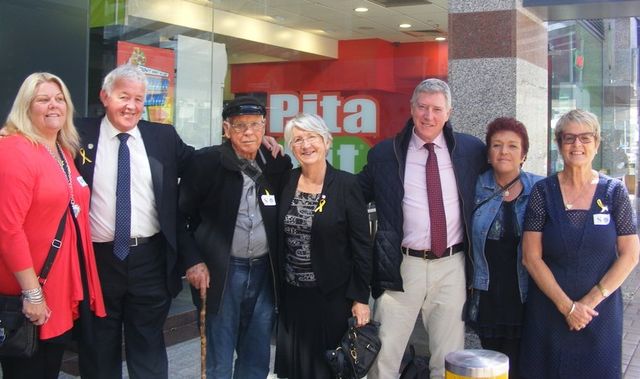
Family members and supporters (left to right) - Sonya Rockhouse, Bernie Monk, Ian Kidman, Fiona Kidman, Tony Forster, Anna Osborne and Kath Monk
At the committee hearing the families were given less than an hour to make their submission and answer questions from government and opposition members of parliament.
Bernie Monk, whose son Michael died at Pike River, told the hearing that an electrical substation several hundred metres inside the drift could provide vital information. “Nobody is being held responsible for this disaster and we need evidence to get this justice,” he said. “Now is the time to get the evidence and any remains of the men … This is a crime scene and should be investigated as such.
“Twenty-nine men died while working. The mining company and the regulators were aware of the safety concerns underground and no one fulfilled their responsibility to protect the workers.”
The government regulators and the police have refused to prosecute anyone for the tragedy, despite a Royal Commission finding in 2012 that it was preventable and that Pike River Coal was in flagrant breach of health and safety laws. The mine had inadequate ventilation and methane gas monitoring, and no adequate emergency exit. WorkSafe, however, dropped charges against Pike River CEO Peter Whittall in December 2013 on the pretext that there was not enough physical evidence of the explosion’s precise cause.
Just hours after the committee hearing, the Court of Appeal dismissed a bid by some of the families for a judicial review of the decision to drop the charges against Whittall. Anna Osborne, whose husband Milton died in the disaster, told the media the outcome was “despicable” and “I’m so frustrated with the court system.” She said the families would take the case to the Supreme Court.
At the hearing, government MPs and members of the opposition Labour, Green and New Zealand First Parties feigned sympathy with the families while remaining silent on the role of successive governments in paving the way for the catastrophe. Since the 1990s, National and Labour-led governments have gutted the mines inspectorate and allowed companies to self-regulate.
Pike River mine was developed during the previous Labour government and there were no objections to its safety violations from official regulators or the Engineering, Printing and Manufacturing Union, whose national secretary Andrew Little now leads the Labour Party.
Labour, the Greens and NZ First have said they would consider re-entering the drift if they win the September election. But none of these parties has pledged to prosecute anyone over the disaster.
MPs concentrated on asking how the drift could be re-entered safely. Tony Forster, who worked as the government’s chief mines inspector from 2013 to 2016, spoke in support of a re-entry plan drawn up for the families by Dr David Creedy, a renowned coal methane gas expert, and Bob Stevenson, former UK Principal Mines Inspector. Forster said he was confident the drift could be made safe and he did not know why Solid Energy had decided against re-entry.
Solid Energy CEO Andy Coupe responded by declaring that the decision not to re-enter was based on safety concerns. He told the hearing “the insinuation of a cover-up is unfounded.” Yet he and the government have refused to arrange a meeting between the company’s advisors and the families’ experts. Coupe was interrupted more than once by family members in the audience, who scoffed at his suggestion that Solid Energy was primarily concerned about safety.
Speaking to the World Socialist Web Site after the hearing, Bernie Monk denounced the refusal to investigate “one of the biggest homicides in New Zealand’s history.” He said it was “not right” that the families had been forced to fight for six years just to be heard.
His wife Kath Monk had no confidence the government would change its position after hearing the families’ petition. “But we have to fight on,” she said. “It’s not right, in New Zealand, that 29 men died at work and no one has taken any responsibility for that. Where else would that happen?”
Sonya Rockhouse, whose son Ben died in the mine, thought Solid Energy and the government were “hoping we will just go away if they give us a little bit of what we want.” Anna Osborne said Prime Minister English “gave us nothing we don’t already have.”
The families’ protest has gained widespread support in the working class, and local contractors on the West Coast have refused to assist Solid Energy in sealing the mine. Anna Osborne added that even if a drone were sent into the mine, as English suggested, this would not be enough to gather all the evidence.
Responding to the denials of a cover-up by Solid Energy and the government, Osborne said: “We live in a very corrupt society. There’s lots of evidence to be found down there and it will point fingers at the government departments who should be brought to account for the loss of our men’s lives as well.
“There’s no will on the government’s part to get into the drift. It’s easier for them to seal it and walk away. This isn’t just about the Pike 29, this is about every single person’s right to go to work and return home safely to their loved ones.”

French authorities step up financial probe of conservative presidential candidate François Fillon

Stéphane Hugues & Alex Lantier 

The French national financial prosecutors’ office (PNF) announced yesterday that it would continue investigations into conservative Les Républicains (LR) presidential candidate François Fillon. Fillon has collapsed in the polls and has come under escalating pressure since the Canard Enchaîné weekly published an article three weeks ago, accusing him of creating no-show jobs for his wife and their children, accumulating a total bill of around one million euros.
“As the authority tasked with bringing charges, it is my duty to affirm that the numerous pieces of evidence that have already been gathered do not allow us currently to consider the possibility of ending the investigation,” prosecutor Éliane Houlette wrote in a statement. This suggests that the PNF is either considering bringing charges against Fillon or handing the case to a specialized investigating judge, setting the stage for a longer judicial battle.
Fillon’s legal team issued a statement declaring that “after three weeks of investigations and numerous interrogations, there is insufficient evidence to bring charges,” while Fillon said that he would rely on “the judgment of universal suffrage alone from now on.”
What is taking place is a vicious faction fight inside the French ruling elite, as the judiciary, under the watchful eyes of the Socialist Party (PS) executive, mounts a devastating offensive against the LR campaign. With Fillon relatively isolated in his pro-Russian views on foreign policy, he is now caught up in swirling conflicts over ties to Russia inside the NATO alliance.
This campaign already claimed the Trump administration’s national security advisor, Michael Flynn, who was accused of inappropriately discussing US sanctions on Russia with Russian officials.
Fillon’s campaign is badly damaged, as he has been unable to explain away the charges in public, claiming that he had the right to employ his family, as it is something that is legal in the French Parliament. However, he refused to talk about the jobs being no-show ones, which is illegal. Over a week after the story had come out, he finally claimed that only he could determine that his wife and his children had carried out the tasks he had set them, and no one else.
The unrelenting media and judicial assault on the LR campaign is continuing and escalating, extending well beyond Fillon himself. The day before the PNF released its statement on Fillon, a further article appeared in the Canard Enchaîné, accusing MP Thierry Solère, the Fillon campaign’s press spokesman, of fiscal fraud.
Furthermore, former President Nicolas Sarkozy has recently been indicted on “illegal financing of an electoral campaign.” His campaign spent €20 million over the legal limit of €22.5 million in the 2012 presidential elections. Sarkozy has also faced investigations in a long list of other scandals, including charges that he financed his 2007 campaign with funds from the late Libyan head of state, Muammar Gaddafi—whom France and NATO forces murdered at the end of the 2011 Libyan war.
The finances of LR, which have provoked countless scandals in recent decades, are undoubtedly corrupt. Alain Juppé, the final major candidate in last year’s LR presidential primaries alongside Fillon and Sarkozy, was already found guilty in 2004 of creating no-show jobs under Jacques Chirac as Mayor of Paris. This is not the driving force behind the charges, however.
The attempt to wreck Fillon’s campaign is based on opposition to Fillon’s program, and notably his foreign policy orientation to President Vladimir Putin’s regime in Russia. Revelations of irregularities in the employment conditions of Fillon’s wife and children emerged less than a week after he traveled to Berlin to meet with German Chancellor Angela Merkel and called for an alliance with Germany and Russia directed against the Trump administration.
This trip crossed not only powerful forces in Washington, but also the PS government and the candidate closest to President François Hollande, nominally independent banker Emmanuel Macron, who has called for continuing Paris’s close relations with both Berlin and Washington.
It appears that the material that the Canard Enchaîné published in its exposé on Fillon had been prepared long ago, well before widespread media coverage of its allegations began last month.
Mediapart, a French investigative journalism web site, had already revealed elements contained in the Canard Enchaîné’s article on Solère last September: namely, that an official complaint had been lodged by French financial authorities with the judiciary. At that point, no details were available. However, the complaint first had to pass muster in the Commission of Tax Offenses, an independent body, which took place during the summer of 2016. Thus, evidence used by the Canard Enchaîné had been known to key authorities since at least September 2016.
It was in the wake of Fillon’s trip to Berlin, however, that this material suddenly appeared in the Canard Enchaîné and became the focal point of a media campaign aimed at discrediting the presidential candidate.
This campaign reflects deep tensions inside the NATO alliance over the controversial pro-Russian positions Fillon has repeatedly taken during major international crises in recent years.
Fillon was prime minister under Sarkozy’s presidency in the winter of 2010, during the initial stages of the Franco-German confrontation over the Greek debt crisis, when France concluded a sale of four Mistral-class helicopter carriers to Russia. This was part of a strategy of trying to rival Germany for political and commercial influence in Russia, and German officials strongly objected to the sale behind the scenes. Heavy pressure from Germany and Eastern Europe subsequently led to the cancellation of the sale; Hollande later sold the warships to Egypt.
When Obama backed down from a war in Syria in September 2013, embarrassing the Hollande government, which had aggressively pressed for the war, Fillon reacted by flying directly to Moscow and meeting with Putin, the Syrian regime’s main ally. Addressing the Valdai Club with Putin, whom he referred to as “dear Vladimir,” Fillon criticized Hollande’s alignment on Washington: “I hope that on this issue that France will return to its independence and freedom of judgment and action that alone give it moral authority in this crisis.”
After Fillon won the LR nomination last November, papers including the Canard Enchaîné were already investigating reports that Fillon’s 2F consulting firm had taken Russian funds. According to the Canard’s initial report, it was this investigation that led it to publish its first piece on Fillon’s wife and children last month.

General Motors intends to sell Opel-Vauxhall to Peugeot-Citroen

Marianne Arens

General Motors (GM) is planning to sell the Opel-Vauxhall company to French group PSA. The news spread like wildfire on Tuesday that the French PSA group, the producer of Peugeot and Citroen, had been in talks with GM and wanted to assume control of its European plants at Opel and Vauxhall.
This implicit threat to the jobs of thousands poses the necessity of German, British, French and American autoworkers uniting in a common struggle to prevent plant shutdowns, layoffs and further attacks.
The news came just three weeks after the coming to power of the administration of Donald Trump in the United States. Mary Barra, CEO of GM, which is headquartered in Detroit, is a member of Trump’s 16-person economic policy team. She intends to refocus GM more on North America and get rid of unprofitable overseas subsidiaries.
GM could as a result drop out of the ranks of the world’s largest automakers. Last year it sold, together with Volkswagen and Toyota, more than 10 million vehicles. Barra said in an interview that profit margin was more important than market share. Over recent years GM has closed a plant in St. Petersburg, its Holden production in Australia and Opel plants in Antwerp, Belgium, and Bochum, Germany.
Three years ago, as autoworkers in Bochum faced the shuttering of their factory, Barra visited the company’s main facility in Rüsselsheim and assured workers that Opel was “certainly an essential part of our company.” This expression was repeated by the IG Metall trade union and the central works council. They claimed that the closure of Bochum was the bitter pill that had to be swallowed in order to return Opel to profitability.
But now, GM wants to offload Opel as a whole. While Donald Trump is aiming with his “America first” policy to retain investment in the United States by reducing business taxes, doing away with environmental regulations and imposing tariffs, GM has decided to focus on North America and operate at most in China and India.
Opel-Vauxhall, from which GM now intends to separate, has been to date responsible for approximately 10 percent of the company’s global sales. But Opel has been recording losses for 18 years. 2016 was expected to have been the first year to see a return to the black, but these hopes were upended by Brexit, and Opel finished the year with a loss of $250 million.
The PSA group is hoping through the merger with Opel-Vauxhall to assume second place in the European market, close behind Volkswagen. PSA is also interested in an international research and development centre in Rüsselsheim that focuses mainly on electric cars.
The French government and China’s Dongfeng Motor Co., the country’s largest automaker, each own a 14 percent stake in PSA. Reuters commented that for PSA and Opel, it was “a rare opportunity to consolidate its position in a sector suffering with high costs, low profit margins and tough competition.”
GM and PSA have both confirmed the takeover talks, and Peugeot head Carlos Tavares arranged a meeting to discuss it with German Chancellor Angela Merkel. On Wednesday, Barra met in Rüsselsheim with Opel’s supervisory board chairman Dan Amman. Although nothing has yet been decided, a decision could be taken “in a few weeks.”
PSA and GM shares rose on the news. Shareholders anticipate that the sale will set the stage for comprehensive rationalizations. The takeover will at least produce synergies and cost-savings that will affect Opel most of all, since PSA is larger and has smaller losses.
Last year GM’s European facilities were only operating at 63 percent capacity and Opel had to impose reduced shifts in several plants. There are many indications that the sale will be the prelude to large-scale layoffs. Opel currently employs around 38,200 workers in Europe, with more than half employed in Germany. It currently operates plants in Rüsselsheim, Kaiserslautern, Eisenach, Zaragoza in Spain and Gliwize in Poland. Vauxhall operates in Luton and Ellesmere Port, near Liverpool.
Rainer Einenkel, who played a key role in the shutdown of the Bochum plant as works council chair, told Deutschlandfunk that he expects “German factories” to be “very acutely threatened.” In the years-long conflict over the Bochum plant, Einenkel strung out the workers with promises and systematically blocked a joint struggle by workers at all facilities.
Einenkel is once again recommending that workers limit themselves to reliance on the courts “To clarify legally that these contracts will not be called into question” and make “General Motors give an accounting.” He further noted, “Politicians are called upon to act” in an appeal to state and federal governments.
Workers should reject the unions’ policy of dividing workers and playing one location off against another, and organise a joint struggle of all autoworkers, including workers in the United States, France, England, Spain, Poland or Germany.
The experience of the last 10 years confirms this. In the United States, GM used its forced bankruptcy filing in 2009 to institute a two-tier wage system that imposed a 50 percent pay cut on new hires. At the time GM wanted to sell Opel to the Canadian Magna company. However, it instead decided to restructure its European operations by shutting down Antwerp and Bochum.
In December 2016, GM announced a new wave of layoffs in the United States. Likewise in France, PSA also has imposed sacrifices on workers for the benefit of shareholders, relying on President François Hollande’s new labour laws. VW, Toyota, Fiat Chrysler, Ford and other automakers are seeking to retain their competitiveness at the expense of their workforces.
The struggle against this requires a break from the nationalist programme of the trade unions. Whether it is IG Metall, the CGT, TUC or the United Auto Workers, the unions preach the identity of the interests of workers and management. They insist that workers subordinate their needs to the corporate drive for ever greater profits.
The criticism levelled by IG Metall in Germany against GM’s plans amounts to little more than the complaint that they were not informed early enough and included in the talks. The union is outraged, not by the threat the deal poses to workers, but by the disregard of the co-determination role of their officials. In a joint statement, IG Metall and the Opel works council complained, “If it is true that GM and PSA are conducting talks aimed at a takeover of Opel/Vauxhall, this would be an unprecedented break with all German and European co-determination laws.”
Federal Minister for the Economy Brigitte Zypries expressed herself similarly. It was “unacceptable that the company holds talks without the works council, the Hesse state government or anyone else being involved,” she said on television news.
The experience of recent years shows that IG Metall, the Social Democrats and Left Party can be relied upon by management to enforce whatever job cuts they require on the backs of workers. This also applies to Opel Antwerp and Bochum.
The World Socialist Web Site insists that to defend jobs and wages workers must break free from the control of the nationalist trade unions. It is necessary to construct action committees to organise and coordinate resistance at all plants globally. An international leadership must be created to draw together all of the various struggles by workers into a global movement guided by a socialist strategy.

Jeep announces partial shutdown of Toledo, Ohio complex

Shannon Jones

The deadline for the elimination of the second shift at the General Motors Detroit-Hamtramck assembly plant is fast approaching with workers expressing anger and concern over their fate as the United Auto Workers collaborates with management to throw some 1,300 workers into the street.
GM workers contacted by the World Socialist Web Site AutoworkerNewsletter said that the UAW is now indicating that March 3 will be the last day for the second shift at the plant. These job cuts follow the layoff of some 2,000 workers at the GM Lordstown plant outside of Warren, Ohio and the GM Grand River plant in Lansing, Michigan. The cuts point to a broader slowdown in the auto industry as the sales boom of the past several years winds down.
This week the Toledo Blade announced that 3,200 workers at the Fiat Chrysler Jeep complex would be laid off for six months while the plant is retooled for a new version of the Jeep Wrangler. The changeover is part of a restructuring process, whose long-term effect on employment is still not clear. It involves FCA ending passenger car production in the US while the company concentrates on more profitable trucks and SUVs. Workers at the Sterling Heights Assembly Plant north of Detroit remain on long-term layoff after FCA ended production of the Chrysler 200 passenger car previously built at that facility.
GM Hamtramck Assembly interviews
A Jeep worker contacted by the Autoworker Newsletter said that while permanent employees affected by the layoff at Jeep are covered by Supplemental Unemployment Benefits (SUB) that can provide up to 95 percent of their standard wages, some 1,500 Temporary Part Time (TPT) workers at the facility are only eligible for state unemployment benefits, good for just 20 weeks.
While doing nothing to defend the jobs of autoworkers, the UAW in a statement Thursday praised President Donald Trump and said that the union wanted to work with him to renegotiate the North American Free Trade Agreement. UAW President Dennis Williams also said that the union plans to resurrect its nationalist “Buy American” campaign. “We’re seeing a trend in this country—the boycott may be coming back,” adding that the “Buy American” push is gaining steam for the first time in “many, many years.”
This has nothing to do with defending jobs. Instead it is a ploy aimed at diverting the justified anger of workers over layoffs against their brother workers overseas just as the UAW did in the 1970s and 1980s as it was collaborating with the auto bosses in the destruction of workers’ jobs and living standards. The racism and anti-Asian chauvinism promoted by the UAW reached such a pitch that it led to the 1982 beating death of 27-year-old Chinese-American Vincent Chin by a Chrysler manager and his laid-off son.
Not only is the “Buy American” slogan reactionary, it is also absurd. Given the globally integrated nature of capitalist production, every vehicle produced, whether assembled in America or overseas, is the product of the coordinated efforts of workers in many different countries.
A GM Detroit Hamtramck worker contacted by the WSWS said that despite her 34 years at the plant, the job cuts felt “scary.”
A worker on second shift said, “We just hear bits and pieces. People are still quitting and they have temporary workers filling in for those jobs.”
Another worker described a situation of near chaos with the company firing some workers while others quit in anticipation of being laid off. “We are so short-handed they are having people stay over from day shift and working 12-16 hours a day.
“They are telling me I won’t be transferred. My only option is to sit back and hope to be recalled.
“It’s bogus. It is not fair. People come to work every day and do their jobs and then are treated like this.”
A second-shift worker who is slated to be laid off in March noted that temporary workers were not eligible to receive profit-sharing checks. “Union workers are getting $12,000 but we’re not getting anything because we’re temps. Absolutely nothing. Give us $1,000, or something! But no, they said we don’t get anything. But we helped them perform to get that.
“They [the UAW] told us they would help us go to school, which is all well and good. And while we’re going to school we can get unemployment up to two years. $300 a week can help a little while you’re going to school, but a lot of these schools don’t help you get a job. So what are we supposed to do without SUB pay too?”
A skilled trades worker from the GM Tech Center in Warren, Michigan spoke to the Autoworker Newsletter. He said that at his facility management was bringing in a lot of subcontractors to do skilled trades work. He also said that it appeared that temporary workers at the tech center might be laid off to provide openings for full-time workers laid off at the Detroit Hamtramck facility.
“They are working them 10, 12, 14 hours a day. But GM brought in 80-90 temporary workers since last year, knowing they are going to use and get rid of these people. It’s a sticky situation because lots are losing their jobs.
"I feel for my brothers and sisters at the Detroit plant. The UAW doesn’t defend us. We have to get workers together to protect all our jobs.”
The cuts at GM will have an impact throughout that Detroit area, which over the decades has been decimated by the shutdown of the auto industry. While Detroit Democratic Mayor Michael Duggan loses no opportunity to boast about the supposed “comeback” of Detroit and the upscale development taking place in downtown Detroit, he has said nothing about the cutting of 1,300 jobs at GM.
Dan, a street maintenance worker for the City of Detroit who works near the GM Detroit-Hamtramck plant, spoke to the WSWS Autoworker Newsletter. “My thought is that here they are having these layoffs at the same time they are talking about investing hundreds of millions of dollars in the city. I don’t understand it. It’s also affecting people in Lansing—my friend works at GM in Lansing—and 800 people are losing their jobs out there.
“I know it’s a business. But they need to be more responsible for the lives they disrupt with this hiring and firing. These workers gave up their livelihoods to work at GM, and now they are being laid off."
He said that workers employed by the city of Detroit face a management no less ruthless than that at GM. “We took a 10 percent pay cut,” he said, referring to the 2013-14 Detroit bankruptcy. “Now most of us are living paycheck to paycheck. We are making about $2-$3 an hour less than at comparable jobs at other cities.
“The city has these rehabbed houses that they are offering, but we can’t afford to take advantage of it. Nothing is affordable for us, not even our insurance. People are losing their houses and hiding their cars to keep them from being repossessed.”

Thousands participate in nation-wide “A day without immigrants” protest

Genevieve Leigh

Thousands of workers, students and youth across the United States participated in protests yesterday under the banner of “A day without immigrants,” or “Un día sin inmigrantes.”
The protests, which consisted of one-day work stoppages, keeping kids out of school and boycotting shopping and dining, drew substantial participation in New York City, Atlanta, Detroit, Washington DC, Philadelphia, Los Angeles, Austin and elsewhere. The aim of the events was to protest the Trump administration’s recent executive orders by showing the massive impact that immigrant workers have on the economy.
The day’s events seem to have been largely spontaneous, picking up steam mainly through social media, with the hashtag #DayWithoutImmigrants used about 200,000 times on Twitter within the 24-hour period of the scheduled protests.
The wave of resistance comes on the heels of a massive protest held in Milwaukee on Wednesday, premised on the very similar slogan, “A day without Latinos,” in which thousands marched to defend immigrant rights.
The spontaneous character of the events resulted in varying participation in each city. In New York, many restaurants and parts of the construction industry were shut down. In New Mexico, the state with the largest percentage of Hispanic residents in the nation, state officials worried that hundreds of students might stay home and took measures to prevent massive student absences in advance, sending a letter to parents that read: “We respectfully ask all parents to acknowledge that students need to be in class every day to benefit from the education they are guaranteed and to avoid falling behind in school and life.”
Spurred on by the increasingly active role that youth and students have been playing in protests throughout the country, many other city school districts and universities took similar measures.
Alma Pena-Sanchez, chief of staff of the Los Angeles Unified School District (LAUSD), which is 74 percent Latino, left a recorded voicemail for parents and employees Wednesday night asking that everyone show up in the morning, saying, “While we respect everyone’s right to have their voices heard and to participate in civic action such as protest, all students and staff are encouraged and expected to come to school.” The students, many of whom were among the thousands of LAUSD students who walked out of class in protest the week after Trump’s inauguration, were also asked not to partake in any walkouts for the day. A similar message was sent by officials in the Albuquerque, New Mexico, Grand Rapids, Michigan and Washington DC school districts.
Figures for most of these school districts were not available at the time of this writing aside from Grand Rapids, Michigan, which reported a dip in attendance so severe that the day will likely not count as a school day. Instead, it will count as a snow day. In order to count, 75 percent of the student body must be in school. Many schools have reported less than 50 percent attendance for the day, including Buchanan Elementary, Cesar E. Chavez Elementary, Westwood Middle, Harrison Park School, Burton Elementary and Middle, Union High, Innovation Central High and SWCC.
Another prominent feature of yesterday’s protests was the active participation of restaurant establishments. Scores of restaurants in major cities from Los Angeles to New York closed in solidarity with the protest, with over 50 restaurants participating in the nation’s capital alone. The restaurant industry employs 7.1 million immigrants, according to the most recent report from the Bureau of Labor statistics, 1.2 million of whom are undocumented workers, according to Pew Research center. This industry is also the second largest and the fastest growing market in the US economy.
Many well known restaurant owners and chefs have spoken out against the Trump administration and in support of the wave of protests, including Washington’s José Andrés, the famed Spanish-born chef whose public duels with Trump have attracted much attention; Chef Silvana Salcido Esparza in Phoenix; famed Oaxacan restaurant Guelaguetza in Los Angeles, as well as hundreds of other smaller restaurants throughout the country, including an impressive number in the Chicago area.
The effect of the strike on the restaurant industry even reached within the walls of the political establishment, forcing the food service in the US Senate to operate on reduced hours.
Many cities participating in the strike organized marches in conjunction with the business closings, including New York, Atlanta, Chicago, Washington DC and Detroit. One of the largest turnouts was in Southwest Detroit, where over 1,000 people participated.
The World Socialist Web Site spoke to several families at the Detroit protest who participated to take a stand against the Trump administration’s anti-immigrant policies, which are widely despised by both immigrant and native-born working people.
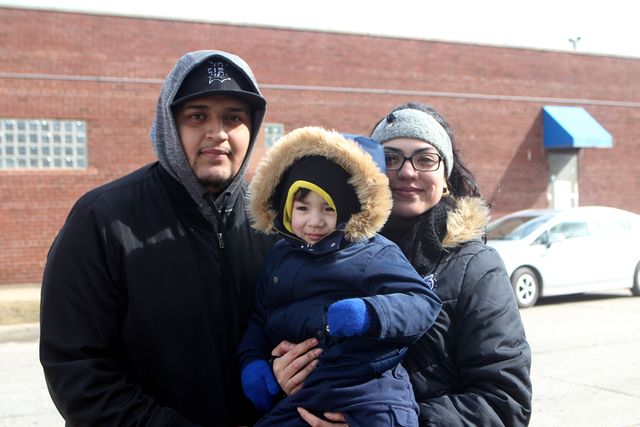
Flavio and his wife Kimberlynn said they were upset with the charge by Trump that Mexican immigrants are criminals. “We support the rights of all immigrants and Latinos,” stated Flavio, “Everyone wants to get a better future.”
Flavio and Kimberlynn with their child
“We want better opportunities,” added Kimberlynn, “We want to be able to go to college, to school. People want a safe place for their children.”
When asked why they thought Trump was whipping up anti-immigrant chauvinism, Kimberlynn said she thought it was to keep the people fighting each other. “It’s to push for a bigger war. I believe there is a danger of bigger wars.”
Flavio spoke on the widespread character of Trump’s attacks, noting, “This is not only against Latinos, they are also targeting Muslims.”
“We are all citizens who were born here,” added Kimberlynn, referring to herself, Flavio and their child. “But my parents came here 30 years ago. Everyone is scared. No one has seen it like this before.”
While discussing the fact that Obama deported more immigrants than any other president, Flavio replied, “I don’t want to call it a setup, but people put a lot of trust in Obama and he let them down." Flavio noted that "A lot of people voted for Trump,” with the new president receiving about one in three Hispanic votes in the election. “But I don’t like Trump.” Both said they did not like Hillary Clinton and had voted for Bernie Sanders.
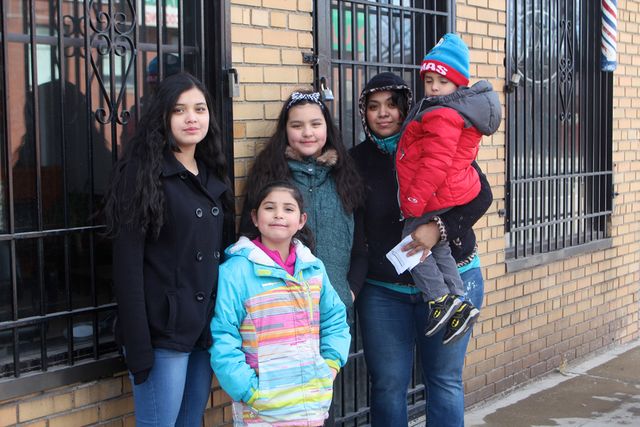
Melissa Guile, who was at the protest with her four children, told WSWS reporters why she attended. “My husband was deported three years ago. Me and my children are all US citizens, but we are trying to get him back legally."
Melissa and her children
“My father was deported too,” she added. “It has taken a real toll on all of us.”
Melissa said the challenge of taking care of four kids without her husband is enormous. She works at night to make sure the kids are taken care of during the day. “There are a lot of problems," she said. "My kids have a hard time in school.” She cited the difficulties that come with trying to make ends meet. Noting the millions of deportations that took place under Obama, she said, “The government is supposed to be helping people, not hurting them.”
Amid these protests of workers, youth and students across the country, Trump spoke Thursday afternoon at a White House news conference where he boasted of his border security measures and ICE raids, which have resulted in hundreds of arrests in the past week, saying, “We are saving lives every single day.”
The opposition to attacks on democratic rights expressed by the millions of people who have protested since Trump’s inauguration less than 30 days ago finds no expression in the political establishment.
Bernie Sanders, who is seen as the only establishment figure who can ensure that the rising anger of the masses is “properly contained” and channeled behind the Democratic Party, is busy in Washington calling for the Senate Intelligence Committee to “thoroughly investigate if Russia coordinated with Trump and his campaign.”
In order for the working class to carry out a sustained battle with the Trump administration, it must break with the Democratic Party and all of its representatives and take the road of independent political struggle against capitalism.