21 Mar 2017

UK budget steps up attacks on education

Tom Pearce 

New research by the Education Policy Institute (EPI) think tank finds that every school in England faces budget cuts by 2020. The EPI estimates that every primary school faces an average real terms loss of £74,000, with secondary schools facing a deficit of £291,000 in the next three years.
This is the reality of the Conservative government’s £3 billion a year real terms cut in funding for school age education, to be imposed by 2020.
These statistics come as no surprise to head teachers who are dealing with the impact of relentless cuts. A primary school in Cambridgeshire wrote to parents last week explaining the impact of funding changes and the “apprenticeship levy” of 1 percent on school budgets.
From May, all employers with wage bills over £3 million a year must pay 0.5 percent of that towards apprenticeship funding. This will hit council schools as they come under the overall local authority wage bill—with small academy schools exempt as they are not under direct authority control.
The primary school letter explained that funding cuts are having a “negative impact of £70,000 on the school budget for 2016/2017.” The head teacher said, “This just doesn’t just affect us” and indicated how “serious the funding crisis has become.”
In the government’s March 8 budget, the worst fears of head teachers were realised as Chancellor Phillip Hammond announced continued austerity, ignoring the concerns of the teaching profession.
For education, the budget found £320 million for the creation of more state funded “free schools.” Free schools, set up by parents, charities and other groups, are state-funded, but privately run and have been criticized for creating a two-tier education system, weakening current schools.
The government’s aim is to create grammar schools—based on selective education—out of these new essentially private schools, overturning a 1998 ban on new grammars. In addition, just £216 million will be added to funding to refurbish existing schools. The budget fell massively short of what schools require just to get by and is an insult in response to calls of school leaders to save jobs, courses and reduce class sizes.
On budget day, Education Secretary Justine Greening was heckled by head teachers as she spoke at the Association of School and College Leaders meeting about the new plans. In response to the policy of creating new grammar schools, under conditions whereby existing schools are struggling to survive, she received cries of “rubbish” from attending members.
The GMB union has many school support staff among its members. Analysing official figures, it found that a total of nearly £1 billion is to be spent on new free schools. In the first full year of the next Parliament, £655 million of capital funding is set aside for free schools, with the just announced £320 million in addition to this. The aim is the continued privatisation of education by moving schools from local authority control to the private sector, with new schools being controlled from the beginning by trusts and companies.
As budgets are slashed, the crisis schools face exacerbates, with head teachers warning that schools are being forced to axe courses, increase class sizes and cut back on trips and after-school clubs.
Not a week passes without a story about schools struggling to cope with budget restraints. With schools forced to make decisions about cutting funding to key resources and school trips, the educational and cultural opportunities being offered to schoolchildren are dwindling every week. The latest round of articles reported that a three- to four-day week is being considered by schools in a number of regions. A shortened school day is being looked at to cut costs. In addition, class sizes are soaring, with 35 pupils in a class becoming the norm and rising in some schools.
Another result of the budget squeeze is the narrowing of subjects that are being offered, with some schools not employing teachers and cutting the choices for students at GCSE and A Level.
The situation is getting so desperate that two schools have already written to parents to set up direct debits to pay for basic resources. The schools in Wokingham, Berkshire, which historically is one of the most poorly funded local authorities (LA) in the country, have been forced to take donations from parents just to offer pupils a basic education.
St. Crispin’s, a state secondary, has asked parents to set up a monthly direct debit to help it cover its everyday costs. On its web site, it states: “During recent years, schools have faced an increasing challenge with regards to reducing budgets.
“We would like to request that parents and carers consider offering a voluntary financial contribution to the school. This might be in the form of a one-off contribution or more helpfully a monthly direct debit of between £1-£5 (or more!). Just £1 a month from every family could make an immediate and actual difference of an additional income in excess of £10K per annum.”
Another school, The Hawthorns School, a primary in Wokingham, asked parents to set up monthly contributions.
This signals the demise of free education for children, when even the state sector are forced to charge for basic educational rights.
In the face of these attacks, what is the response of the main teaching unions? National Union of Teachers (NUT) General Secretary Kevin Courtney described the budget as “a complete dereliction of duty to our children and young people.” He added, “The chancellor knows full well that schools and sixth-form colleges up and down the country are on their knees struggling to make ends meet.”
Courtney, was part of the Socialist Teachers Alliance (STA), and is backed by pseudo-left groups, including the Socialist Workers Party (SWP). He is also a founding member of the People’s Assembly—a Trades Union Congress backed coalition which includes various other union bureaucrats, a few Labour Party “lefts,” the Green Party and pseudo-left groups, including the SWP.
Courtney has established a school funding campaign, in alliance with the Association of Teachers and Lecturers (ATL), several of the largest trade unions and the People’s Assembly. Their “schoolcuts” web site found that 98 percent of schools would see cuts under the new “fair funding” formula between now and 2020.
However, the sum of their action is for those concerned to contact their local Member of Parliament. The same Tory government that is hell bent on destroying the social right to education and privatizing is called on by the NUT and ATL to “take immediate action to inject much needed money into an already beleaguered system and protect our children’s education.”
ATL leader Mary Bousted said in response to the budget only that, “Parents and children will be deeply disappointed that the chancellor has not taken this opportunity to put more money into the national funding formula, which would be the best way to improve social mobility and ensure all children get a good education.”
No protests, let alone strikes, in response to this unprecedented crisis are planned by any teaching unions. Instead, it has been left to some school governors, who are volunteers, to threaten industrial action over funding cuts.

Presidential front-runner Macron pledges to bring back the draft in France

Alex Lantier 

In a public meeting Saturday in Paris, Emmanuel Macron, the preferred presidential candidate of President François Hollande and of the majority of the ruling Socialist Party (PS), pledged to bring back the draft and accelerate the rearming of the French armed forces. Macron indicated his goal was to prepare the army not only to carry out large-scale foreign wars, but also massive interventions inside France itself.
This statement by the candidate whom polls currently favor to win the presidential election is a warning to workers and youth in France and across the world. It comes barely two weeks after Sweden re-established the draft, openly declaring it was needed to obtain enough troops to combat Russia. After two devastating world wars in the 20th century, the European ruling classes are preparing for a new war between the major powers and a frontal assault on living standards and democratic rights of workers at home.
Macron said, “We have entered an epoch in international relations where war is again a possible outcome of politics.” He demanded that France maintain independent capacities “to conceive, decide upon, and execute” military action.
To prepare for the wars planned by Macron and his supporters in the state machine, the army would mobilize entire age brackets. “Universal national service, in the army and the national gendarmerie [paramilitary police] will [include] all young men and women born in the same year, that is, about 600,000 youth per year,” Macron declared. “The period of universal military service will take place in the three years following each person's 18th birthday.”
The fact that Macron justified bringing back the draft by claiming that humanity is entering an epoch of major wars exposes his cynical attempts to provide a “democratic” and “progressive” veneer for his proposal to force people into the army. He stated this would only be for one month: “Each French youth will meet his or her fellow citizens, mix with different social layers and experience the cohesion of the Republic for a month.” However, preparing for major wars would require far more than a month of military service.
Press reports suggested that setting up the draft would require an initial expenditure of €15 billion, and then a regular yearly expenditure of €3 billion, roughly the budget of France's nuclear arsenal. Macron already plans to impose tens of billions in austerity measures. Financing the military rearmament he is planning would entail vicious social attacks against the working class.
As Washington spends $1 trillion on upgrading its nuclear arsenal, and German media discuss how Berlin could get its own nuclear bomb, Macron also insisted on reinforcing French nuclear weapons. “Our strategic deterrent is a critical element of our independence and our strategic autonomy for decision and action,” he said. “We cannot allow it to be weakened.”
Macron indicated a large number of potential targets of military action, both in the Middle East and Eastern Europe. “We cannot stay out of the game,” he said about Syria, where he called for the destruction of the Islamic State (IS) militia. He also raised Russia, declaring that “only firmness and unity among European countries will allow us to maintain the open dialog with Russia that is necessary.”
One of the most important targets of Macron's military build-up would be the French population itself, and above all the working class. He proposed to create “a center of planning and operations dedicated to internal operations,” connecting different ministries (including defense, the interior, and foreign affairs) involved in military operations inside France, and a pooling of data of France's different intelligence services.
This would supplement the existing state of emergency imposed by the PS, which it has already seized upon as a pretext to justify brutal repression of mass protests of youth and workers last year, against the PS' socially regressive labor law. European Union (EU) strategists do not hesitate to cite the repression of the class struggle as the central goal of their interior military planning.
In 2014, reviewing a book published by the EU Institute for Security Studies titled “Perspectives for European Defense 2020,” German radio Deutschlandfunk wrote that, “Within the framework of the joint foreign and security policy, the responsibilities of the police and armed forces are increasingly being merged, and the capacities to tackle social protest built up. … [U]nder article 222 of the Lisbon Treaty, a legal basis has been created for the deployment of military and paramilitary units within EU states in crisis.”
One of the authors of the book, Professor Tomas Ries, wrote that the main menace to European security was the “conflict of unequal socio-economic classes in world society.”
Macron's proposals testify to the bankruptcy of capitalism on a global scale. In one country after another, the financial aristocracy is concluding that it needs more cannon fodder to profit from the massive plundering that it foresees would emerge from wars that would involve millions or tens of millions of soldiers at the European level. After the announcement of the massive re-militarization of Germany in 2014, Washington also announced a 10 percent increase of its gargantuan military budget after the election of Donald Trump.
By carrying out the military escalation proposed by Macron, Paris would itself become a driving force in the downward spiral leading, as in 1914 or 1939, towards world war. If France begins to prepare a major military mobilization of its population, this will only step up pressure on other countries in Europe and beyond to do the same.
The draft and the arms race Macron is calling for are not simply the product of NATO's massive troop deployments along Russia's western borders under Obama and Hollande, who admitted in 2015 that there was a danger of “total war” between NATO and Russia.
Relations between the major powers are the most unstable than they have been since World War II. Germany, which Macron wants to make France's major ally, is being threatened with trade war by Trump, who is also threatening North Korea and so implicitly its neighbor, China, with war.
No one asked Macron how many millions or billions of people would die in the wars between the world's major nuclear powers into which Paris is preparing to send France's youth. How would the death rates suffered by these youth compare with those suffered by the European generations that fought and died at Verdun during World War I, or Stalingrad during World War II?
Macron's statement also underscores the dead end of the French presidential election, in which the population is faced with the choice between neo-fascist candidate Marine Le Pen and a series of reactionary Gaullist or PS-linked candidates like Macron. This choice is no choice at all. France under Macron—constantly ready for war, and monitored by a dense network of cops, special forces, spies, and stool pigeons—would be all but indistinguishable from the standpoint of broad masses of workers from a neo-fascist state run by Le Pen.

Afghanistan and the Attempted Exhumation of the QCG

Rajeshwari Krishnamurthy


On 17 February 2017, the office of Afghan President Ashraf Ghani, citing mechanisms devised during the meetings of the Quadrilateral Coordination Group (QCG), demanded that Pakistan take "practical measures and initiate effective counter-terrorism efforts against all those terrorist groups which operate in Pakistan and pose a threat to security and stability of Afghanistan."
Pakistan – which had witnessed a terror attack by the Islamic State (IS) earlier that week – responded positively, at least in rhetoric. Whether the response is followed up with sustained concrete action remains to be seen. Nonetheless, the timing of Afghanistan's invocation of the QCG narrative is important. Could it possibly provide a hint about the new US administration's potential Afghanistan strategy? Perhaps.
Significance and Timing
The QCG – comprising the US, Afghanistan, Pakistan and China – had been instituted to bring the Afghan Taliban to the negotiation table with an objective of achieving reconciliation between Kabul and the Taliban. However, the Group – which did not find much success – was considered a failure and a lost cause by many, especially after President Ghani, following a massive attack in Kabul, stated in April 2016 that Afghanistan no longer expected Pakistan to bring the Afghan Taliban to the negotiating table.
Meanwhile, Russia began undertaking consultations regarding the Afghan issue with China and Pakistan in a trilateral meeting format. The February 2017 six-party talks in Moscow - where representatives from Afghanistan, Russia, India, Iran, China and Pakistan were in attendance - was the subsequent phase of these consultations. The US was excluded from this Russia-led meeting, much like Moscow was from the Washington-led QCG. It is conceivable that the US viewed this development as unfavourable, particularly as it came at a time when the new administration in Washington was still in the process of formulating its Afghanistan strategy.
In November 2016, Kabul signed a peace deal with Gulbuddin Hekmatyar, the chief of the Hezb-e-Islami Gulbuddin (HIG). In February 2017, his name was removed from the UN sanctions list. While many have voiced concerns regarding the terms of the deal, Russia supported this development, as did several other countries including China and the US, viewing the deal as the first step towards a peace deal between Kabul and other terrorist groups, such as the Afghan Taliban.
China too has sought to bring relevance back to the QCG (for similar but not the same reasons). On 5 February, days after China had hosted a meeting with the Qatar-based Taliban leaders, China's Special Envoy on Afghan Affairs, Deng Xijun, met Ghani in Kabul and said Beijing had "coaxed Taliban into negotiations, urging Pakistan to revive quadrilateral dialogues." China seems to prefer a platform in which it can play a greater role – something the six-party talks does not offer – and therefore seeks to work with the US via the QCG. However, that does not automatically mean that Beijing – which has had contacts with the Taliban for years – would want to substantially expand its role or presence inside Afghanistan in the process, at least in the immediate future. Beijing would likely want to avoid getting involved in Afghanistan militarily. It might therefore be useful to also assess whether the China-led Shanghai Cooperation Organisation (SCO) and the Russia-led Collective Security Treaty Organisation (CSTO) will or are able to align their actions based on common objectives.
Timing
Kabul's invocation of the "mechanisms devised during" the QCG meetings came two days after Moscow hosted the first six-party talks on security in Afghanistan and its neighbourhood. When the office of the president issued the 17 February statement, President Ghani was away attending the Munich Security Conference. His 18 February speech at the conference did not contain any reference to the QCG, but he said that "...this is not a civil war, it is a drug war, it is a terrorist war, and it is also a state-to-state undeclared war." The timing of invoking the QCG thus seems to indicate that it was perhaps not an action that had been in the works; and even if it was, it was probably done with short notice, possibly on the US' 'encouragement'.
It seems that the US now seeks to revive the relevance of the QCG to counter-balance Russia's regional initiatives with an objective to remain in the 'lead' on the Afghan issue – and thereby, in South Asia. The attempted exhumation of the QCG could be viewed in connection to this. Nonetheless, the US appears to be keeping its options for the time being (at least till the White House and the Pentagon come to a consensus on Washington’s Afghanistan policy).
Looking Ahead
However, for now, the QCG cannot be considered entirely exhumed. While the fates and efficacies of these multiple regional multi-lateral initiatives remain to be seen, it appears that at present the US might want to remain in Afghanistan for some time to come. Overall, reconciliation might become a recurring theme throughout 2017, at least in rhetoric. Whether the objectives are achieved and in that manner, is another matter entirely. Meanwhile, one could expect restlessness in Islamabad at every instance Kabul interacts with Moscow, because Pakistan too seems to prefer the US and not Russia to 'take the lead'.

Re-building Sri Lanka: An Island at a Crossroads

Asanga Abeyagoonasekera


In 1908, MK Gandhi said, the “English have not taken India, we have given it to them.” This expression is applicable to Sri Lanka as well when one observes how some elites handed the island nation over to Britain in the optimism of a better rule. Before the Indian subcontinent won back its independence, Britain ruled the region with the support of fewer than 100,000 troops and managed to control 400 million people via draconian policies and supporting local allies who worked to secure the British interests. Irrespective of the upper hand they enjoyed due to advanced military technology, this was possible largely due to their capacity to divide the targeted populations and co-opt locals into becoming British allies. This “divide and rule strategy” was employed in Sri Lanka too; and the communal discrimination and differences between different ethnic groups fuelled by the colonial British rulers at that time continues to overshadow the Sri Lankan nation even today. 

Sri Lankan President Mathripala Sirisena's dissolution of the gazette notification issued by the British rulers - that had declared 82 rebels as traitors during the 1818 rebellion - is remarkable. Sri Lankans who had fought in the rebellion had been assassinated in cruel ways and some were exiled and imprisoned outside the country. Several decades on, a Sri Lankan president was bold enough to remember the country's national heroes who had sacrificed their lives for an independent Sri Lanka. Many countries still remember the gross human rights violations and plunder of national wealth during the British colonial period, and till date, resultant scars run deep in the post-colonial societies.

In another positive development, President Sirisena’s Asia-centric balanced foreign policy has delivered results, such as winning support and trust from several world leaders. The levels of external pressure witnessed during the past are not visible and have drastically reduced owing to issues of concern being addressed with commitments to rectify the situation. At the UNHRC, the Sri Lankan foreign minister assured that “the Constitution drafting process is for us both central and essential not only for democratisation, but also for ensuring non-recurrence of conflict...The Parliamentary process and referendum are for us, imperative.” The UN had criticised the Sri Lankan mechanism as “worryingly slow,” accusing the latter's leadership of neglecting the widespread torture and abuse that are still a reality in the country.

In Sri Lanka, different members of the government have voiced different opinions on the constitutional process. Sending mixed signals has been a practice that has not helped much. Therefore, a consensus has to be reached on the constitutional process and if the government proposes to go for a referendum. 

Neville Ladduwahetty, in his recent article, 'The referendum trap', clearly explains that it is also vital to consider how "unintended consequences would be exploited by the Tamil leadership both nationally and internationally to make claims for the right of self-determination followed by other claims that go far beyond what was intended through Constitutional Reforms," and argues that this "is the end game the Tamil leadership is striving for by pushing for a referendum.” What if the referendum has dual outcomes such as a huge loss in the South and a victory in the North? It will clearly send a message of further division in the polity. Who would take the advantage of this situation?

President Sirisena's stance regarding the fresh UNHRC appeal for a hybrid court has been clear in that he will not allow foreign judges into the process and has explained that the local judicial process is dependable and capable. At a recent event, President Sirisena reiterated his position and said “I am not going to allow non-governmental organizations to dictate how to run my government. I will not listen to their calls to prosecute my troops.” Having foreign judges in Sri Lanka will definitely aggravate political tensions.

There are three essential elements that can be easily introduced to bring credibility and results to the local reconciliation process. First, the government could consider international engagement such as of Interpeace, a reputed body that could be used to provide technical assistance for the reconciliation process with terms of reference from the government. In January 2016, the Director General of Sri Lanka's Reconciliation taskforce met the Director General of Interpeace. However, unfortunately, there has been no forward movement since then. Second, certain recommendations of the eight national reconciliation conferences conducted during 2011-2015 could be implemented. Civil society leaders had contributed significant recommendations vis-a-vis these reports. Third, top priority must be given to Tamil Nadu-Sri Lanka relations and Sri Lankan diaspora re-engagement strategies. 

There is much to be done to heal the hearts and minds in the deeply divided Sri Lankan community. It is hoped that one of the options succeeds in becoming a lasting policy. As a wise Wazir (minister) in 9th century Baghdad had said, “The basis of government is jugglery. If it works, and lasts, it becomes policy.”

20 Mar 2017

Brexit, Nationalism and the Damage Done

Patrick Cockburn

Brexit is English nationalism made flesh, but the English underrate its destructive potential as a form of communal identity. Concepts like “nationalism” and “self-determination” have traditionally been seen as something that happens to foreigners. An English failing today is an inability to recognise the egocentricity implicit in such nationalism and the extent to which it alienates and invites confrontation with other nations in the British Isles and beyond.
A classic example of this blindness to the consequences of this new type of nationalism came this week when Theresa May denounced Nicola Sturgeon for “playing politics with the future of our country” in demanding a second referendum on Scottish independence. This immediately begs the question about the nature and location of this “country” to which such uncritical loyalty is due. If the state in question is the UK, then why do the advocates of Brexit ignore the opposition – and take for granted the compliance – of Scotland and Northern Ireland in leaving the EU?
It is worth recalling the degree to which British politics was divided and poisoned by fierce disputes over Irish independence for the whole of the nineteenth century and early twentieth century, right up to the moment that Ireland achieved self-determination in 1921. What used to be called “the Irish Question” has now been reborn as an all-consuming issue by “the Scottish Question” and, whatever the timing and outcome of a second Scottish referendum, it is not going to go away. Supposing that Theresa May really believes, as her patronising rejection of another poll in Scotland might suggest, that “the Scottish Question” can be indefinitely delayed, then she will be joining a long dismal list of British leaders down the centuries who made the same mistake about Ireland.
English politicians have frequently had a tin ear when it comes to other people’s nationalism, imagining that it can be satisfied by material concessions or rebutted by arguments about independence inflicting unacceptable economic damage. English people often have an equally muddled or myopic vision of their own nationalism, using the terms “English” and “British” as if they were synonymous or marked a distinction of no great account. They therefore do not see how their nationalism has changed significantly in the last few years and is making the continuation of the UK less and less likely. The transformation is also obscured because the ingredients of nationalist identity are in any case hazy since a successful nationalist movement becomes the vehicle for all sorts of grievances and protests.
British nationalism was in the past more fluid than Irish or continental nationalism because it did not face such intense pressures. It needed to be adaptable and inclusive enough to meet the needs of empire and a post-imperial world. It was primarily territorial within the island of Britain, rather than ethnic, religious or linguistic, and was so successful and self-confident that it did not closely define exactly what made somebody British. Strident assertions by Ulster Protestants about their “Britishness” sounded foreign and rather embarrassing to people in the rest of the UK.
The new English nationalism that surfaced so strongly during the Brexit campaign is, ironically, much closer to continental traditions of nationalism. It is much more ethnically and culturally exclusive than the English/British tradition, which developed when British politics stabilised after prolonged turmoil and civil war at the beginning of the eighteenth century.
What makes the new English nationalism so dangerous post-Brexit is that it is deeply felt but incoherent and comes with little self-knowledge. It is more dangerous than the elephant in the room, whose presence nobody will acknowledge, because in this case the elephant is scarcely aware of its own bulk and impact upon others. As a system of beliefs the new nationalism is much more appropriate to an English nation state than to a more diverse United Kingdom. Yet there is genuine bafflement among English people when the Scots apply the same arguments as Brexiters used to justify leaving the EU to justify Scottish independence. It takes a good deal of cheek for Theresa May, as she initiates Britain’s withdrawal from the EU – the consequences of which even its protagonists admit nobody knows – to accuse Nicola Sturgeon of setting “Scotland on a course for more uncertainty and division, creating huge uncertainty.”
It should be quickly said that there is nothing wrong with there being an English nation state. The left tends to denigrate or suspect nationalism as a mask for racism or, at best, a diversion from more important social and political issues. It can be both, but nationalism has also been the essential glue for progressive and liberal movements since the American War of Independence. If it has fallen into the hands of the xenophobic right in England and the US in recent years, that is the fault of those who saw it as illegitimate, obsolete and irrelevant in a globalising world.
Because the new nationalism sees itself in a vague way as seeking to return to a mythical England, which seems to have had its terminal date in about 1960, it is not good at seeing that its project is new and different from what went before. The old British state, as it developed from the end of the seventeenth century, was known – and often detested by other states – for its acute sense of its own interests. The new English nation state stretching from the Channel to the Tweed seems to have little idea of its own strengths and weaknesses and will be much less capable of charting an independent course in the world, whatever its pretensions “to be taking back control”.
One of the curiosities of the Brexit referendum was that, while the Leaves frequently beat the patriotic drum and spoke of the defeat of the Spanish Armada in 1588 and the Battle of Britain in 1940, they showed little interest in or knowledge of history. Before the eighteenth century, English governments spent much of their energies and resources fighting the Scots, Irish and Welsh. In the years before Agincourt, Henry V learned to be a soldier suppressing Welsh uprisings. Scottish and Irish rebellions played a central role in precipitating and determining the outcome of the English Civil War. An end to this disunity through repression or conciliation launched Britain as a great power. A return to instability in relations between the nations living in the British Isles will have the opposite effect.
Britain is already weaker as a state than it was two years ago because its government is wholly preoccupied with Brexit and the prospect of Scottish secession from the UK. All other pressing problems facing the country must wait, possibly for decades, until these issues are dealt with. The break-up of Britain is not something that may or may not happen as the result of a second referendum, but is already upon us. The confrontation between English and Scottish nationalism is not going to moderate or evaporate. The one certainty is that “The Scottish Question” and Brexit have come together to destabilise Britain for years to come.

Death toll rises from Peru’s El Niño flooding

Cesar Uco 

The official death toll from the intense rain and flooding that has hit the Pacific coastal zone of Peru rose to 72 Sunday, with an estimated 115,000 homes destroyed and over 100 bridges washed out.
The natural disaster, caused by the “El Niño” phenomenon caused by a sudden rise in ocean temperatures, has exposed the inability of the Peruvian government to either prepare for or properly respond to increasingly frequent climatic catastrophes, leaving the poorer and rural Peruvians to their fate.
From Tumbes on the border with Ecuador to Arequipa, the largest city in southern Peru, incessant heavy, tropical rain returned this week to flood cities and destroy tens of thousands of arable hectares.
According to the Spanish newspaper El Mundo, in addition to the death toll, at least 72 people were injured, with 11 missing and police searching for survivors in many areas, including villages that had been cut off by rising waters. The Civil Defense Institute (Indeci) stated that more than half a million people have been affected by the flooding, while Peru’s roads have been cut off by avalanches resulting from the excessive accumulation of water in the Andes.
Due to the rapidly rising water, beginning on Wednesday March 15, the Rímac and Huaycoloro rivers flooded as they passed through the capital city of Peru, Lima. Luis Castañeda, mayor of Lima Metropolitana, ordered the closure of all schools and cut off the drinking water supply in 27 districts of the city beginning on Thursday. Tens of thousands of Limeños joined long lines at the markets to stock up on food, especially bottled water, anticipating further flooding and avalanches that could leave them isolated for several days.
Due to the pandemonium created by the threat of floods and avalanches, public transportation was extended in Lima until the early hours of the morning. However, there were places in the city that buses could not access.
Castañeda asked the President of Peru, Pedro Pablo Kuczynski (PPK), to declare a state of emergency and allow “a strong recovery of infrastructure because that means sources of work,” according to El Comercio. He added: “I hope the government gives us an emergency law so that all provinces and districts can respond quickly to this aggression of nature.”
According to Castañeda, the president declined his request, and instead answered by asking him to close the portion of the Pan-American Highway that goes around the city of Lima, connecting the north with the south of the country, but the mayor refused to do.
PPK asked the public to have faith in facing what he called an unexpected “Biblical Flood” that occurs every “50 years.” The rains, added the head of state, “are causing flooding, roadblocks, bridge collapses and many bad things.” He said the problem was not a shortage of money, but a mismanagement of resources.
Prime Minister Fernando Zavala told La República that 800 million nuevos soles (US$ 245 million) had been allocated to deal with the damage in the north, the country’s most affected area.
Peru’s north coast, especially the department of Piura, has been the hardest hit. The sewers of the city of the same name were not good enough to filter the waters. The population defended itself by piling up sacks of sand. Gorges turned into deadly avalanches of mud, logs and stones.
During the week, the flood reached the Plaza de Armas in the center of the city of Piura. According to El Comercio, the water “leaked through several floodgates” until reaching the Plaza de Armas, flooding streets, homes and commercial premises.
According to COER (Regional Emergency Operations Center) in Piura, the rains and overflows of the Piura and Chira rivers left 191,930 affected. Education will be disrupted for a long time as the floods have left 177 schools unusable.
The rivers Tumbes and Zarumilla overflowed into the city of Tumbes. So far 1,500 hectares of rice and 1,650 of organic bananas, plus 120 of fruit trees have been inundated by the rains.
COER Tumbes reports that 400 meters of irrigation canals have disappeared. The total number of affected in the city is reported at 13,000. Two people have died: one child drowned in the river Tumbes and one adult in Papayal. Access routes have been interrupted.
In Cajamarca, the main access route to the coast was under the water of the Jequetepeque river.
In the department of La Libertad, the historic center of the city of Trujillo was flooded, destroying some of the most beautiful cultural heritage of Peru, including three mansions, jewels of the 19th Century architecture.
In the surroundings of Lima, avalanches in Chosica, Punta Negra and the Chilca river have left buildings destroyed and people homeless. Three gorges were flooded, and the waters destroyed a children’s shelter, damaged crops and blockaded the South Pan-American Highway.
The emergency situation caused by the El Niño phenomenon has led politicians to make hollow speeches on the need to invest in infrastructure.
The reality is that much of the death and destruction could have been mitigated if the governments that have ruled Peru over the past decades had placed any priority on investments in material and social infrastructure. Instead, the entire concentration has been on attracting billions of dollars in foreign capital dedicated to mining for export dollars, which go into the pockets of a tiny layer of Peruvian millionaires and their foreign counterparts.
According to data from the Ministry of Energy and Mines (MEM), Peru has a portfolio of 47 mining projects worth approximately US$47 billion. Compared to this figure, the amount that Prime Minister Zavala released to rebuild the northern region—US $246 million—amounts to 0.52 percent or 2.25 percent of the approved mining projects.

Poverty in Germany reaches new record high

Elisabeth Zimmermann 

The welfare organisation Paritätische Wohlfahrtsverband presented its latest report on poverty in Germany at the beginning of March. According to this study, poverty in Germany reached a new record high in 2015, at 15.7 percent, with 12.9 million people live in poverty.
The figures, presented by Paritätische Wohlfahrtsverband and nine other organisations, show a sharp rise in poverty rates in several regions. At the same time, the report makes clear that the rate at which poverty is rising is accelerating.
Poverty rose most of all in Berlin, from 20 to 22.4 percent compared to the previous year. The highest rate, 24.8 percent, is in Bremen, where almost one in four people is poor. Overall, the percentage of the population living in poverty has increased in 11 of the 16 states compared to the previous year. In all of the states of eastern Germany, poverty rates are either slightly under or over 20 percent.
For the first time, the association presented comparisons over a 10-year period for poverty rates in the states, certain regions and cities, according to figures from the Federal Agency for Statistics. Poverty rose most rapidly in North Rhine-Westphalia, from 14.4 percent in 2005 to 17.5 percent in 2015.
In the Ruhr region, poverty rose during this period by 24.7 percent, from 16.2 percent in 2005 to 20.2 percent in 2015. The cities with the highest percentage increase in poverty are also in the Ruhr region. In Dortmund, poverty rose from 18.6 percent in 2005 to 25.7 percent in 2015; in Duisburg from 17 to 26.6 percent; and even in the state’s capital Düsseldorf, where substantial wealth and riches are concentrated, it rose from 13.8 to 18.3 percent.
The authors labelled Berlin and the Ruhr region as “poverty problem areas for policy in Germany.”
Those most affected by poverty are the unemployed with 59 percent, single parents and their children at a rate of 43.8 percent, foreigners at a rate of 33.7 percent and people who have an immigration background at 27.7 percent. These high rates are followed by families with three or more children, who have a poverty rate of 25.2 percent.
Old-age poverty also rose drastically. Poverty among retirees rose by 49 percent, from 10.7 percent in 2005 to 15.9 percent in 2015. These numbers will further increase due to the creation of a massive low-wage sector and the spread of insecure jobs. The impact of the rise in the retirement age to 67 and the cutting of pensions can also be seen here.
The report also describes the impact of poverty on the life expectancy of people. Among men with an income of less than 60 percent of the median income, life expectancy is 70.1 years. This is more than 10 years less than among men with an income of more than 150 percent of the median, whose life expectancy is 80.9 years. Among women, the corresponding difference is 76.9 to 85.3 years.
After the report was presented, the usual cynical debate about the definition of poverty was initiated. Andrea Nahles (Social Democratic Party, SPD), who as federal labour minister bears considerable responsibility for the rise in poverty, spoke out immediately, stating that the focus on the at-risk poverty rate was “reductionist.” Poverty could not be summarised by a number, she said.
Representatives of the German Association of Cities and Municipalities were concerned that students, who would later be among the elite in terms of achievement, were also included in the study. Georg Kremer, general secretary of the Caritas charity, criticised the unclear division between relative and absolute poverty in the report.
According to his opinion, someone forced to live on less than 60 percent of the median income was not automatically poor.
The Paritätische Wohlfahrtsverband based its calculation on a European Union provision. According to this, researchers count all people in a household whose income is less than 60 percent of the median income of all households. The household’s entire net income is used. This calculation puts the poverty limit for single people at €942 (US$1,012), while for a family with two small children it is €1,978 (US$2,125) per month.
The author of the report dealt with the criticism when it was presented. Poverty could not be reduced to impoverishment and commenced “when people can no longer participate” in a sports club or cultural event, or afford a trip to the cinema.
He referred to the fact that economic development and growth had not brought about a reduction of poverty for a long time. Too many people worked part-time or had mini-jobs and could barely make ends meet.
The inclusion of hundreds of thousands of students in the poverty report is hardly surprising. In the first place, a large section of students, if they receive no support from their parents, are in fact poor. Secondly, many students do not obtain a good-paying job after graduation appropriate to their level of qualification. Many have to put up with short-term contracts and low-paid jobs for years.
Hundreds of thousands of students, refugees, people with care needs and people with disabilities do not appear in the statistics because they do not have their own household. Also not included are 335,000 homeless people.
The poverty report was therefore “not an artificial dramatization, it underestimates rather than overestimates the risk of poverty,” noted Schneider. He supplied substantial material confirming the extent of social inequality in Germany and giving an idea of the social tensions that are developing.
Political responsibility for the dramatic rise of poverty in Germany is born by the SPD-Green government led by Gerhard Schröder and Joschka Fischer (1998-2005). The Agenda 2010 and Hartz IV welfare reforms it implemented resulted in the formation of a huge low-wage sector and the creation of insecure jobs. This policy was part of a major redistribution of wealth from the bottom to the top, which took place internationally and continues to take place.
A comment by the Süddeutsche Zeitung from March 10 states: “Income from capital and pay for managers have increased by 30 percent since the turn of the millennium, four times faster than wages.” The official unemployment figures could be explained as a result of “stagnating incomes, part-time jobs and short-term contracts.”
The official unemployment figures cover up the true extent of unemployment. If the unemployed currently in work programmes are included, those incapable of work due to illness and people who work part-time but are looking for a full-time job, the number of unemployed amounts to 3.7 million, a million more than the official number.
Increasing prices for rent, energy and basic foodstuffs affect poor people particularly harshly. There are repeated reports of children going to school without breakfast, of parents who skip meals at the end of the month so as to be able to feed their children and of elderly people who must choose between a warm apartment and a sufficient quantity of food.
That 1.5 million people regularly obtain food from around 2,000 food banks provides a clear indicator of how widespread poverty is in Germany.
At the same time as the latest poverty report was presented, it was announced that 330,000 households had their electricity cut off last year. This was frequently the case for Hartz IV claimants. Their electricity was cut off because they could no longer pay their bills.
The billions currently being spent by the government to rearm and strengthen the military to play a leading role around the globe can only be secured through more cuts to social spending.
The harshness with which the government is determined to take on the working class, including its poorest and most vulnerable sections, is shown by its ruthless treatment of refugees, where the main goals are defence, deportation and deterrence, and the growing number of sanctions against Hartz IV claimants imposed by job centres last year. According to a report by the Frankfurter Allgemeine Zeitung, in 2016 there was “an average of 134,390 people were affected by benefit cuts.” That is 3,000 more than in the previous year.
The responsibility for such bullying and arbitrary measures lies with Labour and Social Affairs Minister Andrea Nahles (SPD). It is utterly worthless, as the Paritätische Wohlfahrtsverband does, to appeal to her and the federal government for a fairer distribution of wealth in Germany and the elimination of poverty in the country. The current and future governments, regardless of their composition, will do the exact opposite.

Growing criticism of the EU in Poland after the re-election of Tusk

Clara Weiss

Leading representatives of the ruling party Law and Justice (PiS) in Poland and many Polish media outlets have reacted with outrage at the re-election of Donald Tusk as president of the European Council at the EU summit on March 9.
For months, the PiS-government had tried to prevent Tusk’s reelection. Tusk led neo-liberal opposition party Civic Platform (PO) from 2003 to 2014 and was the Polish prime minister from 2007 to 2014. Last year, PiS even began legal actions against Tusk. One day before the EU summit, the current Polish Prime Minister, Beata Szydło, published an open letter calling for the replacement of Tusk.
At the EU summit Poland was the only country to vote against the re-election of Tusk. In order to prevent his election, the Polish government advanced a rival candidate, Jacek Saryusz-Wolski. However, with the votes of all other 27 EU member states, Tusk’s presidency of the EU council was prolonged until the end of 2019.
The opposition of the PiS-government to Tusk is rooted in differences about both domestic and foreign policy. Even though Tusk gave up his position as head of PO when he moved to Brussels in 2014, he is still regarded as its informal leader. PO is now the largest opposition party in Poland and involved in a bitter conflict with the PiS-government, which peaked last December with an opposition-led blockade of the Polish parliament (Sejm).
The EU supports the PO’s criticism of the authoritarian measures of the PiS-government, especially the latter’s de facto stripping of power from the constitutional court, and has even threatened Poland with sanctions.
At a press conference in February, the head of PiS, Jarosław Kaczyński, accused Tusk of violating the “basic principles of the European Union”. According to Kaczyński, Tusk is violating the principle of neutrality and even “goes so far as support an opposition that calls itself totalitarian and seeks to overthrow the government by extra-parliamentary means.”
In foreign policy, PiS is oriented primarily toward the United States, whereas PO is advocating close collaboration with the EU and particularly Germany. The Polish government has repeatedly described Tusk as a “German candidate.”
In his first term as president of the European Council, Tusk has supported the line of German Chancellor Angela Merkel in basically every question. In an article from last year, the journal Politico cited an advisor to the German Social Democratic Party (SPD) as follows: “You can trust him, he is reliable, he can keep secrets to himself. Everyone knows that Merkel desperately needs Tusk to keep the Eastern European countries quiet and under control. She will never let him fall.”
The so called Visegrad countries—Poland, Hungary, Slovakia and the Czech Republic—which usually ally in the EU against Berlin, were split over the election of Tusk. Hungary, Slovakia and the Czech Republic declared their support for Tusk early on.
According to media reports, the right-wing Hungarian Prime Minister Viktor Orbán, whose party maintains friendly relations with PiS, had tried for some time to find a compromise with Poland on the issue, but apparently to no avail.
The election of Donald Trump as US president has escalated the conflicts within the Polish bourgeoisie, which finds itself in a dilemma. While it has worked closely with the US in restoring capitalism in 1989 and the military build-up against Russia, the Polish bourgeoisie is also dependent on the EU and especially Germany, which is by far Poland’s most important trading partner.
The Trump presidency has dramatically sharpened the conflict between the US and the EU and Germany. At the same time, it is not clear to what extent Warsaw will be able to rely on the support of Washington in foreign policy matters in the future. Under these conditions, tensions in Warsaw about foreign policy are running high.
Remarkably, right after the inauguration of Trump in January the PiS-government undertook an effort to improve its strained relations with Berlin. During Merkel’s visit to Warsaw in February, both sides tried to downplay the sharp conflicts of the past one and a half years.
Regardless of these efforts, however, there still remain fundamental differences between the PiS-government, which fears a German dominance of Europe and Berlin. One moot point between PO and PiS was that the former had, like Berlin, advocated a “hard Brexit.” By contrast, PiS has been trying to strengthen Polish-British ties.
For these reasons, Polish politicians reacted with anger and outrage to the re-election of Tusk and regard it as a turning point in relations between Poland and the EU.
Thus, Polish defense minister Witold Waszczykowski said in an interview with the Polish Sunday Express, Tusk had been elected because of “dictates from Berlin.” Now Poland had to expect an “enormous wave of blackmail and pressure” and “a coalition against Poland”.
He threatened that Poland would now pursue a more independent policy within the EU. In his words, Warsaw had “to dramatically lower its level of trust in the EU” and start blocking initiatives of other member states. At the same time, Waszczykowski rejected the idea of Poland leaving the EU as “nonsense..We are in the Union. We are still part of the game.”
While media outlets close to the liberal opposition such as the Newsweek Polska greeted the re-election of Tusk as a “defeat for Kaczyński”, the conservative Rzeczpospolita published a commentary under the title “The ugly face of the union”. The commentator of the influential newspaper assessed the election of Tusk as a deliberate “humiliation” of Poland and concludes: “We often hear that the European Union is one big family. Perhaps it is, but above all a dysfunctional one.”
The Polish president Andrzej Duda congratulated Tusk on his election only after 24 hours—an unusually long period of time.
In a press conference after the summit, prime minister Szydło openly attacked Germany and France. She declared that the election of Tusk marked a “sad day” and was in violation of EU principles. She demanded that the rules for the election of the president of the European Council be changed so that no candidate could be elected without the approval of his or her own country.
Then, Szydło attacked the concept of a “Two-speed Europe” propagated by Paris and Berlin and called for strengthening the rights of national parliaments within the EU. The PiS government is particularly opposed to the building of an EU army, a plan pursued by Berlin, and a “hard Brexit.”
The fierce reactions in Poland against the re-election of Tusk are yet another symptom of the crisis of the EU which is disintegrating under the pressure of deep economic crisis and growing national tensions.
In a commentary, the German newspaper Die Welt warned that Poland would “take a bitter revenge for its defeat.” The issue, so the newspaper said, would have far-reaching consequences for Poland and the European Union. “Poland is of enormous significance for European cooperation. And Warsaw has means to pressure the European Union—as a veto power.”

Europe-wide demonstrations in defence of migrants and refugees

Robert Stevens

Protests took place across Europe Saturday to coincide with United Nations (UN) Anti-Racism Day.
This year, what is known as “International Day for the Elimination of Racial Discrimination” falls on March 21. The day was proclaimed by the United Nations in 1966 to mark the anniversary of the Sharpeville massacre in South Africa in 1960. Marches were held in 10 countries across 45 cities.
Up to 30,000 people demonstrated in London, with protesters assembling in Portland Place before marching to a rally in Parliament Square. Around 3,000 marched in Glasgow, Scotland and 1,000 in Cardiff, Wales.
Up to 15,000 people reportedly marched in Athens, Greece, which only has a population of 11 million. The march was organised by the United Movement Against Racism and the Fascist Threat, which is backed by various pseudo-left groups and sections of the trade union bureaucracy. Many were refugees from the various camps built by the Syriza government. Many of those demonstrating attacked the Fortress Europe policy of the European Union (EU) and demanded the rescinding of the EU deal with Turkey that seals off Europe’s borders to the millions of refugees fleeing war zones in the Middle East and North Africa and facilitates the mass deportation of refugees arriving in Greece.
Protesters demanded the opening of borders across Europe and chanted slogans including “Asylum and housing for refugees” and “No to deportations.” Protests were also held in Greece’s second city, Thessaloniki, and in Patras, Ioannina, Heraklion, Chania, Volos, Xanthi.
Several thousand attended protests in Amsterdam in the Netherlands and the Austrian capital, Vienna. Thousands marched in a number of Danish and Polish towns and cities.
The London protest was significantly larger than those held in other European capitals. It was organised by Stand Up to Racism (SUTR), a coalition that has the backing of the Trades Union Congress (TUC), a number of national unions and Labour MPs. Yet here, the organisers, including the pseudo-left Socialist Workers Party and Counterfire, ensured that there was scarcely a reference to the reactionary anti-immigration policies of the EU that their co-thinkers in Greece were busily protesting.
To do so would cut across the narrative of the main trade unions that continued EU membership provides a progressive alternative to Brexit and Prime Minister Theresa May’s alliance with Washington.
Instead, announcing the march, SUTR wrote that it was “Taking place in the wake of the election of Donald Trump and as Theresa May makes the moves to trigger Article 50 and the UK’s Brexit from the European Union, a progressive movement is growing to turn back the tide of racism.”
The SWP, for its part, dutifully backpedalled on its previous anti-EU pro-Brexit position and insisted, “To defend freedom of movement, we need unity no matter how people voted.” The unity they speak of preserving is not the unity of the working class, which would mean opposing both the pro-and-anti-Brexit wings of the British bourgeoisie and the labour and trade union bureaucracy, but their own unity with the TUC.
Those speaking offered no perspective to defend immigrants, refugees and asylum seekers. While there was no end of outrage emanating from the platform condemning the reactionary policies of May and Trump, the organisers glorified a UN initiative that has, from its inception in 1966, carefully avoided criticism of any government, including the main European powers.
While calling for the “Elimination of All Forms of Racial Discrimination,” the UN resolution allows signatories to do exactly as they please. It states, “This Convention shall not apply to distinctions, exclusions, restrictions or preferences made by a State Party to this Convention between citizens and non-citizens.”
The resolution adds, “Nothing in this Convention may be interpreted as affecting in any way the legal provisions of States Parties concerning nationality, citizenship or naturalization, provided that such provisions do not discriminate against any particular nationality.”
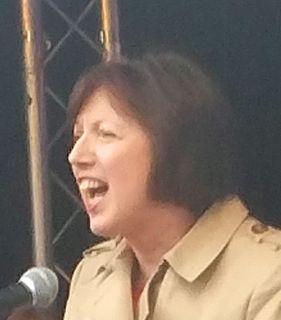
Frances O'Grady speaking at the London rally
Speakers, including Trades Union Congress leader Frances O’Grady, were happily able to declare token opposition to the treatment of refugees by May and Trump, which commits them to doing absolutely nothing.
Particular focus was placed instead on a moral appeal to the May government for special treatment for unaccompanied children. The Dubs Amendment—a parliamentary amendment put last year by Labour peer Lord Alfred Dubs aimed at allowing into Britain a few more lone child refugees from the “Jungle” camp at Calais in France—was universally hailed.
The reality is that such was the public outcry at the height of Europe’s refugee crisis at the plight of thousands of children and teenagers living unaccompanied in terrible conditions in the Calais camp, that Lord Dubs proposed an amendment to the Immigration Act 2016. This proposed bringing just 3,000 of the Calais children to Britain. In the end, just a few hundred were allowed in by the May government under the amendment clause, before the scheme was scrapped entirely this year.
Labour leader Jeremy Corbyn did not attend the march, instead sending in a video message in which he once again cited a series of commonplaces. He solemnly declared, “It’s the United Nations Anti-Racism day,” adding it was necessary to “redouble our efforts in fighting racism, Islamophobia, anti-Semitism and all forms of discrimination.”
Corbyn told the audience, “We will not be divided. In place of division, we must all come together to celebrate our diverse communities and shared heritage.” The “Labour Party knows this and it’s at the heart of what we do,” he stated, adding, “This week I met with Alf Dubs and met with young refugees who thanks to his efforts now live safely in Britain.”
Corbyn said the May government had “thwarted Alf’s efforts at every turn.”
The focus of the speakers at the rally, including Corbyn, on the Dubs Amendment also provides a political amnesty for the broader militarist agenda of British imperialism.
One would never have known that Corbyn is the leader of a party which has supported every single war waged by the US and Britain over the past three decades. Or that Corbyn is fully complicit in allowing this to continue. In November 2015—just two months after being elected Labour leader on a platform that included opposition to war—he capitulated to Labour’s right wing by agreeing to their demands for a “free vote” on military action in Syria. This was specifically aimed at reversing a 2013 vote against the war in parliament. Corbyn’s action gave then-Tory Prime Minister David Cameron the majority he sought—reversing the defeat he suffered two years before—with UK bombing in Syria beginning just hours later.
As for defending the rights of EU nationals living and working in Britain, in January, in yet another capitulation to the Labour right, Corbyn reversed his previous opposition to limits and quotas on immigration numbers. He stated in a speech in Peterborough, a city that voted strongly in favour of leaving the European Union in last year’s referendum and has a large Eastern European migrant population, “Labour is not wedded to freedom of movement for EU citizens as a point of principle.”
In line with their refusal to address the predatory role of Britain and the European powers, there was not a single reference to the crisis of capitalism or imperialism—which is responsible for the wars that have resulted in the creation of tens of millions of refugees globally—in the material produced by Stand Up to Racism for the event. Stand Up to Racism instead urged only, “Yes to a world free of racism, Islamophobia and anti-Semitism. Yes to a world where refugees and migrants are welcome. Yes to a world where black lives matter and we build bridges not walls.”

Pakistan’s Economy: Significance of MSCI Elevation and FTSE Inclusion

Amita Batra


Two positive developments that have been announced and will see implementation in the coming week and in the month of May augur rather well for an economy that has for long shown below average economic performance and weak macroeconomic fundamentals. Six companies listed on the Pakistan Stock Exchange have been included by FTSE in its Global Equity Index Asia Pacific Series for the first time, on 17 March, and Pakistan will be upgraded to the MSCI Emerging Markets (MSCI EM) index from the earlier higher risk Frontier Market index category later, in May. Pakistan was downgraded from the MSCI EM in 2008 following a temporary closure of the Karachi Stock Exchange. So, while this is not a first for Pakistan, when combined with other developments it contributes to positive investor sentiment, both domestic and foreign, and potential for a more economically sound Pakistan economy.
The MSCI indices provide a broad measure of equity market performance. MSCI EM is a free float adjusted market capitalisation index that is designed to measure equity markets’ performance of emerging markets. Index inclusion may have positive consequences in terms of increased integration with global financial markets, diversification of risk, and hence reduced capital costs. Essentially the stock market developments will give Pakistani firms the benefit of greater visibility and potentially positive returns. As an economy, this will imply easier access to global finance and foreign direct investment. This is a huge advantage for an economy for which financial constraint has been an overriding concern in its growth process. In the last decade, within a span of five years, Pakistan borrowed twice from the IMF. In 2008, Pakistan was given a loan of US$ 7.5 billion, and then US$ 6.6 billion in 2013 for economic stabilisation and growth. The situation may be in for a positive change now.
The other development that has initiated the build-up towards economic strength is the expansive investment plan towards infrastructure and energy sector as part of the China-Pakistan Economic Corridor (CPEC). The CPEC, which is a part of China’s ‘One Belt One Road’ initiative, a network of highways, railways and pipelines to connect Western China to Pakistan’s Gwadar Port on the Arabian sea, is expected to contribute to growth by reducing transportation and electricity bottlenecks. Owing to the US$ 46 billion investment by China in CPEC, Pakistan has shown a surge in investment since 2015 as against the deceleration in investment observed on an average in South Asia since 2011 (Global Economic Prospects, 2017). Also, power outages and electricity cuts have been major constraints in Pakistan’s growth process. Many studies have pointed towards the loss of GDP on account of energy shortage in Pakistan. Across these studies the economic costs on account of power and electricity shortage are estimated in the range of 4-10 per cent of GDP. The CPEC will help overcome these infrastructural constraints to growth in Pakistan.
In addition to the investment surge, the CPEC is expected, through its connectivity projects, to facilitate people, resource and goods movement. Put together, this is likely to translate into more employment and trade opportunities for Pakistan. Though, undoubtedly, the CPEC projects are at a nascent stage and there are doubts about their completion given the domestic and regional political equations as also the security situation along the corridor. But, reports of evident progress are also seen. In November 2016, China started operating the Gwadar Port by dispatching ships with goods brought by trucks from China to West Asia. Other projects, including the second phase of upgrading the Karakoram Highway and the highway linking Karachi to Lahore as also in the energy sector, have also reportedly progressed.
Improved economic health is further evident from the conclusion, by Pakistan, of the SDR 4.393 billion IMF Extended Fund Facility (EFF) programme specifically aimed at supporting reform and fiscal consolidation. Pakistan has been credited with undertaking reforms in easing out the energy constraint and it is expected that improvements in infrastructure will contribute to growth. Over the past three years the macroeconomic fundamentals have improved, fiscal and trade deficit reduced, and forex reserve position enahnced though largely on account of global oil price movement. The stock market has increased by 50 per cent since 2015. Growth projections for Pakistan are higher for both the fiscal year (FY) 2017 and 2018 relative to its FY 2016 performance. Notwithstanding the downside risks of political instability and slide back in the pace of reforms, Pakistan, with a projected rate of growth of over 5 per cent (Global Economic Prospects, 2017) for both years, is now expected to contribute to regional growth in South Asia.
Put in perspective, it is not that Pakistan has not seen episodes of high growth earlier in its economic history. There have been positive growth periods in the 1960s, 1970s and 1980s when Pakistan was among the faster growing economies in South Asia. However, growth has been in spurts and economic policy more ad-hoc than sustainable. Alternating between political regimes, democratic and military, meant frequent policy reversals and political and economic instability. Growth slowed down in the 1990s and over the last decade with increasing debt burden characterising the Pakistan economy. As geostrategic and geopolitical factors came to dominate economic policy and functioning, there was a steady deterioration in governance and institutions in the country.
However, the turnaround in Pakistan’s economic health this time appears to hold more promise given the simultaneity of positive developments. The potential for investment that the MSCI elevation and FTSE inclusion holds is significant. The weakness of repeated borrowings from the IMF is claimed to be diminishing with the loan facility having been concluded and tangible progress in domestic economic reforms. The underlying support from the Chinese investment in CPEC with its manifold beneficial implications is unprecedented.
So, anchored to the CPEC investment and supplemented by positive stock market and domestic liquidity developments, there is potentially an opportunity for Pakistan to strengthen its economy. On a stronger economic footing, will Pakistan make for a more stable South Asia or a more aggressive opponent to India? It may be time to reflect on the possibilities.