20 May 2017

Julian Assange, Sweden, And Continuing Battles

Binoy Kampmark

It had been, from the start, a cruel wait and see game.  Lacking logic and consistency, the Swedish effort to extradite Julian Assange from the United Kingdom, not for formal charges but the pretext of questioning him over sexual assault and rape, collapsed on Friday.
The Director of Public Prosecutions Marianne Ny and Chief Prosecutor Ingrid Isgren, in a press conference in Stockholm, were doing their best not to have Assange have the last, grizzly laugh.  Abandoning the investigation had been a logistical matter, as they had been unable to serve the Australian with allegations during an interview at the Ecuadorean embassy in November 2016.
It is worth pointing out that getting that interview had been a point of persistent refusal and stonewalling from the Swedish prosecutor’s office.  Communications had also been repeatedly made by the WikiLeaks legal team that they were open to a video interview from the start.
Ny’s text, relayed to the Stockholm District Court, claimed in dryer language that it was “no longer possible to continue the preliminary investigation pursuant to Chapter 23, Section 4, second paragraph, of the Code of Judicial Procedure.”  Keeping in mind “the facts and circumstances of the case, executing the decision to extradite him to Sweden is not expected to be possible in the foreseeable future.”
When pressed about the issue of whether the US still had a thick and clumsy hand in matters, denial followed. At no point had figures in Washington applied pressure to the case.  But Isgren and Ny did claim that an email from a figure claiming to work for the FBI was received in March inquiring about Assange, though both claimed it insufficiently clear to draw any conclusions from.
Indifferent to the inquiry, the prosecutor’s office simply referred the matter to information already available on the agency’s website.  Showing the sort of care they have had to the entire process, the inquiring email was deleted.
Little wonder then, that Assange shot back, telling supporters and journalists that Sweden, and the European Union more broadly, had made indefinite detention a key policy.  “There is no time limit that someone can be detained without charge.  That is not how we expect a civilised state to behave.”
Professor Mads Andenæs, chair of the UN Working Group on arbitrary detention, claimed the collapse of the prosecution case “a victory for the rule of law.  The warrant was contestable.  There were dissents in both the UK and Swedish supreme courts.”  Andenæs also noted that the UK Supreme Court had trouble with “several aspects of the extradition request.” As had the UN Working Group itself, which found for Assange last year.
Within Sweden itself, the legal fraternity were also getting stroppy at the lethargic, asthmatic efforts to push the case.  The Swedish Supreme Court had also issued a warning to prosecutors that they needed to speed up efforts or drop the case.
With haste and speculation, the Swedish exit from the Assange equation came with questions whether he would complement it with his own exit from the Ecuadorean embassy in London.  “The European arrest no longer holds,” exclaimed Ecuador’s foreign minister Guillaume Long on Twitter.  “The UK must now grant safe passage to Mr Julian Assange.”  Nothing of the sort: a promise had been made by police that he would be arrested the moment he steps out.
The hook upon which to hang the case against Assange remains his decision to defy UK judicial opinion in June 2012, when he took refuge in the Ecuadorean embassy after the Supreme Court handed its final decision ordering his surrender to Sweden pursuant to the flawed European Arrest Warrant.
A statement from the Metropolitan Police dispelled any doubts: “Westminster Magistrates’ Court issued a warrant for the arrest of Julian Assange following him failing to surrender to the court on 29 June 2012.” The Met were “obliged to execute that warrant should be he leave the Embassy.”
This keeps the geopolitical dimension relevant.  Assange in the hands of the British authorities will be a far easier catch for US agents keen to pursue WikiLeaks on charges relating to the disclosure of classified material, despite the seemingly impregnable defences of the free speech amendment.
As Assange claimed in a grimly delivered press address from the balcony of the Ecuadorean embassy, looking every bit the modelled out information soldier, his detractors in the United States government have little interest in observing the first amendment freedoms for the press for WikiLeaks and its associates.
The Central Intelligence Agency’s Mike Pompeo has deemed WikiLeaks a “hostile non-state intelligence agency” which precludes conventional press protections.  “We can no longer allow Assange and his colleagues the latitude to use free speech values against us.  To give them the space to crush us with misappropriated secrets is a perversion of what our great Constitution stands for.”
The continuing struggle, one between the guerrilla warriors of the information and transparency movement pitted against the abuses of the Deep State, will continue.  As will the barnacle determination of Assange in occupying that little bit of Ecuador in Knightsbridge.  “The proper war,” promised Assange, “is just commencing.”

Australian budget fallout deepens political crisis

Mike Head

Less than two weeks after the Turnbull government’s 2017–18 budget was handed down on May 9, it is clear that the crisis of the government and the entire political establishment has only intensified.
Ludicrously presented by the government as “fair” and “balanced,” the budget has been damned by big business as a retreat from imposing its austerity agenda, and derided throughout the media for its unrealistic forecasts of economic growth that would supposedly eliminate the intractable budget deficit by 2020–21.
At the same time, the budget has been met with hostility throughout the working class, where millions of people face higher income taxes, steeper education fees, ongoing cuts to schools and health care, and another brutal assault on the unemployed and other welfare dependents. Even according to media polls, the government is headed for electoral oblivion.
Compounding the instability is the global uncertainty produced by the aggressive “America First” program of the Trump administration and the doubts about the future of that government, to which Prime Minister Malcolm Turnbull has tied his political fortunes. Just days before the budget, and before the crisis surrounding Trump erupted, Turnbull flew halfway around the world for a brief audience with Trump, pledging an unbreakable commitment to the US military alliance.
The budget was a politically-desperate attempt to satisfy the demands of the financial elite for stepped-up cuts to social spending in order to slash corporate taxes and boost profits—as well as Washington’s requirements for higher levels of military spending.
At the same time, the Turnbull government sought to revive its popular support. It abandoned the most unpopular austerity measures of the 2014–15 budget, which had remained blocked in the Senate for three years because of the widespread hostility toward them. The budget included a levy on the five major banks, estimated to raise some $1.5 billion a year, so Turnbull can posture as placing some of the burden of returning to a surplus on the most profitable corporations.
The budget was the first since the government’s near-defeat in last July’s double dissolution election of both houses of parliament. The election provided a distorted picture of the seething social discontent and political disaffection. In the Senate ballot, a record 26 percent of votes were cast for parties and candidates posing as alternatives to the main establishment parties—Turnbull’s Liberal-National Coalition, the Labor Party and the Greens.
The government clung to power with a precarious one-seat majority in the lower house and even fewer seats in the Senate than before the election—just 29 out of 76. It therefore needs the support of 10 of the 12 various right-wing populists in the Senate, and/or the Greens, to push through any budget measures that the Labor Party decides to oppose.
Eager to claw its way back into office, to once again serve the interests of the wealthy elite, Labor has said it will reject key budget proposals. That stance has been largely echoed by the Greens and the right-wing “crossbench” senators, all of whom fear electoral defeat if they help impose the government’s proposals.
Turnbull has responded by making frequent media appearances to promote the alleged benefits of boosting military expenditure. In order to develop the war preparations of the Australian ruling elite and the Pentagon, the military budget will increase by 6.1 percent every year, at least until 2020–2021. About $150.6 billion will be spent on the military over the next four years, at the expense of social spending.
Earlier this week, Turnbull visited dockyards in Adelaide to outline the government’s $89 billion naval shipbuilding plan, claiming it would secure thousands of skilled jobs in manufacturing, technology, software and construction. He boasted it was “the largest investment in the defence capability of our Navy ever in peace time.”
Turnbull also staged a media conference at an air force base in Sydney to announce that US aerospace and military technology giant Northrop Grumman would be an “anchor tenant” of a “centre of excellence” at the proposed new western Sydney airport. He said the facility could service new war planes being bought from the US, “including for the joint strike fighter, the F 35 and the MQ 4 C Trident.”
None of this, however, has improved the government’s standing in the media polls. For millions of working people, the daily reality is an historic decline in real wage levels, soaring living costs and increasingly casualised and insecure employment.
Nor has it satisfied the financial markets, which are insisting on far more brutal measures to decimate social spending. This week, the Wall Street credit ratings agency S&P demanded “more forceful fiscal policy decisions,” warning that Australia’s AAA credit rating was at risk.
Yesterday’s Australian Financial Review editorial again vented the frustration in ruling circles. It denounced the 0.06 percent levy imposed on the five major Australian-based banks, which was a transparent ploy by the government to put a “fairness” gloss on the budget. “It is an attempt to fix the government’s budget woes not through disciplined reform but with an arbitrary money grab under the cover of populist politics,” the editorial declared. “How did it come to this?”
The capitalist elite backed Turnbull, a multi-millionaire former merchant banker, when he ousted his predecessor Tony Abbott as Liberal Party leader in September 2015. Turnbull promised to provide the “economic leadership” required to inflict the social spending cuts and attacks on working conditions that Abbott had proved unable to deliver.
Increasingly, the conclusion is being drawn in the corporate and media boardrooms that Turnbull has failed as well, generating fractures throughout the parliamentary order.
There are open rifts within the government’s own ranks. That was highlighted on Thursday when Abbott, speaking from Israel, provocatively defended his government’s 2014–15 budget as the “gold standard” and branded the latest budget as “second-best.” Abbott denounced the Senate for obstructing the 2014–15 budget and reiterated his call for a constitutional amendment to reduce the Senate’s power.
Earlier this year, one of Abbott’s former protégés, Senator Cory Bernardi, split from the Liberal Party to launch the Australian Conservatives, adding another right-wing party to the political turmoil, alongside Senator Pauline Hanson’s anti-immigrant One Nation and Senator Nick Xenophon’s protectionist Nick Xenophon Team.
Divisions have also erupted in the Labor Party, whose polling results also remain at low levels. Former Deputy Prime Minister Anthony Albanese this week challenged Labor leader Bill Shorten’s response to the budget. In his budget-reply speech, Shorten, a right-wing ex-trade union boss, rebuffed an obvious plea by the government for a bipartisan front to push the budget through parliament.
Shorten denied claims the budget was “Labor lite” because it went part way to accepting Labor’s own cost-cutting schools, health care and disability funding plans. Acutely aware of the social unrest and fearing being further discredited along with the government, Shorten accused the government of giving “tax cuts to millionaires” while increasing the tax burden for low and middle income earners—even though he spearheaded similar measures while a Labor government minister.
By contrast, Albanese, who was the Labor “left” faction’s candidate for the party leadership against Shorten, after Labor’s landslide 2013 election defeat, told a Transport Workers Union meeting that the budget was an “overwhelming victory” for Labor and “the broader labour movement.” The government had decided to “embrace Labor values on some core issues.”
Albanese’s statements underscore the pro-business character of Labor’s “core values.” They were also a clear pitch to the ruling class for Labor to be returned to office as a more reliable political mechanism, in partnership with the trade unions, to implement the dictates of the money markets.
None of the contending factions has any difference with imposing the program of austerity, war and erosion of basic democratic rights. The working class, however, so far remains politically sidelined. It must intervene on the basis of a socialist program to resolve the economic, social and political crisis in its interests, not those of the wealthy elite.

UK government seeks additional surveillance powers, including overriding encryption

Barry Mason 

A recent leaked document highlights how the UK Conservative government intends to spy on thousands of internet and phone users in real-time.
Its proposed measures dramatically weaken the ability to protect privacy through the use of encryption.
The plans only became known due to the Open Rights Group, a UK digital campaigning organisation whose remit is to protect the right to privacy and free speech online, releasing the leaked government Home Office consultation document.
The document is a draft statutory instrument. Despite its dry title; “The Investigatory Powers (Technical Capability) Regulations 2017,” the document spells out how Internet Service Providers (ISPs) and phone companies, at one day’s notice, would be obliged to give real-time access to a named individual including any related “secondary data.” It also puts a legal requirement on data providers to set up backdoor access to their systems to allow the UK state to override end-to-end encryption of data.
The draft proposals would build on the already draconian Investigatory Powers Act. The IPA, known as the “Snoopers’ Charter”, passed into law last December. It is an unprecedented attack on the rights and privacy of every UK citizen. The Open Democracy group described it as the “most sweeping surveillance powers ever seen, not just in the UK, but in any western European nation or in the United States.”
The act began as the Investigatory Powers Bill (IPB), the flagship policy of then Home Secretary and now Prime Minister Theresa May, who introduced it to parliament in November 2015. The act brings together previously diverse sets of rules into one piece of legislation. It also provides a legal stamp to vast illegal spying operations against the entire UK population, has been carried out for years by the intelligence apparatus without legal authorisation—before being exposed by the US whistleblower Edward Snowden.
The act allows the state to monitor every web site visited by an individual as well as comments made and search terms used. It also compels tech companies to hack into customers’ devices at the request of state spying agencies to override their security, enabling the bulk hacking of millions of people’s electronic devices on the say-so of the home secretary. The IPA compels Internet Service Providers to keep Internet connection records for a 12-month period for access by the police and security services.
The nine-page document leaked by the Open Rights Group was produced and sent out for a four week consultation to six telecom companies, BT, O2, BskyB, Cable & Wireless, Vodafone and Virgin Media. These companies comprise the Technical Advisory Board, along with state spying agencies. It is presumed that a representative of one of the six telecom companies, concerned over the invasion of privacy implications decided to leak the document to the Open Rights Group. There is no mention of the consultation document on the Home Office web site or on the UK government information website, gov.uk.
Responses have to be made by May 19 to the Home Office. The Open Rights Group noted, “This is a ‘targeted consultation’—and has not been publicised to the tech industry or public. The Secretary of State is in fact not under any obligation to consult the public, but must consult only a small selection of organisations listed in Section 253 (6) of the Investigatory Powers Act.”
The leaked document spells out how telecommunication operators would be required to “provide and maintain the capability to ensure, where practicable, the transmission of communications and secondary data in near real time to a hand-over point as agreed with the person to whom the warrant is addressed… To provide and maintain the capability to disclose, where practicable, the content of communications or secondary data in an intelligible form and to remove electronic protection… to permit the person to whom the warrant is addressed to remove such electronic protection.”
The authorization to carry out such surveillance on an individual would come from a secretary of state (a cabinet minister in charge of a government department), overseen by a judge appointed by the prime minister.
The Register, a web site carrying IT related news, commented on the leaking of the consultation document, “In addition, comms providers will be required to make bulk surveillance possible by introducing systems that can provide real-time interception of 1 in 10,000 of its customers. Or in other words, the UK government will be able to simultaneously spy on 6,500 folks in Blighty [the UK] at any given moment.”
Just in the case of BT, which has nine million British broadband customers, fully 900 people using its services could be, legally, monitored in real time, without their knowledge.
The Register concluded that the document would “effectively make strong and unbreakable encryption illegal. This act of stripping away safeguards on people’s private data is also fantastic news for hackers, criminals, and anyone else who wants to snoop on Brits. The seals are finally coming off.”
Writing on the techworld web site May 5, journalist Scott Carey commented, “Simply put, either a message is encrypted or it is not. If there is backdoor for security services, there is essentially a backdoor for anyone with the right skills to exploit it, it is a Pandora’s box.”
While the government is not under any legal obligation to inform the public about draft regulations under consideration, it would have to pass both Houses of Parliament to become law. Jim Killock, executive director of the Open Rights Group, told the BBC, “The public has a right to know about government powers that could put their privacy and security at risk.”
The IPA was finally put on the statute books by the Conservative government elected in 2015, led first by Prime Minister David Cameron and now by May. Should the Conservatives win the June 8 snap election, they will extend its scope along the lines laid out in the leaked document.
However, workers cannot look to the Labour Party to oppose a further massive abrogation of democratic rights. In parliament, Labour ensured the Investigative Powers Bill became law—offering only a few, token and minor amendments. Most Labour MPs voted for the IPA at its final reading. Labour’s general election manifesto makes no mention of state surveillance whatsoever, or of the IPA—despite it being introduced since the last election in 2015. If elected, Labour would use the vast powers now available to the state to monitor the entire population just as surely as will the Tories.

Japanese government exploits Korean crisis to whip up war scares

Gary Alvernia 

The intensifying tensions over the Korean Peninsula are being utilised by Prime Minister Shinzo Abe’s Japanese government to accelerate the overturn of key restraints on militarism embodied in the country’s post-World War II constitution. It is also whipping up war scares in the population to justify the acquisition of military hardware designed for offensive warfare.
With the US applying intense pressure on the North Korean government to abandon its primitive nuclear weapons program, under threat of a possible pre-emptive strike, the political situation in North-East Asia has become increasingly chaotic and volatile.
Key sections of the Japanese bourgeoisie, represented by Abe’s Liberal Democratic Party (LDP), who have long sought to acquire the military means to secure their imperialist interests, see an opportunity to re-arm.
Already, the government has attempted to acquire cruise missiles and advanced F-35 fighters for pre-emptive strikes. Recently, it declared its intention to revise—by 2020—Article 9, a pillar of the “pacifist constitution” ratified by Japan under US dictates following World War II. While re-badging Japan’s military as the Self-Defence Forces (SDF), Article 9 renounces war and threats or use of force, and declares that “land, sea and air forces, as well as other war potential, will never be maintained.”
Proposed revisions are being justified with the claim that an effective “deterrent” to supposed North Korean aggression is needed. LDP chairman of security policy, Hiroshi Imazu, told the Washington Post: “Japan can’t just wait until it’s destroyed.”
The Japanese public has been bombarded with official and media propaganda regarding the threat that North Korea, an impoverished isolated nation with a limited and largely backward military, poses to the country.
Ignoring the reckless provocations from the United States, which include sending a nuclear-powered naval battle group to the Korean Peninsula, and flying B-1B bombers near the Korean De-Militarized Zone (DMZ), North Korea is being portrayed as the unilateral aggressor. The media has repeated the government line that North Korean missiles could hit Tokyo in less than 10 minutes, accompanied by unsubstantiated claims about possible sarin nerve gas attacks.
Japanese authorities have been conducting evacuation drills involving entire towns and regions, ostensibly in response to North Korean missile tests, which have been largely ignored in the past. The first drill occurred in late March in the coastal town of Oga, roughly 500 kilometres north of Tokyo. Such drills, which have been in planning for months, will apparently be repeated in a number of selected municipalities, as noted by a brief article in the Nikkei Asian Review.
Additional measures have seen the unannounced temporary shutdown of the Tokyo Metro on April 29, as a “safety precaution” following a North Korean missile test. This drew widespread criticism as 130,000 passengers were affected.
One effect of the drills and war scares can be seen in the increased visits to the Japanese civil defence website. One of its documents, Protecting Ourselves against Armed Attacks and Terrorism, was viewed by over 5.7 million people in the first 23 days of April, a roughly 14-fold increase in comparison to previous months.
Following the most recent ballistic missile test on May 14, this war-scare campaign is being intensified. Abe released a statement within hours of the test, claiming that “North Korea’s missile launch is a serious threat to Japan and clearly violates the UN resolution.”
The reality is that the Japanese ruling class’s drive to re-militarise predates the current situation with North Korea. Post-war governments have attempted for decades to find ways around the limitations on military force set in place by the constitution. This included labelling deployments overseas in participation with the illegal US-led invasions of Afghanistan and Iraq as “humanitarian missions.”
Abe, a member of the ultra-right nationalist group Nippon Kaigi, has accelerated this process of militarisation. Since returning to office in 2012, he has increased the military budget, which reached about 5 trillion yen ($US44 billion) this year. He has centralised military-intelligence power via a National Security Council and introduced legislation allowing for Japanese participation in wars under the guise of aiding allies, such as the US, in “collective self-defence.”
This legislation, a flagrant violation of the constitution’s prohibition on the use of military force, encountered widespread opposition from the population when it was rammed through the Japanese Diet (parliament) in 2015.
The legislation was not limited to conducting foreign wars against the will of the Japanese people. It included measures that increase the authority and power of the Emperor, and severely curtail the ability for people to protest against the government. These measures have nothing to do with protecting the populace from foreign aggression, and everything to do with suppressing dissent to the austerity policies and pursuit of war championed by the ruling elite.
Now, as then, the government faces widespread opposition to its aims, with a protest called on May 4—the day of Abe’s announcement—opposing revisions to Article 9 drawing roughly 55,000 people, a substantial number for an initial protest.
Despite the government-media barrage, polls conducted by national broadcaster NHK, along with major newspapers Kyodo News and Asahi Shimbun, indicate the majority of people are opposed to any changes to Article 9.
In an Asahi Shimbun poll, 47 percent said they did not support Abe’s latest initiative to change the constitution, compared with the 35 percent who welcomed the move. When asked what policy areas they wanted the prime minister to focus on, 29 percent of those polled cited social security, while 22 percent chose “economy and employment.” Only 5 percent picked amendments to the constitution.
The majority of those polled rejected one of the government’s latest pretexts for making amendments to Article 9, namely that the revisions would be tied to a proposed “basic law” in the constitution ending tuition fees for colleges and universities.
Abe has also sought to blunt the opposition to his proposals. He told the daily Yomiuri Shimbun on May 3 that he wanted to add a paragraph to Article 9 to legitimise the SDF but keep the remaining paragraphs unchanged, which ostensibly retains the ban on going to war or resorting to military force. This ambiguity and duplicity has only fuelled popular concern.
Contributing to the anti-war sentiment is the Abe government’s increasing unpopularity. The alienation has been deepened by recent financial scandals linked to the prime minister and his wife over a cash donation to an ultra-nationalist private kindergarten that indoctrinates children in Japanese patriotism. It is precisely this disaffection that the Japanese ruling class aims to overcome through its fear-mongering tactics regarding North Korea.
The main official opposition parties, the Democratic Party of Japan (DPJ) and Japanese Communist Party (JCP), have postured as opponents of Abe’s militarism, and some of their representatives were invited to address the May 4 protest. However, the record of both parties exposes them as willing servants of the corporate elite, providing both tacit and open support of Japanese militarism.
When in office between 2009 and 2012, the DPJ supported constitutional reforms allowing for an increased role of the military in foreign conflicts, only with the thin veneer of requiring a UN resolution. In so far as the DPJ and JCP differentiate themselves from Abe’s LDP on military policy, it is on the basis of legitimising any foreign interventions abroad with UN declarations.
The JCP also promotes Japanese “independence” from the US, which dovetails with Abe’s push for Tokyo to press for its own military, strategic and geo-political interests, even if they come into conflict with Washington.

Sweden drops bogus investigation, but Julian Assange threatened with extradition to US

Robert Stevens

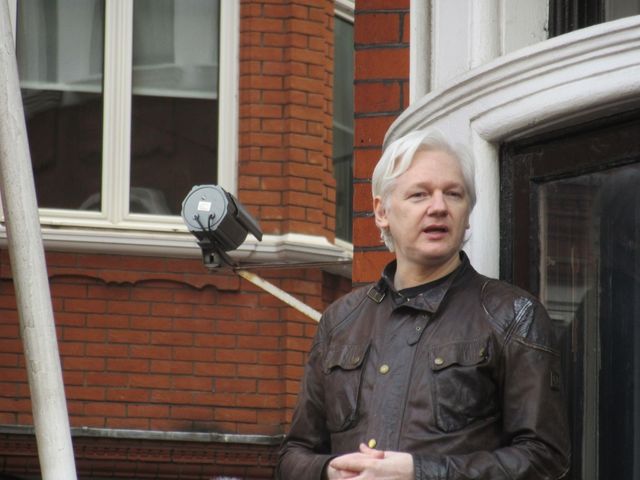
Speaking from the balcony of the Ecuadorian Embassy in London yesterday, WikiLeaks editor Julian Assange said the “proper war is just commencing.”
Speaking in the aftermath of the Swedish Prosecution Authority dropping their investigation into bogus charges of sexual assault, he added, “Today is an important victory for me and for the UN’s human rights system but it by no means erases the years of detention without charge in prison, under house arrest and almost five years here in this embassy without sunlight, seven years without charge while my children grew up without me. And that is not something I can forget, it is not something I can forgive.”
Julian Assange speaking from the balcony of the Ecuadorean Embassy Friday
Assange has been confined to the embassy since being granted diplomatic asylum in 2012, in response to the trampling of his democratic rights by the Swedish and UK authorities.
The attempt to frame him on charges relating to a 2010 visit to Sweden was the highpoint of a politically motivated manhunt launched following WikiLeaks’ publication of masses of documents revealing the criminal and illegal activities of the US and other imperialist governments in Iraq, Afghanistan and around the world. The Obama administration moved to prosecute Assange and WikiLeaks, convening a secret grand jury.
Dropping the case Swedish prosecutor Marianne Ny said, “In order to proceed with the case, Julian Assange would have to be formally notified of the criminal suspicions against him. We cannot expect to receive assistance from Ecuador regarding this. Therefore the investigation is discontinued.”
Ny’s reference to Ecuador concerns the re-election of Lenín Moreno as president at the beginning of April. His opponent, the banker Guillermo Lasso, had pledged to deny Assange asylum and remove him from the London embassy within 30 days. Moreno pledged that Assange would be allowed to remain.
Following Sweden’s decision, the European Arrest Warrant (EAW) under which Assange was arbitrarily originally arrested—without charges being brought against him—was discharged at Westminster Magistrates Court.
Ny refused to state that Sweden would ends its persecution of Assange. The statute of limitations on his case expires in 2020, she said, before warning, “If he, at a later date, makes himself available, I will be able to decide to resume the investigation immediately.”
Ny asserted of Assange, “He has tried to dodge all attempts to avoid Swedish and British legal authorities.” This is a filthy lie. It was not until last November, six years after he was first detained in London, that Sweden even took a statement from Assange, despite offered cooperation from the start.
Assange remains in immediate danger. There is no innocent explanation as to why Sweden has discontinued its investigation at this juncture, after spending seven years relentlessly hounding Assange. The case against him was concocted in order that he could be sent from Sweden to the US.
The decision to end the investigation has also been taken under Washington’s orders. Last month, it emerged that the Department of Justice had prepared the charges under which it intends to have Assange arrested and extradited to the US. CNN reported that US officials said they had “proof that WikiLeaks played an active role in helping Edward Snowden, a former NSA analyst, disclose a massive cache of classified documents.”
Asked at an April 20 press conference if the Justice Department intended to arrest Assange “once and for all,” Attorney General Jeff Sessions said, “Yes, it is a priority. We’ve already begun stepping up our efforts and whenever a case can be made, we will seek to put some people in jail.”
Sessions’ comments came just a week after CIA Director Mike Pompeo made a speech in which he denounced Assange and Snowden and said WikiLeaks was “a non-state hostile intelligence service often abetted by state actors like Russia.”
News organizations that reveal government secrets and crimes are “enemies” of the United States, said Pompeo, adding that individuals who leak secret information about US crimes are guilty of “treason.” He declared, “We have to recognize that we can no longer allow Assange and his colleagues the latitude to use free speech values against us.”
In response, a British Home Office source told the Guardian its existing legal obligation was to extradite Assange to Sweden under the EAW. Extradition requests from outside the UK are facilitated under the Extradition Act 2003, which stipulates that if there are competing warrants from two countries, the home secretary must decide which takes precedence.
With Sweden discontinuing its investigation, the way is paved for the US to request extradition, though it is likely that this has already been done. The Guardian noted, “The Home Office never confirms whether an extradition request has been made or received until the person in question has been arrested, the source indicated …”
The UK authorities have made clear that, despite the warrant against him now being void, Assange will be immediately arrested if he sets foot outside the embassy. This is to be carried out by the Metropolitan Police utilising an alleged breach of bail offense, dating back to 2012, ordered by Westminster Magistrates Court.
Yesterday the Met said Assange failed to surrender to the court on June 29, 2012, and it “is obliged to execute the warrant should he leave the embassy.”
Following Sweden’s decision, police officers inside a car remained parked opposite the embassy. Other police cars and officers were on standby.
While speaking at a Conservative Party general election event in Edinburgh Friday, Prime Minister Theresa May refused to rule out Assange’s extradition to the US. Questioned if the UK would support a US request, she said, “We look at extradition requests on a case-by-case basis.” May added, “In relation to Julian Assange, any decision that is taken about UK action in relation to him were he to leave the Ecuadorian embassy would be an operational matter for the police.”
This is a ludicrous assertion. As home secretary for virtually the entire time Assange has been incarcerated by the British state (May 2010 to July 2016), May’s department played a critical role in collusion with Sweden and the US in denying elementary justice to Assange.
The investigative journalist Glenn Greenwald, a long-time supporter of Assange who also assisted Snowden in make public documents revealing the US and British government’s mass surveillance of the world’s population, warned Friday that Assange remained in danger.
Greenwald wrote, “The termination of the Swedish investigation is, in one sense, good news for Assange. But it is unlikely to change his inability to leave the embassy any time soon. If anything, given the apparent determination of the Trump administration to put him in a US prison cell for the ‘crime’ of publishing documents, his freedom appears farther away than it has since 2010, when the Swedish case began.”

New dating of Homo naledi fossil alters its position in the human evolutionary tree

Philip Guelpa

Newly obtained dating of the fossil hominin species Homo naledi, which was first discovered in 2015, significantly alters its position in the overall pattern of human evolution. Furthermore, it raises significant questions regarding the pattern of human evolution more generally.
Professor Lee Berger holds a cast of the new Homo naledi skull at the Cradle of Humankind World Heritage site near Johannesburg
Initially, the researchers who discovered and analyzed the skeletal remains of at least 15 individuals of this previously unknown species, which were found deep in a cave located roughly 50 km (30 miles) northwest of Johannesburg, South Africa, thought that it was a very early member of the genus Homo. Based on evolutionarily primitive characteristics, including a small brain, but also some more progressive features, such as long leg bones, the scientists thought that the fossils could date to as much as 2.5 million years ago. This would place H. naledi among the earliest members of the genus, roughly contemporaneous with Homo habilis and predating Homo erectus.
However, the lack of an independent dating method was problematic. Dating based on anatomical characteristics alone can only provide a very broad approximation of a specimen’s age, especially when considering a relatively poorly understood taxon (an evolutionary group of related species), such as hominins. Another discordant note was the condition of the bones, which were barely fossilized. Remains of individuals who died over 2 million years ago would be expected to have undergone a high degree of fossilization (i.e., mineralization).
Now, one of three articles on H. naledi in the open-source publication eLife reports that radiometric dating of the cave sediments within which the bones were found as well as of three teeth indicates that this species existed much more recently, up to at least between 236,000 and 335,000 years ago. The assays were run separately by several independent laboratories, thus supporting the validity of the results. This finding indicates that primitive members of the genus Homo continued to exist alongside more advanced forms for hundreds of thousands of years, contemporaneous with not only Homo erectus, but even Neanderthals and, possibly, early Homo sapiens (our own species). This implies that human evolution remained “bushy” (i.e., with multiple, coexisting branches) until relatively recently.
Along with the late persistence of another primitive species of HomoH. floresiensis, the so-called “hobbits,” in Indonesia, which existed as recently as 50,000 years ago, this new dating of H. naledi raises many intriguing questions about how the dialectic of technology, environment, and physical and intellectual development played out in human evolution.
Four views of the H. naledi skull
Some anthropologists have thought that once hominins (humans and their ancestors, as distinct from other apes) began to rely to a significant degree on technology for survival, the forces of natural selection would increasingly tend to “focus” evolution more on cultural rather than physical adaptation. This, known as the “single species” hypothesis, proposed that human evolution tended to be unilinear rather than multilinear. This is contrary to the predominant pattern of evolution in which organisms tend to differentiate physically in order to adapt to particular ecological niches as they spread geographically.
Increasingly, however, the discovery of these and other human variants (e.g., Dmanisi) suggests that, at least until relatively recently, there were multiple ways of being human. Just because some lineages made advances in their physical, intellectual, and technological characteristics, other more primitive modes of adaptation were not automatically superseded. Instead, it now appears that multiple forms of humans, with varying degrees of biological and cultural development, coexisted for hundreds of thousands of years; the newer forms simply occupying different ecological niches than the older ones.
Most likely, there were varying levels of competition and adjustment of territories and adaptations between hominin groups, as there are between other species. That is the normal dialectic of evolution.
This does not necessarily imply that physical aggression was involved, though that cannot be ruled out in all cases. Rather, the more progressive forms may have had greater flexibility in their adaptations and were more able to accommodate change and exploit a wider range of resources with greater effectiveness than the less advanced ones. However, the actual evolutionary dynamic that occurred between various human populations is yet very poorly understood.
In some cases, actual extinction of particular populations may have occurred, as is most likely for the Indonesian “hobbits.” In others, such as the interactions between the Neanderthals and modern humans, in which there was sufficient genetic compatibility (i.e., the groups were not fully differentiated species), melding of the two populations rather than extinction was the outcome.
Newly recovered partial skeleton of H. naledi
A second paper, also published in eLife, reports on 131 additional H. naledi specimens, representing a minimum of three individuals. These were recovered from a different part of the cave system from that where the original fossils were found. This group includes the remains of one of the most completely preserved fossil humans recovered anywhere. It exhibits a similar mix of primitive and advanced traits as were found in the first find, re-enforcing the interpretation that human evolution involved a mosaic of adaptations, rather than a uniform configuration at any given time.
The degree to which human evolution involved actual speciation—separation into reproductively isolated groups due to genetic incompatibility—or was characterized by a continually evolving set of dispersed and genetically diverse populations which, nevertheless, maintained some degree of gene flow, and did not divide into separate species, remains an open, and very important question. The lead article in eLife (Berger et al) presents the interpretation that “H. naledi representing a survivor from the earliest stages of diversification within Homo.” Without DNA from H. naledi, the genetic distance between them and other human groups cannot be judged.
The coexistence of groups of humans with widely different physical characteristics, including significantly different brain sizes—H. naledi had a cranial capacity of less than half that of modern humans—raises a further question. What were the relative technological capabilities of these various groups, whether distinct species or not? Unfortunately, ancient sites often contain either stone tools or skeletal remains, but not both. This makes it difficult to correlate who made what. No stone tools have yet been found in association with H. naledi. Then again, only mortuary sites are known.
As is usually the case in science, new discoveries answer some existing questions, but raise many more.

Falling wages fuel social crisis in Australia

Mike Head 

Real wage levels are continuing to drop and are now falling at a record rate, according to data released this week by the Australian Bureau of Statistics. The figures provide a partial glimpse of the historic decline in living conditions being experienced by millions of working class people, especially the young and the lowest-paid.
For the year to March 31, overall wage levels rose by 1.9 percent, well below the official consumer price index (CPI), currently 2.1 percent, which itself underestimates the inflation rate for working class households. Even this average wage result, which includes highly-paid salary recipients, masks the extent of the income losses for poorly-paid, often casualised, employees.
The impact was the greatest for workers in the private sector—their average wages rose by just 0.4 percent in the March quarter for a yearly rise of only 1.7 percent. After including bonuses and commissions, which are not counted in the official figure, private sector wages fell by 0.1 percent in the first three months of the year and are only 1.3 per cent ahead of the same time last year.
For public sector workers, the year-on-year rise was 2.3 percent, barely above the CPI.
Wages have been officially falling compared to the cost of living for four years in Australia, partly driven by the collapse of the mining boom, but more fundamentally by the destruction of full-time jobs and the forcing of more and more workers into badly-paid, insecure part-time employment.
This wage-cutting drive, while feeding corporate profits, has been compounded by government social spending cuts and other austerity measures, and the complicity of the trade unions in enforcing pay cuts and the dismantling of after-hours penalty wage rates across many key industries.
Real wages for private sector workers have not increased since the end of 2012—a longer period of stagnation than occurred during the immediate aftermath of the 2008 global financial crisis. This trend is explained by a clear correlation with the rise of “under-employment”—that is, the decimation of full-time jobs.
Even according to the official statistics, the unemployment rate, currently 5.7 percent of the workforce, has been overtaken during the same period by the under-employment rate, now 8.6 percent. This trend was highlighted by yesterday’s release of the April jobs results, which showed that full-time employment fell by another 11,600, while part-time employment jumped by 49,000. Total hours worked fell 0.3 percent.
Over the past year, the number of hours worked by full-time staff has been almost flat, while part-time workers saw a 3.6 percent rise in hours (in trend terms). Reflecting the underlying recessionary trends, employment growth over the past year was only 1.3 percent, well below the average of the past 20 years of 1.8 percent, and two-thirds of the growth was part-time work.
These figures severely under-estimate the true situation. By the Roy Morgan survey company’s estimates, in April there were 1.2 million jobless workers looking for work (9.3 percent) and another 1.1 million under-employed workers seeking more hours of work (8.3 percent).
The shift to less secure part-time work is part of a global process of corporate and social restructuring in the interests of the wealthiest layers of society, which is intensifying inequality. Through the imposition of “zero hours contracts” and other forms of casualisation, similar pay-cutting is occurring in the United States and Britain and globally, according to the International Labor Organisation Global Wage Report 2016/17.
In Australia, declining real wages plus sky-rocketing housing and utility costs are producing immense financial and social stress among working people, partly reflected in falling consumer confidence indicators. The latest Westpac-Melbourne Institute consumer confidence survey, released this week, dropped 1.1 points to 98 points—a figure below 100 indicates a pessimistic outlook.
That result was not helped by last week’s federal government budget, which deepened cuts to welfare, education and health, while proposing an across-the-board income tax rise, in order to pay for corporate tax cuts and rapidly expanding military spending. The Westpac-Melbourne Institute survey reported that only 7 percent of consumers thought their family finances would benefit from measures in the budget, while 33 percent expected they would be hurt.
The wages data further exposed the fraud of the economic predictions underpinning the budget, in which the Liberal-National government again gave a pledge to the financial markets to eliminate the annual budget deficit of nearly $40 billion by 2020-21. The budget calculations were based on fanciful forecasts of a burst of growth that would boost wages growth to 3.75 percent by 2020-21, producing higher income tax proceeds.
The pressure on Prime Minister Malcolm Turnbull’s unstable government intensified when credit ratings agency S&P Global demanded “more forceful fiscal policy decisions” from the parliamentary establishment, warning that any further slippage in the return to budget surplus would jeopardise Australia’s AAA credit rating.
Wall Street-based S&P said the rating remained on a “negative” watch, at risk of a downgrade over the next two years. It insisted that the government would have to implement further “restrictive measures,” especially if key economic indices, such as wages growth, failed to meet the budget forecasts.
Like similar recent reports from the Moody’s and Fitch ratings agencies, S&P condemned the failure of parliament to back greater austerity measures. “This dynamic, which could continue, presents further downside risk to the outlook for fiscal balance. We therefore continue to think that budget surpluses could remain elusive beyond fiscal 2021.”
Speaking on behalf of the investment markets, S&P pointed to the failure of successive Liberal-National and Labor governments since 2010 to deliver on promises to balance the budget. “This substantial delay in fiscal repair, and the risk of further delay, raises our doubt over the ability of the Australian government to meet its fiscal objectives,” it said.
S&P voiced concerns that the five-year housing construction boom concentrated in Sydney, Melbourne and Brisbane could end badly. “Recent financial history in other developed markets reconfirms that such rapid credit growth can lead to vulnerabilities with regard to financial, fiscal and economic stability,” the agency said.
Australia also remained particularly vulnerable to offshore investor sentiment, S&P warned. Corporate investment has plunged in Australia over the past five years, led by the mining companies.
S&P estimated that Australia’s net external liabilities, at 246 percent of current account receipts, are the second highest among investment-grade rated sovereigns, just behind the US. “Australia’s international investment position remains a major weakness in the sovereign credit profile,” it stated.
These warnings represent the demands of global finance capital for ever-deeper cuts to working class living standards. This is intensifying the crisis of the Turnbull government, which barely survived last July’s election with a one-seat majority in parliament’s lower house and just 29 seats in the 76-member Senate.

Brazil’s markets plummet amid corruption charges against president

Bill Van Auken

Shares on Brazil’s principal stock market plummeted 10.47 percent in the first minutes after opening Thursday, triggering the so-called automatic “circuit breaker,” halting trading for the first time since the global financial meltdown of 2008.
The panic selling in the financial capital of Sao Paulo was driven by the dramatic intensification of the country’s political crisis, with both President Michel Temer and his principal political ally, Senator Aecio Neves, leader of the right-wing PSDB (Brazilian Social Democracy Party), directly implicated in the protracted Operation Car Wash corruption scandal.
The country’s media giant O Globo reported Wednesday night that, as part of a plea bargain deal, a prominent business executive had turned over tapes to the country’s Supreme Court. The tapes record Temer expressing his support for the payout of hush money to imprisoned politician Eduardo Cunha, and Neves soliciting 2 million reais (nearly $600,000) to pay for his own defense against corruption charges.
According to O Globo, the tapes, made secretly last March, record Joesley Batista, the CEO of JBS, one of the world’s largest meatpacking companies, telling Temer that he is making monthly payments to Cunha, the former head of the lower house of the Brazilian congress who was jailed on multiple corruption charges, to keep him from exposing others involved in the sprawling bribery and kickback scandal centered around the state-run oil company Petrobras. Temer is reportedly heard on the tape telling Batista, “You’ve got to keep this up, OK?”
Cunha, a member of Temer’s Brazilian Democratic Movement Party (PMDB), was the initial architect of the impeachment of Workers Party (PT) President Dilma Rousseff that brought Temer to power. He was also the nexus of the vast bribery operation that has implicated virtually every party in Brazil, including the PT.
Temer delivered a brief speech Thursday afternoon, declaring, “I will not resign, I repeat I will not resign.” He claimed to have “nothing to hide” and demanded a “full investigation and a rapid clarification of matters for the Brazilian people. This situation of uncertainty cannot go on for a long time.”
He went on to warn that the revelation of the “secretly recorded conversation” threatened to intensify the country’s political crisis to an unprecedented level, rendering the “immense effort to pull the country out of recession” useless. “We cannot throw into the garbage can of history so much work done for the country,” he said.
Temer was referring to the social counterrevolution that his government has embarked upon since taking office following Rousseff’s impeachment. Deepening the assault on the social rights of the working class already begun under the PT and Rousseff, the government has brought before congress a sweeping pension reform that drastically increases the age of retirement, slashes benefits, increases workers’ contributions and forces them into private retirement plans. This has been accompanied by a “labor reform” that would strip workers of their rights by scrapping restrictions on part-time work and outsourcing and allowing unions to negotiate away rights protected under the country’s labor code.
Both pieces of legislation were meant to open up a wholesale agenda of austerity measures aimed at placing the full burden of Brazil’s deepest economic crisis in a century squarely on the backs of the Brazilian working class.
Unemployment now stands at record levels, with more than 14 million officially listed as jobless. The real figure is likely closer to 25 million when those who have given up looking for work are included. Workers’ family incomes, meanwhile, has fallen by more than 10 percent since 2014.
Despite these increasingly desperate conditions for the masses of Brazilian workers, the corporate and financial media and big business politicians have hailed a supposed turnaround in the country’s economy, based in large measure on the enthusiastic response of the stock markets and international finance capital to the apparent progress made by Temer in pushing through his attacks on pensions and labor laws.
Thursday’s market sell-off reflected fears that implementation of these measures will now be impeded by the mushrooming political crisis enveloping every layer of Brazil’s ruling political establishment.
Senator Ricardo Ferraço (PSDB), who was in charge of drafting the labor law, confirmed Wall Street’s and Brazilian finance capital’s fears Thursday, saying that Temer’s “reforms” were being placed on hold.
“The institutional crisis we are facing is devastating, and we need to prioritize finding a solution,” the senator said in a statement. “Everything else is secondary now.”
Meanwhile, Brazil’s Supreme Court suspended Aecio Neves from his Senate seat Thursday as federal police raided his multiple homes in Rio de Janeiro, Belo Horizonte and Brasilia. The court failed to grant prosecutors’ requests for a warrant to arrest Neves, who lost the 2014 presidential election to Rousseff by a thin margin. Federal police did, however, arrest both his sister and his cousin in Belo Horizonte for their role in taking the money from the meatpacking executive.
Even before the latest revelations, Temer’s approval rating stood at barely 9 percent, with large sections of the population seeing his presidency as wholly illegitimate. He has appeared largely indifferent to this popular hostility, however, seeing his real constituency as Brazilian and international big business and finance capital.
If he were to resign, or be impeached in a process that could drag on for months, under the Brazilian constitution, it is the Congress that is charged with an indirect election of a successor to serve out the remainder of the presidential term until after the October 2018 presidential election. This body is just as discredited as the presidency, with 39 representatives and a third of the Senate under investigation in the bribery scandal. Rodrigo Maia, the right-wing chairman of the lower house of Congress and next in the line of succession after Temer, the former vice president, is accused of soliciting campaign donations from the construction firm OAS, a major Petrobras contractor, in return for political favors.
The Brazilian unions and the pseudo-left organizations have raised the demand for a constituent assembly and direct elections. Their aim is to channel the rising anger against the entire capitalist setup in Brazil back behind the discredited Workers Party (PT) and, in particular, the candidacy of Luiz Inacio Lula da Silva, the former metalworkers union leader who occupied the presidency from 2003 to 2010. Lula is himself facing multiple trials over corruption charges. His PT government was instrumental in creating the system of corruption through its funneling of state resources to promote the growth and profits of Brazilian capitalist corporations like JBS, Odebrecht and OAS, with political payoffs coming back in return.
A return to power by Lula and the PT would mean a continuation of the capitalist austerity policies initiated by his government, continued under Rousseff and deepened under Temer. The mission of another Lula government would be to contain the growing militancy of the Brazilian working class and keep it subordinated to capitalist interests.

Productivity figures and job cuts expose Trump’s growth fraud

Nick Beams

One of the factors that led to the election of Donald Trump to the US presidency was his commitment to boost the growth rate of the US economy, striking a chord in industrial states hit by job losses and factory closures.
Just four months into his presidency these promises lie in tatters. Underlying US economic trends continue to worsen, amid increased financial parasitism. The announcement by Ford that it will cut 10 percent of its global workforce is an expression of this process—the ruthless and relentless demands by finance capital for job destruction and cost-cutting to boost “shareholder value.”
The Ford decision is only one manifestation of the parasitic processes in the US and major economies internationally. Some of the effects were highlighted in the results of research conducted by the Conference Board think tank published in the Financial Times earlier this week.
Labour productivity in the US—one of the main drivers of economic expansion—will rise this year by only one-third of the rate that prevailed before the financial crisis of 2008. While the expected increase for 2017 is 1 percent, compared with an increase of only 0.5 percent last year, it is still well below the level of 2.9 percent recorded between 1999 and 2006.
Trump said his policies of lower taxes and deregulation would lift growth in US gross domestic product (GDP) to at least 3 percent, compared with its present level below 2 percent. But their only real effect, if enacted, will be to shovel more money into the hands of the financial elites.
The prospects for growth are no better in the longer term. Even barring the eruption of another crisis, the Congressional Budget Office estimates that the potential growth for the US economy is 1.9 percent from 2012 to 2017, compared to average annual growth of 3.1 percent from 1981 to 2007.
Conference Board chief economist Bart van Ark told the Financial Times: “Even an optimistic productivity scenario would not get close to the Trump administration’s target of 3 percent GDP growth.”
The US figures are part of an international trend. According to the Conference Board, the European Union will experience an increase of 1.1 percent in productivity for 2017, up from 0.8 percent last year, but well below the 1.9 percent level in the years before the financial crisis.
Japan is expected to record a 1.1 percent growth in productivity, up from 0.5 percent in 2016, but less than half the pre-crisis rate.
Commenting on the data, van Ark said the weakness in productivity reflected the impact of the global financial crisis on business investment and the “sluggishness by which new technology has been translated into faster productivity.” Companies would need to lift rates of investment to keep productivity and growth rising. Now was the time to make the investments planned for a long time.
Such expressions of hope run counter to the dominant trends in the US economy and elsewhere. The days when companies used profits to make new investments and expand production, giving rise to economic growth and improved wages, have long gone.
The road to increased profits is now savage cost-cutting in order to free up cash, which is then disbursed to shareholders—predominantly banks and hedge funds—in the form of increased dividends and share buybacks. And those firms deemed by financial markets not to be sufficiently engaged in this process come under intense pressure to change course.
As one recent Australian study noted, financial institutions exercise their power not primarily by holding directorships but “through exit”—the continual threat of withdrawal of funds if the rate of return is not sufficient. Managements, which in an earlier period were concerned with expanding and growing a business through productive investment, must now carry out the dictates of financial markets to strip resources from the firm or be removed.
The Trump administration’s claims that it will boost jobs have also been shattered by figures coming from the retail sector.
According to a report in the Financial Times on Monday, since the election of Trump last November, the retail sector has lost 89,000 jobs—more than the total employment in either coal mining or steel—with more to come. The article began: “Anyone seeking the contemplative peace of a graveyard could do no worse than park at one of America’s strip malls.”
By some estimates, the US retail sector could lose up to one third of its 16 million jobs within Trump’s term, on a par with the scale of job losses in manufacturing industry since the turn of the century.
The job shedding is the result of two factors. First, there is the general stagnation of consumer spending, flowing from the suppression of wages and rising household debt. The US economy grew at an annual rate of only 0.7 percent in the first quarter of this year, largely as a result of the weakest increase in consumer spending in seven years.
Second, there is the impact of online buying or ecommerce, epitomised by the rise of Amazon.
Amazon’s business model is not based on general economic expansion but at driving more traditional outlets to the wall, resulting in major job losses. In earlier times of general economic expansion, the job losses would have been offset by the growth of employment opportunities in other areas of the economy. But this is not taking place.
It is estimated that for every three retail jobs lost, only one is created in ecommerce. Those displaced from the retail sector are either moving out of the workforce altogether or into lower paid and more precarious jobs in other service industries.
It is this essentially parasitic business model that has made Amazon such a darling of the financial markets.
Over the past 20 years its shares have risen almost 64,000 percent—$100 invested in Amazon stock at the time of its initial public offering would have accumulated to $64,000. Amazon’s market value is now more than $450 billion, compared to $230 billion for Wal-Mart.
The rise and rise in Amazon’s market value, unlike the rise of the giants of a previous era, is not an expression of economic strength. Rather, it is a manifestation of the parasitism, based on an appropriation of real wealth produced elsewhere, that has become the mainstay of profit accumulation in the US economy, and increasingly globally.
Technological innovations in transport and information systems have fueled this rise. But they are not utilised to facilitate economic growth, but rather to enable the sucking up of wealth into the coffers of finance capital.