25 Sept 2017

Iraqi Kurdish referendum stokes Mideast war tensions

Jean Shaoul & Jordan Shilton 

The Kurdistan Regional Government (KRG) in Iraq’s, oil-rich, predominantly Kurdish north is proceeding today with a referendum on Kurdish independence. The vote is expected to endorse the KRG’s call for the creation of a separate state.
Washington has long served as a patron of the KRG. But it and the European imperialist powers are opposed to today’s referendum, as are Iraq’s central government, and Turkey, Iran, and Syria, which are all home to significant Kurdish minorities.
Turkey has been adamant in demanding the KRG scrap the referendum, with Turkish government officials issuing warnings late into the night Sunday of dire consequences for the KRG if the referendum is held. Calling the referendum a threat to the national security and territorial integrity of Turkey, Iraq, and Iran, Turkish Deputy Prime Minister Bekir Bozdağ, declared, "We are telling (KRG President) Barzani and his administration: It is not over yet. Stop playing with fire and cancel the referendum decision."
For its part, the US fears a Kurdish independence bid will further destabilize its already fragile puppet regime in Baghdad and inflame or trigger fratricidal ethno-religious conflicts across the region, thereby cutting across its own drive to establish unbridled hegemony over the world’s most important oil-exporting region—in particular, its plans to mobilize its local clients for confrontation and war with Iran.
In pursuit of its predatory geostrategic interests, US imperialism has waged virtually uninterrupted war in the Middle East for the past quarter-century, destroying whole societies and razing state structures. A key element in this process has been the inciting of ethnic and religious sectarian divisions, including the promotion of Kurdish nationalism.
Following George W. Bush’s illegal invasion of Iraq in 2003, Washington cooperated closely with the KRG, while in neighbouring Syria, the Pentagon and CIA have backed the Kurdish-dominated Syrian Democratic Forces (SDF) in the US war for regime change in Damascus.
KRG President and Kurdistan Democratic Party (KDP) leader Masoud Barzani announced the referendum via an executive decree last June, although his term as president ended more than two years ago. The referendum was endorsed at a barely quorate parliamentary session earlier this month.
Barzani, seeking to bargain with the major imperialist powers as Kurdish nationalists have done for decades, insists that today’s vote is merely consultative and will not result in the immediate formation of an independent Kurdish state.
Apart from Barzani’s KDP, among the many fractious parties of the Kurdish elite only the Kurdistan Islamic Union (KIU) has unequivocally supported the referendum. The KRG’s second-largest party, the Patriotic Union of Kurdistan (PUK), which is led by former Iraqi President Jalal Talabani and has ties to Iran, has been badly divided over whether to back the referendum.

Intensifying regional conflicts

Echoing the position of the US and the European powers, the UN Security Council issued a statement last Thursday expressing “concern over the potentially destabilizing impact of the Kurdistan Regional Government's plans to unilaterally hold a referendum next week.”
US Secretary of State Rex Tillerson and Defense Secretary James Mattis, as well as British Defence Minister Michael Fallon, have all visited the KRG capital, Erbil, in recent weeks to try to persuade Barzani to cancel or at least postpone the vote.
US imperialism fears that the political and probable military conflicts unleashed by the referendum will cut across its chief immediate Mideast goals: preventing Tehran from establishing a land corridor to supply its allies in Syria and Lebanon and preparing for an all-out clash with Iran.
The Kurdish vote takes place as a new and even more dangerous phase of the war in Syria between the US and the Assad regime and its Russian and Iranian backers looms, as they scramble to gain control of territory vacated by vanquished ISIS forces. Last week, Trump used his UN General Assembly address to denounce Iran as a “criminal” and “rogue” regime and serve notice that he could scuttle the Iran nuclear deal in coming days.
Support for the Kurdish referendum has come from Israel, with Prime Minister Benjamin Netanyahu giving an explicit endorsement. For decades, Tel Aviv has maintained close ties to the KDP, which has been led by the Barzani family since its formation. It views the emergence of an independent Kurdistan on Iran’s borders as a weapon to be wielded against Tehran. Russia, which enjoys substantial commercial relations with Erbil, including through sizeable investments by the energy giant Rosneft, has avoided condemning the vote.
Until recently, Turkey has enjoyed close and lucrative relations with Barzani and the KRG. But it vehemently opposes the referendum, fearing that a vote for independence, let alone the emergence of an independent Kurdish state on KRG territory, could boost Kurdish nationalist-separatist forces in Turkey’s southeast.
Since 1984, Turkish security forces have waged a ferocious war against a Kurdistan Workers’ Party (PKK)-led insurgency that has led to the deaths of some 40,000 people, the destruction of 40,000 villages and the forcible displacement of up to one million people.
On Saturday, an emergency meeting of the Turkish parliament extended special authorization for its troops to act in Iraq and Syria in the interests of “national security.”
Ankara is concerned that the KRG referendum will also encourage the PKK-aligned YPG (People's Protection Units) in northern Syria to try to turn the autonomous zones they control along the Turkish border into a separate state. The YPG has emerged as the backbone of the US-sponsored proxy army in Syria, even as Washington has assured Turkey it supports the “integrity” of Syria.
On Friday, in defiance of pronouncements from Washington, the Kurdish authorities in northern Syria held the first stage of planned elections at district, municipal and regional levels—elections that they say could be followed by an independence bid if Damascus refuses to recognize them.

The sectarian partition of Iraq

Within Iraq, the referendum is especially contentious because it will include not only the three KRG provinces of Erbil, Dohuk and Sulaimaniyah, but the so-called “disputed territories” of Khanaqin, Sinjar, Makhmor, and oil-rich Kirkuk.
The “disputed areas” are currently controlled by KRG Peshmerga forces, but lie outside the recognized borders of the three northern provinces that make up the KRG and include large Arab, Turkmen, and Arabic-speaking religious minorities.
This raises the prospect that non-Kurdish peoples could be forcibly incorporated into an independent Kurdish state and the danger of violent ethnic conflict.
This is especially true in oil-rich Kirkuk province, which was annexed by the KRG’s Peshmerga fighters in 2014 in the wake of Islamic State’s offensive across northern and western Iraq. With the referendum excluding the Arab district of Hawija still occupied by Islamic State, a pro-independence vote in Kirkuk seems assured.
Other “disputed territories” are now less homogeneously Kurdish following the former Baathist regime’s deliberate transfer of Arab populations into them in order to reduce local Kurdish dominance.
As a result of fears stoked by the referendum, local Turkmen leaders have called on Baghdad to declare martial law in Kirkuk and deploy armed forces to prevent the referendum.
The referendum is also contentious in some towns within the KRG. Demonstrations that led to angry clashes took place earlier this month in Mandali, in Diyala province, one of the three provinces that form the KRG, protesting against the town’s inclusion in the referendum.
Some of those in favour of Kurdish independence question the referendum’s timing, arguing that it is a ploy to consolidate Barzani’s power in Kurdistan and strengthen his bargaining hand with Baghdad.
Last Monday, following a vote in the Iraqi parliament opposing the referendum, Iraq’s Supreme Court ordered the suspension of the referendum pending an investigation into its legality. The Iraqi constitution guarantees “the unity of Iraq” and grants no right of secession.
Iraqi Prime Minister Haider al-Abadi, who has come under increasing pressure from his political opponents to come out forcefully against the referendum, declared that Iraq might resort to force “to protect our population, to protect our Kurdish population and our Arab and Turkmen and other ethnic populations of our own country.”

The reactionary character of Kurdish nationalism

The attempt to create an independent, capitalist Kurdish nation-state through the reshuffling of the borders that British and French imperialism imposed on the Middle East at the end of World War I is reactionary. It would not serve the interest of Kurdish workers and toilers, never mind the region’s myriad other peoples, but would only create more favourable conditions for imperialist-incited nationalist, ethnic and religious movements to flourish.
The rhetoric about “self-determination” for the Kurds notwithstanding, more than a century of historical experience has demonstrated that the Kurdish bourgeoisie is incapable of establishing independence from imperialism, the principal obstacle to realizing the democratic and social aspirations of all the peoples of the Middle East.
While the Kurdish peoples in Iraq, Iran, Turkey and Syria face discrimination, the record shows that the separatist and communalist programs of the Kurdish nationalist parties only serve to divide the working class along ethnic, cultural and religious lines, and are devoid of any genuine democratic or progressive content.
In pursuit of its own selfish class interests, the Kurdish bourgeoisie has time and again made the Kurds the pawns and proxies of the imperialist and regional powers, who once their predatory objectives have been realized cruelly abandon the Kurdish people to their fate.
Washington’s war drive in the Middle East since the 1991 Gulf War has exposed the Kurdish nationalists as tools of imperialism. In exchange for a few crumbs from imperialist plunder and exploitation—such as limited autonomy in Iraq—they have hired themselves out as proxy forces for imperialism.
The Kurdish nationalists welcomed the illegal US-led invasion of Iraq in 2003, even though Washington had tacitly backed Baghdad’s suppression of a Kurdish uprising just after the Gulf War. Despite Talabani’s Patriotic Union of Kurdistan and Barzani’s Kurdish Democratic Party having supported opposing sides in the 1980-1988 Iran-Iraq war, they joined forces in the corrupt Kurdistan Regional Government established in 2005.
The KRG worked with the US occupation and is now playing a leading role in the US-led war against Islamic State. It provided manpower for the bloody imperialist-led offensive against the ISIS in Mosul, an ethnically diverse, Sunni Arab-majority city. In the course of this onslaught, numerous reports point to blatant acts of ethnic cleansing by Kurdish forces aimed at driving Arab and other minority populations from areas that they intend to integrate into a Kurdish state.
The oppression faced by the vast majority of the Kurdish population, together with workers and toilers across the Middle East as a whole, can be overcome only in a united struggle in opposition to the continued domination of the region by imperialism.
As Leon Trotsky, co-leader with Lenin of the Russian Revolution, established in his theory of permanent revolution, the outstanding democratic tasks in countries of a belated capitalist development can be accomplished only as part of the struggle for socialism. The fight for such a program demands not the repartition of the Middle East on ethnic and sectarian lines, but rather the unification of the workers and toilers in the fight for the United Socialist States of the Middle East as part of the struggle for socialism globally.

The rise of the AfD and the rightward lurch of official politics in Germany

Peter Schwarz

For the first time since the fall of the Nazis, a right-wing extremist party is entering Germany’s national parliament. With 13 percent of the vote in Sunday’s federal election, the Alternative for Germany (AfD) became the third largest party in parliament, finishing behind the governing Christian Democratic Union/Christian Social Union (CDU/CSU) and the Social Democratic Party (SPD), which suffered an electoral collapse. The CDU/CSU obtained 33 percent of the vote, its worst result in over 60 years.
The AfD has acquired political influence far beyond its actual strength. It set the tone in the election campaign with its agitation for a crackdown on refugees and the strengthening of the state’s repressive apparatus. All of the establishment parties sought to outdo the AfD with pledges to hire more police and deport more refugees, thereby bolstering the far-right party. Why vote for the more established parties’ versions of the AfD’s chauvinist and authoritarian politics when you could vote for the real thing? The CDU/CSU lost more than a million voters to the AfD, while the SPD lost 470,000 and the Left Party lost 400,000.
That being said, the AfD’s right-wing extremist programme does not enjoy mass support. Even among AfD voters, 60 percent said they backed the party as a protest and not because they support its policies. The AfD’s rise is, above all, the result of the rightward lurch of all of the established parties, which, with the support of the media, are doing all they can to channel mounting social discontent in a right-wing direction.
In the past, nominally left parties would be expected to benefit from a social crisis such as that which is gripping Germany, including the explosive growth of low-wage jobs, the rise of poverty and homelessness, the lack of affordable housing, the catastrophic conditions in the schools and hospitals, and the growing danger of war. But neither the SPD nor the Left Party are capable of making a social appeal to voters.
The SPD is politically bankrupt and reviled. Having imposed the Hartz laws, tax cuts for big business and the rich, and an increase in the retirement age to 67, the SPD bears chief responsibility for the outrageous levels of social inequality.
An even more abject role is played by the Left Party. Workers long ago stopped taking its combination of left phrases and right-wing policies seriously. The Left Party’s main task consists in blocking a movement of workers to the left. In eastern Germany, where the Left Party long dominated, the AfD finished in second place behind the CDU. There, the far-right party won 22 percent of the vote. The AfD even managed to take first place among men, with 27 percent of the male vote.
The ruling elite came to terms with the AfD even before the votes had been counted. It is only a matter of time before it integrates the right-wing extremist party into government.
CSU leader Horst Seehofer declared that the AfD won votes because the CDU and CSU “left open their right flank.” He pledged that they would change this in the future and take a “clear stand.”
The historian Michael Wolffsohn rejected describing the AfD as “Nazis.” It is, he said, a reaction to “major social problems” such as the flood of refugees, for which the other parties have no answers. Political scientist Jürgen Falter warned against overdramatising the AfD’s entry into parliament. Far from being a “cause for concern,” it represented “a normalisation of German politics after our history.”
The established parties’ horror at the AfD’s right-wing extremist policies was hypocritical from the outset. This is shown by the case of Jörg Baberowski. The professor at Berlin’s Humboldt University, who cleared the way for the AfD with his agitation against refugees and his downplaying of the crimes of the Nazi regime, received unanimous backing from the established parties and the media when the Sozialistische Gleichheitspartei (SGP—Socialist Equality Party) publicly criticised him. The SPD, whose leading member Sabine Kunst is the president of Humboldt University, and the Left Party played a prominent role in the defence of Baberowski. Even when a court confirmed that Baberowski could be described as a right-wing extremist, they continued to support him.
The AfD’s rise is the result of the rightward shift of the entire ruling class, which is responding to the global capitalist crisis and the growth of internal and external tensions by returning to its most despicable traditions. In the 1930s, business associations, the military, bourgeois politicians and academics reacted to the intensification of the class struggle by backing Hitler and supporting his appointment as chancellor.
This must be taken by the working class as a serious warning. None of the establishment parties, least of all the SPD and Left Party, are willing or able to stand up to the right-wing extremists.
Similar developments are taking place in other European countries. In France, the right-wing extremist candidate for the National Front, Marine Le Pen, made it to the second round of the presidential election. In Austria, the participation of the far-right Freedom Party (FPÖ) in government following elections in October is seen as all but certain. The social democrats as well as the conservatives are ready to form a coalition with it.
The Sozialistische Gleichheitspartei is the only party that stood in the federal election on a left-wing and socialist platform. “With their right-wing policies, the SPD, the Left Party and the Greens facilitate the growth of the far-right Alternative for Germany (AfD),” the SGP’s election statement declared. “This right-wing extremist party can pose as an opposition force only because none of the establishment ‘left’ parties oppose the ruling class with a socialist perspective.”

23 Sept 2017

A Peep Into Rohingya Refugee Life In Chennai

Syed Ali Mujtaba

There is much attention on the plight of the Rohingyas in the media these days. Rohingyas are an ethnic population of over one million Sunni Muslims living in Myanmar’s Northern Rakhine state.
They are being persecuted by their own government and the United Nations has called them as the world’s most persecuted community.
Since last one decade, scores of Rohingyas have fled from Myanmar after the repeated sectarian violence orcastrated by the Burmese government that has denied them citizenship under the 1982 Burmese Citizenship Act.
In the current wave of persecution, approximately 400, 000 Rohingas has fled their country to Bangladesh, which is finding it hard to shelter such a large number of human populations having meager resources.
As a part of humanitarian assistance the Government of India has launched “Mission Insanyat” to help the Rohingas living in the camps in Bangladesh and it is providing them the necessities of life.
Even when all these are happening, some hostile statements are being made by the Central Ministers against the Rohingas fleeing their country.
India’s Home Minister Rajnath Singh has called Rohingas as infiltrators who can’t be granted refugee status and to be deported to Maynmar as early as possible. Roghingas are seen as jihadis having links with Islamic state.
This has sent shock wave in the country, because this is quite contrary to the principled stand that India use to take on such issues once upon a time.
According to the Factsheet India issued by the UNHCR in May 2016 there are 19,142 Myanmarese refugees in India. Among them there could be approximately 10,000 Rohingyas living in India.
The Rohingyas are concentrated in New Delhi, Jammu, Rajasthan, Hyderabad, and, to a lesser extent, in Tamil Nadu and in Kerala.
All of them have come from Bangladesh utilizing the services of ‘dalals’ who have contacts in various parts of India.
As far as Rohingas in Chennai are concerned let’s have a peep into their lives at Kelambakkam refugee camp here in Chennai.
They are of 2012 lot when there was similar kind of persecution in Maynmar and Rohingas had fled their country and first reached Bangladesh and then to India.
They are living here in a ramshackle government-run cyclone shelter where years ago there used to be Sri Lankan Tamils living.
There are about 94 Rohingya refugees staying and belong to 19 families comprising 47 children, 25 women and 22 men.
Rohingas are mild-dark complexioned people and several of them are wheatish in color. They can pass off as local Tamils but for their distinctive ‘Rohingya’ language. They can speak a mix of Urdu and Hindi and thats what helps them to communicate with the local people here.
This group of 94 people had made an arduous journey from Myanmar to Bangladesh by boat and then on foot to cross the West Bengal border to come to India. And then they moved to Kolkatta to board a train to Chennai.
It was a hell of a journey for them all the way from Myanmar to Chennai. All along, they had to shell out a huge amount of money to the brokers (dalals), to make sure they reach safely into India.
Although they arrived in Chennai in 2012, their “tryst with nomadic life” ended when police caught them by the end of 2014.
The National Human Rights Commission (NHRC) intervened and issued notice to the Government of Tamil Nadu seeking clarification on the subject.
The Collector of Kancheepuram rose to the occasion and provided them accommodation in the cyclone shelter in Kelambakkam with a condition that they should not associate them with local politics or political parties.
The Rohingyas in the Kelambakkam camp are recognized as refugees by the UNHCR and they are issued a refugee card which lists out their individual particulars like name with photograph, sex, age, date of arrival etc.
These refugees have registered with the Foreigners’ Registration Office (Police Superintendent), in Kancheepuram and have a Residential Permit i8s issued by the authorities there. Their refugee card is a guarantee of their legal status.
While the Kelambakkam camp provides a roof over the heads of these refuges, it lacks basic amenities. There is only one water tap outside the main building and there only two toilets for all. The main hall where the refugees live is partitioned by hanging old clothes and each family occupies a space measuring 5’ by 5’.
They have apportioned the space for each of the family by turning clothes as “walls,” with things strewn around and fly swarming everywhere.
The open veranda is full of dirt and the monsoon season has made the condition much worse. The refuges take their bath and wash their clothes outside. Each family has a traditional earthen kitchen on the open ground where they use twigs and fire wood.
When the Rohingyas settled down in Kelambakkam they numbered only 14, but as the news spread that they have a permanent home, others joined them and today they number 94.
The refugees live in a ground plus one shelter known as ’round building’ indicating its circular shape. While six families live on ground floor, eight are on the first floor and five have put up shacks on open ground around the building.
Electricity bill is borne by the government and water is available throughout the day. The shelter is opposite the local Government Primary Health Centre where they can get medical assistance. There is a local school nearby where their children go for studying.
In the shelter there is a mosque in a makeshift hut that is separate from the living area. Here, they offer prayer five times every day. The local Muslims are lending a helping hand to the refugees and so are some NGOs, and philanthropists who are showing their magnanimity towards them.
The refugees, many of whom are skilled workers do odd jobs including rag picking, daily wage laborer, shoe polishing etc. to eke out a living. Some of them even though have specific set skills like driving can’t do so without having license.
The UNCHR is a pillar of strength to the Rohingas refugees in Chenai. It maintains cordial relations with the Department of Immigration and government of India
The Chennai office of the UNHCR is confident that as and when validity of the refugee card expires, they could easily get them extended. According to UNCHR, Rohingas can peacefully live here till such atmosphere is created in their home country.

Alzheimer’s Burden On Families

Zeenat Khan

What can be more ironic and catastrophic when a renowned linguist loses her language altogether,as the deadly Alzheimer’s disease (AD) fiercely ravages her brain? That is what did happen to Alice Howland, a professor and a linguistics expert at Columbia University, New York. Initially, it started with her inability to remember the word ‘lexicon’ while giving a lecture. From then on she forgot how to get back home after taking a run around campus. She went to see a well-known neurologist at the New York- Presbyterian Hospital. Alice was diagnosed with early onset of Alzheimer’s, an irreversible, progressive disease. Her biologist husband and three grown children reacted in different ways to her fast deteriorating condition. Unable to cope with the life changing situation, Alice’s husband takes a job at the Mayo Clinic in Minnesota, on the pretext that he has big medical bills to pay. Ultimately, the youngest daughter, Lydia, an aspiring actress and the rebel in the family gives up her dream and movesback to New York from Los Angeles to become her mother’s fulltime caregiver.
The Alice I am talking about is a fictional character in a 2015 movie called ‘Still Alice’ that I watched last night for the second time. In the movie, the celebrated actress Julianne Moore plays Alice. For her very realistic and touching portrayal of Alice, she took the Oscar trophy home in the best actress category.
Likewise in the real life usually an adult daughter like Lydia often has no choice but to become a caregiver. She has to give up a career and neglect other family duties, her own relationship– because of love, concern, and moral obligation to care for a sick and elderly parent. For any caregiver, it can be overwhelming and a heavy burden to shoulder.In portraying Alice, Moore was able to shine a light on Alzheimer’s and how the burden of this disease finally was dumped on Lydia who had no understanding of this debilitating disease.
Since 2012, the entire month of Septemberof each year is considered World Alzheimer’s Month.This international campaign’s main goal is to raise global awareness, challenge the stigma and misinformation about AD. Globally, the number of people now living with dementia is expected to rise from the current 46 million to 131.5 million by 2050. About 5 million people alone in the United States suffer from Alzheimer’s disease. It is estimated that by 2050, as many as 13.4 million Americans will be affected with this fatal disease.
The Alzheimer’s scenario in Asian countries including India and Bangladesh is somewhat unknown because of stigma surrounding permanent dementia. Dementia in most cases is considered an old age problem and therefore the incidences are not reported. About 4 million people in India have some form of dementia. “An estimated 460,000 people were suffering from dementia in Bangladesh in 2015, and the number is expected to rise to 834,000 in 2030 and 2,193,000 in 2050 respectively.”According to WHO, the government hasn’t given it a priority and there is little awareness about this disease.
A couple of months ago, a Bengali drama that I had watched on You Tube somewhat addressed the issue of dementia. There were some haunting scenes where a grandfather became a diminished figure because of this raging disease. He was mostly left alone in a locked room, isolated, and away from everyone. He was thought to have gone mad because he asked questions repeatedly. Family members didn’t know how to communicate with him and failed to understand that may be he was trying to express a specific thing. Because of the family’s lack of understanding of AD, he became a subject of ridicule where everyone poked fun at his expense.
AD deprives a person of his or her memory, disrupts cognitive abilities and personality. The patients experience mood changes, their day- to- day life become very limited. The disease starts with symptoms like simple forgetfulness: not being able to remember where the car keys are, trying hard to recall a friend’s phone number, after a phone conversation forgetting what the call was all about, or while walking, not sure whether to take a left or a right turn to reach home.Eventually, a complete brain failure kills the patient who has this dreadful disease.
Alzheimer’s is a universal disease and it spares no one. From the former British PM Margaret Thatcher to one of my neighbors had to withstand the challenges of coping with a cruel and absurd ordeal that had no chance of getting easier. The families with Alzheimer’s patients have to endure a nightmarish circumstance and many challenges of coping with this disease. The patient’s new sense of self is an unknown territory for an inexperienced caregiver. Worldwide, most of the caregivers of an Alzheimer’s patient are not trained professionals to care for that patient over a long period of time. There are enormous responsibilities that come with this disease. Sometimes it exceeds the caregiver’s capacity for caring.
Whether one is the patient or the primary caregiver – AD affects every member of a family on some level. With all kinds of drugs and innovative modern medicine, now the Alzheimer patients live longer. This prolongation can be viewed as a blessing or a curse. This memory-robbing chronic disease is indeed one of the hardest to deal with when a patient loses total sense of self. The stress of watching a loved one slowly declining affects everyone in the family.
With Alzheimer’s, a family member has to become a surrogate for the patient. He/she is accountable to make end-of-life decision for the patient. It is like taking care of an infant, from bathing, personal hygiene, preparing meals to spoon feeding and all that is in-between. The caregiver becomes the patient’s life line. All the custodial decisions like medicine, business affairs and putting the person’s overall well-being in order can become very distressing for the caregiver of an Alzheimer’s patient. More often an adult daughter or a spouse hasto see to every need of a patient who doesn’t remember anything.
Faced with such huge responsibility and colossal task, a caregiver herself can become a victim of serious illness. Spending endless hours with the patient, day in day out, the caregiver can develop dementia, according to experts who had done studies. Their alcohol intake increases and some become chain-smokers. They suffer from depression and become ill. They lack exercise because they become housebound in caring for the patient.
A joint study done by researchers of Johns Hopkins University and Utah State University concluded that the spouses of Alzheimer’s patients were six times as likely to develop dementia themselves. They become socially isolated and ignore their own health. They perhaps feel by doing that they become better care givers.
Most families in the United States or elsewhere are not fortunate enough to hire round-the-clock nursing care for an Alzheimer’s patient like the Regans or the Kennedys. In both families they had Alzheimer’s patients. Because of the socio-economic differences the educated and well to do families are in a position to bring this disease to focus and be at the forefront. They also can pay greater attention to their own health and not be a victim to this disease. The less advantaged group can only rely on family. Caring for someone with Alzheimer’s can be a very long, stressful and an intensely emotional journey for a caregiver. Without any support group, an overburdened caregiver may become an invisible victim of this dreadful disease.

FDA recommends approval of new leukemia treatment

Benjamin Mateus

A panel of the Food and Drug Administration (FDA) recently made a unanimous recommendation to approve the “first-ever treatment that genetically alters a patient’s cells to fight cancer, transforming them into what scientists call a living drug that powerfully bolsters the immune system to shut down the disease.”
In the summary of their report, the authors explain that in 2014 the FDA granted “breakthrough therapy” designation to CTL019 for being the first time in medical history that personalized cellular therapy has been used to treat patients with a high-risk B-cell leukemia. In their study, they describe how T-cells, which are one of the body’s types of white blood cells and a key part of the human immune system, can be engineered to fight malignant cancers.
This area of research gained steam in 2006 after the first human clinical trials using Chimeric Antigen Receptor (CAR) T-cell technology demonstrated that it was possible to redirect T-cells to attack cancer cells. This normally does not happen because T-cells regard cancer cells as native to the body or fail to detect them, and thus do not destroy them. Since then, there have been many investigations in this field that have ultimately led to the current discovery.
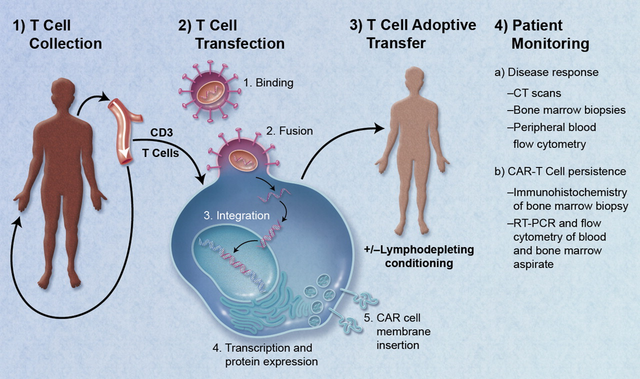
Blood is extracted from the patient so their T-cells can be engineered to fight leukemia and then reintroduced into the body.
The treatment process begins with removing T-cells from a patient’s serum and genetically modifying them so they can attack the cancerous B-cells. The researchers used a disabled form of human immunodeficiency virus (HIV) that can carry the new genetic material and incorporate it into the T-cells, thereby reprogramming them. The T-cells can now recognize the protein called CD-19 on the surface of the B-cell and attack it. The reprogrammed T-cells are then infused back into the patient where they multiply and eradicate the cancer.
With such therapy there are also complications involving the Cytokine Release Syndrome (CRS) that can have severe consequences for the patient. This means the inflammatory response to the treatment is brisk and characterized by high fevers, low blood pressures, and low oxygen saturation. The body undergoes an inflammatory-mediated shock similar to a major infection. It becomes imperative to appreciate the delicate but complex systems of interaction that such efforts mediate. Yet, CAR T-cell therapy holds the possibility to eradicate cancer in these patients permanently.
As compared to tumor vaccines that have a low affinity to their target, with responses occurring over several months, T-cell transfer responses are measured in days to weeks. A single reprogrammed T-cell can kill up to 100,000 cancer cells.
There are currently 30 clinical trials open for the treatment of B-cell malignancies involving many major institutions in the United States, Europe, China, and Japan. CAR T-cell therapy is also being investigated for an assortment of hematological as well as solid tumor malignancies such as breast and lung cancer.
T-cells seek out specific sites on other cells, antigens, in order to bind with and kill cancer cells.
CAR T-cell therapy is a seismic shift from current conventions for treatment, yet significant work lies ahead. Unknowns include finding the optimal gene transfer method that is less complicated, safe, and financially feasible, and which ensures a consistent T-cell mediated immune response. The T-cell expansion is currently being carried out at local cancer treatment centers. Suitable methods to scale up production and increase output while adhering to strict quality control is necessary. The appropriate dosing of T-cells needs to be worked out. Protocols need to be standardized from institution to institution.
Because it is a patient-specific treatment, CAR T-cells must be manufactured for each patient on a case-by-case basis. Accordingly, it is only feasible now at large academic centers that have extensive expertise and resources. At the same time, however, a single infusion of T-cells is sufficient to induce a tremendous proliferation and rapid response.
The kinetics of T-cell expansion and tumor rejections appear to be dependent on the type of tumor and remain to be further studied. Though CAR T-cells are considered targeted therapy, the mechanisms by which this occurs are unknown and thought to be multifactorial. T-cells are versatile in their ability to target and kill through multiple methods of attack. It is hypothesized that tumors can only escape CAR T-cells through antigen (surface receptor) loss.
If the FDA approves the recommendation for CAR T-cell treatment for B-cell Acute Lymphoblastic Leukemia (ALL), it would be the first gene therapy to reach the market in the United States. Novartis, a Swedish-based global healthcare company, would be the first to offer such treatment while it works to investigate similar approaches to other blood and solid organ malignancies.
B-cell ALL afflicts about 6,000 people in the United States with a peak incidence at 2-5 years of age. These patients undergo a rigorous treatment with multidrug regimen divided into several phases. Most treatment protocols can take two to three years to complete. Many of them will require supportive care with blood products, treatment for infections with broad spectrum antibiotics and correction of metabolic imbalances. Despite the debilitating side effects, most will be cured. However, approximately 15 percent will not respond or relapse.
White blood cells (green) attacking a cancer cell (purple).
The results from the clinical trials conducted at the University of Pennsylvania have been dramatic for this subset of patients with a very slim prognosis. One such patient, Emily Whitehead, was treated in 2012 at age 6. Though the side effects of the CAR T-cell treatment were severe and nearly killed her, she emerged cancer free and continues to remain in remission.
The data Novartis presented to the FDA panel included results from 63 patients treated from April 2015 to August 2016. Fifty-two patients (82 percent) went into remission, which is considered astonishing given the severity of the disease. Certainly, the CRS is an issue they are grappling with as well as concerns for possible future medical complications for which there are presently no answers. This means that such patients would likely be treated at specialized centers where expertise with the treatment will be important for patient safety.
Though Novartis has not commented on treatment costs, analysts predict that individualized treatments could cost more than $300,000. It is unlikely insurance companies would approve such an expense. Most likely the only way that working people could obtain such life-saving treatments is to be among the few selected as subjects in clinical trials.
There are certainly ethical issues to this which are not being raised in the mainstream journals. Arguments in support of the high cost follow the irrational logic that these patients will assume high costs of treatment for their cancer in the long run anyway.
Similar arguments have been used by successive administrations to slowly slash federal funding for medical research. Trump’s proposed budget cut for the National Institutes of Health would reduce the organization’s funding by 20 percent, from $31.8 billion to $26 billion. Such cuts will directly and negatively impact any further research into this new way to fight cancer.

Sri Lankan plantation workers protest job cuts and new productivity demands

M. Thevarajah

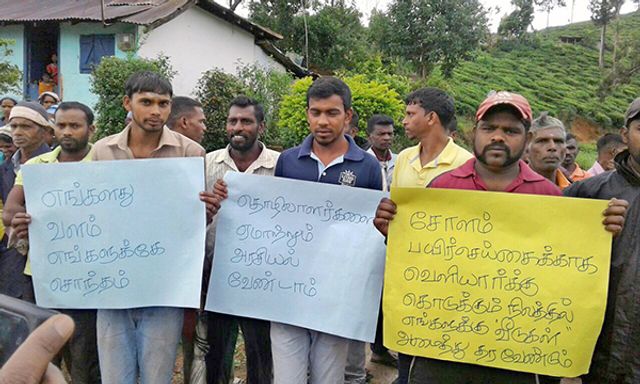
Strike action and protests by plantation workers at several estates in Sri Lanka’s Nuwara Eliya district have erupted in recent weeks over new productivity demands, the dismantling of tea estates and cuts in wages and jobs. The management attacks have the full backing of the government and the trade unions.
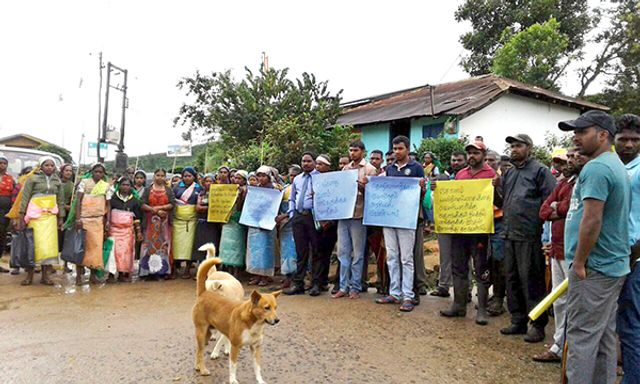
* On September 10, nearly 200 workers from the Henfold tea estate in Hatton held a protest picket against the leasing of six hectares of land to a foreign-based business for corn cultivation. The estate is managed by the Watawala Plantation Company.
* On September 7, Strathdon estate workers, also in Hatton, walked out on strike and demonstrated against wage cutting and the abandonment of tea cultivation in a section of the estate.
* Nethastal division workers at the Glasgow estate also struck recently to protest against company plans to replace tea bushes with turpentine trees in some parts of the estate. Company management temporarily abandoned the plan in response to the walkout.
The strikes and demonstrations are part of a growing wave of industrial action and working-class struggles against Colombo’s big-business program.
Henfold workers, who were concerned about the destruction of jobs at their estate, contacted P. Digambaram who leads the National Union of Workers (NUW) and is also Sri Lanka’s plantation infrastructure minister. He brushed aside workers fears, claiming that management had assured him that the corn cultivation was only for three months and the land would revert to tea production. He demanded an end to the protest, telling workers that the manager was a good person.
Plantation workers picketing Henfold Estate
As one Henfold estate worker told the World Socialist Web Site: “If tea cultivation is transformed into corn cultivation, many workers will lose their jobs. That is why we are protesting. The trade unions, however, support management implementing this plan. Management previously closed down and abandoned 22 out of 112 hectares of tea plantation in this division.”
Digambaram’s intervention, the worker continued, “helped the company. We don’t believe the company will stop corn cultivation if it is investing millions of rupees. Digambaram is cheating us.”
While the company now claims to have discontinued corn cultivation, its plan has not been abandoned. Two other divisions of the estate have already started cultivating corn over a total of four hectares.
Commenting on demands for increased productivity at other plantations, a Strathdon estate worker said: “Most of the workers have not been paid full wages since May this year and have lost about 3,000 rupees [$US19.60] per month. The company wants 19kg [of tea] plucked per day but we can’t reach this target.
“During the rain season the maximum we can get per day is only 15kg and because of that every worker lost the 140-rupee daily productivity allowance. Also, if a worker plucks less than 15kg they are only paid a half day’s wages. How can we live with these wage cuts under today’s skyrocketing cost of living?”
Other estate workers denounced the plantation unions and said they were betrayed when the unions signed the last collective agreement that allows management to cut wages and increase workloads.
Estate managements are deliberately abandoning estate land, not clearing weeds and bushes, and not using fertiliser and other chemicals. Where previously 15 workers were employed to clear and weed about two hectares a day, now only two workers have to cover the same areas. Wild shrubs have grown in many places, breeding grounds for leeches, snakes and sometimes wild leopards.
A Glasgow estate worker detailed the intolerable workload at her plantation: “We have to pluck 18kg of tea leaves per day but cannot reach this target during the rains in March, April and May. Because of that we lost the 140-rupee productivity allowance and the 60-rupee incentive payment.”
Another tea plucker said: We can’t reach [management’s] target because of the bad condition of the estate and so we lose allowances. Many workers are now employed on a casual basis, some of them even for seven years. Some retired workers have been reappointed as casual workers in order to cut costs.”
“I don’t have a house,” the mother of three children continued. “For several years we’ve been living at a relative’s house. The trade unions are doing nothing and the government has cheated us.”
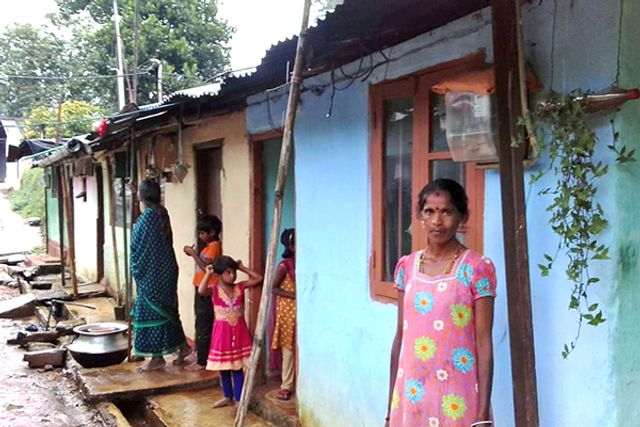
Line-room accommodation for plantation workers and their families at Glasgow Estate
Management attacks on workers at the Henfold, Strathdon and Glasgow estates are part of a broader assault on plantation workers’ jobs and social conditions.
Watawala Plantations has initiated a dairy farm project at its Lonach estate with a Singapore-based investment company. Beginning with 400 cows, it will be expanded to carry 2,000 cows. The company wants to end all tea cultivation at Lonach and use the land for the dairy farm. Watawala Plantation plans to transfer workers from Lonach to its Tharawela estate.
At the same time, plantation companies have begun imposing a new revenue system that assigns plots of land with about 1,000 or more tea bushes to individual workers and/or their families to maintain.
The worker is provided with fertiliser, agricultural implements and other inputs but must handover the harvest to the company’s factory. In exchange the worker receives a share of the income but only after company has deducted its “input costs.” The system transforms waged tea plantation workers into share-croppers with the loss of previous hard-won conditions and rights.
Kelani Valley Plantations implemented this system in April at its Battalgalla estate in Dickoya. Mathurata Plantations began imposing these measures at its Mao Uva estate in October last year.
The new share-cropping system, demanded by the Planters Association, is fully backed by the Sri Lankan government. Prime Minister Ranil Wickremasinghe has called on planters “to go beyond a traditional tea cup and explore the industry from fresh perspective in order to outperform others in global arena.” He recently told a convention that the government was preparing new legislation to expand the share-cropping system.
Workers at Henfold Estate
Addressing the “150 years of Ceylon Tea” celebration at the Bandaranaike Memorial International Conference Hall on August 9, the prime minister declared that the lower tea prices, higher cost of production, including wage increases, were impacting on plantation companies. “The industry should make a decision about whether it can continue with traditional workers, subcontract the land or think of a combined model,” he said.
Wickremasinghe urged Plantation Industry Minister Naveen Dissanayake to boldly implement the share-cropping plan and referred favourably to his father, Gamini Dissanayake, and his “Accelerated Mahaweli Project” in the late 1970s.
Gamini Dissanayake, then a minister in former President J. R. Jayawardene’s government, imposed the so-called Mahaweli Project, brutally expelling peasants from their land and crushing protests by plantation workers employed at several estates that were to be submerged.
Wickremesinghe’s reference to the Mahaweli Project is a warning that plantation workers will be confronted with similarly ruthless government attacks.
Naveen Dissanayake assured the convention audience that the government was studying the share-cropping model and appealed for more union support.
“The estate workers are given some land rights over land and the management companies will also have better yields. This model is commonly known as the outgrow model. I hope the union leaders will give us the support required to take the industry forward,” he declared.
Wickremesinghe and Dissanayake’s promises are to give the plantation companies more legal clout in suppressing the opposition of estate workers and intensifying the attacks on their basic rights. As the last wage agreement makes clear, the unions have already indicated that they will deepen their collaboration with the companies and the government.
The escalating attacks on plantation workers are part and parcel of the “economic reforms” dictated by the International Monetary Fund. The recent protests of plantation workers are another indication that there is deep-seated opposition to Colombo’s austerity measures in the working class and that major political and industrial struggles lie ahead.

New Zealand election: Bipartisan agreement on war and austerity

John Braddock

Today’s election in New Zealand is forecast to be the closest since the Helen Clark-led Labour government was ousted in 2008. Since the installation of Jacinda Ardern as Labour’s new leader on August 1, polls have gyrated wildly, alternately favouring the National Party government and a possible Labour-Green Party coalition.
According to a TV 3 poll released on Thursday, National has 45.8 percent support. With Labour on 37.3 percent, and the Greens at 7.1 percent, either camp could take office. Significantly, both major parties would need to strike a deal with the right-wing populist New Zealand First Party, currently at 7.1 percent, to form government.
The entire campaign has seen the vast dangers facing the working class and youth—specifically the accelerating threat of nuclear war—systematically suppressed by all the establishment parties.
This immense danger, highlighted by US President Donald Trump’s threat at the UN to “totally destroy” North Korea, has remained the great political unmentionable. Since Prime Minister Bill English declared in August that he would “consider” joining a US-led offensive against North Korea, this stance has not been opposed by any party.
In the final televised leaders’ debate on Wednesday, just hours after Trump’s speech, there was no mention of foreign policy. The official opposition parties—Labour, the Greens, NZ First and the Maori nationalist Mana Party—along with the trade unions and much of the media, have prepared for joining US hostilities against China by promoting nationalist attacks on immigration and anti-Chinese “influence” on house prices and business investment.
The ruling elite is preparing far-reaching attacks, by whichever parties assume office, on the working population at home and for war abroad. This bipartisan consensus was on display in the debate between English and Ardern. The event was not a “debate” in any real sense, but rather a friendly discussion between representatives of two wings of the political establishment.
Since the 2008 global financial crisis, the National Party government has carried out a deepening assault on jobs, living standards, public services and basic rights. English was allowed during the debate to assert, virtually unchallenged, that the housing market is expanding “faster than ever,” there is no housing crisis and National is tackling social issues by “changing lives one by one.”
Ardern had almost nothing to say about the depth of the social crisis. Aside from scapegoating immigrants, Labour’s main housing proposal is to build 100,000 houses over the next 10 years, to be sold at unaffordable prices of between $400,000 and $600,000. This will do nothing to help the 42,000 people who are homeless.
The final week of the election campaign was dominated by reports of a crisis in the health system due to decades of underfunding by Labour and National governments alike. Severe delays for vital cancer surgery in Southland will shorten people’s lives, while a baby recently died at Waikato because not enough surgeons were available to perform the ceasarian section operation on time. Ardern criticised the lack of funding, but Labour’s proposal is to inject only $2 billion extra per year, well short of what is needed to meet existing need and provide for population growth and ageing.
Ardern focussed on assuring the ruling elite that Labour’s policies are fiscally responsible and “fully costed.” Her most animated remarks came when she criticised National’s “dishonest” attacks on Labour’s tax proposals, which have included claims of seven new taxes, including on capital gains and water.
Ardern has ruled out any increase in tax to tackle severe social problems. Labour would set up a working party of “experts” to investigate a “fairer” tax system, she claimed, but any suggested changes would not be implemented until after 2020.
There is a discernible shift to the left among broad layers of the working class and youth, who are searching for an alternative to deepening inequality, child poverty and the housing crisis, for which all the parties carry responsibility.
To direct this into safe parliamentary channels, the corporate media, along with the trade unions and pseudo-left groups, have whipped up a wave of “Jacindamania,” featuring false claims that Labour will address the social crisis. Ardern’s elevation to Labour’s leadership was a desperate manoeuvre to stave off electoral disaster, not just for Labour, but for the increasingly discredited parliamentary system. A million voters abstained in both the 2011 and 2014 elections.
Labour and the Greens have stuck to their commitment to “budget responsibility rules” which mean reining in public debt and returning fiscal surpluses. Neither party has put forward any policies that will significantly reverse the social disaster of the past three decades.
All Labour’s proposals are fundamentally deceptive. Its pitch to young people to provide three years’ “free” tertiary education is merely an “aspiration,” that would be implemented only after two more elections, making the promise worthless.
On Thursday, Ardern promoted Labour’s reactionary changes to industrial legislation, which would allow the trade unions to negotiate “fair wage agreements” across selected industries. While details of the policy are unclear, Ardern told Radio NZ it would help the unions work “collaboratively” with employers and the government to impose wages and conditions acceptable to big business. She stressed that her government, with the agreement of the unions, would “legislate” to remove the right to strike during these negotiations.
The Green Party and commentators on the trade union-funded Daily Blog have appealed to “progressive” voters to ensure the Greens reach the 5 percent threshold to maintain a presence in parliament.
In fact, like their international counterparts, the Greens are a capitalist party representing “environmental” businesses and oriented toward affluent sections of the upper middle class. Ardern was instrumental in a right-wing campaign to force former Greens leader Metiria Turei to resign over allegations she committed “benefit fraud” as a solo mother 20 years previously.
In Wednesday’s debate, Ardern said the Greens would get Labour’s “first call” in forming a coalition, but refused to discuss which Greens policies would be considered. She said any “conversation” would not imply a “stitched-up deal,” leaving open the option of a deal with NZ First.
Key business leaders, anxious to suppress popular anger, have signalled they would be “comfortable” with a Labour-Green government. Mainfreight chief Don Braid told the New Zealand Herald on September 4 there is growing frustration with National. “I think they’ve [National] stopped listening to us. And I think they think they know better than us,” Braid said. He heaped praise on Ardern, describing her as “visionary.” SkyCity casino chairman Rob Campbell said “fear” of a Labour-Green government in the business community was “well gone.”

May’s overtures to European Union on Brexit terms falls flat

Robert Stevens 

UK Prime Minister Theresa May’s speech in Florence yesterday was hyped as crucial to breaking the deadlock in negotiations with the European Union (EU) over the terms of Britain’s withdrawal. But it did nothing to resolve growing tensions.
May chose to speak in Florence, Italy to prove that while the UK “may be leaving the European Union, but we are not leaving Europe.” Her tone was conciliatory, beginning with a paean to Florence, the birthplace of the Renaissance, which had began “a period of history that inspired centuries of creativity and critical thought across our continent and which in many ways defined what it meant to be European.”
But in her bid to placate her numerous critics domestically and internationally, May failed ultimately to satisfy anyone.
She heads a minority government, and a cabinet split over the terms of Brexit. Only last week, Foreign Secretary Boris Johnson, leader of the “hard” Brexit faction penned a 4,000-word manifesto widely seen as an undeclared leadership bid.
Britain’s major banks and corporations want an arrangement with the EU that will enable them to keep access to the single market or customs union. However, the EU insists there can be no preferential treatment for the UK, and that it must settle its divorce bill—estimated at up to 100 million euros—before any discussions can take place on future trade relations.
With Britain due to withdraw by March 2019, it is not even clear that the EU will agree at its summit next month that the May government has done enough to pass the first hurdle.
So while the prime minister made constant references to the UK’s European “partners” (nearly 40 mentions) and “friends”, no EU leaders were present in the Santa Maria Novella church. Instead, the audience consisted entirely of members of her cabinet, including Johnson, journalists, and a handful of Italian business leaders, diplomats and local dignitaries.
The Italian prime minister, Paolo Gentiloni, was nowhere to be seen, despite meeting with the EU commissioner in charge of Brexit talks, Michel Barnier, in Rome only the previous day. The EU has insisted that all negotiations on Brexit must pass through Barnier, to ensure that the UK does not try to exploit divisions within the 27-member states to its advantage.
In Rome, Barnier had said that no progress had been made in negotiations, leaving just 12 months to conclude a deal. In addition to the UK’s disputed financial liabilities, the rights of three million EU nationals living in the UK and future arrangements regarding the status of the border between the Republic of Ireland—which is an EU member—and Northern Ireland are still outstanding.
As the Financial Times commented, “Gentiloni’s huddle with Mr Barnier comes amid concern that Mrs May could try to sidestep Brussels and negotiate with national capitals to exploit any division between member states.”
Still May’s pitch, couched in the most diplomatic language, was that “it is up to [EU] leaders to set the tone”. She said that the UK had issued 14 “position” papers on Brexit, stressing in particular that relating to Foreign policy, defence and development. This was a none too subtle warning that the EU’s defence and security was heavily reliant on Britain’s substantial defence and intelligence capabilities. May cited North Korea explicitly as an existential threat and, in a reference to Russia, argued that, “Here on our own continent, we see territorial aggression to the east; and from the South threats from instability and civil war; terrorism, crime and other challenges which respect no borders.”
In the face of this, May said the UK would draw on the “full weight of our military, intelligence, diplomatic and development resources…,” adding, “Our determination to defend the stability, security and prosperity of our European neighbours and friends remains steadfast.”
But in turn the UK required an urgent agreement on trade. She warned, “At the moment, the negotiations are focused on the arrangements for the UK’s withdrawal from the EU. But we need to move on to talk about our future relationship… And this should span both a new economic relationship and a new relationship on security.”
May proposed that the EU agree to a Brexit transition period of “around two years”, during which the UK would continue to have access to the single market. This has long been the demand of big business in the UK, with CBI director-general Carolyn Fairbairn commenting after that, “Firms will welcome the proposal of a ‘status quo’ transition period for business that averts a cliff-edge exit.”
On this basis, the UK would meet its financial obligations she said, although no sum was mentioned. In equally vague terms, May said the UK would also accept the jurisdiction of the European Court of Justice until 2021 or beyond, and would give legal protection to EU citizens in the UK.
In return, she returned to her demand for the UK to have preferential trading terms. She ruled out a deal based on European Economic Area (EED) membership [as with Norway], or the type of agreement adopted by the EU recently with Canada. EEA membership required the UK adopting “new EU rules,” (which is opposed by the hard Brexit faction) while the Canadian option “would represent such a restriction on our mutual market access that it would benefit neither of our economies.”
The EU’s response to the speech was guarded, with Barnier describing it as “constructive.” What had to be agreed, however, were the “concrete implications of this pledge.”
Manfred Weber, the head of the conservative European People’s Party group in the European Parliament, and a leader of German Chancellor Angela Merkel’s coalition partners, the Christian Social Union, was openly hostile saying the speech offered “no more clarity to London’s positions.” He added, “I am even more concerned now. The clock is ticking and time is running faster than the government believes in London.”
May’s speech was peppered with pious references to the UK being steadfast in defence of shared “values” with the EU. “We share a deep, historic belief in the same values—the values of peace, democracy, human rights and the rule of law,” she proclaimed.
Just three days before, May and Johnson had sat silently while US President Donald Trump delivered his fascistic rant before the United Nations in New York. Asserting his doctrine of unbridled US militarism and war, he threatened to “destroy” the 25 million-strong population of North Korea, and menaced Iran and Venezuela amongst others.
Trump’s “America First” policy, backed by threats of nuclear annihilation, is both an expression of, and significantly increases, tensions between the main imperialist powers and threatens world war.
While Germany’s Chancellor Merkel and France’s President Macron absented themselves from Trump’s speech, afterwards May went into talks with the US President, with whom she hopes to conclude a post-Brexit trade deal. Reports state that Trump criticised the UK for “not doing enough” to pressure Pyongyang, and called for it to adopt a “tougher stance.”
For a faction of the UK bourgeoisie, Brexit was meant to facilitate the development of global financial and trade relations as a counterweight to the EU. But such plans risk placing it at odds with its more powerful international ally.
At the UN, Trump described the agreement signed with Iran in 2015 by the US, China, Russia, the UK, Germany, France and the EU over its nuclear programme as the “worst deal ever,” and has threatened to scrap it.
In his talks with May, the US President refused to provide any information on his intentions. Secretary of State Rex W. Tillerson said “Prime Minister May asked him if he would share it [his decision] with her and he said no.”
The UK moved rapidly to develop trade relations with Tehran after the agreement, with trade increasing by 42 percent from January to October in 2016 and 57 percent this year.
The day after Trump’s rant, a London-based firm, Quercus, announced a 500 million euro project to build one of the world’s largest solar power farms in Iran.

French President Macron signs labor decrees, trampling on social opposition

Anthony Torres 

Despite mass popular opposition and growing strikes and protests, French President Emmanuel Macron signed decrees destroying the country’s Labor Code yesterday. His government has also announced deep cuts to health, education, and unemployment insurance, while promising to spend billions of euros more on the army and cut taxes on the rich (ISF).
On live television, flanked by Labor Minister Muriel Pénicaud and government spokesman Christophe Castaner, Macron signed five decrees modifying the Labor Code after a meeting of the cabinet yesterday. The first measures are to be published in the legislative record starting tomorrow. Macron declared, “This reform will go into effect immediately upon publication. The first reforms will be in effect in a matter of days.”
He added that he would sign “maybe 20 or so decrees” before the end of the year, and that “all the reforms contained in these decrees” would go into effect “at the latest by January 1.”
This action underscores the contempt of Macron and of the entire financial aristocracy he represents for mass popular opposition to austerity across Europe. Macron’s approval ratings have fallen to 30 percent in the four months since his election, and 70 percent of French people opposed last year’s reforms of labor law on which Macron is building.
Macron is arrogantly imposing his diktat on the population via the state machine, which functions against the wishes of the people. While the September 12 union protest was being prepared, Macron declared in New York that “democracy does not happen in the street.” He insulted demonstrators opposed to the law as “lazy” and “cynical.”
Macron, the banks and the rest of big business in France are determined to destroy all the social rights won by the working class in the 20th century. Those gains were the products of international struggle. France’s Labor Code, passed in 1905, was the immediate product of European strikes that erupted in the wake of the Russian Revolution that year. The October Revolution of 1917, which terrified the ruling class everywhere, was more responsible than any other single event for improvements in the conditions of the working class.
By destroying the traditional framework of class relations in France, Macron’s decrees have set the stage for an intensification of the class struggle. Workers will only be able to defend themselves by building new organizations of struggle to replace the unions, which have been transformed into instruments for strangling workers’ resistance, and by constructing a new revolutionary leadership of the working class.
Macron’s decrees allow employers to impose workplace votes to blackmail workers into accepting sackings and cuts to wages and benefits. If workers refuse these demands, employers will be able to shut down factories, sack workers refusing the proposed agreements and cancel their rights to job re-training at Unemployment Centers.
Bosses will be authorized to hire workers on so-called “project” contracts, which are indefinite temp contracts. These will be regulated at the industry level in terms of how long and how many times workers can be hired on such contracts. Employers will be legally allowed to break “project” contracts once a project is done, without paying any severance pay.
Small businesses will be able to change established rules on pay and bonuses through these votes.
Employers will also be authorized to impose firm-level contracts that violate the Labor Code, industrial-level agreements and previously signed contracts, all of which would be a dead letter.
The Macron government and the international bourgeoisie are watching nervously as anger develops in the working class. Yesterday, Transport Minister Élisabeth Borne called in truckers’ unions to offer empty reassurances that the reforms should be “no cause for worry,” in an attempt to shut down the drivers’ strike and keep roads and gas stations open.
The ruling class is counting on the complicity of the trade unions, who are seeking to divide struggles against the law into a number of separate, rolling one-day strikes to exhaust opposition to Macron. They met the new president after his election to go over the schedule of his reform agenda. They then negotiated the labor decrees for weeks with Pénicaud and the employers organizations.
According to Le Canard enchaîné, two secret meetings took place between Macron, Pénicaud, and top officials of the CFDT (French Democratic Confederation of Labor) and FO (Workers’ Force) unions. The weekly reported that Macron wanted to make sure the unions “had their members under control.”
Le Monde reported that discussions between union officials and the government are “cordial” and Pénicaud is “very enthusiastic” about plans to fund training for union officials—one of the main avenues Macron’s decrees use to funnel corporate money into the unions’ coffers. The unions will then seek to impose on the workers the agreements they have arranged with the bosses and the government.
The aim of Macron’s reforms is to increase the profitability of the second-largest economy in the European Union (EU), above all to make it possible for France and Europe to rival the United States—including militarily—in the wars now being prepared.
A few days before publishing his decrees, Macron told an assembly of ambassadors, “My ambition is for our armies to demonstrate themselves, in terms of quality, capacity for deployment, and speed … as among the very best in the world, the best in Europe, to protect France, but also our continent. We have forgotten that the last 70 years of peace on the European continent are an aberration of our collective history. But the threat is on our doorstep, and war is on our continent.”
Amid the collapse of the post-war international order and of the world hegemony of the United States, brought to a head by the actions of the Donald Trump administration, tensions are exploding between Washington and the EU. Trump’s barbaric threats of nuclear genocide against North Korea are driving the European bourgeoisies to build up their military forces to prepare their own imperialist wars. They are determined to put the cost of this military build-up squarely on the backs of the working class.
The billions of euros saved by slashing workers’ social rights are intended to reinforce the armed forces and militarize France, as Macron aims to transfer the extraordinary police powers granted by France’s anti-democratic state of emergency directly and permanently into common law.
Faced with the EU austerity diktat and the growing dangers of dictatorship and war, workers in France and across Europe are confronted with the necessity of a political and revolutionary struggle.