25 Oct 2017

US prepares to put nuclear bombers on 24-hour alert

Andre Damon

Amid a deepening standoff with North Korea and rising tensions with Russia and China, the United States is preparing to place its fleet of nuclear-capable B-52 bombers on 24-hour alert for the first time since 1991.
“This is yet one more step in ensuring that we’re prepared,” Gen. David Goldfein, Air Force chief of staff, told Defense One in an exclusive interview.
During the Cold War, the US Air Force Strategic Air Command maintained a series of so-called “Christmas tree” alert areas at bases throughout the United States in which B-52 nuclear-capable heavy bombers would be stationed in a permanent state of readiness, with crew accommodations on site.
Touring Barksdale Air Force Base in Louisiana, Goldfein made clear that such facilities, mothballed since the end of the Cold War, were being renovated.
“Already, various improvements have been made to prepare Barksdale,” reported Defense One “to return B-52s to an alert posture. Near the alert pads, an old concrete building—where B-52 crews during the Cold War would sleep, ready to run to their aircraft and take off at a moment’s notice—is being renovated. Inside, beds are being installed for more than 100 crew members, more than enough room for the crews that would man bombers positioned on the nine alert pads outside.”
B-52 bombers at the Christmas-Tree shaped tarmac at Miniot Air Force base, photographed in 1991
Defense One noted that “Goldfein and other senior defense officials stressed that the alert order had not been given, but that preparations were under way in anticipation that it might come.”
Responding to Defense One’s story, the Air Force issued a “denial” consisting merely of a reassertion that such an order had not been issued. The Air Force did not specifically deny the allegation that facilities that are only useful for 24-hour readiness were being renovated.
In many ways, Goldfein’s statements raise more questions than answers. B-52 bombers are huge, slow and vulnerable to the advanced anti-aircraft missiles deployed by Russia, China and their allies. During the Cold War, these bombers were maintained on permanent alert to respond massively to an unforeseen launch of nuclear weapons. The “Christmas trees” were designed to allow the bombers to launch as quickly as possible once nuclear weapons were already in the air. By the time they had gotten a fraction of the way to their targets, one or more volleys of nuclear ICBMs, which reach their destination in under an hour, would have already been launched and detonated, leaving dozens of major cities in ashes.
The most straightforward interpretation of Goldfein’s remarks is that the United States is preparing for a world in which a full-scale thermonuclear exchange with either Russia or China, the only nations with nuclear arsenals whose size could possibly warrant such a build-up, can take place at the drop of a hat: in response to an accidental exchange of fire during a border stand-off or at the late-night whim of the notoriously impulsive President Trump.
Along those lines, Goldfein told Defense One, “I look at it more as not planning for any specific event, but more for the reality of the global situation we find ourselves in.”
But there are other questions. Given the quick “retraction” by the Air Force, did the Joint Chiefs of Staff authorize Goldfein to discuss the plans? If the Air Force is not planning to return to 24-hour readiness, who authorized the renovations, whose existence the Air Force did not deny?
In this light, it is worth noting the involvement of Barksdale Air Force Base in a still-unexplained incident in August 2007, when a B-52 “accidentally” flew to the base from Minot Air Force Base in North Dakota armed with six AGM-86 cruise missiles, each loaded with a W80 nuclear warhead. The incident led to the resignations of multiple high-ranking Air Force officers, including Air Force Secretary Michael Wynne and Air Force Chief of Staff Michael Moseley.
In this regard, Goldfein’s further comments are chilling. Defense One reports he is “asking his force to think about new ways that nuclear weapons could be used for deterrence, or even combat.” In other words, the head of the Air Force is taking his own initiative to push for the combat use of nuclear weapons for the first time since the bombing of Hiroshima and Nagasaki, and making preparations for the deployment of new weapons systems ahead of the decision to actually field them.
In this regard, the aggressive development of US nuclear forces being pushed by Goldfein dovetails with the positions advanced by President Trump in fractious debates with members of his cabinet and military officials about the future of the US nuclear arsenal. In the notorious July 20 Pentagon meeting after which Secretary of State Rex Tillerson called Trump a “moron,” the president called for a tenfold increase in the number of US nuclear weapons, a move that would place the United States in flagrant violation of numerous treaties.
Trump’s bluster about expanding the US nuclear weapons arsenal marks, albeit in his own crude way, a continuation of the policies pursued under Obama, who helped set in motion a massive, $1 trillion plan to modernize Washington’s nuclear arsenal through the commissioning of a new class of nuclear-armed ballistic missile submarines, a new type of ICBM and the creation of a new nuclear-armed cruise missile.
The revelation that the Air Force is preparing to place strategic bombers in a permanent state of readiness comes amid a continuation of US provocations against North Korea, as well as Russia and China.
On the heels of last week’s joint military exercise between the US and South Korean navies, the US has announced that it will imminently test plans for evacuating personnel from South Korea in anticipation of a possible war.
Reporting from an aircraft carrier engaged in the exercises, ABC’s Martha Raddatz noted on Sunday’s “This Week” program,  The Sea of Japan is bristling with warships.” Concluding the segment, Raddatz declared that the sailors “have to be ready to fight tonight.”
NATO, meanwhile, is simultaneously beefing up its presence in Eastern Europe in preparation for a conflict with Russia. Writing about the contents of an internal NATO white paper calling for a further expansion of NATO’s military forces, Germany’s Der Spiegel reported, “ The period of the so-called ‘peace dividend’—a term referring to the years following 1989 when Western countries felt they no longer needed to spend as much money on their defensive capabilities—is over and Cold War command structures have returned. Once again, NATO should be prepared for a large military conflict.”
Seen in this context, the US Air force is preparing for such a “major war” to go nuclear.

New reports document declining life expectancy and worsening health of US workers

Jerry White

Three recent reports provide new data on the worsening social crisis in America.
According to the annual update of the Society of Actuaries’ (SOA) mortality improvement scale, released last Friday, life expectancy for 65-year-old men and women declined from 85.8 and 87.8 years to 85.6 and 87.6 years respectively between 2014 and 2015, the most recent years available. The 1.2 percent jump in the mortality rate was the first year-over-year increase since 2005, and the first by more than one percentage point since 1980.
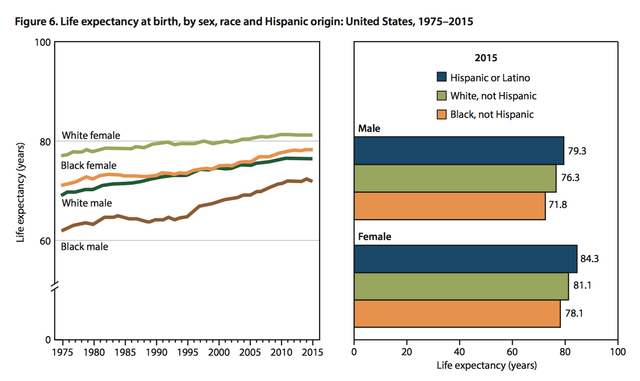
Previous reports noted that life expectancy at birth also declined in the US between 2014 and 2015, the first decline since 1993, at the height of the AIDS epidemic. Someone born in 2015 is expected to live to 78.8, down from 78.9 in 2014.
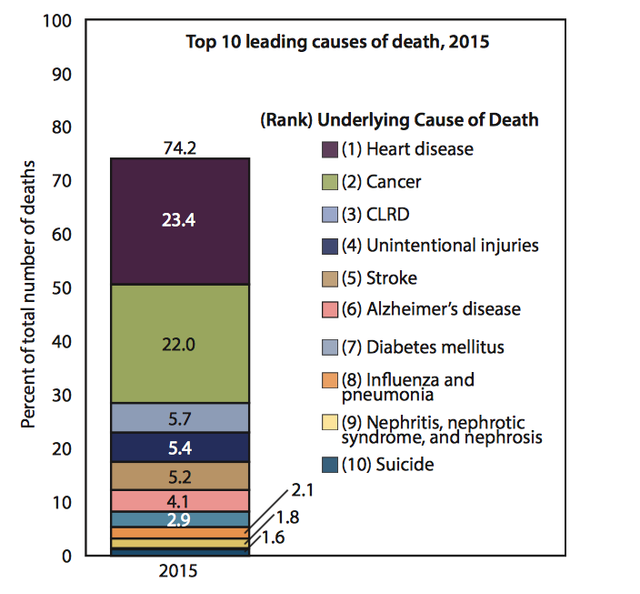
According to the Centers for Disease Control and Prevention, the decline was due to an increase in eight of the ten leading causes of death in the US, including heart disease, chronic lower respiratory diseases, unintentional injuries, stroke, Alzheimer’s disease, diabetes, kidney disease and suicide.
Source: National Center for Health Statistics, National Vital Statistics System (NVSS). Note: CLRD stands for Chronic Lower Respiratory Diseases
Another study by a team of researchers from the University of Michigan found that middle-age workers ten years away from collecting Social Security retirement benefits are in poorer health than prior generations when they were in their 50s. This includes higher rates of poor cognition, such as memory and thinking ability, and at least one limitation on the ability to perform a basic daily living task such as shopping for groceries, dressing and bathing, taking medications or getting out of bed. The percentage with such limitations jumped from 8.8 percent of people who retired at 65 to 12.5 percent of current Americans ages 56 to 57 who will retire in a decade.
Americans born in 1960 will not be able to collect their full Social Security benefits until they reach 67, instead of 65, because of the increase in the retirement age enacted by the Reagan administration and the Democratic-controlled Congress in 1983. At the time, they claimed the change was necessary because Americans were living longer and would see continual health improvements in their old age.
The opposite is now the case. “We found that younger cohorts are facing more burdensome health issues, even as they have to wait until an older age to retire, so they will have to do so in poorer health,” said Robert Schoeni, an economist and demographer who co-authored the University of Michigan study.
Inequality among seniors in the US is among the worst in the developed world, according to a report issued last week by the Organization for Economic Cooperation and Development (OECD), which found that the gap between wealthy and low-income seniors is wider in the US than in all but two of the thirty-five OECD member nations—Mexico and Chile. While the rich in America live longer and very comfortably, the poor are working longer, dying younger and increasingly living with pain and ill health.
These are but the latest in a succession of reports documenting higher death rates, higher infant and maternal mortality and declining life expectancy for broad sections of the working population. Meanwhile, Donald Trump routinely hails the record-setting stock market boom as proof of the “success” of his administration.
Source: National Center for Health Statistics, National Vital Statistics System
There is, in fact, an intimate connection between the spectacular rise in the Dow, the ever-greater enrichment of the top 5 and 1 percent of the country, and the destruction of decent-paying jobs, the lowering of wages and the gutting of social programs. The corporate-financial oligarchy is benefiting from the impoverishment of broad sections of the population.
As CNN Money reported, “Declining health and life expectancy are good news for one constituency: Pension plans, which must send a monthly check to retirees for as long as they live.” In fact, the health care policies of both political parties are designed to lower life expectancy for the working class and thereby decrease the sums “wasted,” in the eyes of the ruling class, on retirement benefits and health care for workers who have ceased to be a source of profit.
As the World Socialist Web Site wrote in November 2013, citing think tank studies on the “crisis” resulting from America’s aging population, underlying the health care counterrevolution set in motion by Obamacare “is a basic concern of the American ruling class, a concern that is generally left unstated—namely, that people in the end are simply living too long. The advances of modern medicine have extended lives, often significantly beyond the age of retirement.
“For the political strategists of the corporate and financial elite, these years of retirement and medical care are not seen as a good, but as a source of costs that must be slashed, so that they can take that money. This is to be accomplished either by raising the retirement age, by lowering life expectancy so that people die earlier, or both.”
The scenes of hundreds of low-wage workers and retirees lining up in Charleston, West Virginia over the weekend for free dental and vision care—in some cases for their first treatment in years—underscores the scale of the social crisis. In McDowell County, part of the depressed coal mining region of southern West Virginia, life expectancy for males is 63.9 years, only slightly ahead of Haiti, Ghana and Papua New Guinea, due to chronic poverty, ill-health, suicide and drug and alcohol abuse.
The reports on life expectancy, health, etc. provide a measure of the drastic social retrogression resulting from the crisis of the capitalist system—a system that is incompatible with the satisfaction of basic social needs.
The working class must take matters into its own hands. What is necessary is a frontal assault on entrenched wealth and the political monopoly exercised by the corporate-financial oligarchy through its two right-wing political parties. The wealth of the financial parasites must be expropriated and the major corporations and banks turned into publicly-owned and democratically controlled utilities, so that the wealth produced by the working class can be used to provide jobs, education, housing and free, high-quality health care for all.

Will the US' Pressure on Pakistan Deliver Results?

Shalini Chawla


The US-Pakistan relationship has been strained over the last six years. It  took an unyielding shift with the announcement of US President Donald Trump’s Afghanistan policy, which comprises four pillars and also touches upon Washington’s dealings with Islamabad. Trump’s announcement carried a firm message for Pakistan. While Trump acknowledged that “Pakistan has been a valued partner,” he excoriated Pakistan for harboring criminals and terrorists. Washington has been quite unhappy with Islamabad’s support to the Taliban and the Haqqani Network, who have been targeting US soldiers in Afghanistan.
 
Islamabad has received lavish financial and military assistance from the US, amounting to approximately $33 billion between 2002 and 2017. However, there has been a steady decline in US aid post the 2011 killing of al Qaeda Chief Osama bin Laden killing, which convinced a majority of Americans that Islamabad was not sincere in its efforts to counter terrorism. Taking a taut stance, Washington has slashed its foreign military financing (FMF) to Pakistan from US$ 255 million to US$ 100 million for the 2018 fiscal. The new US policy is likely to further impact US assistance. The likely US responses being discussed at present include expanding US drone strikes and eventually revoking Pakistan’s status as a major non-NATO ally. 
 
Washington has blatantly warned Pakistan against its actions of supporting terror to serve its strategic objectives, but what has probably hit Islamabad  more is that Trump’s policy supports New Delhi’s extended role in Afghanistan. The Pakistani leadership and media have reacted strongly to the US position and have been upset about the US not recognising Pakistan’s counter-terrorism efforts. Pakistan has been extremely agitated with the growing US-India ties, Washington’s support to India in Afghanistan, and its support to India’s position on the China-Pakistan Economic Corridor (CPEC). Washington has questioned the legitimacy of the CPEC, which passes through a disputed territory. 
 
Pakistan has always welcomed the US' financial and military assistance as - with its singular focus on its disputes and problems with New Delhi - it has looked towards US for modern defence equipment to counter India’s military modernisation. On the other hand, the US’ alliance and interests have been shaped primarily by Pakistan’s geographical location and (over the last 18 years) its expanding nuclear arsenal. Post 9/11, the alliance, which was rather timely for Pakistan’s dwindling economy, allowed Islamabad to swing a substantive amount of US aid and desired military equipment (including F-16s) in the last 16 years. 
 
In response to the US’ decision of slashing military aid, Pakistan’s Prime Minister Shahid Khaqan Abbasi claimed that it is no more reliant on US military equipment as it has managed to diversify its sources of weapons supply. Pakistan’s military inventory includes systems from China (significant portions), Europe and now, also Russia. Although the growing Sino-Pak alliance has invariably added to Pakistan’s confidence and reduced its reliance on US equipment, Pakistan's military is irked about losing its major non-NATO ally status which allows it to be a recipient of Excess Defence Articles (EDA), speedy arms sales process, and access to a US loan guarantee program.
 
The relationship with the US continues to be critical for Pakistan because it its largest export destination country; a source of foreign remittance; and one of its top sources for Foreign Direct Investment. Moreover, the US has a dominant influence in international financial organisations such as the International Monetary Fund and the World Bank. On the other hand, Pakistan's external debt is estimated to grow to US$ 110 billion in four years, which is likely to force Islamabad to go back to the IMF in the future.
Amidst the stressed US-Pakistan situation, in a positive move, Pakistan forces rescued an US-Canadian couple and their three children, who had been abducted in 2012 and held hostage by the Haqqani Network. The US appreciated the effort and this might provide a short term opening for engagement between the two countries. Enough instances in the past have shown that whenever the US' threshold of patience is about to be breached, Pakistan's military has tried to pacify the situation. The rescue operation of the US-Canadian couple appears to be a step to appease the US administration. The Pakistani military's ability to counter the terror network cannot be questioned and it has been very proud of its counter-terrorism operations, but it is the will of the military which is under question. 

The US' positioning might help in the short term to see some change in Pakistan's military’s behavior but the bigger question remains - is Pakistan truly willing to alter its strategic calculus? 

Islamabad’s deep strategic interests in Afghanistan - that have caused it to seek control of Kabul with an objective to counter Indian presence; deal with the lingering border issue with Afghanistan; and control Pashtun nationalism on its tribal borders - are unlikely to change. If Pakistan wants to establish its credibility as a responsible state and wants recognition from the US for its counter-terrorism efforts and sacrifices, it needs to be consistent in fighting militants without making a distinction between ‘good terrorists’ and ‘bad terrorists’.

Meaningful Disarmament, Not Unnecessary Distractions

Manpreet Sethi


The annual General Debate of the First Committee of the UN General Assembly provides a good forum for countries to reflect on relevant developments in the past year and to spell out their priorities or vision of action for the next year. In performing this task for India, the country’s Permanent Representative to the Conference on Disarmament (CD), Mr Amandeep Singh Gill, in his statement to the 72nd Session of the UNGA on 9 October 2017, flagged several issues. He referred to the vitiation of the international security environment and aggravation of the existing complexities of nuclear disarmament and non-proliferation by DPRK's nuclear and missile tests; the frustration with the CD owing to the narrow views of national security and misguided notions of parity that were not allowing the organisation to even adopt a programme of work; technology push towards weaponisation of outer space; and, the growing rift between those who sought to delegitimise nuclear weapons and those that were increasing their reliance on them for national security. 

Outlining a vision on how to get out of this conundrum, Amandeep Singh Gill emphasised the need to “bridge the growing divide on disarmament through dialogue and a renewed commitment to multilateralism.” His entire statement was peppered with an insistence on “universal commitment”, “agreed global and non-discriminatory multilateral framework”, and “build trust and confidence." Despite eschewing the recently concluded Ban Treaty, he nevertheless highlighted that India would “remain willing to work with its signatories in disarmament forums to reduce the role and military utility of nuclear weapons, prohibit their use under any circumstances and to eliminate them globally under international verification.”  As is amply evident, the emphasis is firmly on consensus and multilateralism, or in other words, on the need for inclusivity.

These are not empty words. India is particularly suited to carry forward the agenda of universal nuclear disarmament for at least three reasons. Firstly, since India’s nuclear weapons are premised on the narrow, though critical, requirement of its security, if this situation could change as a result of universal nuclear disarmament, India would have little reason to keep these weapons. It looks upon them as a necessary evil owing to its security compulsions. 
Secondly, as a non-NPT state, India has an appeal and reach to both the nuclear weapon states (NWS) and non-nuclear weapon states (NNWS), both of whom are increasingly divided on non-proliferation and disarmament today. NNWS have long complained of their being subjected to more stringent non-proliferation measures such as the Additional Protocol and restrictions on enrichment and reprocessing, even as the NWS have refused steps towards disarmament. India, which has strategic partnerships with nearly all major countries on both sides, could play the bridge to bring them together with some concrete suggestions to push the disarmament agenda. 

Thirdly and most significantly, India has a doctrine that professes credible minimum deterrence and no first use (NFU) of nuclear weapons. Both these principles underwrite a narrow and precise role for nuclear weapons. The universal acceptance of a reduced role for nuclear weapons would be one effective way of achieving their eventual elimination. As a practitioner of both these attributes, India has the moral strength and practical experience of deterrence that can enable a shift to disarmament if conditions become conducive. 

In fact, in response to a call made recently by the countries of the New Agenda Coalition (NAC) asking India to join the NPT as an NNWS, India has once again presented two draft resolutions - ‘Convention on the Prohibition of the Use of Nuclear weapons’ and ‘Reducing Nuclear Dangers’ - as meaningful steps towards the eventual elimination of nuclear weapons. This is where the real focus of countries should be, instead of causing distractions about the universalisation of the NPT. The treaty is as universal today as it can ever get. A nuclear weapons possessing state for the last 20 years, India cannot join the NPT now as an NNWS. Yet, as repeated by many Indian official and non-official voices, the country remains committed to the principles and objectives of the treaty. The focus, therefore, of all states must be on improving the security situation for all, lest other NNWS find it necessary to walk out of the NPT. 

Despite not being a member of the NPT, India is keen to have the treaty sustain itself for the sake of global security. The Indian Permanent Representative gave a befitting response to the current situation when he called back upon “our friends” to “renew” their agenda and “focus on the real implementation deficits on non-proliferation and disarmament.” Indeed, all like-minded countries that are really serious about nuclear disarmament would do well to mobilise global opinion and support for real measures that can help realise a nuclear weapons-free world. Calls such as those made by the NAC tend to divide countries, and are not only unnecessary but also unhelpful digressions. 

23 Oct 2017

Australia Awards Scholarships for 1,000 African Students 2018/2019

Application Deadline: 15th December 2017 | Application for Short Courses closes 15th January 2018.
Offered annually? Yes
Eligible Countries: Algeria, Angola, Benin, Botswana, Burkina Faso, Burundi, Cameroun, Cape Verde, Comoros, Congo(Republic of), Djibouti, Egypt, Ethiopia, The Gambia, Ghana, Kenya, Lesotho, Liberia, Libya, Malawi, Mali, Mauritius, Morocco, Mozambique, Namibia, Nigeria, Rwanda, Sao Tome & Principe, Senegal, Seychelles, Sierra Leone, South Africa, Swaziland, Tanzania, Togo, Tunisia, Uganda, Zambia etc
In addition to the above, the following countries are eligible for Short Course Awards (SCAs)
Central African Republic, Chad, Comoros, Cote d’Ivoire, Democratic Republic of Congo, Equatorial Guinea, Gabon, Mauritania, Niger, North Sudan, Republic of Guinea, South Sudan
To be taken at: African or Australian Universities.
Priority Fields (varies by African country)
  • Agriculture/Food Security
  • Education
  • Health
  • Public Policy (including public sector management, public sector reform, trade, international diplomacy)
  • Environmental Management
  • Natural Resource Management (including mining related subjects)
  • Technical and Vocational Education & Training (available for Short Courses only)
  • Energy (including Natural Gas and Oil Technology)
  • Infrastructure
  • Natural Resource Management
  • Transport (including Ports, Roads and Airports Management)
About the Award: Australia Awards, a cornerstone of the Australian Government’s development assistance program for Africa, provide access to postgraduate education, training and professional development opportunities for suitably qualified Africans from eligible countries. On their return to the workplace, Australia Awards Alumni are expected to contribute actively to development in their home countries.
Offered Since: 1980
Type: Masters taught degrees and short courses
Eligibility: Varies by country (see link below for specific country eligibility criteria)
  • You must be at least 25 and not more than 50 years of age at the date of your application.
  • You must have at least three (3) years’ relevant post graduate work experience. This work experience must be in a role relevant to your proposed field of study and to your employment organisation type (e.g. public sector applicants should demonstrate public sector work experience, and so on). Preference will be given to candidates with greater periods of experience.
  • You possess, as a minimum, a Bachelors degree (or the equivalent) from a recognised Institution of at least 4 years in length with at least a 3rd Class Pass.
  • Public sector candidates must comply with Government of Nigeria regulations for government employees wishing to apply for scholarships.
  • Public sector, private sector and civil society candidates must provide evidence of completion of the National Youth Service Corp (NYSC) when they apply.
  • You must not already hold, or be studying for, a Masters degree.
  • You must be willing to make a formal commitment to return to your current employment following completion of the award.
  • You must meet the general minimum eligibility criteria for Australia Awards Scholarships – refer to the Australia Awards Scholarships policy handbook.
Target Group
  • You are a national of an African country. See country list below
  • You are an early or mid-career professional working in the Public Sector, the Private Sector or a Non-Government Organisation (Civil Society) in one of the listed priority fields of study.
  • You wish to undertake a Masters degree in Australia in one of the listed priority fields of study. You cannot study a Masters of Business Administration.
  • You have a clear vision for how you will use the knowledge gained through the Masters degree to improve policy, practice or education in the proposed field of study.
  • Gender Equality: Australia Awards target equal participation by women and men. Applications from women are strongly encouraged, and mechanisms are in place to support women applicants and Awardees.
  • Disability Inclusion: Australia Awards aim to ensure that people with a disability are given fair and equal opportunity to compete for and obtain a scholarship. Applications from people with a disability are strongly encouraged. Mechanisms are in place to support applicants and Awardees requiring specific assistance.
Number of Scholarships: Up to 1,000
Value of Scholarships: This is a Full government sponsored scholarship
Duration of Scholarship: For the duration of the programme
How to Apply: Go to the following link: australiaawardsafrica.org/africa-map/
Select your country of origin. Follow the specific instruction on the page.
Sponsors: Australia Awards in Africa (AAA), an initiative of the Australian Government.

Yale Young African Scholars (YYAS) Program for African Secondary School Students 2018

Application Deadline: 6th February, 2018, at 11:59pm EST.
All applicants will receive an email with final admission decisions approximately 6 weeks after the application deadline.
Offered annually? Yes
Eligible Countries: African countries
To be taken at (country): Summer 2018 YYAS will be held in two locations, Rwanda and Ghana, and take place between late July and end of August.
Eligible Field of Study: Any
About the Award: The application for the 2018 Yale Young African Scholars (YYAS) Program is now available! Entering its fifth year, this intensive program brings together African secondary school students between the ages of 14–18 for a cost-free, intensive academic and residential program.
Administered by the Yale Young Global Scholars Program and building off that model of interdisciplinary academic curriculum, YYAS participants will attend lectures led by prominent Yale faculty, seminars developed by Yale student instructors, and experiential exercises designed to augment their leadership skills. Participants will engage in robust intellectual exchanges that are crucial to understanding Africa’s most pressing challenges and opportunities. In addition to the introduction to university application processes, Yale student-led courses and leadership training, YYAS also offers students standardized test preparation sessions at no cost to the students.
Type: Training/Short Courses
Eligibility: 
YYAS does not accept applications from students in their final term of secondary school, from secondary school graduates, or from university students.
YYAS cannot accept applications from students who are younger than 14 years old by the application deadline.
Students who have attended YYAS previously are not eligible to reapply, but are encouraged to consider applying for the Yale Young Global Scholars Program. Click here to learn more.
A typical YYAS participant has:
  • Excellent academic records
  • Demonstrated leadership potential
  • Strong written and verbal communication skills
  • A desire and ability to work cooperatively with peers
  • Persistence and determination when facing challenges
  • High standards of personal and professional conduct
  • The ability to read, analyze, and reflect on large quantities of difficult material in English
  • Interest in engaging in discussions about intellectual, moral, and political issues in Africa
Number of Awardees: Not specified
Value of Award: Fully-funded. To make the program accessible to students of all financial backgrounds, there is no cost for students to participate in YYAS. In addition, YYASoffers a limited number of travel grants for admitted students from low-income backgrounds and who demonstrate the need for financial assistance to offset the costs of airfare between African countries.
Duration of Program:
Rwanda: 29th July – 7th August 2018
Ghana: 11th – 20th August 2018
Award Provider: Higherlife Foundation, Yale University

Erasmus+ Masters in Digital Communication Leadership (DCLead) Scholarship Program for International Students 2018

Application Deadline: 1st December 2017
Offered Annually? Yes
Eligible Countries:  
  • Programme Countries are member states of the European Union (EU): Austria, Belgium, Bulgaria, Croatia, Cyprus, Czech Republic, Denmark, Estonia, Finland, France, Germany, Greece, Hungary, Italy, Latvia, Lithuania, Luxembourg, Malta, Netherlands, Poland, Portugal, Romania, Slovak Republic, Slovenia, Spain, Sweden, United Kingdom, and the following Non-EU programme countries: Former Yugoslav Republic of Macedonia, Iceland, Liechtenstein, Norway, Turkey.
  • Partner countries are all the other countries that are not Programme Countries.
To Be Taken At (Country): The “DCLead: Digital Communication Leadership” is carried out as a EMJMD Programme coordinated by the Paris-Lodron-Universität Salzburg, Department of Communication Studies together with the Aalborg University (AAU), Denmark and the Vrije Universiteit Brussel (VUB), Belgium.
About the Award: The Erasmus+ programme of the European Union has granted over 40 scholarships to the Consortium. About 12 to 15 scholarships will be available every year, for three years, starting from the academic year 2016-2017. Only applicants who will submit all required documents will be eligible for consideration. The final decision lies with the Agency of Education, Audiovisual and Culture Executive Agency (EACEA) of the European Union based on the evaluation provided by a selection committee of the DCLead consortium.
The Master in Digital Communication Leadership (DCLead) approaches the vast and recent field of digital communication from an interdisciplinary and international point of view bringing together advanced academic discussion with practical knowledge and skills. The programme promotes a non-techno-deterministic, social and ethical reflection on digital communication for future leaders of the field.
Type: Masters
Eligibility: 
  • Candidates of all nationalities are eligible for Erasmus + Scholarship, although 75% of these scholarship are Partner Countries scholarships.
  • Candidates are not allowed to apply for scholarship for more than 3 Erasmus Mundus Joint Master Degree Programmes for the same academic year.
  • Candidates should note the existence of a 12-months rule: any candidate from a partner country, who has lived for more than 12 months in a programme country within the five years’ period prior to submission deadline, can only apply for programme country scholarship.
Selection Criteria: 
  • very good/outstanding study results (= academic excellence) in the relevant study areas
  • academic potential
  • level of language skills
  • motivation
  • recommendations
  • work experience and professional qualifications (if applicable)
  • results of interviews (if applicable)
Number of Awards: 12-15
Value of Award: Partner Countries E+ Scholarship grantees receive a stipend of 1.000 EUR per month for the maximum duration of the 24 month, 1.000 or 3.000 EUR for travel costs depending on the distance of the home country to the coordinating university (University of Salzburg), and 1.000 EUR for installation costs. The grant also covers the participation costs.
How to Apply:  Please use this form.
It is important to go through the Admission requirements and procedures on the Program Webpage (See Link below) before applying.
Award Providers: European Commission

Government of Canada Recruitment of Policy Leaders (RPL) Program 2018

Application Deadline: 2nd November 2017 23:59 Pacific Time
To Be Taken At (Country): 
  • Government of Canada organizations
  • Various locations across Canada
About the Award: Aspiring to shape Canada’s domestic or international policies and programs? A career awaits for you. The Recruitment of Policy Leaders (RPL) program focuses on recruiting exceptional professionals with diverse achievements and experience into mid and senior-level policy positions across the Government of Canada.
Each year, the Recruitment of Policy Leaders (RPL) program seeks talented and accomplished academics, scientists and professionals. The RPL program offers you a unique opportunity to launch directly into stimulating and diverse careers in the federal public service and to make a difference to the lives of Canadians.
Candidates may also be considered for other opportunities at various levels across the Government of Canada.

Type: Jobs
Eligibility: As part of the application process you will be asked to respond to pre-screening questions about the requirements listed below:
  • Education: You must have obtained by December 31, 2018 from a recognized university, a Master’s or a Doctoral degree in any discipline, or a law degree complemented by another undergraduate degree in any discipline.
  • Academic excellence or distinctions: You must have obtained a record of academic excellence or a distinction.
  • This record of academic excellence or distinction must have been obtained through:
    • Scholarships, such as: Trudeau, Rhodes, Fullbright, or Canada’s three federal granting agencies (Canadian Institute of Health Research (CIHR), Natural Sciences and Engineering Research Council of Canada (NSERC), Social Sciences and Humanities Research Council of Canada (SSHRC); or
    • Academic prizes or recognitions, such as: the Governor General’s Academic Medal (Gold or Silver), merit awards, departmental or university awards or admission to internationally competitive academic programs; or
    • Other academic distinction or achievement that demonstrate comparable levels of domestic or international academic excellence or achievement; or
    • Publications in peer-reviewed journals.
  • Degree equivalency
  • Experience: You must have acquired relevant policy experience in at least one (1) of the following fields: economics, political, legal, social or scientific.
  • This policy experience must have been acquired through:
    • Work experience; or
      Research, studies, presentations or publications; or
      Program or policy development or implementation; or
      Managerial experience with non-governmental organizations, voluntary organizations, government, businesses, consulting firms, think tanks or universities.
  • You must also have participated in activities in which you have either taken a leadership role, or demonstrated initiative, which brought about positive change in a community through:
    • Voluntary service to a community (e.g. student government, voluntary or not-for-profit sector); or
    • Personal accomplishment or initiative (e.g. high-level sporting or cultural achievement, founding a business or other organization); or
    • Receipt of community recognition through awards, prizes or other public acknowledgement for non-academic, non-professional achievement or contribution.
  • Various language requirements
Selection Criteria: The RPL program assesses candidates on the following requirements:
  • Knowledge of Canada’s public policy environment, its challenges and priorities.
  • Analytical thinking
  • Values and Ethics
  • Ability to communicate effectively orally
  • Ability to communicate effectively in writing
– Effective interpersonal relations
– Judgement
– Creativity
– Initiative/Leadership
Number of Awards: Number to be determined
Value of Award: The salary will depend on the position being staffed
How to Apply: Apply here
Award Providers: Government of Canada
Important Notes: 
Reference number: PSC17J-014695-001161
Selection process number: RLP-RPL-2017-2018

The Tragedy of American Foreign Policy

Mel Gurtov

So here is the state of US foreign policy today: Donald Trump pulls the US out of the Paris climate change accord and the Trans-Pacific Partnership trade deal, and makes absurd demands or he will disfavor continuation of the Iran nuclear agreement and the North American Free Trade Agreement (NAFTA).
But he cannot get the parties to any of these deals to renegotiate their terms, cannot get his top advisors to agree with his decisions, and faces intense opposition in Congress and among US allies. His tweets about “the worst deals in US history” reflect not only abject ignorance about diplomatic history and the diplomatic process; they also reflect an inability to articulate a thoughtful policy statement.
Any normally conversant leader would understand the negative implications of these decisions he’s made for trust in the United States, for the larger purposes of multilateral agreements, and for peacemaking initiatives. Yet Trump leaves it to his advisers to rationalize what they cannot support. Not once has he articulated an alternative path to justify denial of climate change, confrontation with Iran, alienation of Mexico and Canada, and undermining of relations with Asian allies.
In any ordinary circumstance, the foreign policy bureaucracy, which is responsible for the management of US international affairs, would be organized to facilitate the flow of information and implementation of well-vetted ideas. Instead, we have frequent reports on how the White House has become an “adult day-care center,” where the chief job is to soften the chief executive’s bombastic pronouncements and irascible behavior.
However, neither the three generals—Kelly, Mattis, and McMaster—nor Tillerson seem capable of mustering the will or courage to rein Trump in or make end runs around him. In fact, all of them keep denying their intention to control or contain Trump; they’re simply wanting to give him information while stroking his insatiable ego.
Sen. Bob Corker says he hopes these men will keep Trump from causing “chaos,” but that hope is illusory. Trump thrives on chaos. Indeed, “America first” in his understanding is a recipe for chaos—unraveling alliances, disrupting international institutions, and threatening adversaries.
Take Tillerson, for example, a man who reportedly had very difficult relations with Trump even before calling the president a moron. Dexter Filkins’ profile of him in the October 16 issue of The New Yorker (“The Breaking Point”) reveals a corporate executive who actually fits well in the Trump administration. After all, they’re both businessmen who put markets first and something called the national interest farther down the list. Tillerson may differ with Trump on Iran and North Korea, and—as he told another interviewer—may, with his engineering background, have a very different decision-making style than Trump.
But their similarities are greater than their differences. Tillerson has eviscerated his department: 48 ambassadorships vacant, 21 of 23 assistant secretary positions likewise, “at least three hundred career diplomats” resigned. He has shown indifference to human rights abroad, been party to Exxon Mobil’s financing of climate deniers despite its own scientists’ findings, and ignored State Department country and regional specialists—all elements of Trumpism.
Tillerson’s behavior thus speaks to a failure of leadership, morality, and intellectual engagement that matches Trump’s. Tillerson soldiers on, supposedly guided by loyalty to Trump but perhaps just as much by greed: Exxon Mobil has a long record, recounted by Filkins, of bribes and payoffs to dictators and lobbying against sanctions (on Iran as well as on Russia). Exxon stands to gain enormously should sanctions on Russia end; it would give Tillerson an opportunity to exploit his personal ties to Putin and the other oligarchs.
One wonders what motivates Donald Trump’s view of the world. Surely part of the answer is a desire to fulfill campaign promises and expunge Obama’s legacy on engaging Iran and Cuba and dealing with climate change.
He may even believe in the principle of America first, though his conduct makes clear that “America first” means Trump’s empire first and the use or threat of force to protect it. His advisers are so busy trying to limit the damage of Trump’s impetuosity that they have left Trump free to determine who America-first serves—white nationalists, big corporations, the Pentagon, and dictators everywhere—and how they are best served—that is, by publicly aligning the United States with right-wing populists, authoritarian regimes such as Putin’s Russia, Duterte’s Philippines, and the Saudi royal family, and multinational companies that pretend to support jobs for Americans.
No coincidence that these are the very groups favored by Steve Bannon and Jared Kushner. They, not Tillerson, McMaster, Kelly, and Mattis, are Trump’s policy shapers and strategists.
We have a cabal in charge, not a professional team, and its head is an ignorant, spiteful, corrupt, and deeply prejudiced person at precisely the moment in history when the United States, and the world, need leaders who are fully human and thoroughly prepared. This is no time, John McCain said on October 17, for “some half-baked, spurious nationalism cooked up by people who would rather find scapegoats than solve problems.” Therein lies the tragedy of US foreign policy as the first year of Trump ends.

Hidden Danger of Ecological Collapse

Robert Hunziker

A recent landmark study that investigated alarming loss of insects is leaving scientists dumbfounded, deeply troubled, potentially the biggest-ever existential threat, risking ecosystem collapse too soon for comfort. In contrast to global warming, this may be much more imminently dangerous across-the-board to terrestrial life. An enormous loss of insect population, almost decimation in some parts of the world, threatens the life-giving structure of the ecosystem. This is a deadly serious problem!
“If we lose the insects, then everything is going to collapse… there has been some kind of horrific decline.” (Prof Dave Goulson, Sussex University). According to the new study, insect abundance has fallen by 75% over the past 27 years. (Caspar A. Hallmann, et al, More Than 75 Percent Decline Over 27 Years in Total Flying Insect Biomass in Protected Areas, PLOS, October 18, 2017)
“Horrific decline” may serve as a gross understatement because anytime a key component of life on Earth declines by 75% in less than three decades, big-time-huge trouble is right around the corner. There’s no other way to look at it. Hopefully, the study is flawed. Time will tell, assuming there is enough.
The study utilized carefully controlled scientific protocols, but consider this: Even anecdotal evidence for the Average Joe tells the story: It wasn’t too many decades ago, 1950s-70s, that cross-country trips in the family car hit bugs, lots of ‘em, squashed on windshields and lodged within front bumper grills. No more. And, kids no longer frolic about chasing fireflies in back yards at night.
“Insects make up about two-thirds of all life on Earth [but] there has been some kind of horrific decline,” said Prof Dave Goulson of Sussex University, UK, and part of the team behind the new study. ‘We appear to be making vast tracts of land inhospitable to most forms of life and are currently on course for ecological Armageddon. If we lose the insects then everything is going to collapse,” Prof Dave Goulson, Sussex University (Source: Damian Carrington, Environmental Editor, Warning of Ecological Armageddon After Dramatic Plunge in Insect Numbers, The Guardian, October 18, 2017)
The loss of insects casts a very long dark shadow over the 21st century. Consider: First, global warming and now massive insect decline at a heart-stopping rate of decline. Is human society, en mass, committing suicide? The answer could be yes, humankind is committing harakari in the wide-open spaces for all to see, but nobody has noticed. Until now, as insect losses forewarn of impending ecosystem collapse.
Loss of insects is certain to have deleterious effects on ecosystem functionality, as insects play a central role in a variety of processes, including pollination, herbivory and detrivory, nutrient cycling, and providing a food source for higher trophic levels such as birds, amphibians, and mammals.
Harkening back to the Sixties, a strikingly similar issue was identified in Rachel Carson’s famous book Silent Spring (1962), the most important environmental book of the 20th century that exposed human poisoning of the biosphere through wholesale deployment of myriad chemicals aimed at pest control.
Carson’s fictional idyllic American town enriched with beautiful plant and animal life suddenly experienced a “strange blight,” leaving a swathe of inexplicable illnesses, birds found dead, farm animals unable to reproduce, and fruitless apple trees, a strange lifelessness. She wrote: “A grim specter has crept upon us to silence the voices of spring.”
Today, scientists do not know the specific causes but speculate it could be simply that there is no food for insects; alternatively, the issue could be, specifically as well as more likely, exposure to chemical pesticides or maybe a combination, meaning too little food/too much pesticide.
Not only that, flower-rich grasslands, the natural habitat for insects, have declined by 97% since early-mid 20th century whilst industrial pesticides literally cover the world. Rachel Carson would be floored. That’s a sure-fire guaranteed formula for a tragic ending. Nature doesn’t have a snowball’s chance in hell.
Only recently, both the United Nations and Ian L. Boyd, the chief science adviser to the UK, warned that regulators worldwide have falsely assumed it is safe to use pesticides at industrial scale, but yet the effects of dosing landscapes with chemicals has been largely ignored. “The current assumption underlying pesticide regulation – that chemicals that pass a battery of tests in the laboratory or in field trials are environmentally benign when they are used at industrial scales – is false,” say the scientists (Ibid, The Guardian).
According to the UN, the idea that pesticides are essential to feed a fast-growing global population is a myth: “Report of the Special Rapporteur on the Right to Food, Human Rights Council,” UN General Assembly Thirty-fourth Session, Agenda item 3, Jan. 24, 20170, to wit:
“Pesticides cause an array of harms. Runoff from treated crops frequently pollute the surrounding ecosystem and beyond, with unpredictable ecological consequences. Furthermore, reductions in pest populations upset the complex balance between predator and prey species in the food chain, thereby destabilizing the ecosystem. Pesticides can also decrease biodiversity of soils and contribute to nitrogen fixation, which can lead to large declines in crop yields, posing problems for food security… Despite grave human health risks having been well established for numerous pesticides, they remain in use.”
It’s not only scientists and the UN that are in a hypnotic state of shock. An amateur group named the Krefeld Entomological Society, founded in 1905, has traced insect abundance at more than 100 nature reserves in Western Europe for 40 years.
“Over that time, the group, the Krefeld Entomological Society, has seen the yearly insect catches fluctuate, as expected. But in 2013 they spotted something alarming. When they returned to one of their earliest trapping sites from 1989, the total mass of their catch had fallen by nearly 80%. Perhaps it was a particularly bad year, they thought, so they set up the traps again in 2014. The numbers were just as low. Through more direct comparisons, the group—which had preserved thousands of samples over 3 decades—found dramatic declines across more than a dozen other sites.” (Source: Gretchen Vogel, Where Have All The Insects Gone? Science, May 10th 2017).
All of which logically prompts the question: Does the ecosystem really collapse without insects?
Absolutely, insects are crucial components of the ecosystem, performing critical life-giving functions like aerating of soil, pollinating blossoms, controlling both insect and plant pests, and very significantly serving as decomposers whereby they create top soil, the nutrient-rich layer of soil that allows plants to grow in the first place.
In other words, no more insects, no more functioning ecosystem in the manner of Rachel Carson’s fictitious all-American town, life ends, a grim specter silences the voices of spring. People panic.
The shocking and appalling loss of insect life is a serious wake up call, bells clanging in the public square: Humanity is self-destructing!
Postscript: The nation that destroys its soil destroys itself. (Franklin D. Roosevelt)