26 Oct 2017

British Council West Africa Arts Program for Creative Entrepreneurs 2018

Application Deadline: 30th October 2017
Eligible Countries: Ghana, Nigeria, Senegal, Sierra Leone and United Kingdom
To Be Taken At (Country): Abuja, Nigeria
About the Award: The Creative Hubs Programme will support hubs to strengthen their sustainability through a programme of facilitator-led and peer-to-peer learning and networking for hub managers or founders involved in day-to-day leadership or management of the hubs.
The programme will also support participating hubs to develop their business support, capacity building and advisory services to artists and creative entrepreneurs.
The expected outcome for the programme is a more vibrant network of stronger hubs across West Africa and the UK that stimulate increased capacity in creative ecosystems in the hubs’ locations.
Type: Training, Entrepreneurship
Eligibility: To be selected to join the programme, hubs will:
  • Have founders or managers that are aged 18 – 35 OR have a demonstrable focus on supporting creative enterprises and / or artists that are aged 18 – 35.
  • Have been operational for at least 6 months
  • Have a physical space that brings artists and / or creative entrepreneurs together AND offers them at least two of training, networking, advisory or business support (like incubation or acceleration).
  • Be located in one of these cities in West Africa: Abuja, Accra, Calabar, Dakar, Enugu, Freetown, Kano, Kumasi, Lagos Port Harcourt OR any location in the UK.
  • Be available to attend a workshop in Abuja, Nigeria from 4 to 7 December 2017 (Hub Managers or Founders involved in Day to Day management only)
Number of Awards: Not specified
Value of Award: 
  • Participation in the workshop is free.
  • There are bursaries available to support participants from outside Abuja with flights, accommodation and breakfast and lunch each day.
Duration of Program: 4 to 7 December 2017
How to Apply: Please fill in the form by 30 October 2017. Selected Hubs will be notified by 6 November 2017.
Award Providers: British Council

Mastercard Foundation Fellowship for Young African Artists 2018

Application Deadline: 15th November 2017
Eligible Countries: African countries
About the Award: Young visual artists (ages 18–35) who live or do most of their work in Africa are invited to submit examples of their art in response to the following question:
WHAT DO YOU HOPE FOR AFRICAN YOUTH?
Africa is a young and vibrant continent experiencing a major demographic shift. By 2050 it will be home to more than a billion young people, with a workforce larger than that of China and India combined. There is enormous potential in this multi-decade demographic boom, and tremendous challenge. Young artists have a unique perspective on Africa’s future. We are seeking artwork that reveals your perspective and captures your vision of living and working on a continent experiencing massive change.
Type: Contest, Fellowship
Selection Criteria: Mastercard encourages the submission of a wide range of visual art of different types suitable for reproduction. Its intention is to license selected works for reproduction as photographs in print and digital media. To be selected, the artwork must render well when photographed. The Foundation will arrange for chosen artwork to be professionally photographed if needed.
Number of Awards: Not specified
Value of Award: Selected artists will receive a licensing fee of US$1,000 for the non-exclusive right to reproduce the chosen artworks in the Foundation’s publications, for non-commercial use.
How to Apply: Mastercard encourages submissions from both emerging and established young artists from diverse backgrounds. Artists wishing to participate should send their submissions no later than 15 November 2017.
The submissions should include:
  • The artist’s name, age, gender, country of origin, current home, language of submission
  • A biography of not more than 500 words
  • Clear, accurate photographs of each work, submitted as presentation-quality jpeg files (minimum 1000 pixels x 1000 pixels)
  • The creation date of each work submitted, along with dimensions and materials
  • One artist’s statement of not more than 500 words explaining the relation between the work(s) submitted and the submission question
  • Submission text supplied in any language in which the artist feels comfortable
Send all requested material to: artwork@mcfound.org
Award Providers: Mastercard Foundation

ONE Campaign Essay Contest for Young Africans 2018

Application Deadline: 17th November, 2017.
Eligible Countries: African countries
About the Award:
what’s your big idea for girls in Africa?
What are the ways in which African leaders can harness the power of girls in Africa? How can we use this power to transform Africa’s future? The ONE Campaign wants to hear your ideas.
130 million girls around the world are being denied an education — and 53 million of them are right here in Africa. Without an education, no child can reach their full potential. This has to change.
Young people will shape the future of the continent, so we’re asking 18-35 year olds to share their best ideas for how African leaders can make sure all girls count.
How do we get every girl in to school and learning? How do we make sure girls don’t face violence at home, in school or on the street? How do we enable girls to become the engineers, entrepreneurs and political leaders of tomorrow?
Share your idea, and you could be joining the ONE team at the AU Summit in January 2018, in Addis Ababa.
Type: Contest
Eligibility: 
  1. Entrant essays may not exceed 500 words. If any essay exceeds the maximum word count described herein, it will be disqualified at the sole and absolute discretion of ONE.
  2. Eligible Entrants: Entrants must:
    1. Be between the ages of 18 and 35 years;
    2. Be currently living in Africa and a citizens or permanent resident of the African country in which they live;
    3. Submit an essay according to these Rules;
    4. Submit an original piece of writing answering the question posed in paragraph 1 above; and,
    5. Have a valid passport or international travel document.
  3. Ineligible Entrants: Entrants may not be ONE employees, judges or direct suppliers of the Awards, or immediate family of ONE employees, competition judges or direct suppliers of the competition.
Judging Criteria:
  1. Ability to articulate the challenge; and,
  2. Ability to share possible solutions to the challenges they face.
Selection:
  • A judging committee will select the winner (the judging committee will be made up of representatives chosen by ONE, such as employees of ONE, partners of ONE, or other, experts and/or community leaders) (the “Judging Committee”).
  • Based on the recommendation of the Judging Committee, ONE will choose the winner or winners of the competition (“Winner(s)”). Winner(s) will be chosen at the sole and absolute discretion of ONE. ONE is not obligated to inform or otherwise update those competition entrants who did not win.
  • At the recommendation of the Judging Committee, ONE may also choose a runner-up or runners-up (“Runner(s)-up”). As with Winner(s), Runner(s)-up will be chosen at the sole and absolute discretion of ONE.
  • The winners will be notified by e-mail. Winner(s) will be required to participate in a prize fulfillment process and sign documentation, such as a release, within the time frame specified by ONE, as will be more fully detailed when Winner(s) is notified.
Value of Award: 
  1. Winner(s):
    1. Winners may be contacted for editorial coverage by ONE and agree to participate in any media interviews facilitated by ONE.
      1. Winner(s) will be required to participate in a prize fulfillment process and sign documentation, such as a release, within the time frame specified by ONE, as will be more fully detailed when Winner(s) is notified.
      2. Winner(s) agree to make themselves available for publicity purposes relating to the competition, the AU Summit, and may be called upon to become ONE Pan-African Champions during the course of 2018 through supporting ONE’s actions across the African continent.
      3. The Winner(s) will join ONE to share their big idea directly with African leaders / decision makers at an event organised with the African Union. Winner(s) eligibility is dependent on her/his adherence to these Rules;
  2. Runner(s) up:
    1. Runner(s) up will receive: a package with ONE merchandise.
How to Apply: Entries are made by completing an online form available here.
The winners will be announced on 15 December, 2017.
Award Providers: ONE Africa Campaign

America: Divided and Conquered?

George Ochenski 

Growing up in the ’50s and ’60s, many of us got to see divisions arise in our nation which seemed unprecedented — at least until now. While the Vietnam War was percolating toward disaster, the struggle for civil rights was raging. Major cities were wracked with violent race riots, college campuses were generational battlegrounds between students and “the establishment” — only the battle wasn’t very fair since the establishment had the cops, clubs and tear gas. If all this seems like déjà vu in President Trump’s reign of error, there are plenty of good reasons.
Stoking the fires of civil dissension has long been recognized as the “divide and conquer” strategy military and political leaders have followed for thousands of years. Today’s political parties, for instance, have devolved from the goal of making the nation better for citizens of all political affiliations to a grim and pointless football game where the Red Republican team beats endlessly on the Blue Democrat team and vice-versa.
And while “bipartisanship” is slathered on efforts as a measure of their worth, just because both parties support bad ideas doesn’t make them good policies. If you doubt that, history is rife with examples, not the least of which are the Vietnam, Afghanistan and Iraq wars and perhaps the most misnamed law ever, the Patriot Act. All those disasters drew “bipartisan support.”
It’s gotten so bad that when two members of different political parties actually talk to each other it’s lauded as some kind of miracle. But the truth, which is now lost in the smokescreen of accusations of “fake news” and endless blame-casting, is that it’s virtually impossible to deal with the issues facing a society as complex as ours without serious, sincere and respectful debate in the political arena.

The fact is, that’s exactly the model upon which our government was founded and intended to function. Citizens vote for those they think will represent their best interests. And make no mistake, there are a lot of different opinions on what those interests are. But once the votes are cast and counted, the winners go to a much different function in the policy arena — a function in which knowledge and diplomatic skills are vastly more necessary and useful than partisan cheerleading.
Unfortunately President Trump, with his total lack of political experience, hasn’t figured out the election cycle is over and it’s time to actually govern in the interest of all the people. Instead, he seems to thrive on sowing hatred and chaos, issuing vindictive executive orders out for no good reason except to undo what’s been done by his predecessors and with no vision or knowledge of what comes next. His health care debacle is the perfect example, throwing the nation and its citizens into vast uncertainty with no workable alternative to offer.
It’s gotten so bad that both former presidents George W. Bush and Barack Obama came out on the same day last week to denounce the tactics and direction of the Trump presidency — but were diplomatic enough to do so without actually naming the Divider-in-Chief.
If there’s a silver lining to the dark cloud hanging over America right now, it might be to remember what happened after the tumultuous events of the ’60s. We impeached a corrupt president, took a break from ill-advised foreign wars, passed landmark laws to protect the environment upon which all life relies, and instituted sweeping civil rights advances. The way it’s going, unless we want a future of division, pollution and hatred, we’re going to have to do that again — and the sooner, the better.

Pirating Into The Czech Elections

Binoy Kampmark

The Pirate Party are buccaneering their way into European politics, having found a foothold in the testy soil of Central Europe after colonising, in small measure, various hamlets in Sweden, Germany and Iceland.  The Czech Pirates (PPCZ), a term certainly exotic by current political pedigrees, managed to obtain over 10 percent of the vote, a result that gave them a rich harvest of 22 members in the parliamentary elections.
It took nine efforts, but the Czech Pirates had been edging their way onto conspicuous terrain in various local elections, including netting 5.3 percent of the total vote in Prague in 2015.  The city of Mariánské Lázně also found itself having a Pirate Mayor after garnering 21 percent of the vote.
Retaining their oppositional colours, the Czech Pirates are insisting on avoiding the muddying nature of coalition talks with the overall winners.  (The dangers of compromising collaboration!)  Their agenda is one that has become fairly known across its other incarnations: the abolition of internet censorship, the favouring of institutional transparency, and the revision of, amongst other things, punitive copyright laws. But other agenda items form their twenty point program, including improving the lot of teacher salaries and tax reform.
The latter point is particularly appropriate, given the party’s experimentation with testing EU laws on the subject of pirate sites through its “Linking is not a Crime” stance. This was sparked, in large part, by attempts by the Czech Anti-Piracy Union to target a 16-year-old for that great terror of the regulator: linking to content designated as infringing of copyright law.
Launching several of their own contrarian sites, including Tipnafilm.cz and Piratskefilmy.cz, the latter carrying some 20,000 links to 5,800 movies, the Czech Pirate Party was overjoyed by the prospect of prosecution. “Our goal is to change the copyright monopoly law so that people are not fined millions for sharing culture with their friends.”
As Czech Pirate Party chairman Lukáš Černohorský said at the time, belligerent and defiant, “Instead of teenagers, copyright industry lobbyists are now dealing with a political party which didn’t run the website for money but because of our conviction that linking is not and should not be a crime.”
The gains of the party showed a certain mood at work and, as has been the case in much of Europe, proved boisterously, and at stages angrily, anti-establishment.  Across the political spectrum, the Czechs were again showing that they can add fuel to any political fire, setting matters to rights on the continent while tearing down assumptions.  As with any fire, however, the consequences can be searing.
While the Pirates did well, the Freedom and Direct Democracy party (SPD), a strident right wing outfit, nabbed similar numbers from the other side of the spectrum, sporting its own anti-EU, anti-immigrant brand. As its leader, Tomio Okamura, insists, “We want to leave just like Britain and we want a referendum on EU membership.”
Billionaire fertilizer tycoon Andrej Babiš, the sort of oligarchic figure who should always trouble democratic sensibilities, weighed in the elections with some 30 percent of the vote with his ANO party.  His version of politics, another confection of anti-politics dressed for disgruntled consumption, reprises that of the businessman turned party leader. The claim made here is common: that the machinery of governance is somehow analogous to running a business.
Traditional parties, foremost amongst them the long performing Social Democrats, with whom Babiš had been in coalition with after gains made in 2013, found themselves pegged back to sixth position in the tally.
The swill stick of politics did not tar Babiš all that much, a figure who has managed to develop a certain Teflon coating in a manner similar to other billionaire leaders (think Silvio Berlusconi and a certain Donald Trump in the White House).  He had become the focus of suspected tax crimes, and lost his job as finance minister.  European subsidies, it was claimed, had found their mysterious way into his pocket.
Such suggestions merely touched the tip of a considerable iceberg, one which also consists of allegations of previous employment with the Czechoslovak secret state security service Stb. According to Slovakia’s Institute of National Memory, his code name for collaboration during his espionage stint was Bureš.
The billionaire seemed distinctly unperturbed, and his party’s showing suggested that some water will slide off a duck’s back.  “I am happy that Czech citizens did not believe the disinformation campaign against us and expressed their trust in us.”  He roundly insisted that his was “a democratic movement” positively pro-European and pro-NATO “and I do not understand why somebody labels us as a threat to democracy.”
These elections, however, will be savoured by a party that promises a fresh airing of a stale political scene, and one not nursing those prejudices that provide all too attractive gristle. Legislation, should it be implemented, may well remove the cobwebbed fears long associated with the Internet. But facing these newly elected figures will be ANO and an invigorated, indignant right-wing of politics, a far from easy proposition.

Kenyan election re-run exposed as a farce

Eddie Haywood

Kenya’s hotly disputed presidential election between incumbent Uhuru Kenyatta and challenger Raila Odinga has been exposed as a complete farce, plunging the country’s political establishment into a deep crisis. The election was decided initially on August 8 in Kenyatta’s favor, but subsequently nullified by the Kenyan Supreme Court with a new poll scheduled for today.
Odinga, however, has stated his intention to boycott the election, calling on his supporters to stay home, while supporters in Kisumu, a stronghold for Odinga and his National Super Alliance party (NASA), have declared emphatically that there will not be an election, indicating they will attempt to disrupt polling.
Last Friday, Roselyn Akombe, one of seven senior officials on the board of the Independent Electoral and Boundaries Commission (IEBC), resigned and fled to the United States, citing that she had received death threats. She expressed no confidence that the election re-run would be “free and fair.”
Akombe reported that the IEBC was beset by corruption, “We need the commission to be courageous and speak out, that this election as planned cannot meet the basic expectations of a credible election. The commission has become a party to the current crisis. The commission is under siege.”
In telling the BBC that she feared for her life, Akombe referenced Christopher Musando, a senior official found tortured and murdered in the days preceding the August 8 poll. She said, “I have never felt the kind of fear that I felt in my own country. You'll be suicidal to think that nothing will happen to you.”
No longer able to maintain the pretense of the IEBC’s credibility after Akombe’s resignation, IEBC chairman Wafula Chebukati concurred with Akombe’s assessment, stating that he did not think that a credible poll was possible. “Without critical changes in key secretariat staff, free, fair and credible elections will surely be compromised.”
Akombe’s revelation exposes as a lie the unanimous certification by Washington and Europe that the August 8 poll was conducted “free and fair,” and their claims of the IEBC’s “independence.”
The Western election observers, in making their bogus certifications, never uttered a word regarding the extremely suspicious incidents, such as Musando’s murder, which occurred in the lead up to and during the August 8 poll.
Raising the specter of an organized campaign aimed at intimidating the country’s judiciary, the bodyguard of Deputy Chief Justice Philomena Mwilu was shot by unknown assailants just before the Supreme Court was to hear a petition to postpone the election. Mwilu was one of four justices who ruled to nullify the August 8 poll.
In a scantly veiled threat to the judiciary after the Supreme Court nullified the August 8 poll, President Kenyatta had called the judges crooks, and stated ominously, “the judges should know they are dealing with an incumbent president.”
On Wednesday, the Supreme Court declined to hear the petition to postpone the election, with Chief Justice David Maraga stating that the court was unable to provide a quorum for the petitioners, as only he and one other justice were available. Maraga claimed that since several judges on the seven-member court were conveniently on holiday or undergoing medical treatment the court could not be empaneled.
The petition to halt today’s election was brought by representatives of several Kenyan civil organizations, stating that the election should be postponed in light of the resignation of Akombe and chairman Chebukati’s declaration that he did not think that a credible poll was possible.
Harun Ndubi, the lawyer for the petitioners, stated his disbelief in the court’s claim of unavailability. “I don’t buy their explanation. I don’t see a credible or legitimate election happening tomorrow.” Ndubi added that if the poll occurs, “it would be a farce.”
Clearly illustrating the ruling government’s aim at silencing political opponents, on Tuesday, the police arrested Ruth Odinga, former Kisumu deputy governor and sister to Odinga, and Kisumu senator Fred Outa, alleging that the two “incited mob attacks” in which a crowd of NASA supporters allegedly tore apart tents and destroyed blank ballots shipped in for the October 26 poll.
Odinga and Outa had gone into hiding for several days, stating that Nyanza Police Regional Coordinator Wilson Njega issued a “political directive” against the two. Keriako Tobiko, Director of Public Prosecutions, called for Odinga’s and Outa’s “immediate prosecution.” Tobiko has not offered any evidence to substantiate the charges.
The toxic atmosphere produced by such blatant corruption in the electoral process have found expression in the reaction by state forces to mass demonstrations across Kenya, with police shooting and beating protesters. Scores of demonstrators have been killed, the majority residents from the poor districts and slums of Kisumu and Nairobi.
A joint investigation conducted by Amnesty International and Human Rights Watch found that as many as 45 people were killed by police responding to demonstrations since the initial election in August, including several children caught in police crossfire. The numbers of killed are believed to be higher, as many people are still missing and unaccounted for.
Responding to the Kenyan business elite, Interior Minister Fred Matiangi last week banned demonstrations in the business districts of the three Kenyan cities of Nairobi, Kisumu, and Mombasa, claiming that demonstrators were criminals and a threat to the Kenyan economy. In spite of the proscription against protests, demonstrations have continued to take place almost daily in the three cities in a display of defiance and contempt for the ruling government.
Overshadowing the election are the fears of Kenyan and Western capitalist elites that the unrest could explode into a large-scale insurrection by the working class independent of the current rotten political set up and in opposition to the capitalist system.
The economic prospects for East Africa’s top economy, already suffering from a significant slowdown, have dimmed considerably in the crisis-ridden weeks preceding today’s poll.
Last week, the International Monetary Fund (IMF) raised Kenya’s risk profile for investment in the wake of turmoil produced by the election re-run. In lowering its national economic growth prospects for Kenya to 5 percent in 2017, the IMF pointed to the historic famine sweeping the continent, caused by a persistent drought, resulting in rising prices and bringing lower crop yields. This comes amid an ongoing drop in Kenyan stocks and a sharp rise in yields of the country’s Eurobonds.
Jan Mikkelsen, a Kenyan representative with the IMF, told Bloomberg, “The prolonged election period has increased risks for investors and traders. This in turn has led to a slowdown in economic activity.” Mikkelsen added that bank lending in Kenya to businesses and individuals has stagnated due to the overall economic pessimism in the country, compounding the country’s growth woes.
On Monday, organizations and envoys from several Western countries, including the US and Britain, issued a warning on the “deteriorating political conditions,” and called for a postponement of the poll.
The International Crisis Group (ICG), a Washington, D.C.-based think tank which monitors global conflict, stated, “Proceeding under current conditions would deepen Kenya’s ethnic cleavages and prolong a stalemate that has already claimed dozens of lives and come at a high economic cost.”
US Ambassador to Kenya Robert Godec stated, “[I]f the electoral commission felt it was not ready for Thursday’s poll, it should ask the courts for a delay. We would be fine with that.”

Australia: Social devastation looms over Latrobe Valley

Michelle Stevens

A social crisis exists in Australia’s Latrobe Valley, 150 kilometres east of Melbourne. The conditions echo those of the “rust belt” of the United States. The region was once the largest producer of electricity in Australia through the open-cut mining of brown coal, which fuelled the valley’s thermal power stations. Dairy farming, logging, timber milling and paper manufacture were also key industries.
Today’s widespread poverty, unemployment and social problems are the result of decades of job destruction imposed by successive state and federal Labor and Liberal-National governments, particularly bound up with the privatisation of the electricity industry from the 1990s. This devastation has been made possible only through bitter betrayals by the trade unions, which enforced waves of job losses and the erosion of basic conditions.
Latrobe Valley workers have a history of militant industrial struggles. This year marks the 40th anniversary of the August to October 1977 power workers’ strike, in which 2,300 maintenance workers walked off the job for nearly three months to fight for better pay and conditions. The strikers were eventually pushed back to work, without their demands being met, by the leaders of the trade union movement, notably Bob Hawke, then the president of the Australian Council of Trade Unions, and John Halfpenny, a leader of the Stalinist Communist Party of Australia.
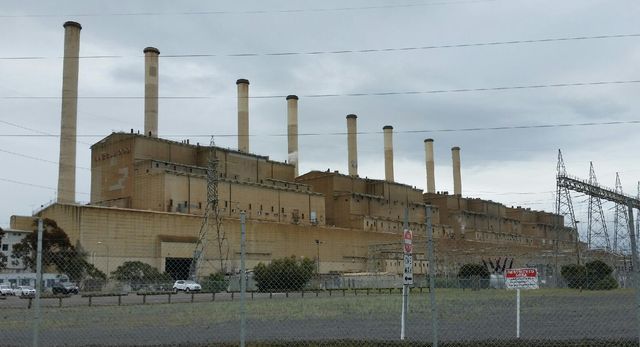
The Hazelwood power plant
This March, the French multinational ENGIE closed the Hazelwood power station, ending 52 years of operations and destroying 450 permanent positions, along with 300 casual and contracting jobs. That left three power stations—Loy Yang A, Loy Yang B and Yallourn—but Loy Yang B has been up for sale and Yallourn is reportedly earmarked for closure.
Once again, the Labor Party and the unions sold out the workers. The Victorian state Labor government of Daniel Andrews and the Construction Forestry Mining and Energy Union (CFMEU) both accepted and enforced the closure.
Two regional timber plants also shut down this year. In March, Australian Sustainable Hardwoods said it was closing its Heyfield facility, which employed about 250 workers. In May, the Australian and New Zealand-based timber producer Carter Holt Harvey (CHH) announced it would close its 35-year-old plant at Morwell in August and eliminate 160 jobs. A major paper mill at Maryvale, near Morwell, employing some 900 workers, is threatened with closure.
The social crisis is revealed already in the health and economic indices for the 125,000 people in the region, of whom about 75,000 people live within four centres—Moe, Morwell, Churchill and Traralgon. The unemployment rate is among Victoria’s highest at 11.2 percent, with youth unemployment as high as 19.7 percent.
A Gippsland Primary Health Network report released last year showed that low income, welfare dependent families with children made up 13.6 percent of the population, and 21.8 percent of children aged under 15 years of age were in jobless families. Rental stress was reported by 29 percent of households, and 7.2 percent reported food insecurity.
The 2016 census reported that the personal median income for the Latrobe Valley was $544 a week, 17.8 percent lower than the national figure of $662. Median weekly household income for the Latrobe Valley was $1,077, some 25 percent lower than the national level of $1,438.
Residents seeking to re-locate in search of employment are essentially locked out of the housing and rental markets in Melbourne. The median house price for the Latrobe Valley was only $234,000 in 2014. By contrast, house prices in inner Melbourne soared to a median price of $1,405,000 in 2016. In metropolitan Melbourne, the median house price increased to a record high of $770,000. Likewise, median weekly rent is $200 for the Latrobe Valley, compared to median rent nationally of $335.
Unemployment, socio-economic disadvantage, and remoteness have been recognised as major contributors to suicides, mental health problems and substance use. With 10.1 percent of Latrobe Valley’s population aged between 16-64 years receiving a Disability Support Pension, the leading cause of disability is a mental disorder.
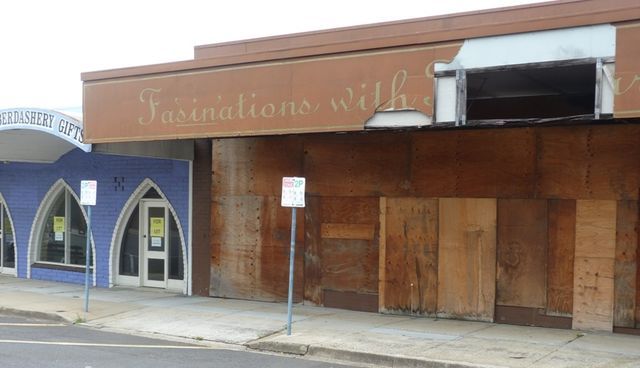
A boarded-up shop in Moe, a poverty-stricken town in the Latrobe Valley
The Latrobe Valley has one of Australia’s highest opioid dispensing rates and the second highest rate of fatal drug overdoses in regional Victoria. With no residential rehabilitation and withdrawal centres throughout the surrounding Gippsland region, the outpatient alcohol and drug treatment rate was more than double that of the rest of the state, with 12.2 per 1,000 of the population accessing related services, compared to 5.8 per 1,000 across Victoria.
The impact of the social crisis on psychological well being is further expressed in the episodes of hospital treatment for intentional self-harm. The Department of Health and Human Services reported that the rate for Gippsland from 2010-11 to 2014-15 was almost double that of the rest of the state for both men and women. The Victorian rate per 100,000 of the population was 43.0 for men and 82.8 for women. For Gippsland, the rate was 77.9 for men and 148.3 for women.
The physical health of Latrobe Valley’s people is heavily impacted also by exposure to pollution from the open cut mines and thermal power stations, especially given the close proximity of towns to the mines. In the Latrobe Valley, the leading cause of death is cancer, which is ranked fifth nationally.
Life expectancy, as reported by the Department of Health 2012, at birth for males was significantly lower compared to both national and state figures, at 76.9 years for males, compared to the state figure of 80.3 years. For females life expectancy was 82.2 years, compared to the state figure of 84.4 years.
Of babies, 8.5 percent are of low birth rate (under 2,500 grams) compared to the state figure of 6.6 percent. At school entry, 15.7 percent of children are developmentally delayed on two or more domains, compared to the state figure of 9.5 percent.
These social disparities are a damning indictment on a system driven by corporate profit that views the lives of the working class contemptuously, as an expendable resource to be exploited.
Workers, young people and children of the Latrobe Valley have been abandoned and betrayed by consecutive Labor and Liberal-National Coalition governments and the trade unions, which feign concern but demonstrate a callous disregard for the social conditions they have policed.

Australian government orders police raids on union offices

Mike Head

In two highly-publicised raids, scores of Australian Federal Police (AFP) officers suddenly arrived at the Sydney and Melbourne offices of the Australian Workers Union (AWU) on Tuesday afternoon, executed search warrants, and carted away documents.
Australia increasingly resembles a police state, with stage-managed raids conducted for blatant political purposes. The pretext for the police operation was political donations made a decade ago, and officially recorded at the time, but allegedly not properly noted in AWU minutes.
Efforts are being made, at the highest levels of the state, to criminalise regular political activities such as making donations. The internal affairs of trade unions and political organisations are being subjected to massive surveillance and control.
As has become customary with police raids, including “counter-terrorism” operations, media outlets were alerted by the government, so television cameras were on hand to broadcast the images far and wide.
Employment Minister Michaelia Cash is now facing calls to resign, after falsely telling a Senate estimates committee last night on five occasions that neither she, nor her office, tipped off the media. “Quite frankly, I am offended on behalf of my staff as to those allegations,” Cash said at one point.
Cash even insisted she was not aware of Tuesday’s raid until she saw it on television. Later, after journalists exposed her claims, she recanted her testimony and announced that her senior media adviser, David De Garis, had resigned after admitting alerting journalists. De Garis has been made a fall guy for an affair that is now intensifying the crisis of the Liberal-National Coalition government.
A total of 32 police were involved in the raids, which came just three days before the High Court is due to decide tomorrow whether to disqualify seven members of parliament, including Deputy Prime Minister Barnaby Joyce.
Plainclothes AFP officers, some wheeling large cases, arrived at the AWU’s national ­office in Sydney at about 4.30pm and sealed off the 10th-floor headquarters in a search for documents. Uniformed armed police stood guard outside the office.
Simultaneously, plainclothes officers, some holding AFP folders and wearing police badges, arrived in an unmarked car at the AWU’s Victorian state office in West Melbourne. AFP officers remained in the building for more than four hours, leaving at 9pm.
The raids were requested by the Turnbull government’s recently-created Registered Organisations Commission (ROC), a body with vast powers to pry into trade union affairs, including to conduct forced questioning of members, officials or anyone else.
In parliament yesterday, Prime Minister Malcolm Turnbull condemned suggestions that the government was using the police for political purposes, saying that was an attack on “the integrity of the Australian Federal Police.” But clearly the orders came from the government itself.
The raids were conducted just days after Cash referred the AWU to the ROC, following accusations splashed throughout the Murdoch media that, in 2005, the union gave $100,000 to the lobby group GetUp! without the donation being authorised under union rules.
Murdoch’s Australian published similar allegations that the AWU, then led by Labor Party leader Bill Shorten, also gave money to his parliamentary election campaign and that of two other Labor candidates in 2007 without due authorisation.
The ROC claimed to have received a phone call that gave it “reasonable grounds” to suspect that relevant documents were “being concealed or destroyed.” Instead of ordering the AWU to produce the documents, using one of the commission’s many coercive powers, the ROC sent in the police.
The ROC raised the spectre of criminal charges. It said it was an offence for a person to engage in conduct “that results in the concealment, destruction or alteration of a document” relating to a ROC investigation. That offence is punishable by up to two years’ jail.
The raids set an anti-democratic precedent. Regardless of the right-wing and pro-capitalist character of the AWU and the Labor Party, and GetUp! as well, the making of political donations is a basic democratic right that must be free of interference by the capitalist state apparatus.
Accusations of financial or organisational irregularities can become vehicles for far-reaching state intervention into political groups and parties, not just trade unions. If a union or any other group is allegedly breaching its rules, that is a matter for its members to deal with, not the police and government watchdogs.
Increasingly, official Australian politics has descended into mud-slinging and intrigue, backed by police operations, as both traditional ruling parties, Labor and the Coalition, pursue an agenda of slashing public services, intensifying war preparations and decimating working class jobs and conditions.
For more than three decades, successive governments have presided over widening social inequality, destruction of full-time jobs, worsening health, education and other key social services, and a lurch toward war as part of an ever-closer alignment with Washington. As a result, unprecedented social discontent and political disaffection has developed.
A growing pattern has emerged of governments orchestrating police investigations for political purposes. Last year, Turnbull’s government called in the AFP to investigate Labor Party election text messages about the Medicare health insurance scheme. Leaks to the media about the disastrous performance of the National Broadband Network led to raids on Labor Party parliamentary offices.
From new military call-out provisions to the constant barrage of measures to boost the powers of the police and intelligence agencies, the government is desperately resorting to authoritarian methods amid a deepening political crisis of the entire parliamentary establishment.
By targeting Shorten, Turnbull’s government, which faces being thrown from office when the next election is held, is stepping up the use of political smears to try to undermine its parliamentary opposition.
The targeting of GetUp! also points to deeply anti-democratic processes. The lobby group had previously acknowledged receipt of a donation of $100,000 in 2005 from the AWU. GetUp! is a self-styled “independent” and “progressive” movement that seeks to put a participatory gloss on the existing political set-up and channel support to Labor and the Greens. As a result, it is coming under constant attack from the backers of the Liberal and National parties.
The Australian Electoral Commission (AEC), under pressure from the government, recently announced that it was once again investigating whether GetUp! should be categorised as an “associated entity” of the Labor Party under the federal electoral legislation. This would bring the organisation within the intrusive and extremely complex framework of reporting and monitoring imposed on political parties, and force it to lodge financial disclosure returns about donations it receives.
Both the AEC and ROC are like giant government octopuses, with tentacles covering every aspect of political and union organisations’ affairs, right down to their constitutions, minutes books, membership lists and donation records. The ROC has powers to require people to answer questions behind-closed-doors, seize or force the handover of documents, and enter and search premises.
Any office-bearer of an organisation convicted of even “recklessly” failing to “exercise their duties in good faith in the best interests of the organisation or for a proper purpose” can be fined 2,000 penalty units (currently $360,000) and/or jailed for five years.
The ROC began operations in May following last year’s double dissolution election of all members of both houses of parliament. Turnbull’s attempt to strengthen the position of the government backfired, leaving it with only a one-seat majority in the lower house and only 29 seats in the 76-member Senate.
However, after the election, backed by some of the right-wing populists elected to the Senate, the government pushed through parliament the two previously-blocked bills it had selected as the triggers for the election. One was to restore the Australian Building and Construction Commission (ABCC), which specialises in outlawing and punishing industrial action by construction workers. The other was to establish the ROC, with even more draconian powers.

Quebec “clarifies” application of anti-Muslim law

Keith Jones

Quebec Justice Minister Stéphanie Vallée announced Tuesday several purported “clarifications” to the provincial Liberal government’s newly-enacted law denying public services, including health care and education, to women wearing Muslim face-coverings.
Last week, as Bill 62 was being adopted by the National Assembly, Vallée explicitly stated that Muslim women who wear the niqab or burka would have to have their “face uncovered” from the beginning to the end of their municipal bus ride, library visit, or use of any other public service.
On Tuesday, she claimed that she had been misinterpreted: those wearing a Muslim face-covering who want to use a municipal bus will be forced to show their faces, for “identification” and “security” purposes, only when they embark or if asked to do so by transit police.
Quebec’s Justice Minister also “clarified” that veiled women will not be denied emergency medical services. Those accessing hospital services in other circumstances “will have to have their face uncovered,” said Vallée, “when they are in direct contact with an employee. But when they return for example to the waiting room, they will not be obliged to have their face uncovered.”
Vallée expressed dismay that the Liberals’ actions have provoked an outcry across Canada, including within Quebec. Immigrant and civil rights groups, and large numbers of ordinary people, have rightly condemned Bill 62 as a bigoted attack on Muslim women, an especially marginalized and vulnerable minority.
Vallée and Quebec Premier Philippe Couillard have shamelessly lied about the aims of Bill 62. The Liberals’ ban on public services being given or received by persons with “face covered” manifestly targets devout Muslim women and them alone. But the Liberals have sought to hide the law’s anti-democratic and chauvinist intent behind spurious claims that it is motivated by concerns over security, social harmony, and even inclusion and women’s rights.
Vallée’s expressions of dismay at her Tuesday press conference were not feigned, however. The government has been taken back by the hostile reaction to its stigmatizing of veiled Muslim women and is now trying to limit the damage to its longstanding efforts to cast itself and Canadian federalism as a tolerant, liberal alternative to its more stridently Quebec nationalist and anti-immigrant opponents in the pro-Quebec independence Parti Québécois (PQ) and the “autonomist” Coalition Avenir Québec (CAQ—Coalition for Quebec’s Future).
Vallee’s “clarifications,” of course, change absolutely nothing about the deeply reactionary, bigoted character of Bill 62.
It is a calculated attempt to incite prejudice, so as to divert mounting social anger over socioeconomic insecurity, including the social devastation wrought by the Liberals’ brutal austerity drive, into reactionary channels and split the working class.
By enshrining in law that essential public services must be denied veiled women, the government is effectively summoning shopkeepers and restaurant owners to ban them from their premises and the public to shun them. A spike in harassment and physical attacks on Muslims will undoubtedly follow, as was the case during 2013-14, when the then PQ government of Pauline Marois brought forward its chauvinist “Charter of Quebec Values.”
Bill 62 is titled an “ Act to foster adherence to State religious neutrality.” But in keeping with its chauvinist aims , it give s the Roman Catholic faith a privileged status in Quebec, in the name of preserving Quebec’s “cultural heritage.” The Liberals ’ two-faced position on religion was highlighted again on Tuesday, when its legislators voted down a proposal to debate removing the crucifix that hangs over the Quebec National Assembly.
The PQ and CAQ have opposed Bill 62 from the right, arguing it does not go far enough. Yesterday, PQ leader Jean-François Lisée said his party favours making it illegal to wear a Muslim face-covering in public and that it would use the “notwithstanding clause” in Canada’s Constitution, which allows governments to violate basic rights guaranteed under the Charter of Rights and Freedom, so as to ensure such a blanket ban could not be overturned through a court challenge.
As for Québec Solidaire—the pseudo-left, Quebec indépendantiste party that has three legislators in the National Assembly—it has played a pivotal role in legitimizing the efforts of the Quebec and Canadian elite to make immigrants, and Muslims in particular, scapegoats for the capitalist crisis.
It haggled with the PQ over the details of the latter’s chauvinist Charter and has insisted that the decade-long debate over the “reasonable accommodation” of ethnic and religious minorities is rooted in legitimate concerns. In fact, this debate was a reactionary canard from the outset—a furor whipped up by the right-wing tabloid press of media tycoon and prominent PQ supporter Pierre-Karl Péladeau and by Mario Dumont and the right-wing populist ADQ (a precursor of the CAQ)
Last January after a young person influenced by the ultra-right and the bigoted anti-Muslim discourse of Quebec politics massacred six people at a Quebec City mosque, QS legislator Amir Khadir attributed the attack to a “malaise” in Quebec society. This, he said, needed to be addressed by all four parties in the National Assembly joining forces to quickly adopt Bill 62, if the government would only amend the legislation to ban judges and other “members of the state exercising coercive powers” from wearing religious symbols.
Whilst Québec Solidaire ultimately voted against Bill 62, it has pointedly refused to denounce it as a chauvinist attack on Muslims and an egregious violation of democratic rights. Instead QS, like the PQ, mocks the “absurdities” of the new law.
The federal Liberal government and the Ontario and Alberta governments have all criticized Bill 62 so as to posture as champions of democratic rights. All these governments have imposed austerity and are complicit in the criminalization of social opposition.
The entire Canadian establishment has invoked the phony “war on terror,” which has always been closely associated with the promotion of Islamophobia, to justify Canada’s participation in US-led imperialist wars in Central Asia, the Middle East and Africa, as well as a vast expansion of the powers and reach of Canada’s national-security apparatus.
Whilst there is genuine anger and outrage among working people in English Canada over the anti-democratic actions of the Quebec government, the opposition of the federalist political establishment is imbued with Canadian nationalism, which is falsely depicted as “progressive” and of a different kind, than the “insular, retrograde” Quebecois variety.
In fact, Canadian nationalism is increasingly serving as a rallying crying for imperialist war and social reaction. The Conservatives have repeatedly incited anti-immigrant and anti-Muslim prejudice. As for Trudeau, he has maintained a conspicuous silence on Trump’s travel bans targeting predominantly Muslim countries, and while claiming to be pro-refugee, his government is threatening to deport those seeking refuge from Trump’s anti-immigrant policies.
Bill 62 is patterned after chauvinist laws adopted by several European countries, notably France, where it is now illegal to wear the hijab (Muslim headscarf) in public schools and Muslim face-coverings have been outlawed in all public spaces.
In Canada as in Europe, the ruling elite has no answer to the breakdown of capitalism other than to intensify the assault on the working class and to brawl over markets, resources and profits through great-power geopolitics and war. It is within this context and with the aim of dividing the working class that the Quebec and Canadian establishment are turning to social reaction, eviscerating democratic rights, and promoting nationalism and anti-Muslim chauvinism—as exemplified by Bill 62.

US Senate votes to protect financial giants from consumer lawsuits

Patrick Martin 

The US Senate voted Tuesday night to repeal a rule issued by the Consumer Financial Protection Bureau that barred financial institutions from using arbitration clauses to stop consumers from filing class action lawsuits if they have been swindled or otherwise harmed by the banks.
The 51-50 vote came with Vice President Mike Pence breaking a tie. Two Republicans, Lindsey Graham of South Carolina and John N. Kennedy of Louisiana, joined all 48 Democrats to oppose the bill. The 50 Republicans who backed the legislation included all three of the senators who have made vociferous criticisms of President Donald Trump in the past week: John McCain and Jeff Flake of Arizona, and Bob Corker of Tennessee.
The vote was taken under provisions of the Congressional Review Act, which allows a majority of both houses of Congress to overturn a regulation issued by an executive branch agency within 60 legislative days of its adoption.
The CFPB, which is headed by Obama appointee Richard Cordray, issued the rule July 20, and the House of Representatives voted five days later, by 231-190, to overturn it. Senate action was delayed repeatedly as the Republican leadership scrambled to prevent more than two defections, thus allowing Pence to cast the tiebreaking vote. The repeal now goes to President Trump for his promised signature.
The legislation is a green light for financial swindlers. In the wake of the 2008 Wall Street Crash, and the flood of consumer lawsuits it provoked over various forms of misrepresentation and fraud by banks and other financial institutions, the corporations used clauses inserted in the fine print of contracts for credit cards, auto, payday and student loans, and other financial products, to force consumers into arbitration rather than going to court.
The Supreme Court upheld the use of arbitration clauses to protect companies from class action suits, even in cases of egregious misconduct, in its decisions in AT&T Mobility v. Concepcion (2011) and American Express Co. v. Italian Colors Restaurant (2013). Both decisions saw a narrow five-member conservative majority of Justices Scalia, Alito, Thomas, Roberts and Kennedy backing the financial institutions.
The CFPB, set up in 2010 under terms of the Dodd-Frank bill, conducted a protracted study of the use of arbitration clauses, finding that very few consumers who felt they had been cheated would make use of arbitration, since the process yielded few penalties on the financial flimflam artists.
Of thousands of cases, only 78 arbitration claims resulted in a derisory $400,000 in total relief to consumers, compared to billions in restitution won through more than 400 class action lawsuits or settlements agreed on by the banks in response to the threat of such suits. Attorney fees averaged 18 percent of the money recovered in lawsuits.
“Every group that represents consumers was strongly against the bill,” Paul Bland, a representative of the consumer group Public Justice, told the press. “This was the Wells Fargo immunity act. It’s essentially a bailout for those companies.”
The Trump White House issued a press release hailing the Senate action in terms that can only be called Orwellian, declaring, “Congress is standing up for everyday consumers,” when the direct opposite is the case: Congress is standing up for those who profit from the fleecing of everyday consumers.
Two federal agencies under the control of Trump administration appointees, the Treasury Department and the Office of Comptroller of the Currency, issued reports earlier this week denouncing the action by the CFPB, which is run by Obama administration holdover Cordray, who serves a fixed term until July 2018 and cannot be removed by Trump except for gross misconduct.
“Tonight’s vote is a giant setback for every consumer in this country,” Cordray, said in a statement. “As a result, companies like Wells Fargo and Equifax remain free to break the law without fear of legal blowback from their customers.”
While criticizing the action, Cordray is expected to quit his post at the CFPB soon to seek the Democratic nomination for governor of Ohio in 2018. This will allow Trump to name his successor, which means the effective end to even the current extremely limited enforcement of consumer protection rules.
The congressional action is worth billions, perhaps even tens of billions, to giant Wall Street financial institutions like Wells Fargo, which created tens of thousands of dummy accounts for customers and billed them for it, and Equifax, which exposed the personal and credit information of an estimated 150 million Americans.

25 Oct 2017

H&M Global Change Award (€1 Million Grant) 2018

Application Deadline: 31st October 2017.
Eligible Countries: All
To be taken at (country): Online and Sweden
About the Award: What if we could make a shift from “take-make-waste” to a fashion world where there is no waste? What if we could make fashion circular.
What if everything could be made again. Knowing what we know today, how would we then create the materials we use, design the processes we utilize and construct the businesses that drive fashion? What if fashion could be truly circular? What if we could reinvent it all.
We think there is no better moment to do this than now. And we believe that you have the ideas to make it possible.
Type: Entrepreneurship, contest
Eligibility: 
  • Only one entry per participant/group is accepted. Each participant/group can register only once.
  • Entry must be the applicant’s own creation.
  • Maximum 5 team members, including the team leader.
  • For group entries, members must nominate a leader and contact person.
Selection Criteria:  The global public is invited to distribute the €1 million grant between the five innovations through an online vote. The result of the vote is revealed at a grand award ceremony in Stockholm, Sweden on 5th April 2017. This is one of the world’s biggest challenges for early stage innovation and the first such initiative in the fashion industry.
Number of Awardees: Five
Value of Programme: By applying to the Global Change Award you’re competing for:
  • A € 1.000.000 grant, shared by five winners. Which will be distributed by the public though an online vote.
  • A trip to Stockholm to attend the grand award ceremony in March 2018.
  • Access to a one-year Innovation Accelerator provided by H&M Foundation, Accenture and KTH Royal Institute of Technology in Stockholm.
Duration of Program:
  • Online Vote: 12th-16th March 2018
  • Accelerator: 21st March-20th March 2019
How to Apply: The application form is divided into the following four parts:
  • Register for an account and fill in your profile.
  • Answer a few basic questions about your idea.
  • Give us the details on how your idea will make fashion circular.
  • Submit your idea.
Apply here
Award Provider: H&M Foundation