28 Dec 2017

Wellcome Trust Intermediate Fellowships in Public Health and Tropical Medicine for Low and Middle Income Countries 2018 – UK

Application Deadline: The preliminary application deadline is 9th May 2018 and full application deadline is 17th July 2018.
Eligible Countries: Low- and middle-income countries
To be taken at (country): Fellowships can be taken in Low- and middle-income countries (See list of countries below)
Fields of Study: Fellowships are awarded in the field of Public Health and Tropical Medicine.
About the Award: This scheme helps mid-career researchers from low- and middle-income countries establish independent research programmes in those countries. The scheme aims to support research that will improve public health and tropical medicine at a local, national and global level.
Type: Research (Intermediate career stage)
Eligibility: Students can apply for an Intermediate Fellowship in Public Health and Tropical Medicine if they:
  • Are a national of a low- or middle-income country
  • Have a PhD or a degree in medicine and are qualified to enter higher specialist training
  • Have three to six years research experience.
  • you have made important contributions to your area of research eg publications, patents, software development or an impact on health policy or practice.
  • Students that do not have a PhD or degree in medicine, Welcome Trust may still be considered if they have a first or Master’s degree and can show substantial research experience.
Students must also:
  • Have a strong track record in your area of research and show the potential to become a scientific leader
  • Have sponsorship from an eligible host organisation in a low- or middle-income country
  • Have a research proposal that is within the public health and tropical medicine remit.
Selection Criteria: 
  • your research contributions
  • the scientific merit of your proposed project
  • the significance of the research
  • the feasibility of your proposal
  • the suitability of your sponsor and host environment for both your research and for the development of your independent career.
By the end of this fellowship you should:
  • have achieved international standing in your area of research
  • be leading your own research programme
  • have the skills and experience to apply for senior level fellowships or permanent positions at a research organisation.
Number of Awardees: Not specified
Value of Fellowship: Support includes:
  • A basic salary (determined by your host organisation)
  • Personal removal expenses
  • Research expenses, directly related to your proposal
Scholarship can be taken in Low- and middle-income countries
Duration of Fellowship: An Intermediate Fellowship in Public Health and Tropical Medicine is for up to five years and cannot be renewed. An Intermediate Fellowship can be held on a part-time basis.
List of Countries: Afghanistan, Albania, Algeria, American Samoa, Angola, Antigua and Barbuda, Argentina, Armenia, Azerbaijan, Bangladesh, Belarus, Belize, Benin, Bhutan, Bolivia, Bosnia and Herzegovina, Botswana, Brazil, Bulgaria, Burkina FasoBurundi, Cambodia, CameroonCape Verde, Central African RepublicChad, Chile, China, Colombia, Comoros, CongoDemRep., Congo, Rep., Costa Rica, Côte d’Ivoire, Cuba, Djibouti, Dominica, Dominican Republic, Ecuador, Egypt, Arab Rep., El Salvador, EritreaEthiopia, Fiji, GabonGambia,  Georgia, Ghana, Grenada, Guatemala, GuineaGuinea-Bissau, Guyana, Haiti, Honduras, India, Indonesia, Iran, Islamic Rep., Iraq, Jamaica, Jordan, Kazakhstan, Kenya, Kiribati, Korea, Dem Rep., Kosovo, Kyrgyz Republic, Lao PDR, Lebanon, LesothoLiberiaLibya,Lithuania, Macedonia, FYR, MadagascarMalawi, Malaysia, Maldives, Mali, Marshall Islands, MauritaniaMauritius, Mayotte, Mexico, Micronesia, Fed. Sts., Moldova, Mongolia, Montenegro, Morocco, Mozambique, Myanmar, Namibia, Nepal, Nicaragua, NigerNigeria, Pakistan, Palau, Panama, Papua New Guinea, Paraguay, Peru, Philippines, Romania, Russian Federation, Rwanda, Samoa, São Tomé and Principe, Senegal, Serbia, Seychelles, Sierra Leone, Solomon Islands, SomaliaSouth Africa, Sri Lanka, St. Kitts and Nevis, St. Lucia, St. Vincent and the Grenadines, Sudan, Suriname, Swaziland, Syrian Arab Republic, Tajikistan, Tanzania, Thailand, Timor-Leste, Togo, Tonga, Tunisia, Turkey, Turkmenistan, Tuvalu, Uganda, Ukraine, Uruguay, Uzbekistan, Vanuatu, Venezuela, RB, Vietnam, West Bank and Gaza, Yemen, Rep., Zambia and Zimbabwe
How to Apply: Applicants must submit their application through the Wellcome Trust Grant Tracker (WTGT).
Award Provider:  Wellcome Trust

Wellcome Trust Senior Research Fellowships in Public Health and Tropical Medicine for Low and Middle Income Countries 2018

Application Deadline: 
  • Full application deadline: 12th March 2018
Offered annually? Yes
Eligible Countries: Low- and middle-income countries. See list below
To be taken at (country): United Kingdom
Eligible Field of Study: Public health
About the Award: This scheme enables researchers from low- and middle-income countries to establish themselves as leading investigators in their scientific field. The scheme aims to support research that will improve public health and tropical medicine at a local, national and global level.
Type: Post-Doctoral, Research
Eligibility: You can apply for a Senior Research Fellowship in Public Health and Tropical Medicine if you’re an established researcher leading your own independent research programme. The programme of work you propose must be innovative and ambitious.
  • You must be a national of a low- or middle-income country.
  • You should have a PhD or a degree in medicine and be qualified to enter higher specialist clinical training. You must also have significant postdoctoral research experience.
  • If you don’t have a PhD or a degree in medicine, we may still consider you if you have a first or a Master’s degree and can show substantial research experience.
You should be able to show:
  • your work is important, original and has impact
  • you have made important contributions to your area of research, eg publications, patents, software development or an impact on health policy or practice
  • you have an international reputation as a research leader in your field
  • you’re committed to developing and mentoring less experienced researchers.
Also
  • You must have an eligible sponsoring organisation in a low- or middle-income country that will administer the fellowship for the full duration of the award.
  • If you’ve been away from research (eg for a career break, maternity leave, or long-term sick leave), we’ll allow for this when we consider your application.
  • This scheme may be of particular interest if you’re an intermediate career fellow (such as an Intermediate Fellow in Public Health and Tropical Medicine) and this fellowship is the next step in your career as a research scientist.
  • We particularly encourage applications from researchers from low- and middle-income countries who want to return to their home countries.
Selection Criteria: Candidate’s application must show:
  • good track record
  • the quality and importance of the research question(s)
  • good approach to solving these questions
  • the suitability of candidate’s research environment.
Number of Awardees: Not stated
Value of Scholarship: Salary and research expenses covered
Duration of Scholarship: 5 years (candidate can apply for renewal after this time)
Eligible African Countries: Algeria, Angola,  Benin, Botswana, Burkina Faso, Burundi, Cameroon, Cape Verde, Central African Republic, Chad, Congo, Dem. Rep. , Congo, Rep., Côte d’Ivoire, Djibouti, Egypt, Eritrea, Ethiopia, Gabon, Gambia, Ghana, Guinea, Guinea-Bissau, Kenya, Lesotho, Liberia, Libya, Madagascar, Malawi, Mali, Mauritania, Mauritius, Morocco, Mozambique, Namibia, Nicaragua, Niger, Nigeria, Federation Rwanda, Senegal, Seychelles, Sierra Leone, Somalia, South Africa, Sudan, Swaziland, Tanzania, Togo, Tunisia, Turkey , Uganda, Ukraine,  Rep. Zambia, Zimbabwe.
Other Countries: Afghanistan, Albania, American Samoa, Antigua and Barbuda, Argentina, Armenia, Azerbaijan, Bangladesh,  Belarus, Belize, Bhutan, Bolivia, Bosnia and Herzegovina, Brazil, Bulgaria, Cambodia, Chile, China, Colombia, Comoros, Costa Rica, Cuba, Dominica, Dominican Republic, Ecuador, Arab Rep., El Salvador, Fiji, The Georgia, Grenada, Guatemala, Guyana, Haiti, Honduras, India, Indonesia, Iran, Islamic Rep. Iraq, Jamaica, Jordan, Kazakhstan, Kiribati, Korea, Dem Rep., Kosovo, Kyrgyz, Republic Lao PDR, Lebanon, Lithuania, Macedonia, Malaysia, Maldives, Marshall Islands, Mexico, Micronesia, Fed. Sts., Moldova, Mongolia, Montenegro, Mayotte, Myanmar, Nepal, Pakistan, Palau, Panama, Papua New Guinea,  Paraguay, Peru, Philippines, Romania, Russian, Samoa, São Tomé and Principe, Serbia, Solomon Islands, Sri Lanka, St. Kitts and Nevis St. Lucia St. ,Vincent and the Grenadines, Suriname, Syrian, Arab Republic, Tajikistan, Thailand, Timor-Leste, Tonga, Turkmenistan, Tuvalu, Uruguay, Uzbekistan, Vanuatu, Venezuela, RB Vietnam,  West Bank and Gaza Yemen,
How to Apply: Candidate must submit their application through the Wellcome Trust Grant Tracker
Award Provider: Wellcome Trust, UK
Important Notes: Candidates who don’t have PhD or a degree in medicine may still be considered you if they have a first or a Master’s degree and can show substantial research experience. The scheme mmay be very important if candidate is an intermediate career fellow.

Kennedy-Lugar Youth Exchange and Study (YES) Alumni Grants Program 2018 – USA

Application Deadline: 15th February 2018
Eligible Countries: Afghanistan, Albania, Algeria, Bahrain, Bangladesh, Bosnia and Herzegovina, Bulgaria, Cameroon, Egypt, Ethiopia, Gaza Strip, Ghana, India, Indonesia, Iraq, Israel (Arab Communities), Jordan, Kenya, Kosovo, Kuwait, Lebanon, Liberia, Libya, Macedonia, Malaysia, Mali, Morocco, Mozambique, Nigeria, Oman, Pakistan, Philippines, Qatar, Saudi Arabia, Senegal, Sierra Leone, South Africa, Suriname,Syria, Tanzania,
Thailand, Tunisia, Turkey West Bank, Yemen, YES Abroad – United States.
About the Award: 2018 is going to be an exciting year for the YES program – it’s the YES 15th Anniversary! 2018 will also usher in a new cycle of YES Alumni Grants. Want to commemorate the 15th anniversary in the most impactful way possible? Why not apply for a YES Alumni Grant to start a project in your community that you are passionate about? From an alumni mentoring program or holding a workshop on countering violent extremism in your community, the possibilities to make a difference through a YES Alumni Grant are endless.
Type: Grants
Eligibility: In order to participate in this program, applicants:
  1. Must be successful participants of the YES or YES Abroad program;
  2. Must conduct their project and currently reside in one of the countries in which the YES program or YES Abroad is administered (including the U.S.);
  3. Cannot be working as employees of an organization administering the YES program, or of the U.S. government.
Number of Awards: Not specified
Value of Award: Grants will fall into two categories:
Individual Grants (up to $250)
  • To support community service or professional development projects. Individual grant applicants who demonstrate in their proposals a readiness to share their experience with others in their community upon completion will be given preference.
  • These may be single events or small-scale projects.
Group Grants (up to $3000):
  • To support community service projects in areas such as interfaith dialogue, conflict resolution, entrepreneurship, public health, environment, inclusion of people with disabilities, women’s and girls’ empowerment, and promotion of English language and American culture. Not all project organizers or volunteers must be YES or YES Abroad alumni, but the grant applicant/recipient and the project leader or co-leader must be an alumnus/a.
  • American Councils may request that applicants modify their budget or the proposal in order to be awarded a grant.
  • Proposals may be awarded partial funding.
How to Apply: Apply here
Award Providers: 2018 YES Alumni Grants Program, funded by the U.S. Department of State, Bureau of Educational and Cultural Affairs (ECA) and administered by American Councils for International Education.

American College of Surgeons International Guest Scholarships for International Medical Students 2019

Application Deadline: 2nd July 2018.
Eligible Fields of Study: Medicine-related fields
About Award: The American College of Surgeons offers International Guest Scholarships to young surgeons from countries other than the United States or Canada who have demonstrated strong interests in teaching and research. The scholarships, in the amount of $10,000 each, provide the scholars with an opportunity to visit clinical, teaching, and research activities in the U.S. and Canada and to attend and participate fully in the educational opportunities and activities of the American College of Surgeons Clinical Congress.
This scholarship endowment was originally provided through the legacy left to the College by Paul R. Hawley, MD (FACS Hon), former College Director. More recently, gifts from the family of Abdol Islami, MD (FACS), the Stavros Niarchos Foundation, and others to the International Guest Scholarship endowment have enabled the College to expand the number of scholarship awards.
Type: Fellowship, Short Courses
Eligibility Requirement
  • Applicants must be graduates of schools of medicine who have completed their surgical training.
  • Applicants must be at least 35 years old, but under 50, on the date that the completed application is filed.
  • Applicants must submit their applications from their intended permanent location. Applications will be accepted for processing only when the applicants have been in surgical practice, teaching, or research for a minimum of one year at their intended permanent location, following completion of all formal training (including fellowships and scholarships).
  • Applicants must have demonstrated a commitment to teaching and/or research in accordance with the standards of the applicant’s country.
  • Early careerists are deemed more suitable than those who are serving in senior academic appointments.
  • Applicants must submit a fully completed application form provided by the College on its website. The application and accompanying materials must be submitted in English. Submission of a curriculum vitae only is not acceptable.
  • Applicants must provide a list of all of their publications and must submit, in addition, three complete publications (reprints or manuscripts) of their choice from that list.
  • Preference may be given to applicants who have not already experienced training or surgical fellowships in the U.S. or Canada.
  • Applicants must submit independently prepared letters of recommendation from three of their colleagues. One letter must be from the chair of the department in which they hold an academic appointment or a Fellow of the American College of Surgeons residing in their country. The chair’s or the Fellow’s letter is to include a specific statement detailing the nature and extent of the teaching and other academic involvement of the applicant. Letters of recommendation should be submitted by the person making the recommendation.
  • The online application form is structured to assist the Scholarship Selection Subcommittee and assists the applicant in submitting a structured curriculum vitae.
  • The International Guest Scholarships must be used in the year for which they are designated. They cannot be postponed.
  • Applicants who are awarded scholarships will provide a full written report of the experiences provided through the scholarships upon completion of their tours.
  • An unsuccessful applicant may reapply only twice and only by completing and submitting a new application together with new supporting documentation.
Value of Scholarship: The scholarships provide successful applicants with the privilege of participating in the College’s annual Clinical Congress held in San Francisco, CA, in October 2019, with public recognition of their presence. They will receive gratis admission to selected postgraduate courses plus admission to all lectures, demonstrations, and exhibits, which are an integral part of the Clinical Congress. Assistance will be provided in arranging visits, following the Clinical Congress, to various clinics and universities of their choice. In order to qualify for consideration by the selection committee, all of the requirements must be fulfilled.
How to Apply: Apply online
It is important to go through the Application Requirements and overview before applying.
Award Providers: American College of Surgeons

Amsterdam Excellence Scholarship (AES) Fully-funded for International Students 2018/2019

Application Deadline: 12th January 2018, 15:00 CET.
Offered annually? Yes
Eligible Countries: International students
To be taken at (country): University of Amsterdam, Netherlands
Eligible Field of Study: The Amsterdam Excellence Scholarship (AES) is eligible for these fields. Also, you can find the specific eligibility requirements, selection criteria and application instructions on the Faculty or Graduate School websites.
  • Child Development and Education
  • Communication
  • Economics and Business
  • Humanities
  • Law
  • Psychology
  • Science
  • Social Sciences
About Scholarship: The University of Amsterdam, Netherlands has recently launched a prestigious new scholarship programme targeting exceptionally talented Master’s students from outside Europe. The Amsterdam Excellence Scholarship (AES) is a full scholarship of €25,000, covering tuition and living expenses for one academic year. There is the possibility of an extension for a second year for two-year Master’s programmes.
Offered Since: 2015
Type: Masters degree
Selection Criteria: Eligible candidates are selected for a scholarship on the basis of their academic excellence and promise in the proposed field, as evidenced by:
  • the candidate’s academic record. Students from any discipline belonging to the top 10% of graduates from their class can apply;
  • the academic quality of the educational institute where the undergraduate (or graduate) programme has been obtained;
  • a letter of recommendation by a dean, teacher or academic supervisor;
  • the quality of the letter of motivation (maximum 500 words) in which the candidate explains the reasons for choosing the specific Master’s programme (broader context, relevance for future career);
  • a description of extracurricular activities such as participation in student committees, international experience, sports or music at a high level or volunteer work;
  • proof of English proficiency (IELS/TOEFL) :TOEFL (internet-based) –  overall score of 100 (with a minimum score of 22 in each of the different components), IELTS (academic) – overall score of 7.0 (with a minimum score of 7.0 in each of the four components);
  • the quality of the application as a whole (completeness, accuracy, consistency).
Eligibility: Students from any discipline who graduated in the top 10% of their class may apply. Candidates wishing to apply for an AES scholarship must meet the following requirements:
  • Hold a non-EU/EEA passport and not be eligible for support under studiefinanciering, the Dutch system of study grants and loans. The scholarship office should be notified as soon as possible of any change in nationality, type of residence permit, and/or possible studiefinanciering support throughout the academic year.
  • Be (provisionally) admitted to an English-taught Master’s degree programme at the University of Amsterdam which is registered in the Central Register of Higher Education Programmes (CROHO). You can apply for the Master’s programme and the AES scholarship simultaneously. Your Master’s application will be assessed before the AES deadline. In your application, clearly indicate that you are applying for the AES scholarship.
  • Be (provisionally) admitted to a Master’s programme at the UvA for the first time. An AES will not be awarded to candidates who are admitted for a second Master’s programme at the UvA.
  • Be able to comply with Dutch visa regulations as indicated by the Dutch Immigration Service (IND).
  • Be enrolled at the UvA as a full-time student for the academic year and the programme for which the scholarship is awarded. Scholarship continuation is not guaranteed when a candidate changes his or her Master’s programme.
  • The candidate should not receive another scholarship for the same period of study as the AES. Notify the UvA if you have been awarded and accepted another scholarship.
Number of Scholarships: The UvA will award up to 6 of these scholarships annually.
Value of Scholarship: Full scholarship of €25,000, covering tuition and living expenses for one academic year. Scholarship recipients become part of a select community, taking part, for example, in extracurricular activities developed specially for them.
Duration of Scholarship: Students who receive the AES for a two-year Master’s programme will be evaluated after one year of study. The scholarship will only be continued for the second year if the AES student has completed all courses of the first year on time and with a grade point average of 8.0.

How to Apply: Applications for the Amsterdam Excellence Scholarship (AES) are made through the admissions office of the faculties and graduate schools. As long as you meet all the requirements, you can apply for the AES at the same time as you register for your programme.
Sponsors: University of Amsterdam, Netherlands

The Unemployment Conspiracy

Bruce Lesnick

Real unemployment in the U.S. today hovers around 8.3%, afflicting more than 17 million people. This is roughly equivalent to the combined populations of New York City, Los Angeles, Chicago and Houston. Over one third of the working age population has given up looking for work.
On top of this, pundits project that many more jobs will be lost to automation in the near future, with computers and robots replacing as many as 49% of the jobs now done by humans. The mechanization of dirty, dangerous, repetitive, mind-numbing tasks should be a blessing. Instead, the future is described in apocalyptic terms. Why?
The problem is rooted in the disingenuous narrative we are fed. Jobs, so the story goes, are mysterious, ephemeral things, whose comings and goings are largely beyond our control. The number of available jobs has to vary independently from the work that needs to be done and the number of people available to do it, or so we are told.
There is plenty of work that needs to be done –converting our energy industry to renewables, repairing and enhancing infrastructure, building housing for all who need it, improving student-teacher ratios, increasing healthcare and eldercare staff, and so much more. And there are millions looking for useful work. The disconnect between people wanting to work, work that needs to be done and the number of jobs that happen to be available only occurs if the guiding principle for job availability is profit. But when the needs of society as a whole are prioritized over the needs of wealthy few at the top, then achieving permanent, full employment is a piece of cake.
Productivity at Our Service
Today, the putative standard is a forty-hour workweek, with a concomitant eight-hour day. But for more than half of U.S. history, the workweek was longer. Not until 1898 did mineworkers win the eight-hour day. Two years later, the movement for a shorter workweek spread to the San Francisco Building Trades. By 1905, the eight-hour day was established coast-to-coast in the printing trades. The Ford Motor Company adopted the new shorter workweek in 1914. Railroad workers won the right in 1916. Only in 1937, with the adoption of the Fair Labor Standards Act, did the eight-hour day become the national standard. (While many today are compelled to work longer in order to make ends meet, the legal norm remains 40 hours.)
But since 1937, the productivity of American labor has increased more than six-fold! In other words, the value produced by a full day’s labor in 1937 would require less than two hours today.
So an obvious solution to unemployment presents itself: reduce the workweek with no reduction in pay.
If the workweek were reduced from 40 to 30 hours, it would create 53 million new jobs. This is more than three times the current number of unemployed. To fill all the remaining slots and maintain current production levels, we would have to plead with the governments of Mexico, Central America and elsewhere to send more immigrants our way!
Can we afford this? Absolutely. Up to now – and especially since 1973 – increases in productivity have been siphoned off as corporate profits and enriched only those at the top.
Implementing 30 hours work for 40 hours pay (“30-for-40”) would simply redirect newly produced wealth away from corporate profits and back into the pockets of those who produce it. Instead of all the benefits of automation and increased productivity going to the top 1%, 30-for-40 would allocate a greater share of those gains to working people.
Big Business Despises Full Employment
Not only would using 30-for-40 to eliminate unemployment directly cut into corporate profits, there are other side effects that corporate behemoths hate but working people would love.
To begin with, full employment would strengthen the working class vis-à-vis the 1%. With abundant, well-paying jobs for all, there would be no one a recalcitrant company could hire as strikebreakers if the workers organized to withhold their labor. It would be more difficult to harass and victimize union organizers because, with full employment, all workers would be harder to replace.
What’s more, less time at work leaves more time for other things. This would include time for rest, recreation, attention to family and exploring creative endeavors. But it would also allow extra time for education, organizing, getting involved and fighting back. In a world imbalanced by massive economic, social and political inequality, allowing the majority more time for education and organization is the last thing those at the top want to see.
Jobs For All vs. Universal Basic Income
Of course, basic human solidarity demands that anyone who is old, sick, disabled or otherwise unable to work should be provided for at society’s expense, with their medical care fully covered and living expenses provided at union wage scales. This can easily be paid for by reallocating funds from the oppressive military budget and by taxing corporate profits. This policy should be combined with a guarantee of a job for all who are able to work.
Lately, some have promoted the notion of a Universal Basic Income (UBI). To the extent that a UBI were funded by redistributing wealth from those at the top to those below – a principle that is by no means guaranteed by the concept – a UBI could be a positive reform. But a UBI is no substitute for a guarantee of jobs for all. Why not?
First and foremost, labor is power. The only power that can counter the concentrated riches of the ruling oligarchs is the collective organization of millions of every-day working people, who, as it happens, produce all of society’s wealth. The root of working class power is the fact that the labor of millions of people generates the riches enjoyed by those at the top, as well as the considerably smaller share currently allocated to the majority. By withholding their labor en mass, working people have ultimate veto power over any government policy. Guaranteeing jobs for all strengthens the ties of working people to production, maximizing the number participating in the labor force and, thus, the number who have a hand on the lever of society’s productive apparatus. A UBI by itself, by contrast, does nothing to reinforce people’s connection to work – that is, to the fundamental engine of wealth creation.
In addition, the rate of any UBI will necessarily be too low. There is a built-in imperative for a UBI to be small enough to encourage people to work. In order to induce people to work at all, the UBI has to be inadequate (or “barely adequate”) to live on by itself. But in the absence of guaranteed jobs for all, “encouraging people to work” means compelling them to compete for an insufficient number of low paying positions. When the supply of labor exceeds its demand in available jobs, wages are driven down, all other things being equal. And if the UBI is to be low enough to encourage people to work, it must ultimately follow wages downward. So, contrary to the assertion of UBI boosters that it would exert upward pressure on wages, a UBI without a job guarantee is just as likely to lead to a race to the bottom.
A UBI is also susceptible to other kinds of manipulation. If a UBI is used to justify cuts to Medicaid, food stamps, unemployment compensation and other social programs, it’s all too easy for the programs replaced to be inadequately covered by the UBI, or for some sectors of the population to benefit at the expense of others.
A UBI can be used to pit employed workers against those without jobs. And, a UBI would do little to address conditions on the job or provide more than a palliative remedy for the unjust distribution of gains from increased automation and productivity.
A job guarantee is different. It would establish a principle that strengthens the hand of working people as a whole. And the concept of “jobs for all” is automatically adjustable: As productivity or the relative size of the work force increases, the workweek can be reduced from 30, to 25 or fewer hours to spread the remaining work around. That’s what a rational society, freed from profit-driven tyranny would do.
The next time some pundit or politician tells you we can’t guarantee jobs for all, recognize that they’re playing you for a chump. They’re drawing an artificial box and counting on you not thinking outside it. Remind them that their assertion is only true if profits are prioritized over human needs. Explain that 30-for-40 solves the problem handily, at great benefit to the vast majority. And who knows? With guaranteed jobs for all, even narrow-minded pundits and politicians might be able to find socially useful work.

India’s Failed Food System

Moin Qazi

India grows enough food to meet the needs of its entire population, yet is unable to feed millions of them, especially women and children. India ranks 100 in the Global Hunger Index (GHI) — 2017 of 119 countries, where it has consistently ranked poor. Even as millions of Indians go to sleep on an empty stomach, the country wastes food worth a whopping Rs 58,000 crores in a year — about seven per cent of its total food production. It is lost during production, processing, retailing and consumption.
One of the major ways of addressing food insecurity is controlling wastage. It’s the most obvious place to start. India is the second largest producer of vegetables and fruit but 25 per cent to 30 per cent of it is wasted due to inadequate logistical support, lack of refrigerated storage, supply chain bottlenecks, poor transport and underdeveloped marketing channels. The Food and Agriculture Organisation (FAO) puts this figure at around 40 per cent — worth around $8.3 billion.
Twenty-one million metric tonnes of wheat — almost equal to Australia’s production — rots each year due to improper storage. According to the Associated Chambers of Commerce, the country experiences a post-harvest loss of Rs 2 lakh crores annually due to lack of food processing units and storage facilities. Without improvements to its “cold chain” infrastructure, from farm harvest to table, India’s food problems will remain highly critical.
The World Bank recently warned that 60 per cent of the country’s food subsidies do not reach the poor; they are sponged by middlemen. It is high time the government made some fundamental changes. Reforming the faltering public distribution system or plugging the leaks that siphon precious aid destined for the hungry and malnourished is overdue.
The Food Corporation of India (FCI) was set up in 1964 to offer impetus to price support systems, encourage nationwide distribution and maintain sufficient buffer of staples like wheat and rice but has been woefully inadequate to the needs of the country. Around one per cent of GDP gets shaved off annually in the form of food waste. The FCI has neither the warehouse capacity nor the manpower to manage this humongous stockpile of foodgrains. Every year, the government purchases millions of tonnes of grain from farmers for ensuring they get a good price and for use in food subsidy programmes and to maintain an emergency buffer. The cruel truth is that most of it has to be left out in the open, vulnerable to rain and attacks by rodents, or stored in makeshift spaces, covered by tarpaulin sheets, creating high rates of spoilage. Several countries are now using metal grain silos to guard against fungus ruining grain stock.
According to the agriculture ministry, Rs 50,000 crores worth of food produced is wasted every year in the country. One million tonnes of onions vanish on their way from farms to markets, as do 2.2 million tonnes of tomatoes. Tomatoes get squished if they are packed into jute sacks. Overall, five million eggs crack or go bad due to lack of cold storage. Just three states — Punjab, Madhya Pradesh and Haryana — grow most of India’s grain, and the food has to be transported to far-flung areas.
A study undertaken by the Indian Council of Agricultural Research (2013) highlights that the underlying cause of post-harvest loss in the country is the lack of infrastructure for short-term storage, particularly at the farm level, as well as the lack of intermediate processing in the production catchments. If there are no proper roads linking fields to markets, farmers cannot easily sell their surplus produce, which may then spoil before it can be eaten. Improving road and rail capacity enables farmers to reach buyers — and fertilisers and other agricultural inputs to reach farmers.
The study estimated that around 67 million tones — of the value of around Rs 92,000 crores — are wasted in India every year. That’s more than the national average of Britain, the entire food requirement of all of Bihar for a year. In terms of monetary value it is nearly two-thirds of the amount that the government needs to feed 600 million poor Indians with subsidised ration under the National Food Security programme.
A recent study conducted by the Indian Institute of Management, Kolkata has uncovered that only 10 per cent of perishable produce get cold storage facility in India. These are mostly used for potatoes to meet India’s robust demand for chips. This, along with inappropriate supply chain management, has resulted in India becoming a significant contributor to food wastage both at pre and post-harvest waste in cereals, pulses, fruits and vegetables. The study estimates that India needs storage facilities for another 370 million metric tonnes of perishable produce.
Apart from the wastage of the food produced, the resources lost in the form of inputs during food production are also considerable. According to the United Nations, India is estimated to use more than 230 cubic kilometre of fresh water annually — enough to provide drinking water to 100 million people a year — for producing food items that are ultimately wasted. Besides this, nearly 300 million barrels of oil used in the process is also ultimately wasted.
Meeting the food needs of a growing population in India (1.7 billion by 2050) while reducing food loss and waste poses a serious challenge. Wasting a kilogramme of wheat and rice would mean wasting 1,500 and 3,500 litre of water respectively that is consumed in their production.
The World Economic Forum cautions that food shortages are likely to cause one of the biggest risks to global stability over the next decade following extreme risks posed by climate change.
In recent years, numerous initiatives and interventions have been undertaken by the Indian government, local and international actors to target food losses and waste across the agricultural value chain. For instance, the Indian government is seeking to streamline and modernise agricultural value chains, through reformation of the PDS to reduce waste and loss associated with the distribution and storage of foodgrains. The government is also extending support for the setting up of cold chain projects whereby 138 cold chain projects have been installed.
Studies have also indicated that on-farm interventions can contribute to reducing food losses and waste. For instance, a pilot study sponsored by the Bill & Melinda Gates Foundation has revealed food loss reductions of around 60 per cent during field trials testing low-cost storage techniques and handling practices. Another study undertaken in Punjab that focuses on the harvesting of kinnow (a citrus fruit) demonstrates how on-farm food losses decreased from 10 per cent to only 2 per cent when a combination of harvesting techniques were used.
India has developed some modern supply chains linked to food processing companies, such as Nestlé, Pepsi Unilever and Del Monte. But these handle only a fraction of the country’s perishable food.
India needs to mobilise large-scale investment into cold storage, refrigerated transport and other modern logistics to modernise its food supply chain. That is the prime need if we want to really address the problem in right earnest. More than investment we need a strong will of the political class and imaginative thinking on part of the policy planers. We have the resources but need to summon our determination. Fixing this problem will solve many of our related issues, particularly poverty, hunger and malnutrition, and open the gates to a new and prosperous India.

Amazon begins operations in Australia

Patrick Kelly

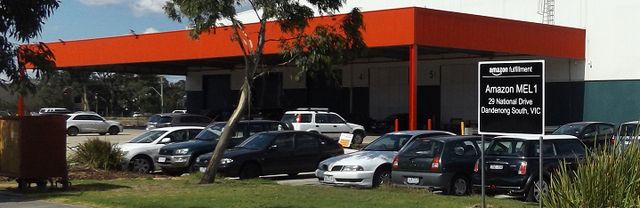
Online retail giant Amazon commenced operations early December in Australia, opening a fulfilment centre in outer Melbourne.
The move forms part of Amazon’s continuing global expansion, based on the accumulation of profit through the brutal exploitation of low-wage warehouse workers. The company’s CEO, Jeff Bezos, is now the world’s wealthiest individual, with a personal fortune estimated at more than $US100 billion.
Amazon’s entry into the Australian retail market is expected to undermine the existing corporations that currently enjoy monopolistic control.
The Amazon warehouse in Melbourne
Morgan Stanley earlier this year predicted that the value of rival retailers, including JB Hi-Fi, Harvey Norman and Wesfarmers (owner of the Coles, Bunnings, Kmart and Target chains), would plunge by more than $1.2 billion. A UBS survey of fund managers and brokers in April reported expectations that Amazon would cut sales of rival retailers by 5.2 percent in the next 3-5 years, with earnings slashed by 16 percent. Specific retailers, especially in the electronics sector, will be even worse hit, with JB Hi-Fi earnings expected to decline by 33 percent.
The profit squeeze will trigger a sector-wide restructuring, including store closures, job losses and even greater pressure for lower wages and worse conditions for retail and warehouse workers. Fairfax Media this month reported secretive plans by grocery giant Woolworths to “fight Amazon” by creating four “dark stores,” solely devoted to packing and shipping online home deliveries, using 400 workers paid up to $3,000 less a year than regular Woolworths supermarket workers.
Amazon is notorious internationally for its appalling treatment of warehouse workers. In the US and Europe, the company has presided over multiple workplace injuries and deaths. Its warehouses feature physically harmful demands, relentless speed-up, total surveillance of its workforce, dangerously hot conditions and minimal toilet and meal breaks.
The situation will be no different for workers in Amazon’s 24,000 square-metre facility in Dandenong South, a largely immigrant, working class outer suburb of Melbourne. Operations remain on a small scale, but the company has declared its intention to quickly expand and employ several thousand workers. Already, advertised jobs include “physical warehouse activities” that would require “lifting and moving material up to 16kg each” and “standing and walking for up to 10–12 hours a day.”
Workers entering the warehouse car park have been greeted with a large billboard declaring: “Welcome Amazonians. It’s still day one! Are you ready to make a difference?”
The state Labor Party government in Victoria hailed Amazon’s decision to set up operations in Melbourne rather than Sydney, which the company previously considered as a base. Industry Minister Wade Noonan declared Amazon “the latest global company to choose Victoria for its Australian operations.” He claimed it would be “opening up retail opportunities for thousands of local businesses.”
Amazon is adept at minimising its tax and avoiding regulations by playing rival governments off against one another. In the US, more than 200 cities are engaged in a bidding war to lure the company’s second headquarters, with Chicago offering a $2.25 billion “incentive package” and Stonecrest, Georgia, offering to change its name to “Amazon” and appoint Bezos “mayor for life.” According to media reports, the Victorian government did not lure Amazon with subsidies. Its standard pro-business planning regulations and tax system proved enough to attract the corporate giant.
Several business figures have responded to Amazon’s entry into the Australian market by promoting nationalism, advancing the false notion that working people in Australia have a stake in the accumulation of profit by “their” corporations. Former electronics retailer Dick Smith declared: “It is extreme capitalism. Amazon will make a fortune, and take hundreds of millions of dollars out of this country and send it back to the United States… As it gets greedier and greedier there is no doubt in my mind they will do well. All of the money will not stay here, like from Harvey Norman, or JB Hi-Fi, the money will go back to the United States.”
The trade unions hope to establish a relationship with Amazon as soon as possible. In existing retail warehouses, the union bureaucrats serve as an industrial police force, overseeing the exploitation of low-wage workers. The National Union of Workers (NUW), which covers most warehouse staff, is responsible for numerous industrial betrayals and is currently overseeing the planned “orderly closure” of Woolworths’ Broadmeadows facility in northern Melbourne, at the cost of more than 700 jobs.
NUW national secretary Tim Kennedy told the Guardian he wrote to Amazon in August “seeking a meeting to discuss plans for Australia but never heard back.” He later told the Age: “We want to organise them; we will really focus on this as a big opportunity.”
The union’s plans to capitalise on the “opportunity” provided by Amazon’s operations have been backed by the pseudo-left group, Socialist Alternative. This organisation works very closely with the NUW in several Melbourne warehouses, serving as its “left” apologist for every sell-out and manoeuvre. Before Amazon’s entry to Australia, Socialist Alternative declared that the company “presents a challenge for the Australian trade union movement” and published a fawning interview with a NUW official.

Typhoon ravages southern Philippines

John Roberts

Tropical storm Tembin made landfall in the southern Philippines island of Mindanao as a strengthened typhoon late last Friday, resulting in torrential rain, mudslides and the deaths of well over 300 people.
Tembin brought sustained winds of 120 kilometres per hour, with gusts of 145 kilometres per hour. The main damage came from the heavy rain.
Known in the Philippines as Vinta, the typhoon struck hardest on the island’s Zamboanga Peninsula and parts of northern Mindanao, with the provinces of Lanao del Norte and Lanao del Sur bearing the brunt.
About 20 typhoons a year hit the Philippines. Less than a week earlier, tropical storm Urduja (international name Kai-Tak) swept through the central Philippines, leaving 47 dead and 44 missing. Often the storms miss Mindanao, but not this time.
Among the towns affected by Tembin was Marawi in Lanao del Sur. There the typhoon undermined attempts to rebuild the town after a five-month assault by the Philippines armed forces, supposedly to destroy an Islamist group. The campaign, from May until October, supported by Washington, left 1,000 dead and displaced 200,000 people.
Initially the National Disaster Risk Reduction and Management Council (NDRRMC) assessed Tembin’s impact as 164 dead, 176 missing and 118,596 families displaced. Some 97,000 people were housed in 261 evacuations shelters, with another 85,000 sheltering elsewhere.
The death toll steadily increased as more remote areas were reached. Some news reports yesterday put the figure at 340. Many of the missing are believed to be dead. The final number might not be known for some time. The Zamboanga Peninsula has been without power and communications, and whole towns are cut off by bridge collapses, mudslides and flooding.
According to NDRRMC spokesperson Mina Marasigan, the heavy rain caused landslides in the mountainous terrain that formed natural dams. As the deluge continued, these dams burst, sending torrents of water onto the villages below.
The force of the water was certainly a factor. Health worker Arturo Simbajon told Reuters that the coastal village of Anungan was almost entirely wiped out when logs, boulders and mud swept down a river and pushed everything out to sea. “Only the mosque was left standing. People were watching the rising sea levels but did not expect the water to come from behind.”
Sibuco mayor Bong Edding blamed the loss of houses and the washing away of 30 residents on logging operations in mountains above the town. Five bodies had been recovered when he spoke to the media.
However, a significant factor in the deaths and injuries was the failure of the authorities to evacuate people from the most vulnerable areas.
NDRRMC spokesperson Marasigan claimed that the national government exhausted every means to alert people in the threatened areas in plenty of time. She said the organisation would now investigate the failure to implement pre-emptive evacuations.
Marasigan implied the victims were to blame. She told a Manila news conference it was difficult to move people from their homes before Christmas. “We don’t want to be dragging people out of their homes before Christmas, but it’s best to convince them to quietly understand the importance of why they are being evacuated.”
These comments beg the question as to what government assistance was provided to those in the most endangered areas and whether adequate shelters were available.
In Vietnam, authorities evacuated 74,000 people from the most vulnerable areas, before the typhoon was downgraded to a tropical depression. Authorities in 15 provinces and cities were prepared to move one million people had the storm hit the tip of the Mekong Delta as initially predicted.
Marasigan announced a pittance in compensation. Each family that lost a loved one would receive 10,000 pesos ($US200) from the government while those with injured members would get 5,000 pesos. Those with totally damaged houses would be entitled to get 30,000 pesos, while those with partially damaged homes would receive 10,000 pesos for emergency shelter assistance.
The indifference of the Philippines authorities can be seen by the government’s decision in January 2017 to shut down the National Operational Assessment of Hazard (NOAH) project due to lack of funds. Set up in 2012, the NOAH project was to be the country’s main service for mapping and measuring threats to vulnerable areas.
NOAH brought together scientists in every field related to natural disasters. The program included establishing a six-hour warning to agencies involved in disaster prevention and mitigation.
From 2012 to 2017, the project was managed by the Department of Science and Technology but this year was downgraded and passed to the University of the Philippines. University officials offered to assist authorities before the present crisis but NDRRMC spokeswoman Marasigan said she was unaware of the offer.
Mahar Lagmay, head of University of the Philippines NOAH Centre, told the Philippine Star that many lives could have been saved had the government used existing weather forecasting technology and data that can project scenarios in particular areas hours in advance.
“When we were part of the NDRRMC, this is what we used to do,” Lagmay said. “We interpret data from sensors and satellites and provide hazard-specific, area-focus and time-bound information that can be passed on to local government units.”
The impact of so-called natural disasters is made worse by the failure of governments to make proper preparations, provide adequate warnings and assistance to those affected.
Millions of impoverished workers and peasants are forced to live in poorly-built housing that make them particularly exposed to flooding and typhoons. These structures are often built in low-lying areas or at the base of mountain ranges where land is cheap.
The impact of 2013 super-typhoon Haiyan, with sustained winds of 315 kilometres an hour and gusts of 380 kilometres per hour, made plain what was necessary. Solidly-built and well-provisioned evacuation centres connected to advanced warning systems, and assistance to move to the shelters, would have substantially reduced the death toll of more than 6,000 people.