24 Mar 2018

China Provides Powerful Tracking System For Pakistan’s ICBM Program

Abdus Sattar Ghazali 

China has sold Pakistan a powerful tracking system in an unprecedented deal that could speed up the Pakistani military’s development of multi-warhead missiles, South China Morning Post has reported.
News of the sale – and evidence that China is supporting Pakistan’s rapidly developing missile program  – comes two months after India tested its most advanced nuclear-ready intercontinental ballistic missile (ICBM) with a range long enough to hit Beijing or Shanghai, the paper said.
Chinese authorities declassified information about the deal on March 21. A statement on the Chinese Academy of Sciences (CAS) website said China was the first country to export such sensitive equipment to Pakistan. Zheng Mengwei, a researcher with the CAS Institute of Optics and Electronics in Chengdu, Sichuan province, confirmed to the South China Morning Post that Pakistan had bought a highly sophisticated, large-scale optical tracking and measurement system from China.
The Pakistani military recently deployed the Chinese-made system “at a firing range” for use in testing and developing its new missiles, he said.
India and Pakistan are in a heated race to build up their nuclear weapons capabilities.
Agni-V
India’s January 18 test of its Agni-V ICBM, with a range of more than 5,000km (3,100 miles), is seen as a message that the South Asian giant can deploy a credible nuclear deterrent against China, the Chinese paper said.
While India’s single-warhead missiles are bigger and cover longer distances, Pakistan has focused its efforts on developing multiple independently targetable re-entry vehicles (MIRVs), a type of missile carrying several nuclear warheads that can be directed towards different targets.
Beijing’s powerful missile arsenal has driven New Delhi to improve its weapons systems in recent years, with the Agni-V believed to be able to strike nearly all of China.
Tension flared last year between the two neighbors over a long-disputed section of their border high in the Himalayas. India is also increasingly concerned about Beijing’s efforts to heighten its influence in the Indian Ocean.
India is already able to strike anywhere inside neighboring Pakistan, its arch-rival.
The Agni-V launch comes one day after India announced that it was spending US$553 million on new weapons for its border guards, including those on the borders of Tibet.
Ababeel missile
The US Defense Intelligence Agency officially confirmed in March that Pakistan conducted the first test launch of its nuclear-capable Ababeel missile in January 2017, “demonstrating South Asia’s first MIRV payload”, according to South China Morning Post .
Although the Ababeel missile has a range of only 2,200km, it can deliver numerous warheads to different targets. The technology has the potential to overwhelm a missile defense system, wiping out an adversary’s nuclear arsenal in one surprise attack.
There are growing concerns that MIRV technology will tip the strategic balance between India and Pakistan and destabilize the subcontinent, the Post said adding:
“India has so far not found success in building a system that can effectively deliver more than one nuclear warhead at a time.”
It has been a long-held notion that Beijing is supporting Islamabad’s missile development program. But solid evidence can seldom be found in the public domain, making the CAS statement a rarity.
“The system’s performance surpassed the user’s expectations,” it said, adding that it was considerably more complex than Pakistan’s home-made systems. It did not reveal how much Pakistan paid for the system.
Optical system
An optical system is a critical component in missile testing. It usually comes with a pair of high-performance telescopes equipped with a laser ranger, high-speed camera, infrared detector and a centralised computer system that automatically captures and follows moving targets.
The device records high-resolution images of a missile’s departure from its launcher, stage separation, tail flame and, after the missile re-enters atmosphere, the trajectory of the warheads it releases.
The uniqueness of the Chinese-made system lay in its use of four telescope units, “more than normally required”, Zheng said.
Each telescope, with a detection range of several hundred kilometres, is positioned in a different location, with their timing synchronised precisely with atomic clocks. Together, the telescopes provide visual information of unprecedented detail and accuracy, which missile developers can use to improve designs and engine performance.
Using more telescopes allows the system to track more warheads simultaneously from different angles, reducing the risk of losing a target.
High-quality optics are essential in missile development, especially MIRVs, said Rong Jili, deputy director at the Beijing Institute of Technology’s School of Aerospace Engineering.
Other types of tracking devices, such as radar, can collect more precise data at longer distances, but the Chinese-made optical system provided the intuitive, close-up look at real-life action that missile developers craved, he said.

The Betrayal Of The Future

Andrew Glikson

A species which has invented combustion, electromagnetic radiation and nuclear energy orders of magnitude more powerful than its own physical potential, needs to be perfectly wise and in control lest it is overwhelmed by these powers.
As tipping points in the Earth’s climate amplify, including hurricanes, snow storms and wildfires, it appears to be beyond human power to contemplate the consequences of four degrees Celsius warming within less than a couple of centuries, a collapse of civilization and the demise of billions. The consequents of global warming have been underestimated as many cannot bring themselves to look at the unthinkable.
This reticence has penetrated the scientific disciplines themselves, as indicated by James Hansen, the prominent climate scientist, in his papers “Scientific Reticence: A Threat to Humanity”, “Dangerous Scientific Reticence”. Hansen states: “Several years ago I wrote a paper (Hansen, J.E., 2007) on scientific reticence, naively thinking that drawing attention to the phenomenon might ameliorate its incidence.  Specific reference then was to likelihood of large sea level rise, which also is a central topic in our current paper (Ice melt, sea level rise and superstorms: Evidence from paleoclimate data, climate modeling, and modern observations that 2°C global warming could be dangerous).  However, here I address a broader issue of scientific reticence, because, I believe, the affliction is widespread and severe.  Unless recognized, it may severely diminish our chances of averting dangerous climate change.”
The IPCC (Intergovernmental Panel on Climate Change), while documenting the best scientific evidence by competent scientific authorities, has underestimates the consequences of global warming in its summaries for policy makers, in terms of:
  1. Greenland and Antarctic ice sheets melting rates
  2. Sea level rise rates
  3. Linear vs increasingly variable projections of temperature rise.
  4. The fast rising incidence of fires
  5. Arctic warming-triggered permafrost melt and methane release.
Publication of climate updates in the mainstream media has become subject to barriers. Climate exhaustion has set-in, with journals commonly reluctant to accept science-based articles, often on the pretext they are “too complicated”, although publishing economic modelling papers and computer technology papers which are just as complex or more.
Most poignant is the reluctance of the political classes to listen to the science, an attitude that is bound to be considered criminal and worse by those who survive the climate calamity.
In his book “Defiant Earth” Clive Hamilton states: “Many intellectuals in the social sciences and humanities do not concede that Earth scientists have anything to say that could impinge on their understanding of the world, because the “world” consists only of humans engaging with humans, with nature no more than a passive backdrop to draw on as we please. The “humans-only” orientation of the social sciences and humanities is reinforced by our total absorption in representations of reality derived from media, encouraging us to view the ecological crisis as a spectacle that takes place outside the bubble of our existence” and “So today the greatest tragedy is the absence of a sense of the tragedy. The indifference of most to the Earth system’s disturbance may be attributed to a failure of reason or psychological weaknesses; but these seem inadequate to explain why we find ourselves on the edge of the abyss” and “Yet the Earth scientists continue to haunt us, following us around like wailing apparitions while we hurry on with our lives, turning around occasionally with irritation to hold up the crucifix of Progress.
In his book “First and Last Man” Olaf Stapledon describes a planetary civilization which, once aware of the ultimate fate of its planet, plunges into depression, distinct from the oblivious mindset of a majority of contemporary humans.
With this perspective, the failure of humanity to cope effectively with the unfolding climate calamity constitutes its Achilles heel. Further than attributing this failure to mercenary contrarians and to conviction-free politicians, this failure resides with the majority, bar the few courageous individuals who protest in front of mine gates and in small boats on the ocean. It is these people, rather than the comfortable elites, who are carrying the torch of humanity.

UK: Eight million hit by welfare cuts

Dennis Moore

Eight million Britons are at risk of the first sustained rise in inequality since the late 1980s, according to the Resolution Foundation’s (RF) latest annual report.
As the government rolls out £14 billion of welfare cuts, the think tank warned that these were damaging the prospects of eight million low- and middle-income households, offsetting the impact of any increase in the national living wage.
The report, “The Living Standards Outlook,” looks at what may happen with household incomes and inequalities over the next five years, examining in some detail the real spending power of typical households and the distribution of income.
Low to Middle Income households (LMI) are defined as those families, including single parent families, that are part of the bottom half of the non-pensioner income distribution. This group have been hit by rising housing costs and the full impact of the recession. In 2016-17, LMI income hardly grew and projections point to LMI income stagnating or falling for the three years from 2017-18 through 2019-20.
Over the full decade from 2010-11 to 2020-21, typical LMI income is projected to rise by under £300 (2 percent), compared to £3,100 (10 percent) for higher-income working families. The previous decade saw figures of £1,500 (11 percent) and £3,100 (11 percent) respectively, despite the impact of the recession.
The Foundation adds that although higher-income households were likely to experience an increase, income growth would be weak—partly because interest rate rises over the next few years are expected to dampen disposable income growth for homeowners.
Adjusting for inflation, the last decade has been the weakest for average earnings in two centuries—the product of above-target inflation and poor nominal pay growth.
Nominal pay growth took a massive hit following the financial crash in 2008.
Average weekly wages in 2008 in today’s money stood at £492. In December 2017, they were £480. The Office for Budgetary Responsibility (OBR) expects pay growth to remain weak, with nominal pay growth of less than 3 percent a year until 2021.
Workers in the public sector represent one in five employees and have endured pay freezes since 2011-12. The Resolution Foundation notes that forecasts show that average pay in public sector education will be lower in 2022-23 than in 2004-05, with public administration pay lower than in 2005-06—pay stagnation of 18 and 17 years respectively.
A downward factor affecting income growth and increased inequality is cuts to working age benefits. Key benefits will be less valuable in 2020 than they were in the 1980s.
Child Benefit beyond the first child, for example, and Job Seekers Allowance (JSA) are less valuable than they were in April 1988, while Child Tax Credit will be at the same level in real terms as it was 10 years ago. In the 1970s, the equivalent of Job Seekers Allowance was paid at a fifth of average full time pay. By 1988, it had fallen to 15 percent, and it now stands at 11 percent. By 2022, basic out-of-work welfare support is estimated to stand at just 10 percent of average pay.
Working class families are also set to lose out due to cuts to benefits for new claimants. The rollout of Universal Credit (UC) will impact those claiming in-work allowances, as it is set to be less generous overall than the benefits it will replace over the years to 2022-23.
Larger families, single parents and out-of-work households are likely to see the largest income falls. Families with three children or more, families without anyone in work, and single parents are all projected to be worse off in 2022-23 than in 2015-16.
The foundation points out, “The weakest regional median income growth between 2015-16 and 2022-23 is forecast for Northern Ireland (2.4 percent) and Wales (4.8 percent)—two of the poorest parts of the UK—in comparison to 8 percent nationally…
“Roughly the bottom 40 percent of the working-age population is expected to face relatively weak or even negative income growth, with higher and relatively equal growth for the rest… The years 2016-17, 2017-18, 2018-19 and 2019-20 in our projections all involve part of the income distribution becoming worse off than the year before.”
The report points to the pressure that will be exerted on housing costs because of potential interest rate rises. Homeowners have benefited from a period of low interest rates on mortgages, but with the Bank Rate forecast to rise mortgage payments could soon be rising faster than earnings—bringing to an end an era of cheap borrowing.
The Foundation notes, “As 2017-18 draws to an end, all the evidence so far points to a dire year for living standards and poverty. There was zero growth in the typical household income, and only a few years are on record that have delivered such poor growth.”
In every year since 2016-17 to 2022-23, the UK is projected to have missed its international targets via the United Nations Sustainable Development Goals, to deliver higher growth for the poorest 40 percent of the population than the overall population.
Torsten Bell, the think tank’s director, said, “This parliament risks seeing the first sustained rise in income inequality since the 1980s. But the story this time around is less about the rich soaring further away, and more about the poorer families falling further behind as they bear the brunt of £14bn of welfare cuts.”
This is somewhat disingenuous.
The richest in society have soared so far away from the majority of people that they may as well live in another universe. The report concludes with a call on the government to enact the “right policies”, including reversing the benefits freeze, and changing Universal Credit to “make it a system for reducing rather than increasing poverty.” The Foundation has made similar recommendations over the last decade, to successive Labour and Conservative governments, to no avail.

Record pace of drone strikes mark sharp escalation of US war in Somalia

Eddie Haywood

US AFRICOM on Monday conducted a drone strike near the village of Mubaarak, some 40 miles southwest of Somalia’s capital city, Mogadishu. In a press release after the attack, AFRICOM spokesperson Robyn Mack claimed the strike was conducted in support of the US-backed Somali Federal Transitional Government (FTG), and targeted Al-Shabaab Islamist militants. According to Mack, the strike killed two militants and wounded three others, along with destroying a vehicle.
Monday’s strike was the ninth such attack this year, marking a sharp escalation of the US war in Somalia and putting 2018 on track to overtake the total reached in 2017 of 35 drone strikes. By comparison, 13 strikes were carried out 2016, and 5 in 2015. The 35 strikes conducted in 2017 outnumber all previous years since the American air war began in Somalia in 2007.
While 2017 marked a sharp expansion of AFRICOM’s offensive in Somalia, in the first months of 2018 the Trump administration is making clear that it plans an even more dramatic and deadly offensive in the impoverished country. Since the beginning of 2018, US air strikes have killed at least 22 across Somalia. The number of deaths is certainly higher, but the precise figure is unknown as AFRICOM has only provided press releases of six of the nine attacks.
In April 2017, shortly after taking office, Trump increased the number of troops deployed to the country and issued new rules of engagement which essentially constitute open-ended warfare in the Horn of Africa. The loosening of restrictions which were in place to ostensibly protect the civilian population grants broad autonomy for American forces to carry out massacres without accountability.
With AFRICOM’s announcement in November of expanded troop deployments to the country, Robyn Mack stated, “[The larger] advise and assist mission [is now] the most significant element of our partnership [in Somalia].”
Making clear the Pentagon’s intentions in Somalia, retired Brigadier General Donald Bolduc, who headed AFRICOM until June told Politico, “We had to put more small teams on the ground to partner in a regional way with the Somali government. So we changed our strategy and we changed our operational approach. That’s why the footprint went up.”
Currently, the American military footprint in Somalia is the largest since 1993, when then President Bill Clinton deployed a contingent of special forces to Mogadishu to defeat the insurgency of Mohamed Farrah Aidid, the ensuing battle resulted in 19 US personnel killed, with scores more wounded.
In 2017, the number of US soldiers deployed to Somalia increased to 500, with dozens of special forces personnel consisting of Green Berets, Navy Seals, and Army Rangers. The US military contingent is augmented by a 22,000-strong African Union force made up of soldiers from several African countries, including Burundi, Ethiopia, Kenya, and Uganda.
Nearly three decades of US-instigated wars have completely devastated Somalia, currently among the world’s most impoverished nations, with a poverty rate of 73 per cent.
As a consequence of these conflicts, vital infrastructure such as sanitary water facilities and health care services are virtually non-existent, particularly in areas outside of Mogadishu, and the spread of treatable diseases is rampant. An estimated 60 per cent of Somali children do not have access to education. Compound this social crisis, the historic famine currently sweeping through the country has left more than 6 million people, half the population, in dire need of water and food.
The US-backed government has virtually no popular support anywhere in the country, and indeed, a majority of the population views the puppet regime with hostility. As a measure of this lack of popular support, the FTG is made up of a number of wealthy Somali-American technocrats educated in Europe and the United States, and largely performs governmental functions outside the country in neighboring Djibouti.
Underlying the conflict is the geostrategic importance of the Horn of Africa for the dominance of American imperialism in the region. Somalia fronts the Gulf of Aden, a major waterway for the world’s oil traffic flowing from the Middle East.
Also to be considered is the growing influence of China, which has emerged over the last decade as an economic rival for Africa’s vast resources, with Beijing expanding its economic influence across the continent. Washington is mobilizing its vast military power to offset China’s economic influence.
Causing no small amount of consternation for Washington, last August Beijing opened its first overseas naval base in Djibouti, just five miles from Camp Lemonnier, the American military base operated jointly with France.
After Washington expressed its dismay toward the base as a threat to its long-standing military dominance over the Horn of Africa, Beijing downplayed any military significance of the base, declaring the facility’s operations are more of “logistical” character.
While China is not an imperialist power, the establishment of a military base in defense of its economic interests on the African continent represents nothing less than a direct challenge to the dominance of US imperialism on the continent, which could lead to the outbreak of all-out war between the two nuclear-armed countries.

European Union backs UK in accusing Russia of nerve agent attack

Chris Marsden

Thursday night saw success for Prime Minister Theresa May’s efforts to get the European Union (EU) to echo her charge that Russia was “highly likely” to be responsible for the nerve agent attack in Salisbury.
The formulation is a vital feature of the UK’s diplomatic and media campaign blaming Moscow for the alleged attempted assassination of double agent Sergei Skripal and his daughter, Yulia—based on unsubstantiated claims that the nerve agent employed is “of a type” (a Novichok) once manufactured in the former Soviet Union.
May is using the Skripal case to ally the UK with powerful sections of the US political and military establishment who have been pushing for a more hardline stance against Russia. Reinforcing the “special relationship,” she hopes, will strengthen her hand in negotiations over the terms of Britain’s exiting the EU. Domestically, it helps unite a government deeply divided over Brexit and has served as a valuable bludgeon to be wielded against Labour Party leader Jeremy Corbyn, who is portrayed by the media as a Kremlin stooge.
May has until now encountered significant resistance from Europe. Concerned at the economic impact of a further deterioration in relations with the government of Vladimir Putin, Monday saw a meeting of EU foreign ministers balk at adopting the UK’s formulation. EU states, including Austria and Greece, did not want to identify Russia as guilty, and there were divisions on the issue in Germany and France—despite their expressing “solidarity” with Britain.
CNBC ran an article on the day of the summit asking, “Why Germany is sending mixed messages over Russia following the ex-spy attack?” It noted with obvious concern that “despite international sanctions on Russia for its annexation of Crimea and perceived role in a pro-Russian uprising in Ukraine, trade between Germany and Russia grew dramatically in 2017,” citing the particular importance of “increased demand for Russian natural gas and crude oil” and Germany’s backing for the Nord Stream II pipeline “that would double gas supplies from Russia to Germany…”
Thursday evening was, therefore, an occasion for horse-trading and arm-twisting, centered on a three-way discussion between French President Macron, German Chancellor Merkel and May. As a result, the statement by the leaders of 28 EU states agreed regarding Salisbury that “it is highly likely that the Russian Federation is responsible and that there is no plausible alternative explanation.”
Donald Tusk, the president of the European Council, indicated that there were still disagreements within the EU, telling the press that the continent’s “political landscape... makes it not so easy to keep the 28 together.”
But the next day saw a significant shift that the Russian Foreign ministry said signified the EU was “heading towards an anti-Russia campaign, instigated by London and Washington.”
The EU ambassador to Moscow is being recalled for “consultations” over the Salisbury attack.
Merkel and Macron held a joint press conference Friday, with Macron pledging to lead a “coordinated” reaction “of the EU and of its member states… including France and Germany,” against “an attack to all European sovereignty.”
Merkel declared that sanctions “are necessary,” but did not specify what they would be. Macron said it was “obvious” that France would itself take further action.
Collective sanctions could take until July to agree. But at least 10 EU member states, led by key UK ally, the Republic of Ireland, indicated that Russian diplomats could be expelled as early as Monday. Leo Varadkar, the Irish prime minister, was a key actor, alongside Macron, in proposing that the EU endorse Britain’s accusations against Russia, describing Russian diplomats as “agents”. Others indicating similar measures included Denmark, Bulgaria, the three Baltic States, the Czech Republic, Poland, and Sweden.
In a press statement, the UK attributed the European Council “standing together” to May having provided “a detailed update on the investigation into the reckless use of a military nerve agent, of a type produced by Russia, on the streets of Salisbury.” May “said there had been a positive identification of the chemical used as part of the Novichok group of nerve agents by our world leading scientists at Porton Down.”
Former British Ambassador Craig Murray issued a devastating refutation of such claims on his blog Thursday. Under the headline, “Boris Johnson, A Categorical Liar,” Murray noted that a British court ruled Thursday that investigators from the Organisation for the Prohibition of Chemical Weapons (OPCW) could take blood samples from Sergei and Yulia, to check against the analysis performed by the UK military's Porton Down research laboratory.
Murray noted that in an interview Wednesday with Deutsche Welle, UK Foreign Secretary Johnson had claimed that Porton Down had now told him they had “positively identified the nerve agent as Russian.”
Their identification of the nerve agent as a Novichok, produced in Russia, was, Johnson said, “absolutely categorical… I asked the guy myself, I said, ‘Are you sure?’ And he said there’s no doubt.”
Murray wrote in response that the High Court judgement giving permission for new blood samples to be taken from the Skripals, by Justice Williams, included a summary of what Porton Down “have actually said.”
A Porton Down Chemical and Biological Analyst states that blood samples from the Skripals “tested positive for the presence of a Novichok class nerve agent OR CLOSELY RELATED AGENT.”
Murray writes, “The emphasis is mine… The truth is that Porton Down have not even positively identified this as a ‘Novichok’, as opposed to ‘a closely related agent’. Even if it were a ‘Novichok’ that would not prove manufacture in Russia, and a ‘closely related agent’ could be manufactured by literally scores of state and non-state actors.
“This constitutes irrefutable evidence that the government have been straight out lying—to Parliament, to the EU, to NATO, to the United Nations, and above all to the people—about their degree of certainty of the origin of the attack.”
The fact is that the EU heads of state know very well that the UK is lying to them. That they are ready to endorse the lie indicates that they are moving towards what Russian Foreign Minister, Sergei Lavrov, described as “confrontational steps” due to fundamental economic and geopolitical considerations. These calculations are bound up, above all, with preventing an escalation of antagonisms with the US.
The run-up to the summit was dominated by frantic negotiations between the European powers, led by Germany, and the US to prevent $60 billion in trade sanctions targeting Chinese steel and aluminium from also applying to the EU.
On Thursday, the Trump administration announced it was temporarily exempting the EU to allow trade talks to continue. May announced that she would now stay at the summit on Friday to discuss this important development.
That morning she all but claimed personal credit for the US decision, telling the media, “We have been working very hard to secure an EU-wide exemption to the steel tariffs that the Americans have announced… What I will be working with my fellow EU leaders today on is to see how we can secure a permanent exemption for the EU from these steel tariffs.”
Friday’s agenda timetabled a decision by the EU on approving guidelines for the negotiation of future relations with the UK after Brexit. The EU leaders reportedly took less than 30 seconds to agree the proposed text on trade, security and other issues, paving the way for the next round of talks before the UK is due to leave in March 2019.
May, who has faced widespread criticism on the terms proposed from both hard-line Brexiteers and Remainers, proclaimed a new “spirit of co-operation and opportunity” and a “new dynamic”, while Tusk spoke of a new “positive momentum.”

Major protests against French President Macron’s austerity measures

Kumaran Ira

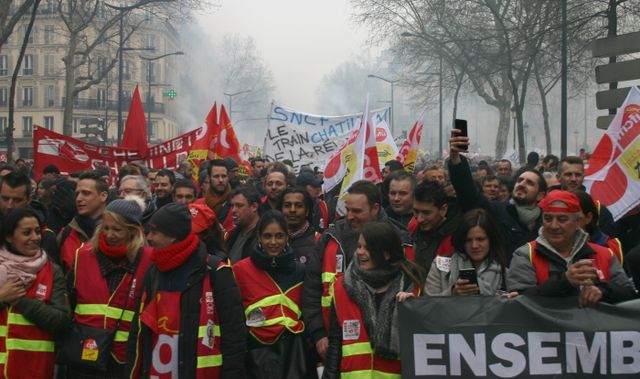
On Thursday, more than one hundred thousand people took to the streets throughout France to protest President Emmanuel Macron’s plan to slash jobs and freeze wages in the public sector, and to privatize the French National Railways (SNCF) and destroy rail-workers’ social rights.
Railworkers on a Paris demonstration
The strikes and protests were called by seven unions in the public sector. According to the unions, more than 150 protests were organized nationwide, and around 500,000 people marched across France, including 65,000 in Paris, 55,000 in Marseille, 20,000 in Toulouse, 35,000 in La Rochelle, 15,000 in Bordeaux and Rouen, and 10,000 in Nantes. Between 1,000 and 10,000 people marched in other towns.
Students and high school students mobilized to mark the fiftieth anniversary of student revolt on March 22 that launched the events of May/June general strike in 1968.
In Paris, protesters carried banners expressing anger at the government and its plan to destroy social rights, reading “Macron resign!", "No to the destruction of public services!" and "We do not negotiate a social retreat. We fight it by the general strike!"
The sectors hit by strikes included railway, school, air transport, hospitals, libraries and other public services. Hundreds of flights and train services were cancelled and scores of schools closed.
The train service in the Paris region and in the provinces were hit. Air traffic was disrupted, with 30 percent of short haul flights cancelled at Paris airports. Yesterday, Air France staff staged a walkout as they protested working conditions and demanded a six percent pay rise across the board.
The protests indicate the social opposition that is developing against to Macron government amid growing radicalization in the working class internationally.
With Macron’s approval ratings plunging, there is a growing public anger at his plans to impose a social counter-revolution. Having imposed labour decrees allowing bosses and unions to negotiate contracts, facilitating mass sackings and the imposition of salaries less than the minimum wage, Macron now aims to smash the public service workers.
In February, the government announced a sweeping attack on the public sector, which employs around 5 million people, including the elimination of 120,000 jobs, freezing wages, hiring more contract workers and slashing budgets across the board.
The government is moving to privatize the French National Railways (SNCF), together with destroying rail workers’ social rights—including a standard salary schedule, a retirement age of 52 for train drivers and 57 for other workers, and guaranteed lifetime employment established after World War II.
The trade unions and their pseudo-left allies including the New Anti-Capitalist Party (NPA) and Jean Luc’s Mélenchon’s France Insoumise felt compelled to call for a symbolic action to defuse social anger. They are doing so while negotiating with Macron, encouraging illusions in the government, while doing everything possible to prevent an independent movement of the working class.
Laurent Berger, of the French Democratic Labor Confederation (CFDT), told France’s RTL radio, “Either the government listens or civil service workers will be extremely mobilized".
Expressing his hostility to a broader social movement in the working class, Berger said, “The convergence of struggles is not the CFDT’s cup of tea for a simple reason, it is that the convergence of the struggles never has concrete results.”
On its part, Yves Veyrier, a spokesman for Force Ouvrier (FO), said, “We would prefer not to strike and would prefer to have a debate with the government, but we have asked Presidents Nicolas Sarkozy, François Hollande and now Emmanuel Macron and we are still waiting for it.”
Workers must take these comments as a warning. The trade unions are preparing to suppress them, while seeking a deal with the government to impose its measures.
Macron is counting on the unions to suppress social opposition in order to ram through further cuts in the public sector and railway. He made clear that he won’t retreat from his reform plan.
Despite growing militancy in the working class, workers are confronted with nationally oriented trade unions that seek to negotiate austerity with Macron. To oppose Macron’s attacks, workers cannot rely on a few symbolic trade union protests organized at the national level. The key question is to take the struggle out of the hands of the union bureaucracy and its political allies and organizing independently to wage a political struggle against the anti-democratic and militarist policies of Macron and the EU.
Hospital workers demonstrating in Paris
The Socialist Equality Party spoke to striking and protesting workers about what brought them onto the streets.
Jacques, who is a maintenance worker on the railway, said, “I’m demonstrating against the reform of the official status of train worker and against privatization as well. I myself have a status which is hardly exceptional. I earn $1,854 per month. It’s better than some people that earn the minimum wage, but it is a far cry from having a privileged life because I earn such a wage!”
“Today with the privatization what is likely to happen, if they open us up to competition, is a social onslaught. Our wages will fall to the official minimum wage (SMIC) or below because this will be the case with our competitors. Already many at the SNCF are paid much closer to the SMIC than myself. Little by little, when we bid for projects we will lose because we will be too expensive. After that there will be redundancies and we will find ourselves unemployed.
“I don’t understand what the rich want with all the money they have. My father worked in industrial agriculture—in meat. Often he used to tell me, ‘Those people will eat steak at every meal.’ Today there are many people who can’t afford to eat meat. If we redistributed all that money, we would restart the economy—it’s obvious really.
“Macron, the European Union and the rich don’t even realize what’s going on in the world we live in – they live in another world. They don’t realize the difficulties we face every day. I, myself, am renovating a house while living in it. I’m surrounded by bits of cinderblock walls. I’ve been living here for seven years and I’m progressing bit by bit. They have gold and fineries, they just don’t realize. In seven years I’ve only just finished isolating the house. Now, we’re not so cold as before.
“For me Macron is a liberal extremist. I’ve often heard of left and right-wing extremists, but liberal extremists are the same… We have to get together all of us. I support workers in other countries with all my heart. If it’s days like today, we could all come together and we would be that much more powerful.
“The problems we have in France are the same problems all over the world, from liberalism and globalisation. The problem is international. Even if we had good politicians leading France, finance is stronger. We would be blocked internationally from doing good things. That’s why we need an international movement because a single country in today’s world system cannot succeed in following a progressive social policy. It must be the whole world together. It’s hard to deal with this but that’s the truth.
“There’s something I want to add. I’ve seen it for quite some time, but it has been getting worse. It’s the way in which the media manipulates rail-workers. Every time the media show train workers, they show those with the most privileges to denigrate all rail-workers. But there are many who earn little more than the SMIC—they are paid between $1,482 and $1,606 per month and the media don’t speak about that. They only show drivers and others, who work on the trains, because they get bonuses. But this is justified because they work long hours and have to sleep over in other parts of the country. I spent two years in a depot repairing trains. It was night work. Today I’ve changed my job because I got health problems from that work. Now, I work in logistics, still on the maintenance of trains.”
Thibaut, a train driver, explained, “Today we’re demonstrating to defend our rights and conditions. We find it unjust that they are threatening to take them away.
“All the rights that we have won for our status and conditions of work. If tomorrow our health fund disappears and all the rights for which previous generations fought, well it’s up to us to make sure that we don’t lose these rights.
“Our right of work security does not mean ‘a job for life’. In any company, an employee who does something wrong can be fired. Our only advantage is that we have the opportunity to change jobs within our company.
“This can mean that the type of professional activity we carry out changes because our company has so many different types of work. Myself, I am a train driver. Tomorrow, if I have health problems, I might not be able to continue. I would be moved to a different activity, whereas in other companies if I no longer pass the medical I can be fired. That is the only difference. When I hear people say we have a job for life, it’s ridiculous.
“People say we’re paid too much. That’s another debate. I would like to show my paycheck to people so they can see my base pay. Yes, there are train workers who are well paid, but it’s because of the bonuses. However, if you are ill all the bonuses stop. I think there are many people in private industry that get a bigger base pay than me.
“Yes, you can a relatively high standard of living in certain jobs at the SNCF. It’s mainly the drivers and others that work on the trains. But if I’m ill for say six months I lose all of it. Everyone who works at a station or another location does not get bonuses and has a salary that is no more than the private sector.
“I support all the other workers who are on strike internationally. Every worker must defend his rights and fight to keep them. Even to fight for better working conditions. I’m for it!
“I don’t support giving the military, all these weapons and all the funding. There’s better things that money can be used for than buying armaments.”

Markets fall on trade war fears

Nick Beams

Stock markets around the world fell sharply in response to the announcement of US tariff hikes against China, targeting $60 billion worth of exports, and ongoing conflicts with US “strategic allies” over exports of steel and aluminium. Fears were voiced that the measures could set off a global trade war.
Markets in Asia fell yesterday, in some cases by as much as 3 percent, after a more than 700-point fall in the Dow on Thursday. The slide continued on Wall Street yesterday, with the Dow down by more than 400 points, bringing to a close its worst week since the sell-off in January 2016.
So far Chinese reaction has been fairly muted. Government officials emphasised they are looking to avoid trade war but said they will take all action necessary to defend their “legitimate interests.” China announced tariffs against US steel pipes, pork, fruit and wine, covering about $3 billion worth of goods. But these measures were imposed in response to the steel and aluminium tariffs, not the latest measures.
Interviewed on Bloomberg Television, the Chinese ambassador to the US, Cui Tiankai, would not rule out the possibility of China pulling back on purchases of US treasuries in response to the latest Trump tariffs.
“We are looking at all options,” he said. “That’s why we believe any unilateral and protectionist move would hurt everybody, including the United States itself. It would certainly hurt the daily life of American middle-class people, and the American companies, and the American financial markets.”
If China did cut its holdings of US government debt, a step reported to be under discussion in January, it would have a significant impact on financial markets, pushing up interest rates and bonds and creating turbulence. China is the largest foreign creditor of the US, holding about $1.17 trillion worth of US government securities.
Stephen Roach, the former non-executive chairman for Morgan Stanley in Asia and now a senior fellow at Yale University, said while China’s response to US actions had been “surprisingly modest” there could be more to come.
“As America’s third largest and most rapidly growing export market and as the largest foreign owner of treasuries, China has considerably more leverage over the US than Washington politicians care to admit,” Roach said.
One of the key reasons advanced by the Trump administration for its measures is that China is forcing US companies investing in China to make technology transfers to their joint venture partners.
In his interview, Tiankai said there was no Chinese law that required such transfers. Instead, US businesses made their decisions in line with what they considered to be beneficial to them. He also pointed out that while China had a large trade surplus with the US, which it was looking to reduce, it had a deficit with many other countries.
The US regards the question of technology as vital to maintaining its position in the global economy and fears that the “Made in China 2025” strategy, which aims at enhancing China’s position in hi-tech products, will undermine US supremacy in these areas.
The American trade war measures are not only directed against China. It has the European Union (EU), which has a trade surplus of around $100 billion with the US, very much in its sights.
The Trump administration has granted temporary exemptions to the EU, Brazil, South Korea and Australia from the immediate imposition of the steel and aluminium tariffs. These tariffs, invoked on “national security” grounds, had been set to come into effect yesterday. But the exemptions will only apply until May, to allow negotiations to take place.
According to a report in the Financial Times, Trump officials, including Commerce Secretary Wilbur Ross, have told EU officials that permanent exemption is contingent on the EU “making progress” in reducing the US trade deficit with Europe. US trade representative Robert Lighthizer has said that “making headway with Europe” is a top priority for the US.
A joint statement by EU leaders said the US measures “cannot be justified on the grounds of national security, and sector-wide protection in the US is an inappropriate remedy for the real problems of overcapacity.”
There was a sharp reaction to the US demand that negotiations on permanent exemptions had to be completed in little more than a month.
European Commission President Jean-Claude Juncker described the decision as “good news, bad news.” He said the exemption for the EU “recognises our role as a longstanding and trusted security partner” but added that it seemed “highly impossible to cover all the issues” for permanent exemption by May 1.
French President Emmanuel Macron was somewhat more direct. “We will discuss anything, as a matter of principle, with a country that is a friend and that respects WTO [World Trade Organization] rules,” he said. “We will discuss nothing, as a matter of principle, with a gun pointed at our head.”
Likewise, Belgian Prime Minister Charles Michel said Trump’s approach gave the impression “the US has a will to negotiate with the EU by holding a gun to our head.”
EU Trade Commissioner Cecilia Malmström told the Financial Times: “We are always ready to talk, but not under threat.” She said Trump’s decision to grant only a temporary exclusion had come as a surprise. “What we and others are supposed to achieve” by May 1 was not clear. Other EU officials commented that nobody knew what Trump wants.
Japan, which has not been granted temporary exemption on steel, is also concerned about the broader implications of the US measures.
Japanese Trade Minister Hiroshige Seko, who has issued several appeals for an exemption, said the measures were “extremely regrettable.” He said: “If we seek to counter the US steps by engaging in volleys of retaliation, it would really lead to a collapse of the free-trading system.”
The chairman of a US group representing the Japanese steel industry, Tadaaki Yamguchi, was less restrained. He said it was an “outrage and a travesty” that Japan had been hit while South Korea and Brazil had been exempted.
Opponents of the Trump administration’s measures hope to counter them by insisting that its actions threaten to bring down the global free trade system, for which the US itself was the architect after the devastation of the 1930s Great Depression and World War II.
Such considerations ignore a fundamental shift in US policy which, beginning under the Obama administration, has increasingly viewed this system as inimical to US global economic and strategic interests.
What was implicit in the orientation of the Obama administration to make the US the centre of global trade and investment—through measures such as the Trans-Pacific Partnership directed to Asia and the Transatlantic Trade and Investment Partnership directed to Europe—has become explicit under the Trump administration.
The White House considers that the global post-war economic trading order has led to the economic decline of the US relative to its old rivals and potential new ones, above all China. Washington is out to reverse this decline by whatever means necessary, regardless of the consequences, including trade war and ultimately military conflict.

Some early modern populations in Britain may have had dark skin

Philip Guelpa

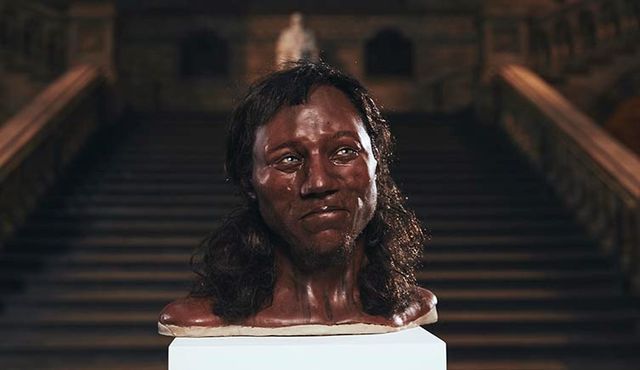
A new genetic analysis of DNA from the Cheddar Man fossil, excavated in 1903 from Gough’s Cave in Cheddar Gorge, Somerset, England, suggests that at least some of the early modern human inhabitants of the British Isles had a mixture of traits different from later populations. These characteristics include dark skin, curly dark brown hair, and blue or green eyes. In addition, Cheddar Man was lactose intolerant. 
The finding of dark skin has raised much interest in the popular press, and stirred some racist comments. It runs counter to interpretations that the modern humans who first entered Europe from Africa, probably via the Near East, about 40-45,000 years ago, had already transitioned to lighter skin tone as compared to their darker skinned African ancestors, in order to increase their skin’s manufacture of Vitamin D in the less sunny northern hemisphere. This latest research suggests a more complicated development. 
The more complex picture of changes in human skin color is consistent with other recent research which indicates that this seemingly simple characteristic is actually controlled by a multiplicity of genes, leading to a wide range of phenotypic expressions, and that simplistic racial classifications based on skin tone are scientifically invalid. However, exactly that understanding has led some other researchers, including one member of the original team, to urge caution against overly specific characterizations of Cheddar Man’s skin color. 
The Cheddar Man fossil dates to approximately 10,000 years ago, during the Mesolithic Period in Europe, at least 30,000 years after the first arrival of modern humans. It is the oldest nearly complete skeleton of a Homo sapiens (modern human) that has been found in Britain. The Mesolithic immediately follows the end of the last Ice Age, roughly 12,000 years ago. It predates the introduction of full-blown agriculture, but involved a more sedentary lifestyle than that of the preceding Upper Paleolithic. This change in culture included a more intensive use of selected plant and animal resources, facilitated by new technologies, including microlithic tools. The famous archaeological site of Star Carr, in North Yorkshire, initially excavated in the late 1940s, dates to this period. 
The new analysis of Cheddar Man was conducted by a research team at the Natural History Museum in London and University College London. The DNA used in the analysis was extracted from the fossil’s petrous bone, part of the inner ear. This is a dense bone and thus provided greater protection from decomposition than for DNA in many other parts of the skeleton. The extracted sample was analyzed using up-to-date technology to reconstruct Cheddar Man’s full genome. 
A facial reconstruction of Cheddar Man was undertaken using standard forensic techniques and the results of Natural History Museum’s genetic analysis, and employed 3D printing.
Reconstruction of Cheddar Man’s bust based on Natural History Museum analysis
The interpretation that Cheddar Man had dark skin has been questioned. It was based on the use of a model developed by Susan Walsh of Indiana University-Purdue University Indianapolis. This model is designed to predict eye, hair, and skin color based on a person’s DNA. The skin color prediction targets 36 loci in 16 genes. Tests on modern populations yielded a high level of predictability in differentiating light from dark skin. An initial announcement of the results for the test of Cheddar Man’s DNA indicated dark skin. The announcement was made as part of the promotion for an upcoming British television documentary, which may have prompted a “rush to publish.” 
Subsequent statements by Walsh are less categorical. Due to the degradation of the DNA over 10,000 years, the interpretation that Cheddar Man had dark skin is the “most probable profile, based on current research,” according to Walsh. At least two recent studies conclude that the genetic control of skin color in humans is a very complex phenomenon, involving many more than 16 genes. One of these studies concluded that only about 29 percent of the variation observed in modern populations could be attributed to known genetic factors. 
Neolithic farmers migrated into Europe from the Near East and perhaps North Africa beginning roughly 9,000 years ago and culturally replaced the Mesolithic humans. As with the Neanderthals before them, however, the indigenous Mesolithic population did not disappear, but interbred with the more numerous immigrants. Genetic analysis indicates that the modern British population carries approximately 10 percent of its genetic makeup from the earlier Mesolithic inhabitants. Models intended to predict skin color based on studies of modern populations may not be directly applicable to those in the distant past, especially when major migrations and genetic inter-mixing have taken place. 
The study of the physical development of human populations, as part of overall research into their cultural and biological development, is certainly a worthwhile pursuit. However, the complexity involved is staggering. Researchers should exercise caution on reaching conclusions based on data derived from limited samples. 

“Financial toxicity” affects poorer cancer patients in Australia

Margaret Rees

A recent report demonstrates that the great advances in modern cancer treatment are not equally affordable for all those who need them. Social inequality exacerbates the situation facing poorer cancer sufferers, curtailing their access to the treatment and drugs they must have to survive.
A paper released by the Cancer Council of Australia on February 3, Australians living with and beyond Cancer in 2040, shows that a greater proportion of cancer survivors in 2040 will be from those of a high socio-economic position (20 percent more than people of low socio-economic position).
This is most probably due to wealthier people having greater access to treatment, and benefitting from earlier detection, better prognosis or being diagnosed with cancers with better survival rates. Other factors are also involved, relating to the life pressures on working class people. That is, poorer prospects of survival from cancer can be directly related to socio-economic disadvantage.
Cancer Council CEO Professor Sanchia Aranda told the World Socialist Web Site: “The Australian Institute for Health and Welfare produces national data on cancer incidence and mortality. This shows that the age standardised mortality rate for the poorest quintile of Socio Economic Status (SES) is 30 percent higher than for the highest quintile.
“This equates to about 28,000 deaths in five years that would not occur if everyone had cancer outcomes as good as the highest SES quintile.”
Aranda said many factors contribute to this difference, and the Cancer Council commissioned work from the team at QIMR Berghofer Medical Research Institute to assess the outcomes further. She said the known factors included higher smoking rates in lower SES groups, contributing to poorer lung cancer outcomes, as well as lower participation in national screening programs and less access to general practitioner (GP) doctors by people with lower SES.
“We would hypothesise that people who are poor may also be less able to take time off work for tests, and this may contribute to later diagnosis. This will potentially be compounded by lower health literacy, and residence in areas with lower GP density. It will also be likely that people of lower SES are subject to delays in diagnosis, when they cannot bypass the public system by getting a diagnosis from a private specialist.
“There may also be issues of foregoing parts of treatment, e.g., follow up radiotherapy after surgery, because of the financial burden of out of pocket costs and things like ability to take time off work.”
Despite supposedly providing affordable and equal access to medical care, the Australian public health system, Medicare, imposes considerable “out of pocket” costs. Together with employment difficulties, these can have such an adverse effect on cancer patients that they suffer what has been termed “financial toxicity,” that is, financial distress or hardship experienced as a result of cancer treatment.
Aranda added: “We have very poor understanding of the true impact of financial toxicity on treatment choices. We know from our survey work with nurse coordinators and oncology social workers that treatment costs are part of patient concerns about treatment decisions.”
A QIMR Berghofer Medical Research Institute study published in 2017 outlined that “financial problems after cancer diagnosis are a major contributor to poorer quality of life, treatment non-adherence and delayed medical care.” (Cancer Forum 2016, “Financial Toxicity—what it is and how to measure it,” Louisa Gordon, et al.)
The authors found few Australian studies examining the economic burden on patients with cancer. One 2014 study observed changes in employment of 239 colorectal cancer patients and compared findings with a non-cancer control group in middle-aged working adults. The findings showed 27 percent had not returned to work 12 months after their diagnosis, compared with 8 percent leaving work in the matched general population group.
In another study, men recently diagnosed with prostate cancer (within 16 months of the survey), reported spending a median $8,000 for their cancer treatment, while 75 percent spent up to $17,000. Twenty percent found the cost of treating their prostate cancer caused them “a great deal” of distress.
The study authors said financial toxicity has two key contributors—high medical payments and reduced income while being treated or recovering from cancer. They said: “Healthcare professionals should understand that poorer health outcomes in their patients may arise, not only from the cancer, but also from the financial fallout from the cancer.” They concluded: “It can have a very negative impact on quality of life and cause distress.”
Another Cancer Forum study, “Unemployment after cancer—a hidden driver of financial toxicity,” (Bogdam Koczwara Flinders Medical Centre, Flinders Centre for Innovation in Cancer, South Australia) found that: “Loss of work after cancer disproportionally impacts on those already more vulnerable, such as low income employees and the very young, with impact persisting for some for many years.”
One Australian study of 255 oncology outpatients in two hospitals—metropolitan and rural—found that the financial impact of unemployment seemed to be the major driver of financial toxicity. Of these patients, 67 percent reported a change of employment, the most common being reduced hours, retirement or resignation/unemployment and 63 percent reported reduced household income.
A Breast Cancer Network of Australia study, “The financial impact of breast cancer,” surveyed 2,000 women about their out of pocket costs for the first five years after breast cancer diagnosis. It found that these costs were around $3,600 for a woman without private health insurance and around $7,000 for a woman with private health insurance. In other words, taking out increasingly expensive private insurance is no protection against medical costs.
While 12 percent of women reported no out of pocket costs, 25 percent reported costs of more than $17,000, and 25 percent of those with private health insurance reported costs of more than $21,000.
Further, the study noted that the necessity to take time off work could lead to further financial cost, especially for women who are part of the 38 percent of the Australian workforce who have no paid sick leave entitlements. The survey found that the total number of household hours worked dropped by 50 percent in the first year after a breast cancer diagnosis. In the second year, the number of hours worked remained 13 percent lower than before the breast cancer diagnosis.
The study noted: “Some women find that paying for cancer treatment and its associated costs pushes them to the brink.”
A diagnosis of cancer should not be a sentence of financial disaster. High quality, free public treatment and state of the art medication should be made available to all, on the basis of need, not private profit. This means a struggle against entrenched corporate interests for the basic social right to healthcare.

Peru’s president and former Wall Street financier resigns amid corruption scandal

Armando Cruz

Faced with a spiraling corruption scandal and imminent impeachment, Peruvian President Pedro Pablo Kuczynski resigned as president Wednesday, one day before a scheduled impeachment vote that would have certainly ended its crisis-ridden government.
The trigger for the resignation was the release of footage showing two pro-government congressmen led by Kenji Fujimori, the son of former president Alberto Fujimori and brother of Keiko Fujimori, leader of the main opposition party Fuerza Popular (FP), attempting to convince FP congressman Moises Mamani to vote against the impending impeachment.
The reasons for this new attempt to remove Kuczynski from power, as well as the first failed one of December 21, lie in the revelations by executives of the Brazilian multinational Odebrecht that they had bribed virtually the whole Peruvian political establishment for nearly two decades, with Kuczynski being the most obvious case of profiting from a “revolving door” between government office and private business.
Kenji Fujimori led a bloc of dissenting FP congressmen that voted against the first impeachment, defying the orders issued by his sister Keiko to all FP members in Congress, where the party holds an absolute majority. It was later revealed that Kenji had negotiated in secret with Kuczynski to release his father from prison in exchange for the votes needed to forestall impeachment. Fujimori’s father was released three days later, after serving only eight years of a 25-year sentence for human rights crimes and corruption committed under his autocratic regime (1990-2000).
Since then, Kenji had broken with his sister and FP and established an “independent” caucus with his bloc of dissenting FP congressmen, becoming the main political ally of the president and accompanying him on tours across the country.
In the footage—recorded with a hidden device by Mamani—Kenji and Congressmen Bienvenido Ramírez and Guillermo Bocangel made clear that if Mamani jumped ship with them and voted against the impeachment, he could profit from investment contracts that the executive power would allocate to Puno, the province he represents. At another point in the video, the president’s personal lawyer arrives and gives Mamani the cellphone number of the minister of production for coordinating the corrupt deal.
Fuerza Popular convened a press conference on Monday 20 where it revealed the contents of the tape.
With the government in flames after this attack, Keiko Fujimori delivered the final blow, not only to Kuczynski’s tottering government—with an abysmal approval rating of 19 percent—but also to the political career of her brother Kenji, who on the same day had announced the formation of his own political party with the clear aim of vying with his sister for “fujimorista legacy.”
While Keiko sought to bring down Kuczynski’s government in order to stall corruption inquiries over her own Odebrecht-related scandals, there was clearly a consensus among the ruling elite that the 79-year-old former Wall Street operator Kuczynski had become a destabilizing factor for capitalism in Peru.
The clearest indication of this was the surge on the Lima stock market Wednesday, after the news that Kuczynski had resigned. The daily Gestiónreported that “market agents stated that the resignation would calm the political uncertainty and considered it positive that Vice President Martin Vizcarra would take power.”
From its inception, politicians and the media had predicted that Kuczynski’s government would be weak and isolated.
He won the 2016 presidential elections—by a margin of just 30,000 votes—against Keiko Fujimori thanks to the support of the pseudo-left Frente Amplio (FA), then led by Veronika Mendoza and Marco Arana. They backed him as the supposed “lesser evil” who would block the return to power of the fujimoristas. He had little genuine public support, viewed widely as the “gringo” who had spent much of his life outside the country, enriching himself on Wall Street, acquiring US citizenship and working for both the World Bank and International Monetary Fund.
Then, during his first year in office, with a congress firmly dominated by the opposition FP and its revanchist leader Keiko Fujimori, the pseudo-left FA came to the defense of Kuczynski and his ministers, arguing that every attack from the fujimoristas was an attempt to undermine the government and seize power.
It was during this time that the followers of Veronika Mendoza decided to split from FA and form their own caucus inside Congress and a movement (Nuevo Perú) toward becoming a new party. They made this move after concluding that Mendoza had become the most visible face of the “left” inside Peru, due to her having placed third during the last elections, and because FA was led by Marco Arana, whose ecological party Tierra y Libertad formed the backbone of the FA coalition.
Nuevo Peru (“New Peru,” NP) proved to be an even more compromising caucus than Arana’s FA. During the first attempt at impeachment, the NP refused to support the measure, arguing that it was an operation mounted by the fujimoristas to overthrow the government and seize power. The abstention by the NP’s caucus during the vote, along with the support won through the negotiations with Kenji Fujimori, saved Kuczynski.
Three days later, this so-called “left” caucus expressed shock over the president’s pardoning of Alberto Fujimori, saying he had broken his promise to them (they were reportedly told that Kuczynski wouldn’t pardon him) but, revealingly, still refusing to apologize for abstaining in the impeachment vote.
However, with popular indignation growing over Fujimori’s pardon, particularly among the youth, they began to be seen as the real culprits in the entire affair.
Their decision to support the new impeachment process was an attempt to save face after the backlash they suffered for supporting Kuczynski and thereby facilitating Fujimori’s pardon.
Arana, like Mendoza, backed Kuczynski as the “lesser evil” in the last elections. Despite being demonized by the right-wing media as a dangerous extremist, he has ma clear his own commitment to stabilizing Peruvian capitalism. During a television interview in which he was asked why he wanted to impeach Kuczynski, he declared bluntly: “We need to restore credibility.”
Vice President Vizcarra is expected to assume the presidency in the coming days. Both the NP and FA will no doubt continue their own integration into the establishment by supporting him against fujimorista “aggression.”