9 Apr 2018

Facebook intensifies censorship ahead of congressional testimony by Zuckerberg

Andre Damon

Ahead of scheduled congressional testimony by CEO Mark Zuckerberg, Facebook has announced a series of censorship measures that strike a blow against online anonymity and tighten the company’s grip on what users can say on its platform.
Zuckerberg announced Friday that the company will “require people who manage large pages to be verified,” meaning they will have to provide the company, and by extension the US government, with their real names and locations.
Zuckerberg declared that the measure “will make it much harder for people to run pages using fake accounts, or to grow virally and spread misinformation or divisive content.” In addition, the company will prohibit ad purchases by individuals whose identities have not been “verified.”
The move is a major step toward the fulfillment of the demand by the US intelligence agencies that social media companies end online anonymity, making it easier not only to track, but to arrest people for expressing oppositional political opinions.
Zuckerberg added that the move would involve the hiring of thousands of additional censors and “security” personnel. “In order to require verification for all of these pages and advertisers, we will hire thousands of more people,” he wrote.
Within hours of the announcement by Facebook on Friday, the company blocked an advertisement for a public meeting held by the Socialist Equality Party, which is affiliated with the World Socialist Web Site, entitled “No to war, inequality, and censorship,” on the grounds that it does not allow ads that contain “shocking, disrespectful, or sensational content.” Other ads related to the Oklahoma teachers strike were blocked yesterday.
Zuckerberg’s announcement came amidst a media-driven a campaign to demonize the company for downplaying the danger of “fake news” and “propaganda” on its platform. This campaign, presented as a defense of users’ “privacy,” has led the company’s stock price to fall by more than 15 percent over the past three weeks. It has also fueled speculation that Zuckerberg, who owns 28 percent of Facebook stock, could be ousted in a boardroom coup.
In the course of a few weeks, Zuckerberg has gone from a media darling to a virtual pariah, complete with a lampooning on Saturday Night Live. Every news story about the company now includes a picture of the “beleaguered” executive sporting a frown—the type of treatment usually reserved for politicians embroiled in sex scandals.
The nominal reason for the shift is the media-driven scandal surrounding the election data firm Cambridge Analytica, tied to former Trump chief strategist Steve Bannon. Last month, The New York Times and Guardian simultaneously revealed that the company had used an app to harvest data on tens of millions of Facebook users, which was then turned over to the Trump campaign. Unmentioned in any of the media accounts is the fact that the Obama campaign did effectively the same thing in 2012, to media acclaim.
CBS’s “Face the Nation” talk show, for example, devoting approximately a third of the program’s airtime yesterday to discussion of Facebook—amidst a developing trade war with China, a war campaign against Syria, and the deployment of the military on the US-Mexico border.
The media’s campaign against Facebook has nothing to do with protecting users’ privacy, but rather is aimed at creating the best possible conditions for the imposition of massive new restrictions on the freedom of expression on the world’s largest social media network.
This was made clear by the comments of Democratic Senator Mark Warner (Virginia), who, when asked by a DC-area radio reporter Friday about the Cambridge Analytica scandal and Congress’s role in protecting “people’s data,” replied by denouncing Facebook’s resistance to his claims that it was being used to spread “fake news.”
Warner told the reporter, “I first called out Facebook and some of the social media platforms in December of 2016. For the first six months, the companies just kind of blew off these allegations, but these proved to be true; that Russia used their social media platforms with fake accounts to spread false information, they paid for political advertising on their platforms.” He added that the company has “got a lot of explaining to do.”
Commenting on the tone of the expected hearings on “Face the Nation,” Nick Thompson, the editor of Wired who has been a leading advocate of censorship, said that “Congress is going to be out for blood” when Zuckerberg testifies. He declared that the company would pay for the “sins” of having “stuck their heads in the sand” in response to demands that it implement censorship measures.
Thompson added that Facebook’s latest measures were intended to “soften the blow” ahead of Zuckerberg’s testimony. It is clear, however, that the measures that have already been announced are just a down payment on the crackdown on freedom of expression that is being prepared.
Zuckerberg’s testimony comes amidst a mounting strike waves by workers throughout the United States, including strikes by educators in Oklahoma and Arizona. Numerous media accounts have noted the vital role played by Facebook in organizing resistance by workers independent of the unions.
Under conditions of mounting class struggle, increasingly bitter divisions within the ruling elite, and the growing danger of war, the ruling elite is radically accelerating its drive to censor the Internet. The aim is to prevent the organization of social opposition and the dissemination of information that questions the official narrative of events.
Zuckerberg’s testimony will take place just one day after a meeting of the United Nations Security Council, at which the United States will press for an even greater intervention against Syria and Russia, nominally in response to an alleged chemical weapons attack attributed by the US media, without any substantiation, to the Syrian government.
The war fever is aimed not only at securing American imperialism’s predatory war aims in the Middle East, but, perhaps even more importantly, to create the conditions for domestic repression and political censorship at home.

7 Apr 2018

Government of China MOFCOM Scholarships for Developing Countries (Masters & PhD) 2018

Application Deadline: 30th April 2018

Offered annually? Yes

Eligible Field of Study: Each applicant can choose one same major in three universities out of the 26 designated universities as their desired option.

About Scholarship: MOFCOM Scholarship is set up by Ministry of Commerce of People’s Republic of China to further strengthen the communication and cooperation between China and other countries as well as to develop talents for developing countries. Starting from 2015, MOFCOM Scholarship mainly sponsors the young and the middle-aged talents from recipient countries to pursue their postgraduate degree education in China and entrusts China Scholarship Council to administer the Scholarship.

Offered Since: 2015

Type: Masters and PhD Scholarships

Selection Criteria and Eligibility: To be eligible, applicants must:
  • be a citizen of a country other than the People’s Republic of China, and be in good health;
  • be a bachelor’s degree holder when applying for master’s program;
  • be a master’s degree holder when applying for doctoral program;
  • be under the age of 45 when applying;
  • have sufficient English or Chinese proficiency which meets the academic requirements of the program.
Number of Scholarships: several

Value of Scholarship:
  • -tuition waiver;
  • -teaching material fee waiver;
  • -research and survey fee waiver;
  • -dissertation guidance fee waiver;
  • -one-off resettlement fee:
  • 3000RMB per master student,
  • 3000RMB per PhD student;
  • -on-campus accommodation;
  • -stipend:
  • 3000RMB per month per master student,
  • 3500RMB per month per PhD student;
  • -medical insurance
  • -one-time round-trip international airfare for all the students (First time fly to China after enrollment, and Fly back to home country while graduation), and a maximum of “n-1” (“n” is for the length of schooling year which is set while the student was enrolled by the program) round-trip international airfares for home visits (one time per year set at the end of an academic year).
Duration of Scholarship: Master’s program for 2-3 years or PhD program for 3-4 years.

Eligible Countries: developing countries

To be taken at (country): Each applicant can choose one same major in three universities out of the 26 designated universities as their desired option. CSC will place each applicant in one university only based on their desired option and universities’ requirements.

Application Requirement (in Chinese or English)
  1. Application Form for MOFCOM Scholarship;
  2. Photocopy of highest diploma;
  3. Photocopy of academic transcripts;
  4. A Study Plan or Research Proposal with a minimum of 400 words;
  5. Photocopy of Foreigner Physical Examination Form;
How to Apply
  • Visit http://www.csc.edu.cn/laihua or www.campuschina.org for International Students.
  • Step 2: Read “Tips for online application” carefully before clicking “NEXT” to the registration page.
  • Step 3: After registration, log in with your user name and password. Click “Application Forms”and choose “MOFCOM Scholarship”.
  • Step 4:  Put 00010 as your Agency Number.
  • Step 5: Please fill all the required information truly, correctly and completely following the navigation bars on the left of the page.
  • Step 6: After completing the application form, please click “Preview” and check your Application Form carefully before submitting it.
  • Step 7: Download the completed Application Form by clicking “Download Application”and print two hard copies.
  • Step 8: Prepare other supporting documents as required and send the full package of application documents (two sets of hardcopies) to the Economic and Commercial Counsellor’s Office (ECCO) of the Chinese Embassy.
  • Step 9: You can make changes to your application by clicking Retrieve Application on the left of the page. But you have to make sure to submit it again by clicking Confirmation of Submit after finishing all the changes. Otherwise, the retrieved application will become invalid and your new application will not be accepted either.
Visit Scholarship Webpage for details to apply

Sponsors: Ministry of Commerce of People’s Republic of China

Important Notes: Scholarship winners must register for English-taught program if such program is available. When only Chinese-taught program is available, students should take Chinese language training courses for one to two years before moving on to their degree study.
Scholarship winners will get the admission package from ECCO of the Chinese Embassy by the end of August, 2016, and must register at the host university before the deadline which is usually September, 2016.

TWAS Research Grants Programme in Basic Sciences for Researchers in Developing Countries 2018

Application Deadline: 11th May 2018

Eligible Countries: Developing Countries

About the Award: TWAS Research Grants are awarded to high-level promising research projects in Biology, Chemistry, Mathematics and Physics carried out by individual scientists in the S&T-lagging countries  (S&TLC) identified by TWAS.
The TWAS Research Grants Programme in Basic Sciences aims to:
  • Reinforce and promote scientific research in basic sciences in developing countries;
  • Strengthen developing countries’ endogenous capacity in science;
  • Reduce the exodus of scientific talents from the South;
  • Build and sustain units of scientific excellence in S&TLC over a longer period to help them achieve a critical mass of highly qualified and innovative scientists capable of addressing real-life problems facing their countries.
The TWAS Research Grants Programme supports research in the basic sciences only; proposals focusing on more applied research should therefore be submitted to IFS. TWAS cannot accept projects relating to applications in agriculture or medicine or that use existing techniques to screen, for example, medicinal plants for bioactive substances or to monitor an environment for pollutants; TWAS will have to reject such proposals.

Fields of Study: Biology, Chemistry, Mathematics, Physics

Type: Research, Grants

Eligibility: 
  • Individual applicants must be nationals of developing countries. They must hold a PhD, be at the beginning of their careers, but already have some research experience. They must hold a position at a university or research institution in one of the S&TLCs and be under 45 years of age.
  • Applications from women scientists and those working in Least Developed Countries are especially encouraged.
  • Individual scientists who submit a satisfactory final report on a previous grant may apply for a renewal.
Number of Awards: Not specified

Value of Award: 
  • Research Grants to individual scientists amount to a maximum of USD 15,000.
  • The grants, which are normally provided for a period of 24 months, may be used to purchase scientific equipment, consumables and specialized literature (textbooks and proceedings only). They do not cover salaries of researchers and/or students, field expenses, or travel expenses. In addition, the purchase of laptops and laboratory animals is not supported.
Duration of Program: 24 months

How to Apply: Apply Here

Visit the Program Webpage for Details

Award Providers: The TWAS Research Grants Programme in Basic Sciences is generously supported by the Swedish International Development Cooperation Agency (Sida) and the Italian government. The Sida contribution is mainly intended to support research proposals from S&TLCs in dire need of basic research tools.

Important Notes: Please note that the assignment meetings of the TWAS Research Grants Committees will be held by the end of the year. Applicants will be notified of the outcome shortly after the meeting.

Human Rights Consortium (HRC) Routledge Studentship for Students from Commonwealth Countries 2018/2019 – University of London

Application Deadline: 3rd June 2018.

Eligible Countries: Commonwealth countries

To Be Taken At (Country): UK

About the Award: This award marks The Round Table’s close connections with the Institute and celebrates the achievements of Dr Peter Lyon, long-time editor of the journal and Reader in International Relations at the Institute of Commonwealth Studies.

Type: Masters

Eligibility: Open to students from Commonwealth countries (outside of the United Kingdom), who have already applied for a place on the MA in Understanding and Securing Human Rights at the Institute of Commonwealth Studies. 

Selection: Your application will be considered by a panel of senior members of staff within the Institute and representatives from Routledge/The Round Table. It may be necessary for additional supporting information to be sought from other School staff. The School of Advanced Study processes all personal data in accordance with the Data Protection Act 1998.

Number of Awards: Not specified

Value of Award: 
  • The award from Routledge/The Round Table is worth £12,000.
  • In addition, the Institute offers the recipient of the award a fee waiver of 50%.
Duration of Program: 1 year

How to Apply: 
  • To apply, eligible students should contact the Institute of Commonwealth Studies, indicating that they wish to be considered for the award. Applicants do not need to supply any additional material. The successful recipient will be selected on the basis of the academic or biographical CV and the his/her personal statement, stating why they wish to undertake this degree at the Institute.
  • Overseas candidates wishing to apply to the MA in Understanding and Securing Human Rights are advised to contact the UK High Commission in their country of residence as early as possible, ideally before or at the time of application in order to establish the financial resources they will need to demonstrate to obtain a UK visa as a postgraduate student, and what procedures they must fulfil in order to obtain a UK visa.
Visit the Program Webpage for Details

Award Providers: Routledge/The Round Table

Important Notes: Please note that this award is available only to overseas rate-paying students.

Beit Trust Masters Scholarship for African Students (Fuly-funded to Study in UK or South Africa) 2018

Application Deadline: 31st May 2018.

Offered annually? Yes

Eligible Countries: Malawi, Zambia or Zimbabwe

To be taken at (country): United Kingdom (Cambridge University, University of Edinburgh, University of Strathclyde, University of Glasgow, University of Oxford  University of Leeds), and South Africa (University if Cape Town, Rhodes University, Stellenbosch University).

Applicants will normally be expected to apply to these partner universities.

About Scholarship: The Beit Trust offers annually a number of Postgraduate Scholarships abroad (except an MBA) to graduates who are domiciled in and are nationals of Malawi, Zambia or Zimbabwe (and only to graduates in these three countries). Scholarships are taken up at a partner university in the United Kingdom, or South Africa, for study in a subject of the individual’s choice appropriate to the needs of the beneficial area.

Type: Masters (except an MBA)

Eligibility Criteria
  • All applicants except medical and veterinary doctors must be under 30 years of age on 31 December of the year of application.
  • Some experience of work after completion of a first degree is desirable.
  • Doctors and vets must be under 35 years of age on 31 December and should have completed 18 months of internship and preferably a one-year preferably rural posting in the relevant country.
  • hold at least a degree of class 2.1, i.e. Merit or Distinction
Number of Scholarship: Not Specified

Benefits
  • Fees, tuition costs and related academic expenses are paid by the Trust direct to the universities.
  • Payment of a personal allowance, index linked in accordance with guidance from an independent authority, covering maintenance support.
  • Other allowances are paid for: arrival, a laptop, printing of a thesis, and return home.
  • Economy Class air passages are provided by the Trust for the initial journey to the place of study, and on final return.
  • No allowances are paid for spouses or other family members.
Duration of Scholarship Duration is normally for a one-year taught Master’s in the UK and two years in South Africa. 

How to Apply:
  • Zimbabweans  the application form can be obtained from Zimbabwe Online Application form
  • Malawians –  the application form can be obtained from  Malawi Online Application form
  • Zambians  you will need to complete an initial application form using this online initial application link.  Applicants are urged to submit the online form as early as possible to establish whether they would qualify to apply. If you do qualify, a form will be emailed to you and you will be required to provide additional information and details.
Visit the Scholarship Webpage for Details

Sponsors: Beit Trust

Important Notes: Only those applicants who state that they intend to return to work in the relevant country upon completion of the scholarship, and who can, if short-listed, present themselves for interview before a Beit Postgraduate Scholarship Selection Board in Harare, Blantyre or Lusaka at the beginning of December, will be considered.

Young Feminist Media Fellowship for Feminist Storytellers 2018

Application Deadline: 22nd April 2018

Eligible Countries: Any

About the Award: Are you a feminist storyteller? Do you believe in the power of stories reaching millions? Are you a budding writer, artist or videographer? Then this fellowship opportunity is just the right thing for you!\
This fellowship is meant for young storytellers who have a passion for and commitment to telling powerful and transformative stories about young feminist activism and the creative ways in which youth organizing is happening all over the world. The fellowship is an opportunity to gain insight into global feminist issues, receive guidance and feedback from experienced feminist journalists and an opportunity for the writers to have their stories published in a publication that has worldwide readership.

Type: Fellowship (Career)

Eligibility: You are eligible to apply for this fellowship if you meet the following criteria:
● You are a young feminist (between the age of 18 and 30) with proven interest or activism in gender based issues in their local, national or in international contexts.
● You are a budding writer, publisher, visual artist or videographer.
● You will have some proven experience and have some sample pieces of your previous work to demonstrate it.
● You may be based anywhere in the world, but should be from a Global South country (i.e. not Western Europe, North America, Australia and New Zealand) and willing to travel in the pursuit of the story. Previous experience in journalism, writing, blogging, sketching, designing is welcome, but not compulsory.
● You are proficient in the English language as the writing/designing will be done in English only. (We hope in the future we could offer in a different language). Knowledge of a second language is desirable, but not essential.
● Fellows belonging to marginalized identities–trans*, intersex individuals, gender non conforming, young people of color and people with disabilities–are particularly encouraged to apply.


Selection Criteria: 
  • Anyone who has a passion for and commitment to storytelling.
  • Someone who can think of non traditional and innovative ways to tell stories. Someone who is not afraid to experiment, is happy to learn and be pushed to produce sharper stories.
  • Someone from a marginalised background, and hence having an edge to unpack marginalised issues in a better way.
  • Someone who is willing to give the time needed to polish a story so that it finds its final shape as a strong and powerful one.
  • Someone who looks at this fellowship opportunity as a means to gain knowledge, expertise and mentorship around storytelling.
  • Someone passionate about making young feminist voices reach a wider audience.
Number of Awards: 2

Value of Award: 
  • The fellow is expected to work part time and will be paid a stipend of USD 500 USD for the three-month duration of the fellowship.
  • As a fellow, you will be expected to decide how you’d like to utilize the stipend money in pursuit of your story.
  • During the 3-month period, both fellows will be part of a hands-on learning program, in which they will have a chance to learn about young feminist issues, journalism, writing and publishing.
  • During this time, they will be expected to produce a total of three pieces, at least one of these should be focused specifically on the work of a FRIDA grantee partner.
Duration of Program: 3 (three) months

How to Apply: To apply, please fill this form.
Only shortlisted candidates will be contacted.

Visit the Program Webpage for Details

Award Providers: Frida, Young Feminist Fund

University of Gronigen PhD Scholarships in Culture Studies 2018

Application Deadline: 13th May 2018

Eligible Countries: All

To Be Taken At (Country): The Netherlands

About the Award: As a PhD candidate, you are committed to conducting independent and original scientific research, to report on this research in international publications and presentations, and to present the final results of the research in a PhD dissertation.
ICOG consists of five Research Centres.
  • The Research Centre for Historical Studies
  • The Research Centre Arts in Society
  • The Centre for International Relations Research
  • The Centre for Media and Journalism Studies
  • The Centre for Research of the Americas
Type: PhD

Eligibility: Talented and ambitious researchers in the relevant disciplines.
Your qualifications are:
• a master’s degree in one of the five areas mentioned above, with an excellent academic record
• proven research abilities and affinity with the research topic
• excellent command of English and good academic writing skills.


Selection Criteria: PhD scholarship students are selected on the basis of their CV and their own research proposal.

Number of Awards: Not specified

Value of Award:  The amount of the scholarship is set so that students receive approximately €1750 net per month.

Duration of Program: Four years.

How to Apply: Please send your entire application (in English) as a single PDF-file until the deadline of 13 May 11:59 pm / before 14 May 2018 Dutch local time, by means of the application form.
Please upload your entire application as “letter of motivation attachment”.
The submission should contain the following:
  1. A cover letter introducing yourself, describing your motivation to conduct scientific research, and locating your research within one of the research groups
  2. A full CV demonstrating academic excellence, including publications and presentations (if applicable), and a copy of the data page of your passport
  3. A certified copy or scan of your MA diploma (or equivalent) and academic record
  4. A research proposal, focusing on the central research question to be addressed and the proposed method of approaching and answering this question (1500 words, tables and references excluded, and a project title)
  5. Names and contact details of two academic references.
Start date: 1 September 2018.
Interviews with selected candidates will take place in the last week of June 2018.

Visit the Program Webpage for Details

Award Providers: This programme is issued by the Dutch Ministry of Education, Culture, and Science (OCW) within the framework of the national PhD Scholarship Programme Experiment.

US Government Professional Fellows Program for Inclusive Disability Employment (PFP-IDE) for East African Countries 2018

Application Deadline: 16th May 2018

Eligible Countries: Kenya, Tanzania, and Uganda

To Be Taken At (Country): USA

About the Award: Fellows will participate in an intensive five-week program at a university-based research and education center for disabilities in the U.S. They will learn innovative strategies to promote economic empowerment of individuals with disabilities through the growth of inclusive employment opportunities.
The program specifically targets individuals between the ages of 25 and 40 who are employers, program administrators, policymakers, or other stakeholders in employment for people with disabilities in Kenya, Uganda, and Tanzania.
Inclusive employment refers to individuals with disabilities working alongside their peers without disabilities in the competitive labor market (with access to the same benefits and career opportunities).
Individuals from diverse backgrounds, including people with disabilities, are encouraged to apply. Reasonable accommodations, including materials in alternative formats (e.g. Braille, electronic, large print), are provided upon request.

Type: Fellowship (Career/Professional)

Eligibility: In order to apply to this program as a Fellow (eligibility criteria), you must …
  1. Be between the ages of 25 and 40;
  2. Be currently living and working in Kenya, Uganda or Tanzania;
  3. Be eligible to receive a U.S. J-1 visa;
  4. Be proficient in spoken and written English;
    • Speaking proficiency means that you are able to participate effectively in most formal and informal conversations on practical, social, and professional topics. Communication in spoken English as interpreted by a sign language interpreter (which will be provided by the Fellowship program) through use of American, Kenyan or Ugandan Sign Language qualifies you for speaking proficiency.
    • Reading proficiency means you are able to read standard newspaper items, routine correspondence, reports, and technical materials in your special field.
  5. Have at least two (2) or more years of relevant work experience with or for non-governmental organizations (NGOs), government offices, universities, schools or community-based organizations;
  6. Have professional interest and/or experience in inclusive employment and disabilities;
  7. Be self-directed and able to work effectively in a cross-cultural setting;
  8. Have demonstrated leadership and collaborative skills;
  9. Be able to participate in the Professional Fellows Program for Inclusive Disability Employment in the US either in the spring (April 25th – June 3rd, 2018) or in the fall (October 10th – November 18th, 2018);
  10. Be committed to returning to your home country for a period of two (2) years after completion of the program; and
  11. Be committed to implementing an individual project that will benefit young people with disabilities and promote greater inclusive employment in your region, country, or community following completion of the program.
Individuals from diverse backgrounds, including people with disabilities, are encouraged to apply. Reasonable accommodations, including materials in alternative formats (e.g. Braille, electronic, large print), are provided upon request.

Selection: Applicants will be selected through a competitive process by program partners and the U.S. Department of State Bureau of Educational and Cultural Affairs.

Number of Awards: 20

Value of Award: Fellows will receive funding for their fellowship-related travel to and within the U.S., accommodations in the U.S., and more including:
  • Visa
  • Round trip travel between home country and U.S.
  • Accident and health insurance for the duration of the fellowship in the U.S.
  • Living allowance (or equivalent supports) to cover costs of meals, housing and incidental expenses (these funds, or some portion of them, can go directly to hosts if needed)
  • Reasonable disability-related accommodations, if needed
Duration of Program: Fellows will participate in one of two cohorts:
  • Spring (April 25th – June 3rd, 2018) or
  • Fall (October 10th – November 18th, 2018)
How to Apply:  APPLY HERE

Visit the Program Webpage for Details

Award Providers: U.S. Department of State Bureau of Educational and Cultural Affairs.

World Water Week Conference Scholarships for Journalists from Developing Countries (Fully-funded to Stockholm, Sweden) 2018

Application Deadline: 30th April, 2018.

Eligible Countries: Developing countries

To Be Taken At (Country): Stockholm, Sweden

About the Award:  Are you passionate about water and development? Have you covered these topics in your work but want a chance to learn more and interview major actors in the water community? Have you looked for an opportunity to report on a global water meeting, where world leaders, policy makers, and academics meet representatives from the private sector and civil society to discuss some of the world’s most urgent issues? Apply for the SIWI Journalist Grant!

Type: Grants, Conference

Eligibility: 
  • You must be a citizen of a nation listed as a low- or low-middle income country by the World Bank. See which countries that are eligible in this list.
  • You must be an employee of a media outlet in your country (newspaper, magazine, radio, TV, recognized digital publication) or be able to show proof of continuous freelance journalism activities during the past three years.
  • You must have a documented interest in water and water-related issues.
  • Since the official language of World Water Week is English, you need to be able to work in English, even if you publish stories in another language.
Number of Awards: 5

Value of Award: The SIWI Journalist Grant covers:
  • Round-trip air ticket to Stockholm, Sweden
  • Public (or equivalent) transport between airport and hotel on arrival and departure
  • Full week registration fee for World Water Week
  • Certain social events during World Water Week
  • Hotel stay during World Water Week
  • Meals on half board during World Water Week
  • Per diem for meals not provided at World Water Week venue
The SIWI Journalist Grant does not cover:
  • Visa, and visa-related costs
  • Any insurance
  • Transport in Stockholm (excluding public transport to and from Arlanda airport)
  • Any extras
Duration of Program: 26 – 31 August 2018.

How to Apply: Send us your application, by email only, to journalist-grant@siwi.org, no later than Monday 30 April, 2018. The application must be in English and include the following:
  • Attachments containing scans of, or functioning links to three articles/pieces on water or water-related issues, published in the past three years (2015-2018).
  • A brief CV
  • A motivation letter (why you want to visit and cover World Water Week) of maximum 400 words
We will notify grant winners in early June, 2018.

Visit the Program Webpage for Details

Award Providers: SIWI 

DAAD Scholarships for Masters Program in Sustainable Transformation of Rural Areas for West African Students 2018/2019 – Niamey, Niger

Application Deadline: 31st May 2018

Eligible Countries: Benin, Burkina Faso, Cape Verde, Gambia, Ghana, Guinea, Guinea-Bissau, Ivory Coast, Liberia, Mali, Mauritania, Niger, Nigeria, Saint Helena, Senegal, Sierra Leone and Togo.

To Be Taken At (Country): Abdou Moumouni University of Niamey, Niger.

About the Award: The West  African Center for Sustainable Rural Transformation hosted by the Faculty of Sciences and Techniques of Abdou Moumouni University of Niamey (Niger) and its partners, ZEF-Bonn University (Germany), University of Development Studies (Ghana) and the Institute of Statistical, Social and Economic Research (ISSER) of University of Ghana (Ghana) under the financial support of the German Ministry of Cooperation (BMZ) purpose to contribute in the resolution of West Africa rural underdevelopment issue by addressing technological, socioeconomic,
socio-political, administrative and cultural aspects of sustainable rural transformation, in a concerted manner.

The aim of this master program is to prepare a new generation of skilled researchers able to propose appropriate and integrated solutions in rural development. The main objective is to train west-African students to become experts in integrated sustainable rural development by spotlighting on technology interventions combined with strategy and policy focusing on socio-economic and institutional aspects.
To fulfill its goal the Integrated Master Program in Sustainable Rural Transformation (IMPSRT) will be divided into the following two (2) tracks:
(i). Engineering Track to promote technology intervention in rural area;
(ii). Policy Track to deal with the socio-economic and institutional aspects.


Type: Masters

Eligibility: The Master Research program for Sustainable Transformation of Rural Area is opened to excellent students with a bachelor degree or equivalent in one of the disciplines related to Rural Development (Agronomy, Biology, Chemistry, Economy, Geography, , Geology, Law, Sociology, Physics, Statistics…).
Requirement for the candidates to the Program:
  • be a citizen of a west African country
  • provide a birth certificate or other equivalent document
  • have a certificate of nationality
  • Provide a curriculum vitae
  • Submit a letter of motivation
  • Provide transcripts and copies of diploma
  • Submit a detailed program of the training received
  • Provide two references letters
  • A copy of the receipt for application study fees 10,000 F CFA (15€). Application fees can be sent by Western union, Money Gram, Wari or any transfer money company to the following address: Mr Souleymane Hassane Zakou, Tel: +227 92 88 88 46 E-Mail: hassanzakou@yahoo.fr
  • Submit a letter of authorization from the employer (for people in employment)
The Integrated Master Program in Sustainable Rural Transformation is a structured Master with both English and French as languages of instruction. Therefore the following are the language requirements:
 Credit passes in English/French language at O/L West African School Certificate Examinations or at baccalaureate.
 Pass proficiency test in English language/French e.g. a computer-based TOEFL score of 213 (or the equivalent) is required for entry into graduate research programs. English/french language courses will be offered by the Program WACS-RT to selected Francophone/Anglophone students to help them meet entry requirement.

The Language Course is geared towards fostering future professional communication, collaboration and friendships between the French and English-speaking students.

Number of Awards: The Program will admit and support a minimum of 10 students. Private application can be
studied for additional places.


Value of Award: The program provides full scholarship to successful candidates from West African countries.

Duration of Program: 2 years

How to Apply: Candidates may apply directly to the Master research program by sending all required information via Email to: dialdav@gmail.com and sallamayakiamal@gmail.com
Hard copies for Niger candidates can be deposited at Scolarité Faculté des Sciences et Techniques (FAST)
Please copy to doumma@yahoo.com

Visit the Program Webpage for Details

Award Providers: DAAD

If You Want to Kill Drug Dealers, Start with Big Pharma

Domenica Ghanem

At a recent rally in New Hampshire, Donald Trump called for the death penalty for drug traffickers as part of a plan to combat the opioid epidemic in the United States. At a Pennsylvania rally a few weeks earlier, he called for the same.
Now his administration is taking steps toward making this proposal a reality. Attorney General Jeff Sessions issued a memo on March 21 asking prosecutors to pursue capital punishment for drug traffickers — a power he has thanks to legislation passed under President Bill Clinton.
Time and again, these punitive policies have proven ineffective at curbing drug deaths. That’s partly because amping up the risk factor for traffickers makes the trade all that more lucrative, encouraging more trafficking, not less.
But it’s also because these policies don’t address the true criminals of the opioid crisis: Big Pharma.
If Trump really wanted to help, he’d put the noose around drug-making and selling giants like Purdue Pharma, McKesson, Insys Therapeutics, Cardinal Health, AmerisourceBergen, and others.
The president knows this, in a way. These companies “contribute massive amounts of money to political people,” he said at a press conference in October 2017— even calling out Mitch McConnell, who was standing beside him, for taking that money. Pharmaceutical manufacturers were “getting away with murder,” Trump complained in the same speech.
For once, he’s wasn’t wrong.
The pharmaceutical industry spends more than any other industry on influencing politicians, with two lobbyists for every member of Congress. Nine out of ten House members and all but three senators have taken campaign contributions from Big Pharma.
It’s not just politicians they shell out for.
Opioid pioneer Purdue Pharma, the creator of OxyContin, bankrolled a campaign to change the prescription habits of doctors who were wary of the substance’s addictive properties, going so far as to send doctors on all-expense-paid trips to pain-management seminars. The family that started it all is worth some $13 billion today.
From 2008 to 2012, AmerisourceBergen distributed 118 million opioid pills to West Virginia alone. That’s about 65 pills per resident. In that same time frame, 1,728 people in the state suffered opioid overdoses.
McKesson — the fifth largest company in the U.S., with profits over $192 billion — contributed 5.8 million pills to just one West Virginia pharmacy.
Meanwhile, five companies contributed more than $9 million to interest groups for things like promoting their painkillers for chronic pain and lobbying to defeat state limits on prescribing opioids.
These companies don’t stop at promoting opioids. They also spend big on stopping legislation that would actually help curb opioid use.
Insys Therapeutics, a company whose founder was indicted for allegedly bribing doctors to write prescriptions for fentanyl (a substance 50 times stronger than heroin), spent $500,000 to stop marijuana legalization in Arizona in 2016.
In response, cities and states from New York City to Ohio are suing pharmaceutical companies for their role in the deaths of tens of thousands of Americans every year. It’s time for the federal government to get behind them.
Of course, going after these companies isn’t going to eliminate opioid abuse on its own. That will take combating the root social and economic causes that lead to so many deaths of despair.
But it’s clear who the real profiteers of the opioid epidemic are. If Trump wanted to get real about curbing incentives for selling opioids, he’d turn away from street dealers and target the real opioid-producing industry.

Cheap Drivers

Seth Sandronsky

Ride-hailing firms Uber and Lyft contract with drivers, who after paying their expenses, get a median hourly pay of $3.37 an hour (half above and below), according to a draft paper by researchers at the Massachusetts Institute of Technology’s Center for Energy and Environmental Policy Research. That sum is less than half of the federal minimum wage of $7.25 an hour
The MIT paper by Stephen M. Zoepf, Stella Chen, Paa Adu and Gonzalo Pozo surveyed 1,100 drivers for the two firms. “Results show that per hour worked, median profit from driving is $3.37/hour before taxes, and 74 percent of drivers earn less than the minimum wage in their state. 30 percent of drivers are actually losing money once vehicle expenses are included.”
Riders use mobile phone apps to hail Uber or Lyft drivers, whose work expenses include insurance, maintenance, repairs, fuel, and depreciation. Such drivers are self-employed independent contractors, responsible for these expenses. They are not company employees.
Drivers have their own formula, as some own vehicles while and others lease them, according to Ari, of Los Angeles, a former Uber driver who asked to use his first name only.
Uber’s CEO Dara Khosrowshahi took to Twitter to knock the MIT research on ride-hailing drivers’ pay. “MIT = Mathematically Incompetent Theories (at least as it pertains to ride-sharing).” The MIT lead author, Stephen Zoepf, executive director of the Center for Automotive Research at Stanford University, concurred with certain criticisms of the paper about drivers for ride-hailing firms.
Recalculating the MIT methodology that Uber’s top economist differed with, delivered different results. On one hand, income of median drivers was $8.55 an hour, while 8 percent lost money and 54 percent earned under the state minimum wage. On the other hand, $10 an hour was median driver pay, and 41 percent earned under their state’s minimum wage, while 4 percent lost money.
Let us be clear. An hourly wage rate of $15.00 per hour nets one an annual income of $30,000. This is not living large.
Turning from economics, we look at the politics of ride-hailing firms. “Over the past four years, transportation network companies (TNCs), primarily Uber and Lyft, have convinced legislators in the vast majority of states to overrule and preempt local regulations and strip drivers of rights,” according to a recent report from the National Employment Law Project and Partnership for Working Families. The American Legislative Exchange Council, with funding from the billionaire Kochs, is involved.
“TNCs have successfully adopted state interference, an antidemocratic legislative practice favored by the gun and tobacco industries and popularized by the ultraconservative ALEC, in order to rewrite the law,” according to the NELP and PWF report. This “political strategy pioneered by the tobacco industry and the National Rifle Association” is also a favorite of the National Restaurant Association and, more recently, TNCs Uber and Lyft.”
Deregulation of airlines and trucking grew during the late 1970s on the watch of Democratic President Jimmy Carter. In part, unionized truck drivers became independent contractors who unlike them did not collectively bargain for pay and benefits with employers. This group of non-company workers resemble the union-free Uber and Lyft drivers, the independent contractors of 2018. The present is history.

Gun Industry Killing More People Overseas

Tamara Pearson

I live next door to the world’s biggest gun manufacturer. Here in Mexico, the murder rates are close to civil war levels. They broke records last year, for a total  of 41,217 homicides, with 25,339 first degree murders over the course of the year. And those are the official figures – which if anything, tend to under report reality.
President Trump has labeled Mexican migrants heading to the US as “criminals” but has ironically overlooked the fact 70% the guns coming into Mexico originate in the US. With the recent  shooting in the YouTube headquarters, the inspiring movements of young people demanding gun control, and Black Lives Matter protesting police impunity – the issue of systemic, deathly violence in the US is receiving important attention. But the impact of of that violence outside US borders is largely going under the radar.
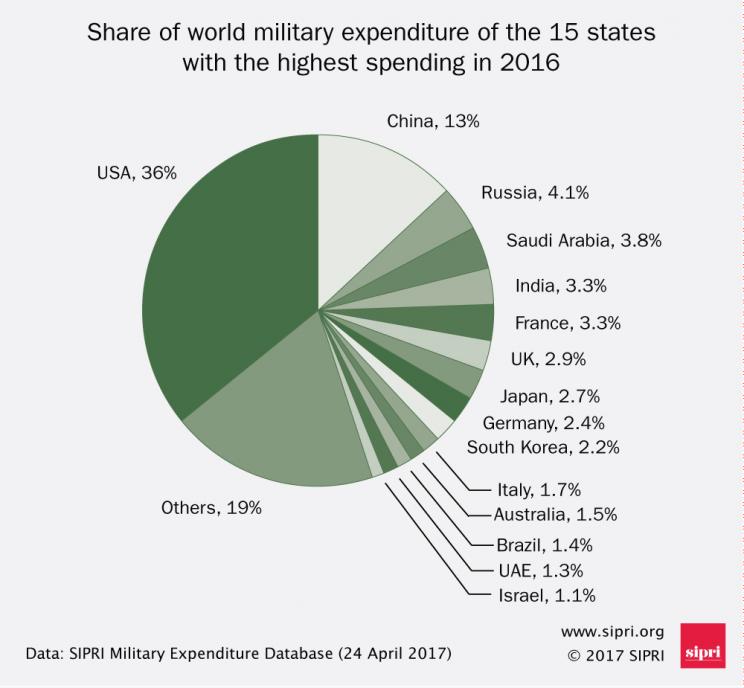
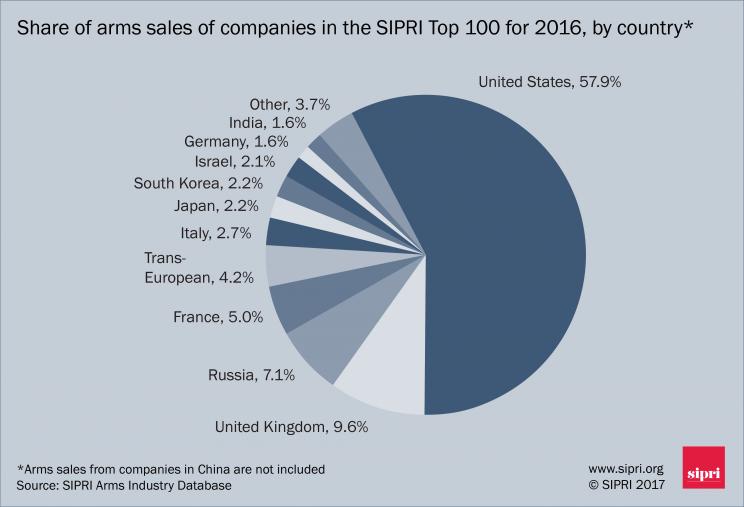
In every measurable way, the U.S is head honcho of the global violence industry: it is the biggest arms exporter, it dominates global military spending, it sold a majority of guns, globally, in 2016, with the UK in second place at just under 10%, and it has been the leading arms dealer in the world for 25 of the past 26 years.
It’s hard to estimate how many deaths the US is responsible for overseas, especially indirect ones and those that have resulted from illegal gun trading (which is how most guns arrive in Mexico). But analyst Nicolas J.S. Davies estimated that “about 2.4 million Iraqis have been killed as a result of the illegal invasion of their country by the United States and the United Kingdom” and “about 1.2 million Afghans and Pakistanis have been killed as a result of the U.S. invasion of Afghanistan in 2001” and more in Libya, Somalia, Syria and Yemen.
It’s important to consider how the U.S’s violence overseas could be contributing to a culture of violence and a glorification of murder within it’s borders. It’s also important to remember how profitable the guns and ammunition industry is, and that like the drug trade, US companies have every interest in a strong demand for guns in and outside US borders.
An IBIS report on the guns and ammunition manufacturing industry noted that “In response to a weakening domestic military market, industry players have increasingly sought growth in exports.” That growth in exports has been a key factor in the percentage of murders here committed with guns increasing from 15% in 1997 to 66% in 2017. Now, there are around 300 million guns in Mexico – despite the fact that the country has just one shop (hidden discretely down a small lane in the capital) where they can be bought.
The figures are almost bad in nearby Central American countries El Salvador and Honduras – both with some of the highest murder rates in the world. In El Salvador, between 2014 and 2016, 49% of recovered guns had been originally bought in the US, and for the same period in Honduras, 45% were originally bought in the US. Indeed, while the mainstream, Western media focuses on the drug trade across the Americas, it is gun traffickers coming from the US who are exploiting US gun laws to sell guns over the border.