A lot of residents who make Bangalore their home from another country or state tend to suffer from acute breathing allergies from September to April, which is the high allergy season in Bangalore. Infact over the years, long time residents also begin to suffer from respiratory issues. During this time, many residents suffer from constant runny nose and difficulty in breathing. “ We met with several doctors, but they simply prescribed antibiotics for the infections,” said Sulakshana V who has made Bangalore her home since coming back to India from the US. “ No one was able to really diagnose the underlying problem. Next allergy season, I started showing the same symptoms once again.”
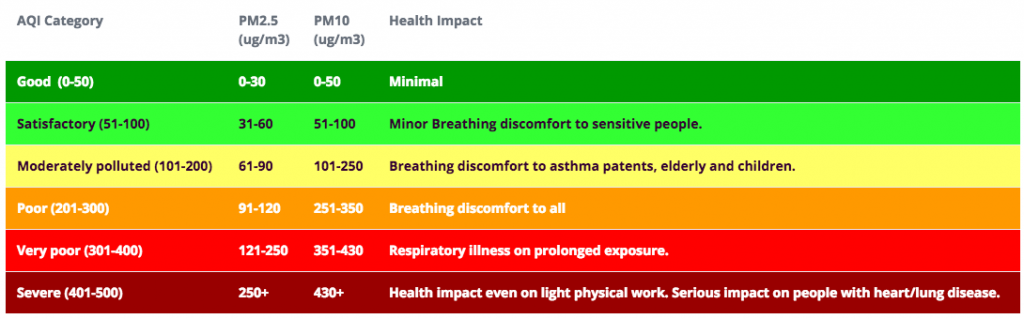
How many of us realise how bad the air quality in Bangalore really is. Check Aqicn.org which publishes real time air quality map for several parts of the world, including 70+ locations in India. As per this map, air pollution levels in Bangalore are actually better than most other major Indian cities. Infact today when I checked the report was ‘Good’ which is a relief for people who suffer from respiratory ailments, and yet there are seasons when they do.
Aqicn.org
Most of us do not realise that we need to know the air quality in and around our homes under different living conditions. In a media workshop on air quality that I attended in Bangkok, Daniel Kass of Vital Strategies and who has worked for 30 years in environmental health in NYC explained that air pollution is a complex mixture of gases and aerosols which are suspended solid and liquid particles. How many of us, the common man know this?
Kass explained that, particle pollution ( PM) is the most measured and an important pollutant that we need to be concerned about. This is dust, soot, smog or smoke. The chemical components of the PM vary according to the source of the pollution. Sources of PM include household fuel consumption, especially from solid fuels, tobacco smoke,power generation from coal or burning of waste, including agricultural and forests. Motor vehicles which include the worst offenders being diesel engines. PM is emitted directly from fuel combustion and formed from reactions with the atmosphere.
Naturally, the health risks from PM depends on the particle size. There are two types of particles:
PM 2.5: These are small particles measuring 2.5 micrometers or less. These small particles consist of things like vehicle exhaust, soot and ash from burning of garbage and small metal particles etc. Prolonged exposure of these is extremely harmful.
PM 10: These are larger particles measuring between 2.5 to 10 micrometers. Examples of these are pollen, dust and particles generated from building activity. These particles are relatively less harmful and usually only cause upper respiratory tract issues like allergic rhinitis and asthma. These particles are the reason many residents of Bangalore suffer from asthma.
Particles below 2.5 microns ( PM 2.5) are most harmful as they penetrate deep into the small airways and air sacs of the lungs; the smallest particles according to Kass can even pass into your bloodstream.
Larger particles between 2.5 and 10 microns in diameter are deposited in the larger airways. The WHO has air quality guidelines for both PM 2.5 and PM 10 with an annual mean of 10ug/m3 and 20 ug/m3 respectively.
There are other air pollutants that we should be aware of:
Nitrogen Dioxide ( NO2) This is formed by fuel combustion used for heating, power generation and engines in vehicles and ships.
Sulfur Dioxide ( SO2): This is formed by the combustion of sulfur containing fossil fuels for domestic heating, power generation, ships and motor vehicles.
Ground level Ozone (O2) How many of us are aware of this pollutant? This is formed by photochemical reactions in the sunlight between emission from vehicles and industrial factories.
Outdoor Air Pollution or ambient air pollution is the air pollution outside homes and buildings. According to research, in 2016 outdoor air pollution caused 4.2 million deaths worldwide and 91% of the population are living in conditions with air pollution above the World Health Organization (WHO) guidelines.
The sources of outdoor pollution include traffic related air pollution which is a mixture of tail-pipe emissions and from the combustion engines of motor vehicles with diesel being the most polluting. Particles from brakes, tyres, road dust also contribute to pollution on roads.
Household air pollution is mainly in the 3 billion poor who rely on poor quality fuels like biomass ( wood and dung) kerosene, coal for cooking and lighting their homes. These polluting fuels combined with poor ventilation is the cause of air pollution in these homes being 100 times higher than acceptable levels.
So, how does one deal with breathing problems and air pollution?
Moving to a different location within the city is unlikely to help Moving to a higher story apartment is also unlikely to help Air purifiers in the house do work, and we could use them Knowing that PM 10 is what causes our troubles, we should do whatever we can to minimize our exposure to these particles.
We could look at measures to help ourselves:
In India, Jal neti: Jal neti is a process in which you pour water through one nostril and allow it to flow out through the other nostril. In the process, the water cleans up your sinus. Frequent cleaning of sinuses helps reduce your lungs’ exposure to allergens. This has really worked for me,every allergy season.
Breathing exercises: Breathing exercises and yoga could help accelerate body’s resistance to these allergies. Asthma and rhinitis are reactions of your lung to the entry of foreign particles. They react by generating excessive mucus and by constricting which helps trigger coughing reaction. Basically, your lungs try to expel the unwanted foreign particles in any possible way. However, in the process, they are making breathing more difficult for you. This is where yoga and breathing exercises come into picture. These exercises will make your lungs stronger and increase their capacity.
The broad-based opposition to massive austerity in education has provoked a threatening directive from the UK Conservative government to school staff to stay silent on the terrible impact the cuts are having on education.
An update issued by the government’s Department for Education (DfE) to all schools as they returned from the summer break—billed as departmental advice for school leaders, governing bodies and local authorities—contained a new paragraph with a blunt statement in a staff management section.
In the document titled, “Staffing and employment advice for schools,” the section reads: “All staff have a responsibility to ensure that they act appropriately in terms of their behaviour, the views they express (political views) and the use of school resources at all times, and should not use school resources for party political purposes.”
A DfE spokesman added, “This update simply brings … guidance in line with the law, which makes clear that headteachers and local authorities must not promote partisan political views in school.”
The warning, first reported by the Schools Week newspaper, comes after campaigns by school leaders over budget cuts since 2016, which included lobbies of parliament by head teachers and letters sent to parents across the UK informing them of the impact of cuts, and calling on them to lobby MPs.
The government reaction, to what is a very limited opposition organised by the trade unions, must be seen as a warning, that not only will school cuts continue unabated, but that the government will move forcefully against any attempts to block their agenda.
Austerity has had a devastating impact on sectors in education across all regions.
Research has found that more than one in three schools in England ran an operating deficit last year, with hundreds of schools having dipped into their reserves for three or four years in a row.
The education unions updated their campaigning website, School Cuts, to include the new national formula and found that nearly nine out of 10 schools would see cuts in real terms by 2020.
According to the unions’ calculations, a typical primary school will be worse off annually by £52,546, and a typical secondary school will have lost £178,000 each year since 2015.
There have been cuts of £2.8 billion since 2015, with a £45.4k average cut to primary schools and £185.2k average cut to secondary schools. Per pupil funding has been cut by almost 8 percent since 2010, and compared to last year, schools have 5,400 fewer teachers, 2,800 fewer teaching assistants and 2,600 fewer support staff.
According to the Association of School and College Leaders, schools require a further £2 billion a year between now and 2020 if they are to be able to deal with previous budget cuts. Since 2015 alone, schools have suffered a real-term cut in funding of £2.7 billion.
Jules White, a headteacher behind the Worth Less? national group of school leaders that has organised letters critical of the government on the funding allocation to education, said: “If expressing political views is about biased and ill-judged grandstanding by heads and teachers, then I fully support the DfE’s views.
“If, on the other hand, the DfE wishes headteachers to be gagged as they simply tell the truth about the financial and teacher supply crisis that our schools are facing then this is unacceptable.”
Last year, Worth Less? organised 5,000 headteachers to lobby the government, while White and his colleagues oversaw a letter sent to an estimated 2.5 million households via pupils from thousands of state schools.
The directive takes place under conditions of growing opposition to attacks on wages and conditions by teaching staff. The school year opened with a major recruitment crisis in the sector. Forty thousand teachers quit in 2016 and there is a shortage of 30,000 currently in the sector. The government has ignored the pay review bodies’ recommendation of a paltry 3.5 percent pay rise, after years of wage freezes.
This has resulted in England’s teachers receiving the second biggest pay cut among teachers in the developed world.
Only teachers in Greece—where the education budget has been slashed by more than a third over a decade of austerity cuts—have taken a bigger hit than in England, where teacher pay fell 10 percent between 2005 and 2017, according to OECD reports.
The directive was met with an angry response by headteachers and teaching unions have said they will defy any attempts by the Department for Education to block criticism.
While claiming they will support the democratic right of teachers to speak out against the onslaught on public education, educators must view such claims with extreme caution. The teaching unions have done nothing to mobilise their members, who are angered by the dire crisis in school age education and have repeatedly overturned strike ballots in favour of organising lobbies and petitions that have done nothing to prevent the government’s agenda being enforced.
The government’s reaction, in seeking to curtail basic democratic rights, reveals how futile the token campaigns organised by the unions are.
The move by the government to censor teachers must be opposed by all teachers. If such draconian measures are imposed, they will no doubt be expanded to clamp down on workers’ opposition throughout the public sector.
Opposition to this cannot be entrusted to the unions, who, despite posturing against the cuts, have organised no unified offensive to oppose them. No concrete campaign has been outlined by the unions or Labour Party to oppose an unprecedented attack on the democratic rights of hundreds of thousands of education workers.
Quoted in the Guardian, Geoff Barton, the general secretary of the Association of School and College Leaders, played down the authoritarian measures being imposed, merely stating, “It is perfectly reasonable for school leaders and teachers to be able to articulate their concerns … and it is clearly in the public interest for them to have a voice. You cannot disenfranchise 450,000 teachers from talking about education.”
On behalf of the Labour Party, Shadow Education Secretary Angela Rayner issued a perfunctory response, noting that the government “may hope to silence teachers, but they can’t get away from the fact that they will have cut £3bn from school budgets by 2020.”
The struggle to defend education must be based on a unified campaign amongst teachers, parents and the wider community, based on rank-and-file committees established independently of the unions, against austerity and privatisation and based on socialist policies.
Last month, authorities sentenced teacher Mohammad Habibi, a leader of the Iranian Teachers’ Trade Association of Tehran (ITTA-Tehran), to a 10-and-a-half-year term in jail and 74 lashes.
According to the International Alliance in Support of Workers in Iran (IASWI), Habibi was arrested on May 20, along with 13 others, after security forces and undercover agents attacked and broke up a peaceful ITTA demonstration in Tehran. It was one of several rallies organised in cities throughout the country by the Coordinating Council of Iranian Teacher Trade Associations to protest low wages, inadequate funding of education, privatisation of schools and the ending of free education. This follows repeated protests by teachers in recent years over the government’s education policies.
Habibi’s arrest occurred just days after being released from 44 days in detention after being violently arrested outside his school on March 3. While all the others were freed the following day, Habibi was put in solitary confinement in Tehran’s largest prison, where he has suffered beatings and was denied hospital treatment for his injuries. Ill-treatment in Iran’s prisons is widespread, with several reports earlier this year of prisoners’ deaths the authorities claimed were suicide. The number of prison deaths is believed to be very much larger than officially reported.
Habibi’s harsh sentence and beating are part of a broader campaign of intimidation aimed at suppressing opposition to the bourgeois-clerical regime’s efforts to impose the full burden of Iran’s economic crisis on the backs of the working class and young people—more than 60 percent of Iran’s population are under 30 years of age.
Last May, Amnesty International appealed for the release of Esmail Abdi, a teacher and trade union activist serving a six-year prison sentence imposed in November 2016 for “spreading propaganda and committing national security crimes.” Abdi had been on hunger strike since April 24 protesting Iran’s suppression of trade unions and the harsh conditions inside Tehran’s infamous Evin prison.
This year has witnessed increasing social and economic unrest among all layers of the Iranian working class over high unemployment and soaring inflation—Iran’s currency has fallen by 70 percent against the US dollar in the last year—following demonstrations initially organised by hard-line forces in Mashhad in December that burst out of their control. Last month, there were strikes at the Haft Tapeh Sugar Cane Mill, Iran National Steel Industry Group (INSIG) in the south west city of Ahvaz and by rail workers throughout the country over unpaid wages, and rallies by hundreds of sacked workers at the Khorak Dam (Cattle Feed) factory in Mashhad demanding their reinstatement. There have also been protests against local and national officials, business chiefs and the religious establishment of Shi’a clerics.
Almost the entire country is suffering from water shortages after a decade-long drought, prompting protests that have been violently dispersed by the police, leading to at least one death. Reports of traders hoarding goods, including medicines, foodstuffs and diapers, along with rampant profiteering on the black market, have fuelled the anger.
The regime has responded with a brutal crackdown, with the various security forces killing more than 20 people and arresting hundreds more. Many are still awaiting trial, while others have received heavy sentences. The authorities have also moved swiftly to close newspapers and social media accounts that express even mild criticism of the regime’s policies or circulate images and reports of political unrest, labour strikes, and protest rallies.
Earlier this month, Iran’s top prosecutor ordered the closure of the Sedayeh Eslahat newspaper, aligned with the reformist faction of the political establishment, on charges of “insulting” Shi’a Islam. Last month, the courts jailed seven journalists and ordered their flogging in public because of coverage of protests by the Dervish minority. Also arrested were four human rights lawyers.
The ongoing social unrest takes place amid increasing US imperialist pressure on Iran. Since coming to power in August 2013, the government of President Hassan Rouhani has accelerated privatisation and slashed social spending as part of an attempt to attract investment following the Joint Comprehensive Plan of Action (JCPOA) signed with the US, Britain, France, Germany, China and Russia, whereby Tehran agreed to drastic curbs on its nuclear programmes in return for a step-by-step easing of international sanctions. To this end, it rewrote the rules governing investment in the oil sector to satisfy Total, Shell, Eni and other European energy giants.
The promised benefits from the deal were slow to emerge, even before US President Donald Trump unilaterally scrapped it, re-imposing punitive sanctions and secondary sanctions on countries trading with Iran and prompting major multinationals to pull out of Iranian trade and investment. Washington’s plans to re-impose curbs on Iran’s ability to buy US dollars, along with any global trading in Iranian products including oil and gas, will have a calamitous impact on Iran’s already stalling economy.
While Washington’s ostensible purpose is to force Iran to accept a more stringent agreement that would curb not only Iran’s nuclear programme but also its broader political activities across the Middle East, the US is “weaponising” economic sanctions to bring about regime change.
The US is also taking direct measures to stir up dissent, with similar methods used, as some commentators have noted, during the CIA destabilisation campaign aimed at Iranian prime minister Mohammad Mosaddeq in 1953. In June, Rudy Giuliani, Trump’s legal adviser, called for the overthrow of the Iranian regime and boasted that the protests that started last December were orchestrated from outside Iran. He said that they “are not happening spontaneously,” but because of “our people” in Albania (where the Mojahedin-e-Khalq Organisation, MEK, is headquartered) and Paris.
He was speaking at a rally in Paris, organised by the National Council of Resistance of Iran, a front organisation for the MEK, which Washington listed as a terrorist organisation until 2012 and which is believed to have support from Saudi Arabia and Israeli intelligence. Also attending the Paris conference were 33 senior US officials and military brass, Stephen Harper, the former prime minister of Canada, and three Conservative and one Labour legislator from Britain.
Washington’s abrogation of the JCPOA treaty has provoked bitter factional infighting within the political establishment, with members of parliament even calling for Rouhani’s impeachment. Last month, the government fired the head of the Central Bank of Iran (CBI) and abandoned its efforts to limit trading in the rial to a fixed exchange rate while the labour minister has been impeached and dismissed.
Supreme Leader Ayatollah Ali Khamenei blamed the Rouhani government for the economic crisis and banned any further negotiations with the US. He had previously blamed the economic crisis on foreign countries and was widely believed to have agreed to the JCPOA deal, so his change of tack indicates the extreme nervousness at the top of the Iranian hierarchy at the desperate economic and political situation confronting the leadership.
The central bank has already started to raise interest rates from their already high official rate of 15 percent—in reality, much higher—to shore up the currency that will in turn trigger massive debt defaults and fuel inflation, unemployment and poverty.
Rouhani’s government has sought to introduce four separate pieces of legislation aimed at satisfying the requirements of the Financial Action Task Force (FATF), a Paris-based global intergovernmental organisation linked to the OECD that focuses on anti-money-laundering and countering the financing of terrorism. Failure to meet the FATF’s demands by October would mean that Russia and China, as well as the imperialist powers, would stop dealing with Iran. But such are the divisions and reliance on money-laundering and opacity within the ruling elite, which fears that greater transparency in the banking system could sabotage efforts to circumvent US sanctions, that it is far from clear that Rouhani will able to deliver the necessary legislation.
Factional infighting has also made it difficult for the government to secure agreement on short-term palliative measures, including subsidies and rationing, aimed at ameliorating the devastating impact of US sanctions on the poorest social layers, that would rapidly use up what remains of Iran’s energy earnings.
On Thursday morning, a gunman opened fire at a Rite Aid distribution center in Aberdeen, Maryland, killing three people and injuring three more. The suspected shooter, Snochia Moseley, was found dead at the scene and is believed to have fatally shot herself.
According to accounts of coworkers given to police, Moseley was a disgruntled employee at the distribution center. Previously a security guard at the facility, she was working as a temporary worker at the same location at the time of the shooting. Her exact motives remain unclear.
The Rite Aid distribution center is a large warehouse, sitting next to an Amazon warehouse of similar size. While the conditions at Amazon warehouses are particularly egregious, the same exploitation, in different degree, exists in other warehouses.
Politicians responded by piously lamenting the tragedy without providing any explanation of the regularity of mass violence in the United States. Republican Governor Larry Hogan tweeted “Our prayers are with all those impacted, including our first responders. The State stands ready to offer any support.”
Democratic Senator Ben Cardin echoed this in his own tweet, saying “Details are still emerging, but I've met with the Harford County Executive and Sheriff to offer my sincere condolences. I wanted to be there in person to thank them, as well as the many first responders and federal law enforcement on the scene for their swift responses.”
He also put forward gun control as a palliative for these shootings. Cardin continued, “There is no rational reason we should not close the loophole that allows some gun purchases to occur without a background check or reinstate the assault weapons ban,” but had no other ideas for combating gun violence.
Images and video of police raiding the warehouse with shotguns and assault weapons and of police individually patting down employees appeared on the Washington Post .
Shootings also occurred this week in Wisconsin and Pennsylvania. In Wisconsin, software developer Anthony Tong shot four people at his office on Wednesday, seriously wounding three, before being killed himself in a shootout with police. He had worked at WTS Paradigm, and his motive remains unknown. A nearby shopping center was placed on lockdown at the request of the police.
The Middleton police chief responding to the shooting said, “I think a lot less people were injured or killed because police officers went in and neutralized the shooter.”
In Pennsylvania, Patrick Dowdell shot three people at a courthouse where he was due to appear for domestic violence charges on Wednesday. He was shot and killed by police at the scene as well.
These recent episodes of gun violence are only the latest in a long line of mass shootings in America. That three separate shootings occurred in the space of two days is not exceptionally rare is a testament to the frequency of gun violence in the US.
According to the Gun Violence Archive, “There have been 262 American mass shootings (4+ shot or killed in the same incident, not including the shooter) in the 263 days of 2018.” There have been 1,800 mass shootings in the US since 2013.
That mass shootings have become a near-daily phenomenon is a symptom of a society in deep crisis. Political figures issue the standard laments after each tragedy, accompanied by inevitable calls for increasing the powers of the state. These eruptions of violence, however, cannot be separated from the glorification of militarism and the general brutalization of social relations in America, promoted by the entire political establishment.
In the most unequal country in the world, the most psychologically fragile snap and erupt in violence. Mass shootings are only one of the more palpable consequences of this larger trend.
Women are not dying because of diseases we cannot treat…They are dying because societies have yet to make the decision that their lives are worth saving
– Mahmoud Fathalla, Chair of the WHO Advisory Committee on Health Research
Inclusive growth is now perhaps the strongest buzzword in development discourse. We have all been talking about growth without understanding that development interventions will not be effectual if they don’t benefit all sections of society. The illusion of trickle-down and ripple-effects of growth had kept us on the wrong track for quite long.
Development programmes have delivered good outcomes for some segments of society, but sadly only marginal or zero sum for others. It is this realisation that has prompted policy-makers to draft strategies that can deliver outcomes that benefit everyone. An important new learning is that health or healthcare is a key component of inclusive growth. It is an important piece in the development ecosystem, in independent India too inclusive health was identified as a hallmark of the country’s policy architecture.
As the Organization for Economic Co-operation and Development (OECD) puts it: “Adults in good health are more productive; children in good health do better at school. This strengthens economic performance, and also makes economic growth more sustainable and inclusive”. In fact it is much less expensive to produce healthy children than to keep repairing ill born ones.
Healthcare has now become a critical leverage point where Government action could have the maximum impact. The Government’s development wisdom is now focused on identifying the strategic leverage points where successful action could trigger many supportive reactions rather than fixing everything everywhere.
This year marks the 40th anniversary of an important signpost in the world’s history of healthcare. At a conference on October 25–26 in Almaty, Kazakhstan, the Alma Ata Declaration was adopted by the World Health Organization (WHO) with a pledge to focus on primary healthcare. The vision was to bring healthcare closer to people, by creating a network of rural dispensaries.
Since then, there have been continuous efforts for establishing strong primary care systems in local communities in a bid to achieve universal healthcare (UHC). The results have not been uniform on account of several policy deficiencies. The pursuit of ‘vertical’ programmes (targeting a single disease) has resulted in health services functioning in silos, in an uncoordinated manner and being unable to respond to people’s real health needs, which are complex and can be addressed only by a range of healthcare channels.
India now seems to have awakened to the glaring realities of its healthcare system. The National Health Policy 2017, the first comprehensive health policy document after the last policy was issued 15 years ago in 2002, is an evidence of this intent. As Prime Minister Narendra Modi put it, “The National Health Policy marks a historic moment in our endeavour to create a healthy India where everyone has access to quality healthcare.”
The NHP reckons four major contextual changes that perhaps motivated the overall policy approach: Increasing burden of non-communicable diseases (NCDs) and certain infectious diseases; robust growth of the healthcare industry; high incidence of catastrophic healthcare spending by households; and an enhanced growth-enabled fiscal capacity of India.
The 71st National Sample Survey (NSS) January-June 2014 revealed that out of the total hospitalisation cases in rural areas, 58 per cent were in private clinics and 42 per cent were in public hospitals.
The corresponding figures for urban areas were 68 per cent in private and 32 per cent in public. Of a total of 628,708 Government beds, only 196,182 are in rural areas. India is regarded as the world’s pharmacy bowl, but ironically, a huge proportion of its population sinks into the poverty pit every year due to highly expensive medicines, mostly for cancer, heart ailments and serious injuries that maim most of the victims.
There is a massive shortage of healthcare professionals in the country and their supply must therefore be expanded rapidly if we want to fulfill our commitments in this sector. Country-wise availability of doctors per million people (World Bank Report) Cuba: 7519, Russia: 3975, China: 3625, UK: 2825, US: 2568, Brazil: 1852, Pakistan: 978, Sri Lanka: 881, South Africa: 818, India: 758, World Average: 1857,
All these point to a need for more local community-owned and community-designed model of healthcare which also incorporates the experience of traditional health systems. In the third century BC, emperor Ashoka is believed to have said, “I am going to propagate medicinal herbs throughout my kingdom to ensure complete accessibility to all my subjects as it is my ethical responsibility to provide good health to all people.” The country has 750,000 medical practitioners of the traditional medical systems of Siddha, Unani, Ayurveda, and Homeopathy (AYUSH). They receive five and a half years of medical training, and about 70 percent are legally permitted to prescribe allopathic medicines. While most are based in rural areas (unlike their MBBS counterparts), there are few professional options for them and there has been no concerted effort to integrate AYUSH practitioners into the primary care level, which could fill the gap of doctors practicing in these areas.
One of the obvious reasons is the strong resistance from the allopathic practitioners particularly bodies like Indian Medical Council which would not allow dilution of its standards. Several areas continue to be serviced by quacks and faith healers .Wisdom demands that we work out a an acceptable model of healthcare that combines the best features of all systems and is at the same time safe and affordable.
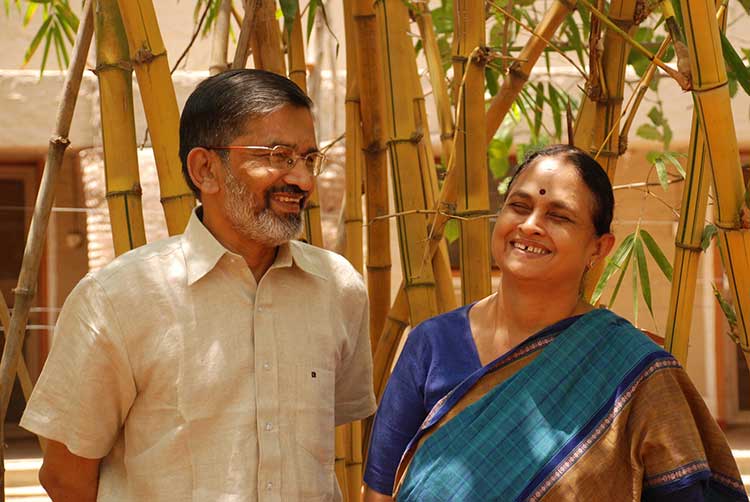
Doctor couple Abhay Bang and Rani
India has been home to several internationally acclaimed home-grown models of community healthcare. The earliest innovators were two doctor couples in Maharashtra: Abhay Bang and his wife, Rani in Gadchiroli and doctor Raj and Mabelle Arole in Jamkhed separated by a distance of 664 kms. The Bangs set up the charity SEARCH (Society for Education, Action and Research in Community Health) in 1985, whereas the Aroles founded the Comprehensive Rural Health Project, (CRHP) in 1970. CRHP is a comprehensive approach to primary health care at the community level, mobilising communities to use simple tools, adapted to the local context, to address priority health needs. In 1972, the World Health Organisation officially recognised CRHP’s pioneering work in villages, also known in the global health community as the Jamkhed model. The innovation of this approach lies in involving the communities themselves, especially those who are poor and marginalised, in designing their health and development programmes. Through their ‘Shodh Gram’ hospital, the Bangs operate their home-based new-born care model. This model does not depend upon doctors, nurses, hospitals or expensive equipment. It empowers women to use simple medical knowledge and skills to save their new-borns.
Instead of villagers having to walk for miles to get to the nearest hospital, health visitors (called arogyadoots, which means ‘health messengers’ visit remote locations carrying a small health kit pack on their back. As more women are trained, they pass on their knowledge to others, and entire communities become empowered.
The insistence that patients must be treated in ‘techno-centric’ hospitals by Western-trained physicians is to the minds of Bangs, ridiculous, particularly in rural India, where lack of transport and low income levels make modern healthcare inaccessible.
Prema Gopalan Pinoeer of Arogya Sakhi movement
A relatively recent innovation is the Arogya Sakhi model promoted by Prema Gopalan in western Maharashtra who established the acclaimed non-profit Swayam Shikshan Prayog (SSP), which selects and trains women who are landless, but have basic education, are interested in healthcare and community service. These Arogya Sakhis are equipped with health devices, such as glucometers, blood pressure machines. Along with a mobile tablet, they visit rural women door-to-door to conduct basic medical tests.
The sakhis charge a nominal fee of Rs 150 from each individual, which includes cost of generation of rep-ort, printing charges, doctor’s fee, conducting tests, and even delivering the reports at door steps. After accounting for all costs, a sakhi is usually able to earn Rs 50 to Rs 70 per beneficiary.
“These women conduct a series of preventive tests using mobile health devices, capture the data by using a tablet and upload the results on the cloud server developed by our technology partner,” says Gopalan. The data is then shared with a doctor, who analyses it and provides a report and prescriptions over the cloud. The sakhis then guide the patients on the treatment and precautions to be taken. Wherever needed, they are referred to SSP’s partner specialist doctors and hospitals for further treatment.
Since many villages have scarce medical facilities, the sakhis are also trained to provide medical help related to minor burns, cuts, joint pains and other ailments, for which they charge nominal fees. The movement has now reached deep pockets. There are now 150 Arogya Sakhis who have reached out to more than 500 villages. They present a unique human resource to be deployed to helping people with both physical and mental disorders.
SSP was awarded the sixth Billionth South Asia Award 2015 in M-Health category for this technology enabled-project implemented in partnership with Sofomo Embed-ded Solutions Pvt ltd. Any visitor to villages, where these community healthcare models are primary drivers of health awareness, will marvel at the ability of these health workers to connect with and explain things to women.
Their lack of education is not a handicap; it is an advantage. They understand how to reach the people who most need reaching: Illiterate, vulnerable and poor village women. They know how they think and live, because they are one of them. Co-designing co-creating, and co-owning health services is an increasingly effective and scalable path to inclusive health. Putting people and communities in charge of their own healthcare leads to better outcomes and increased productivity by leveraging traditional knowledge and local healing plant material.
The government too has embraced the lessons from these grassroots initiatives and the public health programmes are modeled round them. The community health worker, including cadre such as the ASHA worker and the Auxiliary Nurse Midwife, are indeed the foundation of our public health care system. They have played a central role in the success of our public health programmes which substantially reduced maternal and child mortality.
An ASHA (Accredited Social Health Activist) is a community worker who is appointed to assist pregnant women to avail themselves of their health entitlements. There is one ASHA for every 1,000 women. Her job is to spread awareness about antenatal care, ensure that women go to hospitals for deliveries, and receive proper care during childbirth and the postpartum period. Many ASHAs accompany women to a health facility for antenatal check-ups, delivery and postnatal check-ups.
Baby Fakira Sidame is an ASHA worker, or frontline health worker in villages in the Yavatmal district of Maharashtra. Chosen by her village as their health representative, Baby mobilizes her community to bring their children for routine immunizations, and provides counselling to pregnant women and new mothers about breastfeeding, vaccinations, hand-washing, and other basic health needs. She also runs a day care centre for young children in the community, providing basic education and lunch.
“Drastic changes have occurred. No one used to do family planning. Many children suffered from polio, many of whom died or were not able to walk. But over the last five years that I have been working, I have been able to reach out to these families through home visits, through meeting them and informing them about better health practices and vaccination. Now there are a lot of changes happening in these communities. People are adopting family planning and coming for vaccination and keeping good hygiene practices. We are trying to do our best and continue to improve our results. Immunization is very important. It is like holy water. It will save children from polio, diphtheria, pertussis, tetanus, and measles. If a child gets immunized, then my community becomes healthier.
“And similarly, my country will also become healthy. When a hungry child gets fed at my centre, I take great pleasure in seeing that that child is full. Also when a child comes to my centre and gets a vaccination on time. Seeing those cheers on the faces of the children brings me great happiness. That’s what motivates me,” says Baby. A highly laudable vision.
Corporate India too has been quite alive to these indigenous models and has been replicating it through either their CSR or social business programmes. Through ‘Aarogya’, the health initiative under its CSR programme, Tata Motors operates mobile health clinics for remote tribal community outreach, offering last-mile aid. Aarogya also focuses on maternal and child health, with a holistic and balanced approach towards preventive healthcare and curative healthcare interventions. The Company has tied up with nutrition rehabilitation centres across India to raise awareness on the health of children, pregnant women and lactating mother
Arogya Parivar, another successful community-centric health model, is a sustainable social business initiative by Swiss drug maker Novartis, and not a Corporate Social Responsibility project. Social business is a for-profit model whereas CSR is not-for-profit. The awareness generated in remote villages by the Aarogya Parivar animators is followed-up with a doctor close by or by connecting via the internet to a doctor at a larger hospital who helps with diagnosis. Given the magnitude of the healthcare challenge in India, philanthropy is not enough. We also need scalable business models that take into account the needs of society
At present about 24% of the total spend on CSR is focused on healthcare. However, much of the spending tends to be focused on health camps and building hospitals or donating to hospitals for upkeep of facilities. Health camps tend to have a short-term orientation and are number driven. Setting up and running hospitals are often poorly targeted. There is a need to focus on primary care rather than tertiary care. The local youth could be trained to advice residents on simple treatments. Community health works, supported under CSR, could help with basic diagnostics like blood pressure, pulse, and sugar testing.
India is now a far better placed to make inclusive health a reality. An enormous social capital has been built up over the years. It can be leveraged to support innovations in healthcare for development of new and affordable drugs, therapies or medical devices.
Public policy needs to actively promote those innovations that can accelerate our journey to universal healthcare: Increased access, quality and affordability of health care; increased responsiveness of the system to healthcare needs; greater health equity; autonomy in healthcare choices; and above all, improvements in the social determinants of healthcare.
The European Union (EU) has advanced plans for the continent-wide censorship of the internet. Giving his final State of the Union speech last Wednesday, European Commission President Jean-Claude Juncker outlined plans to compel online platforms to take down “terrorist content” within one hour of it being flagged by national authorities.
Failure to comply will result in fines of up to four percent of the offending company’s annual global turnover.
These proposals have vast, grave implications for the democratic right of hundreds of millions of people to access and use the internet freely. The law will mean EU members state governments and national security services will determine what is acceptable for publication on the internet—with no reference to the courts or any kind of democratic oversight. The one-hour time limit for removing content will force platforms to prevent certain postings lest they run the risk of sanctions.
The measure will make little difference to the major tech companies, who are already censoring their platforms and employing tens of thousands of people to enforce it. But the legislation will be used to strictly police more independent outlets. That this will be primarily at the expense of postings seen as “damaging” to the corporate and financial elite is obvious.
The plans envisage a “mitigation procedure” that allows platforms the right to challenge a removal order, but the content must still be removed. Only if an appeal is successful will content be restored to the site.
A critical element in the moves to police and fine the tech giants—who are all US based—is to assert the dominance of Europe’s governments over US corporations. Under conditions of a fracturing of relations between the US and EU, with the launching of reciprocal trade war measures, the European elite wants to ensure that the internet is compatible with their interests.
Once accepted by member states and the European Parliament, the law will formalise across Europe even closer relationships between state security services and tech companies pioneered by Germany and increasingly adopted by other European nations.
The Network Enforcement Act, which came into operation in Germany on January 1, requires operators of internet platforms with over two million users to “remove or block obviously unlawful content within 24 hours of receipt of a complaint.” Failure to comply incurs a fine of €50 million.
Platforms must report to government authorities regularly on their handling of complaints and inform them on who wrote controversial statements. Germany is home to a 10,000 square-meter office building, currently occupied by 1,000 staff, for Facebook’s “fact checkers” in Europe.
In July, the French National Assembly passed an anti-“fake news” bill allowing judges to censor not simply “fake” information, but material containing “any allegation or implying of a fact without providing verifiable information that makes it plausible.”
In August, the UK parliament’s Department of Culture, Media and Sport Select Committee released an interim report on “fake news” which suggested the government assign verification ratings to web sites and establish “a new category of tech company” with a “clear legal liability” to “act against harmful and illegal content.”
The scale of the censorship planned by the EU is immense.
For the last six months, online platforms have been acting under the guidance of a European Commission official recommendation demanding “proactive measures” against “any information which is not in compliance with Union law or the law of the member state concerned.”
The recommendation was introduced on March 1, with the acknowledgement that online platforms were already censoring their users to an unprecedented degree but insisted that more had to be done.
The EU’s Digital Commissioner Andrus Ansip said at the time, “While several platforms have been removing more illegal content than ever before... we still need to react faster against terrorist propaganda and other illegal content which is a serious threat to our citizens’ security, safety and fundamental rights.”
Prior to this announcement, YouTube had removed nearly two million videos between June and December 2017. Twitter suspended 1.2 million accounts between August 2015 and December 2017, removing 300,000 accounts between January and June 2017. Facebook “took down more than 30,000 fake accounts” during the 2017 French general election. Both Google and Facebook laid out plans to hire more than 10,000 staff to police their content and both put in place algorithms to suppress “untrusted” or “divisive” material on their platforms.
Even this is not enough. More content is to be taken down or be prevented from even being published in the first place. In Juncker’s words, “Whilst significant progress has been made under the EU Internet Forum established in 2015, it is clear that more needs to be done to ensure the engagement of all internet platforms and national authorities to protect Europeans online...”
In response to Juncker’s speech, Facebook issued a statement saying, “There is no place for terrorism on Facebook and we share the goal of the European Commission to fight it, and believe that it is only through a common effort across companies, civil society and institutions that results can be achieved.
“We’ve made significant strides finding and removing terrorist propaganda quickly and at scale, but we know we can do more.”
YouTube said it “shared the European Commission’s desire to react rapidly to terrorist content and keep violent extremism off our platforms.”
Juncker claimed, “Several of the recent terrorist attacks in the EU have shown how terrorists misuse the internet to spread their messages.”
In fact, the most serious terror incidents in Europe have been carried out by organisations or individuals known to the security agencies. A large number have been active in, and supportive of, the proxy forces used by the Western imperialist powers to pursue their geo-strategic aims in the Middle East and Africa.
While the proposed measures deal specifically with “terrorist” content—whose definition will be up to the censors—previous guidelines have used even broader categories of “extremist” or “grossly offensive” material to enforce its removal.
The now default resort to the threat of “terrorism” in order to justify draconian censorship by the authorities is a fraud. These measures have nothing to do with protecting Europe’s population from terror attacks. Rather, they are designed to gag them in the face of austerity, militarism and the build-up of right-wing forces across the continent.
Juncker’s call for unprecedented levels of internet censorship has overwhelming support in the European Parliament and the national parliaments of each EU member state. As the EU fractures under the impact of the global capitalist crisis, one thing its constituent governments agree on is the danger posed by rising social discontent and opposition in the working class. The European Commission’s proposals make clear they will spare no efforts in imposing authoritarian measures to suppress this development.
In April 2017, Ben Gomes, who is responsible for Google’s search engine, met with leading German politicians. Shortly afterwards, Google began censoring the World Socialist Web Site and other anti-war and progressive web sites.
In his April 25, 2017 blog post announcing the changes to Google’s algorithm, Gomes linked to the guidelines issued to the company’s evaluators, which made clear that its search engine should show results from sites presenting “alternative viewpoints” only if “the query clearly indicates the user is seeking an alternative viewpoint.”
Within two months, a manner consistent with this mechanism, many pages from the World Socialist Web Site were removed from search results.
In January of this year, the World Socialist Web Site issued an open letter calling for socialist, anti-war, left-wing and progressive web sites, organizations and activists to join an international coalition to fight internet censorship.
The WSWS explained, “Without access to alternative news and social media, workers in different countries will not be able to effectively coordinate their common struggles. Unfettered access to the Internet will facilitate the international unity of the working class in the global fight for socialism, democracy and equality.”
On Monday, the Russian Ministry of Defence revealed new details in the shoot-down near Donetsk in eastern Ukraine of a Malaysia Airlines Boeing 777 (MH17) flying from Amsterdam to Kuala Lumpur on July 17, 2014. The crash killed all 298 passengers and crew on board. The Russian Defence Ministry used serial number data to show that the missile that hit the jetliner was produced in 1986, before the Stalinist dissolution of the Soviet Union. It was held by the Ukrainian army.
Just after the crash, Washington and NATO, backed by the Western media, accused Moscow and pro-Russian separatist forces in eastern Ukraine of shooting down MH17. US ambassador to the UN Samantha Power blamed Moscow for downing the flight, stating that there was “credible evidence” that Russia was responsible for the crash. They did not, however, give any hard evidence implicating Moscow.
NATO then stoked an explosive war hysteria targeting Russia and built up its military forces across eastern Europe. It was less than six months after the US-orchestrated, fascist-led coup in February 2014 that toppled pro-Russian Ukrainian President Viktor Yanukovych in Kiev, and installed the far right in power. US and European media denounced Russian President Vladimir Putin as being personally responsible for the shoot-down, with Germany’s Der Spiegel declaring that the time for diplomacy with Russia was over: “The wreckage of MH17 is the wreckage of diplomacy.”
Using data provided by the Ukrainian regime, which obtained veto power over the investigation, the Europol-affiliated Joint Investigation Team (JIT) blamed the crash on Moscow. In May, it concluded that the MH17 was shot down over eastern Ukraine by a Russian-made Buk missile, supplied by Russia’s 53rd anti-aircraft brigade in Kursk. Wilbert Paulissen, a Dutch JIT investigator, said: “All the vehicles transporting missiles were part of the Russian armed forces.”
Now, however, using the serial numbers provided by the JIT, Moscow has given damning evidence that this missile was in fact under the Kiev regime’s control as it shot down MH17. This refutes NATO charges that Moscow shot down the jet—charges that NATO used to justify a massive military build-up in eastern Europe, on the borders of Russia.
According to the JIT, two serial numbers were found on fragments of the missile, one on the nose, and the other on the craft itself. The JIT claimed that MH17 was shot down by a 9M38-series missile from a Buk missile launcher and that the missile was manufactured in 1986; it also provided the serial number 9032 for the missile’s rocket motor.
Russian officials claimed to have linked these identification numbers to a missile bearing serial number 8868720. It said that the missile was delivered to Ukraine and never sent back to Russia. In a media briefing, Nikolai Parshin, the head of the Main Missile and Artillery Directorate, said: “So the missile...on December 29, 1986, was sent by rail to the military unit 20152. It is well known that the missile was received by the military unit.”
The unit is stationed on Ukraine’s western borders, according to Parshin—that is, in territory securely held by the NATO-backed regime: “Separately, I will mention the military unit 20152, where the missile with the number 886847349 was put, its real name is 221 anti-aircraft missile brigade. ... By the decree of the president of Ukraine this unit was renamed into 223 anti-aircraft missile regiment. Currently, this unit is located in the city of Stryi of the Lviv region, they still have the Buk systems.”
The Russian Ministry of Defence said that the documentation for the Buk missile that brought down MH17 is still stored at the Dolgoprudny plant where it was built, and announced that it had sent declassified documents on the missile to the JIT. Parshin explained, “This is a set of technical documentation that is filled at the manufacturing plant for each manufactured product and stored there, regardless of whether it is in Russia or abroad. Among the documents presented to you is a passport for the nozzle cluster 9D13105000 No. 8-30-113.”
Moscow stated that the anti-aircraft missile regiment that received the Buk missile that shot down MH17 was involved in what Kiev called an “anti-terrorist operation,” against Russian-backed rebels of the self-proclaimed Donetsk and Lugansk People’s Republics. Parshin added, “It is noteworthy that units of the 223 regiment, since 2014, have repeatedly been involved in the so-called anti-terror operation in Donetsk and Lugansk regions.”
This would have placed the battery in the region of Ukraine where MH17 was shot down. It bolsters Moscow’s previous charges that Ukrainian forces brought down the jetliner.
In response to the Russian revelation, the JIT said it would “meticulously study” its information as soon as it was made available. It also claimed it had always carefully analysed information provided by Russia, and found that information “previously presented to the public and provided to the JIT was factually inaccurate on several points.” However, JIT did not try to rebut the Russian evidence or provide evidence to prove its supposed inaccuracy.
Ukraine’s Defence Minister Stepan Poltorak dismissed Russia’s claims as “another fake story.”
These events cast a cold light on Russia’s post-Soviet capitalist oligarchy’s accommodation to Western imperialism. Unwilling and incapable of appealing to anti-war sentiment in the US and European working class, it oscillates between preparing for nuclear war and trying to work out a deal with what it calls its “Western partners,” all the while giving evidence implicating these “partners” in criminal provocations against Russia.
Nevertheless, a striking difference exists between Moscow’s charges and the hysterical campaign mounted by the NATO powers four years ago to justify a reckless military build-up on the borders of Russia. While Moscow presents evidence to back its claims, NATO issues blanket accusations based only on the say-so of US and European intelligence agencies.
Ever since a US-led coalition invaded Iraq in 2003, claiming that they were invading in order to destroy Iraqi weapons of mass destruction that did not in fact exist, Washington and its European allies have been infamous for launching wars and military campaigns based on lies.
Now, it appears the NATO escalation in eastern Europe was similarly based on lies. Claims that only Russia has Buk missiles, and that identifying the missile that brought down MH17 as a Buk in and of itself proved Russian responsibility for the crash, were false. Yet they were used to justify a military build-up that left Europe teetering on the brink of “total war” with nuclear-armed Russia, as French President François Hollande remarked in 2015.
The JIT neither released data from MH17’s black box—taken from Malaysian authorities after the crash and sent to Britain—nor radar data on eastern Ukraine provided by Moscow. Nor did it publish US radar and satellite data on the area. Instead, it relied on wiretaps, photos and brief videos posted by unidentified users to Ukrainian social media and apparently collected by Ukrainian intelligence.
The Russian Ministry of Defence also charged that a video showing Russia’s Buk system in Ukraine is a doctored animation based on one photo. “The images of a tractor, a trailer, and a Buk were built into the image of the corresponding section of the motor road during the production of this video. ... Many signs of falsification of the video recording were also revealed in an episode showing the movement of the Buk in Lugansk,” it reported.
The leaders of the two Koreas signed a declaration on Wednesday following two days of talks in Pyongyang on denuclearization and inter-Korean relations. South Korean President Moon Jae-in travelled to North Korea to hold his third summit this year with Chairman Kim Jong-un. While tensions have appeared to ease, the barely-veiled threat of a US military assault on impoverished North Korea still exists.
With Moon posing as a mediator, the latest agreement is aimed at restarting negotiations between North Korea and the US, which have been stalled since August when US President Trump cancelled Secretary of State Mike Pompeo’s scheduled fourth trip to Pyongyang.
The declaration states that the North will take additional steps towards denuclearization and disarmament. During a press conference with Kim broadcast by the South Korean media, Moon stated that the two had discussed specific measures for the first time.
“The North has agreed to permanently shut down its Dongchang-ri missile engine testing facility and missile launch pad under the participation of experts from related countries,” the South Korean president said.
The agreement, according to Moon, also stated: “Contingent upon corresponding measures by the United States, the North will also carry out further measures such as the permanent dismantlement of the Yeongbyeon nuclear facility.” The installation includes North Korea’s only nuclear reactor and an associated plutonium reprocessing plant.
Other parts of the agreement include cooperation on environmental and healthcare issues, reconnecting roads and railways between the two countries this year, and reopening the Kaesong Industrial Park along the border “if favorable conditions materialize.”
Kim promised to visit Seoul by the end of the year as well. In a separate agreement between the North and South military chiefs, the two sides will form an inter-Korean military committee to hold regular consultations.
Both Moon and Kim claimed that the agreement would bring about a new era of peace. Kim stated, “The September declaration will open a higher level for the improvement in relations [between the South and the North]... and bring closer the era of peace and prosperity.”
As with other agreements and declarations though, nothing has actually been resolved. This fact was echoed by Cheon Seon-whun, an analyst at the South Korean think tank, the Asan Institute for Policy Studies, who stated: “No matter how hard I look, I can find no real progress in denuclearization in today’s announcements.”
Pyongyang’s pledge to dismantle the Yeongbyeon nuclear facility comes with the caveat that Washington takes “corresponding measures,” which has consistently been the North’s position.
Washington, however, refuses to relax sanctions or provide any security guarantees unless Pyongyang completely denuclearizes first, a fraught prospect for the North Korean leadership, which is seeking a formal peace treaty to end the Korean War.
North Korea knows the US could tear up any agreement or choose to attack after it disarms. Pyongyang has regularly pointed to Iraq and Libya as examples of Washington’s backstabbing after making disarmament agreements. Trump’s tearing up of the nuclear deal with Iran further underscores that political considerations would dictate resumed threats against the North, not Pyongyang’s actual conduct.
Even if North Korea completely capitulates to US demands, this will not end the danger of war. Since the dissolution of the Soviet Union, Washington has used the supposed North Korean threat as the rationale for maintaining and building up its military forces and hardware in the Asia-Pacific in order to maintain its hegemony in the region.
That Washington may choose to abrogate any future deal stems from this broader strategy, aimed above all at forcing China to submit to the interests of US imperialism, including if need be through waging war on the world’s most populous nation. This was made clear at the beginning of the year when the Pentagon declared that “great power competition” would now be Washington’s primary focus, singling out China and Russia.
For the time being, Washington has welcomed the results of the latest inter-Korean summit. Trump wrote on Twitter: “Kim Jong Un has agreed to allow Nuclear inspections, subject to final negotiations, and to permanently dismantle a test site and launch pad in the presence of international experts.”
However, Kim did not agree to any nuclear inspections, an indication that the measures agreed to in Pyongyang did not go far enough for Washington, which is demanding a list of North Korea’s nuclear arsenal and facilities in addition to inspections. Pyongyang has rejected both of these demands.
US Secretary of State Pompeo signalled yesterday that he was prepared to restart talks with North Korea and had invited its foreign minister, Ri Yong Ho, to meet during the UN General Assembly session next week in New York. He claimed that talks would result in the “rapid denuclearization” of North Korea, to be completed by January 2021.
Seoul expressed the hope that both sides would go ahead with the proposed second summit between Trump and Kim. In the end though, any talks between Pyongyang and Washington, whose demands the former has previously described as “gangster-like,” would be used to emphasize the US ultimatum that North Korea abandon its alliance with China and join the US war drive, or become the first casualty in the conflict.
Moon has backed this war drive against North Korea and China, including by agreeing to host the Terminal High-Altitude Area Defense (THAAD) anti-ballistic missile system. However, South Korea envisions turning North Korea into a cheap labor platform and invited leading chaebol officials from Samsung, Hyundai Motors, and SK, among others as part of the delegation to Pyongyang.
These officials met with North Korea’s Deputy Prime Minister Ri Yong-nam, in charge of matters on international economic cooperation. Both sides praised one another as Pyongyang is seeking to attract investment. Sin Han-yong, chairman of the South’s Kaesong Industrial Complex Enterprise Association, stated: “I eagerly hope that inter-Korean economic cooperation projects will develop and expand considerably as a result of the summit.”
The reopening of the Kaesong complex would be just one step towards allowing South Korean companies to exploit the North Korean working class more broadly. Current economic cooperation plans also include resuming tourist trips to the North’s Mount Geumgang and rail and roadway construction.
However, Moon’s statement that economic cooperation would only proceed if “favorable conditions materialize” implies that his government will not violate current US sanctions. Washington has previously expressed dissatisfaction with South Korea’s economic push, warning Seoul not to ease US-led pressure on Pyongyang.
Moon and his delegation returned to the South on Thursday and will travel to New York on Sunday for the United Nations General Assembly meeting. The following day, he will meet with Trump to discuss the outcome of the summit.
Hundreds of Bangladesh readymade garment workers demonstrated outside the national press club and other parts of Dhaka last Friday, a day after the government announced a miserable pay offer from the Minimum Wage Board (MWB). Garment workers have not had their pay increased since 2013. They are demanding minimum monthly pay rates be set at 16,000 taka ($US189.63).
Prime Minister Sheikh Hasina’s Awami League-led government established the MWB in January in an attempt to dissipate garment workers’ anger over their low pay. The tripartite board has representatives from the employers, national trade union federations and the government.
Labour Minister Mujibul Haque told the media last Thursday that the MWB had recommended the monthly pay be raised from 5,300 taka to just 8,000 taka, effective from December. The “offer,” just half the amount demanded by garment workers, will do nothing to overcome the escalating cost of living. Since 2013, both the general and urban consumer price indexes have risen by a third—from 184.33 to 248.13 and from 180 to 249.31 respectively.
Last Friday’s demonstrations, the latest in a series this year, were organised by the Garment Shramik Odhikar Andolan, a platform of 12 labour organisations, as well as the Garment Workers Trade Union Centre (GWTUC), the Movement for Garment Workers Rights (MGWR) and the Garment Workers Front (GWF). Protests were also planned this week, including local actions outside selected factories tomorrow. Another demonstration in front of the national press club is scheduled for September 28. The limited action is an attempt to divert workers’ demands for national strike action.
Addressing Friday’s protest, MGWR coordinator Mahbubur Rahman Ismail denounced the wage board’s offer as “unrealistic and unfair” and said workers would “stick” to their demand for a 16,000-taka minimum wage. GWF president Ahsan Habib Bulbul proclaimed the new proposal a “farce.” Mujahidul Islam Selim, president of the Stalinist Communist Party of Bangladesh, said the government had “outwitted” the workers and they should push for 21,000-taka monthly pay.
This is empty posturing and a crude attempt by the garment unions and labour rights group leaders to cover up their support for the government’s MWB. They have consistently sought to block a unified movement of garment workers and other sections of the working class against the Hasina government and for decent wages and safe working conditions.
Garment workers have been fighting for wage increases for at least five years. Some 50,000 garment workers protested in Dhaka in September 2013 and about 150,000 workers from over 20 factories in Ashulia and Savar struck for 10 days in December 2016 to demand higher pay.
Fearing that the 2016 strike would draw in other sections of the working class, the Hasina government ruthlessly attacked garment workers, mobilising its Rapid Action Battalion and Border Guard Bangladesh. About 3,500 workers were sacked and more than 1,500, including union officials, were arrested under the state’s special powers act. Workers were prosecuted for “inciting” the agitation, “trespassing,” “vandalism” and “theft.”
Bangladesh is the world’s second largest exporter of readymade garments. The industry employs four million workers, mainly women, who last year produced 83 percent, or $30.6 billion, of the country’s annual export income.
While making huge profits, the garment companies pay the lowest wages in the world. According to a recent survey by the Centre for Policy Dialogue, a Bangladesh think tank, garment workers’ average income covers only 49.9 percent of their family expenditure. The survey found that poverty has led to falling birth rates among garment workers, with 47 percent of married workers having only one child and 27.8 percent not having any children.
The working conditions and social life of garment workers is harsh and dangerous. In 2013, the Rana Plaza garment factory building at Savar in Dhaka collapsed, killing 1,138 workers and injuring 2,000 others. On July 25 this year, hundreds of garment workers rallied outside the Rana Plaza building, demanding pay rises and punishment of the factory owners responsible for the 2013 disaster. The Hasina government responded by deploying police battalions to disperse the protesters.
Concerned about the growing unrest, the Awami League government, the ruling elite and international investors are encouraging the growth of trade unions in order to pre-empt and derail workers struggles. The Centre for Policy Dialogue survey reported that unions do not exist or are not functioning in 97.5 percent of the country’s garment factories.
On September 2, the government passed the Bangladesh Labour (Amendment) Bill 2018, which reduces the proportion of workers required to establish a legally-recognised union at a factory from 30 percent to 20 percent of the workforce. A European Union delegation is scheduled to visit Bangladesh this month to assess the “labour rights situation.”
The unionisation push does not stem from any concern for the plight of workers. As occurs internationally, the government and the companies will use corporatist unions to contain and suppress workers’ opposition and ensure that super-exploitation and massive profits continue.