24 Sept 2018

Twenty-nine killed in attack on military parade in southwestern Iran

Keith Jones

At least 29 people were killed and 70 wounded Saturday when gunmen attacked a military parade in Ahvaz, the capital of Iran’s southwestern Khuzestan province. The dead included roughly equal numbers of Iranian Islamic Revolutionary Guard Corps (IRGC) soldiers and civilian spectators, among them a four-year-old girl and a young boy.
According to Iranian authorities, Saturday’s terrorist attack was carried out by four people, two of whom were subsequently killed and two captured.
The Ahvaz National Resistance, a little-known ethno-nationalist group fighting for the secession of Iran’s largely Arab-speaking oil-rich Khuzestan province, claimed responsibility.
Tehran has accused Washington, which has re-imposed devastating economic sanctions against Iran, and its client states in the Gulf of facilitating the attack.
A “foreign regime recruited, trained,” and “armed” the perpetrators of the Ahvaz assault, declared Iranian Foreign Minister Javad Zarif on social media Saturday. “Iran,” he continued, “holds regional terror sponsors and their US masters accountable for such attacks. Iran will respond swiftly and decisively in defence of Iranian lives.”
Yesterday, Iranian President Hassan Rouhani said that an unnamed Gulf country had provided for the “financial, weaponry and political needs” of the assailants, who targeted a parade marking the beginning of the eight-year (1980-88), US-fanned Iran-Iraq War. “It is America who supports these little mercenary countries in the region,” continued the Iranian president. “It is Americans who are provoking them … who provide them with their required necessities to perpetrate such crimes.”
Referencing Washington’s sponsorship of the Shah’s brutal dictatorial regime, Rouhani said the US wants “to create chaos and turmoil … so that they can return to the country one day and take charge as they did in the old days. But none of these is possible.”
Egged on by the Trump administration, the Saudi regime and its Gulf allies have repeatedly threatened Iran, including by creating a Sunni “anti-terrorist” military alliance, and laid waste, with US logistical support, to Yemen in a war that Riyadh claims is necessary to defeat “Iranian-backed” Houthi rebels.
In May 2017, the Saudi Crown Prince and kingdom’s effective ruler, Prince Mohammed bin Salman, threatened to do battle “inside Iran.” “We won’t wait for the battle to be in Saudi Arabia,” declared the Crown Prince in a Saudi television interview. “Instead, we will work so that the battle is for them in Iran.”
On Sunday, Tehran summoned the resident charge d’affaires for the United Arab Emirates (UAE), Saudi Arabia’s closest regional ally, to protest remarks by Abdulkhaleq Abdulla—an adviser to the Crown Prince of Abu Dhabi and deputy supreme commander of the UAE’s armed force, Mohammed bin Zayed—in which he had openly applauded the Ahvaz attack.
Writing on his Twitter account, Abdulla said, “attacking a military target is not a terrorist act;” then added, “Moving the battle deeper inside Iran is a declared option and will increase during the next phase.”
Iranian President Rouhani’s remarks holding Washington responsible for Saturday’s attack were made shortly before he left for New York, where he will attend this week’s opening of the annual UN General Assembly.
US President Donald Trump and his top aides have been signaling for weeks that they intend to use the UN deliberations to escalate Washington’s campaign of diplomatic, economic, and military pressure against Iran. The spearhead of this campaign is the US drive to crash the Iranian economy by strong-arming states around the world to abide by unilateral US sanctions, including as of November 4 a complete embargo on Iranian oil exports. But it has also seen US forces in Syria, and their Israeli allies, repeatedly target IRGC forces fighting in Syria against ISIS and against Islamist forces backed by Washington and their Gulf allies.
The US sanctions are patently illegal. They violate the UN-backed, US co-authored, 2015 Iran nuclear accord, which Tehran—as all the other signatories to the agreement and the International Atomic Energy Agency (IAEA) have repeatedly attested—has fulfilled to the letter. The US sanctions are also, under international law, tantamount to an act of war.
Yet Trump intends to use appearances at the UN on Tuesday and Wednesday and various meetings on the sidelines of the General Assembly to fulminate against Iran for being a “rogue state” and to bully and threaten other countries to fall into line with Washington’s drive for regime change in Tehran or themselves face US reprisals.
Underscoring that the US is preparing for military action against Iran across the Middle East, Secretary of State Mike Pompeo said last Friday that Washington will strike against Iran if “US interests” are attacked by Iranian-backed “proxy” forces. Recently the US blamed Iran, without providing any evidence, for an attack on its consulate in Basra, which occurred in the midst of widespread political violence. Speaking on CNN, Pompeo said, “We have told the Islamic Republic of Iran that using a proxy force to attack an American interest will not prevent us from responding against the prime actor. … Iran will be held accountable for those incidents.”
On Saturday, Trump’s personal lawyer, former New York City Mayor Rudolph Giuliani, vowed that US imperialism will soon bring about regime change in Tehran in an address to an “Iran Uprising Summit.” The summit was sponsored by the National Council of Resistance of Iran, a group that enjoys next-to-no support within Iran and that prior to becoming a darling of America’s neo-conservative right was for decades on Washington’s list of “terrorist organizations.”
“I don’t know when we’re going to overthrow them,” said Giuliani. “It could be in a few days, months, a couple of years. But it’s going to happen.”
Speaking at a similar gathering in Paris in July 2017, John Bolton, the former George W. Bush administration official who in April became Trump’s National Security Advisor, was equally forthright. “The declared policy of the United States should be the overthrow of the mullahs’ regime in Tehran,” he proclaimed.
In a transparent lie, the US Ambassador to the UN, Nikki Hayley, while making the tour of US Sunday morning talk shows, claimed: “The United States is not looking to do regime change in Iran. We’re not looking to do regime change anywhere.”

22 Sept 2018

Rising homelessness among older people in Australia

Margaret Rees

A recent report found that 18,600 people aged 55 and over were homeless around Australia on the night of the 2016 census—a 49 percent increase over the past decade.
The Australian Institute of Health and Welfare (AIHW) report said people over 55 made up one in six of the homeless on that night. Of this group, 63 percent were male and about 8 percent identified as Aboriginal or Torres Strait Islander.
“Homelessness is a growing problem for older Australians and will likely continue to increase over time due to an ageing population and declining rates of home ownership among older people,” the report warned.
Over the past decade the largest increases in homelessness occurred among people aged 55 to 64 and 65 to 74. Although not the majority, the number of homeless older women increased by 31 percent from the previous census in 2011.
Factors that put older women at risk of homelessness include domestic violence, relationship breakdown, financial difficulty and limited superannuation.
Often the plight of the homeless is hidden from public view. The crisis extends far beyond those living rough on the streets. Most commonly, the older people were living in boarding houses (27 percent) or staying temporarily in other households (24 percent).
The Australian Bureau of Statistics defines homelessness as living in a dwelling that is unfit for human habitation and lacks basic facilities such as kitchen and bathroom facilities, with no tenure, or short and not extendable tenure, or that does not allow a person access to space for social relations, including personal or household living space, ability to maintain privacy and exclusive access to kitchen and bathroom facilities.
The number of older people seeking assistance from specialist homelessness services grew at an average of 8 percent a year from 2012–13 to 2016–17, to just over 23,600 people. The most common reasons older people sought assistance were housing crisis (22 percent), domestic and family violence (19 percent) and financial difficulties (17 percent).
Periods of homelessness also lengthened. The median number of days older people were supported increased from 18 days in 2012–13 to 27 days in 2016–17.
Loretta, a case manager in community aged care who works in a homelessness agency for the aged in Melbourne, told the WSWS: “We work with people with complex homelessness. We have an outreach worker. It is quite horrendous. Fairly elderly people are finding themselves homeless, even 80-year-olds.
“They might find that they can’t afford to pay the rent. Or they may let their family live with them, and then their family kicks them out. Or they may have been widowed. It is amazing how it unravels for them pretty quickly.
“They have paid rent all their lives, they might be in private rental, and suddenly they find they can’t afford it any more. These are people who have worked all their lives.
“A lot are in crisis accommodation. There are not so many directly on the streets… Although there are some who are wandering the streets. They may have chronic diseases, or a number of issues.
“The biggest significant change is that our outreach worker’s caseload has increased fourfold. She can’t manage it, but they won’t increase the hours. She needs another person. She is drowning in work.
“The number of elderly women is certainly growing, and they are extremely vulnerable. Previously there were women, perhaps with mental health issues, but now there are all walks of life. It is extraordinary. They can be people who have been quite middle class, and then it happens so quickly.
“Private rental people are the most vulnerable. Either the money runs out or their partner leaves them. Changed circumstances make it extremely hard to find rental accommodation.
“Older people can struggle with mobility or have health-related issues. Our outreach worker has to put a package in place. If you are over 65 there may be homecare assistance from the federal government. If you are younger, there are only temporary services for the duration of an illness.
“For all these things you need an advocate who knows how to navigate the system, such as priority housing. Without a worker, you can’t get it by yourself.”
These conditions reflect the increasingly precarious situation facing broader sections of the population. OECD figures reveal that the poverty rate for older people in Australia is 25.7 percent, one of the highest in the world.
The increase in the aged pension entitlement age from 65 to 67 compels older workers to continue in the workforce, even if they are physically or mentally incapable of doing so, or unable to secure work.
The proportion of the pension-age population receiving the aged pension has reduced almost 10 percentage points to 66 percent since 1997.
In January 2018, the participation rate of people aged above 65 in the workforce was 13 percent (17 percent for men, 10 percent for women). This is nearly double the levels of 2006, when 8 percent of older people were working (12 percent for men, 4 percent for women).
Because of soaring house prices and falling wages, another factor is declining home ownership. In 2003–04, 79 percent of older people owned their own homes. By 2015–16 that had reduced to 76 percent, paralleling a broader fall in the entire population.
Older workers are increasingly forced to rent or continue to pay mortgages after retirement, placing them in greater danger of mortgage default, rent stress and homelessness.
Late in 2017, unpublished data from the Australian Department of Social Services revealed 32,000 households of people aged 65 and above, and receiving government rent assistance, were paying unaffordable rents in the state of New South Wales.
That was a 50 percent rise over the previous five years, and included 9,000 people, 65 and over, who were outlaying more than half their income on rent.
According to the AIHW report, many older people are also delaying medical treatment or foregoing it altogether due to cost. Almost 30 percent of people 65 and over, whose annual income was below $30,000, reported delaying or avoiding dental visits for financial reasons.
Older people are seen and treated by governments, Labor and Liberal-National alike, as a burden unless they are able to pay for all aspects of their care and wellbeing. The fact that after working their entire lives, older workers are not guaranteed even a roof over their head is an indictment of the capitalist profit system.

Another tragic family killing in Western Australia

Cheryl Crisp

The discovery of the bodies of five members of the one family, comprising three generations, in the Western Australian state capital of Perth, has raised further serious questions about the social crisis engulfing the once booming mining state.
It is alleged that on September 3, the day after Fathers’ Day, Anthony Robert Harvey, 24 years old, murdered his wife, Mara Lee Harvey, 41 and their three children—Alice and Beatrix, two-year-old twins, and Charlotte, aged three and a half. The next day, Beverley Ann Quinn, Mara’s mother, was allegedly killed when she arrived, as she often did, to assist her daughter with the children and the household chores.
Police accuse Harvey of staying in the house for some days with his dead family before travelling 1,500 kilometres north to his father’s home in Pannawonica where he turned himself in.
The bodies were discovered by police on September 9, based on the information provided by Harvey. However, police did not inform Mara’s only sister, Taryn Tottman, of her mother’s, sister’s and nieces’ deaths. She and her family found out on the news.
The children’s mother, Mara, who with Harvey had previously worked for Sino Steel Pilbara mines in the state’s north as fly-in-fly-out (FIFO) workers, had finished a shift stocking shelves at a Coles supermarket at 11 p.m. prior to her death. She and Harvey, her husband of almost three years, owned a Jim’s Mowing franchise. The couple reportedly bought into the franchise by selling some properties owned by Mara.
Mara’s family said there were no indications of problems in the household and that the tragedy was “unfathomable.” Most neighbours in the Bedford suburb, where the Harvey family lived, reported there were never conflicts or arguments and the children were happy and healthy.
Friends told Daily Mail Australia the only problem appeared to be that their Jim’s Mowing franchise was “slow” and not making enough money. Mara had been forced to get a night-fill job at Coles and try to sell an investment unit she bought while working in the mine, but it had been on the market since January without success.
One next-door neighbour told the Australian that Harvey had recently talked to him about the stress of running his own business and the money worries it had created. “There were a couple of times he had been quite ill with the flu and he was having to get up and go to work anyway,” the neighbour recalled. “He said there was no money coming in unless he was out there.”
Harvey’s boss, Jim Penman, heads the Jim Group, Australia’s largest franchise operation, with 3,800 franchisees in Australia, New Zealand, Canada and the United Kingdom. He described Harvey as a “respected and well-liked franchisee.” Penman reported that Harvey emailed quotes for two gardening jobs just hours before the alleged murders and completed two mowing assignments on the day after the killings. It appeared “as if everything was normal.”
If the Harveys were under financial and personal pressure from the purchase of the franchise, they would not have been alone. The current royal commission into the predatory practices of the banking and financial system has heard evidence from franchisees who bought their businesses only to find the advertised “business model” impossible to meet, in part because the information they were given on purchase was wrong. Many had declared bankruptcy, losing their homes, life savings and health in the process.
A current federal parliamentary inquiry has heard of similar experiences by franchisees, including laid-off or retired workers, but has yet to produce a report, with its deadline extended from September 30 to December 6.
The shocking deaths are the third domestic violence-related mass killing in Western Australia (WA) in four months. It follows May’s murder-suicide of a family of seven, including four children, in Osmington near Margaret River in the state’s southeast, and the death of a mother and two children in July in Perth, allegedly at the hands of her son and the girls’ brother.
According to police records, 23 people have been killed in domestic violence-related incidents, during the less than nine months of 2018, more than double the number for the whole of 2017. The victims have been nine children, ten women and four men. It is alleged that two of the four men were killed by their own sons.
Politicians, state and federal, Liberal-National and Labor, have responded with typical empty platitudes, declaring the tragedy “incomprehensible,” “horrible” and “senseless.” The state’s Labor Party Deputy Premier Roger Cook advised “everyone” to “go home and hug their kids.”
Premier Mark McGowan immediately sought to divorce the tragedy from social spending cuts announced last year by his newly-elected government. “It isn’t always about funding,” he insisted. In other words, the cuts will go ahead irrespective of the consequences.
While there is little information known of the motives behind the alleged murders, the context in which they have occurred is one of growing social crisis.
In WA, a long mining boom, which relied almost entirely on exports to China and other Asian markets, has collapsed, leaving in its wake growing poverty and despair. House and unit prices that skyrocketed in line with the price of iron ore and increased demand have plummeted by almost 73 percent. CoreLogic Property Data states that Perth’s property market has performed worse than any other capital city in the country. Of the 20 worst performing markets throughout the country, half were in WA and they covered the entire state.
In April 2018, WA recorded a 6.9 percent official unemployment rate, its highest in 16 years, with youth unemployment rising to a staggering 17.1 percent, the highest in the country. The unemployment figure has since dropped to 6 percent, but mainly due to increases in part-time and casual jobs. According to Deloitte Access Economics 11,800 jobs were created in the state in the year to July 2018, with only 1,800 being full-time.
The WA Labor government, elected in March 2017, has embarked on a program of job cuts and a public sector wage freeze. Its first budget slated 3,000 jobs for elimination in the public service. The May 2018 budget then hit low and medium-income households with water price rises, following electricity and transport price hikes last year.
Personal insolvency cases in WA jumped by 26 percent at the beginning of 2017, as compared to a 1 percent increase nationally. At the same time, the wealthiest 20 percent of WA households held almost two-thirds of the state’s wealth, while the poorest 20 percent held less than 1 percent.
What actually provoked Anthony Harvey on the evening of September 3 to allegedly kill his entire family is, as yet, unclear. But the growing economic crisis, insecurity surrounding work and income can have had only a destabilising impact on the young man.

Macron impeachment mooted as wave of French ministers resign

Francis Dubois

Two months after the Stalinist General Confederation of Labor (CGT) called an end to strikes against French President Emmanuel Macron’s rail privatization plan, ministers are deserting the government. The cabinet and Macron’s party, The Republic on the March (LRM), are disintegrating and powerful sections of the bourgeoisie are openly debating mechanisms to remove Macron and build an alternative government.
After the departure of the third highest ranking minister, Ecology Minister Nicolas Hulot, and then of Sports Minister Laurence Flessel, the number two, Interior Minister Gérard Collomb, announced his departure on September 18. He said he would stay on until after the May 2019 European elections.
The press, which also reported the departure of two of Collomb’s associates at the Interior Ministry, Jonathan Guémas and Jean-Marie Girier, described Collomb as a minister on life support. Le Monde said this strategic ministry is “derelict” and described shocked reactions from high-ranking police officials. “Such self-destructive action is rarely seen. The PR of Gérard Collomb as future candidate for the mayor’s office in Lyon has undermined the PR of Gérard Collomb as interior minister.”
Several other ministers have announced that they will not stay in the government. Heritage Minister Stéphane Berne only wants to stay on until the end of the year, so as not to be a “marionnette” or a “fig leaf” for the government. He criticised a planned law that provides for “destroying entire neighbourhoods, which are protected, based on the claim they are dilapidated and in poor repair.”
Other top-ranking ministers gave the same reasons as Collomb for announcing their departure. Budget Minister Gérald Darmanin plans to run in Turcoing, Man-Woman Equality Minister Marlène Schiappa in Le Mans, junior minister for Ecology Sébastien Lecornu in Vernon, and both junior minister for digital affairs Mounir Mahjoubi and government spokesman Benjamin Griveaux in Paris. LRM party chief Christophe Castaner plans to run in Marseille. If they intend to be mayors, they will all need to leave within the year.
L’Obs euphemistically noted that “the municipal elections seem to provide certain ministers with a means to justify their departure.”
Frédérique Dumas, one of LRM’s senior deputies in the National Assembly, slammed the door shut as she left LRM on September 16, saying she has “the feeling of being on the Titanic.”
Two months after the unions signed the privatisation of the National Railways (SNCF), it is ever clearer that what Macron won against the rail workers was a Pyrrhic victory. It in fact exposed his government as lacking any social base or democratic legitimacy. According to an Elabe poll last month, only 6 percent of Frenchmen think that Macron’s policies improve their lives. This lack of any popular support is intensifying the Macron regime’s crisis.
“Macron might as well take out a personal ad saying, ‘President looking for a party to defend him,’” Le Monde wrote, adding: “Macron’s forces, which are supposed to protect the executive, are typically inaudible or even invisible.” It cited an LRM official who wrote that “of the 403,000 members the party has on paper, only 70,000 are ‘active members’ today.”
The media are openly concerned about whether Macron can implement his agenda of social cuts, even as the financial aristocracy works to plunder hundreds of billions of euros to finance tax cuts for the rich and a major military build-up. Indeed, the ministers who have resigned are those tasked with critical sectors like the budget, social security and interior security.
In the context of the Benalla affair, a coalition of parties running from Jean-Luc Mélenchon’s Unsubmissive France (LFI) to the neo-fascists and including the right-wing The Republicans (LR) had already effectively destabilised the government.
The Benalla affair underscored that inside the political establishment there is no faction that is more left-wing or less hostile to democratic rights. LFI, LR and the neo-fascists all reacted to the issuing of a video where Macron aide Alexandre Benalla illegally beat peaceful demonstrators in Paris on May Day, not by opposing police brutality against protesters but posing as advocates of police grievances against Macron. Everything points to moves by powerful factions of the bourgeoisie to prepare a palace coup against Macron.
These efforts have redoubled in recent weeks as the Senate compelled Macron aides implicated in the Benalla affair to testify. Benalla, fired by the presidency in the meantime, had denounced the inquiry as “illegitimate” and called Senate Speaker Philippe Bas a “petty tyrant.” A week later, he presented extensive apologies to the Senate, stressing his “profound regret” for what he had said and insisting that he wanted to “present an apology.”
The Elysée presidential palace responded aggressively to the hearings around its ex-employees, accusing the Senate of trying to usurp powers and politically attack the president. The 22 LRM senators boycotted the hearings, claiming that they were “a PR stunt more than an effective attempt to reach the truth.”
Similarly, junior minister for relations with the parliament and LRM chief Christophe Castaner accused the members of the Senate inquiry into the Benalla affair of trying to undermine the head of state.
Nevertheless, he also raised an issue that high circles in the state and the ruling establishment are doubtless considering as well, saying: “If some think they can take upon themselves the power to impeach the president of the Republic, they are themselves a menace to the Republic.”
Castaner raised a situation that would be without precedent in the Fifth Republic and that no one had raised until then, that is, the impeachment of Macron: “A commission of inquiry with political ambitions and that thought it could exploit its oversight functions to bring down the president of the Republic would be committing a constitutional error.”
Le Monde took Castaner’s remarks seriously, however. It also advanced for a time a proposed solution: “There is only one method for impeachment. According to Article 68 of the constitution, ‘the president of the Republic can be impeached only in case of having failed his duties in a way that is manifestly incompatible with his continuation in office.” Impeachment is then ‘pronounced by both houses of parliament assembled as the High Court of Justice.’”

EU summit marked by Brexit threats and ultimatums

Chris Marsden

UK Prime Minister Theresa May suffered political humiliation in Salzburg, when European Union (EU) leaders rebuffed her appeal to give at least conditional support to her Chequers’ proposal for a “soft Brexit.”
May was only to be given 10 minutes to address EU heads of state Wednesday, after dinner at the informal summit, during which she appealed to her audience, “You are participants in our debate, not just observers.”
She had counted on at least supportive noises for her “serious and workable” plan, given that she was seeking to head off a potential challenge from the “hard-Brexit”/Eurosceptic wing of the Conservative Party; warned that the UK could be torn apart—with respect to Northern Ireland and Scotland, as well as by social tensions; that if her government fell then Jeremy Corbyn’s Labour Party could win a general election and also cited the potential damage to the EU itself of lost trade, investment and military support from the UK.
Instead, her address was met with silence and her implied threats were stonewalled, as the main players within the EU combined the next day to declare her proposals to be “unworkable.”
Prior to her dinner address, European Council President Donald Tusk had rejected May’s proposal for an EU-UK free trade area covering goods and agriculture, but not services, which she claimed would eliminate the need for tariffs and border controls, especially between Northern Ireland and the Republic in the south, an EU member state. The “suggested framework for economic co-operation will not work, not least because it risks undermining the single market,” Tusk said.
May was said variously to be “staggered,” “shocked”, “humiliated” or “angry.”
Tusk laid down an ultimatum by stating that without decisive progress on the Irish border, there would be a “moment of truth” by the planned EU summit on October 18 when the Brexit negotiations are due to be finalised. If not, he would not call the planned EU summit in Brussels November 17-18 to “finalise and formalise” a deal. “I can’t rule out the possibility of a no deal. We are not ready to compromise on our four freedoms, on our single market as well as on the Irish borders,” he said.
French President Emmanuel Macron, said to be the main author of Tusk’s hardline stance, declared at the summit’s close, “We must defend the single market and its coherence. The Chequers plan cannot be a take it or leave it plan… Brexit shows us one thing: it’s not that easy to exit the European Union. It’s not without cost. It’s not without consequences.”
The Leave victory in Britain’s 2016 EU referendum was “pushed by those who predicted easy solutions”, he added. “Those people are liars.”
German Chancellor Angela Merkel said, “substantial progress” was needed on the UK’s withdrawal agreement by October and that the 27 remaining EU members were “united that, in the matter of the single market, there can be no compromises.”
European Commission President Jean-Claude Juncker said that the EU executive has prepared “in detail” for a “no deal” Brexit, “so be happy, don’t worry”.
With unattributed statements prior to the summit that the UK would be forced to retreat from Brexit during its “darkest hour,” Czech Republic President Andrej Babis and his Maltese counterpart, Joseph Muscat, openly suggested that May was no longer even considered a viable negotiating partner.
They calculate that her downfall and the likelihood of the UK parliament voting down any “hard Brexit” proposal would possibly create the conditions for a second referendum that would go in favour of Remain. Babis declared that “most of us would welcome a situation where there is the possibility of the British people putting things into perspective, seeing what has been negotiated, seeing the options and then deciding once and for all.”
May was offered no room for manoeuvre by her Brexiteer opponents, with Jacob Rees-Mogg gloating that May’s proposals went “pop” and Democratic Unionist Party deputy leader Nigel Dodds insisting that preserving the “political, constitutional and economic integrity of the United Kingdom” was the “absolute priority for us.”
May relies on the 10 DUP MPs for her majority.
With nowhere to go May reiterated, “There will be no second referendum… I think others have started to recognise rather more this is going to happen. We are going to leave the European Union.”
The Financial Times concluded, “May will be fighting to keep her plan, and possibly her premiership, alive” at the Tory Party Conference in just over a week’s time. But they too hoped that “a flurry of diplomatic activity” would follow, as “a smooth Brexit—to protect trade and diplomatic relations—remains in the interest of all parties.”
The FT also factored in the broader difficulties and tensions besetting the EU, declaring, “The Irish problem speaks to a wider challenge. Throughout the Brexit debate, too much attention has been paid to British politics—particularly the wants and whims of the Tories. But other European countries face great political challenges, too. Populist forces are on the rise from Italy to Sweden and further east to Poland. The common thread is a revolt against Brussels.”
These tensions took explosive forms at the summit, with Macron denouncing rightist governments in Italy, Austria, Hungary, the Czech Republic, Poland and Slovakia, who “don’t want to stick to humanitarian law and international maritime law and refuse to let boats dock on its ports” for the “crisis and tensions surrounding migration.”
“Countries that are showing no solidarity will eventually have to leave Schengen and they will no longer benefit from (EU) financial aid,” he threatened.
Even so, the FT editorialised that the best that can be hoped for in the short term is a fudge in which “Vital questions about the nation’s future would be pushed into the transition period: in essence it is moving a potential cliff edge from March 2019 to December 2020.”
In the UK, the deadlock in the Tory Party is spurring on combined efforts to commit Labour to a second referendum and to remove Corbyn as party leader—whose potential premiership is anathema to the ruling elite no matter what position he takes on Brexit because he is popularly associated with demands to end austerity and militarism.
Polls were released this week stating that Labour could win more than 1.5 million extra voters if it backed a second referendum by the campaign group, People’s Vote. Led jointly by Blairite Chuka Umunna and Tory Anna Soubry, People’s Vote is holding a march in Liverpool Sunday to coincide with the start of Labour’s conference.
The conference will consider motions from more than 100 local constituency parties supporting a referendum on any final Brexit deal. The pro-Corbyn Momentum group has said it will not block such a debate.
No matter how these conflicts play out, Britain and the whole of Europe face a worsening crisis that threatens to tear the EU apart. The growth of both inter-imperialist and social antagonisms found dramatic form in Brexit, which the dominant sections of the City of London, big business, all the major parties and Britain’s allies in the US and Europe all opposed. Yet two years later, May is fighting a desperate struggle against her anti-EU “hard-Brexit” faction, the US is led by a president who has declared his support for the breakup of the EU and numerous far right governments have taken power in part by exploiting popular hostility to EU-dictated austerity.
Capitalism, as it descends ever deeper into trade and military war, has proved incapable of carrying out the progressive unification of the European continent. That task now falls to the European working class through a struggle against all factions of the ruling class—Leave and Remain—and for socialism.

Sharp rise in far-right attacks in Germany

Marianne Arens & Ulrich Rippert 

Only a few weeks have passed since right-wing extremist thugs and neo-fascists organised a witch-hunt against foreigners in the German city of Chemnitz on 26 and 27 August. Ever since, leading politicians, led by Interior Minister Horst Seehofer (Christian Social Union, CSU) and ex-president of the domestic secret service Hans-Georg Maaßen, have sought to downplay the events.
Maaßen denied that a racist witch-hunt had ever taken place. Seehofer declared immigration to be “the mother of all problems” and later added that if he were an ordinary citizen, he would have been on the streets in Chemnitz. When the Interior Minister made these comments it was already known that a dozen neo-Nazis had attacked the Jewish Schalom restaurant in Chemnitz with stones, glass bottles, and steel pipes, and insulted the owner with anti-Semitic slurs.
No disciplinary measures were taken against Maaßen for his denial and he was not held to account. Instead, in negotiations involving all government parties, he was promoted. He will now advocate his right-wing AfD policies in the Interior Ministry, where he will serve as state secretary for domestic security.
These developments have strengthened and encouraged the AfD and far-right groups, who are a small despised minority in Germany. The Nazi thugs feel protected from criminal prosecution and emboldened to intervene ever more aggressively.
Victim support groups report that racist, anti-Semitic, and far-right attacks are rising at an alarming rate. Neo-Nazi attacks and acts of violence occur on almost a daily basis.
The Süddeutsche Zeitung published extracts from a chronology on Thursday noting that “a wave” of right-wing violence is developing.
The newspaper reported the following attacks, among others:
  • August 29, Wismar (Mecklenburg Pomerania): Three attackers broke a 20-year-old refugee's nose and beat his upper body with an iron chain.
  • August 29, Sonderhausen (Thuringia): Four men, who belong to the right-wing scene according to police, severely injured a 33-year-old Eritrean.
  • September 1, Essen (North Rhein-Westphalia:Two men beat a member of the local integration council and his companion, a refugee from Afghanistan while insulting them with racist abuse.
  • September 3, Rostock (Mecklenburg-Pomerania): A man attacked three students from Azerbaijan with a baton at a tram station.
  • September 12, Chemnitz (Saxony): Several men beat a 41-year-old Tunisian.
  • September 14, Munich (Bavaria): “I will kill all foreigners!” a 54-year-old shouted, as they sprayed a Nigerian immigrant with mace in the face.
One of the starkest examples of these attacks is the anti-Semitic death threats against Berlin-based blogger Schlecky Silberstein and his co-workers. The team of satirists has been the target of death threats on right-wing extremist websites after they filmed a parody of the far-right for public broadcaster SWR.
Silberstein, alias Christian M. Brandes, was originally an advertising writer and now works as an author, moderator, and blogger. His production company filmed the satirical clip in Berlin-Lichtenberg on September 7 for the online comedy show Bohemian Browser Ballet.
The satirical video “People's festival in Saxony” highlights in a pointed manner some of the characteristics of the far-right rampage in Chemnitz. The video shows Nazi goons seizing on the news of the murder of a German citizen to initiate a right-wing rampage, “Here we go again.” A man wearing a black, red, and gold hat, the colours of the German national flag, and shouting “We are the people,” turns out to be a police officer. This is an obvious parody of the employee from Saxony's state criminal bureau, who was fired after participating in a right-wing demonstration. Participants in a so-called “funeral march” attack journalists and blacks. A neo-Nazi sells photos of his Nazi salute to the media for €10 apiece. And finally, swipes are taken at dishonest headlines in the Bild newspaper, pseudo-democrats, and anti-Nazi “We are more” events sponsored by Coca-Cola and Flixbus.
In the clip, an information table for a political party that resembles the AfD is also featured. With the declaration, “Anyone can be a member here!”, a party official speaks to a bullnecked skinhead in khaki trousers. The AfD official wears the unmistakable white rose in his buttonhole, which the leaders of the AfD and Pegida wore during their so-called “silent marches” in Chemnitz.
With their video, Silberstein and his crew sought to take aim at the fascist threat, and for this they immediately found themselves in the crosshairs of the far-right.
The AfD Berlin-Lichtenberg responded quickly with its own film. In the video, they sought to portray the parody as a deliberate falsification, without acknowledging the obvious fact that it was a satire. As if they have never come across neo-Nazi marches, attacks on minorities, and Nazi salutes, the AfD sought to portray all of this as the invention of evil left-wing journalists so as to pin the blame for this “fake news” on the AfD.
The AfD clip with the title “New fake video exposed” shows clips of the Silberstein film set, after which AfD official Karsten Woldeit, a member of the Berlin state parliament, declares that it is unbelievable what methods are being resorted to discredit the AfD. The video ends with Woldeit's demand, “The task now is to find out who made this video?”
A Facebook comment below the video stated, “Those guys can surely be identified, they're clearly visible in the video.”
Shortly after the AfD posted this video, a video appeared showing AfD parliamentary deputy Frank-Christian Hansel and a cameraman standing in front of Silberstein's partner's front door and filming his address sign. After nobody opens up, Hansel declares, “We'll be back.” This clip, in which the full name, street address, and house number can be clearly seen, was then spread by the AfD Berlin via its Facebook page.
A few hours later, the death threats began to arrive for Silberstein's partner. One states, “And it's Jews like you that are once again causing this agitation. You Jews are a conspiracy. You must be murdered!! ... One day, we will murder you.” On the AfD's video channel, one person called for the filmmaker's private offices to be stormed.
“A whiff of 1933,” commented Silberstein on these events in his latest blog. “When politicians turn up at artists' homes to say 'We know where you live', then that's where we are again, dear friends.”

21 Sept 2018

NCDC Scholarships for Lassa Fever International Conference 2019 – Abuja, Nigeria

Application Deadline: 30th of September 2018.

Eligible Countries: Nigeria

To be taken at (country): Nigeria

About the Award: 2019 will make it is 50 years since we found the first case of the disease.
50 years since the detection of Lassa fever in Nigeria, outbreaks have been recorded yearly in parts of the country.
In 2018, Nigeria experienced the largest reported outbreak of Lassa Fever with 21 of 36 States in the country affected.
The 50th year of discovery of the Lassa fever is an opportunity for the scientific community to reflect on what is known, describe gaps that exist and prioritise the research agenda for the future.

Type: Conference

Eligibility: To be eligible for the travel scholarship you must:
  • Currently reside in Nigeria
  • Must have a degree or be currently enrolled in a University
  • Submit an abstract based on one of the conference sub-themes
  • Must be able to speak English
  • All applicants must commit to be available from the 16th – 17th of January 2019
Number of Awards: up to 30

Value of Award: 
  • Materials
  • Travel
  • Accomodation
Duration of Programme: 16th – 17th of January 2019

How to Apply: Apply here

Visit Programme Webpage for Details

UK Research and Innovation Future Leaders Fellowships (FLF) for Early Career Researchers and Innovators 2019

Application Deadline: 10th October 2018 by 16:00.

Eligible Countries: UK & International

To be taken at (country): UK

About the Award: The objectives of the scheme are:
  • to develop, retain, attract and sustain research and innovation talent in the UK
  • to foster new research and innovation career paths including those at the academic/business and interdisciplinary boundaries, and facilitate movement of people between sectors
  • to provide sustained funding and resources for the best early career researchers and innovators
  • to provide long-term, flexible funding to tackle difficult and novel challenges, and support adventurous, ambitious programmes.
Type: Fellowship, Research, Entrepreneurship

Eligibility:
  • This cross-UK Research and Innovation (UKRI) scheme will support early career researchers and innovators with outstanding potential in universities, UK registered businesses, and other research and user environments including research councils’ institutes and laboratories.
  • The FLF scheme welcomes applications from both UK and international applicants and individuals should use the person specification to assess and justify their suitability for the scheme. The support of the institution will be a critical component of all fellowships which will enable the fellow to transition to or establish their research/innovation independence in any area supported by UKRI.
  • These Fellowships support applicants from diverse career paths, including those returning from a career break or following time in other roles. We also encourage applications from those wishing to work part-time in order to combine the fellowship with personal responsibilities. Review panels will take into account time spent outside an active research or innovation environment, whether through career breaks, flexible working or as a consequence of working in other roles.
Number of Awards: There will be six calls for these fellowships; two calls per year between 2018-19 and 2020-21 (financial years), typically awarding at least 100 fellowships per call across UKRI’s remit (with the initial round being smaller, aiming to award ~50 fellowships).

Value and Duration of Award: 
  • The support offered will be long-term and flexible and will provide comprehensive package of support, including the fellow’s salary and justified research, staff and training costs, with seven years of support available on a 4+3 model, with a review in year four. The case for support should make clear the long-term aims of the programme, and why they matter – while providing more specific plans and costings for the first four years.
  • For business applicants, those in the user community or other applicants, four years’ support may be sufficient and there is no need to apply for a further three years of funding if this is not required. Successful applicants will have the intellectual and financial freedom to develop and change direction over this period.
How to Apply: Interested candidates should apply for the second round (this Call).
Candidates should submit:
  • Outline Proposals (Expressions of Interest)
  • Full applications
Full details are available in the ‘Overview of the scheme’ and ‘Completing the application form’ documents in the Programme Webpage (see Link below).

Visit Programme Webpage for Details

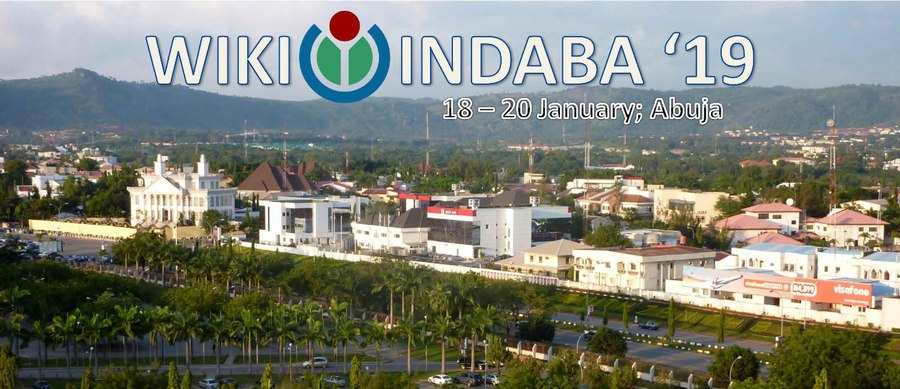
Wiki Indaba Conference 2019 for African Wikimedians (Funded to Abuja, Nigeria)

Application Deadline: 2nd October 2018

Eligible Countries: African countries

To be taken at (country): Abuja, FCT, Nigeria

About the Award: Wiki Indaba Conference is the regional conference for Africans both within and in the diaspora. The first edition was held in Johannesburg, South Africa in 2014 by Wikimedia ZA, while the latest edition was held in Tunis, Tunisia in 2018 by Wikimedia TN Usergroup. The 2019 edition of the conference will be hosted in Abuja, FCT, Nigeria by the Wikimedia UG Nigeria.

Type: Conference

Eligibility:
  • African Wikimedians both within the continent and in the diaspora
  • As a way of collaborating after Indaba each scholarship seeking participant will be required to host an event to share their experience and new things they learnt at the Conference upon their return.
Number of Awards: 60

Value of Award: Scholarship for Conference participation + accommodation + support for travel expenses.

Duration of Programme: 18, 19 and 20 January 2019

How to Apply: Apply here
For more information on scholarships, please contact the scholarship committee at wikiindaba2019scholarship@gmail.com

Visit Programme Webpage for Details

CLIFF-GRADS Research and Training Scholarships 2019 for PhD Students from Developing Countries

Application Deadline: 30th September, 2018

Eligible Countries: Developing countries

About the Award:  CLIFF-GRADS is a joint initiative of the CGIAR Research Program on Climate Change (CCAFS) Low Emissions Development Flagship and the Global Research Alliance on Agricultural Greenhouse Gases (GRA).
CLIFF-GRADS aims to build the capability of early career agriculture students in developing countries to conduct applied research on climate change mitigation in agriculture.
CLIFF-GRADS integrates the GRA’s new Development Scholarship and the CCAFS Climate Food and Farming Research Network with the common goal of providing grants to graduate students to expand their knowledge and experience in quantification of agricultural greenhouse gases.
Research projects are hosted by CCAFS and GRA members and partners. Funding for CLIFF-GRADS is provided by the Government of New Zealand and by the CGIAR Trust Fund and bilateral agreements in support of CCAFS.

Type: Training, Research, PhD

Eligibility: Applicants should have a background in agriculture and climate change research and be pursuing graduate research related to agricultural greenhouse gas quantification.

  • Applicants must be currently enrolled PhD students in a field related to quantification of greenhouse gas emissions or carbon sequestration in agricultural systems
  • Applicants must be students from a developing country
Selection Criteria: Applicants will be selected based on three criteria: (1) overall level of research experience, (2) relevance of thesis topic or other research experience to the research opportunity to which the student is applying, and (3) clear description of how the CLIFF-GRADS experience will improve the student’s scientific training

Number of Awards: Not specified

Value of Award:
  • Selected students will be sponsored in the amount of 10,00012,000 USD for short-term (4–6 month) scientific training and research stays to collaborate with projects associated with CCAFS and GRA.
  • The grants will be used to support travel to and living and research costs at the host institution. Grants may not be used for tuition or unrelated personal expenses.
Duration of Programme: 4-6 months

How to Apply: The application must include the following documents merged into one pdf file:
  • 1-2 page motivation letter (described below)
  • 1-page curriculum vitae that includes your contact details
  • Letter of support from your university supervisor
  • All applications must be in English
  • Please submit your application by email to Julianna White, Program Manager for CCAFS Low Emissions Development at julianna.m.white@uvm.edu
  • Please also contact Julianna with questions
Visit Programme Webpage for Details

Will Their Ever be Justice for Rohingya Muslims?

Arshad M. Khan

There is an image engraved in our minds of a stoic, reserved, elegant Aung San Suu Kyi unbending in her struggle against Burma’s generals for democracy, and we assumed for human rights.  Last year, when the refugees streamed out of her country in the wake of atrocities, it blocked all UN agencies from delivering food, water and medicine to affected civilians; her office accused aid workers of helping terrorists.
Her iconic stature long gone, she made a public appearance the day after the International Fact-Finding Mission released its initial 20-page overview to the UN Human Rights Council on August 27, 2018.  The damning evidence of murder, rape, torture, persecution, burned villages, landmines along escape routes reported on by NGOs and news media over the past year had been confirmed.  Elegant and patrician as usual, Aung San Suu Kyi discoursed on poetry and literature.  No mention of the genocide or the UN report.  No longer an icon, there have been calls to relieve her of the Nobel Peace Prize.
The UN group criticized her for her continued refusal to condemn the genocide.  The full report detailing unspeakable horrors in its 440-page account has now been released(September 18, 2018).  What might surprise people is a simple shocking fact:  This is not the first UN report on Rohingya massacres.
On February 3, 2017, the UN issued a detailed account of the military’s operations in north Maungddaw with “the very likely commission of crimes against humanity.”  It recounted the murders, rapes and tortures that have now become the trademark of military operations against the Rohingya.
The UN High Commissioner for Human Rights Zeid Ra’ad al Hussein is quoted as saying ” … what kind of hatred could make a man stab a baby crying out for his mother’s milk.  And for the mother to witness this murder while she is being gang-raped by the very security forces that should be protecting her.”
There were no major consequences for Myanmar then and what happened the following summer was the same magnified over Rakhine state.  As a result we have 700,000 refugees, and they are still coming — “11,342 new arrivals as of mid-June this year,” Mr. Zeid has noted.
Will this time be different?  Following the UN Commission’s summary report, 160 British parliamentarians across party lines signed a petition to Prime Minister Theresa May to refer the Myanmar military to the International Criminal Court (ICC).  The UN report accuses the military of genocide, and identifies six generals, singling them out for investigation and prosecution.  They are, the senior general who heads the military, the commander of the army, and four operational commanders.
ICC Chief Prosecutor Fatou Bensouda has now been authorized to begin a preliminary investigation to gather evidence before launching a full investigation.  Myanmar is not a signatory to the Rome Statute establishing the ICC but Bangladesh hosting the refugees is, thus giving the court jurisdiction.
Marzuki Darusman providing details of massacres and unmentionable atrocities said in reporting to the Human Rights Council, “I have never been confronted by crimes as horrendous and on such a scale as these.”
If the UN Security Council is to be stymied by veto — China preventing any action against Myanmar — will the ICC effort also fizzle out in practice if not in theory?  Justice remains tenuous for the weak and powerless in our world.

The Myth of an Intolerant Islam

Moin Qazi

Islam is a massive faith with 1.6 billion followers spread across the Islamic world that stretches over 15,000 kilometers. A considerable section of the community lives as a minority community in many countries, battling issues of stereotyping, discrimination and identity.
With the powerful influence of Islamophobic brigades, there has been a massive surge of hatred against Islam and its adherents. Muslims continue to be demonized and projected as uniformly fundamentalist, violent and anti-secular.This powerfully flawed narrative and negative stereotyping continue to fuel Islam’s distorted perceptions. This perception is not based on rigorous evidence but springs from intermittent reporting and speculation in the media. In a climate where Muslims are already feeling alienated and marginalized, it is unfair to mock and ridicule their religion and identity.
Islam, actually, is a religion of peace: That is its aim and goal. The Quran’s powerful commandment should leave one in no doubt: “Whosoever killeth a human being for other than manslaughter or corruption in the earth, it shall be as though he had killed all of mankind, and whoso saveth the life of one, it shall be as if he had saved the life of all mankind” (Q5:32).
The Quran, in its essence, promotes justice, peace and freedom. Compassion and kindness underpin its core message. To understand this, one has to read the entire Quran and not isolated verses. No verse in the Quran is a standalone commandment. Each not only has a bearing on the other but amplifies it too.
The voice of the text is the fruit of a dialogue. For some, the peace of God is through his sword; for others, it is found in his unbounded mercy. The entire paradigm is built around human interpretation. The pacifists and the terrorists read the same text but present fundamentally different interpretations. It is important to consider the reader and interpreter of the Quran. The voice of the Quran heard by Islamic fundamentalists is not the same as the voice heard by progressive Muslims. It is essential that the entire verses of the Quran are read and understood in conjunction with each other. Reading and interpreting verses in isolation is a very incorrect way of engaging with the Quran. It would yield a meaning that conforms to your own worldview.
For example, the current modern definition of jihad is contrary to the linguistic meaning of the word, and also contrary to the beliefs of most Muslims who equate it with religious extremism. The word jihad stems from the Arabic root word J-H-D, which means “strive.” Other words derived from this root include “effort,” “labor” and “fatigue.” Essentially, jihad is a struggle to stand by one’s religion in the face of oppression and persecution. The effort may come in the form of fighting the evil in your own heart or standing up to a dictator. The first time the word is used in the Quran, it signifies a “resistance to oppression” (Q25:26) that is spiritual and intellectual rather than militant. The moralist approach espouses jihad through conscience (jihad bin nafs) while a more radical wing advocates jihad through the sword (jihad bin saif). In mainstream Muslim tradition also, the greatest jihad was not warfare but reform of oneself and one’s society. Prophet Muhammad explained that true jihad was an inner struggle against egotism.There is a lot of misunderstanding on account of this verse: “slay them wherever you catch them” (Q2:191). But who is this referring to? Who are “they” that this verse discusses? The “them” are those terrorists who persecuted and killed innocent people for their faith. Some verses are very often “snipped” out of context by mischief makers for inflaming emotions, fostering misunderstandings and perpetuating violence on all sides. Quran 3:8 preemptively calls out people who cherry-pick verses as “perverse” people, declaring, “…those in whose hearts is perversity seek discord and wrong interpretation of [the Quran].”
Islam does permit fighting but only in self-defense – in defense of religion, or on the part of those who have been expelled forcibly from their homes. The permission given in Q22:40-41 to fight was only given to “those against whom war is waged.” At the same time, it also lays down strict rules which include prohibitions against harming civilians and against destroying crops, trees, and livestock. It is critical that we understand this critical dimension of Islam.
First, Muslims cannot preemptively initiate a war. They are only allowed to act in defense. War can be waged if there is a situation where defenseless people are under attack. A war is considered just when one party does not cease aggression in spite of a proposed truce. If the enemy inclines toward peace, Muslims have to follow suit: “But if they stop, God is most forgiving, most merciful” (Q2:192). Also read: “Now if they incline toward peace, then incline to it, and place your trust in God, for God is the all-hearing, the all-knowing” (Q8:61). Second, Muslims are not allowed to transgress divine injunctions: “fight for the cause of God, those who fight you, but do not transgress, for God does not love the transgressors.” (Q2:190). Third, Muslims have to treat prisoners of war with honor. Prisoners have to be released after the war, either in exchange for Muslims captives or only as a favor.
Historian Sir William Muir records how the Prophet Muhammad instructed his companions to treat prisoners of war. The refugees had houses of their own, received the prisoners with kindness and consideration. “Blessings on the men of Medina!” said one of them in later days: “they made us ride, while they themselves walked afoot; they gave us wheaten bread to eat when there was little of it, contenting themselves with dates.”
Contrary to what some historians have portrayed, Islam did not impose itself by the sword. This has been emphatically made clear in the Quran: “There must be no coercion in matters of faith!” (Q2:256). In words quoted by Muhammad in one of his last public sermons, God tells all human beings, “O people! We have formed you into nations and tribes so that you may know one another” (Q49:13). Moreover, Islamic wars weren’t just to defend Muslims against persecution – but to defend Christians, Jews, and people of all faiths. All verses addressing fighting are preconditioned with rules of self-defense. The Quran says that “persecution is worse than slaughter” and “let there be no hostility except to those who practice oppression” (Q2:190-193).
On his victorious rerun to Mecca after 20 years, the Prophet Muhammad bore no animosity for the locals who had persecuted him and his band, forcing them to emigrate to Medina. He offered blanket forgiveness, the only condition being that Meccans accept universal freedom of conscience.
In keeping with this spirit of tolerance that Prophet Muhammad demonstrated during his lifetime, today’s Muslim thinkers feel there exists no imperative to distance themselves from this tradition of mutual respect and peaceful coexistence. They are plumbing it to find resources to help them adapt to the modern world and to shape it on those lines. Muslim religious scholars are exhuming and popularizing principles and practices that allowed Muslims in the past to coexist with others, in peace and on equal terms, regardless of creed and faith. They keep reminding themselves that the seventh-century Medina accepted Jews as equal members of the community (umma) under the Constitution of Medina drawn up by Prophet Muhammad in 622 A.D.
Muslim reformers are returning to the foundational text, the Quran and its commentaries and other early sources of religion – authentic sayings of Prophet Muhammad, early historical chronicles – for seeking solutions in these troubled times. They are combing their literature for shedding better light on moral guidelines and ethical prescriptions.
There is no better testament to Prophet Muhammad’s credo of tolerance and forgiveness than the attestation of non-Muslim historian Stanley Lane-Poole: “The day of Muhammad’s greatest triumph over his enemies was also the day of his grandest victory over himself. He freely forgave the Quraysh all the years of sorrow and cruel scorn in which they had afflicted him and gave an amnesty to the whole population of Mecca.”