27 Dec 2018

Labour’s London mayor Sadiq Khan plans to demolish 8,000 council homes

Charles Hixson

Residents in working class housing estates are organising in opposition to the Labour Party mayor of London Sadiq Khan’s proposed social cleansing “regeneration” schemes.
In February, Khan proposed “mandatory balloting schemes where any demolition is planned as a strict condition of his funding.” Residents “would be at the heart” of decision-making, and there “must be no loss of social housing,” claimed the mayor.
At a Mayor’s Question Time in March, Khan promised he would not sign off on any new estate demolitions during a consulting period ending April 10. He concealed the fact that he had just hastily pushed through dozens of proposals allowing demolition and refurbishment by Labour councils and housing associations, all of whom would avoid his “progressive” new policy.
Khan’s rush to allow funding for these schemes excluded from balloting ensure that 31,000 residents in at least 8,000 homes will face demolition on 118 estates in the coming decade, with other estimates placing the numbers even higher.
Answering criticisms, Khan cynically claimed he had kept his promise not to sign off on any new estate demolitions. But social cleansing continues under his administration. He said most decisions on the 34 estates had already been made before the summer of 2017 (he was elected in May 2016) and that 16 of the contracts signed after December 1 were for schemes already receiving City Hall funding.
Moreover, there are further restrictions on democratic accountability even on those developments not excluded from voting. Only schemes with Greater London Authority (GLA) funding would be eligible, and only where at least 150 new homes are planned to be built could residents have a say. Further exceptions and loopholes concern infrastructure, supported housing, and buildings that the landlord declares must be demolished for safety reasons.
Khan’s move to allow balloting before demolition only came following Jeremy Corbyn’s suggestions at the 2017 Labour Party conference, and only after Corbyn had been placed under huge rank-and-file pressure to take a stand and demand Labour councils stop social cleansing policies. Corbyn is still not opposed to working class estates being demolished, with his “criticism” of Labour council privatisations’ social cleansing framed as timidly as possible. A spokesman said Corbyn recognised the need for special funding and was at pains to reassure them that “Jeremy recognises councils have to be creative over these plans, and his speech wasn’t intended as a direct criticism of them.”
Opposition to the balloting proposal arose from Labour-controlled councils, including Haringey in north London, who were planning to carry out a £2 billion sell-off of public assets with the developer Lendlease. Haringey explained they opposed a ballot “because a yes/no vote would risk oversimplifying a complex issue.” Due to growing public opposition that culminated in Blairite councillors being deselected, the Haringey privatisation was halted. However, with their Corbynite replacements being elected, the threat of social cleansing in other forms remains, as well as a further £14 million in austerity cuts.
Labour councils imposing social cleansing are on the same page as their corporate partners. A Freedom of Information request found a majority of housing associations providing views to City Hall opposed balloting, including the UK’s largest, Clarion. They argued, “Ballots will slow down and increase the risk in what are already long drawn-out and uncertain regeneration programmes and are a disincentive to investing early on in the process.”
Social cleansing of London and nationally continues. In June, Karen Buck, Labour MP for Westminster North, released analysis that shows sales of social housing to the private sector more than tripling since 2001. Since 2012, more than 150,000 homes for social rent have disappeared nationally, 3,891 of them in 2016. Labour runs local authorities in most urban areas.
Housing associations in five London boroughs alone have collected £82.3 million from auctioning 153 properties in Westminster (Tory-controlled), Brent (Labour), Camden (Labour), Hammersmith and Fulham (Labour), and Kensington and Chelsea (Tory).
Ministry of Housing data shows a fall of over 100,000 London local authority homes since 2003. On the Heygate estate in Labour-run Southwark, the luxury development of Elephant Park replaced the 1,200 council homes that were destroyed between 2011 and 2014. Only 82 of the new 3,000 units were for social rent. Green Party London councillor and party co-leader Sian Berry said that analysis of the London Development database suggests another 7,600 homes would disappear on “regeneration” sites.
Many residents on affected estates, such as those in Haringey, Southwark and Lambeth, have been actively opposing rebuilding schemes for years. In March, the News from Crystal Palace website reported secret deals between Khan and Lambeth Council that excluded a demolition vote for residents of Cressingham Gardens, Fenwick, Knights Walk, South Lambeth and Westbury estates.
Nicola Curtis, chair of Central Hill residents and tenants’ association, posted, “[Labour-run] Lambeth are avoiding our calls for a ballot and have just awarded a £15m contract to the designers of the new estate and are showing by their actions they have no intention of balloting our residents.” Residents of Cressingham Gardens have been running their own poll showing a majority opposed to the scheme.
Labour-run Hackney Council has been in the process of demolishing and rebuilding the Woodbury Down estate since 1999, with developer Berkeley Homes and the Genesis Housing Association. Phases 2-8 of the project will cause a net loss of 645 socially rented units.
Architects for Social Housing spokesman Simon Elmer referred to the numbers as “grim reading. … The possibilities of estate regeneration become radically reduced as soon as an estate is demolished. The cost of demolition, of compensation for residents, and of the construction of new-build dwellings is so high that at least 50 percent of the redevelopment will be properties for private sale at half a million pounds plus, with the resulting mass loss of homes for social rent from the demolished estate.”
The Haringey Defend Council Housing group declared, “Tellingly, and terrifyingly, the Mayor wants decisions about ballots to be made by ‘investment partners’...it’s clear that Sadiq Khan still puts the interests of developer profit first.”
With more than 250,000 Londoners on housing waiting lists, the Khan ballot scandal and refusal of the authorities to bring anyone to justice for the deaths of 72 people in Grenfell Tower that occurred as a direct result of decades of social cleansing, deregulation and profiteering have galvanised residents.
Some 30 local and citywide groups are affiliated to the Radical Housing Network. The Grenfell Action Group is part of the network. In pursuit of safe, decent, affordable public housing, GAG fought the Conservative-run Royal Borough of Kensington and Chelsea council and its management company, the Kensington and Chelsea Tenant Management Organisation (KCTMO) imposing a “refurbishment” of Grenfell Tower. This saw the tower encased in highly flammable cladding that turned it into a death trap. A GAG blog post, just seven months before the fire, warned that only a “catastrophic event will expose the ineptitude and incompetence of our landlord, the KCTMO, and bring an end to the dangerous living conditions and neglect of health and safety legislation that they inflict upon their tenants and leaseholders.”
Similar calls to Khan, a tried and trusted friend of the financial oligarchy, will also fall on deaf ears. As a mayoral candidate, he cemented ties with the main business groups from the Chamber of Commerce & Industry to the City of London Corporation. He promised the right-wing Spectator magazine he would be “dismantling the barriers to growth that exist and increasing productivity.” As for the accumulation of obscene wealth, he enthused, “I want to be the most pro-business mayor yet. ... I welcome the fact that we have got 140-plus billionaires in London. That’s a good thing. I welcome the fact that there are more than 400,000 millionaires. That’s a good thing.”

UK: Denial of access to justice following Legal Aid cuts

Dennis Moore

One million people live in areas where there is no Legal Aid provision for housing, with another 15 million in areas where there is only one provider. This information was found in Ministry of Justice (MoJ) data analysed by the BBC’s Shared Data Unit.
Since April 2013, with the introduction of the Legal Aid, Sentencing and Punishment of Offenders Act (LAPSO) (2012), large swathes of the Legal Aid system were radically changed with many cut off from access to basic democratic rights. It impacted many areas of civil law in England and Wales, with civil Legal Aid work only made available for a limited number of cases, stricter means-test criteria introduced, and automatic eligibility for those in receipt of means-tested benefits scrapped.
Data compared with 2011-2012 showed that there are 1,000 fewer Legal Aid providers being paid for civil Legal Aid work, with up to a million fewer Legal Aid claims being processed each year.
Wales and South Wales are now covered by just 4 Legal Aid providers, while only 41 cover London and the South East.
The number of solicitor’s firms in the South West offering Legal Aid has fallen from 327 in 2011/2012 to 197 in 2017/2018. Richard Miller, head of justice at the Law Society, said provision of legal advice across England and Wales was disappearing, creating “Legal Aid deserts.”
MoJ figures show that the year before LAPSO was introduced, Legal Aid was granted to 925,000 cases a year. After it came into force, this figure had dropped to 497,000 cases, a fall of 46 percent.
An analysis of the figures, when broken down into specific areas of the law, show a significant impact. In 2012-2013 welfare law included 88,378 cases that received Legal Aid funding. Following LAPSO, it dropped to just 145 cases, a 99 percent reduction. Family cases fell by 60 percent and housing cases by 50 percent.
The lack of Legal Aid and access to representation in the courts has resulted in a fivefold increase of people representing themselves. Volunteers from the Personal Support Unit, working to assist people in the courts, reported helping around 65,000 people last year. Just six years ago it was 10,000.
There are growing concerns that some of the most vulnerable people are now representing themselves in courts and are clearly ill-equipped to do this. Rachel Francis, a barrister, explained, “I have seen people in court attempting to represent themselves when they lack capacity, have very significant learning difficulties or are otherwise incapable of representing themselves effectively.”
Since 2011/2012, the town of Swindon has seen a fall in Legal Aid spending of £2.5 million in civil cases and a fall of £350,000 in criminal cases. These cuts have had a major impact on cases, including housing, welfare benefits, and domestic violence.
Olwen Kelly, director of Swindon Women’s Aid, said, “It’s a failure in the justice system, we are failing to protect the most vulnerable people in our society ultimately. These cuts are really biting, and the victims are paying the price for it.”
Cuts to Legal Aid funding disproportionately affect the poorest in society, who are often affected by issues such as poor housing, unfair welfare benefit decisions, and debt—and not able to pay for legal help, or representation.
The government claims that those most in need can still access free legal help through the not-for-profit sector, and via Exceptional Case Funding (ECF). ECF was set up to help provide a safety net to some of the most vulnerable people. However, these areas of legal help are not provided at an early stage when someone starts to experience problems, when many people could have had their problems resolved. According to Amnesty International, evidence suggests that ECF is failing the most vulnerable and marginalised in society.
Pete Moran, head of the Cumbrian Law Centre, said, “The pervading rhetoric in recent years has been about intervening early in the development of a person’s socio-economic problems, before things get very difficult and more expensive to rectify, but the current system does the opposite. It’s much more difficult now for people to get early advice; they have to wait until their situation becomes critical before they can access help.”
A good illustration of this is the problems people face when trying to challenge Housing Benefit decisions. Housing Benefit is a means-tested welfare benefit to help meet costs for rented accommodation. Following the introduction of LAPSO, Legal Aid funding for Housing Benefit cases was removed. This was critical in those cases where there was an issue with accruing rent arrears, which if resolved at an early stage of the proceedings could help to prevent possession proceedings and evictions.
Cuts to Legal Aid have led to an increased demand on those agencies that are left, many of which are based in the not-for-profit sector. Though research is scant, those organisations Amnesty International spoke to report having to turn people away because they could not take on the case.
The cuts have prevented agencies being able to provide advice holistically, with many people experiencing interconnected legal problems. Following the introduction of LAPSO, agencies reported that they were only able to deal with one or two issues that someone may present with, and the underlying cause of the problems was not addressed.
The mental health charity Mind found that up to half of people facing legal problems, who were not entitled to legal help following the introduction of LAPSO, had mental health problems.
Spending on Legal Aid has fallen by £600 million since 2013, with the number of providers falling by 1,200 for civil cases, and 800 for crime.
In a March 2013 report, the UN Special Rapporteur on the Independence of Judges and Lawyers commented, “Legal Aid is an essential component of a fair and efficient justice system founded on the rule of law. It is also a right in itself and an essential precondition for the exercise and enjoyment of a number of human rights, including the right to a fair trial and the right to an effective remedy.”
In the five years since, the vast scale of Legal Aid cuts in the UK was noted by the United Nations Special Rapporteur on Extreme Poverty and Human Rights, Philip Alston. In his report last month following a recent visit, Alston wrote, “There have been dramatic reductions in the availability of Legal Aid in England and Wales since 2012 and these have overwhelmingly affected the poor and people with disabilities, many of whom cannot otherwise afford to challenge benefit denials or reductions and are thus effectively deprived of their human right to a remedy. The LASPO Act…gutted the scope of cases that are handled, ratcheted up the level of means-tested eligibility criteria, and substituted telephonic for many previously face-to-face advice services.”

Germany’s Der Spiegel spreads fake news

Peter Schwarz

The German news magazine Der Spiegel has published numerous reports in recent years, which were entirely fictitious. The editors of Germany’s most widely-read weekly news magazine were forced to make this disclosure last week.
According to the latest issue of the magazine, one of its writers, Claas Relotius, has “manipulated his own stories to a large extent” and told “beautifully made fairy tales.” “Truth and lies were mixed together in his texts.” Some of his stories were “complete inventions, and others tarted up in part with doctored quotes and other types of factual distortion.”
Der Spiegel, according to its own admission, has published 55 original texts by Relotius. “Many of which are wholly or partially invented, falsified, fake.” Born in 1985, the journalist had been working for Der Spiegel for seven years, the last one and a half years as a full-time editor. He has also written articles for numerous other German publications, including Cicero, taz, Die Welt, SZ-Magazin, Weltwoche, ZEIT online, ZEIT Wissen, Frankfurter Allgemeine Sonntagszeitung and Neue Zürcher Zeitung am Sonntag.
The 33-year-old Relotius was regarded as a star journalist and received numerous prizes for his reports, including the Peter Scholl-Latour Prize and Konrad-Duden, Kindernothilfe, Catholic and Coburg Media Prizes. CNN named him “Journalist of the Year.” He also received the Reemtsma Liberty Award, the European Press Prize and was on the Forbes list of “30 under 30 - Europe: Media.”
Der Spiegel has responded to the revelation that it is responsible for the distribution of massive amounts of fake news with a mixture of admission of guilt, self-pity and attempts to shift the blame. The editorial staff presents itself as the innocent victim of an impostor and solemnly promises to wipe its slate clean.
Der Spiegel’s latest edition dedicates 24 pages and a cover photo to the Relotius affair. In it, the editorial board declares: “This house is shocked. The worst that could happen to an editorial team has happened to us. We’re going to turn every stone upside down and have created a commission that will thoroughly check the Relotius case, as well as anything else that might come up.”
In fact, the fake reports of Relotius were not hard to uncover. Another Spiegelemployee, Juan Moreno, conducted a thorough research effort that exposed Relotius’ lies, but when he warned Spiegel editors, he met with a wall of rejection.
“In the dispute surrounding Relotius, Moreno risked his own job, researching his colleague in his own time, desperate, and all at his own expense,” Spiegeleditor-in-chief Ullrich Fichtner admits. “For three or four weeks, Moreno went through hell, because colleagues and supervisors in Hamburg did not initially believe his allegations.”
Moreno had his suspicions long before Relotius started working for Der Spiegel. As he reports in the new edition, he had read an article by Relotius about “the supposedly first tax adviser in Socialist Cuba,” which claimed that shoe-shiners were lining up to seek his advice. “So, once again, shoe-shiners have tax problems, and this is in Cuba!”, Moreno describes his reaction and concludes: “Anyone reading a Claas Relotius text today will wonder how stupid Der Spiegel and all the prize juries must have been to believe such nonsense.”
Four years ago the Swiss magazine NZZ folio had already terminated its collaboration with Relotius, after bizarre contradictions surfaced in a report he wrote about Finland.
One can only conclude from this that Der Spiegel, the other newspapers and the prize juries published and rewarded Relotius’ forgeries because he was writing what they wanted to hear. His lies fit into their official narrative, reinforcing the propaganda of the ruling elites.
Josef Joffe, longtime co-editor of Die Zeit and notorious for his own vile propaganda articles, openly admitted this in a post for Politico. He writes: “In Relotius’ case, another, a more insidious dynamic may have been at work—the unarticulated expectations of editors as they send off their reporters, and their anticipation the reported piece that comes back will confirm what they already know to be true.”
A glance at some of Relotius’ reports, which according to Der Spiegel are based on falsifications, confirm this. Factually they are as fantastic as Grimm’s fairy tales, but fit in well with official foreign policy and militarist propaganda.
In February 2017, Der Spiegel published “Lion cubs,” a reportage by Relotius on two brothers aged 12 and 13, who were kidnapped, tortured, indoctrinated and then sent to Kirkuk with explosives vests by the Islamic State. Although the text is, according to Der Spiegel, “a particularly repellent example of Relotius’ fakes,” it goes on to praise the article even now.
“In such texts, the present is reduced to a readable format, the broad sweep of contemporary history is tangible and suddenly the big picture is understandable from a human perspective,” writes editor-in-chief Ullrich Fichtner. “Anyone with access to such material as a reporter, and who has a talent for dramaturgy, can spin gold out of it like in the fairy tale. Relotius has the talent. He invents the material. He presented one of the best stories of the past few years, a masterpiece.” He “blinded everyone. Chief editors, department heads, archivist, colleagues, journalism students and friends. Various juries consisting of bishops and entrepreneurs, human rights activists and media professionals, politicians and patrons were ecstatic about his texts, and rightly so: they were frequently terrific and beautiful.”
If Der Spiegel were honest, it would have to admit that the assorted bishops and entrepreneurs, human rights activists, media professionals, politicians and patrons were “ecstatic” about Relotius’ articles because they fit in seamlessly with the official war propaganda that seeks to defend imperialist military interventions and crimes in Iraq and Syria under the mantle of the struggle for democracy and human rights.
Relotius’ report is not only false on an empirical level because he freely invented events, individuals, and dialogues, he also falsified the context, background, and causes of the catastrophe in the Middle East that has driven millions of people either to their deaths or in flight from their homelands.
Relotius remains an amateur in this regard. His exposure is so embarrassing for Der Spiegel and the rest of the media because he was working with crude falsifications while they do the same but somewhat more subtly. At a time when the left-wing and the socialist press is regularly denounced as fake news and censored on the Internet, the Spiegel scandal has led many people to realise that they are being deceived, manipulated, and duped by the mainstream media.
Another of many examples how Relotius reinforced officially propagated prejudices was his reportage “In a Small Town”, published by Der Spiegel in March 2017. He portrayed the inhabitants of Fergus Falls in Minnesota, who in their majority voted for Donald Trump, as primitive country bumpkins. The story was subsequently thoroughly checked by two residents of the town over a period of one and a half years and exposed as a work of complete fiction. For their part, the editors at Der Spiegel had no problem with the article.
Once again, the forgery suitably served official propaganda. The complex reality—in particular the anti-working-class and militaristic policies of Barack Obama and Hillary Clinton, which made Trump’s electoral victory possible—is left out. Instead, Trump’s voters are universally portrayed as a backward, reactionary mass.
It is no coincidence that Relotius was awarded a journalistic post at Der Spiegel. The news magazine has repeatedly published aggressive campaigns in the interest of German imperialism disguised as reports. In February 2014 Dirk Kurbjuweit, now deputy editor at the magazine, published the article “Culpability Question Divides Historians Today”, aimed at playing down the crimes committed by German imperialism during the first and second World Wars in order to support the revival of German militarism.
Later, Der Spiegel participated in the campaign against the Trotskyist youth organization, the IYSSE, which had criticised this article—and in particular the statement by historian Jörg Baberowksi: “Hitler was not vicious”. In its university edition and on Spiegel Online Sebastian Kempkens fiercely denounced the IYSSE, without even seeking to substantiate his allegations. “Gutter journalism in the service of German imperialism”, we commented at the time.
In July 2014, Der Spiegel appeared with a front cover fuelling the campaign for war against Russia. In huge print it demanded “Stop Putin Now!” surrounded by a gallery of private photos showing the victims of flight MH 17 shot down over Ukraine. Up until today there is no conclusive evidence to indicate that Russia was responsible for shooting down the plane.
Based on its record and the latest revelations, the magazine’s claim that it had been deceived by Relotius and has remained committed to the truth and to Der Spiegel’s journalistic ideal “Say what is” lies in tatters.

Death toll rises from Indonesian tsunami

Richard Phillips

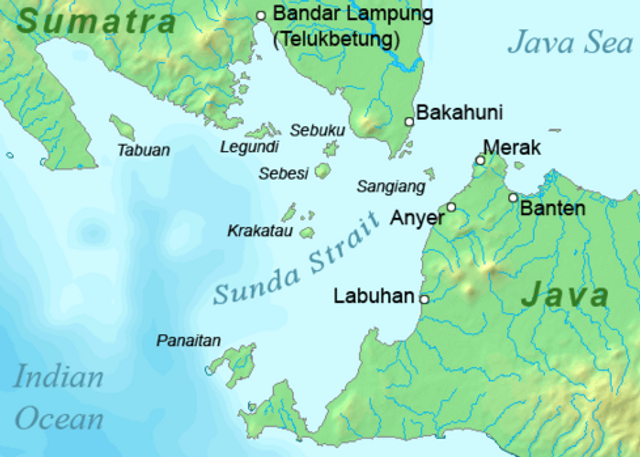
The death toll from the Sunda Strait tsunami disaster continues to rise. The Indonesian National Board for Disaster Management (BNPB) announced yesterday that at least 429 people have been killed, over 1,480 injured and more than 150 remain missing. Thousands of homes and over 70 hotels and 60 shops were heavily damaged or destroyed.
Scientists have confirmed that the tsunami was caused by a 64-hectare landslide on the nearby island volcano of Anak Krakatoa. It produced the massive and fast-moving waves that hit towns and popular beach resorts on both sides of the Sunda Strait at about 9.30 p.m. on December 22.
The volcano lies in the middle of the western side of the narrow strait. Survivors received no warning of the tsunami with waves estimated to have been between 2 and 5 metres high.
The Pandeglang district, on the Javan side of the strait and not far from Jakarta, suffered the largest numbers of casualties. Some 290 people were killed and over 14,390 rendered homeless—that is, the overwhelming majority of 20,000 people displaced by the catastrophe.
Sunda Strait, Indonesia
Heavy monsoonal rains and flooding are now complicating emergency rescue and relief with teams from the Indonesian military, the Indonesian Red Cross and NGOs unable to reach remote areas.
Damaged bridges and flooded rivers have made roads impassable, holding up convoys delivering heavy machinery and emergency relief supplies—food, medicine, shelters, latrines and generators—and forcing disaster officials to use helicopters to drop supplies and evacuate residents. Emergency relief doctors have told the media that supplies of medicine and clean water are dwindling and that children are becoming dehydrated and falling ill. Thousands of survivors are living in unhealthy conditions in areas hit by the tsunami.
National Disaster Mitigation Agency spokesman Sutopo Purwo Nugroho said that the search for victims and possible survivors was being expanded but that “the casualties may keep increasing” because many victims might still be buried under the debris.
The lack of heavy equipment in these remote areas means that distraught local residents have had to pick through the rubble of collapsed homes and other dwellings to try and find the bodies.
The Indonesian government has rejected offers of international aid, declaring that it can deal with the latest disaster. Emergency operations will only continue in Pandeglang district until January 4, and December 29 for Lampung Selatan District on the Sumatran side of the Sunda Strait.
Disaster response officials have warned that ongoing volcanic activity at Anak Krakatoa and high tides could produce more tsunamis.
On Tuesday, Dwikorita Karnawati, head of Indonesia’s Meteorology, Climatology and Geophysics Agency (BMKG), told the media that “the walls of the volcano’s caldera have been getting fragile [and could result in more landslides], especially if heavy rains pour onto it.” She called on local residents to “stay away from coastal areas, [and] at least between 500 metres and 1kilometre from the shoreline.”
Saturday’s tsunami is the third major disaster to hit Indonesia in the past six months. Powerful earthquakes took place on the island of Lombok in July and August. A tsunami in September killed around 2,200 people and displaced about 70,000 others in Palu on Sulawesi Island.
Yesterday marked the 14th anniversary of the 2004 Boxing Day tsunami that killed 226,000 people in 13 countries, including more than 120,000 in Indonesia, triggered by an earthquake off northern Sumatra.
In the aftermath of the 2004 catastrophe, a UN conference in Japan agreed to establish the Indian Ocean Tsunami Warning System—a network of deep sea sensors, as well as seismic stations and tidal gauges, linked to onshore alarm systems to alert those in danger. Assistance was to be provided by a number of countries, including the US, Europe and Japan.
Indonesia’s current warning system is made up of sea-bed sensors that are to detect changes in pressure and indicate an incoming tsunami. Surface buoys receive this data and transmit it to satellites. An earthquake near Sumatra in 2016, however, revealed that 22 of these buoys were not working and had not been since 2012.
The fact that the tsunami was caused by a massive landslide, rather than an earthquake, meant no seismic data was produced. A deep-sea buoy in the Sunda Strait could have triggered an alert but it not clear at this stage whether such a buoy was ever deployed in the area. Given the narrowness of the Sunda Strait, a highly efficient warning system was needed in order to give people in danger even a small amount of time to flee.
After Saturday’s tragedy, Indonesian President Joko Widodo directed the country's Meteorology, Climatology and Geophysics Agency (BMKG) to develop systems “that can provide early warnings to the community.”
Yesterday the Indonesian government announced it will begin work on a new warning system capable of detecting undersea landslides, the BBC has reported. Iyan Tu from the government’s Agency for the Assessment and Application of Technology, told the BBC that the new system would address the holes in the current system and be capable of detecting landslides.
In line with previous promises, this is likely to be little more than hot air. As the World Socialist Web Site warned in a perspective published in the aftermath of the Lombok tsunami-earthquake:
“There is no shortage of money in the hands of the rich in Indonesia and globally that could be used to vastly improve the warning system. Like the rest of the world, Indonesia has become increasingly socially unequal. Last year, 32 dollar billionaires had a combined wealth of $113 billion, while 93 million people, more than a third of the population, lived on less than $3.10 a day.
“Successive governments have stripped away funding for basic infrastructure, including emergency systems, while slashing corporate taxes and regulations that are seen as constraints on profits. ...
“Indonesia is far from unique. Throughout the world, from earthquakes in China and Nepal, to hurricanes in the United States and Haiti, profit-driven considerations make natural calamities immeasurably worse. The results include climate change and environmental degradation, the lack of emergency services, poverty and social inequality, and the failure of governments to cooperate internationally in the interests of protecting vulnerable people.”

Israel’s Netanyahu calls early election amid corruption charges

Jean Shaoul

Benyamin Netanyahu announced on Monday that he will dissolve Parliament and hold early elections on April 9, instead of November as required by law, precipitating a short election campaign by Israeli standards.
It follows the decision of the State Prosecutor’s Office on December 19 to recommend charging him with bribery on two counts. This, along with similar recommendations by the Tax Authority prosecutors and the police, makes it almost inevitable that Attorney General Avichai Mandelblit, who as a friend of Netanyahu has long stalled on the issue, will press charges.
The resignation of Defence Minister and Israel Beiteinu (Israel is Our Home) Party leader Avigdor Lieberman last month that left Netanyahu’s fractious Likud-led coalition with a one-seat majority made an early election all but certain.
Lieberman had resigned in protest, amid furious denunciations by Netanyahu’s fascistic coalition partners of the most right-wing Prime Minister in Israel’s 70-year history for being too “soft” on Gaza, in the wake of Netanyahu’s agreement to a ceasefire there with Hamas, the bourgeois Islamist group that controls the impoverished Israeli-occupied Palestinian territory.
While the polls have long given Netanyahu and his Likud party a clear lead over his rivals, Netanyahu sought to use what little time he had left to choose the date that would give him maximum advantage.
Determined not to be outdone by his right-wing partners, Netanyahu sought to present himself as “Mr. Security,” dispatching the Israel Defense Forces (IDF)—amid a fanfare of publicity—to blow up some abandoned tunnels under Israel’s northern border built by Hezbollah, the militant Shi’ite group that has significant support in Lebanon, and whose existence had long been known.
Earlier this month, he authorized a series of provocative military operations following a drive-by shooting of Israeli settlers on the Palestinian West Bank that led to the death of six Palestinians and the arrest of at least 100 more in protests that erupted over Israeli brutality in Nablus, Tulkarem, Ramallah, Hebron and al-Bireh.
Netanyahu followed up this brutal crackdown with a pledge to his right-wing base to expand the settlements in the West Bank and East Jerusalem, which Israel annexed illegally after seizing it during the 1967 June war. He announced his intention to legalise thousands of homes built in settlement outposts in the West Bank, previously deemed illegal under Israeli law, while going ahead with plans to redefine Jerusalem’s borders to exclude Palestinian residents.
Similarly, Israel’s water authorities announced plans to build a water pipeline across southwest Nablus that will disrupt Palestinian agricultural land and is undoubtedly part of a scheme to form a large settlement bloc separating Nablus from Ramallah in the West Bank.
After dragging his feet for months on investigations that appear, on the basis of tapes released thus far, to demonstrate open and shut cases of bribery, State Prosecutor Shai Nitzan finally recommended the prime minister be charged with bribery in two of the four cases that have been under scrutiny for years, known as 4000 and 2000.
The tapes provide a revealing insight into the nature of Israeli politics and the way that political influence and favours are bought and sold at the expense of the broader public in what Israeli politicians like to claim is “the only democracy in the Middle East.”
The more important case is Case 4000, also known as the Bezeq affair, which relates to allegations that the telecoms billionaire Shaul Elovitch gave Netanyahu favorable coverage on his Walla news website in exchange for regulatory favours.
Case 2000 relates to Netanyahu’s ultimately unsuccessful attempts to strike a deal for more favorable coverage with Arnon Mozes, publisher of the daily Yedioth Ahronoth, in exchange for hurting its rival freesheet, Israel Hayom, a pro-Netanyahu newspaper founded and financed by US casino tycoon Sheldon Adelson.
For years, Netanyahu, the ultimate cynical politician, had dismissed the allegations, claiming they were a left-wing conspiracy against him and that there was nothing to answer. But now, with the announcement that the State Prosecutor Shai Nitzan is to recommend charges, implying that the Attorney General would in turn announce his decision to prosecute sometime in the first quarter of 2019, far from resigning from office, Netanyahu has arrogantly advanced the election to the earliest possible date.
In so doing, he is banking on his longtime friend and supporter Avichai Mandelblit withholding any decision to charge him with corruption until after the election so as not to be seen as trying to influence voters. While he will have to fight the election under a cloud, this is preferable to doing so as an indicted crook and corrupt politician.
But on the other hand, should Mandelblit decide to press charges before the election, Netanyahu will refuse to resign. His right-ring allies will in all likelihood make a martyr of him and claim he is the victim of a “deep-state putsch.” Should he go on to win the election despite the indictment, Netanyahu will take it as a mandate to strengthen his own position and purge the legal apparatus in such a way as to enable him to get off scot-free.
He has form on this. His government has introduced a raft of reactionary laws that undermine freedom to criticize Israel policies, including outlawing the Boycott, Divestment and Sanctions movement (BDS) and targeting left-wing NGOs, while the Nakba Law grants the finance minister the power to impose harsh fines on government-funded organizations that budget expenses for commemorating Independence Day as a day of mourning.
The recent nation-state law—which, as a basic law, has constitutional status—enshrines Jewish supremacy as the legal foundation of the state at the expense of Israel’s Palestinian citizens, as part the Zionist state’s determination to build an ethno-centrist society by means of apartheid-style oppression of the Palestinian people.
Netanyahu’s Minister of Justice Ayelet Shaked of the fascistic HaBayit HaYehudi (The Jewish Home) has made it her stated aim to limit the power of Israel’s judiciary, while strengthening the influence of both the executive and the Knesset (parliament) over the courts. Naftali Bennett, leader of Jewish Home and a key rival of Netanyahu, wants to free the IDF of all legal constraints, declaring that the IDF soldiers fear legal action more than Hamas, and that they cannot properly defend its citizens when their hands are tied by “legalized” thinking.
Netanyahu has forged alliances with far-right, authoritarian parties and their leaders in Europe, including Prime Minister Viktor Orbán of Hungary, forgiven Poland’s government for the repudiation of Poland’s role in the extermination of European Jews in the Nazi concentration camps and welcomed Italy’s Interior Minister and Lega leader Matteo Salvini, who openly admires fascist leader Benito Mussolini, as well as President Rodrigo Duterte of the Philippines. It is no accident that every one of them has scant regard for democratic norms and freedom of the judiciary.
Anti-democratic measures in support of Israel’s financial and corporate elites and their political representatives are on the agenda today precisely because the country is wracked by social tensions. It has the highest poverty rate of any of the so-called developed countries and the most extreme social inequality, with the exception of the United States, leading to mounting working class protests and strikes, including a recent nationwide walkout by social workers over poor pay and deteriorating working conditions.
Last week, as reports emerged of rising prices for basic commodities such as water, electricity and food that have followed hard on the heels of price hikes in gas and cellphone charges, insurance and property tax, hundreds of Israelis took to the streets of Tel Aviv, Israel’s largest city and commercial capital, for the second Saturday in a row, alongside similar demonstrations over the weekend in several countries in the Middle East and North Africa, including Tunisia and Jordan.
Wearing “yellow vests,” they were protesting the price hikes, setting the stage for a three-month campaign amid rising class struggles.

26 Dec 2018

Dalai Lama Fellowship 2019 for Emerging Leaders (Funded to United States of America)

Application Deadline: 3rd February 2019

Eligible Countries: All

To be taken at (country): United States

About the Award: The Dalai Lama Fellows (DLF) experience is an immersive, year-long commitment that mentors each Fellow through a leadership curriculum inspired by exemplary leaders like the Dalai Lama.  This curriculum will help you become more mindful, increase awareness of your inner values and how they relate to your work, deeply connect with people around you, and provide new ways of building sustainable solutions to complex problems.
We are inviting interested applicants to participate in an honest self-reflection process that offers an opportunity not only to apply to the program but also to reflect on personal values and goals.
  • Be AuthenticAs you reflect on and respond to these questions, remember not to tell us what you think we want to hear. Be authentic with yourself and share that authenticity with our team.
  • Be CourageousThis application is an opportunity to reflect on how you can grow as a leader. Be courageously bold, imagine the kind of leader you can become, and tell us about it.
  • Be Thoughtful: Take time to respond to each question. Save drafts. Share reflections with trusted friends and colleagues. The most successful applications are not only well written but demonstrate thoughtfulness and introspection.
  • Save an Offline CopyWe recommend that you first reiew the entire application form and then spend time offline composing your responses in Google Docs or Microsoft Word. Be sure to save an offline copy in case of a technological error or broken connection.
Type: Fellowship (Professional)

Eligibility: In order to fulfill the minimum requirements, a candidate must demonstrate the following through the application:
  • (1) Next generation leader who is between ages 20-35 years;
  • (2) Fluency in written and spoken English;
  • (3) Experience or interest in learning and practicing contemplative practices throughout the year;
  • (4) Description of project of social change/justice that can be undertaken over the year;
  • (5) In-depth knowledge of the community and the issue that the proposed project is seeking to work in and address, preferably with more than one year of previous experience working with the community in question;
  • (6) Commitment to participating in our online learning platform, which hosts our year-long curriculum;
  • (7)  Attendance at week-long Global Assembly in June 2019 and again in June 2020,  participation in monthly coaching calls through video conference, participation in monthly group calls with other Fellows, completion of curriculum, and peer-to-peer interaction on the platform.
Number of Awards: Not specified

Value of Award: We provide each Project Fellow with:
  • Immersion in our distinctive yearlong Head, Heart, Hands leadership curriculum;
  • One-on-one coaching to support their projects in social change and personal development as contemplative and collaborative leaders;
  • Participation in two week-long Global Assemblies with Fellows from around the world and dynamic faculty; and
  • Lifelong affiliation in our global learning community and support system.
Duration of Programme: 
  • May 2019: Fellows Virtual Onboarding
  • June 2019: Five Day Global Assembly at the University of Virginia in Charlottesville, Virginia.
  • July 2019-May 2020: Virtual Head, Heart, Hands Curriculum, Monthly Coaching, and Group Learning
  • June 2020: Fellows attend Global Assembly and graduate into LifeLong Fellows global leadership and learning community
How to Apply: The application for Dalai Lama Fellows consists of six major parts:
  •  Your Resume/CV
  •  Applicant Background and Overview
  •  One Letter of Recommendation
  •  Essay Questions
  •  Application Video
Visit Programme Webpage for Details

Oxford Policy Fellowship 2018/2020 for Early-career Professionals in Developing Countries

Application Deadline:1st February 2019 at 12:00 noon GMT.

Eligible Countries:Developing Countries

To be taken at (country): Countries vary. Successful candidates will not be allowed to select countries.

About the Award: The fellowship programme is specifically aimed at placing early-career professionals in low- and middle-income country governments to work as civil servants.
Type: Fellowship, Job

Eligibility
  • Depending on the specific post for which you are applying, a law degree, an LLM, a Masters in Law, a Masters in Public Policy, or a related field will be required. Useful interests and specialisations include commercial/finance law, contract law, environmental law, international law, health law and policy and development studies.
  • We are looking for outstanding candidates who have a demonstrable interest and some work experience in law and/or policy; relevant work or voluntary experience in a developing country; and strong computer skills.
  • You must also be willing to commit to a two-year posting in any of the participating countries
  • More details about the postings and the requirements are available in link below.
Number of Awards: Not specified

Value of Award:The Fellowship is the start of an exciting new chapter in your career. It opens the door to a career with a range of international agencies, NGOs, development consultancies and governmental organisations.

Duration of Programme: 2 years

How to Apply: 
Visit Programme Webpage for Details

Could India Have Remained an Undivided Country?

Arshad M. Khan


It would be a silly question indeed to ask why December 25th is celebrated.  On the other hand, one could ask why it is a national holiday in Pakistan, for it is not because it’s Christmas.  By an unusual coincidence it happens to be the birthday of Muhammad Ali Jinnah, the founding father of the country.  Exactly how Pakistan came into being is an interesting story as it also leads to the question whether the dismemberment of the Indian subcontinent — now three countries — could have been averted.
 
Jinnah started out as a voice for Hindu-Muslim unity, although wary of majoritarianism and Hindu domination.  A highly successful lawyer with patrician tastes, he was averse to mob violence and wanted constitutional independence — the British handing over to an elected Indian government and a constitution safeguarding the rights of minorities.
 
The first step was to seek Dominion status in which Indians would run their own affairs although subject to control by the British government.  Accordingly a London conference was convened.  The Round Table Conference began in grand style on November 30, 1930 with a plenary session at the House of Lords;  after which the participants retired to St. James Palace for the talks.
 
Hindu and Muslim members sought first to agree on a united front.  His Highness The Aga Khan was leading the delegation and also spoke for the Muslims.  Sir Chimanlal Setalvad, a prominent Hindu member, has written that the Aga Khan agreed to the Hindu demand for joint electorates, instead of separate Hindu and Muslim ones, but with the reservation of seats for Muslims, and he added magnanimously, “In that event you lead and we follow.”  Jaswant Singh describes (p. 178) what transpired in his excellent book, “Jinnah: India — Partition, Independence.”   Unfortunately the Hindu members receptive to the proposal were intimidated by the others and the Hindu Mahasaba (p. 179, ibid.), the precursor of the nationalist Hindutva movement.  Prime Minister Modi’s Bharataya Janata Party (BJP) has a Hindu nationalist fervor which has unmasked the BJP that was in power with Jaswant Singh as Foreign Minister.
 
Without a united front, the Round Table Conference was doomed.  The seeds of Pakistan had been sown, and as Jinnah repeatedly confronted majoritarianism devoid of any assurances for Muslims, his demands for Pakistan became more implacable.
 
The last chance for one India arrived in 1946 with the Cabinet Mission.  Field Marshal Viscount Archibald Percival Wavell served as Viceroy of India from 1943 to early 1947.  Lord Wavell hosted the Mission and served as a link to the parties i.e. Jinnah of the Muslim League and Nehru of the Congress Party.  The somewhat ingenious plan devised coalesced the provinces into four groups, the western provinces (now Pakistan), the east, the center and the south.  The first two were Muslim majority, the latter two Hindu.  The individual provinces would elect members to a group constituent assembly which would then select representatives for the central government in Delhi.  Equal Hindu and Muslim groups ensured reasonable parity in Delhi.
 
The interim government in Delhi that Wavell had in mind would consist of a council of twelve (p. 207, ibid.):  five from the Muslim League, five from Congress, one Sikh and one Dalit.  In accepting the plan and therefore less, Jinnah was putting his demand for Pakistan at risk.  The gesture was unappreciated for with each letter and each communication with Congress, Wavell’s original parity suffered dilution.  Moreover, Nehru even rejected the Cabinet Mission’s grouping plan claiming clearly falsely that, the “entire country is opposed” to it (p. 379, ibid.).
 
In the end there were fourteen members of the council without parity for Muslims.  The plan was formally rejected by the Muslim League on July 27, 1946 (p. 382, ibid.).  The era of a constitutional path to independence was over.   Jinnah and the Muslim League had tired of Nehru’s repeated shifts on positions critical to Muslim interests.
 
Thus the call for Direct Action.  The demonstrations began on August 16, 1946, and the confrontations led to riots leading to killings.  The British government recalled Wavell in February 1947.  Lord Mountbatten of Burma took over, and a precipitate rush to independence followed.  Group enmities resulted in a mania of  killing as Muslims fleeing violence in the new India and Hindus and Sikhs the same in Pakistan fled towards the borders without protection.  Over two million lost their lives before the cataclysm ended.  And occasional spasms still erupt such as the 2002 killings of Muslims in Gujarat during Modi’s rule plus numerous other incidents.
 
The leftovers include the continuing troubles in Indian Kashmir and the frequent blinding of the young during demonstrations.  The security forces eschew rubber bullets for pellet loaded shotguns.  The decades-long insurgency has cost the lives of up to 100,000 Kashmiris.
 
The two countries have fought four wars.  In the first, Pakistan wrested control of a third of Kashmir from India after the Maharaja seceded the state to India against the wishes of an overwhelming majority of his people.  In the third war, India repaid Pakistan in kind paving the way for East Pakistan to become the new country of Bangladesh.  The other two wars ended in the status quo ante.  If there is another war, the world could face a nuclear winter — about 300 nuclear weapons in the two countries are trained on each other.
 
What a price to pay for majoritarianism!  In the meantime, the new Modi government with its Hindu nationalist agenda and continuing contempt for secularism  — even centuries-old place names are being changed — confirms the fears of the Muslim minority, justifying their course of action during that fateful summer of 1946. 

Afghanistan Drawdown: End of American Interventionism

Nauman Sadiq

After Donald Trump’s surprise announcement in a tweet on December 19 to withdraw 2,000 American troops from Syria after a telephonic conversation with the Turkish President Erdogan on December 14, the decision to scale back American presence in Afghanistan by 7000 troops has also reportedly been made and the announcement is imminent.
It would be pertinent to note here that after Donald Trump’s inauguration as the US president, he had delegated operational-level decisions in conflict zones such as Afghanistan, Iraq and Syria to the Pentagon.
Secretary of Defense James Mattis and the former National Security Advisor H.R. McMaster represented the institutional logic of the deep state in the Trump administration and were instrumental in advising Donald Trump to escalate the conflicts in Afghanistan and Syria.
They had advised President Trump to increase the number of American troops in Afghanistan from 8,400 to 14,000. And in Syria, they were in favor of the Pentagon’s policy of training and arming 30,000 Kurdish border guards to patrol Syria’s northern border with Turkey.
Both the decisions have spectacularly backfired on the Trump administration. The decision to train and arm 30,000 Kurdish border guards infuriated the Erdogan administration to the extent that Turkey mounted Operation Olive Branch in the Kurdish-held enclave of Afrin in northern Syria on January 20.
Remember that it was the second military operation by the Turkish armed forces and their Syrian militant proxies against the Kurdish-held areas in northern Syria. The first Operation Euphrates Shield in Jarabulus and Azaz lasted from August 2016 to March 2017.
Nevertheless, after capturing Afrin on March 18, the Turkish armed forces and their Syrian jihadist proxies have now set their sights further east on Manbij, where the US Special Forces were closely cooperating with the Kurdish-led Syrian Democratic Forces, in line with the long-held Turkish military doctrine of denying the Kurds any Syrian territory west of River Euphrates.
Thus, it doesn’t come as a surprise that President Trump replaced H.R. McMaster with John Bolton in April; and in a predictable development on Thursday, James Mattis offered his resignation over President Trump’s announcement of withdrawal of American troops from Syria, though he would continue as the Secretary of Defense until the end of February till a suitable replacement is found.
Regarding the conflict in Afghanistan, on November 9 Russia hosted talks between Afghanistan’s High Peace Council, the members of the Taliban from its Doha, Qatar office and representatives from eleven regional states, including China, India, Iran and Pakistan. The meeting showcased Russia’s re-emergence as a proactive global power and its regional clout.
At the same time when the conference was hosted in Moscow, however, the Taliban mounted concerted attacks in the northern Baghlan province, the Jaghori district in central Ghazni province and the western Farah province bordering Iran.
In fact, according to a recent report by the US Special Inspector General for Afghanistan Reconstruction (SIGAR), the US-backed Afghan government only controls 55% of Afghanistan’s territory. It’s worth noting that SIGAR is a US-based governmental agency that often inflates figures.
Factually, the government’s writ does not extend beyond a third of Afghanistan. In many cases, the Afghan government controls district-centres of provinces and rural areas are either controlled by the Taliban or are contested.
If we take a cursory look at the insurgency in Afghanistan, the Bush administration toppled the Taliban regime with the help of the Northern Alliance in October 2001 in the aftermath of the 9/11 terror attack. Since the beginning, however, Afghanistan was an area of lesser priority for the Bush administration.
The number of US troops stationed in Afghanistan did not exceed beyond 30,000 during George Bush’s tenure as president, and soon after occupying Afghanistan, he invaded Iraq in March 2003 and American resources and focus shifted to Iraq.
It was the Obama administration that made Afghanistan the bedrock of its foreign policy in 2009 along with fulfilling then-President Obama’s electoral pledge of withdrawing the US troops from Iraq in December 2011. At the height of the surge of the US troops in Afghanistan in 2010, the American troops numbered around 140,000 but they still could not manage to have a lasting effect on the relentless Taliban insurgency.
The Taliban are known to be diehard fighters who are adept at hit-and-run guerrilla tactics and have a much better understanding of the Afghan territory compared to foreigners. Even by their standards, however, the Taliban insurgency seems to be on steroids during the last couple of years.
The Taliban have managed to overrun and hold vast swathes of territory not only in the traditional Pashtun heartland of southern Afghanistan, such as Helmand, but have also made inroads into the northern provinces of Afghanistan which are the traditional strongholds of the Northern Alliance comprising Tajiks and Uzbeks.
In October 2016, for instance, the Taliban mounted brazen attacks on the Gormach district of northwestern Faryab province, the Tirankot district of Uruzgan province and briefly captured the district-centre of the northern Kunduz province, before they were repelled with the help of US air power.
This outreach of the Taliban into the traditional strongholds of the Tajiks and Uzbeks in northern Afghanistan bordering the Russian client states Tajikistan, Uzbekistan and Turkmenistan has come as a surprise to perceptive observers of the militancy in Afghanistan.
It is commonly believed that the Taliban are the proxies of Pakistan’s military which uses them as “strategic assets” to offset the influence of India in Afghanistan. The hands of Pakistan’s military, however, have been full with a home-grown insurgency of the Pakistani Taliban (TTP) since 2009 when it began conducting military operations in Swat and Pakistan’s tribal areas bordering Afghanistan.
Although some remnants of the Taliban still find safe havens in the lawless tribal areas of Pakistan, the renewed vigour and brazen assaults of the Taliban, particularly in the Afghanistan’s northern provinces as I described earlier, cannot be explained by the support of Pakistan’s military to the Taliban.
In an August 2017 report for the New York Times, Carlotta Gall described the killing of the former Taliban chief Mullah Akhtar Mansour in a US drone strike on a tip-off from Pakistan’s intelligence in Pakistan’s western Balochistan province in May 2016 when he was coming back from a secret meeting with the Russian and Iranian officials in Iran. According to the report, “Iran facilitated a meeting between Mullah Akhtar Mansour and Russian officials, Afghan officials said, securing funds and weapons from Moscow for the insurgents.”
It bears mentioning that the Russian support to the Taliban coincides with its intervention in Syria in September 2015, after the Ukrainian Crisis in November 2013 when Viktor Yanukovych suspended the preparations for the implementation of an association agreement with the European Union and tried to take Ukraine back into the fold of the Russian sphere of influence by accepting billions of dollars of loan package offered by Vladimir Putin to Ukraine, consequently causing a crisis in which Yanukovych was ousted from power and Russia annexed the Crimean peninsula.
Although the ostensible reason of Russia’s support – and by some accounts, Iran’s as well – to the Taliban is that it wants to contain the influence of the Islamic State’s Khorasan Province in Afghanistan because the Khorasan Province includes members of the now defunct Islamic Movement of Uzbekistan (IMU), which is Russia’s traditional foe, the real reason of Russia’s intervention in Syria and support to the Taliban in Afghanistan is that the Western powers are involved in both of these conflicts and since a new Cold War has started between Russia and the Western powers after the Ukrainian crisis, hence it suits Russia’s strategic interests to weaken the influence of the Western powers in the Middle East and Central Asian regions and project its own power.
Finally, although the main reason of the surge in Taliban attacks during the last couple of years is the drawdown of American troops which now number only 14,000, and are likely to be scaled back to 7,000 in the coming months, the brazen Taliban offensives in northern and western provinces of Afghanistan, bordering Iran and Russian clients Central Asian States, lend credence to the reports that Russia and Iran are also arming the Taliban since 2015 in line with their “strategic interests” of containing Washington’s influence in the region.

Pakistan’s Mega Corruption Cases

Abdus Sattar Ghazali

The Anti-Corruption Court in Islamabad on Monday (December 24) sentenced former Prime Minister Nawaz Sharif to seven years in prison for graft, while a Joint Investigation Team (JIT) constituted on the orders of the Supreme Court to investigate the multi-billion rupees fake accounts scam, has held former President Asif Zardari responsible for the suspicious transactions.
Nawaz Sharif could not prove the source of income related to the ownership of a steel mill in Saudi Arabia, the anti-corruption court said in its ruling.
Nawaz has also been fined $ 25 million.
His two sons, Hassan and Hussain, who are not in Pakistan, were declared absconders by the court.
Nawaz Sharif was released on bail in September after a court in Islamabad suspended his 10-year sentence on corruption charges. He had been imprisoned two months earlier on charges of failing to disclose the source of his wealth.
This followed a long-running case related to his family’s ownership of luxury properties in London.
Documents leaked from the Panama-based law firm Mossack Fonseca in 2016 had revealed that Nawaz Sharif’s children had links to offshore companies, which were used to buy assets including the London apartments.
Nawaz Sharif removed from office in Panama Papers case
In July 2017, Pakistan’s supreme court removed the prime minister, Nawaz Sharif, from office in a unanimous verdict over corruption allegations.
The verdict by the five-member court capped a year of political controversy over corruption allegations unleashed by the 2016 Panama Papers leak.
The papers linked Sharif’s children to the purchase of London property through offshore companies in the British Virgin Islands in the early 1990s. At that time the children were minors, and the purchase is assumed to have been made by Sharif.
In its ruling, the court referred all material gathered in the investigation to the court of the national accountability bureau, and recommended opening cases against Sharif, his three children, Mariam, Hassan and Hussain, his son-in-law Muhammad Safdar and his finance minister Ishaq Dar.
Zardari, Omni Group responsible in fake accounts scam
In another mega corruption case, the Joint Investigation Team (JIT) constituted on the orders of the Supreme Court to investigate the multi-billion rupees fake accounts scam, has held former president Asif Zardari and his Omni Group responsible for the suspicious transactions.
The JIT Monday presented its probe report before the two-judge bench headed by Chief Justice Mian Saqib Nisar.
The JIT that has been investigating the fake accounts case recommended a legal course against some 415 key individuals and around 172 entities allegedly involved in transactions of approximately Rs 220 billion through 104 fake accounts.
The Federal Investment Agency (FIA) is investigating 32 people in relation to money laundering from fictitious accounts, including Zardari and his sister Faryal Talpur.
Zardari’s close aide Hussain Lawai was arrested in July last in connection with the probe. The former president’s other close aide and Omni Group Chairman Anwar Majeed, a close aide and his son, Abdul Ghani, were arrested by the FIA in August.
Over 20 fake accounts at some private banks were opened in 2013, 2014 and 2015 from where transactions worth billions of rupees were made. The amount, according to FIA sources, is said to be black money gathered from various kickbacks, commissions and bribes.
The Supreme Court of Pakistan on Monday banned the trading and transfers of the properties of the Zardari Group, Bahria Town and Omni Group which are mentioned by the joint investigation team (JIT) probing the fake bank accounts case.
The corruption-related investigations against Nawaz Sharif and Asif Zardari are part of a campaign against graft promised by Imran Khan, a former cricket star turned politician who was elected as prime minister in July 2017.