16 Mar 2020

Cruise ship industry announces worldwide shutdown in response to coronavirus pandemic, leaving ship workers in the lurch

Tom Casey

On Friday, March 13, US President Donald Trump announced on Twitter that four major cruise corporations would suspend their customer operations for 30 days in light of the COVID-19 coronavirus pandemic. Norwegian Cruise Line (NCL), MSC, Carnival Cruise Line (CCL), and Royal Caribbean Cruise Line (RCCL) all followed the announcement with notices on social media that they would be shutting down a vast majority of their voyages until mid-April and later.
Norwegian Cruise Line Holdings announced that it would suspend operations for its three subsidiary brands, NCL, Regent Seven Seas, and Oceana Cruises, while RCCL and CCL announced that they would suspend all North American voyages. Celebrity Cruises, Holland America Line, Costa, Disney Cruises, Cunard and Seaborne are among several other major luxury cruise lines that have taken similar such measures, with more likely to follow suit.
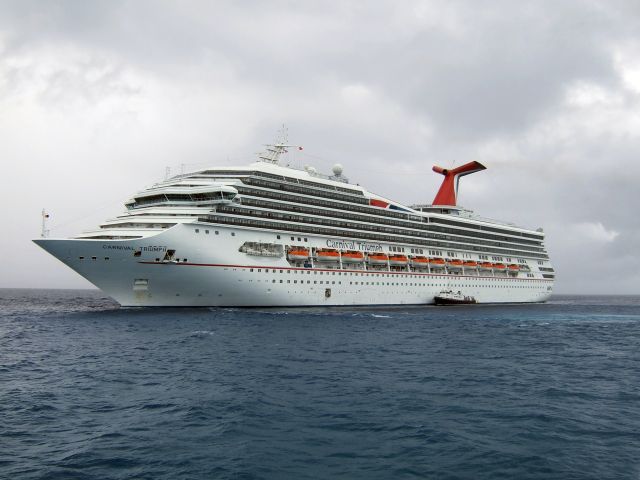
Carnival Triumph at Half Moon Cay (Photo Credit Scott Lucht Wiki media)
Also on Friday, Canadian Prime Minister Justin Trudeau announced that all Canadian ports will be closed to vessels carrying more than 500 passengers, effectively barring all ships on major cruise lines from entering the country, as part of that country’s effort to slow the transmission of the novel coronavirus.
Monumental economic losses are expected from even the temporary suspension of cruise line operations. According to the Florida-Caribbean Cruise Association, a cruise industry research publication, cruise ships contributed an estimated “$126 billion in total economic impact and 1 million jobs paying $41 billion in wages and salaries” in 2016.
In addition to the billions in profits that will be lost, hundreds of thousands of ship workers’ lives will be dramatically impacted. Crew-center.com, a cruise ship employee news organization, estimates that the total number of people employed globally in the industry as of 2017 was 250,000, including crew currently working on board as well as staff outside of regular rotation. This does not include workers in several other dependent tourism industries in port cities around the world, which will also inevitably be affected by the shutdown.
Cruise ships employ staff from all over the globe, with each ship easily representing 30 to 40 different countries in its crew demographic, including many workers from the Philippines, Indonesia, India, Mauritius, Russia, Ukraine, several European and Caribbean countries, the US, Australia and Great Britain.
All of the recent shutdown measures were taken following a major announcement on Thursday by Princess Cruise Lines (PCL) that it would cancel the entirety of its voyages for 60 days, until May 10, in an effort to deal with the impact of the virus. Princess Cruise Lines took these measures in light of recent events on the Diamond Princess, a PCL ship with a 2,760-passenger and 1,100-crew capacity, in which 696 people were infected and seven died in an onboard outbreak of the coronavirus. The outbreak lasted approximately 25 days spanning late-January to February.
Immediately following the disaster on the Diamond Princess, as well as other coronavirus infection scares on the World Dream and Holland America Line’s Westerdam, cruise lines across the board began rerouting ship itineraries away from Asia, and as the virus spread geographically, Italy and other affected areas. Additionally, cruise lines almost universally banned passengers and crew from embarking who had recently traveled through areas in which outbreaks of the virus were prominent.
Events on the Diamond Princess exposed the rapidity with which COVID-19 has the potential to spread within the contained environment of a cruise ship, and therefore the utter vulnerability of the entire industry to global disease outbreak. The US Centers for Disease Control and Prevention (CDC), as well as Anthony Fauci of the US National Institute of Allergy and Infectious Disease and a top member of US Vice President Mike Pence’s Coronavirus task force, have stated that the measures taken to contain the spread of the virus on the Diamond Princess were a failure.
Kentaro Iwata, a disease expert from Kobe University, who was admitted to the ship during the quarantine for research purposes, offered severe criticisms of both the PCL’s and the Japanese Health Ministry’s measures to stop the virus’ spread. Norio Ohmagari of Japan’s Disease Control Prevention Center also admitted flaws in the quarantine process.
It is still unclear whether or not the environment on board cruise ships poses an immediate health danger in light of the pandemic. On March 6, Pence announced that 21 individuals on board PCL’s Grand Princess tested positive for coronavirus while the ship was in quarantine in the port of San Francisco, California. On March 8, Fauci warned in an interview on NBC’s Meet The Press, “If you’re a person with an underlying condition—and you are particularly an elderly person with an underlying condition—you need to think twice about getting on a plane or on a long trip … And not only think twice, just don’t get on a cruise ship”
On the following Monday, in a White House coronavirus task force briefing in which Trump announced that the White House was “working with [the cruise ship industry] very strongly … so that they don’t get penalized for something that’s not their fault,” Fauci somewhat revised his statement. “I think if you’re a healthy young person, that there is no reason, if you want to go on a cruise ship, to go on a cruise ship,” he said.
Cruise lines across the industry have offered passengers whose travel plans have been interrupted by the shutdown reconciliation packages including future travel vouchers, flexible cancellation policies and even additional credit for future ship spending. No such consistent industry-wide measures have been taken, however, to financially or medically protect ship crew.
Action in regard to ship staff has ranged from releasing employees with a fraction of pay for workdays lost, to instructing all crew to remain at their positions as usual or allowing voluntary leave with no pay. While directives for employees have been changing rapidly, it’s evident that the cruise ship giants will attempt to impose their losses on the backs of their workforce.
While PCL issued internal departmental memos stating that it would award some crew members a maximum of 30 days’ pay in light of cancelled contracts, this amount is likely only a fraction of what many crew members stand to lose, as ship employment contracts typically range between four and 10 months. It is common in the industry that contracts stipulate no obligation for companies to compensate workers for lost wages in the event of disasters forcing them to suspend operations.
There is also no guarantee that the directives for ship staff will protect them from the spread of the virus. During the outbreak crisis on board the Diamond Princess, it was reported by crew that the company forced employees to work under unsafe conditions.
One crew member from the Diamond Princess told the Guardian, “We were abused. Can you imagine? The situation was alarming but they kept us working.” The employee explained that crew should not have continued to serve guests, and that the ship should have been evacuated far earlier than it was. Another interviewed crew member said that measures to contain the spread of the virus were only applied to the paying customers and not to the staff, and that crew were singled out for speaking out against the conditions. Another employee reported effects of psychological trauma after the experience on the Diamond Princess.
The handling of the disaster on the Diamond Princess as well the subsequent shutdown by the entire industry demonstrate that there exists no solution within the framework of the capitalist system—in which every consideration is subordinated to the profits interests of a tiny elite—to protect ship workers from the outbreak, as well as from the financial fallout that will inevitably ensue from the corporate response to the pandemic.
As the WSWS wrote in its perspective on March 10, “Modern society presents all problems as global problems affecting the masses. The great historical challenges facing society cannot be solved within the framework of a social order based on nation-states and the principle of private accumulation of wealth.”
Ship workers must fight to advance their own interests in response to the crisis of the industry sparked by the coronavirus pandemic. No confidence should be placed in the cruise corporations’ measures to keep workers financially and medically protected.
Workers must form independent committees of action to demand that they are guaranteed full compensation for all lost wages, and that they are guaranteed their safety to the fullest extent scientifically and medically possible. In issuing these demands, it is imperative that workers must recognize their initiatives as part of a greater struggle for the transformation of society on the basis of a global, socialist economy.

Bangladesh government downplays COVID-19 threat as job losses mount

Wimal Perera

The global coronavirus pandemic has begun to impact on the people of Bangladesh, one of the world’s poorest countries, despite being downplayed by the Awami League government of Prime Minister Sheik Hasina.
While the government, like its counterparts internationally, is seeking to aid industry owners, workers are bearing the brunt of the crisis.
According to the Institute of Epidemiology, Disease Control and Research (IEDCR) there are five confirmed COVID-19 cases, three people have fully recovered, 10 are in isolation and four others are in institutional quarantine.
IEDCR director Meerjady Sabrina Flora told the media that another 2,314 people are under self-quarantine in their homes. These figures, however, are doubtful, given that almost 600,000 people have entered the country since January 21.
Some expatriate Bangladeshi workers living in Singapore, the United Arab Emirates and Italy have been reported infected. Around 342 people who arrived from Italy between March 14 and 15 were sent to the army-controlled Ashkona Hajj Camp, near the Dhaka airport, for medical tests under the IEDCR. Following protests over the lack of food in the camp, hundreds of people were released, authorities claiming that they had tested negative.
Bangladeshi health experts told the Daily Star yesterday that “entire communities were at risk” over “poor monitoring” of their self-isolation.
Thousands of workers face losing their jobs, mainly in the apparel sector, which is the country’s biggest export industry, with 4,000 factories and five million workers.
SS Leather Industries in the Jessore district has placed more than half its workers on leave without pay, the Dhaka Tribune reported on March 7. The factory manager said exports had “dropped to one-third because of the deadly coronavirus spread in China.” The factory is 100 percent export-oriented and sends more than 60 percent of its products to China.
In the Savar garment hub just outside the capital Dhaka, three factories—Raquef Apparels Washing and Packaging Industry, Passion Jeans and Passion Apparels and Ware—were shut down in February, laying off some 3,000 workers due to continued export losses. The companies failed to even pay outstanding wages, but promised to do so by March 29.
On March 6, the Asian Development Bank released a report titled “The economic impact of the COVID-19 outbreak on developing Asia.” It warned that 894,930 workers would be laid off in Bangladesh if the virus spread.
Clothing companies in Bangladesh depend heavily on imports of raw materials and machinery from China. More than 50 percent of materials for garments and related goods, and about 40 percent of machinery and spare parts for this industry come from China.
The coronavirus pandemic is intensifying the industry’s slump. According to the Bangladesh Garment Manufacturers & Exporters Association (BGMEA), more than 70 factories closed last year and 1,200 in the past four years, sacking more than 50,000 workers.
The COVID-19 fallout has begun to affect garment exports, which were already worsening during recent months due to the global economic downturn. Garment exports dropped to $US26.24 billion, down nearly 4.8 percent, during the July-February period compared to the corresponding months the previous year.
In February, export earnings dropped to a little over $US3.32 billion, down by 1.8 percent compared to the previous year, primarily due to the impact of the coronavirus pandemic.
To safeguard corporate profits, the BGMEA has put forward a nine-point proposal, including a proposal to reschedule the bank loans of garment industry owners.
Even before the virus spread began, the government had rescheduled defaulted loans last year, amounting to 502 billion taka ($US6 billion), the highest level for a single year. Apparel Resources noted: “Bangladesh’s apparel businessmen are the top loan defaulters.”
After the first reported case of coronavirus in Bangladesh on March 8, people rushed to buy hand sanitisers and face masks, leading to shortages and sending prices soaring by up to about 400 percent.
As popular anxiety rose, the government tried to generate a false sense of relief by offering various promises and advice, laced with contempt. The prime minister said the buying up of safety materials was “nothing other than madness,” adding: “It’s not that this is an imminently fatal virus.” However, she advised people to keep their “hands clean at all times.”
Health and Family Welfare Minister Zahid Maleque even claimed that the virus was not dangerous, unlike Ebola and SARS.
Maleque said 400 hospital beds had been arranged in each divisional city, 100 beds in district-level healthcare facilities and 50 beds in subdistrict-level facilities. However, the standard of these facilities is very low.
A Directorate General of Health Services (DGHS) survey conducted in big cities reported this month that over 98 percent of healthcare centres have no proper water, sanitation and hygiene facilities.
The government has presented a so-called National Action Plan to tackle the virus. DGHS head Professor Abul Kalam Azad outlined a four-level emergency plan, including testing, quarantining of suspected cases and locking down areas with a high number of patients.
However, the government’s boast of preparedness is a fraud. Professor Muzaherul Huq, founder of the country’s public health foundation, expressed scepticism about the “ability to implement the plan.” He told the Daily Star on March 6: “The first task is to prepare the people to execute the plan. Campaigns should be launched immediately. We have not seen any such initiative yet.”
Minister Maleque said authorities would install new thermal scanners to screen passengers at all the ports of entry, including Dhaka, Chittagong Sylhet airport, Chittagong seaport and the Benapole land port.
Since there are no archway thermal scanners in any of the airports and land ports, health workers check passengers’ body temperature using hand-held infrared thermometers. This can give faulty readings. Ports also lack trained manpower, the Daily Star reported on March 11.
The government imposed a ban on “on-arrival visas” for China, Italy, South Korea and Iran, and urged Bangladeshis returning from six countries—China, Italy, South Korea, Singapore, Iran and Thailand—to remain in self-quarantine for 14 days.
The government also asked 10 million Bangladeshi expatriates living overseas not to return now. The DGHS decided to keep passengers arriving from 65 countries in self-quarantine for 14 days. On March 12, restrictions were placed on travel to and from India, Kuwait and Qatar.
Only around 3,000 COVID-19 testing kits were said to be available. The government has allocated just a pittance, $6 million (500 million taka), to combat COVID-19, while the World Bank has pledged $100 million. The annual health budget is just 0.89 percent of the gross domestic product, that is, 257.32 billion taka, while the World Health Organisation’s recommendation is 5 percent.
The population’s fear of the government’s negligence in terms of protecting people from the pandemic was heightened by last year’s dengue fever outbreak. The highest-ever number of deaths—164—were recorded, with 101,354 people infected.
A judicial probe criticised the Dhaka North City Corporation and Dhaka South City Corporation—responsible for the administration of the capital—for lack of preparedness.

Coronavirus spreads to Turkey, risking a rapid outbreak

Ulas Atesci

As of Sunday night, the number of confirmed coronavirus cases in Turkey rose to 18 from the six reported previously. At least 3,000 people are under quarantine, according to Health Minister Fahrettin Koca’s report on the latest caseload statistics.
Though all of Turkey’s neighbors except war-ravaged Syria had reported cases of coronavirus in recent weeks, and neighboring Iran is an epicenter of the pandemic, with thousands of cases and hundreds of dead, Turkey had not officially reported any cases until last Wednesday. Koca then confirmed during an emergency press conference that a Turkish man with a high fever and cough had been diagnosed as having the virus and had been isolated.
On Tuesday, the health minister had told the press: “Europe is very late in taking measures and it is still being done too slowly,” adding: “It is highly likely this outbreak is currently in Turkey. There are no confirmed cases of this virus.” However, no serious measures have been taken inside the country.
The border with Iran was simply closed. All passengers arriving from abroad were screened, and all flights to and from Italy, China, South Korea, Iran and Iraq halted. Officials pointed to their use of thermal cameras at international airports, but the health ministry only advised those coming from high-risk areas to self-quarantine for 14 days upon their return.
Koca declared on Wednesday that the “infected individual contracted the virus after returning from Europe,” asserting that he and his family members and those who came into contact with him were under surveillance. The minister refused to give details about him, such as his location, age, etc.
While Koca was claiming that “Our country is prepared for this, all necessary measures to prevent the spread [of the virus] have been taken,” Turkish President Recep Tayyip Erdoğan boasted that “no virus is stronger than our measures.”
The developments following these pronouncements demonstrated that the Turkish government, like its counterparts in the US and across Europe, was not prepared for an outbreak that has already infected more than 150,000 and killed at least 5,800 worldwide. While Turkish officials claimed they would develop and also export their own testing kit, no large-scale testing has taken place to prevent a rapid spread of the disease.
“One reason for the delay in recorded cases inside Turkey is the smaller number of tests conducted,” Dr. Özlem Azap, an infectious disease researcher at Başkent University in Ankara, bluntly told Al-Monitor after the first case. Azap went on: “South Korea performed nearly 2,000 tests per one million people, Italy 400 per million people, while Turkey has performed 11 tests per million people as of last week, and these figures haven’t increased much in recent days.” As of Sunday, only about 5,000 people in Turkey had been tested for the coronavirus.
Despite every indication that the coronavirus was already in Turkey, the government waited for the diagnosis of the first case before taking more extensive measures, thus wasting critical time. On Thursday, presidential spokesman İbrahim Kalın reported new measures following a five-hour meeting presided over by Erdoğan in Ankara.
Primary, middle and high schools will close for a week beginning March 16, after which “students will continue their education through the Internet and television through remote education system.” There is no proposal as to who will take care of these children at home while their parents go to work. Universities will also be closed for three weeks. Kalın added, “All sporting events in the country until the end of April will be without fans.”
On Friday, the health minister announced the second case—and then more three cases. All five cases were directly related. He also said Turkish citizens who have visited foreign countries “will have to take 14 days off from work and spend the time in self-isolation as of Monday.” In fact, many infected people coming from abroad will unintentionally spread the virus under conditions where there is no obligatory quarantine.
At the same press conference, Transport and Infrastructure Minister Cahit Turhan said Turkey had suspended flights to nine more European countries: Germany, France, Spain, Norway, Denmark, Belgium, Austria, Sweden and the Netherlands.
The condition of the sixth infected individual, who returned from an umrah [pilgrimage] to Mecca and was not connected to any of the previous cases, sparked particular concern and criticism on social media: at least 15,000 more people returned from pilgrimages last week without being put into quarantine. Although they were advised to stay at home for 14 days, officials of Erdoğan’s ruling Justice and Development Party (AKP) met with some umrah travelers, posting photos on social media. It is now widely suspected that the coronavirus has already spread across the country.
After bitter criticism on social media of this obvious blunder, the health ministry placed a group of more than 3,000 people who began returning on Sunday into quarantine.
Meanwhile, students living in public dormitories in Ankara and Konya were evacuated at midnight to make room for the newly quarantined, though there are many empty public or private places available. Reportedly, several public dormitories in Istanbul will be evacuated today for thousands newly arrived from abroad. In addition, 57 Turkish citizens coming from Baghdad were also moved to a quarantine location in Ankara on Saturday.
Public allegations that some patients have not been tested because they had not contacted anyone from abroad raise questions about the state of Turkey’s health care system. Though the government has proclaimed its readiness in the event of an outbreak, the country’s public health system has been systematically gutted and privatized over the past two decades. The Erdoğan government has cut funds for public hospitals and promoted private ones, and also special forms of health insurance.
Although there is national health insurance that is supposedly universal, it does not cover millions of unemployed workers. Moreover, officials in Turkey’s public health care system had already sounded the alarm before the coronavirus pandemic, and a growing number of working-class families have to go to private hospitals to get high-quality care—though it is very expensive.
While the European epicenter of the pandemic, Italy, has 3.2 hospital beds per 1,000 people, Turkey has just 2.8 hospital beds per 1,000. In Istanbul, a city of more than 15 million, this figure is just 2.5. Moreover, one fifth of these approximately 250,000 beds in Turkey belong to private hospitals.
According to the latest official health ministry figures in 2016, Turkey has only 33,000 beds in its intensive care units, and these units already have an 80 percent occupancy rate. On Friday, the health ministry declared there were only 25 hospitals across Turkey where patients could be tested for the coronavirus. The ministry designated three hospitals in Istanbul, but all were overcrowded before the pandemic even began.
Given the inadequacy of Turkey’s health care infrastructure for an entirely predictable pandemic, these health care conditions and the government response threaten to inflict a preventable catastrophe on millions of working people.
In addition, nearly 10 million workers in Turkey work in 1.8 million workplaces where there are no official safety conditions, risking a very rapid spread of the virus.
While wildcat strikes erupted across Italy to demand the idling of plants during the pandemic, discussion of strike action was also spreading among working people in Turkey. In recent days, many have used the “paid leave or strike” or “paid leave against corona” hash tags on Twitter to demand paid sick leave for all workers, rejecting the demands of employers that they continue to work despite the danger of catching or spreading the disease.
Providing high-quality health care for all and taking the necessary measures to halt the pandemic’s spread requires a political mobilization of the working class in Turkey and internationally.

UK government uses coronavirus pandemic to ready military in “public order” role

Thomas Scripps

Plans are in place for the extensive domestic deployment of British army soldiers during the next months—possibly within 20 days.
A senior army source said, “From tomorrow [Monday] we’ll be working with regional authorities to reassure them we’ll be able to help … We are told this virus will peak in three to five weeks and that will be a critical time for hospitals, prisons, public services and people across communities who will need reassurance that they can still get food and water.”
Sources in the Department of Defence told the Mail on Sundaythat troops trained in chemical, biological and nuclear warfare will deep-clean empty public buildings in the event that they need to be turned into hospitals or morgues. The Royal Army Medical Corps is preparing to build tented field hospitals near care homes and army hospitals will be used to add capacity to the National Health Service (NHS). Soldiers may also be drafted into the three emergency services (police, fire and emergency medical service) to replace workers in isolation or who have fallen ill.
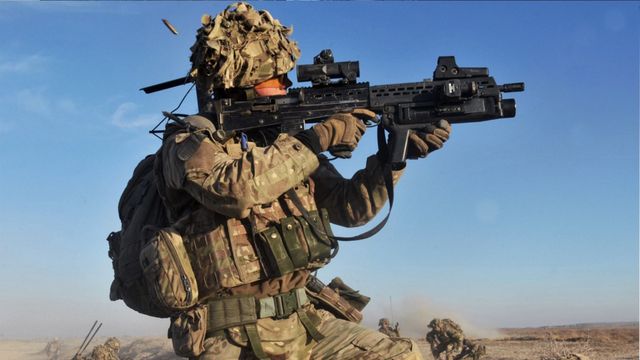
A soldier with the 4th Mechanised Brigade is pictured engaging the enemy during Operation Qalb in Helmand, Afghanistan.
Under Operation Rescript, Lieutenant-General Tyrone Urch has been made responsible for contingency plans to stock supermarkets and refill petrol stations. The Royal Logistics Corps is being prepared to escort food convoys. At least hundreds and potentially thousands of troops will be involved.
The turn to the military is a mark of the total collapse of resources available to public authorities to respond to a crisis, after decades of private looting and central government cuts. Whether in the case of the Australian wildfires or of a global pandemic, the ruling class views every social problem as a military-police problem.
Of more serious concern still, the army is being called upon to play a frontline role in policing.
Soldiers are reportedly “stepping up” their training for public order roles, which will include “guarding” hospitals and supermarkets. Thirty-eight military liaison officers will coordinate with local councils over the deployment and use of military forces and the Royal Military Police will work with local police forces and prison officers.
The police are also being given powers to “detain and direct individuals in quarantined areas at risk or suspected of having the virus” to halt “any vehicle, train, vessel or aircraft” and close ports if immigration officers are forced to stop work. The elite SAS special forces stand-by squadron is set to be held in the UK rather than deployed abroad.
These deployments are being justified with references, taken from the tabloid press, to “staggering trail[s] of destruction” at supermarkets, with “shelves cleared like a riot.”
Having failed to make proactive preparations for the onset of the virus, the government is seeking to accuse the general population of irresponsibility. The same implication is behind the excuse that quarantines and closures cannot be implemented “too early” in case people grow tired of restrictions and begin to ignore them before the peak of the epidemic is reached.
Claims that shops are threatened with riots are almost entirely based on a single photo taken at a Tesco supermarket in north London, which shows one aisle with empty boxes and some canned goods piled on the floor.
Whatever role the military might have in providing logistical support to the health care services, its involvement in law enforcement is a grave warning to the working class.
Moves to deploy troops on the streets did not begin with the outbreak of the coronavirus. A significant element of the government’s Brexit preparations was Operation Yellowhammer. The secretive policy involved plans for the deployment of thousands of riot police and soldiers to deal with “civil unrest”—up to 50,000 regular and reserve troops, backed up by 10,000 riot police.
Discussions were also held among senior civil servants about the use of the Civil Contingencies Act 2004, introduced by the Labour government of Tony Blair. Powers under this act include curfews, bans on travel, confiscation of property, the deployment of the armed forces to quell rioting, and enabling ministers to amend any act of Parliament, except the Human Rights Act, for a maximum of 21 days.
These police-state measures were directed against a potential mass movement of the working class in response to the economic disruption of Britain’s exit from the European Union. The codename “Yellowhammer” was widely believed to have been given in reference to the yellow vest protests swelling in France at the time and cracked down on with savage repression by the French state. Heavily armed riot police and soldiers have since maintained a major presence in large French cities.
The same concerns are alive in the ruling class today. They have been heightened by the pandemic’s exposure of the rottenness of world capitalism and the mass opposition this is beginning to generate. The ruling elite operates on the premise “never let a crisis go to waste,” and will use this situation to introduce more permanent military deployments and normalise emergency powers.
The coronavirus crisis cannot be left in the hands of the capitalist class. Conducting an effective, global response to the pandemic while respecting human dignity and preserving democratic rights requires the independent mobilisation of the international working class.

In Context: Iran’s 2020 Parliamentary Election

Majid Izadpanahi


Developments that took place in the run up to Iran’s February 2020 parliamentary elections polls indicate that not only was this election more significant and different from all post-1979 polls in the country, but that they also portend long term consequences for Iran.

The Parliament and the Guardian CouncilIn Iran’s post-Revolutionary political system, the Guardian Council sets eligibility criteria and selects aspiring candidates for presidential or parliamentary polls based on certain requirements. Among other criteria such as age, the requirements include aspirants pledging fealty and loyalty to the Islamic Republic’s constitution and the Supreme Leader respectively, as well as being a supporter of the Islamic Republic. The Guardian Council enjoys unlimited authority to disqualify anyone critical of the system. Those disqualified during the 2020 election include loyal and iconic figures such as Ali Motahhari, the son of Ayatollah Morteza Motahhari who was a prominent leader of Iran’s Islamic Revolution. Essentially, the during elections, the public has to choose from among candidates selected by the Guardian Council.

Many reformist and moderate figures (including 90 sitting members of parliament) were disqualified from contesting the February 2020 election, prompting incumbent President Hassan Rouhani to raise objections by expressing his concerns over democracy being threatened by the Guardian Council’s domination over the elections. He criticised the Guardian Council and other institutions for changing their roles to execute orders and dominate the electoral procedure rather than monitoring it. Other political bodies he cited—the Council of Cultural Revolution, the Supreme Council of National Security, and the Expediency Discernment Council of the System—possess more authority than the parliament (Majlis).

Since the 1979 Revolution, two main factors have contributed to the Iranian parliament’s powers getting undermined. The first involves influence of intelligence, as well as intervention by the above-mentioned upstream institutions. For example, the Supreme Council of Economic Coordination of the Heads of Forces—comprised of heads of the executive, parliament and judiciary under Ayatollah Khamenei’s supervision—decided and implemented a 300 per cent increase in gas prices while keeping the members of the parliament uninformed. However, legally, this decision falls in the parliament’s purview. When protests against this decision erupted across Iran, the parliament decided to restore oil prices to pacify the public. However, incumbent Supreme Leader, Ayatollah Khameinei, forced the parliament to rescind its decision as he feared that the country would demand more changes.

The Supreme Leader’s decrees (Hokm-e hokumati) comprise the second factor subverting the parliament’s functionality, as they (the decrees) have legal force and are enforceable. In several instances, the Supreme Leader’s decree has been used against the parliament’s will. Most recently, when meetings on the 2020 budget were delayed due to some members of parliament contracting COVID-19, Ayatollah Khamenei issued a decree allowing the parliament’s budget committee to decide on the budget, and for it to be reviewed by the Guardian Council instead of by a parliamentary vote. A disqualified and recent member of the parliament, Mahmoud Sadeghi, called it the final nail in the coffin for the 10th Majlis.

Key Features of the 2020 Parliamentary ElectionIn the recent years, friction between the public and the government has risen due to several factors, including mismanagement, corruption, political repression, economic failure, the Islamic Republic’s engagement in other countries and conflicts, and human rights issues. Moreover, two recent events adversely impacted the voter turnout and outcome of the 2020 parliamentary elections.

The first was the countrywide protests in November 2019, in which hundreds of the people died (according to a Reuters report, 1500 died). Several months on, the government is yet to officially declare the exact number of casualties. The second was the Islamic Revolutionary Guards Corps’ (IRGC) shooting down of Ukraine International Airlines Flight 752. Since day one, people believed that an IRGC missile had shot the aircraft down, which ultimately turned out to be true. However, government authorities denied any IRGC involvement for three days, maintaining that the crash was merely due to a technical error. They only confessed to shooting the aircraft down after international pressure mounted. Additionally, Tehran has refused to return the aircraft’s black box to Ukraine or France. This further increased public mistrust in the government’s transparency. Another trend witnessed during this election was the boycott by different groups inside and outside Iran. Overall, a combination of these factors resulted in this election witnessing the lowest voter turnout since 1979.

Implications for IranWith the parliament’s ability to exercise its mandate weakened by other institutions, it no longer has a say in key issues, and has been reduced to a symbolic entity. In the near term, with hardliners in the majority in the parliament, Iran’s Majlis is now a submissive institution serving the Ayatollah’s goals and is his tool to undermine President Rouhani’s administration. The big picture implication is that Ayatollah Khamenei is actualising his goal of initiating the Second Phase of the Revolution of the “…Great Jihad [selfless endeavor] for building a great Islamic Iran.” Packed with hardliners and former IRGC officials, Iran’s new parliament will enable him to achieve this goal. Finally, Ayatollah Khameinei can, through the Guardian Council, influence the 2021 presidential election as the final step to establishing a state run entirely by hardliners.

14 Mar 2020

Orange Social Venture Prize 2020 for Entrepreneurs in Africa and the Middle East

Application Deadline: 5th June 2020

Offered annually? Yes

Eligible Countries: Countries in Africa and the Middle East

About the Award: The Orange Social Venture Prize rewards entrepreneurs developing products or services that use ICT in an innovative way to meet the needs of people in Africa or the Middle East in fields such as health, agriculture, education, energy, industry or trade.
Over the past five years, the thousands of projects which have been submitted for the Orange Social Venture Prize display the dynamism of entrepreneurs and the potential of the telecommunications sector in the region.

Once again this year, internet users can vote online for their favourite project on Entrepreneur Club, the entrepreneurship section of StarAfrica, the Orange portal. The project thus elected as the “favourite project” will be introduced to the jury along with ten others shortlisted by the experts, and will therefore maximise its odds of receiving one of the monetary grants.

Offered Since: 2011

Type: Entrepreneurship

Eligibility: Any entrepreneur (aged 21 or over) or legal entity that has been in existence for fewer than three years at the time of the competition may participate at no cost and with no restriction on nationality. Submitted projects must be designed to be deployed in at least one of the African or Middle Eastern countries in which Orange operates (as listed in the rules) and must use information and communications technology in an innovative way to help improve the living conditions of the populations in these countries.

Number of Awardees: 3

Value of Contest: 
  • 1st Grand Prize: €25,000
  • 2nd Grand Prize: €15,000
  • 3rd Grand Prize: €10,000
Orange experts provide the winners with customised digital mentoring and advice. These international awards complete the various prizes delivered locally to national winners.

Apply

Visit Contest Webpage for Details 

UNESCO/People’s Republic of China (The Great Wall) Co-Sponsored Fellowship 2020/2021 for Students from Developing Countries

Application Deadline: 25th March 2020

Offered annually? Yes

To be taken at (country): People’s Republic of China

About Scholarship: The Government of the People’s Republic of China has placed at the disposal of UNESCO for the academic year 2018-2019 seventy-five (75) fellowships for advanced studies at undergraduate and postgraduate levels. These fellowships are for the benefit of developing Member States in Africa, Asia–Pacific, Latin America, Europe and North America and Arab region.
Tenable at a selected number of Chinese universities, these fellowships are intended for scholars who plan to pursue advanced studies or undertake individual research with periodic guidance from the assigned supervisor in China for a duration of one year. Selected candidates will undertake their studies in the host universities as visiting scholars. Most of the study programmes will be conducted in English. Selected candidates will undertake their studies in the host universities as visiting scholars. In exceptional cases, candidates may be required to study Chinese language before taking up research or studying in their fields of interest.
Twenty-five (25) of the 75 fellowships are especially intended for candidatures from the Teacher Training Institutions supported by UNESCO-CFIT Project in the 10 African countries to pursue an Advanced Training Programme for Education Administrators and Teacher Educators at East China Normal University.

Field of Study: Any applicant can choose one academic program and three institutions as their preferences from the Chinese HEIs designated by MOE. Fellowships are for advanced studies at Undergraduate and postgraduate levels.

Type: Undergraduate, Postgraduate, Fellowship.

Eligibility: 
    • Applicants applying for General Scholar programs must not be older than the age of forty-five (45) and have completed at least two years of undergraduate study; and those who applying for Senior Scholar programmes must be a master’s degree holder or an associate professor (or above) and not older than the age of fifty (50).
    • English proficiency is required.
    • Be in good health, both mentally and physically.
Number of Awards: 75

Value of Scholarship: The Program provides a full scholarship which covers tuition waiver, accommodation, stipend, and comprehensive medical insurance.

Duration of Scholarship: 1 year

Eligible Countries:

AFRICA – 46 Member States: Angola, Benin, Botswana, Burkina Faso, Burundi, Cameroon, Cape Verde, Central African Republic, Chad, Comoros, Congo, Cote d’Ivoire, Democratic Republic of the Congo, Djibouti, Equatorial Guinea, Eritrea, Ethiopia, Gabon, Gambia, Ghana, Guinea, Guinea-Bissau, Kenya, Lesotho, Liberia, Madagascar, Malawi, Mali, Mauritius, Mozambique, Namibia, Niger, Nigeria, Rwanda, Sao Tome and Principe, Senegal, Seychelles, Sierra Leone, Somalia, South Africa, Swaziland, Togo, Uganda, United Republic of Tanzania, Zambia, Zimbabwe

ASIA AND THE PACIFIC – 38 Member States: Bangladesh, Bhutan, Cambodia, Cook Islands, Democratic People’s Republic of Korea, Fiji, India, Indonesia, Iran (Islamic Republic of), Kazakhstan, Kiribati, Kyrgyzstan, Lao People’s Democratic Republic, Malaysia, Maldives, Marshall Islands, Micronesia, Mongolia, Myanmar, Nauru, Nepal, Niue, Palau, Pakistan, Papua New Guinea, Philippines, Samoa, Solomon Islands, Sri Lanka, Tajikistan, Thailand, Timor-Leste, Tonga, Turkmenistan, Tuvalu, Uzbekistan, Vanuatu, Viet Nam

ARAB STATES – 13 Member States: Algeria, Egypt, Iraq, Jordan, Lebanon, Libya, Mauritania, Morocco, Palestine, Sudan, Syrian Arab Republic, Tunisia, Yemen

LATIN AMERICA AND THE CARIBEAN – 26 Member States: Argentina, Belize, Bolivia, Brazil, Colombia, Costa Rica, Cuba, Dominica, Dominican Republic, Ecuador, El Salvador, Grenada, Guatemala, Guyana, Haiti, Honduras, Jamaica, Mexico, Nicaragua, Panama, Paraguay, Peru, Saint Lucia, Saint Vincent and the Grenadines, Suriname, Venezuela

EUROPE AND NORTH AMERICA – 12 Member States: Albania, Armenia, Azerbaijan, Belarus, Bosnia and Herzegovina, Georgia, Republic of Moldova, The Former Yugoslav Republic of Macedonia, Montenegro, Poland, Serbia, Ukraine

How to Apply: All applications should be endorsed by the relevant Government body (the National Commission or Permanent Delegation) and must be made in English with the following attachments listed in the Program Webpage (see Link below).
In order to be successful, You are advised to follow the steps (listed in the link below) involved in applying.

Visit Program Webpage for details

Anger erupts as Art Van Furniture liquidation sales begin

Kevin Reed

Employees, customers and the public all expressed hostility to the announcement by Art Van Furniture last week that it was going out of business. On Sunday, the Detroit-area furniture and mattress retailer filed for Chapter 11 bankruptcy after it began liquidation sales on Friday with plans to permanently close all company-owned stores within 60 days.
The Art Van showroom located in Warren, Michigan—also the home of the company’s corporate offices and primary warehouse—was closed early Saturday afternoon, when long lines of angry customers began creating a traffic jam amid concerns of potential violence breaking out on 14 Mile Road in the Detroit suburb.
Art Van Furniture Showroom and Clearance Center in Taylor, Michigan
Jim Fouts, mayor of Warren, told the news media, “It’s too dangerous. We are shutting them down at 4 o’clock. We could come close to a riot. I’ve never seen anything this bad. Employees are extremely mad and upset, and customers are extremely mad and upset.”
Other locations in the area experienced similar lines as confusion mounted among customers who had previously made purchases and were told that their furniture and other household items would not be delivered as agreed to at the time of their order. Customers were also told that their money could not be refunded, but they could use it for in-store credits only.
Art Van has approximately 3,000 employees, many who have worked for the company for decades if not their entire working lives. In response to a widespread sickout action by staff people during the liquidation sales, Art Van management posted notices on Monday threatening employees with termination if they reported to work without a medical note after one unexcused absence.
On social media, workers and others expressed their anger toward the private equity firm Thomas H. Lee Partners that bought a controlling stake in the furniture company two years ago and was behind the decision to declare bankruptcy and liquidate.
One tweet said, “Art Van didn’t fail. A hedge fund (Thomas H. Lee and Partners) bought the company from the Van Elslanders and then proceeded to pull a bunch of money out of it until it could no longer pay its bills. This was done intentionally. And what THL did is completely legal.”
Others pointed to the connections between the private equity firm and prominent Democratic Party officials such as the Clintons and the leading Democratic candidate for president Joe Biden. One tweet said, “Thomas H. Lee Equity Partners of Boston drove thriving Art Van Furniture into the ground in Warren, MI in three short years. They held a fundraiser for Joe Biden in December.”
According to information on Wikipedia, Thomas H. Lee, the founder of the private equity company “is a friend of Bill Clinton and Hillary Clinton. In June 2008 at the conclusion of Hillary’s unsuccessful presidential run, she and Bill were reported to have stayed at his East Hampton, New York beach front home for a few days for the period when she was out of the public eye.”
The Chapter 11 filing in US Bankruptcy Court for the District of Delaware, along with other documents submitted to the government by Art Van executives, sheds light on the condition of the firm that was founded by Archie Van Elslander in East Detroit in 1959.
According to the Voluntary Petition for Chapter 11 submitted by Art Van Furniture, LLC, the company has 13 business entities with between $100 million and $500 million in debt owed to more than 50,000 creditors. The document lists Art Van’s top 30 unsecured creditors—all of whom are suppliers, such as marketing and advertising suppliers and furniture manufacturers. Among them are the advertising company The Sussman Agency, La-Z-Boy Chair Company and Sealy Mattress Company, which are owed $7.8 million, $5.2 million and $4.1 million respectively.
An accompanying statement from David Ladd, Executive VP and Chief Financial Officer of Art Van Furniture, states the company “has worked in concert with its secured lenders to develop a budget for the use of cash collateral to facilitate an expedited sale and orderly winddown process that will maximize value and recoveries for stakeholders in these cases.” In other words, the secured investors and banks will be paid off first with the assets of the company, and whatever is left after that will go to the remaining creditors.
The 22-page declaration from David Ladd, who has been the EVP and CFO since before the sale of Art Van to private equity, also explains that the firm was sold to Thomas H. Lee Partners (THL) in 2017 for $612 million in a financial manipulation called a real estate sale-leaseback.
As the David Ladd declaration states, “At the closing of the 2017 Transaction, THL acquired the operating assets of the business, and certain real estate investment trusts acquired the owned real estate portfolio. The proceeds from the sale-leaseback transaction were used to fund the purchase price paid to the selling shareholders.”
What this means is that the furniture store properties were sold to real estate investors, and the funds from these sales were used by THL as part its $612 million deal to purchase Art Van from the former owners. The furniture company then had to make lease payments to the real estate investors going forward, adding a significant financial obligation to the company.
As Carter Dougherty of Americans for Financial Reform told the Detroit Free Press, “The sale-leaseback approach is a common technique of private equity, not only for forcing target companies to handle crushing debt loads imposed through the takeover process. It’s also a mechanism that helps ensure that private equity executives profit handsomely, even if the company goes bankrupt.”
The World Socialist Web Site spoke with the wife of an Art Van employee, who said, “My husband has worked there for four and a half years. He is a floor manager. Like everyone else, we first found out Art Van Furniture (AVF) was considering their options approximately one month ago. At that time, we were told they were hoping to avoid bankruptcy by selling and/or restructuring.
“On Wednesday, March 4, my husband was at work when he found out via the rumor mill that the employees in the buying department had been told they would only have a job for 60 more days. The following morning, my husband and other managers all took part in a phone conference in which they were informed the company was going out of business. They would not be offered any severance, healthcare would cease immediately upon termination, and that the termination could occur ‘any day between now and 60 days’ without further warning.
“When smaller stores sell off enough of their stock that it can be transferred to a larger store, the stock will be moved and the smaller store will be shut down. The larger stores will not be open for more than 60 days and smaller stores...
“There’s just no way to determine how long the smaller stores will stay open as it is all contingent upon sales. Employees and spouses (my husband and myself included with others we know) are all devastated. Some of our AVF friends have worked for the company for 20, 25, 30 years.
“Prior to the sale, it was a great company to work for with an amazing earning potential. My husband’s job at AVF was a Godsend for us four years ago and we’re still grateful for what it has provided us. Thomas H. Lee Partner? It’s very hard not to feel angry and bitter. We’re all confused. How does a company they deemed to be worth $550 million four years ago end up being worth zero three years later?
“I don’t understand how they weren’t able to save anything, not even one store. How is that possible when—if it’s true—Art Van owned the vast majority of its buildings and fleet of trucks? The AVF family is an amazing group of people, some of whom have been friends with each other for a lifetime. To say it’s sad is an understatement, but that’s just what it is, sad.
“During that conference call eight days ago, the employees were all placed on mute and were not allowed the opportunity to ask any questions. It was so disrespectful. It’s disgusting.”

One year after the New Zealand fascist terrorist attack

Tom Peters

On March 15, 2019, a fascist terrorist armed with a military-style semiautomatic rifle drove to two mosques in Christchurch and murdered 51 Muslim worshippers and injured 49. It was New Zealand’s worst ever mass shooting and one of the most brutal in the world. The murderer, Australian-born Brenton Tarrant, whose racist views had been shaped by the anti-immigrant rhetoric of the Australian and American political establishment, livestreamed his attack. The massacre was widely viewed before being taken off social media.
The victims came from several countries and included elderly people and young children. Many survivors suffered debilitating injuries, inability to work and psychological trauma. The city’s health authorities expect the anniversary to trigger painful memories and increased demand for mental health services.
The attacks prompted an outpouring of shock and grief in New Zealand, Australia and internationally. People from around the world have travelled to the mosques to show solidarity with the Muslim community. Remembrance events scheduled for tomorrow, expected to attract large crowds, have been cancelled due to fears of coronavirus transmission.
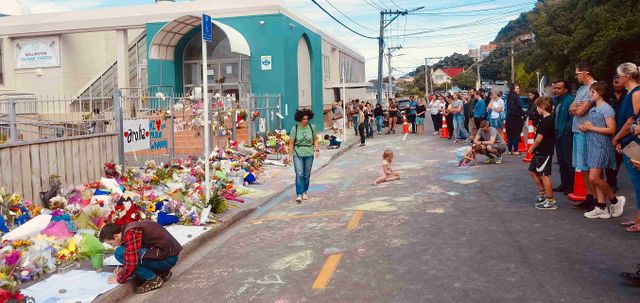
A vigil in Wellington after the Christchurch fascist terror attack
Twelve months on, however, the danger of the far right and fascism continues to grow throughout the world. While there is no mass support for fascism, it is being deliberately promoted by US President Donald Trump, UK Prime Minister Boris Johnson, Australia’s Scott Morrison, and many other political leaders.
Over the past year, fascist and white supremacist terror attacks have included the April 27 shooting at Poway synagogue in California and the August 3 massacre of 21 people in El Paso, Texas. The perpetrators claimed inspiration from Tarrant.
In Germany, where the neo-fascist Alternative for Germany (AfD) is the main opposition party and its anti-immigrant policies have been adopted by the coalition government, there has been a series of neo-Nazi attacks. These include the murder of politician Walter Lübcke in June 2019 and the massacre of 11 people at two shisha bars in Hanau in February 2020.
Tarrant and others like him are the products of decades of xenophobic demonisation of Muslims by the media and politicians. Successive Australian and New Zealand governments sent troops to the US imperialist wars in Iraq and Afghanistan. To justify their involvement in predatory neo-colonial interventions, the ruling elite claimed they were fighting Islamic terrorism. At the same time, their police and spy agencies turned a blind eye to the growth of far-right extremism.
The Islamic Women’s Council, in its submission to a royal commission of inquiry into the Christchurch shootings, stated that the attacks would not have happened if government agencies had acted on warnings about rising xenophobia and threats to the Muslim community. These included violent threats against the Al Noor mosque by Christchurch neo-Nazis in 2016. Nothing was done and the warnings were dismissed.
New Zealand Prime Minister Jacinda Ardern continues to be glorified in the world’s media for her purported show of sympathy following the March 15 attack. She promised to make it her “personal mission as prime minister” to defend “inclusiveness” and “diversity.” She stated: “I have the support of every single member of parliament, local government, at every level of New Zealand, absolute unity in that cause and in that mission.”
These pledges have proven to be a fraud. Ardern’s Labour Party-NZ First-Greens coalition government has ramped-up anti-immigrant measures, including restrictions that prevent working class migrants from bringing family members to New Zealand. The government routinely deports vulnerable people, including a paralysed Tongan woman who was deported in January despite doctors warning she was at risk of dying.
Ardern’s government rests on the racist and nationalist NZ First Party. Despite receiving just 7.2 percent of votes in the 2017 election, Labour has given the right-wing party some of the most critical ministries. NZ First Party leader Winston Peters is both the deputy prime minister and foreign minister, Ron Mark is the defence minister and Shane Jones is regional development minister.
NZ First has long espoused anti-immigrant and anti-Muslim views similar to those in Tarrant’s fascist manifesto, “The Great Replacement.” Recently, Jones ranted against Indian students and migrants, depicting them as a threat to New Zealand and Maori culture. NZ First and Labour have also campaigned against Chinese immigration and “influence,” in an effort to align New Zealand with the US economic war and military build-up against China.
NZ First has been promoted for years by Labour, the Greens and their supporters, including the “left-wing” Daily Blog. In a significant admission six days after the Christchurch atrocity, Green Party MP Golriz Ghahraman told Radio NZ that every party, including her own, had scapegoated migrants for problems such as underfunded health services. Ghahraman admitted: “We’ve all done things that have fanned the flames of division.”
The Greens, however, continue to prop up the government and work closely with NZ First. Co-leader James Shaw recently collaborated with Defence Minister Mark on a document justifying military spending as necessary to prepare for the effects of climate change.
The royal commission into the Christchurch attack is due to report its findings on April 30. It has held its hearings in secret to ensure that the public never knows what information the Security Intelligence Service, the Government Communications Security Bureau and the police had about Tarrant, and whether he had accomplices.
Tarrant has been portrayed as a lone gunman, but he had links with several fascist groups including in Australia, Austria and France. The extent of these ties and his connections within New Zealand has not been revealed.
State and media-imposed censorship surrounds the case. The Chief Censor suppressed Tarrant’s manifesto to prevent public discussion about its similarity to the views of NZ First, Trump and other politicians. The document expressed hatred of Marxism and socialism, and states that there are thousands of fascists in the armed forces internationally. Corporate and state-owned media have agreed to a request by Ardern to self-censor coverage of Tarrant’s views in his upcoming trial.
A book published late last year in Australia, which quotes from the manifesto, Fascists Among Us by pseudo-left author Jeff Sparrow, has not been distributed in New Zealand. The publisher Scribe told the WSWS it had received legal advice that it could “lead to a contempt of court charge” in NZ.
The government has exploited the tragedy to bolster the intelligence agencies’ resources, expand the number of armed police officers, and push for censorship of social media and the internet. None of these measures have anything to do with stopping fascism. They are instead part of preparations to suppress growing working-class opposition to austerity and militarism and will inevitably be used against workers with socialist views.
Significantly, Police Minister Stuart Nash recently told Radio NZ that police would not tolerate “extremist” activity “from the far-right or the far-left” ahead of the March 15 anniversary. He did not explain what he meant by “far-left” extremism.
There is ample evidence of how state agencies have protected fascists, including Tarrant. Australian police dismissed a report of a death threat sent by Tarrant in 2016 to a supporter of refugees. New Zealand police similarly dismissed a complaint in 2017 about violent and anti-Muslim language from members of the gun club where Tarrant trained for his attack.
Academic Paul Spoonley, who has spent decades researching the far right, wrote on the Conversation that there are “about 60 to 70 groups and somewhere between 150 and 300 core right-wing activists in New Zealand.” Given NZ’s population of around five million, the figure is “proportionate” to “the estimated 12,000 to 13,000 violent far-right activists in Germany.”
As in the US and Germany, leading NZ fascists are in the military. They include a soldier arrested and charged in January with disclosing information “likely to prejudice the security or defence of New Zealand.” The soldier, whose name is suppressed, is a founding member of the fascist Dominion Movement, which was renamed Action Zealandia (AZ) following the mosque attacks.
Sam Brittenden, another AZ member, was arrested on March 4 for making an online threat to attack Al Noor mosque. The White Rose Society in Australia reported on March 10 on encrypted messages it had obtained from a third AZ member, Max Newsome, a former soldier. Newsome corresponded with members of US neo-Nazi terrorist group Atomwaffen Division and the Scandinavian Nordic Resistance Movement.
Action Zealandia’s agenda dovetails with the anti-Chinese campaign waged by military strategists in academia and sections of the media and the government. In January, AZ vandalised the office of Chinese-born National Party MP Jian Yang, who pro-US academic Anne-Marie Brady and NZ First have demonised as an “agent” of the Chinese Communist Party.
The working class must draw the necessary political lessons from the Christchurch terrorist attack and the ongoing promotion of nationalism, racism and militarism by the entire political establishment. The ruling elites and their political parties are resorting to anti-democratic and authoritarian methods of rule, and encouraging fascists, to defend the increasingly crisis-ridden and hated capitalist system.
There is overwhelming opposition to fascism, but historical experience demonstrates that mass hostility is not enough. The fight against fascism can only succeed if it is based on a clear socialist and internationalist strategy, aimed at uniting workers across all nationalities and ethnicities in a movement to end capitalism, the source of racism, war and social inequality.