17 Mar 2020

Army enters Paris as Macron announces coronavirus lockdown in France

Alex Lantier & Jacques Valentin

Last night, military vehicles entered Paris as President Emmanuel Macron announced in a televised address that the French population would be placed under confinement amid the coronavirus pandemic. The total number of SARS-CoV-2 cases in France grew by 1,210 yesterday to 6,663, with 148 deaths.
For weeks, French political authorities have downplayed the dangers posed by the coronavirus pandemic, and taken disjoined, belated and insufficient actions, wasting precious time for combating the disease. Until last Thursday, the government’s main concern was to reassure the financial markets that all economic activity would continue as usual.
“Beginning tomorrow at midday, going for a walk and meeting friends in the park or on the street, will no longer be possible,” Macron said. “It is a matter of limiting all contacts outside the house to a minimum. On all French territories, overseas and here, only necessary travel will be allowed: To go shopping, while maintaining a one-meter separation from others, without holding hands, without hugging. Obviously, this includes travel to work, when working from home is not possible.”
Macron did not place any restrictions on the operations of large non-essential companies, except vaguely referring to requirements that employers put in place safe conditions.
After the speech by Macron, Interior Minister Christophe Castaner announced that 100,000 police and gendarmes would be deployed to the streets to maintain the quarantine. To leave their homes, people must carry forms that can be downloaded from the interior ministry website to certify that they are going out for authorized reasons: shopping, medical care, helping a dependent person, or work. Police will give 38-euro fines, soon to be raised to 135 euros, for violations.
The lock-down is to last 15 days but will be renewable by Macron’s order. Given that the incubation period of the disease lasts 14 days, it is likely that the number of cases will rise rapidly throughout the first period of containment; the health services would then need to renew the containment in order to identify and diagnose all the patients.
As in Italy and Spain, the French army is being mobilized. It will build a field hospital to treat coronavirus patients in the east of the country, which has been particularly affected. As Macron spoke, images were published on social media showing armored personnel tanks and other military vehicles arriving in Paris.
It remains unclear what measures are being taken to support workers and small business by these major restrictions on economic activity. Macron claimed that 300 billion euros would be used to assist businesses, including by exempting them from rent and payroll taxes that fund social spending. Macron also pledged that “partial unemployment” payments would be expanded to cover all workers who lose their job due to the pandemic at 84 percent of their net wages, according to government statements to the press.
Nor did Macron explain why Europe is not mobilizing hundreds of billions of euros to support the public healthcare system in the treatment of the sick, while Italy, devastated by the virus, desperately needs international support. In contrast, the European central bank has already announced the provision of 120 billion euros directly to the financial markets.
As part of a destructive, nationalist reaction by governments internationally faced with a pandemic whose treatment urgently requires international coordination, research and funding, Macron announced that the EU member states had agreed to close the bloc’s external borders.
Like Prime Minister Philippe in his speech last Saturday, President Macron used his speech to berate the population for failing to adhere to directions from medical authorities, and to hold it responsible for the failure of the government to take any substantial action to address the virus.
This is an attempt to justify the government’s assertion of vast state powers, not only to isolate people as necessary during a pandemic, but to suspend democratic rights in the face of a “national emergency.” In fact, only three days ago, the government was maintaining that it was safe for the population to stand in long queues and vote in the municipal elections, which the government insisted must go ahead, and which saw a record level of abstention as voters sought to avoid the virus.
Macron had regularly repeated for more than a week that the country would move “inevitably” onto the highest stage of an epidemic, meaning that the virus would saturate large portions of the population, while the media and government maintained a silence about the catastrophic implications of such a massive spread of the fatal disease.
On Thursday, Macron announced the closure of all schools, universities and creches beginning yesterday. On Saturday, Prime Minister Edouard Philippe announced the closure from midnight that evening of non-essential businesses. Last night, Macron reversed the government’s plans to continue with the municipal elections, postponing the second round indefinitely, meaning that the first round will also have to be repeated as well.
The decision by the governments of France, Italy and Spain to announce complete confinement is at the same time an expression of their own bankruptcy. Had quarantines taken place weeks ago, they could have saved thousands of lives, and prevented tens of thousands from contracting the illness. A complicit inaction prevailed in the highest political levels in Europe as in the United States.
The Italian government in Italy was the first to adopt quarantine measures last Wednesday. Over the following three days, wildcat strikes spread across the country in the automotive, metal and logistics industries, as workers demanded the idling of factories and the right to stay at home if their work was not essential to the fight against the disease. Similar strikes erupted among auto workers in Canada, postal workers in Britain, and bus drivers in Paris.
The fears of a social explosion by workers, after a wave of strikes and “yellow vest” protests that has lasted two years in France, played a major role in the calculations of the corporate and financial elite. Their strategists know that the pandemic has laid bare the disaster produced by the policies of austerity in Europe that have slashed hospital budgets for decades. The anger in the working class explodes regularly across Europe.
Pointing to the danger of “disorder,” Macron said that after the end of the pandemic, “We will win, but this period will have taught us a lot. A lot of certainties and convictions are being swept aside and placed in doubt. A lot of things that we thought were impossible are occurring. Let us understand that the day after, when we will have won, it will not be like the day before. We will be stronger morally, and we will have won much.”
Macron also pledged to suspend all the austerity cuts currently in course. “Nothing must divert us,” he said. “This is why I’ve decided to suspend all the reforms underway, including to the pension system.”
Workers cannot take in good faith the promises of the European Union or Macron, the president of the rich, who, only a few weeks ago, was tear-gassing protests of nurses and healthcare workers—the same workers the government now labels as heroes. The lockdown in France and the recourse to the army point to the threat of a major expansion of the police state that has been used against the “yellow vests” and strikers.
The working class must mobilize to demand a humane and equal treatment of all those who are sick, full wages and decent living conditions for all workers and small business-people affected by the quarantine, and the end of austerity across Europe.

Spain deploys army to impose coronavirus lockdown

Alejandro López

The Spanish army is being deployed in major cities under the state of alarm as deaths linked to coronavirus have gone up from 136 to 329 in the past 48 hours. Spain has registered more than 9,191 infections, according to the latest data from the Ministry of Health, becoming the second country after Italy with most newly registered infections.
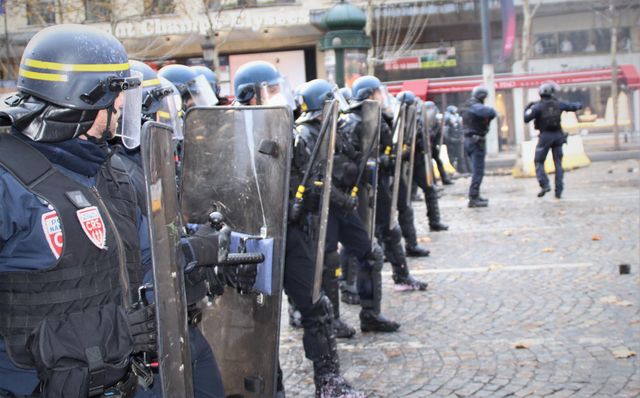
Riot police used in France
The army has deployed 1,100 soldiers from the Military Emergency Unit (UME) in 13 provinces throughout Spain. Army personnel have also been dispatched to clean up swathes of Madrid, which health officials fear may have been infected by large crowds, and to the borders. Madrid has closed its borders with France and Portugal.
According to the state of alarm, soldiers will be considered “representatives of authority” which implies that they may issue orders to civilians and that those who fail to comply with them or resist them may be accused of disobedience or resistance to authority.
The Spanish Socialist Party (PSOE)-Podemos government will deploy the army in the streets for control and surveillance, to ensure compliance with the regulations limiting freedom of movement under confinement. The government has also taken control of state, regional and local police, including that of Catalonia and the Basque Country, while private security officers will be under the command of the police.
Anyone violating “non-compliance or resistance to the orders of the authority” faces fines of €600 to €30,000, according to the Citizen Security Law. They also face up to four years in prison. The same law that the PSOE and Podemos promised to remove once in power, is now being implemented under a state of alarm.
The turn to the army is a warning to workers and youth.
The UME was created 13 years ago by the PSOE government with the claim that it would serve to fight natural disasters and emergencies. In fact, it represented the militarisation of a service which until then was implemented by civilians. While successive governments cut the budgets of civilian units struggling against fires and natural disasters, UME’s budget increased to the point it currently has 3,500 troops, armoured personnel carriers, helicopters, motorbikes, military police vehicle and a mobile command centre. In 2017, UME even inaugurated the Military School of Emergencies, unprecedently meaning the militarisation of job training of emergencies.
In a country which suffered over half a century of military dictatorships during the 20th century, where the army launched a coup in 1936 which plunged the country into a war during which they allied with Nazi Germany and fascist Italy, and sealing their victory with mass executions of 200,000 political oppositionists and militant workers, there is wide opposition to militarism and fascism. UME became one of the main vehicles of the ruling class to legitimise the role of the army in domestic and foreign affairs.
The state’s reliance on the army and UME reflects its slashing of resources for public health and research, whose bitter costs are being revealed by the pandemic. While successive right-wing Popular Party and PSOE governments imposed massive cuts in healthcare and research, they showered the army with billions of euros. Now, the ruling class, desperate and isolated in the face of economic meltdown, strikes and growing anger at their mismanagement of the virus, are deploying the army because it views every social problem as a military-police problem.
From Monday on, millions of people will be confined to their homes for at least two weeks. The government has already said it will extend the state of alarm beyond the 15 days mandated by law. Under the state of alarm, people can only go to specific shops individually, and stay in them for the time “strictly necessary”, avoiding crowds and stay at least one meter away from other people. Only food, beverage, products and essential goods establishments will remain open such as pharmacies, medical supply stores, opticians, shops for orthopaedic and hygienic products, press, fuel and pet food stores.
Millions of other workers who cannot work from home are being forced to go to their workplaces, travelling in unhygienic conditions and working in an unsafe environment. These are not health workers, nurses, pharmacists or supermarket staff, but factory and construction workers whose companies have decided not to stop production during the following 15 days.
Images have circulated of hundreds of workers crammed in buses, subways and trains in Spain’s major cities as workers try to desperately get to work under conditions where public transport service have been drastically reduced—violating one of the main recommendations of the World Health Organisation of maintaining at least one metre and a half separation from other people.
One subway worker in Bilbao, the Basque Country, told eldiario.org: “It was really crazy. They have shortened the schedules of the subway lines and all those who go, especially to the factories on the left bank in the early hours have had to pile up to wait for the train.”
El País noted, “The subway’s early morning carriages, the transport services of the working class were full.” One deliveryman delivering toys and video games said, “I’m risking my life for stupid things ... I’m delighted to deliver medicines to hospitals or whoever needs them. If someone needs something from the pharmacy, I’ll take it to them. But it doesn’t seem right to risk one’s life for things that people don’t need.”
Vast solidarity exists among workers for a genuine struggle against the virus. Numerous videos have shown quarantined citizens in Spain and Italy coming together on social media to go out to their balconies and clap for a minute in support of healthcare workers and others who continue to work and risk their lives.
Seeing the capitalist class is incapable of managing the crisis, and is even continuing to prioritize profits over lives, workers are starting to mobilize calling for factories to close.
The Mercedes-Benz plant in Vitoria, the largest factory in the Basque Country with over 5,000 workers, stopped production yesterday after workers stood before the line of departure of finished vehicles to demand that management prioritize the health of workers over production.
In Barajas, Getafe and Illescas, thousands of workers in the world’s largest airliner manufacturer, Airbus, are being called by the unions to not attend work. The union’s actions came after widespread anger erupted after a coronavirus case was detected. The same unions are currently negotiating redundancies for the workforce.
In Valladolid, workers from the industrial vehicle manufacturing plant of Iveco shut down the factory, saying that the company was not taking the appropriate safety measures. The company’s management asked for more time to negotiate the conditions of an eventual shutdown, but workers decided to take action after 4 days of work.
Thousands of workers of car manufacturer Renault and tire manufacturer Michelin have also forced the shutdown of their factories in Valladolid, Palencia and Seville.
It is to suppress this growing anger that the ruling class is preparing to use the army. In October 2017, at the height of the secessionist crisis in Catalonia, Madrid sent thousands of paramilitary Guardia Civil to repress peaceful gatherings and protests. The Spanish government even contemplated declaring the state of alarm and deploying the army.

UK: NHS anticipates year-long coronavirus crisis and 8 million hospitalised

Thomas Scripps

A leaked document by Public Health England (PHE) for senior National Health Service (NHS) doctors and officials has given the lie to all previous official discussions of the gravity of the Covid-19 pandemic and its impact.
The PHE expects that the UK’s coronavirus epidemic will last a year and that up to 7.9 million people will require hospitalisation in this time.
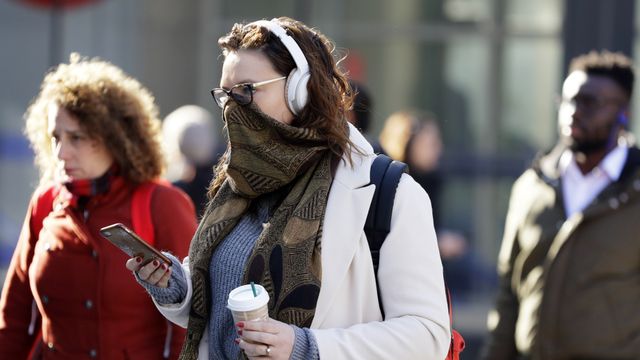
A commuter covers her face in London, Monday, March 16, 2020 during the coronavirus pandemic (AP Photo/Kirsty Wigglesworth)
The number of cases is forecast to increase rapidly over the next 10 to 14 weeks, reaching a roughly one-month peak from the end of May to mid-June. A 10-week decline in cases and deaths is expected to follow, falling to a relatively low level during the summer months. The authors of the report are concerned that the virus could then resurge in autumn and winter.
According to the document, obtained by Britain’s Guardian newspaper, “As many as 80 percent of the population are expected to be infected with Covid-19 in the next 12 months, and up to 15 percent (7.9 million people) may require hospitalisation.”
Assuming a fatality rate of just 1 percent, the infection of over 50 million people would mean 531,100 deaths. Even by Chief Medical Officer Professor Chris Whitty’s estimate of 0.6 percent, the death toll would be over 318,000. But the global fatality rate is currently around 3.4 percent.
This staggering assessment is yet another indictment of the government’s laissez-faire approach to the pandemic and their worthless assurances that services will be able to cope. The UK, along with much of the rest of the world, faces a prolonged social emergency which will affect the lives of millions. Over the weekend, a new-born baby in London tested positive for coronavirus. Italian doctors are reporting that a new wave of younger patients is now being hospitalised.
Dr. Luca Lorini, head of anaesthesia and intensive care at a northern Italian hospital, said, “The type of patient is changing. They are a bit younger, between 40 to 45 years old. People are arriving who got ill six or seven days ago and treated themselves at home, and then their conditions became more and more critical.”
The PHE document is explicit in its fear that the overstretched NHS and other social services will be unable to cope. Work considered vital—“in essential services and critical infrastructure” such as the NHS, social care, policing, transport and the fire brigade—will not be able to function normally. The document warns, “it is estimated that at least 10 percent of people in the UK will have a cough at any one time during the months of peak Covid-19 activity,” meaning they would have to self-isolate for at least seven days under the government’s guidelines. This equates to a shortfall of half a million vital workers.
PHE admit that the health service cannot come close to testing everyone with suspected symptoms for the virus, including NHS staff. Only the very seriously ill in hospital or those in prisons or care homes where the virus has already been detected will be tested.
The scale of the crisis is so apparent that Conservative Prime Minister Boris Johnson was forced to announce a series of new measures yesterday that were previously scheduled to come into force in several weeks’ time. These include advising whole households in which one member has a cough or fever to self-isolate for 14 days; telling people to avoid pubs, theatres and other social venues; to avoid “non-essential” contact with others and “unnecessary” travel; and to work from home “where they possibly can.” People in “at risk” groups will soon be asked to be “largely shielded from social contact” for 12 weeks.
In a sign of what is to come, Health Secretary Matt Hancock has said the NHS will cancel or delay all non-emergency operations.
Social services are so stretched that the effective and humane implementation of Johnson’s measures is impossible.
Isolating the elderly for three months would, in many cases, be as effective a death sentence as catching Covid-19. Britain’s 500,000 care home residents and 548,000 over 65s receiving long-term social care are already criminally under-resourced. According to executive chairman of the National Care Association, Nadra Ahmed OBE, the sector is already suffering 120,000 staff vacancies. She told the Sun, “The potential of self-isolation and the impact of that is fundamentally going to render services unable to continue.
“If we don’t have the workforce to deliver the services then we are going to be substantially challenged. People with the highest need will receive the care but people with medium needs who need the support may be waiting.”
The normal sickness rate among care workers is 3 percent. If 10 percent are forced to self-isolate during the peak of the epidemic (and the number is likely to be higher), then the sector will be short a further 100,000 workers.
This reduced workforce will then be forced to spend extra time dealing with the coronavirus crisis, the policy director of the United Kingdom Homecare Association Colin Angel has warned. Social workers’ home care visits would take “well longer than the usual expected time while dealing with people who are unwell.”
His concerns echoed those of Professor Martin Green, chief executive of the charity Care England, who said last week, “Domiciliary care services are really important. If we get a lot of domiciliary care workers off ill that will be a big problem. People who need that care will not be getting support, they won’t get fed, and they won’t get washed or toileted.” He criticised the government for showing “no evidence of a plan” to address these needs.
Responding to these criticisms, ministers passed responsibility onto local councils, who were told on Friday to design plans for supporting the most vulnerable and high-risk people in their areas. Councils in England lost 77 percent of their funding from central government between 2015-16 and 2017-18 and cut 75,891 jobs in the five years up to 2019.
Lack of resources for social care and the NHS could also create a vicious circle. Helen Buckingham from the Nuffield Trust said, “With hospital beds so squeezed, patients will really need care services to keep functioning well enough to stop people being admitted if it can possibly be avoided.”
Ian Hudspeth, chair of the Local Government Association’s community wellbeing board (LGA), warned that the stretched demand for adult social care “could be further impacted by hospitals needing to discharge people even sooner than at present owing to the pressures on them.”
The government’s response to this danger has been pitiful. Besides aimless and empty calls for an “army of volunteers,” officials have suggested redeploying care workers to look after the elderly in virus hotspots. They are also reviewing whether criminal record background checks, required to work in close contact with vulnerable people, can be loosened to fill vacancies.
As one care worker explained to the Guardian, plans to parachute care workers into affected areas ignores the fact that the people they look after often have highly complex individual needs and threaten to exacerbate the problem of staff sickness. “You are going to be putting people into a hot zone where people are infected. It creates a vicious circle.”
She warned that universally low-paid care staff would feel pressured to lie about whether they felt ill: “They fear they won’t be paid. Nobody can survive on statutory sick pay.”
The spread of private, profit-seeking concerns throughout the health and social care services in recent years has turned this problem into a mass concern. Last Friday, cleaning, portering and catering staff walked out of Lewisham Hospital after the outsourcing firm ISS refused to pay them properly.

As lockdowns mount over COVID-19 worldwide, WHO pleads for more testing

Bryan Dyne

There are now 183,000 cases of the coronavirus in 162 countries and territories worldwide, meaning that the number of active COVID-19 cases now exceeds the number of recovered patients. This includes more than 600 new deaths, bringing the total toll to over 7,200. The cases outside of China, which is now relatively stable, have now exceeded those within, as Europe has emerged as the new epicenter of the global pandemic with the United States not far behind. Emergency measures across entire nations are now commonplace as the virus shows little signs of being contained.
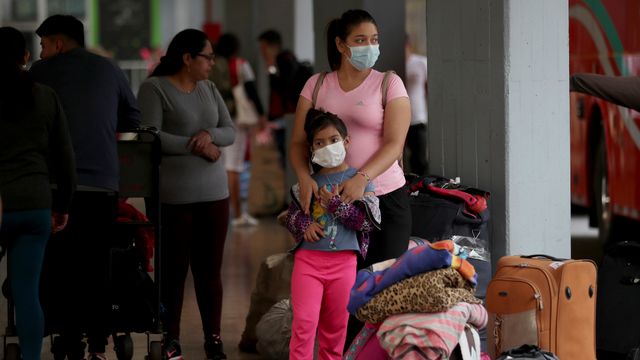
Travelers wearing protective masks arrive to the main bus station in Bogota, Colombia, March 13, 2020 [Credit: AP Photo/Fernando Vergara]
France, Italy, Spain and Germany are under lockdown, a condition now affecting more than 250 million across Europe. Those four countries alone are collectively dealing with upwards of 52,000 cases, of which 2,663 have resulted in deaths. Fifty-seven countries on every inhabited continent have some form of travel restriction, many of them directed against Europe or the United States, in an attempt to stem the pandemic that is accelerating across the globe.
In the United States, California, Ohio, Illinois, Massachusetts, Michigan, Washington, Kentucky, Maryland, Indiana, Rhode Island and Pennsylvania have all issued orders to close schools, restaurants and/or bars. The 6.7 million people living in the six counties including and surrounding San Francisco are now under a “shelter in place” order for the next three weeks, which will be enforced by local police to “ensure compliance.” New Jersey residents are now being “strongly discouraged” from leaving their homes after 8:00 p.m., which will be enforced by the state’s contingent of the National Guard.
These bans are in addition to a nationwide directive from the Centers for Disease Control and Prevention (CDC) announced Monday recommending against any gathering of more than 10 people.
As the World Health Organization (WHO) noted, however, such actions in and of themselves are insufficient to stop the spread of the disease. WHO Director-General Dr. Tedros Adhanom Ghebreyesus said yesterday that governments were not doing enough to combat the pandemic and urged them to step up their testing programs.
“[W]e have not seen an urgent enough escalation in testing, isolation and contact tracing—which is the backbone of the response. … You can’t fight a fire blindfolded and we can’t stop this pandemic if we don’t know who is infected,” he said at a news conference in Geneva. “We have a simple message for all countries: test, test, test.”
The organization has also repeatedly stressed that the magnitude of the pandemic “does not mean countries should give up. The idea that countries should shift from containment to mitigation is wrong and dangerous. … This is a controllable pandemic. Countries that decide to give up on fundamental public health measures may end up with a larger problem, and a heavier burden on the health system that requires more severe measures to control.”
Nowhere can this breakdown of a public health system be seen more clearly than in the United States, where the Trump administration is only this week beginning to roll out mass, nationwide coronavirus testing. On Monday, during the administration’s now daily coronavirus press briefing, US President Donald Trump tried to excuse the lack of testing in the country by claiming, “We have an invisible enemy. We have a problem where a month ago no one even thought about.”
This is a bald-faced lie. Based on the highly contagious and deadly nature of the virus, the WHO designated the virus a “Public Health Emergency of International Concern” on January 31, the day that officials confirmed human-to-human transmission in the US. By mid-February, South Korea was able to test 10,000 individuals per day while keeping hospitals and clinics supplied and staffed to receive and isolate any individual who tested positive. Italy, where the health system has become largely overwhelmed by more than 28,000 cases, has still been able to perform at least 60,000 coronavirus tests. The US, by contrast, has so far done less than half of that number.
Instead, the Trump administration has opened the spigot of the Federal Reserve and provided $2.2 trillion to the financial sector in an attempt to bolster the stock market. This sum, compared to the resources asked for by the World Health Organization, could provide enough masks, gowns, ventilators and other critical medical supplies to contain the pandemic 3,000 times over.
At the same time, Trump has tweeted, “I ask all Americans to band together and support your neighbors by not hoarding unnecessary amounts of food and essentials.”
In response to these words, a worker from West Virginia, who is pregnant and has to visit a potentially infected hospital twice a week, wrote to the WSWS: “These dipshits caused this panic through their criminal misinformation, response delay, and ransacking of our public health infrastructure. And now they have the gall to point at the scared person who bought extra toilet paper as if they’re the problem.”
Moreover, such resources could have stopped the coronavirus from becoming a pandemic in the first place. Comprehensive testing and isolation could have been done to people infected inside and outside of China, in addition to providing the necessary medical care to allow them to recover. It would have also been more than enough to compensate those people who lost wages while they were out sick. And COVID-19 would have been remembered as a dangerous but ultimately contained disease.
Instead, it has become the policy of governments in North America and Europe that millions will become infected and die. The CDC estimates that up to 216 million people in the United States alone will contract the virus. Dr. Anthony Fauci, director of the National Institute of Allergy and Infectious Diseases, bluntly stated that “it’s possible” that hundreds of thousands or millions of people will die as a result.
This has been echoed by German Chancellor Angela Merkel, who announced last week that she expects 70 percent of the German population to get the virus. The government of British Prime Minister Boris Johnson stated that the best solution to combat the virus is to gain “herd immunity” by potentially getting “up to 80 percent of the population” infected.
These statements are a prescription for mass manslaughter. As the example of Italy makes clear, the health care systems of even the supposedly “first-world” countries essentially disintegrate with only a few tens of thousands of cases, at which the mortality rates for the virus become about 5 percent because of the lack of critical medical supplies. The governments of the United States, Germany and Britain are suggesting that the only way to defeat the pandemic is for 10 million to 15 million people to die.

Climate Change: A National Security Threat Multiplier

Yash Vardhan Singh


Environmental risks arising from climate change are now considered to be powerful threat multipliers. The World Economic Forum’s Global Risk Report 2020 identifies five of the top ten global risks as being of an environmental nature, owing to the confluence of climate change and ecological degradation. Recent Intergovernmental Panel on Climate Change (IPCC) reports point to extensive impacts of climate change despite prevailing mitigation efforts, particularly for countries like India.

Even if one considers the IPCC’s middle ground predictions for temperature and rainfall variations, India will be highly vulnerable to droughts, heat stress, sea level rises, and extreme weather events including cyclones, floods etc. Furthermore, factors such as the enormous population size, socio-economic inequality, extreme poverty, agricultural dependency and high density of population along coastal areas would compound physical threats. What then would the domino effect of climate change on national security be, particularly arising from potential interactions with: a) insurgencies; b) critical infrastructure, especially nuclear installations; and c) public health? As these three domains are relevant to traditional security, infrastructure, and overall human security, they are useful case studies to gain insights on the multifaceted security implications that climate change could pose.

InsurgenciesEnvironmental stress has the potential to exacerbate ongoing insurgencies. Northeast India and areas in Central India affected by left wing extremism (LWE) are ecologically sensitive regions experiencing protracted insurgencies. Climatic stress combined with weak state capacity leads to deterioration in people’s livelihoods. For example, water stress and land degradation in dry land agrarian regions impacts small farmers in central India. Armed groups tactically exploit this situation for recruitment to their cadres and to exert and maintain local control, as was seen in the case of LWE actors in Central India. Meanwhile, Northeast India’s vulnerability to extreme weather events and natural disasters such as cloudbursts, floods etc could result in livelihood stress, displacement etc—all of which are phenomena the multiple ongoing insurgencies in the region could potentially exploit to their benefit.

International instances where the climate change-insurgency link has been identified include the case of Boko Haram. Climate change around Lake Chad leading to water scarcity and land degradation was a factor that contributed to local support for and recruitment to Boko Haram. Studies have also shown how increased aridity and droughts in Syria resulted in large-scale rural to urban migration and contributed to socio-economic conditions becoming conducive for domestic instability. This in turn culminated in a civil war with devastating effects. Additionally, climate change induced natural disasters could also exacerbate organised crime, whose relationship with insurgencies are well established. To accurately understand and predict potential future trajectories of insurgencies in India, climate change must be factored in.

Critical InfrastructureCritical infrastructure such as nuclear installations along the coasts, ports, defense establishments, the national electricity grid etc are all vulnerable to impacts of climatic stress. For example, India’s nuclear facilities located along coasts are specifically vulnerable to storm surges, cyclones and sea level rises. The 2011 Fukushima Daiichi nuclear disaster was caused by a tsunami and provides a glimpse into challenges that nuclear facilities might face in the future. Furthermore, recent climate change models show that previous predictions underestimated the scale of climate change impact, especially regarding sea level rises and extreme weather events. Structural and functional safety standards as well as contingency plans created a decade ago might be inadequate to deal with the fast-changing physical environment of today and tomorrow. Moreover, given how nuclear installations are time-intensive projects with long life cycles, long term climate change threats must be factored in during planning.

Public HealthIPCC reports have predicted the spread and intensification of vector-borne diseases such as malaria, dengue, and chikungunya due to global warming. There is also a possibility of increase in new zoonotic diseases due to increased human-wildlife interaction arising from natural habitat loss. Epidemic induced public health crises could easily become a national security issue. Given the high population density and limited public health management capacity, pandemics and large-scale epidemics can be catastrophic for India. Diversion of physical assets and human resources from the security apparatus may be required to manage all-out medical/health crises. Military, paramilitary and other security personnel will be needed to assist civilian administration in logistics and emergency response. This will create vulnerabilities in standard areas of national security like border security, domestic law and order, industrial security, counter-terrorism and counter-insurgency operations etc. Vulnerabilities of this nature are susceptible to exploitation by adversarial state and non-state actors alike. Perception wars during such crises cannot be ruled out either. There is a risk of adversarial state and non-state actors using disinformation to intensify panic and/or discontent arising from any public health crisis, leading to potential internal instability as well as legitimacy challenges for the state.

ConclusionSecurity implications arising from environmental risks are wide-ranging and multi-layered. Potential consequences of climate change’s adverse interaction with insurgencies, critical infrastructure and public health highlight the range of threats climate change could pose across diverse security domains. India must urgently recognise climate change’s potential for creating or exacerbating national security threats and invest in enhancing preparedness in a timely manner.

16 Mar 2020

The Battle for the Saudi Royal Crown

Patrick Cockburn

The fear caused by the coronavirus outbreak is greater than that provoked by a serious war because everybody is in the front line and everybody knows that they are a potential casualty. The best parallel is the terror felt by people facing occupation by a hostile foreign army; even if, in the present case, the invader comes in the form of a minuscule virus.
The political consequences of the Covid-19 pandemic are already vast because its advance, and the desperate measures taken to combat it, entirely dominate the news agenda and will go on doing so for the foreseeable future, although it is in the nature of this unprecedented event that nothing can be foreseen.
History has not come to a full stop because of the virus, however: crucial events go on happening, even if they are being ignored by people wholly absorbed by the struggle for survival in the face of a new disease. Many of these unrecognised but very real crises are taking place in the Middle East, the arena where great powers traditionally stage confrontations fought out by their local proxies.
Top of the list of critical new conflicts that have been overshadowed by the pandemic is the battle for the throne of Saudi Arabia: Crown Prince Mohammed bin Salman (MbS), whose dwindling band of admirers describe him as “mercurial”, this month launched a sort of palace coup by arresting his uncle, Prince Ahmed bin Abdulaziz, and his cousin, Prince Mohammed bin Nayef, whom he displaced as crown prince in 2017.
The new purge of close relatives by MbS may be motivated by his wish to eliminate any potential rivals for the crown who might step forward upon the death of King Salman, his 84-year-old father. This need to settle the royal succession has become more urgent in the past few weeks because the US presidential election in November might see the crown prince lose an essential ally: Donald Trump, a man who has become increasingly discredited by his shambolic response to Covid-19, and who faces Joe Biden’s emergence as the likely Democratic candidate for the presidency.
Trump has been a vital prop for MbS, standing by him despite his role in starting an unwinnable war in Yemen in 2015 and his alleged responsibility for the gruesome murder of Saudi journalist Jamal Khashoggi in Istanbul in 2018. MbS has denied personal involvement in the killing, but told PBS last year: “It happened under my watch. I get all the responsibility, because it happened under my watch.”
The record of misjudgements by MbS after he established himself as the de facto ruler of Saudi Arabia five years ago makes Inspector Clouseau seem like a strategist of Napoleonic stature by comparison. Every one of his initiatives at home and abroad has stalled or failed, from the endless and calamitous war in Yemen to the escalating confrontation with Iran that culminated in Tehran’s drone and missile attack on Saudi oil facilities last September.
The latest gamble by MbS is to break with Russia and flood the market with Saudi crude oil just as world demand is collapsing because of the pandemic’s economic impact. In living memory in the Middle East, only Saddam Hussein displayed a similar combination of hubris and erratic performance that inspired disastrous ventures such as the Iraqi invasion of Iran in 1980 and of Kuwait in 1990.
I once asked a Russian diplomat knowledgeable about the workings of the Iraqi ruler’s inner circle why none of his senior lieutenants, some of whom were intelligent and well informed, had warned him against taking such idiotic decisions. “Because the only safe thing to do in those circles was to be 10 per cent tougher than the boss,” explained the diplomat. MbS reportedly shows similar impatience towards anybody critical of the latest cunning plan.
When it comes to the oil price war, the likelihood is that the Kremlin will have thought this through and Riyadh will not. Russian financial reserves are high and its reliance on imports less than during the last price conflict five years ago between the two biggest oil exporters. Inevitably, all the oil states in the Middle East are going to be destabilised, Iraq being a prime example because of its complete reliance on oil revenues. Iran, suffering from the worst outbreak of Covid-19 in the region, was already staggering under the impact of US sanctions.
In time, the Russians may overplay their hand in the region – as all foreign players appear to do when over-encouraged by temporary successes. For the moment, however, they are doing nicely: in Syria, the Russian-backed offensive of President Assad’s forces has squeezed the rebel enclave in Idlib without Turkey, despite all the belligerent threats of President Erdogan, being able to do much about it.
These developments might have provoked a stronger international reaction two months ago, but they are now treated as irrelevant sideshows by countries bracing themselves for the onset of the pandemic. It is easy to forget that only 10 weeks ago, the US and Iran were teetering on the edge of all-out war after the Iranian general Qassem Soleimani was assassinated at Baghdad airport in a US drone strike. After ritualistic Iranian retaliation against two US bases, both sides de-escalated their rhetoric and their actions. Rather than drastically changing course, however, the Iranians were probably re-evaluating their strategy of pinprick guerrilla attacks by proxies on the US and its allies: this week, the US accused an Iranian-backed paramilitary group of firing rockets at an American base north of Baghdad, killing two Americans and one Briton. Iran has evidently decided that it can once again take the risk of harassing US forces.
Covid-19 is already changing political calculations in the Middle East and the rest of the world: a second term for President Trump looks much less likely than it did in February. The election of Biden, an archetypal member of the Washington establishment, might not change things much for the better, but it would restore a degree of normality.
Trump’s foreign policy in the Middle East and elsewhere has always been less innovative in practice than his supporters and critics have claimed. Often, in Iraq and Afghanistan, it was surprisingly similar to that of Barack Obama. The biggest difference was Trump’s abandonment of the nuclear deal with Iran, but even there Trump relied on the “maximum pressure” of economic sanctions to compel the Iranians to negotiate. For all Trump’s bombast and jingoism, he has never actually started a war.
However, this is now changing in a way that nobody could have predicted, because in its political impact the pandemic is very like a war. The political landscape is being transformed everywhere by this modern version of the Great Plague. By failing to respond coherently to the threat and blaming foreigners for its spread, Trump is visibly self-isolating the US and undermining the hegemonic role it has played since the Second World War. Even if Biden is elected as the next president, the US will have lost its undisputed primacy in a post-pandemic world.

Coronavirus, Economic Networks, and Social Fabric

Richard Heinberg

Connections will be strained in the coming weeks—some of them interpersonal and local, some economic and global. It’s up to us to nourish the connections that are most essential, while finding backups for those that can no longer be relied on.
The COVID-19 pandemic offers intriguing insights into how networked our modern world has become, and how we’ve traded resilience for economic efficiency. Case in point: someone gets sick in China in December of 2019, and by March of 2020 the US shale oil industry is teetering on the brink. What’s the chain of connection?
  • January 2020: The coronavirus epidemic explodes, forcing China to institute a massive quarantine.
  • Chinese oil demand craters as a result of hundreds of millions staying home and untold numbers of businesses going offline.
  • March 7: Saudi Arabia asks its OPEC partners and Russia to cut oil output to keep prices from crashing.
  • March 9: Russia refuses, so the Saudis decide to provoke a price war by producing even more oil and selling it at a discount.
  • As a result, world oil prices fall from $50 (Feb. 17) to $33 (March 9).
  • Meanwhile, it is arguably the US, not Russia, that will be hurt most by the price war. As the world’s largest oil producer, the US has seen nearly all of its spectacular production growth in recent years coming from light, tight oil produced by fracking. But fracking is expensive; even when prices were higher, the fracking industry struggled to turn a profit on this unconventional petroleum source.
  • With an oil price heading toward $30 or possibly even lower, not even the most efficient fracking companies with the very best acreage can make investors happy. So, dozens of domestic US oil producers are set to go bust (unless the Trump administration bails them out).
What set off this unraveling? It was China’s deliberate—and arguably necessary—pull-back from economic connectivity. This tells us something useful about networked systems: unless there is a lot of redundancy built into them, any one node in the network can affect others. If it’s an important node (China has become the center of world manufacturing), it can disrupt the entire system. What would redundancy actually mean?  If we made more of our products locally, we wouldn’t have to depend so much on China. If we produced more of our energy locally, then our energy system would probably include more redundancy (by way of more types of energy sources), and the world energy economy would be more resilient as a result. Problems would still arise, but they would be less likely to affect the whole system.
So, redundancy is important. However, redundancy is the enemy of economic efficiency. Over the past few decades, economic engineers have created just-in-time supply chains in order to minimize warehousing costs, and have lengthened supply chains in order to access the cheapest labor and materials. Fine—everybody got cheaper products, and China has grown its economy at a blistering pace. But what happens when everybody suddenly needs an N95 facemask while international supply lines are down? Officials can’t just call up the local facemask factory and order a new batch; that factory likely closed years ago.
That’s just one of the ways in which the coronavirus pandemic presents a daunting challenge to our globally networked economy—while our networked economy also complicates efforts to slow the spread of the virus. When you start to take more networks into account, the picture becomes daunting indeed. What happens to the tourism industry if millions are quarantined and nobody wants to be in close quarters with lots of strangers? How about the airlines? The restaurant and hotel chains? Even a few weeks of dramatically reduced business could be critical to their survival.
Hence government leaders and the masters of the financial universe—the central bankers—are huddling daily to try to figure out how to keep what is currently (in the US) merely a stock market blowout from turning into a serious economic depression. Unfortunately, the tools at their disposal may not be up to the job. That’s because the core problem (the pandemic) is not financial in nature. Around 70 percent of the US economy is driven directly by consumer spending. But putting money into people’s pockets through lower interest rates or government spending won’t make them suddenly decide to go on a cruise, book a flight, or even go out on Friday night to dinner and a movie.
But that’s not what concerns me most these days. Instead, it’s the social dimension of the coronavirus epidemic. Financial crises are inevitable in an economy that prioritizes the rapid growth of shareholder value and the profits of the investment class. Even more they are inevitable in an economy based on a fundamentally flawed understanding of reality—the implicit assumption that growth in resource extraction, manufacturing, and waste dumping can continue indefinitely on a finite planet. Many ecological thinkers have been making that point for years. But the response to this intrinsic vulnerability that makes the most sense, and the one my colleagues and I have been recommending, is to strengthen community resilience. That means supporting local farmers, manufacturers, merchants, arts groups, and civic organizations of all kinds. Trust is the currency that will enable us to weather the storms ahead, and trust is built largely through face-to-face interaction within communities.
However, the necessary response to the novel coronavirus is social distancing—i.e., reducing face-to-face human connectivity. As people voluntarily retreat from public gatherings, or are forced to do so by regional quarantines, severe impacts are bound to be felt by faith communities and local arts organizations, as well as local restaurants, farmers markets, and merchants. Sporting events and concerts are being canceled, and the public’s direct engagement with local and national politics is suffering as well. Public transit systems are emptying.
We need to be thinking of ways to keep civic connections alive for the next while. The pandemic will not last indefinitely: the virus itself may be here for good, but one way or another it and humanity will negotiate some sort of biological accommodation. Most likely, humans will achieve herd immunity, perhaps aided by vaccines. Our urgent task is to keep our communities healthy and resilient in the interim.
Of course, we still have the internet and social media. We should make the most of them, even though in “normal” times these often distract us from face-to-face interaction or reduce our social skills. For the time being, we can use these tools to keep up not just with the news, but with all the people we care about. I’ve even heard of innovative communitarians setting up Zoom conferences with their neighbors so they can stay in “touch.” Unfortunately, there’s no app yet that can show up at a farmers market, admire the produce, talk about the weather, and bring home a basket of fresh veggies.
Humor can help with emotionally processing difficult information (though its use can be tricky, as many people’s emotions are raw these days). There’s a lot to process—and not just fears of getting COVID-19 or of seeing a 401k disappear. Will we have to cancel our vacation? Should I go to my yoga class or stay home? How can I make ends meet if I can’t work for the next few weeks due to quarantines? How much should we disrupt our routines? Should my company be doing more to protect employees and customers? These questions and more are stoking interpersonal tensions between spouses, between parents and children, between co-workers, and between employers and employees. Normalcy bias and denial can lead to complacency when action is needed, while panic can lead to poor choices and the dismissal of one’s genuine concerns by friends and colleagues. One solution is to engage friends, neighbors, co-workers, and family in conversations about the virus, actively listen to their concerns, and gently steer those conversations in a prosocial direction that takes into account the seriousness of the situation and our need to change behavior. Ironically, the most pro-social behavior at the moment is to stay home. Meanwhile, make commonsense preparations: stock up on enough supplies to get you through a month without going out, and think about what you’ll do.
Remember: humanity has survived epidemics much worse than this one. My wife Janet just passed along this historical tidbit: it seems that early in William Shakespeare’s career as an actor and writer, London theaters were closed by order of the Privy Council (June 23, 1592), which was concerned about a plague outbreak and the possibility of civil unrest. But the theaters reopened in June 1594 and Shakespeare went on to write his most famous plays. Like Will, we’ll get through this.
Connections will be strained in the coming weeks—some of them interpersonal and local, some economic and global. It’s up to us to nourish the connections that are most essential, while finding backups for those that can no longer be relied on. What do we need and value most? How can we support one another? These are the sorts of questions we might ask ourselves in the days ahead—and we may have plenty of time on our hands at home to contemplate them.

Helping in Corona Times

Romi Mahajan

During these tragic and anxiety-filled times, we are witnessed extremes in human behavior.
Extremes.
On the one hand, we have the fundamental decency of medical professionals and first responders who are sanctifying their oath by selfless action; indeed many have perished through the acts of aiding others and warning the world about an impending disaster. In the United States, once again nurses show themselves to be among our most decent and giving citizens.
On the other, we have the arrogant nonchalance of those who either believe this pandemic is an ideological construct or simply don’t care about their role in transmission who blithely continue to “live life” in a Randian dystopic manner. Democracy’s limits are reached when people are free to trample upon the rights of others and to actively put their lives in danger — staked on the altar of personal freedom and their need for beers at the pub.
Amazing generosity and decency contrasted with sickening callousness. Indeed, that might be the story of humanity.
And then of course there are those of us in the middle, who are neither selfless nor callous. As we quarantine ourselves and go to a “new normal,” we ask ourselves, how indeed we can help those who are affected by the pandemic and its offshoots.
A few ideas:
1. Don’t be part of the problem. Follow public health guidelines and put the collective before the self. Just because “you want to do X” doesn’t mean it’s a good idea.
2. Inquire often. Ask your neighbors, parents, friends, and others if they need anything. With modern technology, you can ask without putting yourself or them at risk.
3. Support people financially. Thousands of people have already been laid off or are making grisly calculations about losing wages or staying safe. If you have means, donate money, gift cards, or useful goods to families who are facing these unenviable choices.
4. Remember the thin line between solvency and poverty/bankruptcy. Many small businesses cannot afford even minor dips in business; further, once they are gone, the “restart” costs can be prohibitive. Support these businesses with donations, grants, or with “future purchases” paid for now. Even selfishness has a role here- do you want to see your favorite local eatery close permanently?
There are other, structural issues to consider too.
1. Use this time to think about your own buying habits. Maybe it’s worth buying some goods directly from producers and not using cheaper middle-men. Support the source.
2. Subscribe now. If small or struggling businesses get subscription funds now, they can plan their futures because they have a predictable income stream.
Many people have been sharing amazing ideas about how to help others during this period. These are just a few ideas. I hope they help.

“Horror start” for New Zealand workplace deaths in 2020

Chris Ross & John Braddock

The beginning of 2020 has witnessed, according to a recent Radio New Zealand report, a “horror start” for workplace deaths, with seven on-the-job fatalities in January, two in February and another this month.
Most have been on farms and involved quad bikes and farming vehicles. The most recent case was a driver who was killed when his truck crashed 100 metres down a bank at a South Auckland quarry. In another incident, 24-year-old Mandeep Sandhu died after being crushed by a pack of 30 glass sheets at manufacturer Stake Glass in Christchurch. His friend Rahul Badhu said the news “has destroyed his family.”
The figures point to an impending higher death rate than in 2019, the worst year since 2011, with 108 fatalities, compared with 63 in 2018. These figures only cover single incidents. They exclude deaths from occupational disease or self-harm, such as job-related suicides. New Zealand workers die from long-term exposure to harmful substances 10 times more often than from “accidents.”
Following the 2010 Pike River Coal mine disaster, which killed 29 men, laws were passed by the National Party government in 2013 and 2016, and endorsed by the Labour Party and the trade unions, ostensibly to strengthen workplace safety. They required businesses to identify risks and do what was deemed “reasonably practicable” to eliminate or manage them. They also introduced up to $600,000 in fines for workplace accidents.
The government claimed the laws would lead to a 25 percent reduction in workplace deaths and injuries by 2020. Instead they have escalated. One of the worst disasters happened last December when the White Island volcano erupted, killing 21 people, including tour guide Hayden Marshal, and injuring 26. Regulators had taken no action to stop tour groups visiting the island, despite the known risk of eruptions.
Scandalously, the government regulator WorkSafe admitted in January that it had been under-reporting workplace deaths for years. After aggregating data collected by the police and other government agencies, WorkSafe announced there had been 413 deaths in the six years from 2013 to 2018, up 40 percent from the previously reported total of 291 deaths.
Radio NZ (RNZ) reported on March 9 that there has been a reduction in WorkSafe investigations since 2016. In one example, a decision was made not to formally investigate incidents relating to last year’s huge SkyCity fire in the Auckland CBD. Tina Barnett, a Unite Union safety delegate at SkyCity, said dozens of staff had spoken to her about the negative health effects of the fire, and one worker was hospitalised, yet WorkSafe concluded the company had not breached regulations.
A lawyer representing several businesses, Garth Galloway, told RNZ: “It suits my clients not to have investigations.” He mentioned a case involving another large construction site that could have resulted in multiple fatalities, saying “WorkSafe’s response was: it doesn’t meet our threshold. We’re not investigating.”
WorkSafe is currently investigating two workplace deaths at separate meat processing plants. The industry is representative of NZ industry as a whole, which has seen widespread cost-cutting, attacks on conditions and intensified exploitation to increase profits, resulting in frequent injuries and sometimes deadly consequences.
Alfred Edwards, 61, a father of five, died at Affco’s Wairoa meatworks where he had worked for 40 years on February 5. Edwards was crushed by over-stacked pallets in a freezer and his body was not found for hours, despite a rule requiring workers to operate in pairs.
Workers told Stuff that the plant was storing additional meat unable to be shipped to China, New Zealand’s main export destination, due to the coronavirus outbreak. Alfred’s son Moana Edwards said some workers had walked off the job the previous month over safety concerns. Another worker almost had his hand severed last December.
NZ Meat Workers Union (NZMWU) official Darien Fenton, a former Labour Party MP, said talks with the company had secured “some guarantees” that workers would be “supported” through interviews with WorkSafe and police. In return, full production was allowed to resume after two weeks, before investigations were completed. Negotiations about workers’ pay while the plant was closed were described as “ongoing.”
Incredibly, Fenton declared that it is “unusual” for a meat worker to die on the job. In fact, on December 19, Robin Killeen, 74, a cleaning contractor, was crushed to death by machinery at Anzco Foods Plant in Eltham. Workers told the media they were given minimal training for machinery which didn’t have adequate safety guards, and felt pressured to cover staff shortages.
Anzco’s record betrays Fenton’s absurd claim. In February 2019, a 28-year old worker was admitted to hospital after accidentally stabbing himself in the face with a knife. A month later a woman suffered arm lacerations while cleaning machinery. In 2013, a 17-year-old worker’s hand was crushed when working unsupervised on a beef hover removing machine. Another worker lost the top of his finger in a conveyor belt, with the company paying a paltry $54,000 in fines and compensation.
The NZMWU is complicit in the unsafe conditions in the industry. In 2017, the WSWS exposed the role of the NZMWU in collaborating with the Taylor Preston processing plant in Wellington in suppressing information after a worker died. To this day no public statement about the circumstances of the tragedy has been made by the company or the union.
The list of workplace injuries and deaths in other industries is extensive. In July 2019, RNZ reported that construction deaths were at their highest level in a decade. Eleven people died by mid-year, the most for any year since 2009, when 19 people were killed. The massive growth in housing and high-rise building was a major factor, with four of the fatalities caused by falls from heights and another six involving vehicles.
The forestry industry remains among the most deadly, with seven fatalities last year. Following one recent court case, the log exporter Guru NZ was ordered to pay nearly half-a-million dollars in fines and reparations over the death of Leslie Laing in 2017. The father of four was hit by a one-tonne excavator grapple while trying to close a container full of logs.
In 2014, in the wake of an earlier spate of deaths, a Forestry Industry Safety Council was formed, including business leaders, WorkSafe and trade union officials. The latter hailed the body as a model of union-company collaboration, falsely claiming it would improve safety.
Governments of all stripes have aggravated falling safety standards by cutting funding for inspectors and effectively leaving companies to self-regulate, while the unions have suppressed opposition from workers.
The contempt with which the ruling elite treats the lives of workers was exposed by opposition National Party leader Simon Bridges this month in his first policy announcements for the coming September election. National is promising a US Trump-like “bonfire on regulations,” doing away with two regulations for every new one introduced. One of the key elements of the policy, Bridges declared, is to replace “burdensome” and “costly” workplace regulations with a “health and safety common-sense test.”