18 Mar 2020

Israeli government uses emergency powers to authorize cellphone tracking of coronavirus patients

Kevin Reed

The Israeli government voted unanimously early Tuesday morning to pass regulations allowing the country’s intelligence agency to use cellphone location data to track the movements of people who test positive for the coronavirus and identify others with whom they have come into contact.
The unprecedented measure—which permits the Israeli internal security agency known as Shin Bet to use counterterrorism technology on the general public—was adopted by a vote of the cabinet with emergency powers, thereby avoiding a review by Israel’s parliament, the Knesset.
Discussions had been underway since Saturday when Israeli Prime Minister Benjamin Netanyahu announced, “All means will be used to fight the spread of the coronavirus including technological means, digital means, and other means that until today I have refrained from using among the civilian population.”
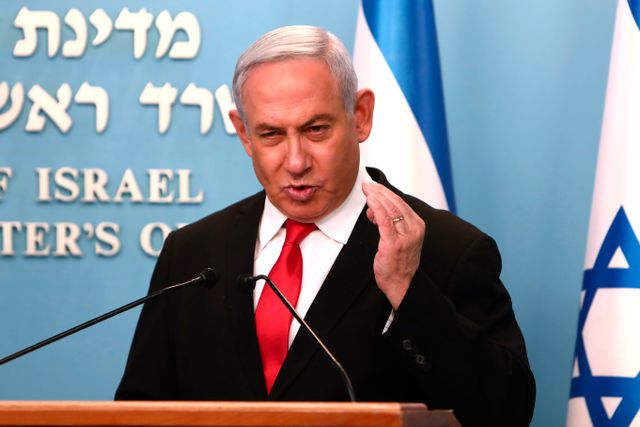
Israeli Prime Minister Benjamin Netanyahu speaking from his Jerusalem office on the coronavirus. [Photo credit: Gali Tibbon/Pool via AP]
As of this writing, according to the Jerusalem Post, there are 337 people in Israel who have tested positive for the coronavirus and there are no deaths reported. The Health Ministry reported early Wednesday that five people are currently in serious condition with COVID-19, while another nine are moderately ill and 11 have recovered. The World Health Organization also reports 41 confirmed cases of the disease in the Occupied Palestinian Territory with no deaths. There are 8.6 million people in Israel and 5 million people in the Palestinian territories.
The passage of the cellphone tracking regulations took place under extraordinary political circumstances. On Monday, while the outgoing Knesset was reviewing Netanyahu’s proposal, its time expired at 4:00 p.m. and a new parliament was sworn in without a vote on the measure being taken.
Despite the Justice Ministry’s insistence that the measure go through the full parliamentary approval process, Netanyahu moved with his holdover cabinet—including the support of Attorney General Avichai Mendelblit—to implement the public surveillance operation anyway.
According to Haaretz, “The ministers approved regulations authorizing the Shin Bet to track all those who came into contact with individuals suspected of being infected with COVID-19 prior to being diagnosed with the illness. To track these people, the Shin Bet will use advanced technology, usually utilized in counter-terrorism.”
In other words, the Shin Bet tracking system includes cellphone location data that has already been collected and exists in a database such that the state can go back in time and retrace the movements and activity of anyone.
Haaretz also described the passage of the domestic intelligence regulations, “Published in the dead of night in the state records, despite initially being slated to be confidential, the regulations stated that there will be no need for a court order to collect the data. Normally, a court order is required for something like cellphone tracking, as it is considered a serious invasion of privacy if there is no basis for it.”
The blatantly undemocratic measure and procedure did not prevent Netanyahu from stating, “Israel is a democracy and we must maintain the balance between civil rights and the public’s needs.” The prime minister would have been speaking the truth if he had said he was taking advantage of the public health crisis to make public a surveillance operation that has been in existence for many years. An intelligence technology that has been used in the brutal suppression of Palestinian opposition to expanding occupation is now being rolled out against the entire population of Israel.
Netanyahu is also using the coronavirus epidemic and the implementation of the cellphone surveillance as a means of maintaining his political power. He has been unable to form a new government after three attempts. His trial on bribery, fraud and breach of trust, set to open on Tuesday, was postponed for two months after his Justice Minister Amir Ohana put the country’s courts in a “state of emergency” over the coronavirus.
Shin Bet has been collecting cellphone metadata in Israel at least since 2002. Several Israeli laws give the prime minister the power to force telecommunications companies to allow government access to their facilities and databases, “as necessary to perform the functions of the security forces or to exercise their powers.”
As in the US, the Israeli government passed Article 11 of the Security Agency Law in the aftermath of the terror attacks of September 2001. It permits the Prime Minister to determine what kind of information from cellphone subscribers is required by Shin Bet “to fulfill its purpose.”
The spying of the Israeli government on the public has been an open secret for nearly two decades. As an anonymous former Israeli intelligence official told the New York Times, “we all laughed, that what the American intelligence community was trying to hide, and what caused such an uproar among the American public, is so clearly written in Israeli law.”
The cabinet vote was criticized widely within Israel and internationally as following closely behind China, South Korea and Iran in the use of repressive methods in response to the spreading pandemic. The Association for Civil Rights in Israel said that authorizing Shin Bet with the new powers was a “dangerous precedent and a slippery slope that must be approached and resolved after much debate and not after a brief discussion.”
Former Israeli deputy attorney general Malkiel Blass said that Netanyahu’s cabinet had been operating since the dissolution of the Knesset in December without legislative oversight for too long. Blass told the Times, “Even in crises of this nature, the core of civil rights in a democracy must be preserved. ... it is inconceivable that because of the panic, civil rights should be trampled without restraint, at levels that are totally disproportionate to the threat and the problem.”
As the COVID-19 pandemic spreads, the ruling elites in every country are proving their incapacity and unwillingness to address the scale of the health crisis facing masses of people and also that they will use authoritarian, police and military measures as the class struggle intensifies internationally.

UK: Johnson grants £350 billion COVID-19 handout to business and nothing for the working class

Thomas Scripps

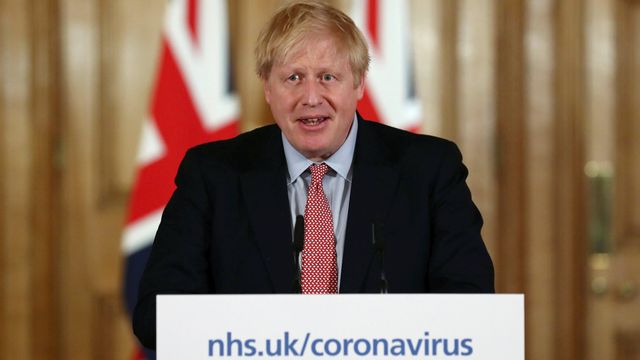
Prime Minister Boris Johnson and Chancellor Rishi Sunak used yesterday’s coronavirus press update to mount an unprecedented financial handout for UK corporations.
Sunak announced £330 billion in loans to be made available at “attractive” rates and said he would “go further if required,” promising an “unlimited lending capacity.” This is equivalent to 15 percent of the UK’s annual GDP. A further £20 billion was pledged in the form of tax breaks, cash grants and compensation to firms that have to pay statutory sick pay.
Providing whatever funds are deemed necessary directly to businesses would, Sunak said, be enshrined in law through an upcoming coronavirus bill! “We have never, in peacetime, faced an economic fight like this one,” he declared. “We must act like any wartime government and do whatever it takes to support our economy.”
Britain's Prime Minister Boris Johnson holds a news conference giving the government's response to the new COVID-19 coronavirus outbreak, at Downing Street in London, Thursday March 12, 2020. (Simon Dawson/Pool via AP)
Unlimited support for business stands in grotesque contrast to the contempt and neglect of working people forced to bear the brunt of the crisis. Asked directly about “staff costs,” Sunak made no commitment to guaranteeing workers’ jobs and wages, or compelling companies to do so. Instead the trade unions are to be enlisted to police an “employment support” scheme, which will enforce the decisions as to who remains in a job and who is sacked as firms shed staff by the thousands.
On Monday, Johnson held a conference call with business leaders asking them to divert some production capacity to producing essential medical ventilators. One business leader told the press that he said the project could be known as “Operation Last Gasp.”
Corporations are already lining up to demand taxpayers’ cash to preserve their profits. Virgin Atlantic’s parent company, IAG, demanded on Sunday that the UK government commit to a £7.5 billion bailout of the country’s aviation industry. Sunak said yesterday that he was working on a specific package of support for airports and airlines. Virgin Atlantic, owned by multi-billionaire Sir Richard Branson, hailed this “unprecedented level of support” even as it demanded its workforce agree to take eight weeks “unpaid leave” while offering all its 10,000 employees “voluntary redundancy.”
With the financial spigots opened to the CEOs and shareholders of major companies, their employees are left to fend for themselves in the face of a mounting public health crisis.
Sunak’s pledges were made amid another leap in the UK’s coronavirus statistics. The death toll has climbed to 71, while the number of confirmed cases has reached 1,950. Lack of testing means that the real number of infected is likely to be at least 35 times higher. Yesterday the UK’s chief scientific adviser, Sir Patrick Vallance, was already stating that the real number of infected was in the region of 55,000.
His admission is a devastating indictment of a government which, until Monday, was simply telling those who had a cough or fever to stay at home and self-isolate for a week. Its sharp policy reversal that evening—involving new directives for household quarantining and social distancing—was forced by the leaking of an internal document from Public Health England predicting hundreds of thousands of deaths, and the findings of Imperial College London’s COVID-19 Response Team.
The team’s research paper estimates that the UK government’s original coronavirus strategy of “mitigation” would cost over a quarter of a million lives (260,000). Plans to simply mitigate the spread of the virus through case and household isolation, and the shielding of over-70s, would see the peak of the epidemic exceed the supply of critical care beds eight times over.
The report concludes that “epidemic suppression is the only viable strategy at the current time,” including “population-wide social distancing combined with home isolation of cases and school and university closure” as a “minimum policy.” Since any return to normality without a vaccine or substantially immunised population would lead to a rapid, if delayed, increase in infections, these measures “will have to be in place until a vaccine is found, or herd immunity is very gradually arrived at.”
Given the length of time involved, the report suggests monitoring hospital admissions for COVID-19 patients as a trigger for “switching on and off population-wide social distancing and school closure,” while maintaining policies for household home isolation indefinitely. It estimates that social distancing measures would have to be enforced for two-thirds of the next two years. Neil Fergusson, the head of the Imperial College research team, said, “We might be living in a very different world for a year or more.”
Depending on how strictly these measures are implemented, the report estimates the total number of coronavirus deaths over the next two years could be kept between 8,700 and 100,000 people. Its authors acknowledge that they do not account for indirect deaths caused by increased pressures on the health services or by the social restrictions themselves.
The importance of early action for the necessary policy of epidemic suppression was stressed: “For suppression, early action is important, and interventions need to be in place well before healthcare capacity is overwhelmed. … there is a 2-to 3-week lag between interventions being introduced and the impact being seen in hospitalised case numbers … this means acting before COVID-19 admissions to ICUs [intensive care units] exceed 200 per week.”
Though the specific numbers are new, the World Health Organisation (WHO) and countless scientific and medical experts have been making exactly this point for weeks. The Johnson government wasted around two months of preparation time pursuing a policy of “herd immunity” which prioritised the profits of the corporations over human life based on a “desired” outcome that 60 percent of the UK population get infected. Even now, the government is refusing to fully implement the recommended policies.
Self and household isolation measures, home working and restriction on non-essential travel or on visits to pubs and theatres all remain purely advisory. Those who cannot work from home are still forced to travel into work with no preparations made for their protection. Anyone who needs to self-isolate for a prolonged period must rely on derisory statutory sick pay of £94.25 a week and those in the gig economy, more than 1 million workers, are forced to work regardless of their health or be left penniless.
Despite the Imperial College report’s statement that “school and university closure is predicted to be more effective in achieving suppression” than restrictions like household quarantining, and the closure of schools across the rest of Europe, no such steps have been taken in the UK. In a monumentally cynical gesture, Health Secretary Gavin Williamson told schools that legally required Ofsted inspections will be halted to “remove unnecessary burdens” on school staff.
Government inaction is meeting increasingly vocal opposition in the working class. A petition launched on March 6 demanding the government “Close Schools/Colleges down for an appropriate amount of time amidst COVID19,” had secured more than 670,000 signatures by yesterday evening. Students and staff are expected to stage a mass walkout on Friday, using the hashtag #Covid19walkout. One young person wrote on Twitter: “My Mum is a teacher in her 60s, coming home to my Dad in his 70s. As much as Boris finds them disposable, they’re the only family I’ve got and they deserve a damn sight more than being written off to balance his books.”
Aware of the political dangers posed by such mounting social anger, an article in the Financial Times by Europe Editor Tony Barber warned, “It is in the nature of cataclysmic events, such as the pandemic, to accelerate and refashion historical developments that would have happened anyway.
“The first world war intensified turmoil in Russia, leading to the revolutions of 1917, and drove forward the emergence of the US as the 20th century’s leading global power.
“The second world war marked the definitive end of European supremacy in international affairs and the planet’s transformation into an arena of US-Soviet rivalry.
“The pandemic and its economic fallout, unless brought under a measure of control, is sure to have similar large-scale consequences.”

Merkel’s response to coronavirus: Draconian measures for German population, unlimited loans for corporations

Ulrich Rippert

German Chancellor Angela Merkel announced sweeping emergency measures at a press conference on Monday evening in response to the rapid escalation of the coronavirus pandemic. The chancellor said that they included “very restrictive” measures that have not been seen in Germany in the post-war period.
External borders have been largely closed and strict controls introduced at border crossings. Businesses have largely been ordered closed, apart from supermarkets, chemists, fuel stations and banks. Opening times for restaurants are now severely restricted, with regulations to ensure a minimum distance between tables and limit the number of guests.
All schools, universities, and sport and recreational facilities are to be closed. Meetings in community colleges, musical institutes, and other private educational and recreational institutions are also now prohibited. Religious services are also banned, including in churches, mosques and synagogues.
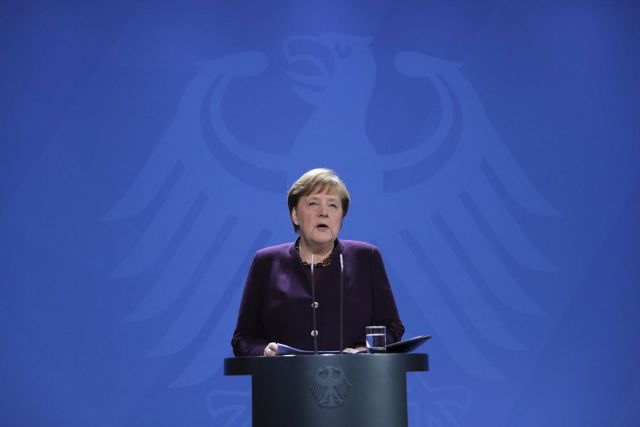
Merkel at the Chancellor's Office on Monday evening (AP photo/Markus Schreiber, pool).
These measures were a response to the rapid spread of the coronavirus in Germany, which should have been contained much sooner. The number of those infected shot up from 4,800 at the weekend to more than 9,000 on Tuesday evening, with 26 deaths. This is due to the fact that the federal government has responded with malign neglect to the spread of the pandemic and the swift growth of cases in Italy and Spain in particular.
The reduction of social contact is essential to slow the exponential spread of the pandemic—all experts agree on this point. But while the population’s freedom of movement is being drastically curtailed, the government is doing virtually nothing to actively combat the dangerous disease.
Merkel made no reference to the need to carry out comprehensive virus testing. Yet the experiences of China and South Korea make clear that comprehensive testing is decisive in containing the virus. The World Health Organisation has also urgently recommended such an approach. Merkel announced no additional measures to increase hospital capacity.
It is not people’s lives, but the profits of big business that are the government’s main priority. “We want to retain economic procedures as much as possible,” Merkel stated at the beginning of her press conference. Although she noted how dangerous close social contact is for spreading the virus, one area in which thousands of people stand side-by-side for hours at a time on a daily basis was conspicuous by its absence from her list of bans: production plants.
Workers are being forced to continue working, even in areas of industry that have absolutely nothing to do with securing the basic necessities of life.
The schools have been closed, but teachers are forced to enter contaminated buildings and draft emergency learning plans. The same goes for kindergartens and childcare centres.
Last Friday, the federal government announced a bailout package for businesses and banks “of an unlimited sum.” With the grand coalition and its Social Democrat (SPD)/Green Party predecessor having cut spending on health care and social services to the bone over decades, at least €500 billion will be made available to protect the banks and major corporations from the coronavirus crisis. This is more than the entire annual federal budget or the notorious 2008 bank bailout.
“We have enough money, and we’re putting it to use,” stated Finance Minister Olaf Scholz (SPD), who is a hard-line advocate of balanced budgets and no new government debt when confronted with calls for higher pensions or social welfare payments.
Scholz and Economy Minister Peter Altmeier (Christian Democrats) claim repeatedly that the issue is to “save employees and businesses,” and place great emphasis on jobs. But this is an outright deception. During the bank bailout of 2008, the talk was of the need to provide a social safety net for the workers. The result was sweeping social spending cuts and austerity programmes for the workers, while the financial elite enriched itself exponentially.
The programme includes measures to ease access to state support for workers on reduced hours, enable the state to pay social insurance contributions, offer liquidity to companies, and allow businesses to defer tax payments.
The class character of the grand coalition’s policies could hardly be made clearer. While coronavirus tests are denied and workers are compelled, in spite of an immediate threat of infection, into the factories, the state is opening the treasury without restrictions to the financial oligarchy.
Major corporations in particular will benefit. While loans from the state-controlled Bank of Reconstruction (KfW) were up to now available to small and medium-sized businesses with an annual turnover of up to €500 million, this limit will now be increased to €2 billion. And in ongoing programmes for larger corporations, the limit for interest payments will be increased to €5 billion. The KfW’s assumption of risk will also be increased to 80 percent of the total loan.
“Government writes a blank cheque,” was the title of the news article in the right-wing daily Frankfurter Allgemeine Zeitung. “We’re not scattering a few scraps, but slapping it on thick,” said Finance Minister Scholz. “This is the bazooka.”
Although the gargantuan financial bailout will have wide-ranging political consequences and trigger sweeping austerity measures, it was not subject to serious debate in the federal parliament or state legislatures. Within a single day, it was adopted by the cabinet, passed by the lower and upper houses of the federal parliament, and signed into law by Germany’s president. Such a vast financial bailout has never been rushed through parliament with such speed. Parliamentary deputies did not even have time to read it, never mind discuss it in the relevant committees.
Representatives of the employer organisations were delighted. Ingo Kramer, president of Germany’s employers’ association, referred to the bailout as an appropriate measure. The head of business affairs for the industrial employers’ association in the steel sector, Oliver Zander, commented, “We are extremely satisfied.” Just last week, his association had demanded precisely the measure now adopted by the government.
The trade unions and Left Party also joined in the celebratory applause. “There hasn’t been this much unity between the trade unions and employers for a long time,” remarked the “Tagesschau,” Germany’s flagship television news show. “Leading representatives of both sides indicated their strong approval for what the federal parliament approved and the government announced.”
The conflicting interests of workers and employers did not play a major role under current conditions, said Reiner Hoffmann, head of the German Trade Union Confederation, but rather the common responsibility of ensuring that the economy keeps running. It is necessary “to show that we are able to act in such a crisis situation.”
Left Party parliamentary group leader Dietmar Bartsch told Deutschlandfunk that everything has to be done to keep the economy going as the virus spreads. In the face of the crisis, this is not an appropriate time for the opposition to make strong criticisms, he added. “So what I’m hearing from Mrs. Merkel and [Christian Social Union leader] Mr. Söder, that ‘we’re doing everything necessary and possible,’ is a reasonable approach.”

Workers hit by job losses and pay cuts

Nick Beams

Nearly one fifth of all American workers have already lost their jobs or had their work hours reduced as a result of the economic shutdown due to the coronavirus, according to a survey released yesterday.
Conducted by the public broadcasters, NPR and PBS News Hour, in conjunction with the Marist organisation, the survey found that 18 percent of the adult workforce had been hit.
The impact is heaviest on the lower paid. The survey showed that for workers making less than $50,000 a year, the proportion rose to 25 percent.
The poll also indicated a growing distrust in the actions of the Trump administration. Only 46 percent said the federal government was doing enough to halt the spread of the virus, down from 61 percent in February.
Only 37 percent said they had a good amount or a great deal of trust in what the president was saying, while 60 percent said they had not much or no trust at all.
The US job losses are certain to be replicated in other major economies around the world as lockdowns extend, initially hitting industries that employ large proportions of casual or part-time labour, such as cafes, bars and the hospitality sector.
Mass layoffs are looming in the global airline industry as large companies slash their international and domestic flight schedules.
The survey results on US job losses came as the Federal Reserve announced still further measures to try to prevent a freeze in financial markets.
On Sunday evening the Fed announced a major intervention, cutting its interest rate by 1 percentage point to near zero, together with a resumption of financial asset purchases, or quantitative easing, to the tune of $700 billion.
This was not enough to prevent a market plunge on Monday when Wall Street fell by more than 12 percent, the largest one-day fall ever, except for the “Black Monday” crash of October 1987.
Share prices recovered somewhat yesterday, with the Dow Jones index recording a gain of more than 1,000 points, or 5.2 percent, and rises of around 6 percent in the S&P 500 and Nasdaq indexes.
The market rise was the result of two measures announced yesterday by the Fed to attempt to ease tightening in the short-term credit markets and prevent a total freeze as happened in the financial crisis of 2008.
Another factor was indications that the White House will launch a major economic package, reported to be of the order of $1.2 trillion, involving massive handouts to corporations and possible payments to citizens.
Because of continuing spikes in the overnight “repo” market, the Fed announced it would conduct daily repo operations of $500 billion through to the end of the week. Repos involve banks and financial institutions submitting high quality collateral such as US Treasury bonds in return for cash with which to fund short-term operations.
The other major action was the Fed’s decision to intervene in the $1.1 trillion commercial paper market. This market consists of short-term IOUs, generally maturing in less than 270 days, issued by companies to finance their day-to-day business operations.
In its statement, the Fed said the commercial paper market had been under “considerable strain in recent days” as a result of the coronavirus outbreak.
The Financial Times reported that borrowing costs have “soared in recent weeks, causing the market to freeze and prompting some apprehensive companies to draw down credit lines from their banks to shore up liquidity.”
In order to create the new facility, last used during the 2008 financial meltdown, the Fed had to invoke special powers. It cited “unusual and exigent circumstances” to authorise the New York Fed, which conducts its financial operations, to extend the new line of credit.
In a media conference, US Treasury Secretary Steven Mnuchin appeared to indicate the intervention was virtually unlimited. This is a sign that, because of the central role of debt in the economy, the overriding fear of the administration and financial authorities is a credit market freeze.
“We heard loud and clear there were liquidity issues,” he said. “That is a $1 trillion market. We have the ability to have the Fed purchase up to $1 trillion of commercial paper as needed.”
The latest moves appear to have been insufficient because yesterday evening, after markets closed, the Fed took further action. It announced that approved dealers in government debt would be able to borrow cash secured by some stocks, municipal debt and higher-rated corporate bonds.
The Fed said the new facility would operate for six months. It would allow primary dealers, mainly large US and international banks, to “support smooth market functioning and facilitate the availability of credit to businesses and households.”
Mnuchin issued a statement saying the new measure would “help address illiquidity” and “mitigate disruptions in funding markets.”
Even as the Fed tries to prevent constrictions in the credit markets, the economic situation in the US and global economy is worsening.
The US airline industry, battered by travel restrictions, has called on the government to provide up to $200 billion in emergency support to prevent mass bankruptcies within two months.
The International Air Transport Association (IATA), the main industry body, said that while some airlines are in a stronger position, “the majority are in a very fragile place.”
Indicating the speed of the crisis, IATA said its worst-case scenario issued just over a week ago of losses totaling $113 billion was now “undoubtedly” too low.
The credit ratings agency Moody’s is lowering its ratings on the debt issued by a wide range of European airline companies.
Boeing, the giant US aircraft manufacturer, called for $60 billion to be made available to the aerospace industry. The request came as the company revealed it has used up its entire $13.8 billion line of credit.
Marriott International, the global hotel group, announced it will put tens of thousands of staff on unpaid leave.
In Europe, the major car manufacturers, Volkswagen, Ford, Daimler and Nissan, have halted work, bringing much of the industry to a standstill.
Yesterday, economists from Goldman Sachs and Morgan Stanley joined others in declaring that a global recession has been set in train. The only question is how long and how severe it will be.
The fall in the real economy will not be halted by interventions in financial markets or further handouts to the corporations. It will continue to deepen, bringing massive job losses and pay cuts around the world, as the US survey data reveals.
This crisis will not abate until the spread of the virus is brought under control. But the problems in containing the outbreak are principally the outcome of decades of cuts in health services and other basic social facilities, imposed by governments at the dictates of the financial markets and corporate elites.
Now, as those responsible demand bailout operations, they are again seeking to make the working class pay for the crisis caused by their relentless class war against the needs of society.

London’s Imperial College predicts millions to die from coronavirus pandemic in UK and US

Bryan Dyne

A study published Monday by the Imperial College, a public research university in London, estimates that millions will die from the coronavirus pandemic in the United Kingdom and United States. In their best-case scenario, in which transmission of the virus is massively mitigated, and “even if all patients were able to be treated,” the authors write, “we predict there would still be in the order of 250,000 deaths in GB, and 1.1–1.2 million in the US.”
According to the authors, Covid-19 “and the public health threat it represents is the most serious seen in a respiratory virus since the 1918 H1N1 influenza pandemic.” There are now 198,000 cases worldwide and nearly 8,000 deaths. The countries with the largest number of new cases include Italy, Iran, Spain, Germany, France and the United States.
The study was led by Neil Ferguson and included a team of people drawn from the Imperial College, as well as from the World Health Organization, MRC Centre for Global Infectious Disease Analysis and the Abdul Latif Jameel Institute for Disease and Emergency Analytics. In addition to the mass casualty figures, they estimated that the pandemic in the UK and US will continue through August.
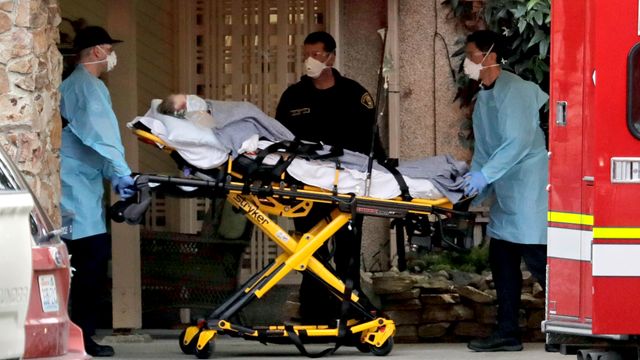
Kirkland Fire and Rescue ambulance workers load a patient into an ambulance, Tuesday, March 10, 2020, at the Life Care Center in Kirkland, Wash., near Seattle (AP Photo/Ted S. Warren)
They emphasize that “mitigation is unlikely to be feasible without emergency surge capacity limits of the UK and US health care systems being exceeded many times over.” The report makes clear that even in a short outbreak of the disease, “the surge limits for both general ward and ICU [intensive care unit] beds would be exceeded by at least eightfold under the more optimistic scenario for critical care requirements that we examined.” Under such circumstances, the United States could expect to see 56,100 deaths per day at its peak.
In other words, with the current policies in place by the Johnson and Trump administrations, millions of people, possibly tens of millions, are going to contract this disease and die, as hospitals, clinics and other medical facilities collapse in the face of the massive number of infected patients. Above all else, the refusal of either government to implement mass testing for the coronavirus early on in the crisis, as consistently implored by WHO, has allowed the virus to spread to large swathes of the population, with no signs of being halted.
As WHO Director-General Dr. Tedros Adhanom Ghebreyesus warned, “You can’t fight a fire blindfolded, and we can’t stop this pandemic if we don’t know who is infected.”
The imminent dangers can be most clearly seen in the collapse of the Italian health care system, which has already been overwhelmed by 31,506 cases to date, up from just three less than a month ago. The death toll has reached at least 2,503 and is rising. If the mortality rates in Italy hold true for Britain and the United States—and the lack of public health infrastructure in both countries indicates that they will—the two countries will likely see actual death tolls of at least two million and 8.6 million respectively.
Moreover, the casualty figures do not account for collateral deaths related to HIV, cancer, myocardial infarction, stroke and other emergent illnesses, due to health care facilities being overwhelmed. Hospitals are already canceling clinics and surgical procedures in anticipation of a surge of respiratory illnesses due to the coronavirus.
The themes in the Imperial College paper were echoed Tuesday in comments to MSNBC’s Morning Joe by Dr. Ashish Jha, the director of the Harvard Global Health Institute.
Dr. Jha called for a full quarantine across the United States. He stated, “Our hospitals and emergency rooms are not ready. We have two choices. Basically, we can either have a national quarantine now, [for] two weeks, [and] get a grip on where things are, then reassess.
“Or we cannot [and] wait another week and when things look really terrible, be forced into it and that’s going to last much longer, [and] many more people will die. So those are really our two choices—get ahead of it or wait until we’re even further behind.” He added that “it’s going to look like Italy” for such a quarantine to succeed.
US President Donald Trump’s latest press conference, however, makes clear that the focus of the ruling elites of the major imperialist powers is not to save human lives but to protect the financial oligarchs in their own countries and internationally. Trump is currently pushing for a $600 billion stimulus package to go directly to businesses. He has also been advocating for a cut in payroll taxes, which is aimed at disguising the windfall for hedgefund managers and corporate executives by giving workers a small increase in take-home pay—while at the same time undermining the funding of Social Security and Medicare.
There is also a further $250 billion supposedly directed toward the broader population, though Congress is still haggling over the exact amount and method of distribution. Even if the proposal passes and workers receive $1,000 each, this is utterly inadequate to cover the needs of millions who are facing weeks or months of no wages as the pandemic shuts down large portions of the economy.
At that same briefing, Treasury Secretary Steve Mnuchin announced yet another program that “will enable the Fed to guarantee the purchase of… commercial paper going forward. That is a $1 trillion dollar market.” While the initial sum set aside for such purchases is only $10 billion, Mnuchin made clear, “We have the ability to have the Fed purchase up to $1 trillion of commercial paper, if needed.” In the past week, this brings the total wealth being supplied by the Trump administration to Wall Street, through corporate bailouts, direct infusion into the stock exchange and other methods, to $3.8 trillion.
Less than half of that amount could have been used to forgive all student loan debt. The rest could have been used to pay off all credit card debt and auto debt for every worker in America. It could have been used to manufacture and distribute hundreds of millions of masks for doctors and patients fighting the coronavirus, along with tens of millions of gowns and hundreds of thousands of ventilators and ICU beds for critical patients. Hundreds of new hospitals with 500 beds each could have been built in weeks to care for and isolate those infected. Testing for the millions of people who might be infected could have been facilitated and the pandemic contained.
Markets responded to the latest round of cash handed to private coffers by rising five percent. Workers, on the other hand, face destitution and disease.
As the National Committee of the Socialist Equality Party (US) wrote: “An enormous amount of time has been lost, but the impact and extent of the pandemic depends on urgent responses that can be taken now. This response must be centered on two absolutely critical priorities: first, to contain the spread of the virus as much as possible, and second, given that it has already acquired global dimensions, to provide emergency care for all who are ill and emergency assistance to all that are affected.”

17 Mar 2020

Wiki Loves Africa Photo Contest 2020

Application Deadline: 31st March 2020

Offered annually? Yes

Eligible Countries: African countries

About the Award: The theme for the 2020 contest is… Africa on the Move or Transport.
The theme Africa on the Move! encourages the submission of visual representations of movementmigration or transportation, whether local or regional, by path, road, sea, or air, self-propelled, or by animal, natural or mechanical means. Submissions could also capture the historical or contemporary structures that have been created to facilitate movement or the transportation of people, goods, or animals.
Wiki Loves Africa is a photo competition to share the daily practices of people across the continent with each other and the rest of the world, via Wikipedia.
Wiki Loves Africa is a public annual photo contest where people across Africa can contribute media (photographs, video and audio) about their environment on Wikimedia Commons for use on Wikipedia and other project websites of the Wikimedia Foundation.Wiki Loves Africa particularly encourages participants to contribute media that illustrate a specific theme for that year. Each year the theme changes and could include any such universal, visually rich and culturally specific topics (for example, markets, rites of passage, festivals, public art, cuisine, natural history, urbanity, daily life, notable persons, etc).

Type: Contest

Eligibility: There are a few rules to respect for the images to be eligible.
  • Rule 1: All photos must be taken by the person submitting them. They can be uploaded by you or uploaded during a registered mass upload session. Your image must have your name or nom de plume on the uploaded file.
  • Rule 2: Entries will only be accepted if uploaded between the 15th February to 31st March 2020. You can enter media that was taken at any time, even historical photographs (as long as you own the copyright on these photographs or they are in the public domain), but they must be uploaded during those dates.
  • Rule 3: Images with watermarks or embedded signatures will not be eligible. All entries submitted to the contest will automatically be licenced under the Creative Commons Attribution-Share Alike 4.0 (CC-BY-SA 4.0) (or those in the public domain). Read more about the cc-by-sa license here.
  • Rule 4: All eligible pictures will be categorised under Images from Wiki Loves Africa 2020, this will be automatically assigned during the upload process. (Feel free to add other relevant categories and descriptions to make the images more usable on the projects.)
  • Rule 5: Participants must registered on WIkimedia Commons and be contactable. Please enable e-mail on Wikimedia Commons so we can contact you should your image be chosen for a prize.
  • Rule 6: To be considered for the video prize, the file must be uploaded in the video format (.ogg, .ogv, or .webm) that is required for Wikimedia Commons. Please note audio and visual quality and storytelling will be taken into account for your file to be eligible for a prize.
Selection Criteria: The judging will be done by a panel of international Wikipedians, professional photographers and subject specialists, based of thumb rules of photography and as well as the community standards.
  • A good photo has a good story to tell.
  • A good photo removes all unnecessary distractions from the chief element, so that the latter is not out of the focus.
  • Potential usefulness and overall value of the image (including its licensing) to the Wikimedia projects.
  • Technical quality – Image parameters such as focus, lighting, saturation, ISO etc. will be taken into consideration.
The jury will judge individual entries based on the following criteria:
  • Technical quality
  • Originality
  • Potential usefulness and overall value of the image (including its licensing) to the Wikimedia projects.
Value of Contest: There are several prizes up for grabs, both nationally and internationally. For national prizes, please see what events are being held locally in your country.
At the international level, there are 3 main prizes for Wiki Loves Africa, and as with last year, there will be two additional prize categories for photos and media.
The international prizes are:
  • 1st prize: US$1000
  • 2nd prize: US$800
  • 3rd prize: US$500
Additional categories are:
  • Culturally specific or traditional representations of transport or structures that facilitate transportation : US$500
  • Prize for best quality video (audio and visual quality and storytelling will be taken into account): $500
Each winner will also receive a pack of goodies (proposed: a hat “I edit Wikipedia from Africa”, a branded battery, stickers)

How to Apply: ENTER YOUR IMAGES HERE.

Visit Contest Webpage for details

GCHERA World Agriculture Prize 2020

Application Deadline: 31st May 2020 5:00 pm GMT

Eligible Countries: All. At least one Of these prizes will be dedicated to a candidate from a Developing Country.

To Be Taken At (Country): The 2020 GCHERA World Agriculture Prize Award Ceremony will be held on 28 October 2020 in Nanjing Agricultural University, Nanjing, China.

About the Award: The GCHERA WORLD AGRICULTURE PRIZE is the international award of the Global Confederation of Higher Education Associations for the Agricultural and Life Sciences (GCHERA). The Prize aims to encourage the development of the mission of higher education institutions in education, research, innovation and outreach in the agricultural and life sciences by recognizing the distinguished contribution of an individual to this mission. Two 100,000 USD prizes will be awarded in 2018 with at least one recipient NOT coming from a country classified as having a developed economy.

Type: Contest/Award

Eligibility: Each nominee will demonstrate exceptional and significant achievement in his or her engagement in the mission of higher education institutions in education, research, innovation and outreach relating to the agricultural and life sciences. The impact of these achievements will most likely be demonstrated in the work of the nominee in the development of the institution(s) in which the nominee has served, and in the local and wider geographical region of those institution(s), but not necessarily globally.

Selection Criteria: The nominee will demonstrate exceptional and significant achievement in his or her engagement in the mission of higher education institutions relating to the agricultural and life sciences. This impact will most likely be demonstrated in the work of nominee in the development of higher education in the institution(s) in which the nominee has served, and in the wider geographical region of the institution(s). This engagement in the mission of higher education institutions will most likely have changed in emphasis, scope and the level of achievement as the nominee’s career has progressed.
To be more specific, as indicated in the Introduction above, the nomination will demonstrate the extent to which the nominee has:
  • provided innovation and leadership in the education programmes of students at the Bachelor and Master levels, and in the delivery of life long learning,
  • engaged in research for the advancement of science for the benefit of society, working with colleagues, and mentoring PhD Students and Post Doctorate staff
  • provided leadership in the strategic development of the institution(s) in which the s/he has worked, not necessarily only his/her home institution but other institutions regionally or internationally
  • engaged with the higher education institutions’ stakeholders, enterprises, government, NGOs and civil society in the immediate locality, regionally and internationally to strengthen knowledge transfer, innovation initiatives, and outreach ventures which have led to the enhancement of society’s well being
  • been an inspiration to students, to colleagues at all levels and to leaders in the wider regional and international community.
The five bullet points above will act as prompts to assist the nominator completing the online nomination form for the GCHERA World Agriculture Prize.

Number of Awards: 2

Value of Award: Prizes to be awarded include 100,000 USD each.

How to Apply: You can register to make a nomination on this page. You will then receive a password by email to allow you to log on to the online nomination form.

Visit the Program Webpage for Details

Canadian workers launch work-safety job actions amid rapid spread of coronavirus

Carl Bronski

A series of job actions in Canada over the past week has pointed to mounting anger among workers over the unsafe working conditions they are being forced to confront by the ruling elite amid the rapid spread of the coronavirus crisis.
Late last Wednesday, Toronto Transit Commission (TTC) afternoon-shift workers assigned to clean streetcars at the city’s Roncesvalles Yard refused to carry out their duties. They cited the employer’s failure to “maintain reasonable precautions to protect workers” from the spread of the potentially lethal virus. As a result of their action, a number of streetcars due to deploy Thursday for morning rush hour were delayed and buses were pressed into contingency service.
For several weeks, TTC workers have been demanding that management waive strict uniform requirements to allow transit drivers, ticket booth employees and others to wear personal protective equipment. They have also pressed for increased access to hand sanitizing stations while on the job. Until the work stoppage forced management’s hand, the TTC had refused to move on this basic health and safety issue.
When pressed further on the matter after the job action, TTC spokesperson Stuart Green acknowledged that the Commission’s contingency plans included scenarios to alter transit schedules should more broad-based worker actions ensue.
In neighbouring Mississauga, a city of 800,000 people, seven bus drivers and 21 cleaners were potentially exposed to the virus after an infected commuter traveled on their vehicles over a three-day period. The city has refused demands that the endangered workers be paid for any necessary quarantine period.
As the affected Toronto streetcars were returning to the streets Thursday, afternoon shift workers at the giant Windsor, Ontario Fiat Chrysler assembly plant stopped work over concerns about the spread of the coronavirus at their plant. Production did not start up again until Friday afternoon after the federal Ministry of Labour with the Unifor union intervened to review health and safety issues and declare the plant “safe.” Windsor Assembly is the largest FCA plant in Canada employing 6,000 workers, currently in a three-shift operation.
The action taken by the Windsor workers echoes that of their brothers and sisters at Fiat Chrysler’s Italian plants. A burgeoning strike wave in Italy began Tuesday at Fiat Chrysler’s Pomigliano plant in Naples, which also employs 6,000 workers. Autoworkers, kept on the line to produce luxury Alfa-Romeo cars for the super-rich, walked out spontaneously, protesting unsafe conditions. As disruptions spread, FCA announced Wednesday the closure of the Pomigliano plant, along with facilities in Melfi, Atessa and Cassino, until at least Saturday.
On Friday morning, Canada Post workers in Peterborough, Ontario, invoked their right to refuse unsafe work, delaying mail delivery in the city. The workers refused to enter their postal station due to concerns about a manager who had recently returned from an overseas coronavirus “hot spot” and had reportedly exhibited some signs and symptoms of infection.
Over the weekend, the plight of millions of low-wage and part-time workers was highlighted when attendants at Tim Horton’s, Canada’s largest coffee house chain, participated in a social media campaign. It highlighted that many Tim Horton’s franchise owners were still requiring doctor’s sick notes before workers could book-off work sick, although public health authorities were instructing anyone who was sick or feared they had come into contact with a potential coronavirus victim to self-quarantine.
In most provinces, workers can be forced to pay out-of-pocket for sick notes from their physicians, and those who book-off sick without such a note can be disciplined.
Most of the approximately 80,000 employees of Tim Horton’s Canadian operation are allowed no more then five days per year of unpaid medical leave under conditions where any loss of pay can severely impact basic needs. Well before the coronavirus outbreak, the Canadian Medical Association had characterized the sick note requirement “an unnecessary public health risk.”
The anger among workers across Canada, which has been replicated around the world in job actions by British postal workers and French private bus drivers, is entirely justified. The coronavirus is a highly infectious disease which has spread rapidly and can be deadly. Experts have repeatedly warned that combating it requires strict quarantining measures for those infected, a dramatic reduction of social contact, a comprehensive program of testing, and high quality and well-funded health care systems.
Canada’s ruling elite has no intention of ensuring any of this. On the contrary, the corporate executives and shareholders view the pandemic primarily as a market event. The preeminent concern has always been the impact of this disease on the value of stock portfolios and shares.
While Prime Minister Justin Trudeau announced a meagre $1 billion for the government’s COVID-19 Response Fund last week, including just $500 million for emergency front-line health care, Finance Minister Bill Morneau unveiled a program 10 times larger to provide loans to businesses. The Bank of Canada added to the bonanza of cheap money for the financial elite by slashing interest rates by another half a percent to 0.75 percent—the second half percent cut in the last two weeks. Additional funds were also allocated to buy up “bankers’ acceptances”—an instrument banks use to provide loans to small and medium-sized businesses—and the amount of capital that the country’s banks are required to hold as insurance against a financial collapse has been lowered.
The Liberal government’s reaction to last week’s market volatility has been, as it was under Stephen Harper and his Conservatives during the 2008-09 financial crash, a massive infusion of money into Bay Street. The Canadian response has echoed US President Trump’s announcement of a $1.5 trillion bailout of the financial system, a figure twice as large as the original size of the 2008 US bank bailout and over a thousand times larger than the emergency coronavirus funding the World Health Organization pleaded for last Friday.
The malign neglect displayed by the Trudeau government and the entire ruling elite towards working people in the coronavirus pandemic must serve as a summons to action. Workers can only protect themselves and their families from this deadly virus by taking up a struggle for urgent measures to combat the coronavirus on a global scale. These should include:
  • Accessible and universal testing! No expense can be spared in making available free testing to all those who show symptoms.
  • Free high-quality treatment and equality of care! The most advanced medical care must be made available to everyone, regardless of income or insurance coverage.
  • Paid sick leave for all workers! No one must be forced to work if they are sick or have been exposed to the coronavirus, endangering themselves and others.
  • Protect refugees, prisoners and the homeless! Everyone must have access to high-quality and clean living conditions to prevent the spread of the disease.
  • Safe working conditions! All workers must have a safe work environment and be protected against the spread of the virus. Where there is a danger, workplaces and schools must be closed and full compensation paid by the employers and the state. Health care and other essential workers must be provided all the equipment and resources necessary to protect them from the coronavirus.

Australian governments invoke emergency powers amid COVID-19 disaster

Mike Head

After delaying for weeks taking any effective action to prevent the rapid spread of the Covid-19 virus, Australia’s federal, state and territory governments are activating draconian emergency laws.
These contain powers only previously used in wartime, such arbitrarily detaining, imprisoning or imposing massive fines on people, to be imposed now in the name of protecting public health.
While anxious people are being denied coronavirus tests, hospitals report shortages of vital facilities, and public schools and universities are being kept open, governments and the corporate media are using the worsening health crisis to create a wartime atmosphere, with police-state conditions.
Governments unveiled the states of emergency as a result of last weekend’s first meeting of a previously unheard-of bipartisan “national cabinet,” comprised of Prime Minister Scott Morrison and his state and territory counterparts, both Labor Party and Liberal-National Coalition. A “senior government source” told the Australian: “We are now effectively on a war footing.”
The extraordinary measures are being officially justified as essential to shield the population from a catastrophe, but they establish precedents, and an atmosphere, for the wider imposition of such powers. Police powers are being bolstered, displayed and trialled amid rising anger over the indifferent and contemptuous government response to the pandemic, on top of the summer bushfire calamity.
Since Sunday, emergencies have been declared in South Australia, Victoria and the Australian Capital Territory, and the governments in the other states triggered similar legislation, permitting police to fine or imprison people who defy bans on gatherings or quarantine orders, such as self-isolation.
In Victoria, Labor Party Premier Daniel Andrews declared a “public health emergency” for at least four weeks under the state’s Public Health and Wellbeing Act of 2008. By that legislation, governments have far-reaching powers to impose a state of emergency “arising out of any circumstances causing a serious risk to public health.”
Andrews said fines of up to $20,000 could be imposed on anyone refusing to comply with a “public health order” issued under the legislation and warned of spot checks by police on people placed under 14-day self-isolation orders.
The laws, never used before, give “emergency powers” to police and other “authorised officers” to detain people, restrict people’s movements, ban access to designated areas and “give any other direction” that is considered “reasonably necessary to protect public health.”
In addition, “public health risk powers” hand “authorised officers” broad powers to close premises, search premises and seize anything without a warrant. People, can be directed to “take any other action” deemed necessary to reduce a “risk to public health.”
According to a statement from Andrews’s Department of Premier and Cabinet, entire suburbs, businesses or professions could be quarantined if deemed necessary.
Last week, Andrews warned people to expect “extreme measures,” saying: “We will need to ask Victorians things we have never asked them before.”
Similar measures have been activated in each state and territory. New South Wales (NSW) Liberal-National Premier Gladys Berejiklian told a media conference: “Whilst the chief medical officer can issue notices, police can enforce that and there are penalties in place for people who don’t respect what we’ve done, through the Public Health Act.”
Section 70 of the NSW Public Health Act, introduced in 2010, created an offence not to comply with a public health order, and section 71 says police may arrest a person who contravenes a public health order.
NSW Health Minister Brad Hazzard declared: “Individuals who fail to comply could face up to six months in prison or a fine of up to $11,000 or both, plus additional penalties for each day the offence continues.”
These “public health emergency” measures are additional to the emergency powers invoked by state governments during the months-long bushfire disaster.
The “state of emergency” legislation activated by the NSW and Victorian governments during the fires allowed state premiers and/or police chiefs to override any law, including supposed human rights protections, issue whatever orders and directives they deemed necessary, and arrest anyone who failed to comply.
Those powers can be utilised to suppress popular unrest and outlaw strikes. The Victorian Emergency Management Act’s definition of “emergency” specifically includes “a hi-jack, siege or riot” and “a disruption to an essential service.” The government can proclaim any service to be “essential.”
The federal Coalition government, backed by Labor, has already exploited the bushfire disaster to push for national powers to declare states of emergency—powers currently confined to the states—and mobilise the military.
That call seeks to strengthen the powers of the police-military apparatus to suppress the discontent brewing over ever-widening social inequality and the decades-long assault on working class living standards, working conditions and social services.
Emergency powers cannot alter the appalling lack of public medical, hospital and other basic civilian resources laid bare by the bushfires and now the coronavirus pandemic. Instead, they would allow the federal government to impose virtual martial law, with sweeping authority to call out the armed forces.
Prime Minister Morrison’s proposed national emergency declarations would place immense power in the hands of the prime minister and the military, intelligence and police chiefs. This would be on top of the expanded powers that the Coalition pushed through parliament in 2018, backed by the Labor Party, to rapidly call out the armed forces to deal with “domestic violence”—that is, civil unrest.
In part, the latest emergency measures are desperate acts of political damage control. They are an attempt to head off the developing outrage over the official response to the Covid-19 catastrophe and whitewash the responsibilities of all the governments involved.
These measures also are intended to divert attention from the root causes of the unprecedented global crisis—the capitalist system’s subordination of every aspect of life, including public health, to the dictates of corporate profit and the interests of each national-based ruling class.
At the same time, the resort to emergency powers signals an increasingly authoritarian reaction, to boost the powers and resources of the police, military and intelligence agencies to deal with rising political discontent and acclimatise public opinion to martial law conditions.

Scandinavian Airlines lays off 10,000 airline workers as coronavirus triggers global jobs massacre

Jordan Shilton

Scandinavian Airlines (SAS) announced Sunday that it will throw around 10,000 employees out of work as it halts almost all operations amid the spread of the coronavirus. The callous decision, which confronts tens of thousands of workers and their families with financial ruin, comes as cases of the infectious disease increased rapidly in all Scandinavian countries over the past week.
The job cuts will impact 90 percent of the airline’s workforce, including pilots, cabin crew, and ground staff. SAS, which is partially owned by the Swedish and Danish governments, stated Sunday that it does not intend the layoffs to be permanent. But chief executive Rickard Gustafson commented at a Stockholm press conference: “Demand for flights into, out of and within Scandinavia has more or less disappeared.”
coronavirus cases have shot up across Scandinavia over the past week. In Norway, where total confirmed cases rose to 1,368 today, with three deaths in a country with just 5.3 million inhabitants, Prime Minister Erna Sollberg announced the closure of the borders and all airports as of yesterday in a bid to slow the rate of transmission. The only exemptions are for Norwegians returning home, and the import and export of goods. Schools, kindergartens, and universities have also been closed.
In northern Norway, which relies heavily on income from tourism to the Arctic circle, many local operators have laid off workers and halted their activities for the entire season. The news site Euractiv described the potential impact on the region as an “economic meltdown.”
Norwegian Air, a budget airline, announced plans to lay off 50 percent of its workforce.
In neighbouring Sweden, which has recorded 1,125 cases with seven deaths, Scandic Hotels Group announced the firing of 2,000 employees, about half of the company workforce. Across the country, regional health authorities are already warning that they lack protective gear and test kits for coronavirus patients.
On Monday, the Swedish government unveiled a 300 billion kronor (€27.8 billion) package for businesses, including plans for the state to cover sick pay from day one and pay a share of wages for temporarily laid-off workers. However, these measures are only set to last through April and May. Companies were also granted tax breaks.
In Denmark, where 960 cases and four deaths have been recorded, the government announced a programme to pay 75 percent of the salaries for workers if their employers pledge not to lay off staff. This programme will run only until June 9. The Danish Chamber of Commerce projected in a report that 47,000 people in the tourist industry alone are threatened with losing their jobs in the immediate future.
In Finland, where 294 cases have been reported, the government has come under criticism for its strict testing policy. According to the Helsinki Times, Prime Minister Sanna Marin ordered that tests of patients will only be carried out on the authorisation of a doctor, who must first consult with an infectious disease specialist. This means that the official number of cases is certainly an underestimation of the true figure. The country’s Institute for Health and Welfare claimed that it is not worth testing people for mild symptoms, but the Hospital District for Helsinki and Uusimaa, one of the region’s worst hit by the outbreak, acknowledged that the restrictive practices are due to a shortage of resources.
Over recent years, Finland’s healthcare system, as well as all other public services, have been subject to strict austerity policies.
While workers bear the brunt of the coronavirus crisis, governments in Scandinavia, like their counterparts internationally, have rushed to provide virtually unlimited funds to prop up the banks and the financial elite. Sweden’s central bank announced loans to the country’s financial institutions of around €45 billion, while Norway’s central bank cut interest rates by 0.5 percent and promised further measures.
The devastating impact of the coronavirus pandemic on workers in the travel industry and related sectors is not confined to Scandinavia, but is unfolding on a global scale.
Airlines around the world are cutting thousands of jobs as their revenues dry up due to the coronavirus pandemic. Air New Zealand, which employs some 8,000 workers, announced the axing of its long-haul flights and the laying off of an unspecified number of employees. British Airways, which warned Friday that it is threatened with total collapse, is reducing its flights by 75 percent, Air France/KLM by 40 percent, and American Airlines by 75 percent. Swiss International announced it would take half of its fleet out of service, while Europe’s largest budget airline, Ryanair, stated it may force employees to take leave starting Monday.
British Airways chief executive Alex Cruz ominously warned staff that job cuts would be implemented “perhaps for a short period, perhaps longer term.” KLM announced yesterday that 2,000 jobs will be cut.
The airline industry, which over the past decade has funneled tens of billions of euros into the pockets of its wealthy shareholders on the basis of a savage intensification of exploitation of airline employees, is thus offloading the full burden of the health and social crisis triggered by the global pandemic onto the backs of workers and their families.
Airline executives warned that without billions in government aid, the entire industry could collapse. Budget airline EasyJet has appealed for a coordinated action plan by European governments to support airlines, while Lufthansa, one of Europe’s largest airlines, announced it would likely request government aid.
Job cuts at leading airlines are just the tip of the iceberg for the travel industry. Millions of jobs are at risk worldwide.
In Germany, leading global tourist company Tui announced an effective halt to all its travel operations late Sunday. The number of workers affected by the move remains unclear. In addition to employees working directly for the company, independent hoteliers and tourist service providers will also suffer.
The Washington Post reported last week on a wave of thousands of job cuts in transportation, travel, leisure, and tourist sectors across the United States, including the firing of 145 drivers at the port of Los Angeles, dozens of workers at travel agents in Atlanta and Los Angeles, and over 100 workers at a national stage lighting company.
“This job was my paycheck,” said Sam Creighton, a worker at a Chinese visa processing center in Los Angeles. “I really don’t know what to do next.”