20 Mar 2020

Qantas spearheads mass layoffs in Australia as pandemic worsens

Mike Head

As well as facing the mounting danger of contracting the potentially fatal COVID-19 virus, more than two million Australian workers could soon be jobless or “under-employed” as the federal and state governments rush to prop up big business at the expense of the lives and livelihoods of the working class.
These governments have rejected open letter pleas by thousands of doctors to provide adequate virus testing and pour resources into under-equipped hospitals, and immediately close schools to halt the spread of the disease. Instead, they are giving billions of dollars to the banks and corporate elite as they unleash massive job losses.
Just a day after the Australian government handed the country’s airline companies $715 million in yet another bailout, Qantas CEO Alan Joyce, the country’s highest paid executive, announced the unpaid indefinite layoff of two-thirds of the company’s 30,000 workforce, and declared that more jobs could soon be axed.
This is just the tip of the iceberg. Business owners, large and small, already are sacking or cutting the hours of hundreds of thousands of workers—all with the ready agreement of the Labor Party and the trade unions, as well as the Liberal-National Coalition government.
Qantas’s layoffs are part of a deliberate offensive designed to help Australian capitalism, to use Prime Minister Scott Morrison’s words, “bounce back” once the pandemic has ripped through the population. In fact, Industrial Relations Minister Christian Porter hailed Qantas’s decision as a “good model” for navigating the coronavirus crisis.
Likewise, Reserve Bank of Australia (RBA) governor Philip Lowe said the bank’s board was “expecting significant job losses.” To shore up the banks, he announced yet another cut in official interest rates, to a record low of 0.25 percent, and unprecedented measures to inject $105 billion into the financial markets.
Lowe said the ultra-low rates could continue for “decades,” indicating the depth of the expected economic breakdown.
According to modelling released yesterday by ANZ, one of the country’s “big four” banks, the jobless rate will hit 8 percent by the end of 2020. That means more than a million workers will be unemployed, on top of the “under-employed”—those looking for more hours—who already number 1.2 million.
Morrison’s government this weekend will announce another economic package, pumping much more cash into the pockets of the corporate boardrooms than last Thursday’s $17.6 billion handout. Its first “stimulus package”—a desperate attempt to stave off a recession—was soon swamped by the intensifying global health and economic crisis.
The billions of dollars being given to the banks and big business dwarf the totally inadequate sums allocated to the hospitals, which could soon be overwhelmed by COVID-19 patients.
Defying growing outrage and opposition among teachers, the “national cabinet” formed by Morrison and his state and territory counterparts, both Coalition and Labor, is so intent on keeping businesses afloat that it has ordered schools to remain open . This is exposing children and teachers alike to the heightened danger of virus transmission in crowded classrooms.
The prime minister even threatened to withdraw funding from Roman Catholic and other private schools unless they kept their schools running. As a result, Sydney Catholic Schools yesterday reversed its decision to close down schools.
With every day, the official response is more draconian and authoritarian. On Wednesday, Morrison’s government declared a first-ever “biosecurity emergency,” giving it powers to issue sweeping directives, backed by threats of five years’ jail.
Under the Biosecurity Act, the federal government can now impose “any requirement” on people, including forced evacuations and restrictions on movement, and “biosecurity enforcement officers” can enter and search premises without a warrant or consent. In effect, the government has seized the national emergency powers that Morrison previously demanded during the bushfire calamity.
Yesterday, just days after ordering everyone arriving from abroad to self-isolate for 14 days, Morrison said that only Australian permanent residents and citizens would be allowed into the country, as of 9 p.m. today. This leaves about two million temporary residents, including students, workers and touring backpackers, in legal limbo.
Like governments around the world, the overriding response is a nationalist one—to shut the borders, treating the global disaster as a “foreign” threat.
None of these “fortress Australia” measures will be effective in containing the virus. As is occurring internationally, the number of reported infections within Australia is rising exponentially. The total is now close to 1,000, and that is a vast understatement because no mass testing has been done. The government’s pledge to set up 100 “pop up” testing clinics, made weeks ago, has been put back until May.
The World Health Organisation has stated repeatedly that the only way to contain the pandemic is to vastly expand testing, track all those in danger and provide the funding and facilities to care for the ill.
None of the government’s economic measures will halt the lurch into a deep recession or depression. Australian capitalism is acutely vulnerable to the worldwide shutdown because it depends heavily on commodity exports to China and other Asian markets, as well as tourism and the fees and revenues extracted from international students.
That is why the Australian dollar plunged on currency markets yesterday to a 17-year low of around 55 US cents and the local share indexes fell to 33 percent below their recent peak in late February.
This was despite the drastic measures by the central bank, working closely with the federal government. On top of the rate cut, it announced a $90 billion discounted loan facility for banks to lend to crumbling businesses and heavily-indebted households. It also started “quantitative easing” activities—literally printing money to feed the financial markets—never undertaken before by the RBA.
The government further promised to give smaller banks access to $15 billion for similar business and consumer loans. These measures indicate nervousness in the money markets about the prospect of waves of corporate collapses and mortgage defaults.
While cynically feigning concern for the workers facing financial disaster, Labor Party leader Anthony Albanese and his colleagues have backed the Morrison government on every front saying they remain committed to being bipartisan and “constructive.”
At a media conference yesterday, Albanese literally parroted Morrison, saying: “We want to protect lives in this health crisis, but we also want to make sure that we emerge from this health emergency with our economy as intact as it can be, and with jobs saved.”
For both Labor and the Coalition “saving jobs” equates to shoring up the corporate giants like Qantas as they throw workers on the scrapheap. Albanese praised Qantas as a “good business” and an “iconic Australian brand.”
This is a ruthless company that has already eliminated tens of thousands of jobs, in order to make super-profits, since it was privatised by the Keating Labor government in 1993.
On one significant issue, Labor is seeking to outdo the government. Yesterday, Albanese called for the mobilisation of the military, as happened during the bushfire catastrophe, to overcome the dire lack of testing and treatment facilities.
This is another step to “normalise” the domestic deployment of troops to deal with crises, including social unrest, as is occurring already in France and other European states. Having gutted health services for decades, the capitalist class is exploiting the COVID-19 calamity, as with the bushfires, to impose police-state measures.
The real fear in ruling circles is of rising discontent and political disaffection. At a press conference on Wednesday, Albanese suggested that he should appear together with Morrison on national television because “there is a great deal of anxiety out there,” reflected in continuing panic buying in supermarkets and pharmacies.
This united line-up shows the necessity for the working class to take matters into its own hands, take control of society in Australia and globally, and reorganise the world along socialist lines. That is the only way to provide for the needs, health and safety of all, rather than protect the fortunes of the wealthy elite that is responsible for the coronavirus disaster.

Growing anger among Brazilian workers to response of government and unions to coronavirus crisis

Tomas Castanheira

The government of Brazil’s fascistic President Jair Bolsonaro announced on Wednesday night, March 18, a measure that allows companies to reduce working hours by 50 percent, together with cutting wages in half. Promoted as a measure to “save jobs” in the face of a projected steep economic decline resulting from the coronavirus pandemic, it is a declaration of war against the Brazilian working class.
Designed by the government’s economic team, led by ultra-liberal Minister of Economy Paulo Guedes, this policy complements the criminal contempt that Bolsonaro has shown for the lives of the millions of Brazilians threatened by COVID-19.
Last Sunday, the president criticized concern over the disease as “hysteria” and argued that it was better for the workers to continue working normally, otherwise they would be forced to starve. Throughout the week, he repeated similar statements, criticizing guidelines to the population to observe social distancing as “measures that will harm our economy a lot.”
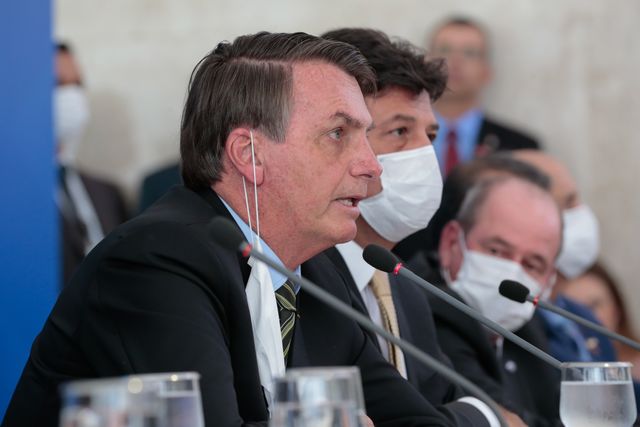
Bolsonaro's March 18 press conference with his ministers. (Credit: Planalto)
On Wednesday, the entire upper echelon of the government participated in a press conference on the coronavirus crisis. Everyone wore a mask after two ministers with whom everyone had contact, Gen. Augusto Heleno, head of the Institutional Security Office, and Adm. Bento Albuquerque of the Ministry of Mines and Energy, tested positive for the disease.
Minister of Health Luiz Mandetta said that the WHO’s orientation to increasing the number of tests was a “waste of resources” and that they should only be performed in the most serious cases. The press conference was marked by the pathetic performance of the president and the ministers, who incorrectly wore the protective masks, only underscoring the incompetence of the government.
After the Wednesday press conference, there were protests against Bolsonaro in every major city, mainly in the middle class neighborhoods, with people banging pans from their windows—the so-called “panelaços”—and calling for the ouster of the president.
A more deep-going revolt is beginning to emerge within the working class, which faces the greatest risk from the crisis. Throughout the country, entire sectors of the service industry are being closed indefinitely. Thousands of workers in movie theaters have been put on unpaid collective vacations, or have had their wages cut or pushed into voluntary lay-off programs.
The Brazilian Bar and Restaurant Association of Campinas, a city of 1 million people in the state of São Paulo, estimated that 30,000 people could be fired as a result of declining activity in commercial establishments. After Minister Paulo Guedes “relieved” companies by cutting employers’ mandatory payroll contributions toward the so called "S System" (a net of educational, cultural and entertainment services for the population, run on public money but managed by an employers' association) by 50 percent, the Social Service of Commerce (SESC) and the National Commercial Learning Service (Senac) announced that they will fire at least half of their 90,000 employees.
Underpaid informal work, which reached record levels in Brazil in 2019, is particularly under threat. Millions working under these conditions could lose their source of income overnight. In response, the government has announced that it will offer monthly aid of up to R$200 (US$39). This cannot even be considered a starvation wage! As Bolsonaro said, his government will force the workers to starve in the coming months, which will make them even more vulnerable to the coronavirus.
In the auto plants, the life of the workers is being put at risk on a daily basis to ensure that the corporations continue to extract profits from their work. The ABC Paulista automakers announced on Thursday a collective vacation of about 10 days that will only start at the end of March.
This announcement was received with expressions of indignation from the workers. On the Facebook page of the Metalworkers Union of ABC, associated with CUT, the union confederation led for decades by the Workers’ Party (PT), one worker commented: “We are like the band that played on the Titanic, the boat is sinking and we can not stop playing ... In short, we can not stop producing.”
Another said: “In Mercedes we are still producing, a lack of respect and care toward its employees, knowing that we are at risk, because buses to work are full and run with air conditioning systems; in the workplace there is not even a bottle of alcohol gel. It was supposed to stop, but the profit interest is greater!”
The role played by the union, in close partnership with the corporations, is abominable. Until the day before the automakers’ announcement of the collective vacation, its only advice to the workers was: “take care of yourselves.” The only demand placed on the companies was that they should clean surfaces in the factories and not adopt ridiculously risky behaviors, such as letting everyone serve themselves with the same spoon in the factory dining halls. However, on the very same day that the companies issued their announcement about the holidays, the SMABC printed on the cover of its newspaper, Tribuna Metalúrgica: “Either the companies stop by the 30th or we stop the companies.” They then called the 10-day shutdown a victory.
At General Motors, the workers will not only work until the end of the month, but they will have to work overtime for the next two Saturdays to produce Tracker units, the new SUV model produced by the company in Brazil, which costs up to R$112 thousand. The Metalworkers Union of São Caetano do Sul, where the plant is located, boasted of the fact that the workers are working overtime to “correct” GM’s claim that it would be closing because of declining market demand, saying that, instead, GM would close—after another 10 days of production—because of the spread of the coronavirus.
On Wednesday, automaker Caoa Chery announced the closure of its engine factory in São José dos Campos and the dismissal of 59 employees. The union announced that it would “demand from the public authorities measures in favor of the workers.” On Thursday the workers went on strike, demanding they be rehired, and the union announced it will meet with company representatives Friday.
Workers protest outside of AlmaViva Call Center, in Teresina, Piauí. (Credit: AlmaViva worker)
Strikes for safe working conditions, like those that have spread in recent days in Italy, Spain, the United Kingdom, Canada and the United States, are also beginning to break out in Brazil. In Teresina, in the northeast of the country, workers from the Almaviva Call Center held a spontaneous protest on Thursday morning. Workers gathered in front of the company, shouting: “Workers, do not be afraid, your health comes first!” An employee, interviewed by O Dia, declared: “We are over 3,000 operators. There are a lot of people with the flu, and the only thing they are giving us is just a regular cleaning product and a cloth. No gel or mask.”
Also this Thursday, dock workers in Santos, the largest port in Latin America, threatened to stop working in protest against unsafe conditions. The government of the state of São Paulo responded by threatening a state of emergency, which would suspend the right to strike and individual rights, allowing the government to force workers, with the use of the military, back to work.
However, at least for the moment, it was not necessary to resort to the police or the military, thanks to the collaboration of the union. The minister of infrastructure of the Bolsonaro government, Tarcísio Gomes, personally called the director of the Sindestiva dockers union, Rodnei Silva, and, according to the latter, “asked us not to go on strike. He insisted on the economic issue a lot, the losses that this could bring.” Union officials then met with the employers’ associations and together they formed a “Crisis Committee” to deal with the situation. The union suspended the strike, while acknowledging that “the most important thing, life, the issue of the pandemic, is not resolved.”
These events fully vindicate the political line advocated by the International Committee of the Fourth International, that “workers should form rank-and-file factory and workplace committees, independent of the corrupt unions, to defend their health and safety.” As in other countries around the world, every attempt by workers to take collective action to protect their health and safety and that of their communities is (and will be) opposed at every step by the unions.
The Workers Party (PT), which presents itself as the opposition to Bolsonaro, is exploiting the government’s crisis to appeal for support from factions of the capitalist political establishment and to politically subordinate the working class to the corporations. Like the Bolsonaro government, they have neglected the coronavirus crisis until the last moment, treating it as a minor problem or merely an excuse invented by the government to justify the country’s weak economy.
The PT’s answer to the crisis does not, under any circumstances, attack corporate profits. All the money for relief is to come from the Workers’ Support Fund, a state fund already destined for workers, according to the proposal advanced by the PT’s president, Gleisi Hoffmann. While Hoffmann also feigned horror over Bolsonaro’s proposed reduction in wages and hours, this is exactly what Dilma Rousseff, Brazil’s last PT president, together with the CUT, proposed in 2014, also under the title of an Employment Protection Program. If they have the opportunity, they will do it again.
The Brazilian working class can confront the coronavirus crisis only by forging its political independence from the PT and the unions. A successful struggle requires unifying with workers all over the world who are facing the same conditions. The present crisis reinforces the need to build a new revolutionary leadership in Brazil, a section of the International Committee of the Fourth International.

UK: Johnson government uses coronavirus crisis to seize dictatorial powers

Robert Stevens

The Johnson government will rush through the Emergency Coronavirus Bill by next Monday. It provides for police state measures that are a grave threat to the democratic rights of the working class.
The ruling elite in Britain has utilised the enormous danger to public health posed by the COVID-19 pandemic, which they did nothing to combat for weeks, to implement a raft of measures they have long planned to impose.
The 321-page bill was only made public yesterday. But in just a few days, with no public discussion, it will hand ministers virtually unlimited powers for up to two years, under the pretext of fighting the coronavirus. Some clauses also give ministers the power to repeatedly alter the expiry date of any measure enacted under the bill, to last another six months at a time, “if it is prudent to do so.”
There is to be no parliamentary scrutiny of the Bill, as the opposition parties agreed that it can be passed without a vote on the basis that to have hundreds of MPs in the House of Commons chamber would be too dangerous in relation to the spreading of coronavirus!
Earlier this week, Labour leader Jeremy Corbyn met Johnson for talks behind closed doors. For four and a half years, Corbyn propped up a Conservative government so crisis-ridden that two prime ministers, David Cameron and Theresa May, were forced to resign. He is responsible for Johnson coming to power as head of the most right-wing government since the war. Shortly to be replaced as party leader, Corbyn’s final act of treachery is allowing Johnson to secure authoritarian powers for himself.
The Bill was a long time in the making. Some of its main provisions were contained in The Health Protection (Coronavirus) Regulations 2020 bill passed on February 10. This enabled “further restrictions and requirements to be imposed on certain persons for the purpose of reducing or removing the risk of persons infecting or contaminating others,” “enables restrictions and requirements to be imposed in relation to groups of persons,” and “powers for [police] constables to detain persons” suspected of having coronavirus.
All this is contained in the Emergency Coronavirus Bill.
  • The Bill enables the government to restrict or prohibit events and gatherings in England and Wales during the pandemic in any place, vehicle, train, vessel or aircraft, any movable structure and any offshore installation and, where necessary, to close premises. It provides a temporary power to close educational establishments or childcare providers, extended to cover Scotland and Northern Ireland, where there is no equivalent legislation.
  • The Secretary of State is authorised “to give a direction to a person responsible for the management of an airport, seaport or an international rail terminal in the UK requiring them to suspend such operations “if Border Force staff shortages result in a real and significant threat to the UK’s border security.”
  • Due process is effectively terminated with the bill stating, “The efficiency and timeliness of court and tribunal hearings will suffer during a COVID-19 outbreak. Restrictions on travel will make it difficult for parties to attend court and without action a significant number of hearings and trials are likely to be adjourned.” It allows courts and other authorities to detain for a longer period people considered a national security threat.
  • Police forces are handed the powers to arrest and isolate anyone suspecting of being able to spread COVID-19.
  • Deaths on a massive scale are envisaged, with a section of the Bill titled “Powers in relation to bodies” giving “local authorities the necessary powers to direct those in the death management system to ensure excess deaths caused by COVID-19 do not overwhelm the system.” This week, a huge temporary mortuary was erected next to Westminster morgue in central London just a mile from Parliament.
  • Under conditions in which around a third of people in hospitals are going to be turfed out of their beds to free them up for coronavirus victims, the bill relieves the National Health Service of the obligation to provide care and treatment plans for people leaving hospital. The bill allows paperwork and administrative requirements to be slashed in order that doctors can discharge patients more quickly.
  • The assault on basic democratic norms was prefigured on March 13 when Johnson—with the backing of Labour—postponed local elections due to take place in May for 118 English councils, the London Assembly and seven English regional mayors, until May 2021. There can be no doubt this move was also decided on well in advance and sets a precedent. Clause 58 “provides a power for the Secretary of State or Minister for the Cabinet Office to postpone, by regulations, other relevant elections and referendums (not covered in clause 57) that cannot currently be anticipated.”
The prohibition of events and gatherings will cover all forms of public political protest. With hundreds of thousands already laid off and predictions of 5 million unemployed, food shortages and a collapse of health and social care, social and political unrest is to be policed by troops on the streets.
The new mortuary being constructed next to Westminster morgue
This week it was announced that 20,000 military personnel have been placed on standby—10,000 military personnel regularly assigned to operations among civilians, such as in floods, plus a further 10,000 troops. The mobilisation of the armed forces has also been in advanced preparation and was a central component of the Tories’ post-Brexit planning strategy known as “Operation Yellowhammer.” Yellowhammer predicted a “rise in public disorder and community tensions.”
Extraordinary measures have been enacted to ready the thousands of troops. Defence Minister Ben Wallace said Wednesday, “From me downwards the entirety of the Ministry of Defence and the armed forces are dedicated to getting the nation through this global pandemic.”
Troops have been freed up by the cancellation of training exercises overseas, including in Kenya and Canada. Other British soldiers on overseas operations have had leave cancelled. Around 200 British soldiers involved in training the Iraqi army have been recalled.
What has been dubbed the “COVID Support Force” will be under the control of the Standing Joint Command HQ of the British Army in Aldershot, Hampshire. Aldershot is a “military town” known as the “home of the British Army,” with at least 11 regiments based in the area.
Despite Wallace’s attempts to conceal the purpose of the soldiers, they are “expected to play a role in enabling police to secure the streets in the event of a lockdown, which could be triggered in London,” stated the Financial Times. The newspaper’s George Parker wrote, “Supermarkets would be guarded by police, while pharmacies would be among the few other shops to remain open.”
The Guardian enthused, “While the government has been reluctant to highlight such a bleak prospect, the armed forces need to be prepared for the threat of a breakdown in civil order given that troops have been deployed in other countries to enforce lockdowns and prevent looting of shops.”
On the same day the Bill was published, the pro-Tory Daily Telegraph editorialised, “At this time of crisis, constant carping at official policy does not help. … We crave strong, implacable leadership.”
Such language speaks to an acute political crisis in which the bourgeoisie are moving to defend their interests by dictatorial means. This imminent political danger can only be opposed by the political mobilisation of the working class based on the fight for a socialist programme and a workers’ government, in unity with workers who face the same attacks globally.
Workers in Britain have only to look across the channel to France where riot police and soldiers, who have spent the last year brutally cracking down on Yellow Vest protesters, are now—utilising the coronavirus pandemic—carrying out vicious assaults on workers and youth on a daily basis.

Massive social disaster looms as worldwide job losses from coronavirus pandemic expected to reach 25 million

Jerry White

Millions of workers throughout the world are being thrown out of work due to the coronavirus pandemic, creating the conditions for an unprecedented economic and social crisis.
The International Labor Organization (ILO) has warned that 25 million workers could join the ranks of the unemployed over the next several months. By comparison, the 2008-09 global financial crisis increased global unemployment by 22 million.
The spread of the COVID-19 disease has already exacted a terrible human toll, with nearly 250,000 cases and more than 10,000 fatalities across the globe. The economic and social crisis, which began with the shutdown of a significant portion of China’s economy and the disruption in the global supply chain, has now spread around the world as restaurants, retailers, airlines, public schools and factories close or sharply curtail operations.
While pouring trillions into the stock markets and preparing bailouts of the airline and other industries, the Trump administration in the US and capitalist governments around the world are doing little or nothing to protect workers from economic disaster.
Chef Tadd Johnson of the Canary Club restaurant on the Lower East Side of New York, and his wife chef Daisy Nichols, prepare soup to be given away to member of the community, Thursday, March 19, 2020. (AP Photo/Mary Altaffer)
The bipartisan measure passed in the US House of Representatives to provide workers limited paid leave, for example, excludes workplaces with over 500 workers—or nearly half the workforce.
The report by the United Nations’ labor agency notes that infected workers have already lost nearly 30,000 work months, according to figures from last week. But this is only the tip of the iceberg. The rising levels of unemployment are expected to result in lost income in the range of between $860 billion to $3.4 trillion.
The crisis will also lead to a vast expansion of underemployment as working hours and wages are reduced. Under the ILO’s mid- to worst-case scenarios (13 million to 24.7 million job losses), there will be between 20.1 million and 35.0 million more people in working poverty than before the pre-COVID-19 estimate for 2020. This will lead to a corresponding collapse in consumption, which in turn will deepen the economic crisis.
In its report the ILO said, “Unprotected workers, including the self-employed, casual and gig workers, are likely to be disproportionately hit by the virus as they do not have access to paid or sick leave mechanisms.” It also noted that turning to self-employment in the informal economy, a typical method of maintaining some form of income during economic crises, is less possible because of the restriction on the movement of peoples and goods.
There have already been widespread layoffs in manufacturing, arts and entertainment, hotels, airlines and service industries throughout the world.
Historians and industry experts are saying that the synchronized shutdown of heavy industry in Europe and the United States is unlike any seen since the 1940s, according to Bloomberg.
On Thursday, the Metropolitan Opera, the largest performing arts organization in the US, laid off its union employees, including its chorus singers and musicians. The International Alliance of Theatrical Stage Employees, IATSE, estimated that 120,000 jobs for film workers, including technicians, artisans and other crew positions, have been eliminated.
Danny Meyer’s Union Square Hospitality Group on Wednesday laid off 3,000 restaurant workers, which is 80 percent of its workforce, including 2,000 in New York City alone. Pebblebrook Hotel Trust, which owns 54 hotels, laid off half of its 8,000 workers and said it may need to cut an additional 2,000.
Scandinavian Airlines said Sunday it will temporarily lay off 10,000 employees, equal to 90 percent of its staff. Norwegian Air will temporarily lay off up to 50 percent of its workforce, or 7,300 workers, and suspend 4,000 flights.
In the US, economists are warning that payroll cuts next month could reach two million—well above the 800,000 peak job loss in March 2009, during the Great Recession. Former Trump advisor Kevin Hassett told CNN on Thursday that the US could face another Great Depression, when the jobless rate peaked at 24.9 percent in 1933. According to Moody’s Analytics, nearly 80 million jobs—more than half of the jobs in the US economy—are at risk due to the coronavirus.
Nine percent of all working Americans—or 14 million workers—have been laid off due to the pandemic, according to SurveyUSA, and another 25 percent have been put on short hours.
At least 11 states saw a huge spike in filings for unemployment benefits, as new unemployment claims in the US rose by 33 percent last week to over 280,000. In New Jersey, 15,000 people filed for jobless benefits, crashing the state's website. In New York, 21,000 people called to file for unemployment by noon on Tuesday, compared to 2,000 the same day last week.
In Ohio, there were 11,995 unemployment claims on Sunday and 36,645 on Monday. In Texas, around 16,000 people sought unemployment benefits last week, up from 4,500 a week ago.
With half of US adults living paycheck to paycheck this year and 53 percent reporting they did not have an emergency fund that covers at least three months of expenses, the loss of jobs means destitution for millions.
The Trump administration has responded to the spike in unemployment by urging state labor officials to delay releasing the precise number of jobless claims in order to prevent a further stock market sellout, according to the New York Times.
In an email sent Wednesday, the Labor Department instructed state officials to only “provide information using generalities to describe claims levels (very high, large increase)” until the department releases the total number of national claims next Thursday. Because the reports were monitored by the financial markets, “States should not provide numeric values to the public,” wrote Gay Gilbert, the administrator of the department’s Office of Employment Insurance.
The accelerating public health crisis is metastasizing into a massive economic and social crisis. In the face of this, capitalist governments, acting on behalf of the most powerful financial and corporate interests, will seek to exploit the crisis to accelerate the destruction of workers’ jobs and living standards, just as they did in the 2008-09 global financial crisis.
The working class must advance its own answer to answer to the crisis, including demanding full compensation for all workers laid off due to the pandemic. Non-essential production must be shut down to protect workers from unnecessary exposure, however the workers cannot be made to bear the consequences.
Instead of bailing out the giant corporations, they should be transformed into public utilities and re-fitted for the production of medical equipment and other necessities to protect public health. The enormous profits amassed by the corporations must be utilized to pay for the costs of the economic crisis.
It is the livelihoods of the working class that must be secured, not the profits of the banks and corporations and the wealth of the financial oligarchy.

Dual-Use Space-Based Systems: Tracing China’s Strategy and Policy Behaviour

Saman Ayesha Kidwai 


For over a decade, Beijing has followed an asymmetric path to developing its space-based capabilities, targeting the US’s overwhelming dependence on space-based systems. This has much to do with the fact that the US used space primarily for military purposes. However, given China’s steady ascent to becoming a peer competitor in civilian uses of space, its interest in upsetting the status quo will be diminished. A case in point has been its opposition the EU Space Code of Conduct (EUSCOC). Although opposing the EUSCOC has so far been beneficial for China, Beijing’s increasing dependence on dual use space-based systems would mean it is likely to have greater interest in furthering rather than opposing the EUSCOC.

However, given its political trajectory, it is unlikely to simply abide by rules laid down by others. Instead, it seeks to be incorporated into the rules-making process and may just agree to terms considerably similar to those in the EUSCOC. Two Chinese satellite programmes highlight this movement from a primarily military space challenger, to a civilian applications peer competitor.

The Beidou SystemThe first is the Beidou GPS system. Increasing regional dependence on the Beidou system makes it impossible for adversaries to specifically target China if they target the Beidou system. It also makes China's economy and international reach heavily dependent on protecting the Beidou system’s integrity from a range of threats including kinetic attacks, electronic warfare as well as intentional and unintentional space debris related threats.

Launched in three phases, with the most recent being in 2019, the Beidou system comprises 35 satellites (the US’s GPS system comprises 30 Navstar satellites). Scheduled to be completed by June 2020, the Beidou system’s network coverage area has expanded from regional to global. Even as it’s use is steadily increasing in the global arena, Beidou use has already surpassed Navstar based GPS within the Chinese market. Applications, devices and countries linked to Beidou have been increasing and now include weather, disaster prevention and mitigation, transport, agriculture, communications, and e-commerce. Chinese mobile device manufacturers such as Huawei, Xiaomi, and OnePlus have been delivering Beidou compatible products. Services linked to China’s Belt and Road Initiative (BRI) too operate based on Beidou. This indicates a steady increase in its international footprint, as it adds to the existing  100 million individuals, approximately 250 China-Europe freight trains as well as approximately 4 million land-based commercial vehicles and 40,000 fishing vessels that depend on Beidou.

None of these take away from the military capabilities of the Beidou system, which was intentionally developed as a dual-use military system. The biggest value addition it brings is in terms of precision targeting aimed at correcting incorrect data that foreign GPS systems would deliberately feed to Chinese weapon systems. An interview with the South China Morning Post, Ran Chengqi, the director of the China Satellite Navigation Office, stated that the accuracy provided will change from the standard 10 meters to “decimetres, to centimetres.” Giving it considerably more room to manoeuvre in geopolitically tense regions like the South China Sea where it might come into conflict with the US or its allies. Thus Beidou aims to eliminate any dependence on Navstar satellites.

The Yaogan Electro-Optical Reconnaissance SatellitesThe second system China depends on is the Yaogan Electro-Optical Reconnaissance Satellites. These are a series of 33 satellites that have been launched, and most recent launch took place in 2019. These satellites have a significant civilian use function, including crop yield assessment, land surveys, scientific experiments, communication, water conservancy, disaster monitoring, relief and mitigation.

On the military capabilities front, these satellites serve a wide range of military reconnaissance functions including high resolution optical and synthetic aperture radar images as well as electronic intelligence gathering. These functions are believed to aid China’s newly developed Anti-Ship Ballistic Missiles by providing image matching for optical seekers in a heavily jammed environments where accuracy of GPS signals would be highly suspect.

Looking AheadChina's biggest calling card on the global stage is not its military but its economy. While its satellite programme still serves military purposes, their civilian applications have dwarfed their military imperatives. Given China’s rapid and increasing dependence on space-based systems, the calculus in Beijing will invariably change orientation from military logic to a civilian one. This is what makes China's opposition to frameworks like the EUSCOC increasingly anachronistic.

This begs an important question: at what point will the economic imperatives of protecting space systems-based economy overtake Beijing's military deterrence imperative? Although this might not be easy to predict, logically, the tipping point should be the juncture when China finds itself in a position of vulnerability similar to that of the US due to overwhelming dependence on space-based systems. However, given how China aspires to create rather than merely follow rules set by others, it will continue to oppose the EUSCOC until a substantial portion of Beijing’s inputs are incorporated into it. This must not viewed as opposition but merely as the initial negotiating position.

19 Mar 2020

BioCubaFarma guarantees production of 22 medications for the treatment of Covid-19

 Yaditza del Sol González

Although there is no preventive vaccine or specific treatment, at this time, for the new coronavirus SARS COV-2, which causes COVID-19, the Cuban pharmaceutical industry guarantees the production of proven, high efficacy medications, including recombinant human interferon alpha 2b, in addition to another group of drugs that are included in protocols for treating patients with this disease and the complications that may arise.
According to the president of Bio-CubaFarma, Dr. Eduardo Martínez Díaz, in this effort, the enterprise group has taken into account the experience of China, via a guide published by the country’s pharmaceutical association for the detection and treatment of the virus.
This guide, he noted, recommends interferon as the first choice medication, which we have the ability to supply to our public health system and internationally.
Cuba has been supplying interferon, produced with Cuban technology in the joint venture Changchun Heber Biological Technology facility, located in Jilin, China, and currently used for high-risk individuals and health care personnel, as a preventive measure, as well as i COVID-19 patients, via nebulization, the most rapid way to reach the lungs and have an impact in the early stages of infection, explained Marta Ayala Ávila, deputy director of the Center for Genetic Engineering and Biotechnology (CIGB).
At the same time, she said, we have been preparing for the use of interferon in Cuba, as we have capacity at the joint venture facility, but also within the country.
For his part, CIGB general director Eulogio Pimentel Vázquez reported that a supply of interferon is available to treat the estimated number of cases that could appear in Cuba over a period of three to six months. In addition, he said, “We have a total supply of the product in process that is practically equivalent to the amount needed to treat all those who were infected in China.”
Currently, this drug is included in protocols established by the Ministry of Public Health (Minsap) for the care of patients with the new coronavirus, and requests have been received from the Health Ministries of several countries. Pimentel said the center has the capacity, to respond not only to a possible increase in the country’s demand, but also to meet the 15 requests that have been received thus far from other nations, both for information and acquisition of the product.
Although recombinant human interferon alpha 2b has made headlines in the last few days in various international media given its efficacy in the treatment of patients infected with the new coronavirus, this is not the only medicine that Cuba has on hand to confront the global pandemic.
There are 21 other products included in Cuba’s protocol for treatment, among these are anti-virals, antiarrhythmicsand antibiotics, for the treatment of complications that may arise in patients with COVID-19, and the industry can guarantee their production, Martínez emphasized.
For example, AICA Laboratories manufactures 170 injectable medicines and sterile eye drops, and five of these are included in the basic protocol for patient care, stated the company’s general director, Antonio Vallín.
National availability has also been reviewed of intermediate materials and finished products, as well as the capacity to maintain production, while work continues on natural products to support the immune system and increase its response to any virus, he added.
Rita Maria García, BioCubaFarma’s director of Operations and Technology, reported that preparations for the current situation were begun well in advance and that the country’s health institutions have a stable supply of needed medications, although strategies to increase coverage are being implemented.
Drugs available include, for example, azithromycin in tablet and suspension form, injectable vancomycin, atenolol, methylprednisolone, diazepam, midazolam, paracetamol, ibuprofen, dipyrone, general anesthetics, as well as parenteral solutions needed for intensive care, such as dextrose, ringer and albumin, among others.
Regarding dipyrone, the BioCubaFarma president reported that 600 million tablets are required annually in the country and, although production capacity to ensure this amount does not exist today, coverage for hospital use is guaranteed.
We hope that the containment and epidemiological surveillance measures adopted by the Ministry of Public Health can have an impact limiting further infections in the country, he said, but BioCubaFarma is prepared to provide these 22 drugs for the treatment of thousands of potential patients.
Martínez Díaz acknowledged that 15% of medicines supplied by the industry are currently missing from pharmacies and that distribution cycles have been extended, as a result of difficulties in acquiring raw materials and the lack of spare parts for equipment used in the manufacturing process.
He noted that the U.S. blockade has a significant impact, as suppliers in that country have refused to sell Cuba equipment and supplies, citing the government’s financial persecution. Others do not want to sign new contracts, and those who have maintained commercial relations must face a number of obstacles.
In fact, we have significant financial resources that we are not able to deposit in the country because of the blockade’s restrictions on banks, he noted.
On the other hand, Biomodulin t is a drug s also considered an option to treat the new coronavirus. According to Mary Carmen Reyes, a specialist in immunology and head of clinical trials at the National Center for Biopreparations (BioCen), it is a modulator, included in Cuba’s basic inventory of medicines, used for recurring respiratory infections in older adults, to increase the patient’s defenses.
In the case of Covid-19, she said, data published in scientific journals points to how the virus affects infected patients immune response and decreases T-cells. This drug has the capacity to stimulate the production of such cells, she explained.
Given that elderly patients with weaker immune systems are prone to developing complications, the use of this drug is appropriate for both infected patients and those at risk, as well as health personnel.
The Cuban pharmaceutical industry is also emphasizing research and development, as a strategy to confront the pandemic, seeking new products that have the ability to inhibit reproduction of the virus.
According to Gerardo Enrique Guillén Nieto, director of Biomedical Research at the CIGB, two inhibitory peptides are currently being studied. One of these is CIGB 210, part of a project that has been under development for years as an antiviral to treat AIDS patients.
“Based on the evidence that exists in the literature, we are now experimenting with the effect of this peptide on a coronavirus of bovine origin, to evaluate its inhibition capacity. If it works, in collaboration with laboratories in China, we would analyze its effect against the new coronavirus.”
Another drug under consideration, coded as CIGB 300, is used to treat different types of cancer, including cervical and lung, and its antiviral capacity has been studied in patients with AIDS, Hepatitis C, and other viruses.
At the same time, a vaccine project is being designed, based on a platform of virus-like particles, with nasal immunization as a means of administration, a method used for the therapeutic vaccine against chronic Hepatitis B, developed at the CIGB. Data from this project has been made available to Chinese health authorities, to collaborate in its development, he concluded.

Pacific Islands nations threatened with disaster by coronavirus

John Braddock

The remote micro-states and island chains across the Pacific face a terrifying situation due to the global coronavirus pandemic. While geographically isolated, their impoverished, neo-colonial status, lack of health facilities and dependency on tourism make them particularly vulnerable to natural disasters and disease outbreaks.
On March 19, the number of confirmed cases had risen to 11; three in French Polynesia followed by five in the US territory of Guam, two in New Caledonia and one in Fiji. They included Tahitian parliamentarian Maina Sage, whose infection was discovered on her return from France. The Marshall Islands, Federated States of Micronesia and Samoa have one person each under investigation. The latter is a traveler from Auckland whose test samples were sent to Melbourne, with a possible 10–20 day turn-around time.
A widespread outbreak of the COVID-19 virus anywhere in the Pacific threatens a disaster for the indigenous populations. They already suffer from diseases associated with poverty and poor diet, such as obesity, heart disease and diabetes. In Fiji, diabetes-related amputations account for 40 percent of all hospital operations. Malaria, tuberculosis and HIV/AIDS are rife in Papua New Guinea (PNG), the largest Pacific country, where life expectancy is just 62.8 years.
A sharp reduction in tourist numbers, lack of air freight, and disrupted supply chains are already hitting the island states, prompting fears about how their fragile economies will weather a prolonged crisis. French Polynesia’s tourism minister, Nicole Bouteau, said the economy would go through “dark times” in the coming weeks.
To prevent the arrival of the virus, Papua New Guinea, Fiji, Vanuatu, New Caledonia, French Polynesia, Wallis and Futuna and Tonga have all implemented strict health checks and quarantine measures. Most countries had limited or suspended cruise ships before the industry announced a worldwide shutdown of operations on March 13.
The Marshall Islands National Disaster Committee closed the country to all incoming passengers for two weeks from early March. Health secretary Jack Niedenthal told Radio NZ the country’s health system had already been overburdened with an eight-month dengue fever epidemic.
Cook Islands Prime Minister Henry Puna said 11 cruise ships had been prohibited from the outer islands and travelers from 16 countries banned from entering. Each ship brings in hundreds of thousands of dollars, but Puna said the move was necessary to safeguard “the well-being of the people.”
Some of the strictest measures are in Samoa, which was devastated by a measles epidemic that originated in New Zealand last October and killed 83 people, mostly children. Samoa’s government is now urging anyone planning to go to the country to stay away, saying the risk to the country from Covid-19 is “very high.” A health ministry statement said, “all those intending to travel to Samoa to attend birthdays, weddings, reunions, funerals, conferences, sports, etc. to CANCEL their travel plans.”
Samoa Tourism Authority head Fa’amatuainu Lenata’i Suifua said he backed the government’s actions but the country’s biggest industry was in for “a tough time.” Tourism employs more than 5,000 workers directly, as well as others in supporting services.
The measles epidemic in Samoa, which was only brought under control after Christmas, shut down much of the economy and overwhelmed the impoverished country’s limited healthcare system. For the last quarter of the financial year, an estimated 20 to 25 percent drop was already expected for tourist arrivals and earnings.
Quarantine rules announced by Australia and New Zealand will exacerbate the disruption. Both countries, which supply significant numbers of tourists to the Pacific, have mandated that all travelers, including returning residents, self-isolate for 14 days. While New Zealand has exempted travelers from the Pacific Islands, Prime Minister Ardern told people not to undertake unnecessary travel overseas and all cruise ships were banned.
New Zealand’s Pacific Island community is particularly vulnerable. COVID-19 hits those with heart and lung disease and diabetes the hardest. Nine percent of Pacific peoples in NZ have been diagnosed with diabetes—three times the general population. The largely working-class Pacific community suffers from overcrowded and inadequate housing and has difficulty accessing health care. Thousands will be affected by looming job losses.
Among the earliest and worst hit islands were the Northern Marianas (CNMI), a US territory in the North Pacific. Beijing promptly suspended all tourist excursions, while South Korea declared quarantine zones. Fifty percent of CNMI’s visitors come from Korea and 40 percent from China.
The Saipan Chamber of Commerce declared that the CNMI’s tourist industry had collapsed within six weeks. Over 1,000 workers were laid off, while thousands more had hours reduced. The government revised its annual budget down to $US90 million, from $147 million. In 2018 the budget was $237 million. Harsh austerity measures have been imposed, including cuts to public sector pay and working weeks.
In a letter to US President Trump appealing for federal help, CNMI Governor Ralph Torres said the loss of the tourism market would result in the “unequivocal and complete collapse of the foundations of our private sector.”
Fiji’s government is introducing a supplementary budget this week which Attorney-General Aiyaz Sayed-Khaiyum declared was necessary to reduce the impact of the coronavirus. Fiji’s economy was already facing a major downturn, presaging further attacks by the authoritarian Bainimarama government on wages, social welfare and essential services. According to reports from the World Bank and IMF last October, a reduction in government expenditure of $394 million would sharply contract the economy. A liquidity crunch had seen banks struggling to get funds to finance loans while the vital sugarcane industry is battling falling global prices and declining production.
Neelesh Gounder, an economist at the University of the South Pacific in Suva, said the coronavirus outbreak would affect all island countries’ wider economic relationships with China, including aid projects and the Belt and Road initiative, which have been hit by delays and quarantine measures preventing Chinese labourers reaching building sites.
With governments around the world failing to act in any coordinated manner, the beleaguered Pacific Island nations will inevitably be left to sink or swim. The local imperialist powers, Australia and New Zealand, will only do what is necessary to protect their geo-strategic interests in opposition to China.
New Zealand Foreign Minister Winston Peters and Australian Foreign Minister Marise Payne said that the two countries would only jointly help to fund the World Health Organisation’s Pacific coronavirus response plan. They will assist with access to medical supplies from the WHO’s stockpiles and technical advice, including testing samples from the region free of charge.
These meagre undertakings are entirely hollow. New Zealand has had only two laboratories testing for COVID-19, producing about 500 test results in the past week. The ruling elites of both countries are meanwhile carrying through nationalist “fortress” measures and imposing the crisis on their populations. What will not be forthcoming are the billions of dollars in aid and health support desperately needed to rebuild the economies and sustain the health of the people in this fragile region.

Ukrainian government uses coronavirus crisis to pass IMF-backed reforms

Jason Melanovski

Ukraine, officially the poorest country in Europe according to the International Monetary Fund, is on the brink of an explosive outbreak of coronavirus cases that will bring about untold social misery and death in a country already devastated by years of oligarchic capitalist rule.
While the number of just 14 registered cases in Ukraine remains relatively low to the rest of Europe, the real number of coronavirus cases is undoubtedly much higher due to the totally inadequate testing efforts and the large number of Ukrainian migrant workers throughout Europe who have returned home after Europe began its own shutdown.
Approximately 70,000 Ukrainian migrant workers reside in the northern Italian provinces of Lombardy and Veneto, which have been particularly hit hard by the spread of the coronavirus.
Despite the likelihood of an already present widespread infection Ukraine痴 Ministry of Health has reported just two deaths due to the coronavirus to date. Last week, the Ukrainian government shut its borders to foreigners. The government has now also imposed a quarantine on the country, shutting down schools, domestic travel, bars, and restaurants. The new limitations came into effect on March 18 and are set to last until April 3.
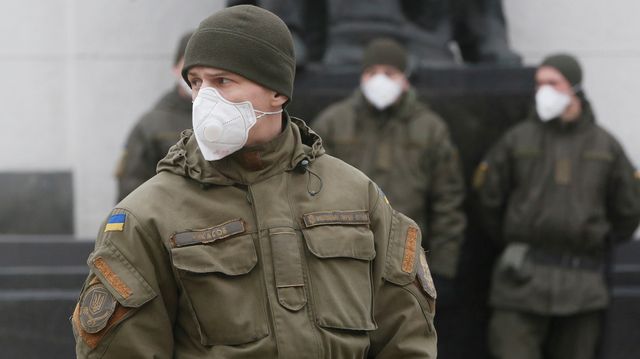
National guard soldiers wearing face masks stand at the parliament building in Kyiv, Ukraine, Tuesday, March 17, 2020. (AP Photo/Efrem Lukatsky)
On Saturday, the Ukrainian health minister Ilya Yemets declared that “All pensioners will die” from the virus. After a public outcry, he was forced to apologize. However, the blunt statement is in line with those of German Chancellor Angela Merkel and UK Prime Minister Boris Johnson, both of whom have announced that 60-70 percent of their population will get infected, without taking the adequate measures to combat the spread of the virus and create the health care and social infrastructure desperately needed to mitigate its impact.
In fact, in Ukraine, the impact of the virus threatens to be particularly dramatic. An estimated 60 percent of the population live beneath the subsistence level, and health care spending per capita has been low, making any additional medical costs crippling for millions of workers and pensioners. The average monthly salary is just $200.
There are currently 11.3 million pensioners in Ukraine, in a country of approximately 40 million. The advanced age of more than one-fourth of the country will certainly exacerbate the severity of the coronavirus outbreak within Ukraine due to its high mortality rate among older individuals and those with preexisting health conditions.
In addition, some 3.5 million people are already estimated to be in need of humanitarian assistance, due to the six-year-long civil war that was provoked by the US-backed far-right coup in Kiev in 2014. About 1.4 million people have been displaced, and many of them still don’t have permanent residence and safe shelter.
The Ukrainian oligarchy has no intention of saving the countless lives of pensioners and workers now at risk. On the contrary, Ukrainian President Volodomyr Zelensky has cynically used the opportunity to combine the imposition of far-reaching restrictions on public life with an appeal to parliament to swiftly pass a sweeping set of anti-working class reforms demanded by the International Monetary Fund.
Calling on the Ukrainian parliament to remain in session in the face of the crisis Zelensky stated: “Now in a situation of a global pandemic and the threat of a global financial crisis, the Ukrainian parliament must pass laws that are vital for the economy, introduce tax, land, labor reforms, appoint ministers of economy and energy, and the prosecutor general of Ukraine.”
In addition to calling for the passage of land and labor reforms which have been explicitly demanded by the IMF, Zelensky also stated that Ukraine’s finance ministry would hold additional talks with the IMF to secure even more financial support as a result of the crisis.
In December, Ukraine obtained provisional approval for a new $5.5 billion loan program, but the release of funds is dependent upon the passage of a widely opposed land reform bill that remains stalled in parliament and a labor reform bill that will severely undermine worker’s rights and make Ukraine Europe’s first “at-will employment” country. The labor reform bill deprives workers of any protection against firings by their employers. Both measures are directly targeted against the Ukrainian working class and have the potential to trigger mass opposition.
The Ukrainian state currently operates on a budget deficit of approximately $642 million and owes billions of dollars to the IMF in loan repayment.
Just prior to the coronavirus outbreak Ukraine’s GDP fell by 0.5 percent due to a downturn in industry as a result of the coronavirus outbreak in China and the Ukrainian hryvnia undertook a marked decline after improving for much of 2019.
By explicitly calling for approval of such anti-working class legislation while in the midst of an impending social and humanitarian crisis the Zelensky government is making clear that it seeks to use the pandemic to further the interests of Ukraine’s oligarchic capitalist ruling-class while ignoring the devastation the coronavirus will bring.
In the same address, Zelensky called for an additional meager $36 dollars per month for the country’s pensioners who currently earn less than $185 per month.
Just prior to his address on Monday, rather than calling for rapid expropriation of funds to combat the virus from the country’s obscenely wealthy oligarchs Zelensky met with Ukraine’s top oligarch criminals to beg for help. During the meeting, Zelensky reportedly asked for help obtaining 500 ambulances and $490 million in funds to fight the virus while stating “Business should be socially responsible during difficult times for the government. Ukrainians should feel protected when they go to state hospitals. And I insist that you help now.”
Among the attendees were Rinat Akhmetov, Ihor Kolomoisky, and Vikor Pinchuk—all billionaires many times over who obtained their wealth by stealing state assets after the dissolution of the Soviet Union in 1991 and the restoration of capitalism. Despite Zelensky’s begging and their immense wealth, these oligarchs mustered a pathetic 14 ventilators to donate to the country’s Health Ministry and Kiev-area hospitals—a slap in the face of the population, millions of whom now face the prospect of serious illness and death.