21 Mar 2020

Coronavirus transforms Greek refugee camps into death camps

Martin Kreickenbaum

The spread of the coronavirus around the world is continuing to accelerate. According to the World Health Organisation (WHO), Europe is now the worst affected part of the world by the disease. But the people living in refugee camps on the Greek islands have been left to fend for themselves. The overcrowded internment camps on Lesbos, Chios, Samos, and Kos will thus quickly be transformed into death camps.
The aid organisation Doctors Without Borders (MSF) warned in a March 12 statement about the danger of an uncontrollable spread of Coronavirus throughout the camp after a resident on Lesbos was diagnosed with COVID-19.
“It would be impossible to suppress an outbreak in a camp with conditions like those on Lesbos, Chios, Samos, Leros, or Kos,” stated Hilde Vochten, medical coordinator for MSF in Greece. “We have yet to receive a credible emergency plan that would allow the people living their to be protected and treated.”
The situation got worse on Monday. In the Moria camp on Lesbos, a fire broke out, claiming the life of a six-year-old girl. The fire brigade was unable to reach the fire immediately, resulting in the fire continuing to burn for an hour due to the closeness of the containers used as living quarters.
The intolerable hygienic conditions in the internment camps prevent even the most basic protective measures from being adopted. In the Moria camp, which the European Union (EU) established for 3,000 people to live in while their asylum applications were processed, 20,000 people are vegetating without any escape route if the coronavirus breaks out.
“In some parts of the Moria camp on Lesbos, there is just one water tap for 1,300 people, and no soap is available,” said Vochten. Five- and six-person families barely have three square metres of space. There are no permanent structures for accommodation, and most refugees spend the night under plastic sheeting.
For the refugees there “it is simply impossible to follow the recommended measures by washing their hands regularly and maintaining distance from others,” continued Vochten. But it's not only that: There is absolutely no functioning healthcare system in the camp, never mind a plan to identify, treat, and isolate infected people.
Doctors Without Borders is therefore demanding the immediate evacuation of the Greek camps. Florian Westphal, operational head of Doctors Without Borders in Germany, said, "It was already irresponsible to allow asylum seekers to live under such conditions as part of the European policy of deterrence. But it is now bordering on an act of criminality if nothing is done to protect them.”
But precisely the opposite is taking place. The Greek healthcare system, which was devastated by EU-imposed austerity, is in no position to provide sufficient tests to identify those infected, never mind treat COVID-19 cases. In this situation, the refugees are being scapegoated and exposed to draconian police measures that are unprecedented since the downfall of the Greek military junta.

Conditions resemble warfare

Immediately after Turkish President Recep Tayyip Erdogan announced he would allow refugees to travel on to Europe in late February, the Greek government declared it would suspend the right to asylum. This represents a gross breach of the Geneva Convention on Refugees and a violation of the European Union's founding charter.
The EU fully backs this ruthless and illegal approach. EU Commission President Ursula Von der Leyen praised Greece as “our European shield.” According to the Greek authorities, 43,000 refugees have been pushed back across the border without being able to exercise their right, guaranteed under the Geneva Convention on Refugees, to file a claim for asylum. Around 300 refugees who managed to cross the border were arrested by the Greek police and transported back to Turkey.
Conditions resembling a war zone predominate at the Kastanies and Pazarkule border crossings. Greek security forces target refugees with tear gas, flash grenades, rubber bullets, and even sometimes live ammunition. Around 10,000 people continue to huddle in makeshift tents in no-man's-land without any provisions. Since the Turkish police refuses to let them back into Turkey, they are left totally exposed to violence.
At least seven people have been seriously injured due to shots fired by Greek snipers. Three refugees, Muhammad al-Arab, Muhamad Gulzar, and Mohammed Yaarub were shot and killed, according to independent media reports.
Volkan Pirincci, operational coordinator of the aid organisation Support to Life (STL), told Evangelische Pressedienst, “I've never seen a scenario worse than this. The refugees are in great danger of losing their lives.” Detained refugees have been forced to undress down to their underwear. Telephones, money, and jewelry were confiscated before they were forced back over the border.
These illegal pushbacks have been carried out by the Greek police for years, but they have now reached a qualitatively new level. The Monitor television show on German public broadcaster ARD reported on secure refugee camps where detained refugees were immediately brought before a judge and charged with illegal border crossing.
Margaritis Petritzikis from the UN Refugee Agency told Monitor that many refugees are being sentenced to multi-year prison terms in rushed legal proceedings. “This is a new practice, and we are very concerned because families are being separated. For example, the father may get sentenced to three years in prison while the mother and child are sent to a refugee camp.”
Petritzikis estimated that some 50 such trials have taken place with a typical prison sentence of four years. The criminal prosecution of asylum seekers and refugees for illegally crossing borders is explicitly prohibited by the Geneva Convention on Refugees.
Additionally, an investigation by the New York Times revealed the existence of secret prisons on the Turkish-Greek border, run by the Greek government. The Syrian Somar al-Hussein told the Times that he was brought to a camp and confined to a room with dozens of other refugees. His phone was confiscated. “We were like animals for the Greek guards. The refugees were not provided with any provisions before being forced across the Evros River back to Turkey the following day.

The hellish conditions on Lesbos

The situation on the island of Lesbos is particularly perilous. Unhindered by the police, gangs of fascist thugs have taken over control of parts of the island. They have established roadblocks and attack all occupants of cars identified as non-Greeks. Reception centres belonging to the UN Refugee Agency, such as the One Happy Family centre, have been burned down by right-wing thugs.
The police joined in the witch-hunting of refugees, forcing them into the port of Mytilini, the main town on the island. Some 500 refugees are crammed together there in inhumane and humiliating conditions on the cargo deck of a warship. They are set to be taken to a secure camp on the Greek mainland before swiftly being deported to Turkey without ever receiving the chance to file a claim for asylum.
The aid organisation Human Rights Watch described this practice as an “arbitrary denial of freedom.” “The refusal to grant the people in custody the opportunity to apply for asylum and the explicit threat to send them back to their persecutors stand in stark contrast to the legal obligations to which Greece has committed and the values and principles it claims to stand for,” stated Bill Frelick, director of refugee and migration law at HRW. The Greek authorities subsequently refused to grant HRW workers access to the refugees in Mytilini.
Development Minister Adonis Georgiadis, who is also deputy leader of the governing New Democracy, told Die Zeit in an interview, “The refugees will be permanently held in the secure camps. “Anyone who thinks they can come through Greece to get to Europe is making a big mistake. Nobody will make it to Europe through Greece.”
The refugees are therefore being detained indefinitely in these camps at the behest of the EU, without ever being charged, having access to legal representation or apply for asylum.
But even those lucky enough to secure refugee status face further hurdles. Immigration Minister Notis Mitarkis declared his intention to cut all benefits paid to asylum seekers and leave them to survive with nothing. Mitarkis told Sky, “Our goal is to ensure that those who are entitled to asylum get it within two or three months, then cut all welfare benefits and accommodation, because these measures are encouraging people to come into the country and exploit them.”
The police repression against refugees is being accompanied by attacks on refugee aid organizations. The Greek government adopted a measure in February to regulate aid organisations, which Greek politicians describe as “criminal parasites.”
The attacks on refugees are also being supported by the pseudo-left opposition. Former Syriza Prime Minister Alexis Tsipras told an interview with Mega-TV that the government acted correctly by closing the border. Tsipras also closed the Greek-Turkish border during 2015-16, but spoke about it less in public than his right-wing successor.

Turkey’s coronavirus measures: billions for business, crumbs for workers

Ulas Atesci

On Wednesday, President Recep Tayyip Erdoğan declared an “Economic Stability Shield” package for business totaling 100 billion Turkish liras (US$15 billion). Named after Turkey’s latest invasion of northern Syria, Operation Spring Shield, it focuses above all on forcing workers to continue production despite the coronavirus pandemic.
Before this program was announced, the number of confirmed coronavirus cases in Turkey was 97. It reached 191 and four deaths on Wednesday, and then 670 cases and 9 deaths on Friday, according to Health Minister Fahrettin Koca’s report. The exponential increase in cases has created enormous anxiety among scientists and doctors, as neighboring Iran is an epicenter of the pandemic, with nearly 20,000 cases and at least 1,433 dead—a crisis vastly exacerbated by US and European sanctions.
Just before a special meeting with ministers, business leaders and trade-union executives in Ankara, Erdoğan advised workers to rely on “patience and prayers.” Though the virus threatens millions, Erdoğan stressed he was not overly concerned: “If we can manage these few weeks well and inform the nation well and keep the virus under control, we anticipate a good outlook, better than we had hoped.”
The focus of the measures Erdoğan unveiled after the meeting is not to contain the pandemic, but bolster business against any fallout from the pandemic on Turkey’s crisis-ridden economy. While he said nothing about providing adequate testing and medical care, Erdoğan pledged to distribute protective masks and cologne for people older over 65—even though many medical workers complain this equipment is lacking in hospitals. Already, two doctors have reportedly contracted the disease.
Erdoğan’s proposals were hopelessly self-contradictory. “None of our citizens must leave their homes or get into contact with anyone, unless absolutely necessary, until the threat disappears,” he said, while adding: “Our top priority is that production and employment are not interrupted.” He did not attempt to explain how production in industrial sectors not critical to fighting the virus could be maintained without workers leaving their homes, however.
The government also plans to postpone debt payments and slash tax bills for corporations. It also is postponing for six months the April, May and June value added tax and social security payments of retail, iron-steel, automotive, logistics-transportation, cinema-theatre, housing, food-beverage, textile-garment and event-organization sectors.
Ankara will grant financing assistance to exporters to guard against a potential fall in exports and so they can maintain capacity. Moreover, the state-owned Halk Bank will postpone credit, interest and debt payments for 3 months of businesses and small businessmen impacted by the coronavirus pandemic. Businesses can delay credit and interest payments to the banks at least three months, and can receive additional financial liquidity if needed. Tax breaks and credit assistance are available to the tourism, airlines, and construction industries.
The 20 measures include just two miserly ones for working people. While the minimum pension will be raised to just 1,500 Turkish liras ($230, compared to a minimum wage of 2,300 Turkish liras), just 2 billion lira ($308 million) from 100 billion lira package will be provided as financial aid to poor families.
Business leaders welcomed the bailout. The opposition Republican People’s Party (CHP) criticized the handouts to business only as inadequate, as Istanbul deputy Gürsel Tekin said: “To support the economy, Germany allocated 600 billion dollars, Britain 400 billion, and the EU Commission 480 billion dollars. Erdoğan's package is 15 billion [dollars]. Insufficient.”
With most workers still on the job, there are no measures to improve Turkey’s health infrastructure to deal with an emerging coronavirus outbreak. In fact, it does not include any of the measures necessary to stop the spread of the disease, paving the way for a rapid spread as in Europe.
A key element in this malign neglect policy is the refusal until last Sunday to test or quarantines of at least 15,000 people returned from pilgrimages or visits abroad.
Official statements on the pandemic provoke broad popular distrust. While the health ministry still refuses to give details on the locations of the cases, individuals shared information via social media. According to a video released last Tuesday on Twitter, the first case in Turkey was from the Grand Bazaar, a historical and crowded tourist area in İstanbul. This information was hidden from the public and the area kept open without notifying other shop owners for several days.
Scientists and doctors all warn that there has been no large-scale testing to prevent a rapid spread of the disease. As of Thursday, only 10,000 people have been tested in Turkey, a country more than 83 million people.
Gaye Usluer, a clinical microbiologist and infectious disease expert at Eskişehir Osmangazi University, said on Monday: “According to the official statements, the number of the cases is 18. The biggest factor in the low number of cases is that the diagnostic test is being applied to a very limited extent.”
That same day, Turkish Medical Association Chairman Prof. Dr. Sinan Adıyaman declared, “The number of patients is greater than stated,” criticizing the government for delaying measures against the pandemic, in particular on the pilgrimage issue. On Wednesday, he again pointed to inadequate testing: “For example, 20,000 tests were carried out daily in South Korea. Eight thousand is very low. We repeat, the number of tests, the centers where they are conducted should be increased and be free.”
Health Minister Fahrettin Koca, who owns a private hospital, only declared on Thursday that they would launch daily tests on 10,000 to 15,000 people beginning from Saturday.
Professor Dr. Alpay Azap, a member of the health ministry’s Coronavirus Science Council, warned Wednesday on Twitter: “Considering that we are able to run [coronavirus] tests for very few patients and only 20 percent of them come to hospitals for diagnosis, it is possible that we reached the critical level for rapid spread of the virus many days ago. … We should make all our efforts to not become Italy, where the virus has spread so fast due to the insufficient measures to prevent it.”
The day before, Azap had warned on television that there could be 5,000 to 30,000 cases in three or four weeks. Yesterday, Muhammet Emin Akkoyunlu, a doctor from Koca’s hospital, declared on television that Turkey already has over 140,000 undiagnosed cases.
On Wednesday, a video spread on social media showing a doctor from a university hospital in Ankara explaining, at a meeting of medical workers, that the situation in Turkey is very bad, and that there are thousands and not hundreds of cases, as officials claim.
Tukey’s public health system has been systematically gutted and privatized over the past two decades. While Turkey has 25,466 adult beds–almost half in private hospitals–in its intensive care units, it has just 187 doctors per 100,000 people. This figure is 399 in Italy, the worst-affected country in Europe, and 607 in Greece, which has more than 400 cases now.
Clearly anticipating a worsening situation, the Health Ministry issued orders Friday declaring all private hospitals “pandemic hospitals” to support public hospitals against COVID-19.
The situation facing workers in Turkey is not different from that in Europe and beyond. While coronavirus spreads in the population, companies increase layoffs and forced unpaid leaves, or seek to maintain profits by forcing workers to stay on the job under unsafe conditions.
Against this reckless policy, workers should raise critical demands to fight the further spread of the virus and to save millions of lives. Amid wildcat strikes in Italy, France, Canada and the United States, a demand that all non-essential workplaces be shut down immediately, with full pay for all workers, is critical. Necessary measures must be taken to protect refugees and prisoners. The pandemic requires full testing, free and equal health care for all, and a massive reallocation of resources internationally to fight the virus.

Italian health care workers speak out on coronavirus pandemic

Marc Wells

Italy’s health care system is under unbearable strain amid an exponential rise in coronavirus infections and deaths. Friday, Italian authorities announced a total of 47,021 infections and 4,032 deaths so far.
Health care workers are making immense efforts and sacrifices to try to minimize the impact of the virus and reduce deaths. However, they are dealing with the limitations of a system that, despite warnings by the international scientific community for 20 years, is so starved of funds that it cannot adequately deal with standard operations, let alone a historic health emergency.
The brutality of the virus cannot not be underestimated: while many of the deceased are above the age of 80, daily reports are revealing that no one, including the young, is safe from the risks of long-term complications or even death.
Southern Italy (the “Mezzogiorno”) has not yet been affected to the level of the north. However, the numbers of infected there are catching up rapidly, while health care infrastructure in the Mezzogiorno is a fraction of what it is further north.
On March 7, the day the Conte government shut down the Lombardy region, a wave of emigrés rushed back to their southern hometowns, bringing the infection with them. This is now likely to produce dire consequences: the region of Apulia has doubled its death toll in one day, while Sicily and Campania are preparing to mobilize the army.
The WSWS spoke to medical personnel from central Italy.
Emanuele Sorelli is a registered nurse in one of Florence’s public hospitals. The General Medicine department where he works has now been converted to a specialized COVID-19 unit. “On March 10, the hospital shifted its testing criterion and started testing all patients coming through the Emergency Room, not just those with grave symptoms. Over 48 hours, we discovered that nearly all incoming patients were positive.”
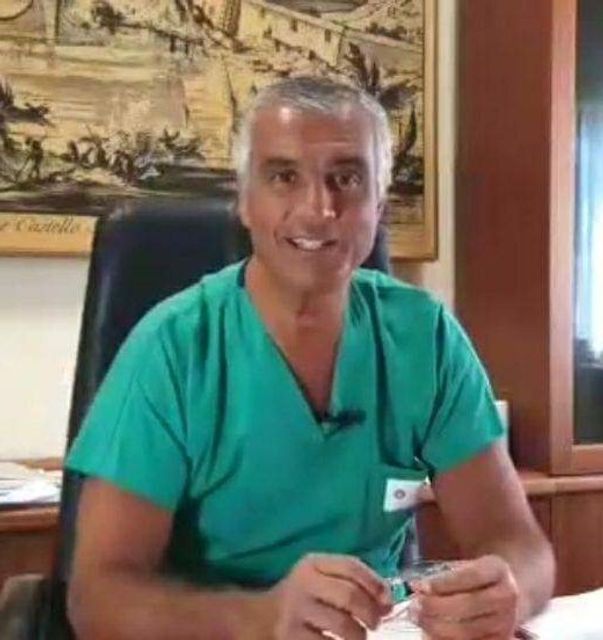
Emanuele Sorelli
Emanuele explained the new testing procedure: “Unlike Lombardy, here in Tuscany we decided to test all incoming patients, then dispatch them to either the COVID or No-COVID departments. Unfortunately, Lombardy had to face large numbers of sick people and they had to convert entire hospitals to infectious disease treatment.”
“The wave of contagion is slowly moving south,” Emanuele said. “Now, we are seeing larger numbers in the center; soon the south will be overwhelmed. In my hospital, many No-COVID units are being converted to COVID, due to the rapid rise. Only today, we opened two new units, tomorrow we are opening another.”
Further south, he said, “The migration of those workers traveling back to their southern hometowns after the government’s order will start producing effects in the next week. Tuscany and Emilia Romagna are possibly the best in health care infrastructure, but in Campania, Basilicata, God help us!
“Our units are completely contaminated, as these sections were not originally set up for infectious diseases. We can wear our protective gear for 2-3 hours at a time, it’s exhausting. The hospital has hired new contingency personnel in the last week, former temp doctors and nurses.” He remarked, “Our problem is shortage of protection gear and we already have reported 4 positives among my coworkers (they are actually sick).”
The virus is highly contagious: “We presume that most of us are positive. We are all contaminated, including our families. I’ve had a sore throat, so does my partner and daughter. We hope it won’t turn to pneumonia. The problem is not our patients, but the contagion among coworkers working in small spaces. And we risk infecting patients who are negative.”
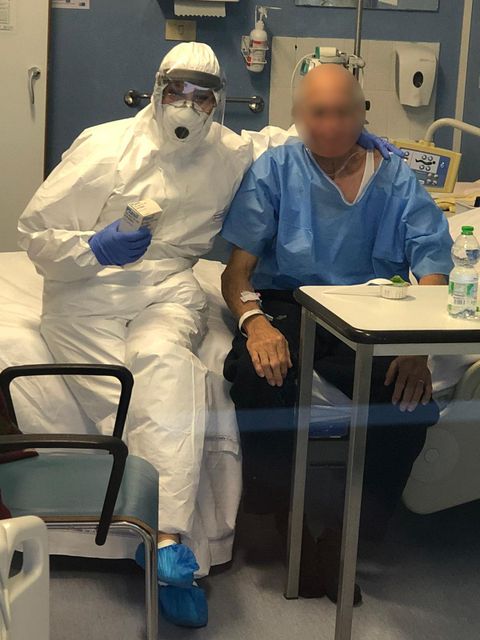
Nurse and Patient in Emanuele Sorelli's unit
Emanuele said 5 to 10 percent of patients get interstitial pneumonia. “Of these, 5-10 percent require intubation and intensive care. For those, specialized areas are needed, and we have a dangerous shortage of beds. In those areas, you need one nurse per patient, plus equipment. And no doubt, in Lombardy they’ve had to make harsh choices about which life to save. The elderly are sacrificed.”
Finally, he warned, “Interstitial pneumonia may have no symptoms. Then it suddenly advances to suffocation. Patients require immediate intubation. A 30-year-old patient required it, and he was shocked because he could still breathe fine. Time is the difference between life and death.
“Social distancing is essential. In Southern Italy, the lead actress of a theater play was positive and she infected everyone, cast and audience. Many of us have no idea we are positive.”
About job safety, he said: “There’s shortage of equipment, masks especially. No country will sell them to us. The European Union did not help us; they don’t understand that what happens in Italy will inevitably propagate to Europe. Only China has been helping with supplies. Once we run out of FFP2 and FFP3 [masks], we will be totally exposed.”
The WSWS also spoke to Prof. Stefano Arcieri, leading physician at Rome’s Policlinico, the polyclinic of the Faculty of Medicine and Surgery of Rome’s Sapienza University.
He said, “We are paying for inadequate management of the initial response. The danger of contagion had not been assessed properly some 10-12 days ago. Directives were optional and lax; now social distancing has been implemented, with serious restrictions. It’s important to think in collective terms: masks must be worn around older people or people with pathologies to protect them from possible contagion, especially from people who are either positive but asymptomatic or may be unknowingly positive.”
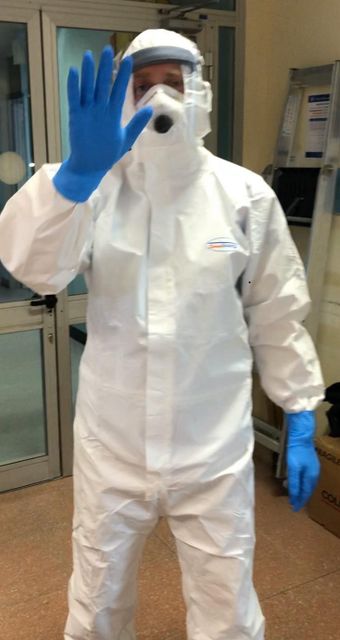
Stefano Arcieri
Arcieri recommended preventive measures: “Wash your hands thoroughly, the virus travels through droplets and survives on surfaces for hours, if not days, although no conclusive study has determined this with absolute accuracy. Avoid touching any part of your face.
“There is a rising trend in contagion. We are hoping the containment measures will bear fruit and that infections may decline, at least based on the Chinese experience.”
Prof. Arcieri commented on the rapid spread: “Lombardy is likely the most hard-hit region in Italy due to its role in international exchanges, especially in industrial and trade terms. Then, once the issue became obvious, we witnessed the migration of tens of thousands toward the south, who undoubtedly carried the contagion in some of the more impoverished areas of the country suffering a weak healthcare system.
“There is no cure at the moment. Some antiviral medications are promising, but it will take at least 8-9 months. Therefore, a most efficient way to fight this is to prepare and prevent. We must maintain well-balanced health, get sufficient rest, a correct diet, and try to maintain a psycho-physical equilibrium. I host a Facebook page, Capire per Prevenire [Understand in order to Prevent] with a large audience to which I give medical advice and answer questions.”
In his opinion, “The numbers we see in Italy are surely an underestimation. There is a vast mass of positives among us who are asymptomatic. And I believe that in Italy the high numbers are the result of more accurate reporting compared to other European countries.”
Prof. Arcieri commented critically: “I must say that every country responded with delay. Probably, no one was anticipating such worldwide spread. One thing is certain: in addition to the health crisis, we are looking at a world economic crisis: massive resources must be deployed. Medical personnel are not tested, although demands are being advanced. Given our exposure, it seems an obvious demand.
In conclusion, he said: “Everyone must play a part. If in a month or two Italy should find itself in the same conditions as China today, which show an improvement, that would still mean Italy has not solved the problem. A solution can only be found at a global level, or the fuse will be lit somewhere and we start all over again. The problem here confronts the world population, not a given nation-state. Some countries prevent people from entering their territories, but this will not solve the problem. We don’t just fight at home, the battleground is the whole world. There will be no solution outside an internationally coordinated effort.”

Over 620 deaths in Italy on Friday as coronavirus fatalities surge in Europe

Robert Stevens

Italy, Spain, Belgium and the UK all recorded their largest death tolls in the global coronavirus pandemic in a single day, Friday. In Italy, which now has the highest number of deaths in the world, a further 627 people perished taking the total to 4,032 fatalities. Another 5,986 new infections were announced in the locked-down country. Some 47,021 people have been infected so far, with 2,655 classified as in a “serious, critical” condition.
On Thursday, the number of deaths at that stage in Italy (3,405) first topped the total coronavirus fatalities recorded in China.
In Spain, the total death toll rose to 1,002 yesterday. This gruesome milestone was reached as 235 died over the previous 24 hours. Almost 20,000 cases (19,980) have been recorded in Spain, with more than a third in the capital, Madrid. Army specialists are to begin entering care homes to help with disinfection. The virus has claimed more than 50 lives at elderly care facilities across the Madrid region.
In Belgium, 16 more people died, bringing the total to 37, with more than 2,000 cases of infection.
With the virus being largely contained in China, as the result of a mass lockdown, Europe is the new epicentre. As of Friday evening, 6,057 had died in 40 European countries, and Russia, Ukraine and Belarus, with 1,044 new deaths reported. 129,216 people have been infected across the continent, with 17,852 new infections yesterday.
The terrible impact of COVID-19 was graphically seen in a five minute video report posted Friday by Sky News, the first journalists allowed to film inside the main hospital in Bergamo, northern Italy, where the number of dead has surged faster than authorities and churches can bury or cremate them.
The film includes harrowing scenes of close-to-death patients struggling for life in a crowded hospital with the few staff available doing everything possible to save them. A shocked reporter narrates, “They are fighting a war here and they are losing. The sheer numbers of people succumbing to the coronavirus is overwhelming every hospital in northern Italy.
“The staff are working flat out trying to keep their patients from deteriorating further. They are trying to stop them from dying.”
Patients are shown wearing “plastic bubbles that fit over the heads of the most ill, staff struggle to communicate with patients. The bubbles are attempting to equalise the air pressure in the lungs.”
The reporter comments, “It looks like an intensive care unit (ICU), but it is actually just an emergency arrivals ward. The ICU is full.”
The only way that new patients can “qualify” for treatment on the ward is to be “actually on the point of death, not just gravely ill. In this pandemic, gravely ill is considered a reasonable position. It really is that bad.”
Such images attest to the failure of an entire system, capitalism.
In France, a further 78 people died, bringing the total to 450. Coronavirus infections are doubling every four days, the French health directorate reports. On Friday, 1,617 new cases were recorded, for a total of 12,612.
In Germany, 15 died with 59 fatalities reached. New cases were recorded at 4,391 bringing the total to 19,711. In the Netherlands, 30 people died with total deaths now at 106. There were 534 new cases, bringing the total to 2,994.
In the UK, deaths rose by 40 to 177—the largest rise in a single day since the outbreak. The infection toll now stands at almost 4,000 with 714 new infections reported.
With 18 of the new deaths recorded in London, the capital is the epicentre of the pandemic in the UK. Hospitals are unable to cope with the huge rise in cases. London's Northwick Park hospital declared a “critical incident” yesterday after running out of critical care beds. The Guardian reported it had seen unpublished figures showing that the “number of people confirmed or suspected to have Covid-19 being treated in an intensive care unit in hospitals in south London rose from seven on Friday 6 March to 93 on Tuesday 17 March—a fifteenfold increase in 12 days.”
Due to the escalation of the crisis in Britain, in the space of a few days Boris Johnson’s Conservative government has gone from doing virtually nothing over the pandemic—as it advocated a policy of letting the entire population be infected to supposedly acquire “herd immunity”—to imposing firstly social distancing measures and yesterday ordering closed all cafes, bars, pubs, restaurants, nightclubs, theatres, gyms, cinemas and leisure centres.
Under conditions in which hundreds of thousands of workers have already been laid off or had their hours slashed and pay cut, for many by up to 50 percent, the ruling elite fears a massive social and political backlash. Up to a quarter of the UK workforce—around 10 million workers—are employed in retail and sectors that have seen a collapse in trade. Yesterday, the Arcadia retail chain, with 1,000 employees and owned by billionaire Sir Philip Green, announced the closure of every store in the UK. Ryanair boss Michael O’Leary said that his entire workforce would have to take a 50 percent wage cut as the airline—with cash and other reserves of over €4 billion—prepared to ground most of its fleet and reduce capacity by 80 percent in April and May. Every other airline continent wide is imposing similar measures.
In response Friday, Chancellor Rishi Sunak announced measures “unprecedented in the history of the British state” centred on rolling out a “Job Retention Scheme” whereby all employers retaining staff would be able to claim 80 percent of their wages from the government at up to £2,500 a month. The move follows that of the Danish government, which rolled out a similar scheme to cover 75 percent of workers’ wages in the private sector.
The total number of COVID-19 infections in Europe is undoubtably far larger than any of the reported figures due to the fact that virtually no testing is being done on a systematic scale in any European country. According to estimates from leading UK scientists, up to 180,000 people in Britain alone may already be infected with COVID-19--based on estimates that there are 1,000 cases for every one death.
Without extensive quarantining and rigorous testing, all global experience demonstrates that the virus cannot be combated.
This is proven by several studies conducted during the pandemic. This week, it was reported that due to the testing and retesting of all 3,300 inhabitants of the small town of Vò, near Venice, all new infections in the town were halted. Vò was the location of the first coronavirus death in Italy on February 22.
The Financial Times reported that the testing of all residents, “regardless of whether they were exhibiting symptoms, and rigorous quarantining of their contacts once infection was confirmed,” meant “health authorities have been able to completely stop the spread of the illness there.”
The first testing round, carried out in late February, found 3 percent of the population infected, though half of the carriers had no symptoms. After they were isolated, a second testing round 10 days later showed the infection rate had dropped to 0.3 percent. This second round identified at least six individuals who had the virus but showed no symptoms, meaning they could be quarantined.
This has major implications and lessons for every country. Professor Andrea Crisanti, an infections expert at Imperial College London, who is taking part in the Vò study, contrasted this approach to Britain’s where just 66,976 people have been tested nationwide out of a population of 66 million. “In the UK, there are a whole lot of infections that are completely ignored… We were able to contain the outbreak here because we identified and eliminated the ‘submerged’ infections and isolated them. That is what makes the difference.”

20 Mar 2020

XXII World Congress on Safety and Health at Work 2020 Travel Bursary for OSH Professionals from Developing Countries (Funded to Toronto, Canada)

Application Deadline: 15th April 2020

Eligible Countries: Developing Countries

To be Taken at (Country): Canada

Type: Fellowship

Eligibility: OSH professionals and others in the field of OSH from developing countries. We particularly encourage women to apply, as well as all those who have submitted abstracts to the XXII World Congress. 

Number of Awards: Not specified

Value of Award: Successful recipients will receive funding for: 
  • travel (economy fare) 
  • accommodation costs for up to a maximum of 4 days 
  • Congress registration fee 
Partial fellowships may also be granted to applicants based on assessment. 

Duration of Award: 4-7 Oct 2020

How to Apply: Applications must be completed online. Applicants will be required to create an account, provide contact details, and answer questions. The portal contains all the instructions for applying.  
  Apply now        Instructions 
  • It is important to go through all application requirements in the Award Webpage (see Link below) before applying.
Visit Award Webpage for Details

Why the Developing World Cannot Flatten the Curve with Coronavirus (COVID-19) and Beyond

J. P. Linstroth

The “developing world” is often left behind in the medical treatment of epidemics and other diseases, whether these are HIV-AIDS, Cholera, Black Fever, or Tuberculosis, and so on. These are the countries, what President Trump once called “sh**hole” countries, those in the southern hemisphere, below the Equator. To this day, they are still exploited by the first world for their natural resources and for their cheap labor through beneficial trade agreements with the first world, namely with the United States, Canada, Europe, Japan, Australia, and New Zealand. As medical anthropologist and physician Paul Farmer stated: “The idea that some lives matter less is the root of all that is wrong with the world.”
In other words, when we speak of epidemics, and even pandemics like the Coronavirus (COVID-19), we must understand that medical care is unequal in our world today. We must understand that “power structures” control who gets medical care and who does not. We must understand that so-called “first world nations” will be treated for the Coronavirus and in all likelihood the “developing world” will be left behind.
All you have to do is travel to Haiti, or rural India, or Uganda, or a favela in Brazil, or a Palestinian refugee camp in Lebanon, and there you will encounter why such inequalities are all too evident. It does not have to be this way. However, what we know is that in our post-colonial world, the same sorts of inequities from the colonial world have remained, and most probably will continue to remain for the foreseeable future.
In his well-regarded book, Pathologies of Power: Health, Human Rights, and the New War on the Poor (2003, p. 6), Paul Farmer argues: “…The most basic right—the right to survive—is trampled in an age of great affluence, and…that the matter should be considered the most pressing one of our times. The drama, the tragedy, of the destitute sick concerns not only physicians and scholars who work among the poor but all who profess even a passing interest in human rights. It’s not much of a stretch to argue that anyone who wishes to be considered humane has ample cause to consider what it means to be sick and poor in the era of globalization and scientific advancement.”
We live in an age of extreme inequity. In the United States alone to reach the income of the top 1% would mean earnings of at least $500,000. When measuring varying regions and countries’ Gini coefficient of income, that is, the measure of income inequality, Latin America and Africa have the highest income inequalities. For example, Latin America and the Caribbean have a Gini of 48.82%, whereas Africa has a Gini of 44.26%, in comparison to the U.S. and Canada with a Gini of 37.07%. The top five countries with the highest Gini coefficients are: “1) Lesotho (0.632); 2) South Africa (0.625); 3) Haiti (0.605); 4) Botswana (0.605); and 5) Namibia (0.597).”
Given this, why are first world nations not responding more to the needs of developing nations and to lessen these disparities? The simple answer is that it is not in the interest of the first world to do so. Allowing for international mining concessions, international oil exploration, and labor exploitation, and many other private corporate interests, has become the norm for multinational corporations. Such economic leverage over developing countries and corporate power over leaders of such so-called third-world nations, provide needed cash flows to these emerging nations. Thereby, such relationships of power, similar to the colonial past, have continued unequal forms of dominance and control.
Hence, when we speak of this “new” pandemic, the health care structures in the developing world simply do not exist for dealing with the Coronavirus (COVID-19). Who will be building new hospitals in rural India, or Gambia, or Zimbabwe, or Haiti? Who will donate respiratory machines for those who succumb to the Coronavirus? Who will be providing test-kits to the most vulnerable in the developing world, and most importantly, who will care?
In 2018 statistics, East and Southern Africa is the region most affected by HIV-AIDS in the world and home to those with the largest population living with HIV-AIDS. This total, equals some 20.6 million people, and in the same year, 800,000 new people contracted the disease. While those dying of AIDS decreased by 40%, the World Health Organization (WHO), stated it was not near where it needed to be to decrease infection and mortality rates as a whole.
Another horrendous disease, is Leishmaniasis, which mostly affects impoverished populations, such as those in the Sudan. The disease in the Sudan is known as “Kala-Azar” or “Black Fever”. In one form of the disease, “Visceral Leishmaniasis”, if left untreated is fatal in 95% of the cases. Symptoms of this illness are high fever, weight loss, enlargement of the spleen and the liver, and anemia. Aside from Sudan (and South Sudan), it occurs in Brazil, elsewhere in East Africa, and India. The parasite is transmitted by a sand fly. And again, treatment for the disease is not equal for those living in Africa, compared to health care in the first world.
Hence, when we hear about “Flattening the Curve” from a popular New York Times article, and how washing hands, and social distancing, and self-isolating, will mitigate the Coronavirus (COVID-19), and thereby limit deaths from the disease as well as lessening contagion, does “not” in my view apply to the “developing world” whatsoever. How will third world epidemiological curves flatten if they cannot and do not receive equitable health care as we have in the first world? What countries will step forward to mitigate the spread of the Coronavirus to the developing world—to Africa, Asia, and South America?
What I am talking about here is “structural violence”, that is those structures which keep in place the inequalities which exist in our world today. Such inequalities are power structures by keeping the developing world, impoverished, and by disallowing equal access to health care, which as Paul Farmer maintains, should be a given right for everyone.
In another well-received book by Paul Farmer (1999, p. 5), Infections and Inequalities: the Modern Plagues, he asserts: “…Disease emergence is a socially produced phenomenon, few have examined the contribution of specific social inequalities. Yet such inequalities have powerfully sculpted not only the distribution of infectious diseases but also the course of health outcomes among the afflicted.”
Will the first world even care about “flattening the curve” for the developing world? And when will the news media ever discuss the morbidity rates of the Global South in regard to Coronavirus (COVID-19), instead of solely focusing on how we in the First World are self-isolating, and self-sacrificing?

How to Survive End Times

Ted Rall

It feels like the end times. A mysterious invisible killer stocks the land. Wild rumors abound. The government is useless. There’s no sense that anyone knows anything, much less is in charge. Could America become a failed state?
Yes, but not yet. Yes, but not because of coronavirus. Late-stage capitalism will ultimately destroy the current sociopolitical governmental system, not COVID-19. A vaccine will come online either later this year or early next year; that will be the beginning of the end of this scourge. Before then, many if not most Americans will have contracted the disease and recovered from it. Businesses will reopen. People will go back to work. The stock market will resume its climb.
In the meantime, many of us are wondering: how would/will we survive in an apocalyptic scenario without a somewhat benevolent government to run things?
I have good news for you: it is possible. Not easy. Not fun. But it can be done.
I know because I have seen it.
For decades Afghanistan was the epitome of a “failed state,” a nation whose government is no longer able or willing to supply essential services to its citizens. The 1978 CIA-backed overthrow of a Russian-supported regime prompted the Soviet invasion of the 1980s, which was followed after withdrawal by a brutal, grinding civil war partly resolved by the victory of the Taliban in 1996. They ruled until 2001 but didn’t built much infrastructure before being themselves driven out of power by the United States after 9/11. I was there under the Taliban, long before the U.S. and NATO began reconstruction in the mid-2000s.
Afghans were utterly dependent on themselves. Not only did the Taliban government fail to provide services like mail delivery and garbage collection, the Taliban made people’s lives miserable through arbitrary edicts and a psychotic religious police force that beat Afghans in the streets willy-nilly.
Try to imagine, if you can, what it would be like to live in a country that didn’t have a single inch of paved road, just muddy ruts. No one has a phone. There are no newspapers. Radios and televisions are banned, which is fine because you have no electricity and no stations are broadcasting.
Inside your house, there’s no running water. You have to walk to a communal well if you are lucky enough to have one nearby that isn’t polluted. There’s a good chance that a local thug controls the well and forces you to pay for water. It gets blazing hot in the summer, but there’s no air conditioning. It’s freezing cold in the winter but there’s no heat. You could burn some wood but you can’t find any because everyone has already chopped down all the trees.
Under the Taliban you can’t send your daughter to school. But you can’t send your son either because there probably isn’t a local school at all. No one has work as we know it. You exchange odd jobs in a 100% unemployment economy where cash has stopped circulating; everything relies on barter.
There is a certain freedom. Without a public records office you don’t need a deed to move into an empty house. But of course you can’t sell it if you leave. There’s no DMV so if somehow do you acquire a car you can drive it regardless of your age. On the other hand, if someone steals it, there’s no police to report it to.
If you did get that car, you probably would only want to drive it around your neighborhood. If you tried to drive to a different town, you would almost certainly be robbed and killed.
Sounds like it would be impossible to survive, right? But millions of Afghans did. Some of them even had children. Life went on. How? It’s almost unfathomable for us Americans, so accustomed to our creature comforts, to imagine.
Not that they could have afforded to anyway, but Afghans did not hoard. Situations in which survival is precarious require you to be nimble. That includes being able to pack up and leave at a moment’s notice. If you manage to accumulate some possessions, you want something highly portable: cash (in Afghanistan, that meant US dollars), jewelry, gemstones. A year’s worth of toilet paper weighs you down.
I have met more than my fair share of survivalists in the United States. Typically their instinct is to hunker down on a remote plot of land, stockpile weapons and supplies, fortify a perimeter and arm up to fend off potential marauders. They are foolish. When the crap hits the fan, the best armed man will not be able to fight off a dozen invaders. It’s smarter to pack up and go if your area turns into a battle zone.
What you really need to stock up on are two items: personal relationships and IQ points. Both make the difference between life and death.
Good friends welcome one other into their homes. If one home is lost, they can squeeze together into a second one. A good friend might have a skill or a possession that you might need—they can stitch up a wound or drive you somewhere in their car.
You make yourself useful in a failed state exactly the opposite of how you do in ours. In the United States in 2020, it pays to have excellent skills in one or two areas, to be the best at what you do in your specialty. Not in Afghanistan in 2000. Dangerous places work best for people who are renaissance men and women, those with a wide variety of skills. Learn to do a lot of things fairly well. Shoot a gun, drive a car, cook, sew. Translate a foreign language, ride a motorcycle, fish, hunt. You can sell those skills to people who don’t have them.
Most of all, stay sharp and think nimbly. Hone your instincts. Watch for changes that might affect you and the people you care about. Prepare to drop everything you are doing at a second’s notice and take off if need be. We are all descended from people who lived this way. Those who didn’t died. Survival is in your DNA.
I don’t think you’ll need raw survivalism for the coronavirus apocalypse. But it’s worth keeping in the back of your mind.

The Great 5G Hype

David Rosen

President Donald Trump and British Prime Minister Boris Johnson share much in common – a similar appearance, a showman’s presence, conservative (if not racist) beliefs, a nationalist ideology, reputed extramarital affairs and support for Brexit. However, their mutual affection hit the wall in late January over 5G – “Fifth Generation” – broadband technology when the UK decided that it could work with the Chinese tech company, Huawei, as a supplier of 5G equipment as long as its market share did not exceed 35 percent.
The promise of 5G wireless service is significant, increasing connection speeds by tenfold over the current – “4G” – broadband service. Trump tweeted in February 2019, “I want 5G, and even 6G, technology in the United States as soon as possible. It is far more powerful, faster, and smarter than the current standard. American companies must step up their efforts, or get left behind. There is no reason that we should be lagging behind on………”
Trump claims that 5G is important to him and the country. In April 2019, he declared, “The race to 5G is on and we must win” and promised “my administration is freeing up as much wireless spectrum as is needed.” He then went on to claim, “It’s a race our great companies are now involved in.” Trump and others within his administration have warned that Huawei represents a national security threat, potentially enabling China to spy on the communications of American government agencies, businesses and citizens.
In light of the UK’s decision to work with Huawei, Trump was – according to the Financial Times — “apoplectic” and had a heated argument with Johnson, threatening to cut intelligence ties with the UK; Sec. of State Mike Pompeo quickly withdrew the threat.
The British decision raised great confusion within the Trump administration. In a major foreign policy speech on February 6th, Attorney General Bill Barr warned, “China has built up a lead in 5G, capturing 40 percent of the global 5G infrastructure market. For the first time in history, the United States in not leading the next technology era.” He then declared, “Huawei is now the leading supplier on every continent, except North America.  The United States does not have an equipment supplier.” Barr claims that China’s market share is 40 percent and its leading competitors are Nokia (17% share) and Ericsson (14% share). He then made a bold proposal: “Putting our large market and financial muscle behind one or both of these firms would make it a more formidable competitor and eliminate concerns over its staying power.”
Barr’s proposal freaked out the White House. The following day, key administration officials joined in a chorus to assail the proposal. Vice President Mike Pence appeared on CNBC insisting that “the best way forward” on 5G is through private enterprise, not government takeovers. He was quickly followed by Larry Kudlow, Trump’s economic adviser, who insisted that “the U.S. government is not in the business of buying companies, whether they’re domestic or foreign.”
A variety of federal agencies (including the NSA), corporations and politicians have put forward alternative strategies to address the nation’s lagging 5G status. Sen. Mark Warner (D-VA) introduced legislation establishing a $1 billion fund for “Western-based alternatives to Chinese equipment providers Huawei and ZTE.”
Unfortunately, U.S. problems with regard to the deployment of 5G have far more to do with structural problems with the telecom industry – and the role of the Federal Communications Commission (FCC) – then Huawei.
***
The Trump administration — led the by FCC — and the telecom companies are committed to the deployment of what has been labelled 5G. Media ads champion it as the greatest next new thing, an answer to all the nation’s communications problems. And all-too-many popular stories and industry reports fail to consider fundamental problems associated with its deployment – let alone whether it is the right long-term strategy for the nation’s tele-communications.
Unknown to most Americans, the U.S. is a second-tier communications country. A July 2019 report from the Organization for Economic Co-operation and Development (OECD) ranked the U.S. 15th of the 34 OECD countries in terms of broadband usage. More revealing, a December 2019 report from Speedtest Global Index found the average speeds for download and upload — for mobile and fixed services — for the top 25 countries were as follows:
+ Mobile – download 32.01 Mbps; upload 12.02 Mbps;
+ Fixed Broadband – download 73.58 Mbps; upload 40.39 Mbps.
The U.S.’s position is pretty bleak per data rate. For mobile, it didn’t make the top 25 countries assessed; for fixed broadband, it ranked 11th at 130.9 Mbps – Singapore ranked first at 200.12 Mbps.
Compounding this picture, Americans pay more for inferior services. A 2019 report in Forbes assessed 6,313 mobile data plans in 230 countries and found that Americans pay the most for a gigabyte of data. Fees ranged from $0.26 in India and $0.27 in Kyrgyzstan to $1.73 in Italian, $2.99 in France, $6.66 in the United Kingdom and $6.96 in Germany. Costs in North America were the highest, averaging $12.02 in Canada and $12.38 in the U.S.
These findings are in line with estimates from New Networks Institute which reports that American subscribers to a basic “Triple Play” or bundled package — i.e., Internet, TV and phone services – pay between $70-$155 a month, not counting add-ons. In Europe, the OCED estimates that (in 2017) the Triple Play – broadband bundle — “basic” service ran $44.77 a month and the “cheapest” was only $15 a month. Thus, U.S. bundle prices ranked the highest – often two to three times higher – than other OCED countries.
Two fundamental challenges face the further deployment of 5G in the States – health concerns related to 5G signals and towers, and FCC telecom industry financing. Together, they raise substantial questions as to the whether the country will ever climb out of its second-tier telecom status.
***
One question that haunts 5G deployment is whether it is safe. Questions as to the health consequences of cellular communications date from 1993 when some early users claimed that cell-phone radiation caused cancer. The cell-phone industry sponsored research that raised serious questions as to the technology’s safety, but the research was fudged so as to protect the industry.
In 2013 the American Academy of Pediatrics requested the FCC to investigate the potential risks of 5G and numerous local and state governments have raised concerns about mobile cell phone use. In December 2019, the FCC reported that it found no health problems related to the rollout of 5G wireless networks. It cited the Food and Drug Administration’s (FDA) assertions that there was no scientific evidence linking cellphones use to health problems. “No expert health agency expressed concern about the Commission’s RF [radio frequency] exposure limits,” an FCC staff wrote.
In the fall of 2019, Scientific American hosted an informal debate over 5G’s safety. In the first opinion piece, “We Have No Reason to Believe 5G Is Safe,” Joel Moskowitz, PhD, director of UC Berkeley’s Center for Family and Community Health, argued that the FCC’s 1996 report focused on radio frequency radiation (RFR) and the behavioral changes in rats “exposed to microwave radiation and were designed to protect us from “short-term heating risks to RFR exposure.” The author points out since the original FCC study, “the preponderance of peer-reviewed research, more than 500 studies, have found harmful biologic or health effects from exposure to RFR at intensities too low to cause significant heating.”
In a follow-up piece, “Don’t Fall Prey to Scaremongering about 5G,” David Robert Grimes, a cancer researcher and physicist based at Dublin City University, dismissed Moskowitz’s findings. “Many of the studies Moskowitz linked to are of poor quality, and more tellingly, at least one he listed flatly contradict his dire assertions,” he asserts. Going further, he draws from a World Health Organization report that finds “a large number of studies have been performed over the last two decades to assess whether mobile phones pose a potential health risk. To date, no adverse health effects have been established as being caused by mobile phone use.”
The academic debate over the health consequences of 5G deployment persists and is moving from scholarly duels to the courtroom. On February 2ndChildren’s Health Defense (CHD), led by Robert Kennedy, Jr., filed suit in the U.S. Court of Appeals Ninth Circuit against the FCC for its failure since 1996 to review its health guidelines and “to promulgate scientific, human evidence-based radio frequency emissions (‘RF’) rules that adequately protect public health from wireless technology radiation.”
CHD’s suit is based, in part, on a 2012 report by the General Accountability Office (GAO) that found that the then-existing guidelines may not more recent scientific and medical knowledge and recommended that the FCC formally reassess its guidelines. The FCC’s guidelines address only one aspect of potential harm from electromagnetic radiation — heat. The current guidelines do not address other ways in which exposure to increasing electromagnetic radiation from wireless communications can harm human health as well as the environmental systems upon which all life depends.
In its suit, CHD joined forces with the Irregulators, a group of “senior telecom experts, analysts, forensic auditors, and lawyers …,” including former FCC officials, who are challenging the FCC’s accounting practices. On January 17, 2020, they appeared before the U.S. District Court in Washington, DC, to argue that the FCC has facilitated one of the largest accounting scandals in American history.
On March 13, 2020, the DC Court of Appeals ruled on the case, providing an opportunity for states and cities across the country to bring cases against the nation’s telecommunications utilities. The Court formally dismissed the Irregulators case because “none of them possesses Article III standing.” However, the Court took the group’s concerns seriously and – citing Nat’l Rural Telecom Ass’n v. FCC (1993) — noted:
Rate-of-return carriers also have perverse incentives to shift costs “away from unregulated activities (where consumers would react to higher prices by reducing their purchases) into the regulated ones (where the price increase will cause little or no drop in sales because under regulation the prices are in a range where demand is relatively unresponsive to price changes).”
Most critically, it went further and insisted:
… any injuries the petitioners suffer through the application of outmoded Part 36 [of Code of Federal Regulations] rules to price-cap carriers are traceable not to the Commission’s freeze order but to the states’ voluntary and independent decisions to use the rules of Part 36 for their own purposes.
Thus, the Court fulfilled the Irregulators primary objective and opened the door for states and cities to bring claims against individual telecom companies.
The group accused the FCC of “freezing” its cost-accounting rules 19 years ago, thus allowing the nation’s telecommunications companies – the telecom trust – to engage in a bookkeeping slight-of-hand practices that costs telecom users, states and taxpayers across the country an estimated $50-$60 billion a year. The group estimates that over the last decade this scam has cost users $500 billion or upwards of $1 trillion since 2000.
The FCC divides the communications into two distinct service categories. Title I services consist of enhanced “information services” whereas Title II services designate basic or “common carrier” services. Title I services are subject to fewer regulations, whereas Title II services are subject to more regulation.
The Irregulators argue that the giant telecoms, in collusion with the FCC, are seeking to fully privatize the Internet. Together, they are pushing the adoption of 5G wireless technology as a substitute for fiber-to-the-home. The Irregulators, along with others, see this as but the latest move to not only remove all regulations and allow private companies to take over the state utility wired networks, but provide Americans with a second-rate – as possible harmful – communications infrastructure.
The Irregators’ Bruce Kushnick, head of New Networks, warns: “The 5G frenzy is like any of the previous techno-bait-and-switch schemes — and this one is ironically similar to the super-hyped 1990’s ‘Info-Highway’ when America was supposed to get a fiber optic network that would replace the existing copper wires.” 5G utilizes higher-frequency radio bands but to be deployed, the system requires the installation of greater number of cell transmitters and receivers that are located closer to the ground and to a customer’s home.
At the heart of the Irregulators case is a call for federal and state officials – and ordinary telecom users – to remember that phone services are state regulated public telecommunications utilities. Its suit serves to reveal that since AT&T was formally broken-up into seven Regional Bell Companies in 1984, two things have occurred – (i) the telecom industry re-consolidated and (ii) the FCC became a corporate-industry-captured government agency that stopped working for the public good.
The great telecommunications revolution of the 1990s was based on a notion of fiber-to-the-home (FTTH), an infrastructure that guaranteed everyone – whether in a big city or the rural heartland – equal access to the world-wide-web. It was introduced in 1999 and began to take off in 2001 and, by 2007, 10.5 million FTTH connections were reported. In 2008, NASA conceives 5G wireless technology and the telecom industry quickly commercialized it, seeing it as an easier to implement and a cheaper option than FTTH. With the shift from wired to wireless services, the U.S. begins the steady decline as a first-tier telecom nation.
The effort to provide FTTH to all Americans has ended. As the Electronic Frontier Foundation noted: “Wireless carriers are working hard to talk up 5G (Fifth Generation) wireless as the future of broadband. But don’t be fooled—they are only trying to focus our attention on 5G to try to distract us from their willful failure to invest in a proven ultrafast option for many Americans: fiber to the home, or FTTH.”
Sadly, the U.S. is likely to remain a second-tier communications nation for the foreseeable future.