24 Mar 2020

The Coronavirus Conundrum and Human Rights

Catherine Rottenberg & Neve Gordon

These are strange times. From left to right, no one quite knows what to do or who to believe. While the rapid spread of the coronavirus has rendered many of us bewildered and confused, the edict to physically distance ourselves from others has managed to highlight both just how vulnerable and interdependent we all are.
These are also extremely dangerous times. This is true not only, or even primarily, due to the deaths COVID-19 will cause, but rather due to the policies our governments are introducing or refusing to introduce.
As far as we know, physical distancing is very likely the most appropriate response to this pandemic. Yet this distancing is also facilitating an economic meltdown. This conundrum is at the crux of the current crisis – and perhaps also causing much of the bewilderment – since the best remedy for the outbreak itself produces dire effects, potentially much more harmful than those of the virus.
In order to mitigate such grim consequences, then, physical distancing must be countered with government social solidarity policies.
But as governments attempt to address the pandemic, we are beginning to witness a twofold approach characterised by governmental overreach on the one hand and by insufficient governmental reach on the other. Both approaches are likely to have a dramatic effect on basic human rights for hundreds of millions of people. Indeed, it is no hyperbole to say that more people will suffer and even die as a result of the way governments choose to handle the crisis than from contracting the virus.
Governmental overreach and civil rights
Once the World Health Organization (WHO) declared coronavirus a “public health emergency of international concern”, many countries followed suit. Given the circumstances, these declarations make sense, but we also need to be aware that they tend to unleash formidable executive power.
The logic of executive power is straightforward: during a state of emergency, governments need flexibility to address emerging threats and to exercise all power vested in the state to alleviate the situation. While clearly the consequences of states assuming so much power varies, history teaches that emergency measures are frequently abused and at times become permanent. Indeed, they can provide fertile grounds for widespread human rights violations and may even provoke a transformation from democracy to a totalitarian regime.
Although we are still in the pandemic’s early days, worrisome tendencies have begun to manifest themselves in a number of countries.
From China to Israel, governments have required citizens to install smartphone apps, allowing officials to track individuals and determine whether they can leave their homes. In the United Kingdom, local elections have been postponed by a year and the police have been given powers to arrest suspected coronavirus carriers. Meanwhile, several countries have used the coronavirus pandemic as a justification to stifle social dissent, banning assemblies and protests.
And Israeli Minister of Justice  Amir Ohana decided to freeze court activities (thus postponing Prime Minister Benjamin Netanyahu’s trial) before the country even experienced its first coronavirus-related death.
The fear is that the rapid adoption of such policies may well be the start of a much broader process curtailing basic political and civil rights. Where governments overreach in this way, they must be swiftly resisted. The different WhatsApp and other virtual groups currently being created within our communities to help those experiencing hardships will need to be mobilised to launch widespread opposition.
Implication of insufficient reach on economic rights
Alongside governmental overreach, we are also witnessing insufficient governmental intervention (often in one and the same country). As each day passes and more and more countries move to partial or complete lockdown, it is becoming clearer that we are entering a global recession, necessitating massive government investments to secure the livelihood of millions of people.
Across the globe, the multibillion-dollar tourism industry has been brought to a standstill, while schools and businesses are shutting their doors, and thousands of companies are being forced to decrease production or temporarily shut assembly and manufacturing plants. This is already disrupting global supply chains as well as demand for goods and services. In the coming days, then, we can expect to see a domino effect, which will lead to a dramatic economic collapse.
Millions of people who live from hand to mouth have already begun losing their monthly salaries (the right to livelihood), and thus will be unable to pay rent or mortgage or put food on the table (right to a standard of living). Many of those who become ill do not have paid sick leave, and for those who do, it seldom covers their actual salary.
As to the right to healthcare, we already know from Italy that even relatively robust public health systems find it difficult – and increasingly impossible during this pandemic – to address the population’s needs, and many coronavirus patients and others suffering from ailments not related to the virus will not receive adequate treatment. This is the direct outcome of years of austerity, where public healthcare systems were starved of resources.
In countries that do not have public health systems, like the United States, it is extremely likely that the predicament of those people who fall sick will be much, much worse. And the situation of millions of refugees trapped in camps – from Bangladesh through Greece to the US-Mexico border – is even more catastrophic given that most have no access at all to tertiary care.
To stop this egregious violation of economic and social rights – and to counter lack of reach – governments need not only to insist on physical distancing but must also adopt a series of progressive policies that are even more radical than those introduced during the New Deal era. Many ideas are floating around, but these are some of the most urgent:
+ A living universal income and a freeze on mortgages and rents for people under the poverty line, as well as for those who lose their jobs, the homeless, gig economy workers, the unemployed and small businesses.
+ Mandatory paid sick leave that matches one’s salary, so that poor sick people will not feel obliged to go to work.
+ Free and comprehensive treatment for coronavirus and potentially related symptoms, no questions asked (about immigration status), so that no one goes untreated because of fear or poverty. This could entail expanding Medicare to all Americans, for example.
+ Government investment in homeless and women’s shelters, and food banks. And massive medical aid to refugees.
+ These are, of course, just a few of the policies that need to be immediately institutionalised if we are to prevent the lethal violations that will inevitably arise from the economic meltdown.
Coronavirus as an Opportunity for a Green New Deal
Ironically, the coronavirus pandemic can also be an opportunity.
As the crisis brutally exposes how neoliberal policies implemented over the past 50 years have rendered vast segments of the world’s population vulnerable, it can also – and should – be used to launch a global pushback campaign.
Solidarity with the most vulnerable alongside care for our planet can be the guiding principles for massive public investments. Indeed, citizens across the globe must use the crisis to demand the implementation of a Green New Deal.
Given the speed with which so many of the emergency measures have been introduced, we now know that dramatic transformation can be carried out. And quickly. The current crisis teaches us that neoliberal capitalism has no way of dealing with pandemics like this one. It is time for a new forward-looking vision – for all of our sakes. While these are indeed strange and dangerous times, they can also lead to new beginnings.

The Cost of This Pandemic Must Not Bankrupt the People

Vijay Prashad & Manuel Bertoldi

The global pandemic of COVID-19 has spread to almost every country on the planet earth. The virus will take many lives, disrupt communities and institutions, and leave behind trauma and a devastated world economy. The United Nations Conference on Trade and Development (UNCTAD) estimates that by the end of 2020, global income will collapse by between $1 trillion and $2 trillion; the latter figure is a worst-case scenario, with falling oil prices making the problem even more acute for oil-exporting countries.
Tumble of Finance
Already over-inflated stock markets are now seeing deep drops. Central banks are using all their monetary resources to shore up the financial markets and to try to bail out as many sectors of the economy as possible. Even the generally stable central bank in Norway, advantaged by its massive energy sector, has cut its interest rate and has promised to intervene to prevent a wholesale collapse of its economy.
There is no easy way to measure the eventual outcome of this crisis. But if we look at the example of previous crises—such as the Financial Crisis of 2008-09—then we know that the costs of these crises are rarely borne by the very rich; it is those who have little power in the system, the majority of the people, who end up with the bill for a crisis that they did not provoke. It was the very rich, with disproportionate power over politics and policies, who imposed upon states austerity regimens that sliced away public health systems and allowed deregulation to run rampant through the financial markets. When a public health crisis arrives, these states are not prepared, and their lack of preparation is what sets off the financial market—now deregulated—into chaos. Those who destroyed the public health system and who deregulated the financial system should be the ones who pay the price for the disaster; but this is not how power works.
Efficient States
One of the key achievements of the very rich was to delegitimize the idea of state institutions. In the West, the typical attitude has been to attack the government as an enemy of progress; to shrink government institutions—except the military—has been the goal. Any country with a robust government and state structure has been characterized as “authoritarian.” But this crisis has shaken that view. Countries with intact state institutions that have been able to handle the pandemic—such as China—cannot be easily dismissed as authoritarian; a general understanding has come that these governments and their state institutions are instead efficient.
Meanwhile, the states of the West that have been eaten into by austerity policies are now fumbling to deal with the crisis. Most of them privatized substantial parts of health care and of education, closing down precious public health institutions and dismantling the surge capacity of their hospitals in case of an emergency. Just-in-time medicine for private gain became the formula. The failure of the austerity health care system is now clearly visible. It is impossible to make the case any longer that this is more efficient than a system of state institutions that are made efficient by the process of trial and error.
A Socialist Plan
As part of the ongoing global debate over how to understand this crisis and how to move forward, the International Peoples Assembly and Tricontinental: Institute for Social Research have developed a 16-point plan“In Light of the Global Pandemic, Focus Attention on the People.” This plan emerges out of a discussion with political movements in every continent of the planet. This is a living document, one that encourages dialogue, and that should be advanced further as we learn more about how to move forward. Please read the points below:
1) Immediate suspension of all work, except essential medical and logistical personnel and those required to produce and distribute food and necessities, without any loss of wages. The state must assume the cost of the wages for the period of the quarantine.
2) Health, food supply, and public safety must be maintained in an organized manner. Emergency grain stocks must be immediately released for distribution amongst the poor.
3) Schools must all be suspended.
4) Immediate socialization of hospitals and medical centers so that they do not worry about the profit motive as the crisis unfolds. These medical centers must be under the control of the government’s health campaign.
5) Immediate nationalization of pharmaceutical companies, and immediate international cooperation amongst them to find a vaccine and easier testing devices. Abolishment of intellectual property in the medical field.
6) Immediate testing of all people. Immediate mobilization of tests and support for medical personnel who are at the frontlines of this pandemic.
7) Immediate speed-up of production for materials necessary to deal with the crisis (testing kits, masks, respirators).
8) Immediate closure of global financial markets.
9) Immediate gathering of the finances to prevent the bankruptcy of governments.
10) Immediate cancellation of all non-corporate debts.
11) Immediate end to all rent and mortgage payments, as well as an end to evictions; this includes the immediate provision of adequate housing as a basic human right. Decent housing must be a right for all citizens guaranteed by the state.
12) Immediate absorption of all utility payments by the state—water, electricity, and internet provided as part of a human right; where these utilities are not universally accessible, we call for them to be provided with immediate effect.
13) Immediate end to the unilateral, criminal sanctions regimes and economic blockades that impact countries such as Cuba, Iran, and Venezuela and prevent them from importing necessary medical supplies.
14) Urgent support for the peasantry to increase the production of healthy food and supply it to the government for direct distribution.
15) Suspension of the dollar as an international currency and request that the United Nations urgently call a new international conference to propose a common international currency.
16) Ensure a universal minimum income in every country. This makes it possible to guarantee support from the state for millions of families who are out of work, working in extremely precarious conditions or self-employed. The current capitalist system excludes millions of people from formal jobs. The state should provide employment and a dignified life for the population. The cost of the Universal Basic Income can be covered by defense budgets, in particular the expense of arms and ammunition.
The crisis has truly shaken the system. There is no doubt about that. A consequence of the failure of the austerity politics is that ideas that had been unthinkable just a few months ago—such as nationalization of hospitals and provision of substantial income support to unemployed workers—is on the agenda. We hope that this conversation develops into a popular global movement for a total reconstruction of the system. It is easier to imagine socialism in the midst of the coronavirus pandemic, than it is to continue to live under the heartless regime of capitalism.

India: The perils of an all-out lockdown

Jean Drèze

As the novel coronavirus spreads, a double crisis looms over India: a health crisis and an economic crisis. In terms of casualties, the health crisis is still very confined (seven deaths in a country where eight million people die every year), but the numbers are growing fast. Meanwhile, the economic crisis is hitting with full force, throwing millions out of work by the day. Unlike the health crisis, it is not class-neutral, but hurts poor people the most.
India slows down
Migrant workers, street vendors, contract workers, almost everyone in the informal sector — the bulk of the workforce — is being hit by this economic tsunami. In Maharashtra, mass lay-offs have forced migrant workers to rush home, some without being paid. Many of them are now stranded between Maharashtra and their homes as trains have been cancelled. The economic standstill in Maharashtra is spreading fast to other States as factories, shops, offices and worksites close with little hope of an early return to normalcy. With transport routes dislocated, even the coming wheat harvest, a critical source of survival for millions of labouring families in north India, may not bring much relief. And all this is just a trailer.
This economic crisis calls for urgent, massive relief measures. Lockdowns may be needed to slow down the epidemic, but poor people cannot afford to stay idle at home. If they are asked to stay home, they will need help. There is a critical difference, in this respect, between India and affluent countries with a good social security system. The average household in, say, Canada or Italy can take a lockdown in its stride (for some time at least), but the staying power of the Indian poor is virtually nil.
Tap social schemes
Since time is of the essence, the first step is to make good use of existing social-security schemes to support poor people — pensions, the Public Distribution System (PDS), midday meals, and the Mahatma Gandhi National Rural Employment Guarantee Act (MGNREGA), among others. Initial measures could include advance payment of pensions, enhanced PDS rations, immediate payment of MGNREGA wage arrears, and expanded distribution of take-home rations at schools and anganwadis. Some States have already taken useful steps of this sort, but the scale of relief measures needs radical expansion. That, in turn, requires big money from the Central government. It also requires the government to avoid squandering its resources on corporate bailouts: most crisis-affected sectors of the economy will soon be lobbying for rescue packages.
Meanwhile, there is a danger of people’s hardships being aggravated by a tendency to shut down essential services. Public transport, administrative offices, court hearings, MGNREGA projects and even immunisation drives have already been suspended to varying degrees in many States. Some of these interruptions are certainly justified, but others are likely to be counter-productive. Remember, we are dealing not only with a health crisis but also with an economic crisis. Even if discontinuing public services helps to contain the health crisis, the economic consequences need to be considered.
To assess the case for various precautionary measures, we must bear in mind the dual motive for taking precautions. When you decide to stay at home, there are two possible motives for it: a self-protection motive and a public-purpose motive. In the first case, you act out of fear of being infected. In the second, you participate in collective efforts to stop the spread of the virus.
Some people think about precautions as a matter of self-protection. What they may not realise is that the individual risk of getting infected is still tiny — so small that it is hardly worth any self-protection efforts (except for special groups such as health workers and the elderly). Four hundred thousand people die of tuberculosis in India every year, yet we take no special precautions against it. So why do we take precautions when seven people have died of COVID-19? The enlightened reason is not to protect ourselves, but to contribute to collective efforts to halt the epidemic.
Display creativity
A similar reasoning applies to the case for shutting down public services as a precautionary measure. Self-protection of public employees is not a major issue (for the time being), the main consideration is public purpose. Further, public purpose must include the possible economic consequences of a shutdown. If a service creates a major health hazard, public purpose may certainly call for it to be discontinued (this is the reason for closing schools and colleges). On the other hand, services that help poor people in their hour of need without creating a major health hazard should continue to function as far as possible. That would apply not only to health services or the Public Distribution System, but also to many other public services including administrative offices at the district and local levels. Poor people depend on these services in multiple ways, closing them across the board at this time would worsen the economic crisis without doing much to stem the health crisis.
Keeping public services going in this situation is likely to require some initiative and creativity. An explicit list of essential services (already available in some States) and official guidelines on coronavirus readiness at the workplace would be a good start. Many public premises are crying for better distancing arrangements. Some services can even be reinvented for now. For instance, anganwadis could play a vital role of public-health outreach at this time, even if children have to be kept away. Many public spaces could also be used, with due safeguards, to disseminate information or to impart good habits such as distancing and washing hands.
The urgent need for effective social security measures makes it all the more important to avoid a loss of nerve. The way things are going today, it will soon be very difficult for some State governments to run the Public Distribution System or take good care of drinking water. That would push even more people to the wall, worsening not only the economic crisis but possibly the health crisis as well. This is not the time to let India’s frail safety net unravel.

Lessons from a crisis

Melwyn Pinto

In Chinese the word ‘crisis’ apparently is spelt with two characters. The one suggests danger and the other opportunity. Such understanding of a crisis has never looked more meaningful than in the present. The current situation has driven everyone to set all priorities aside and concentrate only on the one adversary. As someone rightly said, the present situation is worse than a world war. No one is bothered about any other issue presently, including cross border terrorism and nuclear warfare. The entire world is brought to its knees by a microorganism. And yet, perhaps this situation was waiting to happen. When humanity refused to take responsibility for itself of the manifold damage it had caused to the universe, nature seems to have made use of this microorganism to reclaim its lost space.
Think of it. One of the biggest transport polluters on this earth is the aircraft. And most airlines have grounded majority of their aircrafts. It is estimated that most of them may go bankrupt in a few days, if the situation does not ease out. Pollution have come down. Wild life is breathing easy. Oceans and rivers are bubbling with the long-lost aquatic energy. While the human race is devastated, nature seems to have come to its own. It seems to be celebrating ‘life’.
Isn’t there a message for the human world? Of course, there is – especially for those who have eyes to see and ears to hear. While some of the most powerful world leaders asserted that there was no global warming, it should have disturbed the collective conscience of everyone. But it did not. Now, it seems as though it does not matter. Nature is cooling down by itself, with increasing number of people across the globe beating the retreat and staying at home.
Markets all across the globe have begun to collapse. Giant business establishments are seeing a slump never seen before. The agony of the small scale businesses is even worse. It is possible that more people may die of hunger in the next few days than of coronavirus, unless the governments, especially in the poorer countries, reach out to the economically vulnerable. Unfortunately, while the administration in India has asked the people to stay indoors for over 15 days, the poor are worried how to survive. While it is important to contain the deadly virus, the government must also try and infuse confidence and hope in people that it will take care of them. Such measures are hardly there. If the administration in India does not respond proactively to the plight of the poor, it is possible that we will have another bigger crisis looming over us.
An opportunity
Perhaps this is an opportunity never encountered before; this may be the moment for all to rise as one. This may be the eureka moment for every sceptic out there. It may be a time to realise that we must slow down, we must take time out. Nothing matters now. What matters most of all is to stay alive and stay safe. This cannot be done unless we cooperate with one another. That is the most difficult lesson everyone is compelled to learn. The world has never been as united as now in fighting a common enemy
Every crisis throws a series of lessons for us to learn, which we must ignore at our own peril. What are the lessons to be learnt from the present crisis? Perhaps, nature had no other way but this one to push humanity to the brim so that it (nature) could survive. If humanity had the illusion that it was in control of its destiny, nature has also taught us that humanity can be the master of its destiny as well. There is no one to blame now but us. While nature has fought back constantly, it was never so decisive. And life seems to be possible even without all the so called mindless ‘progress’ that humans had ventured into. When the infected celebrities have no other way than be quarantined in government health facilities, their make-belief world would have crumbled. And yet, it is possible that such experience could help them to awaken to the larger miserable reality of a lot of people in the world.
However, not all hope is lost. Humanity has fought every crisis successfully in the past, and this too will be overcome. It may take a while, but the world will come out successful. The larger question, however, is will the world be the same again or different. One hopes that it will be a different world. It is hoped that the human world will strive hard to be less greedy, less polluting and less irrational adventurous. Rightly did Shakespeare say, ‘One touch of nature makes the whole world kin’. One only hopes the world will remain in this kinship even after the current crisis disappears.

Great Depression-like mass jobless queues across Australia

Mike Head

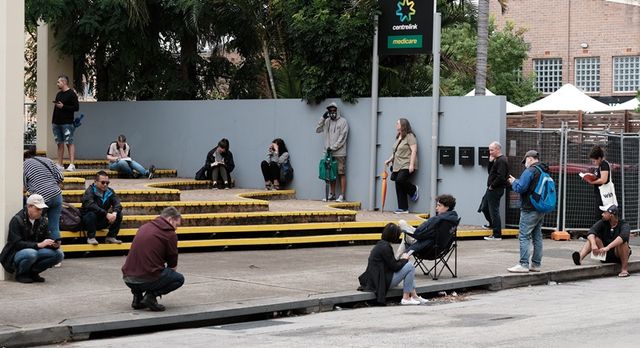
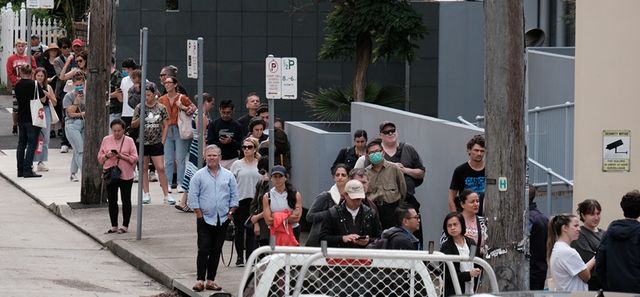
The contempt and indifference of capitalist governments toward the working class is being graphically displayed in Australia, with huge queues of jobless workers outside the government’s Centrelink welfare offices across the country.
In scenes not seen since the mass unemployment of the Great Depression of the 1930s, workers who have lost their livelihoods due to the criminally inadequate response of governments to the COVID-19 pandemic are being further exposed to unsafe and dangerous conditions as they wait for hours to try to lodge welfare claims.
Yesterday, lines of up to 200 metres snaked around entire city and suburban blocks. From 4.30 am today, well before dawn, the scenes were repeated.
As the number of officially-recorded coronavirus infections in Australia spiraled toward 2,000 today, these queues will only add to the spread, even though people in the lines tried to keep distances between each other. Unless the current rate of infection—which is quadrupling each week—is halted, the total will reach nearly six million people in six weeks.
Part of the queue outside the Centrelink office in the inner-city Sydney suburb of Leichardt
“They are treating us like cattle,” one worker said in a queue at Stones Corner in Brisbane. In fact, even cattle would not be exposed so contemptuously to the obvious danger of infection in such queues, which made a mockery of the “social distancing” measures of the federal and state governments.
Tense moods and angry incidents were reported in many locations. At Redfern in Sydney, people coming out of the Centrelink office reported irate and chaotic scenes inside. At a South Australian office, people left outside were “banging on the door—they weren’t happy,” a worker noted.
Distressed people, many of whom have never applied for welfare before, told reporters they feared losing their homes due to mortgage or rent bills they could no longer pay.
Aware of rising social discontent, the federal and state governments mobilised police and security guards to prevent unrest erupting in the queues, especially when offices close at 5 pm with thousands of people still in the lines.
Typically, the federal government of Prime Minister Scott Morrison arrogantly declared last night that workers did not need to be in the queues because they could lodge “intentions to claim” online. But the government’s MyGov website also crashed yesterday because it exceeded its capacity, said to be 55,000 claims.
According to the government, 95,000 people tried to access MyGov yesterday, about twice what it claimed to have prepared for. But that number is only a small fraction of the hundreds of thousands of workers who have suddenly lost their jobs because of the shutdowns of hospitality and other industries.
Much worse is soon to come as the shutdowns are extended to retail and other “non-essential” industries that employ millions of people. In a sign of what is to come, Michael Hill jewelers today moved to shut its 300 stores indefinitely and sack 2,500 workers.
Behind the scenes, the ruling class is discussing plans for even greater social tensions. “Senior sources” in the banking and the forecasting sectors told Nine Entertainment newspapers that their analysis showed Australia was headed for an unemployment rate of 15 percent or more.
That would mean at least two million jobless, plus many more “under-employed.” During the Great Depression, Australia’s jobless rate exceeded 30 percent, reflecting Australian capitalism’s vulnerability to global breakdowns.
Workers attempting to practice social distancing while waiting to enter Leichardt Centrelink office
The government-ordered shutdowns and related lockdowns have become necessary because of the failure of the same Liberal-National and Labor governments, and the corporate elite they serve, to implement the basic measures that have proven essential globally to curbing the pandemic: mass testing, tracking and quarantining.
Last week, World Health Organisation (WHO) director general Tedros Adhanom Ghebreyesus again warned, as the WHO has done since February, that countries are not testing enough for the virus, likening their approach to “fighting a fire blindfolded.”
For all the governments’ empty claims that its pro-business economic packages would save jobs, employers are ruthlessly laying off workers. Yesterday alone, the Woolworths-owned ALH Group—the country’s biggest pubs, pokies and hotels business—stood down some 8,000 of its 15,000 workforce.
Helloworld Travel stood down 1,300 staff and made another 275 employees redundant. Federal Group, Tasmania’s largest private employer which operates two casinos, hotels and pubs, stood down 1,500 workers.
While governments are allocating billions of dollars to bail out the banks and corporations, workers are bearing the brunt of this historic public health and economic crisis.
The Australian reported that IBISWorld data shows the closure of non-essential services, including pubs, cafes, gyms, cinemas, casinos, amusement parks and zoos, would cost about 300,000 jobs and erase $10 billion in workers’ wages.
The Morrison government initially announced that MyGov crashed because of a malicious “cyber attack.” That scare-mongering claim, like most of the federal and state governments’ messages throughout the pandemic, soon proved to be false.
The truth is that MyGov cannot cope with the demand because, once again, insufficient and unconcerned preparations were made for this human catastrophe. Desperate workers trying to get through to Centrelink by phone experienced impossible delays. Even before this crisis, as many as 55 million phone calls to the government’s Services Australia went unanswered each year.
As with the public hospitals and health services, Centrelink and other government “human services” have been gutted for years by staff and resourcing cuts, as well as the widespread privatisation or outsourcing of essential functions for the benefit of corporate profit-making.
Many working class households have no choice but to join physical queues. According to an Australian Council of Social Services advisory issued yesterday, “many people do not have a phone line or enough phone credit,” “about 2.6 million people do not use the internet” and “1.3 million households don’t even have access to the internet.”
This reflects the growing social divide between the wealthy elite and the rest of the population, including the most impoverished and vulnerable members of the working class.
As for the “supercharged welfare net” proclaimed by Morrison, the promised doubling of jobless and related benefits to a still poverty-line $1,100 a fortnight will not commence until late April.
The estimated 650,000 New Zealand citizens living in Australia, often settled in the country for many years, are not even entitled to any payments. Since 2001, they have been classified as “non-protected special category visa-holders.” Nearly 50,000 people have so far signed a petition calling for benefit eligibility.
They are among 2.4 million temporary visa holders in Australia, mostly workers, students and refugees, who cannot leave the country because of travel restrictions and who have none or very limited welfare entitlements.
Several further developments highlighted the governments’ cover-up of their lack of preparation for this predictable disaster.
The acute shortage of testing kits, which has led to tests being strictly restricted, was laid bare yesterday when a Melbourne-based company, MD Solutions, secured Therapeutic Goods Administration approval to import about 500,000 kits. But they will not arrive for at least a fortnight.
Health Minister Greg Hunt admitted in parliament yesterday that millions of face masks, which the Morrison government had promised on March 8, were diverted to another country. That is because of a global shortage and a scramble by other unprepared governments for supplies.
On March 8, Hunt had issued a media release claiming that obtaining the face masks showed that the Morrison government was “ahead of the curve,” adding: “Our approach puts the health and well-being of all Australians at the forefront of everything we are doing to deal with this evolving health crisis.”
Exactly the opposite is true. Everything the Liberal-National and Labor governments do is geared to the profit interests of the corporate giants. On top of allowing cruise ship companies to offload thousands of infected or potentially infected passengers, these governments are permitting airports to push planeloads of passengers arriving from overseas out into society without health checks.
An Australian correspondent who returned on the weekend reported: “At the airport, there were few precautions taken to prevent the spread of coronavirus: no small group checking for symptoms, no thermal scanning of passengers, no individual temperature checks and little questioning by Australian Border Force staff…
“Like hundreds of other passengers, we compulsorily exited through duty free. There were no restrictions on handling alcohol, perfume, chocolate bars, clothing or kids’ toys. The staff there were friendly and eager to make a sale.”
These revelations show the burning necessity to transform all these basic industries into publicly-owned and democratically-controlled organisations, in order to produce urgently required medical equipment and protect the lives of millions of people. That will happen only through the industrial and political mobilisation of the working class on the basis of a socialist program.

Risk of wider outbreak of COVID-19 remains high in South Korea

Ben McGrath

South Korea’s response to the global COVID-19 pandemic is being hailed as a success story when compared to the United States and Europe, which have both seen skyrocketing numbers of cases. As of Monday, there were 8,961 confirmed cases of COVID-19 in South Korea, with 64 new cases from the previous day. At least 111 people have passed away from the disease.
As the number of cases falls from a daily peak of 909 on February 29, health officials are turning their attention to preventing new outbreak centers. On Sunday, Seoul began testing travelers arriving from Europe and requiring all, even those who test negative, to quarantine themselves for 14 days. Forty-seven confirmed cases have come from travelers arriving from overseas.
Despite the seeming successes, the public health risk has not yet receded. Yun Tae-ho, a senior official in the Health Ministry, warned on Saturday against complacency. He said: “COVID-19 is spreading at an alarming rate around the world, and we are seeing sporadic mass infections. Considering COVID-19’s nature of high infection rate and fast spread, it is highly possible for the coronavirus epidemic to continue for a substantial period of time.”
A major reason for concern is that much of the government’s attention has been focused on Daegu and neighboring North Gyeongsang Province, the epicenter of the outbreak in the country. Last week, Dr. Kim U-ju, an expert on infectious disease at Korea University Guro Hospital, warned: “Serial group infections are occurring from confirmed patients linked to [a] call center in Guro. We’ve been looking into Shincheonji cases [in Daegu] only because the issue was so big. But I think other local communities are already having group infections, just as the call center showed.”
Kim was quoted on Monday, saying: “While it appears we have reached the boiling point, we must now be concerned about community transmission because we don’t know if there will be an explosive growth even from a small-scale group infection.”
The number of cases of COVID-19 initially remained low through mid-February, until a member of the Shincheonji cult in Daegu was confirmed to be infected. The secretive nature of the cult and its religious superstitions led to rapid community transmission. Widespread testing was then carried out, with 338,036 people receiving a test as of Monday.
On Saturday, Prime Minister Jeong Se-gyun announced that businesses in the entertainment industry, indoor gyms, and religious facilities should close for two weeks to stem the spread of COVID-19. The government also advised people not to go outdoors during this period unless it is an emergency. On Monday, Jeong announced the government would take legal action against the churches who continued to violate the quarantine measures the previous day.
The seriousness with which the government appears to be taking “social distancing” measures and their violations is at odds with the fact that workers are still being kept on the job, told only to stand two meters apart from other people, wear masks, and to head directly home after work. The inadequacy of these measures is already apparent from an outbreak of COVID-19 at a call center in Seoul’s Guro district.
After the first employee from the call center tested positive for the virus on March 8, there have been 152 cases linked to that workplace. With many workers using often packed public transportation, there is a risk that numerous people in Seoul could now be infected without their knowledge and spreading the disease. As of Sunday, the capital, nearby Incheon, and the surrounding Gyeonggi Province, with combined population of nearly 25 million people, have seen a combined 721 cases.
While public schools have been closed until April 5, many for-profit after-school academies, called hagwons, remain open, exposing students, teachers, and staff to greater risk. There are 86,435 hagwons in South Korea, providing tutoring services in math, English, and other subjects. The majority are operating, despite officials like Seoul Superintendent of Education Jo Hui-yeon saying, that closures were “not a choice but a must in order to protect public health.”
An investigation into the conditions in these schools has not even been conducted. Yonhap News Agency wrote Sunday: “The Education Ministry plans to conduct an investigation into the conditions surrounding hagwons attending by children and students while also looking into the activities of public facilities students often visit.”
Workers are being forced into dangerous situations amid fears of the pandemic’s impact on the economy. “We cannot rule out the possibility of negative growth (during the first quarter), given the impact of the virus on private spending, investment and exports,” said Finance Minister Hong Nam-gi on Friday. Last year, the economy grew at only 2 percent, the lowest in ten years. JPMorgan is now predicting annual growth of only 0.8 percent.
Last Thursday, Seoul and Washington agreed to a currency swap deal worth $US60 billion dollars after the country’s main stock index, the KOSPI, fell by 11 percent. It rebounded 7 percent following the deal. Seoul also announced a supplementary budget last week worth 11.7 trillion won ($US9.2 billion) and an addition 50 trillion ($US39.2 billion) that President Moon Jae-in claimed would support small businesses, though the money will be funneled into the pockets of banks and the wealthy.
Workers must also be warned that part of the reason for the seeming success of South Korea’s response to COVID-19 is due to police state measures in place, the framework of which was erected by the United States and Syngman Rhee following the division of the Korean Peninsula in 1945 and strengthened by thirty years of military dictatorship following Park Chung-hee’s coup in 1961. This scaffolding has never been torn down.
South Korea has relied on CCTV cameras, while tracking people’s bank cards and cell phones in order to determine who to test. In the hands of the capitalist state, this type of technology can and will be abused to muzzle social discontent, particularly as the economy declines. The deprivation of democratic rights makes it all the more clear that the tools used to tackle the COVID-19 pandemic and future crises must be in the hands of the working class.

US officials use economic fallout from pandemic to slash school funding

Phyllis Steele & Jerry White

At least 46 states and the District of Columbia in the United States have completely closed schools due to the spread of the COVID-19 pandemic, affecting 54.5 million students. While the closures are necessary to slow the spread of the deadly disease, students are suffering from the loss of social interaction and access to counselors, nurses and a consistent food supply.
Some 22 million low-income students receive free or reduced cost breakfasts, lunches and in some cases dinners during the school year through a federal program run by the US Department of Agriculture. The school meals are the second largest federal anti-hunger program behind the government’s food stamp program, the Supplemental Nutrition Assistance Program or SNAP.
A recent survey of directors of meal programs by the School Nutrition Association indicates that over 90 percent are concerned about students missing meals during the school closures. They are also concerned about the financial impact on their meal programs, which depend on cafeteria sales. Government reimbursements for the recorded number of students will be more difficult to collect during the closures.
Due to the school closures and lockdown orders, the country’s three largest districts in the US—New York City, Los Angeles and Chicago—along with urban and rural districts across the country have been forced to improvise using whatever resources are available to distribute meals as well as learning packets.
In New York City, with 1.1 million students, parents are being directed to 400 centers where they can pick up three meals from 7:30 a.m. to 1:30 p.m. Roughly three-quarters of New York’s students qualify for free or reduced price school breakfasts and lunches.
A public school educator from the New York City borough of Queens told the World Socialist Web Site, “Some schools haven’t even been able to figure out how to contact a significant percentage of the kids, never mind support those who are in real need, with their parents quarantined and losing their jobs.
“They had their ‘training’ of teachers last week that provided just one more example of the unpreparedness and really the backward character of the educational system in terms of tech. They have been focusing so much on assessing teachers based on an unrealistic standard, downsizing in every area and forcing principals to rate low that they didn’t bother training people to bring them up to current levels of tech proficiency. Now they say they are going to distribute 300,000 laptops.
“Why wasn’t there funding for that before? They’ve left teachers, schools, kids and families in overcrowded, run-down buildings, cramming 34 kids in a room.”
Districts are implementing e-learning programs that are chaotic and unprepared. Students will struggle to receive the online instruction because of the impact of social inequality, including access to computers and an internet connection. Where there are restrictions against social gathering, students will not be able to go to libraries or fast food restaurants to access a Wi-Fi network. In addition, students with special needs will not be able to get instruction from trained special education teachers.
A teacher in Kingston, about 100 miles north of New York City, said there is a lack of ChromeBooks to continue coordinated educational programs, and younger students are not being prioritized. Her class is primarily immigrants, and she has been actively speaking with struggling parents, some of whom are not citizens and/or single, who have to continue working, making it very difficult to find childcare and prioritize their child’s education.
The Trump administration and the Democratic Party have been focused on propping up the stock market and giant corporations with trillions of dollars, leaving teachers, parents and children to scramble with scarce resources. Last week, the Centers for Disease Control and Prevention (CDC) abruptly cancelled an online briefing with school superintendents, leading the head of the School Superintendents Association to say superintendents are feeling “total confusion" over conflicting statements from the administration.
This is not simply a matter of confusion, however. Plans are already being made to exploit the crisis in order to implement even deeper cuts to public education, while diverting more public resources to for-profit charter schools, “public-private partnerships,” e-learning businesses and other privatization schemes.
The 2008-09 crisis led to a sharp reduction in federal and state funding and the loss of 351,000 jobs in education by mid-2012 while student attendance rose by 1,419,000. According to an analysis by the Center on Budget and Policy Priorities, some of the jobs have been restored, but there is still a deficit of 135,000 school employees compared to 2008. The Obama administration used the financial crisis to goad cash-strapped school districts to lift the cap on charter schools and impose merit pay and punitive teacher accountability schemes, which punished teachers for educational problems caused by higher levels of poverty and decades of austerity.
Last week, Education Week published an article titled, “Districts Brace for Crash in State K-12 Revenue Due to Coronavirus,” which detailed plans being made to cut school district funding, particularly districts with low property values and tax revenues that are least able to afford it. “School districts should brace for a precipitous drop in state K-12 aid next year because of the coronavirus’s widespread impact on the economy—and they should start preparing now, funding experts warn,” the article states.
One school funding consultant told Education Week, “For districts, this is going to be a double whammy. There’s uncertainty on the revenue side as far as how much state aid districts are going to get … and, on the expense side, we’ve got to figure out how to respond to this new world. Districts need to begin planning for a new reality.”
State governments have already begun slash spending and reneging on pay raises promised to teachers after the wave of strikes over the last two years by more than 700,000 educators demanding wage increases and the restoration of state school spending to pre-2008 levels.
Last week, the Kentucky state Senate passed a budget bill that will withhold $1.3 billion from teacher pension funding unless the unions agree to cut retirement benefits for newly hired teachers. Protesting teachers were not allowed in the capitol because of coronavirus restrictions on large gatherings.
In Tennessee last week, Republican Governor Bill Lee cut in half the amount of money he wants to set aside for teacher pay raises and then got rid of a $250 million proposal to provide mental health services in schools. He instead set aside that money in the state’s “emergency fund,” Education Week reported.
“Maryland’s legislature, which raced to approve legislation this week before adjourning its session early, added a clause to an ambitious school funding overhaul that would pull all new funding in the case of a recession.” In Wisconsin a plan to spend more on special education was shelved.
Districts are also incurring large unexpected costs by delivering meals to students, setting up makeshift child-care centers, and purchasing distance learning materials for students, the article notes. In addition, costs are expected to rise next year when students, many emotionally traumatized and behind academically, return to school.
“Any substitute teacher or transportation savings districts might gain by shaving off weeks or months off the school year will be outstripped by new intervention and counseling costs, experts warn,” the article notes. “States are going to take a massive hit,” predicted Marguerite Roza, a Georgetown University school finance expert. “School districts will be fine through the end of the school year. But next year is going to be a come-to-Jesus moment.”
Like they did after the global financial crash in 2008, the teacher unions will collaborate in the new and far deeper attacks on teachers and public education that are coming. That is why educators and all sections of workers have to take up a struggle against the plans of the corporate and financial elite to exploit the crisis to funnel even more money into their bank accounts and instead take up the fight for a program that defends the interests of the working class.
In its statement “How to Fight the COVID-19 Pandemic: A Program for the Working Class,” the Socialist Equality Party calls for free and universal testing, immediate and cost-free treatment for all those infected, an emergency program to expand the healthcare infrastructure, the immediate closure of all schools, nonessential plants and workplaces, with full income for workers affected. We urge all educators who agree with this program to join the Socialist Equality Party and take up the fight for socialism.

Palestinians face humanitarian catastrophe from coronavirus

Jean Shaoul

Health authorities confirmed the first two cases of the coronavirus in Gaza this weekend—citizens who had returned from Pakistan and entered Gaza via Egypt.
The arrival of the coronavirus in one of the most densely populated places on earth heralds a humanitarian catastrophe not just for the Palestinians in the Gaza Strip, but people all over the world who face similar atrocious living conditions and a lack of healthcare.
While hundreds of Gazans have returned home in the past two weeks, just 92 people have been tested, due to lack of test kits, suggesting that the number of cases is far higher. More than 1,270 people are in quarantine in hospitals, hotels and schools after crossing into Gaza from Israel and Egypt.
Two weeks ago, Hamas, the bourgeois clerical group that controls Gaza, closed schools and sent in sanitation crews to patrol the streets and public buildings and spray disinfectant. On Friday, it ordered the shuttering of weekly street markets and wedding halls and closed its borders, saying only patients requiring urgent medical treatment outside Gaza would be allowed to cross into Egypt or Israel.
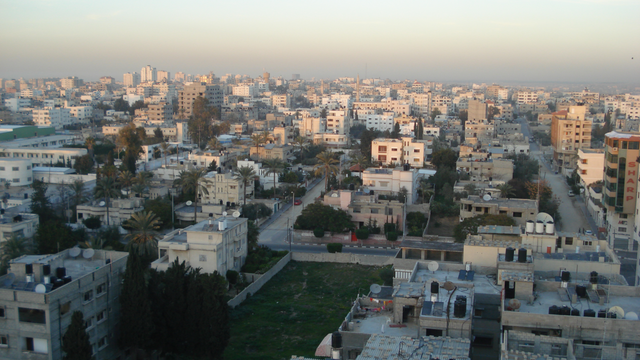
View of Gaza (Photo: wikipedia.org)
Israel said it was its closing borders with Gaza and the occupied West Bank to commercial traffic, though some patients and humanitarian staff would be allowed to cross. It has sent a derisory 200 coronavirus testing kits to Gaza. Cogat, the Israeli military body that coordinates with the Palestinian Authority, said in a breathtakingly cynical statement, “Viruses and diseases have no borders, and so prevention of an outbreak of the coronavirus in Gaza [and the West Bank] are a prime Israeli interest.”
This foreseeable and foreseen disaster comes after Israel’s 13-year-long siege that has rendered Gaza almost uninhabitable, due extreme overcrowding, collapsed infrastructure, lack of electricity and water, poor sanitary conditions and the gutting of an already limited healthcare system. There is a chronic shortage of drugs, and Gaza’s barely functioning hospitals have struggled to cope with the thousands of horrendous injuries and amputations inflicted on Palestinians by Israel’s armed forces during the weekly “Great March of Return” that started two years ago.
Palestinians in Gaza, living in squalid makeshift camps and slums, have no possibility of either controlling the spread of the virus or accessing medical treatment and supplies. According to Abdelnasser Soboh, director of the World Health Organization’s (WHO) Gaza office, Gaza has only 62 ventilators, with all but 15 already in use, and needs at least another 100. He believes that Gaza’s hospitals can only handle the first 100 cases, if they come in gradually.
It is a death sentence for thousands, if not hundreds of thousands, of Gaza’s nearly two million inhabitants. Israel is, as the occupier of Gaza and the West Bank, under the Hague Convention (1907) and the Fourth Geneva Convention (1949) legally responsible for the safety and welfare of civilian residents, a responsibility Israel denies.
The Palestinian Authority (PA), which governs parts of the West Bank, has reported 59 cases, mostly in Bethlehem, including 17 who recovered. It announced a 14-day curfew, ordering everyone except the security forces, medical staff and food sellers to stay at home and closing roads between cities, towns and villages. Bethlehem has already been under lockdown for weeks. Prisoners who had served half of their sentence for criminal offences were given a pardon and released to reduce the numbers in Palestinian jails.
Despite the severity of the situation, Israel sent just 100 testing kits for the coronavirus to Ramallah.
The situation is no less dire for Palestinians throughout the region. In Israel, where 20 percent of the population are Palestinian, health authorities have confirmed that 1,071 people have tested positive for the coronavirus, one patient has died and 18 are in serious condition.
With healthcare facilities decimated by decades of cuts and unable to cope, the caretaker government of Prime Minister Benjamin Netanyahu has ordered people not to leave their homes other than to go to work, shop for groceries or seek medical care and closed schools, universities and cultural and leisure facilities. It has banned gatherings of more than 10 people and entry to foreigners unless can prove they are able to self-quarantine for 14 days upon their arrival.
In neighbouring Jordan, which hosts one of the largest refugee populations—from Palestine, Iraq and Syria—per capita in the world, some 70 percent of the 9.7 million population is of Palestinian origin, with 3.2 million Palestinians registered as refugees. There are also at least 650,000 registered Syrian refugees, more than half of whom live in the squalid camps in Za'atari, Marjeeb al-Fahood, Cyber City and Al-Azraq, with at least another one million unregistered Syrians living in the country.
Amman has confirmed that 69 people have tested positive for the virus. On Tuesday, with Jordan’s already feeble economy in free-fall and healthcare facilities incapable of dealing with the virus, there was rioting at a prison in Irbid where two people were killed after visits were banned, King Abdullah signed an emergency law giving the government sweeping powers.
The government announced a nationwide, round-the-clock curfew, in from Saturday, closing schools, universities, leisure centres and workplaces, except for essential services, sealing the country’s borders and banning movement except for emergencies, saying, “The government will announce on Tuesday 24 March certain times when citizens will be allowed to run errands.” Those requiring urgent medical treatment would have to notify security authorities. Some 400 people have already been arrested for ignoring the curfew and face up to a year in jail.
In Lebanon, 10 percent of its 6.8 million population are of Palestinian origin, with most registered as refugees. They have long been denied basic rights—not allowed to attend public schools, work in a number of professions such as doctors and lawyers, own property or pass on inheritances.
The health authorities have reported 230 cases and four deaths in a country whose healthcare system lacks the most basic facilities. Only one hospital in the country is equipped with specialised isolation rooms compliant with international standards.
The pandemic comes amid Lebanon’s default on its $30 billion Eurobond and declaration that it needs its foreign currency reserves for key imports. Last week, the shaky new government of Hassan Diab, formed after protests brought down the government of Saad Hariri, announced a “state of medical emergency,” closing all public and private institutions except hospitals, pharmacies and bakeries, with supermarkets only open at specific times, in an effort to contain the coronavirus outbreak. The banks are closed until March 29.
On Saturday, after the government called in the army to enforce the stay at home orders, patrols drove through the streets of Beirut ordering groups of people to disperse, while army helicopters flew over other parts of the country calling out on loud speakers for those out on the streets to return home.
On Sunday, Syria, where there were 650,000 Palestinians before the nine-year proxy war to topple President Bashar al-Assad, confirmed its first case of the coronavirus. Damascus announced a ban on public transport and stepped up the lockdown introduced a few days ago that included the closure of schools, parks, restaurants and many public institutions. It has called off army conscription, issued a prisoner amnesty and ordered bakeries to close their stalls and deliver to customers at home.
A few weeks ago, a WHO spokesperson warned that Syria’s “fragile health systems may not have the capacity to detect and respond” to the pandemic. This is particularly the case in the crowded camps for tens of thousands of displaced Syrians.
The situation is no better in the rest of the Middle East and North Africa, where in country after country—Iraq, Libya, Yemen, Sudan, Syria and Iran—healthcare systems have been ravaged by years of wars and/or sanctions, orchestrated by US imperialism. Their plight foreshadows what is to come in the poorest countries of the world, where as many as one billion people, one seventh of the world’s population, live in squalid, makeshift shacks, without proper sanitation or access to clean water, basic services and healthcare.

Germany: Appalling lack of protective equipment in COVID-19 outbreak

Markus Salzmann

The German government and the European Central Bank are pumping hundreds of billions of euros into the accounts of corporations and banks to protect them from the economic consequences of the COVID-19 pandemic. But when it comes to protecting the health of the population, government action is marked by criminal irresponsibility.
In Germany, for example, it is still virtually impossible to be tested for the life-threatening virus unless you can prove that you have been in a crisis area or have had contact with someone who is already infected. Even people with symptoms of the disease are refused tests.
The irresponsibility of the government is also shown by the lack of enough protective masks and other urgently needed equipment. Although doctors’ representatives and suppliers of protective clothing had warned of this weeks ago, the federal government reacted with ignorance and inaction. Now, the masks are becoming scarce in clinics, doctors’ offices and medical services—with fatal consequences for the fight against COVID-19.
As Walter Plassmann, head of the Association of Statutory Health Insurance Physicians, explained last Tuesday, the federal government had promised to help with the procurement of protective equipment. In fact, nothing had happened. “We did not get a single mask,” news magazine Der Spiegel quotes Plassmann, who warned, “If we run out of protective equipment, we are finished.”
Achim Theiler, the managing director of a company that produces and sells hygienic clothing, mouthguards and respirators for hospitals and doctors, told Der Spiegel that the federal Ministry of Health had been ignoring the warnings of manufacturers and suppliers for weeks.
“We have issued warnings, and nobody has heard us,” said Theiler. “This is gross negligence and unnecessarily aggravates the crisis.” On February 5, he had contacted federal Health Minister Jens Spahn (Christian Democratic Union, CDU) by email and vigorously urged him to reserve the corresponding quantities, as Germany was threatened with a dramatic shortage. “I appeal to you not to underestimate the problem of this virus,” Theiler wrote.
On February 10, Theiler contacted the health ministry again and referred to an official announcement by the World Health Organisation (WHO) that there was a threat of a shortage of protective equipment worldwide, especially respiratory masks. At the time, Der Spiegel had also reported on supply problems in Germany. Theiler requested that this information be passed on immediately to the appropriate authorities. “Nobody reacted,” he was forced to conclude.
Several doctors, such as the head of a Munich clinic, Axel Fischer, also complained that the federal and state governments had not acted despite the anticipated problems. It is known that around 97 percent of the world market production of face masks is located in China, whose government imposed an export ban on products of this type in January.
Although the number of infected and sick people is still rising rapidly, supply bottlenecks are already occurring, as clinics in particular generally hold only a small number of stocks for cost reasons.
Without adequate protective equipment, doctors and nursing staff are exposed to a high risk of infection. In the event of an infection, the doctor or employee in question is then absent, which further exacerbates an already strained situation. Moreover, there is a risk of the virus being transmitted to patients, i.e., sick and vulnerable people. This means that patient care is not possible without protective clothing. “Then we will have to close the hospital,” Elmar Wagenbach, head of Eschweiler hospital, told Der Spiegel.
The limited supplies are already largely used up. Should requested deliveries not arrive, they would run out in Hamburg at the weekend, KV boss Plassmann explained.
The hospital association in North Rhine-Westphalia sounded the alarm that in the state with the most COVID-19 cases, most hospitals only had protective material for about 14 days. In clinics, staff are often instructed to use only one mask per day, or the mask—which is designed as a disposable product—is used several times.
The situation in doctors’ surgeries is similarly dramatic. Here, too, there is an acute shortage. Even weeks ago, masks, protective clothing and disinfectants were no longer available. In some cases, family doctors bought breathing masks from the DIY store at their own expense, which are normally used by painters. According to a survey by the doctors’ news service, more than 80 percent of doctors in private practice are already complaining about a lack of protective equipment and are considering closing their practice.
If material can be ordered and delivered, then it is only at horrendous prices. While face masks normally cost between 50 and 80 cents per piece, up to 20 euros are now being charged. After large quantities of disinfectants and protective material have been stolen from clinics for fear of the virus, they now have to be kept under lock and key or guarded by security personnel.
The lack of urgently needed material is not limited to face masks and disinfectants. There are also increasing shortages of respirators, oxygen and medication.
Important drugs needed for intensive care are also becoming scarce and their price is rising. The anaesthetic propofol is no longer available in sufficient quantities and the price per ampoule has increased twenty-fold in the last few days. The WHO warned over a week ago of a shortage of medical equipment to combat the coronavirus pandemic.
The statement by Health Minister Spahn that Germany is well prepared for an outbreak of COVID-19 turns out to be a brazen lie. Serious deficiencies are already evident in every area of the health system. COVID-19 tests, which in any case are not being carried out nationwide, cannot be carried out systematically due to the strain on doctors and health authorities. In the last 20 years, about one third of physician posts in the public health authorities have been cut, while pay is significantly lower than can be earned in a private clinic.
The staffing situation in German clinics and nursing homes was already catastrophic before the outbreak of the pandemic; 17,000 vacancies currently exist in nursing care. Poor pay and even worse working conditions are the main reasons for this. In addition, there has been a massive reduction in hospital beds in recent years. If the situation in Germany follows that in Italy, there would be nowhere near enough intensive care beds in the country.
This catastrophic position makes clear where privatisation, profit gouging, austerity measures and a market-focused orientation have led in the health care system. In order to combat the pandemic, substantial funds must be made available immediately to provide the material and staffing required in all clinics and medical facilities. The profit orientation in the health care system must be ended immediately and be replaced by a planned orientation toward the needs of society.