25 Mar 2020

Chilean government seizes on COVID-19 pandemic to declare state of catastrophe

Mauricio Saavedra

The ultra-right government of billionaire Sebastian Piñera has seized on the COVID-19 pandemic to put the Armed Forces on to the streets of Chile and place the country under curfew. With the support of Congress, the government has imposed a State of Catastrophe charging the military brass with dispensing supplies and provisions and maintaining “public order.” Far from motivated by the fight against the coronavirus, it is part of a string of laws put into force to militarise the country, which has been rocked by mass anti-capitalist demonstrations, wildcat strikes and student rebellions since late last year.
Drastic measures are required to defeat the highly contagious COVID-19. As of Tuesday, the virus had claimed the lives of more than 17,000 of 400,000 confirmed cases across the planet, and it continues to rise unabated. Scientific studies show that an effective response to a pandemic demands rapid implementation of universal testing along with strict quarantining to slow its spread. Yet virtually no nation has implemented such measures, and least of all Chile.
Long paraded by “free market” charlatans as the country to emulate, Chile is so starved of medical infrastructure and resources that every public hospital lacks the rudimentary equipment and beds to deal with this pandemic, let alone the ventilators and more specialized equipment to save lives.
As the virus has risen exponentially in Chile, with 746 confirmed cases since March 3 and the second fatality reported yesterday, a stream of whistleblowers are exposing a catastrophe in the making. At risk of dismissal or reprimand, distressed health professionals have turned to social media to reveal just how criminally negligent the present administration has been.
One hospital in Punta Arenas has not a single ICU bed. At several other hospitals, nurses and doctors, short of testing kits, gloves and masks are having to make do with improvised personal protective equipment. For example, at San Jose Hospital in the Metropolitan Region medical staff are constructing eye shields because, according to one post, they are not supplied by the government.
A nurse from Guillermo Grant Benavente hospital in the southern regional city of Concepcion anonymously reported that at a briefing she was informed that her hospital was being transformed into an ICU hospital with 1,000 beds to treat critical cases of COVID-19.
“I felt a fear that chilled my soul,” she said “because the only people being tested are critical cases who need to be hospitalised. So that means that we are underreporting. Even the doctors are scared because we don’t have sufficient beds … The epidemiological curve that the ministry is projecting is horrific. In fact, the military head that is in charge of (Concepcion) arrived. The whole hospital is being transformed and they are purchasing (mortuary) bags and with the sanitary authority considering mass graves. This is not auspicious.”
Protecting lives is not in the calculations of the ruling elites, having closed schools and universities only last week but keeping the working class working. Piñera and his asinine Health Minister Jaime Mañalich have stridently rejected calls from thousands of scientists, medics, academics and professionals to implement national quarantining measures and conduct mass testing. Mañalich has gone so far as to defy the theory of natural selection, declaring that the coronavirus “could mutate into a benign virus similar to the common cold.” In other words, nothing to fear here, go back to sleep. Such is the grotesque level of incompetence, indifference and negligence.
Thousands have been laid off in every area including mining due to falling demand from China, Chile’s main buyer. Those workers who remain are forced to work with minimal or no personal protection. One miner posted “What’s to happen to those who work in the mines, where we share toilets, showers and change rooms, where up to 1,000 men eat in the same canteen…? Enough of the abuse! We also have families. We can also take the virus home and infect those around us. Please share (the post) so we close the mines in Chile for 15 days.”
The country’s major airline LATAM has halved employee salaries for three months, ostensibly due to travel restrictions, but in reality, to lay the burden of falling profits on its workforce.
The purpose of the State of Catastrophe is to place the military on the streets and to hand them extraordinary powers that suspend basic rights under conditions where an already radicalized working class and youth have begun to strike to demand measures that will protect its health, safety, security, jobs and ultimately lives. The state is preparing itself for the revolutionary upheavals that will inevitably emerge due to the shock of the catastrophic loss of life. The Chilean ruling class has ample experience in this department.
In the months following the largest demonstrations in its history, the Chilean state unleashed a wave of terror that harkened back to the days of Gen. Augusto Pinochet’s military junta. This was ratcheted up in January when Piñera introduced the “anti-barricade” and “anti-looting” laws to criminalise protests, while at the same time the headquarters of the UDI, the ruling pro-Pinochet party, has been opened to ultra-right and fascist dregs from Revolutionary Capitalism to manufacture weapons. They are then protected by the police when they parade on the streets brandishing these weapons.
Such is the level of state lawlessness that is impossible to differentiate police from fascists. Five cops are now awaiting trial in Puente Alto, a mining town in northern Chile, after security footage caught them brutally bashing an 18-year-old to the point of causing several fractures and puncturing a lung.
The Chilean National Institute of Human Rights confirmed last week that 11,389 demonstrators had been arrested since October 2019, including 1,580 minors and adolescents. Of that total, some 2,146 reported some type of human rights violation including: sexual violence (257), torture or other cruel, inhuman and degrading treatment (617) or excessive use of force (1,272). Some have been held in custody without trial for over four months.
The NIHR reported that it had filed 1,465 legal actions that included 1,234 victims of torture and other cruel, inhuman and degrading treatment, 282 victims of torture with sexual violence and 34 victims of frustrated homicide at the hands of state agents. The NIHR also confirmed that 3,838 demonstrators had received serious injuries, the most of whom suffered bullet wounds to their eyes and limbs from trigger-happy cops.
The State of Exception—a subsection of the State of Catastrophe—stems from the Pinochet dictatorship’s constitution and has remained intact under the so-called left fronts and coalitions that have either formed governments or sat in parliament for over 30 years—the Socialist Party, the Stalinist Communist Party (PC), the Concertacion, the Frente Amplia, the Nueva Mayoría. In fact, PC head Guillermo Teillier tweeted on March 19 when the law came into effect, “I hope that with the Decree of the State of Catastrophe the improvisation will end and that clear, effective and timely measures will be adopted”.
To be clear, the military junta introduced the State of Exception in 1985 in the midst of a wave of social explosions that shook the country following the economic depression of the early 1980s. Based on theories of Nazi jurist Carl Schmitt, power is delegated “totally or partially” to designated heads of the National Defense who assume command of the Armed Forces, Order and Public Safety to ensure “public order and to repair or prevent damage or danger to national security.”
The 13 military heads running the 13 regional zones of the country assume administrative powers of the institutional authorities placed under its jurisdiction. They control entry and exit points and all transit within. They dictate the measures for the protection of the public utility services, and mining industrial and other centres. They order the collection, storage or production of reserves of food, articles or merchandise and determine their distribution.
The military heads determine movement and meetings in public spaces. They “directly give instructions to all officials of the State, its companies or municipalities… with the sole purpose of remedying the effects of the public calamity.” They “disseminate through social media the information necessary to give peace of mind to the population” and “dictate the necessary guidelines and instructions for the maintenance of order in the area.”
The State of Catastrophe is enacted for 90 days, but can be extended indefinitely or decreed indefinitely “if the circumstances that caused” the law to be enacted continue.
This must serve as a warning to the working class. The bourgeoisie and its servants in the so-called left as well as the right, are preparing class war against the working class. The working class must itself prepare by learning the strategic lessons of the past and take matters into its own hands.

Aviation industry laying off thousands during pandemic while seeking bailouts

Steve Filips

Airline executives in the US and internationally are imposing furloughs, layoffs and voluntary unpaid time-off against hundreds of thousands of workers in response to the unprecedented impact of the COVID-19 pandemic on the global airline industry.
Meanwhile, the airline industry is appealing for tens of billions of dollars in bailout money from the federal government. President Trump in a recent statement made clear that his top priority was shoring up the airline’s bottom line, not making whole hundreds of thousands of impacted airline workers and tens of millions of travelers. Bragging that the airline industry had been making “record profits” before the pandemic, Trump added, “We are going to back the airlines 100 percent. It’s not their fault.”
Previously, a reckless, almost delirious optimism colored the thinking of airline executives. “I don’t think we’re ever going to lose money again,” American Airlines CEO Doug Parker said in 2017. “We have an industry that’s going to be profitable in good and bad times.” This past December, Parker expected American, the world’s largest airline with 130,000 employees, to pull down $3 billion in profits per year going forward. Now, industry analysts are considering that American, which has a crushing $34 billion debt burden, may likely go bankrupt for the second time in a decade.
Airport at dusk
In response to the collapse in passenger volumes as much of the world’s population falls under quarantine, and as international travel restrictions eliminate many of the industry’s most lucrative routes, American began flying cargo-only flights this weekend for the first time in decades. The airline has reported that it has cut 75 percent of international and 30 percent of domestic flights to date.
The International Air Transport Association trade association estimated at the beginning of the month that the air travel industry would lose over $113 billion in revenues for the rest of the year due to the coronavirus pandemic. It increased that forecast over the weekend to $200 billion and it is likely to rise further.
Job cuts and layoffs are widespread throughout the aviation industry, including airplane manufacturers. GE Aviation, one of the world’s largest suppliers of aircraft engines, announced on Tuesday they were laying off 10 percent of their US workforce, or 2,600 people.
Ground workers at airports, which include some of the most poorly-paid positions in the industry such as porters and baggage handlers, have been subjected to mass layoffs at major airports. Airport hospitality contractor OTG has laid off 1,200 workers at New York City’s LaGuardia, Kennedy International (JFK) and Newark Liberty airports. Another 2,500 workers employed in cleaning planes, preparing in-flight meals and handling baggage have also been laid off in the New York City area. New York City has become the epicenter of the COVID-19 pandemic in the United States, with roughly half of the country’s confirmed cases in New York state.
Up to a thousand workers at the Philadelphia International Airport are facing unemployment as well.
Terminal workers are lowly paid, earning as little as $10 per hour in some cases, with few if any benefits. But they face some of the greatest risks in the pandemic due to their interaction with large numbers of travelers from all over the world. For OTG workers, this will be compounded by the loss of health insurance and severance pay by the end of the month.
Airlines in the United States are lining up at the trough for a share of the $2 trillion bailout package for American corporations being prepared by Congress. Industry lobby group Airlines for America, in a letter to Congress last Saturday, requested $58 billion in funding, including $29 billion in “payroll protection grants.” Both the House and Senate versions of the bailout bill provide for the $58 billion sum, although there are reportedly differences in the specifics.
Holding the jobs of 750,000 airline workers for ransom, the group, representing ten major US airlines, threatened that they will be “forced to take draconian measures” unless the funds are disbursed “immediately.” However, the letter commits the airlines to avoiding furloughs and layoffs only until September 1 even if these funds are handed over.
“Over the past decade we have reinvested over 73 percent of our operating profits back into our people and product, creating good paying jobs at a rate that has outpaced other sectors,” the letter states. This is a lie. In fact, as has now widely been reported, US airlines spent 96 percent of their cash flow on share buybacks over the last decade. Meanwhile, through a series of mergers and bankruptcies, the industry has shed tens of thousands of jobs, including 167,000 “full-time equivalents” between 2001 and 2010. As of 2019 airline employment in the United States remained 106,000 jobs below 2001 levels.
Delta Airlines, with 91,000 employees, is one of the most profitable of the four major US airlines. Its largest investor is Berkshire Hathaway, the investment firm headed by Warren Buffett, the world’s fourth-richest person with a net worth of $88.9 billion. Buffett could write a check for the entire bailout amount himself and still have $30.9 billion left over, leaving him the 24th-richest person in the world.
Similar state interventions are being taken worldwide. The Italian government announced recently that it would halt privatization of flag carrier Alitalia, which was already facing significant troubles, and re-nationalize the weakened company as it faces bankruptcy. It is expected that the bailout will cost an estimated $670 million. Meanwhile, the airline has asked the Italian government for permission to slash its 11,000 member workforce by 4,000 workers.

Coronavirus spreads across the Balkans

Markus Salzmann

The number of victims affected by the COVID-19 virus is rising rapidly in the countries of Southeast Europe. The rapid spread of the disease throws light in turn on the catastrophic social, economic and political conditions prevailing in the region.
The states of former Yugoslavia and other Balkan countries have tightened up border controls, ordered quarantine for those entering the region from abroad and have imposed a state of emergency in some regions. Such measures, however, have been initiated at far too late a stage and lack any coordination. In addition, the true extent of infections remains unknown. Hardly any tests are carried out in the region and the number of unreported cases must be very large.
Should the COVID-19 pandemic hit Southeast Europe with similar severity as in Italy or Spain, the region’s already dilapidated health care system and social infrastructure would be threatened with collapse. Containing the virus would be virtually impossible.
Last Thursday, Croatia blocked its borders for all traffic. The state had confirmed 361 infections as of Tuesday. Over the course of a week, the number of people infected has increased more than six-fold including the first fatality, an elderly man who died a week ago.
Neighbouring Serbia has registered 249 cases, with three fatalities, and has implemented a general curfew between 8:00 in the evening and 5:00 in the morning. Parliamentary elections planned for late April have been postponed and the European Union has agreed to provide the country with €7.5 million to combat the crisis.
In Bosnia-Herzegovina, the number of cases has risen to 137, with one death. A state of emergency has been declared in both parts of the country.
Up until 8 days ago Montenegro was the last country in Europe to report no COVID-19 infections. Now at least 27 are infected, including two women who returned from the US and Spain, both of whom have tested positive. The state borders have been closed to foreigners and over 1,000 people are currently in quarantine. The state’s total population is just 650,000. The government has also banned all meetings.
A curfew commenced in Albania on Thursday. Most recently 104 infected and 4 deaths were registered there. The disease hotspot is the capital, Tirana, where over half of those infected live.
Twenty-seven cases were declared in Kosovo on Sunday, but due to the state’s run-down public administration this number has little meaning. The majority of the working population have found employment abroad, so the real number affected is likely to be much higher.
In the EU member country Bulgaria, 202 people are infected and three have died from the disease. A state of emergency was declared a week ago. A particularly large number of cases have occurred in Slovenia. The country neighbouring Italy has reported 442 infections and three deaths.
The once relatively well-developed public health systems in the region have been systematically dismantled over the last 30 years. The introduction of the capitalist free market, wars in the former Yugoslavia and the privatizations and austerity policies dictated by the EU as a prerequisite for membership have systematically destroyed social networks. In most countries adequate health care is acutely lacking.
The situation is dramatic. The German taz newspaper writes, “Everything is missing in clinics, not just medication, cleaning agents and, of course, staff. … After Germany refused to export protective clothing and face masks outside the EU, Serbia, Bosnia and Herzegovina, Montenegro, Kosovo, North Macedonia and Albania have been left almost defenceless against the coronavirus epidemic heading their way.”
The New York Times describes a hospital in the Serbian capital of Belgrade, which is one of the city’s “better” hospitals: “With its rundown facade, peeling walls and rooms crammed with metal beds, the downtown Belgrade clinic for infectious diseases has for decades been a symbol of Serbia’s depleted health system that now has to cope with a major virus outbreak.” The newspaper quotes Bane Spasic, a newly admitted patient, who said, “If coronavirus doesn’t kill you, that hospital surely will.”
In recent years, all countries in the region have experienced a massive emigration of young doctors, well-trained nursing staff and other medical personnel. This exodus is due to the starvation wages and catastrophic working conditions in the region. It is estimated that up to 50 percent of all doctors and nurses have migrated, mainly to Western European countries where there is a chronic shortage of doctors and nurses. Serbia recently terminated a deal the country struck with Germany to prevent the further migration of nursing staff.
Now retired doctors, who themselves belong to the main group at risk, along with medical students, are being mobilized to maintain health systems. Bulgaria has increased the monthly salary for health care workers by €500. In Albania, where the average salary is around €400, the government has pledged an increase of €1,000. The right-wing government in Serbia led by Aleksandar Vucic also announced a 10 percent wage increase. In all these countries there have been repeated strikes and protests for increased wages in the health care system. These protests in recent years have been ignored and suppressed by respective governments.
In Slovenia, an organisation of young doctors has drawn attention to the precarious situation in the country. According to their calculations, the small state between the Alps and the Adriatic Sea will probably need 500 intensive care beds by mid-April. There are currently just 200 available, which are fully occupied with existing emergency cases.
The Croatian Association of Hospital Physicians declared last Friday that health care facilities in Croatia were under-equipped for a COVID-19 epidemic. According to the organisation, there is an acute shortage of protective equipment, medical supplies and staff, endangering health workers, patients and the entire health care system.
In Bosnia, the head of a Sarajevo clinic, Zlatko Kravic, told the AFP that the country was expecting an “explosion” of the infection that would be “difficult to control.” The two clinics in the capital are not prepared for such a situation. Only 70 respiratory masks are available in both facilities.
The right-wing, generally despised governments in the region have responded to the outbreak of the epidemic with a series of uncoordinated measures. In the former Yugoslavia, the various governments are at loggerheads with one another. Conflicts between Serbia and Croatia, Albania and Kosovo—and between the rival regions of Bosnia—dominate political life. Under these conditions, coordinated measures in the densely populated region are rendered impossible, let alone mutual support that could curb the spread of the virus.
Instead, governments are trying to divert attention from their own responsibility for the crisis with racist campaigns. In Bulgaria the health system has been completely run down and a large part of the population lives in poverty and misery. Under these conditions the government is stepping up its campaign against the Roma minority in the country on the pretext of fighting the coronavirus.
“In some parts of Bulgaria, tens of thousands of Roma are already subjected to measures reminiscent of martial law,” commented the Euractiv website. Special measures apply to entire districts in Nowa Sagora, Kazanlak and Sliven, which have a total of more than 50,000 Roma. Residents are prevented from leaving the area by massive police force.
The government headed by the conservative GERB of Prime Minister Boyko Borissov is following the orders of its fascist coalition partner VMRO, which is demanding the complete isolation of all citizens who lack “discipline.” As is the case throughout Eastern Europe, the Roma in Bulgaria live under catastrophic conditions. They have no, or only an inadequate, water supply, some have no sewage system and no food supply. If the virus appears here, it will spread unhindered.
The criminal political elites in Southeast Europe are also using the crisis to intensify attacks on the working population. In Croatia, far-right-winger Miroslav Škoro, who won 24 percent of the vote in the presidential election at the end of last year and was supported by several right-wing and conservative parties, has proposed that all employees only be paid the minimum wage in order to support the economy. The minimum wage in Croatia is around €500 per month.

Boris Johnson’s coronavirus measures: Political criminality that will cost tens of thousands of lives

Chris Marsden

“Without a huge national effort to halt the growth of this virus, there will come a moment when no health service in the world could possibly cope; because there won’t be enough ventilators, enough intensive care beds, enough doctors and nurses,” Conservative Prime Minister Boris Johnson declared Monday.
A massive audience of 27 million watched his address to the nation live on TV. Factoring in internet viewing platforms, it will likely be the most-watched broadcast in British history. But for those millions seeking guidance from the government, the message was one of calculated contempt.
If “too many people become seriously unwell at one time, the NHS [National Health Service] will be unable to handle it—meaning more people are likely to die, not just from Coronavirus but from other illnesses as well,” Johnson said. Therefore, to slow the disease he offered the “British people a very simple instruction—you must stay at home.”
A lockdown was now in place, to be enforced by the police. Aside from this repressive measure, nothing else was on offer.
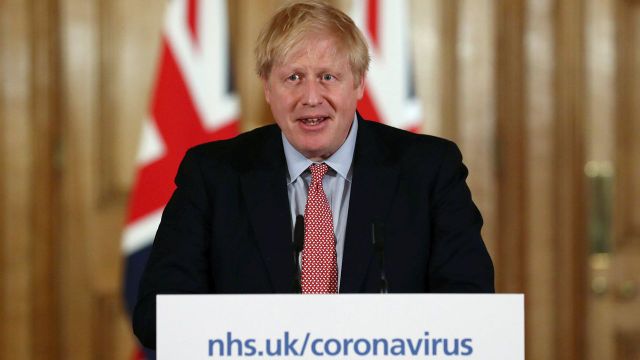
Britain's Prime Minister Boris Johnson holds a news conference giving the government's response to the new COVID-19 coronavirus outbreak, at Downing Street in London, Thursday March 12, 2020. (Simon Dawson/Pool via AP)
And when the caveats were piled up on Johnson’s “simple instruction,” it became clear that millions of workers would have no possibility of staying at home.
At the end of a list of reasons to leave home, including shopping for necessities, limited exercise and providing care to a vulnerable person, came “travelling to and from work, but only where this is absolutely necessary and cannot be done from home.”
Yesterday’s newspapers and TV were dominated by pictures of platforms and tube trains in London full to overflowing, as millions of workers were forced to travel on a much-reduced service. They included nurses and other medical staff who risk infection, but also workers in construction, food production, retail, local and central government employees and delivery services. The list of exemptions for shop workers includes supermarkets, grocery shops, newsagents, pharmacies, petrol stations, garages, pet shops and banks.
Workers who refuse to work can be sacked. Others are self-employed and will get nothing if they do not work. This includes construction workers employed by major concerns, only some of which suspended operations after a public outcry yesterday.
Johnson’s measures are necessary, given that every person infected with COVID-19 likely infects 2.5 people—meaning that after a month 406 people have the virus. Cutting exposure by 50 percent, to 1.25 people, reduces this monthly total to 15 and by 75 percent to 2.5 people. But his claim that “the critical thing we must do is stop the disease spreading between households” is false, given that most infections occur within households.
The only way the spread of the disease can be properly combatted is if a rigorous programme of isolation is matched with a testing regime to establish who has the disease at the earliest opportunity—as is the case in China, South Korea and Singapore, where temperature tests are carried out everywhere at the beginning of a regime leading up to sputum swabs and lab analysis.
Johnson boasted that “Day by day we are strengthening our amazing NHS,” including “increasing our stocks of equipment” and “buying millions of testing kits that will enable us to turn the tide on this invisible killer.” But the reality behind such pledges to “ramp up” COVID-19 testing from 4,000 a day to 25,000 was laid bare by internal government documents leaked to Politico.
An email sent by a “senior Downing Street aide” Sunday afternoon to UK research institutes asked to borrow COVID-19 lab testing kits because “There is only a limited supply of these machines so the PM [prime minister] is making an urgent appeal for you to lend us your machine(s) for the duration of the crisis.” An attached letter from Johnson admits “there are no machines available to buy,” adding that “if you have any staff who are experienced in using the machines … that would also be very helpful.”
As of yesterday, just 90,436 people have been tested, with only 280 people involved in laboratory testing in the entire UK. Even now, not even medical staff are being tested, despite being most at risk themselves and most likely to spread the virus to others. The situation is made worse still by the absence of ventilators—talks only began last week with manufacturers on switching production—as well as proper full FFP3 respirator masks and other essential Personal Protective Equipment, including surgical gowns.
This underscores the statement by Hans Henri Kluge, director for the World Health Organization (WHO) in Europe, insisting that “The shortage of medical supplies can be never solved by market dynamics only…” But it also exposes the impact of decades of systematic underfunding and running down of Johnson’s “amazing NHS” by his and previous governments, Conservative and Labour, as they sought to gut social spending and encourage private medicine.
Writing in the Guardian, Devi Sridhar, chair of global health at the University of Edinburgh, provides a devastating condemnation of what Johnson’s government has done and not done, stating bluntly that this will “cost many thousands of lives.”
After detailing the unfolding of the coronavirus crisis since, Sridhar stressed: “In the UK we have had nine weeks to listen, learn and prepare. We have had nine weeks to run outbreak simulations, set up supply chains to ensure sufficient personal protective equipment (PPE) and ventilators, and bring about the availability of rapid, cheap tests. We have had nine weeks to establish algorithms to support contact tracing, and start mass awareness campaigns not only about hand-washing, but about the risks that the virus would pose to social and economic activity if not taken seriously by all.”
Instead, Johnson pursued a policy of allowing the spread of the disease as part of a declared strategy of developing “herd immunity.” Only when faced with a backlash at plans to allow hundreds of thousands to die did he carry out his limited U-turn, closing schools, pubs, cafés etc., and appealing for household self-isolation.
Sridhar’s critique, savage though it is, doesn’t go nearly far enough. Johnson wasn’t ignoring warnings from the past nine weeks, but the past nine years. In 2011, the Department of Health’s (DoH) UN Influenza Pandemic Preparedness Strategy set out a reasonable worst-case scenario of 50 percent of the population exhibiting symptoms “during one or more waves lasting 15 weeks” and mortality of between 210,000 and 315,000—mainly during peak weeks of the infection when demand for critical care services “outstrips supply, even at maximum expansion.”
Instead of expanding capacity to meet this challenge, the NHS and health services throughout the world were eviscerated to funnel money into the coffers of the super-rich. That policy continues.
Johnson’s measures to combat COVID-19 are always too little, too late. But the ruling elite is stressing that even these paltry measures must not set a dangerous precedent. Former Tory leader William Hague warned Monday in the Daily Telegraph, “For radical socialists, the proof that the state can take over paying wages, direct vital businesses and create money without restraint will be a justification for decades to come of ideas in which they have always believed.”
As soon as possible, the ruling class will move to reinforce the dictatorship of the market at the expense of the working class. For now, the coronavirus crisis is being utilised to make available at least £350 billion to the banks and major corporations in an ongoing transfer of social wealth that dwarfs even the bailout following the 2008 crash.
But once the anticipated “surge” in cases has passed, the government will employ its new powers of state repression directly against an increasingly restive and desperate working class. The police now imposing a lockdown, and the army, having been brought onto the streets, will inevitably be used to suppress rising social discontent among the millions made unemployed. They will force other workers back to work for a pittance, at a time of continued “national emergency.”

German government’s coronavirus bailout: Billions for the rich, rations for the poor

Peter Schwarz

“War is merely a continuation of politics by other means.” The famous sentence from military theorist Carl von Clausewitz is well-suited for describing the German government’s €756 billion bailout package to wage the “war” against the coronavirus crisis. It is a continuation of the policy of enriching the wealthy at the expense of the poor that the grand coalition has been pursuing for years.
The figures speak for themselves: €600 billion is planned to support large corporations, compared to just €50 billion for small businesses and the self-employed. Yet small- and medium-sized businesses with fewer than 500 employees account for some 58 percent of all social insurance-paying jobs in Germany, or around 18 million people.
Small businesses and the self-employed in particular are being hit hard by the coronavirus crisis. They dominate in the food, entertainment and many other service sectors that have had to shut down completely due to COVID-19, and usually have very little financial reserves to fall back on.
For example, around one quarter of the 260,000 social insurance-paying jobs in Leipzig, as well as countless precariously employed and self-employed people, were dependent on the running of commercial fairs and conferences, which have shut down completely. The situation in other cities with large tourist and service sectors is similar.
The government expects that around 3 million small businesses and self-employed people will apply for support from the €50 billion fund, which means a maximum of €15,000 per applicant. Firms with fewer than five employees will receive a payment of €9,000 for three months, while businesses with fewer than 10 employees will receive payments up to €15,000 for the same three-month period. This equates to between €500 and €600 per employee per month, far too little to live on.
In addition, it is questionable whether these funds will ever reach the applicants. The government has pledged help free from bureaucracy. But given the overburdening of the authorities, which have themselves been hit by the coronavirus crisis, and the complex administrative structures in Germany, this is nothing more than a hollow promise.
The situation is even worse for low-wage earners and claimants of Hartz IV social welfare, who are being hit especially hard by the crisis. Most food banks, which offered them affordable groceries, have closed due to the pandemic, and items in the supermarkets are running low or are expensive. No financial support at all has been planned by the government for them. They are planning for an increase in spending of €7.5 billion, but only because the number of Hartz IV claimants will increase by an estimated 1.2 million.
On the contrary, the large corporations and their backers in the banks are being showered with cash. The planned “economic stabilisation fund” (WSF) is even larger than the bank bailout fund of 2008–2009. At that time, the bailout amounted to €480 billion. The WSF is available to companies with at least 2,000 employees and €320 million turnover per year.
The debt brake, which was considered untouchable so long as the debate revolved around imposing vicious austerity on the health care system and social welfare payments, is being suspended to enable the bailout. The lower and upper houses of the federal parliament, the Bundestag and Bundesrat, will meet today and tomorrow to carry this out.
With €400 billion, the fund can purchase corporate debt and other obligations of companies that request help. A further €100 billion will be made available to the state-owned Bank for Reconstruction (KfW) to issue loans. An additional €100 billion will be made available so the state can take over companies.
Minister for Economic Affairs Peter Altmeier (Christian Democrats) made clear that the state will partially or completely take over companies during the coronavirus crisis if necessary. This kind of state takeover has nothing in common with the nationalisation of private corporations as understood by socialists. Rather, these firms will receive an infusion of public money and then, once they return to profitability, the government will hand them back to their owners.
The €600 billion bailout does not include the funds to pay laid-off workers, who can receive between 60 percent and 67 percent of their previous wage. It is paid for out of the unemployment insurance fund and enables corporations to send workers home on starvation wages while experiencing no extra costs.
The €600 billion in the WSF is exclusively intended to secure the liquidity of the major corporations and guarantee their future profitability. The Süddeutsche Zeitung commented that it remains an open question “whether the unrestricted loan programme for corporations actually helps business, or just the banks. After all, the government’s loan guarantees are made with the banks, while the companies, which are producing nothing, continue to be liable.”
The €600 billion WSF comes on top of the €750 billion unveiled by the European Central Bank to purchase stock. This measure is also aimed exclusively at keeping the casino running that has produced massive profits for the hedge funds, banks and billionaires since 2008–2009.
The European governments could not even agree to prohibit short selling, which enables speculators to make profits on share prices as they fall. Bridgewater, the large global hedge fund, which made huge profits during the 2008 crisis, is already betting some $14 billion on falling share prices for European companies.
German Chancellor Angela Merkel and other government officials regularly declare messages of solidarity to the population and are supported in this by all parties represented in Parliament. Left Party parliamentary group leader Dietmar Bartsch wrote on Twitter following Merkel’s remarks on Sunday evening, “Thanks to the chancellor for her clear words.” The Left Party parliamentary group will support all measures that promote solidarity, and avoid damage to the country, the people and the economy. This call to solidarity is a task for the government.”
The reality is that they are exploiting the crisis to systematically deepen the assault on social spending, enrich the wealthy, and strengthen the police-state apparatus and the military—policies pursued by the grand coalition over recent years.

Over 12,000 people die in Europe as coronavirus infections escalate

Thomas Scripps

The European continent is the epicentre of a pandemic, which the World Health Organisation (WHO) warns is “accelerating” globally. It took 67 days from the first recorded case of COVID-19 to reach the milestone of 100,000 cases globally, 11 days to reach 200,000, four days to reach 300,000 and three days to reach 400,000.
By yesterday evening 12,077 people had died of COVID-19 across the continent; another 1,742 perished in the previous 24 hours. With a further 22,715 new cases, this brings total recorded cases in Europe to 218,015. Among the European Union’s 27 countries, total deaths have reached 11,479.
In Italy, deaths in the last 24 hours jumped to 743, bringing the total to 6,820. The number of infected climbed by 5,249 to nearly 70,000.
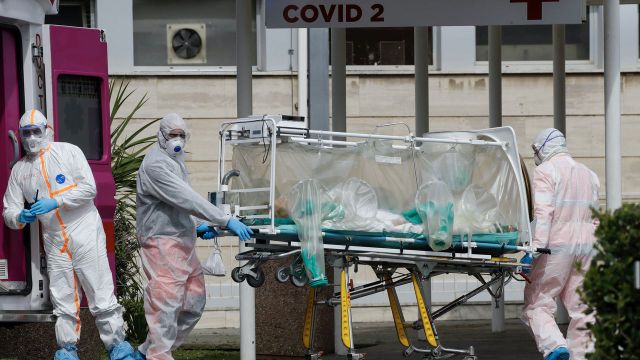
A patient carried on a stretcher in Rome, Italy (Photo: Alessandra Tarantino / AP)
Spain saw 514 fatalities, taking its death toll to 2,696. The country’s infection rate has climbed above Italy’s for the first time, with 6,584 more cases in the last day. The horrific events have forced the conversion of the ice rink in Madrid into a makeshift morgue and the Ifema conference centre into a field hospital with 5,500 beds.
Another 87 people died in the UK, a rise of 26 percent and the highest daily increase, bringing the total to 422. Of those who died in the last day, 21 perished in a single hospital trust in northwest London. The capital’s ExCeL Centre, normally used for exhibitions and large events, is being turned into a field hospital with a planned 4,000 beds. On Monday, Prime Minister Boris Johnson began a nationwide lockdown to be reviewed in three weeks.
France suffered a huge 28 percent increase in fatalities as it became the latest country to reach the grim milestone of 1,000 dead. The total increased from 866 to 1,100. An additional 2,516 people are on life support.
WHO Director General Dr. Tedros Adhanom insisted that it was still possible to “change the trajectory,” but warned Monday that governments were failing to devote the necessary resources to the crisis. Quarantine and physical-distancing measures—introduced criminally late by governments across Europe—would help to slow the spread of the virus but were “defensive measures that will not help us to win. To win, we need to attack the virus with aggressive and targeted tactics—testing every suspected case, isolating and caring for every confirmed case, and chasing and quarantining every close contact.”
Dr. Tedros warned that not enough was being done to protect frontline medical staff: “Health workers can only do their jobs effectively when they can do their jobs safely. Even if we do everything else right, if we don’t prioritise protecting health workers many people will die because the health worker who could have saved their life is sick.”
Faced with a public health catastrophe and given weeks’ notice before the original outbreak in China became a global threat, European governments have not prepared.
COVID-19 testing remains minimal across Europe. Outside of Italy, Germany has carried out by far the most tests (167,000 as of March 15), but still substantially below the over 316,000 people tested in South Korea to bring the spread of the virus under some control. The UK had completed 90,436 tests and Norway 70,608 as of March 24, France 36,747 as of March 15, Spain 30,000 and Belgium 18,360 as of March 18. Austria, Sweden, Poland and Denmark had the next highest totals, between 10,730 and 15,613, according to Our World in Data. No large European country bar Norway has tested at even a third of the rate per million people as South Korea.
Tests have been unavailable as standard even for vital medical workers, who are being forced to work without basic protections.
In Italy, 4,824 health workers were known to be infected yesterday morning—9 percent of the country’s active cases. In the city of Bergamo, 22 percent of family doctors are sick or quarantined and 1,464 out of 5,805 health workers have been infected. At the Olgio Po hospital in northern Italy, 25 out of 90 doctors are infected; a fifth of the hospital’s personnel have tested positive.
In Spain, 5,400 health workers had tested positive as of yesterday evening—14 percent of the country’s known cases. Several hospitals are making lists of retired medical personnel aged 65 to 69—in the “at risk” category for the virus—to return to service if their wards run short of staff. At some hospitals, doctors and nurses have run out of disposable coats and are taping binbags to their arms as replacements.
Medical workers in the UK have been forced to fashion their own makeshift protective equipment. Doctors and nurses have said they feel like “cannon fodder” and “lambs to the slaughter.” Yesterday, some hospitals were sent different face masks to the type they normally use, forcing staff to re-do a time-consuming mask fit test.
The apparent stupidity on the part of the ruling class has its roots in brutal commercial calculations. Everything is being done to salvage the profits of the major corporations, at the expense of lives.
While tests and personal protective equipment (PPE) remains largely unavailable, billions are on offer for big business. In Germany on Monday, Chancellor Angela Merkel’s cabinet agreed a spending package worth over €750 billion. This includes €600 billion for loans to businesses and buying direct stakes in companies.
CEOs and government officials are already planning how to put workers back on the job, in patently unsafe conditions, to pay for these funds and safeguard profits.
In the UK, the government has allowed building sites to continue operating despite the nationwide lockdown. Ministers have asked employers to ensure they “follow the government guidance and practice safe social distancing on site.” But builders are forced to travel on packed public transport and work on busy sites. One worker in Cambridge told the BBC he was near 300 others: “[The site] has a small smoking area, fingerprint turnstiles and a canteen not capable of the social distancing standard. The fear of the economic impact is the only reason we carry on.”
In Ukraine, ArcelorMittal, the world’s largest steel manufacturer and the country’s largest investor, has told the government to stop short of declaring a state of national emergency, saying the company is “worried about the possible toughening of restrictive measures.”
Across the continent, opposition is developing in the working class to these attempts to trade their safety for the bottom lines of executives and shareholders.
Mike Ashley, multimillionaire owner of the sportswear shop Sports Direct, yesterday tried to claim that his business provided an “essential service” to justify keeping his shops open. He was forced to back down by his workers’ protests and mass public pressure, with #boycottSportsDirect the top-trending hashtag on Twitter in the UK Tuesday morning.
Amazon workers in France and Italy protested unsafe and unnecessary work at delivery warehouses. At a shipping centre near Orleans, south of Paris, 300 workers staged a strike calling for its closure. Workers at a logistics hub in Castel San Giovanni in Italy called for a strike against Amazon’s refusal to slow down work.
Today, members of the Lombardy branches of the three main Italian metalworkers’ unions and the region’s chemical workers will carry out a one-day strike in factories not directly linked to the health sector. They said the government has given firms “excessive discretion” to apply for exemptions from a national lockdown, allowing unessential businesses to stay open. The country’s bank workers have threatened a nationwide walkout over unsafe conditions.
Two opposed responses to the pandemic are taking shape. The interests of the working class lie in maintaining only essential services and production—under the safest possible conditions—while the public health crisis requires the transfer of the enormous wealth from the super-rich for testing and treatment of those infected. During this time, workers required to remain at home must receive full income and social support. The ruling class is seeking to ensure the continued functioning of the profit system, whatever the cost to workers and their families. A fight against this criminal policy requires an international mobilisation of the working class on a socialist programme.

Despite White House claims, Roche CEO says US COVID-19 testing capacity continues to be limited

Benjamin Mateus

On Monday, Severin Schwan, CEO of Swiss diagnostics company Roche, told CNBC’s “Squawk Box” that the United States’ ability to conduct tests to detect the virus that causes COVID-19 infections continues to remain constrained. This comes despite repeated promises by the White House that these tests, numbering in the millions, would soon be available across the nation.
“No doubt, ideally, we would have broader testing,” Schwan said. “But at the moment, capacities are limited. I think this is still a couple of weeks, if not months, out and the reason is very simple.” Schwan said that in the past week, Roche had distributed almost 400,000 test kits across the country.
However, because the virus is spreading so quickly throughout communities, companies are currently not able to manufacture them quickly enough. “The industry is increasing capacities, but at the same time, infection rates are even increasing faster. At the moment, capacities are limited. That is why we have to prioritize testing to higher-risk patients.”
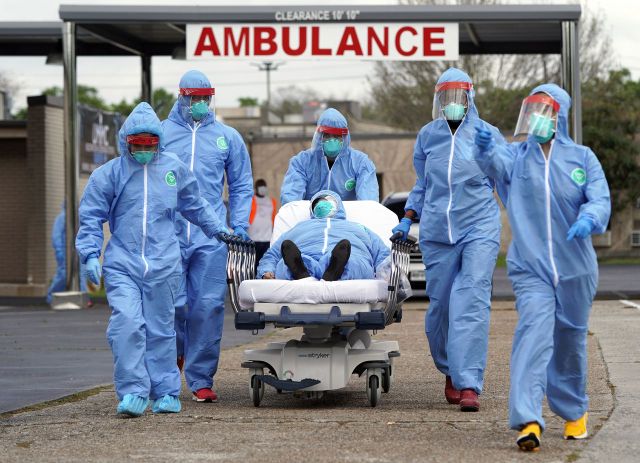
A person is taken on a stretcher into the United Memorial Medical Center in Houston, Texas after going through testing for COVID-19 on Thursday (AP Photo/David J. Phillip)
For several weeks running, the World Health Organization has been emphatically counseling all nations to test every suspected case. “If they test positive, isolate them and find out who they have been in contact with two days before they develop symptoms and test those people, too.” The testing is critical to determine not only who is infected but where the virus is spreading. These vital data allow epidemiologists and public health officials to allocate resources to areas becoming affected and stop the transmission of the infection deeper into communities.
However, due to the disastrous efforts by the US Centers for Disease Control (CDC) to roll out their test kits to states and local labs, the US has been flying blind through the outbreak since the beginning and up to the present moment, in which the epicenter for the pandemic is shifting to the US and now seeing daily new cases approaching 10,000. Health care workers and the public, in general, are vexed by the constant lying by the Trump administration and the assortment of flunkies that attempt to downplay the deadly seriousness of this disease.
As of March 14, testing at the CDC confirming results was no longer required. On its web page, the following statement was posted: “public health laboratories using the CDC assay are no longer required by FDA [Food and Drug Administration] to submit samples to CDC for confirmation. CDC is maintaining surge capacity while focusing on other support to state public health and on improving options for diagnostics for use in the public health sector.” The CDC has relinquished virtually all responsibility to the private sector.
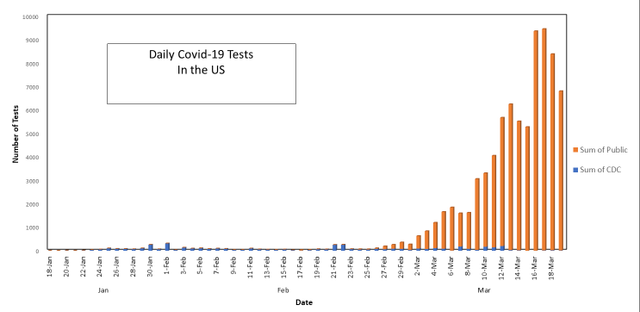
As of March 19, 2020, 83,391 tests had been completed by public health laboratories while the CDC had run 4,651 tests. Although the CDC offers the caveat that clinicians should use their judgment to determine if a patient with signs and symptoms compatible with COVID-19 should be tested—i.e., have fevers, symptoms of respiratory illness like cough or shortness of breath—lack of nasal swabs and test kits preclude a more robust assessment of the population.
The CDC continues to recommend prioritizing testing to hospitalized patients with signs or symptoms of COVID-19 infection, older adults with chronic medical conditions who are at high risk for severe manifestations of COVID-19, or any person, including health care workers, who within 14 days of developing symptoms have had contacts with a known suspect or laboratory-confirmed COVID-19 patient, including those who have traveled from high-risk geographic areas.
Credit: WSWS
According to the COVID Tracking Project website, US capacity for testing has been accelerating this week, with more than 35,000 tests conducted daily for a total of 359,161 tests to date. A quarter of all these tests were done in New York state, which is facing a disastrous crisis as they are quickly becoming inundated by the rapid growth of new cases.
Dr. Deborah Birx, the White House coronavirus response coordinator, continues to endorse the president’s egregious remarks about “the cure being worse than the disease.” On Tuesday, she said, “there is a fine line and a place to go that balances the needs of the American people both today and tomorrow with the reality of the epidemic.” As a medical professional, her reactionary remarks undermine the warnings made by many distinguished public health experts, epidemiologists and infectious disease specialists that this is a historic pandemic with dangerous consequences.
According to the Washington Post, “epidemiologists and other leading scientists seeking to decipher test result patterns and slow the advance of the coronavirus are stumbling over the huge disparities among the way states administer or report information.”
Caught in the bureaucratic turmoil of the public-private initiative, how test results are reported, how states and private companies share data, if at all, and how states restrict testing create a near-impossible dilemma. According to Dr. Harlan Krumholz, a cardiologist of the Yale School of Medicine and an expert on analyzing the outcomes of a broad range of medical treatments, “We have no systematic strategy to do the kind of surveillance necessary to understand the chain of transmission.” Health officials believe that the number of actual cases throughout the US is considerably higher than what is reported and are concerned that, with time being of the essence, the ability to halt the advance of the contagion will become futile if they are unable to perform mass testing.
Exacerbating this fiasco, as tests have become available, hospitals and drive-through test stations are finding themselves in a bottleneck because they lack enough special nasopharyngeal swabs. Additionally, laboratory directors are also facing a severe shortage of special reagents that can extract the virus’s RNA off these swabs. Clinicians are turning to improvisational methods to obtain these tests, which confound the reliability of negative results.
Dr. Marc Lipsitch, professor of epidemiology at the Harvard School of Public Health, said so succinctly, “The lack of testing in the United States is a debacle. We’re supposed to be the best biomedical powerhouse in the world, and we’re unable to do something almost every other country is doing on an orders-of-magnitude bigger scale.”

Modi places India’s 1.3 billion people under lockdown

Keith Jones

In a televised speech to the nation Tuesday evening, Indian Prime Minister Narendra Modi announced that the entire country, home to more than 1.3 billion people, would be placed under lockdown for 21 days, starting at midnight.
Until very recently Modi and his Hindu-supremacist Bharatiya Janata Party (BJP) government were crowing about India’s “success” in stopping the spread of the coronavirus in the world’s second most populous country. However, health experts have been warning for weeks that India’s relatively low number of confirmed COVID-19 cases—as of last night there were 519 cases and 10 deaths—was in all likelihood due to the very limited number of tests administered by authorities.
In his Tuesday address and subsequent comments on his Twitter account, Modi presented the need for draconian action to combat the spread of the coronavirus in the starkest terms.
Modi stated: “There will be a total ban of coming out of your homes. Every state, every district, every lane, every village will be under lockdown.
“If you can’t handle these 21 days, this country and your family will go back 21 years. If we are not able to manage the next 21 days, then many families will be destroyed forever.”
Modi claimed that the three-week shutdown was based on the experience of other countries. He said this had demonstrated that only vigorous “social distancing” measures can halt the spread of the coronavirus.
What he conspicuously omitted to add was that the experience of the countries most successful in countering the virus, such as South Korea, Singapore and China, has shown that the ultimate utility and success of quarantines and shutdowns in combating COVID-19 is entirely dependent upon coupling them with systematic mass testing of the population.
As in the US and many other countries now engulfed by the pandemic, India has been severely rationing testing. To date India has conducted just 17,000 COVID-19 tests, but claims authorities are monitoring 1.8 million people who may have come into contact with the virus.
India is especially vulnerable to the pandemic and to a potential catastrophic loss of life, should community transmission become entrenched.
The public health care facilities in the cities and towns are dilapidated, whilst across much of rural India, where more than 60 percent of the population lives, they are virtually non-existent. India is one of the most densely populated countries in the world, with tuberculosis—much of it resistant to standard antibiotics—and other social diseases rampant in the teeming slums of its cities. Last but not least, as a result of grinding poverty, hunger stalks India, weakening the population’s ability to resist disease. A recent study found 90 percent of children under five lacked sufficient nutrients.
This week, a group of scientists, most of them based in the US, published a study that warned that number of COVID-19 cases in India could explode to 1.3 million by mid-May. One of the authors of the study, University of Michigan Professor of biostatistics and epidemiology Bhramar Mukherjee, said: “Even with the best-case scenarios, probably, you are in a very painful crisis.”
Modi’s speech was remarkable for the complete absence of any details about basic questions, such as how the population would be able to procure food, and, in India’s villages, even water. He did not explain how people would be able to pay for their food if they are confined to their homes for the next three weeks.
Modi merely acknowledged the lockdown would constitute “a very difficult time for poor people” and claimed an aid package would be forthcoming. For the hundreds of millions who survive on the equivalent of $2 per day this could hardly have been reassuring, to say the least. All the more in that it is coming from a government that has implemented savage austerity to please Indian and international investors, including starving funding to the Mahatma Gandhi National Rural Employment Guarantee Program—which is meant to provide one member of any rural family that wants it with 100 days of manual minimum-wage work per year.
Even prior to the economic dislocation caused by COVID-19 facility closures ordered by New Delhi and the various state governments over the past two weeks, India was in the midst of a severe economic downturn, with unemployment at a 45-year high.
In his Tuesday evening speech, Modi did announce a 15 crore-rupee ($US1.97 billion) investment in coronavirus testing, personal protection equipment (PPEs), ICUs, ventilators, and training medical workers.
For years, India, under BJP and Congress Party-led governments alike, has devoted just 1.5 percent of GDP or even less to health care. According to press reports, India currently has only 40,000 ventilators, critical for the treatment of severe COVID-19 cases, and just one isolation bed per 84,000 people.
Just three days ago, the heads of two associations of PPE manufacturers in India—the Preventive Wear Manufacturer Association of India and the Association of Indian Medical Device Industry, that represent nearly 150 Indian medical PPE markers—told Scroll.in that the Modi government had not placed any substantial orders with their members.
The manner in which the Modi government has announced the lockdown, without warning or answers to the most rudimentary questions as to how ordinary people will obtain life’s necessities, has produced a chaotic situation, which can only hamper efforts to contain the spread of the coronavirus.
Already the loss of work due to earlier shutdowns had created what Indian economist Jean Drèze called an “economic tsunami,” with suddenly jobless migrant workers attempting to make their way back to their villages. The government ordered the suspension of passenger rail service last weekend. Now, millions of truckers have been ordered to stay put for the next three weeks, wherever they happen to be.
“This situation is worse than war,” Arun Kumar, an economics professor at the Institute of Social Sciences in New Delhi, told the New York Times. “If we are not able to provide essentials to the bottom 50 percent of the population, then there will be social revolt.”
The coronavirus is a real threat to the Indian people that requires urgent action, including quarantines and restrictions on free movement. However, the working class must recognize that everything the BJP government and Indian elite do is infused with their class outlook and interests. The Indian bourgeoisie is determined to place the full burden for the economic fallout of the pandemic on the working class and rural toilers.
Moreover, the BJP government will undoubtedly seek to use the lockdown to regain the political initiative, after being roiled by the mass opposition to its anti-Muslim Citizenship Amendment Act and growing worker resistance to privatization, poverty wages, and the spread of precarious labour.
On Tuesday morning, police cited a coronavirus lockdown in Delhi to forcibly break up a 101-day long anti-CAA street occupation in the Shaheen Bagh district of India’s capital, which had been led by working-class Muslim women, arresting at least nine protesters.

24 Mar 2020

Slovak Government Scholarships 2020/2021 for International Students

Application Deadline: 30th May, 2020.

Eligible Countries: Afghanistan, Albania, Armenia, Azerbaijan, Belarus, Bosnia and Herzegovina, Georgia, Kenya, Republic of the Sudan, Kosovo, Moldova, Mongolia, Palestinian Territories, Ukraine, and Vietnam.

To be taken at (country): Government of the Slovak Republic

About the Award: Slovak government scholarships, under OECD-defined conditions for conducting official development assistance, include awarding the Slovak government scholarship to persons with Slovaks Living Abroad status.

Type:  Undergraduate, Masters, PhD

Eligibility: A government scholarship may be awarded to a national of a partnering country who
a) has
  1. temporary residence for the purpose of studies,10)
  2. temporary residence as a third party national granted Slovak Living Abroad status,11) or
  3. the right to stay on the territory of the Slovak Republic for a period in excess of three months,12)
  4. b) is
    1. a full-time student at a public university located in the Slovak Republic in one of the academic programs contained in the notice defined in Subsection 2 who demonstrates command of Slovak at the level required by the given public university, or
    2. a participant in language education for the purposes of university studies (“language education”)
    and c) as of 1 September of the year in which the application for a government scholarship is submitted,
    1. is at least 18 years of age and not more than 26 years of age with respect to language education for studies of a first-level or second-level academic program or an academic program combining first and second-levels or studies in such an academic program or
    2. is at least 23 years of age and not more than 35 years of age with respect to language education for studies of a third-level academic program or studies in such an academic program.
Number of Awardees: Not specified

Value of Scholarship: This scholarship offers students monthly scholarship and stipends

Duration of Scholarship: A government scholarship is awarded a) over the standard duration of studies in the given academic program, b) for ten months in the case of language education, c) during the months between the completion of language education and registration for studies in the given academic program or between the end of studies in one academic program and registration for studies in another academic program, if 1. the participant in language education completes language education or a student completes studies

How to Apply: The submission of online application form is available on the website: www.vladnestipendia.sk (the webpage will be active from 27 March, 2020

Visit Scholarship Webpage for details

RB Scholarship 2020 (Fully-funded for Young People to attend One Young World Conference in Munich, Germany)

Application Deadline: 10th April 2020

Eligible Countries: International

To be taken at (country): Munich, Germany

About the Award: RB’s vision is to protect, heal and nurture in the relentless pursuit of a cleaner and healthier world. Investing in social impact is core to RB’s business and part of its purpose. In particular, RB’s social investment focuses on areas that have a direct connection to its business and where there are the greatest unmet needs. Among these priorities are:
  • Water and Sanitation
  • Sexual Health and Rights
  • Maternal and child health
RB knows that these challenges can’t be tackled alone and seeks partnerships in all areas to create greater scale and impact through collaboration.
This scholarship provides more than access to the One Young World Summit. It’s a launchpad for future collaboration with RB, peers from the business and other partners in the RB ecosystem. In line with this it’s expected that scholarship recipients will fully engage with the RB programme around the Summit. This will involve:
  • Attending calls arranged in the months leading up to the Summit – which will help with your understanding of the Summit and what to expect, help your understanding of RB as an organisation as well as their social impact work, and how RB will show up and stand out at OYW in Munich. You will also connect with the rest of the RB delegation and fellow scholars online.
  • Attending in person RB’s pre-summit meeting in Munich where you can expect to meet the entire RB OYW Delegation as well as fellow scholars. This meeting will take place on 14 October.
  • Engaging with every day of the Summit as well as activities such as private RB dinners
  • Attending the RB OYW 2020 post-summit meeting in Munich on 18 October where the RB delegation will work together to discuss ideas for future collaboration.
  • In the months following the Summit RB are keen to continue a relationship with you in projects and sharing ideas for social impact. RB also expect you to complete an online feedback survey which will be emailed to you in the weeks after the event.
Type: Conference

Eligibility: This scholarship is intended for young leaders who:
  • Are aged 18 – 30
  • Have demonstrated leadership in their community, country or organisation.
  • Are passionate about and making an impact in one or more of RB’s priority areas
    • Water and Sanitation
    • Sexual Health and Rights
    • Maternal and child health
Number of Awards: Not specified

Value of Award:
  • Access to the One Young World Summit 2020 in Munich
  • Hotel accommodation on a shared basis between 13 and 17 (inclusive) October, 2020
  • The cost of travel to and from Munich (flights in economy)
  • Catering which includes breakfast, lunch and dinner
  • Ground transportation between Summit venues
  • Access to bespoke RB programming around the businesses particpation in the Summit.
How to Apply: APPLY HERE
  • It is important to go through all application requirements in the Award Webpage (see Link below) before applying.
Visit Award Webpage for Details