30 Mar 2020

Instacart workers in US begin nationwide walkout as Whole Foods workers plan sickout Tuesday

Erik Schreiber

Workers for Instacart, a grocery shopping and delivery service, began a nationwide walkout in the United States today to protest the company’s refusal to protect them or provide hazard pay during the coronavirus pandemic. They have vowed not to return to work until the company meets their demands. Instacart employs more than 150,000 workers across the country.
The planned walkout is part of a nationwide and international fight by workers to demand safe conditions, including strikes and protests by Amazon workers, sanitation and public transit workers and workers in the auto, steel and meatpacking industries. Amazon workers in Staten Island plan to strike Monday, and workers at Whole Foods—also owned by Amazon—plan to strike Tuesday.
The coronavirus pandemic has increased demand for shopping and delivery services dramatically, as many people stay at home or in quarantine. Last week, Instacart announced plans to hire 300,000 new workers during the next three months to meet this demand.

(Stock Image)
Instacart workers (or “shoppers,” as the company calls them) have been demanding for weeks that the company institute the most elementary safety measures. “We don’t feel safe at work and we don’t feel we have the tools to keep customers safe,” said Ashley, a full-service shopper in Washington who is participating in the walkout. “The shoppers I know who aren’t sick are certainly not at their mental best. It’s a very dehumanizing and draining job right now.”
“Instacart has still not provided essential protections to shoppers on the front lines that could prevent them from becoming carriers, falling ill themselves, or worse,” said Instacart Shoppers and Gig Workers Collective in a statement posted on Medium on Friday . “They are profiting astronomically off of us literally risking our lives, all while refusing to provide us with effective protection, meaningful pay, and meaningful benefits.”
“We haven’t been offered any type of cleaning products or funds to purchase such products,” said Sarah, a shopper participating in the walkout. “We haven’t been given any real information on how best to take precautions. They are doing the bare minimum and even making it hard for those who are diagnosed with COVID-19 to get paid time off.”
The walkout centers on four demands. Shoppers demand that Instacart provide them with protective supplies such as hand sanitizer, disinfectant wipes, and soap at no cost. They demand an extra $5 per order as hazard pay and a default tip of 10 percent of the order total. They demand “an extension and expansion of pay for workers impacted by COVID-19—anyone who has a doctor’s note for either a preexisting condition that’s a known risk factor or requiring a self-quarantine,” according to Friday’s statement. Finally, they demand that the company extend the deadline to qualify for these benefits beyond April 8.
On Friday, after the shoppers announced today’s walkout, Instacart extended its offer to provide 14 days of pay to any worker diagnosed with COVID-19 through May 8. It also announced bonuses for certain employees, based on the number of hours worked. The company did not, however, agree to provide hazard pay or even the most basic protective supplies.
“Instacart’s response to our demands lacks substance and does nothing to protect us,” worker Vanessa Bain responded in a tweet. “Conceding to one demand is way too little, way too late. They can kick rocks. Our call for an emergency walk-off still stands.”
The announcement of the walkout had already exposed the insincerity of Instacart’s promises to compensate sick employees. “Instacart’s promise to pay shoppers up to 14 days of pay if diagnosed or placed in mandatory quarantine not only falls short but isn’t even being honored. Instacart knows it’s virtually impossible to meet their qualifications and is ignoring shoppers’ pleas for more substantial and preventative help,” the statement of the Instacart Shoppers and Gig Workers Collective said.
Many Instacart shoppers are gig workers that the company classifies as self-employed contractors. They are not guaranteed a minimum wage, and the average pay for one order of groceries is a mere $7, according to a former shopper. Furthermore, these shoppers have no paid time off, and Instacart does not contribute to unemployment insurance for them.
Some Instacart shoppers are full-time employees, however, who assemble orders in grocery stores but do not make deliveries or receive tips. Instead of providing in-store shoppers with the necessary protective gear, the company has recommended social distancing, which is impossible in crowded supermarkets. Instacart has denied in-store shoppers’ demands for hazard pay and wage increases, according to Jorge, a shopper who posted an open letter to the company on Twitter. Instead, it has offered, on a case-by-case basis, a maximum of only seven consecutive calendar days of unpaid time off.
Last year, shoppers became angry when Instacart reduced the default tip on the company’s app to 10 percent. The company refused to negotiate with them. In response, shoppers walked out from November 3 through November 5. The company retaliated by discontinuing the quality bonus that it had paid for “good work.” This spiteful act amounts to a pay cut of as much as 40 percent, depending on the order.
“The low pay is something that’s been an issue for a long time, but it’s a heightened issue now because sick people with no savings, or even next month’s rent, aren’t able to stay home,” said Ashley. “Instacart’s temporary paid sick leave has hoops most of their workforce can’t jump [through].”
“I have watched pay cut after pay cut, to where I was seeing a 50 percent or more decrease weekly,” said Sarah. “It’s so hit or miss, and honestly the majority of what I do make is usually tips, and not Instacart payment, which means these customers are paying a bunch to Instacart, and we shoppers see barely any of that money.”
Whole Foods workers have announced their intention to conduct a sick-out tomorrow, March 31, with a flyer circulating online reading: “We put ourselves at risk! We have demands!”
Whole Foods workers’ demands include three weeks’ paid time off for everyone, “not when we get sick but so we don’t get sick!” In addition, workers demand double hazard pay. “Don’t tell us we’re not emergency workers. Make the $2 wage increase permanent.” The flyer concludes, “The crisis has shown that we are worth more. We are no longer scared, but you should be.”
Sanitation workers in Pittsburgh, autoworkers in Detroit, bus drivers in Birmingham, Alabama, and Amazon workers in New York and Italy have all walked off the job after coworkers tested positive for the novel coronavirus. “I know other jobs are also walking out for mistreatment right now, and I support that,” said Ashley. “Being in public right now is well known to be dangerous and bad for the community. People should be compensated for that risk and protected if they’re forced to take it.”


China and COVID-19: What Went Wrong?

Vijay Shankar

The history of armed conflict is intertwined with the generation of diseases. In 1155, the German Holy Roman Emperor Barbarossa poisoned water wells in Italy with human bodies as he challenged the papacy; to 1763, when the British deliberately distributed small pox-infected blankets to Native Americans. In recent history, during World War I, the Spanish flu caused a pandemic accounting for over 50 million lives. Now imagine a weaponised variant of the pathogen—genetically engineered for survival and binary in nature, with artificial intelligence implants to disable or enable the virus—and you have a controllable doomsday weapon. Manipulated pathogens are in fact the next generation of damnable biologic agents. While theories about COVID-19 being a bio-weapon have been debunked, they occur within a larger narrative, which is that of China allegedly being a leader in “toxin-based threats.” Opaqueness in Chinese information-sharing, therefore, appears to have little dividend.
China has been suspected for several years of having offensive biological agents, although these claims have been refuted by the country. If the allegation is indeed true, it is notwithstanding China having ratified the Biological Weapons Convention (BWC), which prohibits the development of biological weapons and decrees destruction of existing stockpiles. In the absence of instruments for verification, the BWC has no teeth.    
What could have influenced Chinese thinking in this regard? This paper suggests three factors. The first is of a historical nature. Between 1933 and 1945, Japanese BW attacks and experimentation on Chinese populations killed thousands. China also believes that the US conducted offensive BW operations in China and Korea during the Korean War. The final motivation may have to do with the erstwhile USSR, which had a reported history of experimenting with efforts to develop deadly germs and viruses as weapons. China’s strategic cooperation in general, and knowledge of the alleged Soviet BW programme as well as the goings-on at the centre of Soviet research on the island of Vozrozhdeniye in the Sea of Aral could have inspired Chinese thinking on this mode of warfare. Strategic motivations were governed by their abstract reasoning of the nature and use of weapons of mass destruction in a life and death struggle. Today, as George Keenan suggested in 1947, China needs the spectre of a permanent enemy to justify its security apparatus, and indeed, itself.
Under Chairman Mao, from 1949 to 1977, these sensitivities led increasingly to preparation for total war. By 1978, hamstrung by the terror of the Cultural Revolution and blinkered by ideological obsession, Premier Deng Xiaoping saw the quest for strategic dominance being stymied by the absence of development and direction. He presided over a radical veering from orthodoxy and sought from society the release of dormant capitalistic energies. This kicked off one of the most impactful economic reformations of the 20th century. By 1990, in the wake of the carnage of Tiananmen and the collapse of communism in Europe, China’s military policy was dictated by Deng’s ‘24-character strategy’ which mandated a watch, wait, and build capacities approach. These capacities included the ability to wage BW. The Jiang Zemin and Hu Jintao dispensations continued with Deng’s policies towards technology and innovation at large.
China’s BW strategy is seen as a declaration of their resolve to make genetic weapons instruments of “bloodless victory.” The Chinese government launched the National GeneBank in 2016. It reportedly intends to “use China’s genetic resources, safeguard national security in bioinformatics, and enhance capabilities to seize the strategic heights,” which becomes important for consideration in light of allegations about China’s possession of offensive biological agents.
The SARS Episode of November 2002 constituted a testimony to the lack of Chinese transparency, and raised suspicion of China’s involvement. The lesson to be learned was the need for unambiguity and information-sharing where infectious diseases were concerned. This did not seem to be the case in the recent outbreak of COVID-19. An examination of the chronology will suggest that while China formally notified the WHO of the outbreak on 31 December 2019, the first cases reported by the late Dr Li Winliang (a casualty himself) were on 1 December—or could it have been even earlier?
Expert studies and circumstantial evidence alike have led to speculation about China’s quite possibly inadvertent involvement in the release of the COVID-19 virus. This sort of speculation is not unprecedented. In a 2017 Nature article, Dr Richard Ebright, a molecular biologist at Rutgers University, is quoted saying that “the SARS virus has escaped from high-level containment facilities In Beijing multiple times.”
More recently, in March 2019, a shipment of virulent microorganisms from Canada’s National Microbiology Laboratory (NML) found their way to Wuhan. The event reportedly caused a scandal, with questions about how the lethal viruses were transferred to China. The incident was traced to Chinese operatives working at NML, and led to their expulsion. The group comprised of  Dr Qiu and Dr Cheng, among others, who are suggested to have past links with BW civil-military fusion laboratories in China. The nature of Dr Qiu’s and Dr Cheng’s research is not entirely known, and the investigation is on-going.
Does conjecture about the virus’ leak from a bio lab hold up to scrutiny? What about the speculation of this being a Chinese dual-use research programme gone horrifically wrong? This would be reminiscent of the reported Soviet experiment with re-engineering pathogens within a pathogen; the first stage illness was carried by an innocuous fast spreading endemic microbe. The second pathogen would be genetic material that would cause the body to attack and break down its own vital systems.
In the midst of theories of pathogen mutation from bats to pangolin to man, and its probable leak in a bio-experiment; there are many not-so-convincing allegations of cause and conspiracies with fake news clouding perception. What is known is that COVID-19 originated in Wuhan, from where it was inflicted on mankind. How, when, and why remain unrequited questions. In this environment, it becomes increasingly important to closely monitor Chinese potential military’s activities in BW. While it may be impractical to expect China to recompense for global disruption and mass casualties, what can be imposed is the demand for verifiable transparency, and making their laboratories indubitably transparent.

India: Climate Change and the Need for Gender-Responsive Policymaking

Akanksha Khullar


While climate change in general has negative implications, from a gender perspective, it entails greater risks for women than men. In India, as weather patterns change and become more unpredictable, with rising temperatures, droughts, heavy rainfalls, and powerful storms, it could exacerbate prevailing pressures as well as create new problems for women, especially those in rural areas.

In patriarchal societies, women’s abilities to adapt to the impacts of climate change are limited by social inequalities and their socioeconomic roles. These roles can influence property rights, access to information and resources, employment prospects, etc. Women are more likely to suffer from physical and psychological health problems, and also be the most affected during agrarian crises, natural disasters, etc. Further, rising temperatures and extreme weather events could adversely impact women’s lives and livelihoods, and also expose them to an increased risk of sexual abuse.

Food Insecurity, Water, and HealthDecrease in rainfall, increase in precipitation, and extended periods of drought—as already being experienced in different parts of India—bear profound implications for crop production, livestock, and fishery yields, leading to loss of traditional food sources and livelihood security. These developments will have differentiated, gendered trickle-down impacts.

As per the National Family Health Survey 2015-2016, 22.9 per cent of women (ages 15-49) in India suffer from chronic energy deficiency as compared to 20.2 per cent men (ages 15-49). Occurrence of anaemia among women is even higher, with 53.1 per cent women (ages 15-49) suffering from moderate or severe forms as compared to 22.7 per cent men (ages 15-59). Factors responsible for this include predominant cultural practices prioritising food provision to children and adult males. It is not inconceivable then that climate change could further intensify nutritional scarcity among women.

For example, the Indo-Gangetic plains currently account for 14-15 per cent of the world’s wheat production, feeding around 200 million people in the region. According to some climate change projections, crop yield in these plains might decrease by 51 per cent due to heat stress and drought by 2030. As evidence shows, in times of food scarcity, it is typically the women, especially those in rural areas, who would be the first to be deprived of food, and thereby, nutrition.

Moreover, changing consumption patterns induced by climate change could potentially widen existing gender-based health disparities. An increase in nutrient and micronutrient deficiency among women could cause poor attention spans, diminished working memories, impaired sensory functions, and in turn, reduced chances of survival in extreme weather conditions.

Climate change could also add to existing water shortage and access to clean drinking water such as in Rajasthan, Punjab, Haryana, etc. This too holds implications for women’s health in rural India, where women tend to be tasked with collecting water for the household. As groundwater ceases, women might have to travel longer distances, often in scorching heat, to fetch water, resulting in extreme fatigue. Coupled with occurrences of nutritional deficiencies, this scenario would aggravate existing health problems.

EmploymentIndia is witness to a feminisation of agriculture, with more women being employed as either cultivators or labourers. According to an Oxfam report, this sector employs 80 per cent of all economically active women in India. Of those, 33 per cent work as agricultural labourers and 48 per cent are self-employed farmers. As of 2018, 85 per cent of women in rural areas were engaged in agricultural activities. Given how agriculture in India is an extremely seasonal and rain-fed activity, any change in climate directly impacts employment opportunities for these women. It also has a health impact, with the high rate of hysterectomies among migrant cane-cutters in Maharashtra’s Beed district as a case-in-point.

Migration and WorkloadsIn the past decade, India has witnessed unprecedented internal migration. In the Economic Survey of India 2017-18, inter-state migration (2011-2016) was estimated at 9 million annually. The impact of climate change on the agricultural sector has resulted in mass out-migration of men for employment, leaving women with a considerably increased workload to plug the gap. Women now juggle dual responsibilities of livelihood generation and performing traditional domestic roles, including tending to family members. Among other effects, this has resulted in significant numbers of female students missing school to accommodate increased domestic workloads.

Sexual ExploitationIf existing patterns are any indication, climate change-induced natural disasters and epidemics (which are predicted to become more frequent in the future) would make women and girls more susceptible to sexual exploitation and other forms of gender-based violence. In India’s case, data is scant on the causal link between climate change and violence against women and girls. However, in the aftermath of the 2013 Uttarakhand floods, aid agencies estimated that female survivors were at a greater risk of being sold as brides or into domestic and sex trade by traffickers preying on vulnerable families.

ConclusionIn India, gender-based disparities are already acute and multi-faceted. Climate change will exacerbate them further, leading to women being affected disproportionately, and severely. A gendered approach to understand the impact of climate change is thus crucial to the formulation of appropriate mitigation and response strategies.

28 Mar 2020

IBM COVID-19 Call for Code Global Challenge 2020

Application Deadline: 27th April 2020

Eligible Countries: International

About the Award: COVID-19, which is caused by the novel coronavirus, has revealed the limits of the systems we take for granted in a very short period of time. Whether it’s the massive increase in demand for information during a time of crisis, educating children when schools are closed, or helping communities best distribute limited resources, technology has a pivotal role to play. Through Call for Code, you can see your idea deployed by a global partner ecosystem.

Explore all IBM resources related to COVID-19

In addition to Call for Code, IBM is marshaling resources and bringing together the right communities of experts to address the COVID-19 global pandemic. Clients, governments, scientists, partners, academic institutions, health agencies and IBMers are applying data, knowledge, computing power, and insights to solve difficult problems. 

Type: Contest

Eligibility:
  1. Submissions –
    Submissions must use one or more IBM Cloud services or IBM Systems. Use of sponsor or affiliate APIs and open source libraries is also encouraged.
  2. Team size –
    Teams of up to five (5) participants, each at least 18 years old, are allowed.
  3. Joining teams –
    A participant may not be part of multiple teams.
  4. Participation agreement –
    All team members must have accepted the 2020 Participation Agreement at the time they submit to be eligible.
  5. Application standards –
    Applications must be new and built for the 2020 competition, but they may use code that was open sourced and publicly available to all other participants as of February 26, 2020.
  6. Winners –
    Winning teams will be subject to a code review after submissions close.
Selection Criteria: Submissions will be judged equally across 4 primary criteria which evaluate whether the solution solves a real-world problem and uses technology effectively.
  • Completeness and transferability: How fully has the idea been implemented? Can it achieve an impact in the field? Can it be transferred elsewhere?
  • Effectiveness and efficiency: Does the solution address a high priority area? Does it achieve its goal effectively and efficiently? Can it scale?
  • Design and usability: How good is the design, user experience, and ease of use of the solution? How quickly can it be put to use?
  • Creativity and innovation: How unique was the approach to solving a long-standing or previously intractable problem?
Number of Awards: Not specified

Value of Award:
Grand Prize
  •  $200,000 USD cash prize
  •  Invitation to the Call for Code Global Award Announcement
  •  Open source project support from The Linux Foundation
  •  Opportunity for mentorship and investment in the solution
  •  Solution implementation support through Code and Response™
First Runner-up
  •  $25,000 USD cash prize
  •  Invitation to the Call for Code Global Award Announcement
  •  Open source project support from The Linux Foundation
Third and fourth runner up
  •  $10,000 USD cash prize
  •  Invitation to the Call for Code Global Award Announcement
  •  Open source project support from The Linux Foundation
How to Apply: Accept the Challenge
  • It is important to go through all application requirements in the Award Webpage (see Link below) before applying.
Visit Award Webpage for Details

Asahi Growing Sustainability Scholarship 2020 (Fully-funded to Attend One Young World Conference 2020 in Berlin, Germany)

Application Deadline: 16th April 2020

Eligible Countries: International

To be Taken at (Country): Berlin, Germany

About the Award: At Asahi, we hold sustainability as our responsibility – we value the gifts of nature and manage them effectively by reducing water consumption, minimizing our carbon footprint and reusing waste products.
Beyond eliminating our own climate impact as part of our Asahi Carbon Zero campaign, we are also working with farmers to help them adapt and prepare for a changing climate. This includes through Campus Peroni in Italy, a centre of excellence promoting and spreading innovation and sustainability in agriculture, Biocycle in Japan, a plant bio-stimulant which reduces the effects of external stresses on crops, and many other local partnerships with farmers, co-operatives and academia in countries where we operate.
This year, we’re proud to have partnered with One Young World to create the Lead2030 Challenge for SDG13. The Challenge aims to find and support solutions that will contribute to the future of sustainable agriculture by supporting and enabling farmers to reduce their emissions and/or help adaptation and resilience against the climate challenges of this decade and beyond.

Eligibility:
This scholarship is intended to support young leaders who are:
  • Aged 18 – 30
  • Have demonstrated leadership capcity.
  • Have proven impact the field of sustainable agriculture. This can include work that:
    • Improves the climate resilience of crops through sustainable practices.
    • Reduces on-farm green-house gas emissions, water or energy us through new technologies.
    • Supports farmers in fostering innovation and improving access to information, raising awareness of climate risks and new skills training.
    • Addresses the sustainability of the wider supply chain beyond the farm
Number of Awards: 8

Value of Award:
  • Access to the One Young World Summit 2020 in Munich
  • Hotel accommodation on a shared basis between 13 and 17 (inclusive October, 2020
  • The cost of travel to and from Munich (flights in economy)
  • Catering which includes breakfast, lunch and dinner from 14 to 17 October
  • Ground transportation between Summit venues
  • Access to bespoke Asahi programming around the businesses participation in the Summit including pre-Summit onboarding calls, an Asahi buddy from the company’s internal delegation and a post-Summit feedback session.
How to Apply: APPLY NOW
  • It is important to go through all application requirements in the Award Webpage (see Link below) before applying.
Visit Award Webpage for Details

As Corona Crashes Capitalism, Whatsapp Sings of Conspiracies

Damanpreet Singh

As more and more people die of COVID-19, WhatsApp is busy knitting conspiracy theories looking for traces of biological warfare amid this Coronavirus Crisis. Good old right started it, with tales of ‘Communist’ China synthesizing Corona to suppress Hong Kong uprising but as it overtook the western ‘free world’, songs of trade wars unleashing this deadly virus entered our whatsapp groups. Apart from the ones predicting dooms day every minute now, there are some ‘optimists’ too, expecting welfare state policies in a post-coronavirus period as the Governments will awaken and learn from the inadequacies of present healthcare failure which has already killed thousands of people worldwide.
Conspiracy theorists & What Does Objectivity Beholds?
As for now the Novel Coronavirus pandemic has still not reached its peak. Apparently started in China, it has now sprung across the globe. The number of infections world over have grown exponentially, leaving the tally at its birthplace in Wuhan, China far behind. Some have even warned of newer outbreaks in China as the novel Coronavirus remains obstinate on its worldwide holocaust. This biological crisis has created panic in financial markets; the global economies are under lockdown, the trade has nearly come to a standstill, transactions are interrupted & Stock markets have plunged as much as above 30% in the span of weeks. Current situation is that of a general strike in the whole world; the only downside being it wasn’t organized by the conscious working people but a silly small virus. Due to lockdown of schools, shops, services, businesses and measures like work from home, home quarantines and curfew, the world is operating at about 50% capacity with majority workforce stuck indoors. The production has been put at a halt and resulted in an adverse ‘supply crisis’. This situation is worse than the subprime crisis of 2008 in which unemployment rate in US was a mere 10%. Consequently, not spending any money on travel & services by common people & businesses on one hand and further Income drop of people & low sale of these businesses on the other, resulted in ‘demand crisis’. In fact, it is the same trodden path, the way with all capitalist crises: they start with a contraction of supply and end up with a fall in consumption; not vice versa.  All the world’s major economies are the worst hit by this catastrophe and has come to a standstill whether it’s China, USA, Germany, UK, Italy or India. The oil prices have plunged and hit the middle-east economies and Russia as well. Even the fortunate countries who are yet to face the wrath of this adversity have witnessed plummeting economies as they employ restrictive measures to save themselves. So, its impacts are global in this era of global capitalism knitted quite close via the threads of profit. Even prior to the eruption of COVID-19, the global capitalism was going through deep crisis as the profitability of capital was low and global profits were static at best. As this financial crisis will not result due to instability inherent in speculative capital markets, the situation may get worse than the crisis erupted in the aftermath of Second World War. In strong contrast to WW-II, no country is there to lend the loan for loss recovery in this globally injured economy. Presently, all the hostile classes are at loss. Seeing all the above factors. It doesn’t seem that it will recover from its crisis sooner. So, the claim of a COVID-19 as capitalist conspiracy to get rid of its own crisis holds no ground.
Optimism and what could be the possible fallouts?
This emergency situation (‘shock doctrines’) mostly help the ruling classes. One thing is for sure that when the disaster will get over, the apologists of capitalism will put the blame on COVID-19 to mask the inherent flaws in the capitalist production, inter-imperialist contradictions and the social structure of society. Same was parroted after the subprime crisis of 2008-09. Some optimists are reiterating that COVID-19 will give a blow to globalisation & privatisation (especially of healthcare) overlooking the objective conditions at international and domestic level. Though the global healthcare debate is mounting but it seems unreal in the absence of strong international challenge or an alternative like strong welfare state or socialist system to present Global capitalist system. So it is more likely that the conditions will become more deplorable for people in the aftermath of COVID-19. Going with the economic logic of neoliberalism the governments will force increased taxation (as the government has already increased the excise duty on petrol and diesel by Rs. 8 through an amendment to eighth schedule of the finance act) on people all over the world, pushing towards more privatisation as per its banal economic rule to overcome crisis especially in the third world while putting the entire blame on coronavirus pandemic. Slashing of funds from social sector, stringent labour laws, Inflation, Central banks providing emergency liquidity to the financial sector, bailing out rich etc. awaits us on the other side of this COVID-19 tunnel. So, coronavirus will become the justification for yet another disaster to come which will be definitely made up by the ruling classes; No conspiracy theory required for that.
What is to be done?
Nature may be involved in the virus epidemic, but the number of deaths depend on human action – economic structure, governement policies & the level of medical infrastructure and resources. The past three months of COVID-19 disaster has proved that global capitalist system is incompetent to tackle Man vs Nature contradictions. So, this small virus has exposed the system from within. It has exposed how globalisation is afflicted with huge intra-world contradictions & health care system etc. With this crisis on humanity comes the responsibility of socially sensitive people to expose this system and take this biological crisis seriously, instead of indulging in naive conspiracy theories or going by “Malthusian logic” of ‘unproductive labour’ which includes old ones too. In ongoing crisis we need to indulge ourselves in exposing the shallowness of ‘globalisation’ and ‘Trickle-down Theory’. The Need of the hour is to spread awareness among people about the necessary precautions regarding coronavirus, avoiding physical gatherings, preparing yourself to volunteer for rescue operations, collecting funds from rich and middle classes for the poor sections and sending food to the toiling masses. Apart from this, we need to keep the pressure intact on the government to nationalise all hospitals (at least till this disaster gets over), fill the vacant or pending seats in all government hospitals and dispensaries with immediate effect, availing necessary equipment (testing kits, masks, sanitizers, screening tests at all places, safety uniforms for doctors and other medical staff etc.), necessary items and funds to the poor people. The time is not far when Coronavirus knocks at your door, or has knocked already. The situation demands investigation based on objective conditions instead of explaining reality in a fashion suited to one’s views or immediate political needs. Moreover, the question of conspiracy or natural accident is the case of post mortem, which will be held later.

Coronavirus crisis “devastates” US museums, arts organizations, many of them for good

David Walsh

The bipartisan corporate “rescue” package passed by the US Congress this week provides only $232.5 million for cultural organizations, one-sixteenth of the $4 billion for which the American Alliance of Museums (AAM) and individual institutions had lobbied.
Boeing alone will receive more than four times what the museum group had requested—and was denied. The Metropolitan Museum in New York expects to lose $100 million should it remain closed through July and the American Museum of Natural History (also in New York) estimates it will lose $60 million by June. The AAM asserted in a March 19 press release that museums in the US collectively are losing at least $33 million a day due to closures related to COVID-19. Museums support some 726,000 jobs nationally, with 372,100 people directly employed by the institutions.
Guggenheim Museum in New York
The aid package passed by the Senate and the House this week provides $75 million each for the National Endowment of the Arts (NEA) and the National Endowment for the Humanities (NEH), to be distributed as the respective organizations see fit. It also allocates $50 million for the Institute of Museum and Library Services.
The John F. Kennedy Center for the Performing Arts in Washington, DC—home to the National Symphony Orchestra and the Washington National Opera—is slated to receive $25 million, while the Smithsonian Institution in Washington will get $7.5 million.
In its press statement, the AAM explained that the impact of the coronavirus crisis on the museum field was “devastating.” The organization noted that museums “of all sizes are experiencing closures, attendance free-fall, canceled events, and layoffs.”
This would escalate day by day, the AAM argued, “as closures and cancellations continue.” It further stated, “Most of these are cash-based businesses; their economic lifeblood is people visiting.” It pointed to declines in both international and domestic tourism, declines in local attendance and increases in social distancing. The AAM estimated that as a consequence of the current situation, “as many as 30 percent of museums, mostly in small and rural communities, will not re-open without significant and immediate emergency financial assistance.”
Thousands of museum employees, freelance workers and others have already lost their jobs. ArtForum points out that since galleries, museums and arts organizations closed down earlier this month “with no idea when they can reopen, job losses were inevitable.” It continued: “Some museums, such as the Los Angeles County Museum of Art, plan on paying hourly and part-time workers through the closure. Some institutions, including The Broad in LA and the Metropolitan Museum of Art in New York, will only pay workers until a fixed date, when they will reassess their options. Other museums have already begun letting people go.”
ArtForum goes on to explain that in anticipation of “large revenue losses, museums are also implementing pay cuts and furloughing workers.” It states, “Employees who cannot work remotely, including art handlers, installers, security guards, retail and front-desk workers, gallery attendants, and freelancers, are most vulnerable to losing their jobs.”
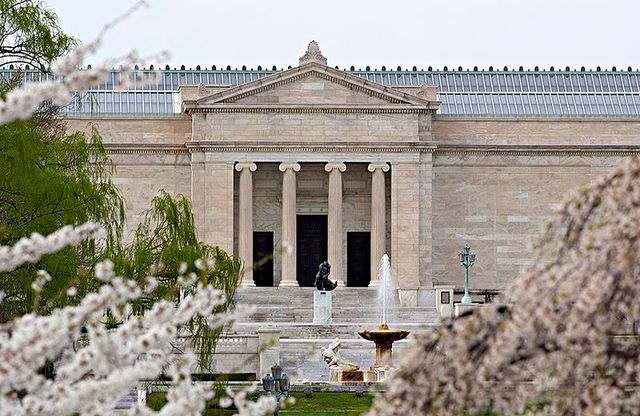
Cleveland Museum of Art (Photo: zenbikescience)
The Cleveland Museum of Art, anticipating five million dollars in lost revenue, will furlough all part-time staff and temporarily lay off a portion of its unionized staff, which includes security guards. The Hammer Museum, affiliated with the University of California, Los Angeles (UCLA), has laid off 150 part-time student employees.
The Museum of Contemporary Art in Los Angeles (MOCA) is laying off all of its part-time employees, a total of 97 workers, reports the Los Angeles Times. The layoffs, which the museum says are temporary due to the coronavirus crisis, include gallery attendants, exhibition installers, retail staff and education team members, among others.
Freelance workers employed at the Guggenheim Museum in New York are protesting the museum’s decision not to pay “on-call” (freelance) employees for work they committed to after March 29, according to Hyperallergic. On-call workers are “casual hour employees,” in the museum’s phrase, who work when called in for specific projects.
One freelance worker explained in a moving tweet addressed to museum officials that this was “a terrible time to exclude people who earn their living at your institution from having basics for their families.” The individual explained that she had committed to working on an exhibition for 22 days.
“I ask,” she went on, “that you consider how not being paid the work already planned will affect my husband and two children for basic things like access to food and housing… Freelancers deserve income continuation. As a mother I am asking you to reconsider your decision.”
The decision by the Whitney Museum of American Art in New York to close its doors as of March 13, ART news reported, “came as a surprise to the organization’s part-time workers, many of whom did not receive notice until the decision was made public around 7:30 p.m. [the night before]. ‘There has been no clarity on payment,’ said one gallery attendant, who asked to remain anonymous for fear of retaliation. ‘There have been vague promises about compensation for the next few weeks, but it seems like they are playing it pretty safe.’”
Because of the closure of New York City’s public schools, museum educators at the Whitney, who conduct student tours, have been informed they won’t be paid after March 31, despite having contracts that last until May or June. One educator told Hyperallergic, “Our time was booked months in advance, with our schedules already planned till the end of June. Which means we won’t be compensated after March.”
Museums commonly hire educators as freelancers or contractors, writes Hyperallergic, “a step below even part-time employment, [which] adds to the precariousness of their condition. ‘The vast majority of New York City’s institutions employ their museum educators as contractors, meaning we’re not eligible for unemployment benefits,’ confirmed one teaching artist, who says she makes slightly under $40,000 a year from various museum jobs. ‘We’re just a line item in the ‘programming’ budget.’”
Commercial art galleries in New York, Los Angeles and other major centers have also started furloughing workers. Elizabeth Dee, in a comment on Artnet that suggested “We Don’t Know What a Post-Coronavirus Art World Will Look Like,” observed that “Our very way of life is under threat due to our over-leveraged health care system, the illness of colleagues and loved ones, and the economic hit experienced by countless sectors, including the art industry. Freelance workers, who are essential to galleries and art fairs as well as many hospitality industries, have also been left without support.”
Artnet added that “W, the art and culture magazine, furloughed all but a skeleton crew of people to maintain its website, and restauranteur Danny Meyer—who owns Untitled at The Whitney and The Modern at MoMA—laid off 80 percent of his staffers, nearly 2,000 people.”
The art world has also begun to lose individuals to COVID-19. Vittorio Gregotti, the Italian urban planner, writer and architect of the Barcelona Olympic Stadium, died in mid-March from the coronavirus. Art historian and critic Maurice Berger and architect and critic Michael Sorkin have also died from the disease.
The end result of the current wave of closures, layoffs and cutbacks will be the further concentration of arts institutions, with a relative handful of well-endowed and well-patronized museums “prospering,” while many others go under.
Significantly, the AAM in its press statement also pointed to the fact that in addition to “losses in earned revenue and unremitted expenses,” its member institutions were “expecting lost charitable contributions as donors reassess their capacity to give due to the stock market’s volatility.”
The reductions in already miserly government subsidies to the arts organizations in recent decades and their increasing reliance on wealthy benefactors has created a situation where the continued existence of institutions in many cases depends on the “generosity” or whims of multimillionaires and billionaires.
The US government spends a pittance on culture. The current budget for the National Endowment of the Arts, on which thousands of organizations rely, is $162,250,000, while the US war machine is funded to the tune of $738 billion.

Israel: Gantz paves way for national unity government with Netanyahu

Jean Shaoul

Blue and White opposition leader and former Israel Defence Forces (IDF) chief of staff Bennie Gantz is to join a “national emergency government” under the premiership of indicted criminal Benjamin Netanyahu.
The new government’s ostensible brief is to tackle the coronavirus pandemic.
Gantz cited “unusual times” to declare, “That is why I intend to explore the formation of an emergency unity government.”
His move signifies an agreement among Israel’s politicians to impose a dictatorial regime on both the Israeli and Palestinian working class that would drive down wages and living conditions in an untrammeled pursuit of profit.
The national emergency government is trailered by Gantz’s surprise election to the post of Knesset Speaker Thursday evening, replacing Yuli Edelstein and reconvening the Knesset, shuttered by Edelstein’s political manoeuvres in support of Netanyahu. The move was supported by Netanyahu’s Likud Party and some of Gantz’s Blue and White alliance.
It is assumed that Netanyahu would serve as prime minister until September 2021 when he would hand over to Gantz, who would serve in the interim as foreign minister while Gabi Ashkenazi, another former IDF chief of staff and Blue and White member, would serve as defence minister, with Blue and White members holding the justice and communications portfolios.
Gantz had initially, following Israel’s third inconclusive election in less than a year, rejected Netanyahu’s attempt to form a “national emergency government” under his leadership and accepted President Reuven Rivlin’s mandate to form a government. But any such government would be dependent upon the support of the third largest party, the Arab Joint List.
This was anathema for Netanyahu, his fascistic allies, Avigdor Lieberman, the leader of the nationalist Yisrael Beiteinu (Israel is our Home) and opponent of Netanyahu and some of Gantz’s own bloc. They whipped up a ferocious media campaign, branding the Arab legislators as “terrorists in suits.”
Without support for a minority government dependent on the Joint List, Gantz joined forces with Netanyahu, despite having fought three election campaign on the banner of “anyone but Bibi [Netanyahu’s nickname].” Having few substantive differences with Netanyahu, his shift was always on the cards.
This has led to a split within Blue and White’s ranks, with Yair Lapid of the Yesh Atid faction and Moshe Ya’alon of the Telem faction, both of whom have served in Netanyahu’s governments, refusing to join a national emergency government. Lapid and Ya’alon will keep the Blue and White name, while Gantz’s faction of 17 members will revert back to Israeli Resilience Party.
Lapid, who will serve as the leader of the opposition, declared, “Gantz stole the votes of the people who voted for him when he vowed not to serve under Netanyahu; he caved into Bibi without a fight.” Ahmad Tibi from the Joint List told Middle East Eye, “We backed him [Gantz] to bring about a change after years of incitement against Arabs by Bibi… Corona pandemic is bad enough. To use corona for political gain is even worse.”
What remains of Israel’s nominal left parties, Labour and Meretz, which played a crucial role in backing Gantz, have been thoroughly discredited.
Gantz’s agreement to join Netanyahu comes amid an escalating social and economic crisis. By Friday morning, there were 3,035 confirmed cases of coronavirus. Ten people have died, and 49 are in serious condition. Several weeks ago, with Israel’s healthcare system, eviscerated by years of budget cuts ill-equipped to cope with the pandemic, Netanyahu ordered stay at home measures and shuttered schools, universities and businesses.
Some 21 percent of workers are now jobless, up from 17 percent just a few days ago and 3.6 percent in February. Nearly 40 percent of Tel Aviv’s tenants (46 percent of all the city’s residents rent their home) are unable to pay next month’s rent, with another 30 percent saying that within a few months they too won’t be able to pay.
In anticipation of social unrest, Netanyahu has authorised widespread surveillance powers—routinely used against the Palestinians in the occupied territories—to trace Israeli citizens who have been in contact with coronavirus patients via their cell phones. Such powers for Shin Bet, Israel’s domestic spy agency, will become part and parcel of the state’s surveillance apparatus.
Netanyahu’s scurrilous political manoeuvres have provoked black flag motorcade protests, a large online anti-government virtual protest broadcast over Facebook and a week-long teachers’ strike over an attempt to cut their pay as they moved to distance learning for school children.
On Wednesday, he tightened restrictions, banning all except essential workers from moving more than 100 metres from their homes unless taking part in approved activities such as purchasing food and medicine, and closing all places of worship. Violations will be subject to fines of upwards of NIS 500 ($125) and even imprisonment.
A total lockdown was likely, Netanyahu warned, stating that government-commissioned estimates calculate that 10,000 of Israel’s 9 million population may die due to the coronavirus and 25,000 under the worst-case scenario.
According to a military spokesperson, the government is set to deploy 500 armed soldiers, starting Sunday as a first step toward a full national lockdown involving an additional 2,000-3,000 troops.
The Palestinian Authority (PA), which controls parts of the occupied West Bank, reported the first death from coronavirus on Wednesday—a 60-year-old female with serious health challenges. There are over 80 confirmed cases in the West Bank, mostly in Bethlehem, and around 10 in Gaza, undoubtedly a gross underestimate as the Palestinians have few testing kits. On Thursday, the World Health Organisation (WHO) sent more than 3,000 test kits and 50,000 surgical masks to the PA.
While the PA has issued shelter at home orders, Israel is preparing to close their checkpoints, locking down many Palestinian towns and cities in the West Bank and preventing around 120,000 Palestinians travelling to work in Israel. Earlier, the government had announced that it would allow the Palestinians to continue working in Israel, provided they remained there for at least three months in employer-provided lodgings.
Last week, a video went viral on social media showing Israeli security forces dumping a Palestinian at the checkpoint near the occupied West Bank city of Nablus, where he collapsed. His employer had taken him to hospital to be tested for the virus after he fell ill with flu-like symptoms. Even before the result was known, police officers arrived and took him away in handcuffs.
Internal Security Minister Gilad Erdan has released 500 Israeli prisoners into house arrest on March 20 to reduce the risk of a coronavirus outbreak in the country’s prisons, but refused to release any of the 5,000 Palestinian prisoners held in Israeli jails, including 180 children, 43 women and 430 detained with neither charge nor trial —even those with critical health conditions. At least four Palestinians have tested positive in prisons that are notoriously overcrowded.
The Israel Prison Service has banned visits to Palestinian prisoners by family members and lawyers since the outbreak of the virus. Last week, prisoners began refusing some meals as a prelude to a full-scale hunger strike if measures to protect them were not implemented. On Wednesday, a prisoner set fire to his cell in Nafha Prison in protest.
UN Special Rapporteur for the situation of human rights in Palestine, Michael Lynk, pointed out that official Israeli publications to increase awareness about the disease were issued “exclusively in Hebrew,” even though Arabic is an official language spoken by Israel’s 1.8 million Arab citizens and many Jewish Israelis.
On Thursday, it was announced that the government had opened up a nuclear bunker, the “National Management Centre,” replete with living quarters and command facilities accessible from the government complex in Jerusalem and Tel Aviv, as a base to coordinate its plans should the situation worsen.