30 Mar 2020

Sri Lankan president grants clemency to war criminal

Vimukthi Vidarshana

On March 26, Sri Lankan President Gotabhaya Rajapakse released Sunil Ratnayake, a former Sri Lanka army sergeant convicted of the brutal murder of eight Tamil civilians, including three children. The crime was committed in Mirusivil village, 26 kilometres from Jaffna in the country’s north, during Colombo’s almost three-decade communal war against the Liberation Tigers of Tamil Eelam (LTTE).
Under the constitution, Sri Lanka’s executive president has the arbitrary power to release convicted criminals.
Rajapakse’s “presidential pardon” occurs as he is exploiting the coronavirus pandemic to further increase the militarisation of his administration. During last year’s presidential election campaign, Rajapakse, who relies on political support from the military, pledged to release from custody all officers being held on human right violations.
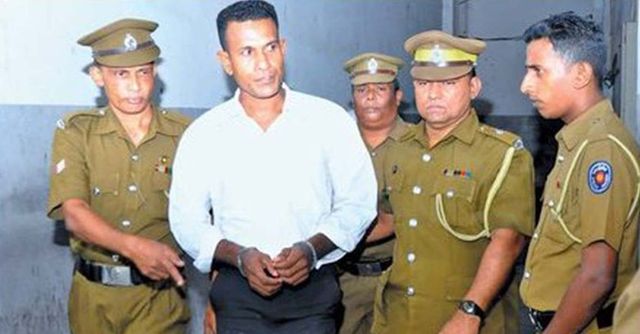
Sunil Ratnayake
President Rajapakse and his party, the Sri Lanka Podujana Peramuna, falsely claim no war crimes occurred in Sri Lanka during its nearly 30-year war. This is the position of every faction of Sri Lankan’s ruling elite.
Five people, including Lance Corporal R.M. Sunil Ratnayake and Private Mahinda Kumarasinghe, from the army’s Long Range Reconnaissance Patrol—a group that conducted covert operations. They were charged in the Colombo High Court in November 2002 on 19 counts of murder.
While four of the five were exonerated “due to lack of evidence” after a 13-year trial, a three-judge High Court panel unanimously found that Ratnayake was guilty of the murder of the eight civilians, and sentenced him to death.
In 2017, a five-judge bench of the Supreme Court heard an appeal against Ratnayake’s death sentence and confirmed the High Court verdict. It was one of the rare cases in which a Sri Lankan soldier has been convicted of war crimes. Overwhelming evidence against Ratnayake, as well as mass outrage over the cold-blooded killings, prevented his legal appeal from succeeding.
The Mirusivil village massacre took place on December 19, 2000, as military clashes between the LTTE and government forces intensified in the North. Confronting Sri Lankan army shelling, the villagers fled to a safer location, However, when the attacks subsided, the villagers used to visit their original homes to collect whatever fruits or vegetables they could, then return to their temporary dwellings.
Ravivarman, Thivakulasingam, Vilvarasa and his 5- and 13-year-old children— Jeyachandran and Gnanachandran—and his 15-year-old son and brother-in-law, Maheshwaran, visited Mirusivil village on December 19 and were returning on pushbikes. Maheshwaran, the only survivor, provided an eyewitness account of the crime.
The Tamil villagers were stopped by two heavily armed soldiers who forced them to kneel down and interrogated them. Four other soldiers joined in and the villagers were blindfolded and assaulted.
Maheshwaran, who was knocked unconscious, was being dragged by the soldiers near a cesspit when he became conscious and his blindfold became loose. He noticed patches of blood near the cess pit and movements inside it. Realising the danger, he pushed away two soldiers and was able escape, running for his life into the thicket.
During the police investigation, Maheshwaran identified Ratnayake and Kumarasinghe. While only goat and reptile carcasses were discovered in the cesspit, the bodies of the eight villagers were later found buried among the bushes near the place where they were attacked. The post-mortem found that all of the victims, including the toddler, had been beaten, tortured, and their throats had been slit.
Having released Ratnayake, the Sri Lankan president has once again asserted that the security forces and police can act with impunity and commit any crime against the people. It also shows Rajapakse will not allow the rule of law or the judiciary to block his autocratic moves.
As he declared in this year’s Independence Day speech: “I do not envisage public officials, lawmakers or the judiciary, impeding my implementation of this commitment [to the people].”
While numerous war crimes were committed by Sri Lanka’s security forces during the war, only a handful have been exposed. When cases were filed, those accused were ultimately released.
Much international attention has been paid to the killing of five students in eastern Trincomalee and the massacre in 2006 of 17 members of the “Action Against Hunger,” an organisation that assisted war-affected people in Muttur. Both these cases were suppressed during the Sirisena-Wickremesinghe administration.
Since becoming president last year, Rajapakse has increasingly exalted the military and elevated former senior military officers into leading positions in civilian institutions, laying the foundations for dictatorial forms of rule.
Gotabhaya Rajapakse previously served as defence secretary when his older brother Mahinda Rajapakse was president during the last period of the war that ended in 2009. He is determined to protect and defend their political leadership and the military who are implicated in war crimes, which, according to the UN, saw the deaths of 40,000 civilians and LTTE members who surrendered during the final phase of the war.
President Gotabhaya Rajapakse and his administration recently withdrew from the 2015 October UN Human Rights Council resolution, co-sponsored by the US and the then Siri sena-Wickremesinghe government. This resolution, which was fully backed by the Tamil National Alliance (TNA), proposed a “domestic mechanism” to investigate human right violation s which was simply window-dressing to cover up war crimes.
This year Rajapakse publicly admitted that 20,000 people who went “missing” during the war were “actually dead,” and that the government would issue death certificates after verifying relatives’ claims on the disappearances. The disappeared include many hundreds of people who were rounded up, tortured and killed by death squads linked to the military.
Early this year, Rajapakse established a presidential commission to investigate so-called political reprisals by the previous government. The commission is the means to block judicial inquiries into the crimes of military officials, such as former Navy Commander Wasantha Karannagoda who has been accused of abducting and murdering eleven Tamil youths. Karannagoda has defied four court orders demanding that he appear in court.
Amid growing international opposition to the release of the killer, the UN High Commissioner for Human Rights (UNHRC) issued a statement on March 27 condemning Sunil Ratnayake’s release and declaring that it was “troubled” by it.
The UNHRC statement declared that the “pardon” was “yet another example of the failure of Sri Lanka to fulfil its international human rights obligations to provide meaningful accountability for war crimes, crimes against humanity and other gross violations of human rights.” Amnesty International and Human Rights Watch have also condemned Ratnayake’s release.
Sri Lanka’s parliamentary opposition parties, including the United National Party, Sri Lanka Freedom Party and Janatha Vimukthi Peramuna, have said nothing about this legal travesty. Their silence is political consent.
For its part the TNA has shown little concern. It issued a brief comment describing the “pardon” as an “opportunistic act” by President Rajapakse who was taking advantage of the COVID-19 pandemic, to deflect attention from Ratnayake’s release.
All of the establishment parties, including the Tamil parties and the pseudo-left, attended an all-party meeting called by Prime Minister Mahinda Rajapakse in the name of “national unity” to fight the coronavirus pandemic. They all endorsed the moves by the Rajapakse administration towards authoritarian rule. All fear the explosive struggles of the working class and the poor that will inevitably erupt.
Rajapakse has not just released a convicted war criminal but is making clear how far he is prepared to go in suppressing the democratic rights of the masses. This is a serious warning to the working class.

Japanese government planning attacks on democratic rights on pretext of pandemic

Ben McGrath

Japanese Prime Minister Shinzo Abe on Saturday gave his third news conference on the COVID-19 pandemic, warning that if the number of infections continues to grow, hospitals could be overwhelmed. Like his counterparts around the world, Abe’s primary concern was to reassure big business that a massive bailout package would be coming.
Tokyo, the metropolitan area of which is home to more than 38 million people, had 430 confirmed cases of COVID-19 as of Sunday. There were 68 new cases that day, a single-day record for the city. There were 168 new cases throughout the country, bringing the total to 1,880, including 53 deaths. Japan’s Minister of Health Katsunobu Kato informed Abe on Thursday that Japan is now at a high risk of rampant infection. Tokyo Governor Yuriko Koike suggested last week that a lockdown in the capital could be coming.
Japan’s Minister of Health Katsunobu Kato informed Abe on Thursday that Japan is now at a high risk of rampant infection.
Abe said on Saturday that Japan was at a “critical stage,” stating, “We’re going to compile an unprecedented level of economic measures that exceed those taken when the Lehman Brothers crisis occurred [in 2008].”
At that time, Tokyo supplied a handout worth 57 trillion yen ($US528 billion). Details on the latest package have not been finalized, but Abe stated it would “include a full range of fiscal, monetary and tax measures.” Tokyo already approved a 1 trillion yen ($US9.3 billion) bailout package earlier this month as Japan’s economy is predicted to contract by 2.9 percent in the first quarter of this year.
Despite the growing health crisis around the world, Tokyo has done next to nothing to prepare, carelessly relying on the fact that infections had not grown at the same rate as in other countries such as South Korea, China, Italy and the United States. While Japan has the capacity to test approximately 7,500 people a day, the average is 1,200 to 1,300. Only approximately 25,000 people have been tested. By contrast, South Korea has tested more than 394,000.
Kentaro Iwata, a professor of infectious diseases at Kobe University, said last week: “It is hard to comprehensively explain (testing capacity in Japan as a whole) as it varies across the country. But not enough is being done around me (at least).” He also stated: “Japan has not contained (the virus), or perhaps I should say we cannot even judge whether we have contained it without conducting a sufficient number of tests.”
Masaya Yamato, director of the Infectious Diseases Center at Osaka’s Rinku General Medical Center, stressed the seriousness of the situation, stating: “The economic impact should not be a top priority. Tokyo should lock down for two to three weeks. Otherwise, Tokyo’s medical system could collapse.”
Other health experts have warned that companies and local governments have not taken effective measures to prevent the spread of COVID-19.
Hospitals have denied testing to people, even those showing symptoms, who do not meet specific requirements set by the Health Ministry: close contact with a confirmed patient or travel to an outbreak centre, along with coronavirus symptoms. Some people have been rejected for not having symptoms for longer than four days.
The Japanese ruling class has wasted weeks in not preparing for a COVID-19 outbreak. Whether or not Japan emerges as a centre of a serious outbreak does not alter the criminality of the lack of government preparation. As has been seen in crisis after crisis, like the Fukushima nuclear disaster in 2011, the government has proven unwilling to put even basic measures forward to protect the lives of Japanese workers, farmers, and youth.
According to a Health Ministry report, Osaka could have as many 3,400 COVID-19 infections by early April. “It’s possible that provision of medical treatment to seriously ill patients may become difficult,” the report stated.
Last week, Osaka’s government was preparing an additional 600 hospital beds for patients. Tokyo only had 100 hospital beds for patients with serious infectious diseases, with the local government stating it would secure 600 more.
The concerns of the Japanese ruling elite however have focused on exploiting the crisis to justify attacks on democratic rights as well as to protect their economic interests.
On March 13, the government led by Abe and the ruling Liberal Democratic Party (LDP) revised a 2013 law that will allow the prime minister to declare a state of emergency, without parliamentary approval, for up to two years. The bill received support from the two main opposition parties, the Constitutional Democratic Party of Japan (CDP) and the Democratic Party for the People.
Abe admitted before the changes were passed that: “Given that individual rights would be suppressed, I would thoroughly examine its potential impact before making a decision.” The government would be able to instruct residents to stay indoors, close schools and cancel events while allowing it to take over land and facilities for the government’s use. The cancellation of events could easily be used to suppress political gatherings the government disagrees with.
In February, LDP members argued that a state of emergency law should be included in the country’s constitution. The LDP has pushed for such a clause for years, including it in their 2012 draft constitution, which contains other attacks on democratic rights. These included allowing the military to put down domestic unrest, allowing the Cabinet to enact laws independent of the National Diet during a state of emergency and requiring the population to obey all orders from the state in the event that an emergency is declared.
There is no reason to believe that the government will stop short of pushing these measures through in the future after the groundwork has already been laid with the latest revisions to the current state of emergency law. It is the same method Tokyo has used to pursue remilitarization and circumvent the constitution’s Article 9, banning Japan from going to war or maintaining a military.
Tokyo’s actions make clear that it is the working class in Japan that must oversee and coordinate the response to social and health crises, including the coronavirus pandemic.

Coronavirus cases surge in Turkey as anger grows among workers at government response

Baris Demir

According to the Ministry of Health, Turkey’s death toll from the coronavirus increased by 23 to 131 yesterday, as the number of confirmed cases rose 1,815 to 9,217. Anonymous health care professionals told the press media that the number of deaths and cases is much higher than the official figures due to insufficient testing. The government still refuses to give details about cases and deaths, such as their age and location. As a result, suspicion of official government statements is growing among workers.
The government had to take new measures recently but it maintains its class-based response to pandemic, in line with other governments around the world: a policy of malign neglect, forcing the working class to stay at work to produce profit despite the surge of infections and deaths.
On the evening of March 27, Turkish President Recep Tayyip Erdoğan announced additional measures to curb the coronavirus outbreak. Travel between cities is now possible only with authorization from local authorities. Flights to foreign countries, already reduced, are to be suspended. There are also new restrictions on public transport, as passengers are to be seated separately in public service vehicles.
However, workers continue to be exempted from these measures in the interests of big business. According to an Interior Ministry statement, shuttles carrying factory workers to work are exempted from restrictions on inter-city travel.
In the name of halting the pandemic, the government spuriously calls for “stay at home” or “self-isolation.” While the big companies hypocritically praise workers’ sacrifices, celebrities share the government’s official “stay at home” postings on social media. Many companies in banking, insurance, technology, and R&D have switched to working from home, and many small businesses like cafés, restaurants, restaurants, gyms, hairdressers are temporarily suspended. Layoffs are mounting.
In many key sectors such as metal, textile, construction, however, millions of workers who cannot work from home are still forced to go work. Supporters of the government’s “stay at home” policy maintain a two-faced silence on the fact that such workers are forced to risk illness and death in non-essential jobs.
For his part, Health Minister Fahrettin Koca said, “Everyone can declare their own state of emergency, the state does not necessarily have to declare it.” That is, workers are forced to make an individual choice between endangering the lives of themselves and their families and staying at home in poverty.
Istanbul Mayor Ekrem İmamoğlu of the opposition Republican People’s Party (CHP) did not criticize this ultra-reactionary policy, but instead asked for “limited” measures to slow the spread in Istanbul, Turkey’s largest city and economic capital. Noting that Istanbul’s public transport system still had around 1 million daily users last week, he said, “if it is not possible throughout Turkey, at least in İstanbul we urgently need to a limited and controlled curfew.”
Journalist Murat Yetkin in an article last week reported that Erdoğan opposed a confinement policy recommended by the Coronavirus Scientific Committee and the Ministry of Health.
Yetkin wrote, “Here are the things we can deduce by reading between the lines of what has been said, also considering the experiences of other countries and the information we’ve gathered thus far: The Coronavirus Scientific Committee and the Ministry of Health were both unable to convince President Tayyip Erdoğan that the best way to slow the spread of Covid-19 could be through a policy of generalized isolation, not only for those over 65.”
He ends his article by asking “Why be so timid in taking the necessary steps? This is the biggest unknown.”
In fact, the answer is clear: throughout the world, the ruling class focuses on measures not to contain the pandemic, but to bolster business against any fallout in a crisis-ridden economy by ensuring workers keep producing billions in profits for the super-rich. Capitalism is at war with the most urgent health needs of working people.
In his latest statement, Erdoğan again underscored that “continuing production and exports are our top priorities.” Last week, President Erdoğan had declared an “Economic Stability Shield” package for business totaling 100 billion Turkish liras (US$15 billion). The 19 measures include just two miserly offerings for working people.
In addition, while many people cannot get COVID-19 tests, a video showing pro-government businessmen getting tested in their private homes angered many workers. The daily Cumhuriyet has revealed that COVID-19 care in private hospitals is not free, though all private hospitals were declared by the ministry as “pandemic hospitals” to support public hospitals against the pandemic. Three patients had to pay about 4,000 Turkish liras.
Meanwhile, the anger among workers is erupting. While wildcat strikes erupted across Europe and America to demand the idling of plants during the pandemic, demands are growing in Turkey for paid leave for all workers, rejecting employers’ demands that workers continue to work despite the risk to their health and their lives. Against the official “stay at home” campaign, many artists and intellectuals are posting videos on their social media accounts to demand state-funded paid leave for all workers.
After some wildcat strikes by Istanbul construction workers, workers stopped production for three hours in a filter factory in the southern border city of Hatay against management’s offer of unpaid leave. After this work stoppage, the firm had to accept workers’ demand for paid leave until April 30.
The main trade union confederations are collaborating with the government, isolating such strikes and playing a criminal role to keep workers on the job.
Fearing that strikes and protests will spread among workers, the Ministry of Family, Labor and Social Services reported that contract negotiations and strikes were temporarily halted across the country in a circular sent to address coronavirus measures.
The government has also launched a witch hunt against critics of its response to the pandemic. Hundreds of people have been detained since March 11 on charges of sharing “provocative posts” about coronavirus on social media.
As a clear sign of fear in the government about growing anger among workers, a truck driver named Malik Baran Yılmaz was detained yesterday for his social media post exposing the class character of the government response to coronavirus crisis.
In a video that was widely shared and watched tens of thousands of times, he said: “You say stay at home Turkey! But how can we stay? I am not retired, public officer or rich. I am a worker. I’m a truck driver. If I do not work, there is no bread. I can’t pay my electricity, water, rent... I will either starve to death by staying at home or die from the virus. But if this virus does not kill me, your system will kill us.”

Duterte reacts to COVID-19 with military repression

Joseph Santolan

As of Sunday evening, 1,418 people in the Philippines had been official recorded as infected with COVID-19, a number which includes 343 new cases reported that day. Of the confirmed cases, 71 people have died thus far. Twelve of them were doctors who contracted the virus while courageously caring for patients despite not having received adequate Personal Protective Equipment (PPE).
The 71 reported deaths are only those who have been officially tested for COVID-19. Given the very limited testing thus far, the actual death toll is almost certainly an order of magnitude larger.
The Philippine government did nothing to prepare for this catastrophe. In late February, when the global impact of the virus was clear, Duterte delivered an incoherent and vile public address in which he said that he would personally “slap the f..king idiot virus,” but declared that Filipinos would not get sick because they prayed regularly. No medical supplies were stockpiled; no facilities were readied.
On March 16, long after the catastrophe was apparent, Duterte abruptly announced that he was placing significant portions of the country under Enhanced Community Quarantine (ECQ). The response of the Duterte administration to the pandemic has been the deployment not of masks and tests and treatment, but heavily-armed military checkpoints, armored personnel carriers, and police state repression.
The entire island of Luzon, the largest and most populous region in the country, including the capital city of Manila, has now been placed on total lockdown until April 13. Over 50 million people have been confined to their homes under threat of arrest if they leave. Beyond Luzon, other provinces and regions have been placed under de facto martial law, on orders from governors and provincial officials.
One member of every household has been given a quarantine pass that authorizes them at certain limited hours to leave their home in search of groceries or medicine. Anyone found outside without a quarantine pass, or traveling to a job deemed essential, can be arrested on the spot.
Flights out of the country have effectively stopped and all public transportation has been suspended. Nurses, grocery store workers, bank employees, pharmacy workers, many of whom live great distances from their workplace, are compelled to walk for hours to get to their employment each day.
Among the industries that have not closed is the multi-billion dollar Business Process Outsourcing (BPO) industry. Call center workers, employed by international corporations, largely American, and who work the graveyard shift in order to answer US phone calls, are still on the job.
The immensity of the looming catastrophe in the Philippines cannot be overstated. The millions who live in the densely populated shantytowns of Greater Manila have not had a single moment of “social distance” in their lives.
According to the Ibon Foundation research center, approximately 14.4 million people on Luzon are “non-regular workers and informal laborers,” about three out of five employed persons. The majority of the workers in this informal economy lives on a day-to-day basis, in which one day’s income provides the next day’s consumption.
Lockdown for these millions of people means malnutrition and possibly starvation. Anyone desperate enough to venture out of their squalid quarters seeking food or work faces the armed might of the state.
Justice Secretary Menardo Guevarra told the press: “The total lockdown in Luzon is in effect a 24-hour curfew. No one leaves the house, unless covered by the exceptions/exemptions.”
The implementation of this curfew has been brutal. The police have been given authority to arrest without warrant anyone deemed in violation of this curfew. As of Friday, 42,826 curfew violators had been arrested, over 10,000 in Manila alone. Every person arrested faces fines and a prison term.
The police have subjected the population to a reign of terror. Numerous instances of torture, humiliation and physical violence have been reported. The arrested have been crammed into dog cages, they have been made to sit in the debilitating heat of the noonday sun on basketball courts. Many of the tortured are minors.
In Bulacan, just north of Manila, a man was shot dead by the police for allegedly evading a lockdown checkpoint on his motorbike on Wednesday.
As with everything else, there is a fundamental inequality in the enforcement of the quarantine. When Senator Koko Pimental was placed under quarantine in his mansion after having been in contact with an infected person, he disregarded the instructions and went out grocery shopping in the elite business district of Bonifacio Global City.
His test came back positive. Yet upon learning that he was infected, the senator left his home to visit his wife in the maternity ward, where she was having an ultrasound, and he wandered through the delivery room complex. As a result of Pimentel’s actions, 22 nurses have been quarantined along with an undisclosed number of grocery store workers. No charges have been filed.
As public outcry mounted, Justice Secretary Guevarra—the man responsible for the 24-hour curfew—declared that the Department of Justice (DOJ) noted that “people are prone to commit mistakes,” and the DOJ would “temper the rigor of the law with human compassion.”
Most of the rich have been able to avoid this unpleasantness entirely. While there are no tests available for the population, the rich and politicians receive multiple tests, even when they are asymptomatic, with medical personnel coming to visit them in their homes.
Kris Aquino, television celebrity and daughter and sister of former presidents, took a private helicopter to the island of Boracay where she is said to be “sheltering in place” at the private beach resort of a friend.
Like their health and their immunity from prosecution, the profits of the wealthy are also guaranteed by the state. The country’s Central Bank last week injected 300 billion pesos ($US6 billion) into the financial system through quantitative easing measures to stabilize the Philippine stock market. The heads of several major banks told BusinessWorld, in a report published Sunday, that they expected a good deal more money to be forthcoming for the markets.
For the rest of the population, hospitals are turning highly symptomatic people away, untested, if they are deemed not to be priority cases, including because they are not elderly. Some of those turned away have now died.
The state has allocated all of its resources to military repression and shoring up the profit margins of the elite. Desperate to stabilize its collapsing infrastructure, the Department of Health (DOH) on March 27 issued a public appeal on Facebook for volunteer medical professionals to work at “frontline hospitals” to cope with the influx.
The DOH offered P500 a day (less than $US10) in pay to any doctor or nurse if they would commit to work eight hours a day for 14 consecutive days, which would be followed by a mandatory onsite quarantine of two weeks. The appeal was greeted with mass outrage at the conditions and abysmal pay the government offered for the defense of the public’s health
The response of the entire ruling class to the growing mass anger is repression and the preparations for dictatorship. The legislature passed a bill by an overwhelming majority giving the president emergency powers with the outrageous name, the We Heal as One Act.
The emergency powers, which have been granted to the executive branch, include imprisoning for two months anyone accused of spreading “fake news” online and subjecting them to a fine ranging from 10,000 to 1 million pesos. The target of this repressive bill is the dissent which is percolating from every section of the working population.
On Friday, a 55-year old public-school teacher and her son were arrested without warrant in their home after she posted on Facebook that her town’s mayor was stacking up relief goods in the town gymnasium and not distributing them. She wrote, “Many people will die of hunger ... I call on those who have nothing to eat to raid the Lanao Gym. The food packs meant for you are piled up there.”
She faces the charge of “inciting sedition,” which carries a prison sentence of up to six years. Her son was arrested for attempting to protect his mother from the police.
Thus far, only 2,686 people had been tested for COVID-19 in a nation of over 100 million. The true number of those infected is doubtless far greater than that officially documented. Nothing has been prepared to treat or to care for the ill, but measures are in place to keep them in their shanty towns at gunpoint.

Africa’s confirmed cases of COVID-19 approaching 5,000

Stephan McCoy

Confirmed cases of COVID-19 on the African continent rose to 4,605 Sunday, with around 100 people having lost their lives to the virus. The need for an internationally coordinated response to stop the spread of the coronavirus on the African continent is urgent.
South Africa now has 1,280 confirmed cases and is emerging as the epicentre of the pandemic on the continent. But other countries are not lagging far behind—with Egypt (609), Algeria (511), Morocco (479) and Tunisia (312), each already recording hundreds of cases. South Africa reported its first two deaths last week from the novel coronavirus, but Algeria has recorded the most with 29.
Mami Mizutori, head of the UN Office for Disaster Risk Reduction (UNDRR), told Reuters that Africa is likely to see a higher mortality rate than the rest of the world as weak health care systems buckle under the surge of cases, saying, “It is easily imaginable that if this becomes the case in a country where the health system is not as sophisticated, then that could lead to possibly higher mortality.”
The World Health Organisation’s regional director for Africa, Matshidiso Rebecca Moeti, warned of a “dramatic evolution” of the pandemic, telling France24, “The situation is very worrying, with a dramatic evolution: an increase geographically in the number of countries and also an increase in the number of infections.” He insisted that there must be “intensified action by African countries.”
African governments, with vicious and corrupt ruling elites at the helm and a long list of appalling human rights abuses and violations under their belt, are exploiting the spread of the coronavirus to build up the powers of the state in preparation for serious confrontations with the working class.
In contrast, little or nothing is being done to prepare for the inevitable surge of cases by diverting resources and money toward the health care system and procuring lifesaving protective gear and medical equipment for health care workers and patients.
The African ruling elite, dependent on the major powers and transnational corporations for their privileged position, are far more concerned with how they can negotiate greater access to the wealth extracted from the international working class. This requires that they impose the dictates of the World Bank and the International Monetary Fund on the working class and peasantry and ensure that minerals, oil and agricultural goods make their way to the advanced countries and manufacturing facilities unhindered. The logic of this is the violent suppression of any opposition to these dictates.
According to Bloomberg , two men were shot and killed in Rwanda by police for possibly involuntarily violating the stay-at-home order following the announcement by President Paul Kagame one week ago that the country would be on a 14-day lockdown enforced by the military and the police. Jean-Claude Nyiramana, 27, and Emmanuel Nyandwi, 25, were murdered in Nyanza District just outside Kigali on March 24.
In South Africa, ahead of the 21-day lockdown, President Cyril Ramaphosa delivered an address to the security forces in which he instructed them to be “a force for kindness.” In full military attire, in the manner of a dictator, the speech was designed to threaten and intimidate the population, with Ramaphosa declaring, “There are those who want to take chances who will want to challenge the might of the South African state ... Nudge them in the right direction and if they continue resisting, indicate to them that they are challenging the might of the State and the President.”
Defence Minister Nosiviwe Mapisa-Nqakula told the media, “I don’t think really people should be provocative because if you don’t want to comply with the regulation set out, honestly you are challenging and testing the state itself.”
The South African population views the presence of the military on the streets with a mixture of fear and trepidation. An in-depth report by Times Live covering the first day of lockdown met one resident who, after being asked by an armed soldier why he had run when he saw them approaching him, replied anxiously, “I’ve never seen you guys before. You scare me.”
In the Hillbrow neighbourhood of Johannesburg, South African police with batons attacked the homeless, before using tear gear and rubber bullets to disperse shoppers.
The African National Congress government has since extended the lockdown—announcing that the quarantine would continue until June, at a cost of 641 million Rand (US$38 million) to the taxpayer, to be paid for by further attacks on the conditions of the working class.
Zimbabwe’s ZANU-PF government is imposing a 21-day lockdown from today. Zimbabwe has 7 confirmed cases and one death so far.
World Health Organisation Director-General Tedros Adhanom Ghebreyesus, warning against the use of lockdowns as the only measure to confront pandemic, said, “To slow the spread of COVID-19, many countries introduced ‘lockdown’ measures. But on their own, these measures will not extinguish epidemics.” The WHO has stressed that it is critical that governments “test, test, test” for the virus and then isolate and treat those who are found positive for COVID-19.
The necessary measures to fight COVID-19 is the full-funding of health care, the provision of all the necessary medical equipment and protective gear for health care workers, and universal testing—demands running counter to the polices pursued for decades by every national ruling class who have refused to adequately finance health care.
Africa has some of the most unequal countries on the planet. According to Oxfam, “Five of Nigeria’s richest men have a combined wealth of US$29.9 billion—more than the country’s entire national budget for 2017, with about 60 percent of its citizens [living] on less than US$1.25 a day, the threshold for absolute poverty.”
Oxfam writes, “West African countries lose an estimated $9.6 billion each year through corporate tax incentives offered to multinational companies. This would be enough to build about 100 modern and well-equipped hospitals each year in the region.”
Nurses and doctors have struck in Zimbabwe to demand personal protective equipment (PPE) and demand that wages be paid in dollars, which has prompted the Mnangagwa government to change the currency to dollars. In Kenya, nurses and doctors are threatening to strike if they are not provided with PPE in preparation for the surge of coronavirus cases. In Nigeria, doctors have gone on strike to demand safe and sanitary conditions.
This growing movement of the working class, in Africa and internationally, is showing the way out of the crisis that capitalism has inflicted on humanity. The wealth of the ruling elite must be expropriated and used to meet the demands of society, including the urgent procurement of protective gear and medical equipment. For this to be done, however, a socialist leadership in the working class must be built to wage an intransigent struggle against the banks, corporations and world imperialism and their agents on the continent.

India’s calamitous lockdown, punishes poor while undermining efforts to halt spread of coronavirus

Wasantha Rupasinghe

The sudden, disorganized nationwide three-week shutdown announced by Indian Prime Minister Narendra Modi starting at midnight March 24 is causing immense hardship, especially for hundreds of millions of workers and rural toilers, manifestly undermining efforts to halt the spread of the deadly coronavirus.
For weeks, Indian authorities, including Modi himself, had boasted that India had the coronavirus pandemic firmly under control. They based this claim on the relatively small number of confirmed COVID-19 cases, blithely ignoring medical experts who warned that the small infection rate was in all likelihood a function of the tiny number of tests administered.
Then last Tuesday evening, Modi and his Bharatiya Janata Party (BJP) government abruptly shifted gears. Having wasted two precious months, during which they had focused India’s anti-coronavirus efforts almost entirely on bans on entrants from foreign countries, Modi announced an unprecedented shutdown.
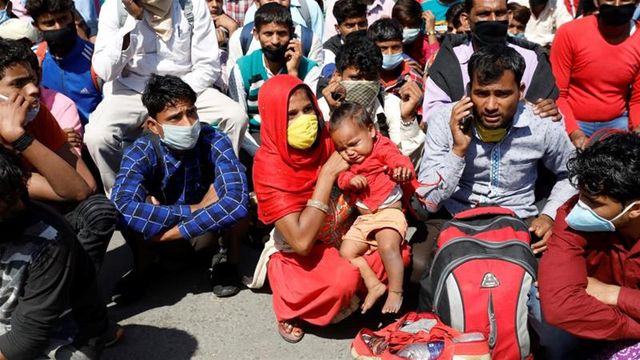
Migrant workers with their families
Claiming that if radical steps were not taken to “break the chain of infection” many would die, the prime minister ordered virtually all of India’s 1.37 billion people to remain in their homes for the next 21 days. In an act of criminal negligence, he did so without explaining how people, in rural areas and many urban slums, would get access to food and water—let alone how they would pay for them, if they could not work.
The result has been chaos, including large disorganized movements of people, opening up conditions conducive to the rapid spread of COVID-19 cases, both in number and geographically, from urban to rural India.
With the government giving people only a few hours to procure food, medicines and other essential items before the lockdown took full force, millions of people rushed to retail shops and markets.
Although the government claimed at the outset that the supply of goods would not be interrupted, shops in many cities had either run out of essential items or they were being quickly depleted. In many cities and towns, promised online deliveries were not functioning. There were numerous reports of police preventing trucks carrying food and other key supplies from crossing state borders. Even manufacturers of medical equipment needed to fight the virus said that they were struggling to get raw materials, and that some of their staff were being prevented from reporting for work.
Particularly poignant is the plight of millions of migrant labourers, who having lost their jobs and bereft of any savings, have undertaken to walk hundreds of kilometers to their native villages, clutching their children and meagre belongings. They are walking because the government has shut down all public transport, including train service.
Many of the migrants are in miserable circumstances, some having been forced to depart without receiving back wages. According to press reports at least 22 migrant workers have died on their way home. These include 38-year-old Ranveer Singh, who died from a heart attack on the Delhi-Agra highway on Saturday morning. He had already walked 200 km from the national capital toward his village in Madhya Pradesh’s Morena district. Four other migrant workers, who were walking home after they had lost their jobs, were crushed to death and three others injured Saturday, when a speeding truck ran over them at Bharol village in Vinar on the Mumbai-Ahmedabad Highway.
Amid mounting popular anger over the government’s inaction and callous indifference, the BJP state government in Uttar Pradesh announced Saturday that it would arrange thousands of buses to ferry migrant workers who had been held up at the borders of the country’s most populous state. Again due to a total lack of forethought, the government’s “social distancing” policy collapsed as more than 100,000 migrant workers jostled against each other as they sought to secure a bus space.
Media headlines gave an inkling of the social disaster now playing out across the nation. “In Covid-19 shutdown, many of Delhi’s poor and homeless are being forced to starve” (The Print, March 27); “Not China, not Italy: India’s coronavirus lockdown is the harshest in the world—The biggest human migration on foot after [the 1947] Partition” (Scroll.In, March 29); “Mumbai Cops Opened 2 containers trucks, found over 300 migrant workers” (NDTV, March 26); “ ‘Hunger can kill us before the virus’: Migrant workers on the march during lockdown” (The Wire, March 27).
This disaster is all the more bitter because the disorganized, ill-conceived lockdown is undoubtedly helping to spread the virus because India’s dilapidated and nonexistent public health infrastructure, desperate poverty, and high population density threaten to cause a catastrophic loss of life numbering in the millions.
Two days after Modi ordered the lockdown, Finance Minister Nirmala Seetharamanan announced a 1.7 lakh crore rupee (US $22.5 billion) package of relief measures, equivalent to just 0.8 percent of India’s GDP. In per capita terms, this is about $16 per person.
But even this meagre sum is largely smoke and mirrors. A March 27 NDTV opinion piece cites an analysis by research firm CLSA that shows that the central government money is only providing about 400-500 billion rupees of new money (less than a third of the total package). “The rest will come from state governments or through the rescheduling of already existing entitlements.”
Meanwhile at the government’s urging, the Reserve Bank of India has taken steps to inject 3.7 trillion rupees ($49.4 billion) into the country’s financial markets to boost the fortunes of Indian and foreign capital.
Seetharamanan claimed the paltry relief measures will mean “No one will go hungry”—this in a country where the government recently conceded that more than 90 percent of children under the age of five are undernourished.
The BJP finance minister claimed that as the result of the government’s measures, 800 million people will get 5 kg of rice or wheat free for the next three months, “over and above the 5 kg they already get,” as well as “1kg of preferred pulses.” She added that “ration card holders can take the food grains and pulses from the Public Distribution System (PDS) in two installments.”
But Seetharamanan’s statement raised a very large question mark over whether even this meagre support will in fact reach most of the 800 million poor, since, according to reports, there are only 230 million ration-card holders. Many migrant workers cannot access the PDS system, which is linked to where their families reside.
As part of the government’s “relief package,” she announced that hundreds of millions of rural farmers will immediately be given 2,000 rupees ($26.65) through “direct cash transfer” under the existing PM Kissan Yojana program in the first week of April. However, many commentators pointed out that this is in fact the first installment in a scheme announced just before the 2019 elections. Underscoring the Modi government’s contemptuous attitude towards the rural poor, the package also provided a pitiful 20 rupee increase in the daily wage paid to those employed under the state’s MGNREG scheme, which promises to provide 100 days of menial minimum-wage work to one member of every rural family that requests it.
Seetharamanan also said that the government will provide medical insurance coverage of up to five million rupees ($66,796) for all healthcare workers. This is an attempt to cover up and financially “compensate” for the Modi government’s criminal failure to provide basic protective gear for healthcare workers on the frontlines of the fight against COVID-19. Reuters has reported that a four-page internal document dated March 27 from the Invest India agency noted that India needs at least 38 million masks and 6.2 million pieces of personal protective equipment (PPE) as it confronts the spread of the coronavirus. However, the quantity of masks available from the companies canvassed was just 9.1 million, while the number of PPE body coveralls stood at less than 800,000.
Chillingly, the Invest India document related to the needs of just seven of the country’s 36 states and federal territories, “meaning the total demand for such equipment required could be much higher.”
On Sunday, the total number of COVID-19 cases in India surpassed 1,000, and the death toll rose to 27.

Canada’s doctors issue dire warnings over lack of preparedness for surge of COVID-19 patients

Omar Ali

As the coronavirus pandemic spreads rapidly across Canada, doctors are sounding the alarm, even as they brace for the worst. Physicians and other medical professionals are concerned that the scenes of overwhelmed healthcare systems, particularly in Italy and Spain, could soon become reality across Canada due to the lack of any surge capacity in hospitals.
Epidemiological models indicate that the country could experience a sharp rise in cases, with the available infrastructure being overwhelmed within weeks. A study of Ontario’s capabilities carried out by the University of Toronto, Sunnybrook Hospital, and the University Health Network found that the province would run out of intensive care beds and ventilators in 37 days even if it manages to cut current infection rates by half. The study assumed that the average stay in an intensive care unit (ICU) ward would be eight days and that a quarter of ICU beds could be dedicated to coronavirus patients. The authors point out that even if more beds are made available, this would only alleviate conditions slightly. For example, dedicating 75 percent of all ICU beds to COVID-19 cases would buy a mere two additional weeks for the province.
Doctors have criticized the varying messages from different levels of governments and across jurisdictions. Dr. Michael Warner, the director of critical care at Michael Garron Hospital in Toronto, derided the response of officials to the impending crisis in a recent interview. He drew attention to the limited efficacy of social distancing, especially when the public has not been given clear and consistent instructions on what it precisely entails. He pointed to the suggestion, initially made by Ontario’s provincial government, that meetings of 50 persons or less were acceptable.
Warner drew similarities between Canada and Italy. He noted that the virus has ravaged the wealthy north of Italy (as opposed to the country’s much poorer south) where the healthcare system resembles Canada’s. On March 23, the Ontario and Quebec governments announced the shutdown of all nonessential services, but Warner said he fears Canadians will come to regret their having waited that long. The reality is that the provincial governments have allowed large sections of nonessential manufacturing, construction, and various resource industries to continue operating, unnecessarily exposing hundreds of thousands of workers and their families to the threat of infection.
Dr. Warner drew a bleak sketch of what might transpire in the coming weeks. He pointed out that Ontario only has 400 ICU doctors serving a population of 14 million people. A COVID-19 attack rate of 30 percent with five percent of those infected requiring intensive care would result in 200,000 new ICU patients. This would mean ICU physicians caring for 500 patients each, whereas they normally attend to a dozen or so each day. This scenario does not consider the inevitability that doctors (as well as other healthcare workers) will contract the virus themselves and require isolation or treatment.
In British Columbia, doctors wrote to the provincial NDP government to warn of the precarious position that hospitals are in, due to shortages of equipment and personnel, and to criticize the authorities’ failure to implement partial shutdowns as in Ontario and Quebec. The government has instead called for self-isolation of recent travellers and those who have had mild symptoms for at least two weeks.
A letter to the chief provincial health officer Dr. Bonnie Henry, which was signed by over 200 doctors, called for the closure of all nonessential businesses and tighter social distancing measures (the province has continued to allow gatherings of up to 50 people). Henry dismissed these proposals as unnecessary. Rallying behind the government, the president of the provincial doctors’ association authored a letter calling on members to close ranks behind the government’s messaging.
However, social distancing can only accomplish so much. The World Health Organization (WHO) has stressed that breaking the transmission of the disease is paramount, and that this can only be accomplished by combining social distancing with mass testing and systematic contact-tracing to isolate positive cases. The WHO described not testing as akin to battling a fire blindfolded. Early analysis of success stories from South Korea as well as Italy reinforce this analysis. A study of the COVID-19 response a team of epidemiologists led in the Italian town of Vo demonstrated how systematic testing and retesting could eradicate the coronavirus. All the residents of the small town of 3,300 near Padua were tested, enabling the identification of the many asymptomatic cases, with all positive cases subsequently quarantined, and treated if symptomatic.
Hospitals are using a number of stopgap measures to prevent a calamity on the scale of what has taken place in Italy. Procedures deemed not to be urgent, including cancer surgeries, are being postponed, and patients awaiting transfer to other facilities (usually long-term care facilities) are being put in temporary housing, including hotel rooms. Doctors and nurses usually assigned to different wards are being trained to work in the intensive care units. Thousands of medical residents whose exams have been delayed due to the pandemic outbreak may receive provisional qualifications, while retired doctors and nurses are being encouraged to offer their assistance.
These provisions fall well short of what is necessary to strengthen the healthcare system to confront the surging pandemic. Moreover, the diversion of scant resources, both equipment and personnel, to fighting the pandemic will invariably result in increased deaths from conditions other than COVID-19, as overwhelmed hospitals postpone treatments and diagnostic tests.
Dr. Warner also noted that the government has not taken other measures to prepare, such as putting in place educational systems to assist in training other medical professionals who may be needed in intensive care units. In addition to medical workers, orderlies and custodial staff are needed for decontaminating surfaces and preparing beds.
Personal protective equipment is also in short supply, necessitating the reuse of gowns, masks, and other equipment, which increases the risks to doctors and nurses. However, the greatest concern remains the shortage of ventilators. Doctors have criticized the paltry 300 additional units acquired by the Ontario government in recent weeks as being well short of what is needed. Ventilators are usually needed for at least 3 weeks for each patient. In a situation where approximately 4 percent of those infected with COVID-19 according to some estimates require a ventilator, many patients will be left without the treatment they desperately need to survive.
The federal Liberal government and its provincial counterparts have done virtually nothing to tackle the disastrous conditions in the healthcare system that are the product of decades of austerity and privatization. While handing hundreds of billions of dollars to the banks and big business, the Trudeau government has announced a paltry $1 billion in additional healthcare funding. It is in currently haggling with over 2,000 for-profit companies, all of whom are seeking to secure their own pound of flesh during the pandemic, to produce urgently needed medical equipment and supplies.
This inept and haphazard response, which expresses the ruling elite’s contempt and criminal disregard for the health and well-being of working people, is forcing medical professionals to prepare to make harrowing choices. Hospitals are putting in place protocols to determine who among the gravely ill receives treatment and who will be left without the medical help they need. With the ostensible aim of “relieving” severely overworked physicians from having to take such painful decisions, British Columbia has instituted a system whereby a committee, composed in part by “medical ethicists,” will decide how to allocate scarce resources, effectively choosing who is to be given medical help and who is to be left to die.
The fact that such arrangements will not only be used in a handful of cases, but on a mass scale, can be seen if one considers the situation in Nanaimo, a mid-sized city on Vancouver Island with 90,000 inhabitants. Michael Kenyon, an intensive care doctor at a local hospital, provided an estimate to the Globe and Mail that around 900 residents will require a ventilator. This was based on the relatively conservative assumption that 25 percent of Nanaimo’s population would get infected, with 4 percent of those with COVID-19 requiring intensive care. However, Kenyon told the Globe he has just 14 ventilators. “What am I going to do with 14 ventilators?” he stated. “I can tell you what I’m going to do: I’m going to do what they’re doing in Italy and I’m going to take 70-year-olds off the ventilator, and then 60-year-olds off the ventilator and eventually 50-year-olds off the ventilator, and I’m going to give them to 30-year-olds with three kids.”

UN warns that COVID-19 pandemic could trigger global food shortage

Jean Shaoul

The United Nations Food and Agriculture Organization (FAO) warned of the impact of the COVID-19 virus on the global food supply chain in a notice on their website writing: “We risk a looming food crisis unless measures are taken fast to protect the most vulnerable, keep global food supply chains alive and mitigate the pandemic’s impacts across the food system.”
The United Nations Food and Agriculture Organisation’s chief economist Maximo Torero Cullen explained that while the supply of foodstocks is plentiful, the lockdowns, restrictions on all but essential work, shuttering of schools and border closures imposed around the world to limit the spread of the coronavirus are impacting farm workers and disrupting supply chains. This in turn is leading to a slowdown in the shipping industry, as many countries implement tighter controls on cargo vessels, as well as air cargo. These new measures will particularly affect fresh food produce and livestock.
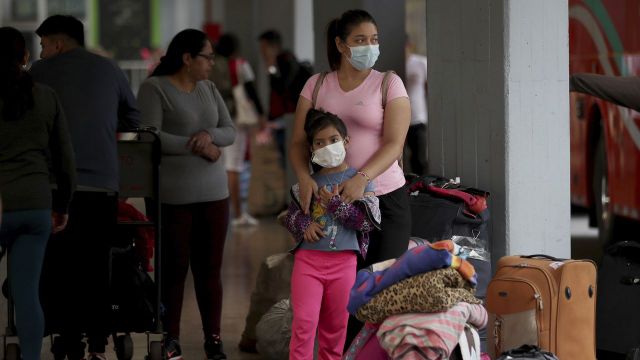
Travelers wearing protective masks arrive to the main bus station in Bogota, Colombia, March 13, 2020 [Credit: AP Photo/Fernando Vergara]
The hardest hit will be the world’s most vulnerable people, including 300 million children who rely on school meals as their one reliable meal of the day. UN-supported school meals programs in Latin America and the Caribbean, for example, benefit 85 million children, with 10 million depending on them for the main source of food. Mass layoffs and lower incomes will make it harder than ever for the most impoverished families to put food on the table.
In an interview with the Guardian, Torero urged countries not to ban the export of foodstuffs saying, “The worst that can happen is that governments restrict the flow of food.” Protectionist measures and trade barriers would only make matters worse, creating “extreme volatility” in prices. Some countries have already begun to take such measures. March 20, for example, Russia called a halt to the export of buckwheat and other grains for 10 days, while Kazakhstan introduced restrictions on shipments of wheat flour, buckwheat, sugar, several types of vegetables and sunflower oil.
Torero insisted that global food trade had to be kept going, warning against the beggar-thy-neighbor policies of the global food price crisis of 2008 when some countries imposed higher export taxes or export bans that provoked tit-for-tat reactions.
Food flows are international in character. Some 20 percent of the calories people eat—such as rice, soya, grains and wheat, cross at least one international border, up by more than 50 percent since 1980, with one third the world’s food coming from low and middle-income countries.
Countries dependent on imported food are particularly vulnerable to slowing trade volumes, especially if their currencies decline relative to the US dollar. With retailers upping their prices everywhere, food costs are accounting for an ever-larger share of a shrinking household budget.
One indication of the devastation to come can be found in the fresh flower industry. Flight cancellations along with the collapse of the Dutch auctions have left many farmers in Kenya, the world’s flower garden with annual exports of tonnes of freshly cut flowers to all corners of the world, with no option but to dispose of flowers worth millions and close down virtually the entire sector.
Domestic food supply chains are no less imperiled, involving a complex web of farmers and farm labourers, as well as fertilizers, seeds and veterinary medicines, processing plants, freight distributors, retailers, etc.
Smallholder farmers in the “developing” countries are some of the worst affected by food insecurity, due to their low incomes. During the Ebola crisis in West Africa, lockdowns prevented farmers’ access to markets to buy inputs and sell products as well as impacting the availability of labour at peak seasonal times, leading to unsold food and a loss of income. The string of events led to a huge increase in hunger and malnutrition throughout the region.
Food insecurity is particularly acute in East Africa and the Horn of Africa, where 80 percent of the population works on the land and is now facing the destruction by desert locust swarms.
Some countries are already experiencing a shortage of workers to harvest fresh produce due in part to border closures and domestic lockdowns, and the lack of protective measures to ensure the health and safety of food-system and delivery workers, including on-site health measures, protective clothing, sick-leave and physical distancing.
The pandemic has exposed the degree to which farming is dependent upon migrant workers, with more than a 25 percent of the world’s farm work done by migrant workers.
In Europe, commercial farm work is dependent on the annual migration of hundreds of thousands of people from poorer countries to harvest food crops. Travel bans have reduced seasonal migration to a trickle, just as farmers are preparing for the harvest amid stockpiling and the most precipitous economic downturn in post-war memory.
Farmers in France, Spain, and Italy are warning that ripening fruit and vegetables will be left to rot, leading to severe shortages in April and May. Strawberry and asparagus growers have been unable to pick their crops, with other fruit, vegetables and salad greens next in line. France alone needs 200,000 workers, while Germany requires 300,000. Britain, where the problem is further exacerbated by Brexit, faces a shortage of 90,000 workers.
Some two-thirds of these 800,000 difficult and backbreaking jobs, characterized by low pay and long hours, are filled in the harvest season by workers from central and eastern Europe and north Africa. But the Schengen area, comprising 26 European states, has banned external visitors for 30 days and many borders are closed. Even where travel is allowed, transport is limited, and workers fear they may be barred from returning home if they fall ill.
In Britain, the Country Land and Business Association has called for a “land army” to work the fields, while Germany has appealed to the unemployed. France’s employment agency has announced that people can still receive benefits or earn money if they are furloughed while doing farm work, with the UK declaring farm labourers “key workers.”
In the US, farmers are hampered by the reduction in visas issued to workers from Mexico.
Ali Capper, chairperson of the UK’s National Farmers Union’s horticultural board, told the Financial Times, “Every first world economy is used to workers coming from other economies to pick their fruit and vegetables…. What you are talking about is a major societal shift.”
In India, where Prime Minister Narendra Modi’s nationwide 21-day curfew on the country’s 1.4 billion people, introduced last week without prior warning or preparation for maintaining food supplies, has severely disrupted supply chains amid widespread confusion over which businesses are allowed to operate.
The police have stopped goods trucks from moving across state lines, while giant ecommerce companies, including Amazon, Walmart-owned Flipkart, SoftBank-backed Grofers and Big Basket, have reported severe difficulties, with police closing warehouses and harassing couriers delivering online orders to middle class homes in the cities.
This has already affected some of India’s most vulnerable people, including urban migrant workers who have lost their jobs and businesses due to social distancing and are now making the long journey home on foot, under conditions where they may be unable to pay for or get food on the way. While the government has said it will provide aid to the poorest for the next three months, this will only be available to villages, meaning that workers must return home.
Reetika Khera, economics professor at the Indian Institute of Management, Ahmedabad, told the Financial Times, “We are very worried about starvation deaths… People on the march like this, they are not very nourished in the first place. They can die of exhaustion.”
According to FAO statistics, a massive 820 million people around the world (12 percent) are currently experiencing chronic hunger and lack the caloric energy to lead normal lives. An additional 113 million are so hungry that their lives and their livelihoods are in danger, reliant on external assistance for their existence.
As COVID-19 proliferates in the 44 countries that already need external food assistance or in the 53 countries that are home to 113 million people experiencing acute hunger as a result of poverty, wars, conflicts, landlordism, extortionate debt charges and climate change, the consequences will be catastrophic.

EU divisions erupt as anger mounts among workers over COVID-19 response

Alex Lantier

Amid the surging death toll and mounting anger at the official handling of the COVID-19 pandemic among workers, bitter divisions are erupting between the European Union (EU) powers over how to finance massive bailouts granted to their banks and major corporations. It is clear that no faction of the European ruling class offers a way forward to fight the pandemic. Instead, COVID-19 is exposing the political rot left by decades of social austerity and bitter inter-imperialist conflicts between the major EU powers.
Yesterday, as the world total of COVID-19 cases climbed to 721,277, and the United States led the world with 141,781 cases, Europe collectively had 382,823 identified cases of coronavirus. The European death toll had mounted to 24,138. These figures largely underestimate the number of the sick and the dead, as several European countries including France and Spain have already acknowledged that they deliberately do not count those who fall sick or die of COVID-19 at home or in retirement homes.
Since nationwide wildcat strikes in Italy and walkouts across Europe forced governments to implement confinement orders demanded by health authorities, Italy, France, Spain, Britain and large parts of Germany are on lockdown. Nevertheless, governments and major corporations continue to press workers in industries like auto, steel, and aerospace not essential to supplying the population with food and medicine to go to work, to boost corporate profits and the wealth of the financial aristocracy.
COVID-19 keeps spreading faster than it would amid a tighter confinement policy, prolonging the pandemic and increasing the number of cases by thousands. This weekend, according to official statistics, saw 15,449 new recorded cases in Spain, 13,757 in Germany, 11,883 in Italy, 8,420 in France, 5,401 in Britain, and 2,331 in the Netherlands. Italy saw a record 1,808 COVID-19 deaths, Spain 1,617, France 618, Britain 441, the Netherlands 205, and Germany 166.
An explosive confrontation is emerging between the European financial aristocracy and the working class. Anger is mounting among factory and service workers against employers’ attempts to force them to work, and among health workers against EU austerity measures that have slashed tens of billions of euros from state health budgets.
Rubén Herrera, a nurse in Alcalá de Henares, told Spain’s El Pais that with Madrid-area hospitals overwhelmed with severely ill COVID-19 patients, “We are working like in a war movie, with soldiers coming out of the trenches, that is the sort of medicine we do: as if it were wartime… We only think about the next seven or ten hours we have before us, hoping the emergency room will not collapse and that everyone can be protected…
“None of this would be happening this way without the cuts and privatizations, if in 2012 they had not cut 120 beds and 90 jobs from this hospital, and 2,100 beds and at least 2,200 health workers less in the entire region.”
After a video went viral on Italian social media of a father giving his daughter a piece of bread, and warning that the population could attack supermarkets if they ran out of money to buy food, ruling circles are warning that riots could erupt across major EU cities in the coming weeks. Italian officials are reportedly posting guards outside supermarkets across southern Italy. However, similar problems face broader layers of temporary, self-employed and other precarious workers who have emerged across Europe, especially since the 2008 crisis.
Francesco Rocca, head of the International Federation of Red Cross and Red Crescent societies (IFRC), told the UN: “We have a lot of people who are living very marginalized, in the so-called black hole of society... In the most difficult neighborhoods of the biggest cities, I am afraid that in a few weeks we will have social problems. This is a social bomb that can explode at any moment, because they don’t have any way to have an income.”
Rocca added that he thought “major Western cities” could see mass unrest “in a few weeks.”
The confrontation emerging between the working class and the European police states set up by the financial aristocracy has revolutionary implications. The claim that there is no money to carry out a struggle against the pandemic is absurd. However, the necessary resources to halt the COVID-19 pandemic and maintain the distribution of essential food and medical supplies across international supply chains requires the expropriation of the financial aristocracy.
Figures like Bernard Arnault (France, 2019 net worth: $106.8 billion), Armancio Ortega (Spain, $67.2 billion), Françoise Bettencourt Meyers (France, $49.3 billion), Karl Albrecht (Germany, $36.1 billion), Jim Ratcliffe (UK, $32 billion) or Giovanni Ferrero (Italy, $22.4 billion) and countless lesser financial aristocrats have plundered hundreds of billions from workers since 2008 alone. As an urgent matter of saving lives and maintaining public health, such fortunes must be impounded and used to plan a coordinated global response to the pandemic.
The pursuit of such a policy falls to the European and international working class, in struggle against capitalism and for a socialist reorganization of society. It cannot be waged in alliance with any faction of the ruling class. The EU’s COVID-19 summit last Thursday in Brussels failed miserably. The pandemic has deeply split the EU, bringing to the fore the unresolved national conflicts between the EU powers revealed by the 2008 crisis and threatening to blow them apart.
The heads of state summit collapsed after German, Dutch and Austrian officials refused demands from Italian and Spanish officials, echoing a joint statement signed with France, to jointly borrow money on credit markets to fund corporate bailouts. In response, Italian Prime Minister Conte refused to accept Berlin’s demands that COVID-19 bank bailouts be financed by the European Stability Mechanism (ESM). Borrowing from this fund, which imposed draconian austerity on Greece after 2008 as a precondition for lending it money to bail out EU banks, would allow the EU to impose similar conditions on Italy.
The summit provoked anger in Italian media, including in pro-EU dailies. The Corriere della Sera wrote, “If the EU does not get together, the European project is finished”, while La Repubblica concluded that the EU is an “ugly Europe.”
In France, 94-year-old former head of the EU Commission Jacques Delors returned from retirement to warn that the EU could collapse: “The climate that seems to prevail among heads of state and the lack of European solidarity are a mortal danger to the EU. The microbe is back.” French President Emmanuel Macron, who declared during the Thursday summit that the EU’s survival was at stake, gave a joint interview Saturday to Italy’s Corriere della Sera, La Repubblica and La Stampa, calling for “strong European solidarity on health and budget issues.”
Conte granted a lead interview to El Pais, warning that “the EU is nearing a point of no return in terms of losing the confidence of its citizens.”
Whether or not the EU powers cobble together some deal on funding their bailouts, the policy pursued by the European bourgeoisie will be hostile to the working class. The EU powers plan to hand hundreds of billions of euros to the banks and major corporations, from €756 billion in Germany to €300 billion in France or €200 billion in Spain, leaving crumbs for unemployment and other key social programs. Nor do these bailouts involve retooling industry to mass produce masks, medical equipment and other key supplies to fight COVID-19.
The southern European bourgeoisie’s conflicts with Berlin involve not an attempt to save the population, but to save their own increasingly unstable wealth. They are desperate to obtain Berlin’s assistance to ensure they can borrow money on good terms because—with Italy’s sovereign debt at 150 percent of GDP and France’s at nearly 100 percent—they are bankrupt in all but name.
The working class cannot let itself be tied to any of the reactionary national camps within the European bourgeoisie. Amid growing anger and a developing radicalization of the workers, the way forward requires putting lives ahead of profits, expropriating the vast wealth of the super-rich that is needed to protect humanity, and adopting an internationally-coordinated plan against COVID-19 that leads towards socialism.