24 Apr 2020

Child Soldiers in War

Naveed Qazi

Hearing about the trend of recruiting child soldiers for war, in and around us, is not unusual. Scholars such as Vera Achvarina and Simon Reich ascertain that since 1975, Africa has had largest concentration of conflicts and child soldiers. Mark Drumbl further states that about forty percent of child soldiers in the world are present in Africa.
Child soldiers mostly thrive in low intensity conflicts, where wars do not end through victory or negotiated settlement, according to research pursued by Paul Collier. The other reason was that the cold war left some armed forces or groups without financial support – before they had been supported by either the United States or the Soviet Union in fighting proxy wars. The end result was the rebel groups started abducting cheap child soldiers.
Romeo Dallaire, who encountered child soldiers in the Rwandan genocide, believes that most population in the conflict zones, in Africa, is less than eighteen years old. That’s has been one of the reasons to employ child soldiers, since they are ‘cheap to maintain, expendable, and replaceable’. According to him, since younger children lack a sense of fear, they can easily be preferred over adults in performing dangerous tasks. Furthermore, child soldiers can be easily controlled and influenced, since they are dependent on guidance and protection.
Child soldiers are also able to take part in combat, due to widespread and global proliferation of small arms, mainly AK-47 assault rifles. Technological advancements in small arms now make them as dangerous as adult soldiers. Approximately more than seventy million AK-47 rifles have been produced globally since 1947, and this weapon can be easily carried and used to deadly effect by children as young as ten. Although, research has it that child soldiers can also participate in conflicts without technologically advanced weapons. Such was the case in Rwanda, where child soldiers often used panga, which is a machete, or a masu, a club studded with nails.
Abduction is the most common method through which the recruitment takes place. They become child soldiers either being born into forces or groups, or they are abducted, or conscripted through coercion or severe threats. Uganda’s Lord Resistance Army (LRA) is commonly known for abducting children from their homes. According to the 2008 Global Report on Child Soldiers by the Coalition to Stop the Use of Child Soldiers, the LRA has abducted about twenty five thousand children since the 1980s.
The practice of abducting children also holds true for Sierra Leone, where real life witnesses have provided testimonies. In Sierra Leone, it must not be forgotten that all sides had recruited children, including Civil Defense Forces (CDF), the Armed Forces Revolutionary Council (AFRC), Sierra Leone army, besides the rebel group RUF.
There are also instances when children are not forcibly recruited. Therefore, the factors that make them motivate to join war in a conflict zone include past grievances, repression and discrimination, as well as lack of education, poverty, lack of employment, abuse at home, or having no community or home. They suddenly see a security in fighting forces, where there is provision of food, a sense of belonging, ideology or group identity, as well as economic reasons for gaining profits. A study on the recruitment of child soldiers in Colombia into Revolutionary Armed Forces of Colombia (FARC) cited the above reasons as main push factors.
Furthermore, children are often promised some payoff when joining armed forces and groups. They can be divided into pecuniary and non-pecuniary rewards, with pecuniary rewards mostly consisting of “wages, one-shot monetary rewards (often associated with loot), and other tangible rewards such as drugs and alcohol”. Non-pecuniary rewards could include the achievement of rank, bonding with comrades and commanders, and forming a group identity.
In Afghanistan, insurgent groups, including the Taliban and other armed groups, use children as fighters, including in suicide attacks. The UN has also reported recruitment of children by the Afghan National Police. In Burma, thousands of boys serve in Burma’s national army, with children as young as eleven forcibly recruited off the streets and sent into combat operations. In Central Asian Republic, around six thousand to ten thousand children, some as young as twelve, serve with several rebel groups. The Lord’s Resistance Army has abducted children in the southeast of the country. In Chad, thousands of children have served in both government and rebel forces. In 2011, the government signed an action plan to end its use of child soldiers and recruitment has decreased sharply. In Colombia, thousands of children – both boys and girls – served in the FARC guerrillas, with smaller numbers in UC-ELN guerrillas. Children are also recruited into successor groups to paramilitaries. In DRC, children serve in the government forces as well as various rebel forces. At the height of DRC’s war, more than thirty thousand boys and girls were fighting with various parties in the conflict. Most have now been released or mobilised. The Lord’s Resistance Army also abducts children in northeastern Congo. It uses both boys and girls as fighters, and girls as sex slaves. In India, Maoist ‘Naxalite’ rebels in Chhattisgarh use children as soldiers. The Maosists induct children as young as six into children’s associations, and use children as young as twelve in armed squads that receive weapons training, and may participate in armed encounters.
In Iraq, Al-Qaeda recruits’ children to spy, scout, transport military supplies, plant explosive devices, and actively participate in attacks against security forces. In Philippines, children are recruited by rebel forces, including the New People’s Army, Abu Sayyaf Group, and the Moro Islamic Liberation Front (MILF). In Somalia, the Islamist armed group al-Shabaab forcibly recruits children as young as ten, often abducting them from their homes or schools. Some are coerced into becoming suicide bombers. Children also serve in Somalia’s Transitional Federal Government (TFG) forces. In South Sudan, the national government has enacted a law and pledged to end its use of child soldiers, but continues to recruit children and has not yet demobilised all children from its forces. The number of child soldiers in South Sudan has been steadily increasing since war began in 2013, to around sixteen thousand, according to UNICEF, which seeks $4.2 million to support ex-child soldiers in South Sudan. In Sudan, over a dozen armed forces and groups use child soldiers, including the Sudanese Armed Forces, pro-government militias, and factions of the rebel Sudan Liberation Army. In Thailand, separatist insurgents called Pejuang Kemerdekaan Patani (Patani Freedom Fighters) have recruited hundreds of ethnic Malay Muslim children as messengers, couriers, scouts, and in some cases, combatants, in the insurgency in Thailand’s southern border provinces. The National Revolutionary Front-Coordinate (BRN-C) has systematically recruited children, and used them to support armed attacks. And in Yemen, government forces have recruited children as young as fourteen. Prior to the Arab Spring, the government used children in its armed forces to fight Houthi rebels in the north, who also used children. In 2011, rebel forces in Taiz deployed children to patrol roads, and operate checkpoints. Some had previously served with government forces before defecting. Saudi Arabia has been accused of paying upto $10,000 to Sudanese militiamen including child soldiers, to fight the war in Yemen.

New Zealand teachers and nurses oppose easing of lockdown

Tom Peters

There is unease and opposition among teachers and health workers to the Labour Party-led government’s decision to ease New Zealand’s pandemic-related restrictions, allowing schools and many businesses to reopen next week.
Prime Minister Jacinda Ardern announced on Monday that the strict alert level 4 lockdown that began a month ago will drop to level 3 on April 28, five days later than originally planned, but earlier than some experts recommended. Scientist Shaun Hendy called for a two-week extension of level 4, while Rod Jackson, an epidemiologist at the University of Auckland, supported keeping schools closed under level 3. Stuff reported on April 18 that a poll of more than 72,000 people found over 60 percent in favour of remaining in level 4 for an extra two weeks. An online petition for schools and early childhood centres to remain closed under level 3 now has more than 38,000 signatures.
The government is gambling with the lives and health of the population. New cases of COVID-19 are still being reported each day. The country has had a total of 1,451 cases and 16 deaths. Jackson has estimated there could be up to 500 undetected cases.
Ardern stated that the health benefits of a longer lockdown had to be “traded against” the harm to the economy. In every country the ruling elites are demanding the resumption of work to prop up businesses and the financial system, which have received trillions in government bailouts even as ordinary people have suffered job losses and wage cuts.
The government says families should keep children at home during level 3 if possible. Writing in the New Zealand Herald, however, Kaye Brunton, principal of Ngāti Toa School, said while wealthier parents could often work from home, “many of our parents’ financial situations will mean they won’t have any choice but to send their kids to us.”
The decision to reopen schools has been justified with questionable claims by Director-General of Health Dr Ashley Bloomfield, echoed by Education Minister Chris Hipkins, that children “don’t tend to” catch the virus or spread it to adults.
Across New Zealand, 10.2 percent of confirmed and probable cases are in people aged under 19, with about half of those aged under 15.
The US Centres for Disease Control states that children are likely playing a role in transmission and spread of COVID-19. In New York City, more than 60 school staff have been killed by the virus. In New Zealand, the second-largest cluster of COVID-19 cases is centred around Marist College in Auckland, with 93 people infected, including children and adults.
The government’s present claims also contradict its previous statements.
A review of evidence published by the Ministry of Health on April 13, which outlined the reasons for keeping schools closed under level 4 restrictions, had taken note of only a single “non-peer reviewed” Japanese study which claimed that school closures “did not reduce cases.” By contrast, it stated that modelling from Singapore, China and the UK indicated school closures were an effective means in controlling the spread of the virus.
In the Facebook group “I back the teachers!” one person said she “almost literally fainted” hearing Bloomfield’s justification for reopening schools. “I just wish he could look at examples from other countries like Taiwan, where PPE [personal protective equipment] is recommended to all at school, and Hong Kong, where schools have been closed since January.”
A teacher said social distancing would be impossible to implement: “Try telling a 5-year-old they cannot touch each other and must be 2 meters away... not humanly possible. Does this mean teachers are a disposable commodity[?]” She added that “many of our teaching staff are over 60,” meaning that they are at greater risk from coronavirus.
A video on the Ministry of Education Facebook page, in which Bloomfield insisted there was a “very, very low” chance of COVID-19 cases emerging in schools, attracted hundreds of angry comments.
Cheryl asked: “Why was the Marist [College] cluster so large if children don’t pass on Covid-19?” No explanation was given.
Angela wrote: “You are still not providing the evidence that children don’t ‘tend’ to pass it on. Would you pick up an infected child (as we will need to) and comfort them and assure us that we won’t catch it?”
The New Zealand Educational Institute (NZEI) and Post-Primary Teachers’ Association (PPTA), which both opposed calls for the closure of schools before it was announced by the government, are now seeking to suppress opposition to the reopening. An April 20 statement by the NZEI said the union was “eagerly anticipating further detailed guidance from the Ministry of Education to help schools and centres prepare for some children to return on 29 April.”
The World Socialist Web Site spoke with a nurse in Christchurch, who asked to remain anonymous to avoid negative repercussions. Newshub reported on April 22 that health workers have been “warned they could face disciplinary action for going public” about conditions in hospitals.
The nurse said the government “chose business concerns over expert advice. I’m sure another two weeks at level 4 and we could have eliminated [the virus], but we have thrown that chance away. My work has been pretty much told it’s business as usual next week. Hospitals opening is just ridiculous. There’s been a hundred and something nurses who have caught [the virus].”
Hospitals deferred non-urgent operations and barred visitors under level 4, but these restrictions will be loosened under level 3. Hospitals could become much more crowded, raising the risk of transmission. At least 128 health workers have reportedly been infected with COVID-19.
Despite government claims that there is plenty of PPE available, District Health Boards (DHBs) are restricting its use, placing staff and patients in danger. “The government’s completely out of touch with the way these DHBs run, they’ve got no idea… it’s being rationed,” the nurse said.
In the nurses’ Facebook group “New Zealand, please hear our voice,” several comments have denounced Canterbury DHB’s attempt to blame nurses at Burwood Hospital, who tested positive for the virus, for misusing PPE.
An anonymous post said 20 patients transferred to Burwood for isolation “had all been exposed to other patients or staff who had tested positive to the virus… Those nurses should have had access to full PPE during transfer, and from the moment the patients arrived in Burwood, and until at least two weeks had passed with no symptoms. They did not… How dare the DHB suggest that staff are to blame for not using PPE properly.”
The severe under-resourcing and under-staffing in hospitals by successive Labour and National Party governments, enforced by the trade unions, has left them completely unprepared to deal with significant outbreaks of the virus.

Tens of thousands of Nepali workers stranded abroad by COVID-19 disaster

Rohantha De Silva

Tens of thousands of Nepali migrant workers remain trapped in several foreign countries by the coronavirus pandemic because the Stalinist Communist Party of Nepal-led government is barring them from reentering the poverty-stricken country.
Over four million migrant Nepalis are currently working in India, the Gulf States and South Korea. Many have lost their jobs and have no income because of the lockdowns imposed in those countries.
The Kathmandu Post reported on April 17 that at least 20,000 Nepali people want to return home and that hundreds of workers employed in India are joining those already stuck at border crossing between the two countries.
Indian and Nepali security forces at border posts are preventing the migrant workers from entering Nepal. Rather than allow these workers to return home, Kathmandu claims that their entry will further spread the virus.
On April 17, the Nepal Supreme Court ruled that the government should take immediate steps to bring the country’s migrant worker citizens back home. The court’s decision was in response to a petition filed by a human rights group amid rising popular opposition to the government’s callous indifference towards the plight of the stranded workers.
Foreign Minister Pradeep Kumar Gyawali cynically told the court that the government was “assessing” the conditions of the migrant workers and would “fulfil our responsibility to ensure their welfare.” While the stranded workers face rapidly worsening hardships, the minister requested that he be given 15 days to report back to the court.
Late last month Gyawali asked Kantipur Television: “What’s the use of lockdown if the borders are open?”
When Kathmandu abruptly imposed its March 24 lockdown, which is still continuing, it made no serious efforts to ensure that the country’s overwhelmingly poor population were provided with daily essentials, medicine and health safety equipment. The government has not provided substantial funds to assist Nepal’s rundown and inadequate health infrastructure to cope with the pandemic.
Attempting to escape endemic poverty, over a million Nepalis live and work in India, most of them as low-wage day laborers. Indian Prime Minister Narendra Modi’s sudden national lockdown on March 24 drastically impacted on these low-paid workers.
An April 10 report in the Wire showed hundreds of migrant workers at the border town of Dhachula demanding to be allowed home. The article revealed that three workers were arrested by Nepali police and put into quarantine after they attempted to swim across the Mahakali River, which forms part of Nepal’s western border with India.
Forty-five-year-old Indra Singh Khatri, who has worked as a mule handler for the past 20 years, told the Wire: “We are disappointed with our own government… I wanted to be with my family of five once the lockdown was imposed. [But] we could not even talk with our local representatives and government serviceman.”
Another migrant worker Ramesh Bista, a bus driver for eight years, said: “Why do I have a citizenship card if my government won’t make arrangements for me? [Is it] only for voting? I feel as if I’m not a Nepalese citizen.”
The stranded migrant workers are fully aware of the coronavirus dangers and have not called for an unconditional opening of the borders.
“I also have a wife and children at home,” Maha, another worker, told the media. “I don’t want to give them a disease—I will quarantine—but please let us come back to Nepal.”
Nepali migrant workers face appalling social conditions in India, toiling long hours and with harsh workloads, little free time, overcrowded accommodation—up to five people in a single room—and only limited access to the country’s rundown health facilities.
In emergencies, they have to use private healthcare providers and pay for it with loans from their employers or through charity. Their situation has worsened under the Modi government’s Hindu-chauvinist anti-immigrant campaign.
When the Indian government suddenly imposed its coronavirus lockdown measures, many Nepali workers attempted to walk to the crossing points on country’s 1,700-kilometre border with India.
On April 10, Nepali Prime Minister Sharma Oli, after discussions with Prime Minister Modi, said that both countries had agreed to take care of each other’s citizens stranded in the border areas. This so-called agreement, however, has not changed the situation.
Amnesty International has accused the Qatari government of rounding-up Nepali migrant workers last month. Police authorities declared that they would be tested for COVID-19 and returned to their usual accommodation. The workers, however, were imprisoned in detention centres in overcrowded cells without beds or bedding and not given enough food and water. The migrant workers, who were not paid their outstanding salaries, were then deported to Nepal before the lockdown began.
The Oli government, which speaks for the country’s tiny capitalist elite, has also abandoned the poor masses in Nepal. Like their counterparts throughout the Indian subcontinent, the most affected are the daily-wage earners who do not have any savings or any viable means of economic support.
On April 17, the Kathmandu Post reported that hundreds of daily-wage workers have returned to their home villages during the ongoing coronavirus lockdown.
“There have been numerous reports of people leaving the Kathmandu valley in droves to get back to their homes,” the newspaper stated. “Without public transportation, many are making journeys that are hundreds of kilometres long on foot. Images have appeared on social media of people carrying babies, clad only in slippers, and laden with possessions, all walking home.”
On April 21, Nepal’s ministry for health and population reported that 42 people had tested positive for COVID-19. These figures are low because the country is not conducting systematic and widespread systematic testing throughout the country. Nepal has a population of 28 million but so far only 8,763 people have been tested for the virus. Nor is the government providing enough Personal Protective Equipment (PPE) for health workers.
As one doctor at a Kathmandu medical college told the media: “By the time we confirm whether [patients] have been infected, the virus could infect many others in the hospital treating them, like myself.” He added: “If you don’t go to work, the medical college won’t give you a certificate.”
Another report said: “The PPE gown is improvised from thin plastic, and the goggles have been made from transparent stationery, while the helmet is fashioned out of elastic apparel material.”
To provide workers and the poor with the desperately-required testing equipment, PPEs, additional hospitals and other improved medical facilities in poverty-stricken countries like Nepal requires an international response. The global mobilisation of these necessary health and scientific must be advanced as part of the struggle by the working class for international socialism.

Steel mills close and layoffs mount throughout the United States

Samuel Davidson

Steel mills are closing and layoffs mount in the United States steel industry as manufacturers are in their worst crisis in history following the coronavirus pandemic. Never before in history has demand for steel evaporated so quickly. Tens of thousands of steelworkers and iron ore miners are losing their jobs as demand disappears and steel mills throughout the country close down and production scales back.
Currently, steel mills are operating at 56 percent of capacity, down from 80 percent in 2019 according to the American Iron and Steel Institute. The price of hot-rolled coiled steel, the industrial benchmark, has fallen 18 percent from $608 a ton in January to less than $500 a ton presently. The price is expected to drop further as demand continues drying up.
Even before the impact of the coronavirus, the decline in steelmaking was well underway. United States Steel’s corporate stock had lost 75 percent of its value, falling from the recent high of $48 in the beginning of 2018 to the $10-$12 range in December and January of this year and has since fallen even further—to the $5-$6 dollar range. During his election campaign, Trump repeatedly promised he would revive the steel industry through trade war measures primarily aimed at imports from China and Europe.
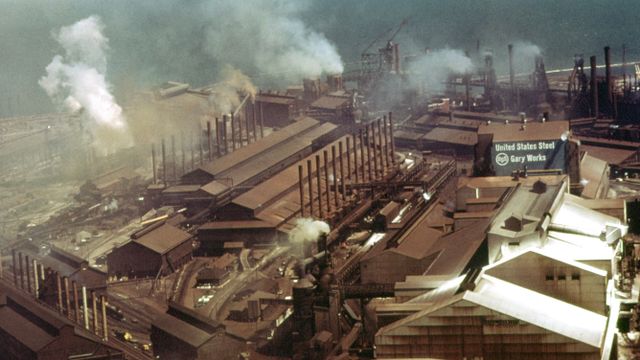
U.S. Steel plant Gary Works (Wikimedia Commons)
The impact of the coronavirus and the global depression will accelerate the overproduction of steel and the attack on the jobs of steelworkers. China, which produces over half the world’s steel, kept most of its production running even while its manufacturing plants were shut down. China now has enough steel sitting in its warehouses, yards and docks to supply world demand.
New car and appliance sales have almost ceased to exist as tens of millions of workers have been thrown out of work. Coils, beams and slabs of steel are piling up in the yards of steel mills throughout the country and world. Declining prices and demand for oil and natural gas has meant a halt to most gas drilling and pipeline construction.
Building construction has stopped in many parts of the country and many will not resume as investors bail out of projects. Half-completed homes, offices and retail space will litter our cities even as millions go hungry and homeless. Natural gas and oil drilling have all but stopped as the price of oil plummets, even going into negative territory earlier this week as demand bottoms out.
Earlier this month US Steel, the nation’s second largest steel maker, began sending layoff notices to its 1,545 workers at its Great Lakes Steel works on Zug Island in the downriver communities of River Rouge and Ecorse just south of Detroit. The last cast of steel was made on March 30, and layoff notices began going out the next day. At one time the massive complex employed nearly 18,000 workers.
United States Steel is also closing its tube mills in Lorain, Ohio and in Lone Star, Texas. Last month the company issued a Worker Adjustment and Retraining Notice (WARN) that it would idle its operations at Lorain Tubular Operations facility in Lorain, Ohio, with all 250 employees being laid off starting May 24. Aside from maintenance personnel, most of the 600 workers at US Steel’s Lone Star Tubular Operations in Lone Star, Texas will lose their jobs. Both mills make steel piping for the gas drilling and transport industry.
US Steel has also idled blast furnaces at mills in Gary Works in Indiana and its Granite City Works in Illinois. Both shutdowns were announced prior to the pandemic as cost cutting measures but the company now says it has no plans to reopen them. The company’s layoffs extend to the company’s iron ore mining operations in the iron range of Minnesota. The Keetac mine in Keewatin will be closed by the end of May. One-hundred workers with less than three years’ service are being laid off immediately while the other 260 employees will lose their jobs by the end of May.
In addition to layoffs and closures, US Steel has put off long overdue and much needed maintenance and improvements to its Mon Valley Works near Pittsburgh, Pennsylvania.
The $1.2 billion project, having been announced with great fanfare, would have included a continuous casting and rolling line, a cogeneration facility and $200 million in improvements to its Clairton Coke Works, which has had two fires while being repeatedly cited for releasing pollution into the air. The project was set to begin in September was first downsized and has now been completely put on hold. The Mon Valley Works include the steelmaking Edgar Thomson Works in Braddock, the Clairton Coke Works and the rolling mills at the Irvin works in West Mifflin. The three mills employ over 3,000 workers.
ArcelorMittal, the world’s largest steel producer and the number three US steel maker is also cutting back production. Earlier this month the transnational announced plans to lay off hundreds of workers at the Indian Harbor mill outside of Gary, Indiana. The company announced that it is also closing its iron mine in Minnesota Iron Range. Hibbing Taconite will end mining May 3 while all of its 650 workers will be laid off. Cleveland-Cliffs, which recently bought AK-Steel, is closing its Northshore Mining operations in Babbitt and Silver Bay. The closure of the three mines has wiped out over 1,500 jobs.
Many smaller steel companies are also laying workers off. Liberty Steel in Georgetown County, South Carolina is laying off 130 workers as it scales back production and Evraz Oregon Steel in Portland is laying off 230 out of 600 employees.
The wiping out of jobs in steel production is another nail in the coffin for the United States coal mining industry. Already facing a record number of bankruptcies from declining demand for power generation coal, the shutting down of blast furnaces will lead to a vast drop in metallurgical coal supply, leading to even more mine closures and bankruptcies. Metallurgical coal sells much higher and is much more profitable than power coal.
Before the pandemic, US Steel, Nucor and ArcelorMittal all brought additional capacity online in anticipation of greater demand. While demand rose modestly, the price of steel climbing temporarily reached a high of $900 per ton, the additional capacity coupled with slowing growth quickly led to a crisis of overproduction and falling steel prices. The corporations rely on older blast furnaces to produce steel while Nucor and Steel Dynamics rely primarily on the newer electric furnaces. The blast furnaces are less expensive and more profitable when running at near full capacity, becoming money losers when capacity utilization falls below 82 percent.
US Steel and ArcelorMittal were themselves aggressively moving towards electric furnaces before the onset of the coronavirus. Late last year, US Steel bought a stake in electric furnace steelmaker Big River Steel for $700 million with the option to buy the rest of the Arkansas-based steelmaker by 2023.
The United Steelworkers, which represent a shrinking but still significant number of steelworkers, is working with the companies to ensure an orderly shutdown of the mills.
During the coronavirus pandemic, the USW backed the companies’ demands to keep workers on the job without providing proper safety measures and protection, claiming the industry was part of “essential operations” even while the companies were preparing to shut them down. As production and demand collapses, the USW is already pedaling the lie that there is nothing that can be done, and that workers have to wait and suffer until the economy opens up again.
The USW fully embraces Trump’s trade war policies. The USW’s only criticism is that current policies do not go far enough to include autos, appliances and other steel products. By aligning themselves with Trump’s economic nationalism, the misnamed “united” steel workers labor syndicate is trying to line workers up against their coworkers throughout the world and behind US companies.
In the upcoming presidential campaign, the USW will be backing Biden, himself a strong supporter of trade war measures. He, like Trump, will use anti-Chinese rhetoric to pit workers in the United States against their class brothers and sisters throughout the world.
The Socialist Equality Party urges steelworkers to form rank-and-file factory committees to take the conduct of the struggle out of the hands of the USW, which is nothing but a tool of corporate management and the government.
The production of breathing ventilators and other health and safety equipment on an international scale requires the industrial mobilization of the working class combined with a new political strategy in opposition to both big-business parties and based on the international unity of the working class and the fight for socialism. The only way to oppose the relentless job- and wage-cutting demands and ensure that production is run safely is to unite the entire working class to transform the steel industry into a public enterprise under the democratic control and collective ownership of the working class.

Foodbank use soars across Canada, as 8 million apply for government aid

Penny Smith

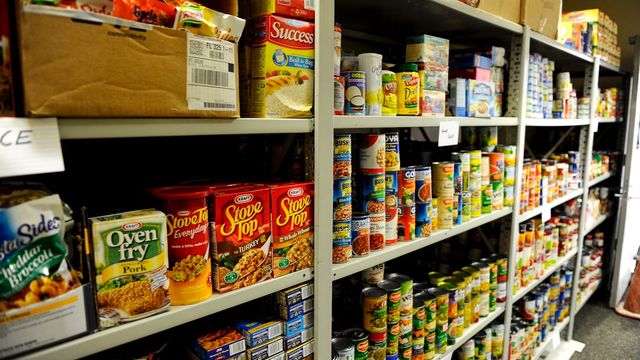
Foodbanks across Canada are seeing a major spike in demand as the devastating effects of the COVID-19 pandemic plunge increasing numbers of working people into destitution and acute need. According to Food Banks Canada, demand has jumped 20 percent on average over the last few weeks and is expected to “keep going up and up and up.”
The latest indication of the rapidly accelerating social crisis was provided by news this week that more than 8 million Canadians, or almost 40 percent of the country’s labour force, have now applied for the federal government’s makeshift and utterly inadequate Canada Emergency Response Benefit (CERB). The CERB effectively places workers who have lost their income due to the pandemic and its economic fallout on rations. Recipients are to receive C$2,000, C$1,800 of which is taxable, per month for a maximum of four months. This miserly sum is barely enough to cover rent for a one-room apartment in Toronto, Vancouver, and many other of Canada’s large cities, never mind food and other basic necessities.
In Canada’s most populous province, Ontario, the Daily Bread Food Bank, which supplies nearly 200 food programs in Toronto, has seen requests for help skyrocket over the past month. The number of families seeking food each day has risen from 120 to more than 300—an increase that Chief Executive Neil Hetherington said is “completely unheard of.” The Stop foodbank, which has three Toronto locations, has seen a 30 percent increase in clients, many of whom are accessing emergency food services for the first time. The Davis Centre foodbank, which usually feeds 600 people at five locations, is now struggling to feed nearly twice as many.
Food bank (U.S.Air Force)
In Quebec, the Moisson network, which normally serves half a million people per month, has seen demand rise by 50 percent province-wide, including a doubling of demand in rural areas.
Similar circumstances can be found elsewhere in Canada, as the economic toll from a health emergency for which Canada’s pro-big business governments failed to prepare, takes full effect. “It really doesn’t take long when people are living paycheque to paycheque to need food,” says Chantal Senecal, who manages 60 foodbanks across New Brunswick, the province that has the highest per capita rate of foodbank use anywhere the country.
In the prairie province of Saskatchewan, where half of all businesses are now shut down, foodbanks in the capital Regina and Melfort, a town northeast of Saskatoon, are reporting a surge in demand of 40 to 50 percent. Executive Director Kim Scruby of the Prince Albert Food Bank is preparing for a 50 percent increase in the coming weeks. “We’re expecting to get a lot busier once the full impact of all of the layoffs kicks in,” she said.
The challenge of meeting the sudden boost in demand is being exacerbated by the increased scarcity of volunteers and resources. According to Food Bank Canada, some charities are experiencing a 50 percent drop in donations with only a few weeks of food supplies left. The shortages have also given way to service reductions and closures across the country. In Toronto, almost half of the city’s foodbanks have already shuttered their doors.
The sharp uptick in demand for foodbank services across the country has been triggered by the mass layoffs following the business closures and economic slowdown associated with the COVID-19 pandemic. More fundamentally, however, the eruption of intense food insecurity during the COVID-19 pandemic, epitomized by the recent miles-long lineups of cars at foodbanks in cities across the US, has exposed the precarious existence of wide swathes of the population, who are living on the edge at the best of times under crisis-ridden capitalism.
Over the last year, according to PROOF, a university-based team of researchers, about one in eight households across Canada experienced food insecurity—amounting to 4.4 million people—the largest number ever recorded. Canada’s deeply impoverished Northern communities are particularly vulnerable, with 57 percent of households in the territory of Nunavut considered food-insecure.
Last May, business website Bloomberg reported that almost 48 percent of Canadians were C$200 or less away from financial insolvency every month. A recent Ipsos Reid survey reported that three in ten Canadians would not be able to pay their bills if they lost their jobs due to COVID-19.
According to Hunger Count, 60 percent of food-insecure households rely on wages and salaries as their main source of income, indicating that those working low-wage jobs can’t earn enough to meet their families’ basic nutrition needs. “Not enough hours, not enough benefits, only one salary carrying a whole family, and that salary just doesn’t pay enough,” explained Nick Saul, CEO of Community Food Centres Canada. “So when you have something like COVID, hit in the midst of that stress and uncertainty and anxiety, those ranks are only going to grow.”
The economic seizure is creating disruptions in the global food supply and further exacerbating the social crisis of food insecurity. Food scarcity and inflation are to be expected. Newfoundland and Labrador Premier Dwight Ball warns that the island has just a five-day supply of food if strapped shipping giant Oceanex—which delivers 50 percent of all freight to Newfoundland and is a major supplier of Costco and Walmart—ceases its operations.
Some of Canada’s major corporations are using the COVID-19 crisis to masquerade as do-gooders, with media giant Rogers announcing it would donate 1 million meals to Food Bank Canada and Shaw Communications C$1 million to Community Food Centres Canada. These are the same corporations that have made their fortunes through wage-cutting and price gouging. The Canadian arm of Nestlé, which has also pledged over C$2 million in food donations to Food Banks Canada, is demanding a speed-up in production from its workers in return for a few extra dollars an hour, despite the outbreak of COVID-19 infections and deaths that have already blazed through factories and warehouses throughout North America.
Two weeks ago, the big business Liberal party led by Prime Minister Justin Trudeau promised to address the “urgent food needs” of Canadians by providing a miserable C$100 million to be distributed to food organizations throughout the country. This is a trivial amount—all the more so when compared to the C$650 billion his government funnelled into the banks and big business, to bail out investors, literally overnight.
In early April, Trudeau discussed with the provinces the possibility of invoking the draconian, anti-democratic Emergencies Act, so as to give Ottawa the power to conscript labour to work under dangerous conditions under the pretext of providing “essential” services. According to media reports, the government was concerned about rising absenteeism, as workers forced to work in unsafe conditions and fearful for their safety and that of their families call in sick.
Even as infections continue to spread across the country at a rapid clip, the Trudeau government is in talks with agribusiness and the unions on how to keep food production going, despite the dangerous “elbow to elbow” working conditions, exposed most recently at the Cargill meatpacking plant near Calgary, Alberta. More than 550 workers at the Cargill facility near High River, Alberta, have fallen sick, and one worker, an immigrant from Vietnam, has died.
The deep-seated socio-economic hardships brought to the fore by the COVID-19 pandemic are the product of the decades-long assault big business and its hirelings in all the establishment parties, from the avowedly pro-big business Conservatives to the ostensibly “left” NDP, have mounted. Public services, like health care, and social protections, like minimum wages and unemployment insurance, have been shredded and workers’ living standards gutted in endless rounds of government austerity and employer drives for increased “competitiveness”—i.e., investor profit.

Japan’s medical system collapsing as COVID-19 cases surge

Ben McGrath

As result of government indifference and inaction, Japan’s emergency medical system has collapsed as the number of COVID-19 cases continues to surge in the country.
The number of confirmed cases is now 12,368, while 321 have died. With widespread denial of testing to suspected patients, the real numbers are undoubtedly far higher.
The Health Ministry has warned that as many as 400,000 people could die if no preventative measures are taken. Japan lacks a sufficient quantity of Intensive Care Unit (ICU) beds, with an average of 5 per 100,000 people compared to 12 in Italy and 35 in the United States. This is a clear warning that deaths may skyrocket as seen in Italy.
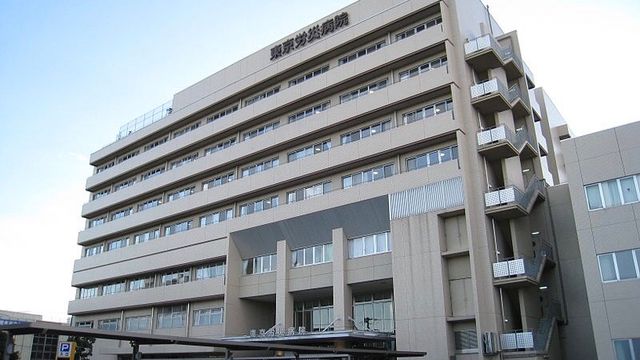
Tokyo Rosai Hospital (Wikimedia Hospital)
Furthermore, as the number of cases grows, the majority are of unknown origin, meaning that health authorities are failing to track infection routes. This indicates widespread circulation of the virus in the community.
Takeshi Shimazu, a doctor at Osaka University, recently stated that because of COVID-19, “We can no longer carry out normal emergency medicine.”
It is not just coronavirus patients who are being affected. Hospitals are refusing to treat people, including those suffering from other serious ailments such as strokes and heart disease. Women are also struggling to find places to give birth. Hospitals unequipped to deal with the virus fear it will be transmitted to new patients, but the denial of treatment is also because of a lack of hospital beds.
The rate of available beds in cities like Tokyo and Osaka, as well as six other prefectures, was less than 20 percent as of April 17. When taking into account those sick at home who have not yet been hospitalized, the numbers surpass available beds. In Saitama, Kochi, and Kyoto prefectures, the rate was below 30 percent.
As in other countries, medical workers lack personal protective equipment, including gowns, masks and face shields. Doctors and nurses are forced to re-use masks or create make-shift gowns out of raincoats.
Exposure to COVID-19 is forcing many medical workers to quarantine themselves at home, exacerbating already existing staff shortages. In addition, to make ends meet, medical workers may have shifts at two or three hospitals, meaning that if they are forced to stay home or get sick, it has a wider impact on healthcare. Some workers are being told to quit their jobs at other hospitals.
That the Shinzo Abe government sat back and essentially did nothing for two months while the pandemic raged in other countries means that his government is guilty of nothing less than social murder. Testing was greatly restricted to give the impression that the number of COVID-19 cases in Japan was low and that additional lifesaving measures were not necessary.
The real reason for this is the same as in other countries: the government is refusing to spend the money necessary to help the sick, deeming it as an unacceptable impost on big business’ bottom line.
The administration has previously targeted healthcare for senior citizens as being too costly with Deputy Prime Minister and Finance Minister Taro Aso saying in 2013 that the elderly needed to “hurry up and die.” He made similar remarks in 2016: “I recently saw someone as old as 90 on television, saying how the person was worried about the future. I wondered, ‘How much longer do you intend to keep living?’”
The primary concern of the government is the impact on the economy. It is now focused on providing bailouts to big business as the International Monetary Fund predicts the economy will contract by 5.2 percent this year.
As of Monday, the government has approved a total of 117 trillion yen ($US1.1 trillion) in stimulus packages, with individuals receiving only paltry cash payments of 100,000 yen ($US929) each.
Companies like Toyama Chemical of Fujifilm Holding Corporation are set to profit as 13.9 billion yen ($US129 million) is earmarked to stockpile the flu drug Avigan, which the company produces. It is currently being tested as a possible treatment for people with COVID-19.
These are resources that could have been directed towards lifesaving measures well before the pandemic struck. Medical authorities around the world have warned for decades that a global pandemic could strike, yet even after the first cases began to emerge in China, Tokyo refused to set up the necessary testing and medical infrastructure.
For more than two months, the government strictly limited who could receive a COVID-19 test. In March, Japan conducted approximately 52,000 polymerase chain reaction (PCR) tests or around 16 percent of the number in South Korea. Little has changed since Abe declared a national emergency, which was extended to the whole country on April 16.
Harrowing stories of sick people, many struggling to breathe, are starting to emerge. In March, there were 931 cases of more than five hospitals rejecting ambulances with patients, forcing them to drive around looking for a hospital that would take them. In the first eleven days of April, there were 830 cases, according to the Japan Times. In one particular case, a man was rejected by 80 hospitals in Tokyo.
People are expressing outrage at the situation on Facebook and Twitter, using the hashtag #検査難民 (kensa nanmin) or “testing refugee,” to describe their experiences. One user, @monochromic, described the hashtag as “basically all the people in Japan struggling to get the attention they need to even just get a diagnosis.”
A user on Facebook named Jordain described a horrifying experience over six days of trying to get her friend, for whom she was serving as a translator, into a hospital for a COVID-19 test and treatment.
Jordain wrote that when she was finally able to set up a test at a clinic after four days she learned that: “It’s a secret location. It’s a medical facility that’s currently closed, but is being used as a corona testing site on the down-low. To enter the building, she’ll have to walk through the parking lot and use the staff entrance.
“The woman on the phone makes me promise not to tell ANYONE other than my friend the name of the place where she is being tested. Because if people knew they were doing testing there it would ‘cause a commotion.’
“I really wish I was making that last part up. It's absolutely horrific how much they are trying to cover this up and keep the official numbers low.”

COVID-19 deaths in Scotland 79 percent higher than official figures

Stephen Alexander

Yesterday, Scottish National Party (SNP) leader Nicola Sturgeon advanced plans for ending the coronavirus lockdown in Scotland.
While noting that a “return to normal” is not possible, the First Minister said it is necessary to “transition” to a “new normal” which will see people “living alongside this virus but in a form that keeps it under control.”
“It may be that certain businesses in certain sectors can reopen, but only if they can change how they work to keep employees and customers two metres distant from each other.”
Nicola Sturgeon (Vimeo.com, theSWP)
Sturgeon continued: “Similarly, with schools, classrooms may have to be redesigned to allow social distancing, so maybe not all children can go back to or be at school at the same time.”
Sturgeon made these comments days after it was revealed that the COVID-19 death toll in Scotland reached 1,616 as of April 19, according to weekly figures published by the National Records of Scotland (NRS). This figure is almost 80 percent higher than official data reported on the Scottish government’s web site. The government’s official figures stood at 903 on the same date—recording only laboratory-confirmed cases in hospitals. NRS figures include all deaths where a confirmed or suspected COVID-19 infection has been listed on the death certificate.
Although 56 percent of all COVID-19 deaths occur in hospitals, 33 percent, 537 deaths, have occurred in care homes. About 10 percent, 168 deaths, have occurred at home or in non-institutional settings. Care home deaths have been excluded from official figures for weeks.
Data has belatedly emerged from other European pandemic hotspots showing that such fatalities account for as much as 40 to 60 percent of all COVID-19 deaths. This trend is confirmed by NRS figures, which show that the proportion of deaths occurring in Scottish care homes has risen significantly from the 24.6 percent recorded in last week’s figure.
Several Scottish residential care homes have reported double-digit COVID-19 deaths, including the Berelands Care Home in Prestwick, Crosslet House Nursing Home and the Castle View Care Home in Dumbarton, Burlington Court Care Home in Cranhill, Elderslie Nursing Home in Paisley and Guthrie House in Edinburgh. Multiple deaths have occurred in at least a dozen other care homes, and 44 percent of Scotland’s care homes have now registered suspected COVID-19 infections.
One carer recently died of a COVID-19 infection at the Pitkerro Care Centre in Dundee. At least one other care worker and two nurses have died in Scotland, part of a ghastly death toll of at least 118 health and social care workers across the UK. At a single health board, National Health Service Ayrshire & Arran, 216 staff have tested positive for the virus.
Nurses, doctors, carers and other essential workers are being pressured to work in perilous conditions without adequate personal protective equipment (PPE) and infection control protocols, risking their own lives and the lives of their families. Moreover, it remains impossible to track the true extent of the contagion due to the lack of a systematic regime of testing and contact tracing across the UK.
At every stage of this crisis, the devolved SNP government, for all its professed “progressive” political agenda, has aped the reactionary “herd immunity” policy of Boris Johnson’s Conservative government at Westminster. Sturgeon has consistently resisted mass testing and supported the Tories’ genocidal policy of financially incentivising largely privatised, for-profit care facilities to accept the rapid discharge of elderly patients from hospitals, without first testing them for COVID-19.
The impact of this deadly policy has fallen overwhelmingly on the poor, densely populated areas in deindustrialised centres of the working class. Glasgow is particularly exposed due to its high population of elderly and disabled people, combined with some of the worst poverty, mortality and health indices in the developed world.
The Greater Glasgow and Clyde health board has recorded 513 COVID-19 fatalities, followed by Lothian (including Edinburgh) with 256 deaths, Lanarkshire with 228 deaths, Ayrshire and Arran with 120 deaths and Tayside (including Dundee) with 106 deaths. This amounts to a death rate (per 10,000 of population) of 4.4 in Glasgow and Clyde, 3.5 in Lanarkshire, 3.2 in Ayrshire and Arran, 2.9 in Lothian and 2.5 in Tayside. Deaths have been recorded in all health board areas.
Across Scotland there have been more than 800 “excess deaths” in the past three weeks that cannot be accounted for directly by COVID-19 infections. Postponement of cancer screening and a 72 percent drop off in urgent cancer referrals by doctors has led to concerns that people are dying because they cannot access life-saving health care through fear of being infected or because of overstretched health services. In the week ending April 19, there were 38 excess cancer deaths, 11 cardiac deaths, 83 deaths related to dementia and Alzheimer’s disease, and 101 “other” excess deaths, according to NRS.
A deadly crisis is looming for sufferers of drug addiction. Thousands face the life-threatening prospect of unsupervised drug withdrawal as the pandemic is expected to interrupt supply chains in the black market. Scotland has the highest per capita drug deaths in the world, yet addicts have not been put on the list of high-risk priorities for critical care. There are already indications of a spike in deaths of despair, including suicides and alcohol-related deaths as a result of the pandemic.
The situation is poised to deteriorate, with Scotland’s chief economist, Dr. Gary Gillespie, warning of a 20 to 30 percent collapse in economic output in the space of one month. As unemployment and financial instability soars, applications for Universal Credit benefits have increased from the usual 20,000 per month to more than 110,000. Demand on food banks has risen by as much as 100 percent in some areas.
The catastrophic dangers from a global pandemic of a novel influenza virus have long been the subject of scientific warnings. Yet capitalist governments internationally, including Holyrood, have decimated vital social services and scientific resources required to fight the pandemic. At the same time, they have made available hundreds of billions in public revenues to prop up the obscene fortunes of the financial and corporate elite.
In 2015, the Scottish government, together with health and social care authorities, undertook an exercise—Silver Swan—which revealed significant gaps in the country’s preparedness for a pandemic. In a follow up report, NHS Lanarkshire warned, “An influenza pandemic is considered to be one of the highest public health risks for the UK” and recommended the development of “flexible” contingency plans for personal protective equipment testing, and infection control procedures that would “require testing on a regular basis”.
Months into the global pandemic, the SNP government is nowhere near implementing any of these protections. Yet Sturgeon is already raising the possibility of lifting lockdown restrictions, based partly on instruction from German government advisors. Ignoring the guidance of the Robert Koch Institute, the country’s leading authority on disease control and prevention, Germany is already lifting lockdown restrictions on shops and schools, motivated by the demands of big business for a revival of the economy. COVID-19 deaths continue to rise exponentially in Germany and are now in excess of 5,100.
It will not be long before Scotland and the rest of the UK follows the German path so that big business and the banks can resume raking in profit from the exploitation of the working class, to be paid for with an escalation in deaths from COVID-19 and a likely second wave of the pandemic.

US House overwhelmingly passes $484 billion “relief” package, refilling corporate slush fund

Jacob Crosse

Following Tuesday’s unanimous consent vote in the Senate, lawmakers of both big business parties in the House of Representatives overwhelmingly passed the “Paycheck Protection Program and Health Care Enhancement Act” on Thursday.
Taking every precaution to assure their personal safety and well-being, as opposed to the absence of such precautions for hospital workers, Amazon workers, transit workers, grocery workers and those being sent back into the auto plants, the Democrats and Republicans came together in the House chamber and voted 388-5, with one abstention, to send the approved bill to President Trump’s desk for his signature as early as Thursday evening.
Three of the Republicans who voted against the measure are leaders of the ultra-right Freedom Caucus, including Andy Biggs of Arizona, Ken Buck of Colorado and Jody Hice of Georgia. The fourth Republican to vote against the bill was Kentucky Representative Thomas Massie, who had protested against the passage of last month’s CARES Act on procedural grounds.
House Speaker Nancy Pelosi (AP Photo/Andrew Harnik)
The only Democrat to vote against the measure was New York Representative Alexandria Ocasio-Cortez. In another theatrical display, Ocasio-Cortez gesticulated wildly while castigating Republicans for “not fixing this bill for moms and pops,” before every other member of her party, including the rest of the so-called “squad”—Ayanna Pressley, Rashida Talib and Ilhan Omar—voted for the bill.
House Speaker Nancy Pelosi, whom Ocasio-Cortez fondly refers to as “mama bear,” tweeted her support for the bill following its passage, writing, “Today’s historic, bipartisan vote on our latest #FamiliesFirst package is essential to protecting families across America and ensuring more small businesses have acces to the resources they need."
Far from putting “families first” and guaranteeing paychecks for workers, this second round of corporate handouts, as the first, will be largely siphoned off by larger businesses, while the Wall Street banks that process the government-backed loans rake in billions. The vast majority of family-owned entities—restaurants, barber shops, beauty salons, gas stations, etc.—will not receive a dime.
The central provision of the newly passed measure is the replenishment of the so-called “Paycheck Protection Program” (PPP) with an additional $310 billion in funding. The initial $349 billion allocated to the program, supposedly geared to aiding businesses with fewer than 500 employees and keeping their workers on the payroll for eight weeks, ran out after less than two weeks, leaving the vast majority of small business applicants high and dry. Only 6 percent of small business applicants received loans.
It then emerged that large restaurant chains such as Ruth’s Chris Steakhouse, Shake Shack and Potbelly, each with over 5,000 employees and hundreds of millions in revenues, were put at the front of the line of applicants by the Wall Street banks chosen by Treasury Secretary Steven Mnuchin and the Small Business Administration (SBA) to dispense the loans and collect the lucrative fees. These companies received between $10 and $20 million in free money. The big banks raked in $10 billion in fees.
Other multimillion- and billion-dollar publicly traded firms also received loans. The biggest recipients were two interlocked real estate investment trusts, Ashford Hospitality Trust and Braemar Hotels & Resorts, which received a combined total of $53 million in loans. The firm controls more than 100 properties, including luxury hotels such as the Ritz Carlton Atlanta, which markets itself as “celebration” of “contemporary Southern luxury.” Single night August reservations begin at $341, while a one-night reservation for the Skyline Suite goes for $3,000.
That this fraud was perpetrated by both parties was underscored by the role of Senate Majority Leader Chuck Schumer of New York in making sure that large companies received a disproportionate share of the loan money. The New York Times reported Thursday that the provision inserted into the CARES Act allowing restaurant and hotel chains to receive “small business” PPP loans, as long as all of their units employed fewer than 500 people, was negotiated by Schumer and the right-wing Republican chairman of the Senate Small Business Committee, Marco Rubio of Florida.
Schumer, often referred to as the “senator from Wall Street,” is one of the biggest recipients of investment banking campaign cash. According to OpenSecrets.org, between 1989 and 2016, he received nearly $600,000 from Goldman Sachs.
Prior to Thursday’s House vote, in an attempt at political damage control, Treasury Secretary Mnuchin and the SBA announced that they had set new “guidelines” for the PPP loans that would supposedly bar large firms with alternative credit sources from benefiting. Mnuchin called on the restaurant chains and other large businesses that had received loans in the first round to return the money or possibly face investigation.
This is yet another cruel deception. Schumer, Pelosi, Mnuchin and the rest know that the $310 billion in the new bill will be exhausted in a matter of days, leaving in the lurch most small businesses staring bankruptcy and closure in the face. And even for businesses that receive loans, the money will cover payroll, rent and utilities for only eight weeks. The pandemic and economic contraction will last far longer, leading to the shutdown of tens of thousands, if not millions, of small businesses and the permanent layoff of millions of workers.
The bill also includes a paltry $75 billion in aid to hospitals and derisory $25 billion earmarked for COVID-19 testing. There is nothing in the bill to aid state and local governments, which are facing massive deficits and preparing to slash funding for schools, health care and other essential services and cut the jobs and pensions of public employees.

US coronavirus deaths approach 50,000

Benjamin Mateus

Between 1955 and 1975, there were 47,424 US combat deaths from the Vietnam War, a defeat that continues to perplex and stigmatize American imperialism. In approximately one month, the COVID-19 pandemic has killed 49,751 people in the United States. Despite all talk about a glimmer of light at the end of the tunnel, the number of new cases has remained consistently over 25,000 per day while the number of daily deaths has kept pace. This pandemic, like Vietnam, is conflagrating the consciousness of the working class.
In a similarly gruesome vein, Europe’s numbers have continued at a steady pace with nearly 29,000 cases and over 3,000 deaths daily. Italy had been Europe’s epicenter in mid-March, reaching its zenith on March 21. One month later, new cases in Italy are at half their peak. Europe’s fatalities are also declining at a similarly sluggish trend. Spain follows suit while the UK emulates the United States’ trajectory.
Globally, at the speed with which new cases are being tallied, before the month’s end the pandemic will have reach 3 million cases. Over 200,000 people have lost their lives, which could have been prevented had the ruling elites of the global capitalist nation-state system decided to act in concert to heed the warnings of their own World Health Organization.
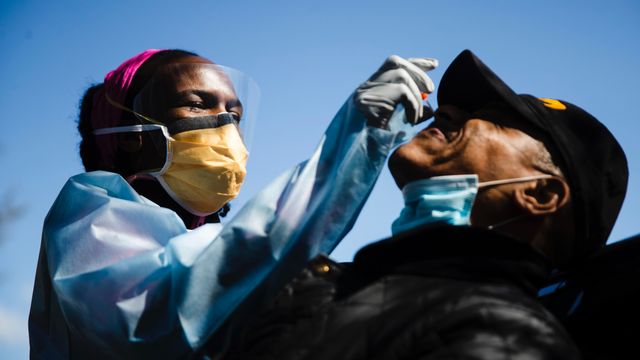
Dr. Ala Stanford administers a COVID-19 swab test on Wade Jeffries in the parking lot of Pinn Memorial Baptist Church in Philadelphia, Wednesday, April 22, 2020. (AP Photo/Matt Rourke)
Presently, the only effective measure to stem the health crisis is to continue to shelter in place, which takes its toll on the flipside by creating economic hardship for the population. On Thursday, an additional 4.4 million Americans filed for unemployment, bringing the total to 26 million in the five weeks since lockdowns were imposed in response to the coronavirus pandemic. According to the Financial Times, the number of approved claims for unemployment insurance accounts for 11 percent of the entire workforce, approximately 16 million thus far.
Millions more are attempting to navigate the online or telephone application processes that have created a massive gridlock. Up to 17 percent of Michigan’s workforce is receiving unemployment benefits. Florida saw a tripling of unemployment benefit applications last week to 505,000, second only to California with 534,000. The hardest-hit states are Michigan, Pennsylvania, Kentucky, Georgia, Louisiana, Nevada, Alaska and Washington, with estimated unemployment rates exceeding 20 percent.
According to the Federal Reserve Board, in the Divisions of Research & Statistics and Monetary Affairs, the leisure and hospitality sector has seen 4 million job positions lost, accounting for over 30 percent of all employees in that industry. Construction and manufacturing have lost almost 700,000 jobs since mid-March. When the April jobs report is released on May 8, JPMorgan Chase is predicting a loss of 25 million jobs, triple the loss experienced in the 2008–2009 Great Recession. An economist at ING, James Knightley, said, “Less than half of working-age Americans will be earning a wage next month. In an election year, this means that the call for politicians to reopen the economy is only going to get louder, irrespective of the health advice.” This call is arising from the financial sectors.
In a CBS News poll published yesterday, 70 percent agreed that it was essential to slow the spread of the epidemic through social distancing measures, even if the economy was hurt in the short term. Almost two-thirds stated that they are concerned that the outbreak will get worse if stay-at-home restrictions are lifted too fast. The majority said widespread public testing is required before implementing reopening measures. Yet, the United States has lagged behind many countries in adequately ramping up testing. By conservative estimates, the country would need to conduct 500,000 to 700,000 tests per day to begin reopening. And a recent Harvard report calls for at least 5 million tests per day, rising to 20 million a day, “to fully remobilize the economy.”
The National Governors Association (NGA), chaired by Maryland’s Republican Governor Larry Hogan, insists any large-scale plan to return the population to work will require assistance from the federal government to much improve the distribution of testing supplies as well as fortify crumbling public health measures. A report from the NGA states, “Opening prematurely—or opening without the tools in place to rapidly identify and stop the spread of the virus—could send states back into crisis mode, push health systems past capacity and force states back into strict social distancing measures.”
The uncertainty the NGA has voiced in connection to the back-to-work drive underscores not just the public’s psychological concerns. The weight of the evidence and experience that the efforts imposed thus far have only provided temporary breathing room against the onslaught of the last four weeks, which stunned the country as a whole with the terrifying rapidity with which the virus tore through communities. As eagerly as many governors have demonstrated their agreement with Trump’s assessment of the cure being worse than the disease, the disease stands ready on the field.
With a vaccine against the virus, in the best-case scenario potentially available only this time next year, efforts to find a treatment to lessen the impact of the infection on the population have taken on a frenzied state. Despite Trump’s maniacal and negligent attempt to push hydroxychloroquine to treat COVID-19, the drug is proving to be more harmful than doing nothing. The Veterans Affairs study of over 300 people showed the rate of death higher for those on the medication while not impacting the rate of ventilation.
Similarly, Gilead’s Remdesivir, an antiviral medication against RNA viruses, appears not to speed the improvement of patients with COVID-19 nor prevent them from dying. The study results had been inadvertently released, leading to a statement by Dr. Merdad Parsey, chief medical officer of Gilead Sciences, who said, “Today, information from the first clinical study evaluating the investigational antiviral Remdesivir in patients with severe COVID-19 disease in China was prematurely posted on the World Health Organization website. This information has since been removed, as the study investigators did not provide permission for the publication of the results. Furthermore, we believe the post included inappropriate characterizations of the study.” Gilead Sciences Inc. shares fell 4.34 percent on the news.
The utter depravity of the ruling classes was captured in Trump’s remarks during the White House brief yesterday, giving it its most succinct senseless expression. After Bill Bryan, who leads the Department of Homeland Security’s science and technology division, presented data that higher temperature, higher humidity, disinfectants and sunlight adversely impact the virus’s ability to survive on surfaces, Trump began to gesticulate and suggest, the sitting press in disbelief, “So, supposing we hit the body with a tremendous—whether it’s ultraviolet or just a very powerful light—and I think you said that hadn’t been checked because of the testing … and then I said, suppose you brought the light inside the body, which you can do either through the skin or some other way, and I think you said you’re going to test that too … I see the disinfectant knocks it out in a minute, one minute. And is there a way we can do something like that by injection inside or almost a cleaning? As you see, it gets in the lungs, it does a tremendous number on the lungs, so it would be interesting to check that.”
The working class faces a threat not only from a pathogen that is highly lethal and infectious, but a capitalist class that is not only disinterested in their welfare, but has also lost the ability to comprehend reality and should be committed to an asylum. Science and scientific socialism are the tools that the working class must use to liberate themselves from the stranglehold of capitalist society.