25 Apr 2020

German government endangers the health and lives of millions with return to work and schools

Johannes Stern

One week after the decision by Germany’s federal and state governments to relax the coronavirus restrictions, the agreed upon measures are being aggressively implemented. The ruling elite is endangering not merely the health of millions of workers, school students, their families and friends, but also their lives.
A number of state governments—including the Social Democrat/Left Party/Green government in Berlin—forced thousands of students back to school earlier this week to sit their final exams. Regular classes for some school years began in the state of North Rhine-Westphalia on Thursday. Other states—including Hesse, Bremen, Hamburg, Brandenburg and Thuringia—will follow suit next week.
The policy of “gradual opening” (Chancellor Angela Merkel) is increasingly being exposed as a comprehensive plan to rapidly accelerate the revival of public life and the economy. In large cities, shops, including large shopping centres, are open once again. The federal government’s decision to limit shop openings to stores with an area of less than 800 square metres was a dead letter from the start. Larger businesses have evaded the regulations by partitioning their stores. The Administrative Court in Hamburg then overturned the regulation completely on Thursday.
Merkel, who spoke out at a press conference on Monday against what she had described as an “orgy of discussions about opening,” is in reality organising this “orgy of discussions.” In her government statement to the federal parliament on Thursday, she stated that she unconditionally agrees with the initial relaxations agreed between the federal and state governments, but merely finds their implementation “too bold.” Egged on by the media and big business, politicians from the government and opposition parties are seeking to outdo each other with ever more radical plans.
On Wednesday, Social Democrat Family Minister Franziska Giffey demanded an even more rapid opening of schools and kindergartens. “We have to talk about how we can achieve a gradual, a step-by-step opening of kindergartens and schools,” she said on the television show “RTL-Frühstart.” It is “not the case that everything can just stay shut until the summer.”
A central component of the policy is a revival of production, above all in the auto industry. “We are working hard to maintain supply chains,” stated Andreas Scheuer (Christian Social Union, CSU) during government questions in parliament on Wednesday. Daimler and Volkswagen, with the full support of the trade unions, have already restarted the assembly lines in several plants. Further plants will follow next week, including VW’s main plant in Wolfsburg, where some 63,000 workers are employed.
The government is justifying its “back to work” policy with references to “first successes” (Merkel) in the struggle against the coronavirus. This is intentional fake news. The reality is that the pandemic is continuing to accelerate its spread around the world, and the numbers of new infections and deaths are still rising in Germany. On Wednesday, the total number of deaths passed 5,500 and infections surpassed 153,000—the fifth highest number worldwide.
According to the Robert Koch Institute (RKI), Germany’s federal agency for infectious disease control, the number of deaths reached a record high over the past week. More than 300 coronavirus deaths had been reported during several single day periods, reported RKI vice president Dr. Lars Schaade at a press conference on Tuesday. The reproduction rate is also rising once again. Although it dropped to 0.7 last week, it rose back to 0.9 this week, approaching the critical figure of 1.
The dangerous implications of these developments are clear. If the reproduction rate increases above 1, this means that each infected person infects more than one other person, which will lead to an exponential growth of coronavirus. According to scientific modelling, the German health care system would be overwhelmed by October with a reproduction rate of 1.1, and in July if it rises to 1.2.
To put the matter bluntly: with its policy of reopening the economy, which has already led to an increase in the reproduction rate, the ruling elite is preparing a catastrophe and encouraging the development of conditions seen in Italy and the United States, where health care systems collapsed under the burden of the pandemic. The terrible consequences are well known. Severely ill patients can no longer receive treatment and end up being left to die. The pictures from Bergamo and New York, where the army disposed of bodies piling up on the streets, quickly spread around the world.
Serious scientists and epidemiologists insist that such an escalation can only be prevented in Germany if social distancing measures are maintained and intensified, and a programme of mass testing and contact tracing is adopted.
On Wednesday, the head of virology at Berlin’s Charite hospital, Christian Drosten, who advised the government for some time, warned against “gambling away the advantage Germany has achieved.” On Monday, he stated in his podcast that the “activity of the epidemic could suddenly” return “in a disproportionate way or with unexpected power” if the reproduction rate “goes above 1 again.” Even now, the Charite’s intensive care wards are “increasingly full,” even though there has not yet been in Berlin “a situation with a particularly high transmission rate.”
Gabriel Leung of the University of Hong Kong, who advised the World Health Organisation and the Chinese government, told Der Spiegel in an interview that a rapid easing of the restrictions would be “irresponsible.” “If you have such a large outbreak like it is currently in Europe, you have to use a sledgehammer,” he warned. The aim “above all is to ... reduce the current reproduction rate.” It needs to “decline a long way below 1 in order for the number of infections to reach an acceptable level.”
The parliamentary debate on Thursday underlined the reactionary interests behind the criminal indifference being displayed by the government towards scientific knowledge and warnings. The ruling class sees the coronavirus pandemic as an opportunity to intensify its aggressive class policy and great power ambitions. Representatives of the government and opposition parties left no doubt about this. The health and social wellbeing of the population must necessarily be sacrificed, according to this policy, on the altar of capitalist private profit.
“Everything we decide costs money—lots of money—that someone has to pay back at some point,” stated Ralph Brinkhaus, head of the Christian Democrat/Christian Social Union parliamentary group with reference to the multibillion-euro bailout packages, which have been adopted over recent weeks with the full backing of all parties. The message is clear: the vast sums of money, which above all went to the major corporations, banks and the super-rich are now to be squeezed out of the working class. This is why the return to work cannot go fast enough for the ruling elite.
A second factor is the geostrategic and economic interests of German imperialism, which after losing two world wars is once again attempting to dominate Europe in order to play a role as a world power.
“What we need now are pragmatic and goal-directed measures for Europe to emerge stronger from the crisis. That’s exactly what we want; because only a strong Europe can at the end of the day be able to compete globally with world powers like China and the United States,” stated Katja Leikert, deputy leader of the CDU/CSU parliamentary group.
The coronavirus pandemic is not slowing the return of German imperialism; it is accelerating it. On Wednesday, the government decided to participate in the European Union’s “Irini” mission off the coast of Libya with 300 soldiers, a reconnaissance plane, and one warship. The operation is aimed at consolidating fortress Europe against refugees and at setting the stage for new operations of plunder on the African continent.
Also on Wednesday, Defence Minister Annegret Kramp-Karrenbauer told the parliamentary defence committee about one of the largest military purchases in post-war Germany: the replacement of its aging Tornado fighter jets with 93 eurofighters and 45 US-made F-18 jets at a total cost of almost €20 billion. The latter are aimed at securing Germany’s “nuclear participation” and the transporting and deploying of American nuclear warheads.
At the same time, the development of a new fighter jet programme by Germany, France and Spain is being maintained. The estimated cost for the programme is €500 million.
The World Socialist Web Site warned in a previous perspective, “If the ruling elite has its way, the society that will emerge from the crisis will be characterised by an intensification of the tendencies that existed prior to it—increased inequality, exploitation, poverty and war.”
Seventy-five years after the downfall of the Nazi regime, humanity once again confronts the alternative, socialism or barbarism. Articles are now appearing in the media in fascistic tones calling for the virus to be allowed to spread at the cost of a large number of lives in order to allow production to restart and the predatory interests of German imperialism to be pursued.
“Anyone who wants to combat the spread of the virus by all means, also combats death by all means,” stated the Munich-based sociologist Bernhard Gill in a guest comment for Der Spiegel. “By contrast, in a spreading regime ... dying is a natural procedure, which is painful for the individuals involved, but viewed from a distance creates space for new life.”
To avert the imminent catastrophe, the subordination of society to the profit interests of a tiny super-rich elite must be ended. Large holdings of wealth and key industries must be nationalised and the billions and trillions currently flowing into the accounts of the banks and military must be deployed to build hospitals, protect the population and ameliorate the social consequences of the virus.
This requires the mobilisation of the widespread opposition in the working class to the capitalist policy of reopening the economy on the basis of a socialist and internationalist programme.

Hong Kong arrests prominent pan-democrat activists

Ben McGrath

On April 18, Hong Kong police arrested 15 prominent activists and politicians associated with the city’s pan-democrat political bloc. They have been charged with unlawful assembly in regard to their participation last year in demonstrations on August 18 and October 1 and 20, which were part of the broader mass protest movement sparked in June by a controversial extradition bill. Some have been released on bail and all are expected in court on May 18.
Those arrested include founder of the Democratic Party Martin Lee, a leader of the Labour Party Lee Cheuk-yan, businessman Jimmy Lai, and former lawmaker Margaret Ng. Leung Yiu-chung, the only currently sitting lawmaker in the Legislative Council, and Figo Chan, 24, one of the student leaders of the protest movement, were also arrested.
Beijing expressed “resolute support” for the arrests and accused those detained of being “radicals,” who “ignore the intervention of external forces in the internal affairs of Hong Kong” and “even seek foreign countries to sanction Hong Kong.”
US Secretary of State Mike Pompeo seized on the arrests to denounce China on Twitter last Saturday, saying, “Arrests of pro-democracy activists in Hong Kong are deeply concerning—politicized law enforcement is inconsistent with universal values of freedom of expression, association, and peaceful assembly.”
In response, China’s Foreign Ministry accused Washington of “condoning evil acts and making a travesty of the rule of law by ignoring facts, distorting the Sino-British Joint Declaration, and trying to exonerate anti-China troublemakers in Hong Kong on the pretext of ‘transparency,’ ‘the rule of law’ and ‘a high degree of autonomy.’”
The US is using the arrests to continue its campaign of ramping up tensions with Beijing across the board. Earlier this week, the US navy provocatively sent warships into the South China Sea, near territory claimed by Beijing. The Trump administration has unleashed a propaganda campaign blaming China for the COVID-19 pandemic to divert attention from its own criminal responsibility for the disaster at home.
As tens of thousands die, millions of Americans file for unemployment, and workers strike against unsafe and deadly conditions, the entire ruling elite in Washington has accused Beijing of covering up the spread of the virus and insinuated on the basis of no evidence that it originated in a Wuhan laboratory.
It is in this context that Beijing is deeply concerned that Washington may try to use unrest in Hong Kong or another part of China for the latter’s own benefit. The Trump administration has not the slightest concern for democratic rights in China or anywhere else. For all of Pompeo’s talk of “universal values of freedom of expression,” he is a leading official in a government that has carried out the persecution of journalists like Julian Assange and whistleblower Chelsea Manning for exposing crimes committed by the US state.
In addition to the recent arrests, Luo Huining, the head of Beijing’s Liaison Office in Hong Kong, on April 15 called for the passing of controversial national security legislation, shelved in 2003 due to mass protests. The law, known as Article 23 of Hong Kong’s Basic Law, would allow the city government to “enact laws on its own to prohibit any act of treason, secession, sedition, subversion against the Central People’s Government, or theft of state secrets.”
To justify the arrests, China exploited the close relations these politicians have with the US state. Martin Lee has long advocated a more accommodating stance towards Beijing while making open appeals to US imperialism. Last May, Lee, along with Lee Cheuk-yan and Margaret Ng, met with US Secretary of State Mike Pompeo and other senior US officials in Washington, shortly before the protests began.
Jimmy Lai’s longtime assistant Mark Simon is a former US naval intelligence officer with close ties to the CIA. He has aided Lai in securing meetings with leading US officials over the years including talks last July with Pompeo, as well as former National Security Advisor John Bolton and Vice President Mike Pence, among others. Lai has also supplied funds to several pan-democrat politicians in the past.
Last November, during the Halifax International Security Forum, which is held in Halifax, Canada, but based in Washington, Figo Chan, the student leader, accepted the John McCain Prize for Leadership in Public Service. Senior United States government officials used the 2019 forum to place additional military and economic pressure on China in pursuit of its goal of forcing Beijing to accept US imperialist domination.
These figures played various roles in last year’s protests that erupted in June as millions demonstrated against an extradition law that would allow political opponents of Beijing to be arrested and sent to the mainland.
Those arrested last Saturday, along with the entire pan-democrat bloc, worked to prevent the movement from orienting to the working class in Hong Kong, and also China, without which any struggle for democratic rights is impossible. As such, the pan-democrats created the conditions in which Beijing and the Hong Kong ruling class could recover and clamp down on the pro-democracy movement.
Beijing hopes that it can now silence and intimidate workers and students in Hong Kong to prevent a resurgence of protests, on the pretext that the opposition was purely the product of “external forces.” However, the movement maintained its intensity in large part because they were fueled by attacks on democratic rights and poor working and social conditions. Hong Kong is one of the most socially unequal cities in the world.
The underlying anger in Hong Kong has not disappeared, but in order to defend living conditions and democratic rights the protest movement needs a revolutionary leadership base in the working class on the principles of socialist internationalism. Only in this way can such a movement fight against the police state measures of the Chinese regime while resisting the attempts of US imperialism to exploit the opposition for its own purposes.

Sri Lankan president says military to impose “discipline” when lockdown ends

K. Ratnayake

Sri Lankan President Gotabhaya Rajapakse declared on Monday night that he plans to use the military and police to impose discipline on Colombo, the country’s largest city, after the government lifts its coronavirus lockdown.
The curfew, he said, was in order to enable “social distancing.” Sections of the police and the military will be needed to “ensure that the situation remains under control, as it was during the war, and ensure that people would not make unnecessary visits and that they act in a disciplined manner.”
Rajapakse’s remarks were made during an hour-long interview, monitored by one of his advisors, and relayed through the electronic media. The event was held in order to create the impression that the government had done everything possible to “control” the virus and to promote its moves to “reopen the economy” in the face of rising COVID-19 infections in Sri Lanka and internationally.
The government previously planned to lift the curfew in the Western Province, which includes Colombo district, last Monday. This was changed after the sudden increase of infections in the district. The curfew will now be lifted this coming Monday.
Rajapakse’s threatening statement is a warning to the entire working class. Deploying military has nothing to do with “social distancing” but is in preparation for the suppression of any unrest in the working class.
Sri Lankan industrialists and big business interests have declared that they plan to cut jobs by 30 percent and slash pensions and other social benefits.
Over the past week, several factories in free trade zones located in the Western Province and other parts of the country were reopened with about 20 percent of their previous workforce.
The World Bank has predicted that Sri Lanka’s economic growth this year will contract to 3 percent amid lower growth rates in South Asia of between 2.8 and 1.8 percent. Facing mounting debts and an economic decline, the Rajapakse government is preparing ruthless attacks on workers and the poor. It initially plans to call back a section of the public sector to run state services.
President Rajapakse’s “war” reference is to Colombo’s brutal three-decade conflict against the separatist Liberation Tigers of Tamil Eelam. He was defence secretary during the final years of the conflict that ended in May 2009.
Under his watch, according to UN estimates, tens of thousands of Tamil civilians were killed during the last months of Colombo’s bloody military operations. Sri Lanka’s current defence secretary, retired Major General Kamal Gunaratne, and Army Commander Lt. General Shavendra Silva were in the forefront of this murderous campaign. Rajapakse denies that any war crimes were committed.
During the conflict, Colombo used its repressive Emergency Regulations and the Prevention of Terrorism law, not just in the North and East but throughout the entire country. Hundreds of abductions occurred along with murders and physical attacks against political opponents and journalists, including the killing of Sunday Leader editor Lasantha Wickrematunge and the disappearance of journalist Prageeth Eknaligoda.
After the war, the military and police were used to suppress demonstrations of workers and the poor. In 2011, the police shot one worker when 40,000 Katunayake Free Trade Zone workers protested against pension cuts. In 2012, a fisherman was killed by police commandos at a protest in Chilaw, and in 2013, the military gunned down three young people during a demonstration demanding clean water at Weliweriya in the suburbs of Colombo.
After his election as president last November, Rajapakse quickly appointed senior military officers to fill key government posts, and, following the outbreak of the coronavirus pandemic, further militarised his administration. This included the elevation of an Army Commander to head the National Centre for Prevention of COVID-19 and the appointment of retired Air Martial Roshan Gunatilake as the Western Province governor.
During Monday’s interview, Rajapakse boosted the military and highlighted, in particular, the role of state intelligence. Sri Lanka’s chief of intelligence, he declared, played “a major role in this process, together with me.” State intelligence was used to collect information on those infected, trace their contacts and ensure that these individuals were sent to quarantine centres. These, and other measures, are in preparation to implement government and big business demands to force people back to work in unsafe conditions.
Several senior medical experts, along with health workers and related personnel, have publicly criticised the government’s return to work agenda. Despite this, Rajapakse claimed in his interview that “economic experts are of the view that if we further delay this [return to work], the economy will face a massive problem.” Daily wage workers, he said, “have been very badly affected,” adding that the Western Province contributes more than 50 percent to the Sri Lankan economy.
Rajapakse’s concern about the plight of daily wage workers is bogus. The government has only provided meagre relief packages for low income workers and the poor while ensuring that the Central Bank hands over billions of rupees to big business and banks.
Like other world leaders who ignored decades of warnings by medical scientists, Rajapakse falsely claimed that his government “understood the danger of this epidemic early on, and took decisive steps to control it.”
The truth is that Rajapakse rejected calls for a total lockdown declaring, “Other countries may have the best medical facilities, but we managed to cure infected people with our efforts.” This statement was based upon a single infected individual—a Chinese tourist—discovered in Sri Lanka who was treated and recovered from the disease.
The truth is that Rajapakse rejected calls for a total lockdown when an infected individual—a Chinese tourist—was discovered in Sri Lanka and recovered. “Other countries may have the best medical facilities,” Rajapakse declared at that time, “but we managed to cure infected people with our efforts.”
No mass testing, however, was begun, as recommended by the World Health Organisation and called for by Sri Lankan medical specialists. In fact, in the past two months just on 6,000 people have been tested. The Director of Health has admitted to the media, moreover, that these tests were restricted by funding problems and the limited numbers of health workers.
This Rajapakse administration, like previous governments, presides over a rundown and poorly funded health service. Apart from meagre funding for existing hospitals, no new funds have been provided to overhaul the health system. Health workers still do not have adequate personal protection equipment and are risking their lives and those of their patients.
Rajapakse admitted during his interview that “tourism, small and medium industries, apparel industry and others that earned foreign exchange have faced severe setbacks… Even if we bring our economy to a satisfactory level through systematic measures, we will still face difficulties unless the global economy becomes normal.”
But this crisis, he continued, “is a good opportunity for us to change economic strategy and direct it towards the indigenous economy… [but] we cannot only be self-sufficient in agriculture, we can also export our agricultural products to other countries.”
Rajapakse’s nationalist demagogy is to cover up the fact that his government is unleashing class war and plans to impose the burden of this crisis onto the backs of workers and the poor.
The working class must take the president’s return-to-work measures and threats to use the military seriously. It must respond by mobilising independently from every faction of the ruling class, rallying the rural poor and the oppressed, and uniting with the international working class to fight for a socialist program.

India’s BJP and its Hindu-right allies scapegoat Muslims for spread of pandemic

Wasantha Rupasinghe & Keith Jones

As if he had suddenly woken from a weeks-long sleep, Indian Prime Minister Narendra Modi interjected via an April 19 tweet, “COVID-19 does not see race, religion, color, caste, creed, language or border before striking. Our response and conduct thereafter should attach primacy to unity and brotherhood. We are in this together.”
Modi is a notorious Hindu supremacist, whose Bharatiya Janata Party (BJP) government and Hindu-right allies have relentlessly whipped up animosity against India’s Muslim minority. This has included a blatant attempt to scapegoat Muslims for the spread of the COVID-19 pandemic.
In recent weeks, senior BJP leaders have vilified members of a Muslim religious group, the Tablighi Jamaat, many of whom became infected with COVID-19 while staying at the group’s hostel in Delhi, as “human bombs” in “the guise of coronavirus patients.” Fellow Hindu communalists have used social media, including under the hashtags #CoronaJihad and #CoronaTerrorism, to accuse Muslims of deliberately infecting Hindus with the virus. This has included circulating fake and doctored videos that purport to show Muslim hawkers licking vegetables before selling them.
As a result of this vile campaign, poor Muslims enduring a weeks-long coronavirus shutdown without work or income have been denied food, while others engaged in distributing food to the poor have been physically assaulted.
A hospital in Uttar Pradesh recently placed an ad in a local newspapers that said Muslims would only be admitted if they, unlike all other prospective patients, had first been screened for COVID-19. Meanwhile, in Gujarat another hospital reportedly divided Hindu and Muslim patients into separate wards.
An April 22 article on The Wire news site observes, “Among the economically deprived sections of Muslims, those who are either daily wage workers, or petty traders, the impact of religious profiling has been the worst. There are innumerable stories of Muslim vegetable sellers being disallowed entry into gated colonies after instructions to security staff who now check identity papers to ascertain if the seller is Muslim or not.”
Modi’s tweet was a transparent attempt to cover his political tracks. The attempt of the BJP and the Hindu communalist right to deflect mass anger over the government’s criminally negligent response to the coronavirus onto the Muslim minority has provoked widespread opprobrium across India and internationally.
None of this, however, stopped India’s corporate media from greeting Modi’s deeply cynical appeal for “unity and brotherhood” as the wise counsel of a great statesman. Needless to say, the media didn’t recall Modi’s role as Gujarat’s chief minister in instigating and presiding over an anti-Muslim pogrom in 2002 in which more than 1,800 people died. Nor did they mention how in 2013 he had responded to those who had criticized him for never expressing any remorse over the 2002 events by comparing his feelings to those of a passenger in a vehicle that had run over a puppy dog. If “someone else is driving a car,” Modi told Reuters, “and we’re sitting behind, even then if a puppy comes under the wheel, will it be painful or not? Of course it is.”

The BJP’s anti-Muslim offensive

After winning re-election last May, Modi and his BJP intensified their drive to transform India into a Hindu rashtra or Hindu state in which Muslims will be tolerated only insofar as they accept Hindu supremacy. In August, the BJP illegally abrogated the semiautonomous constitutional status of Jammu and Kashmir, India’s only Muslim-majority state, then placed it under effective central government trusteeship in perpetuity by transforming it into two Union territories.
With the Supreme Court’s acquiescence, the BJP government is rushing to build a Hindu temple on the site of the Babri Masjid mosque in Ayodhya, which in 1992 was razed by Hindu fundamentalist fanatics, at the instigation of the BJP leadership and in direct defiance of an order from India’s highest court.
These steps were a calculated attempt to incite the BJP’s fascist activist base and whip up communalism so as to split the working class, under conditions where India’s economy is unraveling and there is mounting social opposition to the BJP’s austerity measures, privatizations, promotion of precarious contract-labour jobs and other pro-investor polices.
But the BJP government was forced onto its back feet when mass protests erupted against the anti-Muslim Citizenship Amendment Act (CAA) which it rushed through Parliament in mid-December.
Facing a tenacious India-wide protest movement against the CAA and the prospect of it intersecting with the mounting working class challenge to its rule, the BJP doubled down on its communalist offensive. In January and February, BJP leaders publicly called for violence against the anti-CAA protests.
This hate campaign culminated in the violence unleashed against the Muslim minority in northeast Delhi in late February. For three days starting Feb. 23, Hindu fascist thugs, incited by local BJP leaders and with the complicity of the police and security forces, went on a rampage, attacking Muslims, their homes and businesses. More than fifty people, most of them Muslim, died in the Feb. 2020 Delhi riots.

The COVID-19 pandemic and the scapegoating of Muslims

India reported its first coronavirus case on January 30. Although Indian and international medical experts have long warned that the country is especially vulnerable to a pandemic because of its poverty, dilapidated health care system and high-density population, the BJP government did next to nothing to counteract the spread of COVID-19 over the next seven weeks. It performed minimal testing and failed to mobilize state resources or the wealth of India’s 120-strong cohort of billionaires to obtain Personal Protective Equipment (PPE) and otherwise prepare the medical system. Its “fight” against COVID-19 was entirely reliant on travel bans and the cursory screening of arriving passengers.
Then on the evening of March 24 the government dramatically shifted gear. Without any serious preparation or forethought, it imposed a draconian three-week nationwide lockdown starting at midnight. It callously failed to provide India’s hundreds of millions of impoverished day labourers who were suddenly rendered jobless with any means of procuring food or money. The lockdown has proven calamitous for India’s workers and toilers. Moreover, due to the lockdown’s improvised character and the continued rationing of testing, the pandemic has continued to spread, forcing the government to extend the lockdown for a further 19 days to May 3.
The visible failure of the Modi government and the Indian ruling class to protect the population from the ravages of the pandemic and its economic fallout and the consequent growing mass anger and anxiety have led the BJP to once again ratchet up its communal slurs against Muslims, with the aim of scapegoating them for the health and socioeconomic catastrophe.
Front and center in their campaign has been the Tablighi Jamaat (TJ), an Islamic missionary group. Aided and abetted by the corporate media, the government have pushed the narrative that Muslims who traveled to Delhi in March to attend an annual TJ convention, and/or receive missionary training, and stayed at its hostel, have played a major role in the spread of the pandemic across India. While the press designated TJ members as “super spreaders” of the virus, the Health Ministry in its daily briefings went out of its way to highlight new COVID-19 cases related to the TJ.
One reason that proportionately TJ members have constituted such a large percentage of India’s COVID-19 cases is, as the Indian Scientists’ Response to COVID-19 group notes, because the government has ordered that all those who visited its Delhi headquarters be tested, while otherwise severely rationing testing.
On March 31, police filed a criminal case against TJ leaders for “defying a series of government directives.” Subsequently, according to press reports, police added charges of “culpable homicide” (manslaughter) against TJ leader Maulana Saad.
The BJP and their allies have used the TJ COVID-19 victims as a convenient means to blame the Muslim population as a whole for the pandemic. BJP leaders like Kapil Mishra, who played the lead role in inciting the February Delhi riots, have accused the TJ of carrying out a “Talibani crime.” M.P. Renukacharya, the political secretary to Karantaka’s BJP chief minister, has declared TJ members who fail to report to authorities for COVID-19 testing should be shot dead. “All those who are spreading the virus are traitors,” said Renukacharya. “… [I]t is not wrong to shoot them with a bullet.”
There have been claims that the TJ violated lockdown orders issued by the Delhi government by holding a religious gathering, but this is at best selective reporting. It also ignores the fact that the TJ convention was held with government approval before the March 16 Delhi lockdown order. The Wire has noted that the Yogi Adityanath, the BJP Chief Minister of Uttar Pradesh, attended a large religious gathering at which social distancing was not practiced, and unlike the TJ’s this occurred after Modi had ordered the nationwide shutdown and admonished the population that their very survival was at stake.
Adityanath has responded to this exposure by getting charges of disseminating “fake news” laid against The Wire’s editor, Siddharth Varadarajan.
As the BJP whips up communalism and presides over a ruinous response to the COVID-19 pandemic dictated by its insistence that working people’s lives must be subordinated to the needs of big business and investor profit, the opposition parties, led by the Stalinist CPM and CPI-supported Congress Party, are blowing hot and cold. One day the opposition criticizes Modi and the next day it urges unity with his government in the name of fighting the pandemic.
This is because their own implacable defence of Indian capitalism is causing them to perform a high-wire act. The opposition parties dare not identify with the BJP too closely for fear of losing any remaining shred of political credibility in the eyes of the masses; but they fear still more that their criticisms of the government could inadvertently act as a stimulant to an eruption of the working class that could quickly escape their control.

US elderly care devastated by the profit system

Isaac Finn

The COVID-19 pandemic has further exposed the failure of the American health care system, and the inability of the wealthiest country on Earth to take care of its elderly and infirm. Over the past month numerous incidents have shocked the public from the admission that 800 patients and staff at the Brighton Rehabilitation and Wellness Center in Pennsylvania have likely been infected with the virus to the gruesome discovery of 17 corpses piled up in a New Jersey nursing home.
It is now estimated that over 10,000 individuals in long-term care facilities, including nursing homes, have died from complications due to a coronavirus infection. The Washington Post has recently compiled a list—which is admittedly incomplete—of 1,300 nursing homes that have experienced a coronavirus related death. Nearly 1 in 10 nursing homes in the US have a publicly reported case of the virus. All these numbers are expected to rise as cases continue to be reported to officials, and new cases are expected to increase as the US begins to “reopen” the economy.
While the COVID-19 pandemic is the most recent and deadly disaster impacting residents at long-term care facilities, it is far from the first. Over the past few years virtually no natural disaster has hit without directly impacting, and often killing some section of the roughly 1.5 million residents of nursing homes and long-term care facilities. Incidents of senior citizens dying in sweltering heat, left to sit in filthy water, or abandoned by staff as wildfires approach have been widely reported over the past few years.

History of regulation and deregulation

The development of nursing homes in the US by some accounts date back to the early 17th century with settlers from England establishing almshouses—care facilities that would provide basic food and shelter for the elderly individuals, orphans and the mentally ill. The federal government first became involved in nursing homes as a result of the Social Security Act of 1935, which also established the Old Age Assistance (OAA) program. The legislation in its initial form specified that funds would not be given to residents of public institutions, a stipulation that encouraged the rapid growth of a private nursing homes. An amendment to the act was added in 1950 to allow payment to individuals in public institutions.
Unlike hospitals, most state governments did not provide licenses to nursing homes until after 1950. A study in 1955 by the Council of State Governments also reported that the majority of these facilities provided a poor quality of care and relied on relatively untrained personnel.
In 1965 federal funding was greatly expanded for long-term care services as part of the newly established Medicare and Medicaid programs. The programs, even in their initial proposal, were widely attacked by Republican legislators.
While the legislation did pass and provide the US Department of Health, Education and Welfare with an authority to implement certain regulations, demands for certain standards in long-term care facilities continued to be fought over into the 1970s. Almost immediately the Medicaid program—which was used to pay for skilled nursing services—abandoned using Medicare’s standards for an “extended care facility.”
Under Republican President Ronald Reagan a number of reforms that had been implemented in the last year of the Carter administration were overturned. In 1987 the Nursing Home Reform Act was passed providing some bare minimum standards for nursing homes. This included a requirement for each nursing home to have a registered professional nurse on site for at least eight consecutive hours a day every day of the week, and “sufficient” nursing staff to meet the resident’s needs.
Conditions have been impacted by continued cuts to Medicaid, which is used to cover care for most nursing home residents. Early proposals for the Affordable Care Act (ACA), also known as Obamacare, to include a buy-in option for Medicaid was ultimately rejected, while the Obama administration proposed cuts to the program.
The Trump administration has since implemented a restructuring of Medicaid, including a proposal to cap payments to poor adults without children. Trump has also cut fines for nursing homes that injure or endanger residents, resulting in the average fine dropping from $41,260 under Obama’s last year in office to $28,405.

Quality and cost

In the US, access to health care is widely understood to be split along class lines. While certain luxurious nursing homes and assisted living facilities exist, the situation facing most patients resembles either direct abuse or criminal negligence as a handful of nurses and certified nursing assistants (CNA) are tasked with caring for over a dozen elderly individuals, each with multiple health complications.
While some states have specific laws requiring lower patient-to-nurse ratios and patient-to-CNA ratios, many states allow management to overwhelm staff with patients. According to Nurse.org, in Ohio there was a ratio of 32 residents per nurse and 16 per CNA, and in Georgia 50 residents per nurse and 30 per CNA.
In 2018, Kaiser Health News released a report on staffing levels based on payroll records provided by Medicare. The publication determined that seven out of 10 of the 14,000 nursing homes had lower staffing ratios than previously admitted. At that time, the Center for Medicare & Medicaid Services replied by threatening to lower the rankings of facilities that had violated the rules.
Many nursing homes and other long-term care facilities have faced difficulties finding enough CNA’s as the job is both demanding and offers relatively low pay. According to a report from the Bureau of Labor Statistics in May 2019, the average wage for a nursing assistant was $14.77 per hour or just $2.63 more than a retail salesperson. Nineteen states require only 75 hours of CNA training for certification, and no state requires more than 180 hours of training.
Toby Edelman, a senior policy attorney for the Centers for Medicare in Washington D.C., in a 2018 interview, stated, “Most of the bad outcomes [at nursing homes] are the result of insufficient staffing, and insufficiently trained staff. It’s pretty much a universal problem.”
Staffing issues in nursing homes can cause serious problems as it can put certain patients in jeopardy of malnutrition and dehydration. Some patients can also develop pressure ulcers, also known as bedsores, if they are not regularly moved. If gone untreated bedsores can result in fatal complications.
The cost for nursing homes and assisted living is exorbitant. According to Genworth, a life insurance company, a nursing home in the US costs on average $8,365 per month, or $275 a day, for a private room and $7,441 per month for a semi-private room. This cost is growing by 3 to 6 percent per year on average. Fidelity Investment estimates that a couple retiring at age 65 will spend $280,000 on health care.
Roughly 7 million seniors rely on Medicaid for essential care to help cover long-term costs of medical treatment, since payouts of Medicare stop after a hundred days. While over 80 percent of nursing homes accept Medicaid, it is also known that many strongly prefer private payers since they are able to pay more out of pocket for care.

At least 130 US health care workers dead from COVID-19

Clara Weiss

A count of deceased health care workers complied by the World Socialist Web Site based on a variety of sources found that at least 130 workers have died from COVID-19 in the US. Public sources include a list from the medical journal Medscape which counts 607 health care workers who have died internationally from COVID-19, as well as memorial pages set up by unions and EMS agencies. Names were also found based on media reports about health care workers and first responders that died from COVID-19 in recent days.
Despite the growing death toll, and amid the Trump administration-led “back to work” campaign, there has been a noticeable decline in mainstream media coverage of the situation facing health care workers on the frontlines of the struggle against the still raging COVID-19 pandemic. Camera crews in front of hotspots like Elmhurst Hospital in Queens, New York City are gone and fewer and fewer exposures of the situation in the hospitals are appearing in the bourgeois press.
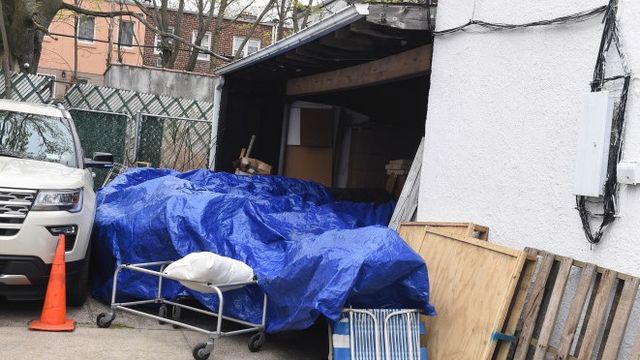
Unrefrigerated bodies lying outside an overwhelmed funeral home in Brooklyn, New York City
This is under conditions where the pandemic has now claimed the lives of over 50,000 Americans. In New York, where the death toll has passed 15,000, bodies are shipped to other states because the state’s four crematoria are overwhelmed; 180 refrigerated trucks for the bodies of recent COVID-19 victims have been set up throughout the city.
To this day, no reliable statistics about infections or deaths among health care workers have been released. This is despite the fact that they have been among those most severely affected by the virus. An estimated 10 percent of the 192,992 confirmed cases in Italy are health care professionals; at least 125 Italian physicians have died from the disease. Over 100 health care workers in Britain have died. In the US, where 923,612 COVID-19 cases have been confirmed, there is a total of 2.86 million registered nurses, almost one million physicians and 826,000 EMS workers.
Even three months into the pandemic, there is no adequate supply of personal protective equipment (PPE) for most of these workers. A nurse at Cleveland Clinic in Ohio told the WSWS that her hospital had a policy of encouraging nurses to only wear cloth masks, “but they don’t protect against droplet or airborne [infections]”, she noted. “If you want a surgical mask you have to track them down. It takes me 5-10 min [at the beginning of a shift] every day to get a mask.”
Given the WSWS independent tally based on public information, there is no question that the official numbers released by the Center for Disease Control (CDC), which recorded over 9,300 infections and 27 deceased health care workers as of April 15, are a vast underestimate. It is still exceedingly difficult for health care workers, as for all workers, to get tested for the virus. There have been reports of health care workers in New York and other states being forced work even after they tested positive, contribution to the spread among hospital staffers, patients and their families.
At the Henry Ford Hospital in Detroit, Michigan alone, over 700 workers were tested positive weeks ago. The number of confirmed infections and deaths in that state has since skyrocketed. On Long Island, New York, nearly 1,200 hospital staffers had tested positive as of April 15. Nine hundred workers of the New York City public hospital system have tested positive, and 3,000 have called in sick. At hospitals in Illinois more than 2,500 health care workers have been confirmed positive. In a special broadcast by PBS, the emergency room director for one Brooklyn hospital indicated that 30 percent of the staff had been infected, and five had died.
The first known health care worker fatality in New York City, Kious Kelly, a nurse at Mount Sinai West, died on March 24. By now, based on the WSWS count, at least 50 New York health care workers have died, including 26 workers of the NYC Health + Hospitals public hospital system, and at least 8 at EMS. In New Jersey, at least 25 health care workers have died. Thirteen of them worked for EMS and died since March 31. In Michigan, at least 15 health care workers have died, most of them in Detroit and Flint, cities that have been decimated by decades of austerity, de-industrialization, bankruptcy and, in the case of Flint, the poisoning the water system with lead. At least seven health care workers have died in Georgia, which is already reopening its economy, and at least eight have died in Illinois.
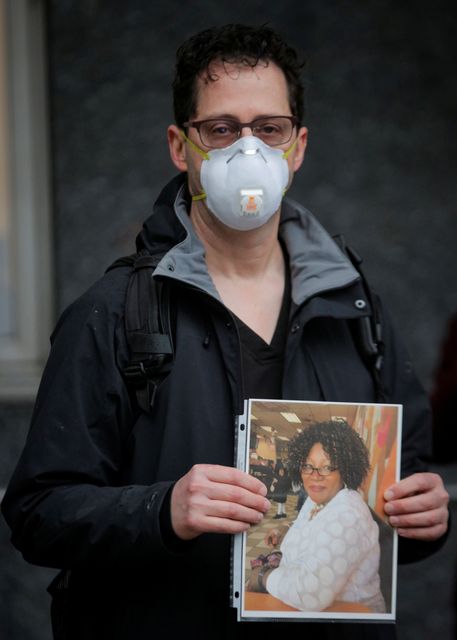
Ted Levine, a healthcare worker at Mount Sinai Hospital, holds a photo of Feda Ocran, a nurse who died of coronavirus disease [Credit: Brendan Mcdermid/Reuters]
These numbers are but a pale reflection of the situation. A paramedic in New York City told the WSWS that he knew at least three other EMS workers who died in New York state, which would bring the total at FDNY to 11. In Detroit, an EMT [Emergency Medical Technician] told the WSWS that he knew of fifteen EMT colleagues who had died. The WSWS list only includes one Detroit EMS worker. It also does not include workers at nursing homes, which have been completely ravaged by COVID-19, although reports have surfaced of workers having died there in facilities that continue to block the release of numbers.
Many of these workers died after having been denied proper PPE, testing and medical care. Deborah Gatewood, a nurse at Beaumont Hospital in Farmington Hill, Detroit suburb, was denied admission to the hospital where she worked four times before she passed away from COVID-19. A 33-year-old Miami-area ICU nurse, Danielle Dicenso, also died after having been denied face masks while treating COVID-19 patients.
Every single one of these deaths and the vast majority of infections were preventable. They are the result of a policy of criminal negligence by the government in response to the pandemic, and a decade-long social counterrevolution in which social infrastructure was destroyed and plundered to enrich a tiny oligarchy.
The crisis is also taking a tremendous emotional and psychological toll on health care workers who are not infected. Left to fight under war-like conditions without proper equipment on shifts that can last up to 16 hours, they are undergoing traumatizing experiences, including taking responsibility for decisions about life and death, and seeing countless patients die alone and their families suffer. Most health care workers are experiencing serious anxiety, fearing not only for the health of their patients, but also their own health and that of their loved ones. In New York City, EMS workers, who often earn poverty wages, have been reportedly forced to sleep in their cars or at their workstation for lack of alternative housing opportunities.
Under these conditions, there have been growing warnings by medical health experts that the COVID-19 pandemic will be followed by a second pandemic of mental health issues, which will hit health care workers especially hard. Many health care workers already experienced acute stress and are at increased danger of suffering from Post-Traumatic Stress Disorder (PTSD) once the pandemic ends.
Even before the crisis, there was an epidemic of nurse suicides in the US. EMS workers were contemplating suicide at a rate 10 times higher than the average adult in the US. This situation is being dramatically exacerbated by the pandemic. A study on the mental health conditions of Chinese health care workers who treated COVID-19 patients in Wuhan found that half of them were now struggling with depression, 44.6 percent experienced anxiety and a third insomnia.
A paramedic in New York City told the WSWS that he had to call the FDNY counseling service after every shift “because it’s becoming so much. I’ve been knocking out once I get comfortable due to sleep deprivation adding to my insomnia. I’ve been in low depressed moods recently. Too much death than should be observed in a lifetime.”
Asked what he thought about the reopening of the economy under these conditions, he said: “I think it’s premature, to say the least. The very first people that are going to be affected by that is us: hospital workers, first responders. I don’t think any sane person would do that, especially if we don’t have any regularly available care for something as massive as this.”

24 Apr 2020

Women’s Peace & Humanitarian Fund (WPHF) COVID-19 Emergency Response Window 2020

Application Deadline: 28th April 2020

About the Award: Apply for new funding opportunities that support your local civil-society organization in its efforts to respond to the COVID-19 global pandemic. We seek to fund qualifying projects of local women’s organizations that contribute to responding to COVID-19 in crises settings.

Type: Grants

Eligibility: The WPHF COVID-19 Emergency Response Window is divided into 2 funding streams:

Funding Stream 1: Institutional funding: from 2,500 USD to 30,000 USD
This funding stream will provide institutional funding to local civil society organizations working on women, peace and security and humanitarian issues to ensure they are able to sustain themselves through the crisis. Prospective applicants will need to demonstrate how the current crisis affects their institutional and financial capacities and how the funding would support them through the pandemic.

Funding Stream 2: Programmatic funding: from 30,000 USD to 200,000 USD
This funding stream will finance projects which aim specifically to provide gender-responsive response to the COVID19 crisis. Interventions could include, but are not limited to:
  • Strengthening the leadership and meaningful participation of women and girls in all decision-making processes in addressing the COVID-19 outbreak.
  • Mobilizing of women’s organizations at community level to ensure that public health education messages on risk and prevention strategies are reaching all women (including through community radio, the use of technology, etc.).
  • Supporting women who will be most economically affected by the crisis, namely daily wage earners, small business owners and those working in informal sectors. This could be done through cash transfers, community funds and support to women-led small businesses.
  • Restoring and strengthening access to sexual and reproductive health services, including pre-and post-natal care.
  • Supporting prevention and response to GBV, including through safe shelters but also campaigns on social norms targeting male engagement in domestic work and combatting domestic violence.
Eligible Countries: Civil-society organizations in all 25 WPHF eligible countries are qualified to apply.
AFGHANISTAN, BURUNDI, BANGLADESH (ROHINGYA CRISIS), C.A.R., COLOMBIA, D.R.C. (KINSHASA, KWILU, NORTH KIVU, ITURI AND SOUTH KIVU), HAITI, IRAQ, JORDAN (SYRIA CRISIS), LIBERIA, MALAWI, MALI, MYANMAR, NIGERIA (BORNO, ADAMAWA AND YOBE STATES), PALESTINE, PAPUA NEW GUINEA, THE PACIFIC (FIJI, PALAU, TONGA, SAMOA, SOLOMON ISLANDS, VANUATU), THE PHILIPPINES, SOMALIA, SOUTH SUDAN, SUDAN, SRI LANKA, UGANDA, UKRAINE, AND YEMEN

Number of Awards: Not specified

Value of Award:
  • Funding Stream 1: Institutional funding: from 2,500 USD to 30,000 USD
  • Funding Stream 2: Programmatic funding: from 30,000 USD to 200,000 USD
How to Apply: To apply, download the attached application forms (available in English, Spanish, French and Arabic) and email your submission directly to WPHFCOVID19Response@UNWOMEN.ORG
  • It is important to go through all application requirements in the Award Webpage (see Link below) before applying.
Visit Award Webpage for Details

Commonwealth Youth Council (CYC) Covid 19 Rapid Response Mini-Grants 2020

Application Deadline: 28th April 2020, 11:59pm GMT.

About the Award: The WHO declared COVID-19 to be a global pandemic, and recommended communities take social distancing measures to prevent the spread of the virus. Globally, COVID 19 is more than a public health challenge-it has laid bare the consequences of persistent systemic inequalities and is threatening our social fabric , trust in our institutions and the economic security of billions of people.
More than two million confirmed cases have been reported worldwide with more than 150,000 people having died from the virus. Most of the Commonwealth countries have also been affected by the pandemic, which is expected to have dire social and economic consequences as well.
The Commonwealth Youth Council believes it the role of young people in addressing this pandemic and its consequences and is launching a rapid response grant process to help young people within the Commonwealth lead projects that address community impacts of COVID-19. Mini-grants of 250$ shall be given to two organisations from each of the Commonwealth regions namely, Africa, Europe, Asia, Pacific and the Caribbean. The small grants will target grass root youth-led organisations.

Field(s):  The project should focus on (but is not limited to) the following areas:
1) Digital mental health campaigns to support persons feeling isolated
2) Addressing stigma and reinforcing the sharing of accurate, youth friendly information.
3) Awareness raising and information targeting persons living with disabilities.
4) Community focused sanitation and prevention campaigns
5) Projects addressing SRHR and sexual and gender based violence


Type:  Grants

Eligibility: To be considered for the small grant, the organisation must be:
1) Be a youth group,a team or a grassroot organisation situated in one of the 54 Commonwealth states.
2) Youth-led ( The Commonwealth defines youth as any person between the ages of 15 and 30)
3) Be a team, a youth group or a grass-root/community based organisation. Special focus will also be paid to youth-led organisations working in low-income communities, persons living with disabilities, rural populations and other vulnerable groups.


Eligible Countries: In Commonwealth regions namely, Africa, Europe, Asia, Pacific and the Caribbean.

Number of Awards:  2 from each of the regions

Value of Award: Mini-grants of $250.

How to Apply: Apply in link below
The applications will be reviewed and successful applicants shall be notified in the week following the deadline. Successful applicants shall be required to implement the projects before 30th May 2020, and share their final reports by 15th June 2020.
  • It is important to go through all application requirements in the Award Webpage (see Link below) before applying.
Visit Award Webpage for Details

Undocumented Workers Need a Bailout, Too

Josue De Luna Navarro

I was a child when I understood my immigrant family was wanted for labor — and for labor only.
Every day before dawn, I would hear my father pray on his knees. He would pray for our health, our safety, and — most importantly — for nothing out of the ordinary to happen that would threaten my parents’ jobs.
As you can imagine, our lives and economic stability depended on those jobs. If anything happened that would prevent my parents from working, it would be devastating to our family.
Our story is not unique — it is the same story 11 million undocumented people live every single day in the United States. However, something extremely “out of the ordinary” is now leaving many of these families without their livelihood: the COVID-19 pandemic.
COVID-19 has devoured the country’s health care system and led to what’s been called the “deepest global recession in history.” As an attempt to provide some relief to struggling Americans and businesses, Congress recently passed a $2 trillion stimulus and bailout package.
But the deal they negotiated gave a cold shoulder to the backbone of our economy: 11 million people and their families currently living in desperation. The stimulus bill, in short, simply left out undocumented people.
In 2018, a typical year, undocumented immigrants contributed around $20 billion in federal taxes, plus nearly $12 billion in state and local taxes. But because people need a valid Social Security Number to benefit from federal financial assistance, they’re getting completely left out of the stimulus their own tax dollars paid for.
Undocumented immigrants can forget about, for example, collecting the $1,200 stimulus checks promised to every U.S. household. Even worse, as more undocumented construction, housekeeping, and service workers find themselves unemployed, they won’t be able to file for unemployment benefits, which were expanded and extended under the stimulus.
Making matters worse, immigrant workers often work the front line jobs most exposed to the virus — while lacking health care or any meaningful social safety net.
Take farm workers. Right now, most of the food Americans eat is farmed, cooked, processed, and/or packaged by undocumented workers. In fact, an estimated 70 percent of the essential workforce in farms is undocumented.
Should they go to work, risking their health as well as the health of people who eat the food they farm? Or should they stay home and watch their own families go hungry? With no health insurance or unemployment benefits, that’s the choice they’re stuck with. Yet Congress seems not to care.
All this takes a toll.
I used to work at a community health clinic where I directly assisted many undocumented patients. After seeing sick people day after day for three years, I learned a horrendous lesson: The root cause of their illnesses was often connected to stress. Their bodies were simply deteriorating from labor exploitation.
I’d end each day furious. These people paid their taxes and spent their lives working jobs no one else wanted, but there was little to no help for them. I remembered hearing my dad’s prayers each morning, crushed by the reminder our bodies were just being used for cheap labor.
Congress must finally come to its senses — and morals. Immigration status, and the nine-digit number that confirms it, shouldn’t be used to determine who’s worthy of aid in a pandemic that can infect or impoverish anyone. To protect everyone, we need to bail out the most vulnerable first.
Wherever they go, immigrant workers perform essential labor. Beyond that, we are humans — and, in a pandemic, that should be enough to deserve help.

Kashmir and Press Freedom

Sajad Rasool

Kashmir’s story, ravaged from misreporting and state-sponsored journalism in the past more than three decades has been pushed to an extreme, with hardly any representation in media to the local populace to speak for themselves and question the narratives crafted in the studios, thousands of miles away. The traditional mass media usually tends to less inclusion of community voices, as the control, ownership, and authorship are in hands of a few only. Editors decide what is read and who is heard and who is not. The free press is already struggling in Kashmir due to slow internet connectivity and further intimidation and harassment are adding to hamper the smooth functioning of media. Journalists have been targeted more frequently in the past 8 months. With this ongoing crisis, media too evolved, what didn’t change is the regular harassment, from summoning journalists to police stations and booking them under different draconian laws.
The advent of social media and digital means of communication revolutionized the way people in the world communicate and share information. It became part of 21st-century society, everything in the society is affected virtually by digital media. This invention and its spread changed the way we interact and communicate with fellow human beings. The storytelling in the media industry evolved and became easy for the people who otherwise would remain unheard of. A few years back we were so much accustomed to traditional media studios and print media coverage, that only a handful of people, usually privileged ones will have the access to become journalists and tell stories, set agendas and prioritize the content and decide what people shall read in the morning or watch during the prime time TV shows. The previous decade changed just that, the internet and mobile phone technology revolutionized the very concept of storytelling. It flipped the profile of storytellers and media makers; we saw hundreds of online news outlets coming to the fore.
Internet and social media had the potential to flip the coin, it allowed a wide range of people to produce news and tell stories. In 2014, after the Kashmir floods, a few like-minded activists, media students and I started Kashmir’s first community news platform ‘Kashmir Unheard’. Instead of joining any other media outlet after our studies, we established a platform that would open doors for the communities to tell the stories which never became a headline or were buried under hundreds of narratives. The media landscape lead by communities, with basic training of film making on their smartphones, we trained more than a dozen men and women from every district of Kashmir in a year. An alternative landscape like many across the globe with the potential to bring out real narratives from ‘media dark’ areas of the valley was all set. We at Kashmir Unheard managed the gender balance and trained 10 women in storytelling. These community correspondents not only reported on the issues which they and their communities have been suffering from a long time but also with a deep understanding of issues involved local authorities for action. In the past some years Kashmir saw an increase in more and more people joining media organizations and starting their initiatives – this filled the information vacuum and offered a possibility to do journalism and storytelling in different formats. Journalism can only be improved only when local journalists are allowed to improve and work freely.
I believe, if the world must understand a conflict, its people have to be empowered to speak, only then we will understand conflict better and resolve.
August 5, 2019 – with the abrogation of article 370 everything changed for all Kashmiris politically, we witnessed thousands of arrests, internet, and communication lines were shut and media was paralyzed. Kashmir unheard and many other online news outlets were silenced the same day – with the main idea of giving voice to the muzzled voices of Kashmiri communities. In the past 5 years besides trying to explain what causes the conflict, we tried to give voice to all perspectives – including nongovernmental organizations and people from all parts of civil society. We reported on different efforts made to resolve the issues, looked closely at all sides. To make people from our communities and elsewhere aware of the real stories of Kashmir. The main aim was to report from all diverse communities of Kashmir, not just a few. As journalists shall report about the whole society, not it’s half. August 2019 brought a very difficult phase for journalism in Kashmir, hundreds of people lost their jobs after many online outlets had to shut down, journalists are being harassed regularly. While the media remains under threat in Kashmir and strategic attacks against them continue the number of journalists is being made less. As free journalism disappears from Kashmir, its stories are expected to remain buried. If a journalist who is living in conflict and experiencing it writes something that’s much more in-depth, we not only can see a greater chance of getting people to engage with the story but it increases the authenticity as well. In the times of this pandemic, we need more press freedom, the journalist’s movement if curbed will keep us unaware of the ground realities. Free flow of information in desperate times is a must, which is only possible when the people associated with this fraternity do not feel intimidated.
The Kashmir conflict has affected not only Kashmiris in particular but the people across south Asia as well. I believe conflicts do not end by themselves unless all parties are involved, ground reporting from Kashmir by Kashmiris is a must for all the parties to understand different perspectives but also learn what this community is looking forward to. By putting real people in the story, all the parties can understand how this conflict affects them. We know that news reporting will still not only mean to resolve anything but who reports and what is reported has the potential to change how we all look at things. The real stories are to be heard, and they neither can be told by the mainstream TV studios of India, with a jingoistic attitude and demonizing Kashmiris nor can they be told by the print journalists coming from outside of Kashmir. Instead, it is such platforms, alternative media platforms that can-do justice in real sense. An indirect ban on online media by restricting the internet speed is a punishment to the whole society and is adding to the wounds of Kashmiris amid these crises, the muzzling of freedom of the press is a question mark on the face of democracy.