14 May 2020

COVID-19 and the Rationale for Stronger Indian Links with Southeast Asia

Angshuman Choudhury & Ashutosh Nagda

On 15 March, Prime Minister Narendra Modi initiated discussions on a potential regional response to the COVID-19 pandemic through a video meeting with leaders from the South Asian Association for Regional Cooperation (SAARC). New Delhi has not yet pushed for such multilateral cooperation to its east, either within the Bay of Bengal Initiative for Multi-Sectoral Technical and Economic Cooperation (BIMSTEC) or with the Association of South East Asian Nations (ASEAN).
New Delhi has reached out to only a few Southeast Asian countries and companies, in a case-specific manner to give or receive crisis-time assistance. This commentary will argue that India must eschew a piecemeal strategy and broaden the scope of its COVID-19 outreach eastward to strengthen its Act East Policy (AEP), fortify its credibility in Southeast Asia, and balance Chinese interventions. For India, institutionalising crisis-time trans-regional cooperation carries both short and medium-to-long term imperatives.
Unequal outreach 
Besides countries in its extended neighbourhood, like Mauritius and Seychelles, India has so far offered COVID-19-related assistance—supplying Hydroxychloroquine (HCQ) and paracetamol tablets and other medical supplies—to at least 123 countries, including the US, Germany, Spain, South Africa, Kuwait, Jordan, Dominican Republic, and Antigua and Barbuda. Seen in this context, India’s outreach to the ASEAN region appears oddly scant.
So far, PM Modi has directly spoken to his counterparts in only three ASEAN member states—Vietnam, Singapore and Indonesia—to discuss health and economic challenges. India has also agreed to supply HCQ tablets to Malaysia, and received a donation of 30,000 COVID-19 testing kits from a Singaporean company. The Indian embassy in Manila has supplied masks, sanitisers, and medicines to Philippine government officials, university students, and regular citizens.
While India’s broad-spectrum diplomatic outreach during the pandemic is noteworthy, the Modi government should not overlook key foreign policy priorities and regional interests. Over the past decade, both BIMSTEC and ASEAN have emerged as core areas of interest for New Delhi within the ambit of its AEP and the Neighbourhood First Policy. New Delhi has spiritedly engaged with both regional formations through multi-sectoral initiatives in the domains of traditional and non-traditional security. These must now be furthered within the context of the COVID-19 pandemic.
Why should New Delhi expand its COVID-19 outreach eastwards?
One of the foremost challenges that India faces in implementing AEP is a credibility deficit at both institutional and popular levels in Southeast Asia. The COVID-19 crisis provides a window for New Delhi to fix some of this deficit.
Initiating joint action and shared learning during a crisis can positively shape public and institutional memories in partner countries. The pandemic thus offers New Delhi an opportunity to ramp up its public diplomacy in Southeast Asia, and show its willingness—and wherewithal—to undertake mutually-beneficial collaborations. Ultimately, this would help New Delhi broaden and deepen the scope of AEP and secure greater legitimacy for future regional projects.
Collaborating with BIMSTEC members could serve as a catalyst in creating a joint economic recovery plan for the Bay of Bengal sub-region, which has taken a heavy blow from COVID-19 and the ensuing national lockdowns. To prevent a rapid regression of the organisation into its erstwhile comatose state, member states must ensure the resumption of sub-regional trade links once cross-border restrictions are lifted. For India, post-crisis collaboration within BIMSTEC could give a fillip to both AEP and NFP, particularly by incentivising Myanmar and Thailand, both ASEAN members, to accelerate focus on their ‘look west’ policies.
ASEAN is already engaging directly with China on technical knowledge-sharing and multi-sectoral coordination over COVID-19 through an exclusive dialogue mechanism. ASEAN is also collaborating with China, Japan, and South Korea within the ASEAN Plus Three (APT) mechanism. It has even created an “APT reserve of essential medical supplies,” as outlined in a recent joint statement. Evidently, ASEAN is open to trans-regional multilateral cooperation on COVID-19. This indication must encourage New Delhi to make its own forays on proposing joint initiatives.
A long-term impact of sustained Indian collaboration with ASEAN over pandemics is that a stronger, more effective, and more outcome-oriented AEP would automatically entail greater engagement, including smoother physical connectivity and higher people-to-people contact. This should be a solid driver for both to install a durable joint pandemic response framework so better connectivity does not transgress into faster pathogenic transmissions.
India has other strong short-term imperatives to expand its COVID-19 outreach eastwards. India shares a 1640 km-long porous land border with Myanmar, where COVID-19 cases are steadily rising. While this border is currently sealed, infections can easily travel back and forth in the near future, particularly when the lockdowns in both countries are lifted. A harmonisation of containment strategies between New Delhi and Naypyitaw is important to prevent cross-border transmissions. Further, India must ensure continuity in its trade and connectivity links with Myanmar, also known as the ‘land bridge to Southeast Asia’ in AEP parlance, to offset the severe disruptions caused by the pandemic.
So far, the individual responses to the pandemic in Southeast Asia have been mixed. Some countries (like Vietnam, Thailand and Singapore) have successfully limited the virus and tackled the attendant socioeconomic challenges robustly. Others (like Indonesia, Cambodia, and the Philippines) struggling to cope. Institutionalised collaboration between India and ASEAN will enable two-way knowledge-sharing, exchange of technical expertise, and transfer of best practice norms to mutual benefit.
 What can India do?
 India’s COVID-19 expansion eastward must follow two pathways: BIMSTEC and India-ASEAN. The former must be the first point of contact, given the proximity of Myanmar and Thailand to India’s Northeast. New Delhi could begin with a SAARC-like video conference with BIMSTEC to flag-off collaboration, and then customise as per the specific needs of member states. Thailand’s role as the lead country in the organisation’s ‘public health’ vertical, combined with its own best practices in managing the crisis, can be a big asset here.
The second pathway for India would be to propose direct collaboration with ASEAN within the existing India-ASEAN dialogue mechanism. A good place to begin would be the ‘India-ASEAN Plan of Action (2016-2020)’, which has an embedded component of ‘Health and Pandemic Preparedness and Response’. A major provision within this is working together “to enhance ASEAN’s preparedness and capacity in responding to communicable and emerging infectious diseases including pandemics” through “preparedness planning, prevention efforts and capacity building.” It also includes “the strengthening of areas on surveillance, laboratory networking, human resource capacities and information networking.” The health component is also present in the ‘India-ASEAN Dialogue Relations’ agenda, as updated in July 2019. These frameworks can be immediately operationalised through an Emergency Communication Network (ECN) handled by the Indian Mission to ASEAN in Jakarta, Indonesia. One of the first emergency measures that India could undertake is supplying HCQ and paracetamol tablets to countries in the region, depending on their requirements.
Within ASEAN, India should pay special attention to the Cambodia-Laos-Myanmar-Vietnam (CLMV) sub-region, with which it already has synergies within the Mekong Ganga Cooperation (MGC) framework. In the immediate term, India must directly engage with the four countries to provide emergency assistance, including HCQ tablets and technical expertise. New Delhi could also lend its flagship Integrated Disease Surveillance Portal (IDSP) to the sub-region, much like it has done with SAARC members.
In the medium-to-longer term, India must complete the creation of the long-pending MCG Working Group on Health and push Indian pharmaceutical and medical equipment companies to invest in the sub-region’s malnourished health sector. The Indian healthcare industry already has a significant footprint in the sub-region. For instance, according to the Indian Chamber of Commerce in Cambodia, the health industry occupies a large segment of India-Cambodia bilateral trade, and India’s Export-Import (EXIM) Bank has prioritised funding for Indian healthcare operators to expand operations in the country. Similar EXIM-led healthcare initiatives are being considered for Myanmar. These initiatives must be given priority in the post-pandemic phase.
Pandemic management was a key area of cooperation discussed in the sixth MGC Ministerial Meeting held in New Delhi in 2012. However, in the next session, in August 2019, ‘pandemics’ found no mention. In light of the COVID-19 threat, India must revive this vertical in the next ministerial meeting and lay emphasis on pandemic surveillance and technical cooperation. India must also redirect focus on public health-centered Quick Impact Projects (QIPs) in the CLMV region, in line with the suggestion made during the sixth ministerial meeting.
 Conclusion
India cannot take the lead in the Southeast Asian regional response—unlike SAARC. However, this must not preclude bilateral or multilateral cooperation, given New Delhi’s rapidly evolving foreign policy priorities in the Indo-Pacific Region. New Delhi must note that the COVID-19 crisis has severely hampered trans-regional links, which is bad news for AEP and the many synergies that it had managed to build since 2014. To keep the policy’s momentum going, crisis-time collaboration is critical. In fact, by repositioning faith in Indian diplomacy and goodwill, COVID-19 collaboration with the ASEAN region can ultimately prove to be a force multiplier for AEP.


13 May 2020

African Programme on Rethinking Development Economics (APORDE) Conference Scholarships (Fully-funded to South Africa) 2020

Application Deadline: 1st June 2020 at 8am, Johannesburg time.

To Be Taken At (Country): Johannesburg, South Africa.

About the Award: African Programme on Rethinking Development Economics (APORDE) is a high-level training programme in development economics which aims to build capacity in economics and economic policy-making. The course is run for two weeks and consists of lectures and seminars taught by leading international and African economists. This call is directed at talented economists, policy makers, academics and civil society activists who, if selected, will be fully funded to participate in the course.
APORDE will cover essential topics in development economics, including industrial policy, rural poverty, inequality and financialisation. Lectures will equip participants with key information pertaining to both mainstream and critical approaches. The programme will mostly consist of daytime lectures, while a number of shorter evening talks and debates will also be organised. 

Type: Conference

Eligibility: To be eligible for African Programme on Rethinking Development Economics (APORDE):
  • Applicants must demonstrate first-class intellectual capacity and (at least some) prior knowledge in economics/political economy, as well as proficiency in English.
  • The objective of APORDE is to attract participants from a broad range of backgrounds and preference will be given to persons who have demonstrated exceptional capacity in their professional experience.
  • The main body of participants will be drawn from Africa, but we welcome applications from Asians, Middle Easterners and Latin Americans who have research or work experience related to Africa.
Number of Awards: 25

Value of Award: The following costs will be covered for selected participants – travel, accommodation, conference fee and per diem.

Duration of Programme: 30th August – 11th September 2020.


How to Apply: The following documents should be prepared to upload
  • An official transcript (showing courses taken and grades obtained);
  • A certificate of the highest qualification
  • A recent curriculum vitae not exceeding 5 pages in length
  • 2 (two) letters of reference, where possible 1 academic referee and 1 professional
  • For those whose main medium of instruction or work is not English, some proof of English proficiency will be necessary. Results of Standard English proficiency tests (e.g. TOEFL or IELTS) will be preferable, but other proof may also be accepted (e.g. a sample of written work in English).
  • The word format of the application form which you will find on the APORDE web page.
  • Please do not forget to Login or Register to download the APPLICATION FORM.

Low-Balling the Unemployed in the Era of the 2020 Great Recession

Jack Rasmus

This past Friday, May 8, the US Labor Dept. released its latest jobless figures. The official report was 20 million more unemployed and an unemployment rate of 14.7%.
Both mainstream and progressive media reported the numbers: 20 million more jobless and 14.7%.  But those numbers, as horrendous as they are, represent a gross under-estimation of the jobless situation in America!
One might understand why the mainstream media consistently under-reports the jobless. But it is perplexing why so many progressives continue to simply parrot the official figures. Especially when other Labor Dept. data admits the true unemployment rate is 22.4% and the officially total unemployed is 23.1 million.
Here’s why the 20 million and 14.7% is a gross under-representation of the magnitude of jobless today:
Only Half Month Data 
First, the 20 million for April is really only for data collected until mid-April.  Nearly 10 million more jobless workers filed, and received, unemployment benefits after mid-April. And likely millions more jobless have been attempting to get benefits but haven’t.  Even officially, more 33.5 million have filed for benefits, with several millions more in the pipeline.  So the April numbers of jobless—both receiving benefits and not yet getting them—are more than 20 million!
Only Full Time Employed Layoffs
An even greater misrepresentation is that the official 20 million unemployed represents only full time workers becoming unemployed. It’s the figure from the government report that is the category called U-3, or full time workers.  There are between 50-60 million more workers who are part time, temp, contract, gig and otherwise ‘contingent’ workers (i.e. not full time) who are not considered in the 20 million and 14.7%.
Check out the Labor Dept’s own data, in Table A-8, which shows for March and April no fewer than 7.5 million part time workers became unemployed. In April jobless in this group doubled over the previous month, rising by about 5 million in April, according to the Labor Dept.’s own monthly ‘Employment Situation Report’.  5 million  to 7.5 million represent what’s called the U-4 government unemployment rate.
But there’s still more. It’s what’s called the U-5 and U-6 unemployed. Who are they? They are what the government calls workers without jobs who are ‘marginally attached’ to the labor force and workers who are too ‘discouraged’. They are just as ‘jobless’ as full time and part time workers. But they’re put in another category simply because they haven’t actively looked for a job in the most recent four weeks.
You see the US government defines unemployed as that subset of jobless who “are out of work and actively looking for work”. If you haven’t looked in the last four weeks, you may be jobless but aren’t considered unemployed! Go figure.  Add them to the U-3 unemployed, and the totals for unemployed in America rise to 22.4%.  Add in those who filed for benefits in the last half of April, or tried to, and we get closer to the publicly admitted 33.5 million without jobs and receiving unemployment benefits.
The Disappeared 8 Million Unemployed 
But that’s not even the whole real picture.  The way the government defines unemployment a worker must be part of the labor force. The labor force is composed of two groups: those who have jobs and those who are officially unemployed—i.e. out of work and looking for work in past four weeks. If you are not looking, you’re ‘marginally attached’ (U-5, U-6). It assumes if you have stopped looking in the past four weeks you are part of the 850,000 ‘marginally attached’. But that figure is not credible. Somehow there are less than a million jobless who simply haven’t tried to find a job in the last four weeks? Really? There are many millions.
A government stat that suggests there are likely millions more not in the labor force who are jobless nonetheless  is called the ‘Labor Force Participation Rate’. It estimates the percent of the working age population who either have a job or are officially unemployed.
There’s approximately 164.5 million employed/officially unemployed in the US labor force as of May 1, 2020.  In February 2020 the labor force participation rate was 63.4% of the US labor force. As of May 1, that had dropped to only 60.2%. Over the past 12 months, roughly 8 million have dropped out of the labor force. And remember: if they aren’t in the labor force they can’t be counted as unemployed. So where did the additional 8 million dropping out go?
The US government doesn’t consider them unemployed so they don’t show up in the U-3 or even U-6 statistics! But if they aren’t in the labor force they are jobless by definition. Perhaps 850,000 are counted as the ‘marginally attached’. But what about the remaining 7.2 million or so? The government has no category for them except the estimation of them in the labor force participation rate. It tries to explain the large number away by saying they retired or went back to school. But did 7.2m (63.4% in Feb. drop to 60.2% in April) retire in 2 months? And they certainly can’t have gone back to school in mid-March/April 2020.
Another government statistic that corroborates this ‘missing 8 million’ in the labor force participation rate is called the Employment to Population Ratio stat. It measures how many are in the labor force as a percent of the total US population of nearly 340 million.
If the EPOP percentage goes down, then fewer are working even though they’re obviously still alive and part of the US population. That figure has declined from 61.1% of the US population employed to 51.3% of the population employed as of May 1, 2020. That’s a nearly 10% drop. 10% of 340 million is about 34 million. And 34 million is not 20 million for April, or even the Labor Dept.’s total 23.1 million.
So both the labor force participation rate and the employed to population ratio both suggest the Labor Dept.’s official U-3 (or even U-6) unemployed figures are grossly under-representations of the total Americans without jobs today.
Voluntary Jobless Are Not ‘Unemployed’
One possible reason for the discrepancies between the official unemployed of 23.1 million vs. the 33.5 million receiving benefits, or the 7-8 million not being counted per the labor force participation rate and EPOP ratio, may be due to the government in this current crisis choosing not to count as unemployed those workers forced to leave work since February to care for dependents.
Remember the government’s driving definition of unemployed is the worker must be ‘out of work and actively looking for work’. Millions of workers who have been forced by the current crisis to leave their job to care for elderly and disabled family members, or to care for young children forced to stay home due to school closures, are not ‘actively looking for work’. Few Americans can afford nannys to watch their young children so they can work. But those in this situation are not considered unemployed by the US Labor Dept. because they don’t fit the definition of ‘actively looking for work’! It’s not clear how many in this category the Labor Dept. has recently refused to acknowledge as officially unemployed.
In America you may be jobless, but that doesn’t necessarily mean per the government you are unemployed!
The above stats and data show that the under-reporting of the jobless in the US is not some kind of conspiracy by the Labor dept. and the government. The data are there, buried in the monthly labor reports beyond the executive summaries.  The government stats, moreover, are not perfect. There are serious problems related to raw jobs data recovery, to the various assumptions on that raw data the government makes to come up their jobs ‘statistics’ (always operations on raw data with assumptions which data to count and how).  There are conflicting conclusions often between this or that data or statistic. Furthermore, in recent years changes in statistical processing have sought repeatedly to change definitions and processes in order to ‘smooth out’ swings in the statistics—whether employment, unemployment, wages, or inflation. The government has a vested interest in ensuring the smoothing. It reduces government (and especially business) costs of programs and operations.
If there’s a conspiracy of sorts, it’s in the media that purposely seems to always ‘cherry pick’ the most conservative stat to report. Thus we get the media trumpeting every month the nearly worthless statistic of the U-3 unemployment rate—a stat that applies only to full time workers and ignores part time, temp and other contingent labor who make up now nearly a third of the US labor force; a statistic based on a narrow definition of unemployed that has become an oxymoron when estimating unemployed; a statistic based on questionable assumptions and data gathering; and a statistic that can’t be reconciled with other statistics like the labor force participate rate.
The real unemployment rate is not the U-3 figure of 14.7% but easily 25% today. And the real total jobless are not the U-3 20 million, or even 23 million, but somewhere between 35-40 million… and rising!
However, what’s really disappointing is that many progressive and left economists simply parrot the government’s and mainstream media’s misleading U-3 statistic. One can understand why the corporate mainstream media keep pushing the U-3 stat and thus trying to make the unemployment situation look better than it is (or today not as bad as it is). But progressive economists should know better.

Covid-19: A Human Security Cataclysm

Waseem Ahmad Bhat & Adil Qayoom Mallah

The contemporary world is an insecure place full of threats on many fronts. Natural disasters, violent conflicts, chronic and persistent poverty, health pandemics, international terrorism and sudden economic and financial downturns can impose significant threats for the prospects of sustainable development, peace, order and stability. Such crises are complex, entailing multiple forms of human insecurity.
When insecurities overlap, they can grow exponentially spreading into all aspects of people’s lives, destroying entire communities and crossing national borders. The human security approach provides a new way of thinking about the range of challenges that the world confronts and how the global community responds them.
Human security is about security for the people, rather than for states or governments. The advocates of human security look not only at threats to the survival and safety of the individual from violent conflicts but also from such non-violent factors as poverty, disease, environmental degradation and natural disasters. Subsequently, it has been reinforced by new security threats such as genocides, financial meltdowns and global pandemics.
In the present context, the world is confronting the biggest challenge i.e., Covid-19 crisis. The Covid-19 caused by the new Corona Virus emerged in the Wuhan city of China in December 2019. The spread of Covid-19 pandemic remains unabated, impacting nearly 85% of the globe. Surprisingly, the worst affected are the developed economies of the Europe and the United States, despite their advanced health care systems and a very favourable doctor/population ratio. No vaccine has been developed so far, yet certain preventive measures can help in minimizing the impact of this deadly virus. Such as frequent hand washing, coughing into the bend of one’s elbow and staying home, by following the norms put forward by the different governments and agencies like the WHO.
Although the US President Donald Trump called it the “China virus”, yet it crossed the sovereign borders with much ease. The Covid-19 is not the first human security threat of its kind faced by the world community. There have been threats like Ebola, SARS, HIV/AIDS, Global Warming, Bird Flu etc. Though these have not been eliminated completely, yet controlled to a large extent. What makes covid- 19 such a global threat is the rate at which it has spread and the rate of intensity at which it has multiplied its victims.
The Covid-19 pandemic has touched each and every aspect of human life, be it socio-cultural, political or economic. The impact has been such that the whole world is in lockdown. It spreads without any distinction. From most advanced countries to least developed it has left no stone unturned. The world is facing the financial meltdown which has culminated into the death of thousands of lives.
The workers associated with informal sector have to face the brunt of the crises all over the world. India is no exception to this pandemic. So far 47,480 people have tested positive resulted in the death of 2415. The International Labour Organization (ILO) reported in April 2020 that if the lockdown in India continues, it may push 40 crore informal sector workers into deeper poverty. The report further says, India is among the countries ill equipped to handle the situation, as they have either less or no access to basic services, particularly health and sanitation, is limited; decent work; social protection and safety are not a given; their institutions are weak; and social dialogue is impaired or absent.
Impact of Covid-19 on Kashmir
The erstwhile state of Jammu and Kashmir had been under lockdown for the last nine months, following the abrogation of article 370. At present the only medium of communication is internet which we have been deprived off, as the low speed 2g internet does no good to us.
The covid-19 pandemic has only added salt to the injuries; so for more than 930 people have tested positive, resulted in 10 deaths. Though the government has announced the complete lockdown and is encouraging the home quarantine and social distancing yet the authorities are dealing with people with the same old iron rod method. The hardships faced by the people seem to be unending, as there is no concrete policy by the government to make the conditions better. The shortage of masks and PPE in governmental hospitals may result as a catastrophe for the Doctors, nurses, medical workers and ultimately it may prove a disaster for the poor Kashmir.
As the Covid-19 has been declared pandemic, however, it needs greater cooperation to combat this deadly virus at international, national and local level. The precautions and preventive measures need to be adhered by the people vis-à-vis the governments have to make sure that the security threats other than covid-19 does not take toll on the human beings (like Hunger, Starvation, Poverty, Mal-nutrition etc.) Indeed, these are the testing times for the governments as well as the people, it is very important that they work in coordination and cooperate with each other so that the most vulnerable sections, the poor, the marginalized can be taken care off and the lives can be saved. Now the people have to play an active and positive role in defeating this virus by adhering to appeals made by the different agencies and organizations, consequently, the newly emerged security threat could be avoided till the antidote arrives.
To sum up, the Covid-19 pandemic has challenged the traditional notion of security, and there is increasing acceptance that focusing on the traditional notion of security would no longer suffice, the nation-states and the international community must develop new responses to ensure the protection of people from transnational dangers in an era of globalization. International community is combating a threat where it has to find ways of promoting human security as a means of addressing a growing range of complex transnational dangers (among which Covid-19 is one) which is having a much more drastic and destructive impact on the lives of the people than conventional military threats to states.

Patriotic Vaccines: The Divided Coronavirus Cause

Binoy Kampmark

When it comes to the politics of medicine and disease, the United States has always attempted to steal the limelight, while adding the now faded colouring of universal human welfare. In 1965, Washington pledged financial and technical support to the international effort to eradicate smallpox, though the initiative had initially been spurred by the Soviet Union at the behest of virologist and deputy health minister Victor Zhdanov in 1958. At that point in time, the World Health Organisation was not so much a punch bag as vehicle for US foreign policy, to be cultivated rather than rebuked.
As with the eradication of smallpox, a forced language of solidarity is coming into being with efforts to find a vaccine for the novel coronavirus. But behind it, there is backbiting and hostility, suspicion and paranoia. Like putting the first person on the moon, the matter is one of divided political endeavours.
One such effort of solidarity, and a not very convincing one at that, was made at this month’s Coronavirus Global Response Pledging Conference. The European Commission gave it a deceptively united title: “Joining forces to accelerate the development, production and equitable access to COVID-19 vaccines, diagnostics and therapeutics – on-line pledging event.” Representatives from 43 countries, a range of non-profit entities and scientific groups also added to the number.
Like fund drives that are common in the United States for public broadcasting, the efforts were billed as magisterial when they were, for the most part, modest. 7.4 million euros seems rather small fare when compared to the weighty global loss in life, limb and economy, though it looks a dream to coalface researchers. There was also a certain niggling anomaly in the event that took away some of its lustre. EU officials had permitted the pledging of money already spent on COVID-19 relief since January 30, making the raised amount more generous than it otherwise would have been. The United Kingdom was a case in point, having pledged £388 million toward a total as part of a prior pledge for £744 million. The EU bureaucrats for their part, have not been forthcoming how much in terms of new funding was pledged, making it difficult to spot the double-counters.
The language from the donors, however, was high sounding in hope. President of the European Commission Ursula von der Leyen was flashily presuming in her rhetoric. “Today we can truly say the world is united against the coronavirus, and the world will win.” The world, she claimed grandly, had “showed extraordinary unity for the common good … With such commitment, we are on track for developing, producing and deploying a vaccine for all.”
The British Prime Minister and COVID-19 survivor Boris Johnson was also unduly optimistic in his assessment of such a worldly effort. “The race to discover the vaccine to defeat this virus is not a competition between countries but the most urgent shared endeavour of our lifetimes.”
To ensure that this does take place will take more than pooled pledges with vague lines of distribution. The entire effort to find a vaccine would need to be decentralised. An aide to French President Emmanuel Macron described the problem to Politico as ensuring “that the production of the vaccine does not end up taking place only in the US or in a specific place, because the companies that produce vaccines are from a certain nationality”.
But a full-blooded competition this is, spiked with considerations of self-interest. Former commissioner of the US Food and Drug Administration Scott Gottlieb saw it in terms of a sporting race with a lucrative prize at the end. There is nothing of the cooperative or sharing spirit here, with Gottlieb seeing countries inoculating their own citizens first before sharing any supply with generous heart. “The first country to the finish line will be the first to restore its economy and global influence. America risks being second.” Given that Gottlieb is himself a board member of Pfizer and the biotech company Ilumina, a bit of hearty pandemic capitalism is bound to figure in his assessments.
The Trump administration had already signaled its intention to avoid any show of unity in the vaccine effort, which may suggest an unintentional expression of blunt honesty. It has frozen funding to the WHO and refused to send any representatives to a meeting organised by the organisation at a meeting, conducted virtually, last month. A spokesman for the US mission in Geneva told Reuters at the time that Washington “looked forward to learning more about this initiative in support of international cooperation to develop a vaccine for COVID-19 as soon as possible” but would not be participating in any official way. The response was much the same to the European Commission’s pledging conference.
For the Trump administration, finding a COVID-19 vaccine will, contrary to Johnson’s belief, be a predatory exercise in self-interest because other countries will, given the chance, treat it the same way. A neat, if vulgar example of this was given in March, when Die Welt reported that “large sums of money” had been offered by the administration for the German biopharmaceutical company CureVac, though former CEO Dan Menichella seemed to suggest that no definite offer was made in a meeting he had with the US president. Within that same month, Menichella had been replaced by the same man he replaced: founder Ingmar Hoerr.
In the messy rumble, billionaire Dietmar Hopp, who has an 80 percent shareholding in CureVac via his biotech company Dievini has dismissed such ideas of exclusivity. No German company would entrust themselves with the task of creating such a vaccine that would be merely for exclusive US use. German health minister Jens Spahn was of like mind: any such vaccine would “not be for individual countries” but “for the whole world”.
This is stern and admirable stuff but not particularly convincing. The global patent system is marked by vicious rivalries rather than tea-ceremony tranquillity. The behaviour of its participants, according to the University of Hong Kong’s Bryan Mercurio, tends towards a winner takes all approach. “The rest of the efforts will go unrewarded.”
The fractious scramble for appropriate vaccines and viral drugs, as with other scrambles of history, serves to highlight the crude, even cruel reality of power politics, which proves stubborn even in the face of the existential and costly. This is pure Donald Trump, unilateral, instinctive and unromantic, with a reaction in keeping with previous thinking when it comes to international efforts of solidarity. Look more closely at them and see the sham; it’s every state for itself.

Tony Allen (1940-2020): Pioneering drummer of Afrobeat dies

Paul Bond

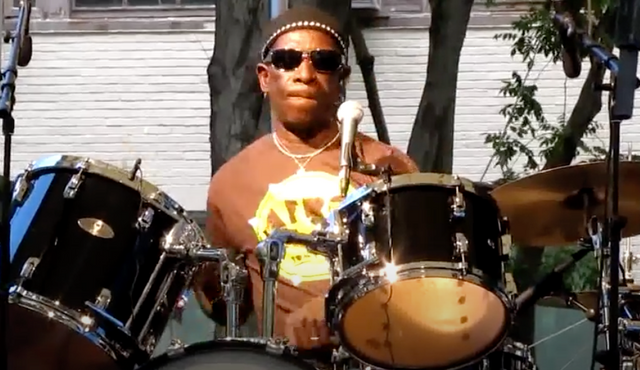
Few drummers have played such a key role in creating a musical genre and style as Tony Allen. The Nigerian drummer, who died of an aneurysm aged 79 in Paris, where he lived, was the percussive genius behind Afrobeat. His long-time pioneering collaborator Fela Kuti (1938-1997), the famed Nigerian musician and composer, once declared “without Tony Allen, there would be no Afrobeat.”
Tony Oladipo Allen was born in Lagos in 1940, the son of an auto mechanic. Having learned electronics he worked as a radio technician in his teens, which enabled him to repair band amplifiers when he did become a musician. Astonishingly, he did not take up the drums until he was 18, inspired by modern jazz.
A later collaborator, Sébastien Tellier, said this led him to “a very mysterious way to play drums.” Having learned by himself, without lessons, he “created another way to play.” Within four months of taking up the drums he announced he wanted to be a musician.
Tony Allen in 2015 (Photo credit–Tore Sætre)
Allen grew up listening to local West African music and immersed himself in jazz. His great contribution was bringing the two genres together. Allen described Afrobeat as “a fusion of beats and patterns. There was highlife [a popular West African music incorporating foreign rhythms and Western instruments], there was local Yoruba music like apala and sakara, there was jazz, and there was Western popular music like funk and R&B.”
He listened carefully to the jazz greats, studying Art Blakey and Max Roach above all. Blakey’s influence was huge, and Allen paid tribute to him in a four-track tribute EP in 2017. Allen described Blakey—in words that could also be applied to himself—as a magician because his playing sounded like more than one person on the drums. Indeed, when Allen finally left Kuti’s band, it took four percussionists to replace him!
In the jazz drummers he listened to, Allen heard an overall approach as well as technical skills. They were, he said, “telling a story by playing different rhythms, and they were doing it with independent coordination. That’s the way the drums should be played.” His approach was to follow “one central idea,” while allowing his limbs to play four independent lines and patterns on the drum kit. “You listen to it flowing like a river,” he said.
Allen’s focus on that one idea enabled him to be a flexible and constantly developing centrepiece of a band’s sound. Martín Perna, of Brooklyn-based Afrobeat group Antibalas, said that “with all that variation, he’s somehow more hypnotic than a pattern that doesn’t change.”
Fela Kuti Live (1971)
This ability to create four independent lines enabled him to cultivate a swinging polyrhythm. Roach’s playing got him interested in the hi-hat, which he thought overlooked in African drumming and which became central to his playing.
The Beninese singer Angélique Kidjo, who recorded often with him, described Allen as putting “the percussionist’s role into the drums” of Afrobeat, centred around the cowbell. This allowed him to be remarkably laid back even while still the lynchpin of his band’s sound.
Kuti’s band, with whom he recorded dozens of albums, played six-hour sets four nights a week, with individual songs often the length of an LP side, so a certain stamina and reserve were necessary. Kidjo said that when playing Allen never even broke into a sweat!
Kidjo and Allen had been hoping to record again together with the Cameroonian saxophonist Manu Dibango, who died in March of coronavirus.
When he taught Femi Koleoso, one of Allen’s first questions to the young drummer was, “Why is everything so aggressive?” Instead Allen encouraged playing quietly so the younger player could understand what was inside the beat. Allen himself had learned from a West Coast jazz drummer to practice playing on pillows to add flexibility: “Effortless—that’s what I tried to catch from [drummer Frank Butler].”
Tony Allen in 2010
Once Allen started playing, he quickly found work in Lagos’ highlife bands. In 1964, he auditioned for a jazz band organised by Fela Ransome-Kuti, as he was then known.
Kuti had just returned to newly independent Nigeria after five years studying music in London, where he played in an expatriate highlife band. The Lagos jazz band had only limited success, and Kuti began to expand its influences. This “highlife jazz” band, Koola Lobitos, meshed Kuti and Allen’s musical conceptions, blending jazz with local pop forms.
Koola Lobitos were locally successful in Nigeria and Ghana (home of Allen’s maternal family), and Ghanaian promoter Raymond Aziz coined the term Afrobeat to describe them.
In 1969, at the height of the Biafran secessionist conflict, Koola Lobitos undertook a 10-month tour of the US. There Kuti met Sandra Izsadore, who introduced him to the writings of Malcolm X, Eldridge Cleaver and other black radicals. He became sympathetic to the Pan-Africanism of Ghana’s Kwame Nkrumah.
The band threw American funk into their mix, and Kuti began to write more explicitly political lyrics influenced by the Black Power movement, like “Black Man’s Cry” and “Why Black Man Dey Suffer.” Kuti expounded in these songs a black nationalist philosophy he called Blackism.
On their return to Lagos the band was renamed Fela Ransome-Kuti and Africa 70. He would later change his own name to Fela Anikulapo-Kuti—“he who has control over death.” Kuti’s politicisation made him a vocal critic of government corruption, mismanagement, abuses of the underprivileged and the military. This made him a target of the authorities and he was beaten, arrested and jailed frequently.
The rock drummer Ginger Baker (1939-2019), who had first met Kuti in London, lived in Nigeria between 1970 and 1976, funding the country’s first 16-track recording studio and playing on several Africa 70 recordings including the remarkable album Live! (1971). He spent a lot of time at Kuti’s house, which the bandleader fenced around in 1974 and declared an independent state, the Kalakuta Republic.
In 1977, after Kuti sang his satire about the army, “Zombie,” around a thousand soldiers attacked Kalakuta, burning the house and beating and raping its residents. Kuti’s 77-year-old mother, a veteran of the anti-colonial struggles, was thrown from a window. She died the following year from the trauma.
Allen admired Kuti’s refusal to fawn: “To sing against the government? Most of the bands I knew were praising them … Fela was against flattery, and so was I. I don’t want to play the music of flattery.”
He also recognised the legitimacy of Kuti’s targets. “What [Fela] was challenging, he was right,” he said, and he had realised that the government response was brutal: “I just said: ‘[Fela] is going to be an icon, and they will kill him one day.’”
However, this agreement only went so far.
Perhaps in response to the treatment meted out to Kuti, he withdrew from “singing militant,” saying “It’s not my thing.” The step back was not to his credit, especially as he continued to acknowledge Kuti’s authority. In 2016, Allen said that “If you check most of his [Fela’s] lyrics … in the 70s and 80s, that is what is happening right now.”
The band performed and recorded regularly through all this. Kuti was providing the band arrangements, with Allen creating his own essential sound within that. The drummer was musically happy, but felt increasingly financially exploited.
In 1978, the band played the Berlin Jazz Festival, and a recent CD reissue of Live! included the astonishing 16-minute drum duet between Allen and Baker recorded there. Baker’s big hitting, which often obscured some of his real jazz qualities as a drummer, are here brilliantly focused and directed by Allen’s groove. There was also a fine live performance of “Egbe Mi O” by Allen and Baker at a 2013 tribute concert to Kuti.
The financial disputes came to a head in Berlin, where the whole band quit in a dispute over unpaid royalties. Allen recorded one album with Africa 70 but could not establish his own band in Nigeria. He moved to London before settling in Paris in 1985.
The early French recordings were disappointing, with his playing disappearing under a swamp of electronica. He never sat still, however, and continued expanding his musical palette into what he called Afrofunk. By the late 1990s he was beginning to achieve a more successful sound. Paving the way was Black Voices (1999), an often hypnotic album that gave Allen space to swing inside dub electronics.
Allen was fêted by younger performers, like Blur’s Damon Albarn, who became a frequent collaborator in projects like The Good, The Bad and the Queen, alongside Clash bassist Paul Simonon and former Verve guitarist Simon Tong. A new song with Albarn’s Gorillaz and rapper Skepta has just been released.
Allen also recently released Rejoice with veteran South African trumpeter Hugh Masekela (1939-2018), whom he had met in Lagos in the 1970s. He had been planning an album this year with young musicians in Nigeria, London, Paris and America. “I want to take care of youngsters—they have messages and I want to bring them on my beat.”
Asked to sum himself up in three words, Allen said “Simple gentle guy.” The comment was an understatement, but it could not hide his real drive. “I still challenge myself every time with my playing. I still want to play something impossible, something that I never played before. That’s what I’m after.”

New Zealand government removes more COVID-19 restrictions

Tom Peters

New Zealand Prime Minister Jacinda Ardern announced on Monday that the country will remove most of its remaining lockdown restrictions on Thursday, allowing almost all businesses to reopen. Once again, the Labour Party-led government is brushing aside calls from scientists for the lockdown to be further extended.
The country has recorded 21 deaths from coronavirus and a total of 1,497 confirmed and probable cases. This is much lower than the appalling death tolls seen in the US and Europe. However, new cases are being reported nearly every day, raising the possibility of a resurgence of the disease.
South Korea, China and Germany recently reported significant new outbreaks after easing restrictions. In Australia, the government is telling the population to expect more cases of the virus as it proceeds recklessly to reopen the economy.
New Zealand will drop from alert level 3 to 2 in the government’s four-level system of COVID-19 alerts. Schools and early childhood centres will reopen on May 18, if they haven’t already, to enable the vast majority of people to return to work. Although schools officially reopened on April 29, after the strict level 4 lockdown was lifted, a number of scientists and thousands of teachers opposed the decision. Large numbers of parents kept their children at home, and many early childhood centres refused to open due to the ongoing health risk.
Tomorrow, most businesses will be allowed to reopen, with some social distancing requirements. Gatherings of more than 10 people are still banned. Shopping malls, cafes, restaurants and gyms will open, but bars will remain closed for an extra week, with Ardern saying they “posed the most risk” for spreading the virus. The government rejected advice from the Ministry of Health to keep bars closed for two weeks.
Microbiologist Dr Siouxsie Wiles told Newstalk ZB on Sunday: “I would like to see us be at level 3 for another week” because it was unclear whether the level 3 restrictions have effectively suppressed the virus. She said while daily case numbers were low, there could still be silent transmission of the virus among asymptomatic people.
Infectious diseases specialist Professor David Murdoch told Stuff there was “concern” that the drop in levels would encourage “some complacency,” when “more than ever it’s a time to be vigilant.”
University of Otago epidemiologist Dr Michael Baker told Newstalk ZB on May 11 that the government should “pause a few more days” at level 3. Baker has urged the government to release more data to show the origin of new cases of COVID-19, including how many are from overseas and from healthcare settings.
Baker has also called for facemasks to be made compulsory on public transport, something the government has rejected.
Another government advisor, Professor Shaun Hendy from Auckland University, told the Spinoff that “we haven’t ruled out that there could still be undetected chains of transmission.” This may have increased following the drop to level 3, which allowed hundreds of thousands of people to return to work. “My gut reaction is we should go a bit longer in level three. Probably add another week,” he said.
The government has refused to be swayed by such concerns because its priority is not public health, but rather the profit interests of big business. Its main response to the pandemic has been to hand out tens of billions of dollars to businesses in the form of subsidies, bailouts and tax cuts. With the assistance of the trade unions, major corporations have sacked thousands of workers and slashed wages, even while receiving government money.
Charities and social service providers are pleading for increased welfare payments and housing assistance, as unemployment is expected to soar well above 10 percent. The government will announce its annual budget tomorrow.
Government ministers, however, have warned that “generations” of workers will have to pay back the debt being incurred by the state due to the worst crisis of capitalism since the 1930s. Finance Minister Grant Robertson told a business audience on May 7 that spending in many areas would be “slowed or postponed” or put “on ice.”
Meanwhile, there are many warnings that a new outbreak of COVID-19 could occur. According to the Ministry of Health there are 12 clusters of 10 or more cases where there is potentially ongoing transmission, including four aged care facilities.
The country’s second-largest cluster, with 95 cases, centres around Marist College in Auckland, raising concerns that schools could become centres for the spread of disease once students return.
Auckland medical school associate professor Matire Harwood told Radio NZ that poor areas in the country’s largest city would be at greater risk of a flare-up of the virus, due to overcrowded housing and homelessness.
Over 150 healthcare workers have contracted COVID-19. Nurses have spoken out about inconsistent procedures in hospitals, which have put staff and patients at risk.
Newsroom report on May 12 described Waitakere Hospital in Auckland as “a cluster waiting to happen.” Seven nurses and at least three close contacts have tested positive for the virus, but the article said “authorities [had] repeatedly tried to downplay concerns.”
Staff expressed alarm at being made to work in both COVID and non-COVID hospital wards, increasing the chances of transmission. The Waitemata District Health Board (DHB) waited four days after the first nurse tested positive before making a public statement on May 1, by which point two others were confirmed to have the virus.
Contrary to assertions from the DHB that adequate personal protective equipment (PPE) was provided, one nurse told Newsroom that nurses working with coronavirus patients “were told to wear ordinary surgical masks, which are known to be inadequate protection against COVID-19 in close nursing situations.” There is no national protocol on the use of PPE, with each hospital essentially making its own rules.
Such cases highlight that the health system, which has been starved of funding and resources for decades by Labour Party and National Party governments, is completely unprepared to deal with a major outbreak of COVID-19.

Australian university union agrees to unprecedented pay and job cuts

Mike Head

After weeks of backroom negotiations with the employers, the National Tertiary Education Union (NTEU) today released a “heads of agreement” that allows university managements to cut wages by up to 15 percent and destroy thousands of jobs, including by forced redundancies.
The agreement shatters the NTEU’s claim that it volunteered sacrifices of wages and conditions to “protect jobs” from the impact of the COVID-19 pandemic. In giving carte blanche to the employers, the deal goes far beyond anything previously suggested to NTEU members.
The outrage of university workers, already shocked by the NTEU rushing in to these talks, behind their backs, will intensify as the full details of the union’s deal become known and as individual universities and their NTEU branches move to inflict its terms, institution by institution.
In a media release, the NTEU claimed a great victory: “Landmark agreement preserves 12,000 jobs and hard won university conditions.”
Nothing could be further from the truth. Wages can be cut by up to 15 percent, even exceeding the 10 percent cuts previously mentioned at an NTEU national council meeting. So-called “Category B” universities only have to claim a 10 percent reduction in revenue to inflict a 15 percent cut, while “Category A” institutions that claim a 5 percent fall can cut wages by 10 percent. Only $30,000 of a wage is exempt from these reductions.
In an email to NTEU members this morning, national president Alison Barnes claimed that the “Jobs Protection Framework” will: “Save at least 12,000 jobs nationally,” “Limit redundancies and prevent stand-downs without pay” and “Help casual and fixed-term staff to regain and retain their work.”
These are all patent lies. According to point 2 of the “National Memorandum of Understanding”: “The Parties estimate that this package will save in the vicinity of 10,000 to 12,000 jobs of university employees if implemented in full across the Australian university sector.”
That is, if the union foists on its members all the cost-cutting measures permitted by the deal, perhaps “in the vicinity” of 10,000 jobs might be “saved”—out of an estimated 30,000 being eliminated.
The same goes for mass sackings. By paragraph 44 of the “heads of agreement,” forced redundancies are permitted due to “a reduction in work.” This can include where a university is permanently abolishing “a substantial work function (such as the abolition of a discipline)” or closing a campus, or “where there is a surplus of employees due to insufficiency of work in a particular work unit or function.”
Likewise with the axing of casuals and contract workers, thousands of whom have already had their jobs eliminated over the past six weeks. Paragraphs 33 and 34 of the agreement say that where their work “has reduced as a result of the impact of COVID-19,” they “will have first order of preference to resume that work.” Yet, many of these jobs will never resume because of the long-term impact of the global pandemic and because universities are pressuring full-time employees to work overload, in violation of workplace agreements, in order to replace casuals and contract workers.
Contrary to Barnes’s email, large-scale stand-downs are also permitted. Paragraph 36 accepts the use of section 524 of the Fair Work Act to stand down employees due to an alleged “stoppage of work,” and allows managements to cut their pay by up to 50 percent for the duration of the stand-down, as long as the university has supposedly exhausted “all options for other work to be performed.”
Many similar clauses exist, for example, allowing universities to increase workloads and force the taking of annual and long service leave.
The NTEU, which has collaborated with university managements for decades, will become fully integrated at all levels as a formal partner in policing this agreement against its members. Both “parties” will nominate three people to form a National Expert Panel to oversee the deal’s implementation. Local NTEU branches will join COVID-19 Temporary Measures Committees to approve “change management processes,” that is, wholesale cuts.
The NTEU claims that these concessions are “time-limited,” with an end date of June 30 next year, but the crisis triggered by the pandemic and the response of governments will last far longer. Universities Australia has predicted losses totaling $19 billion over the next three years alone. This is primarily due to the loss of income from international students, whom universities have exploited as cash cows for years to offset punishing cuts in funding by Labor-Greens and Liberal-National governments alike.
For weeks, the NTEU has blocked all action by university workers to fight this onslaught, including by invoking the threat of huge fines under the Fair Work Act, while holding out the prospect of a “job protection framework.”
This fraud is now fully exposed. Universities are already moving to exploit the “heads of agreement.” La Trobe University vice chancellor, John Dewar, one of the signatories to the deal with the NTEU, sent an email to staff declaring that up to 800 jobs, or nearly a quarter of the workforce, will go, depending on how the management saves by pay cuts, “voluntary” redundancies and “restructuring.”
Having spent two years locking university workers into the latest round of enterprise bargaining agreements (EBAs)—which the NTEU also hailed as victories—the union is working hand-in-glove with individual managements to tear up anything in these EBAs that stands in the way of the unprecedented attack on pay and conditions.
While “variations” to EBAs must go to ballots under the Fair Work Act, there is nothing democratic about this process. University workers and students are being presented with a fait accompli.
This is not an aberration. The NTEU’s agreement fulfills the pledge offered last month by Australian Council of Trade Unions secretary Sally McManus that the unions would give employers “everything they want” in response to the pandemic. These are not working class organisations but thoroughly pro-capitalist apparatuses enforcing the requirements of the corporate elite.
Barnes told the Australian Broadcasting Corporation: “Our union intervened to prevent the collapse of tertiary education in Australia and secure the livelihoods of 12,000 university workers.” Far from the livelihoods of workers, the NTEU’s concern is to prop up the tertiary education “industry,” which is one of Australian capitalism’s biggest money-spinners, worth more than $30 billion a year in revenues.
Even before today’s announcement, there was widespread opposition to the union’s betrayal, partially reflected in several NTEU branch resolutions opposing concessions. Pseudo-left groups are trying to head off a revolt against the union by circulating petitions and calls for an NTEU “day of action.” They are peddling illusions that this same union will lead a “fight” against the federal government’s funding cuts.
These groups are trying desperately to prop up the NTEU and keep workers trapped in the pro-capitalist framework of the trade unions. Their petition advises the NTEU to at least put up a show of resistance. The union “cannot be seen to be bargaining away our pay and conditions, it has to fight for them,” it states.
In order to defeat this wholesale assault, Committee for Public Education (CFPE) and Socialist Equality Party members have spoken at union branch meetings to expose the role of the NTEU, oppose all concessions and outline the necessity for a totally opposed perspective: The struggle to completely reorganise society along socialist lines, including the allocation of billions of dollars to public education, instead of big business and the wealthy elite being bailed out by huge “rescue packages.”
This means breaking from the NTEU’s pro-capitalist straitjacket and forming new rank-and-file committees of workers and students. To take forward this discussion and organise a fight against the NTEU sellout, the CFPE is holding an online forum this Sunday, May 17, at 4 pm: “The COVID-19 pandemic and the crisis in the universities.”