15 May 2020

Starving Bolivian workers clash with troops deployed by coup regime

Tomas Castanheira

Amid the growth of the COVID-19 epidemic in Bolivia, Jeanine Áñez’s self-proclaimed “transitional government” is escalating state repression, sending the military into the streets to crush protests by starving workers.
On Monday night, a protest in K’ara K’ara, a poor neighborhood in the southern part of Cochabamba, Bolivia’s fourth-largest city, was brutally repressed by the police and the military. Videos showed the security forces firing teargas grenades into working class homes. The demonstrators demanded that they be released from quarantine in order to work and try to provide food for their families. They also called for the fall of Áñez’s government, imposed by a military coup in late 2019.
The protests continued on the following days in Cochabamba. Residents have blockaded the main avenue of K’ara K’ara with rocks since Tuesday, and yesterday demonstrators left the southern neighborhoods, marching towards the center of the city, denouncing the government’s starvation policies as well as their lack of access to water.
According to Los Tiempos, the mobilization was triggered by the banks imposing charges on outstanding loans. “The government said that we would pay the banks after six months of quarantine, but they are already calling us to get the payments in June. How are we going to pay if we’re not working?” one resident said.
These protests express the economic despair that is spreading among the Bolivian working class and peasantry. About 70 percent of Bolivia’s workers are in the informal labor market and have lost their income amid the pandemic.
For over a month, workers have been demonstrating in Cochabamba and other cities, such as El Alto. “The government locked us up, hunger is going to kill us,” read a sign in a protest against the quarantine in Riberalta in early April, according to El País.
Other protests were registered in La Paz on April 30 by impoverished workers who had been waiting in line for days to receive the miserable bonuses of 500 bolivianos (about US$70) announced by the government, but which have been repeatedly delayed.
In early May, a video circulated on social media showing a policeman from the Special Operations Tactical Unit (UTOP) committing sexual violence against a woman who was arrested along with dozens of other people for violating the quarantine. Asked by journalists why she had left home, she answered, crying: “I didn’t get any bonus and I left today because it was my day to leave, I went to buy some vegetables.”
The Áñez government responded to the cries of despair and revolt of the Bolivian population with the creation of a new dictatorial measure designed to exploit the pandemic to further tighten police state control. Decree 4231 criminalizes anyone who “spreads in written, artistic or any other procedure that puts at risk or affects public health, generating uncertainty in the population.”
Defending the decree, Minister Yerko Núñez said: “Citizens who are trying, through social networks, to confuse and misinform should be careful. These are the ones who should be concerned, those who want to divide and confront the Bolivians. Journalists should be tranquil.”
This dangerous escalation of state repression, cynically justified in the name of containing the advance of the pandemic, has been accompanied, in addition to the policy of hunger, by an absolute disregard for the health of Bolivians.
The coronavirus is advancing rapidly throughout the country. On Tuesday alone, 275 new cases were registered, and on Thursday the government reported that the total number of cases had risen to over 3,000 and deaths to more than 140. However, more than in any other South American country, the real figures are obscured by the extremely low rate of testing: 655 tests per 1 million people. Infections and deaths are undoubtedly many times higher than the number confirmed.
In hospitals there is a general lack of essential resources, from ventilators to personal protective equipment. Nurses from Montero hospital, who also demonstrated in the streets, exposed through photos and videos on social media how they are forced to wash their disposable gowns to reuse them.
This week, the government approved the use of a vermifuge, Ivermectin, an anti-parasitic drug that has no proven effectiveness in the treatment of COVID-19.
The government’s disastrous response was also expressed in a rebellion by thousands of inmates at the Palmasola Rehabilitation Center in Santa Cruz de la Sierra last Monday after the death of at least two inmates from COVID-19. The prison is the largest in Bolivia and is packed with 6,000 people, about 40 percent of the country’s entire prison population, more than 70 percent of them being held without any sentence. The inmates protested, chanting “We want to live!” before being dispersed by a police invasion.
Recent events demonstrate explicitly that Áñez and the Bolivian military have no intention of constituting merely a “transitional government,” but rather plan to remain in power indefinitely.
General elections, scheduled for May 3, were postponed indefinitely by the Supreme Electoral Court after the first cases of the pandemic. Proposals by the National Assembly to hold the elections within 90 days have been persistently rejected by Áñez, who says they can only take place “when it is no longer a health risk.”
While the government feigns concerns over public health in order to block elections and remain in power, it has already advanced plans to resume activities in many branches of the economy to guarantee capitalist profit interests. Since the beginning of the week, a return to work in the mines, factories and manufacturing, among other “strategic” sectors, has been approved by a decree issued by the labor minister, overriding quarantine measures imposed by municipalities.
The postponement of the elections in Bolivia serves the interests of the national bourgeoisie and its accommodation with US imperialism, which was underscored by the approval of Donald Trump expressed directly to Áñez. “I am grateful for the call from the US President, @realDonaldTrump, to express his democratic solidarity with the Bolivian people in the fight against COVID-19 and in the bilateral agenda we have in development,” she wrote on her Twitter account.
To defend their most basic right to life, the Bolivian masses are pushed to fight the regime installed by the military coup with US support.
But this task cannot be carried out under the leadership of the Movimiento al Socialismo (MAS) of ousted President Evo Morales and the unions. These institutions are subordinated to and inseparable from the Bolivian national bourgeoisie. Because of that, they have paved the way for Áñez’s rise to power, abandoning the Bolivian masses to fight the coup in the streets. Their present opposition to the government is based on factions within the Bolivian bourgeoisie and their efforts to reach a grand national agreement that involves those who participated in the coup.
The struggle against the coup regime can be advanced only on the basis of the political independence of the Bolivian working class in alliance with the peasantry, and under an international socialist revolutionary leadership that promotes its unification with the workers of Latin America and the whole world.

German auto bosses demand government subsidies and job cuts

Dietmar Gaisenkersting

The German auto industry is using the coronavirus crisis to implement its long-planned transition to electro-mobility and digitalisation. Its main partner is the company union, the IG Metall, who provide the apologies and justifications for the destruction of hundreds of thousands of jobs.
On Monday the German business newspaper Wirtschaftswoche wrote that the COVID-19 crisis could provide a “healthy shock” to the auto industry, i.e. healthy for shareholders and a shock for the workforce.
The German Statistical Office reported a decline in industrial production in March of 9.2 percent compared to the previous month—the largest decline since the collection of statistics began in 1991. The auto industry was particularly affected, with production falling by over 31 percent. German exports collapsed accordingly at the beginning of the coronavirus crisis. April is likely to provide even worse figures, with car production almost completely at a standstill.
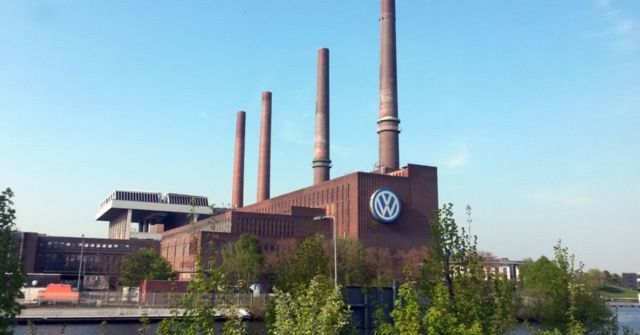
The VW combined heat and power plant in Wolfsburg. (Wikimedia Commons)
Governments worldwide have responded to the crisis by making trillions available to banks and businesses while workers are laid off or forced onto short-time working, involving drastic wage cuts. In Europe (including the UK and Switzerland), 50 million people were put on short-time working at the end of April, most of them in France (11.3 million applications for unemployment insurance), Germany (10.1 million) and Italy (8.3 million).
The big car companies in Germany stopped production not out of consideration for the health and lives of their employees, but rather due to the disruption of supply chains. Particularly in Italy, but also in other countries, workers at companies supplying the auto industry refused to go to work due to the corona pandemic.
It was primarily German industry heads—their corporate boards, unions and the government in Berlin—that pressured for a return to work across Europe although workers’ lives are at risk. The premier of the German state of Lower Saxony, Stephan Weil (Social Democratic Party, SPD), who sits on the supervisory board of Volkswagen and collaborates on strategy for Europe’s largest industrial concern, stressed: “We have to return to normality.”
At Volkswagen, the powerful IG Metall works council has set out plans for a resumption of production in two to three weeks. In Germany and many other countries, the company’s 630,000-strong workforce is gradually returning to assembly lines. Workers belonging to high-risk groups, such as asthmatics, are also expected to start work. The same process is taking place at VW’s numerous subsidiaries such as Audi, Skoda and Seat. Cars have been rolling off the assembly line at Porsche in Leipzig since Thursday of last week.
The cars currently being built, however, are not selling. In April, new auto registrations in Germany fell 61 percent year-on-year.
VW is consequently already cutting back production. At its main plant in Wolfsburg, production of the SUV Tiguan, as well as the Touran and SEAT Tarraco models, is due to be stopped for four days in May. Work shifts have also been cancelled for the company’s most successful model, the new Golf 8. The Wolfsburger Nachrichten reported on Tuesday that Volkswagen had applied for short-time working as a precautionary measure for the entire second quarter of this year.
BMW and Daimler have also announced that they will compensate for expected losses by punishing their workforces. At Daimler, the axing of 10,000 jobs announced some months ago is to be expanded and accelerated to 15,000.
BMW also reported last week that it would cut jobs. According to CEO Oliver Zipse, sales in April dropped by 44 percent. The commissioning of a new plant in Hungary has been postponed and 5,000 to 6,000 of the company’s approximately 130,000-strong workforce will lose their jobs. Vacancies will not be filled, temporary contracts will not be extended, and temporary workers will be fired. The works council and IG Metall have approved all these measures with the argument that “compulsory redundancies” have been avoided.
The impact of the crisis on suppliers will be even greater. They lack the billions of euros held in reserve by the big manufacturers. Tens of thousands of jobs are at risk.
Major suppliers such as Bosch, Continental and Schaeffler are currently at a standstill in many factories around the world. At Continental, the world’s second largest auto supplier after Bosch, 30,000 were placed on short-time work in April in Germany alone. In the meantime, the company’s operations have gradually restarted. The Dax registered group reported last week that profits in the first quarter had almost halved to a “mere” 292 million euros [$US315 million].
The supplier Schaeffler announced that the group now intends to cut 1,900 instead of the planned 1,300 jobs in Europe—“on a voluntary basis.” The manufacturer of transmissions, drive belts and couplings employs more than 86,000 workers in 50 countries around the world.
The subsidiary of the world’s largest automotive supplier Bosch, Bosch AS GmbH (steering technology), plans to cut at least 2,100 jobs. According to IG Metall and the works council, another 400 will be shed due to the corona crisis.
Two weeks ago, the Thyssenkrupp concern announced that it would close one of its auto parts plants and cut more jobs. The company reported a loss of 948 million euros from January to the end of March. In the past six months, the company has lost 1.3 billion euros and more than 30,000 of Thyssenkrupp’s 162,000 workers are currently on short-time work.
In its auto parts division, the concern plans to cut around 500 of its 3,400 jobs worldwide. The Olpe plant with 330 employees will be shut down at the end of 2021, and 160 jobs are to be shed at the company factory in Hagen. The two factories in North Rhine-Westphalia belong to the company’s Springs and Stabilizers division. The factory works councils are currently working on implementing the cuts via a “social plan.”
German auto expert Ferdinand Dudenhöffer estimates that the coronavirus pandemic alone will cause “up to 100,000 jobs losses in the German auto industry in the next few years.” Projections made before the current crisis had already estimated that the switch to electro-mobility and digitalisation would lead to the loss of over 300,000 jobs in the German auto industry.
In view of the current decline in production and sales, manufacturers are demanding additional billions in subsidies and tax breaks, which will be paid for by the population at large in the form of new cuts to wages and social gains.
The auto companies have already received hundreds of millions of euros for the hundreds of thousands of workers on short-time. VW boss Herbert Diess, Daimler boss Ola Källenius and BMW boss Zipse are now demanding that the government quickly agree on publicly funded rebates for the purchase of new cars.
Protests against such a move are growing. In the first place the few thousand euros made available by the government for the purchase of an auto costing between 30,000 to 40,000 euros will only aid those buyers who can afford such a vehicle in the first place. Secondly it is obvious that an industry is being subsidised that does not need it. Unlike the auto bosses, the majority of the working population do not think that society as a whole is totally dependent on the well-being of the auto executives.
In this situation IG Metall plays a crucial role. The union provides the formulations and mechanisms with which the government can sell its subsidy bonus scheme announced for early June.
IG Metall boss Jörg Hofmann emphasised in an interview with the Handelsblatt this week that “there is no doubt that vehicle construction plays a key role.” If it fails to come out of the recession, then mechanical engineering, steel, parts of the chemical industry and other industries will also fail. “They are too dependent on this leading industry.”
Hofmann rejects any generous support for hotels and restaurants. In those branches you can “flip the switch” when health considerations permit. The demand is there, it is all a question of offering some bridging aid to prevent bankruptcies.
The auto industry, on the other hand, needed genuine “impulses”…and quickly. Hofmann also supports the new purchase subsidies. It only had to be justifiable ecologically and also apply to “low-emission combustion engines” because “a premium only for electric autos is of no use,” since it would not be possible to make sufficient e-autos to satisfy demand. A premium must therefore also include those parts of the industry that “work on combustion engines.” The union leader is clearly referring solely to German manufacturers.
IG Metall is demanding billions for an industry swimming in money. Daimler, VW and BMW have made 66 billion euros in profit before taxes in the past two years. Despite all the provisions made for dealing with the industry’s diesel scandal, the major auto concerns are still sitting on billions—Daimler alone has over 68 billion euros in ready funding. The three German manufacturers want to please their shareholders with a total dividend of almost 6 billion euros this year.
That is precisely why we see subsidies as a “purchase incentive” Hofmann said. “Otherwise it is not socially feasible.” The trade union purchase bonus does not differ in content from that of the auto giants. IG Metall only proposes some cosmetic ecological requirements to more effectively enforce the policy.
Protecting the health, jobs and incomes of all workers is proving impossible in capitalist society, which subordinates every aspect of economic life to the enrichment of a financial oligarchy. The Socialist Equality Party rejects a return to work as long as protection against the dangerous virus cannot be guaranteed. In the meantime, all workers must receive an income guaranteeing their families a decent standard of living.
Instead of government aid, we call for the expropriation of all major banks and corporations, their transformation into democratically controlled public companies and an increase in taxes on the incomes and speculative profits of the richest five percent of the population to at least 90 percent.

Rushed relaxation of coronavirus measures in Germany puts thousands of lives at risk

Marianne Arens

The measures to control the coronavirus pandemic are being relaxed too quickly and in an uncontrolled manner. Thousands of lives are unnecessarily being put at risk. All over the world, governments place the interests of big business above the health and lives of working people, who are paying a high price for this.
This was evident on May 12 of all days, International Nursing Day. It is the 200th birthday of Florence Nightingale, the statistician and world-renowned pioneer of nursing.
Worldwide, well over 90,000 nurses have been infected with the coronavirus. At least 260 of them have died of COVID-19. These are the official figures presented by the International Council of Nurses (ICN). They are undoubtedly many times too low because numerous countries do not measure these figures or refuse to publish them.
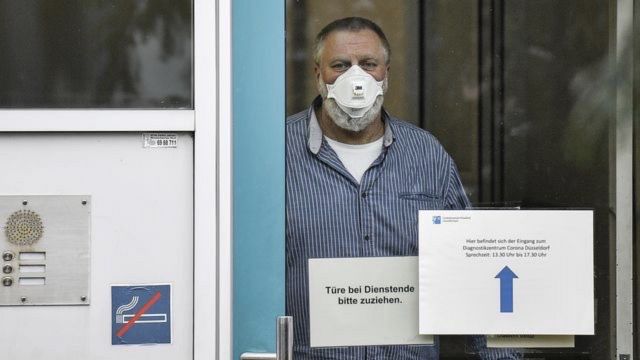
An employee wearing a face mask and gloves is waiting for the next patient behind the door of the corona diagnostic centre in Düsseldorf. (AP Photo/Martin Meissner)
In Germany, too, the full extent of deaths from pandemic is not known. According to the public health body Robert Koch Institute (RKI), more than 10,100 health workers were infected with COVID-19 by May 5, and 16 of them have died. This is according to an RKI report published last week. Since not all coronavirus cases are broken down by occupational groups, this is by no means the complete number.
For five days now, the decisive reproduction rate of the virus has again been above or around the critical value of 1.0 in Germany. The value indicates how many more people an infected person infects with the virus on average during his or her illness. This value, which was 1.13 on Sunday evening, thus indicates that the number of new infections is beginning to rise again significantly.
According to the RKI report, almost 7,500 cases of coronavirus have been reported from refugee facilities, homeless shelters and prisons alone, with the number of deaths among them amounting to at least 31 people—here too, with an admitted number of unreported cases.
With the general relaxation of the coronavirus measures, the COVID-19 figures from schools, retirement homes, local transport, industry and the entire working population are inevitably on the rise again. At least 25 construction workers at the “Stuttgart 21” tunnel project have tested positive. In a call centre in Bremen, 11 employees have become infected and 50 more could be affected. They were in a “too small” room, as the company admitted to the media website “buten-un-binnen,”
The districts with meat industry businesses, where hundreds of slaughterhouse workers tested positive for COVID-19 at the end of last week, are considered true coronavirus hotspots.
Since then, the number of infections in the district of Coesfeld in Münsterland (North Rhine-Westphalia, NRW) has continued to rise dramatically. The Westfleisch slaughterhouse had to shut down operations on Friday after 151 mostly Romanian workers had tested positive for COVID-19. In the entire county, the critical number of new infections per 100,000 inhabitants at the end of the week was 96—almost twice the critical limit of 50 new infections per 100,000 inhabitants set by the RKI. In the Münsterland region, including the city of Münster, more than 4,000 people had fallen ill with COVID-19 and 160 had died by May 11.
In Thuringia, the Sonneberg district has proven to be a new hotspot; a hospital with COVID-19 patients is the focus of infection. There, at least 20 employees have become infected with the coronavirus. However, not all 600 employees have been tested yet.
Schooling has proved to be particularly problematic and has been gradually resumed in practically all German states since April 27. No sooner had the schools been opened than reports of coronavirus cases started piling up among pupils from all over Germany, and many individual classes or entire schools have had to close again. This affects, for example, the Nicolaus Kistner High School in Mosbach, near Heilbronn (Baden-Württemberg). There, after a confirmed coronavirus case, the school management decided to discontinue classroom lessons until the beginning of the final year examinations.
In Rheingau-Taunus (Hesse), the Theisstalschule in Niedernhausen sent an entire class and three teachers into quarantine after a student tested positive for COVID-19. The Albert Schweitzer School in Offenbach is also affected. Five days after reopening, one pupil fell ill with coronavirus. About 30 people, including three teachers, are now in quarantine there.
In Sinzig in Rhineland-Palatinate, classes for an entire year were suspended when a 17-year-old high school student tested positive for COVID-19. In the same town, testing revealed that an employee at a senior citizens’ home had also fallen ill with the coronavirus, putting another 52 contacts in the home at risk.
The health department and school management of a grammar school in Düsseldorf, the capital of North Rhine-Westphalia, reacted differently when two students there also fell ill with COVID-19. Only the two affected students were sent to home quarantine. The reason given was that none of their other classmates or teachers was a “Category 1 contact person.”
At the same time, medical and virologist warnings of lax handling of the virus are increasing. In an interview with the Süddeutsche Zeitung, intensive care physician Matthias Baumgärtel from the Nuremberg North Clinic warned urgently against underestimating the virus.
Baumgärtel emphasised that numerous patients who died of COVID-19 in his clinic, despite intensive care, had “no significant previous illnesses” and could “certainly have lived for many years or decades.” “The youngest patient we lost was 38 years old—she too had no previous illness ... Of course, the older the patients are, the more dangerous the illness is. But even those in their mid-50s have a hard time coping with it if they have intensive care.”
In fact, COVID-19 turns out to be not just a lung disease, but a “multi-organ disease ... many patients get thromboses, dangerous clots in the blood vessels. A lot of our patients go into liver failure. The kidney is often a problem, and of course the heart. We also experience neurological symptoms: patients with strokes, even younger ones. One patient experienced sudden paralysis.”
Baumgärtel went on to say that he was “surprised every day by the relaxation [of coronavirus measures] of the federal and state governments.” “It’s just going too fast.” It was obvious that the initial restrictions had “saved thousands of lives because people were not infected and did not have to go to hospital. I can only warn against the recklessness of wanting too much too fast now.”
The interview confirms what the World Socialist Web Site has long warned: the ruling class is not only endangering the health of hundreds of thousands of workers and students and their families and friends but also their lives.

UK universities prepare all-out assault on staff and students in wake of pandemic

Alice Summers

Mass redundancies and attacks on staff pay and conditions are being planned by universities across the UK as the COVID-19 pandemic tips already struggling institutions into financial collapse.
Universities could see a funding shortfall of £2.5 billion, with around 60,000 jobs on the line, according to research conducted by policy consultant London Economics for the University and College Union (UCU). Thirty thousand of these jobs will likely be axed in the university sector, with a further 30,000 jobs wiped out in local communities.
Much of the lost income is due to plummeting international student enrolments. According to the UCU report, an estimated 47 percent drop in international student numbers will cost the university sector £1.5 billion in the next academic year.
Another £612 million in losses will come from a 16 percent drop in domestic enrolment, as students defer their studies. A further £350 million will be lost due to an estimated 47 percent fall in European Union student recruitment.
Almost three-quarters of universities will be left in a “critical financial position where income only just covers expenditure”, the report states, with all higher education institutions affected in some way.
International students make up nearly a fifth of the UK student population and contribute £7 billion in fees to universities each year. At some universities, up to a quarter or even a third of students are from overseas. In the 2017-18 academic year, 458,490 non-UK students were studying in Britain, 325,665 of these from outside the EU.
Students from overseas can pay up to nine times more in fees than domestic or EU students, whose tuition costs are capped at an already sky-high £9,250 a year. Non-UK/EU students can pay up to £26,000 a year for their university education (plus living costs), or up to £56,800 for some medical degrees.
Some universities expect an 80-100 percent drop in the number of international students enrolling this year, according to a blog post from the Higher Education Policy Institute (HEPI). For some institutions, the potential loss of income is expected to be more than £100 million.
The impact of the coronavirus pandemic on the university sector, which contributes more than £95 billion to the UK economy each year and employs nearly a million workers, will likely lead to a £6 billion hit to the British economy.
The fall in domestic and international student enrolments is having a devastating effect on UK universities due to their overwhelming dependence on tuition fee income, as central government funding into higher education has been cut to the bone.
Between 2011-12 and 2019-20, central government spending on higher education teaching in England fell by 74 percent, according to government figures.
In the same period, the ratio of government funding to tuition fee income was reversed. In 2011-12, direct government funding to universities in England made up 72 percent of total income, with tuition fees contributing the remaining 28 percent. By comparison, 27.6 percent of university income came from the government funding council in 2019-20, with 72.4 percent coming from student tuition fees.
Government investment in university teaching has nearly halved in less than a decade. Total government funding in England fell by £3 billion in the eight years between 2011-12 and 2019-20, dropping from £6.7 billion a year to a mere £3.7 billion.
Now, in response to the coronavirus, universities are determined to accelerate long-planned attacks on their workforce. Higher education centres across the country are bringing forward mass lay-offs, pay freezes and course reductions.
At the end of March and the start of April, the University of Sussex, the University of Bristol and the University of Newcastle laid off hundreds of temporary staff and cancelled contracts, citing the impact of coronavirus.
In May, the University of Roehampton became the first UK university to announce job losses affecting permanent staff, as part of a supposedly “voluntary” severance scheme. The university, which has already lost £4 million, is predicting a reduction in income of up to £31 million and will lay off 70 members of staff on permanent contracts.
Other universities have announced job cuts and pay reductions:
· The President and Vice-President of Manchester University have laid out plans to “reduce pay costs” by freezing recruitment, deferring pay awards due to promotions and offering unpaid “voluntary” leave or retirement. “Job losses may also be required”, an email to staff stated.
· The University of Portsmouth has announced plans to cut 11 members of staff in their English Literature department.
· The University of Nottingham has announced a “voluntary” redundancy scheme and proposed a freeze on pay increments, promotions and recruitment.
· Oxford University has announced a 12-month hiring freeze and the “redeployment” of some existing staff across other roles.
· Edinburgh University has proposed a pay freeze for current workers and a block on any new recruitment. Many staff members will be furloughed under the government’s Job Retention Scheme.
· Durham University has announced it will slash face-to-face teaching by 25 percent from September and outsource some online teaching to a private provider.
In response to these historic financial losses and proposed attacks on university workers, the UCU pathetically pleaded with the Johnson government to “stand behind” universities and to “[underwrite] funding lost from the fall in student numbers”.
These dismal appeals have fallen on deaf ears, with the Johnson government refusing to allocate a single penny in additional funding. Instead, a misnamed “support package” will bring forward £2.6 billion worth of tuition fees (paid by the government as a loan to students) which universities would have received anyway and £100 million in advances on research grants to universities.
Labour and Conservative governments have worked for decades to transform higher education into a lucrative market for private financial interests. Tuition fees were introduced and then tripled by Labour in 1998 and 2004. The Tories drove up tuition fees to £9,250 a year, scrapped maintenance grants for poorer students, and abolished the cap on student numbers to make universities more reliant on fee income.
Staff pay has dropped by 17 percent since 2009, with over half (54 percent) of academic staff on insecure contracts. Short-term and zero- or variable-hour contracts proliferate.
In 2017, the Higher Education and Research Act established the Office for Students (OfS), whose mandate was to act as a “market regulator” and “competition authority,” enforcing market pressures on the higher education system. This resulted in the incentivisation of universities to engage in wasteful and corrosive competition for student numbers and private sources of income.
The subordination of higher education to the capitalist market has created a disaster, with Alistair Jarvis, chief executive of Universities UK recently warning that without massive government support, “There is a very significant chance of some institutions going bust”.
Students and staff have systematically opposed the gutting of public education. In 2018, lecturers at 65 universities struck in defence of pensions, while a 14-day walkout in February and March this year—to defend pensions, pay and conditions—was the largest strike in UK higher education history.
While the strike movement was effectively ended by the coronavirus lockdown, politically the UCU had already made clear its intention to sabotage any genuine fight. On March 5, UCU General Secretary Jo Grady stated that “We have made it crystal clear to employers that we are not inflexible… we have extended an olive branch to employers by offering to compromise on some of the demands which we started our industrial action with.”
University staff and students must reject all demands for “sacrifice” by the Johnson government, university management and the UCU. The defence of pay, jobs and conditions, including workplace safety, demands the formation of rank-and-file committees to oppose the marketisation of education and fight for socialist policies including free education for all.

Malnutrition is leading cause of death and ill-health worldwide

Jean Shaoul

One in nine people are chronically hungry—820 million people worldwide—because they cannot access or afford healthy food. It is a major contributing factor in premature death.
It beggars belief that this is the situation in the 21st century, amid unparalleled developments in food science. But that is what the “Global Nutrition Report 2020: Action on equity to end malnutrition” says.
The report, launched Tuesday, not only found that hunger is widespread but also that obesity and other diet-related non-communicable diseases (NCDs) are increasing rapidly almost everywhere. One in three people is overweight or obese, while almost a quarter of all children under five years of age are stunted.
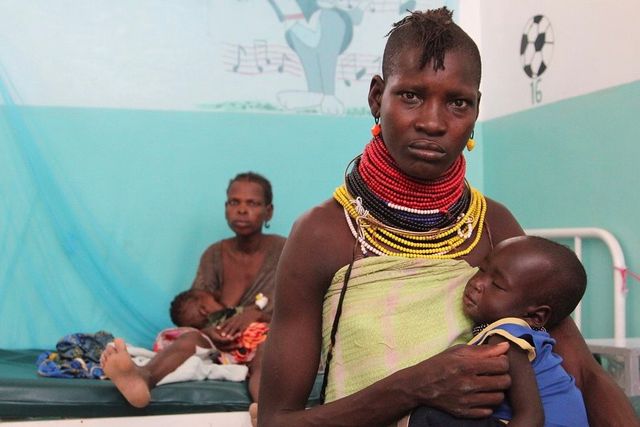
Nakitela Epur is pictured with her eleven-month-old daughter, Epuu, who is recovering well after being treated for acute malnutrition in the pediatric ward in Lodwar District Hospital, in Kenya's northern Turkana county. (UK Department for International Development)
Taken together, these various forms of malnutrition have become the leading cause of ill health and death. Yet most people cannot access health care and treatment. Worldwide, only about one-quarter of the 16.6 million children under 5 years of age with severe acute malnutrition received treatment in 2017.
The report states that these various forms of malnutrition are the result of inequities in food distribution and health care systems. But as is the nature of such reports, it only hints at the utterly criminal indifference of all national governments to these issues.
Not one single country is on course to meet all 10 of the 2025 global nutrition targets set in 2013. Only 8 out of 194 countries are likely to meet even four targets and a shocking 88 countries are set to meet none of the targets by 2025. Only a tiny proportion of health care budgets is spent on action to deal with nutritional issues, even though this can be highly cost-effective, reducing health care spending in the long-run.
The cost of eliminating world hunger has been variously estimated at between $7 billion to $265 billion per year. At the opposite end of the spectrum, the medical costs of treating the consequences of obesity are “staggering,” estimated at a total of $1.2 trillion a year by 2025, with the US by far the biggest spender.
The report insists that “poor diets and resulting malnutrition are not simply a matter of personal choice. Most people cannot access or afford a healthy diet of quality nutrition care.”
As it points out, new analysis shows that the global and national patterns of malnutrition in all its forms mask huge inequalities within countries and populations.
The most vulnerable groups are the worst affected. Some 30 million people in the US, the richest country in the world, go hungry.
There are also significant differences between countries, with underweight a major and continuing issue in the poorest countries, often 10 times higher than in the more advanced countries, while overweight and obesity prevail in the advanced countries at five times the rate of poorer countries.
Malnutrition coexists alongside striking inequalities in location, age, sex and education and above all wealth, and is compounded by wars and conflicts, as well as low prices for farm crops, high prices for food, low wages and unemployment.
The report deliberately ignores the role that US and European imperialism plays in fostering these conflicts, either directly or through their allies and proxies. Neither does it criticise the corrosive social effects of the profit motive that is responsible for both climate change and the dearth of affordable nutrition in both the advanced and the so-called “developing” countries.
The Global Nutrition Report 2020 simply notes that commercial agricultural production systems focus on an overabundance of staple grains such as rice, wheat and maize, which can be stored and transported easily, rather than perishable fresh fruit, vegetable and nuts that are more expensive to produce and dependent upon fast and reliable transport systems. Food corporations focus on highly processed foods that are cheap and intensively marketed in high-income countries and increasingly now in middle-income countries.
The report, although written before the emergence of the COVID-19 pandemic, comes just a few weeks after the United Nations’ World Food Programme warned that hundreds of millions of people face starvation and millions could die as a result of the pandemic without urgent action and funding.
The UN secretary general’s special representative for food security, David Nabarro, said that the report now had a “heightened significance,” warning, “COVID-19 does not treat us equally” as undernourished people may be more at risk to coronavirus, due to their weakened immune systems, while obesity and diabetes were linked to worse outcomes.
Writing in the foreword, he said the virus had exposed the “vulnerability and weakness of our already fragile food systems,” which had been weakened by climate extremes and “deadly health care disparities.” But he said little or nothing about the deliberate neglect of these issues by governments around the world.
Major improvements in health—as was the case in the advanced countries in the past, when health improved with the provision of clean water, sanitation, decent housing and living conditions, higher wages and vaccination programs—are dependent on broader public health measures, not individual “lifestyle” choices.
Despite the shocking conditions outlined in the report, its recommendations for resolving the situation are striking in terms of their inadequacy and spinelessness. The authors call on governments, businesses and civil society, the very institutions that have done so much to create and perpetuate this situation, “to step up efforts to address malnutrition in all its forms and tackle injustice in food and health systems.”
As the authors admit, the primary contemporary causes of famine and malnutrition are economic inequality, wars and climate change. Global hunger and malnutrition cannot be eradicated by pathetic pleas to governments but only by putting an end to the capitalist mode of production for private profit that fosters brutal competition, environmental damage, global warming and wars.
The benefits of scientific advances can only be realized if they are employed freely and equitably under a globally planned, socialist economy, rather than monopolized by private agribusiness corporations. The Global Nutrition Report 2020 may call attention to widespread undernourishment, but only the struggle of a united international working class can put an end to it.

Russia ends federal COVID-19 shutdown measures as it surges to second place in infections worldwide

Andrea Peters

Over the last week, Russia has surged forward in terms of its number of confirmed COVID-19 cases, overtaking all other countries with the exception of the United States and Spain. Infections have been increasing for nearly two weeks at a rate of 10,000 to 11,000 a day. On Thursday, officials reported that this number slipped to just below 10,000 for the first time in 11 days.
With social anger building over the spread of the infection, unemployment, rising prices and collapsing incomes, there is an effort being made by state representatives to declare that Russia has gained control of the situation. The nation’s chief doctor, Anna Popova, declared the two-week trend, followed by the one-day drop, shows that “we have stopped growth [of the virus] today.”
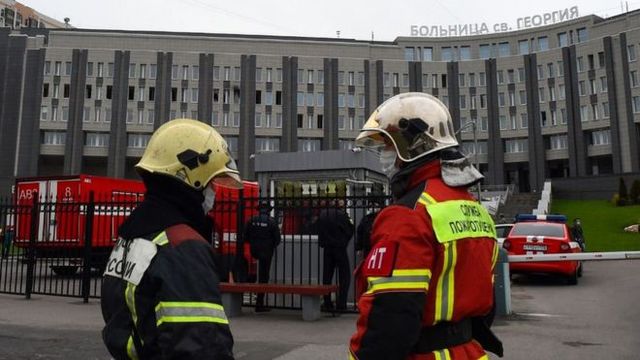
Firefighters at St. Georgia's Hospital in St. Petersburg where a ventilator exploded, photo credit: AFP
Upwards of 250,000 people have contracted the disease in Russia so far and government officials continue to come down with the infection. Kremlin spokesman Dmitry Peskov and Education Minister Valery Falkov are both ill, along with at least four other members of the cabinet, including Prime Minister Mikhail Mishustin.
Hospitals and clinics continue to struggle with a lack of resources. In St. Petersburg, where there are just 5,483 COVID-19 hospital beds available for a population of 4.9 million, five virus victims suffered a horrible death this week when a ventilator being used to treat some of those in the ward exploded. It set the room ablaze, causing people to suffocate from the smoke. The faulty machine was new off the assembly line.
The Federal Biomedical Agency of Russia reported this week that it is finding new ways in which COVID-19 manifests in patients, including inflammation of the abdominal cavity so severe that it requires surgery.
With the total number of infections now standing at 252,245 and deaths at 2,305, Russia’s coronavirus mortality rate appears to be dramatically lower than that of other countries. It is unclear why this is the case. Using data reported by the country’s health ministry, the Financial Times estimates that when excess deaths that have occurred during the COVID-19 outbreak are taken into account, the real number of victims may be 70 percent higher than official estimates.
Even with this adjustment, however, coronavirus is killing far fewer people in Russia than most other countries. The low count could also be due to the fact that the government has instructed officials to distinguish between deaths “caused by” COVID-19 from those that occurred “with” COVID-19. While there is a legitimacy to classifying the two groups separately because of the role that co-morbidities play in coronavirus deaths, the distinction makes it easier for officials to shunt victims into the “with” category.
If the Russian state is finding ways to “cook the books” with regards to its death rate, it is behaving as is every other leading nation in the world, where the intentional under-reporting of coronavirus cases and victims have accompanied a drive to “reopen” the economy and force people to return to work.
On Tuesday, the Kremlin ended the federal-level lockdown of Russia’s economy and instructed local authorities to set their own mandates in terms of the shuttering of workplaces, social distancing and other measures. Nationwide entrance exams for universities, which had been postponed, may now take place on June 19.
On Thursday, Russian President Vladimir Putin said that the government would now be returning to its previous work. “All of our efforts over the last several weeks have been directed, above all, toward combating the coronavirus epidemic, on the preparation of immediate measures of support for the citizenry and economy. We will continue this and further work, of course. But I repeat—the situation is changing, and this gives us the chance once again to concentrate on questions of our current and long-term agenda,” he declared.
As the Kremlin presses forward with the reopening of the economy under unsafe conditions, it has announced another set of paltry social measures. Unemployed parents, including university students, will see their childcare allowance double, rising to 6,751 rubles a month (US$91). All families with children ages 3 to 15 will receive a one-time payment of 10,000 rubles (US$135) per child. Limitations on who is eligible for “maternity capital”—state support for families with more than one child—are also being relaxed.
In addition to tax relief for small and medium-sized enterprises and the self-employed, the bulk of the government’s latest measures are directed at creating mechanisms for bailing out big businesses under the guise of protecting workers. On June 1, an “employee support loan program” will kick in that is available to all companies in industries impacted by the pandemic. Government-backed credit, granted on highly favorable terms, is to be used to keep workers on the payrolls for six months. However, companies can still cut 10 to 20 percent of their workforce and be absolved of paying back anywhere from half to all of the loan. Furthermore, once the six-month period is over, there is no reason why firms cannot axe the remaining jobs.
The structure of the program is reminiscent of the recent bailout of the US airline industry, which has been given billions of dollars in return for keeping workers on the books through September. As the airline companies have made clear in numerous public statements, they are preparing for mass layoffs once the deadline expires.
The reality confronting the Russian working class found expression in comments this week by Labor Minister Anton Kotyakov, who described the “temporary unemployment” in the country—with well over a million people having lost their jobs—as “not threatening.”
Meanwhile, the auto industry announced that it will be cutting shifts and positions due to a nearly 65 percent drop in car sales this year. Svetlana Misikhina of Moscow’s Higher School of Economics Development Center recently told Gazeta.ru that optimistically real incomes will fall this year for the population by 8.2 percent and pessimistically by 12.1 percent.
Many of the 440,000 medical workers in Russia mobilized to fight the coronavirus pandemic have still not seen the bonuses promised them by the government in March. The Kremlin blames regional governments for failing to fully disburse the funds. Apparently, one method used to chisel health care workers’ bonuses is to calculate how much they get based on how many minutes they are specifically devoting to COVID-19-related work.
One St. Petersburg surgeon explained to the newspaper Novaya Gazeta that because she stopped work in the operating room and took on responsibilities associated with infectious-disease control, which in general is paid less overall than surgery, her paycheck shrank.

Three million more US workers apply for unemployment, reaching 36 million in two months

Trévon Austin

According to the most recent government figures, almost 3 million workers applied for unemployment benefits last week in the United States, bringing the total number of jobless claims to roughly 36 million in the two months since the coronavirus forced businesses to shutter their doors. In addition, 842,000 people applied for aid through a separate federal program designated for self-employed and gig economy workers.
The report, issued by the US Department of Labor, indicates the premature reopening of the economy has done little to get Americans back to work, as its proponents have claimed. In fact, the number of unemployment claims last week is four times the record high recorded before March this year.
In Georgia, one of the first states to begin reopening parts of its economy, the number of unemployment claims reached 241,000. Florida, which allowed restaurants to open at one-quarter capacity, saw its claims rise to nearly 220,000 last week. Florida’s unemployment agency is struggling to process the claims, meaning the actual number of unemployed is higher.
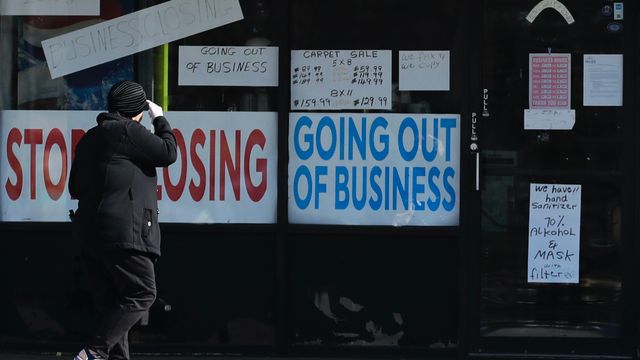
A woman looks at signs at a store in Niles, Ill., Wednesday, May 13, 2020. (AP Photo/Nam Y. Huh)
Some states that have lifted restrictions, such as Texas and South Carolina, have experienced a decline in claims, prompting Donald Trump to tweet “America is getting its life back.”
Despite Trump’s proclamation, many Americans are still facing hardship. The official unemployment rate for April soared to 14.7 percent from 4.4 percent in March as 20.5 million jobs were eliminated. In one month, the total number of jobs created in the last decade were wiped out.
The official unemployment numbers fail to fully grasp the severity of the issue. Government reports stated many workers who were furloughed or absent from work were still counted as employed in April. Additionally, millions of workers who were laid-off were discouraged and did not seek employment. If these workers were included in the official unemployment rate, it would reach nearly 24 percent.
According to projections by Goldman Sachs strategists, US economic activity as measured by gross domestic product (GDP) will contract by a staggering 39 percent in the second quarter, a revision of a previous prediction of 34 percent. Jan Hatzius and other economists predict that a 29 percent growth rate is expected in the third quarter, but growth will fall by 6.5 percent for the full fiscal year.
Goldman Sachs also predicts official unemployment will continue to rise. Previously, economists expected the unemployment rate to reach a high of 15 percent. However, new projections suggest a peak as high as 25 percent.
On Wednesday, Federal Reserve Chairman Jerome Powell reported that 40 percent of US households bringing in less than $40,000 a year lost a wage earner in March. This reveals the impact that the economic catastrophe wrought by the coronavirus has had on the poorest sections of the working class.
A report released by the Fed Thursday found that six percent of all adults either had their hours reduced or were forced to take unpaid leave. Altogether, 19 percent of adults reported either losing a job or experiencing a reduction in work hours in March.
“This reversal of economic fortune has caused a level of pain that is hard to capture in words, as lives are upended amid great uncertainty about the future,” Powell said at a virtual event hosted by the Peterson Institute of International Economics in Washington.
“The scope and speed of this downturn are without modern precedent, significantly worse than any recession since World War II,” Powell said. “We are seeing a severe decline in economic activity and in employment, and already the job gains of the past decade have been erased.”
Jobless workers in some states are still reporting difficulty applying for or receiving benefits amid the crisis. These include free-lance, gig and self-employed workers, who became newly eligible for jobless aid this year.
The federal stimulus payments from the CARES Act have still not been fully doled out to workers in dire economic straits. As of this week, the IRS has issued 130 million payments worth a total of $200 billion. This still leaves approximately 20 million Americans who are still awaiting financial assistance.
The levels of economic crisis currently experienced by tens of millions have not been seen since the Great Depression of the 1930s. According to Feeding America, up to 18 million children in America could become food insecure as a consequence of the coronavirus pandemic. All across the US, families wait in long lines at food banks to receive what little aid they can.
A massive crowd in lines hundreds of cars long turned out Thursday for food assistance from the North Texas Food Bank in Dallas, Texas. The organization told NBCDFW it has helped more than 32,000 families since the onset of the pandemic. The food bank has seen an influx of households who have not requested aid before, with one spokeswoman estimating up to half of those seeking aid now are doing so for the first time. The same scene is unfolding in cities large and small all across the United States.
The coronavirus pandemic has unveiled the bankruptcy of the capitalist system. Faced with an immense public health crisis, the American ruling class has shown it is utterly incapable of implementing elementary measures to protect the population from illness, hunger or economic devastation. Instead, the lives of the working class and their families are subordinated to the will of a tiny parasitic layer that elevates the pursuit of profit over human life.

US whistleblower warns premature return to work will bring “unprecedented illness and fatalities”

Bryan Dyne

Another macabre milestone was passed yesterday as the global coronavirus death toll surged past 300,000, while the number of cases approached 4.5 million. So far, only about 1.7 million of those infected have recovered, leaving nearly 2.5 million men, women and children suffering from the deadly pandemic.
The United States leads the world in the number of infections (1.4 million), deaths (85,000) as well as having the most new infections and deaths each day. However, it lags behind more than three dozen European, Middle Eastern, Asian and island countries in terms of per capita testing for the virus, the first step in containing the disease.
Relatives of Munevver Kaya, who died of COVID-19, wearing face masks for protection against the coronavirus, offer their prayers during a funeral at a special section of Baklaci cemetery in Istanbul, that is dedicated for COVID-19 victims. Only a handful of family members were able to attend the burial of Kaya. Wearing surgical masks, they stood apart from each other, vastly outnumbered by officials overseeing the funeral, due to the coronavirus pandemic. (AP Photo/Emrah Gurel)
At the same time, several other countries are emerging as epicenters of the disease, including Brazil, Russia, Peru, India and the United Kingdom. While these countries currently have just under 18 percent of the world’s total cases, they have about 37 percent of the world’s daily new cases. Brazil and the UK also have some of the world’s highest death counts, at 13,600 and 33,600 respectively, while fatalities in the other aforementioned countries are beginning to sharply spike.
Amid the expanding pandemic, whistleblower Dr. Rick Bright testified Thursday before the House Committee on Energy and Commerce’s health subcommittee that “The world is confronting a great public health emergency which has the potential to eclipse the devastation wrought by the 1918 influenza which globally claimed over 50 million lives.”
Bright, who filed a whistleblower complaint after being abruptly removed last month from his coronavirus vaccine development post, further stated that there will be “unprecedented illness and fatalities” if the policies of the Trump administration continue as they are now, referring to the ongoing back-to-work drive bring pursued by the ruling elite in the US and internationally.
These comments echo testimony from Dr. Anthony Fauci, who warned on Tuesday of “needless suffering and death” if states continue to open up before they are able to contain the virus. The statements from both officials sharply cut across the bipartisan efforts to send workers back into factories, offices and workplaces without the necessary medical equipment to ensure their safety and lives.
Richard Bright, former director of the Biomedical Advanced Research and Development Authority, arrives for a House Energy and Commerce Subcommittee on Health hearing to discuss protecting scientific integrity in response to the coronavirus outbreak, Thursday, May 14, 2020 on Capitol Hill in Washington. (Shawn Thew/Pool via AP)
Bright is the ousted director of the government agency that oversees the development of vaccines for novel viruses, including the coronavirus. He served as director of the organization, the Biomedical Advanced Research and Development Authority (BARDA), since 2016 and was removed from his appointment on April 21 after he leaked information showing his opposition to the hydroxychloroquine trials being promoted by the White House as a cure for the pandemic.
He was called to Congress the week after his 89-page whistleblower complaint was made public, a document that details how the Trump administration covered up the dangers of the coronavirus as early as January and opposed any coordinated effort to prevent its spread. Bright also cataloged the corruption and insider trading between the government and various drug firms, including those with ties to the Trump family.
Bright’s testimony is a further indictment of the Trump administration’s response to the coronavirus pandemic. As he noted in his opening statement, “The American health care system is being taxed to the limit, our economy is spiraling downward—leading to mass unemployment—and our population is being paralyzed by fear stemming from the lack of a coordinated response and a dearth of accurate, clear communication about the path forward.”
At the same time, Bright asserted that there is no “national coordinated strategy” to test for and combat the virus, one that draws “on the guidance of the best scientific minds.” Without this, Bright made clear, “Our window of opportunity is closing. … the undeniable fact is there will be a resurgence of the COVID-19 this fall, greatly compounding the challenges of seasonal influenza and putting an unprecedented strain on our health care system. Without clear planning and implementation of the steps that I and other experts have outlined, 2020 will be the darkest winter in modern history.”
One of the main problems, Bright noted, is that the supply chain for personal protective equipment (PPE) was “diminishing rapidly” even in the very early stages of the pandemic. He was, however, met with “indifference” by officials at Health and Human Services, including Secretary Alex Azar, when he attempted to raise the alarm. “Lives were endangered, and I believe lives were lost,” especially among health care workers, who were not provided with “sufficient protection” against the virus, he said.
The whistleblower also informed the subcommittee that there is “significant concern” for the ability of companies to produce and distribute a vaccine if and when one becomes available. “There’s no one company that can produce enough for our country or for the world,” he said, and there must be “a strategy and plan in place now,” if a potential life-saving inoculation is to be distributed “in a fair and equitable” manner.
It also emerged at the hearing that the federal government knew of these shortcomings thanks to a simulated pandemic situation it ran last year, known as “Crimson Contagion.” The exercise studied what would happen if a new, flu-like virus was brought to Chicago by tourists who had traveled to China. It estimated that 110 million Americans would be infected, 7.7 million hospitalized and 586,000 would be killed.
Bright made clear that “some of the significant findings were the need for improved coordination and communication, and an alignment between the local, state and federal governments with a need for personal protective equipment and a need for funding.” It should also be noted that data from the current pandemic indicates that the coronavirus is at least twice as deadly as the simulated contagion.
The Trump administration predictably lashed out at Bright’s testimony, with Azar claiming, “Everything he called for was done.” White House Press Secretary Kayleigh McEnany repeatedly claimed that Bright wasn’t “paying attention,” asserting that the federal government has sent out “90 million N95 respirators … [a] billion gloves” and “many more pieces of PPE.” President Trump attempted to marginalize Bright, tweeting that he is just “a disgruntled employee, not liked or respected.”
Neither Azar nor McEnany, much less Trump, bothered to reconcile their claims of the administration’s actions with the fact that it is now attempting to force the Centers for Disease Control to revise downward its official count of coronavirus cases and deaths. It was revealed last week that the head of the White House Coronavirus Task Force, Deborah Birx, has petitioned the CDC to exclude those who only may have died from COVID-19, which would reduce the mortality and case count by as much as 25 percent.
While criticizing the Trump administration, however, neither Bright nor the Democratic Party-controlled hearing questioned the actual response of the president and his cohort, which was to grant corporations, banks and Wall Street speculators some $8 trillion with no strings attached in March and April, a quarter of which was under the guise of the CARES Act. In doing so, the ruling class fueled a record stock market rise of 35 percent, while at the same time demanding that workers place their lives and the lives of their friends and loved ones at risk of dying from the pandemic.

BeiDou and BRI: Dependence Masked as Independence?

Saman Ayesha Kidwai

One core component of the Belt and road Initiative (BRI) is the BeiDou Navigation Satellite System (BDS). BDS, while largely a benign satellite navigation system, has a key component of entrapment for economically weaker countries. What exactly are the malign components of the BDS that have the potential to entrap countries in technology dependence on Beijing?  
 The Seemingly BenignThe benign parts of BDS can be gauged by the fact that the linked services are either replaceable, or do not entail a continuing use of BDS past the implementation-construction phase.
To foster digital economies in Arab states, Beijing established a BDS in Tunis. This involved the training Arab state representatives in transitioning to digital economies, and said training was done on the basis of BDS to show them the opportunities and benefits.
For a long time, services we take for granted—like GPS navigation—were dependent on the US- controlled Navstar satellites whose services were prohibited from being extended to Iran. A Memorandum of Understanding (2015) between China and Iran resolved this issues with BeiDou, providing high-precision navigation services, and spawned a host of services based on this technology. In South Asia, Pakistan’s new Islamabad International Airport’s information integration system offers precise time synchronisation and coordinated operation of the airport’s sub-systems in a reliable” manner.    
Myanmar, Laos, Cambodia, Indonesia, Thailand, and Uganda have used BDS for agricultural and infrastructural purposes. These include land, water, and ecology surveys. They have been able to benefit by planning their crop cycles and water allocation with great precision, resist climatic variation, and increase the accuracy of their national disaster agencies through dependence on these services. In some of these countries, like Thailand, power distribution, and goods delivery and tracking are all linked to BDS.
DependenceOn the face of it, all these above-mentioned projects seem benign, with only benefits to be reaped by the countries dependent on the system. Yet, each of these associations has masked a critical element of dependence.
Today, Iran’s entire basket of satellite-based services—their equivalents of Google Maps, Uber, Zomato, Amazon, etc.—and the massive economic footprint they have spawned are dependent on BDS. Any withdrawal of services would be catastrophic for large parts of the country’s urban economy that depend heavily on this system.
In a similar manner, agricultural systems in several parts of Southeast Asia, as discussed earlier, have been enhanced based on BDS technology. Sustaining this expansion is also based on BDS, as it is used to plan cropping seasons, adjust water distribution, and compensate for climate. Indeed, once even basic and traditional activities like agriculture become technology-dependent, their extraordinary increase in productivity and resistance to climactic variation also depend on the usage of this technology.
Denial of BDS would therefore prove catastrophic given how critical subsistence agriculture is to these countries. In short, China has created a politically powerful tool that reaches out to vast sections of society in these countries. In future dealings with China, this could restrict their options should disputes arise. A critical element is that this technology is potentially irreplaceable—as Iran is legally denied provision of other services such as Navstar, and Southeast Asia and Sub-Saharan Africa were deemed a price point mismatch for such precision services provided by the European Galileo Programme.
ConclusionThe clearest example of this insidious technology dependence is Islamabad airport. While emergency training necessitates that all airport staff are coached to deal with situations where technology augmentation has failed, a denial of BDS services would cripple the city’s air links. Of course, the airport would still function, but at vastly reduced capacity, leading to severe contraction. This reliance is mostly because the nature of the BDS-dependent services has been in critical subsistence areas, and where alternatives are either unavailable or prohibitively expensive. The use of BDS will allow Beijing to play havoc at a later stage—if it chooses to do so.