16 May 2020

COVID-19: Military steps up repression in war-ravaged northern Sri Lanka

Subash Somachandran

Widespread and increasingly brutal attacks by the police and soldiers on Tamil civilians have been reported from the war-torn north of Sri Lanka in recent weeks.
President Gotabhaya Rajapakse did not take effective measures to prevent COVID-19’s spread in Sri Lanka from the outset. After delaying for weeks, he suddenly imposed a countrywide lockdown on March 20 without taking adequate steps to supply essentials and medicines for workers and poor. Rajapakse also gave full powers to the armed forces and the police to arrest people for “violating curfew.”
These forces are particularly brutal in the northern and eastern provinces which are still under military occupation and de-facto military administration. Among the numerous attacks reported in the north are:
  • On May 10, police from Manipay entered a house in a civilian dress in Chandilipayi village near Jaffna, seeking a young man living there without giving any reason. When informed that he was not at home, police attacked the family members. Police retreated when several youth confronted them, but came back with more officers and severely attacked people, breaking fences and walls around houses. Police turned back ambulances called to take injured persons away, arresting five youth.
  • On May 9, several army soldiers entered Nagar Kovil village, asking about a former member of the Liberation Tigers of Tamil Eelam (LTTE) militia. When people said there was no such person, police attacked young men and women in the vicinity. Angered by the unprovoked attack, villagers rushed to the scene, chasing soldiers away. One elderly woman injured in the assault was hospitalized.
  • Several drunken policemen entered into a house at Mullivaikkal in Mullaithivu on May 6, inquiring about a person. They severely assaulted three youth. Officers at the police station refused to take the victims’ complaint. Police pressured the hospital authorities to discharge the injured before they recovered.
  • A brutal police attack took place at Malikaithidal in the Kudaththanai area on May 1. The day before, police had come to the village and tried to seize a truck, saying it was used to illegally transport sand. Villagers denied the allegation and kept them from taking the truck. One person recorded video of police on his mobile phone. The next day, police returned with armed special task force officers, demanded the video and started attacking people. Police prevented three-wheel taxis from transporting the injured to hospital.
One widely-viewed video shows a small girl holding her fainted mother’s head in her lap, saying that police kicked her mother’s belly and assaulted her sister with a pole. Another woman said police attacked her backside with bats and dragged her by her hair. Many did not go to hospital for fear of reprisals.
About 90 families live in this village, where many people do manual work in farms or transporting sand to earn a meagre income. Many youth there have abandoned studies because of poverty.
People from different areas in the north have made nine complaints to the Jaffna human rights commission office about police and military harassment on the flimsy ground that they broke curfew. But poor people are compelled to leave their homes to find food, medicine and water because no plan has been implemented to provide those essentials.
Hundreds were arrested in the north using illegal curfew regulations and nearly 50,000 arrested on similar charges countrywide.
The stepped-up repression in the north and east reflect growing nervousness in the government and among occupying military forces about growing unrest among workers and poor against the draconian living and social conditions under the lockdown.
People living in the north and east are victims of the nearly 30-year bloody communal war against the separatist LTTE. This final phase of the war—which ended in May 2009 with the murder of at least 40,000 civilians—was presided over by Mahinda Rajapakse, the brother of the current president, now serving as prime minister. Gotabhaya Rajapakse was defence secretary at the time. During the war, properties including houses were destroyed. Many still live in makeshift houses and dire living conditions.
The global economic collapse caused by the pandemic is hitting the north and east of Sri Lanka hard.
Ignoring the pandemic threat, President Rajapakse has reopened the economy, supporting big business and pushing workers back to work in unsafe conditions. Plants that are shut down—which are very few in this region or in Sri Lanka—have begun slashing jobs and wages and intensifying exploitation.
The Vaanavil factory near Kilinochchi opened recently with around 500 workers where 3,000 were employed earlier. Many small businesses and industries have not yet opened, however, and many workers are in desperate conditions.
Farmers cannot sell their produce, suffering heavy losses. Fishermen are left without income due to the suspension of exports and lack of access to deep-sea fishing. Government “relief” has reached few among the poor.
Before the pandemic, class struggles were developing in Sri Lanka since 2018, across ethnic lines, as workers in the north and east united with their class brothers and sisters in other parts of the country. There were many protests in the north demanding information about “missing persons” who disappeared during the war.
The Colombo government is nervous about growing social unrest and workers’ anger at being forced back to work in unsafe conditions, with job and wage cuts and increased working hours. The government has deployed thousands of soldiers, particularly to keep Colombo in a “wartime”-like situation, fearing mass struggles.
Indicating a preparation for a coup, Rajapakse has recalled large number of forces to Colombo. They are now stationed in 16 schools. In the north, the military has been stationed in about 20 schools. An estimated 150,000 troops were in the occupied north in recent years.
The bourgeois Tamil National Alliance (TNA) is silent on police-military repression on workers and poor. TNA leaders recently had a secret meeting with the Prime Minister and pledged their full support to the government. This strengthened the state’s determination to repress the masses in the north and east, paving the way for a presidential dictatorship.
Other Tamil nationalist groups like former chief minister C.V. Wigneswaran’s Tamil People’s National Alliance and Tamil National People’s Front use the deployment of military in schools as another occasion to whip up rabid Tamil communalism. They blame the Colombo government for seeking to use the northern schools as quarantine centres for soldiers in the north. However, Rajapakse recently deployed forces in schools throughout Sri Lanka.
All these parties, fearing developing struggles of Tamil, Muslim and Sinhala workers, are covering up the President’s dictatorial policies and trying to divide the working class on ethnic lines. Similarly, Rajapakse and his Sinhala-chauvinist backers are launching anti-Tamil and anti-Muslim campaigns.
A united struggle of the working class must be developed against Rajapakse’s moves towards a dictatorship. A key task in this struggle is the unconditional withdrawal of military from the north and east of Sri Lanka.

Washington places Cuba and Venezuela on “terror” list

Bill Van Auken

Less than two weeks after an abortive mercenary invasion aimed at overthrowing Venezuela’s government and murdering its president that was hatched by the Trump White House, the US State Department on Wednesday renewed it classification of the country as “not fully cooperating” with Washington’s global war on terrorism.
Also added to the list was Cuba, whose embassy in Washington was targeted by a gunman armed with an automatic weapon on April 30, an act that elicited not a word of condemnation from the Trump administration.
This marked the first time that Cuba has been placed on the list since 2015, when it was removed as part of negotiations between US President Barack Obama and Cuba’s Raul Castro on the normalization of relations between the two countries. That move was backed by major American financial and corporate interests seeking to compete with the Chinese and Europeans in and for the Cuban market.
Prior to that, Cuba had been classified for 33 years as a “state sponsor of terrorism.” The designation stemmed from Havana’s support for both Nicaragua, at the time under siege by the terrorist “contra” army organized by the CIA, and El Salvador’s Farabundo Martí National Liberation Front (FMLN), carrying out an armed revolt against the murderous US-backed juntas that ruled El Salvador. Both the Sandinistas and the FMLM have since transformed themselves into bourgeois parties, leading right-wing governments in their respective countries.
The hypocrisy of Washington branding Venezuela and Cuba as complicit in terrorism is as brazen as it is boundless.
On the same day that the State Department released its list, Venezuela’s delegation to the United Nations filed formal charges with the Security Council and the Secretary General over the armed terrorist attacks carried out on the country’s northern coast on May 3 and 4 by mercenaries organized, trained and financed by the governments of the US and Colombia.
The Venezuelan government reported capturing 39 more armed men on its border with Colombia Thursday, bringing the number detained since the landings in the coastal towns of Macuto and Chuao in the north of Venezuela to 91.
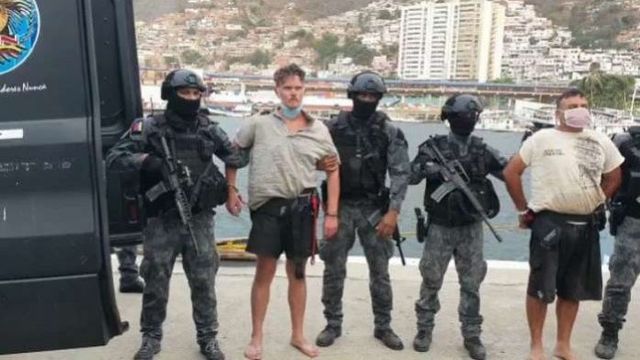
Captured mercenaries in Chuao, Venezuela
Among those detained are two ex-US special forces operatives, Luke Alexander Denman, 34, and Airan Berry, 41, who have been formally charged with terrorism, facing sentences of between 25 and 30 years in prison.
The two ex-US soldiers were recruited for the operation by a US security contractor, Silvercorp, Inc., run by a former Green Beret, Jordan Goudreau, who was put into contact with Washington’s puppet and self-proclaimed “interim president” Juan Guaidó by Trump’s longtime security chief.
A contract signed between the two of them, along with other members of Guaidó’s entourage, has been posted online, revealing that the US puppet had agreed to pay $212 million for an armed operation that, if successful, would have led to either the capture or murder of President Maduro, along with the killing of an unknown number of other Venezuelans, both civilian and military. Guaidó was named in the contract as the “commander in chief” of the mercenary operation.
While branding Caracas as “uncooperative” in the US war on terror, the Trump administration has shown no inclination to extradite Goudreau to face charges of terrorism in Venezuela. On the contrary, it has vowed to use “all tools” at its disposal to free the two US mercenaries caught red-handed on the beaches of Venezuela.
US terrorism against Venezuela did not begin with the landings on its northern coast earlier this month, but rather has been sustained through a “maximum pressure” regime of economic sanctions tantamount to a state of war, preventing the country from importing food and vital medical supplies in the midst of the coronavirus pandemic.
Washington’s claim that Caracas is “uncooperative” in the so-called US war on terrorism is based on the claim that Maduro and other members of the Venezuelan government are involved in “narco-terrorism.” The Pentagon has deployed warships off the Venezuelan coast on this pretext, even as US intelligence officials acknowledge that the vast majority of drugs coming into the United States are passing through the territories of Washington’s closest allies in Colombia and Central America.
In Cuba’s case, the cynicism of the US decree is equally blatant. Its principal charge is that Havana failed to accede to the demands of Colombia’s right-wing President Iván Duque to extradite representatives of the National Liberation Army (ELN) guerrilla group, who had come to the Cuban capital as part of a series of peace negotiations that resulted in a settlement between the main guerrilla group, the Revolutionary Armed Forces of Colombia (FARC) and the Colombian government.
For its part, Cuba has recorded the deaths of 3,478 of its citizens and the wounding of 2,099 as a result of terrorist operations launched from the US and with the aid and complicity of the US government.
Also included on the list of those not “cooperating fully” with Washington’s war on terror were Iran, Syria and North Korea.
Iran responded with a statement from Foreign Ministry spokesman Abbas Mousavi, who said, “With a history of founding, funding & arming different terrorist groups, a record of state terrorism, and its outright support for another terrorist regime [Israel], US is not a good yardstick for measuring anti-terrorism efforts." In January of this year, Washington carried out an act of flagrant state terrorism with the drone missile assassination of one of Iran’s senior state officials, Gen. Qassem Suleimani, as he was making a state visit to Iraq for talks with the country’s prime minister.
As for Syria, the country has been the victim for nearly a decade of a US-organized war for regime change that has utilized Al Qaeda-linked militias as its main proxy ground troops.
US officials have told the media that Washington is preparing to return Cuba to its list of state sponsors of terrorism and to brand various elements of Venezuela’s security forces as terrorist entities. These measures would pave the way for redoubled US aggression against both countries.
While both the Maduro government in Venezuela and that headed by President Miguel Díaz-Canel in Cuba have sought to accommodate themselves to the interests of US and world imperialism, Washington has shown no inclination to compromise. The Trump administration, while currying favor with the right-wing Cuban and Venezuelan exile groups in Florida in advance of the 2020 election, is basing its policy on the drive by American imperialism to roll back the influence of Russia and China in the Western Hemisphere. The charges of failure to cooperate with the “war on terrorism" are being leveled to prepare for a global war that entails unimaginable terror for the population of the entire planet.

Coronavirus crisis exposes devastating conditions in the German meat processing industry

Marianne Arens

In no other industry have so many people fallen ill with the coronavirus as in the meat processing industry. Slaughterhouses in North Rhine-Westphalia (NRW), Baden-Württemberg or Schleswig-Holstein have been developing into veritable coronavirus hotspots for weeks now. Hundreds of workers, most of them sub-contracted from Eastern Europe, have become infected with the dangerous virus.
In North Rhine-Westphalia, 264 of 1,200 workers at Westfleisch in Coesfeld had tested positive by Tuesday afternoon, and 40 workers at another slaughterhouse of the same company in Oer-Erkenschwick are also infected. The abattoirs have been temporarily closed, and the state government has ordered the broad testing of all meat industry employees in NRW.
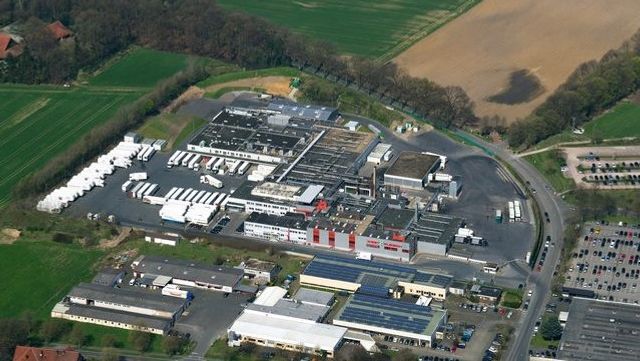
Factory premises of the Coesfeld meat centre of Westfleisch SCE [Source: Wikimedia]
This revealed that 34 workers were already infected at another company, Boeser Frischfleisch in Schöppingen (Borken District). At Germany’s biggest meat processor, the large slaughterhouse Tönnies in Rheda-Wiedenbrück (also in NRW), the testing of a total of 7,000 employees is still ongoing.
In Schleswig-Holstein, more than 100 employees of the Vion slaughterhouse operator tested positive for COVID-19 a week ago. In Baden-Wuerttemberg, too, the number of those infected at Müller Fleisch in Birkenfeld has continued to rise. There, 412 workers, far more than one-third of the total of 1,100 employees, have now become infected with the virus.
From the Enzkreis district in Baden-Württemberg, where Birkenfeld is located, it is now reported that almost 150 employees of Müller Fleisch have recovered. However, this only means that they must resume work under tougher exploitative conditions, while the so-called “company quarantine” continues.
Despite the pandemic, most slaughterhouses are still operating, and for the staff, the pressure of work has increased once again. In Birkenfeld, those that are healthy have been working extra-long shifts of up to 12 hours on the assembly line for two weeks to compensate for the losses.
In NRW, workers from Westfleisch in Coesfeld have made it clear to broadcaster WDR that such brutal work pressure definitely prevails even in normal times. Two Romanians reported, “The contract specifies a work shift of eight hours. But normally you work 10 or 12 hours, also on Saturdays and often Sundays in addition.” Others showed the camera crews where they lived: collective housing for temporary workers in Coesfeld district, where three men share a room and ten share the kitchen and washrooms.
In fact, it is precisely in such unhygienic, overcrowded, and dilapidated accommodations where the virus can spread. They are organised by subcontractors who provide the slaughterhouses with the cheap labour upon whose exploitation the meat industry’s billion-dollar business is based. The subcontractors themselves also make a huge profit, as they take a large part of the wages for accommodation, placement, transport, etc. from the Eastern European migrant workers.
“We are dealing with a criminal milieu”, explained Peter Adrian, who heads the research team at the Westdeutsche Allgemeine Zeitung (WAZ). “Some of these subcontractors are recruited from former rocker clubs. They can also be from drug or prostitution rings.” One should “not underestimate the criminal energy”. The East European workers are “squeezed to the maximum”, they are systematically cheated of wages, working hours and labour rights.
The basic problem, Adrian added, is that “The meat industry relies on subcontractors and those they employ.” The coronavirus pandemic in the meat processing industry has at a stroke exposed a huge boil that stinks worse than rotten meat.
In fact, these conditions have been known about for years. Only now, when the coronavirus pandemic threatens to paralyze the meat industry, have they become a topic for official German politics.
On Wednesday, the German government was forced to devote a “question time” session in the Bundestag (parliament) to the topic of the meat industry. The Greens had requested the debate. Their agricultural spokesman, Friedrich Ostendorff, expressed outrage. “The primitive employment and housing situation was an imposition even before the corona crisis, now it’s becoming an epidemic hotspot.”
Absurdly enough, Hubertus Heil was also indignant about the situation. The deputy chairman of the Social Democratic Party (SPD), Heil has been federal Minister of Labour and Social Affairs for over two years. It was his party and the Greens which created the conditions for low wages in the slaughterhouses with the introduction of the Hartz labour and welfare “reforms” under Gerhard Schröder.
First, Heil complained that “the lockdown must now be restored in Coesfeld”, causing “great harm to the whole of society”, and then promised to “sort out these conditions”. Society must no longer stand by and watch as people from Central and Eastern Europe are exploited, Heil said, and announced mandatory nationwide controls.
In fact, the government has long had detailed information about conditions in the meat industry. A so-called “voluntary obligation of meat companies and contractors” was agreed upon in 2015, which was renewed two years later. Nothing has changed fundamentally. In the autumn of 2019, an extensive inspection revealed serious violations of the regulations in over 85 percent of the companies.
On Wednesday, the meat industry itself announced a new round table with Minister Heil as well as Agriculture Minister Klöckner and Health Minister Spahn (both Christian Democratic Union, CDU). At the same time, the Association of the Meat Industry (VDF) rejected any criticism of working conditions. It claimed that the meat processing bosses, middlemen and subcontractors had complied with German labour law and that of the EU.
The prevailing conditions are the intended result of the EU’s eastward expansion. They were deliberately sought and brought about by the same parties that are now hypocritically expressing outrage. The labour contracts, temporary working and subcontracting structures are part of the market reforms which followed capitalist restoration in Eastern Europe 30 years ago.
Between 2004 to 2009, the eastward expansion of the EU massively intensified the social crisis in the new member states there. The EU’s austerity dictates turned countries like Bulgaria and Romania into the poorhouses of Europe. This benefited especially the German corporations, which in the following years succeeded in replacing standard employment relationships subject to social insurance contributions with low-wage jobs. Today’s slave conditions and mafia-like structures are the logical consequence of this development.
The meat industry is only the tip of the iceberg. Similar conditions face workers in agriculture, in the cleaning industry, at parcel delivery companies, at Amazon, in the construction industry (for example large construction sites like “Stuttgart 21”), in bus companies and the entire local traffic, transport, airport ground services, etc.—and of course in the care sector and the entire health service.
It is the most oppressed sections of the working class that are most affected by the coronavirus pandemic, including suffering numerous fatalities. They bear the greatest social burden. They also bear the economic costs of the crisis in the form of short-time working, wage cuts and redundancies.

Herd immunity policy in Turkey risks thousands of new deaths

Ulaş Ateşci

President Recep Tayyip Erdoğan’s ruling Justice and Development Party (AKP) government has launched its “normalization” policy, despite opposition from medical experts, as the coronavirus pandemic rages on across Turkey. The number of new cases is already growing again in at least nine provinces across the country.
According to this plan, shopping malls, barber shops and beauty salons as well as retail shops opened up on May 11. Domestic and some international flights are to resume in late May or early June. Travel restrictions were lifted on May 4 for Turkey’s major tourist cities like Antalya, Aydın and Muğla.
Professor Mehmet Ceyhan, a member of the government’s Science Council, warned, “We are not even in the middle of the epidemic yet,” adding: “In countries such as Japan and Singapore, which reached this point and began to ease measures, cases increased again.”
Emergency Medicine Specialist Dr. Başar Beyoğlu, a member of the Turkish Medical Association (TTB), also warned against opening shopping malls: “Given their ventilation systems and difficulties in ensuring social distancing and preventing contact, shopping malls in their present conditions are more dangerous than pandemic hospitals in service today.” With parks and walking areas still closed, the opening of malls is widely seen as reflecting close relations between the government and their multi-millionaire owners.
Described by Health Minister Fahrettin Koca as “controlled social life,” in fact it is a controlled herd immunity policy in the interests of the Turkish bourgeoisie. While millions of workers must go to work to produce profits for big business, the state and media propaganda for “normalization” also encourages masses of people to go into the streets and markets.
As of Thursday, the COVID-19 death toll has passed 4,000; the total number of cases is around 150,000. Turkey has seen over 1,000 new cases and more than 50 deaths each day. Despite these tragic facts, the Erdoğan government has hailed its “success story” against COVID-19, and claimed “the outbreak is under control.” The aim of these lies is to habituate people to thousands of deaths and force workers back to work under unsafe conditions.
However, the Health Minister himself admitted that the outbreak is out of control and is set to worsen, due to the government’s criminal response, as in the United States, Germany, and many other countries. Asked about the current reproduction rate (R0, the number of people that each person infected with COVID-19 goes on to infect) of the disease in Turkey at a press conference on Wednesday, he replied: “I can say that Turkey’s R0 value is 1.56 at the moment.”
On Thursday, Prof. Dr. Kayıhan Pala presented a TTB report on the COVID-19 pandemic and warned: “If this value is 1.56, we need to urgently close tightly … If you cannot lower the R0 value below 1, you cannot control the outbreak.” The TTB warned that the Health Ministry does not use the mortality codes recommended by the World Health Organization (WHO).
If there is a victory against the pandemic, it will be thanks to efforts by health care workers, not the government. Only 17,915 tests have been done for every million inhabitants in Turkey. This figure is about 32,166 in the United States, whose government has pursued a criminal policy leading to a death toll of more than 86,000. It must also be noted that Turkey’s relatively low death rate so far is largely due to the fact that only a small part (8.8 percent) of its population is elderly, ranking 40th of 41 European countries.
Erdoğan is trying to divert attention from his government’s responsibility for the pandemic. In a press conference Monday, he effectively accused the population, saying: “Those who go out without a really essential job, those who create unnecessary crowds in open and closed spaces on the street or in transportation vehicles feed the virus with their own hands.” This is entirely cynical, as Erdogan has already said his priority is saving production and exports, not lives.
The Turkish government never stopped non-essential industries during the pandemic. Only cafés, restaurants, gyms, hairdressers and places of entertainment closed. According to the official figures, about 150,000 businesses, employing 3.2 million workers, stopped operations during the outbreak. This is but a fraction of the total number of employed workers in Turkey, which is over 26 million.
In the same press conference, Erdoğan once again made clear his government’s class-based policy, stating: “We strive to open a space in which our industrialists, exporters and business world can turn their wheels…We aim to bring our country to a more advantageous position in the global system that will be reshaped politically and economically after the pandemic.”
On this basis, the Turkish government announced a corporate bailout totaling 100 billion Turkish liras (US$15 billion) at the end of March, later raising it to 200 billion liras. As elsewhere around the world, the overwhelming bulk of this sum has been handed over to the financial and corporate elites.
As a result of this policy of malign neglect, the number of confirmed COVID-19 cases among workers is almost three times the average in Turkey. According to a report from the Health and Safety Labour Watch (İSİG), at least 103 workers lost their lives from COVID-19 in April. More than 200 miners and at least 120 postal workers were infected.
This has taken place only due to the complicity of bourgeois opposition parties and trade union confederations. The pro-opposition Confederation of Revolutionary Trade Unions (DİSK) declared on March 30 that in 48 hours it might invoke the constitutional right to not work in unsafe conditions, but it did not call strikes.
On Thursday, the pro-government Türk-İş and Hak-İş union confederations issued a joint statement with the Confederation of Employers’ Unions of Turkey (TİSK) endorsing the government’s pro-business response to the pandemic. Calling for new financial stimulus packages for companies, they demanded more short-term payment allowances until at the end of the year.
The big-business Republican People’s Party (CHP) is only concerned about long-term effects of the “normalization” policies for the ruling class. Earlier this week, CHP spokesperson Fait Öztrak said: “We think a second wave [in the outbreak] would not only risk all the sacrifices incurred, it will further delay the functioning of the economy, and we will miss opportunities. We see this can lead to loss of income as well as loss of life.”
Despite the agreement of both the government and bourgeois opposition on a policy targeting the working class, the Erdoğan government has sought to divert growing social anger among workers with increasing attacks on the CHP-led opposition. Trying to rally popular support after the Turkish army’s failed 2016 coup against Erdoğan, it has accused the opposition, without evidence, of preparing a coup.
After Erdoğan’s statements, a pro-government writer declared in a television interview that she has a kill list and her family has weapons to “enough to kill 50 people.” Another reactionary asked, “If we go out to the streets, how will you protect your wife and child?”
The principal target in this campaign is not the CHP, other bankrupt capitalist opposition parties, or the imperialist forces in Washington and Berlin who planned the 2016 coup, but the mounting anger among workers against the capitalist system.
These threats are serious warnings. The ruling class in Turkey and worldwide is preparing for violent class war against the working class.
Workers have to organize to defend themselves against the government’s deadly response to the pandemic. It is necessary to form rank-and-file committees in factories, workplaces and neighborhoods, independent of the trade unions and bourgeois parties, to stop production in non-essential sectors during the pandemic, ensure safe working conditions for workers still on the job, and prepare workers to oppose attacks from the ruling class and its thugs.

US Senate reauthorizes domestic surveillance, allows access to internet histories

Kevin Reed

The US Senate voted on Thursday to approve the USA Freedom Reauthorization Act of 2020. The law authorizes government surveillance of the public, including federal law enforcement agency access to the internet browsing and search histories of American citizens.
Voting 80 to 16, the Senate approved a two-and-a-half-year extension of the Foreign Intelligence Surveillance Act (FISA) provisions that have been the basis of expanding abuses by US intelligence, which originated in the aftermath of the terror attacks of September 11, 2001 and were authorized in the USA PATRIOT Act.
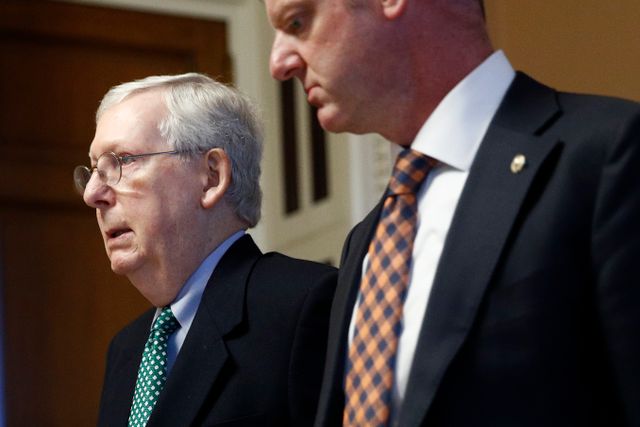
Senate Majority Leader Mitch McConnell of KY walks to the Senate Chamber on Capitol Hill in Washington, Monday [Credit: AP Photo/Patrick Semansky]
According to congressional procedures, although the House of Representatives already approved a similar bill last March, the modified version adopted by the Senate must now go back to the House for final approval before it can be sent to the White House to be signed into law by President Trump.
The Senate reauthorization of the FISA provisions was supported by both Democrats and Republicans and easily surpassed the sixty-vote threshold necessary for passage.
Under the FISA rules, law enforcement is supposed to obtain approval from a special FISA court—an individual judge who reviews FBI and CIA requests in secret—before engaging in eavesdropping and surveillance operations on US citizens.
Significantly, the Senate vote restored FISA elements that have become known as the “business records,” “lone wolf” and “roving wiretap” provisions in counterterrorism or espionage investigations, which were the subject of debate in recent months. All three of these rules had expired last December. They involve details about what law enforcement officers are permitted to do once the FISA court authorizes the secret surveillance of an individual.
As has been the case throughout the history of the PATRIOT Act as well as the revised USA Freedom Act (2015) adopted during the Obama era, the official political debate in the lead-up to the Senate vote on Thursday was never about halting the illegal government surveillance of the US public that has been going on for two decades, but rather how to extend it.
This fact was proven in the first of three amendments to the law that were discussed during the Senate deliberations. When Republican Senator Rand Paul from Kentucky proposed to block the use of FISA courts on US citizens because “you don’t get a lawyer,” his amendment was quickly rejected by 1185.
A second amendment proposed by Republican Senator Mike Lee of Utah and Democratic Senator Patrick J. Leahy of Vermont was adopted with the support of 77 senators. The Lee-Leahy amendment lowers the threshold for the FISA court to appoint an “amicus curiae” advisor in cases that involve a “sensitive investigative matter.”
Prompted by numerous abuses of FISA procedures uncovered during the 18 month-long “Russia probe” in 20182019, the proposal enables the court to appoint an advisor who, according to Lee, “can raise any issue with the court at any time and give both the amicus and the FISA court access to all documents and information related to the surveillance application.”
According to publicly available FISA data, such amici have been used only 16 times among the thousands of surveillance applications that have been approved in the past five years. However, even this minuscule adjustment by the Senate was criticized by the US Justice Department, with national security spokesman Marc Raimondi stating, “We appreciate the Senate's reauthorization of three expired national security authorities. As amended, however [the bill] would unacceptably degrade our ability to conduct surveillance of terrorists, spies and other national security threats.”
In a very significant vote, the Senate rejected a third amendment to the reauthorization bill that would have prevented federal law enforcement agencies from obtaining the internet browsing and search histories of American citizens without a warrant.
The vote on the amendment—drafted by Democratic Senator Ron Wyden of Oregon and Republican Senator Steve Daines of Montana—was 5937, one vote shy of the 60 needed for adoption. The provision allowing the FBI and CIA access to internet browsing activity histories without court approval is contained in Section 215 of the act.
In discussing the implications of the warrantless data gathering on the Senate floor, Wyden warned, “Collecting this information is as close to reading minds as surveillance can get. It is digital mining of the personal lives of the American people … without this bipartisan amendment, it is open season on anybody’s most personal information.”
Wyden went on, “Under Section 215, the government can collect just about anything so long as it is relevant to an investigation. This can include the private records of innocent, law-abiding Americans. They don’t have to have done anything wrong. They don’t have to be suspected of anything. They don’t even have to have been in contact with anyone suspected of anything.”
Wyden also pointed out that tens of millions of Americans are now stuck at home during the pandemic and using the internet more than ever as their only connection to the outside world.
The corporate media was quick to point out that the amendment failed in part because four Senators did not cast a vote at all, including former Democratic presidential candidate and senator from Vermont Bernie Sanders, Republican Senator from Tennessee Lamar Alexander, Democratic Senator from Washington Patty Murray and Republican Senator from Nebraska Ben Sasser.
Concerns in the Senate were so high that the Wyden-Daines amendment might pass that Republican Majority Leader Mitch McConnell was reportedly working on his own measure to officially write into the law a provision that the government may collect records of internet search and browsing histories without a warrant.
According to Recode, “that amendment never came to the floor, likely because McConnell knew the Wyden-Daines amendment wouldn’t get enough votes.”
Privacy and civil rights groups have pointed to the dangers posed by the Senate reauthorization of the FISA domestic surveillance measures. However, they focused almost exclusively on the use of these tools in the hands of the Trump administration. Sean Vitka, senior policy counsel at Demand Progress, which led a coalition of 36 organizations including the American Civil Liberties Union (ACLU) and Freedom Works supporting privacy amendments to the legislation, said on Thursday, “[T]he loss of the warrant protection for browser history due to absences during the vote by supportive senators was a huge disappointment.”
Vitka went on, “These protections are particularly critical given the Trump administration's history of abusing marginalized communities and others the president regards as enemies. Without more protections that would limit the information spy agencies can collect without a warrant, Congress will be giving the Trump administration the power to snoop on billions of data points for every single person in the United States.”
However, the rejection of the Wyden-Daines amendment was bipartisan. That vote explicitly makes key aspects of the National Security Agency (NSA) data gathering operation, exposed by former intelligence contractor Edward Snowden in 2013, a legal government practice and shows that the electronic surveillance of US citizens is ongoing and has never stopped.
Snowden exposed a secret NSA program called XKeyscore that allowed intelligence analysts to search without authorization through databases containing the email messages, online chats and browsing histories of everyone. In the training materials leaked by the whistleblower, the NSA boasted that XKeyscore was the “widest-reaching” intelligence gathering system, which collects “nearly everything a typical user does on the internet” in real time.
In describing the NSA system to the Guardian in 2013, Snowden explained its purpose: “Because even if you’re not doing anything wrong, you’re being watched and recorded… You simply have to eventually fall under suspicion from somebody—even by a wrong call. And then they can use the system to go back in time and scrutinize every decision you’ve ever made, every friend you’ve ever discussed something with, and attack you on that basis, to sort of derive suspicion from an innocent life and paint anyone in the context of a wrongdoer.”
Under conditions of an increase in strikes and class conflict arising from the pandemic and the deepening economic crisis, the state is bolstering its internet browser data gathering measures as part of the preparations for a major confrontation with the working class.
With end-to-end encryption tools built into the mobile devices and apps being used by tens of millions of people, blocking law enforcement’s ability to monitor individual communications, the gathering of browsing data becomes one of the only remaining electronic surveillance windows into the private and political activity of individuals and organizations that will be targeted for their opposition to the government and the capitalist system as a whole.

Trump threatens to cut all ties with China

Peter Symonds

In the latest escalation of the US confrontation with China, President Donald Trump threatened to cut off all relations with Beijing over claims that it failed to take steps to prevent the COVID-19 virus from becoming a global pandemic. These bogus allegations have now been integrated into Washington’s trade war measures, which pre-dated the virus outbreak and are aimed at undermining China economically and militarily.
Speaking on Fox Business News, the US president said China “should have never let this [the COVID-19 pandemic] happen,” adding: “So, I make a great trade deal and now I say this doesn’t feel the same to me. The ink was barely dry and the plague came over.” Having previously hailed his personal relationship with Chinese President Xi Jinping, Trump declared that “right now I don’t want to speak to him.”
Asked what penalties he intended to impose on China, Trump blurted out: “There are many things we could do … We could cut off the whole relationship.” He added: “Now, if you did, what would happen? You’d save $500 billion.” This was a reference to estimated US annual imports from China, described by Trump as “lost money.”
The Trump administration has rapidly ramped up its attacks on China over the pandemic. It has not only repeatedly accused Beijing of a lack of transparency, but also promoted the big lie that the virus came from a Wuhan virology laboratory.
Facing re-election in November, Trump is attempting to make China the scapegoat and deflect attention from his own administration’s criminal negligence, which has resulted in the United States having the world’s largest number of COVID-19 cases and the highest death toll. Globally the number of cases has passed 4.4 million and deaths stand at more than 302,000, with 1.47 million cases in the US and 85,884 deaths.
However, Trump’s denunciations of Beijing over the pandemic are also part of a trade-war agenda and military build-up against China. In recent days, the US has imposed or threatened a range of new economic penalties against China and Chinese companies, including:
  • The US announced new export controls yesterday aimed at blocking access to semi-conductor technology for China’s hi-tech giant Huawei. While the Chinese corporation previously was barred from semi-conductors sourced in the US, the new rules aim to choke off supplies from third countries, such as Taiwan and South Korea. Companies in those countries using US technology will be required to obtain a US license before exporting to China.

    US Commerce Secretary Wilbur Ross accused Huawei of trying to “undermine” earlier export controls, claiming it was not “a responsible corporate citizen” for doing so—in other words, for attempting to find new sources for essential semi-conductors in response to unilateral US trade war measures.

    Ross declared that the rules were needed to “prevent US technologies from enabling malign activities contrary to US national security and foreign policy interests.” The US claims that Huawei equipment facilitates Chinese espionage. In reality, the chief concern is that Chinese equipment will inhibit the extensive electronic spying operations conducted by American intelligence agencies such as the NSA.
  • China has threatened to retaliate against US technology firms. The Chinese foreign ministry called on the US to immediately stop “its unreasonable suppression against Huawei,” saying it would not only harm Chinese corporations, but also US enterprises, and “cause damage to the global industrial chain, supply chain and value chain.” According to the state-owned Global Times, Beijing has threatened to penalise US companies by placing them on an “unreliable entity list.”
  • This week Trump directed that the board overseeing a pension fund for 5.9 million federal employees, present and retired, halt plans to allow investment in the shares of Chinese companies. The board, which was due to shift some money into investments based on an all-world index that includes Chinese shares, delayed the move on Wednesday. The White House is also seeking to replace three of the pension board’s five directors.
  • On Thursday, Trump threatened to impose new taxes on American companies that produce goods outside the US. He told the Fox Business Network that taxation was an “incentive” for companies to return manufacturing to the United States. “You know, if we wanted to put up our own border, like other countries do to us, Apple would build 100 percent of their product in the United States,” he said. “That’s the way it would work.”
As it intensifies its propaganda war against Beijing over the COVID-19 pandemic, the Trump administration is discussing a range of penalties it could impose on China. These include: bans on sensitive exports, additional tariffs on Chinese goods, restrictions on Chinese companies listing on US share markets, and even the cancellation of Chinese-held US debt.
The Chinese regime has no progressive answer to the US threats and punitive measures. Its responses vacillate between making concessions to Washington in the hope of a deal and threatening penalties of its own. In reply to Trump’s latest threat to cut ties with China, the hawkish Global Times lashed out at the US president as “insane,” denouncing “the proverbial anxiety that the US has suffered from since China began its global ascension.”
The intensification of the US confrontation with China has produced alarm in ruling circles internationally, with warnings of a new cold war and a breakdown of the international trading and financial system. A lengthy article this week in Foreign Policy pointed out that in the 1930s rising tensions between the United States and Japan rapidly led to the outbreak of all-out war in the Pacific at the cost of millions of lives.
The article noted that the US ambassador in Tokyo, Joseph Grew, warned Washington in 1935 about the necessity of not imposing economic restrictions on Japan. “But Washington was in the grip of economic nationalists battling a historic economic downturn [and was deaf to his pleas],” the article observed. “Within a few years, the United States ramped up economic pressure on Japan, culminating in a trade and oil embargo. Six years after Grew wrote his dispatch, the two countries were engaged in total war.”
In the midst of the worst global economic crisis since the 1930s, US imperialism is engaged in a desperate attempt to maintain its global hegemony through all means, including military confrontation, and regards China as the chief obstacle to its interests. As in 1941, the rapidly intensifying US diplomatic and economic attacks on China are lurching toward to a military conflict between nuclear-armed powers with incalculable consequences for humanity.

15 May 2020

United Nations Economic Commission for Africa (UNECA)/Standard Bank Group African Women Leadership Fund Initiative 2020 for African Women Fund Managers

Application Deadline: 30th June 2020

About the Award: The United Nations Economic Commission for Africa (UNECA) and Standard Bank Group are calling on women fund managers across Africa to apply to join the African Women Leadership Fund initiative (AWLF), an innovative impact fund that will provide capital and expertise to successful candidates.
The AWLF Initiative has been established with the aim of uplifting female-owned and managed asset management firms and providing a defined economic stimulus to achieve sustainable economic growth in Africa. The fund, the first of its kind, aims to raise up to $1 billion over 10 years (€910 million or R19 billion) for women fund managers, who in turn will invest in high-impact businesses and projects across the continent, thus driving entrepreneurship.
  • Phase 1: AWLFI will invest in established women-owned fund management firms or in fund managers with the capability to take on segregated mandates. These Managers will operate in the listed space.
  • Phase 2: In the second round of funding, the AWLFI will look to invest in existing Private Equity Funds, thus enabling the fund to hold a combination of listed and private equity investments.
  • Phase 3: An incubation programme to put new women fund managers on the map.
Type: Entrepreneurship

Eligibility:
  • Applicants must be female, reside in Africa or be willing to relocate to Africa, and need to have proven fund- or asset-management experience. They will be subject to an investment and operational due-diligence process that will need to be completed by the end of August 2020, with the first phase of the fund becoming fully operational in the fourth quarter of this year.
  • While the fund is sector-agnostic, it will have a preference towards high-impact sectors including manufacturing, education, healthcare, renewable energy, and technology.
Selection: Under this first phase of the AWLF Initiative’s implementation, funding will be allocated to asset managers across North, East, Southern and West Africa. Allocations will be made with a view to achieving the best possible regional and geographic diversification.  

Eligible Countries: African countries

Number of Awards: Not specified

Value of Award: The fund, the first of its kind, aims to raise up to $1 billion over 10 years (€910 million or R19 billion) for women fund managers, who in turn will invest in high-impact businesses and projects across the continent, thus driving entrepreneurship.

How to Apply: To register applicants should visit www.standardbank.com. For any queries, applicants can email awlf@standardbank.co.za. Applications close at the end of June 2020.
  • It is important to go through all application requirements in the Award Webpage (see Link below) before applying.
Visit Award Webpage for Details

UNICEF COVID 19 Youth Challenge 2020 for Young Africans

Application Deadline: 13th June 2020

About the Award: This challenge gives youth a voice in exploring how we might empower people and communities to become more pandemic-resilient. We are looking for your ideas tosolve real challenges faced by real people just like you.
This challenge offers you the opportunity to develop future-ready employability skills like design thinking while contributing to the global efforts to tackle COVID-19. As you progress through this challenge, you’ll use a human-centered design approach to:
  1. Discover how COVID-19 is impacting real people in different ways
  2. Define these challenges from a human-centered perspective, and
  3. Develop innovative solutions to these challenges
You’ll start by exploring human needs related to the COVID-19 pandemic and turn your findings into core challenges faced by real people. By using our tools &techniques you will generate multiple ideas to solve these challenges and prototype solutions to share with people around the world.

Eligible Countries: African countries

Type: Contest

Eligibility: All persons over 14 years of age recognized as adolescents.

Number of Awards: Not specified

Value of Award: Some of the rewards include confirmation of design ideas when you develop products, services, and solutions to the challenges people in your community face, such as misconceptions and beliefs, depression, lack of income, and backlogs. All those who succeed in this challenge will receive a certificate of participation from UNICEF, confirming their positive contribution to the fight against the scourge. Also, you can go home with 100,000 naira.

How to Apply: Click here to apply for the challenge
  • It is important to go through all application requirements in the Award Webpage (see Link below) before applying.
Visit Award Webpage for Details

TWAS-NRF Doctoral Fellowship Programme 2020 for Developing countries – South Africa

Application Deadline: 14th August 2020

About the Award: TWAS-NRF Doctoral Fellowships are tenable at research institutions in South Africa for a maximum period of three years. They are awarded to scientists from developing countries (other than South Africa) to enable them to pursue PhD research in the natural sciences.

Eligible Field(s):
01-Agricultural Sciences
02-Structural, Cell and Molecular Biology
03-Biological Systems and Organisms
04-Medical and Health Sciences incl. Neurosciences
05-Chemical Sciences
06-Engineering Sciences
07-Astronomy, Space and Earth Sciences
08-Mathematical Sciences
09-Physics


Type: Doctorate, Fellowship

Eligibility: Applicants for these fellowships must meet the following criteria:
  • be citizens or permanent residents of a developing country* (other than South Africa);
  • must not be living studying or working in South Africa or any developed country;
  • applicants who were previously employed or studying towards a degree, or undertaking research in South Africa, and have returned to their country of origin, but have been in their country of origin for less than two (2) years, are not eligible to apply;
  • must have obtained minimum of 65% at the masters’ level in order to apply for doctoral funding;
  • must register at a South African public university in 2021, on a full-time basis and may be based at any South African public research institution including Higher Education Institutions (HEIs), Science Councils and National Research Facilities;
  • must be a maximum of 32 years of age by 31 December of the year of application;
  • must have obtained an MSc degree in a field of natural sciences;
  • must have proof of evaluation of all foreign qualifications (obtained from non-South African universities) evaluated by the South African Qualification Authority (SAQA) or proof that the applicant has submitted his/her qualifications to SAQA for evaluation. Failure to submit proof will result in the application being rejected;
  • provide evidence that s/he will return to her/his home country on completion of the fellowship;
  • not take up other assignments during the period of her/his fellowship;
  • provide an official letter from a host South African institution, department or laboratory and motivation from the applicant’s host;
  • provide English language proficiency certificate (if available at the time of the application). If not available, this will be required before any NRF funds will be released to the student and must meet the following requirements of the English Language Proficiency Academic test: IELTS 6.5 (no band less than 6.0); or TOEFL (paper) 575 (TWE 4.5); or TOEFL iBIT (min. 20); or Cambridge minimum 58,
  • present a detailed research project that must be registered and approved by the host institution and provide a letter of support from the prospective host supervisor;
  • be financially responsible for any accompanying family members.
*The list of 151 eligible developing countries is available in the Framework document you may download at the bottom of the page.

Eligible Countries: Developing countries

To be Taken at (Country): South Africa

Number of Awards: Not specified

Value of Award: NRF will provide travel to and from South Africa, a standard monthly allowance which should be used to cover living costs, such as accommodation, food and health insurance. The monthly stipend will not be convertible into foreign currency.

Duration of Award: Up to 3 years

How to Apply: Apply below
  • It is important to go through all application requirements in the Award Webpage (see Link below) before applying.
Visit Award Webpage for Details

DAAD Helmut-Schmidt Masters in Public Policy and Good Governance Scholarship Programme 2021 for Developing Countries

Application Deadline: 31st July 2020 (Application opens 1ST JUNE)

Eligible Countries: Developing Countries

To be taken at (country): Germany

About the Award: This programme is designed to further qualify future leaders in politics, law, economics and administration according to the principles of good governance and to prepare them in a praxis-oriented course for their professional life.
Very good graduates with a first university degree get the chance to obtain a master’s degree in disciplines that are of special relevance to the social, political and economic development of their home country.
The knowledge and experience acquired in Germany should enable the scholarship holders to later contribute to the establishment of democratically oriented economic and social systems aimed at overcoming social differences.
In addition, the training at German institutions of higher education should qualify the scholarship holders to become partners in the political and economic co-operation with Germany.

Type: Masters

Eligibility: 
  • The scholarship scheme is open to graduates in the field of social sciences, political sciences, law, economics and in public administration from Africa, Latin America, South Asia and Southeast Asia, from countries in the Middle East as well as from the Ukraine.
  • The programme is open for very well qualified graduates with a first university degree (bachelor or equivalent) who want to actively contribute to the social and economic development of their home countries.
  • The scholarships are offered both for young graduates without professional experience and for mid-career professionals.
Selection Criteria: The main DAAD criteria for selection are the following:
  • the study results so far
  • knowledge of English (and German)
  • political and social engagement
  • a convincing description of the subject-related and
  • personal motivation for the study project in Germany and the expected benefit when returning to the home country.
  • The latest university degree should have been obtained during the six years prior to the application for the scholarship.
  • Applicants cannot be considered if they have stayed in Germany for more than 15 months at the time of application.
All master´s courses have further additional requirements that must be fulfilled by the applicants in any case.

Number of Awards: Not specified

Value of Program: 
  • Prior to their study programmes all scholarship holders receive a 6- months-German language course from April 2019 to September 2019. The language courses take place at selected institutes in Germany and not at the universities of the selected master´s courses.
  • The language course is compulsory also for those who attend a master´s course taught in English. The scholarship holders are offered a special tutoring at their host institutions financed by DAAD.
  • Furthermore, there is the possibility to attend networking events. DAAD pays a monthly scholarship rate of currently 750 €.
  • The scholarship also includes contributions to health insurance in Germany.
  • In addition, DAAD grants an appropriate travel allowance and a study and research subsidy as well as rent subsidies and/or allowances for spouses and/or children where applicable.
  • DAADscholarship holders within the Helmut-Schmidt-Programme are exempted from tuition fees.
How to Apply: Applications have to be submitted in German or English. Please indicate that you are applying for the DAAD Helmut-Schmidt Programme (Master’s scholarships for Public Policy and Good Governance).
It is important to go through the Application requirements in the Program Webpage before applying.

Visit Program Webpage for details

Award Provider: Deutscher Akademischer Austauschdienst (German Academic Exchange Service)

US grocery stores and retailers move to cut pandemic pay to workers

 Zachary Thorton

Major grocery and retail corporations in the United States are preparing to eliminate the hazard-related bonuses given to their workers, including pay increases and paid work leave. The moves come as the number of new COVID-19 infections and deaths in the country continues to rise.
Throughout the pandemic, groceries and certain other retail outlets, as genuinely essential businesses, have continued to remain operational. These workers are under the constant pressure of potentially becoming infected by the virus, threatening not only their lives, but the lives of their families. Indeed, along with meatpacking workers, grocery and retail workers have emerged as one of the hardest-hit sectors by the virus.
This is due in part to the slow initial response among grocery and retail corporations to the outbreak of the virus. It was not until workers began to take action that these companies started providing masks, gloves, and sanitation products to their employees.
Now, the precarious position of grocery and retail workers is being exacerbated as states push forward with the reopening of their economies, which will only lead to the further spread of the virus.
This fact was made clear in the testimony of Dr. Anthony Fauci, the longtime director of the National Institute of Allergy and Infectious Diseases, and leading member of the White House Coronavirus Task Force on Tuesday. Speaking via videolink before the members of the Senate Health, Education, Labor and Pensions (HELP) Committee, Dr. Fauci noted that a premature reopening of states and counties would lead to “needless suffering and death.”
Under these conditions, the need to provide workers with protections and financial resources is more imperative than ever. However, the opposite is taking place, with Kroger, Starbucks, Whole Foods and others planning to phase out bonuses within the coming weeks.
On March 31, Kroger announced an agreement with the United Food and Commercial Workers union (UFCW) to provide workers with a temporary $2 per hour wage increase and additional emergency paid leave benefits. On Sunday, May 16, the company will stop paying this bonus.
By revenue, Kroger is the largest supermarket in the US, with $121 billion in profits. The company operates nearly 3,000 stores nationwide and employs around 453,000 workers. Its portfolio includes chains such as Harris Teeter, Ralphs, and King Soopers. Last year, its CEO, Rodney McMullen, received a 21 percent increase in compensation, taking his annual income from $11.7 million to over $14 million. By comparison, the average hourly worker at Kroger makes $10.53 per hour, and approximately $21,902 annually.
The company has experienced numerous outbreaks of COVID-19 among its workers at locations throughout the nation. Most recently, it was reported on Tuesday that a worker at a Kroger in Murfreesboro, Tennessee died after contracting COVID-19.
On May 1, Los Angeles County, California health officials reported that 21 employees at a Ralphs in Hollywood tested positive for the virus.
A report by the Los Angeles Times found that the company has been incapable of ensuring that its employees have access to personal protective equipment (PPE). Rae Campos, who works as a cashier at the Hollywood Ralphs, said that the store has not been able to provide fresh masks or gloves after each shift. Campos had to resort to spraying her mask with disinfectant in order to use it the next day.
In an open letter published on the company’s website, Starbucks executive vice president and president, Rossann Williams, indicated that the company is freezing its $3 per hour pay bonus on May 3. The bonus was available only to the employees who risked coming in to work.
Whole Foods, owned by Amazon founder and CEO Jeff Bezos, the world’s wealthiest man, began offering $2 bonuses to workers in April. The company plans to halt these payments by June 1. Expressing the total indifference to the lives of workers by the capitalist class, the CEO of Whole Foods, John Mackey, had previously suggested that workers “donate” their paid time off to coworkers who contracted the virus.
The retail giant Target, with 1,868 stores in the US, will stop paying its workers a $2 bonus by the end of the month. Meanwhile, two workers at a Target in Visalia, California have recently tested positive for COVID-19.
To date, the UFCW has not issued any press releases in response to the moves by these companies to curtail workers’ pay bonuses, nor has it made any attempts to organize workers in defense of their living standards and working conditions. Workers cannot rely on these bankrupt organizations whose only function is to better facilitate the exploitation of the working class at the hands of the corporations.