19 May 2020

Hundreds of Mexican maquiladora workers dying after back-to-work orders take effect

Eric London

The decision by Wall Street and the Trump administration to restart production has produced an unprecedented health crisis in northern Mexico, where workers at maquiladora sweatshops that produce parts for export to the US are contracting coronavirus by the tens of thousands and dying at alarming rates.
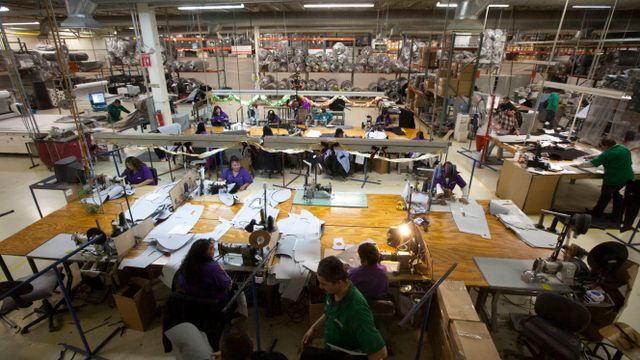
In this Friday, Dec. 27, 2013 file photo, workers manufacture car dash mats at a maquiladora belonging to the TECMA group in Ciudad Juarez, Mexico. (AP Photo/Ivan Pierre Aguirre, File)
On Saturday, the health secretary of Northern Baja California announced that 432 of the 519 people who have officially died from the virus in the state were maquiladora workers. In Baja cities like Tijuana and Mexicali, as well as other border cities like Ciudad Juárez, Chihuahua and Matamoros, Tamaulipas, doctors report that their hospitals are overflowing with sick maquiladora workers, some of whom are dying in their work uniforms. Mexican maquiladora workers make between US$8 to $10 per day.
Hospital officials say the government’s official death toll and total number of positive cases nationwide—5,177 and 49,219 respectively, as of yesterday afternoon—vastly understate the real impact. They claim that hundreds or thousands more maquiladora workers are dying than is officially acknowledged, and that the Mexican government of Andrés Manuel López Obrador is obscuring the real toll in an effort to force workers back to work.
An investigation published yesterday by the San Diego Union-Tribune shows the death toll may be ten times higher than the official count:
“A review of 120 death certificates provided by a worker at a crematorium in the northern border city of Ciudad Juárez showed a total of 63 listed ‘probably COVID-19’ as the cause of death. Another 30 named pneumonia or other respiratory ailments often associated with coronavirus. Only 12 listed COVID-19 as the confirmed cause, meaning that only those cases would become part of the official count.”
The end of the last work week saw a spike in new positive cases nationwide, with 2,400 testing positive on May 14 and 15. But testing is almost nonexistent in Mexico, which has a rate of 0.5 tests per 1,000 people, compared with 27 per 1,000 people in the United States, where the need still far exists current testing levels.
But even by the limited official count, one out of every 1,000 Tijuana residents has already tested positive—worse than some of the hardest hit parts of the United States, including Wayne County, Michigan.
The spike is the direct product of López Obrador’s “back to work” initiative, ordered from Washington and Wall Street. In Tijuana, the Mexican government opened 100 maquiladoras at the beginning of May, despite protests from workers. Yesterday, a Tijuana business association said the city’s maquiladoras were functioning at 60 percent capacity.
López Obrador has responded to the growing death toll by demanding an even more rapid return to work. Earlier this month, López Obrador stated that auto parts production at maquiladoras would reopen on June 1. Several days ago, however, the government reneged and has begun forcing plants to open this week, violating its own regulation.
The announcement came after GM CEO Mary Barra told investors that the company has been in “regular dialogue” with López Obrador’s administration and said the discussions had been “very constructive,” adding: “We’re in a good position as we talk to country leaders.” General Motors then announced it would force workers at its Silao facility in Guanajuato back to work this Wednesday.
Reopening Mexican production is imperative for American industry. Yesterday, the Detroit News explained, “nearly 40 percent of all part imports into the US come from Mexico, meaning the success of any domestic industry restart will rest heavily on a successful simultaneous rev-up south of the border.”
Ambrose Conroy, CEO of the pro-industry consulting firm Seraph, told CNBC, “Stoppage in Mexico would cause problems within a week.” The companies learned this in early 2019, when 70,000 maquiladora auto parts workers in Matamoros launched a weeks-long wildcat strike, slowing production across North America.
The Trump administration has applied tremendous pressure to force the reopening of Mexican factories as quickly as possible, regardless of the human cost. On April 30, US Ambassador to Mexico Christopher Landau threatened, “You don’t have ‘workers’ if you close all the companies and they move elsewhere,” urging plants to reopen despite the resulting loss of life. “It seems myopic to suggest that economic effects don’t matter,” he said.
The Pentagon has issued similar warnings, explaining that Mexican maquiladora workers produce parts that are necessary for the American imperialist war machine. On April 30, the New York Times said the Pentagon’s “talks with the Mexican government have been successful,” quoting spokeswoman Ellen Lord, who said, “We appreciate Mexico’s ongoing positive response.”
Shortly after his discussions with the Pentagon, López Obrador appeared on national television on May 2 and declared: “We are seeing the light at the end of the tunnel.” Daily positive tests have doubled since then.
Mexican workers are not the only ones whose lives the auto companies are prepared to sacrifice. In the US and Canada, yesterday was the first day of production at dozens of auto plants, and workers told the WSWS that next to nothing had been done to clean the facilities or protect workers’ lives.
The spike in the death toll in Mexico’s industrial cities shows what autoworkers in the US and Canada should expect in the coming weeks. The fact that workers in the US and Mexico are handling parts coming out of maquiladoras where masses of workers are infected is another sign that their lives are in danger. The virus can survive on metal and glass for almost one week.
Across North America, the trade unions are serving as the company’s enforcers, threatening workers that they will be fired if they do not return to work and filling workers’ ears with sweet phrases about nonexistent safety precautions at work.
In the US, former UAW Vice President Norwood Jewell was released from prison due to concerns that he might contract the coronavirus in jail. As the companies sentence tens of thousands of workers back into the dangerous auto plants, Jewell, who was convicted for accepting bribes from the company in exchange for forcing sellout contracts, will serve the rest of his sentence from the safety and comfort of his home.
The corporations, governments and unions will send wave upon wave of workers to their deaths until the workers recognize that they are strong enough to organize their own response and take action to protect their lives and the lives of their loved ones waiting for them at home.
The companies and unions will oppose anything that cuts down on line speed and profit. But the right to life is more important than company profit. To defend their lives, workers must elect committees to take control of their own health and safety conditions at work. They must elect worker-inspectors to patrol the facility, share violations on social media and exercise the power to stop production to fix anything they deem to be a danger to even a single worker’s life.
These basic demands place workers up against the capitalist system. But workers in Mexico, the US, Canada and worldwide possess tremendous social power that they can and must unleash together to stop the deaths and reorganize production to meet human need.

18 May 2020

The Coming Nuclear Menace: Hypersonic Missiles

Karl Grossman

The United States is seeking to acquire “volumes of hundreds or even thousands” of nuclear-capable hypersonic missiles that are “stealthy” and can fly undetected at 3,600 miles per hour, five times faster than the speed of sound.
Why so many? A Pentagon official is quoted in the current issue of Aviation Week & Space Technology as saying “we have to be careful we’re not building boutique weapons. If we build boutique weapons, we won’t—we’ll be very reluctant to—use them.”
The article in the aerospace industry trade journal is headlined: “Hypersonic Mass Production.” A subhead reads: “Pentagon Forms Hypersonic Industry ‘War Room.’”
On March 19, 2020, the U.S. conducted its first hypersonic missile test from its Pacific Missile Range Facility on Kauai, Hawaii.
Fast and Furiously Accurate” is the title of an article about hypersonic missiles written by a U.S. Navy officer which appeared last year on a U.S. Naval Institute website.
The piece declares that by “specifically integrating hypersonic weapons with U.S. Navy submarines, the United States may gain an edge in developing the fastest, most precise weapons the world has ever seen.”
“Hypersonic weapons,” explains the article by U.S. Navy Lieutenant Andrea Howard, “travel faster than Mach 5—at least five times the speed of sound, around 3,600 mph, or one mile per second….They are similar to but faster than existing missiles, such as the subsonic U.S. Tomahawk missile, which maxes out around 550 mph.”
“While hypersonic weapons can carry conventional or nuclear warheads, they differ from existing technologies in three critical ways,” writes Howard. “First…a one-kilogram object delivered precisely and traveling multiples of the speed of sound can be more destructive than one kilogram of TNT. Second, the low-altitude path helps mask HCMs [Hypersonic Cruise Missiles] when coupled with the curvature of the Earth” and so “they are mostly invisible to early warning radars. And third…they can maneuver during flight; in contrast with the predictable ballistic-missile descend, they are more difficult to intercept, if even detected.”
“By offering the precision of near-zero-miss weapons, the speed of ballistic missiles, and the maneuverability of cruise missiles, hypersonic weapons are a disruptive technology capable of striking anywhere on the globe in less than an hour,” declares the Navy officer.
The article also notes that Russian “President Vladimir Putin unveiled six new” what he called “invincible” hypersonic missiles as part of a March 2018 “state of the nation” speech. “Russia has successfully tested the air-to-ground hypersonic missile” named Kinzhal for dagger, “multiple times using the MIG-31 fighter.” It’s “mounting the Kinzhal on its Tu-22M3 strategic bomber.” The article also says “China, too, is working on hypersonic technologies.”
The piece concludes: “As the tradition of arms control weakens with the breakdown of the Intermediate-Range Nuclear Forces (INF) agreement, it would be naïve to anticipate anything other than full-fledged weapon development by Russia and China in the coming decades….The bottom line is that hypersonic weapons will determine who precisely is ‘prompt’ enough in 21st century conflict.”
The U.S. under President Trump withdrew last year from the INF treaty, a landmark agreement which had banned all land-based ballistic and cruise missiles with ranges of from 310 to 3,420 miles. It had been signed in 1987 by President Reagan and Soviet General Secretary Mikhail Gorbachev. The treaty “marked the first time the superpowers had agreed to reduce their nuclear arsenals, eliminate an entire category of nuclear weapons, and employ extensive on-site inspections for verification,” notes the Arms Control Association.
Hypersonic missiles may be unstoppable. Is society ready?” was the headline of an article in March in The Christian Science Monitor. This piece notes: “Hypersonic missiles are not just very fast, they are maneuverable and stealthy. This combination of speed and furtiveness means they can surprise an adversary in ways that conventional missiles cannot, while also evading radar detection. And they have injected an additional level of risk and ambiguity into what was already an accelerating arms race between nuclear-armed rivals.”
The article raises the issue of the speed of hypersonic missiles miring military decisions. “For an incoming conventional missile, military commanders may have 30 minutes to detect and respond; a hypersonic missile could arrive at that same destination in 10 minutes.” Thus “artificial intelligence” or “AI” would be utilized.
The Christian Science Monitor article quotes Patrick Lin, a professor of philosophy at California Polytechnic State University in San Luis Obispo, as noting: “Technology will always fail. That is the nature of technology.” And, says the article: “Dr. Lin argues that the benefits of hypersonic weapons compared to the risk they create are ‘widely unclear,’ as well as the benefits of the AI systems that inform them.”
It quotes Dr. Lin as saying, wisely: “I think it’s important to remember that diplomacy works and policy solutions work…I think another tool in our toolbox isn’t just to invest in more weapons, but it’s also to invest in diplomacy to develop community.”
The Aviation Week & Space Technology article begins: “As the U.S. hypersonic weapons strategy tilts toward valuing a quantity approach, the new focus for top defense planners—even as a four-year battery of flight testing begins—is to create an industrial base that can produce missiles affordably enough that the high-speed weapons can be purchased in volumes of hundreds or even thousands.”
It continues: “To pave the way for an affordable production strategy, the Pentagon’s Research and Engineering division has teamed up with the Acquisition and Sustainment branch to create a ‘war room’ for the hypersonic industrial base, says Mark Lewis, director of research and engineering the modernization.”
The piece then quotes Lewis as saying: “At the end of the day, we have to be careful we’re not building boutique weapons. If we build boutique weapons, we won’t—we’ll be very reluctant to—use them. And that again factors into our plans for delivering hypersonics at scale.”
The article says that “Air Force and defense officials have been promoting concepts for operating air-launched hypersonic missiles in swarm attacks. The B-1B [bomber], for example, will be modified to carry” six hypersonic missiles.
“I think it’s a poorly posed question to ask about affordability per unit,” the piece quoted Lewis as saying. “We have to think of it in terms of the affordability of the capability that we’re providing. By that I mean: If I’ve got a hypersonic system that costs twice as much as its subsonic counterpart but is five times more effective, well, clearly, that’s an advantageous cost scenario.”
The hypersonic missiles will indeed likely be “invincible.” And they would be at the ready because of the withdrawal by the Trump administration of the INF treaty and other international arms control agreements, one after another.
With the vast numbers of hypersonic nuclear-capable missiles being sought, the world will have fully returned to the madness in the depths the Cold War—as presented in the 1964 film Dr. Strangelove or: How I Learned to Stop Worrying and Love the Bomb.
Apocalypse will be highly likely. Artificial intelligence is not going to save us. These weapons need to be outlawed, not produced and purchased en masse. And we must, indeed, “invest in diplomacy to develop community”—a global community at peace, not a world of horrific and unstoppable war.

Protecting Lives And Livelihood Under COVID-19

Moin Qazi

As COVID-19 spreads, the government has already started to address the economic and livelihood challenges posed by the constraints the pandemic has put on behavior and employment. It is designing economic support measures to target the tens of thousands to millions of small businesses. These efforts intend to provide a lifeboat to help businesses survive the coming months, and importantly, to continue to cope with daily emergencies as normal economic life slows down at a disastrous pace. We have to take measures that will help cushion the impact of COVID-19 on employment.
Over the past two months of one of the world’s most stringent national lockdowns, civil society has quietly and steadfastly done what it does best. We have rallied, come together, and coordinated relief efforts across the length and breadth of the country. We have been right beside village-level institutions and communities, offering food and emergency supplies in the wait for government rations and schemes to reach the last mile. And once the lockdown ends, we will begin the much harder work of rehabilitation, reviving livelihoods and restoring the economic well- being of communities. It is a time when we will need creative approaches to make precious investments deliver the most optimum social and economic returns. Unless we take a socially equitable approach to this crisis — one that is concerned with social justice, community development, equity, human rights, and cultural sensitivities — we cannot mitigate the horrendous effects the virus will have on these vulnerable communities.
At a time when Personal Protective Equipment (PPE) for health workers and others on the frontline of the coronavirus fight is in huge demand, a village is Andhra Pradesh is producing thousands a day.
200 women of Lakkavaram village are producing masks, shoe covers and lab coats in bulk and supplying them to the state government. Each day, they produce 15,000 masks, 6,000 shoe covers and 5,000 lab coats. They make Rs 500 a day, at a time thousands have been left without jobs because of the nationwide shutdown.
The tailoring unit in the east Godavari region took an order from the state government to produce protective gear
Madhavi’s father is a daily wage labourer. The family of five subsisted on his earnings, until he lost his job. The PPE unit is now her lifeline, she says.
Until a year ago, the tailoring unit was not functional until an NGO, ‘1M1B’ stepped in to revive its operations.
“Many daily wage workers have lost their jobs, these women already had the skills of stitching and tailoring. Most of these women are extremely poor and even their husbands have lost their jobs. So the women are not only earning, they are also providing PPEs for frontline workers,” said Manav Subodh, Founder, 1M1B (1 Million for 1 Billion).
According to Manav, “The women in the center are earning Rs.300 – Rs.500 a day, most of their husbands or fathers have lost their jobs and 80% of them belong to BPL families (below poverty line). So the tailoring unit has become a major source for their financial stability in the present crisis”. Over 240 women in this center have wok assurance for the next 4 months at least.
For units like this, the Andhra Pradesh government procured cloth – officials say the total length could cover the distance from India to the US — to get masks prepared by women attached to self-help groups across the state.
In these challenging times we need creative entrepreneurs who can design solutions to address the twin issues of lives and livelihood. Rural women self-help groups can play a critical role on this scenario and many of them are now in the vanguard of the movement for producing protective gears. These women are not just partners in the new swadeshi wave but are also keeping the engines of their economy moving. They are the prime bread earners of their families and are performing the difficult task of ensuring food security when millions of families are facing a looming hunger crisis.
Young innovators like Manav are empowering entrepreneurs to undertake social experiments, job creation and meaningful development in their communities.
1M1B Foundation is an initiative to inspire a million young leaders, educators and entrepreneurs to generate jobs that will create better lives for a billion people in the underserved communities. The idea was to empower entrepreneurs who would undertake social innovations, job creation and meaningful development in their communities so that each in turn would create jobs and more stable economic lives for a thousand more.
They visualised that a million entrepreneurs – spanning different geographies and sectors – can come up with the right solutions that can impact one billion people. Everyone, according to them, is a natural entrepreneur and can play a vital role in promoting resilience in their communities. They believe that with relatively simple and inexpensive tools we can put the needle on tough problems but interventions fail to reach the right person at the right time. Sharing them equitably across the world to maximise the impact is a big challenge. Addressing these and other burning social problems requires understanding and reframing them with a fresh view. It is here that entrepreneurs can come up with creative responses and tap the entrepreneurial energies of self-help group women.
Self -help groups are the conduit that link these rural women to mainstream financial institutions. The Self Help Group – Bank Linkage Programme is India’s main platform for credit supply to self-help groups. Today, the SHG-BLP grid has a total membership of 100.14 lakh groups (covering nearly 12 crore households) across India and having extended collateral-free loans of Rs.87,098 crore to 50.77 lakh SHGs as on March 31, 2019. It is interesting to note that more than 90 per cent of the SHG members are women.
By obtaining micro-finance, an SHG generally takes three to five years to mature and reach the stage of self-sustainability, graduating from consumption and low-productive activities to economic enterprises. However, some of the SHG members may not undertake entrepreneurship due to lack of motivation, viable business opportunities, managerial skills, technical knowhow, value addition to their products or services, financial literacy, adequate supply of credit, market linkages, etc. It is here that entrepreneurs like Manav are stepping in to fill the space. Manav believes that since India still live in its villages, the pandemic is an opportunity for us to look back where we all came from and create sustainable initiatives that will make our villages small hubs of economic activities
Across the country, from Bihar and Jharkhand to Kerala and Karnataka, close to 6.8 crore women have joined the fight against covid-19. They’re making face masks, running community kitchens, delivering essential supplies, sensitizing people about health and hygiene, and countering misinformation.
SHG members have sewn 54 million masks and produced 2.8 trillion litres of sanitizer in 13 states. More than 10,000 community kitchens have been set up by SHGs across the country to feed stranded workers and other vulnerable people.
About 190,000 WhatsApp groups with 2.2 million members have been formed to spread awareness about the dos and don’ts during the lockdown. They also run tele-counselling helplines, comforting women and children stuck at home in difficult situations, and also deliver food and medicine to the elderly.
These SHGs are on the frontlines of the battle against COVID-19 and are setting a strong example of economic resilience during the pandemic. They are creating awareness in their own communities about new social norms like social distancing and hygiene protocols that include use of sanitizers, regular hand washing, use of face masks and other precautions in everyday lives.

Market and profits impede COVID-19 vaccine effort

Frank Gaglioti

Scientists around the world are in a desperate scramble to develop an effective COVID-19 vaccine. According to the science journal Nature, more than 115 vaccines are in various stages of development.
On December 31, the World Health Organisation (WHO) was informed of a cluster of pneumonia cases of unknown origin from Wuhan in China. By January 7, Chinese scientists identified the source of the infection as the SARS-CoV-2 virus. A few days later, on January 11, the Chinese National Health Commission published the genetic structure of the virus on the internet for the international scientific community.
The discovery of the genetic structure of the virus was the first step in the development of a vaccine to deal with the virus outbreak that has ravaged the world. It was also the starting gun for a wild free-for-all by private companies bidding to win the bonanza that will fall to the successful candidate vaccine.
“With the genomic sequence, we were off to the races,” said the head of the US National Institute of Allergy and Infectious Diseases, Dr. Anthony Fauci.
Scientists were able to identify that the virus is a type of coronavirus like those causing the common cold, Severe Acute Respiratory Syndrome (SARS) and Middle East Respiratory Syndrome (MERS), which caused epidemics in 2003 and 2012, respectively.
The human coronavirus was first identified in the 1960s and is distinguished by club-like structures that cover its entire surface, giving the appearance of the sun’s corona in electron micrographs. Its genetic structure is made up of a single strand of ribonucleic acid (RNA) surrounded by a shell made of a protein membrane from which the spike proteins, club-like structures, protrude.
The COVID-19 virus invades cells in the human upper-respiratory tracts by first using its spike proteins to attach to and then fuse with the membrane of a host cell, in this case the respiratory tract of the infected individual. At this point, the virus can release its RNA, its genetic codes, into the cell, thereby commandeering the host’s genetic apparatus to reproduce the virus in massive numbers.
These new virions are released back into the extracellular spaces, spreading further into the host. They are also expectorated into the environment, where they can infect other people and spread the disease. The life cycle of the virion in the host cell ultimately destroys the host cell, but it also leads to an intense host immune response.
The lethal nature of the COVID-19 virus is due to the host’s immune system responding by going into overdrive, in a little understood process that overproduces chemicals known as cytokines in what is known as a cytokine storm.
The production of cytokines is part of the body’s natural immune response, aimed at destroying the invading virus. For an unknown reason, in response to the COVID-19 virus, the cytokines are produced is such vast amounts that they can cause dangerous levels of inflammation in the lungs and the respiratory system that lead to respiratory failure.
Influenza and other viral infections have been known to elicit such heightened immune responses. Additional clinical manifestations include severe cardiovascular, gastrointestinal and neurological damage as a by-product of multi-organ failure, or a disseminated viral infection that can kill the host.
It has also recently come to light that the virus can cause severe inflammation in blood vessels, leading to an increased propensity to develop blood clots. That, in turn, can lead to strokes, pulmonary embolisms, kidney failure and other manifestations such as Kawasaki-like disease in young children. There is still much about SARS-CoV-2 that remains unknown.
In producing a vaccine, scientists try to stimulate the body’s immune system to generate antibodies to the SARS-CoV-2 virus and prevent or limit the scope of the infection. The scope of this work is quite multiplex, requiring careful study of the virus for vaccine targets, the design of the vaccine and protocols to determine the safety and efficacy of the vaccine. These are usually initiated in animal trials, also called preclinical trials, where suitable models such as mice are initially given the vaccine and exposed to the virus.
Success in these initial investigations is followed by the designing of phase 1 human trials, in which healthy volunteers are given the vaccine in escalating doses to determine if the drug is safe to check for efficacy. Phase 2 and phase 3 trials are larger trials that check efficacy and safety. If a candidate vaccine proves successful, it is licensed for production and distribution, entering a long-term phase 4 post-marketing surveillance to evaluate the drug’s long-term effects. The process is extraordinarily complex and very few vaccines are ever approved.
Although politicians and several scientists have optimistically speculated that a vaccine can be produced within 12 to 18 months, this has never been done and remains in the realm of the theoretical. Such statements, however, facilitate specious arguments like that made by President Donald Trump on Fox News: “We think we are going to have a vaccine by the end of this year.”
These statements completely ignore the objective difficulties in producing a respiratory vaccine, even in the era of modern science with its powerful investigative tools. Many candidate vaccines never reach the licensing and production stage. The mumps vaccine was the quickest ever produced so far. It was developed in the 1960s in a process that took four years.
Considerable time is necessary for the proper testing of candidate vaccines, as the human body is an incredibly complex system and problems may take some time to emerge. During the SARS outbreak in 2003, a vaccine candidate resulted in the dangerous enhancement of the disease in human subjects, necessitating the abandonment of its development.
According to Dean Peter Hotez of Baylor University’s National School of Tropical Medicine in Houston, Texas: “A year to 18 months would be unprecedented… Maybe with the new technology, maybe with throwing enough money on it, that will happen. But we have to be really careful about those time estimates.”
The chair of the Translational Research Institute (TRI), Professor Ian Frazer from the University of Queensland, told the Australian Broadcasting Commission (ABC) said that there has never been an effective vaccine produced for any coronavirus, making it a “tricky” endeavour. The institute co-invented the Human Papilloma Vaccine that prevents cervical cancer.
The coronavirus attacks the upper-respiratory tract, where the immune system is relatively weak. It is a particularly difficult place to target a vaccine.
“It’s a separate immune system, if you like, which isn’t easily accessible by vaccine technology… it’s a bit like trying to get a vaccine to kill a virus on the surface of your skin,” Frazer said.
To achieve this difficult goal, several strategies are being adopted by the various research laboratories. Overall, 115 research teams are in the hunt for a vaccine, using several different techniques. Seventy two percent of the laboratories are working with private pharmacological companies, with only a minority controlled by university or hospital laboratories. Major pharmaceutical companies such as Janssen, Sanofi, Pfizer and GlaxoSmithKline are funding research.
This is a completely inefficient and wasteful process, with the various laboratories competing against one another when they should be working collaboratively. It is the result of a market approach to science, which prevents investigators from working in unison to share their findings with one another.
The essential issue is that in the effort to save lives, the profit motive is leading to loss of life, as delays in finding a successful vaccine lead to continued devastation from the pandemic. The resulting competitive pressures on scientists are so great that they will be compelled to take shortcuts that may lead to failures or compromise safety.
The pressure is so intense that Moderna Therapeutics, a Cambridge, Massachusetts-based biotech company, started phase 1 human trials on March 16, before animal testing had been completed. “I don’t think proving this in an animal model is on the critical path to getting this to a clinical trial,” said chief medical officer at Moderna, Tal Zaks.
Several other laboratories have commenced phase 1 trials, including three in China and another based in the US. Various strategies are being pursued internationally. Many of these techniques are very speculative and scientists have never successfully produced a vaccine using these techniques.
All vaccines in one way or another are based on getting the body’s immune system to mount an attack on the invader. In one of the oldest techniques, the virus is injected into the body after it has been made inactive. The immune system reacts to proteins made by the infecting microbe, stimulating the production of antibodies. The Chinese firm Sinopharm based in Shanghai has used this technique and has been licensed to advance to phase 2 trials.
Scientists more recently realised that instead of using the whole virus, they could use a single protein to get an immune response. Vaccines using this technique are the easiest to produce and the method has been used to produce many existing vaccines. The Chinese firm CanSino, based in Tianjin in northern China, has started a phase 1 trial and uses a spike protein, Ad5-nCoV, which the virus uses to penetrate the host cell. The company has used this technique to produce an effective vaccine for Ebola.
A research group based at Oxford University in the UK is using a spike protein and is in phase 1 testing.
Companies such as Moderna inject DNA or RNA to stimulate the body’s immune response. The candidate vaccine gives positive responses in animals, but has proven ineffective in humans. Scientists continue to pursue this technique, as such vaccines would be relatively easy to produce.
Maria Elena Bottazzi, the associate dean of medicine at Baylor University’s National School of Tropical Medicine, said, “If you look at all the attempts people have done for HIV vaccines using the DNA platform, they haven’t found the exact formula of how these DNA molecules should go into the right cell... It’s a little bit of dark science. That is why they are still experimental.”
Inovio Pharmaceuticals in Plymouth Meeting, Pennsylvania is working on a vaccine based on a similar method and is in phase 1 trials.
Queensland University, in conjunction with the Dutch group Viroclinics Xplore, has used a technique known as a “molecular clamp.” This was developed in conjunction with the Commonwealth Scientific and Industrial Research Organisation (CSIRO). The molecular clamp technique uses a synthetic version of the virus to stimulate an immune response.
The molecular clamp technique has been patented, highlighting the commercialisation of scientific discoveries.
In contrast, the great scientist Jonas Salk, who developed the polio vaccine in the 1960s, was asked, “Who owns the patent?” Salk replied, “The people, I would say. There is no patent. Could you patent the sun?”
Even though Queensland University is a governmental institution, it has been so starved of funds that it must resort to patenting scientific discoveries that should be for the benefit of humanity, not profit. Commercial arrangements such as patents have the effect of blocking scientific research.
If, and nobody really knows when, a successful vaccine is produced, it must be manufactured for release internationally. This may not be a straightforward process.
There is no guarantee the vaccine will be made available to the impoverished masses across the planet who are disproportionately affected by the pandemic. It is estimated that billions of doses will have to be produced to inoculate the world’s population. Arguably, political quid pro quos resulting in the vaccine being denied will be a factor in such geopolitical considerations.
Moreover, with nations armed with vaccines, biological weapons will no longer be restricted to the domain of science fiction writers.
For the newer vaccine technologies, mass production methods may have to be developed, making treatment expensive and out of reach of poorer people.
Geopolitical rivalry will come into play over who gets the vaccine. Most of the facilities researching a vaccine are in the US. In March, reports emerged that US authorities attempted to buy the German pharmaceutical company CureVac in order to gain exclusive access to any vaccine it might develop.
“It is a little naive to think because the US is doing a lot of the vaccine development, they are going to put us (Australia) right at the front of the queue… They are going to look after their own first,” said Dr. Craig Rayner, a former executive at pharmacological companies Roche and CSL, and now president of integrated drug development at Certara.
The existence of 115 research laboratories in competition with each other does not guarantee the development of an effective vaccine. In fact, it is extremely wasteful, as scientists are using various methods for arriving at the same end.
There must be a rational plan and division of labour in regard to how the research is approached.
Workers must demand that the research institutions be taken out of the control of the pharmacological giants and the market and brought under public ownership, so that the results of scientific research and any resulting vaccines will be freely available to the world’s population.

At least 275,000 teachers in the US face permanent job loss as states prepare massive budget cuts

Phyllis Steele

The devastating long-term economic impacts of the COVID-19 pandemic have not yet fully materialized, but the growing budgetary crisis in every state in the US has already resulted in massive cuts for the current fiscal year, with plans for far greater austerity in the near future. This poses an existential threat to public education, with the jobs of hundreds of thousands of teachers and other school employees at risk and untold consequences for an entire generation of youth.
Leaders of major school districts across the United States have recently warned that if they do not receive emergency funding to offset the impacts of declining tax revenues during the pandemic, at least 275,000 teachers in major US cities will permanently lose their jobs. The Council of Great City Schools (CGCS) warns that districts will have to cut between 15-25 percent from their budgets for the 2021 fiscal school year, which begins July 1 for most states.
On May 12, Mike Casserly, the head of the CGCS, told Education Week, “If Congress and the administration do not approve substantial additional funding, state and local revenue losses will result in teacher layoffs and cuts to other supports and services that will take a generation to recover from in terms of restoring district instructional and operational capacity.”
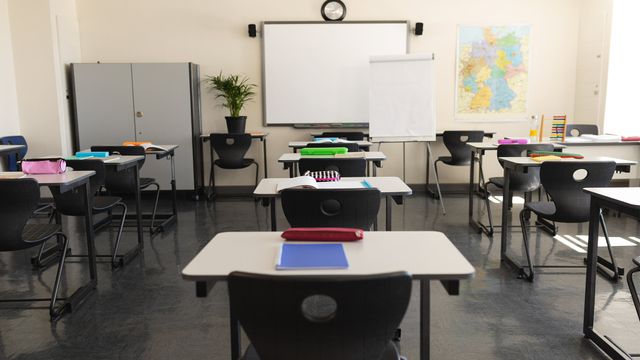
An empty classroom
Another recent analysis by the public education advocacy group Learning Policy Institute provides several estimates of teacher job losses based on the extent of the budget shortfalls. With a 15 percent loss in funding, they project 319,000 teacher jobs would be destroyed. With a 30 percent loss in funding—which is entirely plausible for the coming year—an estimated 697,675 teaching positions would be cut.
Given variations in the proportion of education funds going to teacher salaries, the impact on each state varies widely. The most severely impacted proportionally would be Minnesota and Hawaii, which would face the loss of 20.5 and 20 percent of their teacher workforces respectively. A 15 percent cut in education funding in Michigan would mean the loss of 12,561 teaching positions, while in California that number nearly quadruples to 49,197 jobs.
As brutal as these cuts are, these estimates do not include hundreds of thousands of support staff workers, including school bus drivers, teacher aides, food service workers and custodians, whose jobs would also be eliminated.
States across the US are revising their current spending on education and preparing for deeper cuts and teacher job losses in the fall. Michigan’s Consensus Revenue Estimating Conference report came out last week with estimates revised down by $3.2 billion for the 2020 fiscal year, a 12.85 percent decrease in funding. Billions of dollars in cuts for the current fiscal year have already been announced in numerous states.
Last week, the Detroit Free Press cited Wayne Schmidt, chair of the Michigan Senate’s Appropriations Committee, projecting a 20-25 percent cut in per-pupil funding based on state revenue losses from the pandemic. The projected cuts would reduce per-pupil spending from $8,000 per child to $6,000 in the coming school year. New Jersey has already frozen $1 billion in current spending due to budget pressures arising from the pandemic.
Pressure is mounting for schools to reopen in the fall so that workers whose children are in school can “get back to work.” Broad sections of the political establishment, led by the Trump administration, are promoting the reactionary and scientifically invalid policy of “herd immunity” to encourage the rapid reopening of the economy despite the immense dangers posed to the working class.
This homicidal policy acquires a particularly sociopathic character in Trump’s demands that teachers, students, and other personnel return to school buildings without adequate programs in place for testing, contact tracing and isolating confirmed cases. This takes place under conditions in which a growing number of children have been diagnosed with Pediatric Multi-system Inflammatory Syndrome, which is linked to COVID-19.
Of America’s 3.2 million public school teachers, 29 percent are above 50 years old. As part of the CARES Act, school districts were barred from receiving payroll tax credits for staff retention or providing emergency paid family and sick leave for employees who are sick with COVID-19. Thus, those who do return when schools reopen will be at risk of dire health consequences or death from COVID-19, with no financial redress.
While additional federal funding is desperately needed, the $3 trillion Health and Economic Recovery Omnibus Emergency Solutions Act (HEROES) Act passed by the House Democrats Friday stands no chance of passing in the Senate, and Trump has already declared it “dead on arrival.” Senate Majority Leader Mitch McConnell has repeatedly stressed that his objective is to enable states to declare bankruptcy, which will facilitate the slashing of pensions and a massive restructuring of all state services, including education.
In her weekly online forum last Tuesday, American Federation of Teachers (AFT) president Randi Weingarten provided more political cover for Trump’s plan to reopen schools. In addition, she issued a press release Tuesday to try to add credibility to the HEROES Act charade, knowing full well that it stands no chance of passing the Senate.
For decades before the pandemic, there has been a bipartisan assault on public education. In 1995, the Clinton administration adopted the reactionary slogan of “school choice” and provided federal money to privately run and publicly funded charter schools for the first time. In 2001, the Bush administration’s No Child Left Behind policy tied school funding to test performance, with low test scores leading to school closures.
In 2009, under the Obama administration’s Race to The Top, funding was further tied to “accountability.” The 2008 financial crash was exploited to demand that cash strapped districts compete for a smaller pool of money based on whether they lifted caps on charter schools, merit pay, and vouchers.
In the wake of 2008-09 recession, at least 120,000 teaching positions were permanently lost, and hundreds of schools were closed. All told roughly 200,000 school employees were cut and in many states school funding levels and salaries never returned to pre-recession levels. This was the objective foundation that impelled the nationwide wave of strikes, beginning with the 2018 statewide wildcat strike by West Virginia teachers and involving over 700,000 US teachers since then.
The shutting down of these bitter struggles became the sole preoccupation of the AFT and NEA. The potential for a nationwide revolt struck fear in the union bureaucracies and among those who aided and abetted them, the “union activists” of the now defunct International Socialist Organization (ISO), along with Socialist Alternative, and the Democratic Socialists of America (DSA).
The new context of the COVID-19 pandemic reinforces the essential lesson from these struggles, that teachers and workers must take the fight into their own hands by building new organizations of struggle, independent of the unions, to mobilize teachers and every section of workers in a common struggle against the dictatorship of the banks and giant corporations. In opposition to both corporate-controlled parties, all educators must base their fight on a genuine socialist program, which asserts the universal right to a fully funded, high quality public education for all.

Nicaraguan government lets COVID-19 spread freely, covers up toll

Andrea Lobo

The latest report by the Nicaraguan government claim that there have been 25 confirmed COVID-19 cases and 8 deaths, one of the lowest in the Americas, which has now turned into the global epicenter of the pandemic.
Despite threats by government officials, reports have begun surfacing in recent days from medical workers and other Nicaraguans exposing a massive effort by the government to suppress effectively all data and information about the real extent of the outbreak.
The administration of president Daniel Ortega and his Sandinista National Liberation Front (FSLN) has not carried out any significant measures to contain the virus or mitigate its effects. Besides ineffective health care monitoring outposts at the borders and a refusal to sanitize public areas, authorities have actually encouraged mass rallies, tourism and the continuation of nonessential work.
The Citizen’s Observatory COVID-19, which claims to compile reports sent by medical workers from at least 50 of the 153 municipalities, had counted 1,033 suspected COVID-19 cases and 188 suspected deaths, as of May 9.
A study published in late March by the Imperial College of London projected that, out of a population of 6.6 million, between 5.2 and 6 million Nicaraguans would be infected and between 20,112 and 24,304 would die without a state intervention to enforce social distancing.
On Monday, Reuters interviewed several doctors, who said hospital beds intended for coronavirus patients were full at several hospitals. “Everything is about to collapse. We are seeing too many atypical pneumonias,” one said, while respiratory specialist Jorge Miranda explained: “Everything that is atypical pneumonia at this time, when winter [rainy season] hasn’t yet begun, is related to COVID19.”
Reuters found that several doctors, nurses and their families report being infected but not counted in official totals. In one case, the mother of a radiologist, who tested positive for COVID-19, was diagnosed with atypical pneumonia. She died and was buried without any family present. El País reported this week, “For over a week, dozens of burials under coronavirus protocol have occurred, according to reports by families in social media and press outlets.” Several videos have appeared showing nighttime burials.
In response, Vice President Rosario Murillo, who is married to Ortega, described the whistleblowers as “people with deformed brains” who spread “pandemics of fear, hate, on the basis of fake news.”
However, on Friday, pictures published by La Prensa and reports by medical specialists to other outlets show that the government has deployed groups of thugs in civilian clothes to patrol the outside of the hospitals and cemeteries, ordering people to leave.
A neighbor of the General Cemetery of Managua told La Prensa that nighttime burials have been occurring frequently since late April. “It is as if the population didn’t already know that the COVID-19 is wreaking havoc. It’s killing us, and instead of helping, the government is sending patrols to follow the corpses and their families so that they don’t speak to anyone,” she said.
Two years since a wave of mass demonstrations triggered by pension cuts unleashed a wave of repression killing over 300 protesters and turning more than 70,000 people into refugees—including many doctors and medical students—the Ortega government is employing the same authoritarian measures to let the deadly COVID-19 pandemic run rampant while silencing all opposition.
While several governments, including the White House, have denounced these measures, the denunciations have been largely muted, not to mention hypocritical. The return-to-work campaigns by virtually every government evidence that they ultimately see the response of the FSLN as the “new normality” sought in their own countries.
The Ortega regime’s response demonstrates irrefutably the bourgeois class character of the government and the inevitable outcome of Sandinismo and all petit-bourgeois nationalist movements that have historically defended capitalism. As the crisis of capitalism and its social consequences intensify, it has unconditionally subordinated the lives and living standards of the working masses to the profit interests of transnational corporations while refusing to impinge on the wealth of the local oligarchy.
This is being carried out with shocking shamelessness. During Holy Week (April 5–11), the Catholic Church canceled its processions and events, but Vice-President Rosario Murillo called for a “Holy Week to love each other, to visit one family after the other, a Holy Week to get to know each other more, to know Nicaragua more.”
After disappearing from the public eye for a month and not attending any public event since February 21, Daniel Ortega reappeared on April 15 in a televised cabinet meeting to minimize the danger and oppose any shutdown: “In the middle of this pandemic, work hasn’t stopped because if work stops in this country, people will die, the people will be extinguished.” Such statements are not a matter of fact, but a policy being pursued in connivance with the transnational corporations and the trade unions.
According to the trade union FESITEX, affiliated to the pro-government Sandinista Workers Center and the IndustriALL Global Union, on March 24, the maquiladora employers, the government and the unions reached an agreement in which 5,500 workers were suspended without pay, 2,893 were laid off, and 78,000 were furloughed with pay, some fully and some as low as 50 percent.
On Monday, April 13, about 78,000 workers were called back to work. However, at least 12,000 workers of the Gildan company continue to be suspended without pay, according to the Nicaraguan Textile Association (Anitec).
Most of the maquiladoras produce garments and cables and are owned by transnational corporations based in the US, South Korea, Britain and Canada. They have been attracted to Nicaragua by the tax exemptions, low wages and deregulation advanced under the FSLN and the opposition parties.
According to Google’s Mobility Report employing cellphone data updated to May 9, trips to recreational places, retail stores and transit stations were down 34 percent, which shows that a large section of the population is trying to stay home as much as possible. However, trips to workplaces were only down 14 percent.
An April 30 statement signed by 543 doctors denounces a total lack of data and asked for mass testing, as well as protective equipment for doctors, a cancellation of public service payments and economic aid to help workers stay home. Then, on May 12, medical students working at the Bolonia Hospital in Managua released a letter saying, “we have no data or equipment to deal with the pandemic… we have no information about the diagnosis of these patients, which makes us fearful and concerned facing this uncertainty.”
A letter sent to the WHO this week by five former health ministers, including those under the Sandinista government in the 1980s, denounce the government for “denying or minimizing artificially the number of cases and deaths due to the pandemic” and reported “that [medical] personnel have been fired for informing the families with transparency.”
Without providing any more information than referring to the occasion of Mother’s Day, the government announced the release of 2,815 prisoners on Wednesday, more than half of the total in the country. This happened a day after the death of a 60-year-old prisoner at the Modelo prison, the largest in the country, while lawyers have denounced that dozens who remain in the prisons have shown coronavirus-related symptoms.
A teacher near the city of León explained to the World Socialist Web Site that she has been without an income since the private school where she worked closed in March; however, all public schools and some private schools remain open. The government has not offered any economic aid to those losing their employment.
Asked about the medical situation, she said that a cousin went to the hospital about two weeks ago with symptoms consistent with COVID-19. She said: “They have him isolated because he is sick and they won’t let him communicate with anyone. They took his phone away and we have not heard from him since.”

Even as death toll climbs, Indonesian government urges workers under 45 to resume work

Owen Howell

Indonesia’s official coronavirus taskforce declared on Tuesday that workers under the age of 45 will be permitted to return to work over the coming weeks.
The decision followed an announcement two weeks earlier, that President Joko Widodo’s government wants to begin relaxing social restrictions and reopen the country’s borders and nonessential businesses by July. The statements follow moves by governments around the world for premature returns to work.
As Channel News Asia reported, Indonesian Disaster Mitigation Agency chief Doni Monardo told a press briefing at the Merdeka Palace in Jakarta: “Why we are suggesting heads of companies prioritise relatively young workers is due to the fact that those aged 60 and above have the highest mortality rate.”
Doni referred to data showing that the over-60 age group made up 45 percent of deaths in Indonesia, while the 46–59 age group accounted for 40 percent. “If we can protect both vulnerable groups, it means that we can protect 85 percent of our citizens,” he said.
Doni cited the comparatively low death rate—15 percent—of the below 45 age group, which comprises the vast majority of the population, as a justification for sending them back to work: “The young population under 45-years-old are physically healthy and they have high mobility. If they are exposed [to the coronavirus], they might not get sick because they show no symptoms.”
These assertions were put forward as the findings of experts, despite the well-known fact that young people may be asymptomatic carriers of the virus, who bear the risk of unknowingly passing it on to the more vulnerable or elderly. This sort of reasoning is based, not on a scientific and rational approach to understanding and containing the virus, but purely on economic considerations.
The Widodo administration has been relentlessly pushing to kick start the Indonesian economy by whatever means necessary and, as its recent announcements have made clearer, is willing to place the lives of millions in danger to resume the production of corporate profits.
Economic growth has slowed down to 2.97 percent in the first quarter of the year, well below the median 4 percent predicted by most analysts. A senior government official told the Asia Times that the decision to force workers back on the job was “based more on economic calculations than on the health aspect.”
Epidemiologists across the country have warned that a return to work would dramatically increase the potential for transmission of the virus and put the entire population, regardless of age, at extreme risk of physical debilitation or death.
The Indonesian government’s declarations have been made even as the coronavirus continues to ravage the densely-populated island nation. Contrary to national health ministry claims, the virus is showing no signs of abatement.
Last Tuesday, Indonesia’s COVID-19 death toll passed the 1,000 mark. The announcement of a return to work was made after a record spike in daily cases, with 533 new infections last Saturday. A new record high was set on Wednesday with 639 new cases, amid a sharp rise in the official numbers. The total now stands at 17,514 cases and 1,148 deaths.
Indonesia recorded its first two cases on March 2, even though the virus was known by authorities to be spreading throughout the country since late January. Its fatality rate has since overtaken all other countries in East and Southeast Asia, apart from China.
Most importantly, the official death toll only includes deaths from positive cases confirmed by specimen tests using the polymerase chain reaction (PCR) method at laboratories. Deaths from probable cases are not included, despite the significant rise in burials under COVID-19 funeral procedures. Health experts have suggested the actual toll could be four times greater than the official government figure.
The number of persons under surveillance for suspected infection has grown to more than 250,000 people, according to the Jakarta Globe. Probable cases in hospitals have increased to over 32,000 patients.
Indonesia’s limited testing capacity, one of the lowest in the world, has meant, however, that after two months only 187,965 people have been tested, in a country of 273 million people. In other words, it has conducted around 688 tests per million people, compared with 64,977 per million in Spain.
Such a low rate is due to the chronic lack of testing equipment, the delayed results of PCR tests, and the government’s refusal to invest in a rigorous mass testing regime.
The underfunded and depleted healthcare system was already overwhelmed at the outset of the pandemic. Indonesia is estimated to have fewer than four doctors and 12 hospital beds per 10,000 people, and less than three intensive care beds per 100,000 people.
Despite the limited knowledge on the true extent of the spread, President Widodo is urging workers to resume their jobs and said that the lockdown measures could be relaxed by the end of May. “Until the discovery of an effective vaccine, we must live in peace with the coronavirus for some time to come,” he told a press conference.
The new policy is being falsely portrayed as an effort to prevent further lay-offs and assist the millions of unemployed workers during the pandemic. As of April 13, at least 2.8 million people had lost their jobs, according to data from the Workers Social Security Agency. More than half were furloughed and placed on unpaid leave.
The Indonesian government’s coronavirus response has consisted primarily of gigantic stimulus packages aimed at supporting big business with a pittance reserved for healthcare and token social welfare investments.
Many frustrated workers are unable to access government social aid, which is hampered by data problems. According to the government’s worst-case estimates, up to 5.2 million more people could lose their jobs and 3.8 million fall into poverty during the pandemic.
In Jakarta, Indonesia’s capital, the virus has infected 5,774 people and killed 460 so far. The megacity, which is home to over 10 million people, has scores of dangerously overcrowded neighbourhoods known as kampungs where workers and their families live in cramped, adjoined houses or informal settlements with shared toilets. Physical distancing is all but impossible in these areas.
Indonesia’s Agrarian and Spatial Planning Ministry said in 2019 that at least 118 of the 267 sub-districts in Jakarta had slums. Jakarta health agency officials are aware that the virus has begun to infect the impoverished workers in kampungs, such as Kebon Kacang, Johar Baru, and Kemayoran, which have contributed heavily to the city’s confirmed cases tally.
Residents of these poor urban districts, as well as the rural masses in the countryside, are being tested for the virus through the rapid antibody method, which is known to produce false negatives, while the more accurate PCR tests are largely reserved for patients at major Jakarta hospitals.
Around 32 percent of Jakarta’s workers are in the informal sector, earning an average of $US168 per month. Thousands are not only at risk of losing their incomes but also their homes, with about 27 percent of Jakartans struggling to pay rent amid the city’s surging housing prices and general cost of living.

Modi promotes “herd immunity,” vows “quantum jump” in pro-investor reforms

Wasantha Rupasinghe & Keith Jones

India’s far-right Bharatiya Janata Party (BJP) government is dramatically intensifying the bourgeoisie’s class war assault on the working class.
In the name of reviving the economy after an ill-conceived anti-COVID 19 lockdown, the BJP government is now seeking to force a return-to-work even as the pandemic rages.
In a nationwide speech last Tuesday that was supposed to outline the government’s plans to stimulate the economy, Indian Prime Minster Narendra Modi announced an effective policy of “herd immunity,” in which the authorities abandon any concerted attempt to stop the spread of COVID-19. Instead, the highly contagious and potentially lethal virus is to be allowed to run rampant, at the cost of countless lives, until so many people have contracted it that it expends itself.
“COVID-19,” said Modi, “will be a part of our lives for a very long time. But we can't let our lives remain confined around COVID-19.” He then vowed that the “fourth-stage” of the lockdown, set to begin today, will be very different from the three previous stages—with “a new form and with new rules.”
India’s lockdown, which was initiated on March 25 with less than four hours’ forewarning, was meant to end after 21-days, but is now nearing the end of its eighth week.
Its impact has been calamitous, because the government refused to provide anything more than token support to the hundreds millions of workers and toilers the lockdown has deprived of any income.
At the same time, the lockdown has failed to halt COVID-19’s spread, because the government failed to marshal India’s resources to conduct mass-testing and contract-tracing, and to dramatically strengthen and expand the country’s ramshackle health system.
In his Tuesday address, Modi cynically invoked the suffering of India’s workers and toilers to justify his government’s campaign to reopen the economy. In reality, Modi is acting at the urging of big business which is desperate to resume extracting profit through the sweatshop exploitation of India’s workers and toilers.
“Herd immunity”—in which the lives of workers and their families are to be sacrificed so as to swell the profits of India’s business houses and investors—is the cutting edge of a class-war assault of historic dimensions that Modi and his Hindu supremacist BJP are mounting at the urging of the ruling elite.
In his May 12 address, Modi vowed a “quantum jump” in pro-investor “reforms,” and identified changes to land and labour laws as a top priority for his government. Indian and foreign capital have long been demanding that India’s labour laws be gutted to make it easier for large industrial operations to lay off workers and close facilities, and that the government remove obstacles to the amassing of large blocks of land for business projects.
Even prior to Modi’s speech, various BJP state governments acting at the urging of Modi’s administration had announced the “suspension” of numerous labour regulations to greenlight 72-hour workweeks, including in some states without any overtime pay, as well as other anti-worker outrages.
At a series of daily press conferences, beginning Wednesday and concluding yesterday, Finance Minister Nirmala Sitharamanan provided further details about the government’s economic “recovery plan.”
Sitharamanan announced an impending fire-sale of government assets. She said that the private sector would henceforth be barred from no sectors of the economy, and that public sector enterprises or PSUs will be restricted to “strategic” sectors of the economy.
She and other BJP government officials also made it clear that in response to the acceleration of the capitalist crisis triggered by the pandemic, including a surge in great-power conflict, India intends to deepen its anti-China military-strategic alliance with US imperialism. This includes New Delhi working with the Trump administration to attract US companies Washington is pressuring to leave China to relocate to India and making India even more attractive as a production site for US arms manufacturers.
With great fanfare Modi had declared last Tuesday that his government has committed 20 trillion rupees (US $266 billion)—the equivalent of 10 percent of India’s GDP—to stimulating the economy.
Much of this is smoke and mirrors, involving money recycled from previous government announcements. It also includes the huge sums the Reserve Bank of India, the country’s central bank, has provided to the banks and other financial institutions in the form of emergency support to prop up the financial markets and bail out India’s rich and super rich.
Nirmala Sitharamanan did outline various schemes to bolsters different sections of business. But for the masses there were only tiny sums for social welfare, with most of the new support to come in the form of loans and schemes involving private sector partnerships, as in the case of a new program to build housing for migrant workers.
The headline announcement from the BJP government as regards the estimated 90 million day labourers who have lost their jobs due to the lockdown—a large portion of whom have been unable to access any government support—is that it will spend 35 billion rupees ($463 million), or the equivalent of about $5 per worker, over the next two months to provide them with food assistance.
This can best be described as famine rations.
The lack of assistance for the day-labour and migrant workers underscores that the Modi government has a deliberate policy of making workers go hungry to impel them to return to work amid the pandemic. And this under conditions where India’s employers—who are already notorious for systematically violating, with government complicity, the country’s lax labour regulations—are being told by the ruling BJP that labour laws are an obstacle to investment and need to gutted.
Meanwhile, authorities reported Sunday that India had 4,957 new COVID-19 cases, the largest single day increase to date. During the past week, the number of confirmed COVID-19 cases rose dramatically, from 62,939 cases on May 10 to 90,927 yesterday, an increase of almost 45 percent. During the same period, a further 763 deaths were attributed to COVID-19, bring the official death tally to 2,872.
Alarming as these figures are, they undoubtedly underestimate the pandemic’s spread by many multiples, because India has failed to organize systematic mass testing. As of last Friday, India’s per capita testing ratio of 1.48 per thousand people was among the lowest of any country with a major COVID-19 break in the world, and it was less than a twentieth of the woefully inadequate US testing rate.
Typifying the government’s indifference to the population, Indian health authorities continue to blithely insist that there is no evidence of “community transmission.” Given that India effectively suspended all international entries some seven weeks ago, this claim is absurd on its face.
Ominously, the coronavirus has become entrenched in the slums of India’s two largest urban agglomerations, Mumbai and Delhi, where the population is especially vulnerable due to poverty, inadequate access to clean water and cramped dwelling quarters.