25 May 2020

Ninety-seven die in Pakistan International Airline crash

Sampath Perera

A Pakistan International Airlines (PIA) plane crashed into a densely settled area near Karachi airport Friday afternoon, killing 97 of the 99 passengers and crew. Two passengers survived. No fatalities were confirmed on the ground, although many have been treated for injuries including burns. At least 19 houses were destroyed by the crashing aircraft.
The Airbus A320 aircraft was flying from Lahore to Karachi after flight restrictions imposed as part of Prime Minister Imran Khan’s halfhearted lockdown measures to contain the COVID-19 pandemic were lifted last week for domestic flights. Reportedly, the flight to Lahore was the second undertaken by this aircraft since the lockdown was lifted.
The flight data and cockpit voice recorders of the crashed aircraft were recovered late Friday from the crash site in Model Colony, a residential area just a few kilometers from the Karachi airport. They are being handed over to an inquiry board formed by the government under its Aircraft Accident Investigation Board (AAIB). The board is expected to deliver a preliminary report within a month.
The aircraft aborted its first attempt to land and crashed on its second attempt. There is no official explanation for the crash or the reasons for the failure of the first landing attempt. PIA CEO Arshad Malik claimed the aircraft was “technically fit for flying” and “there was no obvious reason of accident,” according to Radio Pakistan. The pilots reported a “technical fault” prior to the crash, according to Malik. An unnamed senior civil aviation official who spoke with Reuters suggested the plane had been unable to lower its undercarriage during the first landing attempt.
Reporting in the local media is overshadowed by the accelerating spread of the coronavirus in the country, with deaths surpassing 1,150 during the weekend and over 55,000 cases. This is under conditions where Prime Minister Khan and his Islamic populist government have decided to end all lockdown measures and reopen markets and workplaces.
According to a statement by Airbus, the aircraft had recorded 47,100 flight hours and 25,860 flight cycles. It entered service in 2004 and had operated under the PIA banner since 2014. The aircraft is fitted with CFM56-5B4/P engines manufactured by CFM International, a joint venture by GE Aviation, a division of General Electric, and Safran Aircraft Engines.
A witness told Reuters that the aircraft “first hit a mobile tower and crashed over houses.” Reportedly, the plane came down on a narrow lane, somewhat minimizing the impact on the houses. However, the rescue efforts were made difficult and delayed due to the poor state of infrastructure. Fire trucks and ambulances struggled to get near the crash site, leaving the initial response to nearby residents.
Most bodies recovered were charred beyond recognition and are now being kept in two Karachi hospital for the arrival of DNA records. Aviation Minister Ghulam Sarwar Khan announced that 1 million rupees ($US6,206.61) would be paid to the families of each person who died in the crash and 500,000 rupees to each of the two survivors.
One survivor had a broken leg and other bruises but was reportedly in good condition. He is believed to have been thrown with his seat from the plane during the crash. The other survivor, Muhammad Zubair, shared his harrowing experience with GeoTV from his hospital bed where he is receiving treatment for burns to his legs and hands. Describing the first landing attempt, Zubair said, “When the pilot announced that we are landing in Karachi and he took the plane a bit down, two or three shocks were felt.”
The plane was in the air for 10 to 15 more minutes after its initial aborted landing attempt, according to eyewitnesses, but Flightradar24 data cited by Bloomberg shows it was nearing the ground five and a half minutes later. According to the rescue agency Edhi, some bodies recovered wore oxygen masks, indicating an emergency had been declared.

Zubair said there was a “hard crash” minutes after the pilots announced the second landing and he fell unconscious. When he came back to his senses he saw “smoke everywhere” and “could hear screams from all directions.” “I opened my seat belt and saw some light—I went towards the light. I had to jump down about 10 feet to get to safety,” Zubair said. According to him the flight had been smooth until it neared Karachi.
Dunya News, citing AAIB investigators, reported Sunday on scratch marks left by the aircraft on the runaway during its initial landing attempt without its landing gear lowered. The right engine touched ground first and then the left engine next.
The communication between air traffic controllers and the pilots in the last moments of the flight was reported by Reuters based on a recording released by the tracking website liveatc.net. “We are returning back, sir, we have lost engines,” presumably a pilot is heard in the recording while the controllers clear both runaways for its landing. Moments later the recording ends with the man calling, “Mayday! Mayday! Mayday!”
There have been several air disasters in the past decade in Pakistan. In 2016, a PIA flight crashed into a hillside, killing all 47 onboard. In 2012, a Bhoja Air flight crashed, killing all 127 onboard, leading to the shutdown of the privately-owned airline. In 2010, an Airblue flight, also privately owned, crashed, killing all 152 onboard in its attempt to land in dense fog and heavy monsoonal rain.
PIA has been a longstanding target of the International Monetary Fund for privatization, but successive governments failed to sell it due to popular opposition among workers as well as the masses. The present Tehreek-e-Insaaf government hired international auditors to conduct a fresh examination of the “loss-making” utility, as part of the country’s IMF bailout package of US$6 billion last year.
Bloomberg ranked PIA top of the list of airlines that it predicted will go bankrupt in the next two years. According to Bloomberg, a PIA representative said, “losses and debt have become too much for the company to handle.”

Gulf States force India and other South Asian states to repatriate impoverished migrant workers

Shuvu Batta

Bowing to pressure from the sheikhs and oligarchs who rule the Arabian Peninsula’s Gulf States, India and other South Asian countries are being forced to repatriate millions of impoverished migrant workers whose labour is no longer needed.
All six Gulf Cooperation Council (GCC) members—Bahrain, Kuwait, Oman, Qatar, Saudi Arabia, and the United Arab Emirates (UAE)—have moved to dramatically slash expenditures and “overhead” after the COVID-19 pandemic triggered global economic distress, including a Saudi-initiated oil-price war. The consequent collapse in oil prices has left gaping holes in their state budgets, even as tourism and other sources of revenue dry up.
The result has been the mass layoff of millions of migrant workers. Those fortunate enough not to have lost their jobs have often been forced to accept huge wage cuts. A migrant worker in Saudi Arabia working as a chef for one of the country’s many princes told the WSWS that his wage was cut in half after the COVID-19 crisis erupted.
Prior to the outbreak of the pandemic there were 23 million or more migrant workers in the Gulf States, from South Asia, the Philippines, Egypt, Palestine, elsewhere in the Middle East, and East Africa. Constituting more than half of the Gulf States’ total workforce, the migrant workers have long filled construction and numerous other menial and low-paid jobs. Millions of women serve as domestics and health care workers.
The migrant workers are ensnared in the kafala system, which ties a worker’s employment contract to their right to be in the country. This has created a super-exploited workforce comprised of people who lack any citizenship rights in countries ruled by absolute monarchs, and who are under constant threaten of being ordered to go home should they be fired or laid off or when their contract expires.
However, the COVID-19 pandemic, the imposition of international travel bans and state-lockdowns, and the sudden loss of their employment mean that the newly jobless migrant workers facing expulsion have lacked the means or right to return home.
As the Gulf States oligarchs have refused to provide the “disposable” migrant workers with financial support, they have become increasingly desperate. This has made the ruling elite, ever fearful of social opposition, all the more determined to expel them. Scapegoating the migrant workers also serves as a mean of deflecting mounting discontent among the officially-recognized “native” population of the Gulf States.
The mass layoffs of migrant workers destroyed their ability to pay rent or basic living expenses, leading many to become homeless. Pradeep Kumar and his diabetic and pregnant wife, Premaltha, are examples of such workers. Mr. Kumar, who lost his job as a hotel worker in February, has been unable to support his family and was forced to spend a few nights sleeping in a basement car park. He told the BBC, “I have no money to pay for my wife’s delivery, nor do I have the funds to buy a flight ticket…The doctors say that if she travels after she enters her 33rd week of pregnancy then that will be a huge risk for the baby and her health. I just want to save my child."
The Gulf States have responded to the rise in homelessness by arresting workers and sending them to cramped jails and detention centers. Amnesty International exposed that Qatar was lying to migrant workers, telling them they would get tested for COVID-19, so it could round them up and throw them in jail. One of the workers, a Nepalese man, said, “The jail was full of people. We were given one piece of bread each day, which was not enough. All the people were fed in a group, with food lying on plastic on the floor. Some were not able to snatch the food because of the crowd.”
Facing immense abuse, workers began to resist. On May 3, Egyptian workers, using furniture as weapons, led a riot in a Kuwait detention center.
By then, Gulf State governments, well aware of the rising social tensions but unwilling to meet the migrant workers’ basic needs of food, proper housing and health care, had been pressuring countries in South Asia to take back their citizens.
Initially India balked at the repatriation demands, citing its own anti-COVID-19 lockdown and concerns about the mounting number of coronavirus cases among the migrant workers.
However, with the UAE publicly and other states no doubt privately threatening long-term damage to their bilateral relations, India relented and agreed to speedily organize the repatriation of hundreds of thousands and possibly millions of its citizens.
India is massively dependent on oil imports from the Gulf, and that dependence has increased over the past year-and-a-half because New Delhi has acquiesced to Washington’s demand it abide by the US’ illegal, punitive sanctions against Iran. India’s far-right BJP government is also eagerly courting investment from the Gulf States and views them as a potential source of lucrative contracts for India’s burgeoning arms-manufacturing sector.
On May 4, India announced a mass repatriation plan, and other South Asian states, similarly eager to curry the favour of the Gulf States’ rulers, are now also scrambling to organize the migrant workers’ transit home and to establish testing and quarantine centers to receive them.
India has already used its navy and a fleet of planes to bring back over 1 million Indian workers from around the world and over the next two to three weeks plans to evacuate 200,000 more. Nepali officials said they expected to bring back 400,000 workers, of which 100,000 would be shipped back immediately after the expiration of the country’s lockdown on June 2. According to the Pakistani embassy, more than 60,000 Pakistani nationals have registered for repatriation.
The repatriation of the migrant workers constitutes a huge crisis for the states of South Asia.
The majority, and more likely the vast majority, of the 160,000 COVID-19 infections in the Gulf States have been among migrant workers. The workers live in cramped and unhygienic conditions in “normal times.” Now many have lost their housing, either because it was tied to their employment or they could no longer pay rent, and the Gulf States’ governments have responded by herding the homeless into even more cramped prisons and detention centers.
The mass repatriation plans threaten to produce a wave of new infections and deaths in their home countries, where COVID-19 cases are already surging and health care systems are dilapidated and in rural areas largely non-existent.
Last week Pakistan complained to the UAE that half of those returning from that country had tested positive for COVID-19. Pakistan’s Special Adviser to the Prime Minister on National Security, Moeed Yusf, told reporters, “We’ve raised this diplomatically,” adding that “God willing” the problem “is being solved.”
The loss of tens of billion in dollars in remittances from the migrant workers in the Gulf also constitutes a serious blow to the economies of South Asia’s states, especially smaller states such as Nepal and Sri Lanka, and an even bigger blow to the millions of family members who have depended on the sums they regularly sent home.
The migrant laborers, many of them landless peasants, took on predatory loans and worked dangerous jobs in order to get the opportunity to support and create a better life for their families back home.
Now they face, to say the least, a very uncertain future. They are being repatriated under conditions where the countries they left are being ravaged by the global economic crisis triggered by the pandemic. In India more than 100 million day-labourers, many of them internal migrant workers, have lost their jobs and income since mid-March.
For decades, migrant workers have performed the backbreaking labour needed to keep the Gulf State oligarchs living in luxury akin to that of the Pharaohs, and to pursue their “vision” of transforming their desert states into global financial, commercial and tourist hubs with city “oases” boasting ultra-modern skyscrapers and conveniences. According to a Guardian investigation, hundreds of construction workers die each year in Qatar from heat exhaustion.
The oligarchs of the Gulf State and their hangers-on have responded to the plight of migrant workers with venomous rhetoric and demonization, blaming them for the growth of COVID-19 infections. Kuwaiti actress Hayat al-Fahad told a broadcaster, “Aren’t people supposed to leave during crises? I swear by God, put them in the desert. I am not against humane treatment, but we have gotten to a point where we’re fed up already.” These sentiments were repeated by Kuwaiti MP Safaa Al-Hashem, who called for the deportation of migrants to “purify” the country.

Canadian medical experts warn COVID-19 will spike due to back-to-work push

Roger Jordan

All Canada’s provinces—including those where widespread community transmission of COVID-19 continues—are now well on the way to lifting the lockdown measures that helped slow the pandemic’s spread. This despite COVID-19 having already exacted a terrible toll, including 6,424 deaths.
The government back-to-work drive is being implemented in flagrant disregard of repeated World Health Organization (WHO) warnings that mass-testing and contact-tracing capabilities need to be developed and health-care systems significantly strengthened before any relaxation of restrictions on normal economic and social life.
In Quebec, the epicentre of the pandemic in Canada, construction and manufacturing activities have been up and running for at least two weeks. Schools and daycares outside of Montreal reopened May 11, along with retail stores. Retail businesses in Montreal are scheduled to reopen today, and daycares on June 1.
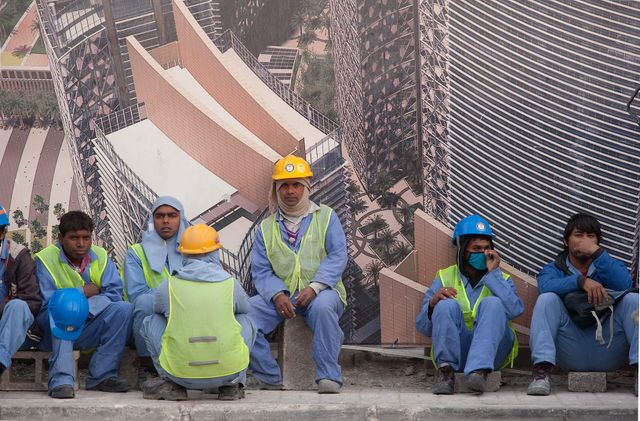
Construction is among the many industries in the Gulf States dependent on the labour of migrant workers.
In neighbouring Ontario, retail stores with a street entrance were allowed to reopen as of May 19, the same day all remaining restrictions on the construction industry were lifted.
Many of Ontario’s manufacturing facilities and mines stayed open throughout the lockdown, due to the provincial government’s extremely broad definition of what constitutes an “essential service.” Although Premier Doug Ford had wanted to reopen schools at the end of May, the rapid spread of the virus and public opposition forced the government to announce last week that public schools will not reopen during the current school year.
In Alberta, where the United Conservative Party government allowed oil and most other production facilities to remain open during the province’s lockdown, the limit for outdoor gatherings has been increased to 50 people. On May 14, stores, restaurants and hair salons reopened across the province. Premier Jason Kenney has indicated that cinemas and spas will be allowed to open in mid-June.
British Columbia’s New Democratic Party government allowed businesses and retail stores to reopen last Tuesday, and has pledged to lift bans on hotels and resorts in June. Parents will also be given the “voluntary” option of sending their children to school as of June 1.
The reckless character of the reopening drive is underscored by the continued rapid spread of the pandemic, with more than 1,000 new cases and 100 deaths being reported daily.
With more than 84,650 confirmed COVID-19 cases, Canada has now surpassed China, where the virus first emerged, both in terms of total infections and fatalities. Canada, with a population approximately one-tenth that of the United States, had one fatality for every 25 total US COVID-19 deaths in mid-April. But, in a further indication of the virus’ spread across Canada, this ratio has now declined to just one for every 15.
Under these conditions, leading Canadian medical experts have spoken out forcefully against the premature lifting of restrictions.
“We’re gambling by reopening,” Dr. Sandy Buchman, president of the Canadian Medical Association, told the Senate Social Affairs Committee last Wednesday. He pointed to a lack of testing and contact-tracing infrastructure before adding, “We’re scrambling. In my opinion, we’re not fully prepared for a second wave.”
Figures show that Canada is not even using half of its extremely modest test capacity of 60,000 per day. Roughly 28,000 COVID-19 tests are being performed each day, far below the targets that the provincial governments have themselves set. Ford vowed that by the end of April the province would be preforming 16,000 tests, but last Tuesday it managed just 7,300.
Buchman stressed that the failure to carry out widespread testing means that authorities are in the dark as to where and how the virus is spreading.
He also took up the chronic shortage of personal protective equipment (PPE) for health care workers. In Ontario alone, over 4,000 health care staff are infected, and as of May 19 nine had died. “We’d never permit a firefighter to go into a burning building without adequate protection. We can’t expect our front line health care workers to put themselves in harm’s way,” remarked Buchman.
Local health officials in Ontario are also sounding the alarm about easing lockdown measures as the virus continues to run rampant. Dr. Michael Gardam, a veteran of the 2003 SARS epidemic and an infectious disease specialist at Toronto’s Humber River Hospital told CBC, “It’s scary. There’s a large sense of unknown there. And there’s no way around the fact that this is uncomfortable.”
Dr. Lawrence Loh, chief medical officer for the Greater Toronto area’s Peel Region, publicly called for a delay to the lifting of lockdown restrictions due to the high number of new infections. “We have seen our new cases starting to plateau, but we have just not seen a decline in line with the province’s own framework for reopening at this point,” said Loh.
These warnings are of no concern to federal and provincial authorities, which are determined to enforce the ruling elite’s criminally irresponsible back-to-work policy. After implementing bailout measures for the big banks, financial markets, and major corporations worth over $650 billion, the ruling class wants to send workers back to unsafe workplaces to resume extracting profit through the ruthless exploitation of their labour.
While Prime Minister Justin Trudeau blustered Friday about the need for “strong collaborative action” between the federal government and provinces to “expand testing and contact tracing,” he provided no details on how these basic measures, which the WHO has been calling for since the early days of the pandemic, would be implemented. The reality is that Trudeau’s Liberals have overseen a calamitous response to COVID-19 in spite of repeated warnings of the threat of a pandemic and Canada’s own experience with SARS in 2003.
Moreover, by declaring decisions on reopening the economy a “provincial matter,” Trudeau has already given the greenlight to Quebec and Ontario’s hard-right governments to send hundreds of thousands of workers back to their jobs without the implementation of basic safety measures.
Trudeau and the rest of the political establishment in Canada may choose their words more carefully than Trump, but the reality is that Canadian authorities are embracing the same reactionary “herd immunity” policy. This is shown by the remarks of Bonnie Henry, the chief medical officer for the NDP government in BC.” “We’ll be looking at what were the measures that worked best to prevent transmission,” said Henry, as she conceded that the “reopening” of the economy likely makes a second wave of infections “inevitable,” “and if we start to see increases in COVID, those are the things that we can put in place rather than the blanket shut everything down as we did before.”
In Ontario, where Unifor, Canada’s largest industrial union, has worked hand-in-glove with the major automakers to send autoworkers back into unsafe plants to work elbow-to-elbow on assembly lines, the ruling elite is also accepting that large portions of workers and their families will get infected. Kristen Dziczek, vice president for industry, economy and labour at the Centre for Automotive Research, a key industry think-tank that assisted the Big Three in reopening their facilities in Canada, Mexico, and the United States, bluntly told CBC, “I think we’re going to see hotspots keep popping up and that’s going to be one of the disruption factors in auto production.”
The opposition in the working class to this policy of placing private profit ahead of human lives is growing. Last Tuesday, Quebec’s largest nurses’ union felt compelled to call a protest outside the office of Premier Francois Legault, who last month openly declared his government’s support for a policy of “herd immunity,” so as to draw attention to the government’s violation of nurses’ rights. These violations have included forcing nurses to work in COVID-19 wards without adequate PPE and a punishing regime of forced overtime.
In remarks summing up the contemptuous attitude of the entire ruling class to working people, Legault, who has made a political career out of imposing savage attacks on workers and enforcing austerity, lectured the protesters, “That disappoints me. I don’t think it’s time to be on the street in front of my office.”
The indifference towards the lives of working people within the ruling class has also been displayed by its callous disregard for the fate of meatpackers and health care workers. In Ontario, close to 250 coronavirus-related complaints filed by workers to the province’s Labour Relations Board have produced not one single ruling in the workers’ favour.

US juvenile detention centers record 474 COVID-19 cases

Sam Dalton

The Office of Juvenile Justice and Delinquency Prevention is the highest authority overseeing juvenile detention in the United States. It describes its mission as “Enhancing safety. Ensuring accountability. Empowering youth.” In reality, in the midst of a deadly pandemic, the facilities overseen by the authority, the majority of which are privately owned, are continuing the senseless brutalization of children and allowing them to be exposed to COVID-19 and a plethora of adjacent issues that risks seriously impacting their long-term health.
According to prisonpolicy.org at least 48,000 individuals under the age of 18 are currently in correctional facilities. The vast majority of incarcerated youth are from a working-class background, with around two-thirds of offenders also relying on the child welfare system. Forty percent of youth who are incarcerated before their 18th birthday are in adult prisons by the age of 25. It is also the case that the poorest inmates are the most likely to re-offend.
Mirroring conditions in adult prisons, COVID-19 has spread rapidly through juvenile detention centers. According to sentencingproject.org, as of May 22 there were 474 cases among detained youth across the US, and 561 confirmed cases among staff. These numbers are huge underestimations of the virus’s true spread. While some states, such as New Jersey, claim to have tested all of its detained youth, the majority of states have not even nominally promised to address the deadly consequences of the contagion of the virus through their populations of incarcerated minors.
Cliff Willmeng peaks at the rally
As the WSWS reported on May 13, as more becomes known about the disease, initial declarations that youth face no risk from infection were proven reckless and incorrect. The disease is linked to an inflammatory syndrome similar to Kawasaki disease and can cause sepsis among younger patients. At least five children in New York have died from these conditions following diagnosis with COVID-19.
In a study of 48 children and young adults admitted to intensive care units in the US and Canada for COVID-19, 20 percent experienced organ failure. The study’s co-author, Rutgers professor Lawrence C. Kleinman, stated, “The idea that COVID-19 is sparing of young people is just false.” Two of the children featured in the study died.
More than 500 of incarcerated children in the US are 12 years old or younger, while over 4,500 of under-18s locked up are actually incarcerated in adult facilities. Child inmates typically reside in large groups, with 60 percent of incarcerated youth in large facilities designed for over 50 inmates. This only increases the risk of infection from the virus. Two-thirds of youth incarcerations are “long-term,” meaning that individuals spend over a month at a facility, and nearly 10 percent are held for over a year. The turnover of young inmates, just like at regular prisons and jails, means these facilities act as vectors for the disease’s spread in the community.
The largest recorded outbreak has been in the juvenile detention center of Cook County Jail in the Chicago area. At least 14 cases have been confirmed among detained minors, including one in the general youth prison population on May 23. This means the majority of the center’s inmates have been exposed to a positive individual. There have also been 21 confirmed cases amongst employees at the center.
The juvenile detention center at the jail is part of a wider system at the location, which now has the highest infection rate of any defined population in the US, bypassing Rikers Island in New York in late April. Over 500 prisoners at the facility have tested positive, with at least seven dying. Despite the outbreak at least 4,200 inmates, including minors, remain in the prison.
Even in states that have claimed to address the situation facing incarcerated children there has been little action. For example, in mid-April, both Maryland’s highest court and Pennsylvania’s Supreme Court denied emergency petitions to release inmates under 18 years old. At the end of April 27, just 200 youth inmates were released from incarceration facilities in the state, leaving 456 still locked up. The same pattern of hollow executive and court orders has plagued the US adult inmate population.
Monica Norberg speaks at the rally
Even before the crisis, the conditions facing young inmates were particularly brutal. In a report, the Juvenile Law Center (JLC) stated that child inmates are often subjected to solitary confinement, a punishment that is recognized as a form of torture by the United Nations. Under the cover of social distancing, such measures have become increasingly prevalent in regular prisons, meaning the same is likely true of youth detention facilities.
Other measures implemented in the name of tackling the virus, such as the banning of family visits and restriction of phone calls, have led to further isolation from human contact. This is particularly damaging for children who are at sensitive periods of their social development. Furthermore, their academic progress, greatly hindered by incarceration before the crisis, will be further undermined by the indefinite postponement of all educational services throughout juvenile detention centers.
During the crisis, child prisoners will continue to face invasive and physically abusive measures such as strip searches, shackling and chemical sprays. The JLC describes the effects of these conditions, “These abusive practices cause physical injuries, emotional trauma and psychological harm, and interrupt healthy development.” According to a 2016 Harvard study, since 2011, 13 states have violent and abusive conditions that are clearly documented.
Sexual abuse is also widespread in juvenile detention facilities. According to the Bureau of Justice Statistics, in 2012 one in eight incarcerated young people reported sexual abuse by center staff or other inmates. The JLC report continues, “Youth in prison also face physical and sexual violence, compounding the trauma imposed by their isolation and separation from their families, friends and communities.” Similarly, the Harvard report concluded that “Maltreatment is endemic and widespread.”
The cost of housing incarcerated children is also extortionate. The annual cost of locking up one child is $88,000, almost 10 times the yearly average expenditure per child in public schools. According to the National Juvenile Justice Center, nearly half of all youth detention facilities are privately run. States’ willingness to pay these exorbitant costs is a reflection of the influence private prison contractors have over bourgeois political authorities. Meanwhile, local police forces happily play their part by supplying a steady stream of inmates for which the taxpayer can be charged.
As is the case among adults, minorities are also targeted for arrest and incarcerated at higher rates. For example, American Indians comprise 3 percent of all incarcerated girls, and 1.5 percent of all incarcerated boys, despite making up less than 1 percent of the US child population. Black children under 18 are also more likely to be tried in adult courts than their counterparts. The cultivation of chauvinistic attitudes toward marginalized minorities among law enforcement is a crucial component of the effort to maintain a high inflow of inmates to ensure that private juvenile detention facilities remain profitable.
The continued brutalization of incarcerated youth, whose crimes are a product of dire social conditions and, for want of a better term, the inability to know better, is senseless. Rather than rehabilitation, admittance to a youth detention center is more likely to condemn a child to abuse and a lifetime of poverty and incarceration. The COVID-19 crisis has only further exposed this barbarous reality.
The primary cause of the brutalization of working-class youth and the conditions in juvenile detention centers is subordination of the justice system to the drive for profit that is endemic to the capitalist system. The fight against the brutal detention of all prisoners cannot be divorced from the struggle against the international profit system as a whole.

US aviation workers face massive job cuts amid talk of airline bankruptcies

Steve Filips

The four major US airlines: Delta, Southwest, United Airlines, and American Airlines have seen enormous losses as travel volume has decreased by over 90 percent due the impact of the coronavirus pandemic. The other air carriers in the top ten including companies like JetBlue, Alaska Airlines, and Hawaiian Airlines have seen similar declines this year.
The profits extracted by the US airline industry from the labor of workers over the course of the last decade have largely been handed back to large investors in the form of stock buybacks aimed at boosting share values. However, this year the top ten airlines in the US have reported losses, leading to talk of the bankruptcy for at least one major airline. On May 12 Boeing CEO David Calhoun in comments to NBC News said, “There might be a major U.S. carrier that just has to go out of business. Yes, most likely.” There is speculation that it might be American Airlines, with nearly 129,000 employees.
This month, one of world’s richest people, Berkshire Hathaway chief Warren Buffett, indicated his diminished expectation for profits in the airline industry by selling all shares, totaling $4 billion, of the four major airlines. The move impacted the ability of the companies to sell corporate bonds to help fund their day-to-day operations.
Buffett had shunned buying shares in the airlines until 2016. He changed his position after the mergers that led to attacks on the wages and benefits of airline workers, enforced by the trade unions. The concessions resulted in greater profits and stock buybacks, producing higher share values.
Airlines for America, a passenger and cargo industry lobbyist group that represents the largest aviation firms in North America has stated the industry spurs $1.7 trillion worth of economic activity annually and involves 10 million jobs in the US. A study issued this month by the National Bureau of Economic Research (NBER) points to the possibility that up to 42 percent of US jobs might be lost permanently because of the coronavirus pandemic, which would lead to over 4 million job cuts in the aviation industry.
Delta and JetBlue have come under criticism from a number of US Senate Democrats for cutting the hours of their workers in opposition to the rules set for the receiving of aid under the Payroll Protection Plan. The airlines were granted $25 billion, with Delta receiving $5 billion and Jetblue $935 million, money supposedly designated to protect the pay of workers. Instead, the airlines have been angling to gain competitive advantage over rival firms through the cutting of hours and pocketing the rest of the money to fatten profits.
United Airlines was the first to attempt cutting hours but backtracked that decision after opposition from US lawmakers.
Regarding the attack on pay, benefits, and jobs one veteran aviation worker in social media comments said, “We’ve seen this show before. They used the same terminology before they laid people off post 9/11 and during bankruptcy.”
The unions have been complicit in the attacks by the airlines on aviation workers. They have assisted in the vast elimination of jobs, the imposition of miserable working conditions and raids on workers’ pension. In the face of the present crisis triggered by the pandemic, they can be expected to again work with the airlines to impose massive cuts.
Delta has long been a target of unionization efforts and a number of trade unions have been vying to bring workers into the fold, such as the campaign by The Association of Flight Attendants (AFA) that merged with the Communications Workers of American (CWA) in 2004.
In May 2018, JetBlue’s pilots, members of the Air Line Pilots Association (ALPA), reached their first contract agreement with the airline imposing “market competitive” pay rates. Earlier in 2018, the JetBlue flight attendants voted to join the Transport Workers Union (TWU).
AFA president Sara Nelson has been touted as a possible replacement for AFL-CIO Chief Richard Trumka. Nelson was also mentioned in the International Business Times as a potential Democratic Party Vice Presidential running mate of Joe Biden.
Only in late April had Nelson pleaded in a letter to the US Department of Transportation (USDOT) Secretary Elaine Chao to enact rules mandating that masks be worn by passengers. The union has sought to keep workers on the job even under conditions where proper social distancing is impossible on packed airline flights. Currently there is no industry-wide rule from the USDOT mandating that passengers wear masks, putting passengers and crew at significant risk.

Project Restart: English Premier League puts profit first, players’ health a poor second

Paul Bond

The Johnson government and English Premier League (PL) are pushing ahead with plans to resume the soccer season. They plan to see games played behind “closed doors” from June 12. Several players, angry at being used as “lab rats” have said they will not run the risk of infection.
Eight players have tested positive for coronavirus so far, but despite paying lip service to “transparency” the PL has declared that “no specific details” about affected clubs will be made public. Amid assurances that “safety comes first”, small group training began last Tuesday after a unanimous vote by PL shareholders.
PL’s CEO Richard Masters spoke after last Monday night’s meeting, outlining various proposals under consideration. Revealingly, he said there had been no discussion of curtailing the season.
In France and elsewhere the season has been ended due to the pandemic. This is the case with the Scottish Premier League, which confronts local health conditions less dire than those in England.
But the PL is pinning its hopes on the German Bundesliga which has already resumed play behind closed doors, televised from empty stadiums. On Saturday, Spanish Prime Minister Pedro Sanchez announced La Liga will resume on June 8, also behind closed doors—this despite five players in the country’s top two divisions having tested positive for coronavirus.
The government aims to use televised play to break down public support for social distancing. It met with PL officials on May 11, one day after Johnson announced the phased reopening of primary schools, with PL officials revealing the government had “signaled the possibility of a return of live sports from 1 June, following on from its announcement on the easing of the lockdown in England.”
June 1 is the government’s preferred date to partially reopen primary schools.
In March, the Johnson government criminally promoted major rugby and horse racing fixtures at Twickenham and Cheltenham, creating catastrophic conditions for the spread of coronavirus. With televised football, the government calculates that fans will congregate—and they will use the resulting media headlines to stampede and shame the public back to work.
Masters’ concerns are more directly financial. He responded enthusiastically to the Bundesliga’s televised games, with an eye to keeping sweet television companies with broadcast rights to matches. PL clubs could be forced to refund up to £340 million to domestic and international broadcasters even if the season does resume, because matches will not take place as originally scheduled. According to Manchester United chief financial officer Cliff Baty, the club will hand back £20 million in TV revenue to broadcasters even if the Premier League season is completed, as a result of changes in dates and kick-off times.
The subordination of football to the capitalist market is proving disastrous. Four PL clubs could face administration by the autumn unless games are resumed. One club director said, “Football is a business like any other [but] it is not being bailed out. And if we’re not producing our product—which is games—we’re not earning money. You can’t keep paying people indefinitely.”
Premier League soccer is by far the world’s richest league. The most watched sports league in the world, its rights are sold to broadcasters in 212 territories with a potential TV audience of 4.7 billion people. The 20 PL clubs were due to earn £9.2 billion from broadcasters in 2019-22. If the current season is not completed, a loss of at least £1 billion has been forecast.
Even the richest clubs have been hit, with Manchester United announcing in their third-quarter results to March 31 that the pandemic has cost them an initial £28 million.
Many players are keen to play again, if it is safe, but club captains are reportedly “unimpressed” with the vague plans so far.
As with every aspect of the government’s handling of the pandemic, football’s proposed “phased return” has been chaotic. Players have been sidelined from planning discussions, leading to anger they are “guinea pigs” whose concerns have been ignored.
Only the first phase of resumption has been outlined in any detail. Non-contact training in socially distanced groups of five working with three coaches has been accepted, but players are reluctant to sign paperwork in the absence of clearer plans for phase two.
The PL insists later details are sketchy because this is a gradual process, but club officials are driven by economics. One official said, “If [players] don’t play, they will be furloughed.” Several clubs furloughed non-playing staff immediately before reversing the decision in the face of popular anger that this was being imposed by billionaire owners.
Officials may be hoping to win public sympathy given footballers’ large salaries, but the ploy is a cynical one. Tottenham Hotspurs player Danny Rose, currently on loan at Newcastle, addressed this directly. “I could be potentially risking my health for people’s entertainment and that’s not something I want to be involved in if I’m honest.”
Players want reassurance they and their families will be safe. At Brighton and Hove Albion, where three players have tested positive, manager Graham Potter cautioned against a premature return: “The situation is not totally resolved… We are human beings.”
Clubs are implementing a £4 million private programme to test players regularly, although this seems as much addressed at clubs’ legal liability as at players’ health. Longer term safety plans remain typically short on detail. PL director of football Richard Garlick said, “Gradually, we aim to ramp that up so we can have an inspector at every training ground.”
Like other groups in society, footballers are up against the subordination of scientific evidence to the financial requirements of big business. The PL says its testing guidance is drawn from Public Health England, but PHE’s guidelines on personal protective equipment for NHS staff violated World Health Organisation guidance.
Nearly half of PL medical practitioners feel insufficiently consulted about resumption of play, according to a survey by the Football Medicine and Performance Association. Their representative body noted they have not yet even received a copy of the PL’s medical protocol.
Players have laughed openly at being “advised” to turn their face away after a tackle during games!
The PL’s approach has been to argue instead for the setting of acceptable risk thresholds. The Bundesliga’s protocols, promoted as a model, say “the aim is not 100 percent prevention.”
This is in line with the Johnson government’s herd immunity policy, with a government source saying, “There is going to be a wider societal change in the way we think about risk. If players don’t want to play they basically won’t be playing football until there’s a vaccine. I suspect the rest of society will be back.”
Given this attitude, any pledge that players will not be “forced” to return has little value. Players are correctly unwilling to sign liability waivers before returning, but the threat of furlough—or their inability to find work elsewhere if they refuse to play, as other clubs would be unlikely to employ them—amounts to a direct threat to their livelihood.
The proposed timeframe is widely felt to be too quick. Brighton’s Glenn Murray said, “Why not see how the country deals with stopping the lockdown first before we even start unnecessary sports when people are dying all around us and the death rate is still high?”
Danny Rose said, “Football shouldn’t even be spoken about until the numbers [of deaths] have dropped massively. People’s lives are at risk.” He has called for an assessment of the first stage before making any further decisions.
At Watford, where Troy Deeney is captain, one player and two non-playing staff have tested positive. Deeney has refused to return to training, not least because of the risk to his family. His five-month-old son has breathing difficulties. “I don’t want to come home and put him in more danger,” he insisted.
PL medical officer Mark Gillett expressed the general lack of caution that has characterised the clubs’ official response: “The risk in young fit athletes is still very small and I think that is an important factor.”
Deeney said, “I can’t get a haircut until mid-July but I can go and get in a [penalty] box with 19 people and jump for a header? I don’t know how that works.”
At an online meeting of Premier League captains, Deeney asked officials what he described as “very simple questions”. No answers were forthcoming, with Deeney telling officials, “If you don’t know the information, why would I put myself at risk?”

High COVID-19 infection rates among doctors and nurses in Germany

Markus Salzmann

While measures against the dangerous COVID-19 pathogen are being increasingly relaxed, the numbers infected in hospitals and nursing homes is rising dramatically. According to the public health body Robert Koch Institute (RKI), more than 20,000 workers in German hospitals, doctors’ practices, nursing homes and care services are now infected. This corresponds to about 11 percent of all infected persons. In the health sector, 894 workers had to be treated as inpatients and 60 have died from the consequences of the infection.
“Every day since mid-April, an average of more than 230 doctors and nurses were infected,” the Süddeutsche Zeitung reported. At times, this professional group accounts for one in five reported cases. “Apparently, it is still not possible to protect those who work for the health of the elderly, the sick and those in need of care,” the newspaper concludes.
The situation is similar in other countries. Surveys estimate that at least 200,000 doctors and nurses have been infected worldwide. The number of unreported cases is enormously high. There are hardly any countries with complete data.
As at the beginning of the crisis, the main reason for the rising number of infections is a lack of protective equipment. As reported by the Süddeutsche Zeitung, according to a recent survey conducted by the doctors’ association Marburger Bund, 38 percent of those questioned still said that they lacked protective equipment. “Respiratory protection masks with fine particle filters (FFP2 and FFP3) are lacking, as are gowns, protective goggles, visors, gloves and even simple surgical masks.”
Similar experiences are reported by the German Professional Association for Nursing. “Many institutions still report that FFP2 and FFP3 masks are in short supply,” its spokeswoman Johanna Knüppel told the Süddeutsche Zeitung .
Another reason for the spread is the continuing lack of testing. According to the RKI, it has no data on the extent to which testing is carried out in hospitals and care homes. Since the beginning of the crisis, doctors’ and patients’ representatives have been demanding comprehensive tests, which are systematically carried out and recorded by professional groups. It is still the order of the day in clinics and nursing homes that potentially infected staff remain on duty until symptoms appear.
More and more health workers are outraged by these conditions, which have now been going on for months. In Brandenburg last week, nurses handed in over 3,500 signatures during a video conference with Ursula Nonnenmacher (Green Party), state Minister of Health for Brandenburg. The workers are demanding security and recognition of their work.
In Berlin, employees of the Charité university hospital and the state-owned Vivantes Clinics handed over thousands of letters to health senator (state minister) Dilek Kalayci (Social Democratic Party, SPD) on Wednesday. They demand more protection, protective equipment and disinfectants.
The action was organised by the trade union Verdi. However, the union has played a key role in supporting massive cuts in Berlin’s health sector for two decades in close cooperation with the SPD-led senate (state executive) and is now seeking to cover its tracks by hypocritically expressing outrage at the disastrous consequences of the “savings measures.”
Both Nonnenmacher and Federal Health Minister Jens Spahn (CDU), who know that they have nothing to fear from Verdi, met the workers’ demands with their usual ignorance.
Spahn recently claimed that the situation regarding protective materials had “eased.” Nonnenmacher passed the buck, saying that the procurement of materials was the responsibility of the clinics themselves.
The Green Party also made it equally clear that the state government, in which the Left Party is also a member, does not want to change the desolate staffing levels and the far too low wages in the nursing sector. It rejected placing a lower limit on staffing levels, as otherwise, clinics would have to be closed, adding cynically that it could “not mandate wages agreed by collective bargaining.”
All political parties are in favour of lifting the current ban on visiting clinics and nursing homes, although they know that these facilities are still hot spots.
While the pandemic continues to spread in clinics, slaughterhouses, parcel centres and other establishments, and a second wave is threatened due to the relaxation of the lockdown, advocates of further cuts to the health system are becoming increasingly open.
Reinhard Busse, who teaches health management at Berlin’s Technical University, explains in a guest article for Cicero that the coronavirus pandemic has exposed “the weak points of our hospitals.” By this, he does not mean the lack of protective equipment, respirators, intensive care beds or personnel. Rather, he advocates closing more clinics and reducing the number of beds. “We must not succumb to the fallacy that the number of beds is a sign of quality,” he claims.
He warns against measuring the quality of hospitals almost exclusively by the number of beds. “The discussion about hospital quality is in danger of being set back years and even becoming a victim of COVID-19.”
Busse is concerned that the pandemic means radical cutbacks in the health care system cannot continue unabated. In fact, it has become clear that the massive reduction in beds, personnel and hospital financing based on the introduction of so-called diagnosis-related flat-rate payments (DRG) has led to a situation that simply makes high-quality, safe care for all impossible. Instead, the profit interests of the large hospital operators are what dominates.
It is such interests that Busse also addresses when he complains that the Cartel Office has prohibited mergers between large hospitals. Under the slogan, “Fewer hospitals, more quality,” Busse summarizes the destructive goals of his campaign. Last year, he co-authored a Bertelsmann study calling for the closure of half of all existing hospitals in Germany.
The economist Boris Augurzky of the RWI-Leibnitz Institute for Economic Research claimed as early as April that there were not too few, but too many hospitals in Germany. He seeks to exploit the crisis to further reduce the number of hospitals and said he was “sad” not more clinics had been closed.
The federal Health Ministry is currently examining the effects of the so-called COVID-19 Hospital Relief Law. It has provided clinics with ridiculously small sums of money compared to the rescue package given to big business. As part of its review, the health ministry has established an advisory board to work out further proposals by the end of next month. In addition to representatives of the health insurance companies and clinics, Busse and Augurzky are also represented on it.
The government and its “experts” are trying to use the pandemic to implement their anti-social agenda. In doing so, they are exploiting the fact that many hospitals now face economic difficulties because they are caring for coronavirus patients or are trying to maintain sufficient bed capacities.
The University Hospital of Dresden, for example, provided care for up to 20 COVID-19 patients and, at the same time, kept 240 beds free. According to its commercial director Marcus Polle, the first wave of the pandemic cost the hospital around €2 million. The lump sum of €560 per bed granted by the government was by far not enough to cover the gaps, he said.
To limit the economic consequences, many clinics are returning to “normality.” This could have dramatic consequences if the number of coronavirus cases increases again. RKI head Lothar Wieler assumes—“with great certainty”—there will be a second wave, the majority of scientists are sure of that he says. But instead of preparing hospitals for it and investing in the necessary beds, personnel and equipment, those who run the health sector will continue to focus on maximising profits.

Global rental car giant Hertz added to growing list of US corporations filing for Chapter 11 bankruptcy

Jessica Goldstein

American car rental giant Hertz Corporation filed for Chapter 11 bankruptcy Friday, adding to a growing list of major US corporations that have filed bankruptcy claims in recent weeks as the COVID-19 pandemic continues to spread throughout the country and the world.
The company made the decision based on declining revenues and expected sharp declines in future car rental bookings. Hertz’s stock traded at just $2.84 per share on Friday, down significantly from its latest high at $20.25 per share on February 20, before sweeping domestic travel restrictions were implemented for the US.
Hertz intends to use the bankruptcy filing as a way to restructure its mountain of debt and business operations. The restructuring has already begun with Hertz laying off or furloughing about one fourth of its workforce, or 16,000 workers, since March.
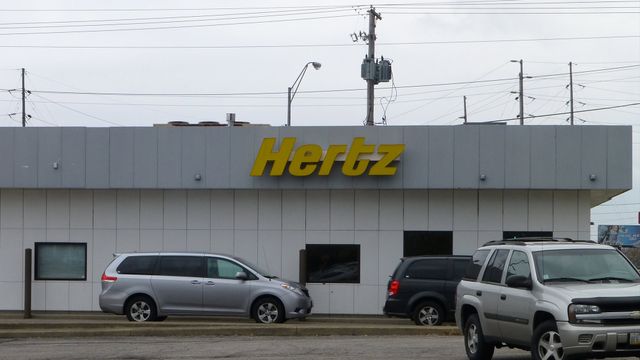
Hertz car rental facility in Elyria, Ohio (Image Credit: Nicholas Eckhart/ Flickr)
Many more layoffs, job cuts, wage reductions and other attacks on workers are coming as the company and its global investors seek to shift the responsibility for its losses onto the working class. In stark contrast, former CEO of Hertz Kathryn Marinello, who resigned May 18, accumulated $9,138,362 in total compensation in 2019, according to Forbes.com.
Hertz’s filing is significant when compared to other large corporations in the wave of Chapter 11 bankruptcy filings since the pandemic broke out in the US, such as JCPenney and Nieman Marcus, because it controls a very large share of the car rental market with only two main competitors in the US, Avis Budget Group and the privately held Enterprise.
The rental car industry has suffered a similar fate to the retail industry due to the immediate impact of the pandemic and state mandates enacted to slow the spread of the virus in the US. Sales and profits nosedived after many states banned nonessential travel, families and individuals canceled vacations and other events out of caution for their safety, and workers who usually traveled for business began to telecommute. The American Car Rental Association reported in late March that car rentals in the US had declined “between 50 percent and 80 percent month over month from February into March.”
Hertz’s domestic competitor Avis has also announced restructuring plans as an immediate response to lost revenue, with plans to cut more than $400 million in costs. This includes cutting back its vehicles and staff, pausing capital spending and slashing compensation for senior employees, according to the website Business Travel News.
The grinding to a halt of the global airline industry has severely impacted the car rental industry in recent months. Globally, the car rental car industry has strong links to the airline industry, with nearly two-thirds the number of car rental bookings worldwide occurring at airports where travelers fulfill immediate needs for securing transportation after arrival at their destination. CNN reported that, since the beginning of April, the number of passengers passing through Transportation Security Administration (TSA) airport checkpoints in the US had fallen by an unprecedented 94 percent compared to the same time last year.
The bankruptcy and restructuring of Hertz and other major car rental corporations will have an impact on the global auto manufacturing industry, where workers are currently being filed back into plants under unsafe conditions to produce profit for the corporations. Hertz bought and leased vehicles from General Motors and other automakers to fill its fleets, and these automakers will likely see lost sales from the fallout, resulting in their corporate shareholders likely seeking to restructure and implement further spending and job cuts as well.
Hertz Corporation is a subsidiary of Hertz Global Holdings, Inc. Based in Estero, Florida, it operates 10,200 corporate and franchise car rental locations in 150 countries on six continents. Its parent company ranked 335th on Forbes’ 500 list in 2018. That year it reported $9.5 billion in revenues and $21.3 billion in assets and had 38,000 employees.
Hertz began in 1918 in Chicago, Illinois as Rent-a-Car, Inc. John D. Hertz, owner of Yellow Truck and Coach Manufacturing Company, bought the company from founder Walter L. Jacobs in 1923, renaming it Hertz Drive-Ur-Self System. Three years later the brand was sold to the General Motors Company and began global expansion into Canada 1938 and later to France. Hertz repurchased the brand from General Motors in 1953, renamed it the Hertz Corporation and started trading shares of the company’s profits publicly on the New York Stock Exchange in 1954.
Soon after the company’s Wall Street debut it went through a series of acquisitions and expansion. In 1967, Hertz became a subsidiary of Radio Corporation of America and in the 1980s went through a series of ownership changes through acquisitions, including a $1.3 billion acquisition in 1987 by the Park Ridge Corporation, which was owned and operated by the Ford Motor Company.
Although Hertz produced about 10 percent of Ford’s pretax profit in 2005, it finalized the sale of the car rental service to a group of private equity firms led by the firm Clayton Dubilier & Rice in early 2006, after announcing that it would be selling the company in order to focus on building its highly profitable trucks and cars.
The Hertz buyout in 2006 was the second largest ever recorded at the time. Clayton Dubilier & Rice, together with the Carlyle Group and Merrill Lynch Global Private Equity, finalized the purchase for $15 billion. As a result of the deal, Hertz took on $5.6 billion of corporate debt, $4.8 billion of financing of its US vehicle fleet and $2.1 billion of debt leveraged against its international fleet.
In addition to Merrill Lynch, other major global investors involved in the 2006 buyout included Deutsche Bank AG, which led the debt syndicate, and the now-defunct Lehman Brothers was charged with the asset-backed securities tranche.
To pay for the private equity buyout aimed at enriching its top executives and shareholders, then-CEO Mark Frissora eliminated 32 percent of the company’s workers over the course of several years since taking the position in August 2006. In 2009, a year after the 2008 Wall Street crash and subsequent bailout by the US Federal Reserve, Hertz laid off an additional 4,000 employees, citing a drop in bookings as workers lost their jobs and incomes and travel declined.
In recent years, Hertz and other major car rental companies based in the US have cited expanding competition from ridesharing services Uber and Lyft as major challenges to their ability to maintain profit levels that satisfied investors’ demands. Uber has also announced mass layoffs in the weeks and months since lockdowns have been implemented in countries around the world.
The Hertz bankruptcy filing is one example of the restructurings that will unfold as the world confronts an economic crisis on a level not seen since the Great Depression of the 1930s, which is now only in its beginning stages, with banks and corporations, with the full support of capitalist political parties throughout the world, seeking to unload the consequences of their crimes onto the shoulders of the international working class.

Chinese leadership drops economic growth target

Nick Beams

The depth of the impact of the coronavirus pandemic on the Chinese economy and the emerging problems and contradictions besetting the Beijing regime were revealed in the fact that the National People’s Congress opened last Friday with no forecast of economic growth for this year.
This was a marked departure from the practice over the last quarter century in which GDP forecasts have been a very prominent feature of congress events.
This was to have been particularly important this year because Xi set down 2020 as the year GDP would have doubled from 2010. It was to have been the precursor for the celebration of the 100th anniversary of the founding of the Chinese Communist Party in 1921.
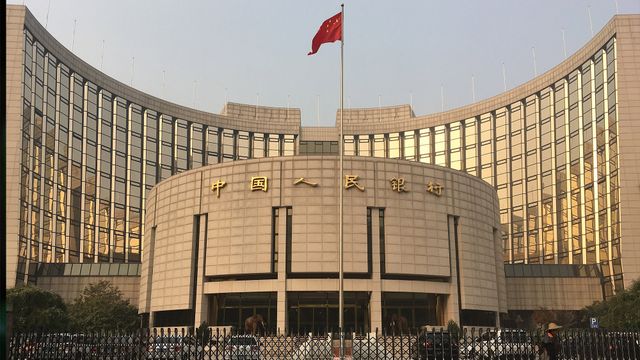
The People's Bank of China headquarter in Beijing. (Image Credit: Wikipedia/Max 12Max)
In delivering his work report, which opened the NPC, Chinese premier Li Keqiang was anxious to put the best face on the internal economic situation.
His report was delivered in the wake of a 6.8 percent contraction in China’s economy in the first quarter of the year. Many economists forecast that, at best, growth rates would be at least half the rate of 6.1 percent for 2019.
However, Li said the government had refrained from setting a GDP target, not as a result of domestic conditions, but because foreign markets were so uncertain.
The state of global markets is of particular concern because it is estimated that almost 200 million jobs in China are connected to foreign trade. As the Minister of Commerce Zhong Shan wrote in a recent article, cited on Bloomberg, this is more than the entire working population of the US.
Li did note the situation within the country and the concerns it has raised within the government.
“Pressure on employment has risen significantly,” he said. “Enterprises, especially micro, small and medium enterprises, face growing difficulties. There are increasing risks in the financial sector and other areas.”
A Bloomberg report published last week as the NPC was opening, pointed to the worsening situation facing smaller enterprises in the southern coastal province of Guangdong that has been at the centre of China’s industrial development over the past three decades.
The article report gave details of economic conditions in the sprawling city of Dongguan, with a population about the size of New York City, where many small textile manufacturers have either shut down or are struggling to survive.
The owner of one small factory said: “You can see around here, nine out of ten textile workshops have already closed down.” The factory owner said his ten remaining workers had seen their take-home pay cut in half because of the loss of working hours, reducing their income to the level of a decade ago.
Chinese officials have tried to downplay the absence of a GDP forecast and the failure to make the target of doubling the size of the economy over the past decade.
He Lifeng, the head of China’s main economic planning body, told reporters on Friday that even with growth of just 1 percent this year it would still mean GDP had expanded 1.9 times from 2010.
The overriding concern of the Chinese leadership bodies is not falling growth as such but the effect it has on employment and the threat that rising jobless levels pose to social and political stability.
The Chinese regime, representing the country’s capitalist oligarchy, long ago scrapped any commitment to social equality, much less to socialism. It has sought to maintain its position on the basis that the turn to capitalism, initiated in the late 1970s under Deng Xiaoping, has ensured rising living standards and made China a powerful economy.
But the capitalist path has run now into its greatest obstacle in the past 40 years—a palpable breakdown of the world economy triggered by the COVID-19 pandemic. This takes place amid ever increasing daily threats by the US as all sections of its military and political establishment pursue a virulent anti-China campaign.
The US anti-China campaign goes across the board—from the efforts to bankrupt the Chinese telecoms giant Huawei by denying it vital supplies; the imposition of tariffs on a range of Chinese goods; an increasing orientation to Taiwan, threatening to abrogate the “one China” policy; to the rising tide of accusations that China is responsible for the virus and “seeding” it in the US.
In these conditions a worsening of the economic situation and a rise in unemployment has major political consequences for the regime. Li pointed to those concerns in March when he called on economic officials to make employment a priority over GDP numbers.
According to a report in the Wall Street Journal, the premier said: “As long as employment is stable this year, it’s not that big of a deal whether the economic growth rate is a bit higher or lower.”
While China has claimed it has largely stamped out the virus, the economy, already slowing markedly before the pandemic struck and recording its lowest growth rate in 30 years, is very far from returning to even previous levels of activity.
According to estimates by BNP Paribas, when accounting for migrant workers who could not travel for work to major industrial centres, there may have been 50 million job losses with an unemployment rate of 12 percent in March.
In the early 1990s there were protests over large-scale sackings from state-owned enterprises, but these subsided as the Chinese economy expanded to become the chief manufacturing centre of the global economy. That road is now all but closed amid a rising tide of economic nationalism, not only in the US but around the world, and a process of de-globalisation.
The loss of 23 million jobs in 2008 as a result of the global financial crisis also sent a shiver of fear through the regime. It responded with a massive stimulus package based on construction and infrastructure spending. But that option is also now closed because of rising debt levels which financial authorities are trying to reduce.
This situation points to the significance of the other major development to emerge from the opening of the NPC. The government announced a national security law covering “sedition” and “subversion” in Hong Kong in response to last year’s mass protests, involving up to 2 million people, which local authorities proved unable to suppress.
The new law is clearly connected to the regime’s deepest fear that the expression of such could spark mass working class protests on the mainland if economic conditions worsen.