27 May 2020

Protests by medical workers grow as hospitals overwhelmed across Mexico

Andrea Lobo

Mexico has seen a growing wave of strikes, roadblocks and other protests by medical workers during the last two weeks in response to COVID-19 outbreaks inside hospitals as they become overwhelmed with infected patients.
This follows an earlier wave of protests by medical workers in March, which involved actions across 12 states and Mexico City, to denounce the lack of any measures by the government of President Andrés Manuel López Obrador to contain the global pandemic and prepare hospitals with the necessary equipment.
At the time, hospital workers were already suffering major outbreaks. For instance, in the General Hospital in Monclova, Coahuila, management asked workers not to wear protective equipment in March to “not cause panic.” By the first week of April, 51 medical workers had been infected and three had died.
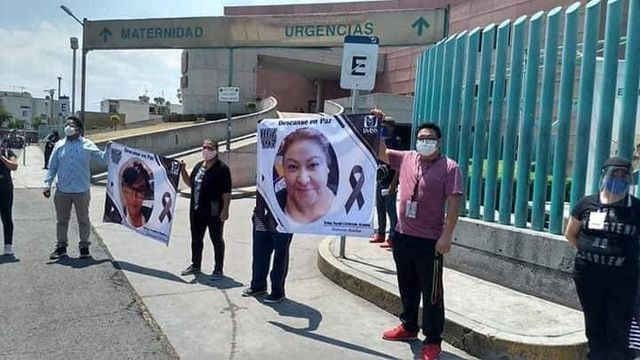
Workers at the Texcoco hospital protest the deaths of nurses on May 13 (Maria Zavala-Twitter)
A health emergency and lockdowns were not ordered until March 30, more than a month after the first confirmed cases in the country. But the measures taken have been criminally inadequate. Along with Brazil, Russia and India, Mexico continues to see an exponential increase in COVID-19 deaths, doubling every five days. As of this writing, Mexico had more than 74,560 confirmed cases and 8,134 deaths, with a large share of these among medical workers.
According to the latest available count on May 19, the confirmed cases among medical workers had seen a 33 percent increase in a week to 11,394, while 149 health workers have died. This constituted 21 percent of all cases in Mexico at the time, and most were concentrated in Mexico City, the neighboring State of Mexico and Baja California.
The resulting unrest among medical workers is an international phenomenon. As Latin America becomes the new epicenter of the virus, protests by medical workers have spread across Brazil, Peru, Colombia, Ecuador, Honduras in recent weeks, raising the same basic concerns, including the lack of adequate personal protective equipment (PPE), medicines, respirators, testing and personnel.
Yesterday, dozens of workers of the Tlalnepantla Hospital in Mexico City carried out a roadblock to demand proper PPE. Reports on news outlets and social media of such protests have inspired overwhelmingly positive comments from workers in hospitals and other sectors, with many calling for a joint struggle.
Carmen, a nurse in Naucalpan, State of Mexico, writes on Facebook: “Those working in the COVID areas have not received any hazard bonus even though it’s a risk to be in those areas. If the union does nothing for workers; I think it’s best to go on a general strike. I’m tired of so much corruption… I’m on the first line at the 194 IMSS Clinic and I have seen several of my coworkers die over a COVID infection.” Several posts from health workers are calling for a national demonstration on July 1.
On Monday, a group of 15 doctors and nurses carried out a protest at the Vicente Guerrero hospital in Acapulco, Guerrero to demand adequate PPE. That evening, dozens of doctors and nurses at the National Institute for Respiratory Diseases in Mexico City carried out a demonstration and roadblock to protest the lack of personnel and equipment. One protester held a sign: “We are all getting infected to save a few pesos.” Another said: “We want protection, not reutilization.”
On May 19, hundreds of medical workers of the General Hospital of Tula, Hidalgo, in central Mexico, blocked two highways to demand the sanitization of the facilities and security for patients and doctors. On top of the dire working conditions, medical personnel have been at the receiving end of many threats and violent attacks as anger, fear and desperation among patients, families and others find no progressive outlet.
The previous week, hospital workers at the Hospital La Raza in Mexico City blocked the key internal highway bypass to protest the lack of equipment after several coworkers died of the virus. In Texcoco, State of Mexico, about 50 workers at the General Hospital carried out a roadblock to protest the death of three nurses from coronavirus and to demand sanitization, proper PPE, personnel, timely tests and other urgent measures. National Guard troops and state police ended their protest.
The protests have also spread along the cities on the US border. For instance, in Matamoros, Tamaulipas, doctors and nurses shut down the area for treating COVID-19 patients in the Zone 13 Hospital after three medical workers died from COVID-19 and 40 others tested positive. In Ciudad Juárez, Chihuahua, which has seen overwhelmed hospitals for several weeks, workers at the Women’s Hospital carried out a demonstration to protest dangerous conditions and demand a 30 percent raise for hazard pay.
After decades neglecting public health, the federal and state authorities have been scrambling in recent weeks to buy respirators and personal protective equipment, while a handful of the unfinished buildings have been quickly retrofitted to accommodate COVID-19 patients. However, this is proving to be too little, too late.
Next to Turkey, Mexico has the lowest health care budget as a percentage of GDP in the OECD countries—5.5 percent—but enormous shares of the budget for certain departments are not even spent.
López Obrador’s supporters had denounced that his predecessors left 326 abandoned hospital construction sites, which would require $421 million to conclude. However, out of the $800 million budget for health care infrastructure and equipment approved by Congress in 2019, his administration left $510 million unused.
At the same time, the López Obrador administration increased the military budget 7.9 percent to $6.5 billion, more than the entire Health Ministry budget, according to the Stockholm International Peace Research Institute.
This has left the country entirely unprepared to deal with the pandemic. By May 19, Mexico City hospitals reported the highest occupancy rates in the country. In the entire metropolitan area, which includes part of the State of Mexico, 55 of the 60 hospitals for COVID-19 patients were full, representing an 80 percent total occupancy rate. Only 33 percent of beds for patients needing intubation were available.
This data, however, might not only be incomplete, but it could be misleading when considering the capacity to treat patients safely. Dr. Iván Juárez Ramírez, a pneumologist in Mexico City, explained on Twitter that, while 10 percent of patients who get pneumonia need a ventilator, “the number of ventilators is known to be scarce, and we don’t have the full data, but it’s important to have the data to prepare.” Moreover, specialized doctors and nurses with proper training, equipment and working spaces are also necessary, he explains “since a ventilator is a producer of aerosols and will contaminate everything around the patient.”
During the last week, major outbreaks in hospitals have been recorded in new localities as the virus hotspots become more widespread. In poorer and more remote states, respirators and equipment were transported to the larger cities where the initial outbreaks occurred, but now these regions are being overwhelmed with cases. This happened in Tapachula and Comitán in the southernmost and impoverished Chiapas state, where hospitals got full and began turning away COVID-19 patients this week.
Amid a general shortage of equipment, medicines, personnel and infrastructure, the government has dismissed warnings by the World Health Organization and local epidemiologists and opposed mass testing, systematic contact tracing and quarantines. In other words, medical staff are being forced to respond blindly to an avalanche of cases fueled by the gradual lifting of restrictions.
With the official reopening of the economy on June 1, the López Obrador government has made clear its willingness to sacrifice the lives of tens of thousands of workers in order to resume the capitalist extraction of profits from the working class and continue its austerity program to service interest payments and provide tax benefits to the financial oligarchy.

Sweden’s “herd immunity” policy produces one of world’s highest fatality rates

Jordan Shilton

The catastrophic consequences of Sweden’s response to the coronavirus pandemic were underlined on Monday as the official death count surpassed 4,000. The country, with a population of 10.3 million, has recorded one of the highest death rates per head of population in the world over recent weeks, which is a direct product of the Social Democrat/Green government’s refusal to implement lockdown measures, carry out mass testing, and protect elderly care homes.
Last week, Sweden had the highest death rate per capita in the world, based on a rolling seven-day average ending on 20 May. The Our World in Data website reported that Sweden recorded 6.08 deaths per million residents during this period, compared to Britain (5.57), Belgium (4.28), and the United States (4.11). Over the course of the pandemic, the death rates in Belgium, Italy, and Spain remain higher than in Sweden at this stage.
The Social Democrat/Green government, led by Prime Minister Stefan Löfven, refused to implement restrictions on economic and social life to curb the spread of the pandemic. Schools for pupils aged under 16, restaurants, retail stores, and bars have remained open throughout; residents have merely been advised to limit social contacts. Public gatherings of up to 50 people have also been permitted since March.
Sweden’s approach has received warm praise from reactionary political forces and the corporate-controlled media internationally to bolster their criminal back-to-work campaigns. State epidemiologist Anders Tegnell has been turned into something of a cult figure, with largely flattering interviews and profiles by the Daily Show and USA Today in the United States, Der Spiegel in Germany, and Britain’s Financial Times, among others.
Yet even Tegnell, faced by the rapidly rising death count, was compelled to tell Swedish Radio over the weekend that the country faces a “terrible situation.”
Annika Linde, his predecessor, went even further, saying she disagreed with the government’s failure to order a shutdown. Pointing to the much lower death rates in neighbouring Denmark, Finland and Norway, which have recorded four, seven, and nine times fewer fatalities per head of population respectively, Linde told Britain’s Observer: “I think that we needed more time for preparedness. If we had shut down very early ... we would have been able, during that time, to make sure that we had what was necessary to protect the vulnerable.”
While Tegnell and political leaders have denied that Sweden is pursuing a policy of “herd immunity,” this is in practice what is taking place. The weakest and most vulnerable sections of society are being left to fend for themselves or die, while the government concentrates on bailing out big business and the banks. While hundreds of billions of kronor have been made available in the form of loans and subsidies to support the financial markets and big companies, a mere 5 billion kronor (about €470 million) in additional funding has been set aside for hospitals and healthcare.
As of yesterday, 4,125 deaths have been officially recorded. This is likely an underestimate, given that deaths are only counted after a laboratory-confirmed test on a patient. At the end of April, figures from the National Board of Health and Welfare indicated that the official death toll was undercounting real fatalities by about 10 percent.
Around 90 percent of total deaths are people over the age of 70. Three-quarters of all deaths consisted of people living in care homes or receiving care at home.
The spread of COVID-19 throughout Sweden’s elderly care system has been facilitated by decades of austerity policies pursued by the entire political establishment. Many care workers are employed by job agencies rather than at specific homes, meaning that they often work at multiple locations and do not have job protection if they take time off due to sickness. On top of this, Swedish authorities disregarded the threat posed by asymptomatic carriers of the disease by telling care workers to stay home only when they noticed coronavirus symptoms. Asymptomatic cases were left undetected because Sweden has one of the lowest rates of testing in Europe.
Another reason for the high death rates among the elderly is that they have systematically been denied care. An investigation by German public broadcaster NDR found that less than 1 percent of patients aged 80 and over were treated in intensive care units, compared to 10 percent of patients aged 70 to 79, and 16 percent of patients aged 60 to 69.
Children and working age adults are being treated no less contemptuously. Official advice tells workers and school children only to stay home for two days after symptoms disappear, which is undoubtedly contributing to infections. The virus has a 14-day incubation period.
Andreia Rodrigues, a pre-school teacher in the Stockholm region, told Insider that she was still told to show up to teach a class of 22 students after she reported that her fiancé was displaying coronavirus symptoms. “I always wonder how many people will die because of me,” she added, explaining that she doesn’t wear a mask for fear of getting fired.
Immigrant communities have also been disproportionately impacted by the virus. According to public health agency figures released in April, residents of Somali origin made up 5 percent of the total coronavirus cases in the Stockholm region, even though they account for less than 1 percent of the overall population. The Swedish Somali Medical Association revealed that six of the first 15 people to die in Stockholm were of Somali origin.
The reason for this disparity is not hard to find. Large Swedish cities are extremely segregated between wealthier districts and poor suburbs, where large immigrant populations live in cramped housing and work in precarious jobs that cannot be done from home. Poverty and unemployment are rampant in these communities.
For example, the mainly immigrant district of Rosengad in Malmö, Sweden’s third-largest city, has an average income of just 50 percent of the city’s average. The Swedish authorities have responded to these social problems by labelling poverty-stricken neighbourhoods as hotspots of crime that require a strengthened police presence. The Swedish police releases an annual report with a list of so-called “vulnerable areas.” The latest edition in 2019 included 60 neighbourhoods across the country.
Phone provider Telia has demonstrated on the basis of the analysis of anonymised mobile phone data how residents of wealthier districts have been able to retreat to work from their comfortable homes, while low-wage, largely immigrant workers in the suburbs were forced to continue showing up at workplaces and exposing themselves to the risk of infection. “We do see certain areas that are maybe more affluent with a bigger number of people working from home,” Christopher Agren, head of data insights for Telia, told the Associated Press.
Unsurprisingly, figures released by Stockholm city authorities last month revealed that in some low-income districts, the rate of infections was three times higher than in wealthier neighbourhoods.
Let the poor and elderly get infected and leave them to die: this is the brutal reality of Sweden’s response to the coronavirus pandemic. But it is not merely a Swedish phenomenon. With the reckless and criminal back-to-work drive being enforced by governments across Europe and North America, ruling elites in every country are embracing the “Swedish path.”
This was underlined by the publication in the current edition of Foreign Affairs, the most influential foreign policy journal in the United States, of an article entitled “Sweden’s coronavirus strategy will soon be the world’s.” Authors Nils Karlson, Charlotta Stern and Daniel Klein bluntly declared, “Herd immunity is the only realistic option—the question is how to get there safely.” They railed against lockdowns, which they described as impermissible because they reduce GDP growth by 2 percent each month.
In addition to the fact that all three authors have no medical background, they are all associated with the right-wing Ratio Institute, which in its own words focuses on “the conditions for enterprise, entrepreneurship and market economy.” Ratio is financed by the Confederation of Swedish Enterprise and receives regular support for specific projects from the Wallenberg Foundation, which is financed by the vast wealth of the Wallenberg family. Although businesses controlled by the Wallenbergs no longer account for 40 percent of industrial jobs in Sweden as they did during the 1970s, family members play roles in a large number of prominent Swedish firms.
The fact that the ravings of Karlson, Stern and Klein are financed by such powerful backers as Sweden emerges as one of the world leaders in coronavirus deaths underscores how their callous disregard for human life and obsession with protecting corporate profits are convictions shared by the Swedish and international ruling class.

US corporations, government cover up workplace infections and deaths

Jerry White

Major corporations and federal and state agencies that are responsible for workplace safety are deliberately concealing the number of COVID-19 infections and deaths in factories, warehouses and other workplaces, according to several news reports.
The effort to downplay the actual conditions in the meatpacking, logistics, auto and other industries is key to the Trump administration’s efforts to break the resistance of workers who are unwilling to risk their lives for the profit interests of the corporations.
The New York Times reported Tuesday that Smithfield, Tyson, JBS and other meatpacking companies have refused to reveal the number of infected workers since they reopened the slaughterhouses and meat processing plants under Trump’s April 28 executive order. Dozens of factories were shut after a series of job actions and protests by workers demanding protection and the truth about the spread of the contagion.
The Centers for Disease Control and Prevention (CDC) has grossly underestimated the number of infections in the industry, claiming that less than 5,000 workers were infected as of the end of last month. According to the Times, however, the nonprofit group Food & Environment Reporting Network estimated last week that the number has shot up to more than 17,000, with at least 66 fatalities.
Another organization, the Environmental Working Group, cited in a Washington Post report, said four of the plants that reopened—Tyson operations in Logansport, Indiana; Perry, Iowa and Waterloo, Iowa; and a Smithfield plant in Sioux Falls, South Dakota—had all seen outbreaks of at least 700 cases. In Iowa, Nebraska and South Dakota, coronavirus cases linked to meat workers represent 18, 20 and 29 percent of the states’ total cases, respectively, according to the group.
Governor Pete Ricketts of Nebraska announced earlier this month that his state would not disclose the number of coronavirus cases in specific plants without the consent of the companies.
The Times report was based on internal emails from state and county health agencies obtained through public records requests by Columbia University’s Brown Institute for Media Innovation. It detailed how local agencies have colluded with the corporations to conceal the truth from workers and the public.
After an outbreak at the Smithfield Foods plant in Tar Heel, North Carolina, one of the world’s largest pork processing facilities, county officials would not provide any data. “There has been a stigma associated with the virus,” said Teresa Duncan, the director of the health department in Bladen County, where the plant is located. “So, we’re trying to protect privacy.”
Melissa Packer, the assistant health director in neighboring Robeson County, where 59 residents who work at the Tar Heel facility became infected, reported that several county officials were opposed to making the numbers public. “Some local health directors from the counties where there are processing plants expressed some concerns about how that may negatively impact the relationship they have built with the management of the companies.”
A county health official in Colorado was even blunter regarding an outbreak at a Cargill plant in Fort Morgan, where at least one worker died. “Bad news spreads way faster than the truth. At this point, we are not doing anything to cast them in a bad light. We will not throw them to the Press.”

Logistics

Amazon, headed by Jeff Bezos, the world’s richest man, has refused to disclose how many workers have gotten sick or died, saying such data is not “particularly useful.” Jana Jumpp, an Amazon worker in Indiana who has been compiling a list of confirmed cases, says at least 900 workers have been infected. The company confirmed the deaths of eight workers only after they were reported by several media outlets.
An Amazon worker in the Detroit suburb of Romulus, Michigan told Fox 2 News that dozens of his coworkers have contracted COVID-19. “It’s so stressful, the thought of knowing that you’ve got to go back to this place, and then if you cough, they tell you to stay home. And if you stay home, they’re penalizing you for it… It does clearly state in that handbook if you go on a medical leave, your spot is not guaranteed.”
ProPublica reported an incident on April 16 when security guards at a Nike distribution center in Memphis, Tennessee turned away a county health inspector investigating the death of a worker from COVID-19. “It didn’t matter that she was there to investigate health conditions at a Nike distribution center where, five days earlier, company officials learned a temporary worker had died after testing positive for the novel coronavirus. The security guard staffing the gate at the sprawling site said that without an appointment, no one could come in.”
The day after, however, an administrator from the athletic shoemaker, which received a 15-year $58 million tax break from the city, spoke with county health officials, who promptly accepted his claims that safety improvements had been made, and then dropped the case.
In addition to Nike, which has 21 confirmed cases at its Memphis facilities, there have been several other cases in “America’s Distribution Center,” where 43,000 workers are employed in transportation and warehousing. At least three workers have tested positive at a Kroger warehouse; ten at a FedEx hub, and an employee has reported more than 20 infected coworkers at PFS, a distribution center that ships jewelry and makeup.
The Tennessee Occupational Safety and Health Administration (TOSHA) does not require employers to determine whether an infected employee contracted the virus at work in areas where there has been community spread, according to the ProPublica report.

Auto industry

On May 21, tens of thousands of autoworkers returned to plants in Michigan and other states after an eight-week shutdown, which came about only because of wildcat strikes and other job actions carried out in defiance of threats by the company and the United Auto Workers union.
The following day, Ford was forced to temporarily shut its Chicago Assembly Plant after a worker tested positive. The next day, just hours after company and union officials toured the Dearborn Truck Plant to tout their safety precautions, hundreds of workers downed their tools and refused to work after hearing that at least two coworkers had tested positive.
On Tuesday, Ford was forced to close its Kansas City Assembly Plant after an active case was confirmed. UAW Local 249 officials immediately sent a message warning workers not to believe “rumors and misinformation taking place on social media,” in particular, a letter being circulated by workers that was co-signed by Ford and UAW officials saying that plants would be closed for 24 hours if a case was identified.
“The letter that was sent out in early March prior to the shutdown outlining a required 24 hour deep clean is no longer the standard required by the CDC, Federal and State agencies,” the UAW Local 249 official said.
Workers at Fiat Chrysler’s Toledo, Ohio Jeep assembly plant informed the World Socialist Web Site that at least one line of workers was sent home Tuesday after a worker tested positive.
“A whole team has been quarantined and four more may be next,” Johnny, a veteran worker, told the WSWS. “It was first shift workers on the trim, door line and final assembly lines. All the company did was wash down the area, put out some wipes, get volunteers to fill the jobs. The UAW and management are not saying a thing. This is all coming from the workers. From the UAW, you get the same old lies and BS, like, ‘We’re working on it.’
“The masks they are handing out are garbage. I figured out I handled 39,000 parts that have been touched by other people during the space of 12 hours and I move in and out of 150 vehicles that other people have been in during a shift. All they want is boots on the ground to reopen the plants. FCA just got a $6.8 billion loan from the Italian government after making record profits and paying off their shareholders and executives.
“Trump has turned the Treasury Department into a piggy bank for the corporations, but there is nothing for the workers who work like dogs and are dying. We need a revolution, on the scale of the Civil War, because from every direction the workers are being raped.”
There is no law to compel the corporations to reveal the extent of infections and deaths in workplaces. The Occupational Safety and Health Administration, now led by Trump’s Labor Secretary Eugene Scalia, son of the arch-reactionary Supreme Court Justice Anthony Scalia, has given the corporations even more leeway to conceal the deadly conditions in the factories.
This underscores the need for workers to form rank-and-file safety committees, independent of the unions, in every factory and workplace. Among the tasks of these committees will be to control work hours and line speeds, guarantee protective equipment, ensure safe and comfortable working conditions, enforce regular testing, demand universal health care and guaranteed income, and ensure the distribution of information so that appropriate measures can be taken, including halting production if necessary.

Reports question accuracy of COVID-19 death counts in US and globally

Bryan Dyne

As countries across the world—including Brazil, India, Russia, Turkey, the United Kingdom and the United States—continue to force their populations back to work even as the coronavirus continues to spread, there is increasing evidence that the actual fatalities caused by the pandemic are up to three times the numbers officially reported.
Data from the US Centers for Disease Control and Prevention (CDC) on coronavirus cases and pneumonia cases are among the most revealing. Pneumonia kills an estimated 30,000–60,000 people every year in the US. But from February to mid-May this year there were 89,555 recorded pneumonia deaths. Coronavirus can cause debilitating pneumonia in severe cases and many of the deaths attributed to pneumonia most likely are COVID-19 related.
A similar effect can be seen in the death counts of individual states. In Illinois, the CDC reports 4,856 COVID-19 deaths while reporting 2,149 pneumonia deaths, more than five times the five-year average. In Ohio, the coronavirus has caused 1,969 deaths and pneumonia has killed 2,327, which is 1,507 higher than the five-year average.
And in Florida, which recently fired a state employee who developed its coronavirus tracking database, the number of COVID-19 deaths stands at 1,762, while pneumonia deaths are currently 5,185. The five-year average deaths over the same time period are only 918. If the excess pneumonia deaths are in fact deaths caused by the coronavirus, it suggests that the actual death toll from the pandemic in the United States is at least double the reported rate.
The pandemic is also spreading to the more rural areas of the country. According to data from the New York Times, the number of cases in Fayetteville-Springdale, Arkansas is doubling every 6.2 days. The number of deaths in Milledgeville, Georgia are doubling every 5.2 days. Amid this spread, President Donald Trump asserted in a tweet yesterday that, “100,000 [deaths] … looks like will be the number.”
Similar figures can be seen in other countries as the result of updated investigations into the “excess deaths” that have occurred in the various regions. That is, rather than recording those who died in a hospital and tested positive for COVID-19, media outlets including the GuardianWall Street Journal, the Financial Times, the HinduAxios, and Reuters tracked the gap between the total number of people who died from any cause in cities, regions and countries across the world and compared that data to the historical averages for the same place and time of year.
This technique helps paint a more accurate picture of the impact of the pandemic, accounting both for the actual number of dead from the disease, as well as those who died from accidents or ailments they would have otherwise survived if health care systems were not overwhelmed by the coronavirus. As it now stands, the pandemic has caused more than 5.6 million officially confirmed infections worldwide, an increase of 1 million in less than two weeks, and caused 350,000 deaths.
The number of excess deaths in just Moscow and St. Petersburg during April, according to a study by the Financial Times, is 2,073, or more than three times higher than the official combined count of 629 COVID-19 deaths in both cities. If just these deaths are assumed to be from the coronavirus, it would bring the country’s death toll from 3,807 to 5,880. If the official fatalities are instead multiplied by the ratio of excess deaths to coronavirus deaths found in Moscow and St. Petersburg, the number of people who have died from the coronavirus in Russia would be 11,421.
A similar report in the Guardian notes that more than 60 percent of coronavirus patients that died “were not tallied in the city’s official death count from the disease because an autopsy showed they had died of other causes.” This reporting method has also been used in countries in Western Europe and in the US.
A similar analysis by the FT on data from Turkey’s capital Ankara shows that the true death toll from coronavirus in the country is as much as 25 percent higher than the official count. The Erdoğan government ordered plants reopened on April 20 after only a very limited lockdown. This policy has resulted in at least 103 deaths in April alone, and caused the rate of COVID-19 cases among factory workers to be almost three times the country’s average.
In Brazil, studies in April estimated that the number of cases were between eight and 16 times the officially reported figure. As a result, the death count in the country remains greatly under-reported. This is reflected most glaringly in data from São Paolo, which has seen a 485 percent increase in coronavirus deaths since as testing becomes more widely available. Yet Brazil is still testing below the median per capita rate of any country, even as fascistic president Jair Bolsonaro continues to insist that the pandemic is nothing more than a “little flu” as cases and deaths continue to spike.
India’s state of West Bengal has reportedly not counted 40 percent of its coronavirus-related deaths as caused by the pandemic because of co-morbidities among the dead. At the same time, the Delhi government has asked hospitals not to test dead people for COVID-19 if they weren’t confirmed to have it while they were alive, even as the death rates in hospitals exceed official counts due to the coronavirus by 30 percent or more. There is also an increasing danger that the pandemic will hinder efforts to combat other epidemics in India, such as tuberculosis, which infects nearly 2.7 million people annually.
In Britain, the Office of National Statistics reported that it had recorded nearly 54,000 excess deaths in the country through May 15, about 17,000 more than have been confirmed killed by the pandemic. These data reaffirm that Britain is the most hard-hit country in Europe in terms of deaths, and one of the most devastated in the world.

26 May 2020

Government of Canada Banting Postdoctoral Fellowships 2020 for International Scientists

Application Deadline: 15th October, 2020 by 8:00 p.m. (EDT)

Offered Annually? Yes

To be taken at (country): Canada

Fields of Research: 
  • Health research
  • Natural sciences and/or engineering
  • Social sciences and/or humanities
About the Award: The objective of the Banting Postdoctoral Fellowships program is to:
  • attract and retain top-tier postdoctoral talent, both nationally and internationally
  • develop their leadership potential
  • position them for success as research leaders of tomorrow
Fellowships are distributed equally among the Canadian Institutes of Health Research (CIHR), the Natural Sciences and Engineering Research Council (NSERC) and the Social Sciences and Humanities Research Council (SSHRC)

Type: Fellowship

Eligibility: 
  • Canadian citizens, permanent residents of Canada and foreign citizens are eligible to apply with the stipulations sstated in the Program (Link below)
  • Applicants to the 2020/2021 Banting Postdoctoral Fellowships program must fulfill or have fulfilled all degree requirements for a PhD, PhD-equivalent or health professional degree stated in the Programme (Link below)
  • Applicants must not hold a tenure-track or tenured faculty position, nor can they be on leave from such a position
Selection Criteria: The Banting Postdoctoral Fellowships program is unique in its emphasis on the synergy between the following:
  • applicant – individual merit and potential to launch a successful research-intensive career
  • host institution – commitment to the research program and alignment with the institution’s strategic priorities
An applicant to the Banting Postdoctoral Fellowships program must complete their application in full collaboration with the proposed host institution.

Number of Awards: 70 fellowships are awarded annually

Value of Program: $70,000 per year (taxable)

Duration of Program: 2 years (non-renewable)

How to Apply: It is important to go through the Application Guide before applying for this Fellowship

Visit Programme Webpage for details

Open Society’s Civil Society Scholar Awards 2021 for Doctoral Research Students and Faculties

Application Deadline: 22nd July 2020

Eligible Countries: See Below

Type: Research Grants

Eligibility: The awards are open to the following academic populations:
  • doctoral students of eligible fields studying at accredited universities inside or outside of their home country
  • full-time faculty members teaching at universities in their home country
Candidates must be citizens of the following countries: Afghanistan, Albania, Angola, Azerbaijan, Belarus, Bosnia and Herzegovina, Cambodia, Democratic Republic of Congo, Republic of Congo, Egypt, Equatorial Guinea, Eritrea, Ethiopia, Guinea, Haiti, Kosovo, Laos, Libya, Macedonia, Moldova, Mongolia, Myanmar/Burma, Nepal, Palestine, Papua New Guinea, Serbia, Sudan, South Sudan, Syria, Swaziland, Tajikistan, Tunisia, Turkmenistan, Uzbekistan, or Yemen.
Selection Criteria: Civil Society Scholars are selected on the basis of their outstanding contributions to research or other engagement with local communities, to furthering debates on challenging societal questions, and to strengthening critical scholarship and academic networks within their fields.
Requests for support for first-year tuition and fees only will be considered on the basis of a clearly demonstrated need from doctoral students who have gained admission to universities outside of their home country.
Selected grantees may be invited by CSSA to attend short-term trainings/summer school, and a participant conference during the grant period. Travel costs and accommodation for these events will be covered by CSSA.

Number of Awardees: Not specified

Value of Program: Maximum funding requests: $10,000 for doctoral students; $15,000 for faculty members.
The awards support short-term, international academic projects, such as: fieldwork (data collection); research visits to libraries, archives, or universities; course/curriculum development; and international research collaborations leading to peer-reviewed publication.

Duration of Program: 
  • Project duration:  between three and 10 months
  • Eligible dates: March 1, 2021—December 31, 2021
How to Apply: Detailed guidelines on the conditions of these awards are available in the Program Webpage link below.
  • Online Applications: Applicants are strongly advised to submit their application online.
  • For those wishing to submit a paper application, an application form can be downloaded from the Download Files section. More details on submitting applications are available in the Guidelines.
Visit Program Webpage for details

Killer Capitalism’s COVID-19 Back-to-Work Imperative

James Fortin & Jeff Mackler

Over the past several weeks, daily new cases of COVID-19 in the U.S. have remained in the 22,000–25,000 range. By June 1, it is estimated that the number of deaths each day will rise to 3,000. Yet all 50 states now have begun lifting socially-protective measures aimed at containing the coronavirus, planning to “re-start” the U.S. economy – primarily by sending workers back to work. Why is this, and what really should be done?
The foundational basis of the U.S. capitalist economy is the profitable exploitation of human labor, without which the economy falters. To date, an unprecedented 36 million have filed for unemployment insurance. Nearly half of the entire U.S. workforce is without a job. In this context, the current drive led by U.S. capitalism’s twin political parties to send workers back to work is not only understandable, but absolutely necessary, regardless of the cost in human lives.
Profits are in a severe free fall not seen since the Great Depression that began in 1929. Accordingly, the back-to-work imperative being promulgated by the ruling class and its political parties offers both an ostensible “scientific” rationale as well as an economic bludgeon. On the one hand, while there is virtual unanimity in the scientific community – even in its operations under profit-first capitalism – that any premature generalized return to work today can only lead to increased death rates, U.S. capitalism and its counterparts around the world are in the process of “experimenting” with formulas wherein workers can more or less safely, they insist, return to work.
On the other hand, workers are being beaten back to work by the termination of the government’s token and short-term relief measures, and the soon-to-expire extension of temporarily enhanced unemployment benefits. Old employers not hiring you back? No worries, there is always a part-time, temporary, low-benefit job in a grocery store at a whopping $10 or $12 an hour, with the added value of a food bank waiting line. Tens of millions of workers, who live paycheck-to-paycheck, not to mention the tens of millions that have been excluded from any relief, will be expected to bend to necessity and risk their lives to survive.
Return-to-work “science” and “success formulas”
Formulas for reopening schools around the world include often-contradictory guesstimates about whether to begin with elementary age children, allegedly less vulnerable to COVID-19, or to start with secondary school students. The latter are said to be more capable of adhering to the various social distancing and protective gear regulations being used to lessen the spread of the disease.
Here, the concern of the ruling rich is significantly more focused to free up home-bound parents to return to the workplace than it is to the education and safety of students (or for that matter, the health of their parents). Needless to say, the often symptom-free youth, multiple tests notwithstanding, will daily return home to live with parents and other relatives who can only be subjected to further infection.
Whatever the adopted formulas, whichever charts and graphs and however many regulations will be employed to send students back into populated schools and workers back to workplaces, they are calculated in the context of a deadly virus that continues to infect and kill additional multitudes around the world, daily. These actions have a counterpoint: the present and critically necessary social distancing and quarantines that save lives. The so-called flattened curve or current plateau of new infections in the U.S. represents a statistical assessment of COVID-19 at its height. The notion that a level of safety has been achieved when their charts record 14 consecutive days where there is no increase in the daily number of new cases is sheer demagogy.
By comparison, in China, eleven million people were tested in Wuhan, where the pandemic is said to have originated – the entire population of the city. The Chinese apparently understood that even a handful of new cases pose the threat of yet another major outbreak. In the U.S., in contrast, the percentage of tested individuals is closer to three percent! And the reported number of new cases every day stands close 23,000. Recent data from major Latin American cities, previously thought to be relatively free from the virus, indicates that across the continent infection and death rates parallel, if not exceed, the worst examples in the U.S. and Europe.
In New York, the state with nearly 25 percent of the nation’s deaths, Democratic Governor Andrew Cuomo alternates between cautioning against any early re-opening of schools and businesses, to daily speculation that a gradual if not generalized return to work is on the horizon. Ever vacillating, Cuomo’s recent appearance with leading billionaire charter school advocate Bill Gates, saw Gates pontificating about the great advances in technology that might be brought to public education itself, that is, virtual, stay-at-home education. In consequence, the sale of hundreds of “unnecessary” city school buildings might offer a profit bonanza to New York City’s billionaire real estate tycoons. Perhaps even living teachers would in time be deemed unnecessary! For now, however, Gates’ dream of technology-driven education without schools or teachers is a mere hint of what the future holds. But disaster capitalism knows no limits.
Disaster capitalism and the coming second wave
In the few countries where the curve of new infections has significantly dropped no one denies that, absent an effective vaccine made available to the entire population, anything resembling a generalized return to work can only result in a second, if not third wave of infections and deaths, perhaps worse than the present wave. Top scientists, from the Trump administration’s epidemiologist expert, Anthony Fauci, and Centers for Disease Control and Prevention director Robert Redfield, to World Health Organization officials, attest to the fact that any premature return to work would likely result in a second wave that could again overwhelm any nation’s medical system to a degree that would dwarf the horrors associated with the present wave. The ruling class response to this obvious scenario? Yes, true enough, they state repeatedly, but we have to get back to work. Without an effective and available vaccine, perhaps in 12-18 months, if not several years from now, there is really no alternative, they say, but to carefully re-open the system, and to manage the re-opening to minimize the “inevitable risks” – that is, the consequent and massive loss of lives.
“Management of the risks” operates with the unstated premise that the slow and ever-progressing spread of the coronavirus would take its toll in lives BUT would leave ever-increasing proportions of the population with an alleged – but yet to be proven – “natural” immunity. Indeed, this theory has been initially called into question. A May 16 Associated Press dispatch read: “Five sailors on the U.S. aircraft carrier USS Theodore Roosevelt were sidelined in Guam due to a COVID-19 outbreak. The five have tested positive for the virus for the second time and have been taken off the ship, according to the Navy.”
The AP dispatch continued: “The resurgence of the virus in the five sailors underscores the befuddling behavior of the highly contagious virus and raises questions about how troops that test positive [and then recover from the disease and then test negative twice, according to the report] can be reintegrated into the military, particularly on ships.”
“Herd immunity” as a virus management tool
Perhaps the most scandalous proposal to manage the virus came from Boris Johnson, the British Prime Minister. Herd immunity in a sane scientific world is a result of massive, society-wide vaccinations (which are currently unavailable). The vaccination of 80 to 90% of the population provides widespread immunities that stop the viral spread. The most important example of this is found with immunocompromised children who cannot be vaccinated but who can safely participate in a school environment where everyone else is immune.
Perverting the scientific basis to this concept of herd immunity, however, Johnson blatantly proposed that all citizens in the United Kingdom simply return to work and let the virus take its course without a vaccine. Eventually, in Johnson’s playbook, as more people came down with COVID-19 and then recovered, the population as a whole, by some future date, would develop the necessary virus antibodies. Getting to that point of societal immunity, however, would call for massive numbers of deaths – otherwise mitigated through quarantine and social distancing – while waiting for sufficient societal antibodies to take hold. Johnson’s quick fix for getting people back to work was met with enormous public pushback and that particular idea was dropped.
Johnson’s ready acceptance of a quickened and intensified death count to manage the virus has been matched by his cohort in the White House, President Trump. Throughout 2020 Trump has attempted to minimize the pandemic by demonstratively refusing to wear a mask and challenging the death and infection data presented by the scientific community. While avoiding the brash acceptance of increased deaths to quell the pandemic as Johnson has done, Trump tacitly follows the same line in his aggressive push to “open the economy” by supporting right-wing, gun toting protestors who clamor for the right to go back to work, and in his repeated statements that, “Vaccine or no vaccine, we are back.”
Meanwhile, Tyson Corporation’s food magnates have virtually forced their unvaccinated, largely immigrant workers, who they describe as their “team,” to stand elbow-to-elbow, with co-workers literally vomiting on the animal disassembly line. Stricken with COVID-19 in slaughterhouses where over 1,000 have tested positive to date, the working conditions of these workers vividly illustrate capitalism’s wholesale disregard of health in favor of profit.
Trump praises Tesla’s chief’s return to work order
President Trump’s recent praise of billionaire Tesla chief Elon Musk’s defiance of an Alameda Country order banning the re-opening of the Fremont, California Tesla plant stands as a glaring example of a reactionary president who publicly approved the violation of a county health regulation aimed at protecting workers from the deadly consequences of returning to work. Musk publicly challenged California officials to arrest him. None did.
One can only grimace at Trump’s nod of approval to the small-scale armed protests at the Michigan statehouse, or for the threatening AK-47-armed thugs at a Texas tattoo parlor, where a handful defied state closure orders in the name of defending civil liberties. This is the same Trump who declared that “There were good people on both sides” when armed fascists in Charlottesville attacked peaceful demonstrators.

Trump’s atrocities were compounded when “liberal” California Governor Gavin Newsom declined to intervene at the Tesla plant on the grounds that enforcement of the state’s ban on returning to work was to be left to local county administrations. “Liberal” Alameda County, with the highest Democratic Party registration rate in the state – 90 percent – sent a handful of Fremont police to monitor Musk’s compliance with the county’s health and safety regulations. Newsom, as well as all previous Democratic Party majority legislatures, had previously gutted Cal-OSHA (California Occupational Safety and Health Administration), which refused to set foot on Tesla’s Fremont property. Today, Cal-OSHA has less than 200 inspectors plus one doctor and one nurse to monitor the working conditions of 18 million California workers. The result? Multi-billionaire Musk – whose worldwide Tesla non-union operations, including in China, exceed the combined wealth of the present U.S. Big Three automakers, Ford, General Motors and Fiat-Chrysler – got off scot free, with a handful of cops supposedly deployed to monitor its massive assembly lines.
Science under capitalism
Today, the Trump administration has assigned two figures to lead the government’s “Warp Speed” drive to find an effective vaccine for the coronavirus. GlaxoSmithKline’s former chair of vaccines, now venture capitalist, Moncef Slaoui, will lead the scientific aspect of the project, along with four star General Gustave F. Perna, who will serve as the project’s chief operating officer, preparing in advance for the manufacture and distribution of a hoped-for vaccine that is proven to be safe and effective. Slaoui served as chair of the board of the Moderna pharmaceutical giant.
While it appears from Trump’s belated announcement of Operation Warp Speed that this government-led project, perhaps the first of its kind in this field, will consult and collaborate with all private corporations in the endeavor to avoid wasteful duplication of efforts, it remains to be seen if the search will be based on a collective effort as opposed to the usual secretive research and development projects where profits and patents go to the victor. In the same vein, while the Trump administration and other major capitalist nations with the necessary resources to find a vaccine have indicated their willingness to share such a discovery with all nations, to date there have been few indications that the research process itself will be an internationally coordinated and collective effort, as opposed to being conducted in the traditional competitive capitalist profit-first mode.
Trump’s Warp Speed vaccine pursuit exposed
Trump’s insistence that his Warp Speed vaccine project had been on the mark early on was contradicted by Rick Bright, the Trump-fired whistle-blower director of the government’s Biomedical Advanced Research and Development Authority (BARDA). “If we fail to develop a nationally coordinated response, based in science, I fear the pandemic will get far worse and be prolonged, causing unprecedented illness and fatalities,” Bright told the House Energy and Commerce Subcommittee on Health on April 26. Bright continued in his testimony, “Time is running out. The window is closing to address the pandemic because we still do not have a standard, centralized, coordinated plan to take our nation through this response.” Indeed, a recent study estimated that if the United States had shut down even one week sooner, that change alone would have meant 36,000 fewer deaths by May 3 and an exponentially lower death rate.
Bright’s stunning remarks, almost immediately characterized by Trump as emanating from “nothing more than a really disgruntled, unhappy person,” stood in sharp contrast to Trump’s deceitful assertions that his administration had been on top of the COVID-19 pandemic from the beginning. “Our window of opportunity is closing,” Bright warned again. “The undeniable fact is there will be a resurgence of the COVID-19 this fall, greatly compounding the challenges of seasonal influenza and putting an unprecedented strain on our health care system…Without clear planning and implementation of the steps that I and other experts have outlined, 2020 will be the darkest winter in modern history.”
Closing hospitals during a pandemic
The ongoing economic meltdown now occurring during the pandemic has exposed multiple contradictions in the economic system, pointing to the irrationality of capitalism itself and the need for socialist solutions. Working people in the U.S. continue to lose tens of millions of jobs, and with those lost jobs comes the further loss of health insurance tied to their employment.
The spectacle of impending massive hospital closures at a time when the need for expanded medical facilities are on the order of the day will shock more than a few. The American Hospital Association (AHA) reported that hospitals are losing an estimated $50 billion a month. 134,000 hospital employees were among the estimated 1.4 million health care workers who lost their jobs last month, according to the Bureau of Labor Statistics. Hospitals reported seeing between 40 and 70 percent fewer patients from late March through early May, many of them scheduled for profitable services like orthopedic surgery and radiological scans. These services, operating in the context of today’s largely privatized medical institutions inexorably tied to giant insurance company conglomerates, provide services that include knee replacements at $175,000 each and multiple leg fracture repair at $220,000!
The decline in revenue is expected to be especially high among hospitals that have commanded these high prices from private health plans, like the Mayo Clinic. Sixty percent of the Mayo Clinic’s $11.6 billion annual patient revenue came from privately insured patients. Just three percent was derived from those on Medicaid, the system of national health insurance for those requiring financial assistance. The rest came from patients who were either were covered by Medicare or paid their own costs.
In short, at a time when low-cost universal healthcare, a virtual norm with regard to the healthcare systems of most advanced capitalist nations, is desperately needed, the very nature of the profit system may press less profitable hospitals to close down due to profit losses, according to the AHA, and to terminate jobs of countless workers in the industry. Well aware of the financial dilemma facing this profit-first and increasingly monopolized industry, the government’s initial $2.2 trillion bailout package included generous billions to the profit-gouging corporate hospital elite.
Destroying food as the unemployed seek food banks
As the 1% exposes its focus on profits rather than health, we observe the irrational closure of hospitals in the face of a pandemic and increased need for health services. Similarly, as the ruling class allows the unemployed to go hungry because it is not profitable to feed them, our society must watch the mind-numbing juxtaposition of willful destruction of livestock and milk dumping together with blocks-long food bank waiting lines.
The U.S. produces massive food surpluses, more than enough to feed the entire population. Yet, working America is increasingly characterized by food insecurity. Even before the influx of millions of newly unemployed people, one of five working adults and one in three children existed in this tragic food-deprived state.
Rather than destroy food or cease “unprofitable” food production, supermarkets can and should be opened with food free to all. Rather than close “unprofitable” hospitals, free, quality healthcare can be provided for all as well, and hospitals previously closed should be reopened for public benefit. And rather than tolerate a pharmaceutical establishment that shuns open, collective, and coordinated work in favor of secret operations to be first to patent and monopolize production of vaccines for profit, we should nationalize the pharmaceutical industry to the benefit of all humanity.
The urgency and rationality of socialist solutions
In all these matters, simple socialist solutions, like free health care for all, free food for the hungry among us, and free guaranteed housing for the economically displaced through no fault of their own, are within the technological and financial reach of present-day society. But they are denied to the majority by the twin parties of capitalism. Instead, the Democrats and Republicans offer no solutions other than more of the same – massive tax cuts for the rich, ongoing transfer of wealth to the top 1%, unending war spending of dollars that could be used to save lives, instead of extinguishing them. Indeed, the entire electoral season has been largely eclipsed by a crisis for which both capitalist parties are joined at the hip in allocating unprecedented waves of trillions of dollars largely to capitalism’s corporate elite. The ruling class is exclusively responsible for the horrors facing untold millions of workers who had been pushed to the edge before the COVID-19 pandemic and now whose lives are increasingly in free fall. What socialism offers is the rational alternative.
Governments are Using COVID-19 Crisis to Crush Free Speech

Patrick Cockburn
Stop those non-humans who are writing and provoking our people,” says Chechen leader Ramzan Kadyrov in an Instagram video. The non-humans he objects to are journalists who criticise the Chechen authorities for mishandling their response to the Covid-19 epidemic.
Given Kadyrov has faced allegations of torturing and disappearing critics (which the leader denies), he leaves nobody in any doubt about how unwelcome journalistic questions should be dealt with.
The cause of his rage was an article in the independent Russian newspaper Novaya Gazeta by investigative journalist Elena Milashina, who cited Kadyrov as saying that people who spread the coronavirus are “worse than terrorists” and “should be killed”. As a result of these threats, Milashina wrote that people in Chechnya with Covid-19 were hiding their symptoms because they were too frightened to seek medical help.
Kadyrov’s actions in Chechnya are a crude but telling example of this toxic campaign against the independent media. The Chechen leader’s threats against Milashina was not the first time she has been targeted for her reporting in Chechnya: two years ago she broke the story of the “gay purge” in which gay men were being abducted, tortured and killed. This February she was assaulted in the lobby of a hotel in the Chechen capital, Grozny, where she was reporting on the trial of a blogger who had posted a film of luxury villas alleged to belong to people close to the Chechen leadership.
Governments worldwide claim that journalists are impeding their heroic struggle against coronavirus, but their real motive is more often to conceal the inadequacy of those efforts. Political elites everywhere fear that the pandemic will expose their incompetence and corruption, weakening their grip on political power and economic resources.
A report by Amnesty International, titled “Crackdown on journalists weakens efforts to tackle Covid-19”, contains a long and detailed list of offenders: new laws against disseminating “fake news” – the definition of which is to be decided by the authorities themselves – has been passed in Azerbaijan, Hungary, Russia, Uzbekistan, Cambodia, Sri Lanka, Thailand, Tanzania and in several Gulf states. The Hungarian leader Orban has amended the criminal code so journalists are threatened with five years in prison for “spreading false information” that would impede “successful protection” against the coronavirus.
Governments are highly sensitive to accusations that they are lying about the number of infections or fatalities: in Egypt a newspaper editor who challenged the official figures was disappeared for a month and a reporter who did the same in Venezuela was jailed for 12 days. In Bosnia, a doctor was charged with “misinformation” and creating “fear and panic” and faces a fine of €1,500 after posting on social media about the lack of ventilators and other equipment in a local hospital.
Leaders ignoring their own lockdown and physical distancing orders want to keep quiet about it: in Tanzania, the licence of the online newspaper Mawanachi was suspended after posting a photo of John Pombe Magufuli, the president, out shopping surrounded by a crowd of supporters.
The Turkish government has put extraordinary efforts into hunting down journalists and social media critics, 102 of whom are currently in jail, many accused of being “terrorists” or “spreading terrorist propaganda” – a charge often levelled in Turkey against any critic. No fewer than 64 social media users have been detained in recent weeks over posts about coronavirus.
No sign of dissent or independent information is too small to escape the authorities’ notice: when Ismet Cigit and Gungor Aslan wrote on a news website about two Covid-19 deaths in a local hospital, they were immediately detained and questioned. And even a short detention in Turkey could be a death sentence because overcrowded prisons are hotspots for the epidemic.
Most culpable are states such as India, whose security measures are preventing attempts to lessen the spread of the pandemic. In Indian-administered Jammu and Kashmir, the lockdown predates the rest of the world, starting last August when Modi’s government revoked the special status of India’s only Muslim-majority state.
An internet blackout was imposed for 175 days and when it was restored it was in the form of the slow-moving 2G network. But even this, along with other communications, such as the telephone, is subject to sudden and prolonged blackouts nominally aimed at separatists, but in practice hampering or stopping the campaign to prevent Covid-19.
The Indian government has tried with some success to suppress local and foreign media reporting from inside Kashmir, but a special report by the Thomson Reuters Foundation from Srinagar, the largest city in Kashmir, reveals a health system damaged by the constant blackouts. “We were shocked that we had to work without the internet even for a week during the pandemic,” said one Srinagar-based hospital doctor, speaking anonymously, adding that the government had told health professionals not to talk to the press.
Tracking and tracing of Covid-19 victims is made impossible in Kashmir by interrupted communications. A health department official, again speaking anonymously, said there was no way of finding and testing victims during the blackouts, explaining that “it was impossible to trace the contacts of Covid-positive cases during those three days [in early May] as there was no way of reaching out to people”. Paradoxically, Modi has told everybody including Kashmiris to download a contact-tracing app on their phones as a prime means of identifying, testing and isolating those infected by the virus.
Journalists in Kashmir who report about the extent to which draconian security measures have hobbled efforts to suppress the epidemic find themselves accused of glorifying “anti-nationalist activities” and causing “fear or alarm in the minds of the public”.
Autocratic governments everywhere are becoming more autocratic and repressive regimes more repressive. They believe that they can get away with it: frightened peoples are looking to their governments to save them in this time of peril, and do not want to discover that they are ruled by incompetent people determined to serve their own interests and stay in power.
But not all the news is bad. The zeal with which governments from Budapest to Delhi and Grozny to Ankara are pursuing the humblest blogger or smallest newspaper shows that they feel fragile and are afraid. Great disasters shine a bright light on the incompetence and greed of the powers-that-be, exposing them for what they are. No wonder they see independent journalists as dangerous foes, “non-humans” to be silenced wherever possible.