28 May 2020

Mumbai health care system overwhelmed as COVID-19 surges across India

Wasantha Rupasinghe

Due a surge in coronavirus cases, the health care system in Mumbai, India’s commercial capital and second-largest city, is collapsing. Home to around 20 million people, Mumbai has emerged as the epicentre of the coronavirus pandemic in India—with 31,000 confirmed infections, or more than one-fifth of the country’s total cases, and nearly a quarter of its 4,300-plus COVID-19 deaths.
According to an analysis in India Today on May 25, at least 0.22 percent of the city’s population has now been infected with the virus. “On May 22, Mumbai recorded 1,751 new cases, the most for any city in the world except Moscow (in Russia). Over the last week, the growth rate of cases in Mumbai has substantially exceeded that of Sao Paulo (in Brazil) and Moscow,” wrote India Today.
Hospitals are overflowing, forcing authorities to put patients on a waiting list to get a hospital bed. The Hindustan Times carried an article with horrific stories of COVID-19 patients who died after unsuccessfully attempting to find a hospital bed for days. In one case, a man tried for over a week to find a bed for his 38-year-old brother, only to watch him succumb to the disease.
“Last night in just six hours I saw 15 to 18 deaths, all from COVID-related causes,” a doctor from Mumbai’s KEM hospital told the BBC. “Never before have I seen so many people dying in a single shift. It’s a war zone. There are two to three patients per bed, some on the floor, some in corridors. We don’t have enough oxygen ports. So even though some patients need it, they can’t be given oxygen.”
A number of images and videos widely shared on social media provide a glimpse of the appalling conditions in Mumbai’s overwhelmed hospitals. Several weeks ago, a video appeared showing dead bodies wrapped in black plastic lying next to patients who were undergoing treatment at the Sion hospital. A similar clip shared by NDTV on Monday showed a corpse lying next to a COVID-19 patient receiving treatment at Rajawadi hospital run by Mumbai’s municipal government authority, the Brihanmumbai Municipal Corporation (BMC). A female patient in the clip said that there was a second dead woman in the ward. This “lady asked for water but no one was around,” says the patient, adding “there is no staff here.”
Speaking in the same clip, Deepak Munde, the President of the Maharashtra Association of Resident Doctors, commented, “The situation is bad and it will get worse. Those who remove bodies are short in number. … Paper work takes time, we are overburdened.” The NDTV reporter added, “Even ambulances are short in supplies … even octogenarian patients are being moved to the hospital in most trying circumstances with help of locals.”
The clip ends by highlighting the fact that “State hospitals are reaching out to other states like Kerala (in southern India) and Doctors without Borders to overcome the crisis.” In a letter to Kerala Health Minister K.K. Shailaja on May 24, the government of Maharashtra—the state of which Mumbai is the capital—requested 50 specialist doctors and 100 nurses to manage the 600-bed COVID Care Centre being established at Mumbai’s Mahalaxmi Race Course. This underlines how disastrous the situation is given that Maharashtra with 150,000 registered doctors, is home to 30 percent of all India’s doctors.
Another Hindustan Times article cited a top state department officer on condition of anonymity who explained that health care facilities are “inadequate.” According to the government’s calculations, almost 0.5 percent of Mumbai’s population, or at least 100,000 people, will be infected by the end of June. Assuming that 5 percent of patients will need treatment in an ICU, the city will need 5,000 ICU beds, observed the Times. However, even if one includes the more than 80 percent of private hospital beds recently commandeered by the government citing the health emergency, the BMC will have just 1,165 ICU beds at its disposal. This is little more than one-fifth of what will be needed.
Moreover, due to the crisis caused by the pandemic, patients with other conditions are going untreated, further driving up the mortality rate.
Ominously, the COVID-19 virus has become entrenched in Mumbai’s slums where much of the population’s health is already compromised due to poverty, and basic preventive measures against COVID-19 are impossible due to cramped living conditions and the lack of proper sanitation.
Mumbai’s Dharavi slum, which is home to some 700,000 people, is one of the most densely-populated places on the planet, with a population density of over 275,000 per square kilometre. Seventy-eight percent of Dharavi’s residents lack access to a regular water supply. On average, 50 people share a single bathroom, and eight to 12 people typically share single-room dwellings.
Total confirmed COVID-19 infections in Dharavi currently stand at 1,621. Fifty-nine people have died due to the disease.
The coronavirus is taking a horrific toll on the medical staff who are valiantly fighting in Mumbai and across Maharashtra to staunch the pandemic’s spread. Almost 1,000 frontline health care workers, including 250 doctors and 310 nurses, had been infected as of Monday. COVID-19 has claimed the lives of at least three Mumbai doctors.
Outraged by the death Sunday of a 45-year-old KEM Hospital health care worker whom management had forced to work for four days even after he showed COVID-19 symptoms, hundreds of his colleagues staged a five-and-a-half-hour walkout Tuesday. “We are working in poor conditions, and for longer hours. Ideally we should be quarantined and treated if we have symptoms, but that is not happening,” said Pradeep Narkar of the Municipal Mazdoor Union.
The horrendous conditions facing medical workers, and the population as a whole, underscore the utter failure of the “war” Prime Minister Narendra Modi and his far-right Bharatiya Janata Party (BJP) government proclaimed on COVID-19 in late March.
After doing next to nothing for two months to stop the spread of the novel coronavirus, Modi imposed an ill-prepared 21-day nationwide lockdown on March 25, with less than four hours’ public notice.
The lockdown, which is among the severest imposed anywhere, was subsequently extended three times, first for 19 days, then 14 days, and now for a further two weeks ending Sunday, May 31—although in the third and fourth phases the government, acting at the demand of big business, has aggressively pushed to “reopen” the economy, especially manufacturing and construction.
When the lockdown began, India had 657 COVID-19 cases and about a dozen deaths. As of yesterday, it had 151,767 confirmed cases, and at the current rate of more than 6,000 new infections per day, will reach 169,000, or twice the total number of cases in China, where the COVID-19 pandemic began, by Saturday. Total deaths stand at 4,337.
The lockdown was not connected to systematic mass testing and a massive injection of resources into the country’s ramshackle public health system. Moreover, the government callously left the populace to fend for themselves, failing to provide substantive financial support for the hundreds of millions of impoverished workers in the informal sector who lost their livelihoods overnight. As a result, millions of desperate migrant workers sought refuge by returning to their home villages, walking scores and even hundreds of kilometres on foot, and thereby inadvertently spreading the virus across rural India.
Now the Indian ruling elite’s ruinous back-to-work push is coinciding with a surge in COVID-19 infections and deaths.
Whilst Mumbai, New Delhi, Chennai, Ahmedabad, and other urban centres have hitherto accounted for the bulk of COVID-19 cases, recent days have seen infections spike in rural Bihar and West Bengal.
Modi and the Indian elite are cynically exploiting the misery and desperation caused by the calamitous lockdown to press for the abandonment of any systematic effort to halt the pandemic’s spread and the adoption of a “herd immunity” policy, in which the disease is allowed to run rampant so big business can resume sucking profits from workers’ labour.
That this will mean millions of deaths is blithely conceded by Jayaprakash Muliyil, the chairman of the Scientific Advisory Committee of the government’s National Institute of Epidemiology. Muliyil is an outspoken proponent of India “reopening” its economy and pursuing herd immunity.
In an interview with Outlook, Muliyil said, “With a substantial opening up of the lockdown, India may see at least two millions deaths … Mortality is low, let the young go out and work.”
Meanwhile, Modi’s Hindu supremacist BJP is trying to politically exploit the disastrous situation in Maharashtra to unseat the state government, including potentially through the use of “President’s rule.” This anti-democratic constitutional provision allows India’s central government to take over the administration of a state in an “emergency.” India’s second most populous state, Maharashtra is currently governed by the far-right Shiv Sena, until recently a close BJP ally, in coalition with the nominally secular Congress Party.

With US states facing a $230 billion loss in education funding, Betsy DeVos channels public assets to private schools

Evan Blake

Despite the criminal efforts of the Trump administration and every state government to “reopen the economy” under unsafe conditions, the economic crisis caused by the pandemic continues to deepen. As the US slides into conditions worse than the Great Depression, with every state facing an unprecedented budget crisis, the American ruling class is working to impose the full burden of the pandemic on the working class through massive austerity, including an evisceration of K-12 public education.
Since the start of the pandemic, nearly 40 million people have filed for unemployment, adding to the 7.1 million who were already unemployed before the pandemic, while an untold number of undocumented immigrants have also lost their jobs. These devastating job losses, of which roughly 42 percent are estimated to become permanent, will cause immense declines in state income tax and sales tax revenues, producing budget crises in every state.
Last week, the Center on Budget Policy and Priorities (CBPP) forecast state budget shortfalls of $185 billion for the current fiscal year ending June 30, $370 billion for the 2020-21 fiscal year, and $210 billion for the 2021-22 fiscal year, for a cumulative total of $765 billion. Significantly, these figures are 53 percent higher than projections the CBPP made in mid-April, indicating that the vast scale of the crisis is slowly coming into focus, and the real deficits will likely be far greater.
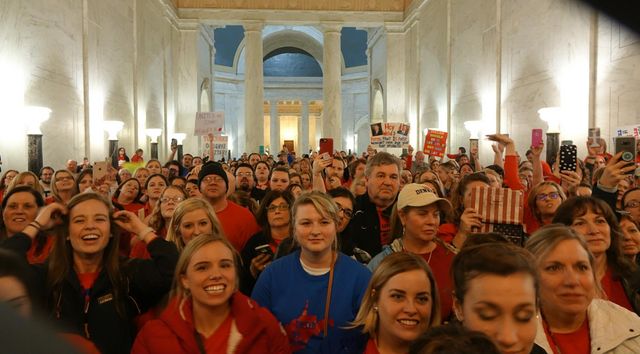
Teachers fill the capitol building in Charleston, West Virginia in 2018 (WSWS photo)
Using the CBPP data on declining state revenues, combined with estimates on the amounts that school districts will have to spend to cope with the pandemic—including additional costs to provide food to children, provide internet connectivity and devices, and to offset the educational regression that students have undergone—the Learning Policy Institute (LPI) recently estimated that states will require an additional $230 billion to fund education through the coming fiscal year.
In a separate analysis by LPI, the advocacy group projects that with a 15 percent loss in funding, roughly 319,000 teacher jobs would be destroyed. If state revenues decline by 30 percent, roughly 700,000 teaching positions would likely be cut.
Beyond public education, state governments provide funding for vital social services, including health care, housing, infrastructure, and social welfare programs. With the June 30 deadline for states to balance their budgets rapidly approaching, each of these programs are being cut in states across the country, with deeper cuts to take place throughout June.
The most drastic reductions announced so far have been in California, where Democratic Governor Gavin Newsom declared a $54.3 billion deficit through fiscal year 2021, nearly 37 percent of the state’s total general fund budget. Newsom recently announced a plan to cut 10 percent from the state’s K-12 education fund, amounting to $6.5 billion for the coming year. This will lead to roughly $500 million in cuts from Los Angeles schools alone, a year after over 30,000 teachers in the city went on strike to demand improved pay and school funding.
New York City already implemented $185 million in K-12 education cuts for the current fiscal year, primarily from the central office, and faces an additional $642 million shortfall for the coming year. In Broward County, Florida, where teachers joined a statewide strike earlier this year, officials have implemented a hiring freeze in anticipation of $35-150 million in cuts next year.
Earlier in May, Ohio’s Republican Governor Mike DeWine announced $775 million in cuts from the state budget for the current fiscal year, including $355 million from K-12 schools. At the start of the month, Georgia officials began planning cuts of 14 percent from their budget, including $1.4 billion from K-12 public education spending.
In total, 22 states have forecast budget cuts for the current fiscal year, ranging from three percent in Louisiana to as much as 18 percent in Utah. For the coming fiscal year, 30 states have announced estimated budget shortfalls, which will necessitate cuts as high as 24 percent in Colorado, 25 percent in Hawaii, and 30 percent in New Mexico. Huge portions of these cuts will fall on public education, which is the largest budget item in most states.
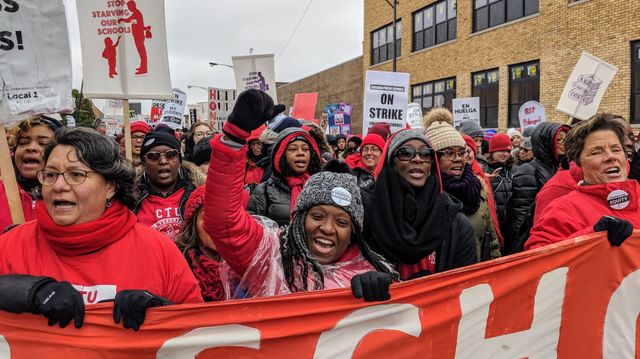
Teachers march in Chicago in 2019 (WSWS photo)
The response of the Trump administration and both parties in Congress has been to let the states starve. As part of the CARES Act, which passed with virtually unanimous bipartisan support, trillions of dollars were funneled to Wall Street and the large corporations, while merely $13.5 billion was provided for K-12 education.
Over the past week, Secretary of Education Betsy DeVos has been increasingly strident in demanding that states allocate significant portions of their minimal CARES Act funding to private and parochial schools. The billionaire heiress was brought into the Trump administration because she has long been a virulent opponent of public education, and she is now utilizing the pandemic crisis to further this reactionary agenda.
On April 30, the Department of Education issued guidance on how states should allocate their funding, mandating that districts provide proportional funding to private and parochial schools based on attendance, trampling over the separation of church and state and siphoning funds away from traditional public schools that serve more impoverished students. After facing criticism and defiance from some superintendents, last Friday DeVos stated that she will codify the guidance into state policy.
In a recent interview on SiriusXM radio with Cardinal Timothy Dolan, the Catholic archbishop of New York, DeVos made clear her intentions. Dolan suggested that DeVos was trying to “utilize this particular crisis to ensure that justice is finally done to our kids and the parents who choose to send them to faith-based schools.” DeVos replied, “Yes, absolutely. For more than three decades that has been something that I’ve been passionate about.”
Other aspects of the CARES Act earmarked for children’s social services are proving to be empty promises. Fully two months after the passage of the act, an emergency program supposedly meant to provide food to roughly 30 million impoverished children has so far only served 4.4 million, or 15 percent. The program, called Pandemic-EBT, was meant to transfer funding from school food programs onto electronic cards that families could use at grocery stores, but the federal government has utterly failed to coordinate its implementation, and most states have moved at a laggard pace.
Due to the failure to provide aid, 40 percent of mothers with children under the age of 13 are now experiencing food insecurity, while millions of Americans line up for miles at food banks each week.
Following the closure of schools, most districts implemented grab-and-go programs where families could pick up meals. There is no national data on how many students have used these services, but a weekly tracker in Philadelphia found that merely 11 to 36 percent of students in that city have been served each week.
While the CARES Act was passed in two days in order to prop up the stock market, the so-called HEROES Act is an act of political theater that the Democrats know will not pass through the Senate or be approved by Trump. As teacher unions and other pro-Democratic outfits hailed its passage, the act earmarks only $60 billion for K-12 education, far below what all experts anticipate will be needed. Senate Majority Leader Mitch McConnell (R-Kentucky) has declared the bill “dead on arrival,” while House Minority Leader Kevin McCarthy (R-Calif.) stated, “This is a political messaging bill that has no chance of becoming law.”
The looming cuts to education come at a time when schools need more funding than ever to ensure the safety and well-being of all students and educators amid the pandemic. School districts across the US are planning to reopen schools in the fall, following the demands of the Trump administration and Wall Street, which recognize the necessity of reopening schools to ensure that workers can return to their workplaces.
The WSWS Teacher Newsletter urges all teachers and educators to form independent rank-and-file committees in every school and neighborhood to organize a struggle against the planned cuts to public education, and to ensure the safety of all educators and students as districts demand the reopening of schools. The lessons of the wave of teachers strikes since 2018 must be assimilated, above all, the need for educators to maintain political independence from the pro-corporate Democratic Party and its enforcers in the teacher unions.
The central issue that animated the explosive series of teachers strikes—beginning with the powerful 2018 wildcat strike by West Virginia teachers—was the legacy of austerity imposed by the Obama administration and state governments run by both Republicans and Democrats following the 2008 financial collapse. While bailing out Wall Street, Obama oversaw the greatest transfer of wealth from the working class to the capitalists in US history, until the present crisis.
In a 2017 report, the CRPP noted that most states significantly cut education spending after 2008, and that by 2015 fully 29 states had yet to restore funding to pre-recession levels, including 12 states that cut per pupil spending by seven percent or more. During that same time period, the number of public K-12 teachers and other school workers fell by 135,000, while the number of students rose by 1,419,000, producing the overcrowded classrooms and dilapidated schools that are now ubiquitous across the country.
Every teachers strike that erupted in response to this defunding of public education—from West Virginia to Arizona, Oklahoma, Washington, Denver, Los Angeles, Oakland, Chicago, and more—was deliberately isolated and sabotaged by the teacher unions. The American Federation of Teachers (AFT) and National Education Association (NEA) isolated each struggle and peddled the lie that electing Democrats in 2018 and 2020 would improve conditions in the schools, as if the experience of the Obama administration never happened.
Huge sections of the over 700,000 teachers who went on strike over the past two years rightfully felt betrayed by the unions. Those who entered into struggle with a genuine desire to fully fund public education must now take the critical step of forming new, independent organizations of struggle. These rank-and-file committees, composed of all educators, including full-time teachers, custodians, substitutes, paraprofessionals, cafeteria workers, and all staff members, must fight to unite with parents, students and the broader working class to defend the social right to high-quality public education.
The provision of adequate funding requires a frontal assault on the private fortunes of the corporate and financial oligarchy and a radical redistribution of wealth. The pandemic has utterly exposed the bankruptcy of the existing capitalist system, and the necessity for a new form of social and economic organization, a socialist society based on upholding the interests of the working class.

UK students threatened with eviction during coronavirus pandemic

Peter Reydt & Laura Tiernan

One of the largest student accommodation companies in the UK issued threats to evict students and throw away their personal belongings during the coronavirus lockdown.
Student Roost, which operates accommodation in 20 cities across the UK, including Belfast, Sheffield, Birmingham and London, wrote to thousands of its tenants on March 25, advising them to “ensure that you are up-to-date with your rent payments up to and including 30 April.”
Students who had moved back home to shelter with family during the pandemic were instructed to notify Student Roost by April 13 of their intention to move out—but were told that rent payments would still be deducted for the month of April.
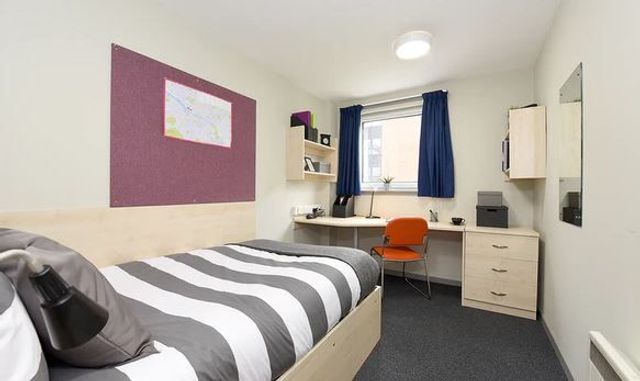
Student Roost, Classic Ensuite
A few weeks later, they received a follow-up e-mail warning that “you will need to be moved out by the 1 May” and that “any final charges for damages or additional services, such as removal of belongings and/or disposal of rubbish will be applied after this date.”
Rory Peters, a television production student from City of Glasgow College, was among those affected. He told the WSWS that students in his block “were given the same ultimatum as me: ‘come and travel however many hundreds of miles to get your stuff, illegally, or we’ll bin it.’ All my other flatmates got that e-mail.”
Around 200 students were living at Student Roost’s Buchanan View building in central Glasgow when the pandemic struck, “There were quite a lot of people who had no choice but to stay,” explained Rory, “because they had nowhere else to go. But there were people in the same situation as me, they felt it was safer to go home and stay with their parents.”
Rory moved back to his parents’ home in Inverness just prior to the March 23 lockdown, due to fears over a respiratory illness he had suffered in December.
He said that Student Roost’s actions were illegal and a threat to student safety, “There was one person who came to get their stuff whilst the lockdown was in effect. I guess that person had been strong armed into breaking the law by the student accommodation.”
Student Roost backed down after students complained its actions were illegal, but later e-mails carried the same implied threat. “They put it out that you can keep your stuff in the room if you come back and stay with us,” Rory said.
A survey by the National Union of Students (NUS) found that 80 percent of students throughout the UK are worried about how they will cope financially. Even before the pandemic, soaring rents were creating social distress. A survey by Save The Student in 2018 found 44 percent of students struggled to keep up with rent, with 45 percent of respondents saying their mental health suffered as a result.
Rory told the WSWS he pays £500 a month—his entire Student Allowance Supplement payment—for his room in Glasgow. “It’s a tiny room, about 1m x 3m and a bathroom to yourself as well. It’s almost a cupboard, so for the money you pay, it’s ridiculous. We had no hot water for one month.
“It’s just a very basic necessity that people shouldn’t be getting evicted during the pandemic. People shouldn’t be getting evicted at any time and should have homes regardless.”
For thousands of international students, stranded in rented accommodation away from their families, the situation is more dire. “I am a student in the UK and couldn’t travel due to flight suspension on March 19 and been stuck all alone in my uni accommodation for a whole 3 months,” a student tweeted last week, “please bring me back home to my parents.” Social media has been inundated with messages by students trapped as borders closed and the aviation industry ground to a halt.
Last year, there were more than 400,000 international students in the UK paying tuition fees worth more than £4 billion. Treated as little more than cash cows by universities, many students have literally been left to starve.
Indian National Student Association has delivered 3,900 food parcels to hungry students
The Indian National Students’ Association (INSA) has so far delivered more than 3,900 food parcels to Indian students left without money for food after their part-time jobs disappeared overnight. International students are not eligible for any form of welfare benefits. In addition to food parcels, INSA has fielded over 2,300 phone calls, 2,800 e-mails, arranged emergency accommodation for 325 students, and has dealt with 65 health-related issues.
Charan Sekhon, chair of Anglo-Indian charity Seva Trust UK, told the Guardian it had delivered food parcels to more than 60 Indian students in the Bedford area, saying, “We have had lots of examples where students are actually starving. They haven’t got anything at all to eat.”
This situation has provoked outrage among students. Rent strikes have broken out at universities in Sussex, Warwick, Bristol and Lancaster, with students calling on university authorities to cancel rents and to reimburse students for all third-term rent already paid.
Many of the students’ demands reflect the deep sense of injustice felt more broadly in the working class, including that students be allowed to stay in their accommodation for the duration of the lockdown and to make empty bedrooms available for any students who need them.
An online petition demanding the cancellation of all fees due to the pandemic and strikes by lecturers has gathered 341,407 signatures. The petition notes, “All students should be reimbursed of this year’s tuition fees as universities are now online only due to COVID-19.” More than 1,600 students have signed a petition against Fresh Student Living, which says, “It is categorically unfair and greedy to charge students for rent if they are unable to live in their accommodation.”
Private sector student accommodation has mushroomed in the past decade, largely off the growth of the international student market. Since 2014-2015, the number of students in private sector halls of residence has increased by 36 percent, with the “market” worth an estimated £5.2 billion in 2019—up from £1 billion in 2011—according to JLL UK Capital Living Markets Q4 Report. Some providers, such as Unite Students, have let students surrender tenancy agreements and are refunding money paid in advance. Others, such as Fresh Student Living—which owns 16,000 studios in the UK and Ireland—have warned that tenants might not be released early from their contracts.
Boris Johnson’s Conservative government has responded to the outpouring of online protests and petitions from students with indifference. A Department for Education spokesperson said it encourages universities and private landlords “to consider students’ interests and fairness in their decisions about rent charges for this period.”
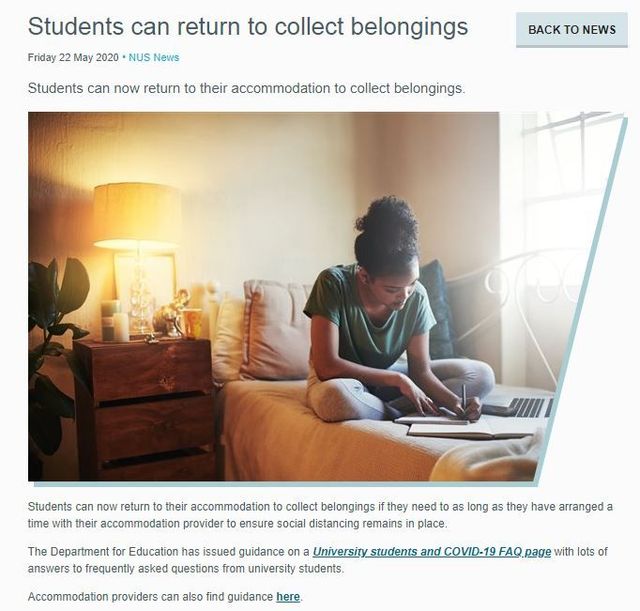
National Union of Students website directing students to the Johnson government's coronavirus “advice”
In the midst of a massive social crisis affecting hundreds of thousands of students, the National Union of Students (NUS) does not even mention coronavirus on its homepage. In the news section of its website, the NUS carries an article headlined, “Students can now return to their accommodation to collect belongings,” with a link to the Department for Education’s guidance document for students, issued on behalf of the Johnson government!
The Socialist Equality Party calls for the formation of rank-and-file committees at universities and colleges uniting students and staff. Such committees should formulate demands to protect the health, safety and well-being of students and staff, including a living wage for all students during the pandemic. The billions of dollars controlled by private accommodation providers, developers and investors must be seized and used to provide for the needs of students.

UK: Johnson government to unveil second multi-billion bailout of big business

Robert Stevens

UK Chancellor Rishi Sunak is rolling out “Project Birch”, the government’s second major pandemic bailout for big business.
Project Birch follows on from the handing over of nearly a trillion pounds in the form of quantitative easing of £645 billion and £330 billion in business loans. If required, the Treasury is planning to take shareholdings in struggling corporations, as it did with some banks it bailed out after the 2008/09 financial crash.
Sunak will “save strategically important companies”. Any private conglomerate will be propped up whose failure would supposedly “disproportionately harm the economy”. The Financial Times commented, “Under Project Birch… Sunak has increased the capacity of the Treasury to handle bespoke bailouts of ‘viable companies which have exhausted all options’, including government loan schemes.”
As well as handing out billions in bespoke bailouts, speculation is mounting that Sunak will take state equity into companies “drowning in debt.” The FT cited the “chancellor’s allies,” who “said the Treasury would not initially look to take equity stakes in struggling companies, some of which do not have investment-grade credit ratings and cannot access a Bank of England commercial loan scheme. The preferred option would be to extend loans” to corporations and “Other ‘bespoke’ rescue schemes being examined could see state loans advanced which convert to equity.”
How advanced talks are over creating a body for the purpose of the government purchasing stakes in firms was revealed by the FT’s report. It stated, “Jim O’Neill, former Treasury minister and ex-chief economist at Goldman Sachs, has discussed with government officials the creation of a public-sector-owned funding body—perhaps with an initial investment capacity of £25bn—to take stakes in ‘inherently stable’ businesses. ‘You convert into preferred equity on the assumption that some of these companies have a good future, then flog them—à la Margaret Thatcher—over time,’ he said.”
Corporations are queuing up for the additional handouts, including Virgin Atlantic owned by multi-billionaire Sir Richard Branson. Branson has been seeking around £500 million in funding from the Johnson government. This provoked widespread outrage, as Branson is a notorious super-rich tax exile. In March, all Virgin Atlantic staff were told “to take eight weeks unpaid leave over the next three months, with the cost spread over six months’ salary, to drastically reduce costs without job losses.”
Virgin announced it was “grateful to have the support of BALPA and UNITE [trade unions] … in agreeing to support unpaid leave, alongside other extensive measures.”
The firm announced “a one-time voluntary severance package to all employees”, “Deferring annual pay increases until review in January 2021” and “Reducing employer pension contribution for a period of one year.”
Having pushed through the pay cuts, this month Virgin still announced plans to axe 3,150 jobs from its UK operation and end operations at Gatwick Airport.
Along with Virgin Atlantic, the FT notes, “Loganair are already in talks with the government, while Tata Steel has also said it is discussing what support might be available.” According to reports, Tata Steel, the UK’s largest steel producer, is seeking a financial injection from the UK and Welsh governments worth around £500 million.
The Guardian’s report on Project Birch noted, “Jaguar Land Rover is in talks with the government over potential state aid of as much as £1bn, while Aston Martin has said that it is looking at options for further government funding.” Engine manufacturer “Rolls-Royce is discussing extra government support through existing research funding programmes.”
These bailouts are on top of the massive subvention to big business via the furlough scheme, under which the government is paying 80 percent of the wages of around 8 million workers. At least a quarter of the FTSE 250 index corporations are receiving these funds, with at least 20 billionaires benefiting. This largesse is costing the taxpayer £15 billion a month.
Ending the furlough scheme is central to the government’s agenda of returning millions to work under unsafe conditions. Sunak is set to announce major restrictions ahead of its effective ending in August. According to the Financial Times, Sunak will ban any new employees from entering the scheme from the end of July. Reports suggest Sunak will tell employers that from August 1 they must fund 20-25 percent of furloughed workers’ wages. Though the scheme supposedly runs until November, few companies will meet the additional costs from July 31. The majority of firms have already refused to pay the additional 20 percent to make wages whole under the present arrangements.
Sunak is also considering ending the state finance paid to two million self-employed people. Payments are due to expire in just a few days. Three quarters of self-employed people are reliant on the scheme and ending it would leave around 1.5 million workers without any income.
The Labour Party and trade union bureaucracy immediately endorsed the latest bailout proposals. Shadow Chancellor Anneliese Dodds declared, “We have been calling for some time for the Government to take a more strategic approach and ensure it supports critical UK industries.”
Steve Turner, assistant general secretary for Unite, said, “It’s very welcome news that a rescue plan for UK plc is finally taking shape. There is no more time to lose if we are to prevent a tsunami of job losses from sweeping through communities this summer.”
The claim that shoveling further billions at the corporations will stem a further jobs cull should be treated with contempt. Since the beginning of the pandemic, the major corporations have not only taken advantage of an unprecedented crisis to slash workers terms and conditions, but have also announced tens of thousands of job losses. First among these are firms now seeking additional bailouts, including Rolls-Royce (9,000 jobs), Virgin Atlantic (3,150), British Airways (12,000). Others are Anglo-German TUI (8,000), the world’s largest tour operator, P&O Ferries (1,100), Britain’s second-largest energy supplier OVO Energy and heavy construction maker JCB (950).
The support of the unions for further bailouts was guaranteed by their pro-capitalist agenda and integral role in advocating a “mass return to work.” The unions played a critical role in Sunak’s original bailout out programme. Trades Union Congress leader Frances O’Grady hailed Sunak’s £350 billion loan guarantee scheme as “real leadership” and boasted that she was “glad he’s listened to the unions.”
The UK’s ongoing bailout takes place in the context of a developing trade war among the major global powers. In recent days, Germany’s flagship airline Lufthansa has been handed a €9 billion bailout, with the government taking a 20 percent share in the company and given a veto in the event of a hostile takeover bid. Berlin has established a €100 billion fund to take stakes in ailing but strategically important corporations.
On Wednesday, the European Commission announced it will hand over a further €1.85 trillion to corporations across the continent. The plan will be central to the EU’s long-term budget (2021-27) and a special recovery fund titled Next Generation EU.

Yemen’s health care system collapses under weight of pandemic

Jean Shaoul

The UN Office for the Co-ordination of Humanitarian Affairs (OCHA) has warned that Yemen’s health care system has “in effect collapsed” and coronavirus is spreading across the country.
OCHA’s spokesperson Jens Laerke described the situation in Aden as “extremely alarming.” People were being turned away from treatment centres partly because staff lacked personal protective equipment (PPE). The city’s cemeteries are overflowing.
Laerke said OCHA’s efforts to combat the pandemic would fail without urgent financial support. Its programmes would have to close, and “then the world will have to witness what happens in a country without a functioning health system battling COVID-19. And I do not think the world wants to see that.”
While the authorities confirmed the first case of COVID-19 on April 10 and have reported 233 cases and 44 deaths since then, these figures are widely believed to be a vast underestimate of the scale of the pandemic. The absence of health care infrastructure across the war-torn country means that there is a lack of testing, many cases go undetected, and many are dying due to a lack of the most basic medical care.
On May 14, Save the Children said nearly 400 people in Aden died of coronavirus-like symptoms in just one week and warned that several hospitals in the city had closed, with medical staff refusing to go to work for lack of proper PPE.
Mohammed Alshamaa, Save the Children’s director of programmes in Yemen, said, “People are dying because they can’t get treatment that would normally save their lives. There are patients who go from hospital to hospital and yet cannot get admitted. We’re hearing of families who have lost two or three loved ones in the past few weeks.”
Medecins Sans Frontieres (MSF), which runs Aden’s only dedicated COVID-19 centre for the whole of southern Yemen, said that in the first 17 days of May it admitted 173 patients, at least 68 of whom died. Many patients were arriving at the centre already suffering from acute respiratory distress syndrome, making it hard to save their lives and suggesting that many more people were sick and dying at home.
Caroline Seguin, MSF’s operations manager in Yemen, said, “We are overwhelmed,” adding, “We were obliged to refuse patients because we didn’t have enough oxygen and medical staff to be able to treat the patients. So, it’s very heart breaking.” What they were seeing was “just the tip of the iceberg.”
MSF believes that 40 of its staff have been infected but cannot confirm this without testing. It estimates that about 80 people are dying in their homes every day in Aden, up from the normal 10 a day.
While the mortality level in its treatment centre was similar to European hospitals, the people dying were much younger—mostly men between 40 and 60 years old. She added that “Diseases such as malaria, dengue and chikungunya are endemic to the city, but they have never produced so many deaths in such a short amount of time.”
These diseases too have spread following the recent floods that ravaged much of the country, killing at least eight people in Aden, worsening water and electricity shortages, and affecting several hundred thousand people.
In March 2015, the Saudi monarchy launched a military campaign—primarily fought from the air—to suppress the Houthi rebels who had taken control of Sana’a, Yemen’s capital, and to reimpose the unelected puppet government of President Abd Rabbuh Mansur Hadi, now holed up in Riyadh.
The ensuing war has led to the death of more than 110,000 people, the wounding of hundreds of thousands more and the internal displacement of 3.6 million people. Saudi-led coalition’s airstrikes—more than 257,000 in the five-year war—initially targeted Yemen’s military establishment, but have since hit civilian targets, including homes, hospitals, schools, buses, and weddings, accounting for more than two-thirds of Yemen’s civilian casualties.
Saudi Arabia, aided and abetted by US and UK weapons, training, intelligence, aerial refueling, and Special Forces support, has pulverised Yemen’s physical and social infrastructure, including the destruction or closure of more than half of the country’s health care facilities and much of its water and sanitation network. Washington and London also ensured that the UN Security Council imposed sanctions against the Houthi rebels, without a single condemnation of Riyadh’s killing spree.
The Trump administration has backed the war in Yemen as part of its efforts to forge an anti-Iranian alliance made up of the Saudi monarchy, the Persian Gulf Sunni oil sheikdoms and Israel, branding the Houthi rebels as an Iranian “proxy force.”
Saudi Arabia and its allies intervened in Yemen, which along with Djibouti controls the southern entrance to the Red Sea through which much of the region’s oil exports are shipped, to prevent the emergence of any government on its southern border it doesn’t control. It also fears that the Houthis might provide an example for its own oppressed Shia minority in its main oil producing region.
The result is the world’s worst humanitarian catastrophe, in a country that was the Arab world’s poorest even before the war. At least 14 million Yemenis are on the brink of famine, while 80 percent of the country’s 24 million people are reliant on food aid. Save the Children estimated last year that at least 75,000 Yemeni children under the age of five have starved to death since the onset of the war.
The country has been ravaged by the worst cholera epidemic on record, with an estimated 1.2 million people infected and at least 2,500 deaths, and most recently by dengue fever in Hadramawt province. This is due not only to the destruction wreaked by the Saudi bombing campaign, but its punishing air, sea and land blockade of the country, aided by the US Navy.
Last summer, the United Arab Emirates (UAE) pulled out of the Saudi-led coalition, giving succour to Islamist forces in the Southern Transitional Council (STC) seeking an independent southern state of Yemen. This would facilitate the UAE’s own influence over the Red Sea and access to the Horn of Africa and the southern Mediterranean. In Libya, the UAE is supporting the forces of General Khalifa Haftar against the internationally recognised but isolated government in Tripoli. Since then, Abu Dhabi has made overtures to Iran, Syria and the Houthis.
At the beginning of April, following the collapse in oil prices and the failure to achieve any of its objectives in launching the war, Saudi Arabia announced a unilateral ceasefire, publicly citing concerns over the spread of the coronavirus, in an effort to bring the Houthis to the negotiating table. While the ceasefire has yet to be implemented, the violence has abated.
Last month, the STC announced that it was pulling out of the agreement made with Riyadh last November to end its conflict with the Hadi-led government, join a new national cabinet and place all its forces under “government”, i.e., Saudi control. It declared a state of emergency and said it would establish a self-ruled administration in the regions under its control in South Yemen, taking over the state institutions, port and airport in Aden, a move opposed by some of the southern provinces.
All the different factions have taken over treatment centres, looted their facilities and threatened, injured, kidnapped, and killed health workers, prompting almost all foreign medical professionals—25 percent of the workforce—to flee the country. Yemen now has only 10 health workers per 10,000 people, less than half of the minimum number recommended by the World Health Organisation.

Over 62,300 US health workers infected and 291 dead from COVID-19

Katy Kinner

According to new data from the Centers for Disease Control and Prevention (CDC), 62,334 health care workers in the United States have been infected with COVID-19 and at least 291 have died. Just six weeks ago, on April 17, the CDC said infections among health care workers totaled 9,282, with 27 fatalities.
The CDC admits that these numbers are likely an underestimation because only 21 percent of those who are infected identify their profession. In addition, there are low testing rates among health care providers, with the National Nurses United reporting that only 16 percent of nurses surveyed in a recent nationwide study had been tested.
Amidst climbing infection rates, banners pronouncing health care “heroes” dawn parking garages, lawn signs and water bottles are passed out for “national nurses week,” and saccharine messages from hospital CEOs clog work email inboxes.
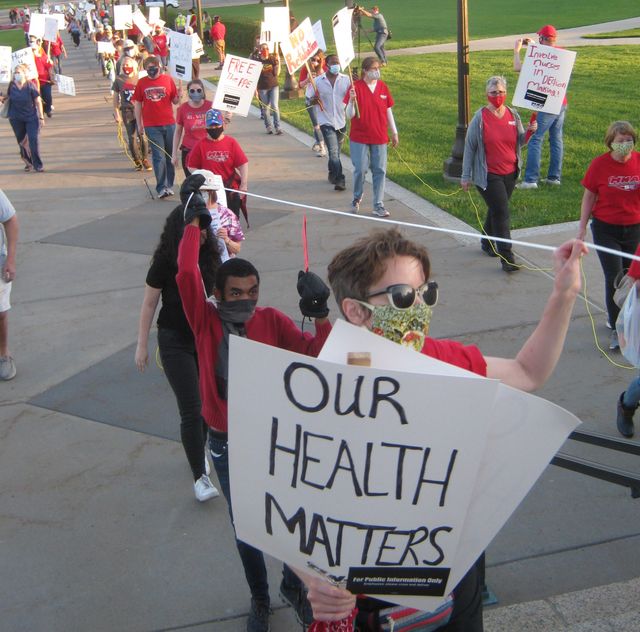
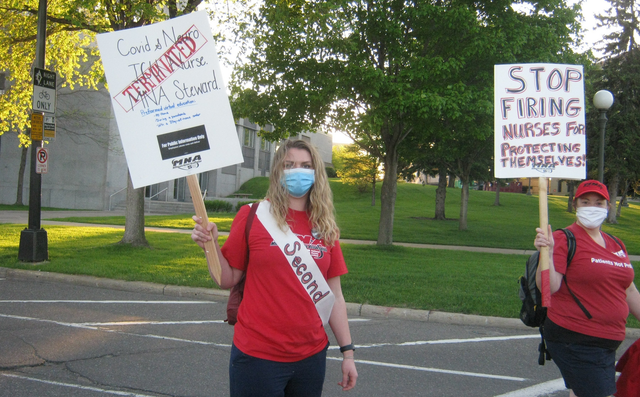
Minnesota nurses protested on May 20 at state capitol to demand PPE and an end to retaliatory firings
But the widespread employer and governmental neglect of hospital worker safety cannot be disguised. Respiratory therapists, physicians, residents, medical scribes, nurses, lab technicians, nurse assistants, social workers, physical therapists and occupational therapists are in and out of patients’ rooms on an hourly basis. Without the proper protection or protocol, each exam, lab draw, bed linen change, medication pass or nebulizer treatment is a potential moment of exposure putting workers and patients at significant risk.
Health care personnel who work with patients with known COVID-19 infections as well as workers maintaining other medical services throughout the pandemic are facing unsafe conditions. In some areas, these conditions are worsening as states reopen, elective surgeries are restarted and hospital infection control policies and procedures are relaxed amidst the blaring and false proclamation that the pandemic is virtually over.
The aforementioned National Nurses United study collected data from 23,000 nurses across the country with results spanning April 15 to May 10 and questions focused on dangerous health care conditions. Eighty-seven percent of nurses report reusing single use respirator or surgical masks. Before COVID-19, this practice was unheard of. Masks were disposed of after each patient encounter and removed with evidence-based techniques that reduce chances of contamination.
Now, nurses place their surgical masks in their scrub pockets during lunch breaks or reuse an N95 for up to a week, placing it in a brown bag at the end of the shift. Additionally, the fit of N95 masks, which must be sized correctly for each individual—a process called ‘fit testing’ that health care workers go through annually—is compromised after multiple uses and can fail to protect the wearer after multiple days of use.
Twenty-eight percent of respondents reported being forced to reuse ‘decontaminated’ N95 respirators while working with confirmed COVID-19 patients, a process which has not yet been scientifically deemed safe or effective.
It is well known that inadequate PPE puts hospital workers at an increased risk of exposure to COVID-19. After known exposure, there are certain steps that must be taken to mitigate further spread. While policies and procedures vary hospital to hospital, the CDC recommends that any health care worker exposed to a known COVID-19 case without PPE should self-quarantine for 14 days, seeking testing only if symptomatic. If wearing proper PPE, health care workers resume work as normal, seeking testing or self-quarantining only if symptoms arise.
These recommendations are truly just recommendations, with no legal implications for hospitals that do not follow these specific policies. The recommendations are also inadequate and do not account for the well-known fact that the virus can be transmitted pre-symptomatically and asymptomatically.
Workers are often unaware of exposure. Most hospitals do not have a system to retroactively alert workers who had close contact with a patient who tested positive days later on a different unit or once returned home. Hospitals that do have such a system are overloaded with cases and often unable to reach workers by phone for several days to a week, a time within which that worker has interacted with tens or hundreds of patients or coworkers.
Under the pretense that the worst of the pandemic has passed, policies that once graced a lucky few—providing paid time off or hazard pay for infected or exposed workers—have been withdrawn.
The conditions facing health care workers during the pandemic are the product of a decades-long social counterrevolution in which the health care infrastructure has been pushed to the brink in the interest of the enrichment of a tiny oligarchy. Prior to the COVID-19 outbreak, rural hospitals hemorrhaged funding, nursing shortages and unsafe staffing ratios pushed nurses across the country to protest and deep cuts to Medicaid created provider shortages and spiraling health care costs.
Since the onset of the pandemic, hospital workers have protested lack of PPE and unsafe conditions. As Latin America becomes the new epicenter of the virus, protests by medical workers have spread across Mexico, Brazil, Peru, Colombia, Ecuador, and Honduras in recent weeks, raising the same basic concerns, including the lack of adequate personal protective equipment (PPE), medicines, respirators, testing and personnel.
Fired COVID unit nurse Monica Norberg (left) at St. Paul, Minnesota rally
In the US, health care workers across the country have reported being reprimanded or fired for speaking out against the conditions in their hospitals that put their lives and their patients’ lives at risk. While unions have organized a number of the protests, they have predictably worked to channel anger back behind the Democratic Party, which has long worked with the giant hospital chains, insurance companies and other health care corporations to slash costs, reduce staff and increase the exploitation of health care workers.
Whatever their tactical differences with Trump, the Democrats are equally committed to the reckless reopening of the economy and lifting of social distancing measures, even as a new surge of patients overwhelm intensive care units in Mississippi and other states. The class interests the Democrats serve was on display this week when New York Governor Andrew Cuomo—who recently signed a budget bill that provided legal protections to nursing home operators—rang the opening bell at the New York Stock Exchange.
As the national death toll continues to rise and health care workers are needed more than ever, nearly 1.5 million health care workers lost their jobs in March and April. While a majority of those laid off worked at dental practices and smaller outpatient practices, some mass layoffs occurred at hospitals overrun with COVID-19 patients.
At the same time, as part of the bipartisan CARES Act, the Department of Health and Human Services has granted $72 billion (with plans to disperse an additional $100 billion) to hospital groups, largely favoring some of the wealthiest institutions. A Kaiser Family Foundation study recently found that hospitals with a higher share of private insurance revenue received roughly twice as much CARES Act funding as poorer hospitals serving primarily Medicaid patients.
As large sections of the working class, including the health care “heroes,” are forced to put their lives and their families’ lives at risk, the political establishment has come together to give a limitless amount of funds to the largest corporations.
In response, health care workers should form rank-and-file safety committees to oversee health and safety conditions in their workplaces and fight to implement those measures necessary to protest health care workers and patients, regardless of the cost to the corporations’ bottom line. The fight to defend the day-to-day interests of workers must be fused with the development of a powerful political movement of the working class to fight for socialism, including the replacement of for-profit medicine and with a system of socialized health care.

27 May 2020

Investigating the Visual Spectre of Covid-19 in India

Raj Kumar Thakur

In days to come, social scientists will write varied accounts on the responses of the Indian state to the ongoing pandemic called Covid-19. Academicians will deploy the visible categories of class, caste, race, gender, religion, economy, centre, state, region, demography and many more to enquire and weave multiple narratives. Each study would offer us new perspectives to look into ourselves, to ask and answer how we responded, and to know that it impacted each of us, differently. While thinking about Covid-19, three themes came to my mind. The first theme is the visual spectre of stillness and movement; the second theme is the visual spectre of disciplining and punishing; and the third theme is the visual spectre of philanthropy and heartlessness. I feel that these three themes when combined together can be used as a window to most studies that investigates the visual spectre of Covid-19 in India.
But before discussing on these three themes, let me explain to you about the term ‘visual spectre’. By visual spectre, I mean the circulation of images that can excite as well as shock, images that can invoke fear, fill you with suspense, thrill and at the same time, generate relief. Looking at how history has unfolded, one can argue that before our era, no historical era had the capability of producing such powerful spectacles. Our era has access to wide range of ‘information’. These set of ‘information’ reach to us through the machinery called print and the visual media, and of the two, the latter stands out. Visual media has mastery over images. It has the power to excite us in a fraction of second, and leave us shattered. It makes us converse. It knows the ways to convince you – by showing moving images, by invoking emotions of varied kinds, and by casting a spell. Thus it has both the authority and the legitimacy to create and present the most powerful spectacles. Therefore, our era is distinct from all other historical periods. This makes the pandemic even more distinct. Thus, anything that travels to us, reaches us, ‘informs’ or ‘misinforms’, gets magnified. Having defined what a visual spectre is, let me introduce you to the intricacies of the three themes.
  1. Spectre of Stillness and Movement:
How did the image of the present pandemic reach the subcontinent? It reached us through the visual media. Under this visual spectre, the first image that we get to see is the image of India moving in masks. The images show the people in the airports, railway stations, and other means of transport: are moving with masks. But the movement of people is seen as a symbol of infectiousness. Therefore, the next image we get is that of stillness which came to us in the form of lockdown. Lockdown has the power to cast a spell of shock. We get to see the visuals of locked factories, locked institutions, locked commercial establishments and locked homes. This moment of stillness is presented as a universal answer to the crisis. The elite and the middle class legitimise it. Very soon, we have visuals of celebration. For most elites and middle class, it gives them the required time to think, read, and write. For many others, it allows them the opportunity to focus on their physique, engage in gardening, spend time with their families, the superstars of cinema teach us to cook, to sweep and to wash. The television and the world of internet fill our loneliness by presenting to us a sea of theatrical performances with varied emotions. India in stillness is worth observing. It teaches us to abide by fear and to be atomic beings.
On the other hand, the same stillness celebrated by the elite and the middle class as an opportunity for self-discovery also shows that all is not well with the visual spectre of stillness. The stillness meant putting locks on all formal and informal modes of the economy. In other words, it meant that this stillness sealed the stomach, i.e., the life and livelihood of millions and millions of people. Very soon, we see movement, people who have nothing to lose (for they have already lost everything) come out. They come out to board buses, to board trains so that they could go from where they came. So, we have another spectre, the visual spectre of movement. The spectre of movement shatters the mirror of stillness. Many decide to walk. Hopeless, homeless, and dejected: India moves. This movement of millions generates another shock.
Amidst these, we have another visual spectre: the spectre of a religious congregation at the national capital. The new visuals show ‘congregators’ moving. The fear of movement that had shaped the psyche of the elite and the middle class is automatically revived. The visuals show fear moving; it shows ‘explosion’ of Covid-19. The already fearing elite and middle classes get agitated by this image of the fear of disease moving. It is a visual spectre of movement: a movement seen as ‘illegal’. Now, we are fed with the images of ‘carriers’ and ‘super spreaders’ of the virus, i.e., the religious congregators, foreigners, the workers, the vegetable sellers, the barbers, and every day the figure keeps expanding. Social networking sites become sites of battle. Some say, “these people, they are spreading the virus”, others say “they should be chased and punished,” still others say, “how can they put the nation to risk.” Opinions are polarised. These powerful visuals continue to excite us, polarise us. Most states, try to locate them, chase them, find them, social networking sites circulate messages about their whereabouts. The state and the people are not at rest until those who move are ‘quarantined’. By this time, we have the spectacle of numbers. We get the digital figures of a rising number of patients. I, therefore, believe that both these visuals of stillness and movement have the power of shock. It shocks and shakes our imagination. It constructs and at the same time, leads to cracks.
  1. Spectre of Disciplining and Punishing:
If one has to ask – how was the state visible to us during the pandemic, then, what will be our answer. Any laymen shall say that we saw the state in uniform. Men in uniform were there to ensure discipline during this stillness. Stillness meant that even a single movement could generate ripples. So, people flocking in the market, to purchase essentials was another spectre of movement. This movement had to be within the limits of the law, there were specific terms and conditions, such as there was to be ‘physical distancing’, people had to cover their face with masks, they were not allowed to spit in public, they were to use soaps and sanitisers. To ensure this limited movement which was guided by the principle of stillness, the forces moved. They moved to restore the balance of stillness. So we had another visual spectre – the spectre of the police personnel disciplining the crowd, i.e., using force to ensure that there was no unlawful gathering. We again had the elites and the middle classes responding. Most of them were agitated and aghast with the visuals of a breach in the discipline. They fear that because of mistakes of the undisciplined people, the virus would reach them. Social networking sites were filled with visuals of people violating lockdown and the crackdown by the forces. These visuals were debated. Most criticised and mocked the masses and praised the men in uniform.
Another aspect of discipline is the ongoing regulations to which we all have to abide by. The videos of our superstars teaching us how to wash hands were imitated by households who were glued to the visual media. Sneezing and coughing become reasons enough to cause panic in society and disciplining got further entrenched through community surveillance. All those who had come before the lockdown from other states to their home towns were required to stand still, and those coming during lockdown also had to stand still. ‘Quarantine’ becomes the norm, or the norm is to ‘quarantine’. We get to see ‘corona warriors’ all around. They are there to ensure stillness. To most people, corona is understood as arising from movement. Movement is seen as a threat. Under the given circumstances, stillness becomes the solution.
The visuals of disciplining and punishing have the power to cast the spell of fear. Gradually, fear acquires a life of its own. Even those acting as saviours become victims of the fear. In most localities, most doctors and nurses begin to be feared, many are denied entry to households, to the colonies where they stay, even hospitals and quarantine centres and medical kits are feared. Moreover, the daily updates of increasing numbers continue to shock. The dead become the ‘untouchable’, and many bodies go unclaimed. The visuals of disciplining casts such a spell that not just the diseased, even the dead are feared.
  1. Spectre of Philanthropy and Heartlessness:
During the times of Covid-19, the most striking images are not those of the diseased; instead, it is of the helplessness and hopelessness of people who lost their livelihood and decided to march back home. Hunger of such scale is unprecedented. Maybe we can map the number of workers who lost livelihood in the formal sectors, but most workers who are part of an informal economy: how do we map them. Moreover, what would have happened to those who sold their traditional skills such as the cobblers, the washer men, the barbers and many such professionals who sold their skills to earn a livelihood. Will we be able to know? As the images or starvation cannot be hidden for long, we, therefore, get to see the visuals of hunger. The spectre of starvation and hunger shocks the nation. People crying and begging for food, people standing in a queue to get food – all these images shatters the image of the celebration of the lockdown done by the middle classes and the elites. The same people who were teaching us how to do gardening, cook, sweep, exercise – are also shaken to some degree. They are moved by the visuals of hunger and turn philanthropic. Some arrange for rations, some for a medical kit, some arrange for medicines, some arrange for buses. We get to see the images of donation. Every day in the digital space, the term ‘care’ gets a new life. The figures of voluntary donations continue to grow. The patients continue to rise, and gradually, the philanthropist realises that there is a limit to philanthropy.
By this time, the migrant workers realise that the visuals of philanthropy do not fill their stomach. Stillness continues to be the norm, the middle classes and the elites continue to celebrate stillness, and amidst all this, the migrant workers defy stillness and continue to move.
The spectacle cast by the clanging of utensils, the lighting of candles, the showering of petals are measures that will be contrasted against the visuals of people walking a thousand miles and dying of dehydration, pregnant women delivering child on the road, people being beaten and chased by police for walking, and above all the spraying water and sanitiser on those who march to their home districts. These visuals show brutality, fear, and heartlessness. Heartlessness is further revealed when the principles of a free-market economy is utilised to resolve the ongoing crisis. Now, the state asserts that the present crisis should be seen as an ‘opportunity’. Amidst the visuals of workers flocking trains, buses and walking, our statesman argue that they should lay the foundations to attract and lure the global companies that might be exiting our neighbour country. This idea is based on the hypothesis that because of the pandemic, incessant campaigns have negatively impacted the global image of one of our neighbouring countries; therefore, the global capitalist class are not willing to further risk their capital. As they might withdraw and are looking for virgin territories, so our statesmen see this as an opportunity to woo the withdrawing capitalists and ‘lure’ them to India. By ‘luring’ capitalist class, our statesman hopes that all our woes of unemployment and poverty would be resolved.
In this imagination, our country is projected as an untapped and unutilised virgin territory which is ripe with raw materials. The raw materials are to be tapped by employing migrant workers, who will have nothing but labour to sell. Now there is another spectacle, the spectacle of labour reforms. Suspension of labour rights is announced with great pomp and show, and the resistance of the trade unions is cornered to make way for a self-celebratory model that reduces labour into mere means of production. The visuals of indigenous entrepreneurs debating on the new reforms show a new face of ‘opportunities’ at the cost of labour laws. By increasing the working hours, and by dispensing with the trade unions, they argue that we are facilitating for the flow of capital.
Should capital be allowed to flow at the cost of labour? Work is one aspect of life, maybe a dominant aspect, but work is not life. While working on the life of workers, I have learnt that people migrate in search of life and livelihood. I have learnt that even amidst adversities, the workers have tried to imagine a better life both for themselves and their children. It has also taught me that every worker aspires for the reduction in working hours, they aspire for a decent wage, better access to health facilities and rest. No worker expects to be devalued, they value their honour, and they expect that the managers and the employers treat the workers with respect and dignity. I have also learnt that the establishment of labour courts and trade unions, demand for inspection of industrial units through inspectors and welfare officers, have been part of global labour movements through which the workers were able to negotiate for their economic, political, social and cultural rights. In addition to all these aspects, I also learnt that after spending their time in the workplace, the workers expect that they get ample time to speak to themselves, to introspect, to dream, to aspire and to imagine that work is one aspect, maybe a dominant aspect, but work is not life.
But the moment one erases these aspirations, these histories of struggles and rights, the workers get reduced from citizens to mere means of production. You erase these aspirations: you see subjects, you suspend labour rights, and you see humans in chains. The exponents of the free market theory argue that a capitalist should be allowed free access to resources. If capital is allowed to flow, it will spread its branches and expand. They argue that labourers should abide by the rhythm of capital, and if they do so and they shall be rewarded. This idea was dominant in the 18th and 19th century. This unrestricted flow of capital allowed several European countries like England, France, Germany, and also countries like America, and Japan to flourish, and expand. But at what cost? We all know the cost. I hope we have not forgotten the drudgery and dungeon of the industrial revolution. The visuals of ships and steamers laden with slaves and indentured labourers, I hope we have read the books that taught us about the pains of being a subject of empire. The unregulated capital gave us the most heartless system called imperialism that thrived on colonialism. I hope our generation is aware of the fight for colonies, the bloodied battles of history, the rise and fall of totalitarian states, and the worst economic crisis.
In the age of imperialism, the movement and migration of people, the flow of capital and goods, was unprecedented. The anti-colonial struggles across the world exposed the limits of capitalism. It exposed how capitalism thrives on colonies, how the prosperity of the mother country is inversely proportional to the pauperisation of the periphery. Simultaneously, the struggles of the workers throughout the world and their demands shaped and still continue to shape the reforms in working hours, wages, housing, health, education, etc. The journey of subjects to citizens, the journey from slaves, serfs, bonded labourers, and indentured labourers to workers is a journey of how social, economic, and political rights got entrenched into the framework of the state. But during the times of Covid-19, we get to hear and see about the rants of national economic reconstruction, the need to rebuild the economy, and we also hear about economic packages which appear as magical numbers. This package is celebrated by the middle classes and the elites and remains mostly incomprehensible to the workers.
These three dominant and contrasting visual spectres inform us o f how we responded when a crisis hit us. It brings to light the biases of the elites, their philanthropy and the limits of philanthropic ideas. It shows how fragile is our economic and political system and how it is ready to exploit even amidst crisis, it also shows how insecure we are as a village, town, society, state and nation that resorts to numerous binaries and invents new enemies to guard itself. It exposed our moral values and ugliness that decorates the many constructs which we human being have ‘collectively’ invented. By paraphrasing George Orwell, one can argue that under the leadership of the present political class, be it any crisis – some people would be more equal than many, some would be more secure than many, and some who would decide, dictate, and govern on behalf of many. The crisis reminds me of one of the talisman of one of the most debated thinkers of the twentieth century, Mahatma Gandhi. He used to say that whenever you are in doubt, or in crisis, “recall the face of the poorest and the most helpless man whom you may have seen and ask yourself if the step you contemplate is going to be of any use to him. Will he be able to gain anything by it? Will it restore him to a control over his own life and destiny?” Thinking within the frame of this talisman, one can argue that during the visual spectre of Covid-19, we as citizens suspended our reason, fear filled our hearts, the state distanced itself from its citizens, our political class ran away from their responsibilities, and we as individuals forgot to introspect on even the questions of what constitutes a human being.