5 Jun 2020

US colleges prepare full opening of campuses in the name of football

Andy Thompson

American colleges and universities have begun announcing plans for how they will reopen campuses for the fall 2020 semester amid the ongoing COVID-19 pandemic, with many schools indicating that they will operate on a modified schedule or implement more online learning options for the fall. However, many prominent schools including the University of Louisville, Syracuse University, the University of Texas at Austin and Ohio State University, among others, have unveiled plans to reopen with in-person classes and other school activities for the fall semester.
The schools that are particularly committed to having full or partial reopening of campus activity all have one thing in common: large multimillion-dollar football or basketball programs, with playing seasons that start in the fall. Over the past several decades, college sports has become a multibillion-dollar industry and has made athletics the center of revenue and funding plans in most major US universities.
In early May, the National College Athletics Association (NCAA) released a statement outlining their plan for resuming college sports, titled, “Core Principles of Resocialization of Collegiate Sport.” The principles include a number of conditions that must be met in order for sports to begin: COVID-19 testing for the athletes, adherence to federal guidelines, and a three-phase plan where social distancing measures are gradually lifted over time.
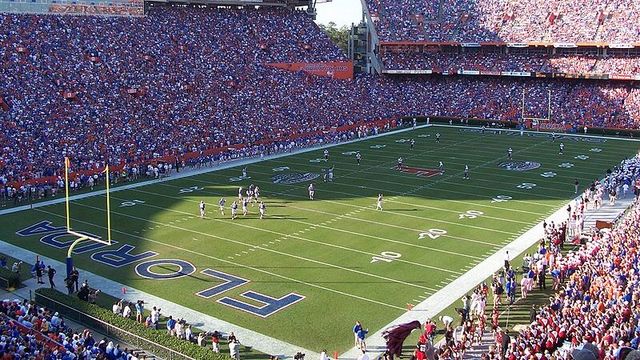
Ben Hill Griffin Stadium (Wikimedia Commons)
These “principles'' differ little from the phony PR statements of other industries which have already begun sending workers back to factories and workplaces. In these instances, the workers are being forced to return to work with little to no protections that they had been promised. Unsurprisingly, COVID-19 cases have surged in many of these major industrial sectors.
Students returning to campuses, living in crowded residence halls and attending large classrooms, will be confronted with similar circumstances. They will have no guarantee that they will not catch the virus and spread it to others once they return to school.
Eager to restart the multibillion-dollar college sports industry, NCAA has also announced that it will permit student athletes to return to campus for summer workouts and training starting on June 8. Most schools with large sports programs will have their teams on campus in June to prepare for the upcoming season. Some schools like the University of Oklahoma will wait, but only until July 1, before sending their students back to training. Delaying training could set back the athletic performance of those teams. For college sports, winning games is critical for revenue streams.
Canceling the fall 2020 football season alone would result in estimated losses upwards of $4 billion for the top NCAA schools. Athletics programs at 36 colleges reported over $150 million in revenue in the 2018 fiscal year. The University of Texas at Austin and Ohio State University both garnered over $200 million. In total, the revenue generated by college sports programs has surpassed $14 billion per year.
The revenue produced from college sports is mostly from advertising deals and sponsorships from major corporations like Nike, Coca-Cola, and Google. These companies pay handsomely for exclusive access to market their products to the millions of Americans who enjoy college sports. During the televised broadcast of the March Madness basketball tournament, a 30-second commercial costs over $1 million.
Despite the giant sums generated by college athletics departments, only 12 schools actually see a profit return from their sports teams. Most schools go into debt hiring coaching staff and building exclusive, luxurious facilities to entice talented high schoolers to sign on to their teams. In 41 out of 50 states, the highest-paid public employees are college coaches, who are often considered to be the most critical part of a successful sports program. The 25 highest-paid college coaches all have annual salaries of over $4 million. The highest is Dabo Swinney of Clemson university’s football team, who is paid $9.3 million per year.
Only the few schools who make it to the top of their divisions by winning games and tournaments can land the million-dollar corporate sponsorships. The competition for these slots is immense. Oftentimes, the schools that do make profits off their teams put that money back into the program to keep a step ahead of other schools. In other words, the money very rarely, if ever, goes to improving the quality of education for students.
The athletic departments that are not in the exclusive group that makes giant profits are looking to get there and consider it necessary to keep pumping money into the sports programs to develop winning teams and see a return on their investments.
There is no doubt that the fierce competition for the few money-making spots is a major motivating factor driving schools to bring their athletes on campus and get them in shape for the season as quickly as possible. At the University of Georgia, where athletes are returning immediately on June 8, head coach Kirby Smart told ESPN reporters that student athletes will likely be safer than if they stayed home outside of coaching staff supervision. “I know that our facility is one of the safest, and we certainly have the ability to care for that facility better than a lot of places they can go back home,” Smart said.
Schools like the University of Georgia have invested sums into the tens of millions to build professional facilities staffed with trainers whose job it is to keep athletes in good health so they can continue to perform and win games. When the players return for workouts, they will be closely monitored and have their health tested regularly to ensure that a COVID-19 outbreak does not occur within the student teams. Such a development would devastate the performance of a team and potentially take them out of the season entirely, which would cause a financial disaster for teams whose ticket prices and lucrative sponsorship deals depend on winning.
The athletes will be receiving testing and special treatment, but the general student population is another question. The average student will not receive regular testing, access to special facilities, and other precautions that would help prevent the spread of COVID-19. Instead, they will be expected to pay the full cost of tuition, for food in the dining halls, and of course buying tickets to football games.
The NCAA official football schedule is still largely to be determined, and representatives have said they will continue to evaluate the situation as it progresses over the summer before making a final decision for the fall. But statements from coaches and athletic directors make it seem increasingly likely that the games will go on.
Last week, University of Iowa athletic director Gary Barta told ESPN that the school is planning normal operations at their football stadium, where games see upwards of 65,000 fans in attendance. Oregon State athletics director Scott Barnes said, “Anywhere from 75 up to almost 85 percent of all revenues to our departments are derived directly or indirectly from football.”
The head of Texas Christian University athletics, Jeremiah Donati, told reporters, “If there's no football season, or if the football season is interrupted or shortened, there will be a massive fallout. There would have to be massive cutbacks.” Many schools, particularly those who are in the less elite Division II or Division III, have already cut many of their smaller sports programs that do not generate revenue. But even schools with a Division I sports program are cutting their less profitable departments. This includes sports like track and field, lacrosse, soccer, and even baseball.
The pandemic has triggered a crisis in college sports. Years of inflated spending on football programs have driven many schools to rely on the anticipated income of future seasons to cover debts incurred from building stadiums, workout facilities, and high salaries for coaching staff. The potential shutdown of the football season will provoke cuts in funding that will likely target other academic departments to make up for the loss of football revenue. This could include cutting student scholarships and tuition waivers for graduate workers, an increase in costs and fees for undergraduates, and layoffs or wage freezes for teaching staff.
Schools are eager to avoid the looming financial disaster and are making plans to ensure football will open, even if delayed until the spring. The cost of this decision will instead be the health and lives of the student body and the larger university communities.

New US weekly unemployment claims near 2 million as foreclosures, hunger loom

Shannon Jones

New unemployment claims in the United States are continuing at historically unprecedented levels as ever-broader layers of the population are feeling the impact of mass joblessness.
In the last week of May, 1.9 million people filed for jobless benefits, a slight drop from the previous week but far outstripping the high of previous recessions by multiple factors. The above number does not include 623,000 new claims for federal aid now available to the self-employed and Gig workers not normally eligible for state unemployment benefits. Nationwide the numbers of workers receiving benefits increased to 21.5 million, indicating more are losing their jobs than are returning to work.
The official unemployment rate is expected to reach 19.5 percent in May, the highest level since the Great Depression. This number is in itself a vast underestimate of the actual rate of unemployment since it does not include undocumented workers, many self-employed workers, discouraged workers and the millions who were unemployed before the pandemic. Some estimate the real unemployment rate is closer to 25 percent.
A man looks at signs of a closed store due to COVID-19 in Niles, Ill., Thursday, May 21, 2020. (AP Photo/Nam Y. Huh)
The official unemployment rate was above 20 percent the week of May 17 to 23 in five states. Nevada, dependent on tourism, has a jobless number of 28.3 percent, the highest unemployment rate of any state, even during the Great Depression. Michigan is second with 22.7 percent.
The unemployment figures give the lie to the claims of an impending “V”-shaped recovery, or that the worst of the economic meltdown is over. To make matters worse, payment of claims for many workers has been delayed due to inefficient and outmoded state unemployment systems. Some laid-off workers have been forced to call their state offices hundreds of times to try to file.
In Michigan 50,000 new claims were filed last week, with only 50 staff workers to process them. Some have reported waits of three to four or even eight weeks to get benefits.
Even though governors in most states are allowing the re-opening of businesses and some companies are recalling workers to take advantage of federal assistance tied to maintaining payrolls, many of these workers are likely to be laid off again when the aid runs out.
Further, the premature re-opening of factories and businesses, while COVID-19 continues to spread, gives workers the impossible choice of returning to work without proper protection or facing the cutoff of their unemployment benefits. Several states are actively encouraging employers to report workers who refuse to return to work over health concerns, who would then face the loss of their benefits.
According to a University of Minnesota survey, through the end of April 10 million people had lost their health care coverage, which in the US is often provided by employers. The loss of health care during a pandemic is a lethal combination, which demonstrates starkly the reactionary character of for-profit medicine.
The continuing high number of new unemployment claims points to the broader economic meltdown that has been triggered by the COVID-19 pandemic. US commercial bankruptcy filings were up 48 percent in May from one year earlier. They were up 28 percent from April, including major bankruptcy filings such as J.C. Penney and Neiman Marcus. This month, fashion retailer J. Crew and Pier 1 Imports joined the list of business failures.
It is becoming increasingly clear that many of the jobs wiped out over the past two months will never come back and that many small businesses will never re-open. In the face of this social catastrophe the response of the ruling class has been to shovel trillions to bail out Wall Street, money that will have to be repaid through the imposition of unprecedented hardship on the backs of millions of workers and young people.
High levels of unemployment are leading to predictions of a mass wave of foreclosures and evictions in coming months as state moratoriums on foreclosures are expiring. While some states have enacted temporary extensions of moratoriums, bans are being allowed to expire in others. In Texas, a moratorium on foreclosures expired May 19. Starting June 8, landlords in non-federally subsidized housing in Louisiana can begin evictions. Kansas has also let its foreclosure ban expire.
A 60-day ban on foreclosures in the state of Wisconsin came to an end on May 27. “I think there is going to be a tsunami of evictions filed, which is going to jam up the courts pretty good for a while,” Nick Toman, an attorney with the Legal Aid Society of Milwaukee, told local media.
The temporary federal expansion of unemployment benefits has helped many to meet mortgage and rent payments. Andrew Jakabovics, with an affordable housing non-profit, told NPR, “When the $600-a-week unemployment insurance runs out at the end of July, most people expect tremendous displacement risk. Evictions are likely to go through the roof.”
Meanwhile, workers are increasingly unable to pay off debt. According to the Wall Street Journal about 15 million credit cards and 3 million auto loans did not get paid in April.
As a consequence of the spreading economic disaster some 54 million people across the US could go hungry, without food aid assistance of some kind, according to an analysis by Feeding America, which oversees a network of food banks. That compares to 37 million last year.
Food pantries distributed 32 percent more food in April than a year earlier, even as thousands had to shut down due to lack of volunteers because of COVID-19. At the same time, staple goods such as canned vegetables are becoming more expensive.
Many of the states with the highest level of food insecurity are in the Deep South, but the problem is truly national in scope. Mississippi is proportionately the worst-affected state both before and since the pandemic. Almost three-quarters of a million people in the state could need food assistance in 2020, including one of every three children. Louisiana, Alabama, Texas, Oklahoma and Arkansas are also severely affected, along with New Mexico and Nevada.
Long lines of cars outside food distribution points are a common sight. Last week in Tucson, Arizona, some 1,400 cars lined up at a mobile distribution point. For three hours, volunteers helped distribute grocery boxes containing canned fruits, pinto beans, pasta, milk, fresh vegetables, frozen meat and bread.
In Las Vegas, Larry Scott, who runs a food bank in the city, said food aid needs to increase by 65 percent to stop people from going hungry . According to Feeding America, workers in the service or leisure and hospitality industry suffer above average rates of food insecurity (16-17 percent). With the shutdown of hotels, restaurants and casinos their situation is particularly dire.
Los Angeles County, California is expected to have 1.68 million food insecure people this year, the highest number in absolute terms in the US. As of May 22, food-related calls to the county’s hotline were up 406 percent since the previous month. The county has a 20.3 percent unemployment rate. While food stamp applications have tripled, food banks say they will be unable to meet the need if high levels of unemployment persist.
The growing economic hardship for millions combined with the rising death toll from COVID-19 due to the homicidal “herd immunity” policy of the ruling class, has raised class tensions to an unprecedented level. It is posing ever more sharply the need for the socialist reorganization of society so that human needs can be met, rather than squandering vast resources on the further enrichment of the financial elite.

Ten thousand people have been arrested across the US as protests against police violence continue to expand

Kevin Reed

More than 10,000 people have been arrested in the US during the protests against police violence as of Thursday, the tenth day of demonstrations in a row since George Floyd was murdered by Minneapolis police on Memorial Day.
In a tally taken of recorded arrests across the country, the Associated Press reported that the number of protesters arrested has grown by the hundreds each day. The news agency reported that one quarter of the arrests have been made in Los Angeles followed by New York City, which has 2,000 arrests, Dallas, and Philadelphia.
The AP analysis also showed that the majority of the arrests are for “low-level offenses such as curfew violations and failure to disperse.” Exposing as false the claims by President Donald Trump and Democratic politicians such as Minnesota Governor Tim Walz that the majority of the protesters are outside agitators, AP reported that, during a 24-hour period over the weekend in Minneapolis, “41 of the 52 people cited with protest-related arrests had Minnesota driver’s licenses.”
Additionally, in the US capital, AP reported, “86 percent of the more than 400 people arrested as of Wednesday afternoon were from Washington, D.C., Maryland and Virginia.”
The actual number of those detained by law enforcement is unknown. “The protesters are often placed in zip-ties and hauled away from the scene in buses,” an issue, the report said, “at a time when many of the nation’s jails are dealing with coronavirus outbreaks.”
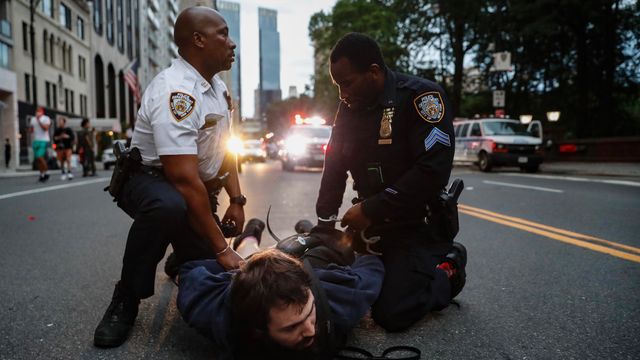
A protester is arrested for violating curfew near the Plaza Hotel on Wednesday, June 3, 2020, in the Manhattan borough of New York. (AP Photo/John Minchillo)
New York County Supreme Court Justice James Burke ruled on Thursday against a writ filed by New York’s Legal Aid Society and refused to release anyone held longer than 24 hours between arrest and arraignment. While New York courts stipulate that those in custody over 24 hours are entitled to release, Judge Burke ruled that the pandemic and mass protests were a “crisis within a crisis” and the New York City Police Department had thereby provided justification for the delays.
The historically unprecedented protests—in the face of arrests and ongoing police assaults with tear gas, rubber bullets, flash grenades and other “non-lethal crowd control munitions”—continued to expand across the country on Thursday. According to a summary published by USA Today, protests have been reported by local news media in 584 cities and towns across all 50 states and as well as the territories of Puerto Rico and Guam.
In New York City, thousands of protesters marched from a memorial service for George Floyd in Brooklyn—which featured the first public appearance of George’s brother Terrance Floyd—across the Brooklyn Bridge into Manhattan. The assembled crowed expressed hostility by turning their back on Democratic Mayor Bill de Blasio, drowning him out and forcing him to cut his remarks to 90 seconds at the memorial, as they chanted, “I can’t breathe,” “resign” and “defund the police.”
Protesters were particularly angry about the baton assault by police on Wednesday night against those who remained on the street passed the 8:00 p.m. curfew. Both de Blasio and Democratic Governor Andrew Cuomo defended the violent actions of the police on Thursday morning which had been captured on video and seen widely across social media. Amid the melee two police officers were shot and one was stabbed in the neck in Brooklyn.
Unlike the night before at the Manhattan Bridge, New York City police did not attempt to block demonstrators from entering the bridge, as the crowd swarmed both the northern land side and the pedestrian walkway. According to a report in the New York Times, “Drivers in the opposite lane honked horns and raised fists in shows of support.”
Protests in Washington, DC continued on Thursday near Lafayette Square and the Martin Luther King, Jr. Memorial, while many rallied near the DC/Maryland border. Earlier in the day, Washington, DC’s Democratic Mayor Muriel Bowser lifted the 11:00 p.m. curfew, citing the fact that there had been no arrests the previous day. Bowser has also adapted herself to the stationing of federal troops in the city, merely demanding that non-DC troops leave.
Meanwhile, military vehicles and police expanded the perimeter around the White House on Thursday, erecting tall metal fencing and putting in concrete barricades in preparation for what is expected to be a mass protest on Saturday.
According to a statement by the US Secret Service, “The areas, including the entire Ellipse and its side panels, roadways and sidewalks, E Street and its sidewalks between 15th and 17th streets, First Division Monument and State Place, Sherman Park and Hamilton Place, Pennsylvania Avenue between 15th and 17th streets, and all of Lafayette Park, will remain closed until June 10.”
Demonstrations took place in multiple locations in the Chicago area on Thursday, including several hundred protesters who marched from Lincoln Park High School to Whitney Young High School three miles away on the north side of the city. Other protests took place in the northern suburbs of Evanston, Grayslake and Zurich Lake.
Chicago Democratic Mayor Lori Lightfoot declined to answer questions at a press conference regarding a high-speed police chase on Wednesday evening that resulted in the death of a female motorist as well as two other incidents of police violence. One was at Brickyard Mall parking lot, where officers were caught on video pulling two women out of their vehicle and brutalizing them, with an officer kneeling on the neck of one of the two while she was on the ground. In another video, an officer is seen chasing down and punching a protester in Uptown on Monday night.
Tensions are high in New Orleans on Thursday evening, following the events of the previous night in which New Orleans Police Department (NOPD) used tear gas to disperse a large group of protesters who marched onto the interstate from downtown New Orleans and headed for the Crescent City Connection bridge to cross over into the West Bank, Jefferson Parish. The Jefferson Parish police are notorious for their brutality and cruelty, known to be openly racist and blatantly abusive.
NOPD Superintendent Shaun Ferguson defended the repressive actions at a press conference on Thursday morning, showing social media videos of the confrontation and claiming that rubber bullets were not used on the crowd, although this was disputed by protesters. When asked about plans for Thursday evening Ferguson said, “We don’t know what they’re planning to do tonight.”
Despite the rain, protesters gathered in Orlando, Florida for a fifth night in a row on Thursday downtown near city hall and prepared to march to the headquarters of the Orlando Police Department where a dozen officers were reportedly waiting in helmets and with shields. On Wednesday night, tear gas was used after a crowd at city hall of approximately 2,000 people began moving through downtown and violate a previously announced 8:00pm curfew.
Protests continue to grow in size and scope throughout the San Diego area, with many held Thursday throughout smaller cities and suburbs in addition to the downtown protests which included over two thousand people. Cities such as Chula Vista, Oceanside, Julian, North Park, Carlsbad, Encinitas, La Mesa, and Santee held protests in the hundreds.
In the growing downtown protests, police and national guardsmen kettled in protesters and shot rubber bullets and tear gas indiscriminately into crowds. Just the day before, at least 200 armed national guardsmen arrived in San Diego, following a request from San Diego Sheriff Gore. After Wednesday’s protests, the San Diego Police Chief announced a ban on chokeholds.
San Diego County is home to the largest military and naval base in the US. Stoked by Trump and the brutality of the state’s response, some right-wing and white nationalist groups have been organizing in cities such as Santee and Carlsbad to join police and engage in violence against protesters. These small groups, however, represent a tiny fraction, compared to the thousands who continue to take to the streets throughout the county.
In an example of the spread of protests across the US, hundreds of people demonstrated at the downtown parking garage in Grand Forks, North Dakota, 80 miles north of Fargo, and marched through the downtown area as organizer Kollin King shouted over a bullhorn, “What’s his name?” and the crowd yelling back, “George Floyd.” The demonstration stopped briefly near the Red River and then continued on past its previously agreed-on route.

Mass reopenings worldwide have accelerated the coronavirus pandemic

Bryan Dyne

The mass economic re-openings in the Americas, Europe and Asia that began in May have paved the way for a massive spread of the coronavirus pandemic internationally. According to data aggregated by Worldometer, the average number of new cases has been more than 115,000 since May 27, a number which has been steadily rising since May 12.
The accelerating spread is also reflected in the number of new deaths each day. Starting in April, the number of new deaths had begun to decrease, a result of the physical distancing taken up by hundreds of millions of workers, toilers and youth around the world. The rate of new deaths, however, has now stabilized at an average of 3,770, as those people have been steadily forced back to work, and it is poised to climb in the wake of the hundreds of thousands of new infections.
As of this writing, there have been nearly 6.7 million officially confirmed cases and more than 390,000 deaths caused by COVID-19 worldwide. A plurality of cases are in the US and Brazil, which have totals of 1.9 million and 610,000 cases, respectively, along with 110,000 and 33,000 deaths.
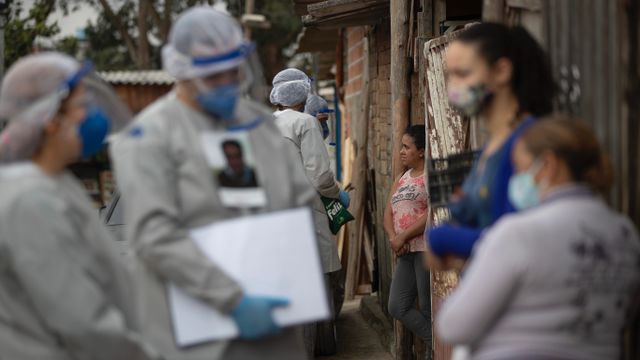
Health workers from Doctors Without Borders visit a squatters camp to conduct medical examinations and avoid the spread of the COVID-19 in Sao Bernardo do Campo, greater Sao Paulo area, Brazil, Wednesday, June 3, 2020. (AP Photo/Andre Penner)
The governments of both countries have also whipped workers back into factories and plants under threat of economic destitution if they don’t return. In Brazil, meatpacking plants were opened on May 20, while auto production started resuming the previous week. Hundreds of workers in these facilities have already become infected, spreading it to their homes and their communities. Despite this, President Jair Bolsonaro is storming ahead with the full reopening of the country, overseen by local mayors and regional governors.
Factories in the United States began opening even earlier. Some states, including Oklahoma, North Dakota and Nebraska, never had stay-at-home orders, while states such as Georgia began reopening the last week of April. Certain industries, such as auto, waited until the second or third week in May to fully resume manufacturing their products, but these were only ever shut down in the first place as a result of wildcat strikes that erupted in early April, after reports emerged of infections spreading in the auto plants.
The spread is in every state. While states such as New York, New Jersey, New Mexico and Connecticut report a 14-day decrease in the number of new daily cases, nearly half of states have an increase in new cases, particularly in areas where the pandemic did not initially widely infect. Florida, for example, yesterday saw its highest new case count yet, bringing its total cases above 60,000. The state’s death toll stands at more than 2,600.
Mexico has also emerged as a new hotspot for outbreaks of the pandemic. It is now on par with the United States and Brazil for the number of new deaths each day, and is the fourteenth country to exceed 100,000 cases and the seventh to breach 10,000 deaths. Hundreds of these were caused by the premature reopening of the country’s maquiladora sweatshops, which are used by US auto and other manufacturing companies to produce cheap parts.
Similarly in India, large sections of industry were ordered to resume production in mid-May, particularly parts and car companies. Even then, the number of cases in the country were still increasing, largely a result of the haphazard lockdown implemented by the Modi government in April that trapped millions of migrant workers in the already crowded and unsanitary slums of Mumbai, Delhi, Bangalore, Hyderabad and other cities. The Modi government’s actions have caused India’s official case and death counts to soar. They currently stand at 226,000 and 6,309, respectively, and are increasing exponentially.
The outbreaks in these countries and many others underscore the warnings that have been repeatedly issued by the World Health Organization against reopening without having a system of mass testing, contact tracing and isolation in place to fight the coronavirus. Hans Kluge, the European director for the WHO, recently noted, “The second wave is not inevitable. But an increasing number of nations are lifting restrictions, and there is a definite threat of a repeat outbreak of the COVID-19 infection. If those outbreaks are not isolated, a second wave may come and it may be very destructive.”
Even this statement is behind the times. The first wave of the pandemic, in global terms, never actually abated, and is now cutting a bloody swathe through some of the poorest regions of the world. South Asia, as well as Africa, have not only been devastated by the coronavirus, but also from powerful typhoons and massive locust swarms.
Kluge also noted, “We still have neither a vaccine nor a cure for COVID-19.” Similar statements were issued on Wednesday by Anthony Fauci, the director the National Institute for Allergy and Infectious Diseases in the US. He warned that, while it is possible that there will be a vaccine available sometime next year, there is no evidence that any immunity will last.
“When you look at the history of coronaviruses, the common coronaviruses that cause the common cold, the reports in the literature are that the durability of immunity that’s protective ranges from three to six months to almost always less than a year,” Fauci said during an interview with Journal of the American Medical Association (JAMA) Editor Howard Bauchner. “That’s not a lot of durability and protection.”
The re-openings are also occurring alongside the mass protests in the US and internationally against the police murder of George Floyd and the dictatorial actions taken by President Donald Trump. While many protesters are wearing masks in an attempt to protect themselves from the disease, the large crowds, chanting and holding hands are ideal for the contagion to rapidly spread. George Floyd himself was infected when he was killed, his autopsy showed.
The protests are also becoming an excuse for areas to close testing sites in California, Florida, Illinois, Pennsylvania and elsewhere. Testing for the disease is a crucial step in containing outbreaks and is the only way to objectively know how far the pandemic has spread.
Less testing also artificially deflates the case counts, which can in turn be utilized to justify further re-openings. In a story virtually ignored by the national media, the worker who developed Florida’s coronavirus database was fired last month for refusing to manipulate the data in order make it seem as though the state had reached the threshold to safely reopen. As testing becomes less common, it becomes easier for false data to be presented as legitimate.

Trump intensifies campaign to brand domestic opposition as terrorism

Patrick Martin

The Trump administration is continuing its campaign for military intervention against the mass protests over police brutality that have swept the United States since the police killing of 46-year-old African American George Floyd on May 25. Attorney General William Barr and FBI Director Christopher Wray held a press conference Thursday afternoon to voice lying claims that left-wing groups bent on violence had “hijacked” the protests, in an effort to manufacture a pretext for repression.
Barr advocated the use of anti-terrorism units to apprehend “agitators” whom he accused of “hijacking” demonstrations. The branding of domestic political opposition as terrorism is aimed at delegitimizing and criminalizing all opposition to police violence and the policies of the oligarchy.
The level of lying in the Barr press conference would be admired by Nazi spokesman Josef Goebbels, the propaganda chief for Hitler’s “big lie.” Barr conjured up an invented world in which demonstrations involving millions of people in hundreds of cities, large, medium and small, are being manipulated by Antifa, an “organization” that has not a single identified member. He also claimed that “foreign actors” were intervening in the protests, adding the specter of a Russian, Chinese, Iranian or Al Qaeda role.
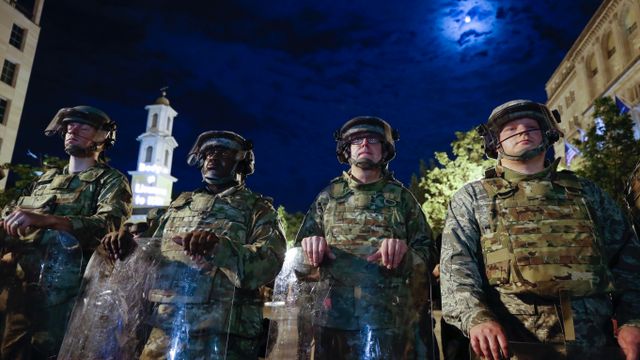
Utah National Guard soldiers stand on a police line as demonstrators gather to protest the death of George Floyd, Thursday, June 4, 2020, near the White House in Washington. (AP Photo/Alex Brandon)
Antifa is little more than a label adopted by youth who protest against ultra-right and white supremacist provocations. As an organized group, it exists mainly in the fevered imaginations of FBI informers and agents—who likely comprise most of its “membership.” If Antifa did not exist (and it may not), Trump, Barr & Co. would be compelled to invent it, as a pretext for the mass repression that they are carrying out against the American working class.
Barr advocated the use of existing Joint Terrorist Task Forces against the supposed Antifa threat. The JTTF unite federal and state police agents in a common effort, initially directed against the Islamic fundamentalists who carried out the September 11, 2001 attacks in New York City and Washington, but now to be turned against all left-wing opposition to the policies of the Trump administration and its collaborators at the state level.
FBI agents working through the JTTF will go out to question people about their political views, in gross violation of the First Amendment, and seek to criminalize their participation in protests. A Department of Homeland Security memorandum, obtained by Politico, cited the need for intelligence agents to be “vigilant in looking for any kind of emerging threat to the homeland,” while making the revealing admission that “some of the observed suspicious behaviors include constitutionally protected activities…”
Barr has emerged as one of the principal agents of Trump in preparing a presidential dictatorship. The “chief law enforcement officer,” as the attorney general is described, is actually a full-fledged co-conspirator in the assault of the US Constitution and democratic rights.
Trump has threatened to invoke the Insurrection Act, but unlike 1992 in California, no state governor has requested federal military assistance. So, the White House aims to use the District of Columbia, which is federal territory and not part of any state, as a demonstration of the use of overwhelming military force to crush protests and intimidate the largely African American population.
As press reports have begun to show, it was Barr who played the main role in the police-military attack on peaceful protesters in Lafayette Park, across the street from the White House, on Monday night. The anti-riot force of the federal Bureau of Prisons, under Barr’s direct authority since it is part of the Department of Justice, was the spearhead of the effort to clear the park, using tear gas, pepper balls, and other riot gear, so that Trump could take his massively publicized walk across the park and pose, holding a Bible, in front of St. John’s Episcopal Church, which had suffered minor fire damage over the weekend.
At the press conference, Barr hailed the role of myriad federal agencies in the DC repression, declaring, “We have deployed all the major law-enforcement components of the department in this mission, including the FBI, ATF, DEA, Bureau of Prisons, and U.S. Marshals Service.”
He recalled his own role in 1992, during his previous term as attorney general in the administration of George H. W. Bush, the last time that a president invoked the Insurrection Act, during the upheaval in Los Angeles that followed the acquittal of the police thugs who beat Rodney King—an earlier racist atrocity by police that, like the killing of George Floyd, became a national scandal because it was filmed by bystanders and the whole country was able to witness the true nature of American “law and order.”
Vice President Pence, who was absent during the Lafayette Square provocation, has resurfaced as a fervent advocate of the Insurrection Act and the use of federal troops. In an interview with a Pittsburgh television station, Pence condemned the Democratic governor of Pennsylvania for only calling out 500-600 National Guard troops and threatened to send in the US Army instead.
“The president and I will continue to urge the governors, like Governor Wolf, to call up the National Guard, deploy them to the streets and in a strong and decisive manner to restore order. The American people expect nothing less,” said Pence.
While lies on the scale of those advanced by Barr may seem demented and unbelievable, there is a definite logic at work. It is part of a game plan to justify a military coup d’état that would place unchallenged power in the hands of the president. The gangster language of Trump and his accomplices, including aides like Stephen Miller and advisers like Steven Bannon, demonstrates that they are not playing by any sort of constitutional-democratic rulebook. They will do and say anything to carry out their plans to establish an authoritarian regime based on the military and the police.
The greatest danger for working people and youth would be to underestimate the dangers and believe—as the corporate media and the Democratic Party would suggest—that Trump has given up his plans for military rule because of opposition from within the political and national-security establishment. Spreading this poisonous complacency was the main function of the sermon delivered by Democratic Party operative Al Sharpton to the memorial service held for George Floyd Thursday in Minneapolis.
Sharpton was compelled to admit that the massive turnout at nationwide protests, with large numbers of young whites comprising a clear majority of those outraged and angry over the murder of George Floyd, marked something new in American political and social life. But he quickly turned to his real purpose: portraying the attack on Floyd as purely racial, thus concealing its class character as an attack on the working class, and the role of the police, whether white or black, as the repressive arm of the capitalist state.
Making light of Trump’s threat to use military force against the protesters, Sharpton called the president “all bark and no bite.” This under conditions where at least a dozen people have already been killed by police and National Guard since the protests began, and where Trump and his co-conspirators are actively preparing an intervention by the military on the streets of America that would mean a terrible bloodbath.
Not one prominent Democrat has denounced Trump for threatening a military takeover or demanded that he be removed from office. Presumptive Democratic presidential nominee Joe Biden has been virtually invisible. House Speaker Nancy Pelosi, the top Democratic in Washington, merely sent a letter to the White House Thursday, requesting it to supply Congress with a list of the military and police agencies involved at Lafayette Park, as though there were not an ongoing effort to overthrow the constitutional structure of the United States.
The Socialist Equality Party has issued a call for workers and youth to oppose the White House plans to suppress democratic rights and impose a police-military regime. We said:
The working class must intervene in this unprecedented crisis as an independent social and political force. It must oppose the conspiracy in the White House through the methods of class struggle and socialist revolution.
The millions of workers and youth taking part in mass protests against police violence must begin to raise political demands against the gangster methods of the Trump administration, calling for the removal of Trump, Pence and their conspirators from office.

4 Jun 2020

Japanese Government MEXT Scholarships 2021

Application Deadline: 31st July, 2020

Eligible Countries: International

To be taken at (country): Japan

About the Award: The Embassy of Japan is pleased to inform you that the Government of Japan will provide scholarship for Primary/Secondary school teachers who desire to take teacher training course and Japanese language training in Japan.
The scholarship is open to graduates of universities and teachers training colleges no more than thirty-four (34) years of age who have worked as teachers at primary/secondary schools or teacher training college for at least five years in their home countries at the time of application.
Beneficiaries shall upon their return, help to promote Japanese Language education in Nigeria.

Type: Training

Eligibility: 
(1) Nationality: Applicants must have the nationality of a country that has diplomatic relations with Japanese government. An applicant who has Japanese nationality at the time of application is not eligible.However, persons with dual nationality who hold Japanese nationality and whose place of residence at the time of application is outside of Japan are eligible to apply as long as they give up their Japanese nationality and choose the nationality of the foreign country by the date of their arrival in Japan. Applicant screening will be conducted at the Japanese Embassy orConsulate (hereinafter referred to “Japanese diplomatic mission”)in the country of applicant’s nationality.

(2) Age:Applicants, in principle,must be born on or after April 2, 1986.

(3) Academic and Career Background:Applicants must be graduates of universities or teacher training schools and have worked as teachers at primary/secondary educational institutions or teacher training schools (excluding universities)in their home countries for five years in total as of April 1, 2019.In-service university faculty members are not eligible.

(4) Japanese Language Ability:Applicants must be keen to learn Japanese. Applicants must be interested in Japan and be keen to deepen their understanding of Japan after arriving in Japan.Applicants must also have the ability to do research and adapt to living in Japan.

(5) Health:Applicants must be judged that they are medically adequate to pursue study in Japan by an examining physician on a prescribed certificate of health.

(6) Arrival in Japan: Applicants must be able to arrive in Japan by the designated period(usually October) between the day two weeks before the course starts and the first day of the course. (If the applicant arrives in Japan before this period for personal reasons, travel expenses to Japan will not be paid. Excluding cases of unavoidable circumstances, if the applicant cannot arrive in Japan by the end of the designated period the applicant must withdraw the offer.)

(7) Visa acquisition:Applicants should,in principle,acquire “Student” visas before entering Japan and enter Japan with “Student” residence status. The visas should be issued at the Japanese diplomatic missions located in the country of applicants’ nationality. Those who change their visa status to one other than “Student” after arrival in Japan will lose their qualification to be Japanese Government Scholarship recipients from the date when their visa status changes.

(8) Applicants must return to their home country and resume their work immediately after the end of the scholarship period.

Number of Awardees: Not specified

Value of Scholarship:
  • Allowance:143,000 yen per month. (In case that the recipient researches in a designated region, 2,000 or 3,000 yen per month will be added. The monetary amount each year may be subject to change due to budgetary reasons.)
  • Transportation to Japan:The recipient will be provided an economy-class airplane ticket, according to his/her itinerary and route as designated by MEXT,from the international airport nearest to his/her home country residence,where in principle is in the country of nationality, to the Narita International Airport or any other international airport that the appointed university usually uses when they enter to Japan.
  • Expenses such as inland transportation from his/her home address to the international airport, airport tax, airport usage fees, special taxes on travel, or inland transportation within Japan including a connecting flight will NOT be covered. (*Although the address in the home country stated in the application form is in principle regarded as the recipient’s “home country residence,” if it will be changed at the time of leaving from his/her home country the changed address will be regarded as “home country residence.”)
  • Transportation from Japan:The recipient who returns to his/her home country within the fixed period after the expiration of his/her scholarship will be provided, upon application, with an economy-class airplane ticket for travel from the Narita International Airport or any other international airport that the appointed university usually uses to the international airport nearest to his/her home address, wherein principle is in the country of nationality.
    • (Note 1) Any aviation and accident insurance to and from Japan shall be borne by the recipient.
    • (Note 2) Should the recipient not return to his/her home country soon after the end of the scholarship period to resume his/her duties, the transportation fee for the return to the home country will not be provided.
  • Tuition and Other Fees:Fees for the entrance examination, matriculation and tuition at universities will be paid by the Japanese Government.
Duration of Scholarship: The term is the period necessary to complete each university’s training course and should be between October 2021 (or the starting month of the course) and March 2023. Extension of the term is not permitted

How to Apply: 
  • Applicants must submit all required documents to the Japanese diplomatic mission in the applicant’s country. The submitted documents will not be returned.
  • For Nigerian teachers: Completed MEXT scholarship application forms (find in link below) can be submitted by hand or by post to this address below:
    Embassy of Japan – Culture & Information Section
    No. 9 Bobo Street (Off Gana Street),

    Maitama District,
    Abuja 
Visit Scholarship Webpage for details

Important Notes: 
  • (1)The recipient is advised to learn, before departing for Japan, the Japanese language and to acquire some information about Japanese weather, climate, customs, and university education in Japan, as well as about the difference between the Japanese legal system and that of his/her home country.
  • (2)As the first installment of the scholarship payment cannot be provided immediately upon the recipient’s arrival, the recipient should bring at least approximately US $2,000 or the equivalent thereof to cover immediate needs after arrival in Japan.

YMCA Ireland: Youth Work Project 2020 for Young Leaders

Application Deadline: 30th June 2020

About the Award: The YMCA Family and Youth work project wants to achieve better outcomes for children, young people and families who are experiencing fewer opportunities. We want to achieve safe spaces where everyone can feel a part of a welcoming community and reach their full potential. Our mission is to work with the whole family to support young people to gain the assets they need to be resilient in the face of life’s challenges. We intentionally work to build this resilience by supporting the development of social competence, active citizenship, physical well-being, spirituality, and positive relationships. The YMCA Family and Youth Work project works with 90 children/young people and their families across three communities who are experiencing fewer opportunities and are at risk of social exclusion. The participants are mostly from economically disadvantaged areas and include children and young people with special needs.

Type: Training

Eligibility: The volunteer must have an interest in working with children, and teenagers, Be motivated by the principles of the European solidarity corp, including a desire to support people who are on the margins of society, and an interest in developing an inclusive sense of European identity and belonging. , Demonstrate dependability and the ability to work to their own initiative. Skills in at least one of the following areas is an asset: Arts and Crafts, Exercise/movement/sports, Drama, Music, STEM activities, and/ or Cooking. Ability to get along with others and work as part of a team.

Eligible Countries: Albania, Armenia, Austria, Azerbaijan, Bosnia and Herzegovina, Belgium, Bulgaria, Belarus, Cyprus, Czech Republic, Germany, Denmark, Algeria, Estonia, Egypt, Greece, Spain, Finland, France, Georgia, Croatia, Hungary, Ireland, Israel, Iceland, Italy, Jordan, Lebanon, Liechtenstein, Lithuania, Luxembourg, Latvia, Libya, Morocco, Moldova (Republic of), Montenegro, North Macedonia, Malta, Netherlands, Norway, Poland, Palestine, Portugal, Romania, Serbia, Russian Federation, Sweden, Slovenia, Slovakia, Syrian Arab Republic, Tunisia, Turkey, Ukraine, United Kingdom, Kosovo * UN resolution, British Antarctic Territory, Anguilla, Aruba, Bermuda, Bonaire Sint Eustatius and Saba, Canary Islands, Curaçao, Falkland Islands, French Guiana, Greenland, British Indian Ocean Territory, Cayman Islands, Saint Martin (french part), Montserrat, New Caledonia, French Polynesia, St Pierre and Miquelon, Pitcairn, Turks and Caicos Islands, French Southern and Antarctic Territories, Virgin Islands (British), Wallis and Futuna

To be Taken at (Country): Ireland

Number of Awards: Not specified

Value of Award: The volunteer will receive a weekly allowance in line with the ESC requirements. They can either stay with a host family who provides meals and accommodation, or we can give them towards these costs if they would like to find their own accommodation. Transportation costs are covered and the volunteer will have access to a Leap card and a bicycle.
The volunteer will have access to an on arrival and mid-way training along with other international volunteers. The YMCA provides induction, child protection training as well as conferences on topics key to youth workers.

Duration of Award: A total of 44 week(s) during the period 15/09/2020 to 31/07/2021

How to Apply: Apply

Visit Award Webpage for Details

The UN’s Anti-Poverty Proposal for Latin America: a “Basic Emergency Income”

Brett Heinz

The economic impact of the COVID-19 crisis on Latin America could be potentially devastating, according to a new Special Report by the UN’s Economic Commission for Latin America and the Caribbean (ECLAC). The report, based on the available data in mid-April, has estimated a -5.3 percent drop for the region’s GDP growth in 2020 — the largest in the region’s history. If this is the case, ECLAC calculates, 29 million more people would be pushed into poverty and 16 million more into extreme poverty, alongside a dramatic increase in inequality in what is already the most unequal region in the world.
In the face of this potential disaster, the authors of the ECLAC report recommend a “basic emergency income” as an anti-poverty measure. The proposal could be a powerful tool for economic empowerment that can help millions survive the recession if paired with other measures, the paper argues.
The damage of the COVID-19 crisis won’t just come from labor disruptions caused by social distancing and lockdowns, but from a number of other Covid-related factors as well. ECLAC estimates that low global demand and crashing commodity prices could reduce the value of exports from Latin America by 15 percent this year. Tourism could drop by 20–30 percent. Declining incomes throughout the world means that remittances from immigrants, a source of $96 billion dollars for the region last year, will shrink 19.3 percent this year, according to World Bank estimates.
To prevent a depression and reduce the economic damage, a response to the COVID-19 crisis requires distributing money to large groups of people experiencing a drop in income as quickly and efficiently as possible. In addition, because the Americas lead the world in the percentage of workers who are in “at-risk” informal sectors of the economy, the region’s response can’t exclusively work through employment-based stimulus policies targeted at formal businesses, as these will be less effective at reaching everyone.
The ECLAC report, released May 12, calls on nations in the region to “provid[e] a basic emergency income … equivalent to one poverty line (the per capita cost of acquiring a basic food basket and meeting other basic needs) over the course of six months to the entire population living in poverty in 2020.” ECLAC estimates that direct cash transfers to 215 million people (a bit over a third of Latin America’s population) would cost 2.1 percent of regional GDP.
The idea of directly and unconditionally transferring money with few restrictions to large swathes of the population runs contrary to popular conservative attitudes toward welfare, but various forms of this policy exist worldwide, and the sheer scale of the COVID-19 crisis has driven policymakers around the world to embrace the idea. While the US has distributed stimulus checks, spending on various cash transfers has already increased in Argentina, Brazil, Colombia, the Dominican Republic, Guatemala, Haiti, Honduras, Jamaica, Peru, and Uruguay.
ECLAC’s proposal goes further. First, the announced expansions of cash transfers in Latin America are far smaller than the 2.1 percent of regional GDP that the proposal calls for; for example, Guatemala is seeking an expansion equal to 1.2 percent of its GDP, while Peru and Honduras are only aiming for an expansion of 0.4 percent of their GDP. Additionally, ECLAC recommends that countries consider keeping the basic income policy in place even after COVID-19, in order to tackle endemic poverty.
Though basic income isn’t a substitute for a well-funded welfare state, it may serve as a promising supplement to one. Research on unconditional cash transfers in Zambia not only found that they were highly effective anti-poverty measures, but that they also had positive spillover effects on local economies. Additional research also casts doubt on common criticisms of the idea: that it will decrease labor participation, increase drug and alcohol consumption, etc.
By quickly distributing cash without hassle to impoverished populations, a targeted basic income for the poor could serve as a vital part of Latin America’s policy response to COVID-19. The international community should act to assist the region in making such a program possible, including through a new issuance of Special Drawing Rights.

With USA in Retreat, China Reassesses Its Options

Tom Clifford

Beijing.
Beijing is looking at the world today through a prism where the United States can be accounted for. The US is too weak, it believes, except in purely military terms, to counter China’s interests.  The image has been seen the world over. A black man dies after a US policeman kneels on his neck. Civil strife ensues. America is in retreat, and without firing a shot, China has more global influence than any time since the 16th century.
Even before this shocking event, the Sino-US relationship was for the history books. Zhao Lijian, a spokesperson of China’s Ministry of Foreign Affairs, stupidly said in March that COVID-19 was released by the American military. He would not have said it or got clearance, a nod from above, to say it had the trust not gone? There was little trust even when the relationship was financially beneficial to both countries but at least there was a feeling that the two could profit from closer ties. That has evaporated.
Call it what you will. Chimerica, US-hina, Chiam. The China-America relationship is holed beneath the waterline. There will be a relationship, of sorts, but it will be based now on competition not cooperation. For the first time since Richard Nixon was testing recording equipment in the White House, China is not a potential ally but a clear and present danger. Or at least that is how the Trump election campaign will describe it.
From Beijing’s viewpoint, they can barely believe their luck. Not at the decline of the relationship but rather that the US is in a place where any criticism of China’s rights record looks, at least Beijing will say, hypocritical and be easy to counter. Beijing is about to introduce a draconian security law in Hong Kong that all but upends the one country two systems formula. They are doing it under Covid-19 cover, while the world is largely distracted. It’s working. No real objections. Sure, a few voices raised, the US may even impose some sanctions. But, let’s just wait and see. The US after all is convulsed after the George Floyd killing. Trump, the president from Beijing’s point of view that keeps on giving, is threatening to send in the military onto the streets of US cities. Trump talks of security forces “dominating” the streets. Just like, Beijing will claim, security forces are doing in Hong Kong.
The territory’s former imperial masters? Britain. Busted flush. Its prime minister is seeping authority in the wake of the Cummings affair and besides a Brexited Britain is not something to unduly concern those who stride Beijing’s corridors of power.
The European Union? Stagnant, especially as Angela Merkel prepares to depart the scene. China’s borders are secure, and there is no clear and present danger internationally.
They are not, though, celebrating in Beijing at these turns of events. The world, or at least the West, is decoupling from China or attempting to. Beijing realizes there is an undercurrent of deep mistrust about its motives. Their own economy has been battered, its export markets greatly reduced and post-Covid hostility will linger long after the virus.
Beijing knows it will be blamed for the initial delayed response to the outbreak in Wuhan.
Lawsuits have been filed in the US against the Chinese government over its mishandling of the outbreak. These may not see damages awarded but they will do nothing to improve ties.
Multi-national companies will look for ways to get out of China.  Supply chains will move elsewhere.
There is talk of a new cold war. Much of the international goodwill that greeted China’s rise and its spending power in the wake of the 2008 global financial crisis has vanished. There are many in the West who view China more in terms of an enemy than a friend. Beijing’s much touted Belt and Road Initiative has hit potholes and while still being pursued there is less fanfare attached to it than before. China faces major problems from within its own borders. Xinjiang province in the west of the country is seething with resentment. Its largely Muslim population feels alienated and discriminated against.
Domestic employment is taking a hit. In July nearly 9 million graduates will hit the job market. An educated dynamic young population will be denied the opportunities their parents had.  This will come at a price. Disillusionment can lead to anger.
Time for a distraction? An international crisis, say in the South China Sea? Or a financial crisis?
Beijing has achieved a prized political goal, it has seen American global influence diminish. Sooner, much sooner, than it thought possible. But China also faces a struggling economy. In some countries politics underpins a stable economy. In China, the economy underpins stable politics.
Economic instability occurred sooner, much sooner, than Beijing thought it would. Those who pace up and down Beijing’s corridors of power know that a stagnant economy threatens more than GDP growth.