9 Jun 2020

A reality check on the ongoing spread of the coronavirus pandemic

Bryan Dyne

The ruling elites in the United States and throughout Europe, Asia and Latin America have abandoned any pretense of stopping the coronavirus pandemic through social distancing and the shutdown of non-essential production. However, the virus continues to spread rapidly throughout the world.
More than 400,000 men, women and children have lost their lives and at least 7.1 million have been infected, many with debilitating effects that may last for years to come. The lives of countless millions more remain in danger as the number of cases continues to grow.
The situation in the United States is particularly dire. There are now more than two million cases and 112,000 dead across every state and territory, more than any country in the world. Tens of thousands are newly infected each day and several hundred die, though the official figures in the US and other countries vastly understates reality.
World Health Organization Director General Tedros Adhanom Ghebreyesus reported yesterday that new cases saw their biggest daily increase ever on Sunday. “More than six months into the pandemic, this is not the time for any country to take its foot off the pedal,” he said. Such counsel, however, is falling on deaf ears.
New York Governor Andrew Cuomo chose yesterday to focus not on the grim reality of the city’s 205,000 cases and 22,000 deaths, but on the fact that “our mojo is back” because the city’s restaurants, businesses and subways are now reopened. In New York City alone, a world epicenter of the disease in April, hundreds of transit workers have died.
Twenty-two states in the US are seeing an increase in coronavirus cases. The number of new cases in Florida has increased an average of 46 percent over the past week. There are sharp increases in Utah, Arkansas and Arizona.
Texas just recorded a record number of COVID-19 hospitalizations. “As Texas moves forward with a new phase of Governor Greg Abbot’s plan for reopening businesses,” the Texas Tribune reported, “the daily number of confirmed coronavirus cases is on a steady, upward trend… The 14-day trend line shows new infections in Texas have risen about 71 percent in the past two weeks.”
A de facto policy of “herd immunity” has been adopted by the Trump administration and Democratic and Republican state governors. If brought to fruition, an estimated 1.6 million people in the country would ultimately die. The policy of the ruling class is, Whatever happens, happens.
The deadliness of the pandemic has manifested itself sharply in meatpacking plants across the US. USA Today reported that as a result of Trump’s executive order in late April forcing slaughterhouses and processing plants to remain open, “the number of coronavirus cases tied to meatpacking plants has more than doubled… topping 20,400 infections across 216 plants in 33 states, the Midwest Center for Investigative Reporting found. At least 74 people have died.”
Corporations, assured that they will be protected by the government, are flouting basic health and safety measures. The USA Today article cited the comments of a federal meat inspector who said that she visited plants where workers “were not wearing masks and practiced only limited social distancing. Some, she said, had also recently tested positive for COVID-19.”
The coronavirus does not respect national boundaries and the global spread will have devastating consequences for every country.
Europe has suffered nearly 2.1 million infections and more than 179,000 deaths. While the virus has been somewhat suppressed in early epicenters such as Spain, Italy, Germany and France, infections and fatalities have continued to rise in the United Kingdom and Eastern Europe. Russia now has 476,000 cases and 5,900 known deaths and the country has one of the highest rates of new cases and new deaths in the world.
Other epicenters of the pandemic are South Asia and South America. There are now at least 10,000 new cases a day in India and 250 deaths, numbers which are trending upwards. The country has currently recorded 265,000 cases and 7,400 deaths.
The situation is worse in Brazil, which has had between 15,000 and 30,000 new cases each day for the past fourteen days, along with 500 to almost 1,500 new deaths daily. Its official case count and death toll, figures which fascistic President Jair Bolsonaro has tried to censor, stand at 694,000 and 37,000, respectively.
Thousands of autoworkers in Mexico’s maquiladora plants have been infected and hundreds have died since they were reopened in May. Dozens of transit workers in London have died even as the United Kingdom was ostensibly locked down to halt the spread of the virus. This grim reality is only going to become more apparent as governments continue their homicidal drives to reopen the economies.
The policy of the ruling class must be countered through the organized resistance of the working class. In its May 21 statement, the Socialist Equality Party stated, “If infection, sickness and death are to be prevented, it is necessary to create a new form of workplace organization that oversees and enforces safe working conditions.
“Therefore, the SEP advises workers to form rank-and-file safety committees in every factory, office and workplace. These committees, democratically controlled by workers themselves, should formulate, implement and oversee measures that are necessary to safeguard the health and lives of workers, their families and the broader community.”
The development of such organizations, in the US and throughout the world, is an urgent necessity to safeguard workers’ lives.
The expansion of the pandemic takes place as an unprecedented social and economic crisis confronts millions of workers. Despite Trump’s claims that the economy is roaring back, tens of millions remain out of work, with no job to return to. The stock market is rocketing back to its pre-pandemic highs due to the trillions of dollars that have been pumped into Wall Street and financial markets, with the support of Democrats and Republicans.
The seething social anger over the response of the ruling class to the pandemic is a central factor underlying the eruption of mass protests throughout the world sparked by the police murder of George Floyd. At the same time, the brutal police response and the attempt by the Trump administration to impose a military dictatorship and violently suppress popular opposition are motivated by an understanding within the ruling class that it confronts far greater social convulsions to come.
The fight to defend democratic rights and oppose dictatorship must be fused with the struggles of workers against inequality and exploitation. The pandemic has exposed the reality and bankruptcy of capitalism, which is a barrier to human progress and the very survival of the human species.
Against the homicidal policy of the capitalist ruling elites, workers must and will insist that “workers’ lives matter,” but the fight to defend the lives of workers against the coronavirus pandemic is inseparably linked to a struggle of the entire working class against the ruling class and the capitalist profit system.

8 Jun 2020

Understanding the New Unemployment Numbers

Dean Baker

Seventy-three percent of the unemployed report being on temporary layoffs.
The May jobs numbers were considerably better than most analysts had expected with the economy reportedly adding 2,509,000 jobs, while the unemployment rate fell by 1.4 percentage points to 13.3 percent. This improved labor market picture should not have been surprising since many businesses across the country had reopened by the survey week in mid-April. The high number of unemployment insurance claims, continuing through May, likely gave a wrong picture, as delays in processing caused claims to appear much later than they had been filed.
The job growth was widespread across sectors but was nowhere close to being proportionate to earlier losses. Restaurants accounted for more than half of the job growth, adding 1,370,600 jobs, but employment in the sector is still down by 36.6 percent from year-ago levels. Health care added 312,400 jobs in May, but employment is still down by 6.0 percent from year-ago levels. This is the result of people deferring nonessential procedures. Employment in dentists’ offices is down by 29.8 percent from year-ago levels.
Both construction and manufacturing showed huge job growth in May, adding 464,000 and 225,000 jobs, respectively. Employment in these sectors is down 5.8 percent and 8.7 percent, respectively over the last year. The relatively strong construction employment data is consistent with data on April construction levels, which showed a limited falloff in most categories of construction. An encouraging note on manufacturing is the one-month diffusion index, which shows the percentage of industries planning to increase employment, was 70.4 in May. (It was 60.4 for the overall economy.)
Retail added 367,800 jobs in May, but employment was still 12.5 percent below year-ago levels. Department stores have been especially hard hit with employment down by 21.2 percent over the last year. By contrast, employment at online retailers is down by just 6.9 percent since May 2019.
Some industries continued to be big job losers. Airlines laid off 50,300 workers in May, employment is now 23.4 percent below year-ago levels. The motion picture industry shed another 10,700 jobs, leaving employment 51.1 percent lower than May 2019. Hotels lost 148,200 jobs, with employment down 50.4 percent from last May. City transit employment rose by 10,100 but is still 34.1 percent below year-ago levels.
State and local government employment fell by another 571,000. It is now 1,571,000 below February levels. With these governments facing massive budget shortfalls due to the shutdowns, another large round of layoffs is a virtual certainty if Congress does not appropriate a large rescue package. This will be a huge drag on the recovery, especially since these governments will need to be hiring large numbers of testers and trackers if businesses are to be able to operate safely.
One encouraging sign was a drop in average weekly hours in manufacturing of 4.2 percent from year-ago levels. This indicates employers are cutting hours rather than laying off workers. This drop translates into hundreds of thousands of additional jobs in the sector.
The wage data show a sharp year-over-year rise, but this is due to composition effects (lower-paid workers have lost their jobs), so it is best ignored.
As noted, the data in the household survey was somewhat better than had generally been expected. It is important to note that the Bureau of Labor Statistics warns that many people who were laid off without pay were wrongly counted as employed. If these people had been counted correctly, the unemployment rate would have been roughly 16.3 percent. In April, this error had lowered the reported unemployment rate by roughly 5.0 percentage points.
The rise in unemployment has differed sharply among demographic groups. The unemployment rate for women over 20 is up by 10.8 percentage points from February, compared to an increase of 8.3 percentage points among men. This reflects the large contraction in employment in sectors that disproportionately employ women, such as restaurants and hotels. The unemployment rate for Blacks and Hispanics of all ages rose by 11.0 and 13.2 percentage points, respectively. This compares to an increase of 9.3 percentage points in the unemployment rate for Whites. The gaps almost certainly would have been larger if so many Black and Hispanic workers had not been classified as essential. While the 12.4 percent May unemployment rate for Whites is far above any prior peak (except April), the 16.8 percent rate for Blacks is far below the peak of 21.2 percent hit in January of 1983.
One very positive sign is that the vast majority of unemployed workers, 73.0 percent, report being on temporary layoffs. This group typically accounts for around 10.0-14.0 percent of the unemployed. Obviously, many of these layoffs will turn out to be permanent, but it seems likely that a large share of the unemployed will be able to go back to their jobs.
It is hard to see a 13.3 percent unemployment rate as positive, but it does support the view of the economy facing a severe recession, as opposed to a complete collapse. This is consistent with data showing that construction and home buying remain healthy and new orders for capital equipment have not fallen through the floor.
The improvement from April really should not have been surprising, since we should have expected more people to be working when it was legal to work than when it was not, due to the shutdown. However, we are still looking at unemployment that is far worse than the Great Recession and the recovery will be seriously impaired by more layoffs in the state and local government sectors unless there is a large rescue package.

A Strategy for Global Democracy and Wealth Sharing

Peter Phillips

It is time for power to the people!
Global capitalist inequality contributes directly to health pandemics, environmental degradation, and mass poverty. Elite-corporate oligarchs control the governments and political parties. They use established militarized police states to protect their vast empires of property and money worldwide. The global one percent own half of the world’s wealth, and the richest 10 percent control 81 percent of all wealth. Only 200 elite people in a handful of companies make the investment decisions for over $50 trillion of capital.
Concentrated wealth is violence towards the 80 percent of the people in the world living on less than ten dollars a day, with a majority of those surviving on just a few dollars. Over 30,000 people die daily from the violence of empire. Mass malnutrition, homelessness, imprisonment, insecurity are the manifestations of concentrated global capital.
A racist police murder has triggered a national revolt. Massive, mostly peaceful protests have resulted, expressing outrage against continued killings of people of color. The circumstances of this outrage are amplified by the forty million newly unemployed in the US, and the friends and families of the 100,000 plus virus victims.
The people protesting in the streets lack any real form of democratic power other than the ability to destroy property and disrupt daily commerce. When property damage, fires, and lootings occur there has been widespread condemnation of these behaviors by politicians, and corporate media opinion writers. Accordingly, we know that agents of the national security state will foment property damage to use as a justification for expanded repression and increased militarism.
For many middle-class folks the looting of property is considered morally wrong. They worry about losing their own modest assets in widespread civil unrest and are quick to say they oppose racism but deplore violence. However, many would likely applaud democratic governmental appropriations of 90 percent of Jeffrey Bezos’ $151.6 billion, Bill Gates’ $102 billion and other elite billionaires if the money were to be used for the permanent elimination of hunger and basic human needs in the world. The real moral obligation for us all is the reallocation of world resources for all humankind to have their essential needs covered. Electoral politics, spontaneous marches, and general strikes will likely not result in the transfer of wealth from the 1 percent to the rest. We need an easily adoptable strategy of resistance.
Capital violence happens every day worldwide, and US racism is a major aspect of that violence. We must ask ourselves– Is the widespread revolt against police racism in the US today the possible beginning of a broader social democracy movement to openly address the inequality of concentrated wealth? Could a widespread revolt become a human rights revolution? Can we build a grassroots democratic movement that seeks to bring about a greater sharing of the world resources controlled by the 1 percent?
A democratic movement, with activists following the moral guidelines from the Universal Declaration of Human Rights and holding a united strategy, could well pressure elites into a greater sharing of their wealth without the turning to violent fascist repression. Here is how that could work.
A grassroots democracy movement could engage in targeted property restrictions and disruptions of commerce within the global elites themselves and their businesses. This type of property disruption is morally justified as a strategy for broader change. We all know the names of and have access to the transnational corporate properties benefiting from the continued violence of inequality, racism, and militarism worldwide. Were democracy movement protests to make these properties commercially unusable there would be rapid adjustments sought by the elite oligarchs.  Some elites would call for greater repression and others would be open to economic sharing. The key for movement activists would be to maintain disruptive pressures on targeted transnational concerns through boycotts, sit-ins and blockades, and to carefully avoid violence towards the police and the elites themselves.
A strategy of commerce disruption that focuses on transnational business and elite oligarchs could be adopted by peaceful human rights movements with very positive effects for human inequality. These actions should strategically avoid the disruption of locally-owned businesses, family commerce, and working peoples’ livelihoods whenever possible.
We should try to transform current and future protests from random street disruptions to the specific targeting of businesses controlled by the global power elites. Elite responses will likely be strained, some will demand martial law, but many in the Davos crowd already recognize that the current economy is unsustainable. We should pressure them to mediate wealth sharing among the global elites and suspend the tendency towards repressive fascism. There is hope for a better world and we can pressure elites through moral collective actions to help achieve that goal.

Coronavirus: Understanding Facts, Overcoming Fears, Looking ahead

S.G.Vombatkere

At global centre-stage, “Corona” is one of the most commonly used words worldwide, and the volumes of information and misinformation on it have caused doubts and fears among the public. This article discusses the fear that Coronavirus and Covid-19 have induced in society, and therefore begins with facts.
Viruses and bacteria
(1) Viruses outnumber cellular life at least 10:1, and drive global biogeochemical cycles. They are part of cellular life on Planet Earth.
(2) There are about 220 species of viruses which are known to infect humans, and around 320,000 viruses which infect mammals. Every human is host to millions of viruses – some are beneficial, others can cause disease.
(3) Millions of virus varieties are bacteriophages – they “eat” bacteria. Some bacteria are harmful, but others (e.g., Lactobacillus) are essential for humans to digest food and live.
(4) Every virus mutates, changing its ability to reproduce in its host.
(5) Humans and animals have been exchanging viruses on a day-to-day basis for millennia. We routinely exchange viruses with each other even as we breathe or speak.
(6) Viruses spread – DNA viruses (pox viruses) replicate directly in the host, and RNA viruses like Coronaviruses, attach to the host cells to replicate.
(7) There are several Coronaviruses – we are concerned with SARS-CoV-2 detected in 2019, which causes Covid-19.
Facts and fears
Coronavirus is highly contagious. It can enter the human body only through the mucosa, the membrane lining the inside of nose, mouth and eyes. It cannot enter through the skin of the hands, etc. Coronavirus is contained in tiny droplets when an infected person sneezes, coughs or speaks loudly. If these droplets are inhaled by another person before they fall to the ground or onto door handles, etc., they enter the body through the mucosa of the nose and infect him. Hence the need for all to wear masks – an infected wearer’s mask prevents spread of infected droplets and an uninfected person’s mask prevents their inhalation. Droplets can remain on, say, a door handle for a short time. If such a surface is touched by hand, Coronavirus can get transferred to the skin of the hand/fingers, where it will be harmless, unless the hand/fingers touches the edges or inside of nose, mouth or eyes which have mucosa. All this is equally true of the common cold virus.
Most Corona-infected persons develop mild-to-moderate symptoms and recover without hospitalization. Many remain asymptomatic. Thus, Coronavirus is not a big killer of humans. There are far bigger killers of humans, as shown by WHO and IHME (Washington). Neglecting those larger causes of deaths and focusing on Corona/Covid-19, fails the test of proportionality.
In the absence of a cure for Covid patients, or a vaccine for populations, the threat of Covid spread necessitated imposing physical distancing between people through a lockdown. It was accompanied by government-initiated, wide-reach advice, instructions and orders to create awareness about Coronavirus and Covid-19, and control its spread. Constant repetition concerning maintaining 1-metre inter-person distance, wearing masks, washing hands (soap-n-water, 20-seconds, etc), hand-sanitizers, sanitizing door handles using chemicals, etc., has resulted in many people getting paranoid about touching anything. Many carry hand-sanitizer bottles around with them, and use them or wash hands dozens of times every day. All this has created fear about contracting Covid-19, and has assumed dimensions of paranoia, when only doctors and health workers on duty need to take such precautions.
Unfortunately, governments were initially quite oblivious or uncaring (apart from starting a catchy-sounding Fund, which is intransparent to RTI questions) of the fact that these measures are unaffordable, impractical and impossible for the vast majority rural and urban poor who live and work in congested places and/or have no easy access even to drinking water.
The 4-hours short-notice “social-distancing” lockdown severely impacted the lives and livelihoods of hundreds of millions of rural and urban Indians. It caused panic-purchase of supplies for subsistence. It resulted in unexpected, spontaneous exodus of millions of workers out of urban areas who, together with many more millions of urban and rural poor, were more fearful of hunger and starvation, than about Corona-related disease and death. Fear ruled.
Migrant workers, urban slum dwellers, rural landless, etc. are undergoing the psychological trauma of uncertainty regarding the immediate future for themselves and families. This is accentuated by the physical trauma of hunger and exhaustion, and fear of experiencing demeaning and insulting police violence. Fear, again.
The Covid fear has had social repercussions. People of some Bihar villages refused entry to their own returning migrants, fearing that they bring Covid. Nurses living in paying guest accommodation and working in a hospital in Bengaluru, were forced to vacate by the owner, because he feared infection.
The catchy phrase “war against Corona” prompted Union Health Minister Dr.Harshvardhan to declare that India is doing better compared to other countries on all parameters in its fight against Covid, and we should be able to “win this decisive war” in a few weeks. But the situation has only worsened. Declaring war on Coronavirus has had the unfortunate fallout of increasing Corona-fear among the public.
Without criticizing the “war” phrase, we need to understand that Coronavirus is here to stay, and we will learn to live with it like earlier generations have been living with so many other “killer” viruses and bacteria.
Experts say that in coming months and years, the majority of population will get infected by Coronavirus, and develop immunity to it, helped by an immunization (vaccination) program, and its spread among the population will be limited by “herd immunity”. In the meantime, Covid cure and vaccine will be developed. Thus, people have little to fear if normal precautions are observed just as we do for common cold, and can resume work in accordance with governments’ regulations and directions.
Disease, cure and fear
Humans have begun to “cure” diseases ever since societies neglected the wisdom that the body itself does the “curing”, and that the medicine-doctor combination only assists the natural curative/healing process. (Ayurveda recognizes this). People have always searched for means to reduce or eliminate pain using herbs and other substances or methods. Over millennia, this has extended to avoiding pain and prolonging life. Implicitly, the fear of death as an “unknown” exists in most societies.
Among humans, only societies which we label “primitive” understand death as an event in life. Even people who understand the inevitability of death, either fear death as an unknown, or without fearing death, fear the pain and suffering that can precede death. Either way, it’s about fear.
The healthcare sector
Regarding Corona in particular but life in general, noting that the words “us” or “we” refer to humanity as a whole, and that we discussants are a minuscule minority of India’s 1.3-billion and 7.6-billion humanity,
(1) Most of us are fearful of illness and death, pop pills with or without medical prescription, have routine health checkups, and consult specialist doctors within a health system which manages illness/disease or life-threatening trauma, with little or no focus on health and healthy living,
(2) We attempt to add years to life (statistical longevity) using medication, with little regard to the quality of life, and
(3) Societies and their leaders fail to view social health holistically, in the sense that creating a healthy society will result in individuals enjoying physical, mental, social and emotional health, and that emotional good health will remove fear of death and of dying.
Notwithstanding the present understanding of health or healthcare, the state of the healthcare sector can only be rued. Witness: Public health (protein deficiency, anaemia, malnutrition-underweight-stunting, public hygiene, non-Corona disease, etc.) and public health systems (PHCs, hospital beds, doctor-nurse-medicine-equipment availability, etc.). All this, with parallel but unaffordable multi-specialty corporate hospitals linked with pharmaceutical, diagnostic & therapeutic bio-engineering, medical education, insurance and banking industries. Today, we fear contracting disease by going to a public hospital, and fear expensive treatment in a corporate hospital leading to economic ruin. Yet again, fear.
Looking ahead
Overcoming Corona-fear begins with acceptance that Coronavirus is here to stay. Humanity will develop herd immunity and co-exist with it, as it has been doing with other viruses and bacteria over millennia. Of course, we will continue to use available technology to minimize suffering, enhance cures and prevent Coronavirus spread, but that should not divert attention and effort from other issues affecting social health.
A healthy society in which “the mind is without fear” would link people-centric economics with social justice, and peace and harmony within and between societies, and all life on Earth. It would consist of largely self-sufficient, sharing-and-caring, vibrant communities, never lacking food. Inevitable disease and death would not be feared, but also not accepted when it is a result of injustice, inequality or malafides.
Building a healthy society may appear far-fetched, but it is doable, even if time is running out and there is worldwide absence of requisite leadership.

Impact of pandemic crisis on the children from socially-disadvantaged background

Bhumika Rajdev

The first case of Covid- 19 was reported in India on 30th January 2020. On 24th March 2020 Prime Minister Narendra Modi declared nationwide lockdown as a measure to contain the spread of the novel corona virus. It had a wide reaching impact on the educational system of the country as all the schools and educational institutions were shut down by state governments for indefinite time period. It’s more than two months now and it is still uncertain when usual school activities would resume.
Teaching and assessment methodologies are the first to get impacted by these closures. Many private schools and a handful of government schools have moved towards E- learning process. Online classes are being conducted through various apps such as Zoom or Microsoft Teams. Teachers are experimenting continuously with new ways of making presentations, animated videos and quizzes.
The pre-requisite for E-learning process is electronic devices such as android phone or laptop and good quality internet. Many government schools are completely shut because of unavailability of E- learning resources. The Delhi government decided to give allowance to purchase data and also asked teachers to stay in touch with students through call or messages. At the national level, the NCERT, has decided to draft alternative academic calendar for schools and has suggested teaching-learning resources through different portals for holistic development of a child. This prompts many questions about the appropriateness of the measures taken by the Central and State governments for school children.
Before moving towards the questions on the working of online learning process, it is important that we have a look at the national data on school education system and the students enrolled. According to the educational statistics provided by the MHRD in 2018, India’s 28% of the population is in the 0-14 age group. 260 million students are enrolled in approximately 15 lakh recognized schools in India. Hence, ideally for the government it should have been the biggest concern to reach out to this population.
So in the light of general data given above, the first concern that arises is that, how has the governments planned to take children of migrant workers into consideration? Many of them are travelling to their villages with their parents. They do not have access to mobile phones or laptops to attend online classes or to watch videos. They do not even have their textbooks of new session. Another evolving matter related to this issue is of ‘digital divide’ inevitably orchestrated by inconsistent reach of technology in the distant parts of the country. According to IBEF ( India Brand Equity Foundation)  Rural India, with an estimated population of 906 million as per 2011 census, has only 163 million (17%) internet users. The Pandemic has also increased this existing learning gap between socially privileged and socially disadvantaged children because of inaccessible digital sources of learning.
Second, how is the government planning to secure health and nutrition of the learners? Because of lockdown primary school children have lost the access to mid-day-meal also which was their one of the major source of nutrition. Many parents have lost their job and are barely managing their survival in these hard times. In such a scenario where livelihood is the biggest concern of the family, how do we expect child to continue with the school curriculum?
Another matter of serious reflection is that our schools have an influx of students who are first generation learners. They have no cultural capital to depend on while struggling through various subjects and content matter. Their inability to attend online classes is making them anxious and concerned about their future. As a result of it we have cases like Devika, the 14 year old girl from Kerala who committed suicide on 1.6.2020 out of depression as she was unable to attend digital classes.
The Pandemic crisis has made us revisit the significance and function of ‘School’. It is not only a place for content delivery, but it also helps students to be better decision makers and critical thinkers. It gives them safe space to discuss their concerns, personal as well as political. Today, they have no access to such space.
School closure does not only have the short term impact on continuity in the learning but will also have far reaching consequences such as increase in dropout rate, decrease in quality of learning and malnutrition in children. Not only physical, but psychological and social well-being of the learners will also suffer. Every child who is going through negative experiences because of pandemic will have strong imprints of it on her/his mind.
The Need of the hour is that the government and educational institutions should understand this threat. Better policies and well planned schemes are needed. Our expectations from children and their parents should be reasonable. Before we ask them to be proficient with technology and make it an important part of the education system, we must ensure that it is accessible to each and every learner. Constant sessions of counseling are required for parents as well as for learners to curb the issue of mental trauma and depression because of the crisis.
Education should work as a strong pillar for motivation and realization of importance of research and experiments. It must not be a means to pressurize children to rote memorize those same concepts that we are printing in our books from decades. Critical thinking abilities should be encouraged. It becomes even more significant at this time of pandemic where students not only need to know what to learn but also to know how to learn. It is only possible when government will put more efforts in planning and will make it more inclusive in such a manner that it bridges the learning gap among children from different socio economic backgrounds.

The purveyors of death cough up loose change for Yemen

Jean Shaoul

A so-called humanitarian aid conference for Yemen last week raised a paltry $1.35 billion, some $1 billion short of the target and less than half the $3.2 billion raised last year.
The Saudi monarchy, which has spent $5 to $6 billion per month for the last five years on a criminal war against Yemen, primarily fought from the air, pledged just $500 million. Riyadh insisted $200 million of its donation would be spent through Saudi aid programmes, not those sanctioned by the United Nations (UN). It later emerged that this was not new money but money that had been pledged earlier and not delivered.
The US, UK, Norway and Germany contributed most of the remainder, small change compared to the sales value of their weaponry—supplied to the Saudi Arabian military—that has devastated the Arab world’s poorest country. The United Arab Emirates (UAE), the other major participant in the war, made no commitment to the UN’s aid appeal.
Dr. Abdullah al-Rabiah, the head of the King Salman Centre for Relief and Humanitarian Aid in Saudi Arabia that co-hosted the virtual conference, ascribed the shortfall to the impact of coronavirus on national budgets, omitting to say that every one of the participants had made billions available to their own corporations and financial institutions, including their arms manufacturers.
Mark Lowcock, head of the United Nations Office for the Coordination of Humanitarian Affairs and formerly the most senior civil servant at Britain’s Department for International Development, delivered homilies to the virtual summit about the UN’s determination not to abandon Yemen’s long-suffering people.
Unless more money was raised, said Lowcock, Yemen “will face a horrific outcome at the end of the year”. He added, “Yemen is now on the precipice, right on the cliff edge, below which lies a tragedy of historic proportions.”
The irony of appealing to the very forces that had produced this “tragedy of historic proportions” seems to have escaped him and the world’s press reporting on a conference that served to absolve the major participants of their crimes.
It came as no surprise that the response to the aid appeal was a noxious combination of hypocrisy, indifference and bullying.
In March 2015, the venal House of Saud launched a military campaign to suppress the Houthi rebels, who had taken control of Sana’a, Yemen’s capital, and to reimpose the unelected puppet government of President Abd Rabbuh Mansur Hadi—who is now holed up in Riyadh. It formed a coalition with the UAE and several other Arab countries, all with divergent interests, to prosecute the offensive that was expected to yield speedy results.
While the Saudis have prosecuted the war by air, the UAE, operating out of its naval bases in the Red Sea and along Yemen’s southern coast, carried out a naval blockade of Hodeidah—Yemen’s principal Red Sea port. The UAE provided many of the ground troops, along with local or tribal militias operating in unstable and fluid alliances with different and opposing agendas, some backed by Riyadh and some by Abu Dhabi, until it pulled out of the war last year.
The five-year-long war, which has turned into several separate conflicts and a military quagmire, has led to the world’s worst humanitarian catastrophe for the civilians caught in the midst of this hellscape.
The Saudis’ 257,000 aerial strikes and the UAE’s naval blockade have caused the deaths of at least 230,000 civilians, both directly and indirectly as a result of hunger and disease and displaced some 3.6 million Yemenis. At least 14 million people are on the brink of famine, while 80 percent of the country’s 28 million people are reliant on food aid. Save the Children estimated last year that at least 75,000 Yemeni children under the age of five have starved to death since the onset of the war. The worst cholera epidemic on record has infected an estimated 1.2 million people and led to at least 2,500 deaths, while the recent floods have sparked a dengue fever outbreak in Hadramawt.
Hospitals and schools do not have the most basic necessities. Water supplies, telecommunications, electricity generation and the road system are barely functioning, due to the impact of the Saudi-led coalition’s airstrikes. Now the country, particularly in the south around the port city of Aden, is suffering from the double disaster of floods and the COVID-19 pandemic. Aden’s cemeteries are overflowing with bodies waiting to be buried.
The imperialist powers are up to their necks in this catastrophe. The US has sold hundreds of billions of dollars’ worth of weaponry to Saudi Arabia and provided surveillance intelligence used in selecting targets, training for pilots, a continuous resupply of bombs, missiles and other military hardware and, until November 2018, aerial refueling of Saudi bombers so that they could carry out round-the-clock airstrikes.
US warships and other Western military vessels, including an Australian warship in February 2016, supported the UAE’s naval blockade of Hodeidah, claiming they were enforcing the arms embargo against the Houthis.
The Canadian government brokered a $14 billion arms deal for General Dynamics’ subsidiary in Ontario to supply Saudi Arabia with light armoured vehicles. Having suspended it after the Saudi regime’s grisly murder of journalist Jamal Khashoggi in October 2018, the Trudeau government is trying to reinstate it.
The UK, the former colonial power in Aden, has licensed more than $6 billion worth of arms sales to Riyadh, while providing intelligence and training for its military in Yemen.
The US and European powers supplied Saudi Arabia and the UAE with the fighter aircraft, the naval vessels, armoured vehicles and munitions whose supply chain extends throughout Europe and North America as well as with airborne-radar systems and drones, bolstering the coalition’s surveillance capabilities, and provided the air support for its land operations. The Saudis and Emiratis in turn supplied their local proxies with these armoured vehicles and military material.
While arms sales to Riyadh and Abu Dhabi long preceded the war in Yemen, they have continued and even increased since 2015, despite their use in attacks on civilians in clear breach of the 2013 Arms Trade Treaty (ATT). The ATT prohibits arms exports that could contribute to war crimes and violations of international humanitarian law (IHL). It requires states to assess the potential of any arms sales to commit or facilitate a breach of IHL before licencing any such sales.
Although the UN’s Human Rights Council has identified numerous violations of IHL in Yemen, including the Saudi bombing of civilian targets and the UAE’s blockade of Hodeidah, none of the imperialist powers supplying military equipment, large or small, to the coalition have halted their arms exports.
Last year, Britain’s Court of Appeal ordered the Conservative government to stop issuing new licences for arms sales to Saudi Arabia. This was after it found that the government had not even tried to assess whether British-supplied weapons would be used in Yemen, in breach of both international humanitarian law and Britain’s own laws. This has not stopped Johnson’s government proceeding with sales licensed prior to the case as it prepares to appeal the ruling.
In an earlier hearing, the government’s counsel James Eadie QC even had the gall to say that the evidence showed that Saudi Arabia—one of the world’s most barbaric and despotic states that carries out scores of beheadings every year, many in public—is “not a state flagrantly and wantonly violating IHL. It knows the eyes of the world are on it.”
Both the Obama and Trump administrations backed the war in Yemen as part of Washington’s efforts to forge an anti-Iranian alliance made up of the Saudi monarchy, the Persian Gulf Sunni oil sheikdoms and Israel, branding the Houthi rebels as an Iranian “proxy force” without ever producing a shred of evidence.
While the US and UK’s diplomatic support at the UN ensured no arms embargo was imposed on the Saudi-led coalition, nor resolutions passed condemning Riyadh’s wholesale killings of civilians—it did secure an arms embargo on the armed groups under the control of the Houthis and former President Ali Abdullah Saleh—until he switched sides.
American imperialism’s purpose was to bolster its own geo-strategic domination of the energy-rich Middle East by maintaining the power of its local policemen in region. Yemen’s people, along with those in Iraq, Syria, Libya and Palestine, are paying a terrible price.

New Zealand government introduces internet censorship legislation

Tom Peters

Legislation introduced to New Zealand’s parliament late last month would vastly expand the power of state agencies to censor and remove online content deemed “objectionable.”
The Films, Videos, and Publications Classification (Urgent Interim Classification of Publications and Prevention of Online Harm) Amendment Bill is presented as a response to the Christchurch massacre on March 15, 2019, in which fascist Brenton Tarrant killed 51 and injured another 49 at two mosques. The gunman live-streamed a video of his terrorist attack and shared it on social media.
In a May 26 statement, Internal Affairs Minister Tracey Martin said the Bill would help to fulfill the government’s commitments under the so-called Christchurch Call to Action. Launched last year by the New Zealand and French governments, this initiative urged governments and corporations “to eliminate terrorist and violent extremist content online.”
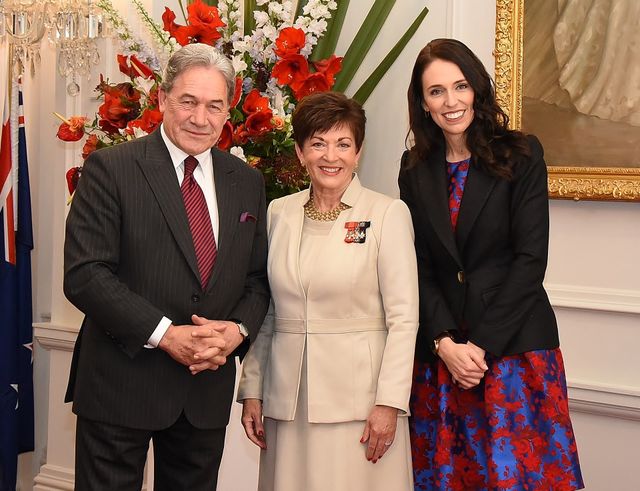
Ardern with Deputy Prime Minister Winston Peters and Governor-General Dame Patsy Reddy at the swearing-in of the Cabinet on 26 October 2017 (Image Credit: Governor-General of New Zealand /Wikipedia)
Prime Minister Jacinda Ardern has campaigned internationally for the Christchurch Call. Speaking at the United Nations last year she said it would combat the online promotion of terrorist violence and “language intended to incite fear” against ethnic and religious groups.
What constitutes “extremist” or “terrorist” content, however, is determined by the state. The Call has been signed by more than 50 countries including India, Japan, Britain, Australia, Canada, Germany and Indonesia. India has blocked internet access in Jammu and Kashmir, while Indonesia last year blocked access in Papua province—in both cases to assist in the repression of separatist movements labelled “extremist” or “terrorist.”
US President Donald Trump has labelled protests against killings by police as the work of “terrorists,” in order to justify violent repression.
While the Christchurch Call is not officially backed by the US government, it was signed by Google, Amazon, Facebook, Twitter, YouTube and Microsoft—giant corporations that work closely with governments on surveillance and censorship, in particular of socialist, progressive and anti-war content.
The New Zealand legislation would empower the country’s Chief Censor “to make swift time-limited interim classification assessments of any publication,” including anything posted on social media sites. Content classified as “objectionable” can then be immediately blocked or censored.
An “Inspector of Publications” will be able to issue “take-down notices,” requiring online platforms such as Facebook or Google to remove “objectionable” links or be fined up to $200,000. This mirrors similar measures enacted in Australia immediately after the Christchurch shooting.
To enforce the new law, the Ardern government last year gave an extra $17 million to the Chief Censor and the Censorship Compliance Unit, essentially doubling their funding and allowing the unit to expand its staff from 13 to approximately 30 people.
The Bill would also enable the government to proceed with “the establishment of a government-backed... web filter if one is desired in the future.” The draft legislation acknowledges that such filters, which would prevent access to blacklisted websites, could “impact on freedom of expression.”
In the UK, a web filter introduced in 2013 on the pretext of combating child pornography has blocked numerous websites which had nothing to do with illegal activity.
New Zealand’s two biggest internet service providers, Spark and Vodafone, told Newsroom they support such a filter, along with the other measures in the legislation.
The lobby group InternetNZ criticised the proposal. Its chief executive Jordan Carter told Stuff on May 28 that the Bill “leaves a whole heap of discretion for the secretary of internal affairs about how [the filter] would work, who it would apply to, and whether it would be compulsory or not, and we don’t think that putting a really broad power like that in this legislation is a good idea.”
A press release by Internal Affairs Minister Martin vaguely stated that “content is deemed to be objectionable if… [it] is likely to be injurious to the public good.” Examples “include depictions of torture, sexual violence, child sexual abuse, or terrorism.”
The definition can easily be interpreted to include media coverage and exposures by members of the public of police brutality, fascist violence and war crimes.
Indeed, Chief Censor David Shanks has already suppressed the video of the Christchurch massacre—which appeared in news reports throughout the world—and outlawed possession of Tarrant’s fascist manifesto. Shanks also warned that reporters who quoted from the document “may” be breaking the law.
The corporate media has complied with a request from Ardern to self-censor reporting about Tarrant’s fascist views. The aim is to cover up the manifesto’s striking similarity to the xenophobia, racism and anti-socialism promoted by the political establishment.
Significantly, Internal Affairs Minister Martin, who is overseeing the internet censorship law, is a member of the right-wing nationalist NZ First Party, which has stoked anti-Chinese and anti-Muslim sentiment. Ardern gave NZ First a major role in her government, with several ministerial positions (Deputy Prime Minister, Defence, Foreign Affairs, Internal Affairs and Regional Development), because Labour essentially agrees with the right-wing party’s anti-immigrant politics.
The Greens, which are also part of the government, have made no statement about the internet censorship bill, but the party has previously made clear it supports censorship in the name of stopping “hate speech.”
All historical experience demonstrates that the danger of fascism cannot be addressed by giving more powers to the state. In the US, Europe and internationally, fascist forces are being actively promoted by governments and military-police agencies to divide the working class and defend the discredited capitalist system.
In New Zealand, successive Labour and National Party governments are responsible for encouraging the anti-Muslim bigotry that fueled the Christchurch massacre, including through their support for the criminal US-led wars against Iraq and Afghanistan.
Both major parties also utilised the so-called “war on terror” to expand the powers of the intelligence agencies to spy in on New Zealanders and internationally.
As well as pushing online censorship, the Ardern government exploited the Christchurch massacre as a pretext to further militarise the police and give more money to the spy agencies, which for years turned a blind eye to threats of white supremacist violence.
The real reason the state apparatus is being strengthened is to prepare for an explosion of mass struggles, including protests against fascist and police violence, such as those unfolding in the United States. Above all, the political establishment is seeking to suppress working-class opposition to social inequality, unemployment and poverty in New Zealand, which is expected to reach levels not seen since the Great Depression.

Turkish government arrests opposition and Kurdish deputies

Ulas Atesci

In a new attack on democratic rights moving Turkey towards authoritarian rule, Enis Berberoğlu of the bourgeois opposition Kemalist Republican People’s Party (CHP) and Leyla Güven and Musa Farisoğulları of the Kurdish nationalist Peoples’ Democratic Party (HDP) were stripped of their parliamentary mandates last Thursday, by President Recep Tayyip Erdoğan’s Justice and Development Party (AKP) government backed by the far-right Nationalist Movement Party (MHP).
All three deputies were arrested and jailed on the same day. Only Berberoğlu was released on Friday, until July 31, on the grounds that he can legally benefit from measures implemented in April to protect prisoners from COVID-19. Güven and Farisoğulları were sentenced on “terror” charges, of “being a member of the PKK [Kurdistan Workers’ Party]” in September 2019. They were sentenced to six and nine years in prison, respectively.
This “measure” unconstitutionally excludes political prisoners from the right to protection from COVID-19 across Turkey and in its prisons.
Elected as a deputy in June 2015, Berberoğlu was sentenced to 25 years imprisonment in 2017 for giving the daily Cumhuriyet a video of trucks carrying weapons supplied by Turkish intelligence to Islamist “rebel” groups in Syria in 2014. He was re-elected in the 2018 elections, but his prison sentence of five years and 10 months was later endorsed by the Supreme Court in September 2018.
While these rulings could be suspended until the end of the parliament session, the Erdoğan government suddenly decided to implement them last week.
On Thursday, in its first statement on these events, the HDP called them a “coup” and issued “a call to unite all democratic forces against this aggression and arrogance targeting all social groups,” adding: “Stopping this aggression against our people today is the shared duty of us all as the opposition. We call on everyone to fulfil this duty.”
HDP co-chairs Pervin Buldan and Mithat Sancar held a press conference Saturday, at which Buldan said: “This coup is directed not only against the parliament but also our elected mayors,” referring to the latest attack on HDP municipalities in May. The government dismissed five more HDP mayors; as a result, the HDP governs only 14 of the 65 municipalities it won in the 2019 local elections.
The Kurdish-nationalist HDP is orienting not only to the CHP, the Turkish bourgeoisie’s traditional party of rule, but to two AKP split-offs, the Future Party of former AKP Prime Minister Ahmet Davutoğlu and the Democracy and Progress Party (DEVA) of former AKP Economy Minister Ali Babacan. Sancar stressed that “all other democratic forces should also be aware of their responsibilities.”
Asked about the CHP, the HDP leaders said, “we still maintain our insistence that the solution is through a line of struggle that covers not only the CHP, but all democratic forces.”
This line was also endorsed from prison by Selahattin Demirtaş, the jailed former HDP co-leader, who declared: “By drawing lessons from the past, we should be able to make bolder and bigger political moves, broader and more open alliances for democracy, freedom, peace and economic prosperity.”
However, the CHP’s response to the AKP onslaught exposes that this undeclared alliance aims not to defend democratic rights, but to advance the reactionary agenda of a faction of the ruling class. CHP leader Kemal Kılıçdaroğlu was silent on the HDP deputies’ fate on Thursday, only tweeting: “Enis Berberoğlu’s being stripped of MP status is a result of the July 20 Civilian Coup [in 2016] process, this disregards the will of the nation. We will continue the struggle for democracy to secure justice, rights and the law.”
While Kılıçdaroğlu criticized the government’s policy following the NATO-backed military coup against Erdoğan on July 15, 2016 as a “July 20 civilian coup,” the reality is that the CHP pushed for national unity behind the AKP at the time. Similarly, the HDP complained about its exclusion from the “national consensus” between the AKP, CHP and MHP after the July 15 coup.
Moreover, the government can only attack these deputies thanks to the CHP’s collaboration with AKP and MHP. In 2016, the CHP voted for an AKP constitutional amendment removing HDP deputies’ parliamentary immunity; several HDP leaders, including Demirtaş, are still in jail since 2016. While the CHP always supported the Turkish army’s operations in Syria and in Turkey against the Kurds, Davutoğlu and Babacan helped carry out the Erdoğan government’s attacks on the working class and on Kurdish people for 15 years.
Ultimately, both HDP and CHP are right-wing bourgeois parties both unwilling and incapable of defending democratic rights. They are not less bankrupt and reactionary than the AKP. Their aim is to install a new government more openly aligned with the NATO imperialist powers in the interests of Turkish and Kurdish bourgeoisie; Erdoğan is responding to this political challenge by stepping up attacks on the potential alliance emerging against him.
According to a recent poll made by Avrasya Araştırma, while total votes of the AKP-MHP alliance are less than 45 percent, an open or tacit alliance between the CHP (30 percent), the far-right Good Party (10 percent), and the HDP (10 percent) could take 50 percent of all votes if elections were held today. However, the Future Party and DEVA could gain only 2.3 and 3 percent, respectively.
The AKP government’s attacks on the bourgeois opposition undoubtedly involve a desperate attempt to divert growing social anger among workers at the AKP government’s negligent response to the COVID-19 pandemic, and to stem the AKP’s own collapse in the polls. It is also bound up with broader conflicts, however, between Ankara and its NATO imperialist allies, especially over the Syrian and Libyan wars.
The Turkish government recently accused Washington and Paris of using the Syrian Kurdish National Council, an affiliate of the Kurdistan Democratic Party (KDP) led by the Barzani family in Iraqi Kurdistan, to “legitimate the YPG-PKK” and to build a “terror state” in Syria. Ankara regularly denounces the US-backed Kurdish People’s Protection Units (YPG) in Syria as a terrorist organization and views any enclave in Syria controlled by the US-backed YPG as a threat to Turkey’s territorial integrity.
Speaking to Rudaw on May 28, HDP’s co-leader Buldan pointed out these tensions, saying, “the AKP has also come out against Rojava [the Autonomous Administration of North and East Syria] and the independence referendum in Bashur [the Kurdistan Region of Iraq]. This means [the attacks] are not only associated with us and our party.”
Last month, Turkish Foreign Minister Mevlüt Çavuşoğlu declared: “Amid efforts to create a statelet [in eastern Syria], now US efforts to integrate [the YPG] into the political systems are proceeding. In particular, they are trying to integrate the YPG with the SKNC.” He added, “We won’t allow the creation of a terror corridor, and we will not allow the legitimization of terrorists there.”
Speaking to France24 on May 25, Erdoğan’s spokesperson İbrahim Kalın pointed to Turkish-French conflicts as they support rival sides in the Libyan civil war, adding: “In Syria, we have disagreements as well not only with France, but also with the United States, because both are supporting the PYD-YPG which is the PKK’s Syrian branch. … The PYD/YPG’s main agenda is to create its own Kurdish enclave in Syria.”
Commenting on this interview, PKK Executive Committee member Murat Karayılan stressed that his organization was determined to reach a deal with other Kurdish-nationalist groups under US and French auspices, stating: “A few days ago, Turkish presidential spokesman İbrahim Kalın said in his statements about Rojava: ‘They are trying to establish a place for the Kurds there, we will never accept this,’ so the United States and France should not help the [Kurdish] forces there.”
Events are yet again vindicating warnings made by the World Socialist Web Site: no faction of the Turkish or Kurdish bourgeoisies can defend democratic rights. There can be no fight for democratic rights without a struggle against imperialist war and for socialism. The way forward is to build an independent political movement in the working class of all ethnicities in the Middle East, fighting for workers’ power and the perspective of international socialism.

German government’s stimulus package: €50 billion for automakers, €1 billion for childcare

Peter Schwarz

After two days of talks, the parties in Germany’s grand coalition government agreed on a €130 billion stimulus package for the years 2020 and 2021.
It comes on top of a series of other existing programmes, including the coronavirus bailout programme, which was adopted in March and now amounts to close to €1.2 trillion, the European Central Bank’s bond buying programme, which will surpass €1 trillion by the end of the year, and the European Union’s €750 billion bailout measures, some of which will provide financing to Germany.
The main beneficiaries of all of these programmes will be big business and the stock exchanges. Since its collapse in March, triggered by the coronavirus, Germany’s DAX has enjoyed massive gains and is approaching the historic record high it achieved prior to the crisis. As a result, the wealth of the shareholders of all of the companies listed on the DAX has risen by a combined €360 billion in two-and-a-half months, almost three times as much as the stimulus package.
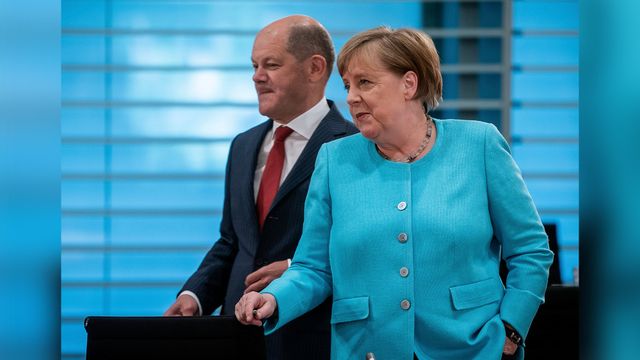
Angela Merkel and Olaf Scholz at the cabinet meeting on Wednesday (Michael Kappeler/DPA via AP, Pool)
“The current stock market boom is the best stock market boom money can buy,” commented Gabor Steingard, the former editor-in-chief of financial daily Handelsblatt, in his Morning Briefing podcast. “The treasuries in Washington, London, Berlin and Paris are wide open, and the champagne is flowing in the financial districts ... The financial markets around the world have long understood that the coronavirus does not represent an imposition, but rather an injection of cash. The investors there are among the biggest profiteers of the efforts to combat the pandemic.”
The latest stimulus package does nothing to change this assessment.
The grand coalition, and the Social Democrats in particular, are doing their best to sell it as a tremendous act of social welfare. In the face of major class struggles developing in the United States and other countries, they are focused on portraying themselves as parties of social compromise. In this, they are receiving support from economists and the media. For example, the Süddeutsche Z eitung claimed that the package strengthens “the socially vulnerable.”
This is a flat-out lie. Like the previous bailouts, the latest package showers cash on the rich, concealed behind a few modest rations for families. Additionally, it is already clear that the vast sums will be offloaded onto the working class in the coming period through austerity measures, as was the case following the 2008–2009 financial crisis. It is noteworthy that the financing of the programme through an increase in taxes for the top income earners and wealthiest individuals was not even considered.
As a result, the stimulus programme will produce a further increase in social inequality by enriching the super-rich at the expense of the vast majority. And this under conditions in which major companies like Lufthansa, ZF, and all automakers have already unveiled plans for large numbers of job cuts. The unemployment figures in April and May have already risen substantially. More than 7 million people are currently in short-time work and fear losing their jobs. In addition, the threat of a second global wave of the pandemic looms large as a result of the irresponsible policy of lifting all lockdown restrictions.
The socially balanced character of the package was allegedly demonstrated by the reduction of the sales tax for five months from 19 to 16 percent, or from 7 to 5 percent at the reduced rate, at a cost of €20 billion. “People with low and middle incomes, who spend most of their net wages on consumption goods, profit in particular from a cut in sales tax,” wrote the right-wing daily FAZ.
But basic consumption goods, like food, have already risen by a much greater margin during the pandemic than they will now decline as a result of the tax cut. Vegetable prices rose by 26.3 percent between January and March. Fruit, milk and butter have also risen sharply.
Under these conditions, cutting the sales tax will primarily benefit big business and traders. Gabriel Felbemayr, president of the Kiel-based Global Economic Institute, told Handelsblatt, “It is not clear to me if the businesses will reduce their prices for this short time or just keep the tax cut themselves.” Companies with a powerful market position could just wait out the six months without reducing their prices.
The minuscule sums designed to help those hit hardest by the coronavirus crisis are more of an insult than a help.
Parents will receive a one-off increase in child benefit of €300 for each child under 18. The total cost for this is around €4.3 billion. This is a ridiculously low sum when one considers that many parents have been forced to give up large portions of their income over many weeks or pay hefty fees for childcare while schools and kindergartens were closed.
Another €1 billion is being made available nationwide to renovate dilapidated kindergartens and improve hygiene guidelines. This amounts to one ninth of the amount they are making available to rescue Lufthansa.
The entire package does not include a single cent for poor people without children, as Ulrich Schneider, the head of the Paritätische Wohlfahrtsverband welfare organisation, commented. The word “care” does not even appear in the text of the package. However, the coronavirus crisis has exposed the terrible conditions in elderly care homes, which have led to numerous avoidable deaths.
The municipalities, which have seen their budgets systematically gutted by the federal government, will receive a mere €6 billion. And this in spite of the fact that they have been affected especially severely through collapsing business tax revenues, increased social welfare spending, and a major drop in revenues from cultural institutions. The proposal to write off the municipalities’ outstanding debts was scrapped. Instead, the federal government will pay for part of the costs of accommodating people on social welfare.
The vast majority of the €130 billion stimulus package will flow directly into the coffers of big business. Eleven billion euros is earmarked to cut the renewable energy surcharge. Although this will result in a minimal decline in bill payments for private households, the main beneficiaries will be large industrial customers.
Twenty-five billion euros in bridge financing will be provided to small and mid-sized businesses in sectors hit especially hard to cover the collapse in revenues. In addition to tax relief, the plan includes rebates of business operating costs up to a limit of €150,000 for hotels and restaurants, bars and clubs, travel agencies, travelling performers and professional sports clubs in the lower leagues. To reduce the burden of the coronavirus crisis on cultural institutions, a minuscule €1 billion is planned.
The package includes €5.3 billion to cap social insurance contributions at 40 percent of total income. Half of this will flow directly into the pockets of the employers.
The largest portion of the package, €50 billion, is set aside for investments in climate change and new technologies. This fine-sounding headline conceals a flood of cash for the auto industry.
Despite intensive lobbying, the automakers were not able to persuade the government to implement a purchase premium for petrol and diesel-powered cars. Instead, they will benefit even more from a higher premium for electric vehicles. The purchase of an electric vehicle will be financed in the future by a €6,000 premium instead of the current €3,000.
In addition, other funding programmes for automakers are included: €2.5 billion will be invested in expanding the battery charging network for electric vehicles and another €2 billion will be spent on battery production. And the automakers will also profit from the reduction in sales tax on petrol- and diesel-powered cars. For a mid-range car worth €30,000, the saving amounts to €900.
The government also intends to increase the capital available to the Deutsche Bahn railway company by €5 billion. Another €2.5 billion is set aside to support public transport.
The stimulus package was praised by all economic institutes and business associations. The president of the Ifo Institute, Clemens Fuest, described it as “balanced.” The director of the employer-aligned German Economic Institute, Michael Hüther, praised it as “surprisingly large and fiscally responsible.” The scientific director at the trade union-aligned Institute for macroeconomic and Growth Research (IMK), Sebastian Dullien, said it was “to be welcomed that the government agreed on a stimulus package of a substantial size.”
Alongside fresh attacks on the working class, the package aims to secure an advantage for German big business in the trade wars with their European and international rivals. This is why it enjoys the unreserved support of business associations and the trade unions.