16 Sept 2020

A “Persistent Eye in the Sky” Coming to a City Near You?

Medea Benjamin & Barry Summers

“Gorgon Stare will be looking at a whole city, so there will be no way for the adversary to know what we’re looking at, and we can see everything.” That same persistent eye in the sky may soon be deployed over U.S. cities.
At the time he made that comment about surveillance drones over Afghanistan, Maj. General James Poss was the Air Force’s top intelligence officer. He was preparing to leave the Pentagon, and move over to the Federal Aviation Administration. His job was to begin executing the plan to allow those same surveillance drones to fly over American cities.
This plan was ordered by Congress in the 2010 National Defense Authorization Act. It directed the Departments of Defense and Transportation to “develop a plan for providing expanded access to the national airspace for unmanned aircraft systems of the Department of Defense.” Gen. Poss was one of nearly two dozen ex-military officers who, starting in 2010, were put into positions at the FAA to oversee drone integration research. With little public scrutiny, the plan has been moving forward ever since.
If you’re thinking that this is a partisan issue, think again. This plan has been enacted and expanded under Presidents and Congresses of both parties. If you’re uncomfortable with a President Biden having the ability to track the movements of every Tea Party or Q-Anon supporter, you should be. Just as we should all be concerned about a President Trump tracking…well, everybody else.
Along with civil liberties, a major concern must be safety. The military and the drone manufacturers, principally General Atomics, are arguing that the technology has advanced far enough that flying 79-ft. wingspan, six-ton drones over populated areas and alongside commercial air traffic is safe. We have one response: self-driving cars. Self-driving cars present a technological problem that is an order of magnitude simpler than aircraft flying hundreds of miles per hour in three dimensions. Yet they still can’t keep these cars from plowing into stationary objects like firetrucks (or people) at 60 mph in two dimensions. Are we really comfortable with pilotless aircraft operating in the same airspace as the 747 at 30,000 feet that is bringing your children home for Christmas? These drones have a troubled history of crashing and unfortunately, the process for determining whether these drones are now truly safe has been compromised by having the military, which wants this approval, largely in charge of the testing.
Which brings us to San Diego. Last October, General Atomics announced that they would be flying their biggest, most advanced surveillance drone yet, the SkyGuardian, over the City of San Diego sometime this summer. The stated purpose was to demonstrate potential commercial applications of large drones over American cities. In this case, the drone would be used to survey the city’s infrastructure.
But when General Atomics first began preparing for the flight, the goal was a very different one: Back in 2017, military technology analysts were predicting that by 2025, drones similar to those used in Afghanistan and Iraq would be hovering above U.S. cities, relaying high-resolution video of the movement of every citizen to police departments (and who knows who else). When there was public pushback to this police department drone use—even a pro-industry reporter called the idea “dystopian”—General Atomics changed the purpose of the flight from providing data to the police to “mapping critical infrastructure” in the San Diego region.
The FAA, which is responsible for granting permission to General Atomics, has kept the process secret. When the Voice of San Diego asked for more information, the FAA refused on the grounds that this supposed commercial demonstration was actually “military.” The Voice of San Diego is now suing to get answers and the ACLU has also expressed concern about the flight. Amid the scrutiny, General Atomics quietly announced that the flight was cancelled, but this is certain to be a small hiccup in their long-term plan.
In fact, General Atomics’ drones are already being used domestically. U.S. Customs and Border Protection (CBP) flies Predators over parts of the U.S.- Mexico and U.S.-Canadian borders. Recently, CBP has expanded their reach, using these drones to assist police in Minneapolis, San Antonio and Detroit in the wake of protests against police brutality. Deeply concerned, members of Congress wrote to federal agencies denouncing the chilling effect of government surveillance on law-abiding Americans and demanding an immediate end to surveilling peaceful protests.
The concerns of these members of Congress should be echoed by the general public. What are the possible effects on our civil liberties from having high-tech surveillance platforms circling over millions of Americans, gathering information about our every move? We know from past experience that every government surveillance technology that can be abused has been abused. Allowing this powerful technology to be taken from overseas wars and turned inward on American citizens isn’t something that should happen without a robust public debate. The implications for civil liberties are too profound.

Australian CEO pay hits record high, boosted by JobKeeper subsidies

Jason Quill

Last month’s annual chief executive pay report produced by the Australian Council of Superannuation Investors (ACSI), an advisory firm for the largest companies on the Australian Stock Exchange, revealed a new record amount for the highest-paid CEO.
The ACSI report showed Andrew Barkla of International Development Program Education (IDP), received $37.7 million in 2019. A company part-owned by Australia’s universities, IDP places international students in universities in Australia, Canada, Ireland, New Zealand, United Kingdom and United States.
Barkla’s payout, which amounts to $103,452 a day, or 420 times the official average wage, was awarded after he exercised share options granted to him before the company’s public listing in 2015. This beat the previous record set by Domino’s Pizza CEO Don Meij, who took home $36.84 million in 2017.
The amounts paid to the CEOs on the rest of the top 20 list are a no less obscene contrast to the protracted decline in workers’ real wages, long before the COVID-19 pandemic struck.
Paul Perreault of Commonwealth Serum Laboratories, in second place, received $30.5 million. In eighth place, Qantas CEO Alan Joyce took home $12.2 million, while JS Jacques of Rio Tinto was in tenth place, on $10.3 million.
The 20th highest paid CEO, Peter Allen of the Scentre group, went home with $7.4 million. That is still 90 times the average yearly pay of $84,968, a figure that is itself skewed by soaring executive salaries (the median wage was just $48,360 in 2017).
ACSI’s research partner Ownership Matters published a second report, showing that these same companies have exploited government subsidies schemes, supposedly created to keep businesses afloat throughout the pandemic, to increase CEO pay.
Since March, federal and state governments have allocated more than $400 billion for business bailout packages and cheap central bank-provided loans, all with the bipartisan backing of both the Liberal-National Coalition and the Labor Party.
The biggest single scheme has been the JobKeeper wage subsidy program, which pays companies up to $1,500 per fortnight per employee. Far from protecting jobs, as Prime Minister Scott Morrison’s government claimed, it has provided a corporate bonanza.
Some 3.5 million workers have barely survived on these payments, which are being slashed from September 28, and many of them will end up jobless. But CEOs have enriched themselves from the scheme, which was always its purpose.
On the back of JobKeeper subsidies, corporate profits have soared as well—up by 15 percent in the June quarter, even as the economy crashed into recession, already throwing more than two million workers into unemployment or under-employment.
The Ownership Matters report, entitled “JobKeeper and Other Government Subsidies,” which covers the period from March to July, shows that of 81 publicly-listed companies receiving government subsidies related to COVID-19, 63 received JobKeeper payments. Within that group, 25 have paid upward of $24 million in executive pay.
The Accent group, a retail chain, received $21.4 million in JobKeeper payments as well as $7.6 million in rent waivers. It awarded chief executive Daniel Agostinelli and CFO Matthew Durbin a combined $1.7 million in bonuses, and increased full-year dividends by 12.5 percent.
Star Entertainment, the operator of Sydney’s Star Casino, was the fourth biggest recipient of JobKeeper payments, receiving some $65 million in total. It paid $1.4 million to its five top executives, including $830,000 to CEO Matt Bekier.
Qube, a company that specialises in industrial logistics, received $19.4 million in JobKeeper subsidies and paid its five top executives $2.8 million worth of bonuses, including $1.2 million to chief executive Maurice James. It also paid $43.3 million in dividends to its shareholders.
At least another 17 companies paid out 20 percent or more of their subsidies in the form of dividends to shareholders, though the full extent of this is unknown as JobKeeper lacks transparency or public accountability.
A spokesperson for Qube defended the executive payments, saying the company aimed “to appropriately reward and incentivise management to deliver value for its shareholders."
For appearances sake, some CEOs of the Australian Stock Exchange’s top 300 companies have decided for the coming year to trim their own pay packets, but only by an average of 2 percent. There is a tacit agreement that they will be rewarded when the immediate crisis passes.
For himself, Prime Minister Morrison has refused to reduce his own salary, which stands at more than half a million dollars a year, and has opposed any lowering of other politicians’ remuneration.
The issue of exorbitant CEO pay is not new. However, the latest reports have come amid the worst economic crash and destruction of jobs since the Great Depression of the 1930s.
Labor MP Andrew Leigh made a brief speech on the revelations in parliament on August 31, stating: “If you’re getting taxpayer subsidies, the CEO shouldn’t be getting a bonus.” His speech was retweeted more than 3,000 times, with some describing the situation as “astonishing,” “disgraceful” or “disgusting.”
But Leigh’s speech was steeped in hypocrisy, as Labor voted for all the business bailout measures, including JobKeeper. Nor did he or Labor make any proposal to take back the money and redirect it to healthcare, aged care, housing or education.
Interviewed by the New Daily, Leigh only called on companies to “act in the interests of the whole community, not just their shareholders and managers.” Naturally, no company responded to his call. To do so would violate the entire purpose of big business on a global scale—the generation of private profit and wealth.
Leigh’s main concern, on behalf of his party, was the discontent brewing in the working class. “Paying bonuses while taking subsidies risks bringing corporate Australia into disrepute,” he said.

Woodward revelations: Canada’s political elite implicated in Trump’s suppression of COVID-19 threat

Omar Ali & Roger Jordan

The revelations from Washington Post journalist Bob Woodward documenting how US President Donald Trump lied to the American people about the danger posed by COVID-19 have also served to further expose the callous and calamitous response of Canada’s ruling elite to the pandemic.
Trump was informed by his National Security Advisor Robert O’Brien on January 28 that the coronavirus was the greatest national security challenge of his presidency to date. This was only one of a series of high-level briefings in which the gravity of the novel-coronavirus threat was repeatedly brought to Trump’s attention.
Then, on February 7, Trump told Woodward, in an exchange captured on tape, that Chinese President Xi Jinping had informed him the disease is transmitted through the air and could have a fatality rate of 5 percent. Trump would later tell Woodward that he nonetheless continued to “downplay” COVID-19 because he did not want to trigger a “panic,” i.e. a collapse of Wall Street and the financial markets. In this criminal enterprise, which has led to the deaths of hundreds of thousands, the Democratic Party leadership is complicit, since they were provided with essentially the same intelligence in security briefings, yet also did nothing to alert the public.
Canada is Washington’s closest military-security partner, bound to the Pentagon and US intelligence and Homeland Security agencies through a vast web of alliances and networks, including NATO, NORAD, and the Five Eyes. Given the breadth of this partnership, which politicians from all major parties never tire of extolling when the issue is supporting war and intrigue abroad or increasing military spending, it is inconceivable that Canada’s national-security apparatus and Liberal government were not privy to the intelligence warnings received by Trump and the Democrats in January and early February.
Moreover, the only plausible explanation for Canadian authorities’ failure to alert the public and immediately initiate large-scale preventive measures is that they were motivated by the same mercenary concerns—that is class interests—as the US political establishment. They didn’t want to roil the financial markets or otherwise impede big business profit-making; with the possible added motivation on Ottawa’s part of not wanting to do anything that would rile Trump and damage relations with Washington.
Defence Minister Harjit Sajjan has admitted that the military’s medical intelligence unit was gathering information on the new virus and its impact in China for several weeks before it provided him with a briefing in mid-January. The information contained in this briefing was subsequently shared widely across the government.
However, the government’s Incident Response Group did not meet to discuss the coronavirus until January 27. One day later, Health Minister Patty Hajdu responded to a question on whether the federal government would provide additional resources to the provinces to strengthen their health care systems by saying, “I think it’s very premature to say that there will be additional resources needed at the hospital level. Every indication is that we will not at this point in time.”
The first handful of Canadian COVID-19 cases were reported that same week, and on January 28 the World Health Organization (WHO) warned that transmission was “high at the global level,” indicating that community transmission was already underway in many countries. Three days later, the WHO declared a global health emergency.
Yet during the next five weeks, the Trudeau government failed to take substantive action, such as procuring increased resources, informing the public of the scope of the threat and its plans to halt the virus’ spread, or instituting distancing guidelines. Not until March 10, more than two months after first learning about the virus, did the Trudeau Liberal government even write the provinces to inquire about their stockpiles of personal protective equipment (PPE) and other critical medical supplies. Vital time that could have been used to prepare a health care system already buckling due to decades of budget cuts and the privatization of much of senior care was thus squandered.
In Ontario, the hard-right government of Doug Ford also systematically downplayed the pandemic. On March 8, the provincial Ministry of Health declared that the risk to Ontarians remained low and Ford advised Ontarians to go out and enjoy the spring break holiday. By this point, hospitals were already struggling with an influx of patients. After efforts at quietly lobbying the government to take drastic steps fell on deaf ears, the Ontario Hospital Association wrote a petition demanding the premier declare a state of emergency.
The intervening months have brought to light documents underscoring how the federal government ignored warnings and failed to undertake even the most basic preparatory measures in February. Documents obtained by public broadcaster CBC indicate that government officials were warning of looming shortages of PPE in the National Emergency Stockpile (NESS) in early February. In an internal presentation on February 13, the Public Health Agency of Canada was reporting that the federal stockpile contained only “a modest supply of personal protective equipment including surgical masks, respirators, gloves, gowns and coveralls,” and warned that global supplies would soon dwindle in the face of an enormous spike in demand.
Unless the government moved quickly to acquire these products, argued officials, lives of healthcare workers across the country would be in jeopardy once they were called upon to treat those stricken with the coronavirus. Yet, according to the CBC report, all the contracts the government awarded for PPE in the ensuing days totaled less than $300,000.
The first orders for significant additional supplies of PPE and ventilators were issued only on March 14, at which point the crisis was already in full swing and much of the country was under lockdown. The procurement of N95 masks was made even more difficult due to the fact that the government had a contract with just one lab in the United States to validate them.
The lack of PPE has been a major factor in the spread of the virus, contributing to the deaths of both patients and health care workers. In July, Statistics Canada reported that frontline health care workers had accounted for more than 21 percent of all COVID-19 cases nationwide.
As of yesterday, Canada has recorded over 139,000 infections and 9,188 deaths, the vast majority of which occurred among long-term care residents of nursing homes and other long-term care facilities.
The government’s dilatory and negligent response to what the WHO publicly and Canada’s principal intelligence partner privately were warning was a colossal public health emergency contrasts sharply with the official response to the pandemic’s economic impact on investors and big business. No sooner did the pandemic cause financial markets to quake and force provincial governments across the country to belatedly announce lockdown measures than the Trudeau government and Bank of Canada intervened with a massive bailout for investors, the banks and corporate Canada.
Like Trump and the Democrats in the United States, the Liberal government, Canada central bank and other state agencies came to the rescue of the financial elite, funneling $650 billion into their coffers by the end of March. This massive heist of public funds was aided and abetted by the NDP and the trade union bureaucracy. They remained silent about the enormous transfer of wealth to the capitalist elite, while lauding the Trudeau government for providing a meager $2,000 a month through the makeshift and soon to be terminated Canada Emergency Response Benefit (CERB) to the millions of workers who lost their jobs and income.
In keeping with their role as corporatist allies of the Liberal government and big business, the unions have supported the back-to-work campaign, including the drive to reopen the schools so parents can be forced back on the job amid the pandemic. The unions have opposed job action against what they concede are unsafe conditions, on the grounds such action would be “illegal”.
The Canadian media’s coverage of the Woodward revelations and how they implicate the Trudeau government and Canada’s lavishly funded military-security apparatus in a conspiracy to conceal the threat posed by COVID-19 has been extremely muted.
One of the fe w report s in a major media outle t to even suggest that Woodward’s revelations and the intimate Canada-US security- intelligence partnerships raise the questions “ what did the federal government know” about the developing COVID-19 pandemic “and when?” was a CBC article published Monday. It was entitled “Woodward’s Trump revelations raise questions about Canada’s response to COVID-19.”
However, the article is largely devoted to promoting unconvincing claims that Ottawa would not have had access to the same intelligence as Trump. Its main criticism of the Trudeau government is not that it deliberately downplayed the threat posed by the pandemic in league with the US president and political establishment, but that it relied too heavily on information from China and the World Health Organization during January and February. This echoes the bellicose, geopolitically-motivated campaign spearheaded by the Conservative Official Opposition, the National PostToronto Sun, and other right-wing outlets to blame China for the pandemic, and attribute the Liberal government’s ruinous response to the pandemic to its supposed pandering to Beijing.
The CBC and other media outlets have conveniently blacked out the fact that Trump was briefed on February 7 by Chinese President Xi about the seriousness of the disease, after which he delivered his grim assessment privately to Woodward.

US defence secretary phones Sri Lankan president about increased military cooperation

Vijith Samarasinghe

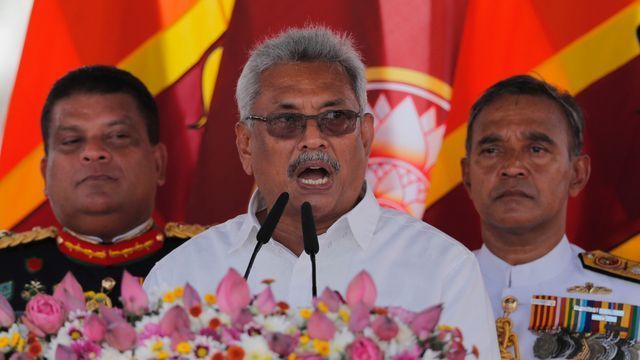
Late last month, US Defence Secretary Mark T. Esper phoned President Gotabhaya Rajapakse. Esper later Tweeted: “Good talk today with Sri Lankan President @Gotabaya R. We discussed our cooperation in responding to COVID 19 & the international security environment.”
The Colombo media reported that the call was about COVID-19 and claimed Esper had praised Rajapakse for “controlling” the pandemic. This was a ridiculous attempt to cover-up the real content and implications of the discussion.
The extraordinary phone call—the first in living memory from a US defence chief to a Sri Lankan president—was not about the coronavirus, but the expansion of existing military agreements between the two countries, in line with President Donald Trump’s preparations for war against China.
Gotabaya Rajapaksa (AP Photo/Eranga Jayawardena)
While Rajapakse and the Sri Lankan media have kept their mouths shut about the real purpose of the call, the US defence department later released a statement, indicating some of the issues raised.
The conversation, according to the statement, centred on the “shared commitment” of the two countries “to a free and open Indo-Pacific”—a euphemism for Washington’s ongoing campaign against Beijing and unchallenged US military operations in the region. It involved a “review of the defence priorities,” such as “military professionalization, counter-terrorism, and maritime security cooperation.” The defence secretary also called for “continued progress on reconciliation and human rights in Sri Lanka.”
Esper’s phone call was motivated by the fact that Washington and its regional allies are intensifying their military build-up against China, in the Indian Ocean region, and are determined to further expand military relations with, and operations on, the strategically located island.
The call, which was made just a few weeks after the landslide victory of Rajapakse’s party in the parliamentary election, also reflected Washington’s concerns about the new administration and its previous links with China.
Two days after the election, the Wall Street Journal published an article headlined “Pro-China Populists Consolidate Power in Sri Lanka.” It stated that the previous Rajapakse administration had “embraced China,” and become “a showcase for Beijing’s global infrastructure initiative.”
While the US and India had backed Rajapakse’s brother—the former president and current prime minister, Mahinda Rajapakse—in the last phase of Sri Lanka’s bloody civil war in 2009, Washington was hostile to the regime’s economic and military relations with Beijing.
In 2015, the US orchestrated a regime-change operation to oust Rajapakse as president and replace him with the pro-US Maithripala Sirisena. The subsequent Sirisena-Wickremesinghe administration rapidly and systematically expanded Sri Lanka’s defence ties with the US. The Sirisena-Wickremesinghe regime strengthened defence agreements with Washington and involved the Sri Lankan military force in numerous drills and training exercises with the US and its allied armed forces.
The Access and Cross-Servicing Agreement (ACSA) between the US and Sri Lanka, which was first signed in 2011 by Gotabhaya Rajapakse, then defence secretary, was renewed indefinitely under Sirisena. ACSA gives the US military unrestrained access to Sri Lanka’s seaports and airports, while the American navy is currently investigating the feasibility of establishing a US “logistics hub” at the strategic eastern port of Trincomalee.
Further ties are also in the pipeline. These include the proposed renewal of a Status of Forces Agreement (SOFA) with the US, the hand-over of Colombo Port’s Eastern Terminal to India, and a $US480 million grant agreement with the Millennium Challenge Corporation, an instrument of US foreign policy. Ratification of these agreements and other defence proposals, however, were stalled by conflicts in 2018 that divided the Sirisena-Wickremesinghe administration.
Gotabhaya Rajapakse was elected president last year by capitalising on the political instability and exploiting deep-seated popular opposition to the International Monetary Fund austerity program implemented by the Sirisena-Wickremesinghe regime.
Esper’s phone call constitutes another clear message to the Rajapakses that Washington is insisting that pending military agreements be ratified immediately, and that US-Sri Lanka defence cooperation is taken to a new level.
As the US embassy in Colombo declared, following the August 5 general election, “We look forward to partnering with the government and the new parliament.”
Even before last month’s election results were finalised, Indian Prime Minister Narendra Modi, Washington’s chief regional ally, rushed to congratulate Rajapakse. In Colombo, the Indian high commissioner held a dinner for the new cabinet ministers, just days after their swearing-in.
Following his election as president last November, Rajapakse quickly demonstrated his loyalty to Washington and India, and made his first official foreign visit to New Delhi, on the invitation of Prime Minister Modi.
Last month, Rajapakse appointed retired Admiral Jayanath Colambage, who is director of the pro-US Pathfinder Foundation, as foreign secretary. Senior career diplomat and former foreign secretary Ravinath Ariyasinghe was named ambassador to the US.
In an August 26 interview with the Daily Mirror, Colambage said, “as far as strategic security is concerned, Sri Lanka will always have an India-first approach.”
In another diplomatic posting, Rajapakse appointed Milinda Moragoda— a former minister with long established loyalties to Washington—as a “cabinet-ranked” high commissioner to India. Cabinet rank means he can directly talk to the president and his top ministers.
Moragoda, a founder of the Pathfinder Foundation in Colombo, was described in 2003 by the former US Ambassador to Colombo, E. Ashley Wills, in a diplomatic cable, later published by WikiLeaks, as a “perfect fit” for “cultivating relations with the US and India.” His appointment as the Indian High Commissioner is another indication of Colombo’s endorsement of the anti-China, military-strategic build-up in the region.
The Rajapakse administration has signaled that it will go ahead with the pending US-Sri Lanka defence agreements. Both the president and prime minister have also confirmed that they will hand over the strategic Colombo Port East Terminal to India, despite mounting opposition from port workers.
Colambage told the Daily Mirror that the transfer of the terminal was agreed in a 2017 deal between Sri Lanka, India and Japan, and that President Rajapakse was “committed to honour” the deal.
Rajapakse is also advancing the close military-to-military ties with the US, established by the Sirisena-Wickremesinghe administration. In March, when the whole country was under strict COVID-19 lockdown and curfew, US Green Berets conducted combat training exercises with Sri Lankan forces in Trincomalee harbour.
President Rajapakse’s refusal to disclose the content of his discussion with Defence Secretary Esper indicates that he has no concerns about the preparations for war against China. This silence, at least for the time being, also reflects the sensitivity of Colombo’s ruling elite to popular concerns about this issue. During the election, Rajapakse’s nationalist allies attempted to posture as anti-imperialist. At the same time, the debt-ridden Rajapakse regime is also seeking extensive financial assistance from Beijing.
Esper’s phone call came as military and economic tensions in the Asia-Pacific region have reached the highest level since the Second World War. Late last month, Beijing fired “aircraft carrier killer” missiles into the South China Sea, in response to the provocative manoeuvres of the US naval flotilla led by the USS Ronald Reagan in the disputed marine territory.
Early last week, Japan, India and Australia—all members of the US-led quadrilateral military alliance against China—agreed to restructure commercial supply chains in the region to counter so-called “China trade dominance.”
The US has also banned 24 Chinese companies, including the China Communication Construction Company (CCCC), from buying American products, citing their involvement in the development of artificial islands in the disputed South China Sea. CCCC is involved in the construction of the massive Colombo Port City project, the largest single Chinese investment in Sri Lanka. The Chinese embassy in Colombo has appealed to the Rajapakse government to oppose the US sanctions.
Attempting to navigate its path through this geo-strategic minefield, Colombo has said nothing about the latest trade bans and their possible impact on the Colombo Port City project.
In a veiled threat, the US embassy in Colombo warned that the US “further encourages countries to manage risk when dealing with CCCC,” which it claims has done “untold environmental damage… and caused instability in the Indo-Pacific.”
In his August 26 Daily Mirror interview, Sri Lankan Foreign Secretary Colambage said: “We have to balance. The President has outlined a few specific things. Sri Lanka should be a neutral country. Sri Lanka does not want to be caught up in the power game.”
Notwithstanding the rhetoric about “balancing,” the Rajapakse regime is signalling to Washington that Colombo is not siding with Beijing, and will continue to expand its military operations with US imperialism against China. The Rajapakses know, from their own experience, that any deviation from this line could have severe repercussions for the current government.

Yoshihide Suga replaces Abe as Japanese prime minister

Ben McGrath

Japan’s ruling Liberal Democratic Party (LDP) elected Yoshihide Suga as its new president on Monday, ensuring his selection as prime minister today in the National Diet. Suga will finish out Shinzo Abe’s term as party leader, which ends in September 2021. Abe announced his resignation as prime minister and LDP president on August 28, citing poor health.
Suga won 377 out of 534 votes from eligible electors, which consisted of 393 LDP legislators and 141 regional representatives. Suga had served as Abe’s chief cabinet secretary since December 2012 and received the backing of five out of seven party factions, including the two largest, led respectively by Hiroyuki Hosoda and Finance Minister Taro Aso, who will retain his position under Suga.
Suga’s installation is regarded as a continuation of Abe’s agenda of militarism, pro-business measures against the working class and the evisceration of democratic rights. Hosoda stated, before Monday’s election: “The next prime minister will have to take over the Abe cabinet as well as his wishes.”
The party’s general council decided not to include rank-and-file LDP members in the election, though typically they would have a vote as well. The council stated that the process would take too long if normal procedures were followed, claiming this would have an adverse effect on the economy and management of the pandemic.
The decision not to hold a full leadership vote likely hurt challenger and former Defense Minister Shigeru Ishiba the most. He received 68 votes. Ishiba previously challenged Abe for the LDP presidency in 2012 and 2018, on an even more right-wing and militarist platform, and is reportedly more popular among regional party members. The other challenger, LDP Policy Research Council chairman Fumio Kishida, won 89 votes.
Suga could potentially call a snap election, in order to provide the installation of an unelected prime minister a veneer of public support, especially as Abe leaves office deeply unpopular. In August, shortly before announcing his resignation, the approval rating for Abe’s cabinet stood at 32.7 percent, according to a Jiji Press poll.
This hostility is driven by the growing economic and social crisis in Japan and internationally.
While the official unemployment rate stands at just 2.8 percent, it hides the real situation facing the working class. As a result of the COVID-19 pandemic, 2.4 million workers have been furloughed and face being fired outright as companies seek to cut costs. In addition, 38 percent of all workers are in low-paid, non-regular jobs, and are at risk of being fired as well. Those who have given up searching for work are similarly not counted in the unemployment figures.
The ruling class therefore sees Suga as the most capable of pushing through the demands of big business over the objections of the working class. This will signify a continuation of monetary easing policies to boost the fortunes of the financial elite, while rolling back even the limited public spending carried out under Abe. When Suga indicated his intention to run for party head on August 31, the Nikkei Stock Average jumped 450 points.
Suga’s election also indicates that Tokyo will continue to pursue a close alliance with the United States. On Saturday, he called the Japan-US alliance the “foundation” of Tokyo’s diplomacy with other nations in Asia. On September 1, Suga stated: “The Japan-US relationship is stronger than ever and it is needless to say that we should continue to advance the alliance even further.” He cited a phone call the previous day between Abe and Trump, where the former sought to reassure the US president on this point.
Tokyo will continue to align with the US in war preparations aimed at China. Mirroring Washington’s push to “decouple” the US from the Chinese economy, Suga supported similar measures for Japan in April. As part of its COVID-19 bailout package that month, Tokyo provided 240 billion yen (US$2.3 billion) for companies to shift operations out of China and to Japan or Southeast Asia.
Like Abe, Suga belongs to Nippon Kaigi, an ultra-rightwing organization that promotes remilitarization, the restriction of basic democratic rights, and historical revisionism, to cover up the crimes of Japanese imperialism. Abe delivered a speech to the organization in May 2017, declaring his intention to revise Article 9 of the constitution, known as the pacifist clause, by 2020. While that agenda has been slowed by the COVID-19 pandemic, Suga and his new government will attempt to follow through on Abe’s pledge.
Article 9 explicitly bars the country from fielding a military force or waging war on other nations. Through various “reinterpretations” since the constitution went into effect in 1947, the Japanese ruling class has worked around this clause to build up the military, formally known as the Self-Defense Forces (SDF). Abe’s cabinet declared a reinterpretation in July 2014 to allow “collective self-defense,” a euphemism for waging war overseas alongside an ally, namely the US.
In a September 8 debate, Suga called for constitutional revisions on four points the LDP proposed in March 2018. This included adding a clause to Article 9, which would explicitly recognize the SDF, as well as granting the government emergency powers that would restrict democratic rights. Suga is pushing for debate in the National Diet, where any constitutional changes would need a two-thirds majority of both houses before heading to a national referendum.
As for China, Beijing’s Foreign Ministry spokesman Wang Wenbin formally congratulated Suga, saying: “China stands ready to work with Japan’s new leader to continue to abide by the principles and spirit set in the four political documents between the two countries, deepen cooperation in fighting the COVID-19 pandemic as well as economic and social development, and promote the continuous improvement and development of China-Japan relations.” The four documents referenced are diplomatic agreements between Beijing and Tokyo, adopted between 1972 and 2008.
In reality, the US offensive in the region is heightening the tensions between the Japanese and Chinese ruling elites.
An editorial on Monday, in China’s state-owned Global Times , called for Beijing to boost China’s economic attractiveness for Japan. This, it stated, was necessary to prevent the US from pulling Tokyo even closer into the aggressive anti-China campaign now being whipped up in Washington.
The editorial warned: “The US is trying its best to get its allies to gang up against China. This will also have an impact on Japan. For example, Japan values the Chinese market, but it is also interacting with the US, Australia and India to promote the de-Sinisization of the supply chain.” It stated: “While China and Japan are seeking generally stable ties, and maintaining the status quo, there is also a possibility that the two countries’ differences will slowly widen.”
Despite these rising concerns in Beijing, Abe’s militarist agenda will continue under Suga, since the Japanese ruling class lacks any progressive means of ending the growing economic and social crisis it confronts.

15 Sept 2020

Reactionary Massachusetts ruling paves way for Andover public schools to open in-person

Mike Ingram

Public schools in Andover, Massachusetts, a city of 33,000 north of Boston, open today, September 16, for both in-person and remote learning. The reopening follows a reactionary ruling September 8 by the Massachusetts Department of Labor Relations Commonwealth Employment Relations Board (CERB) against teachers who refused to enter school buildings on the first day of professional training and school preparations on August 31.
Many Andover teachers, concerned over the lack of safety against COVID-19 in schools, refused to enter the buildings, sitting outside them with laptops doing their required professional learning and assessment work and attending staff meetings while social distancing. School officials argued that by refusing to enter classrooms teachers were unable to carry out tasks such as tagging furniture and testing WIFI connections.
The Andover Education Association (AEA), which is affiliated with the Massachusetts Teachers Association (MTA), described it as a “workplace safety action” due to the school district’s “lack of good-faith bargaining” over how to keep students and staff safe when school reopens.
A spokeswoman for Andover Public Schools (APS) denounced the action as an “illegal work stoppage.” District officials on the Andover School Committee met later the same day and voted to authorize their counsel to file an “instant strike petition” with the state Department of Labor Relations.
A petition for a strike investigation was filed September 1, alleging that a strike had occurred and is about to occur “and that this strike has been induced, encouraged and condoned by the Andover Education Association (AEU or Union).” It named six AEA officers, including AEA President Matthew Bach and Second Vice-President Julian DiGloria, both individually and in their capacity as union officials.
The petition was requested under Section 9A of the Massachusetts General Law (M. L. G c 150E), which states: “(a) No public employee or employee organization shall engage in a strike, and no public employee or employee organization shall induce, encourage or condone any strike, work stoppage, slowdown or withholding of services by such public employees.”
In its September 8 ruling, the employment relations board declared: “In support of this Strike Petition, the School Committee argues that it is not up to the Union or teachers to decide when, where or how to perform their duties and that the Union’s condonation and participation in a so-called work action in which they refused to enter school buildings despite clear instructions to do so constitutes a strike within the meaning of Section 1 and Section 9A of the Law. We agree.”
CERB further ruled that “although certain federal and state regulations may grant employees the right to refuse work in situations where they harbor a good faith reasonable belief that performing their duties could result in imminent serious injury or death, the Union has not defended its conduct here on such grounds, nor has it presented evidence that such circumstances exist at any of the APS schools on August 31, 2020. We therefore need not and do not reach this issue.” [emphasis added].
The ruling ordered that the AEA, and union officials Bach and DiGloria personally “immediately cease and desist from engaging any strike, work stoppage or other withholding of services” and “desist from encouraging or condoning or inducing work stoppage, slowdown, or other withholding of services.” The AEA immediately complied with these demands.
In contrast to its own findings, a footnote to this section of the CERB ruling cites the Labor Management Relations Act, which states: “nor shall the quitting of labor by an employee or employees in good faith because of abnormally dangerous conditions of work at the place of employment of such employee or employees be deemed a strike under this act.”
It also cites Occupational Safety and Health Administration (OSHA) Regulation 29, which states: “However, occasions might arise when an employee is confronted with a choice between not performing assigned tasks from a hazardous condition at the workplace. If the employee, with no reasonable alternative, refuses in good faith to expose himself to the dangerous condition, he would be protected against subsequent discrimination.”
It is clear that teachers’ return to school buildings poses “imminent serious injury or death,” “abnormally dangerous” and “hazardous” conditions. Nevertheless, the employment relations board, claiming there was no real danger to teachers (although it has no scientific grounds to prove that) backed the school district’s claim that workers were involved in an illegal strike.
This situation has revealed a great deal about the situation teachers and other school employees confront as they seek to fight the spread of the pandemic and defend their lives and the lives of their students and their communities.
The labor laws both for public employees and private sector workers are thoroughly stacked up against the working class, giving management unilateral power to “direct their workforce” and impose a virtual dictatorship in the workplace. The unions agree to this reactionary setup in exchange for gaining legal sanction from the state and the ability to collect union dues from workers. The American Federation of Teachers (AFT) and the National Education Association (NEA), the parent organization of the AEA, have spent decades suppressing strikes in exchange for the institutional and financial benefits that the union bureaucracy derives from this employment relations structure.
At the same time, if workers assert their right to refuse to work under unsafe conditions, they will not find any serious protection from OSHA, which has done nothing for workers during the pandemic. Meatpackers, health care, autoworkers and other workers who have reported outbreaks and dangerous conditions have been subjected to arbitrary victimization and even termination. The more than 8,000 COVID-related complaints filed by workers with OSHA, have resulted in less than 10 citations. This includes the first two citations against the meatpacking industry last week after six months during which time 18,000 workers were infected and more than 200 killed by the virus.
Educators have every right to organize and take collective action to defend their lives. But this means creating new forms of organization, which do not bow before “management’s rights,” i.e., the dictatorial powers of management to control the workplace. In Florida, Texas, Detroit and New York City, educators have established rank-and-file safety committees to assert the interests and rights of workers to monitor safety conditions, oppose efforts to conceal the spread of infections, and, if necessary, carry out strikes.
Across the country, authorities of both the Democratic and Republican parties have promoted the homicidal reopening of schools even as cases and deaths have risen. Towns where public schools and university campuses have reopened have become the new epicenters of the coronavirus, with college towns being most affected. At least six teachers have died since schools reopened last month and over half a million children have tested positive for the virus since the pandemic began.
In an effort to back up its ruling against the teachers, CERB also argued:
“The Massachusetts Department of Public Health COVID-19 Dashboard for the week ending August 26, 2020 reflected that within the past 14 days, Andover was rated ‘Green,’” which meant it had an average daily case rate of less than four cases per 100,000 residents.” What it doesn’t mention is that the city of Lawrence, which is less than five miles from Andover, is a COVID-19 hotspot, with 20.5 cases per 100,000 residents and 299 positive tests for the previous 14 days, according to a September 9 report.
Teachers and other school workers do not live exclusively in Andover, a more affluent town, and travel from nearby Lawrence and other working-class communities with higher case rates. The virus does not recognize borders.
The day after the ruling, Republican Governor Charlie Baker welcomed the decision. “I think Andover made the right decision by arguing that a deal’s a deal, that there was an agreement that those 10 days would be spent conducting the training that was necessary,” Baker told a news conference.
“I think the DESE [Department of Elementary and Secondary Education position], which is basically that it’s okay to teach and to be in a basically empty building, is an appropriate decision. And I think all the data we have, and all the advice we’ve gotten from our colleagues in the public health in the infectious disease and the pediatric community—is that that’s okay,” Baker said.
The unions’ acquiescence to the ruling forcing teachers back into school buildings constitutes an agreement that teachers have no right to defend their health and safety conditions.
Andover educators are particularly apprehensive about the state of HVAC systems in the school. APS posted information to the Return to School webpage showing that the Town of Andover employed HVAC experts whose analysis showed that the schools meet guidance released by the American Society of Heating, Refrigerating and Air-Conditioning Engineers (ASHRAE). Upon the AEA’s request, the district has contracted an outside HVAC contractor to conduct an independent inspection of the ventilation systems in each school building. That work was due to finish September 4, but no report has yet been published.
In Sharon, Massachusetts, a district contractor examined the HVAC systems in each Sharon school and found that none of them met minimum standards, according to the Sharon Teachers Association. “The nurses office, in particular, recirculates air to the administrative offices,” the union said in a statement.
Sharon teachers refused to enter school buildings for three days, but on September 11 the union reached a settlement with the School Committee, after they too filed their own petition for a strike investigation by the state labor relations board. The chair of the Sharon School Committee, Judy Crosby, attributed the agreement to the ruling against Andover teachers. “I do believe that the Andover decision that was released very late on Tuesday night was pretty essential in bringing all parties into the room to reach a settlement,” she told the ABC affiliate WCVB.
With widespread opposition to school reopening’s across the country, the aim of the Andover ruling is to intimidate teachers. The response of the unions shows that if the reopening is to be stopped and the lives of educators, students and their families be protected, it will require independent action by the working class. This is the purpose of the call by the Socialist Equality Party for the formation of rank-and-file safety committees and we urge teachers in Massachusetts to contact the WSWS Educators Newsletter for assistance in establishing these committees across all school districts.

San Diego State University seeks to shift blame to students for coronavirus outbreaks following reopening

Melody Isley & Norissa Santa Cruz

The number of COVID-19 cases in California is approaching 770,000, with a death toll nearing 15,000. Despite these staggering figures, the state’s major universities, including the California State University (CSU) and University of California (UC) systems, have moved forward with “hybrid models” of school reopening. The plans include a combination of in-person and online courses, placing three-quarters of a million students at risk of contracting the virus, along with hundreds of thousands of staff.
Since opening, hundreds of cases among college students have been reported every day, and many campuses have become outbreak hotspots. In Southern California, San Diego State University (SDSU) continues to make national headlines, with an explosion of cases that has created a community health disaster.
SDSU is the leader among California schools, with the highest number of COVID-19 cases, which increased by more than 200 cases since last week. As of Tuesday, over 648 COVID-positive students have been reported at the university, 73 percent of whom are undergraduates.
Responding to the negative press on skyrocketing cases, the CSU Chancellor’s office issued an announcement on Monday that the majority of classes will continue online for the spring 2021 semester. The administration continues to hail preparations made for the current fall semester as a success.
Unsurprisingly, campus life continues as “normal.” Brian, a freshman SDSU resident living in the dorms, told the WSWS that there is a lack of information, testing and personal protective equipment (PPE). “It feels like they're keeping us in the dark,” he said. “The school has been giving out information on testing, and yet it is still not mandatory for students to get tested. Also, there are no places on campus to obtain proper PPE and cleaning gear.”
For weeks, many students avoided voluntary testing for fear of social stigma, repercussions from the school, and the horrific conditions of the isolation dorms that have been leaked on social media in a now viral tweet.
Attempting to respond to demands of mass testing, the university announced on Tuesday an end to their stay-at-home advisory and boasted a new nominally required testing plan. Reportedly, students living on campus will be told at random to report for testing, and receive a $5 Starbucks gift card as an incentive. This public relations stunt will do little to nothing to stop the spread of the virus.
SDSU Vice President J. Luke Wood told reporters Tuesday that the administration has received 420 reports of student violations, such as not wearing masks, or participating in social gatherings. He added that “we will be moving forward with sanctions” for people or groups found breaking rules. Wood reported that some suspensions had already been made and ominously declared that students will face “consequences” if they don’t submit to testing. How such testing will be made mandatory is yet to be stated.
Anonymous student reports on social media reveal horrific conditions for students who contract the virus on campus. According to social media reports, students who tested positive for COVID-19 soon find staff at their dorms, dressed in hazmat-style suits. The staff tell students they have minutes to pack essential belongings before being taken to isolation dorms without notice.
Brian confirmed these accounts, stating that he has watched on numerous occasions “ambulance vans parked on the street” outside his building and unidentifiable school officials in hazmat gear periodically picking up students. Brian stated, “Most of my floor tested positive and got picked up at one point.” As their two weeks in isolation ends, some of the students are trickling back into their regular dormitory rooms.
While in isolation, students are housed in individual rooms in shared quarters with others who are infected. The students report receiving an “isolation kit” of cleaning supplies upon request and obtain food services via delivery. Food service is not provided every day for every meal. The university says it provides a bulk delivery on Fridays that is meant to keep the student fed for the whole weekend.
Students are not provided any additional supplies. Whatever they packed with them in the rush from their rooms to quarantine is what they will have for the remainder of the isolation period. On their own dime and at their own risk, students can order medical supplies to be delivered, or order food to be delivered via services like Postmates to the communal “drop off area.” Students report feeling highly anxious during isolation, alone and unsupported with an infectious respiratory illness, and made to feel their infections are their own fault.
Students thought to have been exposed to the virus are advised to quarantine, but without free and readily available supplies or support they largely carry on with their normal routines.
Additionally, the understaffed and under-supported student front desk staff and resident associates, who are students themselves, are charged with tasks such as sanitizing communal spaces and enforcing safety procedures. These student-workers are the primary resource for quarantining students and are on the frontlines of their university’s outbreak.
SDSU has placed the responsibility for the management of the outbreak largely in the hands of their lowest-paid staff (student workers, dining hall and maintenance workers, and cleaning staff), and in the hands of students themselves, often citing students’ “personal responsibility” as the cause, and the only solution, to the outbreak.
This is aimed at deflecting blame from the university itself for reopening, and behind the university administration and the Democratic Party establishment that runs California.
There are a lot of financial interests at stake. A sophomore who wished to remain anonymous reported to the WSWS that “I am very certain that SDSU opened the dorms because their finances… SDSU gets plenty of money from students living on campus.”
The events at SDSU are largely identical to the reopenings happening on campuses across the United States.
States run by Democrats and Republicans alike have followed in lock step with Trump’s reopening drive, placing thousands of lives in danger by recklessly allowing students to begin athletic and team sport training, join in-person classes, and open dormitories. These actions risk the lives not only of students, but of thousands of university workers, including housekeeping, cafeteria, and groundskeeping staff, the lowest paid workers on the campuses.
The blame for these policies does not begin and end with the university administrators and even state bodies. The return-to-school campaign is part of a broader effort to force all workers back to work in unsafe conditions. University administrations, under Democratic and Republican state governments, have adopted the same negligent policies due to the demands of the financial elites and Wall Street.
The fight against the unsafe opening of schools is part of the broader opposition of workers everywhere to the entire agenda of the ruling class. Struggles have broken out across K-12 and university campuses, including a strike by four thousand service workers at the University of Illinois, 800 nurses at a UI hospital in Chicago and some 2,000 grad student instructors at the University of Michigan. The pandemic is not an isolated event, but is one of many devastating crises caused by the capitalist system.

France imposes return to school without protections against COVID-19

Jacques Valentin

In order to return the economy to normal despite the pandemic, the French government is abandoning whatever safety measures were previously taken for the restart of classes. This is proceeding despite the recent surge in cases of COVID-19, with over 10,000 cases discovered on September 12 in France alone.
What this policy signifies can clearly be seen in Spain where the resurgence of COVID-19 is also well underway. The right-wing Madrid regional prime minister, Isabel Ayuso, declared: “It is probable that practically all children, in one way or another, will be infected by the coronavirus.” That is what is in store for children and their families across Europe if the working class does not oppose the forced reopening of schools.
In the case of France’s September restart of the school year, distance learning has been abandoned: all pupils must be present in overcrowded classrooms. And while teachers moved between classrooms during the partial school reopening in June, now pupils will have to move between classes through overcrowded corridors. This “intermingling,” to which the minister was previously opposed, is now accepted.
As for school buses, recreation periods and meals, “intermingling” is also the rule. Everything is returning to pre-lockdown conditions, with minor adjustments. An epidemic explosion in schools is in the making, with masks being the only protective barrier, and only then for middle and high school pupils. In any case, masks are not very effective in environments where social distancing is lacking.
To force parents back to work at all costs, no plans are made to look after pupils whose classes are forced to close due to cases of COVID-19. Education Minister Jean-Michel Blanquer bluntly told BFM-TV on September 7: “We are planning for parental leave in the event of school closures.” Parental leave is time off work without pay and therefore an enormous cost to workers’ families.
Nevertheless, infections are rising rapidly. The government announced last Thursday it would reactivate payments for partially laid-off workers in the private sector, authorized absences of public sector workers, and absences for one parent only if schools or classes are shut down. The obvious aim is to avoid a social explosion.
The criteria for closures of classes and schools are vague. The decision is in the hands of local government officials in consultation with regional health authorities. The ministry refuses to communicate the list of classes and schools closed and only provides limited vague data on classes and establishments concerned.
Information is being concealed, as during the first COVID-19 wave at the beginning of the year, when it proved impossible to find out about the situation in the retirement homes. For local information, one must consult the regional press. The militant “Red Pen” teachers group also offers an online unofficial map application identifying closures at the national level.
On September 7, Blanquer announced 28 teaching establishments and 262 classes had been closed since the school reopening due to COVID-19.
The “Red Pens” have located more than 1,200 establishments affected by COVID-19 as of last Sunday. This confirms the explosive growth of infections. The Education Ministry is mainly only closing classes and not schools, despite the “intermingling” risk described above, increasing the risks of contagion.
Another increasingly difficult problem is distinguishing COVID-19 from other pathologies. While only a few children have started to catch colds as it is still before the end of summer, family doctors are already overwhelmed with calls after children were denied access to school because they had symptoms of unidentified illnesses that might be COVID-19.
Parents are being advised to keep children at home if their temperature exceeds 38°C. On the other hand, guidelines for teachers and school principals refer to various “clinical signs” that could indicate COVID-19. Educational establishments are denying access to more and more children, above all in primary schools and kindergartens.
All this is panicking parents, who do not know when they should test the child for COVID-19. That is considerably increasing the number of days off work for sick children. Days off are limited, however, and parents must bear the costs, unless the work contract specifies employer responsibility.
Given that COVID-19 is in any case contagious before symptoms appear and that children’s cases are more often asymptomatic than adults, these measures will not contain the epidemic. The confusion between COVID-19 and common colds and flus will grow as the number of cases increase with the start of seasonal winter illnesses.
Before the school year restarted, Prime Minister Jean Castex could think of nothing better to propose than to “avoid allowing grand-dad and grandma go pick up the kids from school.”
The current television campaign in favor of maintaining social distancing to protect senior citizens perfectly illustrates this attitude. It gives the impression that French retirees live unhurried lives in spacious apartments or opulent villas, allowing them to carefully organize contacts with their children and grandchildren. This represents in a concentrated form the condescending contempt with which the bourgeoisie considers the situation of the working class.
Working class districts have already paid a heavy price in the pandemic. Low-paid workers have played an essential role in guaranteeing continued functioning of the economy during the lockdown, often without protective equipment. They have suffered large numbers of infections compared to the rest of the population. One study (in French) shows that mortality rates were twice as high in poor districts than in others. Bad living conditions and conditions at the workplace are the probable reasons for explaining this difference.
In poorer working class districts housing is cramped and several generations of the same family are often grouped together in one apartment. This is often the case of immigrant workers who have more problems accessing housing. Even if the elderly avoid picking up children from school, contamination will spread rapidly in these working class areas, this time via their children, as the epidemic invades the education system.
While the epidemic is resurging, the government is making miserly savings on the backs of workers. It decided by decree, applicable starting September 1, to drastically reduce the number of categories of vulnerable people able to benefit from partial time off at work due to chronic pathologies. Authorizations for absences of close relatives of vulnerable people were also scrapped.
The decree was promulgated without taking into account the opinions of patient associations, which are outraged.
The situation is particularly a problem for teachers and school staff in contact with children. Those whose health is fragile will be obliged to use overcrowded public transport if they live in a big city or suburbs and will be exposed to potentially infected children. The situation is even more dangerous in primary schools, where pupils do not wear masks and where physical contact is greater.