17 Sept 2020

Trump’s China tariffs ruled illegal by World Trade Organisation

Nick Beams

The World Trade Organisation ruled on Tuesday that tariffs imposed on $234 billion worth of Chinese goods in 2018 are illegal under international trade regulations.
But the decision is not going to yield any relaxation of the Trump administration’s trade war against China and its assault on the international trading system more broadly. Rather it will see its further intensification.
The decision, made by a three-person panel of the WTO, is the result of action launched by China against the imposition of tariffs by the US in 2018 under Section 301 of the 1974 Trade Act, which empowers the American president to take action against countries deemed to be acting against US commercial interests.
The panel found that “the United States has not met the burden of demonstrating that the measures are provisionally justified.”
China took action on the grounds that the US measures contravened the most-favoured nation principle because they were not applied to all WTO members but singled out China. The panel agreed.
“China has demonstrated that the additional duties apply only to products from China and thus fail to accord to products originating in China an advantage granted to like product in all other WTO members,” it said.
In a statement on the decision, China’s Ministry of Commerce said it “approves of the objective and fair ruling of the expert group” and described the WTO as the “core of the multilateral trading system which forms the cornerstone of multilateral trade.” It said China hoped that “the American side will fully respect the ruling of the expert group.”
There is no chance of that.
Under WTO rules, the US has 60 days to appeal the decision. But that will not take place. This is because the Trump administration has rendered the WTO appeals system inoperable by refusing to back the appointment of new judges to the appellate body when the terms of existing members expired. As a result, the appeals process has been unable to function since December last year.
The attack on the appeals system is part of a broader campaign against the WTO, with key sections of the administration reaching the conclusion that it should be abolished because its decisions have been to the detriment of the US while benefiting China.
These positions, which are supported by the Democratic Party, were on display in the reaction to WTO decision by key figures in the administration and the Republican Party.
US Trade Representative Robert Lighthizer said the panel report confirmed what the Trump administration has been saying over the past four years. “The WTO is completely inadequate to stop China’s harmful technology practices.”
He claimed the panel did not dispute the “extensive evidence” submitted by the US of intellectual property theft by China but “the WTO provides no remedy for such misconduct. The United States must be allowed to defend itself against unfair trade practices, and the Trump administration will not let China use the WTO to take advantage of American workers, businesses, farmers and ranchers.”
Speaking to reporters on the WTO decision, Trump said he would consider the ruling. That consideration is certain to involve further attacks on international trade rules.
“Maybe we’ll have to do something about the WTO because they let China get away with murder. We’ll take a look at that. … Maybe they did us a big favour.”
This last remark indicates where the administration is likely to head as it seizes on the decision to portray the US as the victim of biased WTO decisions as it seeks to overturn the organisation and the international trading rules on which is based.
That course of action was certainly indicated in the twitter remarks of Republican Senator Josh Hawley. He wrote that the ruling was “more evidence that the WTO is outdated, sclerotic, and generally bad for America. USA should withdraw and lead the effort to abolish it.”
That such sentiments are being articulated by leaders of the Republican Party, which in the past was an advocate for free trade, is a remarkable indication of the turn by powerful sections of the US ruling class to a policy of overturning the international trade rules established after World War II and returning to the dog-eat-dog relations that proved so disastrous in the 1930s.
This turn is an expression of the extent of the economic decline of the US and the view in growing sections of the ruling class that China’s economic advancement is a direct threat to American economic dominance. These positions have also become entrenched in the Democratic Party, with one of the themes of the Biden campaign being that Trump has been too “soft” on China.
The call for stronger action against the WTO was also voiced by Michael Stumo, the president of the Coalition for a Prosperous America, an anti-China business lobby group.
He told the Wall Street Journal that the “WTO ruling shows that Geneva bureaucrats do not want the US to protect its national and economic security interests” and that “the relevance and the usefulness of the WTO has been further called into question as it protects China’s state-directed economy from change.”
The reaction from the administration has implications that go far beyond China. The European Union is facing a tariff threat from the US over the demand that it open its markets to a greater volume of US agricultural exports. Action could also be taken under Section 301 if EU member states go ahead with plans to impose a tax on high-tech US digital companies.
Reporting on the WTO decision, Bloomberg said the 27-member EU “may breathe a sigh of relief over Tuesday’s WTO verdict” because it had been threatened with Section 301. This is a complete misreading of the situation.
The reaction to the decision indicates that the administration will double down on its actions as it sends a wrecking ball through the international trading system and its organisations.


Big Ten universities announce football will resume

Andy Thompson

The presidents and chancellors of the universities that make up the Big Ten college football conference announced Wednesday morning that they had unanimously voted to reverse their earlier decision to postpone the football season. The Big Ten’s season is set to begin on October 24 with each team playing eight games, one each week, and a final championship game on December 19.
After the initial decision to postpone, it was speculated that the season would not resume until the spring at the earliest. However, political pressure, including the intervention of President Donald Trump and huge financial interests, pushed the schools to have a rapid resumption of the 2020 football season.
The conference includes the largest public universities across the main centers of US industry, and, not coincidentally, states vital to the outcome of the 2020 elections: New Jersey, Pennsylvania, Ohio, Michigan, Indiana, Illinois, Wisconsin, Minnesota, Iowa and Nebraska.
The decision flies in the face of the advice of the Big Ten’s own medical advisers, who up until the last few weeks were in agreement that holding football games would be far too dangerous until at least 2021. Now the Big Ten leaders are claiming that they have achieved a plan that will prevent an outbreak. President of Purdue University Mitch Daniels, the former Republican governor of Indiana, remarked, “Things we all learned, along with some technological advances, have produced a plan that is safer for our players and staff than it would have been originally.”
The Big Ten plan stipulates that players will receive daily testing for COVID-19 and that players who do test positive will have to sit out for 21 days before being able to return to the field. If a team records a positivity rate of over 5 percent then they will halt their games and practices.
In addition, players who are positive for COVID-19 must pass a series of heart tests including a cardiac MRI. The heart screening component was added after news broke that a large percentage of college athletes who tested positive for COVID-19 had developed myocarditis, an inflammation of the heart that can be deadly when untreated.
Even if these measures are implemented properly, of which there is serious doubt, it is not believable that holding football games under the present circumstances can be done safely. Not only will dozens of young athletes be in direct physical contact with one another, but there will be hundreds of additional support staff and TV crews present at the games. Regular fan attendance will not be allowed, but family members of the players will be permitted to watch the games in person.
There have been at the very least 8,500 confirmed cases of COVID-19 at Big Ten schools. Several schools in the Big Ten, including the universities of Illinois, Iowa, Michigan and Wisconsin, have become epicenters of the pandemic. At the University of Michigan, graduate students have been on strike since last week to demand online-only classes to stop the spread of the virus. Similarly, students and faculty at the University of Iowa have staged “sickout” protests against face-to-face classes.
After large outbreaks on campuses, several schools, including the University of Wisconsin, have adopted restrictive isolation rules for their students to attempt to lower their number of cases before the football season is set to begin. Students have been ordered to remain in their dorms in what they are describing as prison-like conditions with poor food and without basic necessities.
The resumption of college football is driven by profit. Estimates placed the losses for the Big Ten should the season have been canceled at more than $700 million. A major part of that revenue comes from a billion-dollar TV broadcasting deal that the Big Ten signed with Fox Sports in 2016. The deal sees Fox paying $250 million dollars per year for the exclusive right to broadcast games live. Even when playing to empty stadiums, universities stand to take in hundreds of millions of dollars in TV deals and ad revenue from sponsors like Nike, Under Armor and Coca-Cola.
As has been the case for the general student bodies as they returned to campuses this fall, the administrators, many of whom are former big business executives and politicians paid salaries into the hundreds of thousands of dollars, are well aware that it is not safe to hold football games or to have students on campus. But the health and lives of the students are not their concern. For them the universities are corporations and students, athletes and teachers are only the source of value from which profit must be extracted.
The priorities are made evidently clear by the allocation of resources for COVID tests and medical resources. Students at Big Ten universities and other schools are finding that they have no access to testing while forced to live in conditions where they interact with hundreds if not thousands of others on a daily basis. They are considered expendable while the football team, whose health is necessary for the games to continue, are given access to daily testing and other safety resources. This however, is still no guarantee against further outbreaks among players.

No charges in Missouri police murder of 25-year-old Hannah Fizer

Jacob Crosse

On Monday, three months after 25-year-old Hannah Fizer of Sedalia, Missouri was murdered by a sheriff’s deputy while on her way to work, the special prosecutor appointed in the case, Stephen Sokoloff, released a letter announcing that no charges would be brought against the killer cop.
Fizer, who was unarmed, was pulled over by a still publicly unidentified Pettis County Sheriff’s deputy on the night of June 13 for speeding and “imprudent driving.” In less than 10 minutes, the young woman was dead, having been shot five times by the officer.
In his letter addressed to Judge Jeff Mittlehauser, who is overseeing the case, Sokoloff wrote that “the shooting, albeit possibly avoidable, was justifiable under current Missouri criminal law.”
James Johnson and Hannah Fizer
Protesters and family members met outside the Sedalia courthouse on Tuesday night to express their anger and disgust at the state cover-up. Among them was Jessica Fizer, Hannah Fizer’s cousin, who spoke to local media. “I was heartbroken, and I hate to say this, but I was not surprised,” she said. “I don’t think it was justifiable, I do agree it was avoidable.”
She continued: “This world needs change, and if we don’t stand up, if we the people don’t stand up, then we are not going to get that change.”
This latest example of class “justice” has received little media coverage. That is largely because it cuts across the Democratic Party narrative, which interprets police violence, along with all other social issues, entirely from a racial standpoint, covering up the more fundamental class issues. Fizer was white, as is the deputy who is believed to have killed her, Jordan Schutte.
Pettis County Sheriff Kevin Bond has refused to publicly identify the deputy who shot Fizer. He released a letter in response to the special prosecutor’s report that hailed the investigation and decision as an example of “transparency and thoroughness.” Bond wrote: “We at the Sheriff's Office have allowed Rule of Law to properly take its course, and we await delivery of the report to complete our internal investigation into the matter.”
In his letter, Sokoloff acknowledged that “an alternative approach might have avoided the confrontation that led to the officer having to discharge his weapon.” He was quick to add, however, that this was not relevant to any criminal liability in the case.
Sokoloff did not provide any new information in his letter that had not already been made public. The letter included the same “self-defense” justification the Sheriff’s office released the night of the murder. Fizer is alleged to have threatened to shoot the deputy—with a gun she did not possess—and then “reached down into the floorboard of the car and raised up towards him.”
In making his determination, Sokoloff relied on surveillance video from a nearby business, which had no audio. This forced him to piece together the short dispatch call from the deputy with the video to “provide a more complete information package.” The surveillance tape, according to Sokoloff, shows Fizer “moving vigorously” in the vehicle before the deputy “assumed a defensive posture” and shot her five times.
Fizer did have a cell phone and repeatedly told the deputy she was recording him. This video, if it exists, has yet to be made public. The state has yet to release any audio of Fizer threatening to shoot the cop.
The long-time prosecutor admitted that his determination to not bring charges was “made somewhat more difficult by the absence of a body-worn camera, with audio, as the video from the adjacent security system, although of good quality for such a system, especially at night, is not totally clear.”
In his letter to the judge, Sokoloff blamed Fizer for her own murder, claiming her actions caused a “reasonable belief that he (the officer) is in imminent danger of serious physical injury or death, as a result of the actions of the suspect.” This type of argument, amounting to a virtual license to kill, has been used by agents of the state for decades to justify their crimes.
Fizer, like a large majority of the over 1,000 people killed by police in the US each year, was on the lower rungs of the income ladder. She had recently been promoted to assistant manager at the convenience store where she worked.
Her long-time boyfriend James Johnson is a production worker for the multi-billion-dollar chicken giant Tyson Foods, which has remained open throughout the pandemic. As of last month, over 10,000 cases of COVID-19 have been reported at Tyson Food’s US-based facilities according to the Food & Environment Reporting Network.
The US justice system is designed to shield police from prosecution, as illustrated by the case of Hannah Fizer and hundreds more. While black workers and youth and other minorities are disproportionately the victims of police violence and murder, and racism is certainly widespread among the police, along with other forms of right-wing and backward thinking, police violence is not rooted in “white racism.” Indeed, more whites are killed by police than blacks or other minorities.
Rather, the police are an arm of the capitalist state, the “special bodies of armed men” tasked with protecting the property, wealth and power of the ruling class against the working class. The ongoing multi-racial protests against police killings demonstrate the deeply felt hostility in the working class to racial oppression and support for democratic rights.
The refusal to bring charges in the murder of Fizer coincides with the announcement of a $12 million settlement of a wrongful death lawsuit in the killing of 26-year-old Louisville, Kentucky nurse Breonna Taylor. The settlement, which Mayor Greg Fischer pointed out does not admit any fault on the part of the city, includes a number of toothless “police accountability reforms,” which Fischer, a Democrat, said illustrated “a renewed commitment to addressing structural and systemic racism in our city and our country.”
No announcement has been made as to whether the police who murdered Taylor in her own home will be charged.
Meanwhile, while the cops who killed Taylor and Fizer are breathing free air, at least seven protesters in Lancaster Pennsylvania remain behind bars after Magisterial District Judge Bruce Roth set their bail at $1 million, a gross violation of the Eighth Amendment to the US Constitution, which states that “excessive bail shall not be required, nor excessive fines imposed, nor cruel and unusual punishments inflicted.”
The demonstrators were arrested Monday morning while protesting against the police killing on Sunday of 27-year-old Ricardo Munoz. Munoz suffered from bipolar disorder and schizophrenia. He was shot by an unnamed cop after lunging towards him, while appearing to be holding a knife. The police left Munoz’s uncovered corpse lying on the sidewalk for several hours after killing him.
Lancaster Bureau of Police Chief Jarrad Berkihiser urged the judge to set a punitively high bail amount. He said that while “we did not request a specific bail amount... we did request high bail for each individual we arrested due to the serious nature of the riot...”
Jamal Shariff Newman, Barry Jones, Yoshua Dwayne Montague, Matthew Modderman, Talia Gessner, Kathryn Patterson and Taylor Enterline were each charged with several felony and misdemeanor counts and had their bail set at $1 million. Six others were also arrested, however their bail information has yet to be released as of this writing.
According to a GoFundMe for Enterline, set up by her friend Hailee Paige, Taylor Enterline was working as a medic the night of the protests and has been participating in protests against police violence since 2018.
Reffie Shuford, executive director of the ACLU of Pennsylvania, issued a statement on Tuesday calling the bail amount “an egregious and unacceptable abuse of the bail system.” The statement continued, “Cash bail should never be used to deter demonstrators and chill speech.”

House report on Boeing 737 Max crashes: Corporate criminality, FAA complicity, but no accountability

Barry Grey

On Wednesday, the Democratic majority on the House Transportation and Infrastructure Committee released the results of its 18-month investigation into the two crashes of Boeing 737 Max airplanes that killed a combined total of 346 passengers and crew.
The 238-page report provides damning evidence that Boeing knowingly risked the lives of countless thousands of people by rushing into service an aircraft it knew to have potentially fatal design flaws. It systematically concealed the dangers from government regulators, airline customers, pilots and the general public.
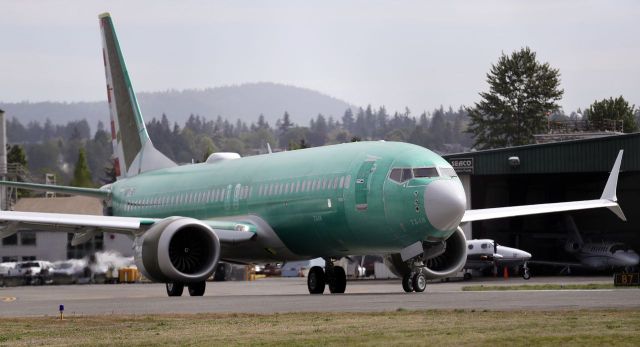
A Boeing 737 MAX 8 jetliner at the Renton, Washington assembly plant [Credit: AP Photo/Elaine Thompson, File]
The Federal Aviation Administration (FAA), even when it became of aware of the safety risks of the new plane, certified the 737 Max and failed to alert either airline workers or passengers of the dangers.
The result was the horrific crash of Lion Air flight 610 some 13 minutes after takeoff from Jakarta on October 29, 2018, killing all 189 people on board. Even after this disaster, in which a malfunction repeatedly forced down the nose of the plane until it crashed into the Java Sea, Boeing and the FAA kept the 737 Max in the air and failed to address the automated flight control defect that caused the crash.
This led less than five months later to the crash of Ethiopian Airlines flight 302, on March 10, 2019. That disaster followed the same pattern and ended with the plane plowing into the ground and killing all 157 men, women and children on board.
It was only after this second crash that Boeing and the FAA agreed to ground the 737 Max, and that was only after every other major government in the world had rejected its claims that the plane was safe and banned it from their airspace.
The report by the House Democrats cites the testimony of Ed Pierson, a senior plant supervisor at the Renton, Washington 737 Max production facility and retired Navy squadron commander, before the committee last December. Pierson related how in 2018 he told 737 General Manager Scott Campbell of multiple safety problems and defects at the Renton plant.
“For the first time in my life, I’m sorry to say that I’m hesitant about putting my family on a Boeing airplane,” he told Campbell, and added that the military would suspend production to address the safety issues. Campbell replied, “The military is not a profit-making organization.”
The report, which the Republican committee members refused to endorse, makes clear that 346 lives were destroyed and countless more threatened because the aircraft maker and defense contracting giant made calculated decisions to sacrifice safety in order to maximize market share and corporate profits.
But despite the incriminating evidence in its own report, the Democratic majority proposes no actions to hold either Boeing or FAA officials accountable. There are no calls for criminal prosecution, nor are any financial penalties proposed.
This is under conditions where the bipartisan CARES Act passed last March effectively earmarked $17 billion in taxpayer money to prop up the company, and the Federal Reserve has backed up a $25 billion bond sale by the firm as part of the government's multi-trillion-dollar pandemic-triggered bailout of the US corporate elite.
Dennis Muilenburg, the Boeing CEO throughout the period of 737 Max development, resigned under fire last December, and received a severance package worth $80.7 million.
Even as the House releases its damning report, moreover, the FAA is signaling that it will soon allow the 737 Max to resume commercial flights.
The report cites five different areas of negligence and cover-up. Under “Production Pressures,” it notes, “There was tremendous financial pressure on Boeing and the 737 Max program to compete with Airbus' new A320neo aircraft.”
In other words, Boeing, which accounted for a huge portion of the rise on Wall Street following the election of Donald Trump, was under the gun from major shareholders and banks to speed up production of its new plane and cut costs in order to win the race with its European-based rival for market share, particularly in expanding markets such as China.
That market share, profit and stock price eclipsed safety for Boeing was clear from the very origins of the 737 Max. Rather than design a new generation of medium-range carriers, Boeing decided to save time and money by revamping its five-decade-old 737 model. The main innovation was a larger engine that had to be placed higher up on the wing. However, the company soon discovered that the new configuration resulted in a tendency for the plane to stall.
In order to compensate for this design flaw, Boeing installed a new automated flight control system called Maneuvering Characteristics Augmentation System, or MCAS. The House report lists “Faulty Design and Performance Assumptions” in connection with MCAS as the second major factor in the crashes.
Boeing concealed the existence of MCAS from its airline customers and their pilots in order to avoid having to retrain pilots on flight simulators for the new aircraft, a costly and time-consuming process.
Moreover, it designed MCAS to be triggered by only one of the plane's two external angle-of-attack (A-O-A) sensors, rather than by both, as is the accepted practice for functions that are critical to the safety of an aircraft. Moreover, it failed to inform airlines and pilots, as well as the FAA, that a warning alert listed as a feature of the plane, which told the cockpit that the two sensors disagreed and therefore one was malfunctioning, was inoperable on 80 percent of its active 737 Maxes.
As a result, when MCAS was set off on the two doomed flights as a result of incorrect information from a faulty A-O-A sensor, the pilots were unable to determine the cause of the repeated downward plunges and incapable of stabilizing the planes.
That Boeing was acutely aware of the problems with MCAS is shown by the fact that MCAS was referenced in half a million emails and other internal documents.
Under the heading “Culture of Concealment”, the report provides a multitude of examples of Boeing withholding critical information from the FAA, its customers and Max pilots. This includes internal test data from 2016 revealing that it took a Boeing test pilot more than 10 seconds to diagnose and respond to un-commanded MCAS activation in a flight simulation. The pilot described the situation as “catastrophic.” Federal guidelines assume that pilots will respond to this condition within four seconds.
The fourth area cited in the report is titled “Conflicted Representation.” This is a euphemism for the FAA's total subordination to Boeing and the lack of any serious regulatory oversight. The report cites, in particular, the policy implemented under Democratic as well as Republican administrations of delegating FAA oversight to Boeing employees. These so-called “authorized representatives” routinely withheld from top FAA officials safety issues that arose in the design, production and certification of the 737 Max. In other cases, the FAA higher-ups sided with Boeing and dismissed reported safety concerns.
In the end, the FAA allowed Boeing to put the 737 Max into service without pilots having to undergo training on flight simulators. Instead, it authorized a total of two hours of “training” on an iPad.
In December 2018, some weeks after the crash of Lion Air flight 610, the FAA conducted a risk assessment and estimated that, without a fix to MCAS during the life of the 737 Max fleet, there could be 15 additional fatal crashes resulting in over 2,900 deaths. Nevertheless, the FAA allowed the 737 Max to continue flying while Boeing worked on a software patch for MCAS, setting the stage for the crash of Ethiopian Airlines flight 302 just weeks thereafter.
Finally, under the title “Boeing's Influence Over the FAA's Oversight Structure,” the report gives multiple examples of the FAA siding with Boeing and dismissing warnings from its own experts.
The chairman of the House committee, Peter DeFazio (Democrat from Oregon), said upon the release of the findings: “Our report lays out disturbing revelations about how Boeing—under pressure to compete with Airbus and deliver profits for Wall Street—escaped scrutiny from the FAA, withheld critical information from pilots, and ultimately put planes into service that killed 346 innocent people. What’s particularly infuriating is how Boeing and FAA both gambled with public safety in the critical time period between the two crashes.”
What he did not mention, however, is that he and his fellow Democrats supported passage of the FAA Reauthorization Act of 2018, which expanded the self-regulation of Boeing and other corporations in the airline industry. In fact, the deregulation of the airline industry was begun in 1978 under the Democratic administration of President Jimmy Carter, leading to the dismantling of the Civil Aeronautics Board and its replacement by the far weaker and more pliant FAA.
What neither the Democrats nor the media speak about is the root cause of the mass deaths caused by Boeing and its government accomplices—the capitalist profit system.
As the World Socialist Web Site wrote in a statement titled “Boeing executives must be tried for murder:”
The elevation of profit above human life is the social essence of capitalism. The Max 8 disasters are not merely symptoms of corporate greed, but the end result of the capitalist system itself, which subordinates all social needs to private profit. There is a basic contradiction between the interests of society, including safe, efficient and inexpensive air travel, and the private ownership of essential industries, as well as the division of the world economy among rival nation-states. The same basic contradictions of capitalism are fueling the geopolitical and economic conflicts that threaten nuclear war and ecological disasters.
The only way to prevent further disasters is to take the profit motive out of commercial flight, end the dominance of Wall Street and replace the nightmare of the capitalist market with a rationally planned and internationally organized system of air transport. This requires the nationalization of the airline and aerospace companies and their transformation into publicly owned and democratically controlled utilities.

As US death toll hits 200,000, Trump calls for herd immunity

Andre Damon

On Tuesday, the day that the United States reached the threshold of 200,000 deaths from the COVID-19 pandemic, President Donald Trump openly defended the US government’s de facto policy of “herd immunity,” that is, allowing the virus to spread without restraint.
“You’ll develop herd,” Trump told a televised town hall event, before apparently catching himself and substituting the term “herd mentality” for “herd immunity.” He continued, “Like a herd mentality. It’s going to be—it’s going to be herd-developed, and that’s going to happen.” As a result, he said, the pandemic will “disappear.”
In openly defending “herd immunity,” Trump has let the cat out of the bag. In fact, herd immunity has been the guiding principle of his government’s response to the pandemic, underlying his efforts to downplay the virus, handicap testing, and get workers back on the job as quickly as possible.
As a strategy for responding to COVID-19, the advocates of herd immunity argue that the disease should be allowed to spread freely throughout the population, based on the claim that, at some point, enough people will become infected that the spread of the disease will slow down.
Dr. Scott Atlas, whom Trump recently appointed as a COVID-19 advisor, argued for this approach in July, declaring, “Low-risk groups getting the infection is not a problem. In fact, it’s a positive.”
Despite the strategy’s pseudoscientific trappings, it means nothing more nor less than allowing large numbers of the population, primarily the elderly and the sick, to die in a sort of mass eugenics program potentially costing millions of lives.
Trump has spearheaded this policy and, as revealed in the tapes released by Bob Woodward, deliberately downplayed the threat and lied to the population. However, it has been supported and implemented by both the Democrats and Republicans. In late March, it was New York Times columnist Thomas Friedman who praised the herd immunity policy being pursued by the Swedish government, criticized lockdowns to stop the spread of the virus, and declared that “the cure can’t be worse than the disease.” His column was followed by a Washington Post editorial praising Sweden for what it called an “appealing model.”
Officially, every government in the world denies that it is carrying out a policy of herd immunity. White House Press Secretary Kayleigh McEnany said Wednesday, “Herd immunity has never been a strategy here at the White House.” She said that Scott Atlas “never proposed herd immunity as a strategy, nor has the president.” These are lies.
Such denials have been issued by all the leading government advocates of this policy, including Sweden and the UK.
Sir Patrick Vallance, the chief scientific adviser to the Johnson government in the UK, told the media in March, “It’s not possible to stop everyone getting it, and it’s also not desirable because you want some immunity in the population.” Subsequently, the government, baldly lying, declared “herd immunity has never been our policy or goal.”
Sweden, which left schools open while other European countries closed them, has likewise denied it is pursuing a herd immunity policy. But last month, leaked emails revealed that chief epidemiologist Anders Tegnell advocated leaving the country’s schools open precisely because it would lead to a wider spread of the virus.
“One point might speak for keeping schools open in order to reach herd immunity more quickly,” wrote Tegnell secretly on March 14 to his Finnish counterpart.
The fact is that herd immunity is the policy of governments throughout the world. They are all lying about it because their actions, allowing large sections of the population to become infected, are criminal, inhuman and indefensible.
As they accelerate their back-to-work campaign, governments are dropping even the most threadbare efforts to claim they are actively combating the disease. “To overcome the health crisis, we must learn to live with the virus,” French President Emmanuel Macron tweeted last month.
Former Australian Prime Minister Tony Abbott, for his part, said not enough politicians were “thinking like health economists trained to pose uncomfortable questions about the level of deaths we might have to live with.” He said the response to the disease should be more akin to “electing to make elderly relatives as comfortable as possible while nature takes its course.”
On Wednesday, the regional premier of Madrid, Spain likewise embraced herd immunity, declaring, “It is likely that practically all children, one way or another, will be infected with coronavirus.”
For years, the rising life expectancy of the working class in developed countries has been presented as a “problem” by US and European think tanks.
A 2013 paper by Anthony H. Cordesman of the Washington think tank Center for Strategic and International Studies (CSIS) presented the increasing longevity of ordinary Americans as a crisis for US imperialism. “The US does not face any foreign threat as serious as its failure to come to grips with … the rise in the cost of federal entitlement spending,” Cordesman wrote, saying the debt crisis was driven “almost exclusively by the rise in federal spending on major health care programs, Social Security, and the cost of net interest on the debt.”
In other words, after workers are too old to serve as sources of surplus value and profit, their pensions and health care benefits become drains on money that could be better used to pay corporate bonuses and fund the military.
From the standpoint of the ruling class, the pandemic has had very real benefits. It has created a pretext for the transfer of more than $4 trillion in bailouts to corporate balance sheets, sending stock values soaring. By creating mass unemployment, it has broken up a tight labor market, lowering wages. And most of all, with the median age of those who die being 78 years old, it means that money earmarked for pension funds, social security and health care for the elderly can now be handed over to the financial oligarchy.
The United States is now in the midst of reopening schools and universities, creating a surge of new outbreaks all over the country. In light of the emails by Sweden’s state epidemiologist saying that leaving schools open will create more infections, it is clear that the White House is working with an estimate of the number of people who will become infected and die as a result, and is proceeding regardless.
Two hundred thousand people have now lost their lives because of the criminal policies of the US ruling class. If the present policies continue, according to the Institute for Health Metrics and Evaluation, another 215,000 will lose their lives over the next three months.
If this catastrophe is to be averted, the response to the pandemic must be taken out of the hands of the criminals responsible for the present disaster. No election, whether in the United States or anywhere else, will end the pandemic. As made clear by the complicity of the US media and the Democratic Party in covering up the pandemic in January and February, all factions of the political establishment are united in prioritizing the wealth of the financial oligarchy over human life.
The prerequisite for containing and eradicating the pandemic all over the world is the mobilization of the working class on a politically independent basis in the struggle for socialism.

16 Sept 2020

Canadian Queen Elizabeth II Diamond Jubilee Scholarships (QES) 2021

Application Deadline: 26th October 2020

About the Award: Thanks to the generous financial support from the International Development Research Centre, up to $3 million CAD will be allocated via the expansion of the QES Advanced Scholars program, which will support doctoral researchers, post-doctoral fellows and early career researchers from eligible West African countries and Canada.
This call will support projects contributing to advance the UN’s Sustainable Development Goals (SDGs), with preference given to proposals that focus on or clearly integrate SDG 5 (gender equality) as a crosscutting or mainstream goal. QES-AS West Africa projects will focus on one or more of the following areas: climate resilience and sustainable food systems; education and innovation systems; ethics in development research; health equity; inclusive governance; and sustainable inclusive growth.
The program will require all scholars to participate in leadership development and community engagement activities and in the network of Queen Elizabeth Scholars.

Type: Research, Doctoral, Postdoc

Eligible Countries: West African countries & Canada

Eligibility:
Eligible Proposals
  • Canadian universities which have recognized provincial degree granting powers, or their affiliates, may submit a proposal to QES-AS West Africa. Universities may partner with one or more other Canadian university(ies) for a joint proposal however, each university may only be the lead applicant in one submission to the program.
  • Projects will support specialized training and/or research activities for doctoral researchers, post-doctoral researchers and early career researchers from Canada and West Africa and each award must include a non-academic research placement with industry/civil society.
  • Each scholar must be undertaking research in one or more of the following areas of focus:
  1. Climate resilience and sustainable food systems
  2. Education and innovation systems
  3. Ethics in development research
  4. Health equity
  5. Inclusive governance
  6. Sustainable inclusive growth
  • Eligible projects will demonstrate a partnership between a Canadian university and an institution in at least one of the eligible countries and if available at the time of application, will include information on the non-academic research placement partner(s). Non-academic research placements must be confirmed before the funded researchers travel to/from Canada.
  • The program will require all scholars to participate in leadership development and community engagement activities and to participate in the network of Queen Elizabeth Scholars.
QES-AS West Africa will prioritize the following:
  1. Women researchers – overall, 60% of the researchers should be women.
  2. Francophone researchers – applications focusing on Francophone countries will be prioritised.
  3. Institutional strengthening – proposals which make a convincing case that scholar exchanges, beyond advancing individual scholars` own careers, will deliberately be used by Canadian and West African universities to strengthen their own institutional capacity (research areas, curriculums, partnerships etc.) will be prioritised.
Number of Awards: Not specified
Each project will involve incoming West African scholars, outgoing Canadian scholars, or a mix of both.
The program is targeting an overall participation rate1 of:
• 50% West African incoming scholars
• 50% Canadian outgoing scholars


Value of Award: Applicants may seek up to $300,000 CAD in funding. Funding is available to support doctoral researchers, post-doctoral researchers, and early career researchers only. There is no limit to the number of incoming or outgoing scholars that can be included in a project. An activity fund of up to $2,000 per scholar, can be included in the project budget to support project administration, partner relationships,
community engagement, leadership development and networking activities.

Cost Sharing:
  • To be considered for funding, applicants must demonstrate that Canadian universities, West African institutions, and/or non-academic research placement partners will contribute to project costs. This program aims for an overall 50% contribution from universities, West African institutions, and/or non-academic research placement partners.
  • Contributions may include in-kind contributions such as administrative costs , cash contributions such as salary paid while the researcher is undertaking their QES award, tuition waivers or discounts, other discounts or waivers to academic, living or travel costs, and financial contributions from other sources including foundations, placement partners and other funding agencies.
  • A higher proportional contribution will be viewed more favorably by the selection committee.
How to Apply: Please consult the following documents:
It is important to go through the application guidelines and FAQ before applying for this Award

Visit Program Webpage for Details

Johnson & Johnson WiSTEM2D Scholars Program 2021

Application Deadline: 15th October 2020 9AM HST (Honolulu Standard Time) 

Eligible Countries: All

About the Award: As a part of Johnson & Johnson‘s commitment to building a diverse WiSTEM2D Community, we are pleased to launch the Johnson & Johnson WiSTEM2DScholars Program, an award to support women pursuing research in STEM2D.
The J&J WiSTEM2D Scholars Award Program will help develop female leaders and support innovation in the STEM2D disciplines (Science, Technology, Engineering, Math, Manufacturing, Design)  by funding six women at critical points in their research careers through a Scholar’s Award.
The six inaugural awards will be available in 2018 and aim to fund one woman per area of STEM2D concentration in the early career stage where they have concluded their advanced degree training but are not at the level of tenure in their accredited university or design school institution. The early-career support is aimed to be a catalyst for women to become leaders in their organizations and fields. The program will help build a larger pool of highly-trained researchers to meet the growing needs of academia and industry.
The J&J WiSTEM2D Scholars Award Program will play an influential role in achievements made in the areas of STEM2D and the future.

Fields of Study: The eligible STEM²D disciplines are: Science, Technology, Engineering, Math, Manufacturing and Design.

Type: Award

Eligibility: 
  • You must be a woman working in the field(s) of Science, Technology, Engineering, Mathematics, Manufacturing and Design (STEM2D).
  • You must be an assistant female professor or global equivalent faculty position at the time of application at an accredited academic university, institution or design school.
  • The female scholar should have a minimum degree for the appropriate field:
    • Science; MD, PhD
    • Technology; PhD
    • Engineering; PhD
    • Math; MS, PhD
    • Manufacturing; PhD
    • Design; MA, MS, MDes, MArch, MFA, MLA, PhD
Number of Awards: 6

Value and Duration of Award: The Scholars Award is a 3-year award in the gross amount of $150,000, which will be paid to the University (the “Recipient”) for the benefit of the J&J Scholar and her research, with the understanding that the Recipient will administer the funds. The Scholars Award will be paid in three (3) installments of US $50,000 per year over the 3-year award period, subject to compliance with the terms and conditions of the program’s Agreement.

How to Apply: Apply here

Visit the Program Webpage for Details

West African Research Center (WARC) Travel Grants 2021

Application Deadline: 15th October 2020

Eligible Countries: West African countries

To be taken at (country): Any African country of candidate’s choice.

About the Award: The WARC Travel Grant program promotes intra-African cooperation and exchange among researchers and institutions by providing support to African scholars and graduate students for research visits to other institutions on the continent

Type: Research Grants

Eligibility: This competition is open only to West African nationals, with preference given to those affiliated with West African colleges, universities, or research institutions.

Number of Awardees: Not specified

Value of Grants: The WARC Travel Grant provides travel costs up to $1,500 and a stipend of $1,500. Travel grant funds may be used to:
  1. attend and present papers at academic conferences relevant to the applicant’s field of research;
  2. visit libraries or archives that contain resources necessary to the applicant’s current academic work;
  3. engage in collaborative work with colleagues at another institution;
  4. travel to a research site.
Duration of Grants:  Between Jan 1, 2021 and June 30, 2021

How to Apply:
  • Abstract (50-80 words) of proposed activity with a clear statement of purpose
  • Project/Research description (6 double-spaced pages maximum) including why travel is necessary (must be in  language understandable to non-specialist readers)
  • Proposed budget
  • Curriculum vitae (with research and teaching record)
  • Photocopy of the applicant’s passport (must be a West African national)
  • All applications must be submitted online in PDF documents
  • If attending a conference:
    – an abstract of the paper to be read
    – letter of acceptance to the conference
  • If visiting another institution:
    – invitation from host institution
  • If travel is to consult archives or other materials:
    – a description of the collections to be consulted and their significance to the applicant’s research
  • If you are a graduate student:
    – letter of recommendation from professor overseeing your research
Please address inquiries to
Mariane Yade
West African Research Center/Centre de Recherche Ouest Africaine
warccroa@gmail.com.


Visit Grants Webpage for details

Watching Religion Die

James Haught

Religion is fading more quickly in the United States than in any other nation, according to a forthcoming research book.
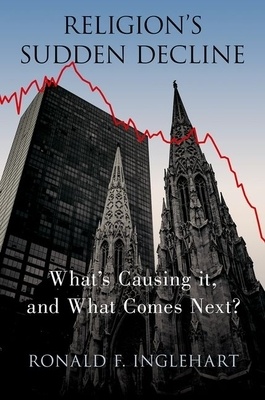
Religion’s Sudden Decline: What’s Causing It and What Comes Nextby University of Michigan scholar Ronald Inglehart, is to be released in January by Oxford University Press.  Writing in Foreign Affairs magazine – in an advance summary titled “Giving Up on God: The Global Decline of Religion” – Dr. Inglehart said:
“The most dramatic shift away from religion has taken place among the American public.  From 1981 to 2007, the United States ranked as one of the world’s more religious countries, with religiosity levels changing very little.  Since then, the United States has shown the largest move away from religion of any country for which we have data.”
A profound cultural transformation is in progress – mostly happening quietly out of sight, little-noticed in daily life.  Old supernatural beliefs are vanishing among intelligent, educated, science-minded western people, especially the young.  Religion is shriveling into the realm of myth and fantasy. Here are some indicators:
Almost two-thirds of teens who grow up in a church drop out of religion in their twenties, according to both Barna and LifeWay surveys.
The number of Americans who say their religion is “none” began to explode in the 1990s – rising to one-tenth of the population, then climbing relentlessly to one-fourth.  Among those under thirty, “nones” now are 40 percent.
American church membership fell 20 percent in the past two decades, according to Gallup research.  Southern Baptists dropped two million members since 2005.
Tall-steeple Protestant “mainline” denominations have suffered worst.  United Methodists fell from 11 million in 1969 to below 7 million today – while America’s population almost doubled.  Evangelical Lutherans dropped from 5.3 million in 1987 to 3.4 million now.  The Presbyterian Church USA had 3.2 million in 1982 but now is around 1.3 million. The Episcopal Church went from 3.4 million in the 1960s to 1.7 million now.
These highbrow mainline faiths with seminary-educated ministers once drew public respect.  But religion is shifting to lowbrow, emotional worship that is less admirable.  One-fourth of the world’s Christians now “speak in tongues,” researchers say.  Christianity is moving from advanced, prosperous, northern nations to the less-developed tropics. It’s losing its status as moral leadership.
Retreat of churchgoing in America may undercut the Republican Party, which depends on white evangelicals as the heart of its base.  In contrast, godless Americans tend to be compassionate progressives who have become the largest faith segment in the Democratic Party. The loss of religion may shift national political values to the left.
Personally, I hope the Secular Age continues snowballing until supernatural religion becomes only an embarrassing fringe. After all, belief in gods, devils, heavens, hells, miracles, visions, prophecies and the rest of dogma is extremely questionable.  It’s all a fantasy, a bunch of falsehoods, as far as any science-minded person can tell.  It lacks factual evidence.  The more religion declines, the more integrity is gained by society.
Come to think of it, maybe there’s a correlation:  White evangelicals swallow the falsehoods of faith – and they swallow the notorious falsehoods of President Trump.  Psychology researchers should study this gullibility pattern.

The Spoils of War: Sexual Entitlement

Howard Lisnoff

The lack of accountability of criminal behavior is a grotesque stain on human behavior and history. Many who follow history, either as scholars or informed individuals, know that until the second half of the 20th century, history was written by the victors and about the celebrated victorious, those anointed by the few and the very wealthy and often at the expense of truth and justice. History was mostly written at the expense of ordinary women and men.
Fort Hood in Texas has a big problem (“A Year of Heartbreak and Bloodshed at Fort Hood,” New York Times, September 9, 2020). Crime on the army base is rampant and sexual harassment and sex crimes follow upon the heels of that harassment. Two recent deaths at Fort Hood have all the earmarks of sex crimes. Soldiers have also disappeared from Fort Hood.
The Fort Hood deaths reminded some mental health experts of a cluster of violent behavior at Fort Carson in Colorado more than a decade ago. Those events show just how elusive answers can be in trying to identify the root causes of death and violence in the military.
The study (of Fort Carson), released in 2009, found that a number of personal, environmental and military-unit issues may have played a role in the violence, including soldiers’ previous criminal behavior, drug and alcohol abuse and combat exposure and intensity. That combination ‘may have increased the risk for violent behavior’ in some of the soldiers, the study concluded.
First an observation about how men and women in the military are viewed in terms of their targeting for sexual harassment, attacks, and worse. The primary objective of the military is victory in war. Victory in war means killing the enemy. It’s that simple. For the only superpower left standing with over 700 military bases around the world and involvement in endless wars, teaching and learning about war has the consequence of dehumanizing the declared enemy and training to kill that enemy. Teaching and learning about war often dismisses practicing normal moral guidelines about the worth of the individual. Since the US-led Global War on Terrorism began in 2001, the Costs of War Project (Brown University) tags the price of those wars at $6.4 trillion with over 800,000 people killed and 37 million people in eight countries driven from their homes. Isn’t it fitting that during the 1950s, Ronald Reagan, as TV mouthpiece for General Electric, producer of both home appliances and war goods, mouthed the words “Progress is our most important product.”
Killing in war and tormenting people in the military who don’t fit into the military’s definition of soldiering are both acts not so very far apart. Since the attacks of September 2001, the military has enjoyed a kind of status in the US not known since World War II. Although not daily news anymore, the drumbeat of war created a sense in the US that anything the US does militarily is acceptable and the military has been allowed to police its own regarding how men and women in its ranks  behave and are treated. It’s very similar to how police are treated and judged who fire their weapons and report, as a defense, that they felt threatened. The latter, at least until the spate of police murders of unarmed people of color, was generally accepted by the public.
The targeting of women and men for sexual harassment in the military has led to the growth of sexual assaults and worse, and the continued tradition within the system of military “justice” allows for judging its own wrongdoers from within the system with no external oversight. A footnote needs to be considered that most people in the military do not perpetrate violent acts against their fellow soldiers. But it’s also not the case of a few rotten apples because sexual harassment is widespread.
In terms of sex crimes, the cliché that military justice is to justice, as military music is to music, holds true.
I underwent military training at a base in Georgia, Fort Gordon, that had a contingent of the Women’s Army Corps on that base. My recollections of that period, during the Vietnam War era, were that the women on base were generally demeaned in harsh, inappropriate sexual terms.
On one of my basic training company’s first weekend leaves, a group of my fellow soldiers and I rented a van and we were driven across the border to South Carolina to a motel where each soldier in turn went into an adjoining room for sex with a sex worker. Since I thought we were leaving the base and getting away from the weight of military training, I naively went along with my fellows and refrained from taking part in the behavior in the adjoining motel room. As a footnote to our trip across the border, each soldier who entered the adjoining room developed a sexually transmitted disease after returning to the base and its treatment required medical intervention. Sex work has always been a reality around military bases and in war zones. Some have traditionally seen it as part of the rest and relaxation equation in war.
War has always involved the spoils of war that often includes predatory sexual behavior. Much legend about war involves romantic relationships that mirror life outside of war, and that happens, but predatory behavior has always accompanied war and some have condoned that behavior among some soldiers and top military brass. Bases, both inside and outside of theaters of war, have provided soldiers with access to sex, with much of that availability given a nod by military brass. The vulnerable among members of the military have sometimes been viewed as targets of predatory sexual behavior and an extension of military training and the deserved spoils of war in a male-dominated patriarchal universe. The reality of that behavior on the ground is happening in places like Fort Hood.

How Were 46 Million People Trapped by Student Debt? The History of an Unfulfilled Promise

Mary Green Swig, Steven L. Swig, David A. Bergeron & Richard J. Eskow

The democratic principle of tuition-free education in our country pre-dates the founding of the United States. The first public primary education was offered in the Massachusetts Bay Colony in 1635, and its legislature created Harvard College the following year to make education available to all qualified students. Even before the Constitution was ratified, the Confederation Congress enacted the Land Ordinance of 1785, which required newly established townships in territories ceded by the British to devote a section of land for a public school. It also passed the Northwest Ordinances, which set out the guidelines for how the territories could become states. Among those guidelines was a requirement to establish public universities and a stipulation that “the means of education shall forever be encouraged.” After the nation declared independence, Thomas Jefferson argued for a formal education system funded through government taxation.
Jefferson’s vision took form over the course of more than a century, as state and local governments began creating primary schools and then high schools. The federal government became involved in higher education in the 19th century with the creation of land grant colleges and other institutions, used primarily to teach agriculture and education after the Civil War. These institutions created opportunities for people who had long been locked out of the learning process, including formerly enslaved African Americans and impoverished people of all races.
State universities and colleges rapidly expanded as well. By the middle of the 20th century, low-cost or tuition-free education was available in many American states. After the Second World War, the federal government once again turned to education to promote opportunities for its citizens and economic growth for all. The G.I. Bill paid educational expenses for 8 million people, without regard to individual wealth, which helped create a robust middle class and contributed to the vibrant growth economy of the 1950s and 1960s. While those opportunities were still denied to many people as the result of racism, efforts were underway to improve educational access for people of color.
The Reagan era ushered in a belief that government programs, including education, stood in the way of people’s dreams and should be severely cut back. Public goods came to be seen as investments, ones that were purely economic in nature. For these reasons, among others, a nation that had expanded publicly funded education for centuries decided to reverse course. Instead of funding higher education on the principle that it benefits us all, the country began shifting the cost to individual students.
In the 1950s, as part of the National Defense Education Act, student loans were created as an experiment in social engineering. Concerned about competition with the Soviet Union, policymakers wanted to increase students’ capabilities in math and sciences. To do that, the country needed more teachers. So, lawmakers offered loans to college students, with the opportunity to have half the loan canceled after 10 years if they became teachers.
The experiment failed. Researchers have not been able to prove that the student loan program led more people to become teachers, despite multiple attempts to do so. The experiment was also cruel. Over the years, the student loan program was expanded, with the claim that a student’s personal investment in their education was an “investment” that would pay off in higher wages. Banks and other private lenders were brought into the process and given considerable incentives and subsidies to issue student loans, without considering the burden being imposed on the student. This financial opportunity was given to banking interests that were already wealthy, with little thought of the resulting damage to an economically sustainable future.
Proponents of financializing the cost of higher education argued that it was cheaper to lend money to students than it was for federal and state governments to provide grants for their education, even after paying subsidies to the private sector for their loans. An entire industry grew up around this process. State and nonprofit guaranty agencies were created to insure the loans. These agencies got paid, no matter what: when loans were issued, when loans became delinquent, when borrowers defaulted, and when they collected on defaulted loans.
In response, most states created guaranty agencies so they could make money from people who needed to borrow to pay for ever-increasing tuitions and fees. Now, states had an extra incentive to cut funding for public higher education. Not only would they save on expenditures, but they could increase the need for students to borrow, which increased their revenue. In many cases, these guaranty agencies don’t handle the loans themselves. They pass the work on to private debt collectors who take collection fees and are aggressive in their handling of cases.
The system took on a life of its own. By the mid-1990s, student loans had surpassed grants in funding students’ higher education. But a system built on debt financing only works if borrowers pay back their loans. That led Congress to make the system even crueler with the Bankruptcy Amendments and Federal Judgeship Act of 1984, which exempted student loans from bankruptcy proceedings and subjected borrowers to draconian collection tools. These tools included wage garnishment without a court order and the seizure of Social Security checks and tax refunds. The Clinton and Obama administrations attempted to lessen the burden slightly by allowing the federal government to lend directly to students while introducing income-based repayment options, but the system’s fundamental cruelty remains unchanged today.
It is time to recognize that the cruel experiment in financing higher education through student loans has failed. It has captured 46 million people and their families in a student loan trap, including people who received vocational training, and has weakened the financial strength of higher education. Inescapable debt is a major driver of social collapse. It has made the racial wealth gap worse and weakened the entire economy, as debt holders are prevented from buying homes or consumer goods, starting families, or opening new businesses. It’s time to restore funds for higher education and cancel student debt for the victims of this failed experiment.