18 Sept 2020

Myanmar sees major coronavirus outbreak after a month of zero cases

Owen Howell


Within the space of a month, a coronavirus outbreak in Myanmar’s western state of Rakhine has erupted and quickly spread across the entire country. Confirmed infections have increased tenfold, while the death toll has climbed more than six times. Despite the imposition of lockdowns, the virus threatens to spiral out of control.

Surrounded by nations afflicted with the pandemic, Myanmar fared relatively well between March and August, with cases limited to 374 and six deaths. Its first new case in a month was reported on August 16, as a cluster emerged in Sittwe, the state capital of Rakhine. Ever since, new infections have doubled every week.

Official figures now stand at 3,636 cases and 39 deaths. These numbers no doubt underestimate the actual extent of the spread, as smaller clusters are being found daily throughout the country. Only the diminutive state of Kayah is reportedly free from the disease.

Major cities have recorded sharp increases in infection rates over the past two weeks. In Mandalay, cases grew from six to 96. The national capital Nay Pyi Taw, where the most severe restrictions have been imposed, has witnessed a growth from two to 34 cases, including several government officials.

The virus epicentre is the commercial hub Yangon, a densely populated city of over 7 million people. Cases jumped from 236 to 1730 in just two weeks. The city’s hospitals are overwhelmed in a nation with one of the world’s poorest healthcare systems. In response to the sudden influx, city authorities are struggling to provide extra facilities, creating two tented hospitals with hundreds of more beds.

The government’s health ministry has been inconsistent in its announcements of new data, failing to reveal where cases were found until days later. When two patients died on September 7, for instance, the government waited more than 24 hours to inform the public.

Partial lockdowns were already implemented in 29 of Yangon’s 44 townships, when the government last Friday announced a ban on all travel out of the city. Public transport, including domestic flights and long-distance bus routes, ground to a halt nationwide, and will remain closed until October 1.

Neighbours China and Thailand are both intensifying security on shared borders to curb the spread. While the Thai military has begun tightening border restrictions and sending back Myanmar nationals, China recently detected two new coronavirus cases in the Yunnan city of Ruili, separated from Myanmar by a shallow river.

Rakhine state, which accounts for nearly a quarter of total cases, has been under semi-lockdown since August 26. Measures include the temporary closure of businesses and night-time curfews across Sittwe, and in the townships of Kyaukphyu, Mrauk-U, Taunggok, and Thandwe.
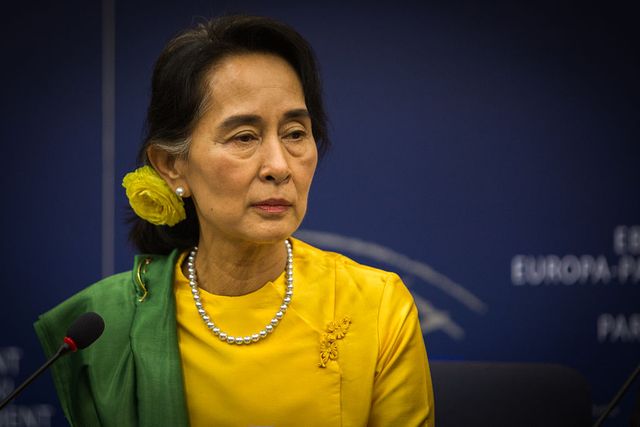
Aung San Suu Kyi 3 (Credit: Wikimedia)

Myanmar’s leader, State Counsellor Aung San Suu Kyi, has called for a “union spirit” among Rakhine residents to fight the pandemic, promising sufficient food and financial assistance. The government, however, continues to block internet networks throughout Rakhine as part of its ongoing campaign of state repression waged against the Rohingya minority.

In addition, medical access to areas affected by military offensives has been limited, allegedly for security reasons, therefore undermining any effective COVID-19 response. In April, when the virus first appeared in Myanmar, a vehicle from the World Health Organisation (WHO) transporting swab samples came under fire, killing the driver.

Since 2017, the Myanmar armed forces, known as the Tatmadaw, have engaged in brutal operations in Rakhine to terrorise the mostly Muslim Rohingya population. This has forced over 700,000 to flee to Bangladesh where they live in squalid refugee camps.
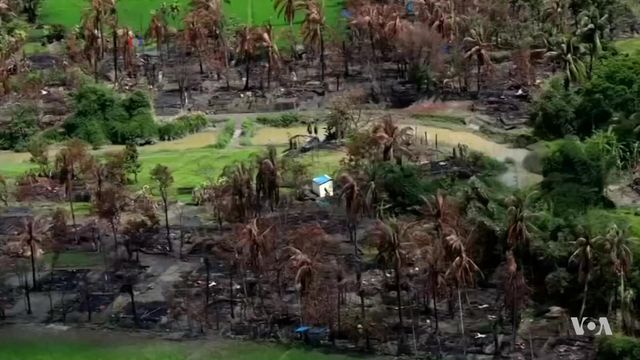
A Rohingya village in Rakhine state after it was burned down by the military (Credit: Wikimedia)

The spread of a highly contagious virus has provided the country’s military-dominated regime with the opportunity to further stoke racial and communal tensions. This is aimed at diverting social anger away from the government and inciting hatred against the Rohingya.

State media outlets have promoted smears claiming that the Rohingya brought the virus to Myanmar from Bangladesh. Local outlet the Voice ran a racist cartoon labelling the Rohingya as “illegal interlopers.” One of the numerous government-run newspapers published a list of the names of travellers who had recently returned to Yangon from Rakhine, demanding they turn themselves in to face legal punishment.

One Rakhine official revealed the private details of a Rohingya COVID-19 patient on his Facebook account, posting photos of the man’s home along with its address.

Far from distancing herself from such blatant attacks on democratic rights, Suu Kyi has threatened to imprison returnees from Bangladesh, as well as “severely punish” immigrants and anyone harbouring them. Whereas she previously encouraged returnees from Thailand into Mon and Kayin states to seek medical care and quarantine facilities, there was a dramatic shift in policy when cases were first reported in Rakhine in June.
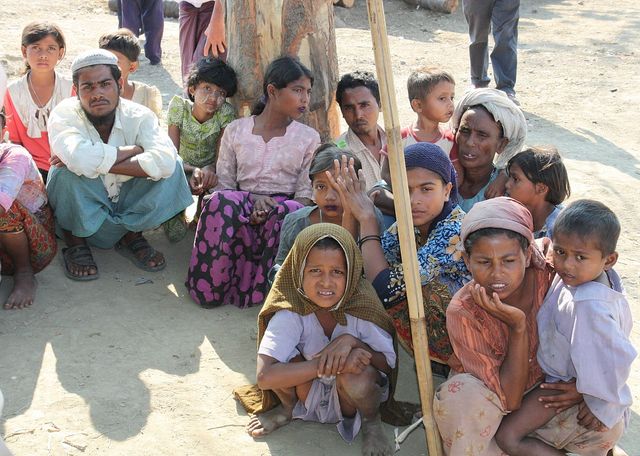
Displaced Rohingya people in Rakhine state (Credit: Wikimedia)

The military, meanwhile, has ramped up its assaults on the largely poor rural population of Rakhine. On September 3, the Tatmadaw swept through two villages in Kyauktaw township at night, firing indiscriminately and setting houses alight. Local media reported that 166 homes had been razed and two men shot dead.

Thousands of villagers fled their homes, while patients at overcrowded quarantine centres were forced to leave due to the shooting, facilitating potential community transmission. One resident who witnessed the attacks told Al Jazeera: “I am not worried about the virus. I am only worried about the Tatmadaw attacking our village again.”

Military raids in Rakhine have displaced hundreds of thousands of people since late 2018 and have only escalated amid the pandemic. Suu Kyi has repeatedly claimed these are conflicts between national armed forces and Rohingya separatist groups. In doing so, she continues to fulfil her role as a crass apologist for a conscious policy of ethnic cleansing by the military.
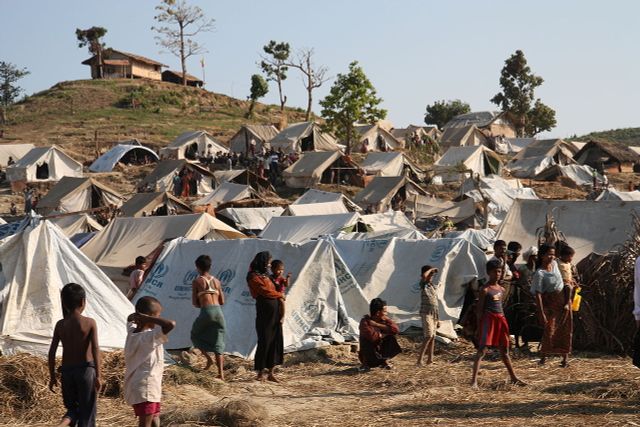
Rohingya camp in Rakhine state (Credit: Wikimedia)

The coronavirus resurgence comes as Myanmar prepares for national elections in November. Opposition parties, citing apparent concern for the safety of voters during the pandemic, are beginning to call for polls to be delayed. Political tensions are mounting, as a postponement of two months poses the risk of a constitutional crisis and even the invocation of a state of emergency.

The social impact of the pandemic is also deepening. With economic growth predicted to slow to just 1.8 percent this year, the Asian Development Bank has warned that Myanmar’s manufacturing sector and ability to attract foreign investment will be hit hard by global demand and supply shocks.

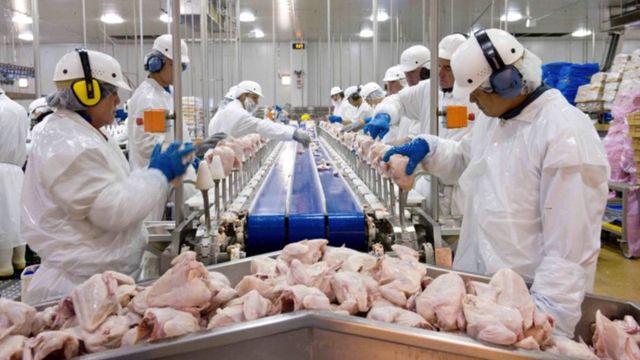
OSHA fines meatpacking industry $30,000 after 203 COVID-19 deaths and 18,000 infections

Cordell Gascoigne


The US Occupational Safety and Health Administration (OSHA) last week issued its first two COVID-19-related citations against the meatpacking industry, after more than six months of inaction, during which time 18,000 workers were infected and at least 203 died. In a measure of how much the political establishment values workers’ lives, the fines against JBS and Smithfield Foods totaled less than $30,000, or less than $2,500 per worker who died at the two plants that received citations.

OSHA fined JBS, the world’s largest beef and pork producer, $15,615 for failing to protect workers at its Greeley, Colorado, plant where six plant floor workers and one office employee died and another 290 were infected. The company was cited for violating the “general duty clause” requiring it to provide a safe workplace. The agency also charged JBS with failing to provide a log of injuries and illnesses in a timely manner, after an OSHA inspection in May.

Tyson Foods processing plant. (Image Credit: Tyson Foods Inc)

Fifteen thousand dollars “doesn’t even cover one funeral,” said Rosario Hernandez, the wife of Alfredo Hernandez, a janitor at the plant who was sickened by the virus and still uses a breathing machine.

The Brazilian-based multinational, which had a revenue of $52 billion last year and made $629 million in the second quarter alone, denounced the OSHA fine as “immoral and unethical.” In a statement, JBS claimed the Greeley plant has only recorded 14 new cases in the past three-and-a-half months, with no positive cases in nearly seven weeks, although the state’s health department has recorded a far higher number of cases.

OSHA also fined Smithfield Foods $13,494 for violations at its Sioux Falls, South Dakota, plant, where at least 1,294 workers were infected and four died. The company, which had $14 billion in revenue last year, issued a statement saying, “This OSHA citation is wholly without merit and we plan to contest it.”

In April, Smithfield workers at the Sioux Falls plant organized a series of protests against unsafe conditions, forcing its temporary closure. JBS workers in Greeley organized protests in April and in July. This was part of a wave of job actions and protests by meatpacking workers that were largely organized in defiance of the United Food and Commercial Workers (UFCW), which was keeping workers in the infected slaughterhouses and processing plants.

On April 28, President Trump used the Korean War-era Defense Production Act to order the reopening of the meatpacking plants and characterize the workforce as “essential workers.” According to emails obtained by ProPublica, just a week before the order was issued, the meat industry’s trade group essentially drafted the wording for Trump.

“The draft that Julie Anna Potts, the president of the North American Meat Institute, sent to top officials at the U.S. Department of Agriculture was written using the framework of an official executive order and stressed the importance of the food supply chain and how outbreaks had reduced production—themes later addressed in the president’s order,” ProPublica reported earlier this week.

“By keeping meat and poultry producers operating, the President’s executive order will help avert hardship for agricultural producers and keep safe, affordable food on the tables of American families,” Potts said the day after the order was issued. “The safety of the heroic men and women working in the meat and poultry industry is the first priority. And as it is assured, facilities should be allowed to re-open. We are grateful to the President for acting to protect our nation’s food supply chain.”

The only thing being protected, however, were the profits of the giant meatpacking companies.

In July 29, OSHA forged an alliance with the North American Meat Institute (NAMI) under the pretense of guaranteeing that there was enough Personal Protective Equipment (PPE) and safety protocols in place to maintain production in the plants. The federal agency, OSHA said, “recognizes the value of establishing a collaborative relationship to foster safety and health practices and programs to improve American workplaces.”

OSHA has repeatedly revised guidelines on behalf of the meatpacking and other industries. Although the federal agency has received more than 8,000 COVID-related complaints from workers—ranging from the deliberate concealing of outbreaks, the lack of PPE and social distancing and retaliation against whistleblowers—OSHA has issued in the area of 10 citations, including the two against JBS and Smithfield.

This underscores the need for meatpacking workers to form rank-and-file safety committees to undertake the functions long ago abandoned by the corporatist unions like the UFCW. This includes monitoring and enforcing safe working conditions, opposing efforts by the companies, state agencies and the unions to conceal outbreaks, and upholding the right of workers to collectively refuse to work under unsafe conditions. These committees should strive to unite meatpacking workers with teachers, autoworkers, college students and all those opposing the sacrifice of human lives for corporate profit.

Germany: Local elections in North Rhine-Westphalia express growing opposition to official politics

Peter Schwarz


The Christian Democrats and Social Democrats collectively lost 10 percent of the vote in the local elections in North Rhine-Westphalia (NRW) on Sunday. The parties of the grand coalition at the federal level—CDU and SPD—achieved the worst combined result in their history.

Apart from the Hamburg state elections on February 23 and the Bavarian local elections on March 15, the NRW election is the only one to be held in Germany this year. Some 14 million eligible voters in the most populous state—one in five in Germany—were called upon to reelect district councils, city councils, municipal councils, and district representatives.

The CDU, which emerged as the strongest party in the election with 34.3 percent, lost 3.2 percent compared to the last local elections six years ago. The Social Democrats dropped by 7.1 percent to 24.3 percent, in the state that was once their stronghold, governed by the SPD for almost 50 years. The main winners are the Greens, who gained 8.3 points and became the third strongest party with 20 percent.

The election result was above all an expression of growing opposition to all official politics. Half of all eligible voters stayed at home. At 51.5 percent, turnout was about the same as six years ago, when 50 percent participated. Many people saw no point in voting between parties that work together in every conceivable combination at federal, state, and local level and pursue right-wing, anti-working-class policies.

Looking more closely at the election results, the decline of the CDU and SPD is even more drastic than the overall figures reveal. The two parties, which, with a four-year interruption, have ruled together in the federal government since 2005, were mainly supported by older voters, who traditionally remain loyal to them. Among the over-60s, the CDU received 44 percent of the vote and the SPD 29 percent.

Among 16-24 year-olds, however, only 22 percent voted for the CDU and 16 percent for the SPD. The younger generation no longer expects anything from these parties, which are responsible for the rapid spread of precarious employment, billions in gifts to the banks and the return to militarism. Instead, 33 percent voted for the Greens, the strongest party in this electoral segment. Among the over-60s, however, the Greens won only 12 percent.

The Greens’ electoral success has two main reasons. First, they are the party of the prosperous urban middle classes. They were able to gain influence especially in big cities like Cologne, Bonn, Aachen, and Dortmund. Even in the Ruhr area, once the centre of heavy industry, there are now many relatively wealthy start-ups and service providers. By contrast, miners who traditionally voted for the SPD no longer exist, and the last steelworks are currently being closed.

In the impoverished regions of the Ruhr, with many Hartz IV (welfare) recipients, some people voted out of anger for the Alternative for Germany (AfD). The extreme right-wing party doubled its vote share from 2.5 to 5 percent. This is admittedly less than in the 2017 federal election when it received 9.4 percent of second votes in NRW. However, it did not contest the local elections across the board, so that its share of votes is much higher in some municipalities. The AfD achieved its best result in Gelsenkirchen with 13.9 percent.

The second reason for the Greens’ success is based on a misconception. Especially young voters, who are very concerned about the environment, still regard them as an ecological party. According to an opinion poll, environmental and climate protection was the most important issue in the election, ahead of economic issues and school policy.

The Greens have long since ceased to differ from the other parties on this issue as well. In the automobile-producing state of Baden-Württemberg, where Green Winfried Kretschmann is their only state premier so far, he has long since become a lobbyist for big auto.

The Greens are concentrating all their energy on replacing the SPD in the federal government as the coalition partner of the Christian Democrats (CDU/CSU). Whether it is about austerity programmes at the expense of the working class, opening day-care centres, schools and factories without adequate coronavirus protection, arming the Bundeswehr (Armed Forces) and planning new war missions, they have long since ceased to differ from the parties of the grand coalition. In foreign policy, they even attack them from the right and demand more aggressive action against Russia and China as well as more “humanitarian” war missions.

A commentary by press agency Redaktionsnetzwerk Deutschland, which supplies newspapers in NRW with articles, described their role quite aptly. “The Greens are basically the winners in a double game,” it says. “On the one hand, they lament the growing social divisions in the major cities of NRW—but at the same time, they benefit from it. Everywhere they are at the forefront of those who are cushioned from the ebbs and flows of the economy.

Significantly, the Left Party as well as the SPD has lost votes, receiving 3.8 percent, 0.8 less than six years ago. The Left Party no longer differs from the other parties and is doing its utmost to be part of the next federal government together with the parties of war and welfare cuts, the SPD and Greens. In the federal states and local authorities in which it co-governs, it acts just as ruthlessly against workers, the poor and refugees as the other parties.

The Free Democratic Party (FDP), the coalition partner of the CDU in the NRW state government, improved its score by 0.8 points to 5.6 percent.

Six different parties now sit in the Bundestag (federal parliament) and most state legislatures. If the Bavarian Christian Social Union (CSU) is counted as a party in its own right, there are even seven. But this has not increased political choice; they all represent more or less the same right-wing policies, with the AfD—as in refugee policy—usually setting the tone.

In broad sections of the population, indignation is building up over cuts to jobs, wages and social benefits, over the opening of schools without coronavirus protection, over the ruin of education and health care. Countless people are appalled by the inhumane refugee policy of the European Union and the return of German militarism.

But these concerns find no expression in official politics. Opposition can only develop outside and against the establishment parties and the trade unions associated with them. And it does. To provide it with an orientation and leadership, the Sozialistische Gleichheitspartei (Socialist Equality Party, SGP) advocates the establishment of independent action committees in factories and schools. Their task is to defend jobs and wages, ensure the safety of parents, educators and pupils, and form networks nationally and internationally.

Together with its sister organisations in the International Committee of the Fourth International, the SGP fights for a socialist programme that places the needs of society above the profit interests of the corporations and banks.

US Democrats warn UK Tories no trade deal if Good Friday Agreement threatened by hard Brexit

Robert Stevens


UK Foreign Secretary Dominic Raab flew to the United States for talks with leading US politicians after a week of bellicose threats from leading Democrats, including presidential election candidate Joe Biden and House Speaker Nancy Pelosi.

They responded with unconcealed hostility to Prime Minister Boris Johnson’s threat to substantially alter, effectively tear up, the Withdrawal Agreement his government agreed with the European Union (EU) less than a year ago. Johnson is seeking to pass legislation, the Internal Market Bill negating clauses in the “Northern Ireland protocol” enshrined in the Withdrawal Agreement Parliament passed last December following the Conservative victory in the General Election.

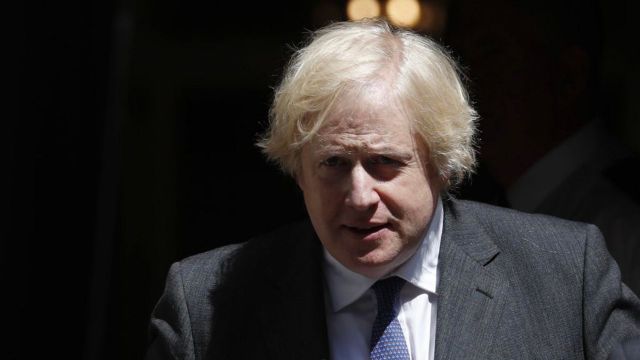
Britain's Prime Minister Boris Johnson leaves 10 Downing Street to attend his weekly Prime Minister Questions at the House of Commons, in London, Wednesday, June 24, 2020. (AP Photo/Alastair Grant)

The Tory government claims the Bill is required to “protect jobs and trade” in Britain at the conclusion of this year’s transition towards leaving the EU. But it explicitly nullifies what is known as the “Northern Ireland Protocol,” breaking international law in the process. It grants government ministers powers to intervene on matters relating to export declarations on goods shipped from Northern Ireland to Great Britain and to negate the application of EU state-aid rules in Northern Ireland.

Biden warned that Johnson’s proposals imperiled the 1998 Good Friday Agreement that ended three decades of civil conflict in Northern Ireland and military occupation by the British Army.

In Washington on Wednesday, Raab was subjected to a humiliating dressing down by top Democrats, who warned that the UK calling into question its EU deal threatens any prospect of a free trade agreement with the US if Biden comes to office.

On Wednesday evening Biden tweeted, “We can’t allow the Good Friday Agreement that brought peace to Northern Ireland to become a casualty of Brexit. Any trade deal between the US and UK must be contingent upon respect for the Agreement and preventing the return of a hard border. Period.”

Following her meeting with Raab, Pelosi declared, “If the UK violates its international agreements and Brexit undermines the Good Friday accord, there will be absolutely no chance of UK-US free trade agreement passing the Congress.”

Amid a threatened rebellion within the Tory Party over the scuppering of a post-Brexit trade deal with the EU and the implications of the UK breaking international law, Johnson sought to reassure dissidents that his was a necessary negotiating strategy—a counterweight to Brussels threatening the operation of the free market between the UK and Ireland post-Brexit.

A large-scale rebellion by Tory MPs failed to materialise in a vote held Monday evening on the second reading of the Internal Market Bill. With a massive government majority of 80 and a wildly pro-Brexit parliamentary party and base, Johnson easily won the vote—with only around 20 Tory MPs abstaining in the main and a few voting against.

On Wednesday it was announced that after discussions with Tory rebels, Johnson will accept an amendment from Bob Neil MP. In exchange for their support to pass the entire Bill, MPs will be allowed to have a vote in Parliament before such laws, breaking the treaty, are used.

While making such token concessions and reassuring noises, it is not possible for Johnson to simply fall into line with the agenda of Biden and Pelosi given the right-wing, xenophobic party he leads. Former Tory leader and cabinet minister Iain Duncan Smith declared, “We don’t need lectures on the Northern Ireland peace deal from Mr. Biden. If I were him I would worry more about the need for a peace deal in the US to stop the killing and rioting before lecturing other sovereign nations.”

Whatever the parliamentary arithmetic, Johnson is carrying out measures that can only deepen geopolitical fault lines. A hard-Brexit without a trade deal is opposed by his pro-EU opponents on the opposition benches and by the City of London. But potentially the most incendiary element comes from the escalating political and social crisis across the Atlantic.

The centrepiece of Johnson’s Brexit agenda has always been developing even closer relations with the US, with the aim of securing a free trade deal with Washington crowning a strategy of negotiating similar agreements across the world. His every move has been dependent on the backing of Donald Trump, who was the most enthusiastic backer of Brexit based on his “America First” agenda of securing the interests of US corporations globally amid escalating trade war. Trump’s support for Brexit was aimed at delivering a major blow economically against the EU, which he described as a “cartel” dominated by Berlin

Johnson’s rise to the leadership of the Tory Party and his entering Downing Street was precipitated by Trump’s denunciations of former prime minister, Theresa May. In 2018, Trump took to the pages of Rupert Murdoch’s the Su n  as he prepared for a visit to the UK—to attack May’s proposal for a “soft Brexit” as a betrayal of the 2017 referendum Leave vote. He said of Johnson, who had just stepped down as foreign secretary, that he would make a “great prime minister.”

Trump reiterated his attack on May the following year amid intensified divisions between the pro- and anti-EU factions of the Tory party that ended in May’s downfall and replacement by Johnson.

With the US presidential elections due in November and polls suggesting a Democratic victory, albeit in a tightening race, Johnson and the Tories face pressure from Biden et al to shift back to the long-term position of US imperialism—of supporting Britain’s EU membership as a firm political, economic and military ally and a counterweight to Germany and France.

This threat is amplified by the substantial influence in the Democratic Party of its Irish lobby, reflecting the 33 million strong Irish-American population. Moreover, the US has developed long established relations with the Republic of Ireland as a significant base for US corporations accessing EU markets, including tech giants Google and Apple.

Raab relied on Trump to register US support for Johnson’s strategy. After discussions, Secretary of State Mike Pompeo and Raab held a press conference. Without mentioning the EU, Pompeo declared, “We trust the United Kingdom … I am confident they’ll get it right.”

Raab was careful to continue blaming the EU for the impasse, declaring, “I think it’s a great opportunity for me to be clear that the threat to the Good Friday Agreement … as it’s reflected in the Northern Ireland Protocol has come from the EU’s politicization of the issue and to be clear on how that’s happened and why that’s happened.

“Our commitment to the Good Friday Agreement and to avoid any extra infrastructure at the border between the north and the south is absolute,” he added, but “what we cannot have is the EU seeking to erect a regulatory border down the Irish Sea between Northern Ireland and Britain.”

Even Pompeo’s lukewarm backing came with a price-tag attached, with Pompeo demanding that Britain break with the EU’s existing policy of opposing additional US sanctions on Iran—which Pompeo declared would go ahead next week.

Raab’s trip was a telling expression of the dangerously fraught relations between the major imperialist powers. No matter how these conflicts play out, what faces the working class is an even greater onslaught on its living standards as British imperialism seeks competitive advantage to secure market share and access to resources amid mounting trade and military hostilities.

Missouri among top five US states with COVID-19 infections

Cole Michaels


The coronavirus is spreading from urban to rural areas of Missouri, with over 109,000 recorded infections and 1,838 deaths in the state as of this writing. All 114 counties and the independent city of St. Louis have recorded coronavirus infections, with the number of confirmed cases rising sharply since Missouri reopened in mid-June.

Three of the four days seeing the highest number of hospitalizations have occurred over the past week, according to the St. Louis Post-DispatchMore than 1,020 were in hospitals with confirmed or presumed COVID-19 infections last Saturday, the second-highest day on record.

A recent White House Red Zone report indicates more than 60 percent of Missouri counties have moderate or high levels of community transmission with the remaining counties all having high levels of community transmission last week, according to the report. The report also recommended Missouri bars close.

This week, visitors began to arrive at Lake of the Ozarks for an annual motorcycle event, BikeFest, which local media report could see 100,000 participants. For the Sturgis bike event earlier this year, experts put a 90 percent chance that event created 100,000 new COVID-19 infections, making it a “superspreader event.”

Columbia and Jefferson City were both included on the report’s list of Missouri cities in the “red zone.” The report said both Mid-Missouri cities confirmed 100 or more new coronavirus cases per 100,000 residents and the positivity rate was higher than 10 percent.

Infectious disease expert Dr. Anthony Fauci warned residents of Missouri and six other states to be on guard for a surge in cases after the Labor Day holiday weekend. During an interview with Bloomberg, Dr. Fauci said, “There are several states that are at risk for surging, namely North Dakota, South Dakota, Iowa, Arkansas, Missouri, Indiana, Illinois. Those states are starting to see an increase in the percent positive of their testing; that is generally predictive that there’s going to be a problem.”

The rise of cases has been blamed on people not following mask-wearing and social distancing guidelines, especially young people. While there are individuals who choose to forego distancing recommendations, blame for the rise of cases and deaths in Missouri lies mainly with state and county governments. Mandated lockdowns imposed in March were lifted in a bid to get profits pumping to the ruling elite by forcing people back to work. Many counties, especially ones in rural areas, are resuming in-person instruction in schools.

Rural counties of southeastern Missouri, bordering Arkansas, Illinois, Kentucky and Tennessee, remain the state’s hotspots. According to a New York Times graph of coronavirus spread in Missouri, McDonald County has 1 out of every 22 residents infected with the virus. Cole County set a record for new cases September 4, and Howard County recorded its first coronavirus-related death the same day.

As of September 16, Howell County, with a population of 40,000 people, has 438 confirmed cases, a rate that has been on the rise for weeks. The West Plains R-VII School District had gone for in-person instruction until a countywide increase in cases forced the district to adopt a hybrid model for grades 7–12. Quote from the district website: “COVID-19 exposure levels and positive cases continue to rise in Howell County and in our community. The district is experiencing an increase in student absences as well as students and staff on quarantine. As a result of the feedback from our community and staff, we are changing to a hybrid learning model for grades 7–12.

The Missouri Department of Health and Senior Services has been unable to accurately record state death totals. Eighty-nine previously unaccounted for deaths were added last week to the tally after the DHSS blamed technical difficulties for the oversight. In a September 5 tweet, the DHSS explained, “Through continuing efforts to ensure data transparency and quality, DHSS analysts discovered an inconsistency in death certificate diagnosis codes when compared to case information contained in DHSS disease surveillance systems. After thorough analysis and evaluation, these additional COVID-19-associated deaths were identified.”

The major metropolitan areas of the state are seeing increasing rates of infection. The Kansas City metropolitan area has over 33,000 confirmed infections. Jefferson County, a rural portion of the St. Louis metro area, has been declared a “red zone” in terms of increased COVID-19 diagnoses. St. Louis County has over 20,000 cases, while Boone County, which encompasses the city of Columbia, has more than 3,500 cases. Greene and Christian counties which form the metro area of Springfield have nearly 5,000 cases.

In August, a student at Fort Zumwalt South High School in the city of O’Fallon posted an image on social media of crowded staircases in the school building.

Neighboring Illinois, whose southwestern counties are part of the St. Louis, Missouri metropolitan area, is seeing a surge in cases with current totals at over 240,000 and more than 8,100 deaths. As with Missouri, all counties have recorded cases.

With schools reopening in districts across the state, it is inevitable that students will have to deal with the trauma of losing teachers, parents and fellow students. On September 6, 34-year-old Ashlee DeMarinis, 34, special education teacher at John Evans Middle School in Potosi (Washington County), died after three-week battle with coronavirus.

The pandemic is also being used as an opportunity for the state government to slash social spending. Missouri Governor Mike Parson cut nearly $450 million from the state budget in June, mostly from K-12 schools, colleges and universities. While cutting funds from education, Parson inked a no-bid contract with the McChrystal Group that has paid out over $829,000 in federal coronavirus relief funds to the consulting firm, reportedly to help coordinate Missouri’s pandemic response.

COVID-19 “long-haulers” publish patient-led research paper drawing attention to chronic illness

Katy Kinner


In May, a group of COVID-19 survivors—referring to themselves as “long-haulers”—published a patient-led research paper calling attention to and seeking to understand the phenomenon of extended, sometimes debilitating, illness ranging from weeks to months after initial COVID-19 infection.

A Slack group, which currently houses over 7,000 active members, was started in February by an online media group, Body Politic. Some of these members identify as long-haulers, a term used to describe people who have lasting symptoms two weeks past initial infection. These long-haulers used the channel to discuss their symptoms and personal backgrounds, attempting to find similarities that could explain the phenomenon.

Members of this group with backgrounds in qualitative and quantitative research created a survey tool through which group members could systematically share data. The group then published a report based on 640 survey responses that illuminates the clinical course of COVID-19 and the return to baseline health. The report is titled, “What does COVID-19 Recovery Actually Look like; an analysis of the prolonged COVID-19 symptoms survey by patient-led research team.”

It is important to mention that half of the respondents in the survey were not tested for COVID-19. The researchers made the decision to include them in the study due to the fact that testing was and is severely limited and did not and do not capture a large subset of COVID-19 patients.

All those surveyed were self-reported to be experiencing COVID-19 symptoms for over two weeks. Below are some highlights from the study.

  • Fifty-eight percent of respondents reported at least one preexisting condition. The most prevalent conditions were asthma and vitamin D deficiency.

  • Over 70 percent of participants experienced fluctuating long-term symptoms. Both the type of symptom and the severity would change day to day.

  • At the time the survey was taken, 90.6 percent of the respondents had not yet recovered. Out of the 640 participants, only 60 self-reported a full recovery. Those who had recovered stated an average symptomatic period of 27 days.

  • Those not recovered by the time of the survey had been symptomatic for an average of 40 days.

  • The most frequently reported symptom was a low-grade fever below 100.1F. Other highly reported symptoms include fatigue, severe fatigue, concentration difficulties, memory loss, chills/sweats, insomnia, anorexia, shortness of breath, chest tightness, joint pain and headache.

  • The symptoms that respondents reported to be the most distracting and challenging were concentration challenges, memory loss, dizziness, insomnia and problems with balance.

  • A majority of respondents were never hospitalized.

  • A decline in physical activity level was frequently reported, with 65 percent of respondents reporting a decline from moderately active to sedentary.

Other long-haulers have organized on Facebook and elsewhere to share stories of their struggle with prolonged COVID-19 symptoms. One group, in Britain, known as LongCovidSOS, is working to pressure the government to provide funding for researching the phenomenon.

The patient-led research and organization of long-haulers did gain attention from the scientific community. Shortly after its publication, a formal research study from the US Centers for Disease Control published data that appears to support the existence of the long-hauler phenomenon.

The CDC published a report in June based on telephone surveys with COVID-19 survivors, two to three weeks after a positive test result. Out of 240 people surveyed, 65 percent reported a return to baseline health after a median of 7 days from the day of a positive test result. Thirty-five percent reported they had not yet returned to baseline. This survey also showed that extended recovery was not limited to elderly individuals or those with comorbidities. Among those surveyed who were aged 18-34 with no chronic health problems, 1 in 5 had not yet returned to baseline health.

A Journal of the American Medical Association (JAMA) study from Italy published in July also worked to better understand the persistent symptoms of COVID-19. A group of 143 patients were assessed a mean of 60.3 days following the onset of first COVID-19 symptoms. Only 12.6 percent reported being completely symptom-free, 32 percent reported 1 or 2 symptoms, and 55 percent had 3 or more symptoms. Forty-four percent of patients also reported a “worsened quality of life.” The most common symptoms reported in evaluations were fatigue, dyspnea, joint pain and chest pain.

And while the concept that viral infections can morph into chronic health issues is not new or unresearched, the scientific understanding of the specific manifestation of the post-viral conditions of COVID-19 is still in the early stages. Experts are, however, beginning to warn that the pandemic could lead to a significant surge of chronic illnesses across the globe.

To a certain extent, the current gap in the research on the subject of persistent COVID-19 symptoms is expected, as data on long-term consequences of COVID-19 can only be gathered as the pandemic continues.

On the other hand, mistakes made in the early stages of the pandemic continue to haunt research today. Poorly organized and unavailable testing has created a subset of long-haulers who were never able to get tested and whose persistent symptoms can thus not be technically defined as stemming from an initial COVID-19 infection. Recovery data is also faulty, with many states defining patients as “recovered” if they are simply not dead after 30 days, without accounting for a return to baseline health.

It is also possible that signs and symptoms of long-term infection are under- or misreported. When seeking medical attention many patients have complained that their lasting symptoms are not taken seriously. They are often sent home from appointments with referrals to psychiatrists or simply told there is nothing that can be done for them.

It is speculated that lasting symptoms could be a result of organ damage from the COVID-19 virus itself, caused by the effect of COVID-19 on the immune system and/or damage caused by the treatment of COVID-19, such as intubation or medications. Some of the most common areas of the body where COVID-19 damage is seen are the pulmonary, cardiovascular and immune systems.

There are still a limited number of peer-reviewed studies published on the long-term effects of COVID-19 on the lungs. However, the available data as well as data from other coronaviruses such as SARS show evidence of month- to years-long damage to the lungs. An Austrian study from the European Respiratory Society showed that, after COVID-19 infection, damage to the lungs persisted but also lessened overtime. After six weeks from hospital discharge, 88 percent of patients still sustained lung damage. After 12 weeks, 56 percent still maintained signs of lung damage. On the level of daily life, this lung damage could mean patients still suffer from mild or moderate shortness of breath or continue to use an oxygen tank months after discharge.

It is not uncommon for a virus to cause lasting damage to the immune system. Long-term studies of the effects of SARS on the immune system have shown that the virus decreases the immune system’s activity by slowing down certain signaling proteins. It is not yet known if this will be the case for COVID-19.

A virus can also kick an immune system into overdrive, triggering an increase in inflammation throughout the body, eliciting symptoms not unlike those caused by some autoimmune disorders. This severe inflammation appears to come on after the virus has run its course and it is not yet known how long it will take the immune system to settle down after initial infection.

A few examples of cardiovascular conditions caused by COVID-19 include cardiomyopathy, pulmonary embolisms, and damage to the lining of blood vessels. It is speculated that the aforementioned overactivation of the immune system could play a role in the damage to the cardiovascular system. How long these effects will last is still unknown.

How many people across the globe will suffer from continuing symptoms? While this is largely unknown, many experts agree that the range affected could be similar to previous viral outbreaks, with roughly 5-10 percent of those infected experiencing continuing symptoms.

With 6.64 million cases reported in the United States and 29.8 million cases reported internationally, even the low end of that range would mean roughly 330,000 people in the US and 1.5 million people across the globe could experience chronic symptoms of COVID-19. Of course, the pandemic is far from over, and rates of chronic illness can only be expected to rise.

A wave of chronic illness for years following the pandemic will continue to overwhelm the already crumbling health care system in the United States. The care of the chronically ill is notoriously unprofitable for hospital systems, and research and treatment in the area will likely not be prioritized. Conversely, chronic illness is notoriously expensive for the average worker, and it burdens people with hundreds of thousands of dollars in medical debt.

As the death toll across the world rises, so too will the number of walking dead, those saddled with severe chronic health issues, unable to work, unable to rise from bed, unable to afford the help of medical specialists or pay for prescription medications. They, too, have the global ruling elite to blame, whose policy of “herd immunity” has allowed the disease to spread without restraint, a response driven not by social need and public health but by profit alone.

Record wildfires continue to rage across US West Coast

Peter Ross


The wildfires sweeping across the US West Coast have so far burned nearly 8,000 square miles—more than the land area of New Jersey—displaced tens of thousands, and cast a thick screen of smoke across the western states. At least 35 people have died in the three coastal states, and hundreds of homes and entire neighborhoods have been burned to the ground.

California has seen five of the ten largest wildfires in its history this season, including the August Complex—now the largest fire in state history—and the LNU, SZU, and CZU Lightning Complexes, which are burning on all sides of the San Francisco Bay.

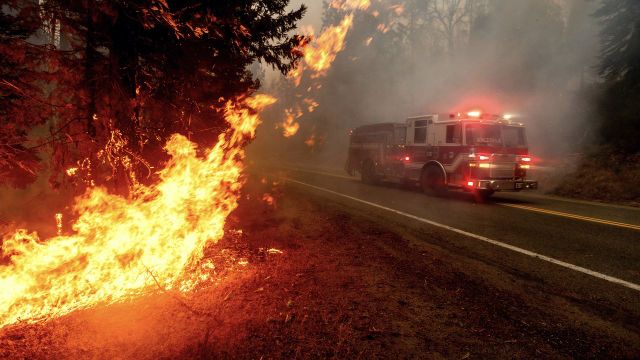
A fire truck drives along Highway 168 while battling the Creek Fire in the Shaver Lake community of Fresno County, Calif., on Monday, Sept. 7, 2020. (AP Photo/Noah Berger)

Twenty other major fires are still burning throughout the state. As of September 14, 7,718 wildfires have burned more than 3.45 million acres in California. This accounts for more than 3 percent of the state’s roughly 100 million acres of land.

The town of Malden in Washington state was virtually destroyed last week as wildfires burned 80 percent of the buildings in a city of 200 people. Washington governor Jay Inslee, a Democrat, later took a trip to Malden where he offered no immediate help to town residents aside from boxes of apples picked from the grounds of the governor’s mansion. The apples were later found to have maggots inside.

In Oregon, four massive fires are burning near Portland, Salem, and Eugene, the state’s three most populous cities, and officials warned last week that they were “preparing for a mass fatality event.” Some 40,000 people have been evacuated, and 22 people were still missing in the state as of Tuesday. Until Sunday, the entire city of Portland was on alert for a mass evacuation.

Five towns in Oregon have been “substantially destroyed,” and thousands of structures have been leveled across the state. On Monday, 70 people in Detroit, Oregon were forced to evacuate along dirt roads used by the US Forest Service, and on Tuesday, fire debris blocked roads and trapped dozens of people trying to evacuate near Eugene, Oregon.

A wall of smoke continues to enshroud the entire West Coast, with tens of millions from Seattle to San Diego exposed to hazardous air for successive days. Portland’s air quality has been the worst in the world since Sunday, and Los Angeles is suffering its worst smog in 26 years.

Thousands of people living in temporary shelters and parking lots across the three states are being forced to contend with the dual disasters of the wildfires and the COVID-19 pandemic, which threatens to spread through shelters and evacuation sites.

The official “COVID-19 Interim Shelter Guidance” from the office of Oregon Governor Kate Brown admits these dangers. The document warns: “All shelter residents, even those without symptoms, may have been exposed to COVID-19 and should self-quarantine after leaving the shelter in accordance with state and local recommendations.” Smoke inhalation threatens to make millions more susceptible to the virus and inundate hospitals with patients suffering from respiratory symptoms.

The wildfires have also severely disrupted public education. In California, more than 70,000 students have been impacted by halts to remote education, as students and teachers have had to evacuate. CalMatters reports that over 8,000 California students and educators have lost their homes to wildfires since 2015.

“The kids are confused because we spent three days online doing our Zoom meetings, and now that’s gone away,” kindergarten teacher Kristie Summerrill told CalMatters. “Now, they’re staying at friends’ houses or hotels. They’re not understanding why there is no school right now.”

While 2020 is already a record year for wildfires, the offshore wind season—the period in autumn when the West Coast’s most destructive fires tend to take place—is just beginning, and the fire season could last into December.

According to the US Forest Service, “what was once a four-month fire season now lasts six to eight months” in some parts of the country. The length of the fire season has increased by about 75 days in the Sierra Nevada mountain range, according to Cal Fire.

Even after the fires end, the return of wetter conditions in the winter will heighten the danger of post-fire flooding and mudslides. According to the National Weather Service, following wildfires, “locations downhill and downstream from burned areas are very susceptible to flash flooding and debris flows, especially near steep terrain.”

In January 2018, heavy rain on hillsides burned by the Thomas Fire caused rapid erosion and powerful mudslides resulting in catastrophic damage in the town of Montecito, California, killing 23 people and destroying 130 homes. The burn scars created by the 2020 fire season, which now span millions of acres, will remain vulnerable to erosion for years and will pose an ongoing threat to countless communities.

A recent study by researchers at Arizona State University and the University of California, Los Angeles found that climate change is increasing the risk of debris flow from wildfires throughout California.

In addition to hazardous air, West Coast residents may soon have to contend with toxic chemicals released by burnt electronics, cars, plastics, and industrial equipment, which can be carried into rivers and waterways by rain.

Earlier this month, officials in Santa Cruz County announced that the CZU Lightning complex had melted seven miles of plastic pipeline, leeching the carcinogenic chemical benzene into the water supply. Benzene was previously found in the water supply in Santa Rosa, California following the Tubbs Fire in 2017, and in the town of Paradise, California, after that town was largely destroyed by the Camp Fire in 2018.

This year’s unprecedented fire season has undoubtedly been fueled by climate change, which has brought about hotter and dryer conditions. A five-year drought from 2011 to 2016, the driest in California’s history, killed and desiccated over 100 million trees.

Across the West Coast, fires are moving faster and growing larger. Doug Grafe, chief of Fire Protection at the Oregon Department of Forestry, told reporters that the extent and speed of the wildfires in Oregon was unprecedented. “Seeing them run down the canyons the way they have—carrying tens of miles in one period of an afternoon and not slowing down in the evening— [there is] absolutely no context for that in this environment.”

In the last twenty years, Oregon has experienced eleven megafires, as compared to six megafires in the entire twentieth century, according to Jim Gersbach from the Oregon Department of Forestry. Until this year, no more than two megafires had been observed in the state in a single year. There are now four megafires burning at once. Professor Michael Gollner, who leads the Berkeley Fire Research Lab, wrote that “we’ve never seen fires of this magnitude,” and called the behavior of the fires “unreal.”

The devastation caused by the 2020 fire season, like the COVID-19 pandemic, is a direct consequence of the criminal policies pursued by the ruling class. Like the pandemic, the threat of wildfires was entirely foreseeable, yet Republican and Democratic administrations alike have cut federal funding for fire science for decades.

The Trump Administration has pushed through $2 billion in cuts from the US Forest Service budget, while threatening to cut off federal aid for California wildfires. Meanwhile, the Democratic Party, which politically dominates California, Oregon, and Washington, has refused for decades to take any substantial action to mitigate the danger of wildfires, and has systematically defunded social infrastructure and cut firefighter staffing.

Vast social resources exist to stop the unfolding environmental catastrophe and protect human life, but this can only be achieved by mobilizing the working class to reorganize economic and political life to satisfy social need rather than private profit.

Boston-area colleges and universities report COVID cases and outbreaks despite testing programs

Andrew Timon & Will McCalliss


On September 1, Boston underwent its annual “move-in day,” when tens of thousands of college students move in from across the United States and world into apartments in advance of the beginning of their fall semesters. Additionally, many students move into on-campus housing shortly before this chaotic day.

On a typical year, the influx of students and vast number of leases ending on August 31 and starting September 1 create immense amounts of traffic and piles of furniture and other discarded belongings on sidewalks. This year, the annual ritual also portends a terrible COVID-19 outbreak.

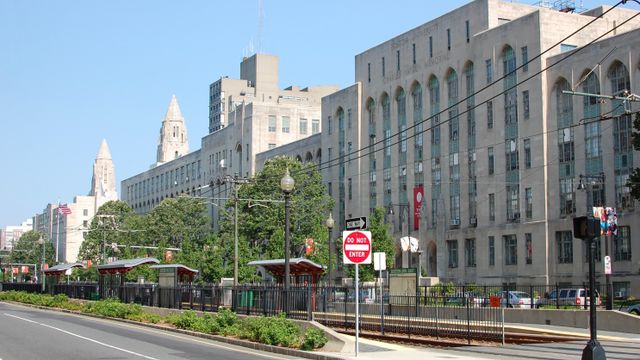
Boston University College of Arts and Sciences (Credit: Wikimedia Commons)

Despite the ongoing pandemic, colleges and universities across the Greater Boston area have made the reckless, profit-driven decision to reopen their campuses. This has endangered the lives of not only university students, faculty and staff, but residents of the area as well, as cases will inevitably spike and hospitals become at serious risk of becoming overwhelmed by an influx of COVID patients.

COVID-19 outbreaks have taken place across the country as colleges have seen surges in cases after reopening. Over 88,000 new cases have been recorded at nearly 1,200 colleges since the criminal reopenings, according to the New York Times. Of these schools, more than 150 colleges are reporting more than 100 cases, and more than a dozen report 1,000-plus cases.

College websites claim that the health and safety of their students and faculty are of paramount concern and are informing all decision-making. However, at the root of all safety decisions of day-today operations lies the fundamentally deadly one of opening schools in the first place.

A sharp class line is also emerging among schools in their separate and anarchic plans and precautions to allegedly keep students, faculty and the surrounding communities safe. At most state and community colleges, these measures include the paltry addition of hand sanitizer, recommendations on wearing masks, and telling students to stay home if they feel sick. Meanwhile, some elite universities have actually built the infrastructure to test thousands of students per day, are requiring every student to be tested and are conducting internal contract tracing.

Boston University (BU) has developed the ability to give over 5,000 tests per day on campus and is testing more than 4,000 students and faculty daily, having performed 96,499 tests since July 27, with 91 positive tests. They also have in-house contact tracing teams. The Massachusetts Institute of Technology has done nearly 46,000 tests since August, 11,700 of these done in the first week of September, with 22 positive results.

While the elite universities test thousands of students per day, state and community colleges either have bare minimum testing or no testing at all. Bunker Hill Community College has no testing and is allowing students and faculty on campus if they are not feeling sick, requiring check-ins and -outs to assist with contact tracing. Baystate, Massasoit, Northshore, and Roxbury Community Colleges will also have no testing.

At Framingham State University, 1,226 students are taking at least one in-person course, with a total of 52 faculty members and 158 staff working on campus. The university is working in coordination with the state Department of Higher Education and Department of Public Health to implement testing, resulting in an average of only 82 tests per day. As of this writing, a spike in cases has already begun, with 10 out of 429 tests resulting positive on September 8, compared to only 5 positive tests out of all 1,600 tests beginning August 21. Revealing their complete lack of care and preparation for the situation, following the 10 positive results on September 8, as of September 15, they had only tested once, on September 11, conducting just 114 tests.

Salem State University is likewise doing only limited testing, requiring all resident students to be tested at move-in, followed by a rotating segment of the resident students to be tested every other week. It is not clear how large this segment will be. Additionally, commuting students with on-campus classes, jobs or in-person field placements are not required to take tests prior to coming to campus and are given the option to electively take tests on campus, if so desired, only once every two weeks. They have tested only 1,109 students thus far, and 104 employees, resulting in 1 positive case.

Boston College (BC), with medium testing capacity, is already seeing exponential growth in new cases going from 3 positive cases out of 7,681 tests August 16-23, to 8 of 10,127 tests August 24-30, 26 of 4,322 tests August 31-September 6, and 67 out of 2,954 tests on September 9-12. In other words, BC has gone from a >0.1 percent positivity rate to over 2 percent in three weeks. This trend has no reason to slow. Just two weeks after opening, San Diego State University reported 64 positive cases, which spiraled into a staggering 513 cases just one week later.

Northeastern University (NU) has created the infrastructure to test students and staff, requiring students be tested every three days. Even with strict limitations on social interaction and robust testing, early signs of increased rates of transmission are developing at NU. September 8 saw its highest number of positive cases and positivity rate, with 8 cases out of 6,947 tests.

The as-for-now slow burn of on average more than three cases per day at NU, while in itself an unforgivable cost, is an experiment with the potential energy for near spontaneous combustion. Regular testing alone, while important, cannot stop transmission of the deadly virus. If specimen collection is not done perfectly, or if tested at an early stage of infection or partial recovery, test samples may not contain enough viral material for a positive result. This could lead at any time to large spikes, especially since students feeling emboldened with negative results will undoubtedly socialize with each other off-campus.

It is clear that even at schools with state-of-the art testing capacities and facilities, as well as other precautions, viral transmission is taking place at varying degrees, with the potential for large spikes, far-reaching community transmission, and a situation that could easily spiral out of control.

Also made clear from the Boston-area campus testing is the criminality of the state and federal response to the pandemic. A handful of universities with a few tens of thousands of students have surpassed the testing capabilities of the entire state of Massachusetts, one of the wealthiest states in the US, with nearly 7 million people.

In addition, the anarchy of each school developing and following its own protocols is so irrational in stopping the spread of the virus more broadly that the internal contact tracing program at BU, for instance, will only contact close contacts of a positive case if they are a student or faculty member of BU. Any other member of the public at large is of no concern to the BU administration.

Wealthy university testing and tracing programs, isolated from a state, national and global program to fight the pandemic, are not the solution. Even with these programs, the decision to open schools has left students at these campuses at risk. They should never have been opened in the first place. Only a global and coordinated response can stop this virus in its tracks.

The struggle to close schools and implement the proper safety measures to stop the pandemic must be linked to other schools, workplaces and industries, across state and national borders, in rank-and-file safety committees independent of the school administrations and authorities, big business parties and trade unions. The International Youth and Students for Social Equality and the Socialist Equality Party are fighting to build an independent movement and leadership of the working class to support all students, teachers, parents and workers who are taking a stand against the homicidal drive to reopen schools.

Historic US job losses continue with another 860,000 unemployment claims

Jacob Crosse


For the 26th straight week, US unemployment claims remain at levels unseen since the Great Depression as an estimated 860,000 people filed first-time jobless claims for the week ending September 12, according to the latest US Department of Labor report. An additional 658,737 Pandemic Unemployment Assistance claims were also recorded bringing the weekly total to over 1.5 million new claims.

In total, over 61,000,000 jobless claims have been filed in the last six months since COVID-19 lockdown measures and business closures were first mandated to slow the spread of the virus. Over 202,000 people in the US have died due to COVID-19 as of this writing after most of those measures were quickly abandoned at the insistence of the financial oligarchy. Of the over 22 million jobs lost since mid-March, less than half, approximately 10.5 million have “returned,” albeit for many workers at reduced hours and wages.

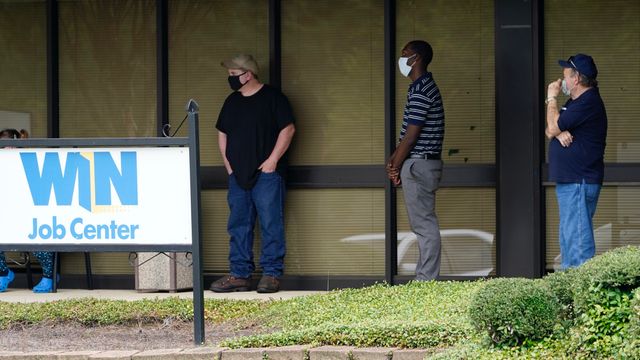
Workers line up outside the Mississippi Department of Employment Security WIN Job Center in Pearl, Miss. (AP Photo/Rogelio V. Solis, File)

A July study published by the University of Chicago in conjunction with the nation’s largest payroll processor, ADP, found that from March through June, employers froze the wages of 58 percent of their workers, compared to 36 percent during the same period last year. An estimated 40 percent of the 18 million workers who reported that they were furloughed in April have returned to work, according to Gusto, another payroll processing company that services more than 100,000 small businesses in the US.

Of the roughly 7.2 million workers who have returned, Gusto reported that 29 percent have been brought back at a lower wage or with fewer hours. Speaking to USA Today on the figures, Sarah Gustafson, Gusto’s lead data scientist, remarked, “When they come back, it doesn’t mean they’re coming back to a rosy picture, they’re kind of getting a double whammy.” Even among workers who were not laid off or furloughed, Gusto data found 8.8 percent of all workers saw their hours reduced in August, up nearly 3 percent compared to last year.

The Department of Labor reported that the national seasonally adjusted insured unemployment rate was an estimated 8.6 percent for the week ending September 5. However, several states and territories have double-digit unemployment rates, with Hawaii leading the country at 20.3 percent. This was followed by California, 17.3; Nevada, 15.6; New York, 15.0; Puerto Rico, 14.1; Louisiana, 13.6; Connecticut and Georgia at 11.9; District of Columbia, 11.3; and finally, Massachusetts at 11.0 percent.

The number of people receiving some form of unemployment assistance actually increased by nearly 100,000 last week, to 29,768,326. For comparison's sake, during the same week last year, only 1,498,917 people were receiving government assistance. Overall, the weekly unemployment claims report largely mirrored those of the last three weeks, since the department changed its formula for calculating claims, bringing the four-week average claim amount to just under one million a week at 912,000.

With job losses continuing, the $600 federal unemployment aid long expired and no relief in sight, food lines are growing as hunger grips millions. In New York City, an estimated 2 million people are food insecure. Rosanna Robbins, director of food access and capacity at City Harvest, New York City’s largest food rescue organization, reflected on the ongoing crisis.

“It’s never been this tragic for such a sustained period of time. Since COVID hit, the numbers of people in line at food pantries and soup kitchens skyrocketed, and it’s not going down,” she told the Associated Press. “And so, I think for us it’s just adjusting to the fact that we expect there to be a real need for free food for a very long time to come.”

While millions of unemployed workers and their families are queuing in food lines, a report from the Institute for Policy Studies found that from March 18 through September 4, the wealth of US billionaires increased by a whopping $970 billion, “an increase of 32.9 percent over 24 weeks.” Jeff Bezos, CEO of Amazon, has seen his wealth increase from $118 billion to over $206.4 billion, while Tesla CEO Elon Musk’s wealth nearly quadrupled in the same time from $24.6 billion to $93.3 billion.

This is part of an international phenomena; according to data from Forbes, Canada’s richest 20 billionaires have seen their wealth increase by $37 billion since March, with the average gaining nearly $2 billion in the last six months. The Thomson family, which owns media outlets Thomson Reuters and the Globe and Mail, saw their wealth increase by an estimated $8.8 billion. During that same time, 1.1 million workers in Canada lost their jobs while another 713,000 reported losing at least half, if not more, of their work hours due to the pandemic.

As the financial oligarchy gorges itself on trillions of dollars through the artificial inflation of the stock market by the influx of unlimited funds furnished via the Federal Reserve, millions of jobless and destitute workers are left with nothing while the Democrats and Republicans in Congress feign interest in “getting something done” in between extended recesses and half-hearted negotiations that have produced nothing in the last eight weeks.

While a few jobless workers have seen modest relief after President Donald Trump signed an executive memorandum on August 8 that created the Lost Wages Assistance (LWA) program, millions have yet to see anything.

The LWA directed the Federal Emergency Management Agency (FEMA) to oversee distributing $44 billion to jobless workers in the form of $300 weekly payments, less than half what workers were receiving before. Only workers who had been receiving at least $100 a week in unemployment benefits are eligible to receive the benefit.

Every single US state except for South Dakota applied for LWA payments with over $30 billion already earmarked for distribution. For many states such as Alaska, which was approved by FEMA to begin sending payments on August 24, entirely new delivery systems needed to be developed, delaying payments for an estimated eight weeks. Meanwhile the unemployed in other states such as New Mexico, which has already distributed five weeks of payments, have already been cut off from the program.

While millions of workers have been left in the lurch as the US Congress, American Airlines CEO Doug Parker, United Airlines CEO Scott Kirby and Southwest Airlines CEO Gary Kelly met with White House chief of Staff Mark Meadows on Thursday to demand another $25 billion in federal aid before the end of the month. The airline companies have warned that without government aid, up to 36,000 workers could be furloughed, including 19,000 at American Airlines and 16,370 at United.

Despite unprecedented joblessness, and the threats of more layoffs coming, no relief package appears to be on the agenda for either party.

Instead, on Thursday the Democratic-controlled House passed a nonbinding resolution condemning “all forms of anti-Asian sentiment as related to COVID-19” in a 243-164 vote. This gave both parties an opportunity to blame the other party for not being sufficiently bellicose against China and Russia as each side took turns sabre rattling over foreign policy.

Jim Jordan (Republican-Ohio) voted against the resolution while falsely claiming that China and the World Health Organization lied to the United States about the severity of the coronavirus. Republican House minority leader Kevin McCarthy chastised Pelosi for being too focused on “impeaching the President” back in January, instead of “focusing on China.”

Pelosi responded: “In terms of China I take second place to no one in this body in my opposition to China for three decades. Sometimes I take pride in being called the most disliked American in China for my opposition to China...trying to stop their proliferation of weapons technology, of mass destruction, to rogue countries and those delivery systems.”

Pelosi continued, “I have been on it [China] every single day for over 30 years.” She then accused House Leader Kevin McCarthy of having “newly arrived at this issue, in order to deflect attention from the fact that the Russian’s trying to once again infiltrate and [unintelligible] the security of our elections. Whoever interferes with our elections must be dealt with. But all of the sudden it’s about China, instead of Russia. I think the American people should decide who the next president of the United States is, not Vladimir Putin.”