13 Nov 2020

A Convergence of Calamities

Nick Turse


Record Numbers of War-Displaced to Be Dwarfed by Those Driven From Their Homes by Climate Change
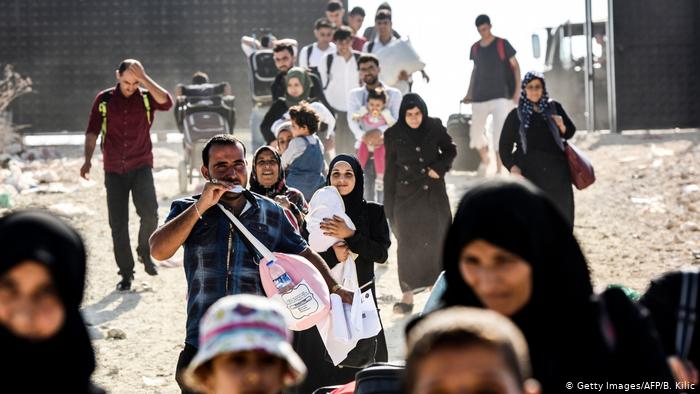
I saw them for only a few seconds. One glimpse and they were gone. The young woman wore a brown headwrap, a yellow short-sleeved shirt, and a long pink, red, and blue floral-patterned skirt. She held the reins of the donkey pulling her rust-pink cart. Across her lap lay an infant. Perched beside her at the edge of the metal wagon was a young girl who couldn’t have been more than eight. Some firewood, rugs, woven mats, rolled-up clothing or sheets, a dark green plastic tub, and an oversized plastic jerry can were lashed to the bed of the cart. Three goats tied to the rear of it ambled along behind.

They found themselves, as I did, on a hot, dusty road slowly being choked by families who had hastily hitched up their donkeys and piled whatever they could — kindling, sleeping mats, cooking pots — into sun-bleached carts or bush taxis. And they were the lucky ones. Many had simply set out on foot. Young boys tended small herds of recalcitrant goats. Women toted dazed toddlers.  In the rare shade of a roadside tree, a family had stopped and a middle-aged man hung his head, holding it in one hand.

Earlier this year, I traveled that ochre-dirt road in Burkina Faso, a tiny landlocked nation in the African Sahel once known for having the largest film festival on the continent. Now, it’s the site of an unfolding humanitarian catastrophe. Those people were streaming down the main road from Barsalogho about 100 miles north of the capital, Ouagadougou, toward Kaya, a market town whose population has almost doubled this year, due to the displaced. Across the country’s northern stretches, other Burkinabe (as citizens are known) were making similar journeys toward towns offering only the most uncertain kinds of refuge. They were victims of a war without a name, a battle between Islamist militants who murder and massacre without compunction and armed forces that kill more civilians than militants.

I’ve witnessed variations of this wretched scene before — exhausted, upended families evicted by machete-wielding militiamen or Kalashnikov-carrying government troops, or the mercenaries of a warlord; dust-caked traumatized people plodding down lonesome highways, fleeing artillery strikes, smoldering villages, or towns dotted with moldering corpses. Sometimes motorbikes pull the carts. Sometimes, young girls carry the jerry cans on their heads. Sometimes, people flee with nothing more than what they’re wearing. Sometimes, they cross national borders and become refugees or, as in Burkina Faso, become internally displaced persons, or IDPs, in their own homeland. Whatever the particulars, such scenes are increasingly commonplace in our world and so, in the worst possible way, unremarkable. And though you would hardly know it in the United States, that’s what also makes them, collectively, one of the signature stories of our time.

At least 100 million people have been forced to flee their homes due to violence, persecution, or other forms of public disorder over the last decade, according to UNHCR, the United Nations refugee agency. That’s about one in every 97 people on the planet, roughly one percent of humanity. If such war victims had been given their own state to homestead, it would be the 14th largest nation, population-wise, in the world.

By the end of June, according to the Internal Displacement Monitoring Center, an additional 4.8 million people had been uprooted by conflict, with the most devastating increases in Syria, the Democratic Republic of Congo, and Burkina Faso. Yet, as dismal as these numbers may be, they’re set to be dwarfed by people displaced by another signature story of our time: climate change.

Already, shocking numbers have been put to flight by firesderechos, and super storms, and so much worse is yet to come, according to experts. A recent forecast suggests that, by the year 2050, the number of people driven from their homes by ecological catastrophes could be 900% greater than the 100 million forced to flee conflicts over the last decade.

Worse Than World War II

Women, children, and men driven from their homes by conflict have been a defining feature of modern warfare. For almost a century now, combat correspondents have witnessed such scenes again and again. “Newly routed civilians, now homeless like the others with no idea of where they would next sleep or eat, with all their future lives an uncertainty, trudged back from the fighting zone,” the legendary Eric Sevareid reported, while covering Italy for CBS News during World War II. “A dust-covered girl clung desperately to a heavy, squirming burlap sack. The pig inside was squealing faintly. Tears made streaks down the girl’s face. No one moved to help her…”

The Second World War was a cataclysmic conflagration involving 70 nations and 70 million combatants. Fighting stretched across three continents in unparalleled destructive fury, including terror bombingcountless massacrestwo atomic attacks, and the killing of 60 million people, most of them civilians, including six million Jews in a genocide known as the Holocaust. Another 60 million were displaced, more than the population of Italy (then the ninth-largest country in the world). An unprecedented global war causing unimaginable suffering, it nonetheless left far fewer people homeless than the 79.5 million displaced by conflicts and crises as 2019 ended.

How can violence-displaced people already exceed World War II’s total by almost 20 million (without even counting the nearly five million more added in the first half of 2020)?

The answer: these days, you can’t go home again.

In May 1945, the war in Europe came to an end. By the beginning of September, the war in the Pacific was over, too. A month later, most of Europe’s displaced — including more than two million refugees from the Soviet Union, 1.5 million French, 586,000 Italians, 274,000 Dutch, and hundreds of thousands of Belgians, Yugoslavs, Czechs, Poles, and others — had already returned home. A little more than a million people, mostly Eastern Europeans, still found themselves stranded in camps overseen by occupying forces and the United Nations.

Today, according to UNHCR, ever fewer war refugees and IDPs are able to rebuild their lives. In the 1990s, an average of 1.5 million refugees were able to return home annually. For the last 10 years, that number has dropped to around 385,000. Today, about 77% of the world’s refugees are trapped in long-term displacement situations thanks to forever wars like the conflict in Afghanistan that, in its multiple iterations, is now in its sixth decade.

War on (of and for) Terror

One of the most dramatic drivers of displacement over the last 20 years, according to researchers from Brown University’s Costs of War project, has been that conflict in Afghanistan and the seven other “most violent wars the U.S. military has launched or participated in since 2001.” In the wake of the killing of 2,974 people by al-Qaeda militants that September 11th and the decision of George W. Bush’s administration to launch a Global War on Terror, conflicts the United States initiated, escalated, or participated in — specifically, in Afghanistan, Iraq, Libya, Pakistan, the Philippines, Somalia, Syria, and Yemen — have displaced between 37 million and 59 million people.

While U.S. troops have also seen combat in Burkina Faso and Washington has pumped hundreds of millions of dollars of “security assistance” into that country, its displaced aren’t even counted in the Costs of War tally. And yet there’s a clear link between the U.S.-backed overthrow of Libya’s autocrat, Muammar Qaddafi, in 2011 and Burkina Faso’s desperate state today. “Ever since the West assassinated Qaddafi, and I’m conscious of using that particular word, Libya has been completely destabilized,” Chérif Sy, Burkina Faso’s defense minister, explained in a 2019 interview. “While at the same time it was the country with the most guns. It has become an arms cache for the region.”

Those arms helped destabilize neighboring Mali and led to a 2012 coup by a U.S.-trained officer. Two years later, another U.S.-trained officer seized power in Burkina Faso during a popular uprising. This year, yet another U.S.-trained officer overthrew yet another government in Mali. All the while, terrorist attacks have been ravaging the region. “The Sahel has seen the most dramatic escalation of violence since mid-2017,” according to a July report by the Africa Center for Strategic Studies, a Defense Department research institution.

In 2005, Burkina Faso didn’t even warrant mention in the “Africa Overview” section of the State Department’s annual report on terrorism. Still, more than 15 separate American security assistance programs were brought to bear there — about $100 million in the last two years alone. Meanwhile, militant Islamist violence in the country has skyrocketed from just three attacks in 2015 to 516 in the 12 months from mid-2019 to mid-2020, according to the Pentagon’s Africa Center.

Compounding Crises to Come

The violence in Burkina Faso has led to a cascade of compounding crises. Around one million Burkinabe are now displaced, a 1,500% increase since last January, and the number only keeps rising. So do the attacks and the fatalities. And this is just the beginning, since Burkina Faso finds itself on the frontlines of yet another crisis, a global disaster that’s expected to generate levels of displacement that will dwarf today’s historic figures.

Burkina Faso has been battered by desertification and environmental degradation since at least the 1960s. In 1973, a drought led to the deaths of 100,000 people there and in five other nations of the Sahel. Severe drought and hunger struck again in the mid-1980s and aid agencies began privately warning that those living in the north of the country would need to move southward as farming became ever less feasible. By the early 2000s, despite persistent droughts, the cattle population of the country had doubled, leading to increasing ethnic conflict between Mossi farmers and Fulani cattle herders. The war now tearing the country apart largely divides along those same ethnic lines.

In 2010, Bassiaka Dao, the president of the confederation of farmers in Burkina Faso, told the United Nations news agency, IRIN, that the impacts of climate change had been noticeable for years and were getting worse. As the decade wore on, rising temperatures and new rainfall patterns — droughts followed by flash floods — increasingly drove farmers from their villages, while desertification swelled the populations of urban centers.

In a report published earlier this year, William Chemaly of the Global Protection Cluster, a network of nongovernmental organizations, international aid groups, and United Nations agencies, noted that in Burkina Faso “climate change is crippling livelihoods, exacerbating food insecurity, and intensifying armed conflict and violent extremism.”

Sitting at the edge of the Sahara Desert, the country has long faced ecological adversity that’s only worsening as the frontlines of climate change steadily spread across the planet. Forecasts now warn of increasing ecological disasters and resource wars supercharging the already surging phenomenon of global displacement. According to a recent report by the Institute for Economics and Peace, a think tank that produces annual global terrorism and peace indexes, two billion people already face uncertain access to sufficient food — a number set to jump to 3.5 billion by 2050. Another one billion “live in countries that do not have the current resilience to deal with the ecological changes they are expected to face in the future.” The report warns that the global climate crisis may displace as many as 1.2 billion people by 2050.

On the Road to Kaya

I don’t know what happened to the mother and two children I spotted on the road to Kaya. If they ended up like the scores of people I spoke with in that market town, now bulging with displaced people, they’re facing a difficult time. Rents are high, jobs scarce, government assistance all but nil. People there are living on the edge of catastrophe, dependent on relatives and the kindness of new neighbors with little to spare themselves. Some, driven by want, are even heading back into the conflict zone, risking death to gather firewood.

Kaya can’t deal with the massive influx of people forced from their homes by Islamist militants. Burkina Faso can’t deal with the one million people already displaced by conflict. And the world can’t deal with the almost 80 million people already driven from their homes by violence. So how will we cope with 1.2 billion people — nearly the population of China or India — likely to be displaced by climate driven-conflicts, water wars, increasing ecological devastation, and other unnatural disasters in the next 30 years?

In the decades ahead, ever more of us will find ourselves on roads like the one to Kaya, running from the devastation of raging wildfires or uncontrolled floodwaters, successive hurricanes or supercharged cyclones, withering droughts, spiraling conflicts, or the next life-altering pandemic. As a reporter, I’ve already been on that road. Pray you’re the one speeding by in the four-wheel-drive vehicle and not the one choking in the dust, driving the donkey cart.

Pandemic, recovery efforts and significance of good governance in Bangladesh

Amir Mohammad Sayem


Good governance, a much talked–about concept in political and development discourse in the contemporary world and closely related to the concept of ‘governance’ that usually indicates the process of decision–making and the process by which decisions are implemented, is obviously crucial to successfully deal with catastrophic situations caused by the COVID–19. But there is a clear paucity of good governance in Bangladesh, which was rapidly developing in economic and some other terms until the beginning of the pandemic, despite the fact that the government is occasionally prompt on this. In fact, poor governance exists with all of its indicators such as participation, consensus, accountability, transparency, responsiveness, effectiveness and efficiency, equitability and inclusiveness, and the rule of law.

But criticisms against mal-governance mounted at the time of the pandemic. According to available sources including electronic and print media, some remarkable allegations of poor governance practices appeared during the pandemic are corruption in purchase of N–95 masks, a lack of transparency in the procurement process of medical equipments, negligence in providing health services to COVID–19 patients, fake certifications on COVID–19 tests, inequitable distribution of food aids and financial assistance, ineffective and inefficient planning and coordination of government efforts or a lack of adequate social participation, and political considerations in the preparation of the list of beneficiaries. Even though the government later comes to be serious to address corruption, mal-governance practices can still make it difficult to mitigate impacts of the pandemic as desired.

The government obviously took some good steps — ranging from health response to socio–economic recovery — including massive economic stimulus worth more than 1.1 lakh crore BDT with 20 packages, which are now being implemented. But the undeniable fact is that millions lost their income sources including jobs and businesses owing to the pandemic, started in March 2020, even if many have already reengaged economically — and many others are waiting for income opportunities. There are also challenges of equitable disbursement of stimulus packages, dealing with the possible second wave of the pandemic and distribution of vaccine doses. Under such a context, accountable, transparent and responsive governance and effective and efficient use of limited material and non–material resources are very crucial for making all efforts — current and future — successful as expected.

But the fact is that securing good governance is obviously not possible all on a sudden, since mal-governance practices exist in government, semi–government, private and non–government organizations. In government sector in particular, poor governance is practiced from the highest tier to the lowest, even if its levels and forms differ. Despite there is a lack of adequate understanding of actor specific contributions, it is now crystal clear that different groups or individuals — political leaders, government officials, businessmen and others — varyingly contribute, directly or indirectly, to poor governance practices in diverse sectors and sub–sectors at national and local stage. Obviously, diverse groups or individuals, benefitted by and responsible for inadequate accountability, transparency, responsiveness and some other indicators of poor governance practices, are somehow powerful.

Furthermore, the culture of mal-governance, which is rendered as the outcome of underlying social, economic, administrative, political and cultural factors including the political culture of blame game, the culture of bribery and nepotism, the culture of hegemony, tendency to protect affiliated party men, economic insufficiency, bureaucratic mentality, inadequate emphasis on training needs and inadequate or no consideration of recommendations made for addressing mal-governance practices have been going on for decades. In spite of the fact that some improvements are made on several underlying causes, these still remain scant for stimulating any desired changes in good governance indicators in the country. Under such circumstances, diverse practices of poor governance widely — and, sometimes, oddly — seen at the very crisis moment of the pandemic are unsurprising.

The optimistic side is that many quarters including some political leaders of the ruling party, opposition parties, civil society and mass people presently want good governance more than ever, at least for dealing with the pandemic and its rippling impacts. Of course, this seems an opportunity that should be optimally used by the government, which has already taken some drastic efforts to address corruption with its declared zero tolerance policy; but it is simultaneously undeniable to take into account that any remarkable improvement in good governance situation ideally necessitates significant changes in all of its indicators everywhere. As expected, the government should put emphasis on transparency, accountability and responsiveness in all purchase acts, medical and other services, loan disbursements and other recovery activities as much as possible.

In this respect, both governmental and political party–based steps are obviously crucial. In my opinion, the anti–corruption commission (national anti-corruption watchdog), law–enforcement agencies and other significant government machineries should be more engaged at this moment aiming at ensuring transparency, accountability and responsiveness in government, private and other sectors. Of course, strengthened — but consistent — departmental monitoring of health response and economic and other revitalization steps with or without the formation of a strong national taskforce especially to oversee all recovery efforts may also bring out some good outcomes in economic, social and other aspects with some significant improvements in good governance practices in Bangladesh. But reflections of earnestness of the government are incontrovertibly pivotal here.

Unavoidably,  ruling party leaders, compared to oppositions, are usually more involved with corruption and contribute to some other sorts of mal-governance practices including lack of accountability and transparency in many countries and Bangladesh has no exception in this respect. In fact, some political representatives including Union Parishad Chairman and Members — mostly from the ruling party — were criticized to be engaged with misappropriation of distribution of reliefs and subsidized rice in different localities. Unsurprisingly, corrupt leaders from local to national level may not be discouraged from continuing malpractices in the coming days and may increase the possibility of failure of recovery efforts, unless party–based steps are strengthened. As expected, political seriousness and commitment of are obviously critical.

Obviously, a national framework or guideline for the improvement of good governance may be of special significance in Bangladesh, which has huge economic, human resource and other potentials but cannot realize as desired because of widespread poor governance and some other reasons. Such a framework that can help mitigate poor governance at present and in the future needs to aim at improving good governance in planned manner at all sectors — government, semi–government, private and others — with short, medium and long term efforts. But, and above all, it is undeniable that nothing may reduce widespread mal-governance practices in the short and long run without visionary and effective leadership capable of making desired progress reflecting commitment and honesty.

German schools become coronavirus hotspots: 300,000 students in quarantine

Gregor Link & Markus Salzmann


The enormously high infection rates in Germany leave no doubt that the “partial lockdown” imposed by the federal government is not slowing down infections, even slightly. Although COVID-19 deaths are rising dramatically and hospitals are on the verge of collapse, the federal and state governments in Germany are continuing their policy of “herd immunity.”

At 21,866 on November 12, new infections were slightly below the peak of 23,399 on November 7. However, this is not necessarily due to fewer infections, but rather to a lack of laboratory capacity—with declining numbers of tests performed and delays in reporting due to the severe overloading of health authorities. While the number of laboratories processing tests remained unchanged, the percentage of positive results last week was 7.26 percent. Eight weeks earlier, it had been 0.77 percent.

Classroom in Dortmund, Germany, August 13, 2020 (AP Photo/Martin Meissner, File)

Numerous cities and municipalities are reporting new daily highs. Since the beginning of the pandemic, the Robert Koch Institute (RKI)—the German government’s health agency—has recorded more than 700,000 proven infections. The number of deaths is also rising, with 261 reported on a single day. The situation in intensive care units is dramatic. On a single day, the number of patients requiring artificial respiration rose by 37. Physicians largely agree that capacities will be exhausted by the beginning of next month at the latest.

To conceal the true extent of the infection, Federal Health Minister Jens Spahn (Christian Democratic Union, CDU) has presented a “new coronavirus strategy.” Accordingly, only those who have symptoms, belong to a risk group or work in the nursing and health care sector, for example, should be tested. “And someone who has no symptoms and is otherwise a contact person does not need to be tested,” Spahn told the ARD programme “Report from Berlin” on Sunday evening.

This attitude is criminal. It has been proven that even without acute symptoms, serious health consequences can occur because of an infection, which is why a credible collection of data is essential for pandemic control. Since the spring, it has been known that laboratory testing capacities would not be adequate if the number of infections rose higher. Nevertheless, nothing has been done about it. Now, the government is using this circumstance to push the figures downward in its calculations.

Even in old people’s homes and nursing homes, which have been severely affected since the beginning of the pandemic and where outbreaks usually have fatal consequences, there is insufficient testing. Rapid coronavirus tests are to be used in the facilities to relieve the burden on laboratories. “Staff shortages and sometimes long delivery times make implementation difficult,” however, as the television network WDR reports. In North Rhine-Westphalia alone, a thousand residents and just as many nursing staff in old people’s and nursing homes have become infected with the pathogen.

Although several studies show that the closure of schools, day-care centres and non-essential businesses effectively slow down the increase of infections, governments in Germany and Europe flatly reject such closures.

Despite the warnings made by numerous scientists, schools should remain open “come hell or high water,” according to Heinz-Peter Meidinger, president of the Teachers’ Association. Yet schools are becoming breeding grounds for the virus. While 50,000 pupils were in quarantine at the end of September, the number has now risen to more than 300,000. Also, around 30,000 teachers are currently in quarantine. This is only the tip of the iceberg. According to current antibody studies, more than six times as many school children have become infected than was previously assumed.

Politicians of all parties support the continuation of targeted screening. It is correct to maintain in-person teaching as long as possible, according to the chairperson of the Standing Conference of the Ministers of Education and Cultural Affairs of the Länder (federal states), Stefanie Hubig (Social Democratic Party, SPD). Susanne Eisenmann (CDU), state education minister in Baden-Württemberg, declared that there was no “reason for panic.”

The Ida-Ehre-Schule in Hamburg-Eimsbüttel has recorded the largest outbreak at a school in Germany to date. A spokesperson for the school authorities announced that a total of 55 people had tested positive. The affected pupils came from 25 classes, which have now been completely quarantined by the health authorities. Teachers, students, and parents have strongly criticized Hamburg’s Education Senator (state minister), Ties Rabe (SPD). Rabe is considered a hardliner, and despite rising coronavirus numbers, he continues to be a fervent advocate of in-person teaching. According to the Hamburger Abendblatt, he is “at peace” with himself despite the disastrous number of infections.

In Austria, where the authorities again reported more than 7,500 new infections on Wednesday, leading scientists from various disciplines have issued a statement calling for a “much stricter lockdown” and an “immediate closure of all schools.”

Among the signatories are the mathematician Peter Markowich, computer scientist Georg Gottlob and physicists Christoph Nägerl and Erich Gornik—all of them winners of the Wittgenstein Prize, the highest scientific honour in Austria. The scientists see “according to all the scientific evidence, for weeks, Austria is moving unchecked into the catastrophe of overloaded hospitals, where doctors have to make triage decisions and let patients die untreated.”

The closing of schools would be “certainly a significant contribution” and “one of the most effective individual measures of all.” They conclude, “All those who are now speaking out against school closure must say that they are in favour of triage [i.e., treating some patients and letting others die], at the latest by November 18.” Although the number of infections in schools is also rising rapidly in Austria, the government of the conservative Austrian Peoples Party (ÖVP) and the Greens support in-person teaching.

In Germany, too, federal and state governments are well aware that schools and day-care centres are bases for the spread of COVID-19. For example, Federal Education Minister Anja Karliczek (CDU) told the Rheinische Post, the regional daily paper, on Tuesday that “full attendance at classes” was “naturally” associated with the “danger of mutual infection … which can also be carried home.”

Tübingen’s Mayor Boris Palmer (Greens) is among the most aggressive advocates of a policy of keeping schools and day-care centres open. Last week, Palmer said that it was “fundamentally important” to “keep schools and day-care centres open” and added, “But this will inevitably lead to a greater number of coronavirus infections among the younger generation.”

Palmer went on to explain that those who were no longer of working age are particularly at risk. “We simply have to be clear: People over 80 have died [at a rate] 500 times that of those under 40. This virus is extremely age discriminatory. Complaining about it is of no use.” He appealed to the “personal responsibility” of old and previously ill people to behave with caution amid the spreading pandemic. The “concern that coronavirus could be more deadly than influenza,” Palmer said, falsely, had “not been confirmed.”

At the time of the first peak of the pandemic, Palmer had already expressed the deeply foul view on a Sat.1 television network breakfast talk show that in German hospitals, “people [may be saved] who would have died in six months anyway—due to their age or previous illnesses.”

Thuringia’s Prime Minister Bodo Ramelow (Left Party) has also taken the lead among the lockdown opponents and expressly praised the Swedish government’s herd immunity policy.

Despite clear findings on the benefits of using face masks, there is no obligation to wear them in the classroom in Thuringia’s schools—just as in most other German states. In contrast to schools in some other states, those in Thuringia also receive no support whatsoever for the purchase of air filtration systems—even though the state parents’ and student representatives had demanded them in the wake of falling temperatures.

As public broadcaster MDR reported, the Ministry of Education will “not financially support the purchase of air purifiers in schools.” A spokesman for the education ministry told the station that “no state funds are available for this” and that a corresponding support programme was “not known” to the ministry. Education and Sports Minister Helmut Holter (Left Party) added that the state’s special funds were also “all accounted for.”

Meanwhile, Michael Bauer, head of intensive care medicine at Jena University Hospital, warned that the number of COVID-19 patients in intensive care units in Thuringia could double in the next two weeks.

Scottish National Party government to pardon arrested miners after 36 years

Barry Mason


On October 28, Scottish National Party (SNP) government Justice Secretary, Humza Yousaf, announced a pardon for Scottish miners convicted of certain offences during the 1984-85 nationwide strike. A total of 1,424 miners and others were arrested in Scotland during the 1984-85 strike, with 13,000 arrested UK wide.

To enact a pardon, the SNP will introduce legislation into the Scottish parliament, and it will come into effect on passage of the bill.

Miners behind barricades at Allerton Bywater, North Yorkshire

In announcing the pardon fully 36 years after the events, Yousaf said, “This collective pardon… applies posthumously and symbolises our desire for truth and reconciliation, following the decades of hurt, anger and misconceptions which were generated by one of the most bitter and divisive industrial disputes in living memory.

“The pardon is intended to acknowledge the disproportionate impacts arising from miners being prosecuted and convicted during the strike—such as the loss of their job… it will also recognise the exceptional circumstances that resulted in former miners suffering hardship and the loss of their good name through their participation in the strike.”

Yousaf’s announcement made sure not to say that any financial redress would be made available to those miners dismissed from their jobs as a result of convictions arising from the strike.

The miners’ strike was deliberately provoked by the Conservative government of Margaret Thatcher. Her election in 1979, along with Reagan in the US, represented a political shift away from the policies of class compromise of previous decades towards direct class confrontation.

From the mid-1970s, the major corporations had sought to counteract falling rates of profit through an aggressive turn towards global investment and internationalised production. As part of this strategy, they demanded the deregulation of the economies of the advanced industrial countries, the slashing of tax rates and the destruction of welfare provision. Thatcher put forward a programme for the economic and social reorganisation of Britain in order to make it globally competitive. This was centred on the privatisation of profitable nationalised industries to open key areas of the economy to corporate investors and the dismantling and closure of any that required subsidies—epitomised in Thatcher’s commitment to “rolling back the frontiers of the state” and letting the “lame ducks” go to the wall.

When the strike began there were 174 pits in the UK, employing over 181,000 men and producing 90 million tonnes of coal. At the beginning of March 1984, the Tories called for the closure of 20 uneconomic coal pits, with the immediate spark for the strike the announced closure of Cortonwood Colliery, in South Yorkshire.

The action began on March 5, 1984 and was to end on that same day a year later. It saw 26 million days lost, the most since the 1926 British general strike.

Police confront a mass picket in Cortonwood, January 1985

The National Union of Mineworkers (NUM) under the leadership of the Stalinist, Arthur Scargill, insisted that mines only close on grounds of exhaustion and called for the preservation of a nationalised and subsidised industry. But the Scargill leadership refused to challenge the isolation of the strike by the Trades Union Congress and Labour Party. They ensured that the substantial support that existed within the working class was not mobilised against the hated Thatcher government.

The Tories responded to their defeat of the miners by closing the majority of remaining coal mines within a decade. In 1985, the government closed 23 mines and in 1986 another 17.

In 1994, Thatcher’s successor John Major announced the closure of 55 more pits and the privatisation of British Coal. By the time the Tories left in office in 1997, 125 mines had been closed since the strike. In 2012, only three privately run deep coal mines remained in Britain and the last deep mine, Kellingley colliery, closed in December 2015.

A two-part assessment of the miners’ strike, first published in March 2004 to mark the 20th anniversary of the events, can be read here.

Scottish miners arrested during the strike disproportionately lost their jobs after the event. Some 14,000 miners went on strike in Scotland. Although only representing seven percent of the UK mining workforce, they represented 30 percent of all miners who lost their jobs following convictions. In Scotland, around 500 were convicted of offences during the strike, of which 206 were dismissed from their jobs. Major confrontations between police and striking Scottish miners took place at the former steel production plant, Ravenscraig, in Lanarkshire, where pickets tried to stop scab lorries delivering coal to the plant. Nearly 300 people who were protesting at the entrance to Ravenscraig were arrested in just one day on May 3, 1984.

Lawyers representing the National Union of Miners (NUM) welcomed the pardon but said it was only a first step. The organisation calls for those sacked following convictions to be awarded financial compensation to make up for lost wages and pensions.

Quoted in the Times October 29, Alex Bennett, now 73, who at the time of the strike was chairman of the NUM at the Monktonhall pit near Musselburgh, spoke of his experiences. “At the start of the strike there was no trouble on the picket line. It was the local police from the mining communities who were involved. We knew them, they drank in the Miners’ Welfare. That changed in June 1984, when they took away all the local police and brought in strangers and snatch squads and started making arrests.

“I was arrested on June 24 outside Bilston Glen [pit] by a snatch squad, with a colleague who was also an official with the NUM. They tried to charge us with mobbing and rioting but they couldn’t make it stick, so we were charged with breach of the peace.”

Bennett’s case was heard at a court in Edinburgh in December 1984. “We were found guilty, and in January I got my P45 [job termination notice]. The strike ended, the men went back to work, but I didn’t.”

He told the paper that though he won an employment tribunal he was blacklisted by the National Coal Board and was unable to find work for three years.

Yousaf’s announcement followed the final report by the John Scott review which recommended a pardon for convicted miners. The review, under the leadership of John Scott QC, was announced in June 2018 by Michael Matheson, who was then the SNP’s Cabinet Secretary for Justice. It called for miners and other interested parties to submit evidence to the review by November of that year. The review was due to report by 2019 but was later granted an extension.

Thousands of miners march in Mansfield, May 1984

The SNP had previously blocked attempts to examine the injustices done to Scottish miners when Labour Member of the Scottish Parliament, Neil Findlay, attempted to raise the issue. A Guardian opinion piece by journalist Kevin McKenna in March 2015 noted, “Scotland… has a chance to mark the [30th] anniversary [of the miners’ strike] by giving belated justice to the hundreds of Scottish miners wrongly fitted up by our own police force during the dispute. The Scottish Labour MSP Neil Findlay has researched the cases of many of these men, whose lives have been ruined by the lies of the Scottish police. His pleas to the SNP government have been constantly ignored, though… Findlay’s case for a review of the conviction of 500 Scottish miners who were wrongfully criminalised by the police and judiciary was published in a report at the end of last year. It contains clear and corroborated evidence of police wrongdoing, upheld by the judiciary but ignored by the SNP.”

The blanket refusal of the SNP to consider an investigation of police conduct in the miners’ strike in Scotland began to soften in 2015. Chris Stephens, who was elected SNP MP for Glasgow south west to sit in Westminster in May that year, called for a shift in the SNP policy. The newly elected Stephens was secretary of the SNP trade union group with around 15,000 members.

In a Scotsman article on October 12, 2015, Stephens reported he had written to and would ask Matheson “to consider holding an inquiry into policing miners, arrests, dismissals and miners who lost out on redundancy pay, during the miners’ strike in Scotland.”

Mass arrests were made during the brutal police attack on miners at the June 1984 Battle of Orgreave in South Yorkshire—one of the main centres of the mining industry. Police arrested 93 miners at Orgreave and 95 pickets were charged with riot, unlawful assembly and other offences. In June 1991, the South Yorkshire Police paid, in an out-of-court settlement, £425,000 in compensation to 39 miners for assault, wrongful arrest, unlawful detention and malicious prosecution. No police officer has ever been disciplined in relation to the events.

In 2016, then Tory Home Secretary Amber Rudd ruled out an inquiry into the role of the police at Orgreave. Following Rudd’s decision, the SNP administration came under increasing pressure within its ranks to demonstrate its independence from Westminster and call for an inquiry into the policing of the miners’ strike in Scotland.

From the start, the strike was politicised, with the Thatcher government, describing the miners as the “enemy within” and recognising the NUM as its most militant representative. Writing on the 20th anniversary of the strike the World Socialist Web Site commented, “The year-long miners’ strike of 1984-85 was a watershed in political life in Britain. The worst single defeat suffered by the working class in the post-war period, its results continue to resonate to this day.”

We continued, “The miners faced brutal attacks by the police, who utilised techniques of suppression never seen before in mainland Britain. Mounted officers charged at pickets and through the streets of mining communities. A national task force was created of heavily armoured riot police, which was used to mount military style attacks. Miners were prevented from freely moving around the country, and special courts were created to deal with the large numbers of arrests made.”

Ravenscraig Steel Works shortly before its closure in the mid-1990s (credit: Elliott Simpson, Creative Commons)

The article explained that “The suffering of the miners during the strike was on a scale almost without precedent. Some 20,000 miners were injured or hospitalised, 13,000 arrested, 200 imprisoned, two were killed on picket lines, three died digging for coal during the winter, and 966 were sacked.

Central to the SNP’s pardon of the miners is an effort consign the strike and its lessons to the past forever, in favour of a “reconciliation” on all sides. Its official announcement included the comments from Justice Secretary Yousaf, backed up by Nicky Wilson, President of the National Union of Mineworkers (Scotland) and Iain Livingstone, Chief Constable of Police Scotland. SNP First Minister Nicola Sturgeon commented, "We have an opportunity now to bring reconciliation to miners and to police officers and to try to heal the wounds of the past. We will call upon the UK Government to adopt the same reconciliation approach in taking forward a UK-wide inquiry.”

The decision of the SNP, regardless of their political calculations, has major implications. It is further damning evidence that the state committed crimes on a mass scale against miners and their families in order to defeat them at all costs.

Overstretched Russian hospitals turn away COVID cases

Andrea Peters


In scenes similar to those happening around the globe, hospitals in Russia are collapsing under the weight of a surge in seriously ill COVID-19 patients. The situation is particularly severe in the country’s provinces, which have been hard hit in recent years by health care “optimization” measures that shuttered facilities to cut costs. Those that remained are now turning away the sick.

video of a medical worker in Khakassia, a region in southern Siberia not far from the border with Mongolia, surfaced on the internet and quickly went viral.

The paramedic in a hospital in Khakassia with the elderly woman

“I will not bring her home to die—a 90 year old. This person survived the war, what are you saying! Why do I, an EMT, have to sob, plead with you to take a patient?” cries the distressed paramedic as she tries to convince hospital personnel to accept the ill woman.

After word of the emergency call became known, the hospital claimed it would find a place for the patient if she tested positive for COVID-19. She was turned away and sent home. The medical worker heard on the recording subsequently suffered a nervous breakdown.

A video appeal sent to President Vladimir Putin and Defense Minister Sergei Shoigu by another Khakassia paramedic describes the overstrained hospital system in the region.

“There aren’t enough beds. We take patients to hospitals as a formality such that the medics are relieved of their responsibility, and then they send them home. In the pharmacies there are no medicines or antibiotics. What there is (available) is at a price five to six times high. It’s simply unreal.”

He explains that ambulances wait at the doors of the ER for six to 10 hours with patients hooked up to the vehicle’s mobile oxygen supply. When it runs out, they hope they can be connected to the hospital’s source. “I simply have no words,” he says.

Popular anger over the situation in Khakassia has been exacerbated by the fact that signs posted on the door at a local hospital inform patients that if they have lost their sense of taste and smell—symptoms of COVID—they will not receive a COVID test, there is nothing that can be done for them, and they just have to wait a few weeks for the symptoms to pass. A second note tells people that if they want, they can pay for a COVID test at the building next door.

In response to the situation, the federal health ministry announced it was sending a team to investigate the situation and provide “practical” support.

Khakassia is one of four regions in Russia identified by Kremlin deputy prime minister Tatyana Golikova as among the hardest hit by the pandemic. The others include Chuvash, Ivanovo, and the Jewish Autonomous Oblast, although COVID rates are rising in all but two of the country’s 85 regions.

In Volgograd a woman told the press outlet Gazeta.ru that she spent eight hours traversing the region in an ambulance with her father, whose oxygen saturation levels had fallen to 83 percent, looking for a hospital that would take him. No beds were available. He died and six family members contracted the virus as the result of exposure when trying to care for him.

In Yuzhnouralsk, a Siberian city in Chelyabinsk Oblast, a hospital turned away a young mother with oxygen saturation levels of 90 percent and bilateral lung damage of 35 percent. According to the woman’s relative, by the time some patients are finally given a hospital bed, they have already lost half of their lung functioning.

The Russian government recently issued new directives regarding the treatment of COVID patients at home. People are to isolate the sick person in a completely separate room and keep the elderly and those with chronic illnesses away. For millions of ordinary Russians who live in small apartments with multiple generations, these are absurd and impossible requirements.

The lack of hospital beds and proper facilities to isolate the ill from the healthy are fueling the spread of the pandemic. In St. Petersburg, a city of 5 million, 91 percent of hospital beds are occupied. The situation in the country is being made all the worse by the high rate of false negatives on COVID-19 tests, which officials estimate to be as much as 40 percent.

Over the last week, infections in Russia have hovered between 20,000 and 22,000 per day. On Thursday, daily deaths rose to 439, a new record. While Russia claims that so far only slightly more than 32,000 people out of the over 1.8 million infected have died from coronavirus, since the start of the pandemic there have been an excess 120,000 deaths in the country.

Kremlin spokesman Dmitri Peskov described the coronavirus situation in Russia this week as “alarming.” Nonetheless, President Putin stated that the government understands and is in command of the situation. He insisted there will not be a new lockdown of the economy. He made these remarks even as government officials identified the use of mass transit as one of the primary sources of the spreading infection.

The Russian government will also disburse an additional 29.7 billion rubles ($385 million) to the regions to cover the cost of medicines and compensate health care workers. Thousands of medical personnel across the country have been reporting for months that they have never received promised bonuses from earlier this year.

Switzerland in the coronavirus pandemic: “We are on the verge of a medical catastrophe”

Marianne Arens


The worst coronavirus outbreaks have occurred in capitalist countries that ought to have the best means to combat the virus. This is something the World Socialist Web Site has repeatedly pointed out. It is an unanswerable indictment of capitalism—an indictment that also applies to relatively wealthy Switzerland.

The second wave of the pandemic has been accompanied by a deep crisis in that country’s health care system. Particularly in southern and western Switzerland, in the cantons of Geneva, Vaud, Valais, and neighbouring cantons, infections have skyrocketed over recent days. Intensive care units in the hospitals are full, and doctors and nurses on the verge of collapse.

On November 2, a chief doctor from Fribourg issued an urgent appeal via Twitter for the population to wear masks and follow contact restrictions. “This is the last chance to act,” stated Dr. Nicolas Blondel, in his calm but emphatic message. “COVID-19 is not the flu, and we are on the verge of a medical catastrophe. Switzerland has currently violated its duty of care.” Half of all coronavirus tests in Fribourg are coming back positive, an unprecedented positivity rate in Western Europe.

Nicolas Blondel, Senior Physician General Internal Medicine, Cantonal Hospital Fribourg (Youtube-Video)

“Here in the hospital, the situation is extremely serious,” reported the doctor. “We currently have over 185 patients with COVID-19 in the hospital. Earlier the ambulances were arriving every 15 minutes. If it continues like this, we’ll run out of space.” The patients are not just elderly, over the age of 70, but “we also have many younger patients, including even some under 40. These patients are not doing well, and even now we can’t treat some of them the way we would like to.”

Blondel issued a warning against the coronavirus deniers, of which there are many in Switzerland in and around the right-wing Swiss People’s Party (SVP), and also issued a mild rebuke to the authorities and the media. He said, “We don’t know what to expect in the coming days. If the entire population changes its behaviour, perhaps there is still a chance, a last chance, for this to end differently than it did in Lombardy … so now, stop, stop believing those who say that everything is OK. To be honest, I think the media is falling behind a bit, just like the authorities. This is the last moment to adopt measures.”

It is, in fact, high time for the working class to intervene into political affairs to stop the virus. Nothing can be expected from the politicians and the media because they are firmly under the thumb of the banks and business lobby organisations like Economiesuisse, which oppose lockdowns due to their impact on profits.

The World Socialist Web Site calls for the formation of rank-and-file safety committees in schools, workplaces, and on public transport in order to impose all necessary measures to contain the virus, including the shutdown of all non-essential production. “For a general strike! stop the second coronavirus wave in Europe!” was one of the slogans in a statement issued in late September by the European sections of the International Committee of the Fourth International.

The statement declared, “It is urgent to mobilize the working class in Europe and internationally in a general strike to halt the ongoing resurgence of COVID-19. After the premature lifting of lockdowns imposed this spring, the drive by European governments to fully reopen schools, workplaces and public gathering places has paved the way for a devastating resurgence of the virus.”

The predicted catastrophe has now arrived. Globally, over 50 million cases and more than 1.25 million deaths have occurred, which means that 2.5 percent of those infected have died. Moreover, it is becoming ever clearer that the pandemic is not merely posing medical questions and challenges, but above all political ones. The bourgeois governments, including their “left” wing, have consciously and criminally neglected any effort to combat the pandemic.

Arch-capitalist Switzerland, which not only contains an unparalleled density of banks and billionaires, but also world-leading pharmaceutical firms and a well-developed health care system, has totally failed to combat the pandemic. During the first wave, Switzerland had the second fastest-growing increase in coronavirus cases in Europe at the end of March. The breathing space provided by the summer was allowed to pass without any action being taken. Now, there is not even a strict requirement to wear masks. “In terms of a lockdown, Switzerland is the second Sweden,” the German daily Die Welt laconically remarked.

As a result, incidence rates have risen dramatically. The Federal Health Agency (BAG), which registers all cases in Switzerland and Liechtenstein, reported on Tuesday morning close to 6,000 cases (5,980) over the preceding 24 hours. A further 107 patients lost their lives to COVID-19, while an additional 243 were taken to hospital. The 14-day incidence rate per 100,000 inhabitants is a staggering 4,771 infections, and 26.7 percent of all tests carried out during the same period came back positive.

Southern and western Switzerland, as noted, have been hardest hit. In Canton Valais, hospitals have had no free capacity for two weeks. In Geneva and Vaud, the Swiss army was brought in to help, as it was earlier this year. Over recent days, hospitals have flown patients able to travel by helicopter to hospitals in the German-speaking cantons, which still have capacity.

“We have no reserves,” complained Herve Zender, head doctor in the intensive care unit in a Neuchâtel hospital, according to Euronews. Providing an example, the doctor said, “This morning, I was asked to accept another patient, but I had no space for him. Therefore, I had to transfer the most stable patient in the unit to another hospital. That has become standard procedure for us now, we have no reserves.”

But what will happen when no other hospital has capacity? Infection numbers are also rising considerably in the German-speaking cantons.

According to the Canton Bern website, 16 people died in the canton on Monday alone, more than 8 percent of the 193 deaths recorded since March 2020. An additional 29 patients were taken to hospital, where 427 patients are currently being treated, including 62 in intensive care, 42 of whom have been intubated.

Reports from Argau are also alarming: the lack of medical personnel is so extreme that COVID-19-positive nurses who are symptom-free are being told to continue working.

As was the case over a century ago when the Spanish flu pandemic raged, the concept of “triage” is being publicly discussed once again. This refers to the decision when hospital beds run out as to who will receive medical treatment and who will be left to die. The “Guidelines for triage with a lack of resources in intensive care units” were updated and expanded to include a national coordinating office in Switzerland on November 4.

“The struggle for a free hospital bed has begun,” asserted a contribution by the national television and radio broadcaster SRF. While the Health Minister, Federal Councillor Alain Berset (Social Democrats, SP), insisted that non-essential operations in Zürich should be delayed, Zürich Canton government member and health director Natalie Rickli (SVP) responded that hospitals should not have to suffer financial losses as they did during the spring. Federal Councillor Berset had “lost sight of the financial aspect.” Delaying planned knee, hip, and cosmetic operations would be “disproportionate,” she added.

ECB to step up intervention as European banks face rise in non-performing loans

Nick Beams


The president of the European Central Bank (ECB) Christine Lagarde has again indicated that its provision of ultra-cheap money is likely to be stepped up and will extend long into the future as the second wave of the COVID-19 pandemic spreads across Europe and banks face a significant rise in non-performing loans.

Delivering the keynote address to the ECB’s annual central bank forum, held online this year, Lagarde said all sectors of the economy “need to have confidence that financing conditions will remain exceptionally favourable for as long as needed—especially as the economic impact of the pandemic will now extend well into next year.”

Christine Lagarde, president of the ECB, speaking at the European Parliament earlier this year (Credit: AP Photo/Jean-François Badias)

The ECB has already purchased more than €640 billion of bonds under its €1.35 trillion pandemic emergency purchase program (PEPP). It has also lent almost €1.5 trillion to banks through its targeted longer-term refinancing operations (TLTRO) at interest rates as low as minus 1 percent.

Both programs are expected to be extended at least until the end of next year with a further €500 billion to be added to the PEPP.

In her address, Lagarde took a swipe at critics of the program from within sections of the financial establishment, particularly in Germany, who have complained that the ECB program is keeping companies alive that should be allowed to go under.

Concerns about “zombification” or “impeding creative destruction” were misplaced and policies that protected viable businesses until activity could return to normal would assist productive capacity, not harm it, she said.

Lagarde warned that even if the second wave of the pandemic proved to be less intense than the first, it posed no less a danger to the economy and its effects could even be worse. If the pandemic was regarded not just as a one-off event then “we could see more lasting changes in behaviour than during the first wave.”

“Demand weakness and economic slack are weighing on inflation, which is expected to remain in negative territory for longer than previously thought,” she said.

The language of ECB pronouncements is always somewhat convoluted because while its real concern is the stability of the banking and financial system, under the terms of its mandate it has to present its actions as being necessary to return inflation to a target of near to 2 percent.

And concerns over financial stability remain ever-present under conditions where the pandemic continues to spread.

They were voiced in a comment published in the Financial Times at the end of last month by Andrea Enria of the supervisory board at the ECB.

He noted that while anecdotally, only a small fraction of loan repayments had shown signs of distress with expiration of moratoria on bank loans in some EU countries, the economic outlook was uncertain. Enria warned, “We cannot rule out a weak recovery with a significant build-up of bad loans.

“The European Central Bank estimates that in a severe but plausible scenario non-performing loans at euro area banks could reach €1.4 trillion, well above the levels of the 2008 financial and the 2011 EU sovereign debt crises.”

Enria called for the establishment of asset management companies, known as “bad banks,” which takeover non-performing loans (NPLs), saying that when they were used after crises bank balance sheets were cleared up more quickly.

He commented that vast amounts of taxpayer money were used in the aftermath of the financial and sovereign debt crises, “but Europe was ineffective is using consolidation to remove excess capacity and foster a radical refocusing of business models. The result today is a fragile banking system, with rock bottom equity market valuations.”

Enria did not elaborate on the reasons for this, but they lie in the competitive conflict between European and US banks. European banks, having plunged into the orgy of speculation in American financial markets leading to the crisis of 2008, sought to cover up the extent of the hit they had taken lest it weaken their position vis à vis their rivals which had been bailed out by the US government. Consequently, they were in a weakened position when the pandemic struck.

Enria called for an integrated European response rather that a “plethora of uncoordinated national initiatives” under conditions where “EU banks are segmented along national lines, making them less efficient and more fragile.”

Indicating the conflicts within the administration of the European financial system, the call from the ECB for a system of “bad banks” was rejected by Elke König, the chair of the Single Resolution Board (SRB), the EU agency charged with winding down failing lenders, in an interview with the Financial Times earlier this month.

However, she warned that banks had to do “intensive work” to sort out viable from unviable entities and that there was “misalignment” within the present system.

The SRB was set up following the sovereign debt crisis of 2011–2012 but, as the Financial Times noted, with the risk of a surge in non-performing loans it was “still working with an incomplete system of EU bank-crisis rules which must operate over a patchwork of different national arrangements.”

König warned that non-performing loans would start to show up in the first and second quarters of next year and said her message to the banks was “be aware NPLs are coming and the best thing to do is address them early… That is the best thing we can do for the time being, and then it is steering through the fog.”

In other words, the key regulators have no clear plan to deal with a crisis, the conditions for which are building up.

And, if the actions of Deutsche Bank are anything to go by, the major banks are determined that nothing should stand in the way of their pursuit of profit, no matter what the risks.

The Financial Times carried a report on Monday that the major German bank had rejected a request from the ECB, made in the summer, that it suspend part of its leveraged finance operations because it was not properly monitoring risks in that area.

The ECB defines high levels of leverage as where the total debt, including unwithdrawn credit lines, exceeds six times earnings before interest, tax, depreciation and amortization.

Leveraged finance is a major part of Deutsche Bank’s business generating €1.2 billion in revenues in the year to September, a rise of 43 percent year on year.

Thumbing its nose at the ECB, Deutsche Bank declared that it was “impractical” to carry out the request, which was non-binding according to the report.

Another area of concern is the purchases of government bonds by major banks. According to a report by S&P Global Ratings in September, European banks held €1.6 trillion of home-country government bonds at the end of June, an increase of 15 percent from the end of February. Purchases have been taking place at a rate seven times faster than over the same period in 2019.

The concern here is that the large holdings of government debt can set off a so-called “doom loop” if there is a sell off of bonds, due to worsening conditions in the economy of the country that has issued them, resulting in a hit to banks’ balance sheets and a further worsening of the economic downturn.

This was the situation that developed in the European sovereign debt crisis of 2011–2012, which was only brought under control when ECB president Mario Draghi committed the central bank to do “whatever it takes.”

At present, the general view is that “this time it’s different” because the increase in bond-buying by the banks is the result of the extraordinary situation created by the pandemic.

But such views ignore one of the central features of the pandemic experience—that this apparent accident was a trigger event, which has intensified contradictions building up within the capitalist financial system over the antecedent period.

Australian Royal Commission covers up causes of aged care crisis

Clare Bruderlin


The Australian Royal Commission into Aged Care Quality and Safety recently held its final hearing, at which 124 recommendations were submitted by the counsel assisting the commission. A final report is due by 26 February 2021.

The royal commission was announced in September 2018 by Prime Minister Scott Morrison, in an attempt to defuse public anger over ongoing reports of the abuse, neglect and malnourishment of elderly residents at aged care facilities. It follows 18 previous inquiries into aged care held since 1997, many of whose recommendations have still not been implemented.

A number of the Royal Commission’s hearings were held in the midst of the COVID-19 pandemic which swept through aged care facilities, particularly in the most populous states of New South Wales (NSW) and Victoria.

The recommendations, none of which are enforceable or mandatory, are predominately administrative measures for the creation of new committees and commissions which do not directly deal with improving the quality of aged care services. They include a new aged care act, a minimum staff time quality and safety standard, compulsory registration of personal care workers, the establishment of an independent pricing authority to determine aged care costs and an independent Australian Aged Care Commission.

The commission proposed that the government report to Parliament by no later than 1 December 2020 on the implementation of the recommendations. This is also not enforceable.

The commission heard over 10,000 submissions from aged care residents and their families, staff, aged care providers and government agencies over two years. They detail the catastrophic conditions in aged care including widespread malnutrition, dehydration, untreated sores and infections and social isolation. Submissions also highlighted the increasing rate of young people in aged care and growing wait times for home care packages.

Counsel assisting admitted: “[N]one of these many problems is revealed for the first time by this Royal Commission. In the last 20 years, there have been repeated reviews of aspects of the aged care system, many of which addressed recurring problems. While we acknowledge that governments are not obliged to adopt all recommendations of a review, they have tended to respond with piecemeal reforms to aspects of the aged care system, which have not resolved the underlying problems. There have also been instances of significant delay in addressing or implementing important and urgent recommendations arising from reviews.”

These “piecemeal reforms” have, in fact, meant governments relinquishing responsibility in aged care by handing over the wellbeing and lives of hundreds of thousands of the elderly to private corporations.

Reports, studies and surveys initiated by the Royal Commission found that government-run residential aged care services out perform those operated by both private for-profit and not-for-profit approved providers on many quality measures. Despite this, the privatisation of aged care has been accelerated over decades by successive Labor and Liberal-National governments.

Ninety one percent of aged care facilities are privately owned, either by corporations (41 percent) or so-called “not-for-profits,” principally charities and churches (50 percent) making this a multibillion-dollar industry. Just nine percent are government owned.

A report presented to the Royal Commission found that in a survey of 391 residents, the biggest concern raised was understaffing (46.7 percent), including unanswered call bells, high rates of staff turnover and agency staff not knowing the residents and their needs.

Despite the proposal for a meagre increase in the minimum staff time allocated to care for each patient and the establishment of staff-patient ratios, the only staffing figure recommended was one registered nurse per facility for morning and afternoon shifts. Depending on the size of the facility that could translate to one nurse to care for hundreds of aged residents.

The counsel assisting the commission recommends that “From 1 July 2022, the minimum staff time standard should require approved providers to engage registered nurses, enrolled nurses, and personal care workers for at least 215 minutes per resident per day for the average resident, with at least 36 minutes of that staff time provided by a registered nurse.”

This is little change from the average amount of care that residents currently receive, no change to the amount of care received from a registered nurse and no recommendation for time with allied health professionals.

A report submitted to the Royal Commission in 2019 found that per day, aged care residents receive just 188 minutes of care with 36 minutes of care by registered nurses, 8 minutes by allied health professionals and 144 minutes by personal care assistants.

Compared to international standards, Australian aged care staffing was substantially below that of other comparable countries. Only 2 percent of Australian aged care residents are in homes that meet the 22 minutes of allied health services per day recommended in the British Columbia system. Just 7 percent of Australian aged care residents receive the 56 minutes of care per day by qualified nursing staff mandated in Germany.

The counsel assisting recommends that the federal government fund an increase to the Basic Daily Fee by $10 per resident per day to pay for living needs “including nutrition.” While this was described as an “urgent need for action,” it is only proposed to be implemented by July 1, 2021.

Submissions from the public showed that despite the extraction of 85 percent of the fortnightly pension from every resident in aged care, the average amount spent on food in these facilities is $6.08 per resident per day. The Australian single aged pension is $944.30 per fortnight, 85 percent of which amounts to $802.66. Of this a total of $85.12 per resident per fortnight is expended on food covering three meals a day and morning and afternoon tea.

The Royal Commission was informed that facilities would opt for finger food platters because they were “low-risk,” cheap and did not require a chef to prepare, and that some meals could be repeated up to three or four times in order to reduce costs. This explains why malnutrition is so prevalent in these facilities.

The outbreak of the coronavirus pandemic in March this year, has exacerbated and starkly exposed the decades-long crisis in aged care. There have been 2,049 cases of COVID-19 recorded among aged care residents and at least 685 have died, meaning a 30 percent death rate among those infected. This toll makes up around 75 percent of all fatalities in Australia, one of the highest rates in the world. Over 1,700 staff have also been infected.

Despite this, the Royal Commission stated that it would not be conducting a “full inquiry” into the COVID-19 aged care outbreaks. Instead, a single hearing was dedicated to submissions on the impact of the pandemic on aged care and a special report released.

The fact that the health departments of both NSW and Victoria, acting under the direction of Liberal and Labor state governments, refused to allow COVID-19 infected patients to be transported to hospital for treatment contributed to the high death rate. The commissioners left such callous decision-making intact.

The report declared: “Now is not the time for blame. There is too much at stake. We are left in no doubt that people, governments and government departments have worked tirelessly to avert, contain and respond to this human tragedy.”

In the recent 2020 federal budget, which was passed with the support of the Labor Party, no additional funding was allocated to aged care. By contrast, the budget was a bonanza for the rich, with $50 billion in tax cuts, wage subsidies and incentives for big business and the wealthiest individuals.

This is in line with the approach by state and federal governments since the outbreak of the pandemic. Their priority is profit not the preservation of life. They have funneled more than $400 billion dollars into the coffers of big business, in the form of wage subsidies, “support” packages and cheap loans.

Meanwhile, Australian governments rejected expert medical advice in April, which outlined a policy aimed at eliminating coronavirus transmission, claiming that this would be too costly. It is ordinary people, particularly the elderly and the most vulnerable who have ultimately paid the price with their lives.